MECHANOCHEMICAL HYDROGENOLYSIS
US20260146205A1
2026-05-28
19/401,635
2025-11-26
Smart Summary: Hydrogenolysis is a process that breaks down organic compounds using hydrogen. By mixing these compounds with a hydride and applying mechanical forces like shear or impact, new products can be created. This method helps in producing various useful compounds from the original organic material. After the reaction, the resulting products can be collected for further use. Overall, this technique offers an innovative way to transform organic substances into valuable materials. 🚀 TL;DR
Abstract:
Methods for hydrogenolysis of an organic compound are provided. The methods can include combining the organic compound with a hydride in the presence of hydrogen; applying a mechanical force selected from a shear force, an impact force, or a combination thereof to the organic compound and the hydride to produce a mixture, wherein the mixture includes one or more product compounds formed by hydrogenolysis of the organic compound; and collecting the one or more product compounds from the mixture. Compounds prepared according to the described methods are also provided.
Inventors:
- Carsten Sievers 5 🇺🇸 Atlanta, GA, United States
- Jouke van Westrenen 1 🇺🇸 Atlanta, GA, United States
Applicant:
Interested in similar patents?
Get notified when new applications in this technology area are published.
Classification:
C10G3/44 » CPC main
Production of liquid hydrocarbon mixtures from oxygen-containing organic materials, e.g. fatty oils, fatty acids; Catalytic treatment characterised by the catalyst used
C10G3/60 » CPC further
Production of liquid hydrocarbon mixtures from oxygen-containing organic materials, e.g. fatty oils, fatty acids Controlling or regulating the processes
C10G2300/1014 » CPC further
Aspects relating to hydrocarbon processing covered by groups -; Feedstock materials; Biomass of vegetal origin
C10G2300/70 » CPC further
Aspects relating to hydrocarbon processing covered by groups - Catalyst aspects
C10G3/00 IPC
Production of liquid hydrocarbon mixtures from oxygen-containing organic materials, e.g. fatty oils, fatty acids
Description
CROSS-REFERENCE TO RELATED APPLICATIONS
This application claims the benefit of priority to United States Provisional Patent Application No. 63/725,150, filed November 26, 2024, the disclosure of which is incorporated herein by reference in its entirety.
STATEMENT REGARDING FEDERALLY SPONSORED RESEARCH OR DEVELOPMENT
This invention was made with government support under DE-AC05-00OR22725 awarded by the U.S. Department of Energy. The government has certain rights in the invention.
BACKGROUND
There is a clear desire to convert waste products into reusable chemical materials. According to previous studies, about 121 million metric tons of plastic waste will be in landfills or the natural environment by 2050. Plastic production is also projected to reach 884 million metric tons by 2050. Biological waste products are also desired to be reused. Many current methods for converting these products into new chemical materials require intensive processes that may require significant additional inputs beyond the original waste materials, such as solvents or other reactants. There is a clear need for methods to convert waste materials into usable chemical products with minimal additional material inputs required. This disclosure addresses these needs, as well as other needs.
SUMMARY
The present disclosure provides mechanochemical methods for the hydrogenolysis of organic compounds. Compounds formed by the disclosed methods are also provided.
In one aspect, a method is provided for the hydrogenolysis of an organic compound. In some aspects, the method can include combining the organic compound with a hydride. In some aspects, combining the organic compounds with the hydride can occur in the presence of hydrogen. In some aspects, the method can include applying a mechanical force to the organic compounds and the hydride. In some aspects, the mechanical force can be a shear force, an impact force, or a combination thereof. In some aspects, applying the mechanical force to the organic compound and the hydride produces a mixture. In some aspects, the mixture can include one or more product compounds formed by hydrogenolysis of the organic compound. In some aspects, the method can include collecting the one or more product compounds from the mixture.
The details of one or more aspects of the disclosure are set forth in the accompanying drawings and the description below. Other features, objects, and advantages of the disclosure will be apparent from the description, the drawings, and the claims.
DESCRIPTION OF DRAWINGS
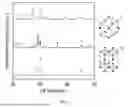
FIG. 1 provides X-ray diffraction patterns of titanium after milling for one hour under different atmospheric environments (Argon and 50% hydrogen) as described in the examples.
FIGS. 2A,2B, and 2C provide scanning electron microscopy images of titanium before (FIG. 2A) and after milling for one hour under argon (FIG. 2B) and 50% hydrogen (FIG. 2C) atmospheres as described in the examples.
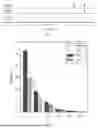
FIGS. 3A and 3B provide data regarding the product distributions for zirconium hydride and titanium hydride when used in exemplary methods as described herein.
FIG. 4 provides 1H-NMR spectra of the trap products of zirconium hydride and titanium hydride compared to C20 when used in exemplary methods as described herein.
FIG. 5 provides the product distributions for gas product output for zirconium hydride and titanium hydride when used in exemplary methods as described herein.
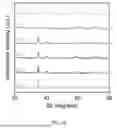
FIGS. 6A and 6B provide X-ray diffraction patterns after milling for various time periods with C20 (FIG. 6A) or polyethylene (FIG. 6B) as described in the examples.
FIG. 7 provides a Raman spectrum depicting titanium oxide, TiCx, and coke phases as described in the examples.
FIGS. 8A and 8B provide Raman spectra of titanium hydride response to C20 (FIG. 8A) and polyethylene (FIG. 8B) over time as described in the examples.
FIG. 9 provides data depicting the mol percent of the gas outlet for methane, ethane, propane, butane, pentane, and hexane over time for reactions performed in a tungsten carbide or stainless steel vessel.
FIGS. 10A and 10B depict the gas output of methane, ethane, propane, butane, pentane, and hexane over time from the reactor as described in the examples.
FIG. 11 depicts the product conversion using zirconium hydride after a first reaction cycle and reuse in a second reaction cycle.
FIGS. 12A and 12B depict the normalized peak area over time for the time-resolved Raman spectra of FIG. 8A and FIG. 8B, respectfully.
FIG. 13 depicts the effect of adding silica alumina in varying amounts to C20 milled with TiH2 as described in the examples.
FIGS. 14A and 14B provide 1H-NMR and 13C-NMR spectra of lignin oil formed from the methods described herein.
FIGS. 15A and 15B provide the mole percentage of methane, ethylene, ethane, propylene, and propane from mechanochemical hydrogenolysis of lignin using 1g (FIG. 15A) or 40mg (FIG. 15B) titanium hydride as described in the examples.
DETAILED DESCRIPTION
The following description of the disclosure is provided as an enabling teaching of the disclosure in its best, currently known aspects. Many modifications and other aspects disclosed herein will come to mind to one skilled in the art to which the disclosed compositions and methods pertain, benefiting from the teachings presented in the descriptions herein and the associated drawings. Therefore, it is understood that the disclosures are not limited to the specific aspects disclosed and that modifications and other aspects are intended to be included within the scope of the appended claims. The skilled artisan will recognize many variants and adaptations of the aspects described herein. These variants and adaptations are intended to be included in the teachings of this disclosure and to be encompassed by the claims herein.
Although specific terms are employed herein, they are used in a generic and descriptive sense only and not for purposes of limitation.
As is apparent to those of skill in the art upon reading this disclosure, each of the individual aspects described and illustrated herein has discrete components and features that may be readily separated from or combined with the features of any of the other several aspects without departing from the scope or spirit of the present disclosure.
Any recited method can be carried out in the order of events recited or any other order that is logically possible. Unless otherwise expressly stated, it is in no way intended that any method or aspect set forth herein be construed as requiring that its steps be performed in a specific order. Accordingly, where a method claim does not explicitly state in the claims or descriptions that the steps are to be limited to a particular order, it is in no way intended that an order be inferred in any respect. This holds for any possible non-express basis for interpretation, including logic concerning the arrangement of steps or operational flow, meaning derived from grammatical organization or punctuation, or the number or type of aspects described in the specification.
All publications mentioned herein are incorporated by reference to disclose and describe the methods or materials in connection with which the publications are cited. The publications discussed herein are provided solely for their disclosure before the filing date of the present application. Further, the dates of publication provided herein can be different from the actual publication dates, which can require independent confirmation.
It is also to be understood that the terminology herein describes particular aspects only and is not intended to be limiting. Unless defined otherwise, all technical and scientific terms herein have the same meaning as commonly understood by one of ordinary skill in the art to which the disclosed compositions and methods belong. It can be further understood that terms, such as those defined in commonly used dictionaries, should be interpreted as having a meaning that is consistent with their meaning in the context of the specification and relevant art and should not be interpreted in an idealized or overly formal sense unless expressly defined herein.
Before describing the various aspects of the present disclosure, the following definitions are provided and should be used unless otherwise indicated. Additional terms may be defined elsewhere in the present disclosure.
Definitions
As used herein, “comprising” is interpreted as specifying the presence of the stated features, integers, steps, or components, but does not preclude the presence or addition of one or more features, integers, steps, components, or groups thereof. Moreover, each of the terms “by,” “comprising,” “comprises,” “comprised of,” “including,” “includes,” “included,” “involving,” “involves,” “involved,” and “such as” is used in its open, non-limiting sense and may be used interchangeably. Further, the term “comprising” is intended to include examples and aspects encompassed by the terms “consisting essentially of” and “consisting of.” Similarly, “consisting essentially of” is intended to include examples encompassed by the term “consisting of.”
As used in the specification and the appended claims, the singular forms “a,” “an,” and “the” include plural referents unless the context dictates otherwise.
Ratios, concentrations, amounts, and other numerical data can be expressed herein in a range format. Further, the endpoints of each of the ranges are significant both in relation to the other endpoint and independently of the other endpoint. There are many values disclosed herein, and each value is also disclosed as “about” that particular value in addition to the value itself. For example, if the value “10” is disclosed, then “about 10” is also disclosed. Ranges can be expressed herein as from “about” one particular value and to “about” another particular value. Similarly, when values are expressed as approximations, using the antecedent “about,” the particular value forms a further aspect. For example, if the value “about 10” is disclosed, then “10” is also disclosed.
When a range is expressed, a further aspect includes from the one particular value and to the other particular value. For example, where the stated range includes one or both of the limits, ranges excluding either or both of those included limits are also included in the disclosure, e.g., the phrase “x to y” includes the range from ‘x’ to ‘y’ as well as the range greater than ‘x’ and less than ‘y'. The range can also be expressed as an upper limit, e.g.' about x, y, z, or less' and should be interpreted to include the specific ranges of 'about x,’ 'about y,' and 'about z' as well as the ranges of 'less than x,’ 'less than y.' and 'less than z.' Likewise, the phrase 'about x, y, z, or greater' should be interpreted to include the specific ranges of 'about x,’ 'about y,' and 'about z' as well as the ranges of 'greater than x,' greater than y,' and 'greater than z.' In addition, the phrase "about 'x' to 'y’,” where ‘x’ and ‘y’ are numerical values, includes “about ‘x’ to about ‘y’.”
Such a range format is used for convenience and brevity and thus, should be interpreted flexibly to include not only the numerical values explicitly recited as the limits of the range but also to include all the individual numerical values or sub-ranges encompassed within that range as if each numerical value and sub-range is explicitly recited. To illustrate, a numerical range of “about 0.1% to 5%” should be interpreted to include not only the explicitly recited values of about 0.1% to about 5%, but also include individual values (e.g., about 1%, about 2%, about 3%, and about 4%) and the sub-ranges (e.g., about 0.5% to about 1.1%; about 5% to about 2.4%; about 0.5% to about 3.2%, and about 0.5% to about 4.4%, and other possible sub-ranges) within the indicated range.
As used herein, the terms “about,” “approximate,” “at or about,” and “substantially” mean that the amount or value in question can be the exact value or a value that provides equivalent results or effects as recited in the claims or taught herein. That is, amounts, sizes, formulations, parameters, and other quantities and characteristics are not and need not be exact but may be approximate, larger or smaller, as desired, reflecting tolerances, conversion factors, rounding, measurement error, and the like, and other factors known to those of skill in the art such that equivalent results or effects are obtained. In some circumstances, the value that provides equivalent results or effects cannot be reasonably determined. In such cases, as used herein, “about” and “at or about” mean the nominal value indicated ±10% variation unless otherwise indicated or inferred. In general, an amount, size, formulation, parameter, or other quantity or characteristic is “about,” “approximate,” or “at or about,” whether or not expressly stated to be such. Where “about,” “approximate,” or “at or about” is used before a quantitative value, the parameter also includes the specific quantitative value itself unless expressly stated otherwise.
As used herein, “optional” or “optionally” means that the subsequently described event or circumstance can or cannot occur. The description includes instances where said event or circumstance occurs and those where it does not.
Although the operations of exemplary aspects of the disclosed methods may be described in a particular sequential order for convenient presentation, it should be understood that disclosed aspects can encompass an order of operations other than the particular sequential order disclosed. For example, operations described sequentially may, in some cases, be rearranged or performed concurrently. Further, descriptions and disclosures provided in association with one particular aspect are not limited to that aspect and may be applied to any aspect disclosed.
The terms “coupled” and “associated” generally mean electrically, electromagnetically, and/or physically (e.g., mechanically or chemically) coupled or linked and do not exclude the presence of intermediate elements between the coupled or associated items.
It will be understood that when an element is referred to as being "connected" or "coupled" to another element, it can be directly connected or coupled to the other element, or intervening elements can be present. In contrast, when an element is referred to as being "directly connected" or "directly coupled" to another element, there are no intervening elements present. Other words used to describe the relationship between elements or layers should be interpreted in a like fashion (e.g., "between" versus "directly between," "adjacent" versus "directly adjacent," "on" versus "directly on").
It will be understood that although the terms "first," "second," etc., can be used herein to describe various elements, components, regions, layers, and/or sections. These elements, components, regions, layers, and/or sections should not be limited by these terms. These terms are only used to distinguish one element, component, region, layer, or section from another element, component, region, layer, or section. Thus, a first element, component, region, layer, or section discussed below could be termed a second element, component, region, layer, or section without departing from the teachings of example aspects.
Spatially relative terms, such as,“ "beneath," "below," "lower," "above," "upper," “upward,” “downward,” “top,” “bottom,” and the like, can be used herein for ease of description to describe one element or feature's relationship to another element(s) or feature(s) as illustrated in the figures. It will be understood that the spatially relative terms are intended to encompass different orientations of the device in use or operation, in addition to the orientation depicted in the figures. For example, if the device in the figures is turned over, elements described as "below" or "beneath" other elements or features would then be oriented "above" the other elements or features. Thus, the term "below" can encompass both an orientation of above and below. The device can be otherwise oriented (rotated 90 degrees or at other orientations), and the spatially relative descriptors used herein are interpreted accordingly.
Terms such as “proximal,” “distal,” “ radially outward,” “radially inward,” “outer,” “inner,” and “side” describe the orientation and/or location of portions of the components or elements within a consistent but arbitrary frame of reference which is made clear by reference to the text and the associated drawings describing the components or elements under discussion. Such terminology can include the words specifically mentioned above, derivatives thereof, and words of similar import. Similarly, the terms “first,” “second,” and other such numerical terms referring to structures neither imply a sequence nor order unless clearly indicated by the context.
Compounds are described using standard nomenclature. Unless defined otherwise, all technical and scientific terms used herein have the same meaning as is commonly understood by one of skill in the art to which this disclosure belongs.
Certain materials, compounds, compositions, and components disclosed herein can be obtained commercially or readily synthesized using techniques generally known to those of skill in the art. For example, the starting materials and reagents used in preparing the disclosed compounds and compositions are either available from commercial suppliers, such as Sigma-Aldrich (formerly MilliporeSigma, Burlington, MA) or Thermo Fisher Scientific Inc. (Waltham, MA), or are prepared by methods known to those skilled in the art following procedures set forth in references such as Fieser and Fieser's Reagents for Organic Synthesis (John Wiley and Sons, 2007); Organic Reactions (John Wiley and Sons, 2004); March's Advanced Organic Chemistry, (John Wiley and Sons, 8th Edition); and Larock's Comprehensive Organic Transformations (John Wiley and Sons, 3rd edition, 2017).
As used herein, the term “mechanochemical” pertains to or involves a process in which a chemical transformation is initiated, driven, or accelerated primarily by the application of mechanical energy, such as impact, shear, compression, friction, or milling, without the need for thermal, photochemical, or electrochemical activation as the principal mechanisms.
As used herein, “hydrogenolysis” refers to a process in which a compound (e.g., an organic compound) containing a cleavable single bond is contacted with hydrogen under conditions to cleave the bond and introduce hydrogen at the resulting fragment termini; the bond can include, without limitation, C-C and C-heteroatom bonds (such as C-O, C-N, and C-S bonds). The term excludes mere hydrogenation that proceeds without bond cleavage; however, hydrogenation can occur simultaneously with hydrogenolysis in the methods herein, either concurrently or to the resulting fragment compounds.
“Shear force,” as used in the mechanochemical context herein, refers to a force component applied parallel or tangential to an interface or material plane of a solid material that causes adjacent layers or phases to slide relative to one another, thereby inducing shear deformation that can activate or accelerate chemical transformations.
“Impact force,” as used in the mechanochemical context herein, refers to a transient compressive force generated when a moving component abruptly contacts a solid material, the magnitude and duration of which are sufficient to activate or accelerate chemical transformations by way of localized stress, pressure, or deformation. The impact force is normal to the interface.
The present disclosure provides methods for the hydrogenolysis of organic compounds. The methods of the present disclosure are performed via mechanochemical means, i.e., wherein hydrogenolysis is initiated, driven, or accelerated by the application of mechanical energy.
In some aspects, the method can include combining the organic compound with a hydride in the presence of hydrogen.
In some aspects, the organic compound can be a solid under the conditions that the methods described herein are performed.
In some aspects, the organic compound can be a hydrocarbon. Representative examples of hydrocarbons which may be used include, but are not limited to, paraffin wax (which can include alkanes ranging from C20 to C40 or higher, for example eicosane, docosane, tetracosane, and the like), octadecane, eicosane, docosane, tetracosane, polycyclic aromatic hydrocarbons (such as naphthalene, anthracene, phenanthrene, and the like), or long-chain alkyl benzenes (such as dodecyl benzene, tetradecyl benzene, and the like).
In some aspects, the organic compound can be a polymer. Any suitable polymer may be used within the methods herein. In some aspects, the polymer may comprise a natural polymer. In some aspects, the polymer may comprise a synthetic polymer.
In some aspects, the polymer can be a polysaccharide. Polysaccharides are complex carbohydrates composed of long chains of monosaccharide units linked by glycosidic bonds. In some aspects, the polysaccharide can be a natural polysaccharide. In some aspects, the polysaccharide can be a modified polysaccharide. Representative examples of polysaccharides that can be used include, but are not limited to, cellulose, starch, amylose, amylopectin, pectin, xylan, mannan, glucomannan, arabinogalactan, arabinoxylans, fructan/inulin, gum arabic, guar gum, locust bean gum, tragacanth, xylogulcan, chitin, chitosan, glycogen, hyaluronic acid, dermatan sulfate, chondroitin sulfate, heparan sulfate, keratan sulfate, heparin, dextran, pullulan, levan, curdlan, laminarin, scleroglucan, agar, carrageenan, alginates, fucoidan, combinations thereof, and the like. Sources of polysaccharides that may be used include wood, cotton, flax, hemp, jute, kenaf, cereal straws, cereal grains, tubers, fruits, vegetables, seeds, seed endosperms, sugar beet pulp, citrus/apple pomace, brown seaweed, red seaweed, fungi, yeasts, bacterial, microalgae, crustacean shells, animal connective tissues and/or extracellular matrix, tunicates and other marine invertebrates, wood and lignocellulosic residues, and the like.
In some aspects, the polymer can be a lignin. Lignins are highly diverse, complex polymers found in nearly all terrestrial plants as key structural components and are primarily classified based on the source plant and their monomeric composition into softwood, hardwood, and grass (herbaceous) lignins, each containing different ratios of guaiacyl (G), syringyl (S), and p-hydroxyphenyl (H) units derived from the respective monolignols: coniferyl alcohol, sinapyl alcohol, and p-coumaryl alcohol. Softwood lignins are primarily composed of G units and are typically sourced from pine and spruce. Hardwood lignins contain both G and S units and are typically sourced from oak, maple, birch, and similar trees. Grass (herbaceous) lignins are composed of all three units (G, S, and H) and are usually sourced from cereals, bamboo, and other agricultural residues. Sources of lignins that may be used include, but are not limited to, wood plants (such as trees and bushes including hardwoods like oak and maple and softwoods like pine and spruce), agricultural residues (such as cornstalks, sugarcane, bamboo canes, ferns, straw, peanut husks, and nutshells), herbaceous plants and grasses, forestry residues, fruit and nut residues, industrial and urban biomass waste, and red algae.
In some aspects, the polymer can be a thermoplastic, a thermoset, an elastomer, or a synthetic fiber. Representative examples of polymers that can be used include (meth)acrylate polymers, polystyrene, polyvinyl esters, polyvinyl ethers, polyvinyl halides, polyvinyl amides, polyacrylonitriles, polyethylenes, polypropylenes, polybutylenes, polyisoprenes, polyesters, alkyds, polylactones, polycarbonates, polyethers, epoxy resin-amine adducts, polyurethanes, alkyd resins, phenol-formaldehyde resins, urea-formaldehyde resins, melamine-formaldehyde resins, polysulfides, polyacetals, polyethylene oxides, polycaprolactams, polylactones, polylactides, polyimides, polyureas, combinations or copolymers thereof, and the like.
In some aspects, the polymer can be a polyolefin. Representative examples of polyolefins that can be used include, but are not limited to, high-density polyethylene, low-density polyethylene, polypropylene, polystyrene, poly(4-methyl-1-pentene) (PMP), ethylene propylene rubber (EPR), ethylene-propylene-diene monomer (EPDM), polyolefin elastomers (POE), polyethylene-co-propylene (PE-co-PP), polyethylene-co-butene (PE-co-PB), a polypropylene Random Copolymer (PPRC), combinations thereof, and the like. In some aspects, the polyolefin can include, but is not limited to, polyethylene (PE), high-density polyethylene (HDPE), low-density polyethylene (LDPE), linear low-density polyethylene (LLDPE), medium-density polyethylene (MDPE), very-low-density polyethylene (VLDPE), ultra-low-density polyethylene (UDLPE), polypropylene (PP), homopolymer PP, copolymer PP, stereo-block polypropylene, polymethylpentene (PMP), polybutene-1 (PB-1), polyisobutylene (PIB), amorphous polyolefins (APO), ethylene-propylene rubber (EPR), ethylene-propylene-diene monomer (EPDM), polyolefin elastomers (POE), thermoplastic polyolefin elastomers (TPO), ethylene-octene copolymers, propylene-butene copolymers, olefin block copolymers, cyclic olefin-copolymers (such norbornene-ethylene copolymers), ethylene-butene copolymer, ethylene-vinyl acetate (EVA), hydrogenated polyalphaolefin (PAO), combinations thereof, and the like.
In some aspects, the polymer can be a polyester. Representative examples of polyesters that can be used include, but are not limited to, polyethylene terephthalate (PET), polybutylene terephthalate (PBT), polyethylene naphthalate (PEN), poly-1,5-cyclohexylene-dimethylene terephthalate (PCDT), polycarbolactone (PCL), polyethylene adipate (PEA), polyglycolide (PGA), polylactide (PLA), polyhydroxybutyrate-valerate (PHBV), polybutylene succinate (PBS), polybutylene adipate terephthalate (PBAT), polyarylate (PARA), polyester alkyd (PAL), combinations thereof, and the like.
In some aspects, the polymer can be a polyamide. Representative examples of polyamides that can be used include, but are not limited to, nylon 6, nylon 6,6, nylon 6,10, nylon 6,12, nylon 11, nylon 12, nylon 4,6, nylon 4,10, nylon 10,10, nylon 6,9, nylon 9,9, PA6T, PA9T, PA MXD6, PPD-T, MDP-I, combinations thereof, and the like.
Representative examples of hydrides that can be used include, but are not limited to, lithium hydride, sodium hydride, potassium hydride, rubidium hydride, cesium hydride, calcium hydride, strontium hydride, barium hydride, magnesium hydride, titanium hydride, zirconium hydride, sodium aluminum hydride, calcium hydride, copper hydride, scandium hydride, chromium hydride, aluminum hydride, beryllium hydride, cadmium hydride, and the like.
In some aspects, the hydride can include one or more of a magnesium hydride, a zinc hydride, a titanium hydride, a zirconium hydride, a hafnium hydride, a vanadium hydride, a niobium hydride, an iron hydride, a manganese hydride, a chromium hydride, a palladium hydride, a platinum hydride, combinations thereof, and the like.
In some aspects, the hydride can include titanium dihydride (TiH2), zirconium dihydride (ZrH2), magnesium dihydride (MgH2), combinations thereof, and the like.
The hydride may be in any solid form suitable for the described methods, including crystalline solids, amorphous solids, powders, granules, pellets, beads, and the like. In some aspects, the hydride can be a powder.
In some aspects, the method can occur under a hydrogen atmosphere. In some aspects, the method can occur under an atmosphere of hydrogen and one or more inert gases, such as nitrogen or argon. Suitable ratios of hydrogen to the one or more inert gases can be determined based on the particulars of the organic compound and the hydride to be combined. In some aspects, the atmosphere may include from about 1% hydrogen to about 100% hydrogen by volume, including exemplary values of about 1%, about 5%, about 10%, about 20%, about 25%, about 30%, about 40%, about 50%, about 60%, about 70%, about 75%, about 80%, about 90%, about 95%, about 99%, or about 100% by volume, or any subrange formed from the above exemplary values.
In some aspects, the organic compound and the hydride can be combined in a ratio from about 10:1 to about 1:10 of the organic compound to the hydride by volume, including exemplary values of about 10:1, about 9:1, about 8:1, about 7:1, about 6:1, about 5:1, about 4:1, about 3:1, about 2:1, about 1:1, about 1:2, about 1:3, about 1:4, about 1:5, about 1:6, about 1:7, about 1:8, about 1:9, about 1:10 of the organic compound to the hydride by volume, or any subrange formed from the above exemplary values.
In some aspects, the method can include applying a mechanical force to the organic compound and the hydride to produce a mixture. In some aspects, the mixture can include one or more product compounds. In some aspects, the one or more product compounds can be formed by hydrogenolysis of the organic compound.
In some aspects, the mechanical force can include a shear force, an impact force, or a combination thereof. In some aspects, the mechanical force includes a shear force. In some aspects, the mechanical force can include an impact force. In some aspects, the mechanical force can include both a shear force and an impact force.
Any suitable device or method in the field of mechanochemistry can be used to apply the mechanical force.
In some aspects, the mechanical force can be applied by a ball mill. A ball mill is a device used to grind, blend, or mechanically process solid materials by using spherical media (balls) in a rotating or vibrating chamber, generating mechanical forces.
In some aspects, the ball mill can be a planetary ball mill. In this apparatus, grinding jars (filled with the reactant material and grinding balls) are mounted on a rotating platform known as a sun wheel. As the sun wheel rotates, each jar spins on its own axis in the opposite direction, generating strong centrifugal and Coriolis forces. These combined forces promote intense impacts and friction between the grinding balls and the reactant material.
In some aspects, the ball mill can be a vibratory ball mill. In this apparatus, a vibrating platform or chamber partially filled with grinding balls and the reactant material is agitated by high-frequency vibrations, causing impact and friction between the grinding balls and the reactant material.
In some aspects, the mechanical force can be applied by a mixer mill. In this apparatus, grinding balls and the reactant material are placed in grinding jars that oscillate radially in a horizontal position, causing impacts and friction between the grinding balls and the reactant material.
In some aspects, the mechanical force can be applied by a rotating drum mill. In this apparatus, a horizontally oriented chamber containing grinding balls and the reactant material slowly rotates around its long axis, causing impacts and friction between the grinding balls and the reactant material.
Representative examples of grinding balls that can be used include forged steel balls, cast iron balls, ceramic balls (such as alumina, zirconia, or silicon carbide balls), and glass balls. In some aspects, the one or more grinding balls can be composed of steel, ceramic, manganese steel, titanium, zirconium oxide, tungsten carbide, combinations thereof, and the like.
Grinding balls typically have a size ranging from about 0.1 mm to about 150 mm. The ball size used may vary based on the mill type and the material of the grinding balls used. Typical ranges of grinding ball sizes include from about 20 to about 150 mm for forged steel balls, from about 10 to about 130 mm for high chrome cast balls, from about 20 to about 130 mm for low chrome cast balls, from about 0.5 mm to about 100 mm for alumina balls, from about 0.5 to about 50 mm for zirconia balls, and from about 1 to about 30 mm for silicon carbide balls. In some aspects, the one or more grinding balls can have an average diameter from about 5 mm to about 120 mm.
In some aspects, cylpeds or rods may be used as an alternative to grinding balls.
In some aspects, the mechanical force can be applied by a screw extruder. Screw extruders typically include a feed hopper, a barrel, and one or more screws within the barrel. Single-screw extruders feature a single screw. Twin-screw extruders feature two screws that rotate in the same (co-rotating) or opposite (counter-rotating) directions within the barrel. As materials are fed into a feed hopper, they move through the barrel by the action of the one or more screws, undergoing mixing, kneading, shearing, and homogenization.
In some aspects, the mechanical force can be applied by a resonant acoustic mixer. A resonant acoustic mixer is a paddle-less mixing device that uses low-frequency, high-intensity acoustic energy coupled with high acceleration forces to efficiently and uniformly mix materials. A resonant acoustic mixer operates using a mechanical resonance system: the vessel holding the material is coupled to a vibrating plate that moves at its natural resonance frequency, creating powerful vertical oscillations. The oscillating motion generates direct mechanical mixing, which imparts rapid, chaotic movement to the materials, resulting in intense microscale turbulence that applies mechanical forces to the materials therein.
In some aspects, the mechanical force can be applied by a pan mill. A pan mill includes a round, flat pan or base within which heavy rollers or grinding wheels rotate and crush the material through pressure and shearing forces.
In some aspects, the mechanical force can be applied by a mortar and pestle.
In some aspects, applying the mechanical force can include one or more of vibratory ball milling, planetary ball milling, rotating drum milling, or twin-screw extrusion.
In some aspects, applying the mechanical force can be performed in the presence of a promoter. Representative examples of promoters that can be used include, but are not limited to, aluminum-based alloys, alumina, zinc, tin, silicon-based materials (such as silicon nitride, silicon carbide, and silicon dioxide), magnesium-based alloys, cobalt-based alloys, titanium dioxide, other alloys (such as aluminum, zinc, and tin together or with other metals), combinations thereof, and the like.
In some aspects, applying the mechanical force can be performed in the presence of one or more additional additives. Metal oxides, such as magnesium oxide, alumina, or titania, can be used as insoluble, inert grinding aids. Hard abrasives, such as tungsten carbide or diamond powder, can be used to enhance grinding efficiency. Small amounts of solvents, such as water, alcohols, or acetonitrile, can be used to enhance reactant mobility and reaction rates. Salts and bases, such as potassium carbonate or sodium chloride, can be added to change the mechanical properties of the mixture or to act as mild activating agents.
In some aspects, the method can include collecting the one or more product compounds from the mixture. In some aspects, collecting the one or more product compounds includes separating the one or more product compounds from other components in the mixture. Suitable separation methods applicable to mechanochemical reactions are known in the art. Representative examples of separation methods that can be used include, but are not limited to, sieving, washing, recrystallization, extraction, purging with a gas, desorption, filtration, centrifugation, decantation, evaporation, fractionation, distillation, membrane separation, and the like. Combinations of any suitable separation methods can be used to separate the desired product compounds.
In some aspects, the mixture can be contacted with a solvent to dissolve and/or extract the one or more product compounds or to wash away other components from the one or more product compounds.
In some aspects, the one or more product compounds can be separated by direct collection and sieving. After the reaction is complete, a solid product can be collected directly from the milling jar and sieved to separate the product based on particle size.
In some aspects, the one or more product compounds can be separated by washing and precipitation. Solid products can be washed with water or organic solvents to remove unreacted reagents or byproducts. Washing can also involve selective precipitation, where the desired product is insoluble in the wash solvent and separates from soluble impurities.
In some aspects, the one or more product compounds can be separated by filtration and centrifugation. If a liquid is added during the reaction or used to wash the product, the material can be filtered or centrifuged to isolate the desired phase.
In some aspects, the one or more product compounds can be separated by solvent extraction. Solid products can be dissolved in an appropriate solvent and then reprecipitated or crystallized by changing conditions, such as temperature or solvent composition.
In some aspects, the one or more product compounds can be separated by gas separation. For reactions producing gas-phase products, gases may be recovered by controlled heating of the mixture, where temperature ramps release specific gases for collection.
Representative examples of product compounds that may be formed by the methods disclosed herein include alkanes, amines, diamines, polyamines, alcohols, diols, polyols, aromatic compounds, phenolic compounds, and the like. In some aspects, the one or more product compounds can include one or more C1 to C20 hydrocarbons, one or more C1 to C20 alcohols or polyols, one or more C1 to C20 amines or polyamines, or combinations thereof. The particular product compounds formed will be based on the particular organic compounds used within the process.
Representative examples of product compounds that may be formed include, but are not limited to, methane, ethane, propane, butane, pentane, hexane, heptane, octane, nonane, decane, undecane, dodecane, tridecane, tetradecane, pentadecane, hexadecane, heptadecane, octadecane, nonadecane, eicosane, isomers thereof, combinations thereof, and the like.
Further examples of product compounds that may be formed include, but are not limited to, ethylene glycol, 1,2-propylene glycol, 1,3-propanediol, 1,4-butanediol, glycerol, trimethylolpropane, pentaerythritol, methanol, ethanol, n-propanol, isopropanol, n-butanol, isobutanol, tert-butanol, decanol, lauryl alcohol, cetyl alcohol, stearyl alcohol, arachidyl alcohol, isomers thereof, combinations thereof, and the like.
Even further examples of product compounds that may be formed include, but are not limited to, ethylenediamine, 1,3-diaminopropane, putrescine, cadaverine, hexamethylenediamine, a C7 to C12 diamine, 4,4’-oxydianiline, p-phenylenediamine, m-phenylenediamine, 4,4’-diaminodiphenylmethane, 4,4’-diaminodiphenyl sulfone, isophorone diamine, diethylenetriamine, triethylenetetramine, pentaethylenehexamine, tris(2-aminoethyl)amine, polyethyleneamine, isomers thereof, combinations thereof, and the like.
In another aspect, a compound is provided prepared according to a method described herein. The compound can be any one of the representative examples of product compounds described herein.
In view of the described compounds and methods, certain more particular aspects of the disclosure are described below. These particularly recited aspects should not, however, be interpreted to have any limiting effect on any different claims containing different or more general teachings described herein, or that the “particular” aspects are somehow limited in some way other than the inherent meanings of the language and formulae literally used therein.
Aspect1. A method for hydrogenolysis of an organic compound, including:
combining the organic compound with a hydride in the presence of hydrogen;
applying a mechanical force selected from a shear force, an impact force, or a combination thereof to the organic compound and the hydride to produce a mixture, wherein the mixture includes one or more product compounds formed by hydrogenolysis of the organic compound; and
collecting the one or more product compounds from the mixture.
Aspect 2. The method of any aspect herein, such as aspect 1, wherein the organic compound includes a hydrocarbon or a polymer.
Aspect 3. The method of any aspect herein, such as aspect 2, wherein the polymer includes a polysaccharide, a lignin, a polyolefin, a polyester, or a polyamide.
Aspect 4. The method of any aspect herein, such as aspect 3, wherein the polyolefin includes high-density polyethylene, low-density polyethylene, polypropylene, polystyrene, poly(4-methyl-1-pentene) (PMP), propylene rubber (EPR), ethylene-propylene-diene monomer (EPDM), a polyolefin elastomer (POE), polyethylene-co-propylene (PE-co-PP), polyethylene-co-butene (PE-co-PB), a polypropylene Random Copolymer (PPRC), or combinations thereof.
Aspect 5. The method of any aspect herein, such as any one of aspects 1-4, wherein the hydride includes one or more of a magnesium hydride, a zinc hydride, a titanium hydride, a zirconium hydride, a hafnium hydride, a vanadium hydride, a niobium hydride, an iron hydride, a manganese hydride, a chromium hydride, a palladium hydride, a platinum hydride, or combinations thereof.
Aspect 6. The method of any aspect herein, such as any one of aspects 1-5, wherein the hydride includes titanium dihydride (TiH2), zirconium dihydride (ZrH2), magnesium dihydride (MgH2), or combinations thereof.
Aspect 7. The method of any aspect herein, such as any one of aspects 1-6, wherein the hydride is a powder.
Aspect 8. The method of any aspect herein, such as any one of aspects 1-7, wherein the method occurs under a hydrogen atmosphere or an atmosphere of hydrogen and one or more inert gases.
Aspect 9. The method of any aspect herein, such as any one of aspects 1-8, where applying the mechanical force includes vibratory ball milling, planetary ball milling, rotating drum milling, or twin-screw extrusion.
Aspect 10. The method of any aspect herein, such as any one of aspects 1-9, wherein applying the mechanical force includes milling the organic compound and the hydride with one or more grinding balls.
Aspect 11. The method of any aspect herein, such as aspect 10, wherein the one or more grinding balls include steel, ceramic, manganese steel, titanium, zirconium oxide, tungsten carbide, or combinations thereof.
Aspect 12. The method of any aspect herein, such as aspect 10 or aspect 11, wherein the one or more grinding balls have an average diameter from about 5 mm to about 120 mm.
Aspect 13. The method of any aspect herein, such as any one of aspects 1-12, wherein the method is performed in a vessel.
Aspect 14. The method of any aspect herein, such as aspect 13, wherein the vessel includes a steel, ceramic, manganese steel, titanium, zirconium oxide, or tungsten carbide vessel.
Aspect 15. The method of any aspect herein, such as any one of aspects 1-14, wherein applying the mechanical force is performed in the presence of a promoter.
Aspect 16. The method of any aspect herein, such as aspect 15, wherein the promoter includes an aluminum alloy.
Aspect 17. The method of any aspect herein, such as any one of aspects 1-16, wherein collecting the one or more product compounds includes separating the one or more product compounds from other components in the mixture.
Aspect 18. The method of any aspect herein, such as aspect 17, wherein separating the one or more product compounds includes sieving, washing, recrystallization, extraction, purging with a gas, desorption, filtration, centrifugation, decantation, evaporation, fractionation, or combinations thereof.
Aspect 19. The method of any aspect herein, such as any one of aspects 1-18, wherein the one or more product compounds include one or more C1 to C20 hydrocarbons, one or more C1 to C20 alcohols or polyols, or combinations thereof.
20. A compound prepared according to the method of any aspect herein, such as any one of aspects 1-19.
A number of aspects of the disclosure have been described. Nevertheless, it will be understood that various modifications may be made without departing from the spirit and scope of the disclosure. Accordingly, other aspects are within the scope of the following claims.
By way of non-limiting illustration, examples of certain aspects of the present disclosure are given below.
EXAMPLES
The following examples are set forth below to illustrate the compounds and methods claimed herein, along with associated methods and results according to the disclosed subject matter. These examples are not intended to be inclusive of all aspects of the subject matter disclosed herein, but rather to illustrate representative methods and results. These examples are not intended to exclude equivalents and variations of the present disclosure, which are apparent to one skilled in the art.
Efforts have been made to ensure accuracy with respect to numbers (e.g., amounts, temperature, etc.), but some errors and deviations should be accounted for. Unless indicated otherwise, parts are parts by weight, temperature is in °C or is at ambient temperature, and pressure is at or near atmospheric. There are numerous variations and combinations of reaction conditions, e.g., component concentrations, temperatures, pressures, and other reaction ranges and conditions that can be used to optimize the product purity and yield obtained from the described process. Only reasonable and routine experimentation will be required to optimize such process conditions.
A study was conducted to develop and evaluate an exemplary method to depolymerize solid polyolefins (e.g., polyethylene (PE), polypropylene (PP), polystyrene (PS)) into shorter-chain hydrocarbons. Hydrogenolysis of n-C20 was conducted in a 25 mL stainless steel vessel using a TiH₂ catalyst at a 1:5 ratio of n-C20 to TiH₂. The vessel was milled for 2 hours at 30 Hz with a continuous gas flow rate of 15 sccm of H₂. The products were collected separately in the cyclohexane trap and the vessel. In a two-hour hydrogenolysis reaction of n-C20, approximately 13% of the initial n-C20 remained unconverted after product collection. Liquid products were collected with separate collections from the trap and vessel following reaction completion. The total liquid yield was approximately 13% of the starting material’s mass, while gaseous products accounted for 46% of the initial mass. This left a discrepancy of about 28%, which was due to the formation of carbonaceous deposits that contributed to an incomplete mass balance. These results demonstrated that hydrogenolysis of n-C20 can be successfully achieved using a ball mill under ambient conditions. Furthermore, the trap collection method proved effective in reducing gas-phase product formation, thereby optimizing the collection of liquid products.
Absorption of Hydrogen Gas on Titanium in Described Methods
FIG. 1 provides X-ray diffraction patterns of titanium after milling for one hour under different atmospheric environments (Argon and 50% hydrogen). , FIGS. 2A, 2B, and 2C provide SEM images of titanium before (FIG. 2A) and after milling for one hour under argon (FIG. 2B) and 50% hydrogen (FIG. 2C) atmospheres. Milling was conducted at 30 Hz using eight stainless steel grinding balls of 10 mm diameter. As can be seen, milling in different atmospheres changes the morphology of the titanium. Milling under hydrogen gas turns titanium into titanium hydride and changes the crystal structure from (hcp) to (fcc).
Product Distribution and Characterization for Described Methods
FIGS. 3A and 3B provide data regarding the product distributions for zirconium hydride and titanium hydride when used in methods as described herein. The product distributions suggest bond scission follows a random process. FIG. 4 provides 1H-NMR spectra of the trap products of zirconium hydride and titanium hydride compared to C20 when used in methods as described herein. No tertiary carbon or double bonds are found, along with no notable side-products.
Gas Output to Bond Scission
Reactions using zirconium hydride or titanium hydride catalyst were performed for two hours at 30 Hz using eight 10 mm stainless steel balls and a 1:1 volume ratio of catalyst to C20. FIG. 5 provides the product distributions for gas product output for zirconium hydride and titanium hydride. The gas product distribution has exponential trends indicating random scission as the dominant scission mechanism.
Catalyst Response to Different Feedstocks
C20 or polyethylene (PE) was milled for various time periods at 30 Hz using eight 10 mm stainless balls and a 1:1 volume ratio of catalyst to C20 or PE. FIGS. 6A and 6B provide the associated X-ray diffraction patterns for C20 (FIG. 6A) and PE (FIG. 6B). TiC phase forms are found when milling in C20, but not when using solid polyethylene.
FIG. 7 provides a Raman spectrum depicting titanium oxide, TiCx, and coke phases. FIGS. 8A and 8B provide Raman spectra for the above C20 (FIG. 8A) and PE (FIG. 8B) milling processes over time. The TiCx and coke phases form when milling in C20 and gradually disappear over the course of the reaction. While not wishing to be bound by any one theory, this suggests that with PE it remains a surface reaction.
FIGS. 12A and 12B depict the normalized peak area over time for the time-resolved Raman spectra of FIG. 8A and FIG. 8B, respectfully. Again, the TiC phase forms when milling in C20, but not when using solid PE.
Mechanism as a Function of Energy Input
Reactions were carried out in tungsten carbide (WC) or stainless steel vessels using zirconium hydride catalyst and medium-density polyethylene (MDPE) at a 1:1 volume ratio under hydrogen gas flow. FIG. 9 depicts the mol percent of the gas outlet for methane, ethane, propane, butane, pentane, and hexane over time for reactions performed in a tungsten carbide or stainless steel vessel. While the reaction rates are enhanced, the similar shape indicates that the mechanism remains unchanged.
FIGS. 10A and 10B depict the evolution of alkane gas products by concentration during mechanochemical hydrogenolysis using zirconium hydride catalyst under 15 sccm hydrogen flow. Milling was conducted at 30 Hz using eight stainless steel balls of 10 mm diameter.
Changes in the Metal Hydride Catalyst
FIG. 11 depicts the product conversion using zirconium hydride after a first reaction cycle and reuse in a second reaction cycle. Amorphized zirconium hydride led to slightly fewer products and a left-shifted distribution, indicating lower molecular weights. Zirconium hydride in its pre-amorphized state likely caused a lower milling temperature and altered how products eluted from the mill.
Addition of Silica Alumina
0 mg, 250 mg, and 500 mg of silica alumina were added to 100 mg of C20 milled with 0.5 g titanium hydride. Milling was performed for two hours at 30 Hz in 15 sccm of hydrogen. The addition of silica alumina appears to have decreased the level of compound formation.
Lignin Hydrogenolysis
Lignin was subjected to the mechanochemical hydrogenation method as described herein. FIGS. 14A and 14B provide 1H-NMR and 13C-NMR spectra of lignin oil. FIGS. 15A and 15B provide the mole percentage of methane, ethylene, ethane, propylene, and propane from mechanochemical hydrogenolysis of lignin using 1g (FIG. 15A) or 40mg (FIG. 15B) titanium hydride.
The compositions and methods of the appended claims are not limited in scope by the specific compositions and methods described herein, which are intended as illustrations of a few aspects of the claims, and any compositions and methods that are functionally equivalent are intended to fall within the scope of the claims. Various modifications of the compositions and methods, in addition to those shown and described herein, are intended to fall within the scope of the appended claims. Further, while only certain representative compositions and method steps disclosed herein are specifically described, other combinations of the compositions and method steps also are intended to fall within the scope of the appended claims, even if not specifically recited. Thus, a combination of steps, elements, components, or constituents may be explicitly mentioned herein; however, other combinations of steps, elements, components, and constituents are included, even though not explicitly stated.
Claims
What is claimed is:1. A method for hydrogenolysis of an organic compound, comprising:
combining the organic compound with a hydride in the presence of hydrogen;
applying a mechanical force selected from a shear force, an impact force, or a combination thereof to the organic compound and the hydride to produce a mixture, wherein the mixture comprises one or more product compounds formed by hydrogenolysis of the organic compound; and
collecting the one or more product compounds from the mixture.
2. The method of claim 1, wherein the organic compound comprises a hydrocarbon or a polymer.
3. The method of claim 2, wherein the polymer comprises a polysaccharide, a lignin, a polyolefin, a polyester, or a polyamide.
4. The method of claim 3, wherein the polyolefin comprises high-density polyethylene, low-density polyethylene, polypropylene, polystyrene, poly(4-methyl-1-pentene) (PMP), propylene rubber (EPR), ethylene-propylene-diene monomer (EPDM), a polyolefin elastomer (POE), polyethylene-co-propylene (PE-co-PP), polyethylene-co-butene (PE-co-PB), a polypropylene Random Copolymer (PPRC), or combinations thereof.
5. The method of claim 1, wherein the hydride comprises one or more of a magnesium hydride, a zinc hydride, a titanium hydride, a zirconium hydride, a hafnium hydride, a vanadium hydride, a niobium hydride, an iron hydride, a manganese hydride, a chromium hydride, a palladium hydride, a platinum hydride, or combinations thereof.
6. The method of claim 1, wherein the hydride comprises titanium dihydride (TiH2), zirconium dihydride (ZrH2), magnesium dihydride (MgH2), or combinations thereof.
7. The method of claim 1, wherein the hydride is a powder.
8. The method of claim 1, wherein the method occurs under a hydrogen atmosphere or an atmosphere of hydrogen and one or more inert gases.
9. The method of claim 1, where applying the mechanical force comprises vibratory ball milling, planetary ball milling, rotating drum milling, or twin-screw extrusion.
10. The method of claim 1, wherein applying the mechanical force comprises milling the organic compound and the hydride with one or more grinding balls.
11. The method of claim 10, wherein the one or more grinding balls comprise steel, ceramic, manganese steel, titanium, zirconium oxide, tungsten carbide, or combinations thereof.
12. The method of claim 10, wherein the one or more grinding balls have an average diameter from about 5 mm to about 120 mm.
13. The method of claim 1, wherein the method is performed in a vessel.
14. The method of claim 13, wherein the vessel comprises a steel, ceramic, manganese steel, titanium, zirconium oxide, or tungsten carbide vessel.
15. The method of claim 1, wherein applying the mechanical force is performed in the presence of a promoter.
16. The method of claim 15, wherein the promoter comprises an aluminum alloy.
17. The method of claim 1, wherein collecting the one or more product compounds comprises separating the one or more product compounds from other components in the mixture.
18. The method of claim 17, wherein separating the one or more product compounds comprises sieving, washing, recrystallization, extraction, purging with a gas, desorption, filtration, centrifugation, decantation, evaporation, fractionation, or combinations thereof.
19. The method of claim 1, wherein the one or more product compounds comprises one or more C1 to C20 hydrocarbons, one or more C1 to C20 alcohols or polyols, or combinations thereof.
20. A compound prepared according to the method of claim 1.
Images & Drawings included:






Sources:
- United States Patent and Trademark Office - verify current appl. status at the USPTO↗
Recent applications in this class:
- » 20260098213 2026-04-09
A PROCESS FOR PRODUCING AN AVIATION FUEL COMPONENT - » 20260008023 2026-01-08
DOWNFLOW LIPID CONVERSION WITH UPFLOW CATALYST REGENERATION - » 20250388820 2025-12-25
RECYCLE OF C4- OR C6- LIGHT HYDROCARBON LIQUIDS TO ACID CONDENSATION FEED - » 20250388819 2025-12-25
CATALYST AND PROCESS TO MAKE RENEWABLE DIESEL AND SUSTAINABLE AVIATION FUEL - » 20250066676 2025-02-27
METHOD FOR PRODUCING RENEWABLE AVIATION FUEL - » 20250011658 2025-01-09
Method for producing renewable C3 hydrocarbons and renewable aromatic hydrocarbons - » 20240336849 2024-10-10
MOBILE BIODIESEL MANUFACTURING PLANT FOR CONTINUOUSLY PRODUCING BIODIESEL FROM A TRIGLYCERIDE SOURCE - » 20240132783 2024-04-25
INTEGRATED SYSTEM OF BIOMASS TO RENEWABLE NATURAL GAS TO METHANOL, AND OTHER VALUE ADDED PRODUCTS - » 20230313048 2023-10-05
PROCESS FOR CONVERTING OXYGENATES TO DISTILLATE FUELS - » 20230069301 2023-03-02
Catalytic hydrotreating of feedstocks