WATER ELECTROLYSIS ELECTRODE, WATER ELECTROLYSIS ANODE, WATER ELECTROLYSIS CATHODE, WATER ELECTROLYSIS CELL, AND WATER ELECTROLYSIS DEVICE
US20260146345A1
2026-05-28
19/421,940
2025-12-16
Smart Summary: A water electrolysis electrode is made up of a conductive base and a special layer called a layered double hydroxide. This layer is placed on top of the conductive base. It has a specific property that allows it to absorb light at a certain wavelength, which is 800 nm, with an extinction coefficient of 0.08 or higher. This design helps improve the efficiency of splitting water into hydrogen and oxygen. Overall, it aims to enhance the performance of devices that use water electrolysis. 🚀 TL;DR
Abstract:
A water electrolysis electrode includes an electroconductive substrate and a layered double hydroxide layer. The layered double hydroxide layer is disposed on a surface of the electroconductive substrate. An extinction coefficient k800 of the layered double hydroxide layer at an wavelength of 800 nm is 0.08 or more.
Inventors:
- Hideaki Murase 34 🇯🇵 Osaka, Japan
- Takao HAYASHI 27 🇯🇵 Osaka, Japan
- Koichi SAWADA 4 🇯🇵 Fukui, Japan
Applicant:
Interested in similar patents?
Get notified when new applications in this technology area are published.
Classification:
C25B11/052 » CPC main
Electrodes; Manufacture thereof not otherwise provided for characterised by the material; Electrodes formed of electrocatalysts on a substrate or carrier Electrodes comprising one or more electrocatalytic coatings on a substrate
C25B9/19 » CPC further
Cells or assemblies of cells; Constructional parts of cells; Assemblies of constructional parts, e.g. electrode-diaphragm assemblies; Process-related cell features; Cells comprising dimensionally-stable non-movable electrodes; Assemblies of constructional parts thereof with diaphragms
C25B9/23 » CPC further
Cells or assemblies of cells; Constructional parts of cells; Assemblies of constructional parts, e.g. electrode-diaphragm assemblies; Process-related cell features; Cells comprising dimensionally-stable non-movable electrodes; Assemblies of constructional parts thereof with diaphragms comprising ion-exchange membranes in or on which electrode material is embedded
C25B11/075 » CPC further
Electrodes; Manufacture thereof not otherwise provided for characterised by the material; Electrodes formed of electrocatalysts on a substrate or carrier characterised by the electrocatalyst material consisting of a single catalytic element or catalytic compound
C25B1/04 » CPC further
Electrolytic production of inorganic compounds or non-metals; Products; Hydrogen or oxygen by electrolysis of water
Description
This application is a continuation of PCT/JP2024/021769 filed on Jun. 14, 2024, which claims foreign priority of Japanese Patent Application No. 2023-103743 filed on Jun. 23, 2023, the entire contents of which are incorporated herein by reference.
BACKGROUND OF THE INVENTION
1. Field of the Invention
The present disclosure relates to a water electrolysis electrode, a water electrolysis anode, a water electrolysis cathode, a water electrolysis cell, and a water electrolysis device.
2. Description of Related Art
Water electrolysis electrodes have been known.
WO 2017-154134 A1 describes a method for manufacturing a water electrolysis electrode, and the method includes a step of immersing an electrode substrate in an organic solvent, where the electrode substrate includes a predetermined layered double hydroxide. In this manufacturing method, the electrode substrate is manufactured by performing an electrodeposition process in an aqueous solution containing a compound including a metal M1 and a compound including a metal M2, by use of a electroconductive substrate as an anode.
JP 2018-043193 A describes an oxygen evolution catalyst including an oxidized graphene layer and a nickel-iron layered double hydroxide layer supported on a surface of the oxidized graphene layer, wherein the average thickness of the oxidized graphene layer is 0.33 to 4 nm.
In Seyeong Lee et al, “Operational durability of three-dimensional Ni—Fe layered double hydroxide electrocatalyst for water oxidation,” Electrochimica Acta, 2019, Vol. 315, p. 94-101, activity of oxygen evolution reaction (OER) of a Ni—Fe layered double hydroxide (Ni—Fe LDH) electrode is examined.
In Jiande Chen et al, “Interfacial Interaction between FeOOH and Ni—Fe LDH to Modulate the Local Electronic Structure for Enhanced OER Electrocatalysis,” ACS Catalysis, 2018, Vol. 8, p. 11342-11351, it is described that the local electronic structure of Ni—Fe LDH is adjusted by an interfacial interaction between FeOOH and the Ni—Fe LDH, which enhances the OER electrode-catalytic activity.
SUMMARY OF THE INVENTION
The descriptions in the above literatures need to be reconsidered from the viewpoint of improvement of performance of water electrolysis electrodes. Therefore, the present disclosure provides a novel water electrolysis electrode advantageous from the viewpoint of exhibiting high performance.
The present disclosure provides a water electrolysis electrode including:
-
- an electroconductive substrate; and
- a layered double hydroxide layer disposed on a surface of the electroconductive substrate, wherein
- an extinction coefficient of the layered double hydroxide layer at a wavelength of 800 nm is 0.08 or more.
According to the present disclosure, it is possible to provide a novel water electrolysis electrode advantageous from the viewpoint of exhibiting high performance.
BRIEF DESCRIPTION OF THE DRAWINGS
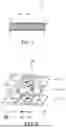
FIG. 1 is a cross-sectional view showing an example of a water electrolysis electrode of the present disclosure.
FIG. 2 is a diagram schematically showing an example of a crystal structure of a layered double hydroxide (LDH).
FIG. 3 is a diagram schematically showing an example of mechanism in manufacture of a water electrolysis electrode.
FIG. 4 is a cross-sectional view schematically showing an example of a water electrolysis cell of the present disclosure.
FIG. 5 is a cross-sectional view schematically showing an example of a water electrolysis device of the present disclosure.
FIG. 6 is a cross-sectional view schematically showing another example of a water electrolysis cell of the present disclosure.
FIG. 7 is a cross-sectional view schematically showing another example of a water electrolysis device of the present disclosure.
DETAILED DESCRIPTION
Findings on which the Present Disclosure is Based
Use of renewable energy sources such as solar power and wind power has been attracting attention as a measure against global warming. Power generation using renewable energy sources may lead to a problem of surplus electricity being wasted. For this reason, the efficiency of renewable energy use is not necessarily sufficient. Therefore, methods of making effective use of surplus electricity by producing and storing hydrogen using surplus electricity are being considered.
Electrolysis of water is a possible method for producing hydrogen using surplus electricity. In order to produce hydrogen affordably and stably, there is a demand for development of a highly efficient, long-life water electrolysis device. In a water electrolysis device, oxygen is evolved at the anode, and hydrogen is evolved at the cathode. The reaction in which the oxygen is evolved at the anode is also called an anodic reaction, and the reaction in which the hydrogen is evolved at the cathode is also called a cathodic reaction. To provide a highly efficient water electrolysis device, low overpotential at the anode is particularly desirable. In addition, low overpotential at the cathode is also desirable. Therefore, development of high-performance electrodes for the anodic reaction or the cathodic reaction in water electrolysis is anticipated.
For example, an LDH is considered to be a promising material for water electrolysis electrodes from the viewpoint of its large specific surface area and various combinations of metal ions. For example, according to WO 2017-154134 A1, an electrode substrate including a predetermined layered double hydroxide is manufactured by electrodeposition in an aqueous solution containing a compound including a metal M1 and a compound including a metal M2, using an electroconductive substrate as an anode. On the other hand, the performance of electrodes manufactured by the electrodeposition was insufficient, leaving room for improvement. Through intensive researches, the present inventors have newly discovered that the performance of a water electrolysis electrode is enhanced by forming a catalyst membrane including LDH such that near-infrared rays at a wavelength of 800 nm can be absorbed at a predetermined level or higher, thereby completing the water electrolysis electrode of the present disclosure.
Embodiments of the present disclosure are described below with reference to the attached drawings. The present disclosure is not limited to the following embodiments. The embodiments described below are all intended to provide comprehensive or specific examples. Therefore, the numerical values, the shapes, the materials, the components, the arrangement or the positions of the components, the connection forms or the like shown in the following embodiments are simply intended to demonstrate examples, but are not intended to limit the present disclosure. Among the components in the following embodiments, the components that are not described in the independent claims indicating the broadest concept are described as optional components. Descriptions of components with the same reference numerals in the drawings may be omitted. The drawings show each component schematically to facilitate understanding, so that the shapes, the dimensional ratios and the like may not be accurately depicted.
First Embodiment
FIG. 1 is a cross-sectional view schematically showing a water electrolysis electrode according to a first embodiment. As shown in FIG. 1, a water electrolysis electrode 1 includes an electroconductive substrate 10 and a layered double hydroxide (LDH) layer 20. The LDH layer 20 is disposed on a surface of the electroconductive substrate 10. The LDH layer 20 can function as a catalyst for an anodic reaction or a cathodic reaction in water electrolysis. An extinction coefficient k800 of the LDH layer 20 at a wavelength of 800 nm is 0.08 or more. With this configuration, overpotential at the anode or the cathode during water electrolysis is likely to be lower. Therefore, the water electrolysis electrode 1 can easily exhibit high performance. It has been considered that a material with high near-infrared absorption is likely to exhibit high electrical conductivity. In the meantime, since the LDH is a hydroxide, it has been considered difficult to enhance the electrical conductivity of a layer including the LDH. After extensive trial and error, the present inventors finally succeeded in forming a catalyst film including LDH such that its extinction coefficient at a wavelength of 800 nm in the near-infrared region is 0.08 or more.
The extinction coefficient k800 of the LDH layer 20 can be determined, for example, by spectroscopic ellipsometry.
The extinction coefficient k800 of the LDH layer 20 is desirably 0.1 or more, more desirably 0.2 or more, further desirably 0.3 or more, and particularly desirably 0.4 or more.
The upper limit of the extinction coefficient k800 of the LDH layer 20 is not limited to a specific value. The extinction coefficient k800 of the LDH layer 20 is, for example, 0.9 or less, or it may be 0.8 or less, 0.7 or less, 0.6 or less, 0.5 or less, or 0.493 or less. The electroconductive substrate 10 is not limited to a particular substrate as long as it has electrical conductivity. The electroconductive substrate 10 may include a metal, or it may include a resin. The entire conductive substrate 10 may be formed of a metal. The electroconductive substrate 10 may have a structure in which a surface layer including a metal is formed on a member of a resin such as polypropylene or polyethylene. In this case, the surface layer including the metal may be a plated film or a sputtered film. The metal included in the electroconductive substrate 10 may be a pure metal such as Ni and Fe, or an alloy such as stainless steel or Inconel. Inconel is a registered trademark.
The electroconductive substrate 10 includes, for example, Ni. In this case, the electroconductive substrate 10 is likely to have advantageous properties from the viewpoint of achieving both corrosion resistance and electrical conductivity in alkaline water electrolysis.
The electroconductive substrate 10 has a surface formed of Ni, for example. In this case, the electroconductive substrate 10 is likely to have high alkali resistance. In this case, the entire conductive substrate 10 may be formed of Ni, or the electroconductive substrate 10 may have a surface layer formed of Ni. The surface layer formed of Ni may be, for example, a sputtered film or a plated film.
In the case where the electroconductive substrate 10 has a surface formed of Ni, purity of the Ni forming the surface is not limited to a specific value. The purity may be, for example, 90 mass % or more. In this case, the electroconductive substrate 10 is more likely to have high alkali resistance. The method for determining the purity of the Ni forming the surface of the electroconductive substrate 10 is not limited to a specific method. The purity may be determined by elemental analysis such as X-ray fluorescence spectroscopy (XRF) or energy-dispersive X-ray spectroscopy (EDX). The purity of the Ni forming the surface of the electroconductive substrate 10 may also be determined by analyzing an extract obtained by completely dissolving the electroconductive substrate 10 in aqua regia using a method such as inductively coupled plasma atomic emission spectroscopy (ICP-AES). In the case where the Ni purity is high, the purity of the Ni forming the surface of the electroconductive substrate 10 may be determined by comparing the specific gravity of the electroconductive substrate 10 with the specific gravity of pure Ni.
The purity of the Ni forming the surface of the electroconductive substrate 10 is desirably 95 mass % or more, more desirably, 97 mass % or more, further desirably 98 mass % or more, and particularly desirably 99 mass % or more.
The shape of the electroconductive substrate 10 is not limited particularly. The electroconductive substrate 10 has, for example, a sheet shape. The electroconductive substrate 10 may have a non-porous structure, such as a plate or a foil, or it may have a porous structure, such as expanded metal, a mesh, a foamed body, or a non-woven fabric. The electroconductive substrate 10 desirably has a porous structure. In this case, the surface area of the electroconductive part of the electroconductive substrate 10 is likely to increase, and the gas evolved during the water electrolysis reaction is likely to be diffused.
The thickness of the electroconductive substrate 10 is not limited to a specific value. The thickness of the electroconductive substrate 10 is, for example, 0.02 mm or more. In this case, the electroconductive substrate 10 can be handled easily. The thickness of the electroconductive substrate 10 is, for example, 10 mm or less, and desirably 1 mm or less.
The LDH layer 20, for example, covers the surface of the electroconductive substrate 10. A coverage of the LDH layer 20 with regard to the surface of the electroconductive substrate 10 is not limited to a specific value. The coverage is desirably 99% or more. In this case, the water electrolysis electrode 1 is likely to have high electrode activity. In addition, the water electrolysis electrode 1 is likely to have high durability.
The LDH layer 20 is, for example, bonded to the electroconductive substrate 10. For example, any adhesive layer including an organic material such as a polymer is not interposed between the LDH layer 20 and the electroconductive substrate 10, and the LDH layer 20 is directly bonded to the surface of the electroconductive substrate 10.
The thickness of the LDH layer 20 is not limited to a specific value. The LDH layer 20, for example, has a thickness of 35 nm or more. With this configuration, the water electrolysis electrode 1 is more likely to have high electrode activity. The LDH layer 20 includes a part having a thickness of, for example, 35 nm or more. The thickness of the LDH layer 20 can be determined, for example, by a TEM observation on a cross section of the water electrolysis electrode 1. Furthermore, the thickness of the LDH layer 20 may be determined at the time of determining the extinction coefficient k800 of the LDH layer 20 by spectroscopic ellipsometry.
The LDH layer 20 may include a chelating agent together with the LDH. The chelating agent serves to control to lower the crystal growth of the LDH in formation of the LDH layer 20, thereby facilitating presence of the LDH layer 20 in a desired state on the surface of the electroconductive substrate 10.
FIG. 2 is a diagram schematically showing an example of a crystal structure of the LDH. An LDH 20a included in the LDH layer 20 is active with regard to a reaction for evolving a gas such as hydrogen and oxygen, at the anode or cathode for water electrolysis. For example, the LDH 20a can transform into hydroxides in alkaline water electrolysis.
The LDH 20a has a composition represented, for example, by the following Formula (1). In Formula (1), M12+ is a divalent transition metal ion. M23+ is a trivalent transition metal ion. An− is an interlayer anion. x is a rational number that satisfies a requirement 0<x<1. y is a number that corresponds to the required amount of charge balance. n is an integer. And, m is a suitable rational number.
[M12+1-xM23+x(OH)2][yAn−·mH2O] Formula (1)
The LDH 20a may include two or more transition metals, for example. The two or more transition metals in the LDH 20a are not limited to specific transition metals. The LDH 20a includes at least two selected from the group consisting of V, Cr, Mn, Fe, Co, Ni, Cu, W, and Ru, for example. In this case, the water electrolysis electrode 1 is likely to have high electrode activity.
The LDH 20a desirably includes at least one transition metal selected from the group consisting of Fe and Ni. In this case, the water electrolysis electrode 1 is more likely to have high electrode activity. In addition, the cost for manufacturing the water electrolysis electrode 1 is likely to be reduced.
The LDH 20a may include both Fe and Ni. For example, in the composition shown in Formula (1), M1 may be Ni and M2 may be Fe. In this case, the water electrolysis electrode 1 is more likely to exhibit high electrode activity.
In the LDH 20a, An− as an interlayer anion may be an inorganic ion or an organic ion. Examples of inorganic ions include CO32−, NO3−, Cl−, SO42−, Br−, OH−, F−, I−, Si2O52−, B4O5(OH)42−, and PO43−. Examples of organic ions include CH3(CH2)nSO4−, CH3(CH2)nCOO−, CH3(CH2)nPO4−, and CH3(CH2)nNO3−. An− can be inserted between layers of metal hydroxide together with water molecules. The charge and ion size of An− are not limited to specific values. The LDH 20a may contain one kind of An− or may contain multiple kinds of An−.
As shown in FIG. 2, the LDH 20a has an OH− ion at each vertex of each octahedron centered on M12+ or M23+. The LDH 20a includes a metal hydroxide represented by [M12+1-xM23+x(OH)2]x+. This metal hydroxide has a layered structure in which the octahedra of the hydroxide share edges and are linked in two dimensions. Between the layers of the metal hydroxide, the anions An− and water molecules are present. The layers of the metal hydroxide function as host layers 21, while a guest layer 22 containing anions An− and water molecules are arranged between the host layers. In other words, the LDH 20a as a whole has a sheet-like structure in which the host layers 21 of the metal hydroxide and the guest layer 22 of anions An− and water molecules are alternately stacked. The LDH 20a has a structure in which some amount of the M12+ contained in the metal hydroxide layer is replaced by M23+.
The LDH layer 20 may include a chelating agent. The chelating agent may coordinate with the transition metal ions included in the LDH 20a. This allows the LDH 20a to be stably present in the LDH layer 20. Furthermore, the LDH 20a may easily have a small particle diameter. In addition to that, the LDH layer 20, which can be a layer including the LDH 20a and being dense with few voids, is likely to have the desired thickness and likely to be firmly fixed to the electroconductive substrate 10, because the nucleated LDH is likely to grow slowly as crystals in the case of forming the LDH layer 20 on the electroconductive substrate 10. This makes it easier for the LDH layer 20 to effectively contribute to the anodic reaction or the cathodic reaction, and the water electrolysis electrode 1 is more likely to have high electrode activity.
The chelating agent is not limited to a specific chelating agent. The chelating agent is, for example, an organic compound capable of coordinating with transition metal ions in LDH 20a. The chelating agent may be at least one selected from a group consisting of a bidentate organic ligand and a tridentate organic ligand. Examples of the chelating agents include β-diketones, β-keto esters, hydroxycarboxylic acids, and hydroxycarboxylates. Examples of the β-diketones include acetylacetone (ACAC), trifluoroacetylacetone, hexafluoroacetylacetone, benzoylaceton, tenoyl trifluoroacetone, dipivaloylmethane, dibenzoylmethane, and ascorbic acid. Examples of the β-keto esters include methyl acetoacetate, ethyl acetoacetate, allyl acetoacetate, benzyl acetoacetate, n-propyl acetoacetate, iso-propyl acetoacetate, n-butyl acetoacetate, iso-butyl acetoacetate, tert-butyl acetoacetate, 2-methoxyethyl acetoacetate, and methyl 3-oxopentanoate. Examples of the hydroxycarboxylic acids and their salts include tartaric acid, citric acid, malic acid, gluconic acid, ferulic acid, lactic acid, glucuronic acid, and their salts.
The chelating agent desirably includes at least one selected from the group consisting of an acetylacetonate and a citrate. In this case, the water electrolysis electrode 1 is more likely to have high electrode activity. An example of the citrates is trisodium citrate.
The method for manufacturing the water electrolysis electrode 1 is not limited to a specific method. For example, the water electrolysis electrode 1 is manufactured by adjusting a solution with an electroconductive substrate 10 immersed therein to be alkaline, where the solution includes a chelating agent and two or more transition metal ions. According to this method, an LDH layer 20 including the LDH 20a and the chelating agent can be formed on the surface of the electroconductive substrate 10 in a simplified manner. Furthermore, the extinction coefficient k800 of the LDH layer 20 can be adjusted to a desired range by, for example, adjusting the concentration of transition metal ion in the solution. For example, when the concentration of the transition metal ions in the solution is relatively high, the extinction coefficient k800 of the LDH layer 20 may be easily adjusted to the desired range.
The temperature of the solution when adjusting the solution to be alkaline is not limited to a specific temperature. For example, the temperature of the solution is 20° C.±15° C. In this case, a water electrolysis electrode 1 having high electrode activity can be obtained easily.
The solvent of the solution may be water, an organic solvent, or a mixture of water and an organic solvent.
The method for manufacturing the water electrolysis electrode 1 desirably includes increasing the pH. This allows the LDH 20a to be formed on the surface of the electroconductive substrate 10 in a short period of time, whereby a water electrolysis electrode 1 having high electrode activity can be obtained easily. In addition, the thus manufactured water electrolysis electrode 1 is likely to have high durability.
The method of adjusting the solution to be alkaline is not limited to a specific method. For example, the solution may be adjusted to be alkaline by mixing the above-described solution with an alkaline solution. Alternatively, the solution may be adjusted to be alkaline by adding a pH booster to the solution. In this case, the pH booster is not limited to a specific compound. The pH booster is, for example, a compound having an epoxy group. Examples of the pH booster include propylene oxide, ethylene oxide, and butylene oxide. When a pH booster having an epoxy group such as propylene oxide is added to the solution, in the presence of a nucleophile such as a chloride ion, the pH booster can capture hydrogen ions present in the solution, following the ring-opening reaction of the epoxy group. As a result, the pH of the solution rises, and the solution can be alkaline. The pH of the solution including the chelating agent and two or more transition metal ions is 1, for example. When the pH booster is added to the solution, the pH of the solution rises gradually from 1, for example, and eventually the solution can be alkaline. The final pH of the solution is, for example, in a range of 8 to 12. Addition of the pH booster to the solution promotes the reaction in which hydrogen ions in the solution is captured. Thereby, the pH of the solution gradually rises. The time period from the addition of the pH booster to the solution until the pH of the solution reaches a steady state is not limited to a specific time period. That time period can be, for example, 24 hours or longer, or several days.
The two or more transition metal ions contained in the solution are not limited to specific transition metal ions. The two or more transition metal ions contained in the solution are, for example, ions of at least two transition metals selected from the group consisting of V, Cr, Mn, Fe, Co, Ni, Cu, W, and Ru. In this case, the water electrolysis electrode 1 having high electrode activity is more easily manufactured.
The two or more transition metal ions contained in the solution desirably include at least one transition metal ion selected from the group consisting of Ni and Fe. In this case, the water electrolysis electrode 1 having high electrode activity is more easily manufactured.
The electroconductive substrate 10 desirably includes Ni. The two or more transition metal ions contained in the solution desirably include Fe ions. The solution desirably contains chloride ions. In this case, the reaction indicated by Formula (2) can occur. Thereby, the electroconductive substrate 10 can be etched. The method for manufacturing the water electrolysis electrode 1 desirably includes promoting mixing of the solution before adjusting the solution to be alkaline in the state where the electroconductive substrate 10 is immersed in the solution. The promotion of mixing of the solution can be achieved, for example, by vibrating the electroconductive substrate 10, shaking the container in which the solution and the electroconductive substrate 10 are contained, or stirring the solution using a stirrer with a stirring bar. With this method, a forced convection of the solution occurs, and mixing of the solution can be promoted. This allows the electroconductive substrate 10 to be etched in a desired state, and the LDH layer 20 can be formed in a desired state on the surface of the electroconductive substrate 10. As a result, the water electrolysis electrode 1 is likely to have high durability. The mixing of the solution may be promoted while the container containing the solution and the electroconductive substrate 10 is sealed, or the mixing may be promoted in an inert gas atmosphere.
4Ni2+Cl−2+2Fe3+Cl−3+2Ni→5Ni2+Cl−2+2Fe2+Cl−2+1Ni Formula (2)
In manufacturing the water electrolysis electrode 1, the molar ratio of the content of Fe ion to the content of Ni included in the electroconductive substrate 10 is not limited to a specific value. For example, the molar ratio is 0.75 or less. In this case, it is possible to prevent the Ni included in the electroconductive substrate 10 from dissolving to make it difficult to manufacture the water electrolysis electrode 1, where the dissolution may be caused by the reaction shown by Formula (2).
The molar ratio is, for example, in a range of 0.05 to 0.25. In this case, the LDH layer 20 can be easily formed uniformly on the electroconductive substrate 10, and the water electrolysis electrode 1 is more likely to have high electrode activity.
The chelating agent included in the solution may be selected with reference to the above examples of the chelating agents to be included in the LDH layer 20. The chelating agent included in the solution desirably includes at least one selected from the group consisting of acetylacetone and a citrate. This improves the dispersion stability of the complex in the solution and facilitates formation of the LDH layer 20 in the water electrolysis electrode 1 in the desired state. As a result, the water electrolysis electrode 1 is more likely to have high electrode activity.
FIG. 3 is a diagram schematically showing an example of a mechanism in manufacturing a water electrolysis electrode 1. As shown in FIG. 3, an electroconductive substrate 10 is immersed in a solution that includes a transition metal ion TM1, a transition metal ion TM2, and a chelating agent CH. For example, the transition metal ion TM1 is a Ni ion and the transition metal ion TM2 is an Fe ion. For example, Ni is present on the surface of the electroconductive substrate 10. Some amount of the transition metal ion TM2 allows the Ni present on the surface of the electroconductive substrate 10 to be eluted by etching. Some amount of the chelating agent reacts with the surface of the electroconductive substrate 10, and a complex C1 is formed from the transition metal ion TM1 derived from the electroconductive substrate 10 and the chelating agent CH. In addition, when the solution is adjusted to be alkaline, a complex C1 of the transition metal ion TM1 derived from the solution and the chelating agent CH is formed, and a complex C2 of the transition metal ion TM2 and the chelating agent CH is formed in the solution. Next, the complex C1 reacts with the complex C2 on the surface of the electroconductive substrate 10, whereby the LDH 20a is synthesized to coat the surface of the electroconductive substrate 10. Furthermore, since the complex C1 and the complex C2 include the chelating agent CH, the crystal growth of the LDH 20a is inhibited. As a result, an LDH layer 20 including the LDH 20a and the chelating agent CH is formed on the surface of the electroconductive substrate 10, whereby a water electrolysis electrode 1 is obtained.
The water electrolysis electrode 1 according to the present embodiment can be used, for example, as an electrode for a water electrolysis cell in an alkaline water electrolysis device or an anion-exchange membrane type water electrolysis device. The water electrolysis electrode 1 is used, for example, in at least one selected from the group consisting of the anode and the cathode in any of the water electrolysis devices. In other words, at least one selected from the group consisting of a water electrolysis anode including the water electrolysis electrode 1 and a water electrolysis cathode including the water electrolysis electrode 1 can be provided. Thereby, the activity of the anodic reaction or the cathodic reaction in water electrolysis is likely to increase.
Second Embodiment
FIG. 4 is a cross-sectional view schematically showing an example of a water electrolysis cell according to a second embodiment. As shown in FIG. 4, a water electrolysis cell 2 includes an anode 2a, a cathode 2b, and a separator 2p. At least one selected from the group consisting of the anode 2a and the cathode 2b includes, for example, the water electrolysis electrode 1 according to the first embodiment. In this case, the activity of the anodic reaction or the cathodic reaction in the water electrolysis cell is likely to increase, and the anode 2a or the cathode 2b can easily exhibit high performance.
The water electrolysis cell 2 is, for example, an alkaline water electrolysis cell for which an alkaline aqueous solution is used. The alkaline aqueous solution used in the water electrolysis cell 2 is not limited to a specific alkaline aqueous solution. Examples of the alkaline aqueous solution include a potassium hydroxide aqueous solution and a sodium hydroxide aqueous solution.
As shown in FIG. 4, the water electrolysis cell 2, for example, includes an electrolysis tank 2s, a first chamber 2m, and a second chamber 2n. The separator 2p is disposed inside the electrolysis tank 2s and separates the interior of the electrolysis tank 2s into the first chamber 2m and the second chamber 2n. The anode 2a is disposed in the first chamber 2m, and the cathode 2b is disposed in the second chamber 2n.
The separator 2p is, for example, a separator for alkaline water electrolysis. The separator 2p is, for example, a sheet-shaped porous membrane. The separator 2p has a thickness, for example, in a range of 100 μm to 500 μm and has pores that serve as a passage for ions or an electrolytic solution. Materials for the separator 2p are not limited to a specific material. Examples of the material for the separator 2p include asbestos, polymer-reinforced asbestos, potassium titanate bonded with polytetrafluoroethylene (PTFE), zirconia bonded with PTFE, and antimonic acid and antimony oxide bonded with polysulfone. Other examples of materials for the separator 2p include sintered nickel, nickel coated with ceramics and nickel oxide, and polysulfone. The separator 2p may be Zirfon Perl UTP 500 manufactured by Agfa-Gevaert Group.
The anode 2a may be arranged in a state of zero gap, namely, in a state where the anode 2a is in contact with the separator 2p, or the anode 2a may be arranged in a state in which there is a gap between the anode 2a and the separator 2p. The cathode 2b may be arranged in a state being in contact with the separator 2p, or the cathode 2b may be arranged in a state in which there is a gap between the cathode 2b and the separator 2p.
The water electrolysis cell 2 electrolyzes an alkaline aqueous solution to produce hydrogen and oxygen. An aqueous solution including a hydroxide of an alkali metal or alkaline earth metal is supplied to the first chamber 2m. In addition, an alkaline aqueous solution may be supplied to the second chamber 2n. Electrolysis is carried out while an alkaline aqueous solution of a predetermined concentration is discharged from the first chamber 2m and the second chamber 2n, whereby hydrogen and oxygen are produced.
In the case where the anode 2a includes the water electrolysis electrode 1, the cathode 2b may include, for example, an electrode material known as a cathode for an alkaline water electrolysis cell. In the case where the cathode 2b includes the water electrolysis electrode 1, the anode 2a may include the electrode material known as the anode for the alkaline water electrolysis cell. In the water electrolysis cell 2, both the anode 2a and the cathode 2b may include the water electrolysis electrode 1.
With the above configuration, at least one selected from the group consisting of the anode 2a and the cathode 2b includes the water electrolysis electrode 1, and thus, the water electrolysis cell 2 can exhibit high performance.
Third Embodiment
FIG. 5 is a cross-sectional view schematically showing an example of a water electrolysis device according to a third embodiment. As shown in FIG. 5, a water electrolysis device 3 includes the water electrolysis cell 2 according to the second embodiment and a voltage applying unit 40. The voltage applying unit 40 applies a voltage between the cathode 2b and the anode 2a. The water electrolysis device 3 is an alkaline water electrolysis device in which an alkaline aqueous solution is used.
The voltage applying unit 40 is electrically connected to the anode 2a and the cathode 2b. The voltage applying unit 40 causes the potential of the anode 2a to become higher than the potential of the cathode 2b. The voltage applying unit 40 is not limited to a specific type of voltage applying unit as long as the voltage applying unit 40 is capable of applying a voltage between the anode 2a and the cathode 2b. The voltage applying unit 40 may be a device to adjust the voltage applied between the anode 2a and the cathode 2b. In the case where the voltage applying unit 40 is connected to a direct current power source such as a battery, a solar cell and a fuel cell, the voltage applying unit 40 includes a DC/DC converter, for example. In the case where the voltage applying unit 40 is connected to an alternating current power source such as a commercial power source, the voltage applying unit 40 is equipped with an AC/DC converter, for example. The voltage applying unit 40 may be an electric power type power source, for example. In the electric power type power source, the voltage to be applied between the anode 2a and the cathode 2b, and the current to flow between the anode 2a and the cathode 2b, are adjusted such that the electric power supplied to the water electrolysis device 3 will be a predetermined set value.
With the above configuration, the water electrolysis device 3 can exhibit high performance.
Fourth Embodiment
FIG. 6 is a cross-sectional view schematically showing an example of a water electrolysis cell according to a fourth embodiment. As shown in FIG. 6, a water electrolysis cell 4 includes an anode 4a, a cathode 4b, and an anion-exchange membrane 4p. In the water electrolysis cell 4, at least one selected from the group consisting of the anode 4a and the cathode 4b includes, for example, the water electrolysis electrode 1 according to the first embodiment. In this case, the activity of the anodic reaction or the activity of the cathodic reaction in the water electrolysis cell 4 is likely to increase, and the anode 4a or the cathode 4b is likely to exhibit high performance.
The water electrolysis cell 4 is, for example, an anion-exchange membrane (AEM) type water electrolysis cell. As shown in FIG. 6, the anode 4a includes, for example, an electrode catalyst layer 4m and a gas diffusion layer 4n. The cathode 4b includes, for example, an electrode catalyst layer 4j and a gas diffusion layer 4k. The electrode catalyst layer 4m of the anode 4a is in contact with one of the main surfaces of the anion-exchange membrane 4p, and the electrode catalyst layer 4j of the cathode 4b is in contact with the other main surface of the anion-exchange membrane 4p.
The anion-exchange membrane 4p is not limited to a specific type of anion-exchange membrane. The anion-exchange membrane 4p has conductivity for anions such as hydroxide ions. The anion-exchange membrane 4p is capable of preventing mixing of the oxygen gas evolved at the anode 4a with the hydrogen gas evolved at the cathode 4b. The oxygen gas passes through the gas diffusion layer 4n and is led outside the anode 4a. The hydrogen gas passes through the gas diffusion layer 4k and is led outside the cathode 4b.
In the water electrolysis cell 4, in the case where the anode 4a includes the water electrolysis electrode 1, the cathode may be a known cathode in an AEM-type water electrolysis cell. At this time, the LDH layer 20 of the water electrolysis electrode 1 may function as the electrode catalyst layer 4m, and the electroconductive substrate 10 of the water electrolysis electrode 1 can function as the gas diffusion layer 4n. In the water electrolysis cell 4, in the case where the cathode 4b includes the water electrolysis electrode 1, the anode 4a may be a known anode in an AEM-type water electrolysis cell. At this time, the LDH layer 20 of the water electrolysis electrode 1 may function as the electrode catalyst layer 4j, and the electroconductive substrate 10 of the water electrolysis electrode 1 can function as the gas diffusion layer 4k. In the water electrolysis cell 4, both the anode 4a and the cathode 4b may include the water electrolysis electrode 1.
With the above configuration, at least one selected from the group consisting of the anode 4a and the cathode 4b includes the water electrolysis electrode 1, whereby the water electrolysis cell 4 can exhibit high performance.
Fifth Embodiment
FIG. 7 is a cross-sectional view schematically showing an example of a water electrolysis device according to a fifth embodiment. As shown in FIG. 7, a water electrolysis device 5 includes a water electrolysis cell 4 and a voltage applying unit 40. The voltage applying unit 40 applies a voltage between a cathode 4b and an anode 4a. The water electrolysis device 5 is, for example, an AEM-type water electrolysis device.
The voltage applying unit 40 is electrically connected to the anode 4a and to the cathode 4b. Due to the voltage applying unit 40, the potential of the anode 4a becomes higher than the potential of the cathode 4b. The voltage applying unit 40 is not limited to a specific type of voltage applying unit as long as the voltage applying unit 40 is capable of applying voltage between the anode 4a and the cathode 4b. The voltage applying unit 40 may be a unit to adjust voltage applied between the anode 4a and the cathode 4b. In the case where the voltage applying unit 40 is connected to a direct current power source such as a battery, solar cell, or fuel cell, the voltage applying unit 40 includes, for example, a DC/DC converter. In the case where the voltage applying unit 40 is connected to an alternating current power source such as a commercial power source, the voltage applying unit 40 includes, for example, an AC/DC converter. The voltage applying unit 40 may be, for example, an electric power type power source. In the electric power type power source, the voltage applied between the anode 4a and the cathode 4b and the current flowing between the anode 4a and the cathode 4b are adjusted such that the power supplied to the water electrolysis device 5 becomes a predetermined set value.
With the above configuration, the water electrolysis device 5 can exhibit high performance.
APPENDIX
The following techniques are disclosed based on the above description.
(Technique 1)
A water electrolysis electrode, including:
-
- an electroconductive substrate; and
- a layered double hydroxide layer disposed on a surface of the electroconductive substrate, wherein
- an extinction coefficient of the layered double hydroxide layer at a wavelength of 800 nm is 0.08 or more.
(Technique 2)
The water electrolysis electrode according to Technique 1, wherein
-
- the extinction coefficient is 0.1 or more.
(Technique 3)
The water electrolysis electrode according to Technique 2, wherein
-
- the extinction coefficient is 0.2 or more.
(Technique 4)
The water electrolysis electrode according to Technique 3, wherein
-
- the extinction coefficient is 0.3 or more.
(Technique 5)
The water electrolysis electrode according to Technique 4, wherein
-
- the extinction coefficient is 0.4 or more.
(Technique 6)
The water electrolysis electrode according to any one of Techniques 1 to 5, wherein
-
- the layered double hydroxide layer includes two or more transition metals.
(Technique 7)
The water electrolysis electrode according to Technique 6, wherein
-
- the two or more transition metals include at least two selected from the group consisting of V, Cr, Mn, Fe, Co, Ni, Cu, W, and Ru.
(Technique 8)
The water electrolysis electrode according to Technique 7, wherein
-
- the two or more transition metals include at least one selected from the group consisting of Fe and Ni.
(Technique 9)
The water electrolysis electrode according to any one of Techniques 1 to 8, wherein
-
- the layered double hydroxide layer includes a chelating agent.
(Technique 10)
The water electrolysis electrode according to Technique 9, wherein
-
- the chelating agent includes at least one selected from the group consisting of acetylacetone and a citrate.
(Technique 11)
A water electrolysis anode including the water electrolysis electrode according to any one of Techniques 1 to 10.
(Technique 12)
A water electrolysis cathode including the water electrolysis electrode according to any one of Techniques 1 to 10.
(Technique 13)
A water electrolysis cell including:
-
- an anode;
- a cathode; and
- a separator, wherein
- at least one selected from the group consisting of the following conditions is satisfied:
- the anode is the water electrolysis anode according to Technique 11; and
- the cathode is the water electrolysis cathode according to Technique 12.
(Technique 14)
A water electrolysis cell including:
-
- an anode;
- a cathode; and
- an anion-exchange membrane, wherein
- at least one selected from the group consisting of the following conditions is satisfied:
- the anode is the water electrolysis anode according to Technique 11; and
- the cathode is the water electrolysis cathode according to Technique 12.
(Technique 15)
A water electrolysis device including:
-
- the water electrolysis cell according to Technique 13 or 14; and
- a voltage applying unit configured to apply voltage between the cathode and the anode.
EXAMPLES
The present disclosure is further explained in detail by referring to Examples. The following Examples demonstrate a part of the present disclosure, and the present disclosure is not limited to the Examples.
Example 1
In 3.63 milliliters (mL) of water, 0.123 g of nickel chloride hexahydrate and 0.070 g of iron chloride hexahydrate were dissolved to prepare a solution. The nickel chloride hexahydrate and the iron chloride hexahydrate were products purchased from FUJIFILM Wako Pure Chemical Corporation. To this solution, 0.020 mL of acetylacetonate (ACAC) as a chelating agent was added, whereby a chelating agent solution according to Example 1 was obtained. The ACAC was a product purchased from Sigma-Aldrich Corporation.
One Ni plate supplied by Nilaco Corporation was washed with acetone for 10 minutes and washed with a 1M HCl aqueous solution for 10 minutes to degrease the Ni plate and remove impurities from the Ni plate. The Ni plate had a thickness of 0.2 mm and had a circular shape with a diameter of 15 mm in a plan view. The weight of the Ni plate was 0.335 g. Next, the Ni plate was washed with water to complete the washing treatment of the Ni plate.
Next, the thus washed Ni plate was immersed in the chelating agent solution described above. In this state, the chelating agent solution with the Ni plate was shaken and stirred at 25° C. for 24 hours. At this time, the outermost surface of the Ni plate was etched according to Formula (2) above.
Next, 0.260 mL of propylene oxide (POX) as a pH booster was added to the chelating agent solution. The resulting mixed solution was shaken and stirred at 25° C. for 72 hours. After 72 hours of shaking and stirring, the Ni plate was collected, washed with water, and dried. In this manner, the electrode according to Example 1 was obtained.
Example 2
An electrode according to Example 2 was prepared in the same manner as in Example 1, except for the following points. In 3.64 mL of water, 0.150 g of nickel chloride hexahydrate and 0.040 g of iron chloride hexahydrate were dissolved to prepare a solution. To this solution, 0.020 mL of ACAC as a chelating agent was added to obtain a chelating agent solution according to Example 2. An electrode according to Example 2 was obtained in the same manner as in Example 1, except that the chelating agent solution according to Example 2 was used in place of the chelating agent solution according to Example 1, and that 0.250 mL of POX as a pH booster was added to the chelating agent solution.
Example 3
An electrode according to Example 3 was prepared in the same manner as Example 1, except for the following points. In 3.64 mL of water, 0.170 g of nickel chloride hexahydrate and 0.020 g of iron chloride hexahydrate were dissolved to prepare a solution. To this solution, 0.030 mL of ACAC as a chelating agent was added to obtain a chelating agent solution according to Example 3. An electrode according to Example 3 was obtained in the same manner as in Example 1, except that the chelating agent solution according to Example 3 was used in place of the chelating agent solution according to Example 1, and that 0.250 mL of POX as a pH booster was added to the chelating agent solution.
Example 4
An electrode according to Example 4 was prepared in the same way as in Example 1, except for the following points. A mixed solvent was prepared by mixing 1.45 ml of water and 2.18 mL of ethanol. The ethanol was a product purchased from FUJIFILM Wako Pure Chemical Corporation. In the mixed solvent, 0.15 g of nickel chloride hexahydrate and 0.043 g of iron chloride hexahydrate were dissolved to prepare a solution. To this solution, 0.020 mL of ACAC as a chelating agent was added to obtain a chelating agent solution according to Example 4. An electrode according to Example 4 was obtained in the same manner as Example 1 except that the chelating agent according to Example 4 was used in place of the chelating agent according to Example 1, and that 0.25 mL of POX as a pH booster was added to the chelating agent solution.
Example 5
An electrode according to Example 5 was manufactured in the same way as in Example 1, except for the following points. A mixed solvent was prepared by mixing 1.33 mL of water and 2.00 mL of ethanol. The ethanol was a product purchased from FUJIFILM Wako Pure Chemical Corporation. In the mixed solvent, 0.28 g of nickel chloride hexahydrate and 0.079 g of iron chloride hexahydrate were dissolved to prepare a solution. To this solution, 0.050 mL of ACAC as a chelating agent was added to obtain a chelating agent solution according to Example 5. An electrode according to Example 5 was obtained in the same manner as in Example 1 except that the chelating agent according to Example 5 was used in place of the chelating agent according to Example 1, and that 0.47 mL of POX as a pH booster was added to the chelating agent solution.
Comparative Example 1
An electrode according to Comparative Example 1 was prepared in the same manner as in Example 1, except for the following points. A mixed solvent was prepared by mixing 1.52 mL of water and 2.29 mL of ethanol. The ethanol was a product purchased from FUJIFILM Wako Pure Chemical Corporation. In this mixed solvent, 0.079 g of nickel chloride hexahydrate and 0.022 g of iron chloride hexahydrate were dissolved to prepare a solution. To this solution, 0.010 mL of ACAC as a chelating agent was added to obtain a chelating agent solution according to Comparative Example 1. An electrode according to Comparative Example 1 was obtained in the same manner as in Example 1 except that the chelating agent according to Comparative Example 1 was used in place of the chelating agent according to Example 1, and that 0.13 mL of POX as a pH booster was added to the chelating agent solution.
[Evaluation of Electrode Extinction Coefficient]
Measurement was performed at a single point in the center of each electrode, using a spectroscopic ellipsometer UVISEL2 manufactured by HORIBA, Ltd. under the following conditions: an incident angle of 70 degrees, a measurement wavelength range of 0.6 to 5.5 eV, and a spot diameter of 1 mm×2 mm. The measurement data was analyzed using software Delta Psi2 included in the spectroscopic ellipsometer UVISEL2 to calculate the extinction coefficient of the LDH layer for each electrode at a wavelength of 800 nm. The results are shown in Table 1.
[Evaluation of Electrode Overpotential]
The oxygen evolution reaction (OER) overpotentials of the electrode according to each Example and Comparative Example 1 were evaluated. The following equipment was used for the measurement: a potentiostat VersaSTAT4 manufactured by Princeton Applied Research; an alkali sample vial (200 ml) manufactured by BAS Inc.; a Teflon (registered trademark) cap (200 ml) manufactured by BAS Inc.; and a plate electrode AE-2 manufactured by EC FRONTIER CO., LTD., as a working electrode jig. The electrodes as working electrodes according to each Example and Comparative Example 1 were fixed to the jig. As the counter electrode, a double platinum wire counter electrode (D.6.0305.200J) manufactured by Metrohm AG was used. The current derived from the anodic reaction of the water electrolysis cell was measured using the three-electrode method under the following measurement conditions. The anodic reaction is the oxygen evolution reaction.
(Measurement Conditions)
-
- Solution: 1M KOH solution
- Potential to reversible hydrogen electrode (RHE): 1.0 V to 1.7 V
- Number of cycles: 5 cycles
- Rate of potential sweep: 10 mV/see
- Temperature: 25° C.
The overpotential was determined by subtracting a theoretical potential of 1.229 V from the voltage corresponding to the current density of 10 mA/cm2 in the fifth cycle, the theoretical potential of 1.229 V, being required to drive the oxygen evolution reaction. The results are shown in Table 1.
As shown in Table 1, the overpotential in the case of using the electrode of each Example was lower than the overpotential in the case of using the electrode of Comparative Example 1. Comparison between each Example and Comparative Example 1 indicates that an extinction coefficient of 0.08 or more for the electrode's LDH layer at a wavelength of 800 nm results in a lower overpotential, suggesting the potential for high performance in water electrolysis. Furthermore, it was suggested that the overpotential decreases inversely proportional to the extinction coefficient of the electrode's LDH layer at a wavelength of 800 nm.
| TABLE 1 | ||||||
| Comparative | ||||||
| Example 1 | Example 2 | Example 3 | Example 4 | Example 5 | Example 1 | |
| Extinction coefficient | 0.493 | 0.324 | 0.217 | 0.168 | 0.0815 | 0.0237 |
| at wavelength of | ||||||
| 800 nm | ||||||
| Overpotential [mV] | 225 | 236 | 248 | 249 | 254 | 272 |
Many modifications and other embodiments of the present disclosure will be apparent to those skilled in the art with reference to the above description. Therefore, the above description should be interpreted only as an example, and is provided for the purpose of teaching those skilled in the art the best manner to carry out the present disclosure. The operating conditions, the composition, the structure and/or the function can be substantially modified without departing from the spirit of the present disclosure.
INDUSTRIAL APPLICABILITY
A water electrolysis electrode of the present disclosure can be used as an anode or a cathode for water electrolysis.
Claims
What is claimed is:1. A water electrolysis electrode, comprising:
an electroconductive substrate; and
a layered double hydroxide layer disposed on a surface of the electroconductive substrate, wherein
an extinction coefficient of the layered double hydroxide layer at a wavelength of 800 nm is 0.08 or more.
2. The water electrolysis electrode according to claim 1, wherein
the extinction coefficient is 0.1 or more.
3. The water electrolysis electrode according to claim 2, wherein
the extinction coefficient is 0.2 or more.
4. The water electrolysis electrode according to claim 3, wherein
the extinction coefficient is 0.3 or more.
5. The water electrolysis electrode according to claim 4, wherein
the extinction coefficient is 0.4 or more.
6. The water electrolysis electrode according to claim 1, wherein
the layered double hydroxide layer comprises two or more transition metals.
7. The water electrolysis electrode according to claim 6, wherein
the two or more transition metals comprise at least two selected from the group consisting of V, Cr, Mn, Fe, Co, Ni, Cu, W, and Ru.
8. The water electrolysis electrode according to claim 7, wherein
the two or more transition metals comprise at least one selected from the group consisting of Fe and Ni.
9. The water electrolysis electrode according to claim 1, wherein
the layered double hydroxide layer comprises a chelating agent.
10. The water electrolysis electrode according to claim 9, wherein
the chelating agent comprises at least one selected from the group consisting of acetylacetone and a citrate.
11. A water electrolysis anode comprising the water electrolysis electrode according to claim 1.
12. A water electrolysis cathode comprising the water electrolysis electrode according to claim 1.
13. A water electrolysis cell comprising:
the water electrolysis anode according to claim 11;
a cathode; and
a separator.
14. A water electrolysis cell comprising:
an anode;
the water electrolysis cathode according to claim 12; and
a separator.
15. A water electrolysis cell comprising:
the water electrolysis anode according to claim 11;
a cathode; and
an anion-exchange membrane.
16. A water electrolysis cell comprising:
an anode;
the water electrolysis cathode according to claim 12; and
an anion-exchange membrane.
17. A water electrolysis device comprising:
the water electrolysis cell according to claim 13; and
a voltage applying unit configured to apply voltage between the cathode and the anode.
18. A water electrolysis device comprising:
the water electrolysis cell according to claim 14; and
a voltage applying unit configured to apply voltage between the cathode and the anode.
19. A water electrolysis device comprising:
the water electrolysis cell according to claim 15; and
a voltage applying unit configured to apply voltage between the cathode and the anode.
20. A water electrolysis device comprising:
the water electrolysis cell according to claim 16; and
a voltage applying unit configured to apply voltage between the cathode and the anode.
Images & Drawings included:



Sources:
- United States Patent and Trademark Office - verify current appl. status at the USPTO↗
Similar patent applications:
- » 20250207273
WATER ELECTROLYSIS ELECTRODE, WATER ELECTROLYSIS ANODE, WATER ELECTROLYSIS CATHODE, WATER ELECTROLYSIS CELL, WATER ELECTROLYSIS DEVICE, AND METHOD FOR MANUFACTURING WATER ELECTROLYSIS ELECTRODE - » 20260103814
WATER ELECTROLYSIS ELECTRODE, WATER ELECTROLYSIS ANODE, WATER ELECTROLYSIS CATHODE, WATER ELECTROLYSIS CELL, AND WATER ELECTROLYSIS DEVICE - » 20260125809
WATER ELECTROLYSIS ELECTRODE, WATER ELECTROLYSIS ANODE, WATER ELECTROLYSIS CATHODE, WATER ELECTROLYSIS CELL, AND WATER ELECTROLYSIS DEVICE
Recent applications in this class:
- » 20260125809 2026-05-07
WATER ELECTROLYSIS ELECTRODE, WATER ELECTROLYSIS ANODE, WATER ELECTROLYSIS CATHODE, WATER ELECTROLYSIS CELL, AND WATER ELECTROLYSIS DEVICE - » 20260022477 2026-01-22
METHOD FOR ELECTROCHEMICAL WATER SPLITTING - » 20260022476 2026-01-22
METHOD FOR MAKING AN ELECTRODE - » 20250313971 2025-10-09
FUNCTIONNALISED COPPER ELECTROCHEMICAL CATALYSTS FOR CONVERSION OF CO2 TO SMALL MOLECULES - » 20250257482 2025-08-14
RENEWABLE ENERGY SOURCE USING PRESSURE DRIVEN FILTRATION PROCESSES AND SYSTEMS - » 20250250698 2025-08-07
CATALYST FOR HYDROGEN EVOLUTION REACTION CONTAINING RUTHENIUM-BASED ALLOY, WATER ELECTROLYSIS ELECTRODE CONTAINING THE SAME, AND METHOD OF MANUFACTURING THE SAME - » 20250207273 2025-06-26
WATER ELECTROLYSIS ELECTRODE, WATER ELECTROLYSIS ANODE, WATER ELECTROLYSIS CATHODE, WATER ELECTROLYSIS CELL, WATER ELECTROLYSIS DEVICE, AND METHOD FOR MANUFACTURING WATER ELECTROLYSIS ELECTRODE - » 20250146148 2025-05-08
CARBON-BASED CATALYTIC DEVICES - » 20250101613 2025-03-27
ELECTROLYSER SYSTEM AND METHOD OF ELECTRODE MANUFACTURE - » 20250043447 2025-02-06
ARTICLES, SYSTEMS, AND METHODS FOR ELECTROCHEMICALLY GENERATING CHEMICAL PRODUCTS