OUTDOOR TENT AND SETUP METHOD THEREFOR
US20260146469A1
2026-05-28
18/959,512
2024-11-25
Smart Summary: An outdoor tent has a unique shape with a parallelogram base and uses a connecting rope. This rope connects two opposite corners of the tent's bottom. To set up the tent, the outer part is put up first. The parallelogram shape and the rope help make it easier to install the tent stakes at the corners quickly. Once the edges and the rope length are fixed, the tent can be set up efficiently. 🚀 TL;DR
Abstract:
Disclosed are an outdoor tent and a setup method therefor. The outdoor tent includes an outer tent and a connecting rope; and a bottom of the outer tent is a parallelogram, and two ends of the connecting rope are respectively connected to any two opposite corners of the bottom of the outer tent. The setup method is used for setting up the outdoor tent. The outdoor tent of the present disclosure adopts a method of setting up the outer tent first. Since the bottom of the outer tent is a parallelogram and the connecting rope functions as a diagonal of the parallelogram, rapid installation of the tent stakes at four corners of the outer tent can be completed when lengths of four edges of the bottom of the outer tent and a length of the diagonal are fixed.
Applicant:
Interested in similar patents?
Get notified when new applications in this technology area are published.
Classification:
E04H15/322 » CPC main
Tents or canopies, in general; Parts, components, construction details, accessories, interior equipment, specially adapted for tents, e.g. guy-line equipment, skirts, thresholds Stretching devices
E04H15/34 » CPC further
Tents or canopies, in general; Parts, components, construction details, accessories, interior equipment, specially adapted for tents, e.g. guy-line equipment, skirts, thresholds Supporting means, e.g. frames
E04H15/32 IPC
Tents or canopies, in general Parts, components, construction details, accessories, interior equipment, specially adapted for tents, e.g. guy-line equipment, skirts, thresholds
E04H15/54 » CPC further
Tents or canopies, in general; Parts, components, construction details, accessories, interior equipment, specially adapted for tents, e.g. guy-line equipment, skirts, thresholds Covers of tents or canopies
Description
CROSS-REFERENCE TO RELATED APPLICATION
This application claims priority of Chinese Patent Application No. 202422340940.7, filed on Sep. 25, 2024, the entire contents of which are incorporated herein by reference.
TECHNICAL FIELD
The present disclosure relates to the technical field of tents, and particularly relates to an outdoor tent and a setup method therefor.
BACKGROUND
As a shelter propped up on a ground to provide protection from wind, rain, and sunlight, a tent serves as a temporary dwelling. The tent is made from waterproof fabric, such as high-density nylon or polyester treated with silicone, together with supporting components capable of being disassembled and relocated at any time. The tent is carried in individual components and assembled at a site, therefore, various components and tools are needed. The tent is indispensable equipment for hiking or camping.
A tent for mountaineering and camping usually has an inner tent and an outer tent, the outer tent is mainly used to shelter from wind and rain, and the inner tent is mainly used to prevent mosquitoes and small animals from entering a sleeping space, and to store sleeping bags and other bedding. As breaking with conventional ideas, traditional heavy tents are no longer favored by hikers. An increasing number of consumers choose lightweight trekking pole tents. Just as its name implies, the tents use trekking poles as tent supports. However, this type of tent has obvious disadvantages:
-
- when being set up, the outer tent needs to be erected first, and before that, tent stakes must be correctly positioned. Correctly setting the tent stakes is crucial and very complicated, often requiring hikers to practice repeatedly. However, the practice is just for practicing a sense, but it is impossible to make a correct setting completely, this is because most of the trekking pole tents have a pentagonal or hexagonal projection shape, which is an unstable shape, and any change in one angle will affect the other angles. When the angles are incorrect, a shape of the tent will become distorted. Moreover, an order for setting the tent stakes and height of the trekking poles are not fixed, and neither lengths nor distances are recommended. As a result, a user needs to make continuous adjustments after a first setup, such as adjusting lengths of windproof ropes and positions of the tent stakes. The adjustments completely rely on the experience and intuition of the user, and are difficult for beginners to do the same.
SUMMARY
In order to solve the above technical problems, the present disclosure provides an outdoor tent, with a specific solution as follows:
-
- an outdoor tent, including an outer tent and a connecting rope; and
- a bottom of the outer tent is a parallelogram, and two ends of the connecting rope are respectively connected to any two opposite corners of the bottom of the outer tent.
Further, the two ends of the connecting rope are arranged at diagonal positions of the bottom of the outer tent.
Further, the outdoor tent further includes an inner tent, a bottom of the inner tent is rectangular, and four corners of the bottom of the inner tent are connected to the outer tent.
Further, after four corners of the bottom of the outer tent are secured, the parallelogram will be formed, and bottoms of the inner tent form a rectangle.
Further, the outer tent is provided with a first ridge line, the inner tent is provided with a second ridge line, and two ends of the second ridge line are fixedly arranged at two ends of the first ridge line.
Further, the outdoor tent further includes two support poles, and the support poles are arranged inside the outer tent and at the two ends of the first ridge line; and the two support poles are arranged on an outer side of the inner tent.
Further, trekking poles can be directly used as the support poles.
Further, the outer tent consists of a first outer tent component and a second outer tent component. After the outer tent is supported, projections of bottoms of the first outer tent component and the second outer tent components are triangles in a same shape.
Further, the first outer tent component and the second outer tent component have a same structure, each of which includes a first outer tent fabric, a second outer tent fabric, and a third outer tent fabric.
Further, a first zipper is provided on the first outer tent fabric to facilitate entry to and exit from the outer tent.
Further, the inner tent consists of a first inner tent component and a second inner tent component.
Further, a second zipper is provided on the first inner tent fabric to facilitate entry to and exit from the inner tent.
Further, the inner tent further includes a bottom fabric arranged at the bottom, and the bottom is rectangular, and forms a sealed space with the first inner tent component and the second inner tent component.
Further, the first inner tent component and the second inner tent component have a same structure, each of which includes a first inner tent fabric and a second inner tent fabric, the first inner tent fabric is a triangle, and the second inner tent fabric is a quadrangle.
The present disclosure further provides a setup method for the outdoor tent, where the four corners of the outer tent are respectively provided with a first fixing member, a second fixing member, a third fixing member, and a fourth fixing member, the connecting rope is connected to edges of the bottom of the outer tent and is provided with the second fixing member and the third fixing member. The method involves fixing the four corners of the bottom of the outer tent, and specifically includes the following steps:
-
- step 1, fixing the first fixing member to the second fixing member, and making the edges of the bottom of the outer tent between the first fixing member and the second fixing member tightened by pulling;
- step 2, fixing the third fixing member, and making connection between the first fixing member and the third fixing member, as well as the connecting rope tightened by pulling to form a stable triangle; and
- step 3, fixing the fourth fixing member, and making connection between the second fixing member and the fourth fixing member, as well as between the third fixing member and the fourth fixing member tightened by pulling.
Further, the first fixing member, the second fixing member, the third fixing member and the fourth fixing member are all fixed via tent stakes.
As can be seen from the above description, the present disclosure has the following beneficial effects:
-
- the outdoor tent of the present disclosure adopts a method of setting up the outer tent first. Since the bottom of the outer tent is a parallelogram and the connecting rope functions as a diagonal of the parallelogram, rapid installation of the tent stakes at the four corners of the outer tent can be completed when the lengths of the four sides of the bottom of the outer tent and the length of the diagonal are fixed.
BRIEF DESCRIPTION OF THE DRAWINGS
The accompanying drawings forming a part of the present disclosure are used to provide a further understanding of the present disclosure, and the exemplary embodiments of the present disclosure and their descriptions are used to explain the present disclosure, and do not constitute an improper limitation of the present disclosure.
Specifically:
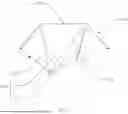
FIG. 1 is a first axial side view of an outdoor tent according to the present disclosure.
FIG. 2 is a top view of an outdoor tent according to the present disclosure.
FIG. 3 is a second axial side view of an outdoor tent according to the present disclosure.
FIG. 4 is a schematic diagram of an outer tent being stretched out.
FIG. 5 is a schematic diagram of an inner tent being stretched out.
FIG. 6 is a top view of an inner tent according to the present disclosure.
FIG. 7 is a partial enlarged view of the outdoor tent in FIG. 3.
FIG. 8 is a schematic diagram of setup principles of an outdoor tent according to the present disclosure.
REFERENCE NUMERALS OF THE ACCOMPANYING DRAWINGS
001. outer tent; 011. first outer tent component; 111. first outer tent fabric; 112. second outer tent fabric; 113. third outer tent fabric; 012. second outer tent component; 013. first ridge line; 014. first zipper; 003. inner tent; 031. first inner tent component; 311. first inner tent fabric; 312. second inner tent fabric; 032. second inner tent component; 033. second ridge line; 034. second zipper; and 004. supporting pole.
DETAILED DESCRIPTIONS OF THE EMBODIMENTS
In order to make the technical problems, technical solutions and beneficial effects of the present disclosure clearer, the present disclosure will be further described in detail below in conjunction with the drawings and embodiments. It should be understood that specific embodiments described herein are merely used to explain the present disclosure, and are not used to limit the present disclosure.
With reference to FIGS. 1-7, an embodiment of the present disclosure provides an outdoor tent, which includes an outer tent 001 and a connecting rope; where a bottom of the outer tent 001 is a parallelogram, and two ends of the connecting rope are respectively connected to any two opposite corners of the bottom of the outer tent 001. Specifically, the two ends of the connecting rope are arranged at diagonal positions of the bottom of the outer tent 001, and can be secured by sewing or other connecting methods. Therefore, the connecting rope functions as a diagonal of the parallelogram. Preferably, the bottom of the outer tent 001 is in a shape of diamond, and after being arranged, the connecting rope is equivalent to short diagonal of the diamond (that is, two adjacent closer diagonals), thereby shortening a length of the connecting rope and reducing weight and cost of the outdoor tent.
The connecting rope and two sides of the bottom of the outer tent 001 adjacent to the connecting rope form a triangle, that is, when lengths of the two sides of the bottom of the outer tent 001 and the connecting rope are limited, and the triangle is unique (when the triangle is fixed, a first corner is fixed, one side connected to the first corner is tightened, a second corner is then fixed, and other two sides are then tightened, and a third corner is then fixed to form a unique triangle, such that rapid setup of three corners of the bottom of the outer tent 001 can be completed by only tightening the three corners). After the three corners of the triangle are fixed, three corners of the bottom of the outer tent 001 are secured, and a last corner of the bottom of the outer tent 001 is tightened and secured (that is, two adjacent sides of the last corner are kept tight), such that the bottom of the outer tent 001 can be completely secured and the parallelogram is formed.
The outdoor tent further includes an inner tent 003, a bottom of the inner tent 003 is rectangular, and four corners of the bottom of the inner tent 003 are connected to the outer tent 001. In the present disclosure, after four corners of the bottom of the outer tent 001 are secured, the parallelogram will be formed, and bottoms of the inner tent 003 form a rectangle. Specifically, the four corners of the bottom of the inner tent 003 are directly sewn to the outer tent 001, where the two opposite corners of the inner tent 003 are sewn to the two opposite corners of the outer tent 001, and the other two corners are sewn to edges of the bottom of the outer tent 001. Since the bottom of the outer tent 001 is the parallelogram or diamond, while the bottom of the inner tent 003 is rectangular, a space between an inner side surface of the outer tent 001 and an outer side surface of the inner tent 003 is formed for storing items, and the inner tent 003 is mainly used for sleeping.
The outer tent 001 is provided with a first ridge line 013, the inner tent 003 is provided with a second ridge line 033, and two ends of the second ridge line 033 are fixedly arranged at two ends of the first ridge line 013; the outdoor tent further includes two support poles 004, and the support poles 004 are arranged inside the outer tent 001 and at the two ends of the first ridge line 013; and the two support poles 004 are arranged on an outer side of the inner tent 003. Since the outdoor tent of the present disclosure is mainly used for mountaineering, trekking poles can be directly used as the support poles 004. After the four corners of the outer tent 001 are secured by tent stakes, the entire tent can be set up through the support from two trekking poles. In order to ensure better support for the inner tent 003, tent stakes are also used at edges of the inner tent 003 connected to the outer tent 001, such that the outer tent 001 and the inner tent 003 are more spacious and tauter after the setup of the outdoor tent is completed.
The outer tent 001 consists of a first outer tent component 011 and a second outer tent component 012; after the outer tent 001 is supported, projections of bottoms of the first outer tent component 011 and the second outer tent components 012 are triangles in a same shape. The outer tent 001 is formed by sewing the first outer tent component 011 and the second outer tent component 012 together. The first outer tent component 011 and the second outer tent component 012 have a same structure, each of which includes a first outer tent fabric 111, a second outer tent fabric 112, and a third outer tent fabric 113. Bottoms of the first outer tent fabric 111 and the third outer tent fabric 113 of the first outer tent component 011 and the second outer tent component 012 form the parallelogram at the bottom of the outer tent 001. The first outer tent fabric 111, the second outer tent fabric 112, and the third outer tent fabric 113 are all triangles, and are sewn in sequence, two sides of one second outer tent fabric 112 are respectively sewn to the first outer tent fabric 111 and the third outer tent fabric 113, and the other side of the second outer tent fabric 112 is sewn to the other second outer tent fabric 112; one side of the first outer tent fabric 111 of the first outer tent component 011 is sewn to one side of the third outer tent fabric 113 of the second outer tent component 012, and one side of the third outer tent fabric 113 of the first outer tent component 011 is sewn to one side of the first outer tent fabric 111 of the second outer tent component 012; and two adjacent side of the two second outer tent fabrics 112 are sewn together to form the first ridge line 013. Therefore, the outer tent 001 of the present disclosure has a very sharp windward surface, which increases wind resistance. A first zipper 014 is provided on the first outer tent fabric 111 to facilitate entry to and exit from the outer tent 001.
The inner tent 003 consists of a first inner tent component 031 and a second inner tent component 032; the first inner tent component 031 and the second inner tent component 032 have a same structure, each of which includes a first inner tent fabric 311 and a second inner tent fabric 312, the first inner tent fabric 311 is a triangle, and the second inner tent fabric 312 is a quadrangle; bottoms of two first inner tent fabrics 311 and two second inner tent fabrics 312 form the rectangular at the bottom of the inner tent 003, such that the bottom of a space of the inner tent 003 tends to be rectangular, which is more comfortable to use; two sides of the first inner tent fabric 311 are sewn to sides of the two second inner tent fabrics 312, and tops of the two second inner tent fabrics 312 are sewn together to form the second ridge line 033; and the inner tent 003 further includes a bottom fabric arranged at the bottom, and the bottom is rectangular, and forms a sealed space with the first inner tent component 031 and the second inner tent component 032. A second zipper 034 is provided on the first inner tent fabric 311 to facilitate entry to and exit from the inner tent 003.
In the above description, the first outer tent component 011 and the second outer tent component 012 are directly sewn together, and are separately herein only for the convenience of description. Likewise, the first inner tent component and the second inner tent components are directly sewn together, and the inner tent is sewn to the outer tent to facilitate rapid setup.
The present disclosure further provides a setup method for the outdoor tent, where the four corners of the outer tent 001 are respectively provided with a first fixing member, a second fixing member, a third fixing member, and a fourth fixing member, the connecting rope is connected to edges of the bottom of the outer tent 001, and edges of the bottom of the outer tent 001 connected by the connecting rope are provided with the second fixing member and the third fixing member. The method involves fixing the four corners of the bottom of the outer tent 001, and specifically includes the following steps:
-
- step 1, fix the first fixing member to the second fixing member, and make the edges of the bottom of the outer tent 001 the first fixing member onto the second fixing member tightened by pulling;
- step 2, fix the third fixing member, and make connection between the first fixing member and the third fixing member, as well as the connecting rope tightened by pulling to form a stable triangle; and
- step 3, fix the fourth fixing member, and make connection between the second fixing member and the fourth fixing member, as well as between the third fixing member and the fourth fixing member tightened by pulling.
The first fixing member, the second fixing member, the third fixing member and the fourth fixing member are all fixed via tent stakes.
With reference to FIG. 8, setup principles of the outdoor tent of the present disclosure are as follows:
-
- a. trekking pole projection point;
- b. tent stake;
- c. setup auxiliary device for connecting Tent Stake {circle around (2)} and Tent Stake {circle around (3)} (that is, a simple schematic diagram of the connecting rope);
- d. tent top ridge line;
- e. tent side ridge line;
- f. internal sleeping area;
- g. inner tent; and
- h. vestibule.
The specific setup process is as follows:
-
- 1. a user sets Tent Stake {circle around (1)} and Tent Stake {circle around (2)} according to tent stake attachment point markers, in which case, edges of the outdoor tent between Tent Stake {circle around (1)} and Tent Stake {circle around (2)} are tightened due to pulling force;
- 2. the user sets Tent Stake {circle around (3)} and pulls Tent Stake Attachment Point {circle around (3)} outward as much as possible, in which case, edges of the tent between Tent Stake {circle around (1)} and Tent Stake {circle around (3)}, as well as between Tent Stake {circle around (2)} and Tent Stake {circle around (3)} (the connecting rope) are tightened due to pulling force, such that a stable triangle is formed;
- 3. the user sets Tent Stake {circle around (4)} and pulls Tent Stake Attachment Point {circle around (4)} outward as much as possible, in which case, edges of the tent between Tent Stake {circle around (3)} and Tent Stake {circle around (4)}, as well as between Tent Stake {circle around (2)} and Tent Stake {circle around (4)} are tightened due to pulling force, such that a stable triangle is formed, the four tent stakes are correctly set, and no further adjustment is required; and
- 4. the user adjusts lengths of the trekking poles to the desired lengths (such as, 125 cm), then uses the two trekking poles to support the two ends of the first ridge line 013, and the setup of the outdoor tent is completed.
In summary, the outdoor tent of the present disclosure adopts a method of setting up the outer tent first. Since the bottom of the outer tent is a parallelogram and the connecting rope functions as a diagonal of the parallelogram, rapid installation of the tent stakes at the four corners of the outer tent can be completed when the lengths of the four sides of the bottom of the outer tent and the length of the diagonal are fixed, making the setup fast and convenient.
Exemplary description is made on the present disclosure in conjunction with the above drawings. It is obvious that the specific implementation of the present disclosure is not limited to the above-mentioned method. All immaterial improvements made by using a method concept and a technical solution of the present disclosure, or the concept and technical solution of the present disclosure are directly applied to other occasions without improvement, are all within the scope of protection of the technical solution of the present disclosure.
It should be noted that the relation terms, for example, first, second, etc., are used herein merely for distinguishing one entity or operation from another entity or operation but do not necessarily require or imply that there exists any actual relation or sequence between these entities or operations. Furthermore, terms “comprising”, “including” or any other variants thereof are intended to cover the non-exclusive including, thereby making that the process, method, object or apparatus comprising a series of elements comprise not only those elements but also other elements that are not listed explicitly or the inherent elements to the process, method, merchandise or apparatus.
Claims
1. An outdoor tent, comprising an outer tent and a connecting rope, wherein
a bottom of the outer tent is a parallelogram, and two ends of the connecting rope are respectively connected to any two opposite corners of the bottom of the outer tent.
2. The outdoor tent according to claim 1, wherein the two ends of the connecting rope are arranged at diagonal positions of the bottom of the outer tent.
3. The outdoor tent according to claim 1, wherein the outdoor tent further comprises an inner tent, a bottom of the inner tent is rectangular, and four corners of the bottom of the inner tent are connected to the outer tent.
4. The outdoor tent according to claim 3, wherein after four corners of the bottom of the outer tent are secured, the parallelogram will be formed, and bottoms of the inner tent form a rectangle.
5. The outdoor tent according to claim 3, wherein the outer tent is provided with a first ridge line, the inner tent is provided with a second ridge line, and two ends of the second ridge line are fixedly arranged at two ends of the first ridge line.
6. The outdoor tent according to claim 5, wherein the outdoor tent further comprises two support poles, and the support poles are arranged inside the outer tent and at the two ends of the first ridge line; and the two support poles are arranged on an outer side of the inner tent.
7. The outdoor tent according to claim 1, wherein the outer tent consists of a first outer tent component and a second outer tent component; after the outer tent is supported, projections of bottoms of the first outer tent component and the second outer tent components are triangles in a same shape.
8. The outdoor tent according to claim 7, wherein the first outer tent component and the second outer tent component have a same structure, each of which comprises a first outer tent fabric, a second outer tent fabric, and a third outer tent fabric.
9. The outdoor tent according to claim 1, wherein the inner tent consists of a first inner tent component and a second inner tent component; the first inner tent component and the second inner tent component have a same structure, each of which comprises a first inner tent fabric and a second inner tent fabric, the first inner tent fabric is a triangle, and the second inner tent fabric is a quadrangle.
10. A setup method for the outdoor tent, which is used for setting up the outdoor tent according to claim 1, wherein the four corners of the outer tent are respectively provided with a first fixing member, a second fixing member, a third fixing member, and a fourth fixing member, the connecting rope is connected to edges of the bottom of the outer tent and is provided with the second fixing member and the third fixing member; and the setup method involves fixing the four corners of the bottom of the outer tent, and specifically comprises the following steps:
step 1, fixing the first fixing member to the second fixing member, and making the edges of the bottom of the outer tent between the first fixing member and the second fixing member tightened by pulling;
step 2, fixing the third fixing member, and making connection between the first fixing member and the third fixing member, as well as the connecting rope tightened by pulling to form a stable triangle; and
step 3, fixing the fourth fixing member, and making connection between the second fixing member and the fourth fixing member, as well as between the third fixing member and the fourth fixing member tightened by pulling.
Images & Drawings included:



Sources:
- United States Patent and Trademark Office - verify current appl. status at the USPTO↗
Recent applications in this class:
- » 20260062950 2026-03-05
DEPLOYABLE CANOPY SYSTEM - » 20260009258 2026-01-08
CORNER ANCHOR - » 20240229500 2024-07-11
TENTERED MULTIFUNCTIONAL DECORATIVE ELEMENT - » 20220186518 2022-06-16
Hybrid outdoor camping shelter - » 20190040649 2019-02-07
Device for tensioning a fabric of a tent - » 20180202186 2018-07-19
TENT WIND ROPE ADJUSTING STRUCTURE - » 20170284123 2017-10-05
Tension release system - » 20150368925 2015-12-24
System for Rapid Concealment and Shelter Including Angular Frames and Warfighter Covers - » 20140166798 2014-06-19
Cord Tensioning Device - » 20130099185 2013-04-25
Louver shade assembly