TOLERANCE-COMPENSATION UNIT AND FASTENING ASSEMBLY HAVING A TOLERANCE-COMPENSATION FUNCTION
US20260146480A1
2026-05-28
19/395,721
2025-11-20
Smart Summary: A tolerance-compensation unit is designed to improve how parts fit together in a fastening assembly. It has a base element with a round top and bottom surface, which allows for some movement. Two bushings, also with round surfaces on one side, fit around the base element. These bushings can be connected through a hole in the base, holding it in place while still allowing it to slide. This design helps accommodate any small differences in size or shape between the parts being fastened. 🚀 TL;DR
Abstract:
A tolerance-compensation unit for a fastening assembly includes: a base element having a central portion and a through opening provided in the central portion, the central portion having a spherical shaped first surface and an opposite, spherical shaped second surface; a first bushing having a spherical-shaped first surface and an opposite, planar second surface; and a second bushing having a first spherical-shaped surface and an opposite, planar second surface. The first and second bushings are configured to be connected together through the opening of the base element so that the central portion of the base element is sandwiched between the first and second bushings, while allowing the central portion of the base element to slide between the first and second bushings.
Assignee:
- MINEBEA ACCESSSOLUTIONS ITALIA S.P.A. 36 🇮🇹 Pianezza, Italy
Applicant:
Interested in similar patents?
Get notified when new applications in this technology area are published.
Classification:
E05B79/06 » CPC main
Mounting or connecting vehicle locks or parts thereof; Mounting of vehicle locks or parts thereof Mounting of handles, e.g. to the wing or to the lock
F16B5/0233 » CPC further
Joining sheets or plates, e.g. panels, to one another or to strips or bars parallel to them by means of fastening members using screw-thread the position of the plates to be connected being adjustable allowing for adjustment perpendicular to the plane of the plates
F16B5/025 » CPC further
Joining sheets or plates, e.g. panels, to one another or to strips or bars parallel to them by means of fastening members using screw-thread specially designed to compensate for misalignement or to eliminate unwanted play
F16B5/02 IPC
Joining sheets or plates, e.g. panels, to one another or to strips or bars parallel to them by means of fastening members using screw-thread
Description
CROSS-REFERENCE TO RELATED APPLICATIONS
This application claims priority to and the benefit of EP 24215880.6 filed on November 27, 2024, the disclosure of which is incorporated herein by reference.
FIELD
The present disclosure relates to vehicles and, more particularly, the fastening elements of a vehicle door assembly.
BACKGROUND
The statements in this section merely provide background information related to the present disclosure and may not constitute prior art.
Door handle assemblies generally include a handle, or grip member, which is fastened to a bracket which is fixed relative to the door panel. Usually, two fastening points are provided on the bracket for fastening the handle. When the length of the handle is long, a small dispersion in the dimensions of the door panel may cause a misalignment of the door handle with regard to the fastening points.
There is therefore a need to provide a fastening assembly for compensating angular variations due to a misalignment between the door panel and the bracket of the handle assembly.
SUMMARY
This section provides a general summary of the disclosure and is not a comprehensive disclosure of its full scope or all of its features.
An object of the invention is to provide a tolerance-compensation unit to be used in a fastening assembly, in order to compensate angular variations due to misalignment of the door panel and the door handle bracket.
To this end, the invention relates to a tolerance-compensation unit for a fastening assembly, including: a base element having a central portion and a through opening provided in the central portion, the central portion having a spherical shaped first surface and an opposite, spherical shaped second surface; a first bushing having a spherical-shaped first surface and an opposite, planar second surface; a second bushing having a first spherical-shaped surface and an opposite, planar second surface. The first and second bushings are configured to be connected together through the opening of the base element so that the central portion of the base element is sandwiched between the first and second bushings, while allowing the central portion of the base element to slide between the first and second bushings.
The tolerance-compensation unit may include the following features, considered either alone or in any technically possible combination:
The first bushing and the second bushing are releasably connected to each other, for example by the means of a snap-fit connection.
The first bushing includes a hollow-shaped, cylindrical protrusion configured to extend through the opening provided in the base element, the protrusion being provided at a free end with a connecting portion, the connecting portion being configured to releasably engage a connecting portion provided on the second bushing.
The maximum angular displacement of the base element relative to the first and second bushings is reached when an inner wall of the opening of the base element abuts on the protrusion of the first bushing.
The base element includes a connecting, peripheral portion, the peripheral portion configured to be connected to a first element to be fastened, such as a bracket of a door handle assembly.
The peripheral portion includes an inner wall, the inner wall forming a stop so that the maximum angular displacement of the base element relative to the first and second bushings is reached when the inner wall of the peripheral portion abuts on an outer wall of the first bushing relative to the first and second bushings.
The angular range of the displacement of the base element relative to the first and second bushings is at least equal to 8°.
The first bushing and the second bushing each includes a central through hole.
The invention also relates to a fastening assembly for fastening a door handle to a door bracket, the fastening assembly including a tolerance-compensation unit as disclosed above, a screw and a nut.
The fastening assembly may further include an axial compensation element, the axial compensation element being disposed so as to be in an abutment relationship with the tolerance-compensation unit.
The invention also relates to a vehicle comprising a door handle assembly, the door assembly comprising a door handle and a bracket, the handle being fastened to the bracket by the means of a fastening assembly as disclosed above.
The base element of each tolerance-compensation unit may be integral with the bracket.
Further areas of applicability will become apparent from the description provided herein. It should be understood that the description and specific examples are intended for purposes of illustration only and are not intended to limit the scope of the present disclosure.
DRAWINGS
In order that the disclosure may be well understood, there will now be described various forms thereof, given by way of example, reference being made to the accompanying drawings, in which:
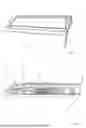
FIG. 1 is a perspective view showing a door panel equipped with a door handle assembly according to the invention.
FIG. 2 is a perspective view of the door panel of FIG. 1 without the handle.
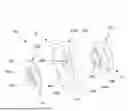
FIG. 3 is an exploded view of a tolerance-compensation unit according to the invention.
FIG. 4 is a cutaway view of the tolerance-compensation unit of FIG. 3.
FIG. 5 shows a fastening assembly according to the invention, with an offset angle equal to 0°.
FIG. 6 shows a fastening assembly according to the invention, with an offset angle equal to 4°.
FIGS. 7 and 8 show a fastening assembly according to the invention including an axial compensation device.
FIG. 9 is a perspective cross-section of the door panel of FIG. 1.
FIG. 10 is a perspective cross-section of the bracket with a base element of the tolerance-compensation unit which is integral with the bracket.
The drawings described herein are for illustration purposes only and are not intended to limit the scope of the present disclosure in any way.
DETAILED DESCRIPTION
The following description is merely exemplary in nature and is not intended to limit the present disclosure, application, or uses. It should be understood that throughout the drawings, corresponding reference numerals indicate like or corresponding parts and features.
FIGS. 1 and 2 illustrate a door panel 1 equipped with a door handle assembly 2 according to the invention. The door handle assembly includes a handle 2a fixed relative to a bracket 2b (shown in FIG. 2). Two fastening points 2c are provided on the bracket 2b, the handle being fastened to the bracket 2b by the means of fastening assemblies including screws. According to the invention, a tolerance-compensation unit is provided for each fastening assembly.
A tolerance-compensation unit 10 according to the invention is shown in FIGS. 3 and 4. The tolerance-compensation unit 10 includes a base element 12, a first bushing 14 and a second bushing 16.
The base element 12 includes a central portion 120 and a connecting, peripheral portion 122.
In a first embodiment shown in FIGS. 3 to 8, the peripheral portion 122 is configured to be releasably connected to a first element to be fastened, such as the bracket 2b of the handle assembly. In a second embodiment shown in FIGS. 9 and 10, the peripheral portion 122, and therefore the base element 12, can be integral with the bracket 2b.
The central portion 120 has a spherical shape. More particularly, the central portion 120 has a spherical-shaped first surface 120a, or top surface 120a, and an opposite, spherical-shaped second surface 120b, or bottom surface 120b. The central portion 120 of the base element 12 includes a central, through hole 120c, which has a cylindrical shape.
The first bushing 14 has a spherical-shaped first surface 140, or bottom surface 140 and an opposite, planar second surface 142, or top surface 142. A central through hole 144 is provided within the first bushing 14, which is cylindrical in shape.
The second bushing 16 has a spherical shaped first surface 160, or top surface 160, and an opposite, planar second surface 162, or bottom surface 162. A central through hole 164 is provided within the second bushing 16, which is cylindrical in shape.
The first bushing 14 and the second bushing 16 are configured to be connected to each other through the hole 120c of the central portion 120 of the base element 12, for example via a detachable snap-in connection. To that end, one of the first and second bushings 14, 16, for example the first bushing 14 may include a hollow-shaped, cylindrical protrusion 146. The cylindrical protrusion 146 includes at its free end a connecting portion 146a configured to releasably engage a connecting portion 164a on the inner wall of the hole 164 of the second bushing 16. The cylindrical protrusion 146 provided on the first bushing 14 is configured to extend, when the tolerance- compensation unit 10 is assembled, through the hole 120c provided in the base element, as shown in FIG. 4. When the base element 12, the first bushing 14 and the second bushing 16 are assembled, the base element 12 is sandwiched between the first bushing 14 and the second bushing 16. Further, the connection between the first bushing 14 and the second bushing 16 allows the base element 12 to slide between the two bushings 14, 16. This configuration thus allows an angular displacement of the base element 12 relative to the two bushings 14, 16.
In the fastening assembly according to the invention, as shown in FIGS. 5 and 6, the base element 12 is fixed relative to the bracket 2b of the door handle assembly 2. The first bushing 14 is configured to be in an abutment relationship with the head of a fastening screw 18, whereas the second bushing 16 is configured to be in an abutment relationship with an inner surface of the door panel 1. The screw 18 is secured to a nut 20. In FIG. 5, no misalignment is caused between the base element 12 and the bushings 14, 16. Therefore, the central axis X of the through hole 120c of the base element 12 is parallel to the central axis Y of the through holes 144, 164 of the bushings 14, 16. In FIG. 6, a misalignment is caused and the central axis X, Y are not aligned. The tolerance-compensation unit 10 according to the invention therefore allows compensating misalignment between the bracket 2b and the door panel 1 when securing the door handle 2a to the bracket 2b.
In the embodiments shown in the figures, the angular range of the displacement of the base element 12 relative to the bushings 14, 16 is at least equal to 8°. As shown in FIG. 6, the maximum angular displacement is reached when the inner wall 120d of the hole 120c of the base element 12 abuts on the protrusion 146 of the first bushing 14. In another embodiment (not shown), the maximum angular displacement is reached when an inner wall 122a of the peripheral portion 122 of the base element 12 abuts on an outer wall 148 of the first bush 14.
As shown in FIGS. 7 to 9, the tolerance compensation unit according to the invention can be used together with an axial compensation unit 22 allowing to compensate axial dispersion between the bracket 2b and the door panel 1. In this case, the tolerance compensation unit 10 is an abutment relationship with the axial compensation unit 22, the latter being sandwiched between the door panel 1 and the tolerance compensation unit 10.
Unless otherwise expressly indicated herein, all numerical values indicating mechanical/thermal properties, compositional percentages, dimensions and/or tolerances, or other characteristics are to be understood as modified by the word “about” or "approximately" in describing the scope of the present disclosure. This modification is desired for various reasons including industrial practice, material, manufacturing, and assembly tolerances, and testing capability.
As used herein, the phrase at least one of A, B, and C should be construed to mean a logical (A OR B OR C), using a non-exclusive logical OR, and should not be construed to mean “at least one of A, at least one of B, and at least one of C.”
The description of the disclosure is merely exemplary in nature and, thus, variations that do not depart from the substance of the disclosure are intended to be within the scope of the disclosure. Such variations are not to be regarded as a departure from the spirit and scope of the disclosure.
Claims
What is claimed is:1. A tolerance-compensation unit for a fastening assembly, comprising:
a base element having a central portion and a through opening provided in the central portion, the central portion having a spherical shaped first surface and an opposite, spherical shaped second surface;
a first bushing having a spherical-shaped first surface and an opposite, planar second surface;
a second bushing having a first spherical-shaped surface and an opposite, planar second surface;
wherein the first and second bushings are configured to be connected together through the opening of the base element so that the central portion of the base element is sandwiched between the first and second bushings, while allowing the central portion of the base element to slide between the first and second bushings.
2. The tolerance-compensation unit according to claim 1, wherein the first bushing and the second bushing are releasably connected to each other by a snap-fit connection.
3. The tolerance-compensation unit according to claim 2, wherein the first bushing includes a hollow-shaped, cylindrical protrusion configured to extend through the opening provided in the base element, the protrusion being provided at a free end with a connecting portion, the connecting portion being configured to releasably engage a connecting portion provided on the second bushing.
4. The tolerance-compensation unit according to claim 3, wherein a maximum angular displacement of the base element relative to the first and second bushings is reached when an inner wall of the opening of the base element abuts on the protrusion of the first bushing.
5. The tolerance-compensation unit according to claim 1, wherein the base element includes a connecting, peripheral portion, the peripheral portion configured to be connected to a first element to be fastened, such as a bracket of a door handle assembly.
6. The tolerance-compensation unit according to claim 5, wherein the peripheral portion includes an inner wall, the inner wall forming a stop so that a maximum angular displacement of the base element relative to the first and second bushings is reached when the inner wall of the peripheral portion abuts on an outer wall of the first bushing.
7. The tolerance-compensation unit according to claim 3, wherein an angular range of displacement of the base element relative to the first and second bushings is at least equal to 8°.
8. The tolerance-compensation unit according to claim 1, wherein the first bushing and the second bushing each includes a central through hole.
9. A fastening assembly for fastening a door handle to a door bracket, the fastening assembly comprising:
the tolerance-compensation unit according to claim 1; and
a screw and a nut.
10. The fastening assembly according to claim 9, including an axial compensation element, the axial compensation element being disposed so as to be in an abutment relationship with the tolerance-compensation unit.
11. A vehicle comprising a door handle assembly, the door handle assembly comprising a door handle and a bracket, the door handle being fastened to the bracket by the fastening assembly according to claim 9.
12. The vehicle according to claim 11, wherein the base element of each tolerance-compensation unit is integral with the bracket.
Images & Drawings included:


Sources:
- United States Patent and Trademark Office - verify current appl. status at the USPTO↗
Recent applications in this class:
- » 20260132658 2026-05-14
DOOR HANDLE - » 20260078613 2026-03-19
Vehicle Door for a Motor Vehicle, in Particular for a Passenger Car, and Motor Vehicle - » 20250354415 2025-11-20
VEHICLE CABIN SECURITY APPARATUS, SYSTEMS, AND METHODS - » 20250207438 2025-06-26
DOOR HANDLE AND ASSEMBLY METHOD TO MITIGATE COMPONENT TOLERANCES - » 20250198203 2025-06-19
VEHICLE DOOR HANDLE ASSEMBLY - » 20250137299 2025-05-01
DOOR STRUCTURE FOR A MOTOR VEHICLE - » 20250084673 2025-03-13
PART UNIT AND STRUCTURE FOR ASSEMBLING VEHICLE BODY - » 20250075536 2025-03-06
CAR TAILGATE HANDLE BASE REINFORCEMENT REPAIR METHOD AND STRUCTURE - » 20250052095 2025-02-13
Tolerance Compensating Fastener and Wing Nut Therefor - » 20240368926 2024-11-07
BRACKET TO BE ASSEMBLED TO AN INNER SIDE OF A VEHICLE DOOR AND ASSOCIATED ASSEMBLY AND METHOD
Recent applications for this Assignee:
- » 20260146483 2026-05-28
DOOR HANDLE ASSEMBLY FOR A VEHICLE DOOR INCLUDING A SENSOR MODULE - » 20260139524 2026-05-21
SWITCH ASSEMBLY FOR AN ELECTRICALLY RELEASED DOOR, AND VEHICLE DOOR HANDLE AND VEHICLE DOOR COMPRISING THE SAME - » 20260132658 2026-05-14
DOOR HANDLE - » 20260132657 2026-05-14
INERTIAL DEVICE FOR A FLAP HANDLE - » 20260117567 2026-04-30
DOOR HANDLE ASSEMBLY FOR A VEHICLE DOOR - » 20260116484 2026-04-30
DEVICE AND METHOD FOR TOLERANCE COMPENSATION - » 20250382831 2025-12-18
METHOD AND DEVICE FOR CONTROLLING A DOOR LOCK DEVICE OF A MOTOR VEHICLE - » 20250381974 2025-12-18
METHOD AND DEVICE FOR DETECTING A RISK OF COLLISION WHEN A DOOR OF A MOTOR VEHICLE IS OPENED - » 20250327342 2025-10-23
INERTIAL DEVICE FOR A DOOR HANDLE AND SYSTEM COMPRISING SAID DEVICE - » 20250243696 2025-07-31
VEHICLE DOOR HANDLE ASSEMBLY