SEALING DEVICE FOR POSITIONING POINTS IN HOLES OF PROCESS GROUTING
US20260146535A1
2026-05-28
19/452,849
2026-01-19
Smart Summary: A sealing device helps position points in holes during the grouting process. It has an isolation component attached to an anchor cable body that connects to an isolation sleeve. This sleeve can be moved into place in a borehole to isolate surrounding rock areas. The device uses airbags that inflate and expand to create a tight seal against the hole wall. This setup allows for effective isolation at specific spots, making it easier to perform grouting in stages and specific regions. 🚀 TL;DR
Abstract:
A sealing device for positioning points in holes of process grouting is provided, which includes an isolation component provided on an anchor cable body. The isolation component is detachably connected to an isolation sleeve through a coupling component, the isolation sleeve can be provided on the anchor cable body to send the isolation component into a corresponding position in a borehole and cooperates with the isolation component to perform a fixed-point isolation on a surrounding rock area in the borehole. A combination of the isolation component and the isolation sleeve sleeved on the anchor cable body is used, and the inflation and expansion of the first and second airbags are used to achieve tight contact with a hole wall, thereby forming effective isolation at specific locations within the borehole, thereby laying a foundation for dynamic grouting in stages and regions. The docking part is provided with an installation groove.
Inventors:
- Lei Fan 1 🇨🇳 Huainan, China
- Jucai Chang 1 🇨🇳 Huainan, China
- Zhiqiang Yin 1 🇨🇳 Huainan, China
- Tuo Wang 1 🇨🇳 Huainan, China
- Chao Qi 1 🇨🇳 Huainan, China
- Yijun Guo 1 🇨🇳 Huainan, China
- Lianghuan Yan 1 🇨🇳 Huainan, China
- Hongda Wang 1 🇨🇳 Huainan, China
- Li Lin 1 🇨🇳 Huainan, China
Applicant:
Interested in similar patents?
Get notified when new applications in this technology area are published.
Description
CROSS-REFERENCE TO RELATED APPLICATIONS
This application is a continuation of International Application No. PCT/CN2025/127546, filed on Oct. 14, 2025, which claims priority to Chinese Patent Application No. 202411446082.2, filed on Oct. 16, 2024. Both of which are hereby incorporated by reference in their entireties.
TECHNICAL FIELD
The present disclosure relates to the field of mine roadway technologies, and in particular, to a sealing device for positioning points in holes of process grouting.
BACKGROUND
In the field of roadway excavation and support, anchor grouting technology has become a key means to enhance the stability of surrounding rocks and ensure the safety of roadways. However, traditional anchor grouting methods often adopt a one-time grouting method, which involves grouting reinforcement of the entire borehole section immediately after excavation or completion of excavation. Although this approach simplifies the construction process to a certain extent, it ignores the dynamic changes in the surrounding rock state of the roadway during the service period, which has led to a series of problems.
Specifically, after excavation, the stress in the surrounding rock mass of the roadway will be redistributed. Besides that, it is affected by various factors such as geological tectonic movements, groundwater activity, and mining pressure. The degree of rock fragmentation, fracture development, and stress state of the surrounding rock will continue to evolve over time. Therefore, the one-time grouting is difficult to effectively cope with the continuously changing surrounding rock environment, and its grouting effect is often difficult to last, even leading to grouting failure in a later stage of roadway service.
Furthermore, the one-time grouting method also has the problem of premature closure of the grouting channel. Once the grouting is completed, if it is necessary to reinforce the same area again in the later stage, anchor holes must be re-provided, which not only greatly increases the construction difficulty and cost investment, but also may reduce the overall safety of the roadway due to repeated disturbance of the surrounding rocks. At the same time, reproving anchor holes will also damage the support structure of the original roadway, thereby further exacerbating the complexity of roadway maintenance.
SUMMARY
The present disclosure proposes a sealing device for positioning points in holes of process grouting, which is used in combination with corresponding anchor cable structures and surrounding rock grouting reinforcement methods to solve the above-mentioned problems in the prior art.
The present disclosure is implemented by the following technical solution.
A sealing device for positioning points in holes of process grouting, including: an isolation component sleeved on an anchor cable body, where the isolation component is detachably connected to an isolation sleeve through a coupling component, and the isolation sleeve is configured to be sleeved on the anchor cable body to send the isolation component into a corresponding position in a borehole and cooperates with the isolation component to perform a fixed-point isolation on a surrounding rock area in the borehole.
In some embodiments of the present disclosure, the isolation component includes a first airbag and a second airbag that are arranged opposite to each other; the first airbag and the second airbag are communicated by a connection pipe, and the second airbag is provided with a first airflow channel; the isolation sleeve is provided with a second airflow channel that is configured to communicate to the first airflow channel; the second airflow channel is connected to an inflation device configured to inflate the first airbag and the second airbag to achieve the fixed-point isolation after they expand and contact with a hole wall.
In some embodiments of the present disclosure, where first airbag and the second airbag are respectively provided with first and second limit baffles on two sides, so that the first airbag and the second airbag only deploy towards a drilling hole when inflated.
In some embodiments of the present disclosure, where a sealing space is formed between the first limit baffle and the second limit baffle, and the sealing space is communicated to a first slurry channel; the isolation sleeve is provided with a second slurry channel that is configured to communicate to the first slurry channel, and the second slurry channel is connected to a grouting valve for injecting grout into the sealing space to achieve firm fixed-point isolation.
In some embodiments of the present disclosure, where a check valve is provided on the first airflow channel to prevent gas from escaping from the airbag.
In some embodiments of the present disclosure, where a first pressure valve configured to monitor gas pressure is provided on the second airflow channel.
In some embodiments of the present disclosure, where a second pressure valve configured to monitor fluid pressure is provided on the second slurry channel.
In some embodiments of the present disclosure, where the coupling component includes a docking part provided outside the second limit baffle and corresponding to the isolation sleeve; the docking part is provided with a first magnet, and the isolation sleeve is provided with a second magnet corresponding to the first magnet at one end facing the isolation component; the first magnet and the second magnet are configured to be coupled and adsorbed to facilitate the isolation sleeve to send the isolation component to the corresponding position in the borehole for rock partition and fixed-point isolation, after the isolation is completed, the first magnet and the second magnet are configured to be detached under an external force to recover the isolation sleeve.
In some embodiments of the present disclosure, where the docking part is provided with an installation groove, and the installation groove is provided with the first magnet; the second magnet matches a shape of the installation groove, and the second magnet is configured to be inserted into the installation groove and coupled and adsorbed with the first magnet, so that the docking part is tightly coupled with the isolation sleeve.
Compared with the existing technology, the present disclosure has the following advantages.
-
- 1. The present disclosure utilizes a combination of the isolation component and the isolation sleeve sleeved on the anchor cable body, particularly by utilizing the inflation and expansion of the first and second airbags to achieve tight contact with the hole wall, thereby forming effective sealing and isolation at specific locations within the borehole, laying a foundation for dynamic grouting in stages and regions.
- 2. The docking part is provided with the installation groove that accommodates the first magnet, corresponding to the second magnet at the end of the isolation sleeve. This design not only facilitates the delivery of the isolation component into the borehole but also allows for easy retrieval of the isolation sleeve after the isolation is completed, thereby improving the reusability and operational convenience of the device.
- 3. The present disclosure prevents gas from escaping from the airbag by providing the check valve, and the first pressure valve and the second pressure valve monitor the pressure of gas and fluid respectively, ensuring the safety and reliability of the partition and fixed-point isolation process.
BRIEF DESCRIPTION OF DRAWINGS
In order to provide a clearer explanation of the technical solution in the embodiments of the present disclosure, a brief introduction will be given to the accompanying drawings required for the description of the embodiments.
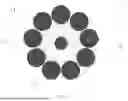
FIG. 1 is a vertical sectional schematic diagram of an anchor cable body according to embodiment 1 of the present disclosure.
FIG. 2 is a schematic diagram of an anchoring of the anchor cable body in a borehole according to embodiment 1 of the present disclosure.
FIG. 3 is a first schematic diagram of fixed-point isolation in a borehole according to embodiment 2 of the present disclosure.
FIG. 4 is a second schematic diagram of fixed-point isolation in the borehole according to embodiment 2 of the present disclosure.
FIG. 5 is a third schematic diagram of fixed-point isolation in the borehole according to embodiment 2 of the present disclosure.
FIG. 6 is a fourth schematic diagram of fixed-point isolation in the borehole according to embodiment 2 of the present disclosure.
FIG. 7 is a schematic diagram of installation in the borehole according to embodiment 1 of the present disclosure.
FIG. 8 is a schematic structural diagram of embodiment 2 of the present disclosure.
FIG. 9 is a schematic structural diagram of the isolation component in embodiment 2 of the present disclosure.
FIG. 10 is a schematic cross-sectional view taken along line A-A in FIG. 9.
FIG. 11 is a flowchart of steps of a grouting reinforcement method for a surrounding rock process in embodiment 3 of the present disclosure.
FIG. 12 is a schematic diagram of steps implemented in step S8 of embodiment 3 of the present disclosure.
DESCRIPTION OF EMBODIMENTS
In order to make the technical problem, technical solution, and beneficial effects solved by this application clearer and more understandable, the following will provide further detailed explanations of the present application in combination with the accompanying drawings and embodiments. It should be understood that the specific embodiments described herein are only used to explain the present application and are not intended to limit the present application.
Embodiment 1: please refer to FIGS. 1 to 7 and 12. This embodiment provides an anchor cable structure that can achieve process grouting, including an anchor cable body 1 provided in a borehole. The anchor cable body 1 is provided with a plurality of first steel strands 11, and cross-sections of the plurality of first steel strands 11 are in a circular array. An isolation pipe 12 is provided on inner sides of the plurality of first steel strands 11, and a grouting tube group 13 is provided inside the isolation pipe 12. The grouting tube group 13 can independently inject grout into different sections at different times according to the surrounding rock conditions in the borehole.
In this embodiment, the anchor cable body 1 is provided inside the borehole, and the anchor cable body 1 serves as a main body of the entire structure and is responsible for transmitting tension and maintaining structural stability. Inside the anchor cable body 1, a plurality of first steel strands 11 are arranged, which can be 6, 7, 9, etc., designed according to the strength requirements of the anchor cable. These steel strands are arranged in a circular array to ensure uniform distribution under stress, thereby improving the load-bearing capacity and stability of the anchor cables. In an implementation mode, 9 first steel strands 11 can be provided, which are evenly distributed within a cross-section of the anchor cable body 1 with an axis of the anchor cable body 1 as a center. On the inner side of the 9 first steel strands 11, there is the isolation pipe 12. The function of the isolation pipe 12 is to separate the first steel strands 11 from the grouting pipe group 13, thereby preventing the first steel strands 11 from squeezing the grouting pipe group 13. Inside the isolation pipe 12, there is the grouting pipe group 13. The grouting pipe group 13 is composed of a plurality of grouting pipes, with the number of grouting pipes ranging from 3, 4, 5, etc. depending on the fragmentation of the surrounding rock in the hole. Each grouting pipe is independently controllable and can be independently injected into different sections at different times according to the actual fragmentation of the surrounding rock in the hole. For example, when it is found that the surrounding rock in a certain section of the roadway is highly fragmented, an appropriate amount of grouting material can be injected into the section through the corresponding grouting pipe to reinforce the surrounding rock and improve the anchoring force of the anchor cable. During grouting, if the degree of rock fragmentation in certain sections of the roadway is low and does not require grouting, or if the grouting reinforcement effect is poor at that time, the development of the surrounding rock can be observed later. If the surrounding rock in one section that was not grouted in the early stage has significant deformation and high degree of fragmentation, grouting reinforcement treatment can be carried out on the corresponding section of the surrounding rock through corresponding grouting pipes.
In an implementation mode, the grouting pipe group 13 includes a first grouting pipe 131, a second grouting pipe 132, and a third grouting pipe 133 arranged along an inner wall of the isolation pipe 12. The lengths of the first grouting pipe 131, the second grouting pipe 132, and the third grouting pipe 133 in the borehole are different to facilitate independent grouting in their respective sections.
In this embodiment, the first grouting pipe 131 can be arranged to have a longest length, extending to a deep section of the borehole, corresponding to the reinforcement of the surrounding rock in the deep section or grouting requirements in special circumstances. The second grouting pipe 132 has moderate length, corresponding to a middle section of the borehole. When the degree of rock fragmentation in the middle section is high and further reinforcement is needed, the second grouting pipe 132 is used for grouting. The length of the third grouting pipe 133 is relatively short, mainly corresponding to a shallow section of the borehole. When the surrounding rock in this section is relatively loose or requires initial reinforcement, grouting material can be injected through the first grouting pipe 131.
In an implementation mode, in an early stage of roadway excavation, if the overall fragmentation of the surrounding rock is high, the first grouting pipe 131, the second grouting pipe 132, and the third grouting pipe 133 can be reinforced simultaneously. If only one certain section, such as shallow surrounding rock, is relatively fragmented, grouting can be carried out only through the third grouting pipe 133. During the subsequent service period of the roadway, the development of the surrounding rock can be observed through drilling to determine whether grouting reinforcement should be carried out through the first grouting pipe 131 and the second grouting pipe 132.
In an implementation mode, the isolation tube is provided with a second steel strand 14, and the addition of the second steel strand 14 provides additional tensile support, enhancing the overall load-bearing capacity of the anchor cable structure. The second steel strand 14 is provided between the first grouting pipe 131, the second grouting pipe 132, and the third grouting pipe 133. In order to prevent the second steel strand 14 from squeezing the grouting pipe during stress or grouting process, the isolation pipe 12 is filled with a setting agent 15. The setting agent 15 has good fluidity and curing properties, and can quickly cure after filling, thereby forming a stable support structure to ensure a relative position between the second steel strand 14 and the grouting pipe to be fixed, avoiding mutual compression. In an implementation mode, the setting agent 15 can be selected from resin or polymer-based setting agents.
In an implementation mode, it also includes a tray 2 that is sleeved onto the anchor cable body 1 and in contact with the rock and soil mass at an orifice. An inner side of the tray 2 is provided with a grout stopper 21 to prevent the loss of slurry from the gap between the anchor cable body 1 and the rock and soil mass. The grout stopper 21 is sleeved onto the anchor cable body 1, and an outer side of the tray 2 is provided with a lock 22 that can be used to fix the anchor cable body 1.
In this embodiment, the tray 2 is sleeved on the outside of the anchor cable body 1, and the tray 2 is in contact with the rock and soil mass at the orifice, playing a role in dispersing the anchor cable tension and protecting the rock and soil mass at the orifice. In order to prevent the slurry from flowing out of the gap between the anchor cable body 1 and the rock and soil mass during the grouting process, the grout stopper 21 is provided on the inside of the tray 2. The grout stopper 21 is sleeved to the anchor cable body 1, tightly fitting the gap between the anchor cable body and the rock and soil mass, ensuring the effective injection of grout and the achievement of anchoring effect.
Besides that, in order to fix the anchor cable body 1 and ensure its stability during long-term use, the lock 22 is provided on the outer side of the tray 2. The lock 22 can use fasteners such as bolts and nuts to tightly connect the tray 2 to the exposed structural part of the rock and soil or anchor cable body 1, preventing the anchor cable from sliding or falling off under force.
In an implementation mode, the anchor cable body 1 is provided with a plurality of positioning devices, which are configured to cooperate with the positioning points sealing device to divide the surrounding rock area inside the borehole, in order to implement grouting during the process. In an implementation mode, the positioning device may include a first baffle 16 provided at a tail end of the anchor cable body 1, and the first baffle 16 is matched with an inner wall of the borehole to separate the anchoring area at the tail end of the anchor cable body 1 from other surrounding rock areas, thereby preventing grout from overflowing to other areas during grouting in the anchoring area.
In an implementation mode, the positioning device includes a second baffle 17 provided on the anchor cable body 1, which is configured to cooperate with the positioning points sealing device to divide the surrounding rock in the borehole. The second baffle 17 is provided between discharge ports of the first grouting pipe 131 and the second grouting pipe 132. This means that when the second baffle 17 cooperates with the positioning points sealing device to complete the isolation, the surrounding rock area between the first baffle 16 and the second baffle 17 becomes an independent grouting area corresponding to the first grouting pipe 131. For clarity, this independent grouting area can be set as a first partition zone 31.
In an implementation mode, the positioning device further includes a positioning block 18 provided on the anchor cable body 1, and the positioning block 18 is configured to cooperate with the positioning points sealing device to divide the surrounding rock in the borehole into another area. The positioning block 18 is provided between the discharge ports of the second grouting pipe 132 and the third grouting pipe 133. This means that when the positioning block 18 cooperates with the positioning points sealing device to complete the isolation, the surrounding rock area between the second baffle 17 and the positioning block 18 becomes an independent grouting area corresponding to the second grouting pipe 132. For clarity, this independent grouting area can be set as a second partition zone 32. It should be understood that the surrounding rock area from the sealing point formed by the positioning block 18 in combination with the positioning points sealing device to the borehole opening is the independent grouting area corresponding to the third grouting pipe 133, which can be set as a third partition zone 33. It should be noted that in an implementation mode, based on the fragmentation of the surrounding rock in the borehole, more independent grouting zones can be divided, and the anchor cable structure can also be provided with a corresponding number of grouting pipes. This embodiment is only a specific example and does not serve as the only limitation on the anchor cable structure that can achieve process grouting.
Embodiment 2: please refer to FIGS. 3 to 6, 9, and 10. This embodiment provides a sealing device for positioning points in holes of process grouting, which includes an isolation component 5 sleeved on the anchor cable body 1. The isolation component 5 is detachably connected to an isolation sleeve 7 through a coupling component 6. The isolation sleeve 7 can be sleeved on the anchor cable body 1 to send the isolation component 5 into a corresponding position in a borehole and cooperates with the isolation component 5 to perform fixed-point isolation on a surrounding rock area in the borehole.
In this embodiment, the isolation component 5 is a core part of the positioning points sealing device, which is sleeved on the anchor cable body 1 and made of high-strength and wear-resistant materials to ensure stability and durability in complex environments inside the borehole. In an implementation mode, the isolation component 5 can be circular or approximately circular as a whole to adapt to the shape of the borehole, and an axis of the isolation component 5 is provided with a sleeve channel 9 that is adapted to the cross-section of the anchor cable body 1. The isolation sleeve 7 is sleeved on the anchor rod body 1, configured to push the isolation component 5 to the corresponding position and perform fixed-point isolation on the surrounding rock area in the borehole. It should be noted that the isolation component 5 is consumable, and a plurality of surrounding rock zones can be formed under the application of a plurality of isolation components 5. For example, when two isolation components 5 are applied in the borehole, the entire borehole can be divided into three independent surrounding rock zones. When applying the anchor cable structure as mentioned in embodiment 1, grouting can be carried out at different times.
In an implementation mode, the isolation component 5 includes a first airbag 51 and a second airbag 52 that are arranged relatively to each other. The first airbag 51 and the second airbag 52 are communicated by a connection pipe 53, and the second airbag 52 is provided with a first airflow channel 54. The isolation sleeve 7 is provided with a second airflow channel 71 that can be communicated to the first airflow channel 54. The second airflow channel 71 is connected to an inflation device 72 for inflating the first airbag 51 and the second airbag 52, causing them to expand and then contact a hole wall so as to achieve fixed-point isolation.
In this embodiment, the isolation component 5 includes the first airbag 51 and the second airbag 52 that are relatively arranged. The airbag is made of high-strength, wear-resistant, and well airtight materials. The first airbag 51 and the second airbag 52 can be circular airbags with the sleeve channel 9 as an axis, which can be adaptively sleeved to the anchor cable body 1 to ensure that they can tightly contact the hole wall after inflation and achieve effective fixed-point isolation.
In order to ensure that the two airbags can expand synchronously during inflation, maintain the uniformity and stability of the sealing effect, the connection pipe 53 is provided between the first airbag 51 and the second airbag 52 for communication. Specifically, the second airbag 52 is provided with the first airflow channel 54 as an inlet for airbag inflation correspondingly.
The isolation sleeve 7 is provided with the second airflow channel 71 that can be communicated to the first airflow channel 54. This design enables the inflation device 72 to inflate the first airbag 51 and the second airbag 52 through the second airflow channel 71 and the first airflow channel 54. The inflation device 72 can be manually or automatically inflated, such as a manual air cylinder or an automatic inflation pump, etc., adjusted according to actual needs.
In an implementation mode, the first airbag 51 and the second airbag 52 are respectively provided with a first limit baffle 55a, a first limit baffle 55b, a second limit baffle 56a, and a second limit baffle 56b on two sides, so that the first airbag 51 and the second airbag 52 only deploy towards a drilling hole direction during inflation. In an implementation mode, when inflating the airbag, the first and second limit baffles 55a and 55b, limit the deployment direction of the first airbag 51, and the second limit baffles 56a and 56b limit the deployment direction of the second airbag 52. Besides that, the first, second limit baffles 55a, 55b, 56a and 56b, can be annular baffles with the sleeve channel 9 along their axis, which can be adaptively sleeved onto the anchor cable body 1 to ensure that they only deploy towards the drilling hole diameter, tightly contact the hole wall, and do not move or deform along the axial direction of the anchor cable body 1.
In an implementation mode, a sealing space 57 is formed between the first limit baffle 55b and the second limiting baffle 56a. The sealing space 57 is communicated to the first slurry channel 58, and the isolation sleeve 7 is provided with a second slurry channel 73 that can be communicated to the first slurry channel 58. The second slurry channel 73 is connected to a grouting valve 74 for injecting grout into the sealing space 57 to achieve a firm fixed-point isolation.
In this embodiment, the sealing space 57 is located between the first airbag 51 and the second airbag 52, and is surrounded by the first limit baffle 55b, the second limit baffle 56a, and the outer wall of the airbag. This space will be filled with grout during grouting, and after the grouting solidifies, it forms a strong and sealed isolation structure with the isolation component. The sealing space 57 is communicated to a first slurry channel 58, which serves as a passage for slurry to enter the sealing space. Correspondingly, the isolation sleeve 7 is provided with the second slurry channel 73 that can be communicated to the first slurry channel 58. The second slurry channel 73 is connected to the grouting valve 74 for controlling the injection of slurry into the sealing space 57.
In an implementation mode, the first airflow channel 54 is provided with a check valve 541 to prevent gas from escaping from the airbag, the second airflow channel 71 is provided with a first pressure valve 75 configured to monitor gas pressure, and the second slurry channel 73 is provided with a second pressure valve 76 configured to monitor fluid pressure.
In this embodiment, the check valve 541 is added to the first airflow channel 54 to prevent gas from escaping after inflation and weakening the isolation effect. The check valve 541 allows gas to flow unidirectionally into the airbag while preventing gas from flowing out of the airbag, thereby ensuring the durability and stability of the sealing and isolation. Besides that, to ensure effective control of gas pressure during inflation, the first pressure valve 75 is provided on the second airflow channel 71 for real-time monitoring of gas pressure, and automatically closes when the pressure reaches a preset value to prevent damage to the airbag due to excessive inflation. Similarly, the second pressure valve 76 for monitoring fluid pressure is provided on the second slurry channel 73, allowing an operator to accurately control the pressure during the grouting process, ensuring that the slurry can be evenly filled into the sealing space 57. After filling, it can be stopped in a timely manner to avoid slurry leakage or equipment damage caused by excessive pressure.
In an implementation mode, the coupling component 6 includes a docking part 61 provided outside the second limit baffle 56 and corresponding to the isolation sleeve 7. The docking part 61 is provided with a first magnet 62, and one end of the isolation sleeve 7 facing the isolation component 5 is provided with a second magnet 67 corresponding to the first magnet 62. The first magnet 62 and the second magnet 67 can be coupled and adsorbed to facilitate the isolation sleeve 7 to send the isolation component 5 to the corresponding position in the borehole for rock partition and fixed-point sealing and isolation. After the sealing and isolation is completed, the first magnet 62 and the second magnet 67 can be subjected to an external force and be detached to extract the isolation sleeve 7 from the borehole for recovery.
In this embodiment, the coupling component 6 includes the docking part 61 provided outside the second limit baffle 56b and corresponding to the isolation sleeve 7, ensuring precise alignment between the isolation component 5 and the isolation sleeve 7, providing a foundation for subsequent magnet coupling. The first magnet 62 and the second magnet 67 can be made of high-strength and highly stable magnetic materials to ensure sufficient adsorption force during the coupling process.
Through the magnetic coupling mechanism, the isolation sleeve 7 can be firmly connected to the isolation component 5 and sent together to the corresponding position in the borehole. After completing the sealing and isolation operation, the operator applies an external force such as tension to decouple the first magnet 62 from the second magnet 67, and then easily recovers the isolation sleeve 7 from the borehole.
In an implementation mode, the docking part 61 is provided with an installation groove 63, and the installation groove 63 is provided with the first magnet 62. The second magnet 67 matches a shape of the installation groove 63 and can be inserted into the installation groove 63 to couple and adsorb with the first magnet 62, thereby tightly coupling the docking part 61 with the isolation sleeve 7.
In this embodiment, the docking part 61 is further designed as a structure that includes the installation groove 63. The first magnet 62 is placed in the installation groove 63, and its shape and size match the installation groove 63, ensuring the stability and safety of the first magnet 62.
The second magnet 67 is provided on the isolation sleeve, and its shape matches the installation groove 63. When the isolation sleeve is docked with the isolation component 5, the second magnet 67 can be inserted into the installation groove 63 and tightly coupled with the first magnet 62. Due to the fact that the second magnet 67 can be inserted into the installation groove 63 and coupled with the first magnet 62, the connection between the docking part 61 and the isolation sleeve 7 is tighter and more stable, which not only improves the stability of the device during the grouting process, but also simplifies the installation and disassembly process.
Embodiment 3: please refer to FIGS. 11 to 12. This embodiment provides a grouting reinforcement method for a surrounding rock process, which includes the following steps:
-
- S1: drilling with an anchor cable, drilling anchor cable holes in a surrounding rock of a roadway with a drilling rig;
- S2: observing a fragmentation of the surrounding rock inside a borehole, dividing an area inside the borehole, and using a borehole sight to observe the fragmentation of the surrounding rock inside the borehole, including cracks, joints, fracture zones, etc.; based on observation results, dividing the surrounding rock in the borehole into different areas for subsequent fixed-point grouting reinforcement;
- S3: determining an initial grouting plan based on the fragmentation of the surrounding rock in the borehole and design requirements.
Specifically, it includes grouting materials, grouting pressure, grouting volume, etc.; feeding a tail end of the anchor cable structure that can achieve process grouting proposed in embodiment 1 into a bottom of the borehole and anchoring it. The anchoring method can be mechanical anchoring or chemical anchoring. Specifically, anchoring agent is loaded into the bottom of the hole, and the anchor cable body 1 is inserted. After mixing, the tail end of the anchor cable body 1 is fixed to an anchoring area. The first baffle 16 is provided to block the anchoring agent at the bottom of the hole and isolate it from other spaces inside the hole, ensuring that the anchor cable structure is stable and immovable inside the borehole.
-
- S4: Using the sealing device for positioning points in holes proposed in embodiment 2 above to separate the surrounding rock space in the divided area in S3, waiting for the slurry in all sealing spaces 57 to solidify before grouting treatment can be carried out on the surrounding rock zones that need to be reinforced.
- S5: Performing initial grouting, according to the initial grouting plan, injecting grout into the corresponding grouting pipes of the anchor structure through grouting devices such as grouting machines or grouting pumps, and finally flowing into the corresponding surrounding rock zones; after grouting is completed, waiting for the grout to solidify and form a certain strength before proceeding to a next step.
- S6: Applying a pre-tensioning force to the anchor cable body 1 to complete a first installation, using tensioning equipment to apply the pre-tensioning force to the anchor cable body 1, so that the anchor cable structure is tightly attached to the surrounding rock, thereby forming an effective reinforcement effect.
- S7: During a service period of the roadway, observing and analyzing the deformation characteristics of the surrounding rock, including displacement, crack development, and changes in the fracture zone, to determine whether further grouting is needed; when the surrounding rock has not undergone significant deformation or damage and the roadway remains intact, no measures need to be taken.
In an implementation mode, in step S2, the surrounding rock area inside the hole is divided into the first partition zone 31, the second partition zone 32, and the third partition zone 33 from inside to outside, and the isolation device for fixed-point isolation is provided at a junction of each zone as described in step S4.
In an implementation mode, using a drilling instrument and other equipment to observe the fragmentation of the surrounding rock inside the borehole, including the distribution and development of cracks, joints, and fracture zones. According to the observation result, the surrounding rock area inside the hole is divided into the first partition zone 31, the second partition zone 32, and the third partition zone 33 from inside to outside. It should be noted that in an implementation mode, more zones can be set according to the actual situation of the surrounding rock. Besides that, the scope of each zone should be determined based on the actual fragmentation of the surrounding rock to ensure the pertinence and effectiveness of grouting reinforcement.
At the junction of each partition, namely between the first partition zone 31 and the second partition zone 32, and between the second partition zone 32 and the third partition zone 33, the sealing device for positioning points in holes proposed in embodiment 2 is respectively installed to ensure that the slurry will not leak into other surrounding rock partitions during the grouting process of the designated surrounding rock partition.
In an implementation mode, in step S5, initial grouting can be optionally performed based on the degree of rock fragmentation in the first partition zone 31, the second partition zone 32, and the third partition zone 33.
In an implementation mode, after observing and dividing the surrounding rock zones in step S2, there may be three possible situations as follows.
Scenario 1: one partition has a relatively high degree of surrounding rock fragmentation, and other two partitions have relatively intact surrounding rock. For example, the third partition zone 33 has a relatively high degree of surrounding rock fragmentation, the first partition zone 31 and the second partition zone 32 have relatively intact surrounding rock. In this case, only the third grouting pipe 133 is needed to reinforce the surrounding rock of the third partition zone 33 through grouting.
Scenario 2: two zones have a relatively high degree of rock fragmentation, and one zone has relatively intact rock. For example, the rock fragmentation in the second partition zone 32 and the third partition zone 33 is relatively high, and the rock fragmentation in the first partition zone 31 is relatively intact. In this case, it is necessary to reinforce the third partition zone 33 with grouting through the third grouting pipe 133 and the second partition zone 32 with grouting through the second grouting pipe 132. It should be noted that, however, due to the possible difference in the degree of rock fragmentation between the second partition zone 32 and the third partition zone 33, in order to ensure the grouting effect, the slurry for the two grouting processes should be selected according to the degree of rock fragmentation, thereby increasing the grouting range and ensuring the grouting effect.
Scenario 3: the degree of rock fragmentation in the three zones is relatively high. At this time, it is necessary to reinforce the surrounding rock of the first partition zone 31, the second partition zone 32, and the third partition zone 33 by grouting through the first grouting pipe 131, the second grouting pipe 132, and the third grouting pipe 133, respectively. It should be noted that due to the varying degrees of rock fragmentation in the three zones, in order to ensure the effectiveness of grouting, the slurry for the three injections should be selected based on the degree of rock fragmentation to increase the grouting range and ensure the grouting effect.
In an implementation mode, after completing step S6, during the service period of the roadway, if there is significant deformation or damage to the surrounding rock, it further includes:
-
- S8: using a drilling rig to provide a new peephole next to the anchor cable body 1 to observe the fragmentation of the surrounding rock; a distance L between a center of the peephole and a center of the anchor cable body 1 should be set to 200 mm˜500 mm, in an implementation mode, it is 200 mm, to ensure that the peephole can accurately reflect the changes in the surrounding rock of the anchor cable body.
- S9: Determining a plan for re-grouping based on the rock fragmentation observed through the peephole.
In an implementation mode, when the initial grouting in step S5 is in scenario 1 or scenario 2 mentioned above, there are still surrounding rock zones that have not been reinforced by grouting during the initial grouting. This is because at that time, a certain surrounding rock was relatively intact and did not require reinforcement. In other words, even if grouting reinforcement is used, it will only consume costs. During the service period of the roadway, when the surrounding rock undergoes significant deformation and damage, the cracks in the intact surrounding rock have gradually developed. At this time, the corresponding surrounding rock zones can be reinforced by grouting through reserved grouting pipes, which can effectively and reasonably control the surrounding rock and improve the effectiveness of the anchor cable structure. For example, in scenario 2 above, only the first grouting pipe 131 can be used to reinforce the first partition zone 31 by injecting grout again.
-
- S10: Completing a re-grouting process, and according to the determined re-grouting plan, injecting grout into original grouting pipes that have not undergone initial grouting through grouting equipment to reinforce the surrounding rock.
- S11: After completing the re-grouting, adjusting the pre-tensioning force of the anchor cable body 1 according to the stability and design requirements of the surrounding rock of the roadway; applying an appropriate pre-tensioning force to the anchor cable body through tensioning equipment to make it tightly adhere to the surrounding rock and form an effective reinforcement effect.
It should be emphasized again that after completing the initial grouting, if there is no significant deformation or damage to the surrounding rock during the service period of the roadway and the roadway remains intact, there is no need to perform steps S8 to S11.
In an implementation mode, in steps S3 and S9, when grouting reinforcement is carried out on different surrounding rock zones, a slurry with suitable rheological properties is selected based on the degree of fragmentation of the surrounding rock to improve the grouting range and ensure the grouting effect. For example, slurry with a higher fineness modulus can be injected into surrounding rock zones with higher fragmentation, and slurry with a lower fineness modulus can be injected. It should be understood that the selection of slurry can also refer to parameters such as viscosity and particle size distribution.
The present disclosure can effectively reinforce fractured or soft surrounding rock areas, significantly improve the overall stability of roadways, and reduce the risk of safety accidents caused by rock deformation or collapse. By effectively reinforcing the surrounding rock, the deformation and damage of the surrounding rock under long-term stress can be reduced, thereby extending the service life of the roadway. This is of great significance for underground engineering that requires long-term operation and maintenance and can reduce maintenance costs and frequency in the later stage. The refined grouting control and fixed-point isolation technology ensures the uniformity and reliability of the reinforcement effect, thereby avoiding the problems of poor grouting effect and cost consumption that may occur in traditional one-time grouting reinforcement methods. This helps to improve the quality of the project, reduce the need for re-anchoring construction due to poor reinforcement effect, and thus enhance the overall economic benefits of the project.
Furthermore, by emphasizing precise control during the reinforcement process, the waste of grouting materials and environmental pollution have been reduced. At the same time, by improving the stability and service life of the roadway, the resource consumption and carbon emissions caused by frequent maintenance and replacement of engineering facilities have been reduced, which is in line with the concepts of green construction and sustainable development.
The above implementation modes are provided in combination with specific content, and it is not assumed that the specific implementation of this application is limited to these explanations. Any similarity to the method structure of the present application, or any technical deduction or substitution based on the concept of the present application, should be considered within the protection scope of the present application.
Claims
What is claimed is:1. A sealing device for positioning points in holes of process grouting, comprising: an isolation component sleeved on an anchor cable body,
wherein the isolation component is detachably connected to an isolation sleeve through a coupling component, and the isolation sleeve is configured to be sleeved on the anchor cable body to send the isolation component into a corresponding position in a borehole and cooperates with the isolation component to perform a fixed-point isolation on a surrounding rock area in the borehole;
the isolation component comprises a first airbag and a second airbag that are arranged opposite to each other; the first airbag and the second airbag are communicated by a connection pipe, and the second airbag is provided with a first airflow channel; the isolation sleeve is provided with a second airflow channel that is configured to communicate to the first airflow channel; the second airflow channel is connected to an inflation device that is configured to inflate the first airbag and the second airbag to achieve the fixed-point isolation after they expand and contact with a hole wall;
the first airbag and the second airbag are respectively provided with first and second limit baffles on two sides, so that the first airbag and the second airbag only deploy towards a drilling hole when inflated;
the coupling component comprises a docking part provided outside the second limit baffle and corresponding to the isolation sleeve; the docking part is provided with a first magnet, and the isolation sleeve is provided with a second magnet corresponding to the first magnet at one end facing the isolation component;
the first magnet and the second magnet are configured to be coupled and adsorbed to facilitate the isolation sleeve to send the isolation component to the corresponding position in the borehole for rock partition and fixed-point isolation, after the isolation is completed, the first magnet and the second magnet are configured to be detached under an external force to recover the isolation sleeve;
a sealing space is formed between the first limit baffle and the second limit baffle, and the sealing space is communicated to a first slurry channel; the isolation sleeve is provided with a second slurry channel that is configured to communicate to the first slurry channel, and the second slurry channel is connected to a grouting valve for injecting grout into the sealing space to achieve firm fixed-point isolation;
the docking part is provided with an installation groove, and the installation groove is provided with the first magnet; the second magnet matches a shape of the installation groove, and the second magnet is configured to be inserted into the installation groove and coupled and adsorbed with the first magnet, so that the docking part is tightly coupled with the isolation sleeve.
2. The sealing device for positioning points in holes of process grouting according to claim 1, wherein a check valve is provided on the first airflow channel to prevent gas from escaping from the airbag.
3. The sealing device for positioning points in holes of process grouting according to claim 1, wherein a first pressure valve configured to monitor gas pressure is provided on the second airflow channel.
4. The sealing device for positioning points in holes of process grouting according to claim 1, wherein a second pressure valve configured to monitor fluid pressure is provided on the second slurry channel.
Images & Drawings included:






Sources:
- United States Patent and Trademark Office - verify current appl. status at the USPTO↗
Recent applications in this class:
- » 20240175358 2024-05-30
DRILLING AND BOLTING TOOL - » 20220065108 2022-03-03
GROUT HEAD AND METHOD FOR SUPPRESSSING LEAKS AT ROCK FACES, IN MINES, MINING AND IN CIRCUMSTANCES REQUIRING SEALING OF CRACKS AS REQUIRED TO SUPPRESS LEAKING - » 20210040849 2021-02-11
Grouting anchor bolt and grouting anchor cable for supporting of large deformation and constant resistance and quantitative roadway supporting method - » 20180087381 2018-03-29
ROCK BOLT WITH ELONGATING SECTION - » 20150322785 2015-11-12
Rock anchor bolt - » 20140363239 2014-12-11
Anchor rod - » 20110070035 2011-03-24
SELF DRILLING ROCK BOLTING - » 20100290840 2010-11-18
PLASTIC ROCK-BOLT OR DOWEL AND METHOD OF MANUFACTURING OF THE SAME - » 20100074044 2010-03-25
Cement silo structure for mining machine - » 20090142142 2009-06-04
Self-drilling connection anchor