HYBRID QUICK RELEASE CLOSURE SYSTEM AND RELATED CONTAINERS AND METHODS
US20260146822A1
2026-05-28
18/957,457
2024-11-22
Smart Summary: A container is designed with two layers: an inner structure and an outer structure, which create a space inside. It has special joints that connect these two layers, with some joints that can be easily opened. One of these joints uses a weak closing mechanism, making it simple to release. Another joint is secured with a strong closing mechanism, ensuring it stays closed tightly. This setup allows for quick access while still providing secure options for closing the container. 🚀 TL;DR
Abstract:
A container includes a housing enclosing an interior cavity between an inner structure and an outer structure. The container further includes joints between the inner structure and the outer structure, at least two joints of the joints being releasable joints defining an opening between the inner structure and the outer structure of the housing. The container also includes a first releasable joint secured through a low-strength closing mechanism. The container further includes a second releasable joint secured through a high-strength closing mechanism.
Inventors:
- Gregory Mac Reynolds 1 🇺🇸 Liberty, UT, United States
- Jackson Brigham Clawson 1 🇺🇸 Clinton, UT, United States
- Jared Clawson 1 🇺🇸 Ogden, UT, United States
Applicant:
Interested in similar patents?
Get notified when new applications in this technology area are published.
Classification:
F41C33/0209 » CPC main
Means for wearing or carrying smallarms; Holsters, i.e. cases for pistols having means for being carried or worn, e.g. at the belt or under the arm Pouch or pocket like containers for small arms covering all or most of the small arm
A45C13/103 » CPC further
Details; Accessories; Arrangement of fasteners with elongated profiles fastened by sliders Arrangement of zip-fasteners
A45C13/1069 » CPC further
Details; Accessories; Arrangement of fasteners magnetic
A45C13/1076 » CPC further
Details; Accessories; Arrangement of fasteners with a snap action
A45C13/26 » CPC further
Details; Accessories Special adaptations of handles
A45C2013/1015 » CPC further
Details; Accessories; Arrangement of fasteners of hook and loop type
F41C33/02 IPC
Means for wearing or carrying smallarms Holsters, i.e. cases for pistols having means for being carried or worn, e.g. at the belt or under the arm
A45C13/10 IPC
Details; Accessories Arrangement of fasteners
Description
TECHNICAL FIELD
Embodiments of the disclosure relate generally to a closure system. In particular, embodiments of the present disclosure relate to a hybrid quick release closure system and associated containers and methods.
BACKGROUND
It is the constitutional right of Americans to carry firearms. Depending on the situation, however, whether personal preference or mandated by law, a person may want or need to conceal a firearm they are carrying on their person. This is referred to in the art as “concealed carry” of a firearm.
Concealed carry devices allow a person to carry a firearm or other personal protection device in public without the device being visible to others around them. In the event that the person carrying the concealed device encounters an imminent threat, they must quickly withdraw the device from the concealed carry device.
Conventional concealed carry devices include holsters secured to the body directly or indirectly with one or more straps or clips. A piece of wardrobe, such as a shirt, coat, skirt or pants is frequently used to conceal the firearm. Concealed carry devices also include bags and other soft-or hard-shell containers that may be worn on the body of the person, or simply carried by the person.
BRIEF SUMMARY
Embodiments of the disclosure include a container. The container includes a housing enclosing an interior cavity between an inner structure and an outer structure. The container further includes joints between the inner structure and the outer structure, at least two joints of the joints being releasable joints defining an opening between the inner structure and the outer structure of the housing. The container also includes a first releasable joint secured through a low-strength closing mechanism. The container further includes a second releasable joint secured through a high-strength closing mechanism.
Another embodiment of the disclosure includes a hybrid quick release closure system. The closure system includes a first releasable joint comprising a low-strength closing mechanism. The closure system further includes a second releasable joint abutting against the first releasable joint, the second releasable joint comprising a high-strength closing mechanism. The closure system also includes a release handle positioned proximate the first releasable joint.
Other embodiments of the disclosure include a method of using a container. The method includes securing a container to a user. The method further includes storing an item in an interior of the housing. The method also includes applying a force to a handle attached to an outer structure of the container. The method further includes releasing a low-strength closing mechanism through the force applied to the handle. The method also includes releasing a high-strength closing mechanism through momentum created by a combination of the force applied to the handle and a movement caused by the release of the low-strength closing mechanism.
BRIEF DESCRIPTION OF THE DRAWINGS
While the specification concludes with claims particularly pointing out and distinctly claiming embodiments of the present disclosure, the advantages of embodiments of the disclosure may be more readily ascertained from the following description of embodiments of the disclosure when read in conjunction with the accompanying drawings in which:
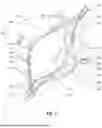
FIG. 1 is a simplified perspective view of a partially open container according to embodiments of the disclosure;
FIG. 2 is a simplified perspective view of the container of FIG. 1 in a closed position according to embodiments of the disclosure;
FIG. 3 is a perspective view of an open container according to embodiments of the disclosure;
FIG. 4 is a perspective view of the container of FIG. 3 in a closed position according to embodiments of the disclosure;
FIG. 5 is a perspective view of an open container according to embodiments of the disclosure;
FIG. 6 is a perspective view of the container of FIG. 5 in a closed position according to embodiments of the disclosure; and
FIG. 7 is a flow diagram of a method of opening a container.
DETAILED DESCRIPTION
The following description provides specific details, such as material compositions, shapes, and sizes, in order to provide a thorough description of embodiments of the disclosure. However, a person of ordinary skill in the art would understand that the embodiments of the disclosure may be practiced without employing these specific details. Indeed, the embodiments of the disclosure may be practiced in conjunction with conventional techniques employed in the industry.
Drawings presented herein are for illustrative purposes only and are not meant to be actual views of any particular material, component, structure, device, or system. Variations from the shapes depicted in the drawings as a result, for example, of manufacturing techniques and/or tolerances, are to be expected. Thus, embodiments described herein are not to be construed as being limited to the particular shapes or regions as illustrated, but include deviations in shapes that result, for example, from manufacturing. For example, a region illustrated or described as box-shaped may have rough and/or nonlinear features, and a region illustrated or described as round may include some rough and/or linear features. Moreover, sharp angles that are illustrated may be rounded, and vice versa. Thus, the regions illustrated in the figures are schematic in nature, and their shapes are not intended to illustrate the precise shape of a region and do not limit the scope of the present claims. The drawings are not necessarily to scale. Additionally, elements common between figures may retain the same numerical designation.
As used herein, the singular forms following “a,” “an,” and “the” are intended to include the plural forms as well, unless the context clearly indicates otherwise.
As used herein, the term “may” with respect to a material, structure, feature, or method act indicates that such is contemplated for use in implementation of an embodiment of the disclosure, and such term is used in preference to the more restrictive term “is” so as to avoid any implication that other compatible materials, structures, features, and methods usable in combination therewith should or must be excluded.
As used herein, any relational term, such as “first,” “second,” “top,” “bottom,” “upper,” “lower,” “above,” “beneath,” “side,” “upward,” “downward,” etc., is used for clarity and convenience in understanding the disclosure and accompanying drawings, and does not connote or depend on any specific preference or order, except where the context clearly indicates otherwise. For example, these terms may refer to an orientation of elements of any container, or a component thereof, when utilized in a conventional manner. Furthermore, these terms may refer to an orientation of elements of any container, or a component thereof as illustrated in the drawings.
As used herein, the terms “vertical,” “longitudinal,” “horizontal,” and “lateral” are in reference to a major plane of a structure and are not necessarily defined by earth's gravitational field. A “horizontal” or “lateral” direction is a direction that is substantially parallel to the major plane of the structure, while a “vertical” or “longitudinal” direction is a direction that is substantially perpendicular to the major plane of the structure. The major plane of the structure is defined by a surface of the structure having a relatively large area compared to other surfaces of the structure. With reference to the drawings, a “horizontal” or “lateral” direction may be perpendicular to an indicated “Z” axis and may be parallel to an indicated “X” axis and/or parallel to an indicated “Y” axis; and a “vertical” or “longitudinal” direction may be parallel to an indicated “Z” axis, may be perpendicular to an indicated “X” axis, and may be perpendicular to an indicated “Y” axis.
As used herein, the terms “substantial” and “substantially” in reference to a given parameter, property, or condition (e.g., length, surface area, etc.) means and includes to a degree that one skilled in the art would understand that the given parameter, property, or condition is met with a small degree of variance, such as within acceptable manufacturing tolerances. By way of example, depending on the particular parameter, property, or condition that is substantially met, the parameter, property, or condition may be inclusive of at least about 50%, at least about 60%, at least about 70%, at least about 80%, at least about 90%, at least about 95%, or at least about 100%.
As used herein, the terms “partial” and “partially” in reference to a given parameter, property, or condition (e.g., length, surface area, etc.) means and includes to a degree that one skilled in the art would understand that the given parameter, property, or condition is met with a small degree of variance, such as within acceptable manufacturing tolerances. By way of example, depending on the particular parameter, property, or condition that is substantially met, the parameter, property, or condition may be inclusive of at least about 10%, at least about 20%, at least about 30%, at least about 40%, or at least about 50%.
As used herein, “about” in reference to a numerical value for a particular parameter is inclusive of the numerical value and a degree of variance from the numerical value that one of ordinary skill in the art would understand is within acceptable tolerances for the particular parameter. For example, “about” in reference to a numerical value may include additional numerical values within a range of from 90.0 percent to 110.0 percent of the numerical value, such as within a range of from 95.0 percent to 105.0 percent of the numerical value, within a range of from 97.5 percent to 102.5 percent of the numerical value, within a range of from 99.0 percent to 101.0 percent of the numerical value, within a range of from 99.5 percent to 100.5 percent of the numerical value, or within a range of from 99.9 percent to 100.1 percent of the numerical value.
As used herein, the term “indirect” used in reference to the act of opening has the meaning of opening without directly manually manipulating.
As used herein, the term “high-strength closing mechanism” means and includes a closure mechanism associated with a device having different types of closing mechanisms, where the “high-strength closing mechanism” is relatively higher strength than at least one other closure mechanism of the other different types of closing mechanisms used on the same device.
As used herein, the term “low-strength closing mechanism” means and includes a closing mechanism associated with a device having different types of closing mechanisms, where the “low-strength closing mechanism” is relatively lower strength than at least one other closing mechanism of the other different types of closing mechanisms used on the same device.
As used herein, the term “mechanical zipper” means a mechanical closure device comprising two tapes and a slider. The tapes comprise teeth disposed thereon and along a length of each tape. The teeth along each length of tape are complementary, such that when engaged, the teeth may form an interlocking pattern locking the two lengths of tape together. The slider is disposed between the tapes and moves along the lengths of the tapes. A movement of the slider along the lengths of the tapes, in a first direction, mechanically engages (e.g., by friction, or locking) the teeth on each tape with the teeth on the other tape causing the zipper to close. A movement of the slider along the lengths of the tapes, in a second direction opposite to the first direction, disengages the mechanically engaged elements/teeth causing the zipper to open.
As used herein, the term “magnetic zipper” means a mechanical closure device comprising two tapes. The tapes comprise magnetic elements disposed thereon and along a length of each tape. The magnetic elements on each tape magnetically attract the magnetic elements on the other tape causing the zipper to close. Applying a force on each tape and in opposite directions causes the magnetic elements to detach from each other and cause the zipper to open.
Containers, such as bags, boxes, packs, etc., may be designed to be carried by a person, such as in the form of a backpack, a fanny pack, a chest pack, a cross-body bag, etc. These containers may be designed to be secure, such that the items carried therein remain securely contained within the containers. As discussed above, with some items, such as concealed carry firearms, quick access may be desirable. With many containers, quick access to the contents of the container may result in sacrificing the security of the items contained therein. Alternatively, a more secure closure for the container may result in slower access to the contents of the container. Embodiments of the disclosure provide containers with a closure system configured to both securely close the container while providing quick access to at least one compartment of the container.
FIGS. 1 and 2 show schematic illustrations of a container 100. The container 100 includes a housing 105 configured to store items within an interior cavity 110 of the housing 105. The housing 105 includes an inner panel 101 and an outer panel 102. The container 100 includes at least two different closing mechanisms extending along at least two of the edges (e.g., edges 130, 135, 140, 145) of the housing 105. The closing mechanisms may be configured to secure the inner panel 101 (e.g., inner structure) to the outer panel 102 (e.g., outer structure) enclosing the interior cavity 110 of the housing 105. The container 100 includes a securing mechanism 155, such as a strap, belt, and/or buckle, configured to secure the container 100 to a body of a user. The container 100 may include a handle 160 attached to and configured to transmit a force to one of the inner panel 101 or the outer panel 102 relative to the rest of the housing 105. The container 100 may include one or more additional compartments 165 defined in one of the inner panel 101 or the outer panel 102 configured to store additional items.
The inner panel 101 is configured to be positioned proximate the body of the user. The container 100 may include four edges 130, 135, 140, 145. Each of the edges 130, 135, 140, 145 define a joint between the inner panel 101 and the outer panel 102. In some embodiments, the inner panel 101 and the outer panel 102 are formed from a substantially continuous material, such that the joint defined at one of the edges 130, 135, 140, 145 is a fold in the material of the inner panel 101 and the outer panel 102 and the material forming the inner panel 101 and the outer panel 102 is continuous across the fold. In other embodiments, the inner panel 101 may be connected to the outer panel 102 along one of the edges 130, 135, 140, 145 through a connecting mechanism (e.g., hinges, strap, etc.) (not shown).
The inner panel 101 may include an outer surface 170 and an inner surface 180. The outer surface 170 may be configured to be positioned proximate the user when the container 100 is worn. The outer surface 170 may include elements configured to increase the comfort of the user, such as padding or bracing. In some embodiments, the securing mechanism 155 is secured to the outer surface 170 of the inner panel 101, such that the container 100 may be secured to the body of the user through the outer surface 170 of the inner panel 101. For example, the securing mechanism 155 may be connected through stitching, adhesives, buckles, hook and latch fixtures, etc., to the outer surface 170 of the inner panel 101. The securing mechanism 155 may be configured to secure the container 100 to different regions (e.g., ventral, dorsal, or lateral) of the body of the user, such that the container 100 may be positioned as a fanny pack, a backpack, a chest pack, a cross-body bag, etc. The inner surface 180 of the inner panel 101 may include one or more compartments or securing features configured to store and/or secure items within the interior cavity 110 of the housing 105.
The outer panel 102 may include an outer surface 175 and an inner surface 185. The outer surface 175 may be configured to be positioned away from the user when the container 100 is worn. The outer surface 175 may include one or more compartments 165 configured to contain or store additional items. The inner surface 185 of the outer panel 102 may include one or more compartments or securing features configured to store and/or secure items within the interior cavity 110 of the housing 105.
In the embodiment illustrated in FIGS. 1 and 2, the container 100 has a rectangular shape. The rectangular shape defines four edges 130, 135, 140, 145 defining the joints between the inner panel 101 and the outer panel 102. In the embodiment illustrated in FIGS. 1 and 2, the first edge 130 and the second edge 135 define releasable joints 190 and 195. The first edge 130 extends between the second edge 135 and the third edge 140. The second edge 135 extends between the fourth edge 145 and the first edge 130. The third edge 140 extends between the first edge 130 and the fourth edge 145. The releasable joints 190, 195 may facilitate the partial separation of the inner panel 101 and the outer panel 102 to define an opening 150 of the housing 105.
The releasable joints 190, 195 may be formed by closing mechanisms 115, 120. The closing mechanisms 115, 120 may include a mechanical zipper, a magnetic zipper, one or more snaps or buttons, hook and latch fastening material. In the embodiment illustrated in FIGS. 1 and 2, the releasable joints 190, 195 are formed from different types of closing mechanisms 115, 120. The releasable joint 190 is formed from a low-strength closing mechanism 115, such as a magnetic zipper or a hook and latch fastening material and the releasable joint 195 is formed from a high-strength closing mechanism 120, such as a mechanical zipper or snaps. The high-strength closing mechanism 120 may be arranged along the second edge 135 that extends in a vertical direction (e.g., a Z-direction) and the low-strength closing mechanism 115 may be arranged along the first edge 130 that extends in a lateral or horizontal direction (e.g., an X-direction). In the embodiment illustrated in FIGS. 1 and 2, the releasable joint 190 extends over a first corner 191 between the first edge 130 and the second edge 135. For example, the releasable joint 190 at least partially extends into the second edge 135 before meeting the releasable joint 195. In other embodiments, the releasable joint 195 may extend over the first corner 191, partially extending into the first edge 130 before meeting the releasable joint 190.
The lengths 192, 196 of the releasable joints 190, 195 may combine to define a total length of the opening 150. A ratio of the length 192 of the releasable joint 190 to the length 196 of the releasable joint 195 may be between about 0.5 and about 1.5. In some embodiments, the ratio of the length 192 to the length 196 may be between about 0.75 and about 1.4.
In the embodiment illustrated in FIGS. 1 and 2, the high-strength closing mechanism 120 is a mechanical zipper formed from interlocking teeth 118 and a slider 119 and the low-strength closing mechanism 115 is a magnetic zipper formed from opposing magnets 116. The interlocking teeth 118 of the high-strength closing mechanism 120 may provide a stronger more secure connection in comparison with the magnetic connection between the opposing magnets 116 of the low-strength closing mechanism 115. The magnetic connection between the opposing magnets 116 of the low-strength closing mechanism 115 may provide an easier release of the releasable joint 190 than the interlocking teeth 118 of the high-strength closing mechanism 120. Thus, the high-strength closing mechanism 120 may substantially prevent the container 100 from opening along the releasable joints 190, 195 involuntarily. The low-strength closing mechanism 115, may facilitate a quick opening of the releasable joints 190, 195 when a force is applied to the handle 160 by opening the releasable joint 190 quickly and providing momentum to begin moving the slider 119 along the high-strength closing mechanism 120 opening the releasable joint 195.
The handle 160 may include a strap, a knot, a metal ring, etc., attached to the outer panel 102. The user may apply a force (e.g., by pulling the handle 160 away from the body of the user) and cause the closing mechanisms 115, 120 to open sequentially as discussed above without directly manipulating the slider 119 of the high-strength closing mechanism 120. The stronger mechanical connection of the interlocking teeth 118 of the high-strength closing mechanism 120 is configured to be sufficient to maintain the container in a closed position absent a force applied to the housing 105 through the handle 160.
FIGS. 3 and 4 respectively show schematic views of the container 300, according to some embodiments, in open (FIG. 3) and closed (FIG. 4) configurations. The container 300 includes a housing 305 having a box-like shape configured to store items within an interior cavity 310. The housing 305 includes case 301 (e.g., inner structure) and lid 302 (e.g., outer structure). The container 300 includes multiple different closing mechanisms extending along the sides (e.g., sides 330, 335, 340) of the housing 305. The closing mechanisms may be configured to secure the lid 302 to the case 301 enclosing the interior cavity 310 of the housing 305. The container 300 includes a securing mechanism 355, such as a strap, belt, and/or buckle, configured to secure the container 300 to a body of a user. The container 300 may include a handle 360 attached to and configured to transmit a force to the lid 302 of the container 300 relative to the rest of the case 301. The container 300 may include one or more additional compartments 365 defined in one of the case 301 or the lid 302 that are configured to store additional items.
The case 301 is positioned proximate the body of the user. The container 300 may include multiple sides. The embodiment illustrated in FIGS. 3 and 4 includes four sides 330, 335, 340, 345. Each of the sides 330, 335, 340, 345 include a joint between the case 301 and the lid 302. In some embodiments, at least one joint defined at one of the sides 330, 335, 340, 345 is a continuous material, such that of the case 301 and the lid 302 are a continuous material across the associated joint. In other embodiments, the case 301 may be connected to the lid 302 along one of the sides 330, 335, 340, 345 through a connecting mechanism (e.g., hinges, strap, etc.) (not shown).
The case 301 may include an outer surface 370 and an inner surface 380. The outer surface 370 may be configured to be positioned proximate the user when the container 300 is worn. The outer surface 370 may include elements configured to increase the comfort of the user, such as padding or bracing. In some embodiments, the inner surface 380 of the case 301 includes a retaining pocket 311. In some embodiments, the retaining pocket 311 is designed to retain a specific item. For example, the retaining pocket 311 may be a holster configured to match a contour of a firearm. The firearm may be secured in the retaining pocket 311 by inserting at least a portion of the firearm into the retaining pocket 311. For example, a muzzle of the firearm may slide into the retaining pocket 311 and engage a securing mechanism. In another example, a body of the firearm may be inserted onto a clip and engage a securing mechanism. In another example, a clip attached to a firearm may be inserted into the retaining pocket 311 and engage a securing mechanism. In other embodiments, the retaining pocket 311 may be a strap, such as an elastic strap, a hook and latch fastener strap, a strap with buckles or snaps, etc., that is configured to secure an item within the interior cavity 310 of the housing 305.
In some embodiments, the securing mechanism 155 is secured to the outer surface 370 of the case 301, such that the container 300 may be secured to the body of the user through the outer surface 370 of the case 301. For example, the securing mechanism 355 may be connected through stitching, adhesives, buckles, hook and latch fixtures, etc., to the outer surface 370 of the case 301. The securing mechanism 355 may be configured to secure the container 300 to different regions (e.g., ventral, dorsal, or lateral) of the body of the user, such that the container 300 may be positioned as a fanny pack, a backpack, a chest pack, a cross-body bag, etc.
The lid 302 may include an outer surface 375 and an inner surface 385. The outer surface 375 may be configured to be positioned away from the user when the container 300 is worn. The outer surface 375 may include one or more compartments 365 configured to contain or store additional items. The inner surface 385 of the lid 302 may include one or more compartments or securing features configured to store and/or secure items within the interior cavity 310 of the housing 305.
In the embodiment illustrated in FIGS. 3 and 4, the container 300 has a rectangular shape. The rectangular shape defines four sides 330, 335, 340, 345 that include the joints between the case 301 and the lid 302. In the embodiment illustrated in FIGS. 3 and 4, the first side 330, the second side 335, and the third side 340 each define releasable joints 390, 395, and 397. The first side 330 extends between the second side 335 and the third side 340. The second side 335 extends between the fourth side 345 and the first side 330. The third side 340 extends between the first side 330 and the fourth side 345. The releasable joints 390, 395, 397 may facilitate the partial separation of the case 301 and the lid 302 to define an opening 350 of the housing 305. The joint along the fourth side 345 may be a non-releasable joint, such that the lid 302 remains attached to the case 301 when the releasable joints 390, 395, and 397 are opened.
The releasable joint 397 may extend around a first corner 391 and partially extend over the first side 330 abutting against the releasable joint 390. Similarly, the releasable joint 395 may extend around a second corner 393 and partially extend over the first side 330 abutting against the releasable joint 390 on a side opposite the releasable joint 397. The releasable joint 390 may have a length 392, the releasable joint 395 may have a length 396, and the releasable joint 397 may have a length 398. A ratio of the length 392 of the releasable joint 390 to a combined length of the lengths 396 and 398 of the releasable joints 395 and 397 may be in a range from about 0.4 and to about 0.6. In some embodiments, a ratio of the length 392 of the releasable joint 390 to the length 396 of the releasable joint 395 may be in a range from about 0.3 and to about 1. In some embodiments, a ratio of the length 392 of the releasable joint 390 to the length 398 of the releasable joint 397 may be in a range from about 0.3 and to about 1.
The releasable joints 390, 395, 397 may be formed by closing mechanisms 315, 320, 325. The closing mechanisms 315, 320, 325 may include a mechanical zipper, a magnetic zipper, one or more snaps or buttons, hook and latch fastening material. In the embodiment illustrated in FIGS. 3 and 4, the releasable joints 390, 395, 397 are formed from at least two different types of closing mechanisms 315, 320, 325. The releasable joint 390 is formed from a low-strength closing mechanism 315, such as magnetic zippers or hook and latch fastening materials, and the releasable joints 395, 397 are formed from high-strength closing mechanisms 320, 325, such as mechanical zippers or snaps. The high-strength closing mechanism 320 may be arranged along the second side 335 that extends in a vertical direction (e.g., a Z-direction) of the case 301 and the high-strength closing mechanism 325 may be arranged along the third side 340 that extends in the vertical direction on an opposite lateral side of the case 301. The low-strength closing mechanism 315 may be arranged along the first side 330 that extends in a lateral or horizontal direction (e.g., an X-direction).
The handle 360 may be attached to the lid 302. The handle 360 may be positioned on the first side 330. The user may apply a force to the handle 360 and cause the first, second and third releasable joints 315, 320, 325 to open sequentially without manually manipulating the releasable joints 315, 320, 325. In the embodiment illustrated in FIGS. 3 and 4, the high-strength closing mechanisms 320, 325 are mechanical zippers with interlocking teeth 318, 323 and sliders 319, 324 and the low-strength closing mechanism 315 is a magnetic zipper formed from opposing magnets 316. The interlocking teeth 318, 323 of the high-strength closing mechanisms 320, 325 may provide a stronger more secure connection in comparison with the magnetic connection between the opposing magnets 316 of the low-strength closing mechanism 315. The magnetic connection between the opposing magnets 316 of the low-strength closing mechanism 315 may provide an easier release of the releasable joint 390 than the interlocking teeth 318, 323 of the high-strength closing mechanisms 320, 325. Thus, the high-strength closing mechanisms 320, 325 may substantially prevent the container 300 from opening along the releasable joints 390, 395, 397 involuntarily. The low-strength closing mechanism 315, may facilitate a quick opening of the releasable joints 390, 395, 397 when a force is applied to the handle 360 by opening the releasable joint 390 quickly and providing momentum to begin moving the sliders 319, 324 along the high-strength closing mechanisms 320, 325 opening the releasable joints 395, 397.
The handle 360, by way of non-limiting example, may include a strap, a knot, a metal ring, etc., attached to the lid 302. The user may apply a force (e.g., by pulling the handle 360 away from the body of the user) and cause the zippers of closing mechanisms 315, 320, 325 to open sequentially as discussed above without directly manipulating the sliders 319, 324 of the high-strength closing mechanisms 320, 325. The stronger mechanical connection of the interlocking teeth 318, 323 of the high-strength closing mechanisms 320, 325 is configured to be sufficient to maintain the container in a closed position absent a force applied to the lid 302 through the handle 360.
FIGS. 5 and 6 respectively show schematic views of the container 500 in open (FIG. 5) and closed (FIG. 6) configurations. The container 500 includes a housing 505 configured to store items within an interior cavity 510 of the housing 505. The housing 505 includes an inner panel 501 and an outer panel 502. The container 500 includes a securing mechanism 555, such as a strap, belt, and/or buckle, configured to secure the container 500 to a body of a user. The container 500 may include a handle 560 attached to and configured to transmit a force to the outer panel 502 relative to the rest of the housing 505. The handle 560 may be positioned proximate a corner 591 between the first edge 530 and the second edge 535. The container 500 may include one or more additional compartments 565 defined in one of the inner panel 501 or the outer panel 502 configured to store additional items.
The container 500 illustrated in FIGS. 5 and 6 includes four edges 530, 535, 540, 545. Each of the edges 530, 535, 540, 545 define a joint between the inner panel 501 and the outer panel 502. In some embodiments, the inner panel 101 and the outer panel 102 are formed from a substantially continuous material, such that the joint defined at one of the edges 530, 535, 540, 545 is a fold in the material of the inner panel 501 and the outer panel 502 such that the material forming the inner panel 501 and the outer panel 502 is continuous across the fold. In other embodiments, the inner panel 501 may be connected to the outer panel 502 along one of the edges 530, 535, 540, 545 through a connecting mechanism (e.g., hinges, strap, etc.) (not shown).
The inner panel 501 may include an outer surface 570 and an inner surface 580. The outer surface 570 may include elements configured to increase the comfort of the user, such as padding or bracing. In some embodiments, the inner surface 580 of the inner panel 501 includes one or more compartments or pockets, configured to contain or store additional items. As discussed above, the one or more compartments or pockets may include a holster configured to match the contour and secure an item, such as a firearm. In some embodiments, the securing mechanism 555 is secured to the outer surface 570 of the inner panel 501, such that the container 500 may be secured to the body of the user through the outer surface 170 of the inner panel 101. The securing mechanism 155 may be configured to secure the container 100 to different regions (e.g., ventral, dorsal, or lateral) of the body of the user, such that the container 100 may be positioned as a fanny pack, a backpack, a chest pack, a cross-body bag, etc. The outer panel 502 also includes an outer surface 575 and an inner surface 585. The outer surface 575 and the inner surface 585 may include one or more compartments 565 configured to contain or store additional items.
In the embodiment illustrated in FIGS. 5 and 6, the container 500 has a rectangular shape. The rectangular shape defines four edges 530, 535, 540, 545 defining the joints between the inner panel 501 and the outer panel 502. In the embodiment illustrated in FIGS. 5 and 6, the first edge 530 and the second edge 535 include releasable joints 590, 595, and 597. The releasable joints 590, 595, 597 may facilitate the partial separation of the inner panel 501 and the outer panel 502 to define an opening 550 of the housing 505.
The releasable joints 590, 595, 597 may be formed by closing mechanisms 515, 520, 525. The closing mechanisms 515, 520, 525 may include a mechanical zipper, a magnetic zipper, one or more snaps or buttons, hook and latch fastening material. In the embodiment illustrated in FIGS. 5 and 6, the releasable joints 590, 595, 597 are formed from different types of closing mechanisms 515, 520, 525. The releasable joint 590 is formed from a low-strength closing mechanism 515, such as a magnetic zipper or a hook and latch fastening material and the releasable joints 595, 597 are formed from high-strength closing mechanisms 520, 525, such as mechanical zippers or snaps. The high-strength closing mechanism 520 is arranged along the second edge 535 that extends in a vertical direction (e.g., a Z-direction) and the high-strength closing mechanism 525 is arranged along the first edge 530 that extends in a lateral or horizontal direction (e.g., an X-direction). The low-strength closing mechanism 515 extends around the corner 591 between the first edge 530 and the second edge 535. The high-strength closing mechanisms 520, 525 abut against opposing ends of the low-strength closing mechanism 515.
The releasable joint 590 may have a length 592, the releasable joint 595 may have a length 596, and the releasable joint 597 may have a length 598. A ratio of the length 592 of the releasable joint 590 to a combined length of the lengths 596 and 598 of the releasable joints 595 and 597 may be in a range from about 0.1 and to about 0.5. In some embodiments, a ratio of the length 592 of the releasable joint 590 to the length 596 of the releasable joint 595 may be in a range from about 0.2 and to about 1. In some embodiments, a ratio of the length 592 of the releasable joint 590 to the length 598 of the releasable joint 597 may be in a range from about 0.2 and to about 1.
In the embodiment illustrated in FIGS. 5 and 6, the high-strength closing mechanisms 520, 525 are mechanical zippers with interlocking teeth 518, 523 and sliders 519, 524 and the low-strength closing mechanism 515 is a magnetic zipper formed from opposing magnets 516. The interlocking teeth 518, 523 of the high-strength closing mechanisms 520, 525 may provide a stronger more secure connection in comparison with the magnetic connection between the opposing magnets 516 of the low-strength closing mechanism 515. The magnetic connection between the opposing magnets 516 of the low-strength closing mechanism 515 may provide an easier release of the releasable joint 590 than the interlocking teeth 518, 523 of the high-strength closing mechanisms 520, 525. Thus, the high-strength closing mechanisms 520, 525 may substantially prevent the container 500 from opening along the releasable joints 590, 595, 597 involuntarily. The low-strength closing mechanism 515, may facilitate a quick opening of the releasable joints 590, 595, 597 when a force is applied to the handle 560 by opening the releasable joint 590 quickly and providing momentum to begin moving the sliders 519, 524 along the high-strength closing mechanisms 520, 525 opening the releasable joints 595, 597.
The handle 560 may include a strap, a knot, a metal ring, etc., attached to the outer panel 502. The user may apply a force (e.g., by pulling the handle 560 away from the body of the user) and cause the zippers of closing mechanisms 515, 520, 525 to open sequentially as discussed above without directly manipulating the sliders 519, 524 of the high-strength closing mechanisms 520, 525. The stronger mechanical connection of the interlocking teeth 518, 523 of the high-strength closing mechanisms 520, 525 is configured to be sufficient to maintain the container 500 in a closed position absent a force applied to the housing 505 through the handle 560.
FIG. 7 illustrates a simplified flow diagram of a method 700 of using the container, such as containers 100, 300, 500, discussed above, with reference to FIGS. 1-6. The method 700 may include securing a container to a user in act 702. As discussed above, the container includes an inner cavity configured to store items. The container is formed from an inner structure and an outer structure that define the cavity. The container is secured to the user through straps, belts, or buckles configured to extend around the user.
An item may be stored within the interior cavity of the container in act 704. As discussed above, the interior cavity of the container may include one or more pockets or compartments configured to receive and secure items within the interior cavity of the container. In some embodiments, the pocket or compartment may be configured to securely and safely store a concealed firearm within the interior cavity of the compartment. For example, at least one of the one or more pockets or compartments may be a holster.
After the item is stored within the interior cavity, the container may be closed in act 706. Closing the container may include manipulating the closing features of the different closing mechanisms of the container. For example, mechanical zippers are closed by sliding the slider along the interlocking teeth of the two sides of the mechanical zipper compressing the teeth and causing the teeth to interlock together. Magnetic zippers may be closed by positioning the opposing magnets close together such that the magnetic attraction between the two sides of the magnetic zipper close due to the magnetic fields. Similarly, hook and latch connections, or snapped connections may be manually closed by compressing the two sides of the connections together.
After the container is closed, the container may be rapidly reopened by applying a force to a handle attached to one of the structures of the container in act 708. Applying the force to the handle may rapidly open the lower strength closing mechanisms, such as the magnetic zippers or the hook and latch fasteners. The rapid opening of the lower strength closing mechanisms may facilitate the opening structure to gain sufficient momentum to begin opening the higher strength closing mechanisms, such as the mechanical zipper or snaps. The momentum may cause the sliders of the mechanical zippers to move in an opening direction due to the force pulling the structures away from each other along the associated joint. In embodiments with snaps, the momentum may similarly cause the snapped engagement to release due to the opposing forces between the structures along the joint.
The container may then be opened in act 710. Opening the container may provide access to the interior cavity of the container. Rapidly opening the container in acts 708 and 710 may facilitate quick and easy access to the interior cavity of the container. This may facilitate quick access to the contents of the container, such as a concealed carry firearm, personal protection devices (e.g., pepper spray, taser, etc.), or other items that may be desirable to have easily and quickly accessible.
Embodiments of the disclosure provide containers configured to provide quick and easy access to the contents of the container through a single access point. The embodiments of the disclosure also provide containers that are secure when not being opened through the single access point to avoid inadvertently opening the container. This may facilitate securely carrying sensitive items while still having quick and easy access to the items when desired.
The embodiments of the disclosure described above and illustrated in the accompanying drawings do not limit the scope of the disclosure, which is encompassed by the scope of the appended claims and their legal equivalents. Any equivalent embodiments are within the scope of this disclosure. Indeed, various modifications of the disclosure, in addition to those shown and described herein, such as alternate useful combinations of the elements described, will become apparent to those skilled in the art from the description. Such modifications and embodiments also fall within the scope of the appended claims and equivalents.
Claims
1. A container, comprising:
a housing enclosing an interior cavity between an inner structure and an outer structure;
joints between the inner structure and the outer structure, at least two joints of the joints being releasable joints defining an opening between the inner structure and the outer structure of the housing;
a first releasable joint secured through a relatively lower-strength closing mechanism; and
a second releasable joint secured through a relatively higher-strength closing mechanism.
2. The container of claim 1, further comprising a handle attached to the outer structure.
3. The container of claim 2, wherein the handle is attached to the outer structure proximate the first releasable joint.
4. The container of claim 1, wherein the relatively lower-strength closing mechanism comprises at least one of a magnetic zipper or a hook and loop fastening structure.
5. The container of claim 1, wherein the relatively higher-strength closing mechanism comprises at least one of a mechanical zipper or a snapped connection.
6. The container of claim 1, wherein a ratio of a first length of the first releasable joint to a second length of the second releasable joint is in a range from about 0.2 to about 1.5.
7. The container of claim 1, wherein a ratio of a first length of the first releasable joint to a second length of the second releasable joint is in a range from about 0.75 to about 1.4.
8. The container of claim 1, further comprising a third releasable joint secured through a second relatively higher-strength closing mechanism.
9. The container of claim 1, wherein the second releasable joint extends along a vertical edge of the housing.
10. The container of claim 9, wherein the second releasable joint extends around a corner between the vertical edge of the housing and a horizontal edge of the housing.
11. The container of claim 1, wherein the first releasable joint extends along a horizontal edge of the housing.
12. A hybrid quick release closure system comprising:
a first releasable joint comprising a relatively lower-strength closing mechanism;
a second releasable joint abutting against the first releasable joint, the second releasable joint comprising a relatively higher-strength closing mechanism; and
a release handle positioned proximate the first releasable joint.
13. The hybrid quick release closure system of claim 12, wherein the relatively lower-strength closing mechanism comprises a magnetic zipper.
14. The hybrid quick release closure system of claim 12, wherein the relatively higher-strength closing mechanism comprises a mechanical zipper.
15. The hybrid quick release closure system of claim 12, further comprising a third releasable joint comprising a second relatively higher-strength closing mechanism.
16. The hybrid quick release closure system of claim 15, wherein the third releasable joint abuts against the first releasable joint on an opposite end of the first releasable joint from the second releasable joint.
17. A method of using a container, the method comprising:
securing a container to a user, the container including:
a housing enclosing an interior cavity between an inner structure and an outer structure;
a handle attached to the outer structure;
joints between the inner structure and the outer structure, at least two joints of the joints being releasable joints defining an opening between the inner structure and the outer structure of the housing;
a first releasable joint secured through a relatively lower-strength closing mechanism; and
a second releasable joint secured through a relatively higher-strength closing mechanism;
storing an item in the interior cavity;
applying a force to the handle;
releasing the relatively lower-strength closing mechanism through the force applied to the handle; and
releasing the relatively higher-strength closing mechanism through momentum created by a combination of the force applied to the handle and a movement caused by the release of the relatively lower-strength closing mechanism.
18. The method of claim 17, wherein releasing the relatively lower-strength closing mechanism comprises releasing a magnetic zipper.
19. The method of claim 17, wherein releasing the relatively higher-strength closing mechanism comprises releasing a mechanical zipper.
20. The method of claim 17, wherein releasing the relatively higher-strength closing mechanism comprises releasing a first relatively higher-strength closing mechanism and a second relatively higher-strength closing mechanism positioned on opposing sides of the low-strength closing mechanism.
Images & Drawings included:



Sources:
- United States Patent and Trademark Office - verify current appl. status at the USPTO↗
Recent applications in this class:
- » 20260146824 2026-05-28
Holster Body With Clamps - » 20260146823 2026-05-28
Trigger Access Guard - » 20250389516 2025-12-25
Universal Holster - » 20250264298 2025-08-21
Firearm Holster with Adjustable Insert - » 20250257979 2025-08-14
FIREARM HOLSTER - » 20250237472 2025-07-24
Holster - » 20250085082 2025-03-13
STANDARDIZED OUTER HOLSTER SYSTEM AND CORRESPONDING FIREARM SPECIFIC INNER HOLSTER INSERTS - » 20240377159 2024-11-14
HOLSTER SENSING BY A CONDUCTED ELECTRICAL WEAPON - » 20240151496 2024-05-09
Firearm holster - » 20240102771 2024-03-28
Chest worn utility pouch for weapon