System and Method for Agentic Artificial Intelligence-Based Site Reliability Engineering
US20260147663A1
2026-05-28
18/957,790
2024-11-24
Smart Summary: An autonomous agent uses artificial intelligence to manage the reliability of software applications. It constantly watches for problems and performance issues, figuring out their causes and deciding on fixes. The agent can automatically take actions like adjusting resources, deploying updates, or rebooting systems. If it encounters issues without a predefined solution, it can even create code changes and submit them for review. Overall, this system helps keep software running smoothly and reduces downtime by automating maintenance tasks. 🚀 TL;DR
Abstract:
Implementations described herein relate to systems, methods, and computer-readable media for autonomous site reliability engineering (SRE) using agentic artificial intelligence (AI). An autonomous SRE agent monitors telemetry associated with one or more software applications, detects anomalies and performance degradations, diagnoses likely causes using artificial intelligence models and/or rules, and selects and executes corrective actions through system interfaces including application programming interfaces (APIs) and, in some implementations, graphical user interface (GUI) automation. Example corrective actions include scaling resources, initiating deployments, initiating rollbacks, performing garbage collection, and rebooting systems. In some implementations, the agent generates code changes and submits pull requests (PRs) for issues for which a matching remediation playbook is unavailable. In some implementations, a policy evaluation engine, access controls, and audit logging are used to constrain and record autonomous actions. The disclosed systems improve resilience and reduce downtime by automating SRE operations with continuous monitoring and rapid response.
Applicant:
Interested in similar patents?
Get notified when new applications in this technology area are published.
Classification:
G06F11/0793 » CPC main
Error detection; Error correction; Monitoring; Responding to the occurrence of a fault, e.g. fault tolerance; Error or fault processing not based on redundancy, i.e. by taking additional measures to deal with the error or fault not making use of redundancy in operation, in hardware, or in data representation Remedial or corrective actions
G06F21/62 » CPC further
Security arrangements for protecting computers, components thereof, programs or data against unauthorised activity; Protecting data Protecting access to data via a platform, e.g. using keys or access control rules
G06F11/07 IPC
Error detection; Error correction; Monitoring Responding to the occurrence of a fault, e.g. fault tolerance
Description
TECHNICAL FIELD
Embodiments relate generally to site reliability engineering, software operations, and artificial intelligence. More particularly, embodiments relate to methods, systems, and computer-readable media for automated, agentic Al-driven site reliability engineering tasks including telemetry monitoring, anomaly detection, issue diagnosis, corrective action selection, and autonomous or semi-autonomous execution of corrective actions in software application environments including cloud, on-premise, and hybrid computing environments.
BACKGROUND
Site reliability engineering (SRE) commonly involves monitoring software systems, diagnosing incidents, and executing corrective actions to maintain availability, performance, and reliability. In many environments, SRE functions are performed primarily by human operators using monitoring dashboards, alerting systems, deployment tools, infrastructure control planes, and service-specific administrative interfaces.
Human SRE workflows can be effective but may be limited by response latency, operator availability, and operational complexity. For example, an SRE may need to inspect telemetry, identify likely causes of a failure or bottleneck, select a remediation, execute one or more operational changes, verify results, and document the actions taken. These steps may involve multiple systems and interfaces, including APIs, configuration tools, deployment consoles, and source-control systems.
There is a need for improved systems that can continuously monitor software application telemetry, detect abnormal conditions, diagnose issues, and perform one or more corrective actions with reduced delay. There is also a need for systems that can operate within defined access controls and operational policies while recording actions for oversight and auditing.
SUMMARY
The present disclosure provides systems and methods for agentic Al-based site reliability engineering.
In one aspect, a computer-implemented method is provided in which an autonomous site reliability engineering agent (also referred to herein as an “SRE agent” or “agentic AI SRE agent”) monitors telemetry data associated with one or more software applications in a production computing environment, detects anomalies or performance issues, analyzes the telemetry data to diagnose one or more likely system issues, and performs corrective actions through one or more system interfaces.
In some implementations, the corrective actions include one or more of:
-
- scaling compute or service resources,
- initiating a deployment,
- initiating a rollback,
- performing garbage collection,
- restarting or rebooting a service or system component, and/or
- modifying configuration values.
In some implementations, the SRE agent interacts with system interfaces through an interface adapter layer that supports API invocation and GUI automation.
In some implementations, the SRE agent prioritizes tasks based on system criticality and service level objectives (SLOs).
In some implementations, the SRE agent uses machine learning models trained on historical telemetry, incident records, and prior remediation actions to improve diagnosis and action selection.
In some implementations, the SRE agent executes actions only after policy evaluation and access-control checks, and records an audit trail of proposed and executed actions.
In some implementations, the SRE agent generates code changes and submits a pull request for an issue condition for which a matching remediation playbook is unavailable.
In some implementations, the SRE agent simulates a proposed corrective action in a sandbox environment before applying the corrective action to a production computing environment.
These and other embodiments are described in greater detail below.
BRIEF DESCRIPTION OF THE DRAWINGS
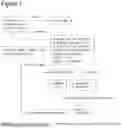
FIG. 1 is a system architecture diagram illustrating example components and interactions of an agentic Al-based SRE system and a software application environment.
In FIG. 1, example labels may include:
-
- LLM=large language model,
- CV=computer vision, and
- PR=pull request.
Claims
1. A computer-implemented method for site reliability engineering in a production computing environment, the method comprising:
a. monitoring, by one or more processors executing an autonomous site reliability engineering agent, telemetry data associated with one or more software applications in the production computing environment to detect an anomaly condition or performance issue;
b. analyzing, by the autonomous site reliability engineering agent, the telemetry data using one or more artificial intelligence models to diagnose a system issue including one or more of a failure, throttling condition, or bottleneck;
c. selecting, by the autonomous site reliability engineering agent, a corrective action from a set of candidate corrective actions based on the diagnosed system issue;
d. evaluating, by a policy evaluation engine executed by the one or more processors, whether execution of the corrective action is permitted under one or more access-control rules or security policies for the production computing environment;
e. responsive to determining that execution is permitted, executing the corrective action by interacting with at least one system interface comprising an application programming interface (API) or a graphical user interface (GUI), wherein the corrective action comprises one or more of scaling resources, initiating a deployment, initiating a rollback, performing garbage collection, or rebooting a system component; and
f. recording, by the one or more processors, an audit record identifying the detected anomaly condition or performance issue, the diagnosed system issue, and the executed corrective action.
2. The computer-implemented method of claim 1, wherein the autonomous site reliability engineering agent utilizes one or more machine learning models trained on historical system telemetry data and historical site reliability engineering actions to improve diagnostic accuracy or corrective-action selection over time.
3. The computer-implemented method of claim 1, wherein the policy evaluation engine is configured to verify that the corrective action complies with predefined access controls and security policies and to block execution of the corrective action when the corrective action is not authorized.
4. The computer-implemented method of claim 1, wherein the autonomous site reliability engineering agent operates continuously and prioritizes detected anomaly conditions or performance issues based on real-time system criticality and predefined service level objectives (SLOs).
5. The computer-implemented method of claim 1, further comprising generating a human-readable report describing actions taken by the autonomous site reliability engineering agent and a resulting system status update for operator oversight.
6. The computer-implemented method of claim 1, further comprising, prior to executing the corrective action in the production computing environment, simulating the corrective action in a sandbox environment to assess a potential impact of the corrective action, and executing the corrective action in the production computing environment based at least in part on a result of the simulating.
Images & Drawings included:

Sources:
- United States Patent and Trademark Office - verify current appl. status at the USPTO↗
Recent applications in this class:
- » 20260147665 2026-05-28
SELF-HEALING AGENT FOR SELF-CHECKOUT - » 20260147664 2026-05-28
ACCELERATED INCIDENT RESPONSE AND RECOVERY OPTIMIZATION - » 20260147662 2026-05-28
SYSTEMS AND METHODS FOR RESOLVING CHAINCODE EXECUTION INTERRUPTION IN A BLOCKCHAIN NETWORK - » 20260147661 2026-05-28
AUTOMATED ANOMALY DETECTION AND REMEDIATION SYSTEM OF A COMPUTER NETWORK - » 20260140817 2026-05-21
FAULT MANAGEMENT SYSTEM IN A RECONFIGURABLE DATAFLOW ARCHITECTURE WITH FAULT EVENT NOTIFICATION - » 20260140816 2026-05-21
METHOD AND ELECTRONIC DEVICE FOR HANDLING DISRUPTIVE ACTION DURING ANOMALY DETECTION - » 20260140815 2026-05-21
Automated Log Collection and Analysis to Remediate User Experience Issues - » 20260140814 2026-05-21
PARALLEL BLOCK FOLDING WITH ERROR CORRECTION - » 20260140813 2026-05-21
MONITORING REPEATING COMPUTERIZED PROCESSES - » 20260133872 2026-05-14
SYSTEMS AND METHODS FOR AUTOMATED MAINTENANCE OF COMPUTING DEVICES