Compact Writing and Reading Head for Hyper Speed Data Recording on Ceramic Material
US20260148751A1
2026-05-28
19/103,992
2022-08-17
Smart Summary: A new device has been created to quickly write and read data on ceramic materials. It is designed to be small and efficient, allowing for faster data storage and retrieval. This technology can improve how information is recorded, making it quicker than traditional methods. The compact size means it can be used in various applications without taking up much space. Overall, this innovation aims to enhance data recording speed and efficiency on ceramic surfaces. 🚀 TL;DR
Abstract:
The present invention relates to a compact writing and reading head for hyper-speed data recording on ceramic material.
Applicant:
Interested in similar patents?
Get notified when new applications in this technology area are published.
Classification:
G11B7/08552 » CPC main
Recording or reproducing by optical means, e.g. recording using a thermal beam of optical radiation , reproducing using an optical beam at lower power ; Record carriers therefor; Disposition or mounting of heads or light sources relatively to record carriers with provision for moving the light beam into, or out of, its operative position or across tracks, otherwise than during the transducing operation, e.g. for adjustment or preliminary positioning or track change or selection; Arrangements for positioning the light beam only without moving the head, e.g. using static electro-optical elements using electro-optical elements
G11B7/00451 » CPC further
Recording or reproducing by optical means, e.g. recording using a thermal beam of optical radiation , reproducing using an optical beam at lower power ; Record carriers therefor; Recording, reproducing or erasing methods; Read, write or erase circuits therefor; Recording involving ablation of the recording layer
G11B7/127 » CPC further
Recording or reproducing by optical means, e.g. recording using a thermal beam of optical radiation , reproducing using an optical beam at lower power ; Record carriers therefor; Heads, e.g. forming of the optical beam spot or modulation of the optical beam; Optical beam sources therefor, e.g. laser control circuitry specially adapted for optical storage devices; Modulators, e.g. means for controlling the size or intensity of optical spots or optical traces Lasers; Multiple laser arrays
G11B7/1374 » CPC further
Recording or reproducing by optical means, e.g. recording using a thermal beam of optical radiation , reproducing using an optical beam at lower power ; Record carriers therefor; Heads, e.g. forming of the optical beam spot or modulation of the optical beam; Means for guiding the beam from the source to the record carrier or from the record carrier to the detector; Lenses Objective lenses
G11B7/1395 » CPC further
Recording or reproducing by optical means, e.g. recording using a thermal beam of optical radiation , reproducing using an optical beam at lower power ; Record carriers therefor; Heads, e.g. forming of the optical beam spot or modulation of the optical beam; Means for guiding the beam from the source to the record carrier or from the record carrier to the detector Beam splitters or combiners
G11B7/243 » CPC further
Recording or reproducing by optical means, e.g. recording using a thermal beam of optical radiation , reproducing using an optical beam at lower power ; Record carriers therefor; Record carriers characterised by shape, structure or physical properties, or by the selection of the material characterised by the selection of the material of recording layers comprising inorganic materials only, e.g. ablative layers
G11B7/08564 » CPC further
Recording or reproducing by optical means, e.g. recording using a thermal beam of optical radiation , reproducing using an optical beam at lower power ; Record carriers therefor; Disposition or mounting of heads or light sources relatively to record carriers with provision for moving the light beam into, or out of, its operative position or across tracks, otherwise than during the transducing operation, e.g. for adjustment or preliminary positioning or track change or selection; Arrangements for positioning the light beam only without moving the head, e.g. using static electro-optical elements using galvanomirrors
G11B7/1359 » CPC further
Recording or reproducing by optical means, e.g. recording using a thermal beam of optical radiation , reproducing using an optical beam at lower power ; Record carriers therefor; Heads, e.g. forming of the optical beam spot or modulation of the optical beam; Means for guiding the beam from the source to the record carrier or from the record carrier to the detector Single prisms
G11B7/1362 » CPC further
Recording or reproducing by optical means, e.g. recording using a thermal beam of optical radiation , reproducing using an optical beam at lower power ; Record carriers therefor; Heads, e.g. forming of the optical beam spot or modulation of the optical beam; Means for guiding the beam from the source to the record carrier or from the record carrier to the detector Mirrors
G11B7/085 IPC
Recording or reproducing by optical means, e.g. recording using a thermal beam of optical radiation , reproducing using an optical beam at lower power ; Record carriers therefor; Disposition or mounting of heads or light sources relatively to record carriers with provision for moving the light beam into, or out of, its operative position or across tracks, otherwise than during the transducing operation, e.g. for adjustment or preliminary positioning or track change or selection
G11B7/0045 IPC
Recording or reproducing by optical means, e.g. recording using a thermal beam of optical radiation , reproducing using an optical beam at lower power ; Record carriers therefor; Recording, reproducing or erasing methods; Read, write or erase circuits therefor Recording
Description
INTRODUCTION
The present invention relates to a method for recording data in a layer of a ceramic material and to a device for recording data in a layer of a ceramic material.
The applicant of the present invention has developed a method for long-term storage of information and a storage medium therefor (see WO 2021/028035 and WO 2022/002418). According to one aspect of said method for long-term storage of information, information is encoded on a writable plate comprising a ceramic material by using a laser beam to manipulate localized areas of the writable plate. While this method can, in principle, be performed with a laser beam having a fixed focal point by mounting the writable plate on an XY positioning system and moving those localized areas of the writable plate to the laser focus where encoding is to take place, said method is cumbersome and time-consuming.
U.S. Pat. Nos. 4,069,487 and 4,556,893 also disclose laser-recordable recording media utilizing recording layer materials such as metal oxides and metal carbides. However, recording in both cases is based on a rotating disc technology which is disadvantageous due to the slow recording process caused by the fact that one pit after the other along the recording spiral has to be created.
It is thus an object of the present invention to provide an improved method for recording data in a layer of a ceramic material, which is suitable for recording a large amount of data in a relatively small amount of time. It is a further object of the present invention to provide an improved device for recording data in a layer of a ceramic material having a compact writing head.
SUMMARY
The present invention relates to a method for recording data in a layer of a ceramic material. According to said method, a layer of a ceramic material is provided and a plurality of regions of the layer of the ceramic material are selectively illuminated with a laser beam using a digital micromirror device (DMD) and at least one scanning device. The parameters of the laser beam and the time of illumination for each of the selected regions are configured so as to ablate each of the selected regions in order to record data in the layer of the ceramic material by creating recesses in the layer of the ceramic material.
The combination of a DMD and at least one scanning device allows for extremely fast data writing as the ablation patterns created by the DMD can be shifted over the surface of the substrate with extreme speed.
The laser beam preferably originates from a picosecond laser or from a femtosecond laser. Utilizing a picosecond laser or a femtosecond laser is highly advantageous for generating well-defined recesses. The ablation technique disclosed in U.S. Pat. No. 4,556,893 utilizes a focused, modulated laser-diode beam which, depending on the laser power, creates pits or bubbles. Since the recording layer material is light absorbing said layer is locally heated and thus melts and/or vaporizes. These processes are, however, rather uncontrolled and typically lead to disadvantageous hole shapes. For example, a ring of molten and subsequently solidified material may be formed around the edge of the hole as also indicated in FIG. 4 of U.S. Pat. No. 4,556,893. This is not acceptable when creating extremely small recesses in order to increase data density as it is required to reproducibly create these recesses and to allow for reproducible read-out technology.
The inventor of the present invention has performed multiple experiments with different ablation techniques for ceramic materials. It has turned out that utilizing a picosecond laser or a femtosecond laser allows for generating extremely well-defined holes having a circular cross-section and a very sharp edge. It is believed that this is due to the ablation process initiated by a picosecond laser or a femtosecond laser. A picosecond or femtosecond laser pulse does not heat the ceramic material but rather interacts with the electrons of said material. It is assumed that a picosecond or femtosecond laser pulse interacts with outer valence electrons responsible for chemical bonding, which valence electrons are thus stripped from the atoms, leaving the latter positively charged. Given a mutually repulsive state between atoms whose chemical bonds are broken, the material “explodes” into a small plasma cloud of energetic ions with higher velocities than seen in thermal emission. This phenomenon is known as Coulomb explosion and clearly differs from regular laser ablation with e.g. nanosecond lasers, which heats the material on the surface to melt and evaporate leaving molten materials at the rim of the impact area. Coulomb explosion is a physical process, which is clearly restricted to the region of laser impact, whereas ablation caused by heat suffers from an ill-defined heat flow within the material. Therefore, said Coulomb explosions are ideal in terms of generating a huge number of tiny recesses which allows for a dramatic data density increase compared to known techniques. While good results can be achieved with a picosecond laser, the use of a femtosecond laser is advantageous in this regard. The laser thus preferably has a pulse duration of smaller than 10 ps, more preferably of smaller than 1 ps.
It is preferable that the fluence of each of the multiple laser beams emitted by the DMD is greater than 100 mJ/cm2, preferably greater than 250 mJ/cm2, more preferably greater than 500 mJ/cm2. It is preferable that the fluence of each of the multiple laser beams emitted by the DMD is smaller than 5 J/cm2, preferably smaller than 3 J/cm2, most preferably smaller than 1 J/cm2.
Preferably, the laser beam passes, in that order, through a prism or semi-transparent mirror, hits the digital micromirror device, and again passes through the prism or semi-transparent mirror before selectively illuminating a plurality of regions of the layer of the ceramic material. Utilizing such a prism or semi-transparent mirror is particularly advantageous in that this allows for a compact arrangement of the various components of the device used for recording. The laser beam preferably further passes twice through a λ/4 plate positioned between the prism or the semi-transparent mirror and the digital micromirror device. Changing the polarization of the laser beam by means of such a λ/4 plate allows for directing the laser beam from the laser via the prism or semi-transparent mirror to the digital micromirror device, and again back through the prism or semi-transparent mirror before selectively illuminating a plurality of regions of the layer of the ceramic material.
In the context of the present invention, the term “recess” relates to a hole, groove or indentation in the ceramic material. In other words, the recess forms a volume without any ceramic material being present. Said volume is in fluid communication with the atmosphere. In other words, each recess is open to the atmosphere and not covered or closed.
Such open recesses are advantageous vis-à-vis the technique described in U.S. Pat. No. 4,069,487 which utilizes a protecting layer covering the information recorded portion because an open recess allows for clean complete ablation of the material having been present within the recess before ablation. This is, in particular, important when creating extremely small recesses in order to increase data density as it is required to reproducibly create these recesses and to allow for reproducible read-out technology.
The DMD comprises an array or a matrix of micromirrors which allow to selectively illuminate predetermined pixels on the ceramic material by adjusting respective micromirrors of the array or matrix. Thus, a huge number of pixels on the ceramic material may be illuminated simultaneously and in a well-controlled manner, which can be easily automatized. Depending on the number of micromirrors present in the DMD, millions of selected regions (i.e. pixels) of the layer of the ceramic material can be manipulated simultaneously during a timespan which is sufficient to ablate one selected region in order to record data. Such digital micromirror devices are readily available and can be simply implemented into a recording device.
Alternatively, the present invention may utilize a ferroelectric spatial light modulator (SLM) or a liquid crystal SLM having a repetition rate of at least 200 Hz, preferably at least 500 Hz instead of the DMD. Ferroelectric SLMs allow for switching on and off with frequencies of up to 5 kHz and may thus replace the DMD of the present invention. Accordingly, in all methods and devices described herein, the term “DMD” may be replaced by the term “ferroelectric SLM” or by the term “liquid crystal SLM having a repetition rate of at least 200 Hz, preferably at least 500 Hz”.
Preferably, the pixels on the ceramic material, i.e. the predetermined positions at a subset of which recesses may be formed, are arranged in a regular matrix or array, i.e. in a repeating two-dimensional pattern having a lattice structure or a lattice-like structure. Particularly preferred matrices or arrays comprise, e.g., a square pattern or a hexagonal pattern. Such matrices or arrays allow for an optimized data density, which is substantially greater than that of, e.g., a CD, DVD or Blu-Ray Disc, because the individual pixels or bits are not separated by a track pitch (e.g. 320 nm for Blu-Ray Disc), which is more than double the size of the individual pixel of bit dimension (e.g. 150 nm for Blu-Ray Disc). Traditional disc shaped recording media are also limited in terms of the maximum rotation speed than can safely be achieved during recording or reading. Thus, the write/read velocities achievable with such matrices or arrays are much greater than those possible with pits arranged in a spiral shape.
Preferably, the recesses have a circular cross-section. The recesses may extend only partially into the ceramic layer or may form through holes in the ceramic layer. In the former case, recesses or holes of different depths may be created, wherein each depth corresponds to a predefined bit of information as described in WO 2022/002418. For this purpose, the layer of the ceramic material may be illuminated with two or more laser pulses, wherein the micromirrors of the DMD are adjusted between subsequent pulses so as to achieve regions of the layer of the ceramic material which are (i) never illuminated, (ii) illuminated once with a single laser pulse, (iii) illuminated twice with two laser pulses and so on.
It has been shown in experiments before by the applicant that a layer of CrN with a thickness of 5 μm can be visibly and reliably manipulated by a single femtosecond laser pulse (see WO 2022/002418). Accordingly, the method of the present invention allows for encoding at least several thousands and up to a couple of millions pixels within several hundred femtoseconds. Thus, the recording speed of the inventive method is merely limited by the number of micromirrors of the DMD and the time required to adjust the micromirrors.
Preferably, the layer of the ceramic material is moved laterally or translated during recording, e.g. by means of an XY positioning system (with the z axis being perpendicular to the surface of the layer) such as a scanning stage. Thus, once an array or matrix of pixels has been recorded, an adjacent array or matrix of pixels may be recorded by simply moving the layer of the ceramic material to an adjacent area.
Accordingly, the inventive method preferably comprises the steps of selectively illuminating a plurality of regions within a first area of the layer of the ceramic material with the laser beam using the DMD, wherein the first area can be covered by the DMD; translating the layer of the ceramic material so that a second area different from the first area can be covered by the DMD; and selectively illuminating a plurality of regions within the second area of the layer of the ceramic material with the laser beam using the DMD.
If both the DMD and the XY positioning system are properly controlled, data recording speeds of at least 10 MB/s, preferably at least 100 MB/s, preferably at least 1 GB/s, and more preferably at least 10 GB/s can be achieved.
Preferably, the laser beam (i.e., the multiple laser beams emitted from the DMD) is focused onto the layer of the ceramic material by means of a lens (or more complex optics) having a high numerical aperture preferably a numerical aperture of at least 0.5, more preferably of at least 0.8. Preferably, immersion optics are used in order to further increase the numerical aperture. If immersion optics are being used the numerical aperture may be at least 1.0, preferably at least 1.2.
It is further preferred to utilize a beam shaping device to create certain beam shapes that are advantageous for data recording. For example, a matrix of laser zone plates may be transmitted by the multiple laser beams originating from the DMD. These laser zone plates may, for example, be adapted to create a needle-like Bessel beam for each of the multiple laser beams.
A Bessel beam has the advantage of a substantially increased depth of focus. While the focus length of a regular Gaussian beam is in the order of the wavelength of the focused light, the focus length which can be achieved with a Bessel beam amounts to at least 4 times the wavelength of the focus light. At the same time, the width of the focus is about one half of the focus width which can be achieved by a Gaussian beam.
In general, the size of the features which can be achieved by the inventive method (e.g. the diameter of a recess in the ceramic material) varies between ⅔ λ (air) and ½ λ (immersion) for a Gaussian beam and between ⅓ λ (air) and ¼ λ (immersion) for a Bessel beam (where λ is the wavelength of the laser light). Thus, the Bessel beam shape is advantageous in that smaller process features and, accordingly, a larger recorded data density can be achieved. Moreover, the increased focal length of the Bessel beam is advantageous in that, for example, deeper recesses may be generated. This is, in particular, of relevance if features of different depths are to be generated in order to encode information by means of, e.g., the depth of a recess. Since the focus of a Gaussian beam is cone-shaped, increasing the depth of a recess implies enhancing the diameter of the recess at the surface. By contrast, the more cylindrical focus of a Bessel beam allows for creating much deeper recesses with almost constant diameter.
Such Bessel beams may also be generated by means of other beam shaping devices. One particularly preferred example of a beam shaping device is a spatial light modulator, which is particularly versatile because it can be utilized to create Bessel beams, to allow for optical proximity control and to provide a phase-shift mask.
Preferably, the layer of the ceramic material comprises a metal nitride such as CrN, CrAlN, TiN, TiCN, TiAlN, ZrN, AlN, VN, Si3N4, ThN, HfN, BN; and/or a metal carbide such as TiC, CrC, Al4C3, VC, ZrC, HfC, ThC, B4C, SiC; and/or a metal oxide such as Al2O3, TiO2, SiO2, ZrO2, ThO2, MgO, Cr2O3, Zr2O3, V2O3; and/or a metal boride such as TiB2, ZrB2, CrB2, VB2, SiB6, ThB2, HfB2, WB2, WB4; and/or a metal silicide such as TiSi2, ZrSi2, MoSi2, WSi2, PtSi, Mg2Si. Particularly preferred materials are B4C, HfC, Cr2O3, ZrB2, CrB2, SiB6, Si3N4, ThN, CrN and CrAlN. These materials provide sufficient hardness and resistance to environmental degradation for long term storage of the recorded data.
Instead of utilizing a ceramic material the present invention may also be put into practice using a metal. Particularly preferred metals are metals having a melting point beyond 1,000° C. such as B, Cr, Co, Cu, Fe, Hf, Ir, Nb, Ni, Mn, Mg, Mo, Os, Pt, Pd, Rh, Si, Ta, Th, Ti, V, W and Zr. Further preferred metals are Al, Au and Ag. Accordingly, in all methods and devices described herein, the term “ceramic material” may be replaced by one or a combination of the above-mentioned metals.
Preferably, the step of providing a layer of a ceramic material comprises providing a substrate and coating the substrate with the layer of the ceramic material, which is different from the material of the ceramic substrate. Thus, only a small amount of the possibly more expensive coating material is needed while structural integrity is achieved with a robust and potentially cheaper substrate. The layer of the ceramic material preferably has a thickness no greater than 10 μm, more preferably no greater than 5 μm, more preferably no greater than 2 μm, more preferably no greater than 1 μm, even more preferably no greater than 100 nm and most preferably no greater than 10 nm.
Preferably, the substrate has a thickness of less than 1 mm, preferably of less than 250 μm, more preferably of less than 200 μm and most preferably of less than 150 μm.
Furthermore, the use of a substrate may allow for generating optical contrast between the substrate (where a hole is generated in the coating) and the surrounding coating material. Accordingly, selectively illuminating a plurality of regions of the layer of the ceramic material with a laser beam using a digital micromirror device preferably comprises ablating sufficient material at each of the regions that the recesses extend towards the substrate. Preferably, the manipulation of the selected areas causes these areas to become distinguishable from the surrounding material. For some applications, this may comprise to achieve optical distinguishability. However, in other instances (in particular, if the encoded structures are too small) these areas may only be distinguished from the surrounding material by means of, e.g., a scanning electron microscope or measurement of another physical parameter change for example of magnetic, dielectric or conductive properties.
Preferably, the ceramic substrate comprises an oxidic ceramic, more preferably the ceramic substrate comprises at least 90%, most preferably at least 95%, by weight of one or a combination of: Al2O3, TiO2, SiO2, ZrO2, ThO2, MgO, Cr2O3, Zr2O3, V2O3. These materials are known to be particularly durable under various circumstances and/or to resist environmental degradation. Thus, these materials are particularly suitable for long-term storage under different conditions. It is particularly preferred that the ceramic substrate comprises one or a combination of: sapphire (Al2O3), silica (SiO2), zirconium silicate (Zr(SiO4)), zirconium oxide (ZrO2), boron monoxide (B2O), boron trioxide (B2O3), sodium oxide (Na2O), potassium oxide (K2O), lithium oxide (Li2O), zinc oxide (ZnO), magnesium oxide (MgO).
Preferably, the ceramic substrate comprises a non-oxidic ceramic, more preferably the ceramic substrate comprises at least 90%, most preferably at least 95%, by weight of one or a combination of: a metal nitride such as CrN, CrAlN, TiN, TiCN, TiAlN, ZrN, AlN, VN, Si3N4, ThN, HfN, BN; a metal carbide such as TiC, CrC, Al4C3, VC, ZrC, HfC, ThC, B4C, SiC; a metal boride such as TiB2, ZrB2, CrB2, VB2, SiB6, ThB2, HfB2, WB2, WB4; and a metal silicide such as TiSi2, ZrSi2, MoSi2, WSi2, PtSi, Mg2Si. These materials are known to be particularly durable under various circumstances and/or to resist environmental degradation. Thus, these materials are particularly suitable for long-term storage under different conditions. It is particularly preferred that the ceramic substrate comprises one or a combination of: BN, CrSi2, SiC, and SiB6.
Preferably, the ceramic substrate comprises one or a combination of Ni, Cr, Co, Fe, W, Mo or other metals with a melting point above 1,400° C. Preferably, the ceramic material and the metal form a metal matrix composite with the ceramic material being dispersed in the metal or metal alloy. Preferably, the metal amounts to 5-30% by weight, preferably 10-20% by weight of the ceramic substrate, i.e. the metal matrix composite. Particularly preferred metal matrix composites are: WC/Co—Ni—Mo, BN/Co—Ni—Mo, TiN/Co—Ni—Mo and/or SiC/Co—Ni—Mo.
The layer of the ceramic material is preferably coated directly onto the ceramic substrate, i.e. without any intermediate layer being present, so as to achieve a strong bond between the ceramic substrate and the layer of the ceramic material. The coated ceramic substrate is preferably tempered before and/or after recording in order to achieve such strong bonding. Tempering may generate a sintered interface between the ceramic substrate and the layer of the ceramic material. The sintered interface may comprise at least one element from both the substrate material and the ceramic material because one or more elements from one of the two adjacent layers may diffuse into the other layer of the two adjacent layers. The presence of the sintered interface may further strengthen the bond between the ceramic substrate and the layer of the ceramic material.
Preferably tempering the coated ceramic substrate involves heating the coated ceramic substrate to a temperature within a range of 200° C. to 4,000° C., more preferably within a range of 1,000° C. to 2,000° C.. The tempering process may comprise a heating phase with a temperature increase of at least 10 K per hour, a plateau phase at a peak temperature for at least 1 minute and finally a cooling phase with a temperature decrease of at least 10 K per hour. The tempering process may assist in hardening the ceramic substrate and/or permanently bonding the ceramic material to the ceramic substrate.
Laser ablation of selected regions of the layer of ceramic material may reveal the underlying ceramic substrate leading to a (optically) distinguishable contrast of the manipulated area relative to the rest of the layer of ceramic material.
According to a particularly preferred embodiment of the present invention, the substrate is transparent to the wavelength of the laser beam. Preferably, the substrate has a transmission of at least 95%, more preferably of at least 97% and most preferably of at least 99% for light having the wavelength of the laser beam. The substrate may, for example, comprise a glassy transparent ceramic material or a crystalline ceramic material, like sapphire (Al2O3), silica (SiO2), zirconium silicate (Zr(SiO4)), zirconium oxide (ZrO2), boron monoxide (B2O), boron trioxide (B2O3), sodium oxide (Na2O), potassium oxide (K2O), lithium oxide (Li2O), zinc oxide (ZnO), magnesium oxide (MgO).
A particularly suitable crystalline ceramic material is sapphire (Al2O3), silica (SiO2), zirconium silicate (Zr(SiO4)), zirconium oxide (ZrO2), magnesium oxide (MgO).
Such a transparent material is particularly advantageous as it allows for selectively illuminating a plurality of regions of the layer of the ceramic material (coated onto the substrate) through the transparent substrate. Thus, any debris generated during recording is generated on a surface of the coated substrate opposite to the recording optics. Accordingly, said surface may be easily cleaned and/or cooled without affecting the recording optics.
Due to the high transmission factor of the transparent substrate material, the laser light does not interact with the substrate and simply passes therethrough in order to, e.g., ablate the coating only. In particular, the substrate material is not substantially heated by the laser beam.
Preferably, the laser beam (i.e., each of the multiple laser beams emitted from the DMD) has a minimum focal diameter no greater than 400 nm, more preferably no greater than 300 nm, even more preferably no greater than 200 nm, and most preferably no greater than 100 nm.
Preferably, the wavelength of the laser beam is smaller than 700 nm, preferably smaller than 650 nm, more preferably smaller than 600 nm, even more preferably smaller than 500 nm and most preferably smaller than 400 nm. Smaller wavelengths allow for creating smaller structures and, accordingly, greater data densities. Moreover, the energy per photon (quantum of action) is increased for smaller wave lengths.
The method preferably comprises selectively illuminating a plurality of regions of the layer of the ceramic material with the laser beam using the DMD, wherein the plurality of regions are confined within a first area of the layer of the ceramic material; shifting the focus by means of a first scanning device to a second area of the layer of the ceramic material adjacent to the first area of the layer of the ceramic material; and selectively illuminating a plurality of regions of the layer of the ceramic material with the laser beam using the digital micromirror device, wherein the plurality of regions are confined within the second area of the layer of the ceramic material.
Preferably, the steps of shifting the focus by means of a first scanning device to a second area of the layer of the ceramic material adjacent to the first area of the layer of the ceramic material and selectively illuminating a plurality of regions of the layer of the ceramic material with the laser beam using the DMD are repeated for further adjacent areas of the layer of the ceramic material, wherein these areas are preferably arranged linearly along a first axis.
Preferably, the method further comprises shifting the focus by means of a second scanning device to a third area of the layer of the ceramic material adjacent to the line of areas comprising the first and second areas of the layer of the ceramic material; and selectively illuminating a plurality of regions of the layer of the ceramic material with the laser beam using the digital micromirror device, wherein the plurality of regions are confined within the third area of the layer of the ceramic material.
Again, the steps shifting the focus by means of a second scanning device to a third area of the layer of the ceramic material adjacent to the line of areas comprising the first and second areas of the layer of the ceramic material and selectively illuminating a plurality of regions of the layer of the ceramic material with the laser beam using the DMD may be repeated for further adjacent areas of the layer of the ceramic material, wherein these areas are preferably arranged linearly along a second axis perpendicular to the first axis.
Preferably, the method further comprises shifting the layer of ceramic material along a second axis perpendicular to the first axis by means of a transport mechanism, wherein shifting is preferably performed by an XY stage or continuously by means of a transport belt.
Preferably, the first scanning device is a polygon scanner or an acousto-optic deflector. Preferably, the second scanning device is a galvo scanner.
The present invention further relates to a device for recording data in a layer of a ceramic material. The device comprises a laser source, a digital micromirror device (DMD) adapted to emit multiple laser beams, a prism or semi-transparent mirror positioned between the laser source and the DMD, a substrate holder for mounting a substrate, focusing optics adapted for focusing each of the multiple laser beams emitted by the DMD onto a substrate mounted on the substrate holder, and one or more scanning devices for steering the pattern of multiple laser beams emitted by the digital micromirror device over the substrate.
The device preferably further comprises collimating optics for collimating laser light emitted by the laser source onto the DMD.
Preferably, the device further comprises a λ/4 plate positioned between the prism or the semi-transparent mirror and the DMD.
The prism or semi-transparent mirror is preferably positioned between the laser source and the DMD in such a manner that light emitted from the laser source, in that order, passes through the prism or semi-transparent mirror, optionally the λ/4 plate, hits the DMD, and again passes through optionally the λ/4 plate and the prism or semi-transparent mirror before selectively illuminating a plurality of regions of the substrate.
The fluence of each of the multiple laser beams emitted by the DMD is preferably greater than 100 mJ/cm2, preferably greater than 400 mJ/cm2, more preferably greater than 800 mJ/cm2, most preferably greater than 1 J/cm2.
The laser source preferably comprises a picosecond laser or a femtosecond laser. The laser source preferably has a pulse duration of smaller than 10 ps, more preferably of smaller than 1 ps.
All preferred features discussed above in the context of the inventive method may also be analogously employed in the inventive device and vice versa.
The fluence of the laser beams is preferably adapted to manipulate a layer of a ceramic material sufficiently in order to record data on or in the layer of the ceramic material. Preferably, the fluence of the laser beams allows for ablating the above-mentioned ceramic materials.
The focusing optics preferably comprises a lens (or more complex optics) having a high numerical aperture, preferably a numerical aperture of at least 0.5, more preferably of at least 0.8. If immersion optics are being used the numerical aperture may be at least 1.0, more preferably at least 1.2.
The device preferably further comprises a beam shaping device, preferably a matrix of laser zone plates or a spatial light modulator in order to create, e.g., a plurality of Bessel beams as discussed above. Such beam shaping device is preferably positioned before the focusing optics. In this case, preferably a plurality of lenses, preferably Fresnel lenses, are located directly behind the beam shaping device in order to focus, e.g., the Bessel beams. The device preferably further comprises a flat top beam shaper which is preferably located in the optical path before the prism or semi-transparent mirror.
At the substrate, each of the multiple laser beams preferably is a Bessel beam. At the substrate, each of the multiple laser beams preferably has a minimum focal diameter no greater than 400 nm, more preferably no greater than 300 nm, even more preferably no greater than 200 nm and most preferably no greater than 100 nm.
The substrate holder is preferably mounted on an XY positioning system such as a scanning stage. The device preferably comprises a processor configured for controlling the DMD and the XY positioning system so as to sequentially illuminate adjacent areas or pixel arrays of the substrate mounted on the substrate holder.
This processor (or an additional processing unit) is preferably adapted and configured to receive a set of data to be recorded (i.e., analogue or digital data such as text, numbers, an array of pixels, a QR code, or the like) and to control the components of the device (in particular, the DMD and the XY positioning system and optionally the beam shaping device) to perform the inventive method so as to record the received set of data on or in the layer of ceramic material.
Preferably, the wavelength of the laser source is smaller than 700 nm, preferably smaller than 650 nm, more preferably smaller than 600 nm, even more preferably smaller than 500 nm and most preferably smaller than 400 nm.
The device preferably further comprises a reading device configured to image the recorded data. Thus, a single writing and reading head may be utilized for both encoding (writing) data in the layer of the ceramic material and decoding (reading) data encoded in such a data carrier. Utilizing the prism or semi-transparent mirror discussed above allows for designing such combined writing and reading head in a particularly compact shape.
The device preferably further comprises a beam splitter between the prism or the semi-transparent mirror and the focusing optics for allowing light emitted from the substrate to pass to the reading device. The device preferably further comprises a further light source (e.g. an LED) adapted to illuminate the substrate via the prism or semi-transparent mirror and the DMD during reading/decoding. Preferably, the light source emits linearly polarized light.
The reading device may comprise a digital camera or other optical detector. Preferably, the reading device comprises a single optical sensor with each “pixel” on the data carrier being addressed by means of the DMD which allows for illuminating each “pixel” at a time. In an alternative reading mode, utilizing SIM or SSIM, a certain illumination pattern (“structured illumination”) may be generated by the DMD. In that case, the reading device should comprise a digital camera or other multi-pixel detector. In a further reading mode, plane illumination may be provided by simply setting all micromirrors of the DMD to be “ON”. Also in that case, the reading device should comprise a digital camera or other multi-pixel detector.
The device preferably further comprises a processor configured to decode the imaged recorded data. The processor may, e.g., be adapted to perform SIM and/or SSIM analysis and to control the DMD accordingly.
Preferably, the one or more scanning devices comprises one or a combination of one or more galvo scanners, one or more polygon scanners, and one or more acousto-optic deflectors, preferably a combination of one galvo scanner and one polygon scanner.
Preferably, the one or more scanning devices are arranged between the DMD and the focusing optics.
The focusing optics may comprise a focal reducer and an f-theta-objective. Utilizing a scanning system in combination with standard lenses will yield a spherical focal plane which may not be desirable. In order to achieve a planar focal plane, an f-theta-objective may be utilized. Preferably, the focal reducer is arranged between the DMD and the one or more scanning devices. Preferably, the one or more scanning devices are arranged between the focal reducer and the f-theta-objective.
The device may further comprise a controller adapted to control the laser source, the one or more scanning devices and the digital micromirror device so as to generate several illumination patterns on adjacent areas of the substrate in order to create respective patterns of recesses.
BRIEF DESCRIPTION OF THE DRAWINGS
Preferred embodiments of the present invention will be further elucidated with reference to the figures.
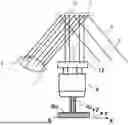
FIG. 1 shows a schematic view of a device for recording data illustrating the principle underlying the present invention.
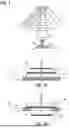
FIG. 2a shows schematically a first recording alternative.
FIG. 2b shows schematically a second recording alternative.
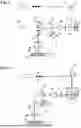
FIG. 3 shows schematically a device for recording data according to a preferred embodiment.
FIG. 4 shows schematically a device for recording data according to another preferred embodiment.
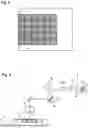
FIG. 5 shows schematically a recording scheme for a large area.
FIG. 6 shows schematically a device for recording data according to another preferred embodiment.
DETAILED DESCRIPTION
FIG. 1 shows a schematic illustration of a device for recording data in a layer of a ceramic material elucidating the principle underlying the present invention. The device comprises a laser source 2 emitting laser light onto a DMD 3 comprising multiple micromirrors 3a arranged in an array. The DMD 3 is adapted to emit multiple laser beams 4 along either a first direction (i.e., for recording) or along a second direction (indicated with reference numeral 9) for each micromirror being in an “off” state diverting those laser beams 9 into a beam dump (not shown). Usually, the device will further comprise collimating optics (not shown in FIG. 1) for collimating laser light emitted by the laser source 2 onto the DMD 3. The device further comprises a substrate holder 6 for mounting a substrate 6a and focusing optics 8 adapted for focusing each of the multiple laser beams 4 emitted by the DMD onto a substrate 6a mounted on the substrate holder 6. The focusing optics 8 may, for example, comprise standard microscope optics having a high numerical aperture. The substrate holder 6 is adapted for supporting and preferably mounting the substrate 6a and may be mounted onto or part of an XY-stage.
As discussed previously, the device preferably comprises a beam shaping device to achieve, e.g., Bessel beams. For example, a matrix of laser zone plates 12 may be provided between the DMD 3 and the focusing optics 8 so as to shape each of the laser beams 4 into a Bessel beam shape. Each Bessel beam is then focused onto the substrate 6a by means of an attributed lens (e.g. Fresnel lens). In order to properly illuminate the matrix of laser zone plates 12 additional collimating optics may be provided. A focus length of at least 4 times the wavelength of the laser light may be achieved by using such a Bessel beam. Moreover, the focus has a much more cylindrical shape than a Gaussian beam.
In the example shown in FIG. 1, the substrate 6a comprises a ceramic coating or a layer of a ceramic material 1 (see FIG. 2a) which is locally ablated by means of the focused laser beams 4. In FIG. 1, the ceramic coating 1 is provided on top of the substrate 6a (see also FIG. 2a). Alternatively, the ceramic coating may be provided on a bottom or back side of the substrate 6a as shown in FIG. 2b. Since the laser beams 4 in this case have to pass through the substrate 6a, the material of the substrate 6a need be transparent for the wavelength of the laser light in this case. Moreover, in this case it is preferred that the substrate holder 6 comprises a frame 6b supporting the outer edge of the substrate 6a only (whereas the substrate may be fully supported in case of a top ablation as shown in FIG. 2a). Thus, the part of the ceramic coating 1 being exposed to ablation is not supported due to the free space 6c under that part (see FIG. 2b).
This is a particularly preferred embodiment because any debris generated during ablation will be separated from the focusing optics 8 by means of the substrate 6a. Rather, any material being ablated from the ceramic layer 1 will be emitted into the free space 6c of the sample holder 6 and may be extracted or aspired therefrom. Thus, the focusing optics 8 will not be negatively affected by said debris and it is much easier to clean the surface of the ceramic coating 1 immediately after or even during recording.
Preferably, the thickness of the substrate is adapted to the focusing optics of the device being used. For example, the thickness of the substrate should be smaller than the focal length of the focusing optics in order to reach the ceramic coating.
Moreover, the arrangement shown in FIG. 2b does also allow for cooling the ceramic coating 1 during ablation, for example by letting a cooling fluid flow along said ceramic coating 1. This will improve accuracy of the ablation process because heat transfer from the laser focus to surrounding areas may be eliminated. For example, a cross jet of air (e.g., an air blade) or a liquid such as water or other immersion liquids may be provided for this purpose. Said cross jet may, in addition, drain off the debris generated during ablation.
Such a cross jet may also be provided in case of the arrangement shown in FIG. 2a. However, said cross jet in this embodiment has to be designed so as not to interfere with the optics. For example, if immersion optics is used the immersion liquid may be provided in a cross flow which is preferably laminar in order to avoid any optical effects due to turbulences within the immersion liquid.
Since such a cross jet of air or a liquid may generate vibrations which may jeopardize the recording accuracy and since it will be intricate to use a cross jet for the embodiment shown in FIG. 2a, it is preferred to provide a negatively charged mesh or sheet 15 as shown in FIGS. 2a and 2b. As explained above, the use of a picosecond or femtosecond laser will create a plasma in the ceramic material to be ablated. Simply speaking, parts of the atomic shells of the ceramic material will be removed due to the interaction with the laser pulses. The remaining, positively charged atomic cores are then expelled during a so-called Coulomb explosion. These positively charged atomic cores may then be attracted by the negatively charged mesh or sheet 15. This is particularly advantageous in case of the embodiment shown in FIG. 2a where the laser beams 4 may pass through an opening in the mesh or plate. All debris will then be collected by the charged mesh or plate and can, thus, not negatively affect, e.g., the focusing optics 8.
A preferred embodiment of the inventive device is shown in FIG. 3. In particular, the device shown in FIG. 3 comprises two scanning devices 7a and 7b. As mentioned previously, these scanning devices 7a and 7b allow for steering the pattern of multiple laser beams emitted by the DMD over the relevant area of the layer of ceramic material. In the preferred embodiment shown in FIG. 3, a combination of one galvo scanner (7b) and one polygon scanner (7a) is used. The use of two scanners allows for scanning along two, preferably perpendicular, axes such as an x-axis and a y-axis (see FIG. 5). Scanning may then be performed along a first axis, e.g., the y-axis, and after one line along this first axis is completed (e.g. DMD patterns 1 to 5 in FIG. 5), scanning is performed along the second axis, e.g., the x-axis, before again scanning a line along the first axis (e.g. DMD patterns 6 to 10). As will be evident from the scheme shown in FIG. 5, it may be beneficial to utilize a fast scanning process for the y-axis, whereas scanning along the x-axis may be performed at a reduced speed. Thus, it is preferred to utilize a polygon scanner (7a) for said first axis and a galvo scanner (7b) for said second axis. Alternatively, an acousto-optic deflector may be used for either or both of these scanning devices.
FIG. 3 shows further preferred features which are, however, not necessary in the context of the present invention. For example, FIG. 3 shows the collimating optics 5 for collimating laser light emitted by the laser source 2 onto the DMD 3 as well as further optical components such as an actuator 10 and a polarizer 11.
FIG. 3 further shows an optional flat top beam shaper 21 arranged between the collimating optics 5 and the DMD 3. More importantly, the preferred embodiment shown in FIG. 3 comprises a prism 16. The optional prism 16 (which could also be replaced by a semi-transparent mirror) is positioned between the laser source 2 and the DMD 3 in such a manner that light emitted from the laser source 2, in that order, passes through the prism 16, a λ/4 plate 17a, hits the DMD 3, and again passes through the λ/4 plate 17a and the prism 16 before selectively illuminating a plurality of regions of the substrate 6a.
Linearly polarized light impinging on the prism 16 from the top light path will be reflected to the right side, i.e. towards the DMD 3. By passing through the λ/4 plate 17a twice the polarization axis of the laser light is, in sum, rotated by 90°. Thus, the again linearly polarized light impinging on the prism 16 from the right light path will pass through the prism 16.
A further λ/4 plate 17b may be provided (see FIG. 4) to convert the linearly polarized light into circularly polarized light which is particularly advantageous for creating Bessel beams with the laser zone plate 12. As mentioned above, Bessel beams allow for creating well-defined cylindrical recesses. Of course, if the laser zone plate 12 already comprises optical element 12a for creating circularly polarized light the presence of an additional λ/4 plate 17b is not required (see FIG. 3).
The preferred embodiment shown in FIG. 3 further comprises a reading device 18 configured to image the recorded data. Thus, a single writing and reading head may be utilized for both encoding (writing) data in the layer of the ceramic material and decoding (reading) data encoded in such a data carrier. A wavelength-dependent beam splitter 19, which reflects the wavelength of the laser light emitted from the laser source 2 and lets the wavelength(s) emitted by the further light source 20 pass, between the prism 16 and the focusing optics 8b allows light emitted from the substrate having a wavelength different from that of the laser source 2 to pass to the reading device 18. A further light source 20 (e.g. an LED) is adapted to illuminate the substrate via the beam splitter 24 during reading/decoding. By passing through the λ/4 plate 17b twice the polarization axis of the laser light originating from the light source 20 is, again, rotated by 90°. Thus, the again linearly polarized light impinging on the beam splitter 24 will pass through said beam splitter 24 towards the reading device 18.
Of course, other arrangements of the optical components of the device shown in FIG. 3 are envisaged as well. For example, the reading device 18, rather than being arranged on the optical axis of the focusing optics 8b as shown in FIG. 3, may also be arranged on a fourth side of the prism 16 as shown in FIG. 4. In this case, the beam splitter 19, while still shown, would no longer be required and can be replaced by a mirror which is always reflecting. The λ/4 plates 17a and 17b again ensure that the laser light originating from the light source 20 is, in sum, rotated by 180°. Thus, the again linearly polarized light impinging on the prism 16 will be reflected towards the reading device 18. In the embodiment shown in FIG. 4 the mirror 23 should be a wavelength-dependent beam splitter, which reflects the wavelength of the laser light emitted from the laser source 2 and lets the wavelength(s) emitted by the further light source 20 pass.
In reading mode, the DMD 3 may be utilized in different ways to illuminate the data carrier with light emitted by the further light source 20. As discussed above, the data carrier may be illuminated pixel by pixel using the DMD 3. In this case only a single detector is required in the reading device and scanning of the image is performed by the DMD 3.
In an alternative reading mode, utilizing SIM or SSIM, a certain illumination pattern (“structured illumination”) will be generated by the DMD 3. In that case, the reading device 18 should comprise a digital camera or other multi-pixel detector.
In a further reading mode, plane illumination may be provided by simply setting all micromirrors of the DMD 3 to be “ON”. Also in that case, the reading device 18 should comprise a digital camera or other multi-pixel detector.
The focusing optics (8) may optionally comprise a focal reducer (8a) and an f-theta-objective (8b) as shown in FIGS. 3 and 4. Utilizing a scanning system in combination with standard lenses will yield a spherical focal plane which may not be desirable. In order to achieve a planar focal plane, an f-theta-objective (8b) may be utilized. Moreover, a focal reducer (8a) may be present in order to reduce the area of the illumination pattern generated by the DMD 3 to a predetermined area size acceptable to the scanning devices 7a and 7b.
As mentioned previously, the inventive device does not require two scanning devices as shown in FIGS. 3 and 4. For example, if data is to be recorded on an elongated strip of material such as a roll of a thin ceramic material or a roll of a substrate with a thin ceramic coating, then the slow axis discussed above may be achieved by a transport mechanism for said elongated strip of material. For example, a roll of ceramic material 6a may be unwound from a roll and transported along the x-axis for recording as shown in FIG. 6. The fast y-axis may still be scanned by means of a scanning device 7a, which preferably is a polygon scanner 7a. If, however, a single DMD pattern does not extend over the entire width of the strip of material, the transport mechanism may even be combined with two scanning devices as shown in FIG. 6. The other optical components discussed above with respect to FIGS. 3 and 4 may be analogously employed in the context of FIG. 6.
Claims
1-57. (canceled)
58. A method for recording data in a layer of a ceramic material, the method comprising:
(a) providing the layer of the ceramic material; and
(b) selectively illuminating a plurality of regions of the layer of the ceramic material with a laser beam using a digital micromirror device and at least one scanning device;
(c) wherein parameters of the laser beam and a time of illumination for each of the selected regions are configured to ablate each of the selected regions in order to record data in the layer of the ceramic material by creating recesses in the layer of the ceramic material; and
(d) wherein the laser beam originates from a picosecond laser or from a femtosecond laser, wherein the laser beam passes, in order, through a prism or a semi-transparent mirror, hits the digital micromirror device, and again passes through the prism or the semi-transparent mirror before selectively illuminating the plurality of regions of the layer of the ceramic material.
59. The method of claim 58, wherein providing the layer of the ceramic material comprises providing a ceramic substrate and coating the substrate with the layer of the ceramic material, wherein a material of the ceramic substrate is different from the layer of the ceramic material.
60. The method of claim 59, wherein the ceramic substrate is transparent to a wavelength of the laser beam.
61. The method of claim 60, wherein selectively illuminating the plurality of regions of the layer of the ceramic material with the laser beam using the digital micromirror device comprises illuminating the layer of the ceramic material through the transparent substrate.
62. The method of claim 58, wherein step (b) comprises:
(b1) selectively illuminating the plurality of regions within a first area of the layer of the ceramic material;
(b2) using the at least one scanning device to shift a focus to a second area of the layer of the ceramic material, wherein the second area is adjacent to the first area; and
(b3) selectively illuminating a plurality of regions within the second area of the layer of the ceramic material.
63. The method of claim 62, wherein steps (b1) and (b2) are repeated for further adjacent areas of the layer of the ceramic material, wherein the areas are arranged linearly along a first axis.
64. The method of claim 62, wherein the at least one scanning device comprises one or more of a polygon scanner, an acousto-optic deflector, or a galvo scanner.
65. The method of claim 62, wherein the at least one scanning device comprises a first scanning device and a second scanning device, wherein the first scanning device is configured to shift the focus along a first axis, and wherein the second scanning device is configured to shift the focus along a second axis perpendicular to the first axis.
66. A device for recording data in a layer of a ceramic material, the device comprising:
a laser source comprising a picosecond laser or a femtosecond laser;
a digital micromirror device adapted to emit multiple laser beams;
a prism or a semi-transparent mirror positioned between the laser source and the digital micromirror device;
a substrate holder;
focusing optics adapted to focus each of the multiple laser beams emitted by the digital micromirror device onto a substrate mounted on the substrate holder; and
one or more scanning devices adapted to steer a pattern of the multiple laser beams emitted by the digital micromirror device over the substrate, thereby recording the data.
67. The device of claim 66, wherein a fluence of each of the multiple laser beams emitted by the digital micromirror device is greater than 100 mJ/cm2.
68. The device of claim 66, further comprising a reading device configured to image the recorded data.
69. The device of claim 68, further comprising a beam splitter between the prism or the semi-transparent mirror and the focusing optics adapted to allow light emitted from the substrate to pass to the reading device.
70. The device of claim 68, further comprising a light source adapted to illuminate the substrate via the prism or the semi-transparent mirror and the digital micromirror device and/or via the beam splitter.
71. The device of claim 66, wherein the one or more scanning devices comprises one or a combination of one or more galvo scanners, one or more polygon scanners, and one or more acousto-optic deflectors.
72. The device of claim 66, wherein the one or more scanning devices are arranged between the digital micromirror device and the focusing optics.
73. The device of claim 66, wherein the focusing optics comprise a focal reducer and an f-theta-objective.
74. The device of claim 73, wherein the focal reducer is arranged between the digital micromirror device and the one or more scanning devices.
75. The device of claim 73, wherein the one or more scanning devices are arranged between the focal reducer and the f-theta-objective.
76. The device of claim 66, further comprising a transport mechanism adapted to transport an elongated layer of a ceramic material.
77. The device of claim 76, further comprising a controller adapted to control the laser source, the one or more scanning devices, the digital micromirror device, and the transport mechanism so as to generate several patterns on adjacent areas over the substrate in order to create respective patterns of recesses.
Images & Drawings included:
Sources:
- United States Patent and Trademark Office - verify current appl. status at the USPTO↗