Determining of a Temperature Map of an Integrated Circuit
US20260154486A1
2026-06-04
19/349,393
2025-10-03
Smart Summary: A new method helps create a detailed temperature map for integrated circuits. It starts by making two power maps: one with high detail and another with less detail. Then, it creates a temperature map based on the less detailed power map. This temperature map is improved to match the desired level of detail. Finally, for specific areas of interest, it combines more precise temperature data with the overall map to enhance accuracy. 🚀 TL;DR
Abstract:
A method, data processing apparatus, and computer program product are provided. The method may be for determining a temperature map at a target resolution of an integrated circuit design. The method may include determining a high-resolution power map and a low-resolution power map. The method may further include determining a low-resolution temperature map corresponding to the low-resolution power map. The method may also include up-sampling the low-resolution temperature map to the target resolution to obtain an intermediate temperature map. Additionally, the method may include for one or more regions of interest (ROIs): obtaining a local intermediate power map in the ROI, obtaining a local differential power map in the first, high resolution for the ROI, determining a local differential temperature map in the target resolution, and combining the local differential temperature map with the intermediate temperature map in the ROI.
Applicant:
Interested in similar patents?
Get notified when new applications in this technology area are published.
Classification:
G06F30/392 » CPC main
Computer-aided design [CAD]; Circuit design; Circuit design at the physical level Floor-planning or layout, e.g. partitioning or placement
G06T3/40 » CPC further
Geometric image transformation in the plane of the image Scaling the whole image or part thereof
G06T11/20 IPC
2D [Two Dimensional] image generation Drawing from basic elements, e.g. lines or circles
Description
CROSS-REFERENCE TO RELATED APPLICATIONS
The present application is a non-provisional patent application claiming priority to Patent Application No. EP 24207014.2, filed on Oct. 16, 2024, the contents of which are hereby incorporated by reference.
FIELD OF THE DISCLOSURE
The present disclosure generally relates to a method for determining a temperature map of an integrated circuit (IC), design, and a data processing apparatus, a computer program product, and a computer readable storage medium for performing such a method.
BACKGROUND
On an IC, self-heating during operation is a common issue. Self-heating may result from power dissipated by electronic components in the form of heat. As a result of self-heating, an increased temperature may occur on the IC during use. For example, heated regions may be formed over the IC. In addition, local hot spots may occur where the temperature reaches relatively high values compared to a region surrounding the hot spot.
An increased temperature may affect the performance of electronic components. For instance, an electronic component may operate within certain performance margins only within specified temperature boundaries. The targeted performance may no longer be guaranteed when the component is subjected to a temperature higher than a specified maximal temperature. In extremis, an increased temperature may even lead to failure.
During design, a temperature map may be determined to identify the possible temperature distribution during use. This may be done by taking into account thermal interactions across the entire IC, i.e., including interactions between regions located relatively far away from each other. As such, a realistic temperature map can be obtained. Further, the resolution of a temperature map may determine the level of detail that can be observed. For example, the resolution may determine the minimal size of local hot spots that can be detected. The higher the resolution, the longer the computation time that may be required to determine the temperature map. Thus, there may be a trade-off between how quickly the temperature map may be obtained, which may influence the total design time of the IC, and the level of detail shown on the temperature map.
SUMMARY
It remains a challenge to quickly obtain a realistic temperature map at a high resolution.
The present disclosure may alleviate at least some of the above mentioned obstacles.
According to some aspects, there is provided the subject matter of the independent claims. Some further aspects are defined in the dependent claims.
According to a first aspect, a method is provided. The method may be for determining a temperature map at a target resolution of an integrated circuit (IC) design. The method may comprise determining a high-resolution power map and a low-resolution power map of the IC design in a first, high resolution and a second, lower resolution respectively. The method may also include determining a low-resolution temperature map corresponding to the low-resolution power map. The method may further include up-sampling the low-resolution temperature map to the target resolution to obtain an intermediate temperature map. Moreover, the method may include improving the accuracy of the intermediate temperature map for one or more regions of interest (ROIs) within the IC design to obtain the temperature map by, for each ROI of the one or more ROIs: up-sampling the low-resolution power map in the ROI to the first, high resolution to obtain a local intermediate power map in the ROI; determining a difference between the local intermediate power map and the high-resolution power map in the ROI, thereby obtaining a local differential power map in the first, high resolution for the ROI; determining a local differential temperature map in the target resolution corresponding to the local differential power map; and combining the local differential temperature map with the intermediate temperature map in the ROI.
The second, lower resolution may be lower than the first, high resolution. The target resolution may be a desired resolution at which the temperature map is to be obtained. The target resolution may be higher than the second, lower resolution. The target resolution may be higher than, lower than or equal to the first, high resolution.
In the ROIs, the method may perform a superposition of temperature information at the target resolution onto the low-resolution temperature map. Thereto, the low-resolution temperature map of the entire IC may be first up-sampled to the target resolution. As a result, the dimensions of the low-resolution temperature map may match the dimensions of the superimposed temperature information. The up-sampled version of the low-resolution temperature map may be referred to as the intermediate temperature map. The intermediate temperature map thus may have the higher target resolution, yet may contain low-resolution information.
The temperature information that may be superimposed in a ROI may improve the intermediate temperature map by including details at the target resolution. This information may be based on differences between low-resolution and high-resolution power maps. To this end, the differential map may capture discrepancies in the power domain resulting from the difference in resolution. The differential map may be subsequently converted to the temperature domain to provide the additional temperature information in the ROI.
For the IC as a whole, the conversion from power map to temperature map may be performed at the low resolution. This may allow capturing macro-thermal interactions between different regions of the IC. Calculations at the low resolution may be sufficient to detect such relatively large-scale effects. In the ROIs, the conversion of power map to temperature map may be performed at the high resolution. This may allow capturing localized thermal effects at a smaller level of detail in the ROIs. Calculations of the entire IC design may be thus performed at the low resolution, while calculations in the ROIs may be performed at the high resolution.
Because high-resolution calculations may be only performed in the ROIs, the method may be efficient and may be performed in a reduced computation time with respect to a high-resolution approach for the entire IC. By focusing on the ROIs for high-resolution calculations, the relevant localized information may be still captured.
According to further example embodiments, determining the low-resolution power map may comprise down-sampling the high-resolution power map to the second, lower resolution.
Down-sampling may provide an uncomplicated way of obtaining the low-resolution map from the high-resolution power map. By down-sampling the high-resolution power map to obtain the low-resolution power map, the method may operate on a single input power map. Alternatively, high-resolution and low-resolution power maps may be obtained separately as input for the method, wherein the low-resolution power map may not be a down-sampled version of the high-resolution power map.
According to further example embodiments, the ROI may be a region in the IC design that may comprise at least part of a computational unit.
Such a computational unit may, for example, be a processor core. Computational units may be configured to perform calculations during use of the IC and may therefore be power-consumption-intensive. Computational units may be configured to operate nearly continuously during use of the IC, whereas other components may often be idle. Thus, computational units may be responsible for a significant portion of the self-heating and may cause localized peak-temperatures. This may result in close examination of regions of the IC where computational units may be positioned when determining the temperature map.
According to further example embodiments, the first and second resolutions may be respectively characterized by a first and second unit length indicating a level of detail in the IC design, and the first unit length may be smaller than the second unit length.
A unit length may, for example, be a physical length in the IC that may correspond to a pixel width or a voxel width of a map. The larger the difference between unit lengths corresponding to the second, low resolution and the first, high resolution, the more computational power and time may be saved when performing the method.
Analogously, the target resolution may be characterized by a third unit length indicating a level of detail in the IC design, wherein the third unit length may be smaller than the second unit length.
According to further example embodiments, the level of detail of the first unit length may be in the order of the feature size of the process associated with the IC.
The feature size may be a characteristic of the production technology to manufacture the IC according to the IC design. The feature size may, for example, be a width of a channel length of a transistor. According to example embodiments, the level of detail of the first unit length may be at least 5 times, or at least 10 times larger than the feature size.
Analogously, the level of detail of the third unit length may be in the order of the feature size of the process associated with the IC.
According to further example embodiments, the second unit length may be at least 2 times the first unit length.
For example, the second unit length may be 2 times, 10 times, 20 times, or 80 times the first unit length. For example, the first unit length may be 0.25 microns and the second unit length may be 20 microns.
Analogously, the second unit length may be at least 2 times the third unit length.
According to further example embodiments, the IC design may specify a physical arrangement of electronic components of the IC.
According to further example embodiments, the high-resolution and low-resolution power maps may be indicative of power consumption of the electronic components during operation of the IC.
According to further example embodiments, the low-resolution temperature map, the intermediate temperature map, and the temperature map may represent a temperature of the electronic components during operation of the IC.
According to further example embodiments, determining the high-resolution power map may comprise computing voltage and current waveforms based on circuit analysis of the IC design under predetermined operation conditions.
Power consumption may be determined by the voltages and currents occurring in the IC during use. In particular, the dependency between power (P), voltage (V), and current (I) may be defined by the relationship P=UI. Thus, by taking the voltage and current waveforms into account, the resulting power map may be considerably accurate. This may further contribute to obtaining a realistic temperature map.
The operation conditions may comprise a time-averaged operation, or may comprise a peak operation.
According to further example embodiments, determining the low-resolution temperature map may be further based on the physical arrangement of the electronic components of the IC design.
The physical positioning of the electronic components may determine the interactions with respect to heating therebetween, i.e., the cross-heating resulting from self-heating of individual components. This may go for both neighboring electronic components as well as electronic components located further away from each other. Taking into account the physical arrangement may thus further contribute to obtaining a realistic temperature map.
According to further example embodiments, determining the one or more local differential temperature maps may be further based on the physical arrangement of the electronic components of the IC design in the ROI.
According to further example embodiments, determining the low-resolution temperature map and determining the one or more local differential temperature maps may be further based on thermal properties of materials of the corresponding electronic components.
Thermal properties may include, inter alia: specific heat capacity, thermal conductivity and thermal diffusivity. These may be properties that determine how corresponding electronic components behave under certain heating and temperature circumstances. In particular, these properties may reflect how quickly and/or how easily heat released by the electronic components can spread out within materials and move between different materials and/or parts of the IC system. This may influence both localized as well as inter-component temperature effects. Taking these properties into account further may contribute to obtaining a realistic temperature map.
According to further example embodiments, determining the low-resolution temperature map and determining the one or more local differential temperature maps may be further based on packaging and system assembly components into which the electronic components are embedded.
According to a second aspect, a data processing apparatus is provided. The data processing apparatus may comprise at least one processor and at least one memory including computer program code. The at least one memory and computer program code may be configured to, with the at least one processor, cause the data processing apparatus to: determine a high-resolution power map and a low-resolution power map of the IC design in a first, high resolution and a second, lower resolution respectively; determine a low-resolution temperature map corresponding to the low-resolution power map; up-sample the low-resolution temperature map to the target resolution to obtain an intermediate temperature map; improve the accuracy of the intermediate temperature map for one or more regions of interest (ROIs) within the IC design to obtain the temperature map by, for each ROI of the one or more ROIs: up-sampling the low-resolution power map in the ROI to the first, high resolution to obtain a local intermediate power map in the ROI; determining a difference between the local intermediate power map and the high-resolution power map in the ROI, thereby obtaining a local differential power map in the first, high resolution for the ROI; determining a local differential temperature map in the target resolution corresponding to the local differential power map; and combining the local differential temperature map with the intermediate temperature map in the ROI.
According to a third aspect, a computer program product is provided. The computer program may comprise computer-executable instructions for performing the following steps when the program is run on a computer. The steps may include determining a high-resolution power map and a low-resolution power map of the IC design in a first, high resolution and a second, lower resolution respectively; determining a low-resolution temperature map corresponding to the low-resolution power map; up-sampling the low-resolution temperature map to the target resolution to obtain an intermediate temperature map; improving the accuracy of the intermediate temperature map for one or more regions of interest, ROIs, within the IC design to obtain the temperature map by, for each ROI of the one or more ROIs: up-sampling the low-resolution power map in the ROI to the first, high resolution to obtain a local intermediate power map in the ROI; determining a difference between the local intermediate power map and the high-resolution power map in the ROI, thereby obtaining a local differential power map in the first, high resolution for the ROI; determining a local differential temperature map in the target resolution corresponding to the local differential power map; and combining the local differential temperature map with the intermediate temperature map in the ROI.
According to a fourth aspect, a computer readable storage medium is provided. The computer readable storage medium may comprise computer-executable instructions for performing the following steps when the program is run on a computer. The steps may include: determining a high-resolution power map and a low-resolution power map of the IC design in a first, high resolution and a second, lower resolution respectively; determining a low-resolution temperature map corresponding to the low-resolution power map; up-sampling the low-resolution temperature map to the target resolution to obtain an intermediate temperature map; improving the accuracy of the intermediate temperature map for one or more regions of interest, ROIs, within the IC design to obtain the temperature map by, for each ROI of the one or more ROIs: up-sampling the low-resolution power map in the ROI to the first, high resolution to obtain a local intermediate power map in the ROI; determining a difference between the local intermediate power map and the high-resolution power map in the ROI, thereby obtaining a local differential power map in the first, high resolution for the ROI; determining a local differential temperature map in the target resolution corresponding to the local differential power map; and combining the local differential temperature map with the intermediate temperature map in the ROI.
According to a fifth aspect, a data processing apparatus is provided. The data processing apparatus may comprise at least one processor and at least one memory storing instructions that, when executed by the at least one processor, cause the data processing apparatus to: determine a high-resolution power map and a low-resolution power map of the IC design in a first, high resolution and a second, lower resolution respectively; determine a low-resolution temperature map corresponding to the low-resolution power map; up-sample the low-resolution temperature map to the target resolution to obtain an intermediate temperature map; improve the accuracy of the intermediate temperature map for one or more regions of interest, ROIs, within the IC design to obtain the temperature map by, for each ROI of the one or more ROIs: up-sampling the low-resolution power map in the ROI to the first, high resolution to obtain a local intermediate power map in the ROI; determining a difference between the local intermediate power map and the high-resolution power map in the ROI, thereby obtaining a local differential power map in the first, high resolution for the ROI; determining a local differential temperature map in the target resolution corresponding to the local differential power map; and combining the local differential temperature map with the intermediate temperature map in the ROI.
According to a sixth aspect, a non-transitory computer program product is provided comprising instructions for performing the following steps when the computer program product is run on a computer: determining a high-resolution power map and a low-resolution power map of the IC design in a first, high resolution and a second, lower resolution respectively; determining a low-resolution temperature map corresponding to the low-resolution power map; up-sampling the low-resolution temperature map to the target resolution to obtain an intermediate temperature map; improving the accuracy of the intermediate temperature map for one or more regions of interest, ROIs, within the IC design to obtain the temperature map by, for each ROI of the one or more ROIs: up-sampling the low-resolution power map in the ROI to the first, high resolution to obtain a local intermediate power map in the ROI; determining a difference between the local intermediate power map and the high-resolution power map in the ROI, thereby obtaining a local differential power map in the first, high resolution for the ROI; determining a local differential temperature map in the target resolution corresponding to the local differential power map; and combining the local differential temperature map with the intermediate temperature map in the ROI.
According to a seventh aspect, a non-transitory computer readable medium is provided. The non-transitory computer readable medium may comprise instructions stored thereon for performing at least the following: determining a high-resolution power map and a low-resolution power map of the IC design in a first, high resolution and a second, lower resolution respectively; determining a low-resolution temperature map corresponding to the low-resolution power map; up-sampling the low-resolution temperature map to the target resolution to obtain an intermediate temperature map; improving the accuracy of the intermediate temperature map for one or more regions of interest, ROIs, within the IC design to obtain the temperature map by, for each ROI of the one or more ROIs: up-sampling the low-resolution power map in the ROI to the first, high resolution to obtain a local intermediate power map in the ROI; determining a difference between the local intermediate power map and the high-resolution power map in the ROI, thereby obtaining a local differential power map in the first, high resolution for the ROI; and determining a local differential temperature map in the target resolution corresponding to the local differential power map; and combining the local differential temperature map with the intermediate temperature map in the ROI.
The term “non-transitory” as used herein, may be a limitation of the medium itself, i.e., a tangible medium and not a signal, as opposed to a limitation on data storage persistency, e.g., random-access memory (RAM) versus read-only memory (ROM).
BRIEF DESCRIPTION OF THE FIGURES
The above, as well as additional, features will be better understood through the following illustrative and non-limiting detailed description of example embodiments, with reference to the appended drawings.
FIG. 1 illustrates an IC design, according to example embodiments.
FIG. 2 illustrates steps of a method for determining a temperature map of an IC design, according to example embodiments.
FIG. 3 illustrates steps for improving the accuracy of an intermediate temperature map for one or more ROIs within an IC design to obtain the temperature map, according to example embodiments
FIG. 4 illustrates a temperature map of an IC design, according to example embodiments.
FIG. 5 illustrates a temperature map of an IC design, according to example embodiments.
FIG. 6 illustrates a cross-section of a 3D IC design, according to example embodiments.
All the figures are schematic, not necessarily to scale, and generally only show parts which are necessary to elucidate example embodiments, wherein other parts may be omitted or merely suggested.
DETAILED DESCRIPTION
Example embodiments will now be described more fully hereinafter with reference to the accompanying drawings. That which is encompassed by the claims may, however, be embodied in many different forms and should not be construed as limited to the embodiments set forth herein; rather, these embodiments are provided by way of example. Furthermore, like numbers refer to the same or similar elements or components throughout.
The present disclosure may relate to self-heating on an IC, e.g., a system-on-chip (SoC) during operation. Self-heating may result in localized as well as cross-region temperature effects. Temperature effects may be indicated by a so-called temperature map. Such a temperature map of an IC may be determined based on an IC design. An IC design may also be referred to as an IC lay-out or an IC arrangement plan and may specify the topography of electronic components of the IC. This may, for example, include a positioning of the electronic components on a chip as well as interconnections, such as conductive tracks or through-silicon vias (TSV) arranged between the components. An IC design may be a two-dimensional (2D) or a three-dimensional (3D) chip design, i.e., including stacked layers, e.g., interconnected by means of TSVs.
A temperature map may illustrate the distribution of temperature over the IC design during operation. A temperature map may thus be virtually placed over the IC design to indicate the temperature distribution. In other words, in the temperature map, temperature values may be indicated at each location of the IC design. Such a location may correspond to a pixel in the case of a 2D IC design, or a voxel in the case of a 3D IC design. The pixel/voxel size may determine the level of detail of the temperature map. As such, a resolution of the temperature map may be characterized by such a pixel/voxel size.
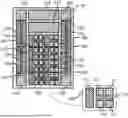
FIG. 1 shows an IC design 10 of an SoC, according to example embodiments.
According to example embodiments, the IC design 10 may specify a physical arrangement of electronic components of the IC and may comprise eight of central processing unit (CPU) 100 arranged in a 4-by-2 array. According to example embodiments, each CPU 100 may have the same functional components and the same arrangement. Each CPU 100 may comprise four computational cores 111, a CPU bridge 112 to interface with the CPU 100, and a cache 113. Each CPU may, for example, be configured to consume 5 Watts (W) of power during operation. For example, each core 111 may be configured to consume 0.6 W during operation. Each CPU bridge 112 may be configured to consume 1 W during operation. Each cache 113 may be configured to consume 1.6 W during operation. Each core 111 may, for example, have a size of 1.25 millimeters (mm) by 1.25 mm.
Different types of CPUs, e.g., consuming a different power, may be provided on the IC design 10.
The IC design 10 may further comprise a number of double data rate (DDR) controllers 130, e.g., eight DDR controllers 130 as illustrated in FIG. 1. Such a DDR controller 130 may, for example, be configured to consume 3.5 W during operation. The IC design 10 may further comprise a number of input/output (I/O) units 140, e.g., four I/O units 140 as illustrated in FIG. 1. Such an I/O unit 140 may, for example, be configured to consume 1 W during operation. The IC design 10 may further comprise a Peripheral Component Interconnect Express (PCIe) interface unit 150. Such a unit 150 may, for example, be configured to consume 15 W during operation. The IC design 10 may further comprise other I/O units 141. Such a unit 141 may, for example, be configured to consume 7 W of power during operation.
FIG. 2 shows steps of a method for determining a temperature map 70 of an IC design, according to example embodiments. The method may be used for determining the temperature map 70 of IC design 10 of FIG. 1. The temperature map 70 may represent a temperature of the IC, e.g., of the electronic components, during operation of the IC. The obtained temperature map 70 may be at a target resolution, i.e., a predetermined desired resolution.
FIG. 2 illustrates steps of a method for determining a temperature map of an IC design, according to example embodiments. The method depicted in FIG. 2 may include determining 200 a high-resolution power map 20 of the IC design 10 in a first, high resolution. The high-resolution power map 20 may be a power map of the entire IC, i.e., a ‘global’ high-resolution power map 20. The high resolution may be characterized by a first unit length indicating a level of detail in the IC design. A level of detail of the first unit length may, for example, be in the order of the feature size of the production process associated with the IC. Such a feature size may, for example, be 150 nanometers (nm) as the channel length of a metal-oxide-semiconductor (MOS) transistor of the IC design. The first unit length can be a pixel length of the high-resolution power map 20, i.e., the physical length in the IC design corresponding to the length of a pixel in the high-resolution power map 20. Pixels and voxels may have square and cube shapes respectively and may thus be characterized by a single length.
The method may further comprise determining a low-resolution power map 30 of the IC design in a second, low resolution. Power map 30 may be also a global power map, i.e., determined for the entire IC design. The low resolution may be lower than the high resolution. In other words, the first unit length may be smaller than a second unit length, characterizing the low resolution and indicating a level of detail in the IC design. For example, the second unit length may be a fractional multiple, e.g., 1.3, 1.5, or 10.1, of the first unit length. As another example, the second unit length may be at least two times the first unit length. If the second unit length is two times the first unit length, there may be twice as many pixels in the high-resolution power map 20 in both 2D directions than in low-resolution power map 30. This may result in four times fewer pixels in low-resolution power map 30 compared with power map 20.
The low-resolution power map 30 may, for example, be determined by down-sampling 300 the high-resolution power map 20 to the low resolution. Such a down-sampling step may comprise grouping pixels, or voxels, by averaging or may comprise applying another down-sampling scheme.
The power maps 20, 30 may be indicative of power consumption of the electronic components during operation of an IC corresponding to the IC design 10. Power maps 20, 30 may, for example, be obtained based on a predetermined operation of the IC. Determining power maps 20, 30 may comprise computing voltage and current waveforms based on circuit analysis of the IC design under such predetermined operation conditions. Different high-resolution power maps 20 may be obtained based on different uses of the IC in terms of computational load in different parts of the IC. High-resolution power map 20 may be obtained over a time interval based on a corresponding varying operation of the IC.
Further, the method may comprise step 400 of determining a low-resolution temperature map 40 corresponding to the low-resolution power map 30. The low-resolution temperature map 40 may represent a temperature of the IC, e.g., of the electronic components, during operation of the IC. The step 400 may comprise performing a temperature simulation based on the global, low-resolution power distribution 30. To achieve a realistic version of low-resolution temperature map 40, determining the low-resolution temperature map 40 may be further based on the physical arrangement of the electronic components in the IC design and/or based on thermal properties of materials of the corresponding electronic components. Other parameters may also be taken into account to achieve an even more realistic version of low-resolution temperature map 40.
A savings of computational resources and computation time may be achieved by performing calculations as part of step 400 in the low-resolution domain. By performing the temperature simulation on the global IC design, cross-regional temperature effects may be captured as well as localized effects detectable at the low resolution. The low-resolution temperature map 40 thus may comprise low-resolution information of thermal effects over the entire IC design.
Further, the method of FIG. 2 may comprise up-sampling 500 the low-resolution temperature map to the target resolution to obtain an intermediate temperature map 50. The intermediate temperature map 50 may represent a temperature of the IC, e.g., of the electronic components, during operation of the IC. Up-sampling 500 may, for example, comprise performing nearest neighbor up-sampling, interpolation up-sampling, or another up-sampling scheme. It is noted that the target resolution may be higher than the low resolution.
After up-sampling 500, further computations may be performed in ROIs of the IC design, which may achieve a temperature map 70 that is improved in those ROIs. The intermediate temperature map 50 and the temperature map 70 may be thus the same, except in the ROIs. A ROI may be a region in an IC design found relevant with respect to temperature effects, i.e., a region comprising an electronic component that causes significant heating. A ROI may, for example, be a region in the IC design that comprises at least part of a computational unit, e.g., CPU 100 or CPU core 111. One or more ROIs may be manually selected or may be selected in an automated way by use of a computer, e.g., using a segmentation algorithm. In the latter case, a deep learning (DL) algorithm implementing a neural network (NN) may, for example, be applied.
FIG. 2 shows a ROI 201 in the IC design 10. The ROI 201 may correspond to ROIs 202, 203, 203B in the power maps 20, 30, temperature map 40, and intermediate temperature map 50. Due to the down-sampling 300 and the up-sampling 500, borders of the ROIs 202, 203, 203B may be slightly misaligned, e.g., shifted by a pixel row or column. This may not impact the performance of the method. The ROIs 202, 203, 203B may correspond to the same ROI 201, but are indicated using different reference numerals due to the possible misalignment explained above.
FIG. 3 illustrates steps for improving the accuracy of an intermediate temperature map 50 for one or more ROIs 201 within an IC design to obtain the temperature map 70, according to example embodiments.
As shown in FIG. 3, the method may begin with a ROI 203 of the low-resolution power map 30 corresponding to the ROI 201 being up-sampled 600 to the high resolution to obtain a local intermediate power map 303 in the ROI 201. The method may continue with a difference between the power map 303 and a ROI 202 of the high-resolution power map 20 being determined via element-wise subtraction 601 in the ROI 201. This may, for example, include subtracting the power map 303 from the ROI 202 of the high-resolution power map 20, or, subtracting the ROI 202 of the high-resolution power map 20 from the power map 303. The up-sampling 600 may be performed to allow element-wise subtraction 601, which may be performed on data of the same size. As a result, a local differential power map 61 may be obtained in the high resolution for the ROI 201. The local differential power map 61 may hold power information that differs between the low-resolution map 30 and the high-resolution map 20. In other words, the difference, i.e., delta (Δ) may be obtained that results from down-sampling the high-resolution map 20 to the lower resolution. The local differential power map 61 may thus capture the small variations resulting from a pixel-wise comparison between the high-resolution ROI and the up-sampled ROI. It is noted that the total net power within the power map 61 may be equal to zero as a result of the down-sampling 300 and/or up-sampling 600.
The method illustrated in FIG. 3 may further involve the local differential power map 61 holding the Δ information being transformed via computation 602 to the temperature domain. During the same step, the high-resolution version of the local differential power map 61 may be converted to the target resolution. This may involve an additional up-or down-sampling step or may not require any additional steps in case the target resolution equals the high resolution. In other words, a local differential temperature map 62 corresponding to the local differential power map 61 may be determined via computation 602 in the target resolution. The high-resolution simulation may be performed more efficiently, since it may only be performed on the limited ROIs. To achieve a realistic temperature map 70, this may be based on the physical arrangement of the electronic components of the IC design in the ROI 201 and/or based on thermal properties of materials of the corresponding electronic components. Other parameters may also be taken into account to achieve an even more realistic temperature map 70.
It is noted that the target resolution may be higher than the high resolution. In this case, the temperature map 70 may not effectively comprise a level of detail higher than corresponding to the high resolution, since high-resolution power information is used as input to the method. Setting the target resolution higher than the high resolution may, however, be useful to provide the temperature map 70 at a resolution directly useable for further processing. In such a case, a further up-sampling step may be avoided.
It is noted that the target resolution may be equal to the high resolution. This may further add to the efficiency of the method since no internal up-sampling or down-sampling conversion steps may be needed in the ROIs.
It is noted that the target resolution may be lower than the high resolution. This may, for example, be the case when the level of detail of the high resolution is not needed or possible considering memory limitations. Setting the target resolution lower than the high resolution may also result in faster computations in the ROIs.
The method illustrated in FIG. 3 may further involve, in a combination step 700, the ROI information at the target resolution being combined with the intermediate temperature map 50 to obtain the intended temperature map 70. The step 700 may comprise adding the local differential temperature map 62 to the intermediate temperature map 50 in the ROI. A negative sign may be introduced in this step, depending on how the element-wise subtraction 601 is performed. In other words, the portion of local differential temperature map 62 may be superimposed, i.e., by means of an element-wise addition, onto the intermediate temperature map 50 in the ROI 203B. This may improve the temperature map 70 in the ROI 201, thereby providing a higher level of detail in the ROI 201. This may enable detection of temperature effects at the level of detail of the target resolution in the ROI 201.
FIG. 4 illustrates a temperature map of an IC design, according to example embodiments.
FIG. 5 illustrates a temperature map of an IC design, according to example embodiments.
FIGS. 4 and 5 both illustrate temperature maps of an IC design of a SoC having twenty CPUs arranged in a 4-by-5 array. Plots 800 and plots 900 may correspond to temperature maps 70 obtained for different operational uses of a same IC design.
Plots 800 may correspond to a temperature map 70 achieved for an IC design when all CPUs perform the same operation, i.e., individual power maps over all twenty CPU regions look identical. Therefore, the local differential power map 61 may be identical for all twenty ROIs defined over the separate CPUs. As a result, computation 602 may only need to be performed once. The resulting high-resolution version of the local differential temperature map 62 may be superimposed onto intermediate temperature map 50 at each of the twenty CPU regions to reveal the high-resolution temperature map 70 of the entire SoC.
Thus, for some example embodiments, not all calculations may need to be performed for each ROI separately. This may save both computational as well as memory resources.
Plot 900 may correspond to a temperature map 70 achieved for the same IC design with the CPUs performing a different operation, i.e., each of the twenty CPU regions has a distinct power map pattern. Here, computation 602 may be therefore carried out individually for each of the twenty corresponding differential power maps 61. It is noted that, the resulting differential temperature maps 62 may be independent of one another. In such cases, these computation 602 may be performed in parallel. This may lead to a speed-up of calculations. Superimposing the resulting high-resolution temperature maps 62 in the corresponding ROIs in the intermediate temperature map 50 may result in the high-resolution temperature map 70 of the entire SoC.
Thus, for some example embodiments, calculations may need to be performed for each individual ROI separately. Even in such a case, the method may be performed efficiently, both with respect to computational power as well as necessary memory resources. A reason for the efficiency of the method may be that computation time and memory required for converting power maps to the temperature domain may scale super-linearly with the number of temperature pixels. For example, the method may provide a superior efficiency with respect to a target-resolution brute force approach for obtaining the temperature map of the entire SoC as a whole.
In FIG. 4, plot 800 of the temperature map may illustrate long-range thermal interactions. These interactions may be, for example, visible in region 830. For example, CPU regions near the center of the SoC may be at a higher temperature then CPU regions near the edges, in spite of all CPUs dissipating the same amount of power. Such cross-regional thermal interactions may, for example, be captured in the low-resolution temperature map 40.
Region 801 is shown enlarged. Region 801 may show localized temperature effects only detectable at the target resolution, i.e., in a ROI. For example, local hotspots 810, 811, 812, 813 are visible. In addition, temperature gradients may be visible at the higher, target resolution, see, e.g., region 820.
FIG. 5 shows plot 900 that may be of the same IC design as plot 800. The IC may have a width 920 of 10 mm. Another region 901 is shown enlarged. Due to the different scale of grey shades, details may appear slightly less visible than in FIG. 4. Hot spots 910, 911, 912, 913 can be observed.
It is noted that a temperature map for a 3D IC design may be obtained instead of only a 2D temperature map. Such a 3D IC design may comprise more details of the configuration of the IC, e.g., packaging and system assembly components into which the electronic components are embedded. A 3D temperature map obtained based on such a 3D IC design may provide useful information since additional heating-related behavior of the IC may be taken into account.
FIG. 6 illustrates a cross-section of a 3D IC design, according to example embodiments. FIG. 6 schematically shows a cross-section 970 of a 3D IC. A 3D IC may comprise various stacked layers surrounding a layer holding the active components, i.e., active region 971. The active region 971 may, for example, correspond to a 2D temperature map 70. For example, the IC may comprise a stacking of: a printed circuit board (PCB) 972; a ball grid array (BGA) underfill layer 973; a package substrate layer 974; a controlled collapse chip connection (C4) layer 975 comprising C4 bumps; a back end of line (BEOL) layer 976; the active region 971; a silicon (Si) die layer 977; a thermal interface material (TIM) layer 978; a heat spreader 979; and a heat sink 980. 3D IC designs having different configurations may also be used as input for the method and may depend on the processing technology of choice. 3D temperature maps based on a 3D IC design may enable evaluating certain adjustments to improve the self-heating properties of the IC, both within the active region 971 as well as in the other stacking layers 972-980. This may, for example, include rearrangement of electronic components, providing additional cooling elements, amending one or more of the stacked layers, e.g., by choosing other materials, etc.
As used in this application, the term “circuitry” may refer to one or more or all of the following: (a) hardware-only circuit implementations (such as implementations in only analog and/or digital circuitry) and (b) combinations of hardware circuits and software, such as (as applicable): (i) a combination of analog and/or digital hardware circuit(s) with software/firmware and (ii) any portions of hardware processor(s) with software (including digital signal processor(s)), software, and memory(ies) that work together to cause an apparatus, such as a mobile phone or server, to perform various functions) and (c) hardware circuit(s) and or processor(s), such as a microprocessor(s) or a portion of a microprocessor(s), that requires software (e.g., firmware) for operation, but the software may not be present when it is not needed for operation. This definition of circuitry applies to all uses of this term in this application, including in any claims. As a further example, as used in this application, the term circuitry also covers an implementation of merely a hardware circuit or processor (or multiple processors) or portion of a hardware circuit or processor and its (or their) accompanying software and/or firmware. The term circuitry also covers, for example and if applicable to the particular claim element, a baseband integrated circuit or processor integrated circuit for a mobile device or a similar integrated circuit in server, a cellular network device, or other computing or network device.
Although the present disclosure has been illustrated by reference to specific embodiments, it will be apparent to those skilled in the art that the disclosure is not limited to the details of the foregoing illustrative embodiments, and that the present disclosure may be embodied with various changes and modifications without departing from the scope thereof. The present embodiments are therefore to be considered in all respects as illustrative and not restrictive, the scope of the disclosure being indicated by the appended claims rather than by the foregoing description, and all changes which come within the meaning and range of equivalency of the claims are therefore intended to be embraced therein. In other words, it is contemplated to cover any and all modifications, variations or equivalents that fall within the scope of the basic underlying principles and whose essential attributes are claimed in this patent application. It will furthermore be understood by the reader of this patent application that the words “comprising” or “comprise” do not exclude other elements or steps, that the words “a” or “an” do not exclude a plurality, and that a single element, such as a computer system, a processor, or another integrated unit may fulfil the functions of several means recited in the claims. Any reference signs in the claims shall not be construed as limiting the respective claims concerned. The terms “first”, “second”, “third”, “a”, “b”, “c”, and the like, when used in the description or in the claims are introduced to distinguish between similar elements or steps and are not necessarily describing a sequential or chronological order. Similarly, the terms “top”, ‘bottom”, “over”, “under”, and the like are introduced for descriptive purposes and not necessarily to denote relative positions. It is to be understood that the terms so used are interchangeable under appropriate circumstances and embodiments of the disclosure are capable of operating according to the present disclosure in other sequences, or in orientations different from the one(s) described or illustrated above.
While some embodiments have been illustrated and described in detail in the appended drawings and the foregoing description, such illustration and description are to be considered illustrative and not restrictive. Other variations to the disclosed embodiments can be understood and effected in practicing the claims, from a study of the drawings, the disclosure, and the appended claims. The mere fact that certain measures or features are recited in mutually different dependent claims does not indicate that a combination of these measures or features cannot be used. Any reference signs in the claims should not be construed as limiting the scope.
Claims
What is claimed is:1. A method for determining a temperature map at a target resolution of an integrated circuit (IC) design, comprising:
determining a high-resolution power map and a low-resolution power map of the IC design in a first, high resolution and a second, lower resolution;
determining a low-resolution temperature map corresponding to the low-resolution power map;
up-sampling the low-resolution temperature map to the target resolution to obtain an intermediate temperature map; and
improving an accuracy of the intermediate temperature map for one or more regions of interest (ROIs) within the IC design to obtain the intermediate temperature map by, for each ROI of the one or more ROIs:
up-sampling the low-resolution power map in the ROI to the first, high resolution to obtain a local intermediate power map in the ROI;
determining a difference between the local intermediate power map and the high-resolution power map in the ROI, thereby obtaining a local differential power map in the first, high resolution for the ROI;
determining a local differential temperature map in the target resolution corresponding to the local differential power map; and
combining the local differential temperature map with the intermediate temperature map in the ROI.
2. The method of claim 1, wherein determining the low-resolution power map comprises down-sampling the high-resolution power map to the second, lower resolution.
3. The method of claim 1, wherein the ROI is a region in the IC design that comprises at least part of a computational unit.
4. The method of claim 1, wherein the first resolution and the second resolution are respectively characterised by a first and second unit length indicating a level of detail in the IC design, and wherein the first unit length is smaller than the second unit length.
5. The method of claim 4, wherein the level of detail of the first unit length is in order of a feature size of a process associated with the IC.
6. The method according to claim 4, wherein the second unit length is at least 2 times the first unit length.
7. The method of claim 1, wherein determining the high-resolution power map comprises:
computing voltage and current waveforms based on circuit analysis of the IC design under predetermined operation conditions.
8. The method of claim 1, wherein the IC design specifies a physical arrangement of electronic components of the IC.
9. The method of claim 8, wherein the high-resolution power map and the low-resolution power map are indicative of power consumption of the electronic components during operation of the IC.
10. The method of claim 8, wherein the low-resolution temperature map, the intermediate temperature map, and the temperature map represent a temperature of the electronic components during operation of the IC.
11. The method of claim 8, wherein determining the low-resolution temperature map is further based on the physical arrangement of the electronic components of the IC design.
12. The method of claim 8, wherein determining the one or more local differential temperature maps is further based on the physical arrangement of the electronic components of the IC design in the ROI.
13. The method of claim 8, wherein determining the low-resolution temperature map and determining the one or more local differential temperature maps is further based on thermal properties of materials of corresponding electronic components.
14. A data processing apparatus comprising at least one processor and at least one memory including computer program code, the at least one memory and computer program code configured to, with the at least one processor, cause the data processing apparatus to:
determine a high-resolution power map and a low-resolution power map of an integrated circuit (IC) design in a first, high resolution and a second, lower resolution;
determine a low-resolution temperature map corresponding to the low-resolution power map;
up-sample the low-resolution temperature map to a target resolution to obtain an intermediate temperature map; and
improve an accuracy of the intermediate temperature map for one or more regions of interest (ROIs) within the IC design to obtain the intermediate temperature map by, for each ROI of the one or more ROIs:
up-sampling the low-resolution power map in the ROI to the first, high resolution to obtain a local intermediate power map in the ROI;
determining a difference between the local intermediate power map and the high-resolution power map in the ROI, thereby obtaining a local differential power map in the first, high resolution for the ROI;
determining a local differential temperature map in the target resolution corresponding to the local differential power map; and
combining the local differential temperature map with the intermediate temperature map in the ROI.
15. The data processing apparatus of claim 14, wherein the first resolution and the second resolution are respectively characterised by a first and second unit length indicating a level of detail in the IC design, and wherein the first unit length is smaller than the second unit length.
16. The data processing apparatus of claim 14, wherein determining the high-resolution power map comprises:
computing voltage and current waveforms based on circuit analysis of the IC design under predetermined operation conditions.
17. The data processing apparatus of claim 14, wherein the IC design specifies a physical arrangement of electronic components of the IC.
18. A computer program product comprising computer-executable instructions for performing steps when the program is run on a computer:
determining a high-resolution power map and a low-resolution power map of an integrated circuit (IC) design in a first, high resolution and a second, lower resolution;
determining a low-resolution temperature map corresponding to the low-resolution power map;
up-sampling the low-resolution temperature map to a target resolution to obtain an intermediate temperature map; and
improving an accuracy of the intermediate temperature map for one or more regions of interest (ROIs) within the IC design to obtain the intermediate temperature map by, for each ROI of the one or more ROIs:
up-sampling the low-resolution power map in the ROI to the first, high resolution to obtain a local intermediate power map in the ROI;
determining a difference between the local intermediate power map and the high-resolution power map in the ROI, thereby obtaining a local differential power map in the first, high resolution for the ROI;
determining a local differential temperature map in the target resolution corresponding to the local differential power map; and
combining the local differential temperature map with the intermediate temperature map in the ROI.
19. The computer program product claim 18, wherein the first resolution and the second resolution are respectively characterised by a first and second unit length indicating a level of detail in the IC design, and wherein the first unit length is smaller than the second unit length.
20. The computer program product claim 18, wherein determining the high-resolution power map comprises:
computing voltage and current waveforms based on circuit analysis of the IC design under predetermined operation conditions.
Images & Drawings included:


Sources:
- United States Patent and Trademark Office - verify current appl. status at the USPTO↗
Recent applications in this class:
- » 20260154485 2026-06-04
CHIPLET INTEGRATED CIRCUIT (IC) HAVING CENTRAL AND WING CHIPLETS - » 20260147972 2026-05-28
SYSTEMS AND METHODS FOR IMPROVING PERFORMANCE OF ELECTRONIC CIRCUITS - » 20260141154 2026-05-21
Interconnect Structure Design - » 20260141153 2026-05-21
USE OF MACHINE-TRAINED NETWORK FOR COLORING - » 20260141152 2026-05-21
MULTI-LAYER ANALYSIS OF DESIGN LAYOUT DECOMPOSITIONS - » 20260134186 2026-05-14
GENERATING A COMPACT CELL LAYOUT - » 20260127350 2026-05-07
FRONT-END-OF-LINE FLOORPLAN OF INTEGRATED CIRCUIT THAT HAS DUMMIES INSERTED BY BLOCKAGE-AIDED DUMMY INSERTION AND RELATED METHOD - » 20260119772 2026-04-30
Method for Transistor Order Placement Using Graph Neural Network Recursive Model - » 20260119771 2026-04-30
Method for Transistor Layout Design Using 3D Model Representation in Latent Space - » 20260119770 2026-04-30
METHOD OF MANUFACTURING INTEGRATED CIRCUIT HAVING THROUGH-SUBSTRATE VIA