NON-TRANSITORY COMPUTER-READABLE RECORDING MEDIUM, INFORMATION PROCESSING APPARATUS, AND INFORMATION PROCESSING METHOD
US20260154629A1
2026-06-04
19/350,287
2025-10-06
Smart Summary: A special computer program is stored on a medium that helps manage the movement of multiple vehicles. It creates different routes for these vehicles to follow as they leave and return to a starting point, visiting several locations along the way. The program also addresses challenges related to how much can be shipped from the starting point or another delivery location. It finds the best route options while considering these shipping limits. Finally, the program provides the results of its route selection process. 🚀 TL;DR
Abstract:
A non-transitory computer-readable recording medium stores therein an information processing program that causes a computer to execute a process including generating a set of a plurality of routes for a plurality of moving bodies that depart from a specific node and return to the specific node via a plurality of nodes, the plurality of routes representing an order in which the plurality of moving bodies visit a predetermined number of nodes among the plurality of nodes, solving a route selection problem generated using the generated set of routes and provided with constraints on a shipment volume of the specific node or a node serving as a delivery source of packages among the plurality of nodes, and outputting a result of solving the route selection problem.
Assignee:
- FUJITSU LIMITED 18,422 🇯🇵 Kawasaki-shi, Japan
Applicant:
Interested in similar patents?
Get notified when new applications in this technology area are published.
Classification:
G06Q10/047 » CPC main
Administration; Management; Forecasting or optimisation, e.g. linear programming, "travelling salesman problem" or "cutting stock problem" Optimisation of routes, e.g. "travelling salesman problem"
G06Q10/08355 » CPC further
Administration; Management; Logistics, e.g. warehousing, loading, distribution or shipping; Inventory or stock management, e.g. order filling, procurement or balancing against orders; Shipping; Relationships between shipper or supplier and carrier Routing methods
G06Q10/083 IPC
Administration; Management; Logistics, e.g. warehousing, loading, distribution or shipping; Inventory or stock management, e.g. order filling, procurement or balancing against orders Shipping
Description
CROSS-REFERENCE TO RELATED APPLICATION
This application is based upon and claims the benefit of priority of the prior Japanese Patent Application No. 2024-179264, filed on Oct. 11, 2024, the entire contents of which are incorporated herein by reference.
FIELD
The embodiments discussed herein are an information processing program and the like for solving a delivery planning program.
BACKGROUND
A delivery planning problem (vehicle routing problem, hereinafter, referred to as VRP) is a problem of finding a route in which a plurality of moving bodies such as carriers deliver packages from a specific point called a depot and return to the depot. The VRP is one of typical combinatorial optimization problems. By imposing constraint conditions on carriers, such as capacity constraints and time frame constraints, the VRP finds an optimal route satisfying the constraint conditions.
In recent years, more and more companies in the logistics industry are aiming to equalize their workloads to prevent unbalanced workloads among certain employees and warehouses and to ensure that the workloads are as evenly distributed as possible. For example, in a case where packages are delivered to a plurality of customers, when a plurality of warehouses as delivery sources are present, an upper limit may be imposed on a shipment volume for each warehouse to avoid a concentration of the delivery sources. The related technologies are described, for example, in: Japanese Laid-open Patent Publication No. 2021-106036.
SUMMARY
According to an aspect of an embodiment, a non-transitory computer-readable recording medium stores therein an information processing program that causes a computer to execute a process including generating a set of a plurality of routes for a plurality of moving bodies that depart from a specific node and return to the specific node via a plurality of nodes, the plurality of routes representing an order in which the plurality of moving bodies visit a predetermined number of nodes among the plurality of nodes, solving a route selection problem generated using the generated set of routes and provided with constraints on a shipment volume of the specific node or a node serving as a delivery source of packages among the plurality of nodes, and outputting a result of solving the route selection problem.
The object and advantages of the invention will be realized and attained by means of the elements and combinations particularly pointed out in the claims.
It is to be understood that both the foregoing general description and the following detailed description are exemplary and explanatory and are not restrictive of the invention.
BRIEF DESCRIPTION OF DRAWINGS
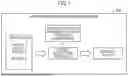
FIG. 1 is a diagram for explaining an information processing apparatus according to a first embodiment;
FIG. 2 is a functional block diagram illustrating a functional configuration of the information processing apparatus according to the first embodiment;
FIG. 3 is a flowchart illustrating a processing procedure of the information processing apparatus according to the first embodiment;
FIG. 4 is a diagram illustrating setting information of a test instance according to an application example of the first embodiment;
FIG. 5 is a diagram illustrating a result of solving a test instance according to an application example of the first embodiment;
FIG. 6 is a diagram illustrating a result of solving a test instance according to an application example of the first embodiment;
FIG. 7 is a diagram illustrating a result of solving a test instance according to an application example of the first embodiment;
FIG. 8 is a diagram illustrating shipment volume results for each warehouse according to an application example of the first embodiment; and
FIG. 9 is a diagram illustrating an example of a hardware configuration.
DESCRIPTION OF EMBODIMENTS
In such a situation, an optimal delivery route when an upper limit is set on a shipment volume at a delivery source such as a warehouse or a factory is desirably found. However, while general capacity constraints, time frame constraints, and the like are constraint conditions for carriers, constraints on the upper limit of a shipment volume for each warehouse (hereinafter, referred to as “upper limit shipment volume constraints”) are constraint conditions for warehouses and are therefore difficult to handle in a delivery planning problem.
Preferred embodiments will be explained with reference to accompanying drawings. This invention is not limited by these embodiments.
(a) First Embodiment
Problem Setting
Before describing the present embodiment, the problem setting for a delivery planning problem with upper limit shipment volume constraints according to the present embodiment is described. For example, for the delivery planning problem with upper limit shipment volume constraints, the following problem setting is performed to find an efficient delivery route satisfying each constraint condition, including the upper limit shipment volume constraints.
-
- A plurality of trucks departing from a specific point visit several nodes (customers or warehouses) and return to the starting point again.
- Each carrier loads packages at the warehouse and delivers the packages to the customer.
- A plurality of warehouses are present, any of which can be loaded, and a plurality of visits to a warehouse can be made.
- All customers need receive their packages.
- The carrier is subject to constraint conditions such as a loadable capacity (capacity constraints), a delivery time frame available to each customer (time frame constraints), and a maximum travel time of the carrier (maximum travel time constraints).
- Each warehouse has an upper limit on a shipment volume, which is not exceedable.
- The delivery cost for each carrier is defined as the travel time, travel distance, fixed cost, or the like, or a weighted linear sum of these.
- Find a route for each carrier that satisfies each of the above constraint conditions and minimizes the total delivery cost.
Expression Method
The expression method of a delivery planning problem handled by a delivery optimization system implemented by the information processing apparatus in the present embodiment is described below. In the following, first, the definition of “task”, the definition of “task group”, and the definition of “maximum total value constraint”, which are introduced to express the delivery planning problem, are sequentially described.
The definition of “task” is described. The task is the work of collecting and delivering packages. For example, the task includes the following information.
-
- Collection node: Node that collects packages.
- Delivery node: Node that delivers packages.
- Time frame: Time frame related to collection and delivery.
- Size: Size of package.
The definition of “task group” is described. The task group is a subset of a task set including all tasks. For each task group, at least one task included in the task group is assigned to a carrier. For example, when the task groups are G1={1, 2} and G2={3, 4}, either task 1 or 2 needs be assigned to a carrier and either task 3 or 4 needs be assigned to a carrier.
The definition of “maximum total value constraint” is described. The maximum total value constraint is defined as satisfying the following Formula (1) for determined routes r1, . . . , rm when a function f(r) determining a non-negative value and a maximum total value M (>0) are given for any carrier route r.
Including the concepts described above, the delivery optimization system according to the present embodiment expresses the delivery planning problem as follows.
-
- V: Node set.
- s∈V: Departure node of carrier and returning node.
- T: Task set.
- Gi (i=1, . . . , n)⊆T: n task groups.
- fj(r): Function to determine non-negative value for carrier route r for representing maximum total value constraints.
- Mj (j=1, . . . , m): Maximum total value.
- g(r): Function to calculate delivery cost (positive value) for carrier route r.
- Constraint condition list for each carrier: For example, the following are applicable.
- Capacity Constraint: Capacity that can be loaded on carrier (time frame constraint).
- Time Frame Constraint: Time frame within which packages can be delivered, which is set at different times for each customer.
- Maximum travel time constraint: Maximum travel time of carrier.
The correspondence between the expression method described above and the delivery planning problem with upper limit shipment volume constraints according to the present embodiment are described below, respectively.
-
- Set the set of customer nodes as C={c1, . . . , cn}, set the set of warehouse nodes as P={p1, . . . , pm}, and set the starting point as node s.
- Determine V as CUPU{s}.
- Define task having the following information for each warehouse node pj∈P and each customer node ci∈C.
- Collection node: Warehouse node pjo.
- Delivery node: Customer node cio.
- Time frame: Delivery time frame for customer node ci.
- Size: Size of package to be delivered to customer node ci.
- Determine all (n×m) tasks defined above as task set T.
- For each customer node ci (i=1, . . . , n), determine the set of tasks whose delivery node is ci as task group Gi.
- For each warehouse node pj (j=1, . . . , m), define function fj(r) that determines shipment volume at warehouse node pj from carrier route r, and determine upper limit of shipment volume at warehouse node pj as Mj.
- Define delivery cost for route r of each carrier as g(r).
- Constraint conditions for each carrier, such as capacity constraints, time frame constraints, and maximum travel time constraints, are included in “constraint condition list for each carrier”.
Processing Details of Information Processing Apparatus 100
The information processing apparatus 100 that solves the above-described delivery planning problem with upper limit shipment volume constraints is described below. FIG. 1 is a diagram for explaining the information processing apparatus according to the first embodiment. The information processing apparatus 100 illustrated in FIG. 1 is an example of a computer device that outputs an optimal transportation route that takes into account the upper limit of a shipment volume for each warehouse by solving the above-described delivery planning problem with upper limit shipment volume constraints.
As illustrated in FIG. 1, the information processing apparatus 100 generates a set of a plurality of routes for a plurality of moving bodies that depart from a specific node and return to the specific node via a plurality of nodes, the plurality of routes representing an order in which the plurality of moving bodies visit the nodes. Subsequently, the information processing apparatus 100 solves a route selection problem generated using the generated set of routes and provided with constraints on the shipment volume at a predetermined node, and outputs solution results.
For example, the information processing apparatus 100 generates a set of a plurality of routes (routes 1 to n) for a route when a carrier carrying a package departs from the node s at the starting point, delivers the package collected at the warehouse node pj to the customer node ci, and then returns to the node s. Subsequently, the information processing apparatus 100 generates a route selection problem when the upper limit of the shipment volume for each warehouse node pj is set to Mj, and selects an optimal route that takes into account the upper limit of the shipment volume for each warehouse by solving the generated route selection problem.
As a result, the information processing apparatus 100 can solve the route selection problem when an upper limit is set on the shipment volume at the delivery source, and thus can find an optimal delivery route that suppresses variations in the shipment volume at the delivery source.
Functional Configuration of Information Processing Apparatus 100
FIG. 2 is a functional block diagram illustrating a functional configuration of the information processing apparatus according to the first embodiment. As illustrated in FIG. 2, the information processing apparatus 100 includes a communication unit 110, a display unit 120, a storage unit 130, and a control unit 140.
The communication unit 110 is a processing unit that controls communication with other devices, and is implemented by, for example, a communication interface or the like. For example, the communication unit 110 performs the transmission and reception of various data to and from external devices, such as devices used by administrators or the like.
The display unit 120 is a processing unit that displays various types of information, and is implemented by, for example, a display, a touch panel, or the like. For example, the display unit 120 displays a route data list that is finally output and data included in each route.
The storage unit 130 is a processing unit that stores various data, computer programs executed by the control unit 140, or the like, and is implemented by, for example, a memory, a hard disk, or the like. The storage unit 130 includes a VRP data storage unit 131, a solution parameter storage unit 132, and a route set storage unit 133.
The VRP data storage unit 131 stores various data used in VRP. For example, the VRP data storage unit 131 stores package data, node data, and carrier data. The package data includes, for example, collection and delivery nodes, a collection time frame, and a delivery time frame. The node data includes, for example, a depot node, an upper limit shipment volume, a travel time between nodes, and available edge data. The carrier data includes, for example, a maximum load capacity, a node that can be visited, a maximum travel time, a step function cost, and a fixed cost.
The solution parameter storage unit 132 stores parameters used by the information processing apparatus 100 to solve each optimization problem. For example, the solution parameter storage unit 132 stores route generation parameters and route selection parameters. The route generation parameters include parameters related to time limits and dual problem solvers. The route selection parameters include, for example, parameters related to time limits and route selection problem solvers.
The route set storage unit 133 stores a set of a plurality of routes r generated by the information processing apparatus 100, which are routes for a plurality of moving bodies departing from a specific node and returning to the specific node via a plurality of nodes, the routes representing an order in which the plurality of moving bodies visit the nodes. For example, the route set storage unit 133 stores route sets, which are generated by an initial route generation unit 141 and a route generation unit 142 to be described below and are subject to route selection by a route selection problem solver 144.
The control unit 140 is a processing unit that controls the entire information processing apparatus 100, and is implemented by, for example, a processor or the like. The control unit 140 includes the initial route generation unit 141, the route generation unit 142, a termination determination unit 143, the route selection problem solver 144, and an output data generation unit 145, and the route generation unit 142 includes a dual problem solver 142a and a reduced cost minimization problem solver 142b. The initial route generation unit 141, the route generation unit 142, the dual problem solver 142a, the reduced cost minimization problem solver 142b, the termination determination unit 143, the route selection problem solver 144, and the output data generation unit 145 are implemented by electronic circuitry included in the processor, a process performed by the processor, or the like.
The initial route generation unit 141 generates an initial route to be processed by the route selection problem solver 144 to be described below. For example, the initial route generation unit 141 generates a delivery route that satisfies the condition of delivering packages to all customers and stores the generated delivery route in the route set storage unit 133. The method of generating the initial route by the initial route generation unit 141 is not particularly limited, but one of the simplest methods is, for example, to generate a simple initial route that repeats collection at the warehouse node and delivery at the customer node for each customer.
The solution by the delivery optimization system implemented by the information processing apparatus 100 is roughly divided into two phases: (1) Generating efficient route candidates and (2) Selecting an optimal one from the candidates. In the following, a process of the route selection problem solver 144 is described first, followed by processes of the route generation unit 142 and the termination determination unit 143.
The route selection problem solver 144 selects an optimal route from a set of routes by solving the route selection problem. For example, the route selection problem solver 144 selects an optimal route from the routes stored in the route set storage unit 133 when the termination of the route generation process by the termination determination unit 143 to be described below is notified. The following definitions are made with respect to the route selection problem.
-
- Set generated route set as R.
- Define constant air as in the following Formula (2).
- For each route r∈R, define 0-1 variable xr in route selection problem as in the following Formula (3).
Subsequently, the route selection problem is formulated as in the following Formula (4).
The route selection problem solver 144 selects an optimal route from the route set R by solving the route selection problem formulated in Formula (4) above. An inequality regarding the maximum total value M (maximum total value constraint) is constructed in Formula (4) above, so that the route selection problem solver 144 can select an optimal route that takes into account the upper limit of the shipment volume for each warehouse.
Note that the route selection problem according to the present embodiment is a class of optimization problems called 0-1 integer programming problems and software for solving the 0-1 integer programming problems is not particularly limited.
The route generation unit 142 generates routes to be processed by the route selection problem solver 144 to be described below, by using a method based on a column generation method, and the column generation method includes two procedures: (1) Solving a dual problem of a linear relaxation problem of the route selection problem for the current route set R and (2) Solving a reduced cost minimization problem for the dual problem. In the route generation unit 142, the dual problem solver 142a performs the above procedure (1) and the reduced cost minimization problem solver 142b performs the above procedure (2), thereby newly generating efficient route candidates.
The dual problem solver 142a solves the dual problem of the linear relaxation problem of the route selection problem for the current route set R. In the following, specific examples of each problem related to the solution by the dual problem solver 142a are described.
First, the route selection relaxation problem removes integer constraints on each variable xr in the route selection problem and is expressed as in the following Formula (5).
In Formula (5) above, when it is noted that an optimal solution to the relaxation problem satisfies xr≤1 even without the constraint condition xr≤1, xr≤1 can be deleted. Accordingly, the relaxation problem of the route selection problem can be rewritten as in the following Formula (6).
The above relaxation problem is positioned as an optimization problem called the linear relaxation problem. The linear programming problem is defined as a dual problem, and the dual problem for the above relaxation problem is expressed by the following Formula (7).
The dual problem solver 142a calculates an optimal solution (y*, z*) of the dual problem at a certain iteration of the column generation method by solving the dual problem expressed by Formula (7) above.
The reduced cost minimization problem solver 142b solves a reduced cost minimization problem for the optimal solution (y*, z*) solved by the dual problem solver 142a. In the following, specific examples of each problem related to the solution by the reduced cost minimization problem solver 142b are described.
When the optimal solution (y*, z*) is solved by the dual problem solver 142a, the reduced cost minimization problem at that iteration can be expressed as in Formula (8) below.
In general, finding an optimal solution to a reduced cost minimization problem is difficult. Therefore, the reduced cost minimization problem solver 142b performs a process with a policy of obtaining a higher quality of solution by a local search instead of solving an optimal solution.
For example, an arbitrary task t unassigned to a route r* satisfying constraint conditions in a constraint condition list for each carrier is assigned to the route r*. The following methods are examples of the assignment methods.
-
- Assign the task t without adding any node to the route r*.
- Add a collection node or a delivery node for the task t to the route r* (including the case of adding both the collection node or the delivery node) and assign the task t.
Among routes where the task t is assigned to the route r* by the above method, a set of routes satisfying the constraint conditions in the constraint condition list for each carrier is defined as N(r*, t). In each iteration of the local search, the reduced cost minimization problem solver 142b searches for a task t* and a new route r′∈N(r*, t) that most improve the reduced cost with respect to the current route r*.
The following describes an example of an efficient calculation method performed by the reduced cost minimization problem solver 142b. The efficient calculation method uses the following assumptions included in problem setting.
-
- Assumption (1)—For any route r*, task t, and route r∈N(r*, t), g(r*)≤g(r) is established.
- Assumption (2)—For any route r*, task t, and route r∈N(r*, t), fj(r*)≤fj(r) (j=1, . . . , k) is established.
- Assumption (3)—Each task group Gi (i=1, . . . , n) is a mutually sparse set (common part is an empty set).
When the reduced cost for any route r is set to the following Formula (9), the reduced cost minimization problem solver 142b performs efficient calculations according to the following devisals (1) to (4) by using the above assumptions (1) to (3).
First, the devisal (1) is described. In the devisal (1), the assumption (1) and the assumption (2) are used as conditions for use. In the devisal (1), when the task t is considered to be assigned to the route r* for any i=1, . . . , n with yi*=0 and t∈Gi, F(r*)≤F(r) is established for any r∈N(r*, t) by yi*=0, the assumption (1), the assumption (2), and zj*≥0 (j=1, . . . , k). That is, the devisal (1) represents that the assignment of a task included in the task group Gi with yi*=0 does not improve the reduced cost, resulting in no need to calculate the reduced cost for such a route.
The devisal (2) is described below. In the devisal (2), the assumption (1), the assumption (2), and the assumption (3) are used as conditions of use. In the devisal (2), when a task is considered to be assigned to the route r*, the following Formula (10) is established, by the assumption (3), for any i∈{1, . . . , n}, task t∈Gi, and route r∈N(r*, t) for which ai(r*) is 1. Accordingly, in the devisal (2), F(r*)≤F(r) is established by the assumption (1), the assumption (2), and zj*≥0 (j=1, . . . , k). That is, the devisal 2 represents that the assignment of a task included in the task group Gi with ai(r*)=1 does not improve the reduced cost, resulting in no need to calculate the reduced cost for such a route.
The devisal (3) is described below. In the devisal (3), the assumption (2) is used as conditions for use. In the devisal (3), when any task t∈T is considered to be assigned to any route r*, F(r*)≤F(r) is established, by the assumption (2), for the route r∈N(r*, t) satisfying the following Formula (11). That is, the devisal (3) represents that when a task is assigned to a route to improve the reduced cost, the possibility of improvement of the reduced cost can be determined from the current route without calculating the following Formula (12) in Formula (9) above indicating the reduced cost.
The devisal (4) is described below. In the devisal (4), F(r*)≤F(r) is established, by Zj*fj(r)≥0 (j=1, . . . , k), for any route r′, r satisfying the following Formula (13). That is, the devisal (4) represents that, as in the devisal (3), the possibility of improvement of the reduced cost can be determined from the current route without calculating the following Formula (12) in Formula (9) above indicating the reduced cost.
The reduced cost minimization problem solver 142b performs a local search for a cost minimization problem by the following search procedure from step (1) to step (4), including the above devisals. Note that the reduced cost minimization problem solver 142b receives, as input, the initial route r0, the task set T, and the optimal solution (y*, z*) of the dual problem, and outputs a searched route.
First, the process of step (1) is described. At step (1), initializations from the following step (1)-1 to step (1)-4 are performed in sequence.
At step (1)-1, under the condition that r*:=r0, r′:=r0, α′:=F(r′), and T′:=T, B* is defined as the following formula (14).
At step (1)-2 (devisal (1)), when the assumption (1) and the assumption (2) are satisfied, the set of i for which yi*=0 (i=1, . . . , n) is set as I1, and D1 is defined as the following Formula (15). Subsequently, T′ is redefined as T′\D1.
At step (1)-3 (devisal (2)), when the assumption (1), the assumption (2), and the assumption (3) are satisfied, the set of i for which ai(r*)=1 (i=1, . . . , n) is set as I2 and D2 is defined as the following Formula (16). Subsequently, T′ is redefined as T′\D2.
At step (1)-4, when none of the assumption (1), the assumption (2), and the assumption (3) are satisfied, a task to be assigned to the route r* is removed from T′.
Subsequently, the process of step (2) is described. At step (2), for each route r∈N(r*, t) of each task t∈T′, processes from the following step (2)-1 to step (2)-4 are performed in sequence.
At step (2)-1, the following Formula (17) is calculated.
At step (2)-2 (devisal (3)), when the assumption (2) is satisfied and α*≤γ+β*, since the reduced cost is not improvable with the route r, the following step (2)-1 is performed for r∈N (r*, t).
At step (2)-3 (devisal (4)), when α′≤γ, since the reduced cost is not improvable with the route r, the following step (2)-1 is performed for r∈N (r*, t).
At step (2)-4, when α′>F(r), an update of α′:=F(r) and r′:=r is performed.
Subsequently, the process of step (3) is described. At step (3), when α′=α*, the search is terminated and the route r* is output.
Subsequently, the process of step (4) is described. At step (4), the task assigned at step (2) is set as t*, an update is performed by performing processes from the following step (4)-1 to step (4)-3, and the procedure returns to the process of step (2).
At step (4)-1, under the condition that r*:=r′ and α*:=α′, β* is defined as the following formula (18).
At step (4)-2 (devisal (2)), when the assumption (1), the assumption (2), and the assumption (3) are satisfied, the task group Gi including the task t* is removed from T′.
At step (4)-3, when none of the assumption (1), the assumption (2), and the assumption (3) are satisfied, the task t* is removed from T′.
The reduced cost minimization problem solver 142b performs a local search for the cost minimization problem by performing the processing procedure from step (1) to step (4) described above, and solves the reduced cost minimization problem for the optimal solution (y*, z*) solved by the dual problem solver 142a. As a result, the reduced cost minimization problem solver 142b can newly generate candidates for efficient routes and store the generated candidates in the route set storage unit 133.
The termination determination unit 143 determines whether to terminate the process of newly generating the candidates for efficient routes by the route generation unit 142. For example, the termination determination unit 143 determines whether a route with negative reduced cost has been generated by the route generation unit 142. When the route with negative reduced cost has been generated, the termination determination unit 143 determines whether the time needed for route generation exceeds the time limit for the route generation parameters stored in the solution parameter storage unit 132.
When no route with negative reduced cost has been generated or when the time needed for route generation exceeds the time limit for the route generation parameters, the termination determination unit 143 notifies the route selection problem solver 144 that the route generation process has ended. Note that when the time needed for route generation does not exceed the time limit for the route generation parameters, the termination determination unit 143 notifies the route generation unit 142 to continue the route generation process.
The output data generation unit 145 generates route data based on the optimal route selected by the route selection problem solver 144. For example, the output data generation unit 145 generates output data such as a route data list of routes selected by the route selection problem solver 144, and the node visiting order, node visit times, and task data of each route.
Processing Procedure of Information Processing Apparatus 100
An example of the processing procedure of the information processing apparatus 100 according to the first embodiment is described below. FIG. 3 is a flowchart illustrating the processing procedure of the information processing apparatus according to the first embodiment. Note that steps in the flowchart illustrated in FIG. 3 can be performed in a different order and some processes may be added or omitted.
First, the information processing apparatus 100 generates an initial route and sets a route set as R (S101). Subsequently, the information processing apparatus 100 solves the dual problem of a linear relaxation problem of a route selection problem for the route set R (S102). Subsequently, the information processing apparatus 100 newly generates a route by solving a reduced cost minimization problem for an optimal solution of the dual problem, and adds the generated route to the route set R (S103).
Subsequently, the information processing apparatus 100 determines whether a route with negative reduced cost has been generated (S104). When the route with negative reduced cost has been generated (Yes at S104), the information processing apparatus 100 determines whether the time needed for route generation exceeds a given time limit (S105). When no route with negative reduced cost has been generated (No at S104) or when the time needed for route generation exceeds the given time limit (Yes at S105), the information processing apparatus 100 selects an optimal route from the route set R generated by solving the route selection problem (S106).
When the time needed for route generation does not exceed the given time limit (No at S105), the information processing apparatus 100 returns to S102 and continues the procedure. After S106, the information processing apparatus 100 outputs route information on the selected optimal route (S107) and terminates the procedure.
Effects
As described above, the information processing apparatus 100 generates a set of a plurality of routes for a plurality of moving bodies that depart from a specific node and return to the specific node via a plurality of nodes, the plurality of routes representing an order in which the plurality of moving bodies visit a predetermined number of nodes among the plurality of nodes, solves a route selection problem generated using the generated set of routes and provided with constraints on a shipment volume at the specific node or a node serving as a delivery source of packages among the plurality of nodes, and outputs a result of solving the route selection problem. As a result, the information processing apparatus 100 can suppress variations in the shipment volume at a warehouse node by performing route selection to reduce the amount of violation of an inequality constraint on the shipment volume at a predetermined node. That is, the information processing apparatus 100 can find an optimal delivery route that suppresses variations in the shipment volume at the delivery source.
In addition, the information processing apparatus 100 solves the dual problem of the linear relaxation problem of the route selection problem for the set of routes, and adds a route corresponding to the result of solving the reduced cost minimization problem to the set of routes when the reduced cost of a solution obtained by solving the reduced cost minimization problem for the result of solving the dual problem is negative. As a result, the information processing apparatus 100 can find an optimal delivery route after newly adding an efficient route to the set of routes when an upper limit is set on the shipment volume.
Application Example
The following describes an example of applying the delivery optimization system according to the information processing apparatus 100 described above to the delivery planning problem with an upper limit shipment volume. Instances of the delivery planning problem with an upper limit shipment volume are set as follows. FIG. 4 is a diagram illustrating setting information of a test instance according to an application example of the first embodiment.
-
- Set coordinates of a node at a starting point as (0, 0).
- Set four warehouse nodes with coordinates (10, 10), (10, −10), (−10, 10), and (−10,−10), respectively.
- Randomly generate the coordinates (x, y) of a customer node in the range of −30≤x≤30 and −30≤y≤30.
- Set the size of a package for each customer to 1.
- Set constraint conditions for each carrier as capacity constraints and constraints on a maximum travel distance.
- For each warehouse, an upper limit shipment volume of the same value is imposed (instances with no upper limit are also generated for comparison).
- Set delivery cost as a travel distance.
- Set a setting example of actual numerical values for six test instances as illustrated in FIG. 4.
The setting example of actual numerical values for six test instances illustrated in FIG. 4 is described below. As illustrated in FIG. 4, the application example performs a process of outputting an optimal delivery route in each of the six test instances. In FIG. 4, “test1” corresponds to “test2”, “test3” corresponds to “test4”, and “test5” corresponds to “test6”. By comparing the delivery routes in both setting examples, changes between routes when an upper limit shipment volume is set and routes when no upper limit shipment volume is set are described.
For example, “test1” outputs an optimal delivery route for a case where packages are to be delivered to five customers, with a capacity constraint of three packages and no upper limit shipment volume or maximum travel distance constraint set. On the other hand, “test2” outputs an optimal delivery route for a case where packages are to be delivered to five customers, with a capacity constraint of three packages, upper limit shipment volume constraints of two packages, and no maximum travel distance constraint set.
Subsequently, results of solving the above-described six test instances are described. FIGS. 5 to 7 are diagrams illustrating results of solving the test instances according to the application example of the first embodiment. In FIGS. 5 to 7, node 0 indicates the departure node of a carrier, nodes 1, 2, 3, and 4 indicate warehouse nodes, and node 5 and subsequent nodes indicate customer nodes.
First, results of solving “test1” and “test2” are described with reference to FIG. 5. As indicated by the results of solving “test1” illustrated in FIG. 5(1), the route of “test1” with no upper limit shipment volume constraints set has a shipment volume of 3 from the warehouse at the node 1. Thus, the result of solving “test1” does not satisfy the condition of “test2” where the upper limit shipment volume is set to “2”.
On the other hand, the route of “test2” passes through the node 2 after the node 5, so that the shipment volume from all the warehouses is 2 or less. That is, in “test2” with the upper limit shipment volume constraints set, the selection of a route satisfying the upper limit shipment volume is confirmed.
Results of solving “test3” and “test4” are described below with reference to FIG. 6. As indicated by the result of solving “test3” illustrated in FIG. 6(1), the route of “test3” with no upper limit shipment volume constraints set has a shipment volume of 7 from the warehouse at the node 2. Thus, the result of solving “test3” does not satisfy the condition of “test4” where the upper limit shipment volume is set to “5”.
On the other hand, the route of “test4” efficiently passes through all the warehouse nodes, so that the shipment volume from all the warehouses is 5 or less. That is, in “test4” with the upper limit shipment volume constraints set, the selection of a route satisfying the upper limit shipment volume is confirmed.
Subsequently, results of solving “test5” and “test6” are described with reference to FIG. 7. Since the number of customers for “test5” and “test6” is set to 100 and solution results are complicated, the shipment volume for each warehouse is mainly described below. FIG. 8 is a diagram illustrating shipment volume results for each warehouse according to the application example of the first embodiment.
As illustrated in FIG. 8, the shipment volume for each warehouse node in “test5” is 35 for the node 1. Thus, the result of solving “test5” does not satisfy the condition of “test6” where the upper limit shipment volume is set to “30”. On the other hand, the route of “test6” uses the node 3 more aggressively than “test5”, so that the shipment volume from all the warehouses is 30 or less. That is, in “test6” with the upper limit shipment volume constraints set, the selection of a route satisfying the upper limit shipment volume is confirmed.
As indicated by the aforementioned application example, the information processing apparatus 100 can output an optimal delivery route satisfying that a shipment volume at each warehouse does not exceed a shipment volume set as an upper limit by solving a delivery planning problem with upper limit shipment volume constraints in which an upper limit of a shipment volume of each warehouse is set as a constraint.
(b) Second Embodiment
Although the embodiments of the present invention have been described above, the present invention may be implemented in a variety of different forms in addition to the embodiments described above.
Numerical Values or the Like
The number of rows and columns, element values, and the like of the matrices used in the above embodiments are merely examples and can be changed arbitrarily. The flow of the process described in each flowchart can also be changed as appropriate without inconsistency.
System
The processing procedures, control procedures, specific names, and information including various data and parameters, which have been described above documents and drawings can be changed arbitrarily unless otherwise noted.
In addition, each component of each device illustrated in the drawing is a functional concept and does not necessarily have to be physically configured as illustrated in the drawing. That is, the specific forms of dispersion and integration of each device are not limited to those illustrated in the drawing. That is, the specific forms can be configured by functionally or physically distributing and integrating all or part thereof in arbitrary units according to various loads, usage conditions, and the like.
Moreover, each processing function performed by each device can be implemented in whole or in part by a CPU and a computer program that is analyzed and executed by the CPU, or by hardware using wired logic.
Hardware
FIG. 9 is a diagram illustrating an example of a hardware configuration. As illustrated in FIG. 9, the information processing apparatus 100 includes a communication device 100a, a hard disk drive (HDD) 100b, a memory 100c, and a processor 100d. The parts illustrated in FIG. 9 are interconnected by buses or the like.
The communication device 100a is a network interface card or the like and communicates with other devices. The HDD 100b stores computer programs and DBs that operate the functions illustrated in FIG. 4.
The processor 100d reads the computer programs that executes the same processes as the processing units illustrated in FIG. 2 from the HDD 100b or the like, and loads the computer programs into the memory 100c to operate the process of performing the functions described in FIG. 2 or the like. For example, the process performs the same functions as each processing unit included in the information processing apparatus 100. Specifically, the processor 100d reads, from the HDD 100b or the like, a computer program having the same functions as the initial route generation unit 141, the route generation unit 142, the dual problem solver 142a, the reduced cost minimization problem solver 142b, the termination determination unit 143, the route selection problem solver 144, the output data generation unit 145, and the like. Subsequently, the processor 100d performs a process of performing the same process as the initial route generation unit 141, the route generation unit 142, the dual problem solver 142a, the reduced cost minimization problem solver 142b, the termination determination unit 143, the route selection problem solver 144, the output data generation unit 145, and the like.
In this way, the information processing apparatus 100 operates as an information processing apparatus that performs an information processing method by reading and executing the computer program. The information processing apparatus 100 can also read the above computer program from a recording medium by a medium reading device and execute the read computer program to implement the same functions as in the above embodiment. Note that a computer program in other embodiments is not limited to being executed by the information processing apparatus 100. For example, the above embodiment may be equally applied to cases where other computers or servers execute the computer program or where they execute the computer program in cooperation with each other.
The computer program may be distributed over a network such as the Internet. The computer program may also be recorded on a computer-readable recording medium such as a hard disk, a flexible disk (FD), a CD-ROM, a magneto-optical disk (MO), and a digital versatile disc (DVD), and executed by a computer that reads the computer program from the recording medium.
The present invention can find an optimal delivery route that suppresses variations in a shipment volume at a delivery source.
All examples and conditional language recited herein are intended for pedagogical purposes of aiding the reader in understanding the invention and the concepts contributed by the inventor to further the art, and are not to be construed as limitations to such specifically recited examples and conditions, nor does the organization of such examples in the specification relate to a showing of the superiority and inferiority of the invention. Although the embodiments of the present invention have been described in detail, it should be understood that the various changes, substitutions, and alterations could be made hereto without departing from the spirit and scope of the invention.
Claims
What is claimed is:1. A non-transitory computer-readable recording medium having stored therein an information processing program that causes a computer to execute a process comprising:
generating a set of a plurality of routes for a plurality of moving bodies that depart from a specific node and return to the specific node via a plurality of nodes, the plurality of routes representing an order in which the plurality of moving bodies visit a predetermined number of nodes among the plurality of nodes;
solving a route selection problem generated using the generated set of routes and provided with constraints on a shipment volume of the specific node or a node serving as a delivery source of packages among the plurality of nodes; and
outputting a result of solving the route selection problem.
2. The non-transitory computer-readable recording medium according to claim 1, the process further includes generating a route to be newly added to the set of routes, the route satisfying constraints on the shipment volume.
3. The non-transitory computer-readable recording medium according to claim 2, wherein
the generating includes
solving a dual problem of a linear relaxation problem of the route selection problem for the set of routes;
solving a reduced cost minimization problem for a result of solving the dual problem; and
when reduced cost of a solution obtained by solving the reduced cost minimization problem is negative, adding the route corresponding to a result of solving the reduced cost minimization problem to the set of routes.
4. The non-transitory computer-readable recording medium according to claim 1, wherein
the solving includes:
a carrier carrying packages is assigned to at least one of tasks included in each task group that is a subset of all tasks representing work of collecting and delivering the packages;
the carrier travels a route for performing the assigned task; and
the route selection problem is solved for each node serving as a delivery source of the packages such that a total amount of the shipment volume on each route via the node is equal to or less than a maximum total value constraint that is a constraint on the shipment volume.
5. The non-transitory computer-readable recording medium according to claim 4,
wherein the task includes collection node that collects the packages among the specified node or the plurality of nodes, a delivery node that delivers the packages among the specified node or the plurality of nodes, an amount of the packages to be collected and delivered, and a time frame for the collection and delivery.
6. An information processing method comprising:
generating a set of a plurality of routes for a plurality of moving bodies that depart from a specific node and return to the specific node via a plurality of nodes, the plurality of routes representing an order in which the plurality of moving bodies visit the nodes;
generating, by using the generated set of routes, a route selection problem with constraints on a shipment volume of a node serving as a shipment source of packages;
solving the generated route selection problem; and
outputting a result of solving the route selection problem, by a processor.
7. An information processing apparatus comprising:
a processor configured to:
generate a set of a plurality of routes for a plurality of moving bodies that depart from a specific node and return to the specific node via a plurality of nodes, the plurality of routes representing an order in which the plurality of moving bodies visit the nodes;
generate, by using the generated set of routes, a route selection problem with constraints on a shipment volume of a node serving as a shipment source of packages;
solve the generated route selection problem; and
output a result of solving the route selection problem.
Images & Drawings included:



Sources:
- United States Patent and Trademark Office - verify current appl. status at the USPTO↗
Similar patent applications:
- » 20240330684
DATA GENERATION METHOD, MACHINE LEARNING METHOD, INFORMATION PROCESSING APPARATUS, NON-TRANSITORY COMPUTER-READABLE RECORDING MEDIUM STORING DATA GENERATION PROGRAM, AND NON-TRANSITORY COMPUTER-READABLE RECORDING MEDIUM STORING MACHINE LEARNING PROGRAM - » 20130111238
Image Processing System, Image Processing Apparatus, Portable Information Apparatus, Image Processing Apparatus Coordination Method, Portable Information Apparatus Coordination Method, Non-Transitory Computer-Readable Recording Medium Encoded with Image Processing Apparatus Coordination Program, and Non-Transitory Computer-Readable Recording Medium Encoded with Portable Information Apparatus Coordination Program - » 20190384761
Information processing apparatus, information processing method, and non-transitory computer-readable recording medium - » 20170208242
INFORMATION PROCESSING APPARATUS, INFORMATION PROCESSING METHOD, AND COMPUTER-READABLE NON-TRANSITORY RECORDING MEDIUM - » 20180288302
Information processing apparatus, information processing method, and non-transitory computer-readable recording medium - » 20180052644
Information processing apparatus, information processing method, and non-transitory computer-readable recording medium storing computer-readable program - » 20160286591
Communication method, information processing apparatus, and non-transitory computer-readable recording medium - » 20130197802
Information processing apparatus, non-transitory computer-readable recording medium, and information processing method - » 20170185360
Information processing apparatus, information processing method, and non-transitory computer-readable recording medium - » 20170322830
Information processing apparatus, information processing method, and non-transitory computer-readable recording medium recording information processing program
Recent applications in this class:
- » 20260111805 2026-04-23
System - » 20260105388 2026-04-16
ADIABATIC QUANTUM ALGORITHM FOR ELECTRIC VEHICLE CHARGING STATION SELECTION - » 20260065176 2026-03-05
MEMORY MANAGEMENT USING PRUNING AND CACHING FOR RESOURCE ALLOCATION - » 20260065175 2026-03-05
OPTIMISING TRANSPORT ROUTES - » 20260065174 2026-03-05
OPTIMISING TRANSPORT ROUTES - » 20260037884 2026-02-05
MEMORY MANAGEMENT USING PRUNING AND CACHING FOR RESOURCE ALLOCATION - » 20260037883 2026-02-05
METHOD, APPARATUS AND COMPUTER PROGRAM PRODUCT FOR LOGISTICS ROBOT DEPLOYMENT - » 20260024030 2026-01-22
DISTANCE MATRIX FOR DYNAMIC PATH SELECTION AND REDUCED TRANSIT TIME - » 20260017575 2026-01-15
HARVESTING PATH PLANNING SYSTEMS AND METHODS - » 20250390808 2025-12-25
Model-Based Route Planning and Graphical User Interfaces for the Planning
Recent applications for this Assignee:
- » 20260156088 2026-06-04
PACKET PROCESSING APPARATUS, PACKET COMMUNICATION SYSTEM, PACKET PROCESSING CIRCUIT, AND PACKET PROCESSING METHOD - » 20260154569 2026-06-04
NON-TRANSITORY COMPUTER-READABLE RECORDING MEDIUM, OUTPUT METHOD, AND INFORMATION PROCESSING APPARATUS - » 20260154559 2026-06-04
NON-TRANSITORY COMPUTER-READABLE RECORDING MEDIUM, SPECIFYING METHOD, AND INFORMATION PROCESSING APPARATUS - » 20260154373 2026-06-04
NON-TRANSITORY COMPUTER-READABLE MEDIUM, CALCULATION METHOD, AND INFORMATION PROCESSING DEVICE - » 20260154368 2026-06-04
DATA PROCESSING APPARATUS AND DATA PROCESSING METHOD - » 20260154367 2026-06-04
DATA PROCESSING APPARATUS AND DATA PROCESSING METHOD - » 20260154203 2026-06-04
PROCESSOR, INFORMATION PROCESSING DEVICE, AND CONTROL METHOD OF PROCESSOR - » 20260148798 2026-05-28
COMPUTER-READABLE RECORDING MEDIUM, TRAINING METHOD, AND INFORMATION PROCESSING DEVICE - » 20260147605 2026-05-28
RECORDING MEDIUM, INFORMATION PROCESSING METHOD, AND INFORMATION PROCESSING DEVICE - » 20260142730 2026-05-21
OPTICAL TRANSMISSION SYSTEM AND TRANSMITTER