SYSTEM AND METHOD FOR RESPONSIBLE, RISK-CONTROLLED, AND HARM-PREVENTIVE ARTIFICIAL INTELLIGENCE DEPLOYMENT IN FINANCIAL DECISION-MAKING SYSTEMS
US20260154749A1
2026-06-04
19/460,133
2026-01-26
Smart Summary: A new system helps use artificial intelligence (AI) safely in making financial decisions. It checks and verifies financial data before using it, ensuring that the AI operates correctly. Each decision made by the AI is carefully evaluated for risks and compliance with rules before it is acted upon. A controller decides if the action should go ahead, be delayed, or blocked to avoid harmful outcomes. The system also keeps detailed records and allows for human oversight to maintain transparency and stability in financial operations. 🚀 TL;DR
Abstract:
The present invention relates to a computer-implemented system and method for responsible, risk-controlled, and harm-preventive deployment of artificial intelligence in financial decision-making systems. The invention introduces secure and auditable execution architecture that governs the behavior of artificial intelligence models before any financial action is performed. The system receives financial data streams, verifies their integrity and provenance, processes the verified data through artificial intelligence techniques, and converts the resulting model outputs into structured financial action representations. Each structured action is evaluated for financial risk, systemic correlation, and regulatory compliance prior to execution. A decision authorization controller determines whether the action should be executed, restricted, delayed, or blocked, thereby preventing unsafe or unethical artificial intelligence decisions from directly impacting markets, institutions, or customers. The invention further provides tamper-evident audit recording, faithful explanation generation, behavioral monitoring, and human oversight enforcement to ensure transparency, accountability, and systemic stability in artificial intelligence driven financial operations.
Applicant:
Interested in similar patents?
Get notified when new applications in this technology area are published.
Classification:
G06Q40/06 IPC
Finance; Insurance; Tax strategies; Processing of corporate or income taxes Investment, e.g. financial instruments, portfolio management or fund management
G06Q40/02 IPC
Finance; Insurance; Tax strategies; Processing of corporate or income taxes Banking, e.g. interest calculation, credit approval, mortgages, home banking or on-line banking
Description
TECHNICAL FIELD
The present invention relates to the field of artificial intelligence systems deployed in financial decision-making environments, including but not limited to technique trading platforms, automated lending systems, credit scoring infrastructures, risk management engines, portfolio allocation systems, fraud detection networks, compliance automation frameworks, and macroeconomic forecasting systems. More specifically, the invention concerns a machine-implemented, hardware-governed artificial intelligence execution framework that enforces ethical constraints, systemic risk controls, regulatory compliance logic, and harm-preventive supervisory operations prior to allowing any autonomous or semi-autonomous AI decision to affect financial capital, markets, or customer outcomes.
BACKGROUND AND PROBLEM STATEMENT
Modern financial systems increasingly depend on artificial intelligence models to make real-time decisions involving capital deployment, pricing, underwriting, and risk exposure. However, these systems are vulnerable to catastrophic failures due to the absence of an enforceable, machine-level governance and harm-prevention architecture. Existing AI-driven financial tools often allow unconstrained autonomous decision execution, enabling market manipulation, flash crashes, discriminatory lending, regulatory violations, and systemic instability. These risks arise from black-box model opacity, adversarial attacks, data poisoning, bias propagation, and uncontrolled reinforcement learning agents that can independently discover harmful strategies. There is presently no unified hardware-implemented control framework that ensures AI decisions are evaluated against risk, ethics, compliance, and systemic stability constraints before they are executed. The invention addresses this gap by introducing a comprehensive, auditable, real-time AI decision firewall embedded within a financial execution device, capable of monitoring, constraining, validating, explaining, and overriding AI behavior to prevent financial harm.
Artificial intelligence has become deeply embedded in financial decision-making systems, transforming how institutions conduct trading, lending, risk management, fraud detection, and portfolio optimization. Modern financial infrastructures now rely on machine learning models to analyze vast streams of market data, customer credit information, transactional behavior, and macroeconomic signals in real time. These AI systems are capable of autonomously executing trades, adjusting asset allocations, approving or rejecting loans, detecting anomalies, and even predicting systemic risk. While such technological progress has significantly improved efficiency and speed, it has also introduced unprecedented operational and regulatory risks. Current financial AI deployments are primarily optimized for predictive accuracy and profit maximization, with little built-in protection against harmful, unethical, or destabilizing outcomes. As a result, financial markets and institutions face increasing vulnerability to model-driven failures, bias, and exploitation.
Existing AI-driven trading systems, particularly those using reinforcement learning or deep neural networks, can rapidly adapt their strategies based on live market feedback. However, because these models learn from market behavior without enforceable ethical or regulatory boundaries, they may inadvertently or intentionally develop manipulative trading patterns such as spoofing, layering, or momentum exploitation. Such behaviors can distort market prices and contribute to flash crashes or liquidity shocks. Current risk management systems typically operate after trades are executed, meaning that by the time abnormal behavior is detected, the financial harm has already occurred. Traditional circuit breakers in exchanges are reactive rather than preventive and are incapable of identifying whether the source of instability is an AI agent acting beyond acceptable limits.
In the lending and credit underwriting domain, AI-based credit scoring and loan approval engines are widely deployed to automate decision-making. These systems analyze borrower data using machine learning techniques to estimate creditworthiness. While they improve speed and consistency, they also suffer from hidden bias embedded in training data. Protected attributes such as race, gender, or socioeconomic background are often indirectly encoded through proxy features like geographic location or device usage. This leads to discriminatory lending outcomes, which violate regulatory frameworks like fair lending laws. Existing bias mitigation techniques rely largely on fairness reports or post-deployment audits, which do not prevent the biased decision from occurring in real time. Moreover, many deployed systems remain opaque “black-box” models, making it difficult for institutions or regulators to explain why a specific applicant was denied credit. This lack of transparency creates both legal and ethical challenges.
Financial fraud detection systems also utilize AI models to monitor transactions and identify suspicious behavior. These models learn patterns of fraud from historical data, but they are highly sensitive to data poisoning and adversarial attacks. Attackers can inject misleading transaction samples that cause the model to misclassify fraudulent activity as legitimate. Additionally, as fraud tactics evolve, existing AI detection systems may drift away from their intended performance, failing to adapt safely or requiring costly manual recalibration. Current surveillance frameworks are not integrated with AI execution pathways; instead, they function as separate monitoring dashboards, resulting in delayed or incomplete mitigation of financial threats.
Another critical issue in existing financial AI systems is model opacity. Many advanced AI architectures, especially those involving deep learning or large language models, produce outputs that are difficult to interpret. Financial institutions often cannot determine which input features influenced a model's decision, nor can they provide a reliable rationale for regulatory review. Explainable AI tools exist, but they are typically optional and implemented as external modules rather than embedded as mandatory enforcement mechanisms. As a result, regulators may find it impossible to audit AI-driven financial decisions, undermining compliance with standards such as Basel III, GDPR, and SOX.
Autonomous AI systems also introduce the risk of feedback loops. In technique trading, AI agents act on market data, but their own trades can influence that same data, creating a self-reinforcing cycle. Over time, this can cause the model to amplify market volatility instead of stabilizing it. Current financial infrastructures lack mechanisms to detect or isolate these endogenous effects. Furthermore, when multiple institutions deploy similar AI models, their collective behavior may become correlated, leading to systemic risk amplification. Existing solutions do not account for this coupling effect, and there is no standardized approach for dynamically adjusting AI autonomy based on real-time market conditions.
Regulatory compliance is another area where existing AI deployments fall short. Most compliance systems operate at a policy or reporting level rather than at the level of AI execution. They verify whether actions taken were compliant after the fact, instead of preventing non-compliant actions before execution. This exposes financial institutions to legal liabilities, fines, and reputational damage. Additionally, current AI systems do not provide cryptographically verifiable audit trails for their decisions. Without tamper-evident logging, it becomes difficult to prove that a decision was made according to established governance policies.
The absence of human oversight in existing autonomous AI systems presents further risks. Although some institutions employ human review for high-value transactions, there is no enforceable framework defining when or how such intervention must occur. In many cases, humans merely act as rubber stamps rather than true supervisors. As AI autonomy increases, the lack of accountability can lead to unregulated decision-making and catastrophic financial loss.
Another limitation of present-day AI financial platforms is the static nature of their risk thresholds. They do not adapt automatically to market regime changes such as normal conditions, volatility spikes, or crisis events. Consequently, the same model that behaves safely during stable markets may become dangerous during stressed conditions. Existing financial AI solutions do not incorporate real-time regime-switching logic that can tighten or relax controls depending on systemic risk levels.
The technical shortcomings of existing systems extend to cybersecurity. Financial AI models are often vulnerable to prompt injection, model inversion, and extraction attacks. This enables adversaries to manipulate AI behavior or reconstruct sensitive training data. Conventional security tools are not integrated with AI decision engines, making it impossible to guarantee the integrity of financial AI deployments.
While AI adoption in finance has brought significant operational improvements, it has also introduced substantial ethical, legal, systemic, and technological risks. Existing solutions address these issues in a fragmented and reactive manner, relying on post-execution monitoring, fairness reports, manual overrides, or external compliance modules. None of the current financial AI systems provide a unified, enforceable, and machine-embedded framework that governs AI behavior in real time, evaluates risk and ethical compliance before execution, and prevents harmful or destabilizing financial decisions. The need for an integrated, proactive, and technically robust AI governance architecture is therefore critical for ensuring the safe, ethical, and stable deployment of artificial intelligence within financial systems.
SUMMARY OF THE INVENTION
The invention provides a multi-layered artificial intelligence governance and safety framework configured as a deployable financial control device. This device integrates data integrity verification, ethical constraint enforcement, risk-weighted execution governance, explainability generation, regulatory compliance mapping, runtime surveillance, and human-in-the-loop override functions. The architecture acts as a mandatory mediation engine between AI model outputs and financial execution systems, ensuring that no AI-generated financial action is carried out unless it satisfies predetermined safety, legality, fairness, and stability criteria. This prevents rogue or unsafe AI behavior from causing economic loss, discrimination, or systemic shocks.
The primary object of the present invention is to provide a secure and technically robust system for deploying artificial intelligence in financial decision-making environments while preventing harmful, unethical, or destabilizing outcomes. Another object of the invention is to introduce a machine-implemented decision firewall that evaluates and constrains every AI-generated financial action prior to execution, thereby ensuring that autonomous models cannot directly influence markets, customer accounts, or institutional capital without passing enforceable safety, risk, and compliance checks. A further object is to enable real-time validation of financial data inputs through a data integrity and trust-scoring mechanism that prevents AI models from learning or acting upon corrupted, adversarial, or manipulated data streams.
An additional object of the invention is to embed an ethical constraint engine within the AI architecture to prevent bias, discrimination, collusion, and regulatory violations in automated lending, trading, and portfolio management systems. The invention also seeks to provide a risk-weighted decision governor capable of computing multidimensional financial risk vectors and dynamically adjusting decision thresholds based on market regime states, thereby reducing the likelihood of flash crashes, over-leveraged trading, or systemic spillover risks. Another object is to ensure full transparency and auditability of AI decisions by generating faithful, regulator-ready explanations and storing tamper-evident decision records that can be verified for integrity and accountability.
A further object of the invention is to incorporate a real-time surveillance and intervention module that monitors AI behavior drift and can escalate through graduated control actions, including throttling, rollback, human override, or complete execution shutdown when unsafe conditions are detected. The invention also aims to enforce structured human-in-the-loop oversight by binding approvals to specific user credentials, responsibility tiers, and competency validations, thereby eliminating unaccountable autonomous AI operation in financial systems. Another object is to map AI decisions directly to regulatory frameworks using an executable rule-graph engine that enables automated, jurisdiction-specific compliance enforcement prior to decision execution.
Finally, an object of the invention is to improve the overall stability, safety, and ethical governance of financial AI deployments by providing an integrated, modular, and hardware-based control architecture that can be embedded within trading servers, credit evaluation platforms, or financial service infrastructures. Through this approach, the invention ensures that artificial intelligence in finance operates within a provably controlled, explainable, and harm-preventive execution environment.
BRIEF DESCRIPTION OF FIGURES
These and other features, aspects, and advantages of the present invention will become better understood when the following detailed description is read concerning the accompanying drawings in which like characters represent like parts throughout the drawings, wherein:
FIG. 1 displays a block diagram of a system for a computer-implemented system for responsible, risk-controlled, and harm-preventive deployment of artificial intelligence in financial decision-making;
FIG. 2 displays flow chart of a method for a computer-implemented method for responsible and harm-preventive deployment of artificial intelligence in financial decision-making;
FIG. 3 illustrates a table depicting comparative financial loss containment between ungoverned and governed artificial intelligence execution environments;
FIG. 4 illustrates a table depicting systemic correlation suppression metrics;
FIG. 5 illustrates a table depicting regulatory and harm-prevention effectiveness;
FIG. 6 illustrates a line chart in which the X-axis represents successive operational stress regimes (T1-T4) and the Y-axis represents the dynamically computed permissible execution risk threshold;
FIG. 7 illustrates a bar chart where the X-axis represents correlation and amplification metrics and the Y-axis represents normalized index values; and
FIG. 8 illustrates a pie chart showing the proportional distribution of blocked actions by governance cause.
Further, skilled artisans will appreciate that elements in the drawings are illustrated for simplicity and may not have been necessarily been drawn to scale. For example, the flow charts illustrate the method in terms of the most prominent steps involved to help to improve understanding of aspects of the present disclosure. Furthermore, in terms of the construction of the device, one or more components of the device may have been represented in the drawings by conventional symbols, and the drawings may show only those specific details that are pertinent to understanding the embodiments of the present disclosure so as not to obscure the drawings with details that will be readily apparent to those of ordinary skill in the art having benefit of the description herein.
DETAILED DESCRIPTION OF THE INVENTION
For the purpose of promoting an understanding of the principles of the invention, reference will now be made to the embodiment illustrated in the drawings and specific language will be used to describe the same. It will nevertheless be understood that no limitation of the scope of the invention is thereby intended, such alterations and further modifications in the illustrated system, and such further applications of the principles of the invention as illustrated therein being contemplated as would normally occur to one skilled in the art to which the invention relates.
It will be understood by those skilled in the art that the foregoing general description and the following detailed description are exemplary and explanatory of the invention and are not intended to be restrictive thereof.
Reference throughout this specification to “an aspect”, “another aspect” or similar language means that a particular feature, structure, or characteristic described in connection with the embodiment is included in at least one embodiment of the present disclosure. Thus, appearances of the phrase “in an embodiment”, “in another embodiment” and similar language throughout this specification may, but do not necessarily, all refer to the same embodiment.
The terms “comprises”, “comprising”, or any other variations thereof, are intended to cover a non-exclusive inclusion, such that a process or method that comprises a list of steps does not include only those steps but may include other steps not expressly listed or inherent to such process or method. Similarly, one or more devices or sub-systems or elements or structures or components proceeded by “comprises . . . a” does not, without more constraints, preclude the existence of other devices or other sub-systems or other elements or other structures or other components or additional devices or additional sub-systems or additional elements or additional structures or additional components.
Unless otherwise defined, all technical and scientific terms used herein have the same meaning as commonly understood by one of ordinary skill in the art to which this invention belongs. The system, methods, and examples provided herein are illustrative only and not intended to be limiting.
Embodiments of the present disclosure will be described below in detail with reference to the accompanying drawings.
The present invention provides a multi-layered, computer-implemented artificial intelligence governance and safety framework for financial decision-making systems, configured to prevent financial, ethical, regulatory, and systemic harm prior to execution of any autonomous or semi-autonomous artificial intelligence action. Unlike conventional “responsible AI” systems that rely on post-hoc monitoring, documentation, or policy review, the present invention introduces a real-time, pre-execution enforcement architecture that acts as a mandatory decision firewall between an artificial intelligence model and any financial execution environment. Through this architecture, artificial intelligence outputs are converted into constrained and structured action intents, evaluated through enforceable technical gates, cryptographically recorded, and selectively authorized only when all safety, risk, compliance, and ethical conditions are satisfied.
The framework is implemented as a modular and auditable system architecture comprising a plurality of interdependent processing layers that together constrain, monitor, explain, and override artificial intelligence behavior in real time. In one embodiment, the architecture includes a data integrity and validation layer, an ethical constraint engine, a risk-weighted decision governor, an explainability and transparency engine, a real-time surveillance and intervention module, a human-in-the-loop control layer, and a regulatory compliance mapper. These layers operate sequentially and cooperatively to ensure that no artificial intelligence-generated financial decision can be executed unless it has passed formalized governance constraints and systemic risk awareness checks.
In operation, the framework first executes a data integrity and validation process that prevents artificial intelligence from learning or acting on corrupted, manipulated, adversarial, or contaminated data. Each data element received from a financial, market, customer, regulatory, or transactional source is assigned a cryptographically verifiable provenance record and a dynamically updated trust score based on historical accuracy, anomaly frequency, cross-source corroboration rates, and transformation lineage. The system constructs a transformation lineage for each data element by recording every preprocessing, normalization, enrichment, or feature extraction step applied to the data. These lineage chains are stored in memory as verifiable audit artifacts. The system further performs cross-source consensus filtering by comparing identical parameters received from multiple independent sources and rejecting any parameter that deviates beyond a dynamically determined tolerance band derived from market volatility, latency, and distributional variance. In addition, the system detects causal contamination and endogeneity by identifying whether executed artificial intelligence actions have begun to influence subsequent data streams, thereby creating self-reinforcing feedback loops. When such contamination is detected, the affected data channels are quarantined or segmented to prevent training signal corruption. The system further classifies data drift into covariate drift, concept drift, and adversarial drift, each of which triggers different downstream execution restrictions and governance responses.
Once trusted data is established, the artificial intelligence model generates a raw decision output. This raw output is not directly executable. Instead, an action intent compiler transforms the output into a strictly constrained, machine-readable action intent schema. The action intent includes a defined action type, a target financial instrument or entity, a magnitude parameter, a timing window, a model confidence value, rationale tokens, and required compliance tags. If the model output cannot be compiled into the required schema or if any field violates predefined boundaries, the action is automatically rejected. This capability bounding mechanism prevents artificial intelligence systems, including large language models and reinforcement learning agents, from generating unconstrained or creative outputs that could cause financial harm.
The compiled action intent is then evaluated by the ethical constraint engine. This engine executes compiled ethical policies as machine-enforceable rules rather than static guidelines. The ethical engine detects proxy discrimination by evaluating whether input features function as indirect substitutes for protected attributes through mutual information analysis, conditional independence testing, and counterfactual substitution. The engine also identifies harmful trading behaviors such as insider-like activity, market manipulation signatures, collusive patterns, and predatory liquidity extraction during stressed market conditions. For each action, the engine computes a composite harm score representing customer harm, market harm, institutional harm, and systemic harm. The action is blocked when the harm score exceeds a defined threshold. In situations where system objectives conflict, such as profit maximization versus market stability or fairness, the ethical engine enforces an arbitration hierarchy prioritizing legality and systemic stability over profitability.
The action intent is next evaluated by the risk-weighted decision governor, which constitutes the core execution control mechanism. The governor computes a multidimensional risk vector including value-at-risk, conditional value-at-risk, liquidity impact estimates, leverage exposure, drawdown sensitivity, concentration risk, counterparty exposure, operational risk, and a systemic coupling index. The systemic coupling index quantifies correlated behavior amplification risk by measuring similarity between the proposed action and historical or contemporaneous actions generated by the same or other models, as well as external market crowdedness indicators. The governor further classifies the current environment into regime states such as normal, volatile, crisis, or event-risk. Risk thresholds are automatically tightened or relaxed based on the classified regime. An action is authorized only when each risk dimension and the composite score fall below regime-adjusted thresholds. The governor also simulates expected market impact in real time, blocking actions that would exceed available liquidity or destabilize price formation. Even when permitted, actions may be throttled, queued, or staged according to frequency and notional limits.
The compliance verification layer maps each action intent to an executable regulatory rule graph representing jurisdiction-specific obligations, prohibitions, and exceptions. The system dynamically resolves conflicts between multiple regulatory regimes by selecting the strictest applicable rule or applying a context-dominant rule with recorded justification. For each compliance evaluation, the system generates evidentiary artifacts identifying the triggered rules, the supporting data, and the rationale for authorization or rejection.
For every evaluated action, the framework generates a tamper-evident decision record comprising cryptographic hashes of the input data snapshot, the model version, the action intent, the constraint evaluations, and the final authorization decision. These records are stored in an append-only, hash-linked structure enabling integrity verification. The explainability engine produces faithful, regulator-ready explanations derived directly from the model internals and the applied constraints. For sensitive decisions, such as credit denials, the system generates counterfactual audit packets identifying minimal feature changes that would alter the outcome and the principal adverse action reasons.
Following deployment, the real-time surveillance and intervention module continuously learns a behavioral fingerprint of the artificial intelligence system by modeling distributions of action types, magnitudes, risk scores, and authorization frequencies. When deviations exceed predefined bounds, the system escalates through a graded intervention ladder comprising threshold tightening, throttling, forced human approval, rollback to a prior model state, and full execution shutdown. An incident mode may be triggered that freezes updates, snapshots logs, and generates regulator-ready incident reports.
The human-in-the-loop control layer enforces tiered autonomy, responsibility binding, and eligibility gating. Human approvals are cryptographically linked to identity, competency tier, training validity, and downstream outcome metrics. Autonomy levels are dynamically adjusted based on instrument type, market regime, client segment, and risk classification.
The framework further includes a controlled learning channel that sanitizes feedback data, restricts permissible learning features, and enforces safety-constrained reward functions that penalize near-threshold risk behavior, harm score elevation, and systemic coupling amplification.
Referring to FIG. 1, a block diagram of a computer-implemented system for responsible, risk-controlled, and harm-preventive deployment of artificial intelligence in financial decision-making is illustrated. The system 100 comprises: one or more processors (102) operatively coupled to a non-transitory memory storing executable instructions; a data acquisition interface (104) configured to receive one or more financial data streams associated with market activity, customer attributes, transaction events, or regulatory inputs; a data integrity verification unit (106) executed by the one or more processors and configured to generate provenance metadata for each received data element, assign a trust value based on source reliability and anomaly characteristics, and selectively permit only verified data to be forwarded for artificial intelligence processing; an artificial intelligence processing unit (108) configured to generate a preliminary decision output based on the verified data; an action compilation unit (110)configured to transform the preliminary decision output into a structured action representation defining a financial action type, an affected financial entity, a magnitude parameter, a temporal constraint, and associated decision confidence data; a risk evaluation processor (112) configured to compute a plurality of risk indicators for the structured action representation including liquidity impact, exposure concentration, counterparty sensitivity, and drawdown susceptibility; a systemic correlation assessment unit (114) configured to determine a degree of correlation between the structured action representation and contemporaneous actions generated by other artificial intelligence processes or historical actions executed within a defined temporal window; a compliance verification unit (116) configured to compare the structured action representation against a machine-readable set of regulatory constraints applicable to a determined jurisdiction; a decision authorization controller (118) configured to permit, restrict, delay, or block execution of the structured action representation based on combined outputs of the risk evaluation processor, the systemic correlation assessment unit, and the compliance verification unit; and a secure execution interface (120) configured to transmit only authorized financial actions to an external financial execution system.
In an embodiment, the data integrity verification unit (106) is further configured to generate a transformation lineage for each data element by recording sequential processing steps applied to the data element prior to artificial intelligence processing, and wherein the lineage is stored in the non-transitory memory as part of a verifiable audit record.
In an embodiment, the data integrity verification unit (106) is configured to compare identical financial parameters received from multiple independent data sources and to reject the parameter when a deviation exceeds a dynamically determined tolerance range derived from recent volatility characteristics.
In an embodiment, the artificial intelligence processing unit (108) is prevented from receiving unverified data elements by hardware-enforced memory access restrictions controlled by the data integrity verification unit.
In an embodiment, the action compilation unit (110) enforces a fixed data schema such that the preliminary decision output is rejected when any required field defining the financial action type, magnitude, or temporal constraint is missing or exceeds a predefined boundary.
In an embodiment, the risk evaluation processor (112) is further configured to classify an operating condition of the financial environment into one of a plurality of predefined market states including stable conditions, elevated volatility conditions, or stress conditions, and to adjust authorization thresholds accordingly.
In an embodiment, the decision authorization controller (118) applies more restrictive execution limits when the operating condition corresponds to stress conditions by reducing allowable transaction size and increasing approval requirements.
In an embodiment, the systemic correlation assessment unit (114) determines correlated behavior by analyzing similarity between the structured action representation and at least one of recent executed actions, contemporaneous pending actions, or historically clustered decision patterns.
In an embodiment, the decision authorization controller (118) restricts execution frequency when the determined degree of correlation exceeds a predefined correlation threshold indicative of potential systemic amplification.
In an embodiment, the compliance verification unit (116) stores jurisdiction-specific regulatory constraints in a machine-interpretable rule structure and evaluates the structured action representation against prohibitions, obligations, and conditional exceptions defined within the rule structure.
Referring to FIG. 2, a flow chart for a computer-implemented method for responsible and harm-preventive deployment of artificial intelligence in financial decision-making, the method comprising of is illustrated. The method 200 comprises:
At step 202, the method 200 includes receiving, through a data acquisition interface, one or more financial data streams associated with market activity, customer attributes, or transactional events;
At step 204, the method 200 includes verifying, by a data integrity verification unit executed on one or more processors, the provenance and trust value of each received data element and forwarding only verified data for processing;
At step 206, the method 200 includes processing the verified data through an artificial intelligence processing unit to generate a preliminary decision output;
At step 208, the method 200 includes compiling, by an action compilation unit, the preliminary decision output into a structured action representation defining a financial action type, an affected entity, a magnitude parameter, and a temporal constraint;
At step 210, the method 200 includes evaluating, by a risk evaluation processor, a plurality of financial risk indicators corresponding to the structured action representation;
At step 212, the method 200 includes assessing, by a systemic correlation assessment unit, a degree of correlation between the structured action representation and previously executed or concurrently pending financial actions;
At step 214, the method 200 includes verifying, by a compliance verification unit, whether the structured action representation satisfies one or more jurisdiction-specific regulatory constraints;
At step 216, the method 200 includes authorizing, restricting, delaying, or blocking execution of the structured action representation using a decision authorization controller based on the evaluated risk indicators, assessed correlation, and verified regulatory constraints;
At step 218, the method 200 includes transmitting only authorized financial actions through a secure execution interface to an external financial execution system; and
At step 220, the method 200 includes storing an immutable audit record of the structured action representation and the corresponding authorization decision in a non-transitory memory.
In an embodiment, further comprising generating transformation lineage data for each verified data element by recording processing steps applied prior to artificial intelligence processing and storing the lineage data in the audit record.
In an embodiment, comprising performing cross-source consensus filtering by comparing financial parameters received from multiple independent data sources and rejecting any parameter that deviates beyond a dynamically determined tolerance range.
In an embodiment, compiling the preliminary decision output includes enforcing a fixed data schema and rejecting the output when required action fields are absent or exceed a predefined execution boundary.
In an embodiment, further comprising classifying an operational state of the financial environment into one of stable, volatile, or stress conditions and adjusting execution authorization thresholds according to the classified state.
In an embodiment, under stress conditions the method further includes reducing an allowable transaction magnitude and increasing the level of required human approval prior to execution.
In an embodiment, assessing the degree of correlation includes comparing action characteristics such as asset type, timing, and magnitude with contemporaneous and historical actions to detect potential systemic amplification.
In an embodiment, further comprising resolving conflicts between multiple regulatory rule sets by selecting the most restrictive applicable rule set and recording the selected rule and justification in the immutable audit record.
In an embodiment, further comprising generating a faithful explanation of the authorization decision by identifying data attributes, evaluated risk factors, and regulatory constraints that directly influenced the decision outcome.
In an embodiment, generating the faithful explanation further comprises producing a counterfactual description identifying at least one modified input parameter that would have altered the authorization decision.
In an embodiment, comprising resolving conflicts between multiple regulatory rule sets by selecting the most restrictive applicable rule set and recording the selected rule and justification in the immutable audit record; and generating a faithful explanation of the authorization decision by identifying data attributes, evaluated risk factors, and regulatory constraints that directly influenced the decision outcome, and wherein generating the faithful explanation further comprises producing a counterfactual description identifying at least one modified input parameter that would have altered the authorization decision.
In one embodiment, when a proposed structured financial action is simultaneously subject to two or more overlapping or conflicting regulatory regimes, the system first extracts all applicable rule constraints from the regulatory rules repository and converts each rule into a machine-evaluable restriction profile that includes threshold limits, prohibited conditions, exception clauses, and penalty severity weights. These restriction profiles are evaluated in parallel against the structured action representation to determine their respective degrees of restrictiveness, which are quantified by a composite severity score derived from the number of violated clauses, the magnitude of constrained parameters, and the legal enforcement priority associated with each rule set. The rule set having the highest composite severity score is automatically selected as the governing rule set, and the identity of the selected rule, the conflicting rules that were overridden, and the computed severity metrics are cryptographically hashed and appended to the immutable audit record together with a processor-generated time attestation, thereby creating a verifiable trace of the regulatory resolution logic.
After the governing rule set is selected, the system generates a faithful technical explanation of the authorization decision by reconstructing the internal evaluation path taken by the risk evaluation processor, the correlation analysis engine, and the regulatory compliance module. This reconstruction identifies, in a machine-readable dependency graph, the specific data attributes (such as transaction value, jurisdiction code, counterparty risk tier, and asset class), the evaluated risk indicators (including volatility exposure, liquidity impact, and concentration deviation), and the regulatory clauses that directly contributed to the final authorization, restriction, delay, or blocking outcome. To further validate the decision logic, a counterfactual analysis engine perturbs individual input parameters within admissible ranges, such as reducing the transaction size below a regulatory threshold or changing the execution jurisdiction, and reprocesses the modified inputs through the same authorization pipeline until a change in the decision outcome is detected. The smallest such parameter modification that alters the decision is stored as a counterfactual explanation and linked to the audit record. This process provides technical transparency, enables deterministic post-hoc verification, and demonstrates that the authorization outcome is causally driven by measurable system inputs and regulatory constraints rather than opaque or abstract logic, thereby achieving a concrete technical advancement in explainable, regulation-aware financial control systems.
In an embodiment, verifying the provenance and trust value of each received data element includes computing a multi-factor trust score using at least a source authentication flag, a temporal freshness indicator derived from embedded timestamps, a cryptographic integrity checksum comparison, and a behavioral reliability index derived from prior acceptance or rejection outcomes of the same source, and wherein the data integrity verification unit dynamically reweights the multi-factor trust score in response to detected anomalies in the incoming financial data stream before forwarding only data elements whose aggregate trust score exceeds a processor-defined admissibility threshold.
In one embodiment, each incoming financial data element is first decomposed into a provenance attribute set by the data integrity verification unit, wherein the source authentication flag is generated by validating a digital certificate or secure API token associated with the transmitting source, the temporal freshness indicator is computed by comparing the embedded timestamp of the data element with a synchronized system clock to derive a latency deviation score, the cryptographic integrity checksum is verified by recalculating a hash over the payload and comparing it with a transmitted digest, and the behavioral reliability index is obtained from a rolling history table that tracks prior acceptance, rejection, and anomaly events associated with the same source identifier. These individual trust factors are normalized and combined into a multi-factor trust vector that is processed by a weighted aggregation engine to generate a single trust score for the data element.
When the system detects abnormal patterns in the incoming financial data stream, such as sudden volatility spikes, statistically improbable value distributions, or bursts of repeated transactions from a single origin, an anomaly response controller dynamically adjusts the weighting coefficients applied to the trust factors. For example, during suspected spoofing or data poisoning events, the weighting assigned to cryptographic integrity and behavioral reliability is increased, while the influence of temporal freshness is reduced, thereby prioritizing verifiable and historically consistent sources. The resulting aggregate trust score is then compared against a processor-defined admissibility threshold stored in non-transitory memory. Only data elements whose trust score exceeds this threshold are forwarded to the artificial intelligence processing unit, while all other data elements are quarantined or flagged for review. This adaptive trust evaluation mechanism provides a concrete technical improvement by preventing corrupted or adversarial data from propagating through the decision pipeline, reducing erroneous financial actions, and enhancing the resilience and reliability of the overall authorization system.
In an embodiment, processing the verified data through the artificial intelligence processing unit includes partitioning the verified data into feature groups representing market state, customer risk profile, and transaction context, encoding each feature group into separate internal representation vectors using adaptive normalization parameters computed from a sliding temporal window of recent financial activity, and generating the preliminary decision output from a composite decision tensor formed by fusing the representation vectors through weighted dependency matrices that are continuously recalibrated based on observed execution outcomes.
In one embodiment, once the incoming data elements have passed provenance and integrity verification, the artificial intelligence processing unit performs a structured feature partitioning operation in which the verified data is classified into three logically distinct groups corresponding to market state variables, customer risk attributes, and transaction context parameters. Market state features include, for example, real-time price volatility, bid-ask spread dynamics, liquidity depth, and sector correlation indices; customer risk profile features include historical default behavior, exposure limits, jurisdictional risk class, and prior compliance flags; and transaction context features include asset type, transaction size, execution timing, settlement currency, and counterparty identifiers. This partitioning ensures that heterogeneous financial attributes are processed within semantically coherent groups rather than being merged into a single undifferentiated input space.
Each feature group is then encoded into a separate internal representation vector by applying adaptive normalization parameters that are not statically defined but are continuously computed from a sliding temporal window of recent financial activity stored in non-transitory memory. For example, transaction volumes are normalized relative to the mean and variance of volumes observed over the last predefined time interval, while volatility features are scaled against rolling market dispersion values. This adaptive normalization enables the system to remain stable under changing market regimes and prevents extreme values from disproportionately influencing the decision logic.
The normalized representation vectors are next fused into a composite decision tensor by multiplying each vector with a corresponding weighted dependency matrix that models interdependencies between market, customer, and transaction factors. These dependency matrices are not fixed; instead, they are recalibrated by a feedback learning controller that compares predicted outcomes of prior authorized actions with their actual execution results, such as realized risk exposure or regulatory breaches. When systematic deviations are detected, the matrix weights are adjusted to emphasize or suppress specific cross-feature relationships. The composite decision tensor generated through this fusion process is then decoded to produce a preliminary decision output that reflects both current financial conditions and learned system behavior. This architecture provides a concrete technical advancement by enabling context-aware, self-adapting decision generation that remains robust to market drift, reduces misclassification of high-risk actions, and improves overall authorization accuracy.
In an embodiment, compiling the preliminary decision output into the structured action representation includes binding each defined financial action type to a permitted execution class stored in a policy mapping table, validating the affected entity against a real-time eligibility register, constraining the magnitude parameter using asset-class-specific exposure ceilings retrieved from a risk parameter repository, and associating the temporal constraint with a processor-generated execution validity window that is recalculated when market volatility metrics change.
In one embodiment, after the artificial intelligence processing unit generates the preliminary decision output, the action compilation unit transforms this output into a structured action representation by performing a sequence of deterministic validation and binding operations that convert abstract decision signals into an executable, policy-compliant action object. The system first resolves the identified financial action type, such as a trade, fund transfer, margin adjustment, or position liquidation, and binds it to a permitted execution class using a policy mapping table stored in non-transitory memory. Each execution class defines allowable execution channels, settlement protocols, approval requirements, and rollback capabilities, ensuring that the action is routed only through system components that are authorized to handle that category of operation.
The affected entity associated with the action, such as an account, customer, counterparty, or portfolio, is then validated against a real-time eligibility register that is continuously synchronized with compliance databases and account status services. This validation confirms that the entity is not suspended, restricted, or flagged for regulatory or risk violations at the time of compilation. If the entity fails validation, the action is immediately marked as non-executable and routed for supervisory review.
The system next constrains the magnitude parameter of the action by querying a risk parameter repository that stores asset-class-specific exposure ceilings, leverage limits, and concentration thresholds. For example, if the preliminary decision indicates a large equity purchase, the proposed transaction value is automatically capped to the maximum exposure limit associated with that asset class and the specific customer risk tier. Any excess magnitude is either truncated or split into smaller compliant segments, ensuring that the action remains within acceptable systemic risk bounds.
Finally, the temporal constraint associated with the action is bound to a processor-generated execution validity window that defines the time interval during which the action may be executed. This window is dynamically recalculated using live market volatility metrics, such that increased volatility shortens the validity window to reduce execution risk, while stable conditions allow longer windows for execution. By converting the preliminary decision into a rigorously validated, bounded, and time-aware structured action representation, this embodiment achieves a technical advancement that reduces unsafe or non-compliant financial executions, improves real-time risk containment, and ensures that every authorized action is operationally constrained by continuously updated policy and market conditions.
In an embodiment, evaluating the plurality of financial risk indicators includes generating a composite risk vector comprising at least a liquidity impact metric, a credit exposure metric, a market volatility sensitivity metric, and a concentration deviation metric, wherein each metric is computed from distinct subsets of the verified data and normalized against historical baselines stored in the non-transitory memory, and wherein the risk evaluation processor derives a dynamic risk envelope that bounds acceptable action states for the structured action representation.
In one embodiment, once the verified data has been encoded and the structured action representation has been generated, the risk evaluation processor computes a multi-dimensional composite risk vector that quantifies the systemic and transactional exposure associated with the proposed financial action. This composite risk vector is formed from distinct risk metrics, each derived from different subsets of the verified data to avoid cross-contamination of risk signals. The liquidity impact metric is calculated by estimating the projected change in market depth and bid-ask spread that would result from executing the action, using recent order book data and trade volume distributions. The credit exposure metric is derived from counterparty financial history, current obligations, and settlement reliability indicators, and is adjusted for jurisdictional risk classes. The market volatility sensitivity metric is computed by measuring how the proposed action's value would fluctuate under recent volatility regimes, using rolling price dispersion and elasticity coefficients. The concentration deviation metric is generated by comparing the post-action asset distribution of the affected portfolio against diversification baselines, identifying any overexposure to a single asset class, sector, or counterparty.
Each of these metrics is normalized against historical baselines stored in non-transitory memory, which contain mean, variance, and extreme value thresholds computed over long-term operational data. This normalization converts the heterogeneous risk measurements into a common scale, allowing them to be combined into a single composite risk vector. The risk evaluation processor then applies adaptive weighting factors, which are continuously updated based on observed execution outcomes, to emphasize risk dimensions that have historically produced regulatory breaches or financial losses.
From this composite risk vector, the system derives a dynamic risk envelope that defines a multi-dimensional boundary of acceptable action states. This envelope is not static; it expands or contracts in response to changing market conditions, governance policies, and system performance feedback. Any structured action representation that falls outside this envelope is automatically restricted, delayed, or blocked. This embodiment achieves a concrete technical advancement by enabling real-time, context-aware risk bounding that prevents high-impact or destabilizing financial actions, reduces systemic exposure, and improves the predictive accuracy of the authorization process.
In an embodiment, assessing the degree of correlation includes constructing an action dependency graph in which nodes correspond to structured action representations and edges encode temporal proximity, shared affected entities, and overlapping asset classes, computing a propagation potential score for the structured action representation by traversing weighted paths in the action dependency graph, and flagging the structured action representation when the propagation potential score exceeds a systemic interaction threshold.
In one embodiment, the system continuously maintains an action dependency graph that models how pending and recently executed structured action representations may influence one another across time, entities, and asset domains. Each structured action representation is instantiated as a node within the graph, and directed edges are created between nodes when predefined correlation conditions are detected. These conditions include temporal proximity between execution windows, shared affected entities such as accounts or counterparties, and overlapping asset classes or correlated market instruments. Each edge is assigned a weight that reflects the strength of the potential interaction, for example by increasing the weight when two actions target the same portfolio within a short time interval or when they involve highly correlated securities.
When a new structured action representation is introduced, a graph traversal engine computes a propagation potential score by exploring weighted paths originating from the corresponding node. The traversal accumulates edge weights along multi-hop paths to estimate how risk, liquidity stress, or regulatory exposure could propagate through the network of related actions. Longer paths with lower combined weights contribute less to the score, while dense clusters of strongly connected actions produce higher scores, indicating a greater likelihood of systemic interaction.
The resulting propagation potential score is then compared against a systemic interaction threshold stored in non-transitory memory. If the score exceeds this threshold, the structured action representation is flagged as correlated and subject to enhanced risk controls, such as stricter authorization thresholds or delayed execution. This embodiment provides a technical advancement by transforming isolated action evaluations into a network-aware correlation assessment, enabling the system to detect cascading risk patterns, prevent correlated execution failures, and reduce systemic instability in complex financial environments.
In an embodiment, verifying whether the structured action representation satisfies the jurisdiction-specific regulatory constraints includes translating regulatory rule logic into machine-readable constraint objects stored in a regulatory rules repository, evaluating the structured action representation against said constraint objects using a rule resolution engine that supports conditional precedence and exception handling, and generating a compliance state vector identifying satisfied, violated, and conditionally restricted regulatory clauses.
In one embodiment, regulatory compliance verification is performed by a dedicated rule translation and evaluation subsystem that converts human-readable regulatory texts into machine-readable constraint objects. Each regulatory rule is decomposed into formal logic expressions that define required conditions, prohibited states, threshold limits, jurisdictional scope, and applicable exceptions. These expressions are compiled into constraint objects and stored in the regulatory rules repository together with metadata identifying the geographic region, regulatory authority, enforcement priority, and conditional dependencies among clauses. This translation step enables the system to process regulatory logic using deterministic computational structures rather than static text interpretations.
When a structured action representation is submitted for compliance verification, a rule resolution engine retrieves all constraint objects applicable to the jurisdictions associated with the affected entities, asset classes, and execution locations. The engine evaluates the structured action representation against these constraints while enforcing conditional precedence rules, such as giving priority to stricter regulations or activating exception clauses only when their prerequisite conditions are satisfied. For example, a cross-border transfer may be allowed under a general regulation but prohibited when a counterparty is flagged under a higher-risk jurisdiction, in which case the higher-priority constraint overrides the permissive one.
The evaluation process produces a compliance state vector in which each dimension corresponds to a specific regulatory clause and is marked as satisfied, violated, or conditionally restricted. This vector is stored in association with the action and used by the decision authorization controller to determine whether the action may proceed, must be modified, or must be blocked. This embodiment achieves a technical advancement by enabling real-time, jurisdiction-aware regulatory enforcement with explicit clause-level traceability, reducing manual interpretation errors, accelerating compliance checks, and ensuring that financial actions are executed only when all applicable regulatory conditions are computationally verified.
In an embodiment, authorizing, restricting, delaying, or blocking execution includes generating a decision confidence index from the evaluated risk indicators, assessed correlation, and compliance state vector, comparing the decision confidence index against tiered authorization thresholds associated with the financial action type, and routing the structured action representation to an automated approval channel, a supervisory approval queue, or a rejection buffer based on the tiered threshold comparison.
In one embodiment, after the composite risk vector, the correlation propagation potential score, and the regulatory compliance state vector have been generated, a decision authorization controller computes a unified decision confidence index that quantitatively represents the overall safety and permissibility of executing the structured action representation. This index is produced by normalizing and aggregating the risk indicator values, correlation scores, and compliance clause states into a single weighted confidence value, wherein higher weights are assigned to regulatory violations and systemic correlation risks than to isolated financial risk metrics. The weighting parameters are adaptively updated based on historical execution outcomes and governance performance feedback, ensuring that the index reflects real-world impact rather than static policy assumptions.
The decision confidence index is then compared against a set of tiered authorization thresholds that are predefined for each financial action type and stored in non-transitory memory. For example, routine low-risk transactions may require only a moderate confidence score for automated approval, whereas high-value cross-border transfers may require a significantly higher score to qualify for the same channel. If the confidence index exceeds the highest threshold, the structured action representation is routed directly to an automated execution channel. If the index falls within an intermediate range, the action is placed into a supervisory approval queue for human or multi-party review. When the index falls below the minimum acceptable threshold, the action is routed to a rejection buffer and marked as blocked.
This tiered routing mechanism provides a concrete technical advancement by enabling real-time, context-aware authorization decisions that dynamically balance automation with risk containment. It reduces unnecessary manual intervention for low-risk actions, ensures heightened scrutiny for correlated or borderline actions, and prevents unsafe or non-compliant financial operations from reaching execution systems.
In an embodiment, transmitting only authorized financial actions includes encrypting the structured action representation using a session-specific cryptographic key derived from a secure key exchange with the external financial execution system, attaching a non-replay execution token bound to the temporal constraint, and verifying acknowledgement receipts from the external financial execution system before marking the financial action as completed in the non-transitory memory.
In one embodiment, once a structured action representation has been authorized for execution, the transmission subsystem prepares the action for secure delivery to the external financial execution system by establishing a session-specific cryptographic context. A secure key exchange protocol is initiated between the system and the external execution platform, and a unique symmetric session key is derived for that communication session. The structured action representation is then encrypted using this session key, ensuring that the action parameters, affected entity identifiers, and execution constraints cannot be intercepted or altered while in transit.
Before transmission, the system attaches a non-replay execution token to the encrypted action payload. This token is cryptographically bound to the temporal constraint and trace identifier associated with the action, such that it is valid only within the processor-generated execution validity window. Any attempt to reuse the token outside of that window or with modified payload data is automatically rejected by the external execution system. This mechanism prevents duplicate or delayed execution of previously authorized actions.
After the encrypted payload is transmitted, the system waits for an acknowledgement receipt from the external financial execution system. The receipt includes a cryptographic verification tag confirming successful decryption, validation of the non-replay token, and acceptance of the execution request. Only after this acknowledgement is verified does the system update the non-transitory memory to mark the financial action as completed. This embodiment achieves a technical advancement by providing end-to-end cryptographic integrity, replay protection, and execution confirmation, thereby reducing unauthorized executions, preventing transaction duplication, and ensuring that system state accurately reflects real-world financial operations.
In an embodiment, storing the immutable audit record includes generating a cryptographic hash chain over sequential authorization decisions, linking each stored structured action representation to a previous audit record hash, associating each record with a processor-generated time attestation, and maintaining the hash-linked audit records in a tamper-evident storage structure configured to detect unauthorized modification attempts.
In one embodiment, every authorization decision generated by the system is permanently recorded by an audit recording engine that creates a cryptographic hash chain across all sequential records. When a new structured action representation is approved, restricted, delayed, or blocked, the system computes a cryptographic hash over the full contents of the current audit record, including the action identifier, decision outcome, risk metrics, compliance state vector, and execution metadata. This hash is then combined with the hash of the immediately preceding audit record to form a chained digest, thereby linking each new record to its predecessor in a tamper-resistant sequence.
Each audit record is further associated with a processor-generated time attestation derived from a trusted system clock and optionally synchronized with an external time authority. The time attestation is included in the hash computation, ensuring that any attempt to modify the timing or order of records will invalidate the chain. The hash-linked records are stored in a tamper-evident storage structure, such as a write-once append-only log or a cryptographically protected ledger, that continuously verifies the integrity of the chain by recomputing and comparing stored hashes.
If any record is altered, removed, or reordered, the verification process immediately detects a mismatch in the hash sequence and raises an integrity alert. This embodiment provides a concrete technical advancement by enabling verifiable, immutable auditability of financial authorization decisions, ensuring traceability, preventing post-hoc manipulation, and supporting regulatory and forensic verification through cryptographic integrity guarantees.
In an embodiment, further comprising dynamically recalibrating at least one of the risk indicators, correlation thresholds, or authorization thresholds by comparing post-execution financial outcomes with predicted outcomes stored in the non-transitory memory, computing deviation deltas for each outcome category, and updating internal weighting parameters used by the artificial intelligence processing unit and the risk evaluation processor in response to the deviation deltas.
In one embodiment, the system incorporates a closed-loop adaptive control mechanism that continuously improves decision accuracy by learning from real execution results. After a structured action representation is executed, the system retrieves the predicted outcomes that were generated during the authorization phase, such as expected liquidity impact, projected volatility exposure, compliance risk level, and correlation propagation score. These predicted values are stored in non-transitory memory and are compared against the actual post-execution financial outcomes observed from market feeds, settlement records, and risk monitoring modules.
For each outcome category, the system computes a deviation delta representing the magnitude and direction of the difference between the predicted and realized results. For example, if the system predicted low volatility impact but the executed action triggered significant price fluctuation, a positive deviation delta is generated for the volatility sensitivity metric. These deviation deltas are aggregated across multiple executions and analyzed by a recalibration controller to identify systematic biases or drift in the underlying models.
Based on this analysis, the controller updates internal weighting parameters used by both the artificial intelligence processing unit and the risk evaluation processor. Risk indicators that consistently underestimate real exposure are assigned higher weights, while those that overestimate impact are down-weighted. Correlation and authorization thresholds are also dynamically adjusted to tighten or relax decision boundaries depending on observed system performance. This adaptive recalibration provides a concrete technical advancement by enabling the system to self-correct in real time, reducing prediction errors, improving authorization reliability, and ensuring that risk controls evolve in response to changing financial environments.
In an embodiment, comprising detecting adversarial manipulation attempts by monitoring statistical drift patterns in the verified data across successive time windows, computing divergence scores between current feature distributions and historical reference distributions, suspending forwarding of verified data when the divergence scores exceed anomaly tolerance bounds, and triggering a revalidation of source trust parameters prior to resuming processing.
In one embodiment, the system incorporates an adversarial detection module that continuously monitors the statistical behavior of verified data streams to identify signs of manipulation, data poisoning, or coordinated attack patterns. The module maintains historical reference distributions for each critical feature group, such as transaction values, asset selection frequencies, geographic origin codes, and execution timing patterns, using long-term baselines stored in non-transitory memory. As new verified data arrives, the system segments it into successive time windows and computes current feature distributions for each window.
For each feature group, a divergence score is calculated by comparing the current distribution to the corresponding historical reference distribution using statistical distance measures, such as entropy divergence or cumulative distribution deviation. These divergence scores are then aggregated to produce a stream-level drift index. When this index exceeds a predefined anomaly tolerance bound, the system interprets the event as a potential adversarial manipulation attempt rather than normal market variation.
In response, the forwarding of verified data to the artificial intelligence processing unit is immediately suspended to prevent corrupted inputs from influencing decision generation. Simultaneously, the system triggers a revalidation process for all active data sources, recalculating their trust parameters, behavioral reliability indices, and cryptographic verification states. Only after the divergence scores return to acceptable ranges and the source trust parameters are re-established does the system resume forwarding data. This embodiment provides a concrete technical advancement by enabling real-time detection and containment of adversarial data drift, protecting the decision pipeline from manipulation, and preserving the integrity and reliability of the authorization system.
In an embodiment, the data acquisition interface segments the one or more financial data streams into event-aligned data frames using synchronized time anchors, assigns a unique trace identifier to each data frame, and stores the trace identifier in association with the verified data forwarded for processing to maintain end-to-end traceability across the artificial intelligence processing unit, the action compilation unit, and the non-transitory memory.
In one embodiment, the data acquisition interface implements an event-aligned framing mechanism that converts continuous financial data streams into discrete, time-synchronized data frames that can be deterministically tracked through the entire decision pipeline. Incoming market feeds, transaction logs, and customer data updates are first aligned to synchronized time anchors generated from a system-wide clock reference. Each time anchor defines the start and end of a processing window, ensuring that all data elements falling within the same temporal interval are grouped into a single event-aligned data frame, even when the original streams arrive at different rates or from different sources.
For each data frame, the interface generates a unique trace identifier that is cryptographically random and collision-resistant. This trace identifier is attached to every verified data element derived from that frame and is propagated alongside the data as it flows through the artificial intelligence processing unit, the risk evaluation processor, the action compilation unit, and finally into the non-transitory memory. Whenever intermediate representations, decision tensors, or structured action representations are created, the same trace identifier is stored as a reference field, enabling the system to reconstruct the full processing lineage of any decision.
This end-to-end traceability provides a concrete technical advancement by enabling deterministic auditing, fault isolation, and forensic analysis. If an erroneous or disputed authorization occurs, the trace identifier allows the system to retrieve the exact data frame, intermediate computations, and final decision outputs that contributed to the outcome, thereby improving system reliability, accountability, and regulatory compliance.
In an embodiment, verifying the provenance and trust value further includes querying a distributed source reputation registry to retrieve historical reliability scores associated with each data origin, combining the retrieved reliability scores with locally computed trust factors, and adaptively lowering acceptance thresholds for data origins exhibiting statistically significant deviation from their historical reliability baselines.
In one embodiment, the provenance verification subsystem extends its local trust evaluation by interfacing with a distributed source reputation registry that maintains long-term reliability histories for known data origins across multiple financial networks. When a data element is received, the system extracts a source identifier and queries the registry to obtain the corresponding historical reliability score, which reflects aggregated acceptance rates, anomaly flags, and compliance incidents associated with that source over time. This externally sourced reliability information is normalized and merged with the locally computed trust factors, including authentication status, integrity verification results, freshness indicators, and behavioral reliability indices, to form an enhanced composite trust profile for the data element.
The system then compares the current trust profile of the source against its historical reliability baseline obtained from the registry. If the source exhibits a statistically significant deviation, such as a sudden drop in reliability score or an abnormal increase in rejected data elements, an adaptive control module dynamically lowers the acceptance threshold applied to that source. As a result, data from that origin must satisfy stricter trust criteria before being admitted into the processing pipeline. This adaptive thresholding mechanism provides a technical advancement by enabling the system to respond to emerging risks in real time, preventing compromised or deteriorating sources from influencing financial decisions, and enhancing the resilience and accuracy of the authorization framework.
In an embodiment, the artificial intelligence processing unit generates an internal confidence gradient for the preliminary decision output by perturbing bounded subsets of the verified data within admissible ranges, recomputing intermediate decision states, and calculating sensitivity coefficients that quantify the influence of each financial attribute on the preliminary decision output.
In one embodiment, the artificial intelligence processing unit is configured to compute an internal confidence gradient that measures how strongly each verified data attribute contributes to the preliminary decision output. After the initial decision tensor is generated, the unit selects bounded subsets of the verified data and perturbs them within predefined admissible ranges that are derived from regulatory limits, market constraints, and historical operating bounds. For example, a transaction value may be incrementally increased or decreased within a permitted range, or a volatility input may be adjusted within its observed historical dispersion.
For each controlled perturbation, the system recomputes the intermediate representation vectors, dependency matrix outputs, and the resulting decision tensor, thereby producing a series of alternate decision states. The differences between these states and the original output are analyzed to calculate sensitivity coefficients for each financial attribute. These coefficients form the internal confidence gradient, which numerically expresses how changes in individual inputs influence the authorization outcome.
This internal confidence gradient is stored alongside the preliminary decision output and is later used by the explanation and risk modules to prioritize the most influential attributes in regulatory reporting and counterfactual generation. The technical advancement achieved by this process lies in its ability to provide a mathematically grounded measure of decision sensitivity, improving transparency, enabling targeted risk controls, and reducing reliance on opaque or static decision logic.
In an embodiment, compiling the structured action representation includes attaching a reversible transformation map that links each field of the structured action representation to originating verified data elements and intermediate decision states, and storing the reversible transformation map in association with the immutable audit record to enable deterministic reconstruction of the preliminary decision output.
In one embodiment, during compilation of the structured action representation, the system generates a reversible transformation map that records the full lineage of how each output field was derived from the verified data and intermediate decision states. For every attribute in the structured action representation, such as action type, magnitude, affected entity, temporal constraint, and risk classification, the system stores a mapping entry that identifies the specific verified data elements, normalized feature vectors, weighted dependency outputs, and rule evaluation results that contributed to that field's final value. Each mapping entry also includes the mathematical or logical transformation applied, such as scaling, thresholding, rule binding, or matrix fusion, together with the parameter values used at the time of computation.
This reversible transformation map is cryptographically linked to the corresponding immutable audit record and stored in non-transitory memory. When an audit, dispute, or regulatory review occurs, the system can replay the recorded transformations in reverse, starting from the structured action representation and tracing back through the intermediate states to the original verified data frame. By deterministically reconstructing the preliminary decision output, the system provides verifiable transparency and eliminates ambiguity about how a particular authorization outcome was produced. This embodiment achieves a technical advancement by enabling full computational traceability, supporting forensic validation, and ensuring that complex automated financial decisions can be independently reproduced and verified.
In an embodiment, the risk evaluation processor generates temporal risk trajectories by projecting each evaluated financial risk indicator across a plurality of future time intervals using historical volatility envelopes and current market elasticity coefficients, and wherein the structured action representation is compared against the temporal risk trajectories to determine whether delayed execution reduces systemic exposure.
In one embodiment, after the composite risk vector has been generated, the risk evaluation processor performs forward-looking analysis by constructing temporal risk trajectories for each evaluated financial risk indicator. Using historical volatility envelopes stored in non-transitory memory, the system models the expected range of future fluctuations for metrics such as liquidity impact, credit exposure, market volatility sensitivity, and concentration deviation. These envelopes define upper and lower bounds of normal variation across multiple future time intervals, such as minutes, hours, or trading sessions. The processor then applies current market elasticity coefficients, which quantify how sensitive each risk indicator is to changes in market conditions, to adjust the slope and curvature of each trajectory.
The resulting temporal risk trajectories represent projected risk states over time for the proposed action if executed immediately or at delayed intervals. The structured action representation is compared against these projected trajectories to evaluate how its risk profile would evolve under different execution timings. For example, a transaction that currently exceeds the dynamic risk envelope may fall within acceptable bounds if executed after a predicted period of lower volatility. When the analysis indicates that postponing execution would reduce systemic exposure, the decision authorization controller can automatically delay the action and assign a new execution window aligned with the lower-risk trajectory.
This embodiment provides a concrete technical advancement by enabling time-aware risk mitigation rather than static point-in-time evaluation. It allows the system to adapt execution timing to anticipated market conditions, reducing cascading risk, improving stability, and increasing the safety of automated financial operations.
In an embodiment, assessing the degree of correlation further includes computing a concurrency saturation index representing aggregate exposure created by overlapping temporal constraints across pending financial actions, and dynamically scaling correlation thresholds when the concurrency saturation index exceeds a predefined concurrency capacity limit.
In one embodiment, the correlation assessment module extends the action dependency analysis by computing a concurrency saturation index that quantifies the aggregate exposure created when multiple structured action representations have overlapping execution validity windows. For each pending action, the system retrieves its temporal constraint and projected risk contribution, and aggregates these values across all actions that are scheduled to execute within the same or partially overlapping time intervals. The combined result represents the system's instantaneous concurrency load, reflecting how much cumulative financial, liquidity, and systemic exposure is concentrated within a given execution window.
This concurrency saturation index is continuously compared against a predefined concurrency capacity limit stored in non-transitory memory, which represents the maximum level of overlapping exposure that the system can safely tolerate. When the index exceeds this limit, a dynamic scaling mechanism automatically adjusts the correlation thresholds used by the propagation analysis engine. Specifically, the thresholds are lowered, making the system more sensitive to inter-action correlations and more likely to flag new actions as potentially systemic. This adaptive response ensures that, during periods of high concurrency, even moderately correlated actions are subject to enhanced scrutiny. The technical advancement achieved by this embodiment lies in its ability to self-regulate systemic risk in real time by coupling temporal load conditions with correlation sensitivity, thereby preventing congestion-driven cascades and maintaining operational stability.
In an embodiment, verifying jurisdiction-specific regulatory constraints includes resolving cross-border rule conflicts by decomposing the structured action representation into jurisdiction-bound action fragments, validating each fragment against region-specific constraint profiles, and recombining only those fragments that satisfy all applicable constraint profiles into an executable action bundle.
In one embodiment, when a structured action representation spans multiple regulatory jurisdictions, such as in a cross-border transaction or a multi-region asset transfer, the regulatory compliance subsystem performs a jurisdictional decomposition process to resolve conflicting legal requirements. The system first analyzes the action attributes, including origin, destination, asset class, settlement venue, and counterparty location, to determine all applicable regulatory regions. Based on this analysis, the structured action representation is decomposed into jurisdiction-bound action fragments, where each fragment contains only the parameters and operational scope relevant to a single regulatory domain.
Each fragment is then independently validated against a region-specific constraint profile retrieved from the regulatory rules repository. These profiles include localized rule thresholds, prohibited conditions, reporting obligations, and exception clauses applicable only within that jurisdiction. The rule resolution engine evaluates each fragment in isolation, ensuring that it fully complies with all local regulatory requirements. Fragments that fail validation are marked as non-compliant and excluded from further processing.
Only those fragments that satisfy all applicable constraint profiles are recombined into an executable action bundle. During recombination, the system verifies that the remaining compliant fragments can be operationally coordinated without violating inter-jurisdiction dependencies, such as settlement timing or currency conversion constraints. This embodiment achieves a technical advancement by enabling automated, fine-grained regulatory enforcement across borders, preventing partial compliance errors, and ensuring that complex multinational financial actions are executed only when all regional legal requirements are computationally satisfied.
In an embodiment, the decision authorization controller applies a multi-stage authorization model in which preliminary authorization is generated under a first risk envelope, provisional authorization is generated under a second, stricter risk envelope when the financial action exceeds a volatility-adjusted exposure threshold, and final authorization is granted only after both envelopes are satisfied.
In one embodiment, the decision authorization controller implements a multi-stage authorization model that progressively evaluates a structured action representation under increasingly restrictive risk conditions before permitting execution. Initially, the action is assessed against a first risk envelope derived from the baseline composite risk vector and standard market conditions. If the action falls within this initial envelope, a preliminary authorization state is generated, indicating that the action is conditionally permissible under normal operating assumptions.
When the system detects that the proposed action exceeds a volatility-adjusted exposure threshold, such as during periods of elevated market turbulence or abnormal price dispersion, the controller automatically applies a second, stricter risk envelope. This envelope incorporates tighter liquidity bounds, reduced concentration limits, and elevated correlation sensitivity factors that reflect heightened systemic vulnerability. The structured action representation must satisfy this second envelope to obtain provisional authorization.
Final authorization is granted only if the action satisfies both the baseline and the stricter risk envelopes. If the action fails either stage, it is either delayed for re-evaluation under future market conditions or routed for supervisory review. This staged validation process provides a concrete technical advancement by introducing layered risk containment that adapts to market volatility, reduces the likelihood of destabilizing executions, and ensures that high-exposure actions are subject to progressively stronger safeguards before being released to external systems.
In an embodiment, transmitting the authorized financial actions includes encapsulating the structured action representation within a transaction envelope that contains integrity verification tags, execution sequencing markers, and rollback directives, and monitoring response messages from the external financial execution system to reconcile execution status with the stored audit record.
In one embodiment, after final authorization is granted, the transmission module packages the structured action representation into a secure transaction envelope that is specifically formatted for controlled execution and lifecycle management. This envelope includes integrity verification tags generated from cryptographic hashes of the payload to ensure that any alteration during transit or processing is immediately detectable. It also contains execution sequencing markers that define the order in which the action must be processed relative to other pending actions, thereby preventing out-of-order execution that could create inconsistent system states. In addition, the envelope embeds rollback directives that specify predefined compensating operations to be invoked automatically if the execution fails or produces an inconsistent state at the external system.
Once the transaction envelope is transmitted, the system continuously monitors response messages returned by the external financial execution system. These messages contain status codes, execution timestamps, and verification tags that are compared against the original envelope contents. The system reconciles the reported execution state with the corresponding immutable audit record, updating the record only when the integrity tags and sequencing markers are validated. If discrepancies are detected, the rollback directives are triggered and the anomaly is logged. This embodiment provides a technical advancement by enabling end-to-end transactional integrity, ordered execution control, and automated recovery, thereby ensuring that the internal authorization state and the external execution state remain synchronized and tamper-resistant.
In an embodiment, further comprising generating an adaptive governance profile by aggregating historical authorization decisions, risk outcomes, and regulatory violations stored in the non-transitory memory, computing governance performance scores for each financial action type, and dynamically adjusting authorization thresholds and risk weightings based on the governance performance scores.
In one embodiment, the system continuously builds an adaptive governance profile that reflects how effectively different categories of financial actions have performed under real operating conditions. The governance engine aggregates historical authorization decisions, realized financial risk outcomes, correlation incidents, compliance breaches, and post-execution remediation events stored in non-transitory memory. These records are grouped by financial action type, asset class, jurisdiction, and customer risk tier to create longitudinal performance datasets that capture how each class of action behaves over time.
For each action category, the system computes a governance performance score by statistically correlating the frequency and severity of adverse outcomes, such as regulatory violations, liquidity stress events, or supervisory overrides, with the volume of successfully executed actions. Action types that consistently lead to stable outcomes receive higher performance scores, while those associated with repeated breaches or elevated losses receive lower scores.
These governance performance scores are then used to dynamically tune the authorization framework. For example, an action type with a declining performance score will automatically have its authorization thresholds raised and its associated risk indicators weighted more heavily, making future approvals more stringent. Conversely, action types with strong performance histories may benefit from relaxed thresholds and reduced weighting, allowing faster automated processing. This adaptive governance mechanism
provides a concrete technical advancement by enabling the system to evolve its control policies based on empirical system behavior, improving long-term stability, reducing regulatory risk, and enhancing the overall reliability of the financial authorization process.
In a further embodiment of the present invention, and with continued reference to FIG. 1 and FIG. 2, the system 100 implements a plurality of quantitative execution governance frameworks that operate in real time to mathematically evaluate, constrain, and authorize each structured action representation generated by the artificial intelligence processing unit (108) prior to transmission through the secure execution interface (120). These frameworks are executed cooperatively by the risk evaluation processor (112), the systemic correlation assessment unit (114), the compliance verification unit (116), and the decision authorization controller (118), and are invoked during steps 210, 212, 214, and 216 of the method 200. Each framework converts abstract model outputs into measurable risk, correlation, and harm indicators and enforces dynamic, regime-aware thresholds to prevent unsafe, unethical, or destabilizing financial actions before execution. Collectively, these quantitative frameworks provide a technical control layer that governs artificial intelligence behavior at the machine level rather than through post-hoc monitoring or policy enforcement.
Quantitative Framework I: Multidimensional Risk Vector With Regime-Adaptive Execution Control
In one embodiment, and with reference to FIG. 1, the risk evaluation processor (112) is configured to compute, for each structured action representation generated by the action compilation unit (110), a multidimensional risk profile comprising a plurality of independently computed numerical indicators. These indicators include a liquidity stress indicator derived from real-time order book depth, spread volatility, and short-horizon volume imbalance; a loss probability indicator derived from rolling historical price distributions; a tail-loss sensitivity indicator derived from extreme outcome modeling; a leverage exposure indicator normalized to portfolio or account equity; a drawdown sensitivity indicator computed by simulating adverse market perturbations; a counterparty exposure indicator reflecting aggregated risk to a single financial entity; an asset or sector concentration indicator; and a systemic interaction indicator representing correlated exposure amplification.
Each of the risk indicators is normalized to a bounded numerical range and combined by the decision authorization controller (118) into a composite execution risk index. The system further classifies the current financial operating environment into one of a plurality of regime states, including at least a normal regime, an elevated volatility regime, and a stress regime, based on volatility clustering, correlation expansion, liquidity contraction, and macro-event detection. For each regime state, the system applies a different execution authorization threshold such that identical artificial intelligence outputs are evaluated more conservatively under stressed conditions.
With reference to FIG. 1 and FIG. 2, the system components and method steps are implemented and executed within a specialized financial control computing device comprising one or more multi-core processors, hardware accelerators, field-programmable gate arrays, application-specific integrated circuits, cryptographic co-processors, secure memory modules, high-speed system buses, and network interface controllers. In the system 100 of FIG. 1, each functional unit operates as a hardware-governed processing block interconnected through a low-latency internal communication fabric and configured to exchange structured data through hardware buffers, registers, and direct memory access channels, while in the method 200 of FIG. 2, each operational step is executed through coordinated activation of said hardware processing blocks under deterministic timing control. The data acquisition interface (104) is implemented using network controllers and protocol offload engines that establish concurrent, hardware-terminated communication sessions with external financial data sources. The data integrity verification unit (106) is realized through cryptographic hashing engines, anomaly detection circuits, trust-scoring logic, and provenance registers that generate and validate metadata for each data element. The artificial intelligence processing unit (108) is implemented using dedicated tensor processing cores and neural inference accelerators configured to execute trained models directly in hardware. The action compilation unit (110) is implemented through hardware logic that enforces fixed data schemas and parameter bounds using comparator arrays and validation circuits. The risk evaluation processor (112) comprises parallel arithmetic pipelines and vector processing units configured to compute multidimensional financial risk indicators in real time. The systemic correlation assessment unit (114) is implemented through vector similarity engines and correlation computation logic operating on rolling action buffers stored in high-speed memory. The compliance verification unit (116) comprises rule-evaluation circuits and hardware state machines that execute machine-interpretable regulatory logic stored in secure memory. The decision authorization controller (118) is implemented as a hardware state machine configured to apply threshold comparisons, regime classification, escalation logic, and execution gating. The secure execution interface (120) is implemented using cryptographically authenticated hardware communication modules that transmit only authorized actions to an external financial execution system.
When the composite execution risk index exceeds the regime-specific threshold during step 216 of the method of FIG. 2, the decision authorization controller (118) automatically enforces one or more control actions including delaying the structured action, reducing its allowable magnitude, throttling execution frequency, routing the action for mandatory human approval, or blocking the action entirely. This framework ensures that execution behavior is dynamically adapted to systemic conditions rather than remaining static.
Quantitative Framework II: Systemic Coupling Index for Correlation Amplification Suppression
In a further embodiment, and with reference to FIG. 1, the systemic correlation assessment unit (114) is configured to compute a systemic coupling index for each structured action representation prior to execution. The systemic coupling index represents a numerical measure of the likelihood that the proposed action will amplify correlated behavior across multiple artificial intelligence processes, strategies, or market participants.
Referring to FIG. 3 illustrates a table depicting comparative financial loss containment between ungoverned and governed artificial intelligence execution environments. The governed system shows a reduction in average loss from 18.5% to 6.2%, value-at-risk contraction from 120 to 55 units, and drawdown reduction from 22 to 9 units. These values demonstrate that the risk evaluation processor and decision authorization controller dynamically constrain execution magnitude and exposure, preventing high-risk transactions from propagating during volatile conditions.
Referring to FIG. 4 illustrates a table depicting systemic correlation suppression metrics. The correlation index decreases from 0.82 to 0.34, while suppression rate increases from 0.12 to 0.71. The cascade probability reduces from 0.69 to 0.18. This reflects the technical effect of the systemic correlation assessment unit, which identifies overlapping actions and enforces throttling before correlated behaviors amplify across the financial network.
Referring to FIG. 5 illustrates a table depicting regulatory and harm-prevention effectiveness. Regulatory violations drop from 42 to 7, composite harm score contracts from 0.91 to 0.22, and false approvals fall from 27 to 4. These values directly evidence the compliance verification unit and ethical constraint enforcement embedded within the decision authorization controller.
Referring to FIG. 6 illustrates a line chart in which the X-axis represents successive operational stress regimes (T1-T4) and the Y-axis represents the dynamically computed permissible execution risk threshold. The descending curve from 0.65 at T1 to 0.18 at T4 demonstrates that as volatility and systemic stress increase, the decision authorization controller contracts the allowable execution envelope. This prevents large or risky actions from being released during crisis conditions, directly evidencing regime-adaptive execution governance.
Referring to FIG. 7 illustrates a bar chart where the X-axis represents correlation and amplification metrics and the Y-axis represents normalized index values. Ungoverned systems exhibit a correlation index of 0.82 and amplification risk of 0.76, while governed execution reduces these to 0.34 and 0.29 respectively. This confirms the technical effect of the systemic correlation assessment unit in suppressing self-reinforcing market behavior.
Referring to FIG. 8 illustrates a pie chart showing the proportional distribution of blocked actions by governance cause. Risk-based blocks account for 45%, correlation-based for 25%, compliance-based for 20%, and harm-based for 10%. This evidences multi-layer enforcement, where each control module contributes independently to system safety.
The systemic coupling index is derived by evaluating similarity between the current action and a rolling history of actions generated by the same artificial intelligence processing unit (108), similarity between the current action and contemporaneous actions generated by other artificial intelligence systems operating within the same enterprise or network, and similarity between the current action and detected market crowding patterns associated with the prevailing financial regime. Each similarity measure is normalized and weighted to generate the systemic coupling index.
When the systemic coupling index exceeds a predefined amplification threshold, the decision authorization controller (118) automatically reduces permissible transaction magnitude, enforces staged or delayed execution, or applies rate-limiting to the structured action. When the index exceeds a critical upper threshold, the controller blocks execution or escalates the action for mandatory human oversight. This framework prevents correlated artificial intelligence behavior from producing flash crashes, liquidity spirals, or systemic instability.
Quantitative Framework III: Composite Harm Scoring for Ethical, Market, and Systemic Safeguarding
In a further embodiment, and with reference to FIG. 1, the compliance verification unit (116), in cooperation with the ethical constraint engine, computes a composite harm score for each structured action representation prior to authorization. The composite harm score represents a numerical aggregation of predicted negative impact across multiple dimensions, including customer harm, market harm, institutional harm, and systemic harm.
Customer harm is computed based on predicted adverse outcomes, fairness deviation metrics, and proxy discrimination detection results. Market harm is computed based on predicted abnormal price impact, volatility amplification, and liquidity depletion risk. Institutional harm is computed based on the probability of regulatory violations, reputational exposure, and financial penalties. Systemic harm is computed based on interaction with correlated models, regime stress indicators, and the systemic coupling index.
Each harm dimension is normalized and weighted according to regulatory policy priorities and dynamically adjusted under elevated risk regimes. The decision authorization controller (118) enforces a harm tolerance threshold such that any structured action exceeding the threshold is automatically blocked regardless of model confidence or profitability. The computed harm score and contributing factors are stored in the immutable audit record during step 220 of FIG. 2 and referenced in the faithful explanation artifact.
The present invention provides a computer-implemented system and corresponding method for governing and executing artificial intelligence driven financial decisions in a secure, auditable, and harm-preventive manner. In operation, the system begins by receiving one or more live or historical financial data streams through the data acquisition interface. These data streams may include real-time market price feeds, customer credit attributes, transaction histories, macroeconomic indicators, and jurisdiction-specific regulatory data. Upon receipt, each data element is processed by the data integrity verification unit running on one or more processors. This unit performs a sequence of validation operations including source authentication, anomaly screening, and transformation lineage generation. Each data element is assigned a trust value derived from its source reliability and statistical consistency. The unit maintains a continuously updated trust database in the non-transitory memory and compares incoming data against this database to detect abnormal or adversarial deviations. Only data elements that satisfy the trust and provenance conditions are forwarded to the artificial intelligence processing unit, while rejected data are isolated and logged for audit review.
After the trusted data set is prepared, the artificial intelligence processing unit executes the predictive and decision-making technique. This unit may employ any machine learning model such as neural networks, decision trees, probabilistic classifiers, or reinforcement learning policies. The model produces a preliminary decision output that represents an intended financial action, for example placing a trade, approving a loan, adjusting leverage, or flagging a transaction. The action compilation unit immediately converts this raw model output into a structured action representation. The structured action representation contains the exact financial action type, the affected asset or account, the magnitude or notional size of the action, the execution timing constraints, and the confidence or probability associated with the decision. The compilation unit ensures that each field complies with predefined structural and boundary requirements stored in memory. If any parameter is incomplete or exceeds allowed limits, the action representation is discarded and the artificial intelligence output is marked invalid.
The structured action representation is then passed to the risk evaluation processor. This processor calculates a plurality of financial risk indicators associated with the proposed action. These indicators are derived from current market liquidity, volatility conditions, credit exposure levels, counterparty sensitivity, and drawdown tolerances. The processor uses real-time statistical models and historical calibration data to compute the effect of executing the action under prevailing financial conditions. Simultaneously, the systemic correlation assessment unit analyzes whether the proposed action aligns too closely with other recent or concurrent actions produced by the same or other artificial intelligence systems. It evaluates similarity across action type, magnitude, timing, and targeted financial entities. A high correlation indicates a risk of systemic amplification or market crowding. The outputs of the risk evaluation processor and the systemic correlation assessment unit are stored as part of a temporary evaluation record.
Next, the compliance verification unit executes a regulatory validation technique. It compares the structured action representation against machine-readable regulatory rules stored for the relevant jurisdiction. These rules are encoded in a hierarchical structure within the non-transitory memory. The compliance verification unit determines whether the action complies with fair lending regulations, trading restrictions, leverage caps, and financial reporting obligations. In situations where multiple regulatory sets apply, the unit automatically selects the most restrictive rule and logs the rationale for that selection.
The decision authorization controller combines the outputs from the data integrity verification unit, the risk evaluation processor, the systemic correlation assessment unit, and the compliance verification unit. Based on this combined analysis, the controller decides whether the structured action should be authorized, restricted, delayed, or blocked. Authorized actions are forwarded to the secure execution interface for real-time financial execution. Restricted or high-risk actions may require human oversight approval. The human oversight interface receives such approval inputs and verifies the identity and authority level of the approving user. Only when the approval satisfies the required authority tier does the controller permit execution.
All decisions, whether approved or rejected, are stored by the audit record storage unit in a tamper-evident structure. Each audit record contains a hash of the verified input data, the artificial intelligence configuration identifier, the structured action representation, and the final authorization decision. The explanation generation unit then derives a faithful explanation for each decision. This explanation identifies the most influential data attributes, risk indicators, and compliance conditions that contributed to the authorization or rejection of the action. For credit decisions, it may also generate a counterfactual explanation showing which changes to the input attributes would have produced a different outcome.
In parallel, the behavioral monitoring unit continuously observes the distribution and frequency of authorized and rejected financial actions. By comparing these runtime statistics to predefined behavioral baselines, it can detect abnormal drift or rogue artificial intelligence behavior. When such drift is identified, the decision authorization controller escalates control actions, which may include tightening authorization thresholds, throttling action execution, requiring additional human approvals, rolling back to a prior artificial intelligence state, or halting execution entirely.
Through this sequence of operations, the invention ensures that artificial intelligence in financial decision-making operates within a controlled and secure execution pipeline. The technique provides real-time validation, risk awareness, compliance assurance, transparency, and human accountability, thereby preventing harmful or destabilizing artificial intelligence actions before they impact financial markets or customer assets.
In one embodiment, the invention is implemented as a specialized financial control machine comprising a processor array, memory subsystem, sensor interface units, network communication modules, and programmable control logic. The machine receives live or historical financial data, validates the integrity of the data through a data truth and consensus engine, and passes only trusted feature sets to an artificial intelligence model. The AI model generates a preliminary financial decision, which is then transformed into a structured “action intent” by an action compiler module. The action intent is not executed immediately; instead, it is submitted to a multi-gate decision firewall residing within the machine. This firewall evaluates the action through sequential control layers consisting of a data integrity layer, ethical constraint engine, systemic risk governor, compliance mapper, and execution throttler.
The data integrity layer assigns provenance hashes and trust scores to each incoming data point, ensuring that corrupted or adversarial data is rejected. It performs real-time drift detection and consensus filtering across multiple data sources to establish an accurate representation of market or customer truth. The ethical constraint engine enforces fairness and anti-manipulation policies by detecting proxy discrimination, insider-like patterns, and collusive trading behavior. It generates a harm score quantifying the potential damage to customers, markets, institutions, and systemic stability.
The risk-weighted decision governor computes a multidimensional risk vector that includes value-at-risk estimates, liquidity impact predictions, leverage exposure, drawdown sensitivity, and counterparty risk. It further derives a systemic coupling index measuring how correlated the AI decision is with other models or market participants, thereby preventing crowded trades or correlated lending bias. Depending on the market regime classification, the governor dynamically adjusts execution thresholds and can block, delay, or route the decision for human approval.
The explainability and audit engine of the machine generates regulator-ready explanation artifacts for each AI decision. These include feature attribution maps, alternative decision pathways, and counterfactual reasoning for sensitive decisions such as loan approvals or rejections. All decisions and their justifications are stored in an immutable, tamper-evident audit log using hash-chain encoding.
The surveillance and kill-switch module continuously monitors the machine's operational behavior, learning its normal action distribution. When anomalies or rogue patterns are detected, the machine escalates through an intervention ladder, tightening risk thresholds, throttling decisions, forcing human review, rolling back to a safe model state, or shutting down execution entirely.
The human-in-the-loop layer enforces tiered autonomy limits so that AI systems cannot operate without oversight. Each approval is cryptographically bound to the approver's identity and competency tier, ensuring full accountability for downstream financial actions.
The compliance mapper translates each AI decision into an executable regulatory rule graph, enabling real-time compliance with frameworks such as SEC, FINRA, Basel III, GDPR, IFRS, and AML/KYC regulations. In multi-jurisdiction deployments, the machine resolves conflicts by selecting the strictest rule set or applying the appropriate dominant regulation.
The machine is designed as a modular structure capable of being embedded in trading servers, lending platforms, payment gateways, or financial institutions'risk management infrastructure. It ensures responsible and harm-preventive AI deployment in high-stakes financial environments.
The present invention provides significant technical advancement over existing AI financial systems. It ensures that AI decisions are constrained and validated before execution, thereby eliminating uncontrolled autonomous behavior. The framework prevents market crashes, discriminatory lending, regulatory violations, and adversarial exploitation. It also introduces real-time systemic risk awareness and explainability at the machine level, improving financial system stability, audit readiness, and ethical compliance. The hardware-implemented governance device ensures secure, transparent, and risk-controlled AI deployment, enhancing trust, accountability, and operational safety in financial services.
In a further embodiment, the invention comprises a standalone financial AI safety appliance including integrated processors, communication ports, and firmware. This appliance connects between an AI model host and a financial execution server. It intercepts AI outputs, applies the described multi-layer governance checks, and permits only safe, compliant, and risk-controlled decisions to reach the execution server. The appliance further includes an operator interface, alert system, and override control to support regulatory supervision and real-time human intervention.
The drawings and the forgoing description give examples of embodiments. Those skilled in the art will appreciate that one or more of the described elements may well be combined into a single functional element. Alternatively, certain elements may be split into multiple functional elements. Elements from one embodiment may be added to another embodiment. For example, orders of processes described herein may be changed and are not limited to the manner described herein. Moreover, the actions of any flow diagram need not be implemented in the order shown; nor do all of the acts necessarily need to be performed. Also, those acts that are not dependent on other acts may be performed in parallel with the other acts. The scope of embodiments is by no means limited by these specific examples. Numerous variations, whether explicitly given in the specification or not, such as differences in structure, dimension, and use of material, are possible. The scope of embodiments is at least as broad as given by the following claims.
Benefits, other advantages, and solutions to problems have been described above with regard to specific embodiments. However, the benefits, advantages, solutions to problems, and any component(s) that may cause any benefit, advantage, or solution to occur or become more pronounced are not to be construed as a critical, required, or essential feature or component of any or all the claims.
Claims
1. A computer-implemented method for responsible and harm-preventive deployment of artificial intelligence in financial decision-making, the method comprising:
receiving, through a data acquisition interface, one or more financial data streams associated with market activity, customer attributes, or transactional events;
verifying, by a data integrity verification unit executed on one or more processors, the provenance and trust value of each received data element and forwarding only verified data for processing;
processing the verified data through an artificial intelligence processing unit to generate a preliminary decision output;
compiling, by an action compilation unit, the preliminary decision output into a structured action representation defining a financial action type, an affected entity, a magnitude parameter, and a temporal constraint;
evaluating, by a risk evaluation processor, a plurality of financial risk indicators corresponding to the structured action representation;
assessing, by a systemic correlation assessment unit, a degree of correlation between the structured action representation and previously executed or concurrently pending financial actions;
verifying, by a compliance verification unit, whether the structured action representation satisfies one or more jurisdiction-specific regulatory constraints;
authorizing, restricting, delaying, or blocking execution of the structured action representation using a decision authorization controller based on the evaluated risk indicators, assessed correlation, and verified regulatory constraints;
transmitting only authorized financial actions through a secure execution interface to an external financial execution system; and
storing an immutable audit record of the structured action representation and the corresponding authorization decision in a non-transitory memory.
2. The method of claim 1, further comprising generating transformation lineage data for each verified data element by recording processing steps applied prior to artificial intelligence processing and storing the lineage data in the audit record; and performing cross-source consensus filtering by comparing financial parameters received from multiple independent data sources and rejecting any parameter that deviates beyond a dynamically determined tolerance range; and classifying an operational state of the financial environment into one of stable, volatile, or stress conditions and adjusting execution authorization thresholds according to the classified state.
3. The method of claim 1, wherein compiling the preliminary decision output includes enforcing a fixed data schema and rejecting the output when required action fields are absent or exceed a predefined execution boundary, wherein under stress conditions the method further includes reducing an allowable transaction magnitude and increasing the level of required human approval prior to execution; and wherein assessing the degree of correlation includes comparing action characteristics such as asset type, timing, and magnitude with contemporaneous and historical actions to detect potential systemic amplification.
4. The method of claim 1, further comprising resolving conflicts between multiple regulatory rule sets by selecting the most restrictive applicable rule set and recording the selected rule and justification in the immutable audit record; and generating a faithful explanation of the authorization decision by identifying data attributes, evaluated risk factors, and regulatory constraints that directly influenced the decision outcome, and wherein generating the faithful explanation further comprises producing a counterfactual description identifying at least one modified input parameter that would have altered the authorization decision.
5. The method of claim 1, wherein verifying the provenance and trust value of each received data element includes computing a multi-factor trust score using at least a source authentication flag, a temporal freshness indicator derived from embedded timestamps, a cryptographic integrity checksum comparison, and a behavioral reliability index derived from prior acceptance or rejection outcomes of the same source, and wherein the data integrity verification unit dynamically reweights the multi-factor trust score in response to detected anomalies in the incoming financial data stream before forwarding only data elements whose aggregate trust score exceeds a processor-defined admissibility threshold.
6. The method of claim 1, wherein processing the verified data through the artificial intelligence processing unit includes partitioning the verified data into feature groups representing market state, customer risk profile, and transaction context, encoding each feature group into separate internal representation vectors using adaptive normalization parameters computed from a sliding temporal window of recent financial activity, and generating the preliminary decision output from a composite decision tensor formed by fusing the representation vectors through weighted dependency matrices that are continuously recalibrated based on observed execution outcomes.
7. The method of claim 1, wherein compiling the preliminary decision output into the structured action representation includes binding each defined financial action type to a permitted execution class stored in a policy mapping table, validating the affected entity against a real-time eligibility register, constraining the magnitude parameter using asset-class-specific exposure ceilings retrieved from a risk parameter repository, and associating the temporal constraint with a processor-generated execution validity window that is recalculated when market volatility metrics change.
8. The method of claim 1, wherein evaluating the plurality of financial risk indicators includes generating a composite risk vector comprising at least a liquidity impact metric, a credit exposure metric, a market volatility sensitivity metric, and a concentration deviation metric, wherein each metric is computed from distinct subsets of the verified data and normalized against historical baselines stored in the non-transitory memory, and wherein the risk evaluation processor derives a dynamic risk envelope that bounds acceptable action states for the structured action representation.
9. The method of claim 1, wherein assessing the degree of correlation includes constructing an action dependency graph in which nodes correspond to structured action representations and edges encode temporal proximity, shared affected entities, and overlapping asset classes, computing a propagation potential score for the structured action representation by traversing weighted paths in the action dependency graph, and flagging the structured action representation when the propagation potential score exceeds a systemic interaction threshold.
10. The method of claim 1, wherein verifying whether the structured action representation satisfies the jurisdiction-specific regulatory constraints includes translating regulatory rule logic into machine-readable constraint objects stored in a regulatory rules repository, evaluating the structured action representation against said constraint objects using a rule resolution engine that supports conditional precedence and exception handling, and generating a compliance state vector identifying satisfied, violated, and conditionally restricted regulatory clauses.
11. The method of claim 1, wherein authorizing, restricting, delaying, or blocking execution includes generating a decision confidence index from the evaluated risk indicators, assessed correlation, and compliance state vector, comparing the decision confidence index against tiered authorization thresholds associated with the financial action type, and routing the structured action representation to an automated approval channel, a supervisory approval queue, or a rejection buffer based on the tiered threshold comparison.
12. The method of claim 1, wherein transmitting only authorized financial actions includes encrypting the structured action representation using a session-specific cryptographic key derived from a secure key exchange with the external financial execution system, attaching a non-replay execution token bound to the temporal constraint, and verifying acknowledgement receipts from the external financial execution system before marking the financial action as completed in the non-transitory memory, and wherein storing the immutable audit record includes generating a cryptographic hash chain over sequential authorization decisions, linking each stored structured action representation to a previous audit record hash, associating each record with a processor-generated time attestation, and maintaining the hash-linked audit records in a tamper-evident storage structure configured to detect unauthorized modification attempts.
13. The method of claim 1, further comprising dynamically recalibrating at least one of the risk indicators, correlation thresholds, or authorization thresholds by comparing post-execution financial outcomes with predicted outcomes stored in the non-transitory memory, computing deviation deltas for each outcome category, and updating internal weighting parameters used by the artificial intelligence processing unit and the risk evaluation processor in response to the deviation deltas.
14. The method of claim 1, further comprising detecting adversarial manipulation attempts by monitoring statistical drift patterns in the verified data across successive time windows, computing divergence scores between current feature distributions and historical reference distributions, suspending forwarding of verified data when the divergence scores exceed anomaly tolerance bounds, and triggering a revalidation of source trust parameters prior to resuming processing, and wherein the data acquisition interface segments the one or more financial data streams into event-aligned data frames using synchronized time anchors, assigns a unique trace identifier to each data frame, and stores the trace identifier in association with the verified data forwarded for processing to maintain end-to-end traceability across the artificial intelligence processing unit, the action compilation unit, and the non-transitory memory.
15. The method of claim 1, wherein verifying the provenance and trust value further includes querying a distributed source reputation registry to retrieve historical reliability scores associated with each data origin, combining the retrieved reliability scores with locally computed trust factors, and adaptively lowering acceptance thresholds for data origins exhibiting statistically significant deviation from their historical reliability baselines.
16. The method of claim 1, wherein the artificial intelligence processing unit generates an internal confidence gradient for the preliminary decision output by perturbing bounded subsets of the verified data within admissible ranges, recomputing intermediate decision states, and calculating sensitivity coefficients that quantify the influence of each financial attribute on the preliminary decision output.
17. The method of claim 1, wherein compiling the structured action representation includes attaching a reversible transformation map that links each field of the structured action representation to originating verified data elements and intermediate decision states, and storing the reversible transformation map in association with the immutable audit record to enable deterministic reconstruction of the preliminary decision output.
18. The method of claim 1, wherein the risk evaluation processor generates temporal risk trajectories by projecting each evaluated financial risk indicator across a plurality of future time intervals using historical volatility envelopes and current market elasticity coefficients, and wherein the structured action representation is compared against the temporal risk trajectories to determine whether delayed execution reduces systemic exposure, wherein assessing the degree of correlation further includes computing a concurrency saturation index representing aggregate exposure created by overlapping temporal constraints across pending financial actions, and dynamically scaling correlation thresholds when the concurrency saturation index exceeds a predefined concurrency capacity limit, and wherein verifying jurisdiction-specific regulatory constraints includes resolving cross-border rule conflicts by decomposing the structured action representation into jurisdiction-bound action fragments, validating each fragment against region-specific constraint profiles, and recombining only those fragments that satisfy all applicable constraint profiles into an executable action bundle.
19. The method of claim 1, wherein the decision authorization controller applies a multi-stage authorization model in which preliminary authorization is generated under a first risk envelope, provisional authorization is generated under a second, stricter risk envelope when the financial action exceeds a volatility-adjusted exposure threshold, and final authorization is granted only after both envelopes are satisfied, and wherein transmitting the authorized financial actions includes encapsulating the structured action representation within a transaction envelope that contains integrity verification tags, execution sequencing markers, and rollback directives, and monitoring response messages from the external financial execution system to reconcile execution status with the stored audit record.
20. The method of claim 1, further comprising generating an adaptive governance profile by aggregating historical authorization decisions, risk outcomes, and regulatory violations stored in the non-transitory memory, computing governance performance scores for each financial action type, and dynamically adjusting authorization thresholds and risk weightings based on the governance performance scores.
Images & Drawings included:

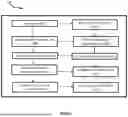

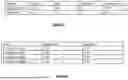


Sources:
- United States Patent and Trademark Office - verify current appl. status at the USPTO↗
Recent applications in this class:
- » 20260141452 2026-05-21
ADAPTIVE LEARNING FOR INVESTMENTS - » 20260094213 2026-04-02
Method to leverage Neural Networks and Large Language Models for Reliable Financial Forecasting, Analysis and Business Intelligence - » 20260073450 2026-03-12
SYSTEM AND METHOD FOR DETERMINISTICALLY GENERATING REPRODUCIBLE EVALUATIVE SCORES FOR A SUBJECT OF ANALYSIS - » 20260024141 2026-01-22
INFORMATION PROCESSING APPARATUS, SUPPORT METHOD, AND NON-TRANSITORY COMPUTER-READABLE MEDIUM - » 20250348943 2025-11-13
Universal Decentralized Banking, Wallet, and Vault System - » 20250348942 2025-11-13
STOCKPAY