METHOD AND SYSTEM FOR ACTIVE BATTERY PACK BALANCING
US20260155662A1
2026-06-04
19/406,836
2025-12-02
Smart Summary: A system is designed to balance the energy in battery packs. It uses a bus and coils to manage energy flow between different battery terminals. One coil is connected to a circuit that helps transfer energy from one battery to another. Another coil is set up to send energy back to the first battery. A controller manages this process to ensure both batteries are charged evenly. 🚀 TL;DR
Abstract:
In a described example, a system includes a bus, a primary coil, first battery terminals, and second battery terminals. A first circuit is coupled between the bus and the primary coil. A first secondary coil is DC-isolated from the primary coil. A second circuit is coupled between the first secondary coil and the first battery terminals. A second secondary coil is DC-isolated from the primary coil. A third circuit is coupled between the second secondary coil and the second battery terminals. A controller is configurable to control the second circuit to transfer energy from the first battery terminals through the first secondary coil to the primary coil and control the first and third circuits to transfer energy from the primary coil to the second secondary coil and provide energy to the second battery terminals.
Applicant:
Interested in similar patents?
Get notified when new applications in this technology area are published.
Classification:
H02M1/0085 » CPC further
Details of apparatus for conversion; Converters characterised by their input or output configuration Partially controlled bridges
H02J2207/20 » CPC further
Indexing scheme relating to details of circuit arrangements for charging or depolarising batteries or for supplying loads from batteries Charging or discharging characterised by the power electronics converter
H02M1/00 IPC
Details of apparatus for conversion
H02M3/335 IPC
Conversion of dc power input into dc power output with intermediate conversion into ac by static converters using discharge tubes with control electrode or semiconductor devices with control electrode to produce the intermediate ac using devices of a triode or a transistor type requiring continuous application of a control signal using semiconductor devices only
Description
CROSS-REFERENCE TO RELATED APPLICATIONS
This application claims priority to U.S. Provisional Application No. 63/727,264, filed Dec. 3, 2024, entitled “ESS ACTIVE PACK BALANCE SYSTEM,” which is hereby incorporated herein by reference in its entirety.
BACKGROUND
Various energy storage systems (ESS) may contain multiple energy-storage cells, such as battery cells, connected in series to form battery packs or modules. Energy storage systems including multiple battery packs can be part of an energy storage infrastructure or can be part of a mobile energy storage system (e.g., part of an electric vehicle). Due to internal factors (e.g., battery cell impedance or aging) and external factors (e.g., temperature gradients), the capacity or state of charge (SOC) of individual packs or modules can differ. These variations can lead to uneven charging and discharging behavior within the series stack, resulting in SOC imbalances that reduce usable energy capacity and may impact system performance and longevity.
SUMMARY
In one example, a system includes a bus, a primary coil, first battery terminals, and second battery terminals. A first circuit is coupled between the bus and the primary coil. A first secondary coil is direct-current (DC)-isolated from the primary coil. A second circuit is coupled between the first secondary coil and the first battery terminals. A second secondary coil is DC-isolated from the primary coil. A third circuit is coupled between the second secondary coil and the second battery terminals. A controller is configurable to control the second circuit to transfer energy from the first battery terminals through the first secondary coil to the primary coil and control the first and third circuits to transfer energy from the primary coil to the second secondary coil and provide energy to the second battery terminals.
In another example, a system includes a first bidirectional isolated DC-DC converter coupled between a bus and first battery terminals. A second bidirectional isolated DC-DC converter is coupled between the bus and second battery terminals. A controller is coupled to the first and second isolated DC-DC converters and configurable to control the first and second isolated DC-DC converters to transfer charge between the first and second battery terminals via the bus.
In yet another example, a method includes controlling transfer of energy from first battery terminals through a first secondary coil to a primary coil, in which the first secondary coil is DC-isolated from the primary coil. The method also includes controlling transfer energy from the primary coil to a second secondary coil to provide energy to second battery terminals, in which the second secondary coil is DC-isolated from the primary coil. As a further example, a first bidirectional isolated DC-DC converter includes the primary coil and the first secondary coil, and a second bidirectional isolated DC-DC converter includes the second secondary coil.
BRIEF DESCRIPTION OF THE DRAWINGS
FIG. 1 is a schematic diagram illustrating a system for performing active pack balancing (APB) operations, according to various examples.
FIG. 2 is a schematic diagram illustrating an example of a bidirectional isolated DC-DC converter that may be implemented for performing active pack balancing operations, according to various examples.
FIG. 3 includes graphs showing a charging operation of a battery pack using the circuit of FIG. 2, according to various examples.
FIGS. 4A and 4B are schematic diagrams illustrating an ESS including one or more bidirectional isolated DC-DC converters, according to various examples.
FIG. 5 is a flow diagram showing a method of performing an active pack balancing operation, according to various examples.
FIG. 6 is a schematic diagram illustrating the signal flow of the active pack balancing operation of FIG. 5, according to various examples.
FIG. 7 is a schematic diagram illustrating charging and discharging operations of battery packs as part of an active pack balancing operations, according to various examples.
FIGS. 8, 9, and 10 include graphs illustrating current and voltage waveforms for current regulation operations during implementing an active pack balancing operation, according to various examples.
Corresponding numerals and symbols in different figures generally refer to corresponding parts unless otherwise indicated. The figures are drawn to clearly illustrate relevant aspects of preferred embodiments and are not necessarily drawn to scale.
DETAILED DESCRIPTION
This disclosure relates to various methods and systems for performing active balancing of energy storage elements, such as battery packs, in an energy storage system (ESS).
As an example, an ESS includes one or more bidirectional isolated DC-DC converters (also referred to as isolated DC-DC converters). The one or more Isolated DC-DC converters are coupled between a bus (e.g., a voltage bus) and a first battery terminal of a respective energy storage element, such as a battery pack. The battery pack includes a plurality of battery cells coupled between the first battery terminal and a second battery terminal. The battery cells of the battery pack may be connected in series between the first and second battery terminals.
As a further example, an isolated DC-DC converter includes a primary-side circuit, a secondary-side circuit, and a bidirectional isolation circuit (e.g., a transformer), in which the primary-side circuit is coupled to the secondary-side circuit through the bidirectional isolation circuit to provide a galvanic isolation (or DC isolation) between primary and secondary-side circuits of the isolated DC-DC converter. The transformer includes a primary coil that is magnetically coupled to one or more secondary coils. The primary-side circuit is coupled between the primary coil and the bus, and the secondary-side circuit is coupled between a secondary coil and the battery terminal. Additionally, or alternatively, the primary and second circuits of the isolated DC-DC converter include respective bridge circuits, such as a half bridge or full bridge, which may depend on expected current amplitude through the primary and secondary-side circuits. A controller, which is coupled to one or more isolated DC-DC converters, may control each isolated DC-DC converter to transfer energy to or from the voltage bus and/or to or from a respective battery pack, to which the respective isolated DC-DC converter is coupled. As described herein, the direction and magnitude of energy being transferred through each isolated DC-DC converter may vary depending on how APB is being performed.
For example, the ESS includes at least first and second isolated DC-DC converters. The first isolated DC-DC converter is coupled between the bus (e.g., voltage bus) and a first battery pack and the second isolated DC-DC converter is coupled between the voltage bus and a second battery pack. The controller, operating in an APB mode, controls first and second isolated DC-DC converters to perform APB. In an example where a second battery pack has a pack voltage that is greater than the pack voltage of the first battery pack, the controller controls the first isolated DC-DC converter to provide a regulated current signal (e.g., a substantially constant—or regulated—current) to charge the first battery pack based on the bus voltage. The controller also controls the second isolated DC-DC converter to provide a voltage (e.g., a substantially constant—or regulated—voltage) to the voltage bus by discharging the second battery pack. Advantageously, when implementing APB, the voltage provided by the second isolated DC-DC converter to the voltage bus can help to stabilize the voltage bus, which would otherwise fluctuate responsive to energy used by the first isolated DC-DC converter for charging the first battery pack. The controller may implement APB to charge the first battery pack and discharge the second battery pack until balance has been achieved (e.g., until the respective voltages of the first and second battery packs are approximately the same).
Performing APB in an ESS with bidirectional isolated DC-DC converters can provide various advantages. Specifically, without balancing, the pack with lowest SOC may limit the overall capacity of all of the battery packs, as well as life and utilization of individual battery packs especially in a case where the battery packs are connected in series to expand the capacity. Balancing can improve the SOC balance of each battery pack. Active pack balancing can achieve SOC balance by moving charge from one battery pack to another, instead of dissipating the charge to ground as in passive pack balancing, which can avoid the thermal management, weak balance capacity, as well as waste of charge issues associated with passive pack balancing. As described herein, bidirectional isolated DC-DC converters, such as a dual-bridge series resonant converter, are provided to perform APB, where the voltage bus can be used to discharge the high voltage battery pack and charge low voltage battery pack. Such arrangements can leverage the existing bidirectional isolated DC-DC converter(s) and voltage bus that is already part of the ESS to perform APB, which can reduce cost. The converter topology described herein may be used in non-APB operations, such as normal energy storage and discharging operation. Moreover, the isolated DC-DC converter can be controlled using phase shift control to control flow of charge from one battery pack to another through the voltage bus by phase shift control, which can simplify control of the APB operation. All these can improve the overall performance of the ESS and can be achieved at reduced cost.
FIG. 1 is a block diagram illustrating an example of a system 100, such as an energy storage system (ESS). The system 100 includes a plurality of bidirectional isolated DC-DC converters 102, 104, and 106. The system 100 may include any number of isolated DC-DC converters 102, 104, and 106. Each of the isolated DC-DC converters 102, 104, and 106 may be implemented according to virtually any isolated converter topology, which can vary according to application requirements for a given operating environment. In examples described herein, the isolated DC-DC converters 102, 104, and 106 include an isolation structure, such as primary and secondary coils, coupled between respective primary-and secondary-side circuits, where the primary and secondary coils are DC isolated from each other, but the primary and secondary coils can transmit signals, including power, via magnetically coupling between the coils. Also, or alternatively, as disclosed herein, each of the isolated DC-DC converters 102, 104, and 106 may include one primary coil and one or more secondary coils. Other types of isolation structures are possible between primary-and secondary-side circuits.
In the example of FIG. 1, each of the isolated DC-DC converters 102, 104, and 106 is coupled between a bus 108 (e.g., a voltage bus) and a respective battery pack 110, 112, and 114. The bus 108 provides a bus voltage (labelled VBUS) to the system 100, such as a regulated DC voltage. In some examples, the bus voltage VBUS may be provided by another power supply (not shown), which may include one or more other power converters to convert another voltage, which may be an AC or DC voltage, to the voltage VBUS. As one example, VBUS may be 24 V. Other voltages are possible for VBUS in other examples.
As shown in FIG. 1, the battery packs 110, 112, and 114 are connected in series between terminals 116 and 118 of a battery rack 120 (or another battery support structure holding multiple battery cells). Each battery pack 110, 112, and 114 includes a plurality of series-connected battery cells. Each isolated DC-DC converter 102, 104, and 106 is coupled to one or more battery terminals of a respective battery pack 110, 112, and 114. In some example embodiments, the battery cells of one or more battery packs 110, 112, and 114 may be divided into modules (also referred to herein as battery modules), in which each module of a given battery pack includes a portion (e.g., approximately half) of the battery cells for the given battery pack. The isolated DC-DC converter 102, 104, and 106 that is coupled to the given battery pack 110, 112, and 114 may include separate connections to battery terminals of the modules for transferring energy (e.g., sourcing or sinking current) to and from each respective module of the given battery pack. The battery packs 110, 112, and 114 may be divided into modules having other fractional portions of battery cells.
The system 100 also includes one or more controllers 122 having control outputs coupled to respective control inputs of each of the isolated DC-DC converters 102, 104, and 106. Each isolated DC-DC converter 102, 104, and 106 may have a dedicated controller 122 to control each isolated DC-DC converter or, in other examples, a given controller may control multiple isolated DC-DC converters. The controller 122 also includes inputs coupled to respective outputs of each of the battery packs 110, 112, and 114. The controller 122 may also include a terminal coupled to the voltage bus 108 to receive the bus voltage VBUS for powering the controller. A voltage measurement circuit (not shown), which may be implemented within or external to the controller, may measure the voltage VBUS at the terminal for use in controlling one or more of the isolated DC-DC converters 102, 104, and 106. The controller 122 may be implemented as a microcontroller (or microcontroller unit) in an integrated circuit (IC) that includes one or more processors, memory, and input/output (I/O) peripherals that cooperate to perform the functions described herein. Alternatively, or additionally, the controller 122 may be implemented as or include one or more of an application-specific integrated circuit (ASIC), a field-programmable gate array (FPGA), or equivalent discrete and/or integrated logic circuitry.
In operation, the controller 122 may control one or more of the DC-DC converters 102, 104, and 106 to transfer power from bus 108 (which receives power from another power source, such as AC grid or a DC source) to charge the battery packs and store energy in the battery pack. The controller 122 may control one or more of the DC-DC converters 102, 104, and 106 to discharge the battery packs to release power to bus 108, which can then transfer the power to a load (which can include the AC grid or another DC power sink, such as a battery).
The controller 122 may also operate in an APB mode and control one or more of the isolated DC-DC converters 102, 104, and 106 to transfer energy between respective battery packs 110, 112, and 114 via the voltage bus. For example, the controller 122 receives information (e.g., from voltage sensors) about the voltages across each of the battery packs 110, 112, and 114 to determine if APB is needed. The controller 122 further identifies which of the battery packs 110, 112, and 114 has the highest pack voltage and which battery pack has the lowest pack voltage. In a first example, the controller determines that battery pack 112 has the highest pack voltage of the rack and battery pack 110 has the lowest pack voltage. The controller further may be preprogrammed to know that the isolated DC-DC converter 102 is coupled to battery pack 110 and isolated DC-DC converter 104 is coupled to battery pack 112. The controller 122 may then control the identified pair of isolated DC-DC converters 102 and 104, and 106 to implement APB. For example, the controller 122 controls isolated DC-DC converter 102 to provide a current signal to a respective terminal to charge the first battery pack 110 based on VBUS, and the controller controls isolated DC-DC converter 104 to provide a voltage (e.g., a regulated voltage) to the bus 108 by discharging from the second battery pack 112. In this way, the voltage of the highest voltage battery pack 112 may decrease based on its discharging while the voltage of the lowest voltage battery pack 110 may increase based on its charging. Additionally, the isolated DC-DC converter 102 may provide the voltage to the voltage bus 108 during the APB mode to stabilize VBUS, as VBUS tends to reduce responsive to the energy utilized by the isolated DC-DC converter 102 charging its battery pack 110. In some examples, the voltage provided by isolated DC-DC converter 102 may supply sufficient energy to enable one or more additional isolated DC-DC converters (e.g., isolated DC-DC converter 106) to also charge battery packs during the APB mode. The controller 122 may control the isolated DC-DC converters 102 and 104 to continue the APB mode until balance is reached between the battery packs 110 and 112 (e.g., to within a voltage threshold). More than one pair of isolated DC-DC converters may be controlled to perform APB concurrently or sequentially.
Additionally, battery cells (e.g., battery cells of battery packs 110, 112, and 114), and battery racks (e.g., battery rack 120) may exhibit variances caused by, for example, manufacturing variances, assembly variances, cell aging, etc. Therefore, each battery pack 110, 112, and 114 of battery rack 120 may operate in a different state of charge. For example, cell capacity continues to increase (e.g., from 10 Ah to 280 Ah, to 314 Ah, to 560 Ah, etc.). The battery life for an ESS may be 10 years or more. Battery rack 120 may include a mix between old and new battery packs 110, 112, and 114, which may result in some battery packs having different capacities, which may result in inconsistent state of charge for each battery pack. The battery pack 110, 112, and 114 with the lowest state of charge may limit the capacity of battery rack 120, which may affect the utilization and life of the battery rack 120. APB may improve the lifetime of the battery packs 110, 112, and 114 of the battery rack 120. Moreover, by discharging battery packs exhibiting higher voltage and charging battery packs exhibiting low voltage, as disclosed herein, APB further may advantageously result in increased power efficiency of the system 100 with high balance capacity, and low maintenance (e.g., advantageously avoiding manual labor costs), without wasting energy (e.g., which may advantageously result in better thermal management), and without reducing the overall capacity of the battery rack.
FIG. 2 illustrates an example of an ESS 200 that may be implemented for performing APB functions with respect to a battery pack 202. The ESS 200 includes a bidirectional isolated DC-DC converter 203 (referred to as an isolated DC-DC converter). The isolated DC-DC converter 203 is one example converter that may be used to implement the isolated DC-DC converters 102, 104, and 106 of the system 100 of FIG. 1. Accordingly, the description of FIG. 2 may refer to certain aspects of FIG. 1.
As shown in FIG. 2, the isolated DC-DC converter 201 includes a primary-side circuit 204, a secondary-side circuit 206, and a bidirectional isolation structure 208, in which the primary-side circuit is coupled to the secondary-side circuit through the isolation structure. In the example of FIG. 2, the isolation structure 208 is a transformer that includes a primary coil 210 (e.g., a winding) and a secondary coil 212 (e.g., a winding) that are DC isolated from each other. In other examples, the isolation structure may include more than one secondary coil. The primary-side circuit 204 includes one or more I/O terminals 214 and 216 and the secondary-side circuit 206 includes one or more I/O terminals 218 and 220. The I/O terminal 214 is coupled to one terminal 222 of a bus (e.g., a voltage bus having bus voltage VBUS) and the I/O terminal 216 is coupled to another terminal 224 of the bus coupled to a first ground, such as earth ground, signal ground, or chassis ground. A voltage potential across terminals 222 and 224 may define the bus voltage VBUS for the system 200. A capacitor C1 may be coupled between the bus terminals 222 and 224 to help ensure a steady DC voltage at the I/O terminals 214 and 216. The primary-side circuit 204 also includes a bridge circuit, shown as a half-bridge circuit that includes switches, shown as transistors Q1 and Q2. In other examples, depending on expected current requirements, the primary-side circuit 204 may include a full bridge circuit or be implemented according to another bridge circuit topology.
In an example, each of transistors Q1 and Q2 is a field effect transistor (FET), such as an n-channel or p-channel FET. Transistor Q1 (e.g., an n-channel FET) includes a first current terminal (e.g., drain), a second current terminal (e.g., source), and a control terminal (e.g., gate), in which the first current terminal is coupled to the terminal 214, and the second current terminal is coupled to a terminal of the primary coil 210 through a resonant inductor LR. Transistor Q2 (e.g., an n-channel FET) includes a first current terminal (e.g., drain), a second current terminal (e.g., source), and a control terminal (e.g., gate), in which the first current terminal is coupled to the second current terminal (e.g., source) of Q1, and the second current terminal is coupled to the terminal 216. The terminal 216 of the primary-side circuit 204 is also coupled to another terminal of the primary coil 210 through a capacitor C2. LR and C2 may form a resonant tank circuit. A first gate driver 226 is coupled to the control terminal of transistor Q1 and a second gate driver 228 is coupled to the control terminal of transistor Q2.
In the secondary-side circuit 206, the I/O terminal 218 is coupled to a first terminal 230 of a battery pack 232 and the I/O terminal 220 is coupled to a second terminal 234 of the battery pack. The I/O terminal 220 is also coupled to a second ground (e.g., earth ground, signal ground, or chassis ground), which is different and isolated from the ground of the primary-side circuit 204 to which terminal 224 is coupled.
The secondary-side circuit 206 also includes a bridge circuit, shown as a half-bridge. In other examples, depending on expected current requirements, a full bridge circuit may be implemented in the secondary-side circuit 206. Additionally, or alternatively, the isolated DC-DC converter 203 may include multiple secondary-side circuits. In the example of FIG. 2, the half-bridge of the secondary-side circuit 206 includes switches, shown as transistors Q3 and Q4 (e.g., FETs). For example, transistor Q3 (e.g., a FET) includes a first current terminal (e.g., drain), a second current terminal (e.g., source), and a control terminal (e.g., gate), in which the first current terminal is coupled to the terminal 218, and the second current terminal is coupled to a terminal of the secondary coil 212. Transistor Q4 (e.g., a FET) includes a first current terminal (e.g., drain), a second current terminal (e.g., source), and a control terminal (e.g., gate), in which the first current terminal is coupled to the second current terminal (e.g., source) of Q3. The second current terminal of Q4 is coupled to the terminal 220, which is also coupled to another terminal of the secondary coil 212. Gate drivers 236 and 238 are coupled to the control terminals of transistors Q3 and Q4, respectively. While Q3, Q4, Q5, and Q6 are shown as FETs, in other examples, a different type of transistor may be used to implement such transistors, such as a bipolar junction transistor (BJT), insulated-gate bipolar transistor (IGBT), laterally-diffused metal-oxide semiconductor (LDMOS) transistors, or the like. One or more of the gate drivers 226, 228, 236, and 238 may be implemented in an IC chip coupled to the controller via traces on a printed circuit board or through other connections.
A controller, e.g., controller 122 of FIG. 1, provides control signals (e.g., modulated signals, such as pulse-width modulated signals or frequency-modulated signals), shown as CONTROL1, CONTROL2, CONTROL3, and CONTROL4, to inputs of each of the gate drivers 226, 228, 236, and 238. The gate drivers 226, 228, 236, and 238 may control operation Q1, Q2, Q3, and Q4 of the isolated DC-DC converter 203, such as for charging the battery pack 232 with power from the primary side or discharging the battery pack 232 to supply power to the primary side. In one example, the controller provides control signals CONTROL1, CONTROL2, CONTROL3, and CONTROL4 to control the isolated DC-DC converter 203 to charge the battery pack 232 from the primary side to, for example, support an APB or non-APB operation (e.g., normal charging/discharging of the battery packs from/to the voltage bus). In another example, the controller provides control signals CONTROL1, CONTROL2, CONTROL3, and CONTROL4 to control the isolated DC-DC converter 203 to discharge the battery pack 232 to support the APB or non-APB operation.
The operation of the isolated DC-DC converter 203 for charging the battery pack 232 with current I_CHARGE as part of APB will be described with respect to the signal timing diagram 300 of FIG. 3. The signal timing diagram includes plots of control signals CONTROL1, CONTROL2, CONTROL3, and CONTROL4, shown as signal pulses (e.g., square waves) 302, 304, 306, and 308, respectively. The control signals CONTROL1 and CONTROL2 are shown as complementary signal pulses 302 and 304 to provide for mutually exclusive switching operation of Q1 and Q2. Similarly, the control signals CONTROL3 and CONTROL2 are shown as complementary signal pulses 306 and 308 to provide for mutually exclusive switching operation of Q3 and Q4. Additionally, the control signals 306 and 308 (CONTROL3, and CONTROL4) are provided (e.g., by controller) with a phase transition interval, shown as Φ, with respect to control signals 302 and 304 (CONTROL1 and CONTROL2).
The current ILR through the inductor LR, shown at 310 in FIG. 3, is provided through the primary coil 210 based on the control signals 302 and 304 (CONTROL1 and CONTROL2). As shown in FIG. 3, current ILR increases while control signal 302 (CONTROL1) is high and control signal 304 (CONTROL2) is low due to charging of the resonant circuit (e.g., LR, the primary coil 210, and C2) by the voltage VBUS that is provided through Q1 while Q2 is off. The current ILR decreases while control signal 304 (CONTROL2) is high and control signal 302 (CONTROL1) is low due to discharging the resonant circuit (e.g., LR, the primary coil 210, and C2) through Q2 while Q1 is off. The current ILR experiences a higher rate of change (e.g., slope) during the phase transition intervals Φ.
The time-varying current ILR 310 through the primary coil 210 induces a voltage at the secondary coil 212 (e.g., through magnetic or inductive coupling of the transformer 208), which is used to provide current I_CHARGE, shown at 312 in FIG. 3, to the battery pack 232. As shown in FIG. 3, the current I_CHARGE 312 increases in magnitude responsive to the control signal 306 (CONTROL3) being high while control signal 308 (CONTROL4) is low. The current I_CHARGE 312 decreases in magnitude responsive to the control signal 308 (CONTROL4) being high while control signal 308 (CONTROL3) is low. The voltage across the battery pack may increase based on the current I_CHARGE that is provided during APB. The current I_CHARGE 312 defines a substantially constant current, as it varies only between about 5.05 A and about 4.95 A (e.g., about 1%). In other examples, different amounts of variation (e.g., more or less than 1% variation, such as ±5%) in current I_CHARGE 312 may occur for providing substantially constant current.
To increase power efficiency, APB may involve discharging another battery pack to supply at least a portion of the energy that is used for charging the battery pack 232. APB may continue until the voltages of the respective battery packs are substantially balanced (e.g., to within a threshold voltage difference). As a further example, another instance of the isolated DC-DC converter 203 (referred to as a second isolated DC-DC converter) is coupled between the voltage bus (e.g., terminals 222 and 224) and another battery pack (referred to as a second battery pack), such as shown in FIG. 1. In this example of APB, the controller has determined that the voltage of the second battery pack is greater than the battery pack 232 that is to be charged. The controller (e.g., controller 122) controls the second isolated DC-DC converter (e.g., by providing control signals to a primary and secondary bridge circuits thereof) to generate a current in the secondary-side circuit by discharging the second battery pack. The current in the secondary-side circuit of the second isolated DC-DC converter induces a voltage on the primary coil of the primary-side circuit, which the primary-side circuit uses to provide a second voltage (e.g., a regulated DC voltage) to the terminal 222 of the voltage bus. In this way, the first and second isolated DC-DC converters performing APB cooperate to transfer energy from the second battery pack to the first battery pack. Advantageously, the second isolated DC-DC converter, which provides the voltage to the voltage bus by discharging its associated battery pack, may further reduce fluctuations in VBUS (e.g., stabilize VBUS) that are caused by the primary-side circuit 204 of the isolated DC-DC converter 203 generating current ILR for charging the battery pack 232.
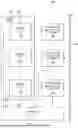
FIGS. 4A and 4B illustrate another example of an ESS 400, which includes one or more bidirectional isolated DC-DC converters 402 (also referred to as an isolated DC-DC converter(s)). In the example ESS 400 of FIGS. 4A and 4B, each one or more isolated DC-DC converters 402 are coupled between a voltage bus 404 and a respective battery pack 406. The ESS 400 also includes a controller 408 coupled to each isolated DC-DC converter 402 and battery pack 406 to perform APB. The configuration of one isolated DC-DC converter 402 is shown in FIGS. 4A AND 4B, and each other isolated DC-DC converter 402 in ESS 400 may be implemented as another instance thereof or as otherwise disclosed herein. The isolated DC-DC converter 402 provides an example converter that may be used to implement the converters in the system 100 of FIG. 1. Additional features of the ESS are also applicable to the ESS 200 of FIG. 2. Accordingly, the description of FIGS. 4A AND 4B may refer to certain aspects of FIGS. 1, 2, and 3.
As an example, the isolated DC-DC converter 402 includes a primary-side circuit 410 and one or more secondary-side circuits, shown in FIGS. 4A and 4B as a first secondary-side circuit 412 and a second secondary-side circuit 414. The primary-side circuit 410 is coupled to each of the secondary-side circuits 412 and 414 via a bidirectional isolation structure 416. For example, the bidirectional isolation structure 416 is implemented as a transformer that includes a primary coil 418 and one or more secondary coils 420 and 422, where the primary coil is DC-isolated from each of the one or more secondary coils. Each of the primary coil 418 and secondary coils has a number of windings (or turns) shown as N1, N2, and N3, respectively, and a voltage ratio between the coils is proportional to the ratio of the number of turns of the respective coils. The primary-side circuit 410 is coupled to the primary coil 418. The secondary-side circuit 412 is coupled to the secondary coil 420 and the secondary-side circuit 414 is coupled to the secondary coil 422.
As shown in FIG. 4B, the primary-side circuit 410 includes one or more I/O terminals 424 and 426, which are coupled to one or more respective terminals 428 and 430 of the voltage bus 404. For example, the terminal 424 has a first voltage (e.g., a positive voltage, such as about 24 V) and the terminal 426 has a second, lower voltage, such as ground (e.g., earth ground or chassis ground), and the voltage across terminals 424 and 426 defines a bus voltage VBUS for the system 400.
In the example of FIG. 4B, the primary-side circuit 410 includes a full bridge circuit, having an arrangement of switches, shown as transistors Q1, Q2, Q3, and Q4, such as FETs. Other types of transistors may be used, as disclosed herein. Q1 and Q2 may define a first half of the bridge circuit and Q3 and Q4 define another half of the bridge circuit. For example, transistor Q1 (e.g., a FET) includes a first current terminal (e.g., drain), a second current terminal (e.g., source), and a control terminal (e.g., gate), in which the first current terminal is coupled to the I/O terminal 424, and the second current terminal is coupled to a terminal of the primary coil 418. Transistor Q2 (e.g., a FET) includes a first current terminal (e.g., drain), a second current terminal (e.g., source), and a control terminal (e.g., gate), in which the first current terminal is coupled to the second current terminal (e.g., source) of Q1, and the second current terminal is coupled to the I/O terminal 426. Additionally, transistor Q3 (e.g., a FET) includes a first current terminal (e.g., drain), a second current terminal (e.g., source), and a control terminal (e.g., gate), in which the first current terminal is coupled to the I/O terminal 424, and the second current terminal is coupled to another terminal of the primary coil 418 through one or more switches, shown as one or more transistor Q13 (e.g., one or more FETs). Transistor Q4 (e.g., a FET) includes a first current terminal (e.g., drain), a second current terminal (e.g., source), and a control terminal (e.g., gate), in which the first current terminal is coupled to the second current terminal (e.g., source) of Q3, and the second current terminal is coupled to the I/O terminal 426.
A driver circuit 432 has one or more inputs and outputs, in which the one or more inputs are coupled to one or more outputs of the controller 408 and the outputs of the driver circuit are coupled to respective control inputs of Q1, Q2, Q3, Q4, and Q13. The driver circuit 432 controls transistors Q1, Q2, Q3, Q4, and Q13 based on one or more control signals received from the controller 408 to control flow of energy to or from the bus 404, such as described herein. In one example, the controller 408 controls the primary-side circuit 410 to transfer energy from the bus 404 and through the bidirectional isolation structure 416 to one or both of the secondary-side circuits 412 and 414. In another example, the controller 408 controls the primary-side circuit 410 to transfer energy from one or both of the secondary-side circuits 412 and 414, which is received via the primary coil 418 through the bidirectional isolation structure 416, to the bus 404.
As shown in FIG. 4A, the secondary-side circuit 412 includes an arrangement of switches, shown as transistors Q5, Q6, Q7, and Q8 (e.g., FETs) configured as a full-bridge circuit, in which Q5 and Q6 may define a first half bridge and Q7 and Q8 define another half bridge. For example, transistor Q5 (e.g., a FET) includes a first current terminal (e.g., drain), a second current terminal (e.g., source), and a control terminal (e.g., gate), in which the first current terminal is coupled to an I/O terminal 434 of the secondary-side circuit 412, and the second current terminal is coupled to a first terminal of the secondary coil 420 through an inductor LR1. Transistor Q6 (e.g., a FET) includes a first current terminal (e.g., drain), a second current terminal (e.g., source), and a control terminal (e.g., gate), in which the first current terminal is coupled to the second current terminal (e.g., source) of Q5, and the second current terminal is coupled to another I/O terminal 436 of the secondary-side circuit. Further, transistor Q7 (e.g., a FET) includes a first current terminal (e.g., drain), a second current terminal (e.g., source), and a control terminal (e.g., gate), in which the first current terminal is coupled to the I/O terminal 434, and the second current terminal is coupled to a second terminal of the secondary coil 420. Transistor Q8 (e.g., a FET) includes a first current terminal (e.g., drain), a second current terminal (e.g., source), and a control terminal (e.g., gate), in which the first current terminal is coupled to the second current terminal (e.g., source) of Q7, and the second current terminal is coupled to the I/O terminal 436. The I/O terminals 434 and 436 of the secondary-side circuit 412 are coupled to battery terminals 438 and 440, respectively, of the battery pack 406. A driver circuit 442 has one or more inputs and outputs, in which the one or more inputs are coupled to one or more outputs of the controller 408 and the outputs of the driver circuit are coupled to respective control inputs of transistors Q5, Q6, Q7, and Q8. The driver circuit 442 controls transistors Q5, Q6, Q7, and Q8 based on one or more control signals received from the controller 408 to control flow of energy, shown as current I_CHARGE1, to or from the battery terminal 438, such as described herein.
The other secondary-side circuit 414 includes an arrangement of switches, shown as transistors Q9, Q10, Q11, and Q12 (e.g., FETs) configured as a full-bridge circuit, in which Q9 and Q10 may define a first half bridge and Q11 and Q12 define another half bridge. For example, transistor Q9 (e.g., a FET) includes a first current terminal (e.g., drain), a second current terminal (e.g., source), and a control terminal (e.g., gate), in which the first current terminal is coupled to an I/O terminal 444 of the secondary-side circuit 414, and the second current terminal is coupled to a first terminal of the secondary coil 422 through an inductor LR2. Transistor Q10 (e.g., a FET) includes a first current terminal (e.g., drain), a second current terminal (e.g., source), and a control terminal (e.g., gate), in which the first current terminal is coupled to the second current terminal (e.g., source) of Q9, and the second current terminal is coupled to another I/O terminal 446 of the secondary-side circuit 414, which is also coupled to a ground (e.g., earth or chassis ground). The ground coupled to the I/O terminal 446 is different and electrically isolated from the ground on the primary side that is coupled to terminal 430. Further, transistor Q11 (e.g., a FET) includes a first current terminal (e.g., drain), a second current terminal (e.g., source), and a control terminal (e.g., gate), in which the first current terminal is coupled to the I/O terminal 444, and the second current terminal is coupled to another terminal of the secondary coil 422. Transistor Q12 (e.g., a FET) includes a first current terminal (e.g., drain), a second current terminal (e.g., source), and a control terminal (e.g., gate), in which the first current terminal is coupled to the second current terminal (e.g., source) of Q11, and the second current terminal is coupled to the I/O terminal 446. The I/O terminals 444 and 446 of the secondary-side circuit 414 are coupled to battery terminals 448 and 450, respectively, of the battery pack 406. A driver circuit 452 has one or more inputs and outputs, in which the one or more inputs are coupled to one or more outputs of the controller 408 and the outputs of the driver circuit are coupled to respective control inputs of transistors Q9, Q10, Q11, and Q12. The driver circuit 452 controls transistors Q9, Q10, Q11, and Q12 based on one or more control signals received from the controller 408 to control flow of energy, shown as current I_CHARGE2, to or from the battery terminal 448, such as described herein.
Additionally, the battery pack 406 includes a plurality of battery cells (e.g., coupled in series, in parallel, or a combination of both) between battery terminals 438 and 450. In the example of FIG. 4, there are 104 battery cells, numbered as CELL 1 through CELL 104. The battery pack 406 may include other numbers of battery cells in other examples. Further, in the example of FIG. 4A, battery CELL 1 through battery CELL 52, which are coupled between battery terminals 438 and 440, can be part of one module 454 of the battery pack 406 and battery CELL 53 through battery CELL 104, which are coupled between battery terminals 448 and 450, can be part of another module 456 of the battery pack. In other examples, more than two modules may be included in a battery pack 406 or the battery pack may define a single module (or not include any modules). As described herein, the controller 408 controls one or more of the isolated DC-DC converters 402 in the ESS 400 to perform an APB operation. The controller 408 can also control the isolated DC-DC converters 402 to perform non-APB operations, such as charging/discharging of the battery packs from/to the voltage bus.
In some examples, the battery pack 406 includes one or more voltage measurement circuits 460, such as one or more analog or digital volt meters. For example, each voltage measurement circuit 460 includes inputs coupled across a respective plurality of battery cells (e.g., CELL 1 through CELL 104) and an output coupled to the controller 408. Each voltage measurement circuit 460 measures voltage across respective battery cells and provides an output signal representative of the measured voltage to the controller 408. As shown in FIG. 4A, each voltage measurement circuit 460 is coupled across the battery cells of a respective module 454 or 456, such as one voltage measurement circuit having inputs coupled to terminals 438 and 440 and another voltage measurement circuit having inputs coupled to terminals 448 and 450. In another example, a respective voltage measurement circuit 460 has inputs coupled to terminals 438 and 450 to enable sensing a pack voltage (e.g., between PACK+ and PACK−).
The battery pack 406 also includes one or more current monitor circuits 462. For example, current monitor circuit 462 has inputs coupled across a sense resistor RS that is connected in series with the current path of through the battery cells between terminals 438 and 450. The current monitor circuit 462 has an output coupled to a respective input of the controller 408 for providing a current sense signal representative of the sensed current. As described herein, the controller 408 controls one or more of the isolated DC-DC converters 402 in the ESS 400 to perform APB (e.g., by controlling charging or discharging of current with respect to the cells of the battery pack).
As a further example, each voltage measurement circuit 460 and the current monitor circuit 462 may include an amplifier, including inputs coupled to the battery terminals, that provides an amplified voltage measurement signal. An analog-to-digital converter converts the amplified voltage or current measurement signal to a digital signal. Each of the voltage and current measurement circuits 460 and 462 may further include digital signal processing (e.g., filtering, windowing, compensation, etc.) to transform the digital signal into a desired form for evaluation and/or analysis by the controller 408. The controller 408 determines a current through the battery pack for controlling charging or discharging of current during APB. The controller 408 also determines a voltage of each respective battery pack 406 (and/or modules 454 and 456) based on the sensed voltage signals, such as for controlling APB.
In some examples, another voltage measurement circuit (not shown in FIGS. 4A and 4B) may be coupled to voltage bus 404 to measure the voltage VBUS, which can be provided to controller 408 via, for example, a feedback data channel (e.g., an optical link, capacitors, transformers, etc.). Alternatively, the voltage measurement circuit may be part of the controller 408.
FIG. 5 is a flow diagram showing an example method 500 of performing APB. The method 500 may be implemented by the systems of FIGS. 1, 2, and 4. For example, machine-readable instructions may be stored in memory of the controller (e.g., controller 122, 408) that, when executed by one or more processors of the controller, cause the one or more processors to perform the method 500. Accordingly, the description of FIG. 5 may refer to certain aspects of FIGS. 1, 2, 3, and 4. The method 500 is further described with respect to FIGS. 6 and 7.
The method 500 begins at 502 in which one or more battery pack voltages are evaluated. For example, the evaluation at 502 is made (e.g., by controller 122, 408) based on a voltage measured across terminals of one or more battery packs (e.g., across terminals 230 and 234 or across terminals 438 and 450 based on, e.g., outputs of voltage measurement circuits 460). At 504 a determination is made whether APB is needed based on the evaluation at 504. For example, the controller 122, 408 analyzes the voltages of various battery packs to determine if the voltage difference between two or more packs exceeds a specified threshold, and/or if one or more packs deviate from a target voltage by at least the same or different specified threshold. In response to a negative determination at 504 (“NO”), indicating that differences in battery pack voltages among the battery packs is below the voltage threshold, the method returns to 502 to continue monitoring and evaluating voltages of the respective battery packs (e.g., according to a measurement interval). In response to a positive determination at 504 (“YES”), indicating differences in battery pack voltages among the battery packs exceeds the voltage threshold, the method proceeds to 508 (e.g., entering an APB operating mode) to select one or more pairs of battery packs for performing APB. As an example, a pair of battery packs may be selected (at 508) to include the battery pack having the highest pack voltage and the battery pack having the lowest pack voltage. In other examples, more than two battery packs may be selected at 508, such that APB may be performed concurrently with respect to more than two battery packs (e.g., 3 battery packs, 4 battery packs, 5 battery packs, or more). For sake of simplicity of explanation, the remaining description of FIG. 5 describes the APB method 500 for two battery packs selected at 508.
At 510, an isolated DC-DC converter coupled to the battery pack selected (at 508) as having the highest pack voltage, is controlled in a constant voltage (CV) loop to provide voltage to the voltage bus by discharging the highest-voltage battery pack. For example, the controller 408 can implement the constant voltage loop by changing the pulse-width or frequency of the transistors of the primary-side circuit based on sensed bus voltage and/or current feedback. Additionally, at 512 another isolated DC-DC converter coupled to the battery pack selected (at 508) as having the lowest pack voltage, is controlled in a constant current (CC) loop to provide current to charge the lowest-voltage battery pack based on the voltage of the voltage bus. The controller 408 can implement the constant current loop by changing the pulse-width or frequency of the transistors on secondary-side circuit based on sensed battery pack current and/or sensed voltage feedback. As a further example, the constant voltage loop and constant current loop, which are used for transferring charge between the respective battery packs may be implemented by a proportional-integral (PI) control function implemented by the controller (e.g., controller 122 or 408) of the ESS while sensing, respectively, the voltage bus and the current to the battery pack with the lowest pack voltage (e.g., via current monitor circuit 462). The controller may implement the constant voltage loop and constant current loop according to other types of control methods (e.g., proportional-integral-derivative (PID) control or machine learning methods, such as fuzzy logic control and neural network control) in other examples.
At 514, the method includes determining whether pack balance has been achieved for the battery packs selected at 510 and 512. In response to a positive determination at 514 (“YES”), indicating that the selected battery packs are substantially balanced (e.g., to within a threshold voltage difference, such as a percentage or voltage value), the method proceeds to 516 and APB ends. From 516, the method 500 may return to 502 to continue evaluating battery pack voltages to control whether APB will be performed on battery packs. In response to a negative determination at 514 (“NO”), indicating that balance has not yet been achieved, the method returns to 510 to continue balancing by actively charging and discharging the selected battery packs. The method 500 may loop between 508 and 514 until pack balance has been achieved.
As a further example, FIG. 6 is a block diagram demonstrating the APB method 500 of FIG. 5 implemented in the context of the ESS 100 of FIG. 1. As shown in FIG. 6, each of the battery packs 110, 112, and 114 have respective battery pack voltages shown as V1, V2, and V3. The controller 1200 receives signals representative of the battery pack voltages V1, V2, and V3 measured by voltage measurement circuits (e.g., voltage measurement circuits 460). The controller 122 also receives signals I1, I2, and I3 representative of current through the battery packs 110, 112, and 114, respectively, as measured by current monitor circuits (e.g., current monitor circuits 460). For example, prior to performing APB and assuming a target pack voltage of approximately 48 V, V1=40 V, V2=48 V, and V3=58 V. As a result, the controller 122 selects (at 508) battery pack 114 as having the highest voltage V3 and battery pack 110 as having the lowest voltage V1. The controller 122 controls the isolated DC-DC converter 106 (e.g., in a constant voltage loop) to sink current IDISCHARGE from battery pack 114 and provide a regulated (e.g., substantially constant) voltage to the voltage bus 108, as shown by dashed line 602. The controller 122 can control the DC-DC converter 106 in a constant voltage loop based on, for example, adjusting the pulse width (e.g., in a PWM scheme) or frequency (in a frequency modulation scheme). Additionally, the controller 122 controls the isolated DC-DC converter 102 (e.g., in a constant current loop, through controlling the phase angle between primary-side and secondary-side switches) to source (e.g., substantially constant) current ICHARGE to battery pack 110 based on voltage VBUS of the voltage bus 108, as shown by dashed line 604. The controller122 controls the isolated DC-DC converters 110 and 114 to provide the charge and discharge currents based on current signals I1 and I3 measured (e.g., by current monitor circuit 462) for the respective battery packs. The voltage provided to the bus by the isolated DC-DC converter 106 mitigates fluctuations to facilitate operating the isolated DC-DC converter 102 in a constant current mode.
Specifically, during the charging, the voltage VBUS may rise, and during the discharging, the voltage VBUS may fall. By regulating the voltage VBUS at a constant value (e.g., through the CV loop), the effect of fluctuations of the voltage VBUS on the charging/discharging of the battery packs can be mitigated. Also, by regulating the voltage VBUS and the charging current, it can also be ensured that the discharge module power (the power obtained from discharging from the high voltage battery pack) equals or exceeds the charge module power (the power delivered to the low voltage battery pack via charging). All these can facilitate the APB operation. The controller 122 continues to control the isolated DC-DC converters 102 and 106 until it has been determined (at 514) that pack balance has been achieved.
As a further example, referring back to FIGS. 4A and 4B, the controller 408 controls isolated DC-DC converters 402 of the ESS 400 to perform APB by transferring charge to or from the battery pack 406, such as to transfer energy from one battery pack to another battery pack of the ESS. In a first example where APB is being implemented to transfer energy from the bus to the battery pack 406, the controller 408 controls the bridge circuit (e.g., Q1, Q2, Q3, and Q4) and switch Q13 of primary-side circuit 410 to provide an AC current to primary coil 418 based on bus voltage VBUS. The AC current through the primary coil 418 induces a voltage at the secondary coils 420 and 422 (e.g., through magnetic or inductive coupling). Based on the voltage induced at secondary coil 420, the controller 408 further controls the bridge circuit (e.g., Q5, Q6, Q7, and Q8) of the secondary-side circuit 412 to provide current I_CHARGE1 (e.g., substantially constant current) to the battery terminal 438 for charging the battery pack 406. Additionally, or alternatively, based on the voltage induced at the secondary coil 422, the controller 408 controls the bridge circuit (e.g., Q9, Q10, Q11, and Q12) of the secondary-side circuit 414 to provide current I_CHARGE2 (e.g., substantially constant current) to the battery terminal 448.
In a second example where APB is being implemented to transfer from the battery pack 406 to the bus 404, the controller 408 controls the bridge circuit (e.g., Q5, Q6, Q7, and Q8) of the secondary-side circuit 412 to provide AC current (ILR1) through LR1 and the secondary coil 420 by discharging current I_CHARGE1 from the terminal 438 of the battery pack 406. As the energy in the battery pack 406 is discharged by providing current to the secondary coil 420, the voltage of the battery pack decreases accordingly. Additionally, or alternatively, the controller 408 controls the bridge circuit (e.g., Q9, Q10, Q11, and Q12) of the secondary-side circuit 414 to provide AC current (ILR2) through LR2 and the secondary coil 420 by discharging current I_CHARGE2 from the terminal 448 of the battery pack 406. Continuing with the second example, the controller 408 controls the bridge circuit (e.g., Q1, Q2, Q3, and Q4) and switch Q13 of primary-side circuit 410 to provide a substantially constant (e.g., regulated) voltage to the bus 404 (e.g., across bus terminals 428 and 430) based on the voltage induced at the primary coil 418 through the isolation structure 416 by current through the secondary coil(s) 420 and/or 422. The controller 408 controls the primary-side circuit 410 based on closed loop feedback (e.g., a measure of VBUS) so the bus voltage VBUS remains substantially constant during APB.
As another example, FIG. 7 is a schematic diagram illustrating APB for an ESS 700 that includes bidirectional isolated DC-DC converters 702a and 702b coupled between a bus 703 (e.g., a voltage bus having bus voltage VBUS) and respective battery packs 704a and 704b. In FIG. 7, each of the isolated DC-DC converters 702a and 702b have the same configuration. Other converter configurations are possible. The isolated DC-DC converter 702a includes a primary-side circuit 706a and multiple secondary-side circuits 708a and 710a, which are magnetically coupled to each other through respective coils of a transformer 712a. Each secondary-side circuit 708 a and 710a may include an inductor L2a and L3a, respectively. The isolated DC-DC converter 702b also includes a primary-side circuit 706b and multiple secondary-side circuits 708b and 710b, which are magnetically coupled to each other through respective coils of a transformer 712b. The isolated DC-DC converters 702a and 702b may be implemented according to any of the examples disclosed herein. For example, each of the primary-side circuits 706a and 706b and secondary-side circuits 708a, 710a, 708b, and 710b may include a bridge circuit (e.g., a half-bridge or full-bridge), which may be configured according to expected current requirements of the respective circuits.
As shown in FIG. 7, the isolated DC-DC converters 702a and 702b are transferring energy from one battery pack 704b to the other battery pack 704a for performing APB between respective battery packs. For example, an arrow 714 shows energy flow from the bus to battery pack 704a responsive to controlling primary-side circuit 706a and secondary-side circuits 708a and 710a for charging the battery pack 704a (e.g., with substantially constant current), as disclosed herein. Additionally, another arrow 716 shows energy flow from battery pack 704b to the bus 703 responsive to controlling primary-side circuit 706b and secondary-side circuits 708b and 710b for discharging the battery pack 704b and providing voltage to the bus 703, as disclosed herein. Advantageously, fluctuations on the bus 703 caused by the energy transfer 714 from the bus to the battery pack 704a as well as other voltage and current demands on the bus may be mitigated based on the energy transfer 716 from the battery pack 704b to the bus.
FIGS. 8, 9, and 10 are graphs demonstrating examples of waveforms for an ESS performing APB. For ease of explanation, FIGS. 8, 9, and 10 are described with respect to the ESS 100 shown in FIG. 6. The APB concepts described with respect to FIG. 6 are applicable to other example embodiments disclosed herein. For example, FIG. 8 is a plot 800 showing an example of discharge current 802 (IDISCHARGE) from the higher-voltage battery pack 114 based on operating isolated DC-DC converter 106 in a constant voltage (CV) loop to transfer energy to its primary-side circuit and provide an output voltage to stabilize the VBUS, such as described herein. In the CV loop, the controller 122 controls the discharge current based on the pack voltage. As shown in FIG. 8, the discharge current 802 from the battery pack increases in magnitude until a time T1 where it approximates 3.5 A based on the CV loop of isolated DC-DC converter 106. FIG. 9 is a plot 900 showing an example of charge current (ICHARGE) provided to the lower-voltage battery pack 110 based on operating isolated DC-DC converter 102 in a constant current (CC) loop to transfer energy to its secondary-side circuit and provide ICHARGE. As shown in FIG. 9, isolated DC-DC converter 102 provides the current ICHARGE at about 5 A, beginning at time T0, for charging the battery pack 110. Also, a comparison between FIGS. 8 and 9 demonstrates that the discharge current 802 may be lower than the charge current 902 during APB. FIG. 10 is a plot 1000 showing voltage 1002 of the bus 108 during APB, which is demonstrated as being stable during APB. The bus voltage 1002 initially shoots above the target voltage, shown at 1004, and then stabilizes to the target voltage of approximately 24 V based on operation of isolated DC-DC converter 106. Advantageously, based on operating the isolated DC-DC converter 106 in the CV loop, the DC bus voltage of approximately 24 V may be resistant to fluctuations, including responsive to current drawn by the isolated DC-DC converter 102.
It should be understood that various aspects described herein may be combined in different combinations than the combinations specifically presented in the description and accompanying drawings. It should also be understood that, depending on the example, certain acts or events of any of the processes or methods described herein may be performed in a different sequence, may be added, merged, or left out altogether (e.g., all described acts or events may not be necessary to carry out the techniques). In addition, while certain aspects of this description are described as being performed by a single module or unit for purposes of clarity, it should be understood that the techniques of this description may be performed by a combination of units or modules.
In one or more examples, the described techniques may be implemented in hardware, software, firmware, or any combination thereof. If implemented in software, the functions may be stored as one or more instructions or code on a computer-readable medium and executed by a hardware-based processing unit. Computer-readable media may include non-transitory computer-readable media, which corresponds to a tangible medium such as data storage media (e.g., RAM, ROM, EEPROM, flash memory, or any other medium that can be used to store desired program code in the form of instructions or data structures and that can be accessed by a processor). For example, instructions may be executed by one or more processors, such as one or more digital signal processors (DSPs), general purpose microprocessors, application specific integrated circuits (ASICs), field programmable logic arrays (FPGAs), or other equivalent integrated or discrete logic circuitry. Accordingly, the term “processor” as used herein may refer to any of the foregoing structure(s) or any other physical structure suitable for implementation of the described techniques. Also, the techniques could be fully implemented in one or more circuits or logic elements.
In this description, numerical designations “first,” “second,” etc. are not necessarily consistent with same designations in the claims herein and these numerical designations are used to simply distinguish one element from another.
Additionally, the term “couple” can cover connections, communications, or signal paths that enable a functional relationship consistent with this description. For example, if device A generates a signal to control device B to perform an action: (a) in a first example, device A is coupled to device B by direct connection; or (b) in a second example, device A is coupled to device B through intervening component C if intervening component C does not alter the functional relationship between device A and device B, such that device B is controlled by device A via the control signal generated by device A.
As used herein, the term “circuit” can include a collection of active and/or passive elements that perform a circuit function, such as an analog circuit or digital circuit. Additionally, or alternatively, for example, the term “circuit” can include an IC where all or some of the circuit elements are fabricated on a common substrate (e.g., semiconductor substrate, such as a die or chip), such as disclosed herein.
In this description, a device that is “configured to” or “configurable to” perform a task or function can be configured (e.g., programmed and/or hardwired) at a time of manufacturing by a manufacturer to perform the function and/or can be configurable (or reconfigurable) by a user after manufacturing to perform the function and/or other additional or alternative functions. The configuring can be through firmware and/or software programming of the device, through a construction and/or layout of hardware components and interconnections of the device, or a combination thereof. Furthermore, a circuit or device that is described herein as including certain components can instead be configured to couple to those components to form the described circuitry or device. For example, a structure described herein as including one or more semiconductor elements (such as transistors), one or more passive elements (such as resistors, capacitors, and/or inductors), and/or one or more sources (such as voltage and/or current sources) can instead include only the semiconductor elements within a single physical device (e.g., a semiconductor die and/or integrated circuit (IC) package) and can be configured to couple to at least some of the passive elements and/or the sources to form the described structure, either at a time of manufacture or after a time of manufacture, such as by an end-user and/or a third-party.
The phrase “based on” means based at least in part on. Therefore, if X is based on Y, X can be a function of Y and any number of other factors. Also, as used herein, the term “includes” means includes but not limited to, and the term “including” means including but not limited to.
In this description, unless otherwise stated, “about,” “approximately” or “substantially” preceding a parameter means being within +/−10 percent of that parameter or, if the parameter is zero, a reasonable range of values around zero.
Modifications are possible in the described embodiments, and other embodiments are possible, within the scope of the claims.
Claims
What is claimed is:1. A system comprising:
a bus;
a primary coil;
a first circuit coupled between the bus and the primary coil;
a first secondary coil, in which the first secondary coil is direct-current (DC)-isolated from the primary coil;
first battery terminals;
second battery terminals;
a second circuit coupled between the first secondary coil and the first battery terminals;
a second secondary coil, in which the second secondary coil is DC-isolated from the primary coil;
a third circuit coupled between the second secondary coil and the second battery terminals; and
a controller configurable to control the second circuit to transfer energy from the first battery terminals through the first secondary coil to the primary coil and control the first and third circuits to transfer energy from the primary coil to the second secondary coil and provide energy to the second battery terminals.
2. The system of claim 1, further comprising:
a first bidirectional isolated DC-DC converter that includes the first circuit, the primary coil, the second secondary coil, and the third circuit, wherein the primary coil is a first primary coil; and
a second bidirectional isolated DC-DC converter that includes the second circuit, the first secondary coil, a second primary coil, and a fourth circuit, wherein the fourth circuit is coupled between the bus and the second primary coil, and the first secondary coil is DC-isolated from the second primary coil.
3. The system of claim 2, wherein the controller is configurable to control the second and fourth circuits to transfer energy from the first battery terminals through the first secondary coil to the second primary coil and provide energy to the bus, and control the first and third circuits to transfer energy from the bus through the first primary coil to the second secondary coil and provide energy to the second battery terminals.
4. The system of claim 2, wherein the first bidirectional isolated DC-DC converter further comprises:
a third secondary coil;
third battery terminals; and
a fifth circuit coupled between the third secondary coil and the third battery terminals, wherein the second and third secondary coils are magnetically coupled to the first primary coil.
5. The system of claim 4, further comprising:
a first plurality of battery cells in series between the second battery terminals; and
a second plurality of battery cells in series between the third battery terminals.
6. The system of claim 5, further comprising:
a battery pack that includes the first plurality of battery cells and the second plurality of battery cells.
7. The system of claim 6, wherein the battery pack is a first battery pack, and the system further comprises:
a second battery pack coupled to the first battery terminals, wherein the controller is configurable to control the second and fourth circuits to transfer energy from the second battery pack through the first secondary coil to the second primary coil and provide energy to the bus, and control the first circuit and at least one of the third and fifth circuits to transfer energy from the bus through the first primary coil to at least one of the second or third secondary coils and provide energy to the first battery pack.
8. The system of claim 1, further comprising a plurality of battery cells in series between the second battery terminals.
9. The system of claim 1, wherein the first circuit comprises a first bridge circuit, the second circuit comprises a second bridge circuit, and the third circuit comprises a third bridge circuit.
10. A system comprising:
a first bidirectional isolated DC-DC converter coupled between a bus and first battery terminals;
a second bidirectional isolated DC-DC converter coupled between the bus and second battery terminals; and
a controller coupled to the first and second isolated DC-DC converters and configurable to control the first and second isolated DC-DC converters to transfer charge between the first and second battery terminals via the bus.
11. The system of claim 10,
wherein the first isolated DC-DC converter comprises:
a first primary coil;
a first circuit coupled between the bus and the first primary coil;
a first secondary coil magnetically coupled to the first primary coil; and
a second circuit coupled between the first secondary coil and the first battery terminals;
wherein the second isolated DC-DC converter comprises:
a second primary coil;
a third circuit coupled between the bus and the second primary coil;
a second secondary coil magnetically coupled to the second primary coil; and
a fourth circuit coupled between the second secondary coil and the second battery terminals.
12. The system of claim 11, wherein the controller is coupled to the first, second, third and fourth circuits and configurable to control the first and second circuits to transfer energy between the first battery terminals and the bus and control the third and fourth circuits to transfer energy between the second battery terminals and the bus.
13. The system of claim 11, further comprising:
a first plurality of battery cells in series between the first battery terminals; and
a second plurality of battery cells in series between the second battery terminals.
14. The system of claim 13, further comprising:
a first battery pack that includes the first plurality of battery cells; and
a second battery pack that includes the second plurality of battery cells,
wherein the controller is configurable to control the first and second circuits to transfer energy from the first battery pack through the first secondary coil to the first primary coil and provide energy to the bus, and control the third and fourth circuits to transfer energy from the bus through the second primary coil to at least one of the second secondary coil and provide energy to the second battery pack.
15. The system of claim 13, wherein the controller is configurable to control the first circuit to provide a substantially constant voltage to the bus based on energy transferred to the first primary coil from the first secondary coil, and to control the fourth circuit to provide a substantially constant current to the second plurality of battery cells based on energy transferred to the second secondary coil from the second primary coil.
16. The system of claim 11,
wherein the first isolated DC-DC converter comprises:
a third secondary coil magnetically coupled to the first primary coil; and
a fifth circuit coupled between the third secondary coil and the first battery terminals,
wherein the second isolated DC-DC converter comprises:
a fourth secondary coil magnetically coupled to the second primary coil; and
a sixth circuit coupled between the third secondary coil and the first battery terminals, and
wherein the controller is coupled to the fifth and sixth circuits and configurable to control the first circuit and at least one of the second and fourth circuits to transfer energy between the first battery terminals and the bus and control the third circuit and at least one of the fourth and sixth circuits to transfer energy between the second battery terminals and the bus.
17. The system of claim 11, wherein the first circuit comprises a first bridge circuit, the second circuit comprises a second bridge circuit, the third circuit comprises a third bridge circuit, and the fourth circuit comprises a fourth bridge circuit.
18. A method, comprising:
controlling transfer of energy from first battery terminals through a first secondary coil to a primary coil, wherein the first secondary coil is DC-isolated from the primary coil; and
controlling transfer energy from the primary coil to a second secondary coil to provide energy to second battery terminals, wherein the second secondary coil is DC-isolated from the primary coil.
19. The method of claim 18,
wherein a first bidirectional isolated DC-DC converter includes the primary coil, a first circuit, the first secondary coil, and a second circuit, the primary coil is a first primary coil, the first circuit is coupled between the first primary coil and a bus, and the second circuit is coupled between the first secondary coil and the first battery terminals,
wherein a second bidirectional isolated DC-DC converter includes the second secondary coil, a second primary coil, a third circuit, and a fourth circuit, wherein the third circuit is coupled between the bus and the second primary coil, and the fourth circuit is coupled between the second secondary coil and the second battery terminals, and
wherein the method further comprises:
controlling the first and second circuits to transfer energy from the first battery terminals to the bus; and
controlling third and fourth circuits to transfer energy from the bus to the second battery terminals.
20. The method of claim 19,
wherein controlling the first and second circuits comprises controlling the first circuit to provide a substantially constant voltage to the bus based on energy transferred to the first primary coil from the first secondary coil by controlling the second circuit to discharge a first plurality of battery cells coupled to the first battery terminals, and
wherein controlling the third and fourth circuits comprises controlling the fourth circuit to provide a substantially constant current to charge a second plurality of battery cells coupled to the second battery terminals based on energy transferred to the second secondary coil by controlling the third circuit based on a voltage of the bus.
21. The method of claim 19, wherein the first circuit comprises a first bridge circuit, the second circuit comprises a second bridge circuit, the third circuit comprises a third bridge circuit, and the fourth circuit comprises a bridge circuit.
Images & Drawings included:






Sources:
- United States Patent and Trademark Office - verify current appl. status at the USPTO↗
Similar patent applications:
- » 20200067146
Method, system and device for active balance control of battery pack - » 20210028503
DC-DC-converter-based active voltage-balancing system and method for parallel battery packs - » 20130187605
Apparatus and method for active balancing of series cells and series packs in a battery system - » 20140203780
SYSTEM AND METHOD FOR ACTIVE CHARGE AND DISCHARGE CURRENT BALANCING IN MULTIPLE PARALLEL-CONNECTED BATTERY PACKS
Recent applications in this class:
- » 20260155663 2026-06-04
CONTROL METHOD OF BATTERY APPARATUS AND BATTERY APPARATUS, SYSTEM, AND MEDIUM - » 20260149294 2026-05-28
BATTERY BALANCING SYSTEM AND OPERATING SYSTEM THEREOF - » 20260142480 2026-05-21
STATE OF CHARGE BALANCING METHOD FOR ENERGY-STORAGE MMC BASED ON CAPACITOR VOLTAGE CORRECTION - » 20260142479 2026-05-21
CAPACITIVE BATTERY ACTIVE EQUALIZATION CIRCUIT, METHOD, DEVICE AND COMPUTER APPARATUS THEREOF - » 20260128604 2026-05-07
POWER SUPPLY SYSTEM - » 20260121427 2026-04-30
MODULATION METHOD AND APPARATUS FOR CASCADED ENERGY STORAGE SYSTEM - » 20260121426 2026-04-30
CELL BALANCING CIRCUIT AND BATTERY DEVICE