SUPPORT FOR CELLULAR VEHICLE-TO-EVERYTHING POSITIONING
US20260156596A1
2026-06-04
18/967,493
2024-12-03
Smart Summary: A user device can communicate wirelessly to share its ability to determine its location using cellular technology. It sends a message to a location management system that includes details about its connection to nearby roadside units. In return, the device receives instructions on how to use a specific reference signal for better positioning. This process helps improve the accuracy of location services for vehicles. Overall, it enhances how vehicles can interact with their surroundings using advanced communication methods. 🚀 TL;DR
Abstract:
A method of wireless communication performed by a user equipment (UE) comprises, sending, to a location management function (LMF), a capability message indicating a cellular vehicle-to-everything (CV2X) positioning capability of the UE, wherein the capability message comprises roadside unit (RSU) connectivity information associated with the UE, and receiving, from the LMF, a configuration of a reference signal based on the RSU connectivity information.
Applicant:
Interested in similar patents?
Get notified when new applications in this technology area are published.
Classification:
H04W64/00 » CPC main
Locating users or terminals or network equipment for network management purposes, e.g. mobility management
H04L5/0051 » CPC further
Arrangements affording multiple use of the transmission path; Arrangements for allocating sub-channels of the transmission path; Allocation of pilot signals, i.e. of signals known to the receiver of dedicated pilots, i.e. pilots destined for a single user or terminal
H04W8/22 » CPC further
Network data management Processing or transfer of terminal data, e.g. status or physical capabilities
H04L5/00 IPC
Arrangements affording multiple use of the transmission path
Description
TECHNICAL FIELD
Aspects of the disclosure relate generally to wireless technologies.
BACKGROUND
Wireless communication systems have developed through various generations, including a first-generation analog wireless phone service (1G), a second-generation (2G) digital wireless phone service (including interim 2.5G and 2.75G networks), a third-generation (3G) high speed data, Internet-capable wireless service and a fourth-generation (4G) service (e.g., Long Term Evolution (LTE) or WiMax). There are presently many different types of wireless communication systems in use, including cellular and personal communications service (PCS) systems. Examples of known cellular systems include the cellular analog advanced mobile phone system (AMPS), and digital cellular systems based on code division multiple access (CDMA), frequency division multiple access (FDMA), time division multiple access (TDMA), the Global System for Mobile communications (GSM), etc.
A fifth generation (5G) wireless standard, referred to as New Radio (NR), enables higher data transfer speeds, greater numbers of connections, and better coverage, among other improvements. The 5G standard, according to the Next Generation Mobile Networks Alliance, is designed to provide higher data rates as compared to previous standards, more accurate positioning (e.g., based on reference signals for positioning (RS-P), such as downlink, uplink, or sidelink positioning reference signals (PRS)), RF sensing, and other technical enhancements. These enhancements, as well as the use of higher frequency bands, enable improved RF sensing and 5G-based positioning.
SUMMARY
The following presents a simplified summary relating to one or more aspects disclosed herein. Thus, the following summary should not be considered an extensive overview relating to all contemplated aspects, nor should the following summary be considered to identify key or critical elements relating to all contemplated aspects or to delineate the scope associated with any particular aspect. Accordingly, the following summary has the sole purpose to present certain concepts relating to one or more aspects relating to the mechanisms disclosed herein in a simplified form to precede the detailed description presented below.
In an aspect, a user equipment (UE) includes one or more memories; one or more transceivers; and one or more processors communicatively coupled to the one or more memories and the one or more transceivers, the one or more processors, either alone or in combination, configured to: send, via the one or more transceivers, to a location management function (LMF), a capability message indicating a cellular vehicle-to-everything (CV2X) positioning capability of the UE, wherein the capability message comprises roadside unit (RSU) connectivity information associated with the UE; and receive, via the one or more transceivers, from the LMF, a configuration of a reference signal based on the RSU connectivity information.
In an aspect, a method of wireless communication performed by a user equipment (UE) includes sending, to a location management function (LMF), a capability message indicating a cellular vehicle-to-everything (CV2X) positioning capability of the UE, wherein the capability message comprises roadside unit (RSU) connectivity information associated with the UE; and receiving, from the LMF, a configuration of a reference signal based on the RSU connectivity information.
In an aspect, a user equipment (UE) includes means for sending, to a location management function (LMF), a capability message indicating a cellular vehicle-to-everything (CV2X) positioning capability of the UE, wherein the capability message comprises roadside unit (RSU) connectivity information associated with the UE; and means for receiving, from the LMF, a configuration of a reference signal based on the RSU connectivity information.
In an aspect, a non-transitory computer-readable medium stores computer-executable instructions that, when executed by a user equipment (UE), cause the UE to: send, to a location management function (LMF), a capability message indicating a cellular vehicle-to-everything (CV2X) positioning capability of the UE, wherein the capability message comprises roadside unit (RSU) connectivity information associated with the UE; and receive, from the LMF, a configuration of a reference signal based on the RSU connectivity information.
Other objects and advantages associated with the aspects disclosed herein will be apparent to those skilled in the art based on the accompanying drawings and detailed description.
BRIEF DESCRIPTION OF THE DRAWINGS
The accompanying drawings are presented to aid in the description of various aspects of the disclosure and are provided solely for illustration of the aspects and not limitation thereof.
FIG. 1 illustrates an example wireless communications system, according to aspects of the disclosure.
FIGS. 2A, 2B, and 2C illustrate example wireless network structures, according to aspects of the disclosure.
FIGS. 3A, 3B, and 3C are simplified block diagrams of several sample aspects of components that may be employed in a user equipment (UE), a base station, and a network entity, respectively, and configured to support communications as taught herein.
FIG. 4 illustrates an example Long-Term Evolution (LTE) positioning protocol (LPP) capability transfer procedure, assistance data transfer procedure, and location information transfer procedure between a target device and a location server, according to aspects of the disclosure.
FIG. 5 illustrates an example cellular vehicle-to-everything (CV2X) architecture, according to aspects of the disclosure.
FIGS. 6A and 6B illustrate implementation examples of a roadside unit (RSU), according to aspects of the disclosure.
FIG. 7 illustrates an example signaling flow diagram, according to aspects of the disclosure.
FIGS. 8 to 9 illustrate example methods of wireless communication, according to aspects of the disclosure.
DETAILED DESCRIPTION
Aspects of the disclosure are provided in the following description and related drawings directed to various examples provided for illustration purposes. Alternate aspects may be devised without departing from the scope of the disclosure. Additionally, well-known elements of the disclosure will not be described in detail or will be omitted so as not to obscure the relevant details of the disclosure.
Various aspects relate generally to positioning support. Some aspects more specifically relate to support for CV2X positioning. In some examples, a user equipment (UE) sends, to a location management function (LMF), a capability message indicating a cellular vehicle-to-everything (CV2X) positioning capability of the UE. The capability message may comprise roadside unit (RSU) connectivity information associated with the UE. In some examples, the UE receives, from the LMF, a configuration of a reference signal based on the RSU connectivity information.
Particular aspects of the subject matter described in this disclosure can be implemented to realize one or more of the following potential advantages. In some examples, by sending the capability message to the LMF, the described techniques can be used by the LMF to consider a CV2X capability of the UE when supporting a positioning session of the UE. For example, the UE may benefit from improved positioning functionalities associated with CV2X (e.g., access to positioning functionalities of the RSU).
The words “exemplary” and/or “example” are used herein to mean “serving as an example, instance, or illustration.” Any aspect described herein as “exemplary” and/or “example” is not necessarily to be construed as preferred or advantageous over other aspects. Likewise, the term “aspects of the disclosure” does not require that all aspects of the disclosure include the discussed feature, advantage or mode of operation.
Those of skill in the art will appreciate that the information and signals described below may be represented using any of a variety of different technologies and techniques. For example, data, instructions, commands, information, signals, bits, symbols, and chips that may be referenced throughout the description below may be represented by voltages, currents, electromagnetic waves, magnetic fields or particles, optical fields or particles, or any combination thereof, depending in part on the particular application, in part on the desired design, in part on the corresponding technology, etc.
Further, many aspects are described in terms of sequences of actions to be performed by, for example, elements of a computing device. It will be recognized that various actions described herein can be performed by specific circuits (e.g., application specific integrated circuits (ASICs)), by program instructions being executed by one or more processors, or by a combination of both. Additionally, the sequence(s) of actions described herein can be considered to be embodied entirely within any form of non-transitory computer-readable storage medium having stored therein a corresponding set of computer instructions that, upon execution, would cause or instruct an associated processor of a device to perform the functionality described herein. Thus, the various aspects of the disclosure may be embodied in a number of different forms, all of which have been contemplated to be within the scope of the claimed subject matter. In addition, for each of the aspects described herein, the corresponding form of any such aspects may be described herein as, for example, “logic configured to” perform the described action.
As used herein, the terms “user equipment” (UE) and “base station” are not intended to be specific or otherwise limited to any particular radio access technology (RAT), unless otherwise noted. In general, a UE may be any wireless communication device (e.g., a mobile phone, router, tablet computer, laptop computer, consumer asset locating device, wearable (e.g., smartwatch, glasses, augmented reality (AR)/virtual reality (VR) headset, etc.), vehicle (e.g., automobile, motorcycle, bicycle, etc.), Internet of Things (IoT) device, etc.) used by a user to communicate over a wireless communications network. A UE may be mobile or may (e.g., at certain times) be stationary, and may communicate with a radio access network (RAN). As used herein, the term “UE” may be referred to interchangeably as an “access terminal” or “AT,” a “client device,” a “wireless device,” a “subscriber device,” a “subscriber terminal,” a “subscriber station,” a “user terminal” or “UT,” a “mobile device,” a “mobile terminal,” a “mobile station,” or variations thereof. Generally, UEs can communicate with a core network via a RAN, and through the core network the UEs can be connected with external networks such as the Internet and with other UEs. Of course, other mechanisms of connecting to the core network and/or the Internet are also possible for the UEs, such as over wired access networks, wireless local area network (WLAN) networks (e.g., based on the Institute of Electrical and Electronics Engineers (IEEE) 802.11 specification, etc.) and so on.
A base station may operate according to one of several RATs in communication with UEs depending on the network in which it is deployed, and may be alternatively referred to as an access point (AP), a network node, a NodeB, an evolved NodeB (eNB), a next generation eNB (ng-eNB), a New Radio (NR) Node B (also referred to as a gNB or gNodeB), etc. A base station may be used primarily to support wireless access by UEs, including supporting data, voice, and/or signaling connections for the supported UEs. In some systems a base station may provide purely edge node signaling functions while in other systems it may provide additional control and/or network management functions. A communication link through which UEs can send signals to a base station is called an uplink (UL) channel (e.g., a reverse traffic channel, a reverse control channel, an access channel, etc.). A communication link through which the base station can send signals to UEs is called a downlink (DL) or forward link channel (e.g., a paging channel, a control channel, a broadcast channel, a forward traffic channel, etc.). As used herein the term traffic channel (TCH) can refer to either an uplink/reverse or downlink/forward traffic channel.
The term “base station” may refer to a single physical transmission-reception point (TRP) or to multiple physical TRPs that may or may not be co-located. For example, where the term “base station” refers to a single physical TRP, the physical TRP may be an antenna of the base station corresponding to a cell (or several cell sectors) of the base station. Where the term “base station” refers to multiple co-located physical TRPs, the physical TRPs may be an array of antennas (e.g., as in a multiple-input multiple-output (MIMO) system or where the base station employs beamforming) of the base station. Where the term “base station” refers to multiple non-co-located physical TRPs, the physical TRPs may be a distributed antenna system (DAS) (a network of spatially separated antennas connected to a common source via a transport medium) or a remote radio head (RRH) (a remote base station connected to a serving base station). Alternatively, the non-co-located physical TRPs may be the serving base station receiving the measurement report from the UE and a neighbor base station whose reference radio frequency (RF) signals the UE is measuring. Because a TRP is the point from which a base station transmits and receives wireless signals, as used herein, references to transmission from or reception at a base station are to be understood as referring to a particular TRP of the base station.
In some implementations that support positioning of UEs, a base station may not support wireless access by UEs (e.g., may not support data, voice, and/or signaling connections for UEs), but may instead transmit reference signals to UEs to be measured by the UEs, and/or may receive and measure signals transmitted by the UEs. Such a base station may be referred to as a positioning beacon (e.g., when transmitting signals to UEs) and/or as a location measurement unit (e.g., when receiving and measuring signals from UEs).
An “RF signal” comprises an electromagnetic wave of a given frequency that transports information through the space between a transmitter and a receiver. As used herein, a transmitter may transmit a single “RF signal” or multiple “RF signals” to a receiver. However, the receiver may receive multiple “RF signals” corresponding to each transmitted RF signal due to the propagation characteristics of RF signals through multipath channels. The same transmitted RF signal on different paths between the transmitter and receiver may be referred to as a “multipath” RF signal. As used herein, an RF signal may also be referred to as a “wireless signal” or simply a “signal” where it is clear from the context that the term “signal” refers to a wireless signal or an RF signal.
FIG. 1 illustrates an example wireless communications system 100, according to aspects of the disclosure. The wireless communications system 100 (which may also be referred to as a wireless wide area network (WWAN)) may include various base stations 102 (labeled “BS”) and various UEs 104. The base stations 102 may include macro cell base stations (high power cellular base stations) and/or small cell base stations (low power cellular base stations). In an aspect, the macro cell base stations may include eNBs and/or ng-eNBs where the wireless communications system 100 corresponds to an LTE network, or gNBs where the wireless communications system 100 corresponds to a NR network, or a combination of both, and the small cell base stations may include femtocells, picocells, microcells, etc.
The base stations 102 may collectively form a RAN and interface with a core network 170 (e.g., an evolved packet core (EPC) or a 5G core (5GC)) through backhaul links 122, and through the core network 170 to one or more location servers 172 (e.g., a location management function (LMF) or a secure user plane location (SUPL) location platform (SLP)). The location server(s) 172 may be part of core network 170 or may be external to core network 170. A location server 172 may be integrated with a base station 102. A UE 104 may communicate with a location server 172 directly or indirectly. For example, a UE 104 may communicate with a location server 172 via the base station 102 that is currently serving that UE 104. A UE 104 may also communicate with a location server 172 through another path, such as via an application server (not shown), via another network, such as via a wireless local area network (WLAN) access point (AP) (e.g., AP 150 described below), and so on. For signaling purposes, communication between a UE 104 and a location server 172 may be represented as an indirect connection (e.g., through the core network 170, etc.) or a direct connection (e.g., as shown via direct connection 128), with the intervening nodes (if any) omitted from a signaling diagram for clarity.
In addition to other functions, the base stations 102 may perform functions that relate to one or more of transferring user data, radio channel ciphering and deciphering, integrity protection, header compression, mobility control functions (e.g., handover, dual connectivity), inter-cell interference coordination, connection setup and release, load balancing, distribution for non-access stratum (NAS) messages, NAS node selection, synchronization, RAN sharing, multimedia broadcast multicast service (MBMS), subscriber and equipment trace, RAN information management (RIM), paging, positioning, and delivery of warning messages. The base stations 102 may communicate with each other directly or indirectly (e.g., through the EPC/5GC) over backhaul links 134, which may be wired or wireless.
The base stations 102 may wirelessly communicate with the UEs 104. Each of the base stations 102 may provide communication coverage for a respective geographic coverage area 110. In an aspect, one or more cells may be supported by a base station 102 in each geographic coverage area 110. A “cell” is a logical communication entity used for communication with a base station (e.g., over some frequency resource, referred to as a carrier frequency, component carrier, carrier, band, or the like), and may be associated with an identifier (e.g., a physical cell identifier (PCI), an enhanced cell identifier (ECI), a virtual cell identifier (VCI), a cell global identifier (CGI), etc.) for distinguishing cells operating via the same or a different carrier frequency. In some cases, different cells may be configured according to different protocol types (e.g., machine-type communication (MTC), narrowband IoT (NB-IoT), enhanced mobile broadband (eMBB), or others) that may provide access for different types of UEs. Because a cell is supported by a specific base station, the term “cell” may refer to either or both of the logical communication entity and the base station that supports it, depending on the context. In addition, because a TRP is typically the physical transmission point of a cell, the terms “cell” and “TRP” may be used interchangeably. In some cases, the term “cell” may also refer to a geographic coverage area of a base station (e.g., a sector), insofar as a carrier frequency can be detected and used for communication within some portion of geographic coverage areas 110.
While neighboring macro cell base station 102 geographic coverage areas 110 may partially overlap (e.g., in a handover region), some of the geographic coverage areas 110 may be substantially overlapped by a larger geographic coverage area 110. For example, a small cell base station 102′ (labeled “SC” for “small cell”) may have a geographic coverage area 110′ that substantially overlaps with the geographic coverage area 110 of one or more macro cell base stations 102. A network that includes both small cell and macro cell base stations may be known as a heterogeneous network. A heterogeneous network may also include home eNBs (HeNBs), which may provide service to a restricted group known as a closed subscriber group (CSG).
The communication links 120 between the base stations 102 and the UEs 104 may include uplink (also referred to as reverse link) transmissions from a UE 104 to a base station 102 and/or downlink (DL) (also referred to as forward link) transmissions from a base station 102 to a UE 104. The communication links 120 may use MIMO antenna technology, including spatial multiplexing, beamforming, and/or transmit diversity. The communication links 120 may be through one or more carrier frequencies. Allocation of carriers may be asymmetric with respect to downlink and uplink (e.g., more or less carriers may be allocated for downlink than for uplink).
The wireless communications system 100 may further include a wireless local area network (WLAN) access point (AP) 150 in communication with WLAN stations (STAs) 152 via communication links 154 in an unlicensed frequency spectrum (e.g., 5 GHz). When communicating in an unlicensed frequency spectrum, the WLAN STAs 152 and/or the WLAN AP 150 may perform a clear channel assessment (CCA) or listen before talk (LBT) procedure prior to communicating in order to determine whether the channel is available.
The small cell base station 102′ may operate in a licensed and/or an unlicensed frequency spectrum. When operating in an unlicensed frequency spectrum, the small cell base station 102′ may employ LTE or NR technology and use the same 5 GHz unlicensed frequency spectrum as used by the WLAN AP 150. The small cell base station 102′, employing LTE/5G in an unlicensed frequency spectrum, may boost coverage to and/or increase capacity of the access network. NR in unlicensed spectrum may be referred to as NR-U. LTE in an unlicensed spectrum may be referred to as LTE-U, licensed assisted access (LAA), or MULTEFIRE®.
The wireless communications system 100 may further include a millimeter wave (mmW) base station 180 that may operate in mmW frequencies and/or near mmW frequencies in communication with a UE 182. Extremely high frequency (EHF) is part of the RF in the electromagnetic spectrum. EHF has a range of 30 GHz to 300 GHz and a wavelength between 1 millimeter and 10 millimeters. Radio waves in this band may be referred to as a millimeter wave. Near mmW may extend down to a frequency of 3 GHz with a wavelength of 100 millimeters. The super high frequency (SHF) band extends between 3 GHz and 30 GHz, also referred to as centimeter wave. Communications using the mmW/near mmW radio frequency band have high path loss and a relatively short range. The mmW base station 180 and the UE 182 may utilize beamforming (transmit and/or receive) over a mmW communication link 184 to compensate for the extremely high path loss and short range. Further, it will be appreciated that in alternative configurations, one or more base stations 102 may also transmit using mmW or near mmW and beamforming. Accordingly, it will be appreciated that the foregoing illustrations are merely examples and should not be construed to limit the various aspects disclosed herein.
Transmit beamforming is a technique for focusing an RF signal in a specific direction. Traditionally, when a network node (e.g., a base station) broadcasts an RF signal, it broadcasts the signal in all directions (omni-directionally). With transmit beamforming, the network node determines where a given target device (e.g., a UE) is located (relative to the transmitting network node) and projects a stronger downlink RF signal in that specific direction, thereby providing a faster (in terms of data rate) and stronger RF signal for the receiving device(s). To change the directionality of the RF signal when transmitting, a network node can control the phase and relative amplitude of the RF signal at each of the one or more transmitters that are broadcasting the RF signal. For example, a network node may use an array of antennas (referred to as a “phased array” or an “antenna array”) that creates a beam of RF waves that can be “steered” to point in different directions, without actually moving the antennas. Specifically, the RF current from the transmitter is fed to the individual antennas with the correct phase relationship so that the radio waves from the separate antennas add together to increase the radiation in a desired direction, while cancelling to suppress radiation in undesired directions.
Transmit beams may be quasi-co-located, meaning that they appear to the receiver (e.g., a UE) as having the same parameters, regardless of whether or not the transmitting antennas of the network node themselves are physically co-located. In NR, there are four types of quasi-co-location (QCL) relations. Specifically, a QCL relation of a given type means that certain parameters about a second reference RF signal on a second beam can be derived from information about a source reference RF signal on a source beam. Thus, if the source reference RF signal is QCL Type A, the receiver can use the source reference RF signal to estimate the Doppler shift, Doppler spread, average delay, and delay spread of a second reference RF signal transmitted on the same channel. If the source reference RF signal is QCL Type B, the receiver can use the source reference RF signal to estimate the Doppler shift and Doppler spread of a second reference RF signal transmitted on the same channel. If the source reference RF signal is QCL Type C, the receiver can use the source reference RF signal to estimate the Doppler shift and average delay of a second reference RF signal transmitted on the same channel. If the source reference RF signal is QCL Type D, the receiver can use the source reference RF signal to estimate the spatial receive parameter of a second reference RF signal transmitted on the same channel.
In receive beamforming, the receiver uses a receive beam to amplify RF signals detected on a given channel. For example, the receiver can increase the gain setting and/or adjust the phase setting of an array of antennas in a particular direction to amplify (e.g., to increase the gain level of) the RF signals received from that direction. Thus, when a receiver is said to beamform in a certain direction, it means the beam gain in that direction is high relative to the beam gain along other directions, or the beam gain in that direction is the highest compared to the beam gain in that direction of all other receive beams available to the receiver. This results in a stronger received signal strength (e.g., reference signal received power (RSRP), reference signal received quality (RSRQ), signal-to-interference-plus-noise ratio (SINR), etc.) of the RF signals received from that direction.
Transmit and receive beams may be spatially related. A spatial relation means that parameters for a second beam (e.g., a transmit or receive beam) for a second reference signal can be derived from information about a first beam (e.g., a receive beam or a transmit beam) for a first reference signal. For example, a UE may use a particular receive beam to receive a reference downlink reference signal (e.g., synchronization signal block (SSB)) from a base station. The UE can then form a transmit beam for sending an uplink reference signal (e.g., sounding reference signal (SRS)) to that base station based on the parameters of the receive beam.
Note that a “downlink” beam may be either a transmit beam or a receive beam, depending on the entity forming it. For example, if a base station is forming the downlink beam to transmit a reference signal to a UE, the downlink beam is a transmit beam. If the UE is forming the downlink beam, however, it is a receive beam to receive the downlink reference signal. Similarly, an “uplink” beam may be either a transmit beam or a receive beam, depending on the entity forming it. For example, if a base station is forming the uplink beam, it is an uplink receive beam, and if a UE is forming the uplink beam, it is an uplink transmit beam.
The electromagnetic spectrum is often subdivided, based on frequency/wavelength, into various classes, bands, channels, etc. In 5G NR two initial operating bands have been identified as frequency range designations FR1 (410 MHz-7.125 GHz) and FR2 (24.25 GHz-52.6 GHz). It should be understood that although a portion of FR 1 is greater than 6 GHz, FR1 is often referred to (interchangeably) as a “Sub- 6 GHz” band in various documents and articles. A similar nomenclature issue sometimes occurs with regard to FR2, which is often referred to (interchangeably) as a “millimeter wave” band in documents and articles, despite being different from the extremely high frequency (EHF) band (30 GHz-300 GHz) which is identified by the INTERNATIONAL TELECOMMUNICATION UNION® as a “millimeter wave” band.
The frequencies between FR1 and FR2 are often referred to as mid-band frequencies. Recent 5G NR studies have identified an operating band for these mid-band frequencies as frequency range designation FR3 (7.125 GHz-24.25 GHz). Frequency bands falling within FR3 may inherit FR1 characteristics and/or FR2 characteristics, and thus may effectively extend features of FR1 and/or FR2 into mid-band frequencies. In addition, higher frequency bands are currently being explored to extend 5G NR operation beyond 52.6 GHz. For example, three higher operating bands have been identified as frequency range designations FR4a or FR4-1 (52.6 GHz-71 GHz), FR4 (52.6 GHz-114.25 GHz), and FR5 (114.25 GHz-300 GHz). Each of these higher frequency bands falls within the EHF band.
With the above aspects in mind, unless specifically stated otherwise, it should be understood that the term “sub-6 GHz” or the like if used herein may broadly represent frequencies that may be less than 6 GHz, may be within FR 1, or may include mid-band frequencies. Further, unless specifically stated otherwise, it should be understood that the term “millimeter wave” or the like if used herein may broadly represent frequencies that may include mid-band frequencies, may be within FR2, FR4, FR4-a or FR4-1, and/or FR5, or may be within the EHF band.
In a multi-carrier system, such as 5G, one of the carrier frequencies is referred to as the “primary carrier” or “anchor carrier” or “primary serving cell” or “PCell,” and the remaining carrier frequencies are referred to as “secondary carriers” or “secondary serving cells” or “SCells.” In carrier aggregation, the anchor carrier is the carrier operating on the primary frequency (e.g., FR 1) utilized by a UE 104/182 and the cell in which the UE 104/182 either performs the initial radio resource control (RRC) connection establishment procedure or initiates the RRC connection re-establishment procedure. The primary carrier carries all common and UE-specific control channels, and may be a carrier in a licensed frequency (however, this is not always the case). A secondary carrier is a carrier operating on a second frequency (e.g., FR2) that may be configured once the RRC connection is established between the UE 104 and the anchor carrier and that may be used to provide additional radio resources. In some cases, the secondary carrier may be a carrier in an unlicensed frequency. The secondary carrier may contain only necessary signaling information and signals, for example, those that are UE-specific may not be present in the secondary carrier, since both primary uplink and downlink carriers are typically UE-specific. This means that different UEs 104/182 in a cell may have different downlink primary carriers. The same is true for the uplink primary carriers. The network is able to change the primary carrier of any UE 104/182 at any time. This is done, for example, to balance the load on different carriers. Because a “serving cell” (whether a PCell or an SCell) corresponds to a carrier frequency/component carrier over which some base station is communicating, the term “cell,” “serving cell,” “component carrier,” “carrier frequency,” and the like can be used interchangeably.
For example, still referring to FIG. 1, one of the frequencies utilized by the macro cell base stations 102 may be an anchor carrier (or “PCell”) and other frequencies utilized by the macro cell base stations 102 and/or the mmW base station 180 may be secondary carriers (“SCells”). The simultaneous transmission and/or reception of multiple carriers enables the UE 104/182 to significantly increase its data transmission and/or reception rates. For example, two 20 MHz aggregated carriers in a multi-carrier system would theoretically lead to a two-fold increase in data rate (i.e., 40 MHz), compared to that attained by a single 20 MHz carrier.
The wireless communications system 100 may further include a UE 164 that may communicate with a macro cell base station 102 over a communication link 120 and/or the mmW base station 180 over a mmW communication link 184. For example, the macro cell base station 102 may support a PCell and one or more SCells for the UE 164 and the mmW base station 180 may support one or more SCells for the UE 164.
In some cases, the UE 164 and the UE 182 may be capable of sidelink communication. Sidelink-capable UEs (SL-UEs) may communicate with base stations 102 over communication links 120 using the Uu interface (i.e., the air interface between a UE and a base station). SL-UEs (e.g., UE 164, UE 182) may also communicate directly with each other over a wireless sidelink 160 using the PC5 interface (i.e., the air interface between sidelink-capable UEs). A wireless sidelink (or just “sidelink”) is an adaptation of the core cellular (e.g., LTE, NR) standard that allows direct communication between two or more UEs without the communication needing to go through a base station. Sidelink communication may be unicast or multicast, and may be used for device-to-device (D2D) media-sharing, vehicle-to-vehicle (V2V) communication, vehicle-to-everything (V2X) communication (e.g., cellular V2X (cV2X) communication, enhanced V2X (eV2X) communication, etc.), emergency rescue applications, etc. One or more of a group of SL-UEs utilizing sidelink communications may be within the geographic coverage area 110 of a base station 102. Other SL-UEs in such a group may be outside the geographic coverage area 110 of a base station 102 or be otherwise unable to receive transmissions from a base station 102. In some cases, groups of SL-UEs communicating via sidelink communications may utilize a one-to-many (1:M) system in which each SL-UE transmits to every other SL-UE in the group. In some cases, a base station 102 facilitates the scheduling of resources for sidelink communications. In other cases, sidelink communications are carried out between SL-UEs without the involvement of a base station 102.
In an aspect, the sidelink 160 may operate over a wireless communication medium of interest, which may be shared with other wireless communications between other vehicles and/or infrastructure access points, as well as other RATs. A “medium” may be composed of one or more time, frequency, and/or space communication resources (e.g., encompassing one or more channels across one or more carriers) associated with wireless communication between one or more transmitter/receiver pairs. In an aspect, the medium of interest may correspond to at least a portion of an unlicensed frequency band shared among various RATs. Although different licensed frequency bands have been reserved for certain communication systems (e.g., by a government entity such as the Federal Communications Commission (FCC) in the United States), these systems, in particular those employing small cell access points, have recently extended operation into unlicensed frequency bands such as the Unlicensed National Information Infrastructure (U-NII) band used by wireless local area network (WLAN) technologies, most notably IEEE 802.11x WLAN technologies generally referred to as “Wi-Fi.” Example systems of this type include different variants of CDMA systems, TDMA systems, FDMA systems, orthogonal FDMA (OFDMA) systems, single-carrier FDMA (SC-FDMA) systems, and so on.
Note that although FIG. 1 only illustrates two of the UEs as SL-UEs (i.e., UEs 164 and 182), any of the illustrated UEs may be SL-UEs. Further, although only UE 182 was described as being capable of beamforming, any of the illustrated UEs, including UE 164, may be capable of beamforming. Where SL-UEs are capable of beamforming, they may beamform towards each other (i.e., towards other SL-UEs), towards other UEs (e.g., UEs 104), towards base stations (e.g., base stations 102, 180, small cell 102′, access point 150), etc. Thus, in some cases, UEs 164 and 182 may utilize beamforming over sidelink 160.
In the example of FIG. 1, any of the illustrated UEs (shown in FIG. 1 as a single UE 104 for simplicity) may receive signals 124 from one or more Earth orbiting space vehicles (SVs) 112 (e.g., satellites). In an aspect, the SVs 112 may be part of a satellite positioning system that a UE 104 can use as an independent source of location information. A satellite positioning system typically includes a system of transmitters (e.g., SVs 112) positioned to enable receivers (e.g., UEs 104) to determine their location on or above the Earth based, at least in part, on positioning signals (e.g., signals 124) received from the transmitters. Such a transmitter typically transmits a signal marked with a repeating pseudo-random noise (PN) code of a set number of chips. While typically located in SVs 112, transmitters may sometimes be located on ground-based control stations, base stations 102, and/or other UEs 104. A UE 104 may include one or more dedicated receivers specifically designed to receive signals 124 for deriving geo location information from the SVs 112.
In a satellite positioning system, the use of signals 124 can be augmented by various satellite-based augmentation systems (SBAS) that may be associated with or otherwise enabled for use with one or more global and/or regional navigation satellite systems. For example an SBAS may include an augmentation system(s) that provides integrity information, differential corrections, etc., such as the Wide Area Augmentation System (WAAS), the European Geostationary Navigation Overlay Service (EGNOS), the Multi-functional Satellite Augmentation System (MSAS), the Global Positioning System (GPS) Aided Geo Augmented Navigation or GPS and Geo Augmented Navigation system (GAGAN), and/or the like. Thus, as used herein, a satellite positioning system may include any combination of one or more global and/or regional navigation satellites associated with such one or more satellite positioning systems.
In an aspect, SVs 112 may additionally or alternatively be part of one or more non-terrestrial networks (NTNs). In an NTN, an SV 112 is connected to an earth station (also referred to as a ground station, NTN gateway, or gateway), which in turn is connected to an element in a 5G network, such as a modified base station 102 (without a terrestrial antenna) or a network node in a 5GC. This element would in turn provide access to other elements in the 5G network and ultimately to entities external to the 5G network, such as Internet web servers and other user devices. In that way, a UE 104 may receive communication signals (e.g., signals 124) from an SV 112 instead of, or in addition to, communication signals from a terrestrial base station 102.
The wireless communications system 100 may further include one or more UEs, such as UE 190, that connects indirectly to one or more communication networks via one or more device-to-device (D2D) peer-to-peer (P2P) links (referred to as “sidelinks”). In the example of FIG. 1, UE 190 has a D2D P2P link 192 with one of the UEs 104 connected to one of the base stations 102 (e.g., through which UE 190 may indirectly obtain cellular connectivity) and a D2D P2P link 194 with WLAN STA 152 connected to the WLAN AP 150 (through which UE 190 may indirectly obtain WLAN-based Internet connectivity). In an example, the D2D P2P links 192 and 194 may be supported with any well-known D2D RAT, such as LTE Direct (LTE-D), WI-FI DIRECT®, BLUETOOTH®, and so on.
FIG. 2A illustrates an example wireless network structure 200. For example, a 5GC 210 (also referred to as a Next Generation Core (NGC)) can be viewed functionally as control plane (C-plane) functions 214 (e.g., UE registration, authentication, network access, gateway selection, etc.) and user plane (U-plane) functions 212, (e.g., UE gateway function, access to data networks, IP routing, etc.) which operate cooperatively to form the core network. User plane interface (NG-U) 213 and control plane interface (NG-C) 215 connect the gNB 222 to the 5GC 210 and specifically to the user plane functions 212 and control plane functions 214, respectively. In an additional configuration, an ng-eNB 224 may also be connected to the 5GC 210 via NG-C 215 to the control plane functions 214 and NG-U 213 to user plane functions 212. Further, ng-eNB 224 may directly communicate with gNB 222 via a backhaul connection 223. In some configurations, a Next Generation RAN (NG-RAN) 220 may have one or more gNBs 222, while other configurations include one or more of both ng-eNBs 224 and gNBs 222. Either (or both) gNB 222 or ng-eNB 224 may communicate with one or more UEs 204 (e.g., any of the UEs described herein).
Another optional aspect may include a location server 230, which may be in communication with the 5GC 210 to provide location assistance for UE(s) 204. The location server 230 can be implemented as a plurality of separate servers (e.g., physically separate servers, different software modules on a single server, different software modules spread across multiple physical servers, etc.), or alternately may each correspond to a single server. The location server 230 can be configured to support one or more location services for UEs 204 that can connect to the location server 230 via the core network, 5GC 210, and/or via the Internet (not illustrated). Further, the location server 230 may be integrated into a component of the core network, or alternatively may be external to the core network (e.g., a third party server, such as an original equipment manufacturer (OEM) server or service server).
FIG. 2B illustrates another example wireless network structure 240. A 5GC 260 (which may correspond to 5GC 210 in FIG. 2A) can be viewed functionally as control plane functions, provided by an access and mobility management function (AMF) 264, and user plane functions, provided by a user plane function (UPF) 262, which operate cooperatively to form the core network (i.e., 5GC 260). The functions of the AMF 264 include registration management, connection management, reachability management, mobility management, lawful interception, transport for session management (SM) messages between one or more UEs 204 (e.g., any of the UEs described herein) and a session management function (SMF) 266, transparent proxy services for routing SM messages, access authentication and access authorization, transport for short message service (SMS) messages between the UE 204 and the short message service function (SMSF) (not shown), and security anchor functionality (SEAF). The AMF 264 also interacts with an authentication server function (AUSF) (not shown) and the UE 204, and receives the intermediate key that was established as a result of the UE 204 authentication process. In the case of authentication based on a UMTS (universal mobile telecommunications system) subscriber identity module (USIM), the AMF 264 retrieves the security material from the AUSF. The functions of the AMF 264 also include security context management (SCM). The SCM receives a key from the SEAF that it uses to derive access-network specific keys. The functionality of the AMF 264 also includes location services management for regulatory services, transport for location services messages between the UE 204 and a location management function (LMF) 270 (which acts as a location server 230), transport for location services messages between the NG-RAN 220 and the LMF 270, evolved packet system (EPS) bearer identifier allocation for interworking with the EPS, and UE 204 mobility event notification. In addition, the AMF 264 also supports functionalities for non-3GPP® (Third Generation Partnership Project) access networks.
Functions of the UPF 262 include acting as an anchor point for intra/inter-RAT mobility (when applicable), acting as an external protocol data unit (PDU) session point of interconnect to a data network (not shown), providing packet routing and forwarding, packet inspection, user plane policy rule enforcement (e.g., gating, redirection, traffic steering), lawful interception (user plane collection), traffic usage reporting, quality of service (QoS) handling for the user plane (e.g., uplink/downlink rate enforcement, reflective QoS marking in the downlink), uplink traffic verification (service data flow (SDF) to QoS flow mapping), transport level packet marking in the uplink and downlink, downlink packet buffering and downlink data notification triggering, and sending and forwarding of one or more “end markers” to the source RAN node. The UPF 262 may also support transfer of location services messages over a user plane between the UE 204 and a location server, such as an SLP 272.
The functions of the SMF 266 include session management, UE Internet protocol (IP) address allocation and management, selection and control of user plane functions, configuration of traffic steering at the UPF 262 to route traffic to the proper destination, control of part of policy enforcement and QoS, and downlink data notification. The interface over which the SMF 266 communicates with the AMF 264 is referred to as the N11 interface.
Another optional aspect may include an LMF 270, which may be in communication with the 5GC 260 to provide location assistance for UEs 204. The LMF 270 can be implemented as a plurality of separate servers (e.g., physically separate servers, different software modules on a single server, different software modules spread across multiple physical servers, etc.), or alternately may each correspond to a single server. The LMF 270 can be configured to support one or more location services for UEs 204 that can connect to the LMF 270 via the core network, 5GC 260, and/or via the Internet (not illustrated). The SLP 272 may support similar functions to the LMF 270, but whereas the LMF 270 may communicate with the AMF 264, NG-RAN 220, and UEs 204 over a control plane (e.g., using interfaces and protocols intended to convey signaling messages and not voice or data), the SLP 272 may communicate with UEs 204 and external clients (e.g., third-party server 274) over a user plane (e.g., using protocols intended to carry voice and/or data like the transmission control protocol (TCP) and/or IP).
Yet another optional aspect may include a third-party server 274, which may be in communication with the LMF 270, the SLP 272, the 5GC 260 (e.g., via the AMF 264 and/or the UPF 262), the NG-RAN 220, and/or the UE 204 to obtain location information (e.g., a location estimate) for the UE 204. As such, in some cases, the third-party server 274 may be referred to as a location services (LCS) client or an external client. The third-party server 274 can be implemented as a plurality of separate servers (e.g., physically separate servers, different software modules on a single server, different software modules spread across multiple physical servers, etc.), or alternately may each correspond to a single server.
User plane interface 263 and control plane interface 265 connect the 5GC 260, and specifically the UPF 262 and AMF 264, respectively, to one or more gNBs 222 and/or ng-eNBs 224 in the NG-RAN 220. The interface between gNB(s) 222 and/or ng-eNB(s) 224 and the AMF 264 is referred to as the “N2” interface, and the interface between gNB(s) 222 and/or ng-eNB(s) 224 and the UPF 262 is referred to as the “N3” interface. The gNB(s) 222 and/or ng-eNB(s) 224 of the NG-RAN 220 may communicate directly with each other via backhaul connections 223, referred to as the “Xn-C” interface. One or more of gNBs 222 and/or ng-eNBs 224 may communicate with one or more UEs 204 over a wireless interface, referred to as the “Uu” interface.
The functionality of a gNB 222 may be divided between a gNB central unit (gNB-CU) 226, one or more gNB distributed units (gNB-DUs) 228, and one or more gNB radio units (gNB-RUs) 229. A gNB-CU 226 is a logical node that includes the base station functions of transferring user data, mobility control, radio access network sharing, positioning, session management, and the like, except for those functions allocated exclusively to the gNB-DU(s) 228. More specifically, the gNB-CU 226 generally host the radio resource control (RRC), service data adaptation protocol (SDAP), and packet data convergence protocol (PDCP) protocols of the gNB 222. A gNB-DU 228 is a logical node that generally hosts the radio link control (RLC) and medium access control (MAC) layer of the gNB 222. Its operation is controlled by the gNB-CU 226. One gNB-DU 228 can support one or more cells, and one cell is supported by only one gNB-DU 228. The interface 232 between the gNB-CU 226 and the one or more gNB-DUs 228 is referred to as the “F1” interface. The physical (PHY) layer functionality of a gNB 222 is generally hosted by one or more standalone gNB-RUs 229 that perform functions such as power amplification and signal transmission/reception. The interface between a gNB-DU 228 and a gNB-RU 229 is referred to as the “Fx” interface. Thus, a UE 204 communicates with the gNB-CU 226 via the RRC, SDAP, and PDCP layers, with a gNB-DU 228 via the RLC and MAC layers, and with a gNB-RU 229 via the PHY layer.
Deployment of communication systems, such as 5G NR systems, may be arranged in multiple manners with various components or constituent parts. In a 5G NR system, or network, a network node, a network entity, a mobility element of a network, a RAN node, a core network node, a network element, or a network equipment, such as a base station, or one or more units (or one or more components) performing base station functionality, may be implemented in an aggregated or disaggregated architecture. For example, a base station (such as a Node B (NB), evolved NB (eNB), NR base station, 5G NB, AP, TRP, cell, etc.) may be implemented as an aggregated base station (also known as a standalone base station or a monolithic base station) or a disaggregated base station.
An aggregated base station may be configured to utilize a radio protocol stack that is physically or logically integrated within a single RAN node. A disaggregated base station may be configured to utilize a protocol stack that is physically or logically distributed among two or more units (such as one or more central or centralized units (CUs), one or more distributed units (DUs), or one or more radio units (RUs)). In some aspects, a CU may be implemented within a RAN node, and one or more DUs may be co-located with the CU, or alternatively, may be geographically or virtually distributed throughout one or multiple other RAN nodes. The DUs may be implemented to communicate with one or more RUs. Each of the CU, DU and RU also can be implemented as virtual units, i.e., a virtual central unit (VCU), a virtual distributed unit (VDU), or a virtual radio unit (VRU).
Base station-type operation or network design may consider aggregation characteristics of base station functionality. For example, disaggregated base stations may be utilized in an integrated access backhaul (IAB) network, an open radio access network (O-RAN (such as the network configuration sponsored by the O-RAN ALLIANCE®)), or a virtualized radio access network (vRAN, also known as a cloud radio access network (C-RAN)). Disaggregation may include distributing functionality across two or more units at various physical locations, as well as distributing functionality for at least one unit virtually, which can enable flexibility in network design. The various units of the disaggregated base station, or disaggregated RAN architecture, can be configured for wired or wireless communication with at least one other unit.
FIG. 2C illustrates an example disaggregated base station architecture 250, according to aspects of the disclosure. The disaggregated base station architecture 250 may include one or more central units (CUs) 280 (e.g., gNB-CU 226) that can communicate directly with a core network 267 (e.g., 5GC 210, 5GC 260) via a backhaul link, or indirectly with the core network 267 through one or more disaggregated base station units (such as a Near-Real Time (Near-RT) RAN Intelligent Controller (RIC) 259 via an E2 link, or a Non-Real Time (Non-RT) RIC 257 associated with a Service Management and Orchestration (SMO) Framework 255, or both). A CU 280 may communicate with one or more DUs 285 (e.g., gNB-DUs 228) via respective midhaul links, such as an F1 interface. The DUs 285 may communicate with one or more radio units (RUs) 287 (e.g., gNB-RUs 229) via respective fronthaul links. The RUs 287 may communicate with respective UEs 204 via one or more radio frequency (RF) access links. In some implementations, the UE 204 may be simultaneously served by multiple RUs 287.
Each of the units, i.e., the CUs 280, the DUs 285, the RUs 287, as well as the Near-RT RICs 259, the Non-RT RICs 257 and the SMO Framework 255, may include one or more interfaces or be coupled to one or more interfaces configured to receive or transmit signals, data, or information (collectively, signals) via a wired or wireless transmission medium. Each of the units, or an associated processor or controller providing instructions to the communication interfaces of the units, can be configured to communicate with one or more of the other units via the transmission medium. For example, the units can include a wired interface configured to receive or transmit signals over a wired transmission medium to one or more of the other units. Additionally, the units can include a wireless interface, which may include a receiver, a transmitter or transceiver (such as a RF transceiver), configured to receive or transmit signals, or both, over a wireless transmission medium to one or more of the other units.
In some aspects, the CU 280 may host one or more higher layer control functions. Such control functions can include RRC, PDCP, service data adaptation protocol (SDAP), or the like. Each control function can be implemented with an interface configured to communicate signals with other control functions hosted by the CU 280. The CU 280 may be configured to handle user plane functionality (i.e., Central Unit-User Plane (CU-UP)), control plane functionality (i.e., Central Unit-Control Plane (CU-CP)), or a combination thereof. In some implementations, the CU 280 can be logically split into one or more CU-UP units and one or more CU-CP units. The CU-UP unit can communicate bidirectionally with the CU-CP unit via an interface, such as the E1 interface when implemented in an O-RAN configuration. The CU 280 can be implemented to communicate with the DU 285, as necessary, for network control and signaling.
The DU 285 may correspond to a logical unit that includes one or more base station functions to control the operation of one or more RUs 287. In some aspects, the DU 285 may host one or more of a RLC layer, a MAC layer, and one or more high PHY layers (such as modules for forward error correction (FEC) encoding and decoding, scrambling, modulation and demodulation, or the like) depending, at least in part, on a functional split, such as those defined by the 3rd Generation Partnership Project (3GPP®). In some aspects, the DU 285 may further host one or more low PHY layers. Each layer (or module) can be implemented with an interface configured to communicate signals with other layers (and modules) hosted by the DU 285, or with the control functions hosted by the CU 280.
Lower-layer functionality can be implemented by one or more RUs 287. In some deployments, an RU 287, controlled by a DU 285, may correspond to a logical node that hosts RF processing functions, or low-PHY layer functions (such as performing fast Fourier transform (FFT), inverse FFT (iFFT), digital beamforming, physical random access channel (PRACH) extraction and filtering, or the like), or both, based at least in part on the functional split, such as a lower layer functional split. In such an architecture, the RU(s) 287 can be implemented to handle over the air (OTA) communication with one or more UEs 204. In some implementations, real-time and non-real-time aspects of control and user plane communication with the RU(s) 287 can be controlled by the corresponding DU 285. In some scenarios, this configuration can enable the DU(s) 285 and the CU 280 to be implemented in a cloud-based RAN architecture, such as a vRAN architecture.
The SMO Framework 255 may be configured to support RAN deployment and provisioning of non-virtualized and virtualized network elements. For non-virtualized network elements, the SMO Framework 255 may be configured to support the deployment of dedicated physical resources for RAN coverage requirements which may be managed via an operations and maintenance interface (such as an O1 interface). For virtualized network elements, the SMO Framework 255 may be configured to interact with a cloud computing platform (such as an open cloud (O-Cloud) 269) to perform network element life cycle management (such as to instantiate virtualized network elements) via a cloud computing platform interface (such as an O2 interface). Such virtualized network elements can include, but are not limited to, CUs 280, DUs 285, RUs 287 and Near-RT RICs 259. In some implementations, the SMO Framework 255 can communicate with a hardware aspect of a 4G RAN, such as an open eNB (O-eNB) 261, via an O1 interface. Additionally, in some implementations, the SMO Framework 255 can communicate directly with one or more RUs 287 via an O1 interface. The SMO Framework 255 also may include a Non-RT RIC 257 configured to support functionality of the SMO Framework 255.
The Non-RT RIC 257 may be configured to include a logical function that enables non-real-time control and optimization of RAN elements and resources, artificial intelligence/machine learning (AI/ML) workflows including model training and updates, or policy-based guidance of applications/features in the Near-RT RIC 259. The Non-RT RIC 257 may be coupled to or communicate with (such as via an A1 interface) the Near-RT RIC 259. The Near-RT RIC 259 may be configured to include a logical function that enables near-real-time control and optimization of RAN elements and resources via data collection and actions over an interface (such as via an E2 interface) connecting one or more CUs 280, one or more DUs 285, or both, as well as an O-eNB, with the Near-RT RIC 259.
In some implementations, to generate AI/ML models to be deployed in the Near-RT RIC 259, the Non-RT RIC 257 may receive parameters or external enrichment information from external servers. Such information may be utilized by the Near-RT RIC 259 and may be received at the SMO Framework 255 or the Non-RT RIC 257 from non-network data sources or from network functions. In some examples, the Non-RT RIC 257 or the Near-RT RIC 259 may be configured to tune RAN behavior or performance. For example, the Non-RT RIC 257 may monitor long-term trends and patterns for performance and employ AI/ML models to perform corrective actions through the SMO Framework 255 (such as reconfiguration via O1) or via creation of RAN management policies (such as A1 policies).
FIGS. 3A, 3B, and 3C illustrate several example components (represented by corresponding blocks) that may be incorporated into a UE 302 (which may correspond to any of the UEs described herein), a base station 304 (which may correspond to any of the base stations described herein), and a network entity 306 (which may correspond to or embody any of the network functions described herein, including the location server 230 and the LMF 270, or alternatively may be independent from the NG-RAN 220 and/or 5GC 210/260 infrastructure depicted in FIGS. 2A and 2B, such as a private network) to support the operations described herein. It will be appreciated that these components may be implemented in different types of apparatuses in different implementations (e.g., in an ASIC, in a system-on-chip (SoC), etc.). The illustrated components may also be incorporated into other apparatuses in a communication system. For example, other apparatuses in a system may include components similar to those described to provide similar functionality. Also, a given apparatus may contain one or more of the components. For example, an apparatus may include multiple transceiver components that enable the apparatus to operate on multiple carriers and/or communicate via different technologies.
The UE 302 and the base station 304 each include one or more wireless wide area network (WWAN) transceivers 310 and 350, respectively, providing means for communicating (e.g., means for transmitting, means for receiving, means for measuring, means for tuning, means for refraining from transmitting, etc.) via one or more wireless communication networks (not shown), such as an NR network, an LTE network, a GSM network, and/or the like. The WWAN transceivers 310 and 350 may each be connected to one or more antennas 316 and 356, respectively, for communicating with other network nodes, such as other UEs, access points, base stations (e.g., eNBs, gNBs), etc., via at least one designated RAT (e.g., NR, LTE, GSM, etc.) over a wireless communication medium of interest (e.g., some set of time/frequency resources in a particular frequency spectrum). The WWAN transceivers 310 and 350 may be variously configured for transmitting and encoding signals 318 and 358 (e.g., messages, indications, information, and so on), respectively, and, conversely, for receiving and decoding signals 318 and 358 (e.g., messages, indications, information, pilots, and so on), respectively, in accordance with the designated RAT. Specifically, the WWAN transceivers 310 and 350 include one or more transmitters 314 and 354, respectively, for transmitting and encoding signals 318 and 358, respectively, and one or more receivers 312 and 352, respectively, for receiving and decoding signals 318 and 358, respectively.
The UE 302 and the base station 304 each also include, at least in some cases, one or more short-range wireless transceivers 320 and 360, respectively. The short-range wireless transceivers 320 and 360 may be connected to one or more antennas 326 and 366, respectively, and provide means for communicating (e.g., means for transmitting, means for receiving, means for measuring, means for tuning, means for refraining from transmitting, etc.) with other network nodes, such as other UEs, access points, base stations, etc., via at least one designated RAT (e.g., Wi-Fi, LTE Direct, BLUETOOTH®, ZIGBEE®, Z-WAVE®, PC5, dedicated short-range communications (DSRC), wireless access for vehicular environments (WAVE), near-field communication (NFC), ultra-wideband (UWB), etc.) over a wireless communication medium of interest. The short-range wireless transceivers 320 and 360 may be variously configured for transmitting and encoding signals 328 and 368 (e.g., messages, indications, information, and so on), respectively, and, conversely, for receiving and decoding signals 328 and 368 (e.g., messages, indications, information, pilots, and so on), respectively, in accordance with the designated RAT. Specifically, the short-range wireless transceivers 320 and 360 include one or more transmitters 324 and 364, respectively, for transmitting and encoding signals 328 and 368, respectively, and one or more receivers 322 and 362, respectively, for receiving and decoding signals 328 and 368, respectively. As specific examples, the short-range wireless transceivers 320 and 360 may be Wi-Fi transceivers, BLUETOOTH® transceivers, ZIGBEE® and/or Z-WAVE® transceivers, NFC transceivers, UWB transceivers, or vehicle-to-vehicle (V2V) and/or vehicle-to-everything (V2X) transceivers.
The UE 302 and the base station 304 also include, at least in some cases, satellite signal interfaces 330 and 370, which each include one or more satellite signal receivers 332 and 372, respectively, and may optionally include one or more satellite signal transmitters 334 and 374, respectively. In some cases, the base station 304 may be a terrestrial base station that may communicate with space vehicles (e.g., space vehicles 112) via the satellite signal interface 370. In other cases, the base station 304 may be a space vehicle (or other non-terrestrial entity) that uses the satellite signal interface 370 to communicate with terrestrial networks and/or other space vehicles.
The satellite signal receivers 332 and 372 may be connected to one or more antennas 336 and 376, respectively, and may provide means for receiving and/or measuring satellite positioning/communication signals 338 and 378, respectively. Where the satellite signal receiver(s) 332 and 372 are satellite positioning system receivers, the satellite positioning/communication signals 338 and 378 may be global positioning system (GPS) signals, global navigation satellite system (GLONASS) signals, Galileo signals, Beidou signals, Indian Regional Navigation Satellite System (NAVIC), Quasi-Zenith Satellite System (QZSS) signals, etc. Where the satellite signal receiver(s) 332 and 372 are non-terrestrial network (NTN) receivers, the satellite positioning/communication signals 338 and 378 may be communication signals (e.g., carrying control and/or user data) originating from a 5G network. The satellite signal receiver(s) 332 and 372 may comprise any suitable hardware and/or software for receiving and processing satellite positioning/communication signals 338 and 378, respectively. The satellite signal receiver(s) 332 and 372 may request information and operations as appropriate from the other systems, and, at least in some cases, perform calculations to determine locations of the UE 302 and the base station 304, respectively, using measurements obtained by any suitable satellite positioning system algorithm.
The optional satellite signal transmitter(s) 334 and 374, when present, may be connected to the one or more antennas 336 and 376, respectively, and may provide means for transmitting satellite positioning/communication signals 338 and 378, respectively. Where the satellite signal transmitter(s) 374 are satellite positioning system transmitters, the satellite positioning/communication signals 378 may be GPS signals, GLONASS® signals, Galileo signals, Beidou signals, NAVIC, QZSS signals, etc. Where the satellite signal transmitter(s) 334 and 374 are NTN transmitters, the satellite positioning/communication signals 338 and 378 may be communication signals (e.g., carrying control and/or user data) originating from a 5G network. The satellite signal transmitter(s) 334 and 374 may comprise any suitable hardware and/or software for transmitting satellite positioning/communication signals 338 and 378, respectively. The satellite signal transmitter(s) 334 and 374 may request information and operations as appropriate from the other systems.
The base station 304 and the network entity 306 each include one or more network transceivers 380 and 390, respectively, providing means for communicating (e.g., means for transmitting, means for receiving, etc.) with other network entities (e.g., other base stations 304, other network entities 306). For example, the base station 304 may employ the one or more network transceivers 380 to communicate with other base stations 304 or network entities 306 over one or more wired or wireless backhaul links. As another example, the network entity 306 may employ the one or more network transceivers 390 to communicate with one or more base station 304 over one or more wired or wireless backhaul links, or with other network entities 306 over one or more wired or wireless core network interfaces.
A transceiver may be configured to communicate over a wired or wireless link. A transceiver (whether a wired transceiver or a wireless transceiver) includes transmitter circuitry (e.g., transmitters 314, 324, 354, 364) and receiver circuitry (e.g., receivers 312, 322, 352, 362). A transceiver may be an integrated device (e.g., embodying transmitter circuitry and receiver circuitry in a single device) in some implementations, may comprise separate transmitter circuitry and separate receiver circuitry in some implementations, or may be embodied in other ways in other implementations. The transmitter circuitry and receiver circuitry of a wired transceiver (e.g., network transceivers 380 and 390 in some implementations) may be coupled to one or more wired network interface ports. Wireless transmitter circuitry (e.g., transmitters 314, 324, 354, 364) may include or be coupled to a plurality of antennas (e.g., antennas 316, 326, 356, 366), such as an antenna array, that permits the respective apparatus (e.g., UE 302, base station 304) to perform transmit “beamforming,” as described herein. Similarly, wireless receiver circuitry (e.g., receivers 312, 322, 352, 362) may include or be coupled to a plurality of antennas (e.g., antennas 316, 326, 356, 366), such as an antenna array, that permits the respective apparatus (e.g., UE 302, base station 304) to perform receive beamforming, as described herein. In an aspect, the transmitter circuitry and receiver circuitry may share the same plurality of antennas (e.g., antennas 316, 326, 356, 366), such that the respective apparatus can only receive or transmit at a given time, not both at the same time. A wireless transceiver (e.g., WWAN transceivers 310 and 350, short-range wireless transceivers 320 and 360) may also include a network listen module (NLM) or the like for performing various measurements.
As used herein, the various wireless transceivers (e.g., transceivers 310, 320, 350, and 360, and network transceivers 380 and 390 in some implementations) and wired transceivers (e.g., network transceivers 380 and 390 in some implementations) may generally be characterized as “a transceiver,” “at least one transceiver,” or “one or more transceivers.” As such, whether a particular transceiver is a wired or wireless transceiver may be inferred from the type of communication performed. For example, backhaul communication between network devices or servers will generally relate to signaling via a wired transceiver, whereas wireless communication between a UE (e.g., UE 302) and a base station (e.g., base station 304) will generally relate to signaling via a wireless transceiver.
The UE 302, the base station 304, and the network entity 306 also include other components that may be used in conjunction with the operations as disclosed herein. The UE 302, the base station 304, and the network entity 306 include one or more processors 342, 384, and 394, respectively, for providing functionality relating to, for example, wireless communication, and for providing other processing functionality. The processors 342, 384, and 394 may therefore provide means for processing, such as means for determining, means for calculating, means for receiving, means for transmitting, means for indicating, etc. In an aspect, the processors 342, 384, and 394 may include, for example, one or more general purpose processors, multi-core processors, central processing units (CPUs), ASICs, digital signal processors (DSPs), field programmable gate arrays (FPGAs), other programmable logic devices or processing circuitry, or various combinations thereof.
The UE 302, the base station 304, and the network entity 306 include memory circuitry implementing memories 340, 386, and 396 (e.g., each including a memory device), respectively, for maintaining information (e.g., information indicative of reserved resources, thresholds, parameters, and so on). The memories 340, 386, and 396 may therefore provide means for storing, means for retrieving, means for maintaining, etc. In some cases, the UE 302, the base station 304, and the network entity 306 may include positioning component 348, 388, and 398, respectively. The positioning component 348, 388, and 398 may be hardware circuits that are part of or coupled to the processors 342, 384, and 394, respectively, that, when executed, cause the UE 302, the base station 304, and the network entity 306 to perform the functionality described herein. In other aspects, the positioning component 348, 388, and 398 may be external to the processors 342, 384, and 394 (e.g., part of a modem processing system, integrated with another processing system, etc.). Alternatively, the positioning component 348, 388, and 398 may be memory modules stored in the memories 340, 386, and 396, respectively, that, when executed by the processors 342, 384, and 394 (or a modem processing system, another processing system, etc.), cause the UE 302, the base station 304, and the network entity 306 to perform the functionality described herein. FIG. 3A illustrates possible locations of the positioning component 348, which may be, for example, part of the one or more WWAN transceivers 310, the memory 340, the one or more processors 342, or any combination thereof, or may be a standalone component. FIG. 3B illustrates possible locations of the positioning component 388, which may be, for example, part of the one or more WWAN transceivers 350, the memory 386, the one or more processors 384, or any combination thereof, or may be a standalone component. FIG. 3C illustrates possible locations of the positioning component 398, which may be, for example, part of the one or more network transceivers 390, the memory 396, the one or more processors 394, or any combination thereof, or may be a standalone component.
The UE 302 may include one or more sensors 344 coupled to the one or more processors 342 to provide means for sensing or detecting movement and/or orientation information that is independent of motion data derived from signals received by the one or more WWAN transceivers 310, the one or more short-range wireless transceivers 320, and/or the satellite signal interface 330. By way of example, the sensor(s) 344 may include an accelerometer (e.g., a micro-electrical mechanical systems (MEMS) device), a gyroscope, a geomagnetic sensor (e.g., a compass), an altimeter (e.g., a barometric pressure altimeter), and/or any other type of movement detection sensor. Moreover, the sensor(s) 344 may include a plurality of different types of devices and combine their outputs in order to provide motion information. For example, the sensor(s) 344 may use a combination of a multi-axis accelerometer and orientation sensors to provide the ability to compute positions in two-dimensional (2D) and/or three-dimensional (3D) coordinate systems.
In addition, the UE 302 includes a user interface 346 providing means for providing indications (e.g., audible and/or visual indications) to a user and/or for receiving user input (e.g., upon user actuation of a sensing device such a keypad, a touch screen, a microphone, and so on). Although not shown, the base station 304 and the network entity 306 may also include user interfaces.
Referring to the one or more processors 384 in more detail, in the downlink, IP packets from the network entity 306 may be provided to the processor 384. The one or more processors 384 may implement functionality for an RRC layer, a packet data convergence protocol (PDCP) layer, a radio link control (RLC) layer, and a medium access control (MAC) layer. The one or more processors 384 may provide RRC layer functionality associated with broadcasting of system information (e.g., master information block (MIB), system information blocks (SIBs)), RRC connection control (e.g., RRC connection paging, RRC connection establishment, RRC connection modification, and RRC connection release), inter-RAT mobility, and measurement configuration for UE measurement reporting; PDCP layer functionality associated with header compression/decompression, security (ciphering, deciphering, integrity protection, integrity verification), and handover support functions; RLC layer functionality associated with the transfer of upper layer PDUs, error correction through automatic repeat request (ARQ), concatenation, segmentation, and reassembly of RLC service data units (SDUs), re-segmentation of RLC data PDUs, and reordering of RLC data PDUs; and MAC layer functionality associated with mapping between logical channels and transport channels, scheduling information reporting, error correction, priority handling, and logical channel prioritization.
The transmitter 354 and the receiver 352 may implement Layer-1 (L1) functionality associated with various signal processing functions. Layer-1, which includes a physical (PHY) layer, may include error detection on the transport channels, forward error correction (FEC) coding/decoding of the transport channels, interleaving, rate matching, mapping onto physical channels, modulation/demodulation of physical channels, and MIMO antenna processing. The transmitter 354 handles mapping to signal constellations based on various modulation schemes (e.g., binary phase-shift keying (BPSK), quadrature phase-shift keying (QPSK), M-phase-shift keying (M-PSK), M-quadrature amplitude modulation (M-QAM)). The coded and modulated symbols may then be split into parallel streams. Each stream may then be mapped to an orthogonal frequency division multiplexing (OFDM) subcarrier, multiplexed with a reference signal (e.g., pilot) in the time and/or frequency domain, and then combined together using an inverse fast Fourier transform (IFFT) to produce a physical channel carrying a time domain OFDM symbol stream. The OFDM symbol stream is spatially precoded to produce multiple spatial streams. Channel estimates from a channel estimator may be used to determine the coding and modulation scheme, as well as for spatial processing. The channel estimate may be derived from a reference signal and/or channel condition feedback transmitted by the UE 302. Each spatial stream may then be provided to one or more different antennas 356. The transmitter 354 may modulate an RF carrier with a respective spatial stream for transmission.
At the UE 302, the receiver 312 receives a signal through its respective antenna(s) 316. The receiver 312 recovers information modulated onto an RF carrier and provides the information to the one or more processors 342. The transmitter 314 and the receiver 312 implement Layer-1 functionality associated with various signal processing functions. The receiver 312 may perform spatial processing on the information to recover any spatial streams destined for the UE 302. If multiple spatial streams are destined for the UE 302, they may be combined by the receiver 312 into a single OFDM symbol stream. The receiver 312 then converts the OFDM symbol stream from the time-domain to the frequency domain using a fast Fourier transform (FFT). The frequency domain signal comprises a separate OFDM symbol stream for each subcarrier of the OFDM signal. The symbols on each subcarrier, and the reference signal, are recovered and demodulated by determining the most likely signal constellation points transmitted by the base station 304. These soft decisions may be based on channel estimates computed by a channel estimator. The soft decisions are then decoded and de-interleaved to recover the data and control signals that were originally transmitted by the base station 304 on the physical channel. The data and control signals are then provided to the one or more processors 342, which implements Layer-3 (L3) and Layer-2 (L2) functionality.
In the downlink, the one or more processors 342 provides demultiplexing between transport and logical channels, packet reassembly, deciphering, header decompression, and control signal processing to recover IP packets from the core network. The one or more processors 342 are also responsible for error detection.
Similar to the functionality described in connection with the downlink transmission by the base station 304, the one or more processors 342 provides RRC layer functionality associated with system information (e.g., MIB, SIBs) acquisition, RRC connections, and measurement reporting; PDCP layer functionality associated with header compression/decompression, and security (ciphering, deciphering, integrity protection, integrity verification); RLC layer functionality associated with the transfer of upper layer PDUs, error correction through ARQ, concatenation, segmentation, and reassembly of RLC SDUs, re-segmentation of RLC data PDUs, and reordering of RLC data PDUs; and MAC layer functionality associated with mapping between logical channels and transport channels, multiplexing of MAC SDUs onto transport blocks (TBs), demultiplexing of MAC SDUs from TBs, scheduling information reporting, error correction through hybrid automatic repeat request (HARQ), priority handling, and logical channel prioritization.
Channel estimates derived by the channel estimator from a reference signal or feedback transmitted by the base station 304 may be used by the transmitter 314 to select the appropriate coding and modulation schemes, and to facilitate spatial processing. The spatial streams generated by the transmitter 314 may be provided to different antenna(s) 316. The transmitter 314 may modulate an RF carrier with a respective spatial stream for transmission.
The uplink transmission is processed at the base station 304 in a manner similar to that described in connection with the receiver function at the UE 302. The receiver 352 receives a signal through its respective antenna(s) 356. The receiver 352 recovers information modulated onto an RF carrier and provides the information to the one or more processors 384.
In the uplink, the one or more processors 384 provides demultiplexing between transport and logical channels, packet reassembly, deciphering, header decompression, control signal processing to recover IP packets from the UE 302. IP packets from the one or more processors 384 may be provided to the core network. The one or more processors 384 are also responsible for error detection.
For convenience, the UE 302, the base station 304, and/or the network entity 306 are shown in FIGS. 3A, 3B, and 3C as including various components that may be configured according to the various examples described herein. It will be appreciated, however, that the illustrated components may have different functionality in different designs. In particular, various components in FIGS. 3A to 3C are optional in alternative configurations and the various aspects include configurations that may vary due to design choice, costs, use of the device, or other considerations. For example, in case of FIG. 3A, a particular implementation of UE 302 may omit the WWAN transceiver(s) 310 (e.g., a wearable device or tablet computer or personal computer (PC) or laptop may have Wi-Fi and/or BLUETOOTH® capability without cellular capability), or may omit the short-range wireless transceiver(s) 320 (e.g., cellular-only, etc.), or may omit the satellite signal interface 330, or may omit the sensor(s) 344, and so on. In another example, in case of FIG. 3B, a particular implementation of the base station 304 may omit the WWAN transceiver(s) 350 (e.g., a Wi-Fi “hotspot” access point without cellular capability), or may omit the short-range wireless transceiver(s) 360 (e.g., cellular-only, etc.), or may omit the satellite signal interface 370, and so on. For brevity, illustration of the various alternative configurations is not provided herein, but would be readily understandable to one skilled in the art.
The various components of the UE 302, the base station 304, and the network entity 306 may be communicatively coupled to each other over data buses 308, 382, and 392, respectively. In an aspect, the data buses 308, 382, and 392 may form, or be part of, a communication interface of the UE 302, the base station 304, and the network entity 306, respectively. For example, where different logical entities are embodied in the same device (e.g., gNB and location server functionality incorporated into the same base station 304), the data buses 308, 382, and 392 may provide communication between them.
The components of FIGS. 3A, 3B, and 3C may be implemented in various ways. In some implementations, the components of FIGS. 3A, 3B, and 3C may be implemented in one or more circuits such as, for example, one or more processors and/or one or more ASICs (which may include one or more processors). Here, each circuit may use and/or incorporate at least one memory component for storing information or executable code used by the circuit to provide this functionality. For example, some or all of the functionality represented by blocks 310 to 346 may be implemented by processor and memory component(s) of the UE 302 (e.g., by execution of appropriate code and/or by appropriate configuration of processor components). Similarly, some or all of the functionality represented by blocks 350 to 388 may be implemented by processor and memory component(s) of the base station 304 (e.g., by execution of appropriate code and/or by appropriate configuration of processor components). Also, some or all of the functionality represented by blocks 390 to 398 may be implemented by processor and memory component(s) of the network entity 306 (e.g., by execution of appropriate code and/or by appropriate configuration of processor components). For simplicity, various operations, acts, and/or functions are described herein as being performed “by a UE,” “by a base station,” “by a network entity,” etc. However, as will be appreciated, such operations, acts, and/or functions may actually be performed by specific components or combinations of components of the UE 302, base station 304, network entity 306, etc., such as the processors 342, 384, 394, the transceivers 310, 320, 350, and 360, the memories 340, 386, and 396, the positioning component 348, 388, and 398, etc.
In some designs, the network entity 306 may be implemented as a core network component. In other designs, the network entity 306 may be distinct from a network operator or operation of the cellular network infrastructure (e.g., NG RAN 220 and/or 5GC 210/260). For example, the network entity 306 may be a component of a private network that may be configured to communicate with the UE 302 via the base station 304 or independently from the base station 304 (e.g., over a non-cellular communication link, such as Wi-Fi).
Long-Term Evolution (LTE) positioning protocol (LPP) is used point-to-point between a location server (e.g., LMF 270) and a target device (e.g., a UE) in order to position the target device using position-related measurements obtained by one or more reference sources (physical entities or parts of physical entities that provide signals that can be measured by a target device in order to obtain the location of the target device). An LPP session is used between a location server and a target device in order to obtain location-related measurements or a location estimate or to transfer assistance data. Currently, a single LPP session is used to support a single location request and multiple LPP sessions can be used between the same endpoints to support multiple different location requests. Each LPP session comprises one or more LPP transactions (or procedures), with each LPP transaction performing a single operation (capability exchange, assistance data transfer, or location information transfer). Each LPP transaction involves the exchange of one or more LPP messages between the location server and the target device. The general format of an LPP message consists of a set of common fields followed by a body. The body (which may be empty) contains information specific to a particular message type. Each message type contains information specific to one or more positioning methods and/or information common to all positioning methods.
An LPP session generally includes at least a capability transfer or indication procedure, an assistance data transfer or delivery procedure, and a location information transfer or delivery procedure. FIG. 4 illustrates an example LPP capability transfer procedure 410, LPP assistance data transfer procedure 430, and LPP location information transfer procedure 450 between a target device (labeled “Target”) and a location server (labeled “Server”), according to aspects of the disclosure.
The purpose of an LPP capability transfer procedure 410 is to enable the transfer of capabilities from the target device (e.g., a UE 204) to the location server (e.g., an LMF 270). Capabilities in this context refer to positioning and protocol capabilities related to LPP and the positioning methods supported by LPP. In the LPP capability transfer procedure 410, the location server (e.g., an LMF 270) indicates the types of capabilities needed from the target device (e.g., UE 204) in an LPP Request Capabilities message. The target device responds with an LPP Provide Capabilities message. The capabilities included in the LPP Provide Capabilities message should correspond to any capability types specified in the LPP Request Capabilities message. Specifically, for each positioning method for which a request for capabilities is included in the LPP Request Capabilities message, if the target device supports this positioning method, the target device includes the capabilities of the target device for that supported positioning method in the LPP Provide Capabilities message. For an LPP capability indication procedure, the target device provides unsolicited (i.e., without receiving an LPP Request Capabilities message) capabilities to the location server in an LPP Provide Capabilities message.
The purpose of an LPP assistance data transfer procedure 430 is to enable the target device to request assistance data from the location server to assist in positioning, and to enable the location server to transfer assistance data to the target device in the absence of a request. In the LPP assistance data transfer procedure 430, the target device sends an LPP Request Assistance Data message to the location server. The location server responds to the target device with an LPP Provide Assistance Data message containing assistance data. The transferred assistance data should match or be a subset of the assistance data requested in the LPP Request Assistance Data. The location server may also provide any not requested information that it considers useful to the target device. The location server may also transmit one or more additional LPP Provide Assistance Data messages to the target device containing further assistance data. For an LPP assistance data delivery procedure, the location server provides unsolicited assistance data necessary for positioning. The assistance data may be provided periodically or non-periodically.
The purpose of an LPP location information transfer procedure 450 is to enable the location server to request location measurement data and/or a location estimate from the target device, and to enable the target device to transfer location measurement data and/or a location estimate to a location server in the absence of a request. In an LPP location information transfer procedure 450, the location server sends an LPP Request Location Information message to the target device to request location information, indicating the type of location information needed and potentially the associated QoS. The target device responds with an LPP Provide Location Information message to the location server to transfer location information. The location information transferred should match or be a subset of the location information requested by the LPP Request Location Information unless the location server explicitly allows additional location information. More specifically, if the requested information is compatible with the target device's capabilities and configuration, the target device includes the requested information in an LPP Provide Location Information message. Otherwise, if the target device does not support one or more of the requested positioning methods, the target device continues to process the message as if it contained only information for the supported positioning methods and handles the signaling content of the unsupported positioning methods by LPP error detection. If requested by the LPP Request Lactation Information message, the target device sends additional LPP Provide Location Information messages to the location server to transfer additional location information. An LPP location information delivery procedure supports the delivery of positioning estimations based on unsolicited service.
LPP also defines procedures related to error indication for when a receiving endpoint (target device or location server) receives erroneous or unexpected data or detects that certain data are missing. Specifically, when a receiving endpoint determines that a received LPP message contains an error, it can return an Error message to the transmitting endpoint indicating the error or errors and discard the received/erroneous message. If the receiving endpoint is able to determine that the erroneous LPP message is an LPP Error or Abort Message, then the receiving endpoint discards the received message without returning an Error message to the transmitting endpoint.
LPP also defines procedures related to abort indication to allow a target device or location server to abort an ongoing procedure due to some unexpected event (e.g., cancellation of a location request by an LCS client). An Abort procedure can also be used to stop an ongoing procedure (e.g., periodic location reporting from the target device). In an Abort procedure, a first endpoint determines that procedure P must be aborted and sends an Abort message to a second endpoint carrying the transaction ID for procedure P. The second endpoint then aborts procedure P.
FIG. 5 illustrates an example of a cellular vehicle-to-everything (CV2X) architecture, according to aspects of the disclosure. The example CV2X architecture includes a UE 501, a UE 502, and a UE 503. Although UEs 501, 502, 503 are illustrated as cars, it will be understood that the UEs may represent any device (e.g., vehicle) that interacts via CV2X. The example CV2X architecture includes infrastructure 505, a roadside unit (RSU) 506, and a base station (BS) 507. Although infrastructure 505 is illustrated as a traffic light, it will be understood that infrastructure 505 may represent any number of vehicular infrastructure components (e.g., toll booths, congestion sensors, weather sensors, emergency sensors, etc.). The BS 507 may be an evolved universal terrestrial radio access network NodeB (eNB), a next generation node B (gNB), or any other type of base station. The example CV2X architecture includes an application server 509. The application server 509 may be, for example, a traffic management server.
UEs 501, 502, 503 may perform vehicle-to-vehicle (V2V) communications. The V2V communications may be performed via sidelink (e.g., PC5 interface). The V2V communications may comprise direct communications between UE 501 and UE 502, direction communications between UE 501 and UE 503, and/or direction communications between UE 502 and UE 503.
UEs 501, 502, 503 may perform vehicle-to-infrastructure (V2I) communications. The V2I communications may be performed via sidelink (e.g., PC5 interface). The V2I communications may be performed via uplink and/or downlink (e.g., Uu interface). The V2I communications may comprise direct communications between one or more of the UEs 501, 502, 503 and the infrastructure 505. The V2I communications may comprise direct communications between one or more of the UEs 501, 502, 503 and the RSU 506. V2I communications may support monitoring by infrastructure 505 and/or RSU 506 of traffic conditions, infrastructure conditions, etc.
UEs 501, 502, 503 may perform vehicle-to-network (V2N) communications. The V2N communications may be performed via uplink and/or downlink (e.g., Uu interface). The V2N communications may comprise direct communications between one or more of UEs 501, 502, 503 and BS 507.
One or more of infrastructure 505, RSU 506, and BS 507 may interact with application server 509. For example, application server 509 may receive information regarding position, velocity, etc., of UEs 501, 502, 503, and/or activities of infrastructure 505. Based on the information, application server 509 may perform traffic management (e.g., guide and/or control UEs 501, 502, 503, and/or infrastructure 505).
Many use cases in CV2X architecture use a combination of interfaces. For example, V2N may provide over-the-top cloud services, V2V communications may provide safety and advanced driver assistance systems (ADAS) services, and V2I may allow RSUs such as RSU 506 to monitor traffic (e.g., traffic signals, tolls, etc.). RSUs can connect to the network for cloud services. RSUs can be base stations (e.g., eNBs and/or gNBs, or standalone devices).
FIGS. 6A and 6B illustrate implementation examples of a roadside unit (RSU), according to aspects of the disclosure. In FIG. 6A and FIG. 6B, an RSU interacts with a UE (e.g., UE A). The UE A may be, for example, a vehicle. The UE A may implement a V2X application. The RSU may be implemented as a radio access network (RAN). The RAN may have connectivity with a core network. A location management function (LMF) may interact with the RAN via a communication protocol (e.g., long term evolution positioning protocol (LPP), new radio positioning protocol (NRPP), new radio positioning protocol a (NRPPa), etc.). The RSU may provide a V2X application server. The V2X application at the UE A may interact with the V2X application server via a V1 interface.
FIG. 6A illustrates a V2X architecture 610 that includes a long term evolution (LTE) implementation of an RSU. In the V2X architecture 610, the RSU may be implemented as an evolved universal terrestrial radio access network (eNB) and a local gateway (L-GW). The eNB may be co-located with the L-GW and/or the V2X application server. The UE A may interact with the eNB via the LTE Uu protocol.
FIG. 6B illustrates a V2X architecture 620 that includes a new radio (NR) implementation of an RSU. In the V2X architecture 620, the RSU may be implemented as a next generation node B (gNB) and a user plane function (UPF). The gNB may be co-located with the UPF and/or the V2X application server. The UE A may interact with the eNB via the NR Uu protocol.
FIG. 7 illustrates an example of a signaling flow diagram, according to aspects of the disclosure. The signaling in FIG. 7 involves a UE 701, an RSU 706, a BS 707, and an LMF 709. The UE 701 may be, for example, a vehicle. The RSU 706 may be in V2I communication with the UE 701. In an example, there may be a direct line of sign between UE 701 and RSU 706, and RSU 706 may be well-suited for determining a position of UE 701. The BS 707 may comprise an eNB, a gNB, or any other suitable implementation of a base station. The BS 707 may be separate and distinct from RSU 706, although it will be understood the functionality of RSU 706 and BS 707 may overlap, and that RSU 706 may comprise BS 707 or vice-versa. The LMF 709 may be separate and distinct from the application server 509 (e.g., traffic management server) illustrated in FIG. 5.
As will be discussed in greater detail below, aspects of the example signaling flow diagram illustrated in FIG. 7 may be performed for one or more reasons.
In an example, a CV2X modem (e.g., of UE 701) may have RSU connectivity (e.g., to RSU 706). RSU 706 may be located on a roadside and may comprise, for example, an eNB or gNB connected to a core network (e.g., as shown in FIG. 6A and/or FIG. 6B). RSU connectivity may be possible when an original equipment manufacturer (OEM) subscription is enabled on CV2X. LMF 709 may not be aware of a status of RSU 706. RSU 706 may be used for further cell positioning and/or may provide real-time kinematic (RTK) assistance. RSU 706 may be associated with a good line of sight (LoS) and strong channel conditions (e.g., because RSU 706 is close to the vehicle, UE 701).
A vehicle (e.g., automobile) may be associated with an OEM subscription and a user subscription. A positioning session associated with the vehicle may be triggered from the user and/or OEM subscription. The vehicle (e.g., an automobile modem) may be associated with a high-capability subscription or a low-capability subscription. The high-capability subscription may be associated with, for example, radio access technologies (RATs) including long term evolution (LTE), Global System for Mobile Communications (GSM), wideband code-division multiple access (WCDMA), new radio (NR), and/or non-terrestrial network (NTN). By contrast, the low-capability subscription may be associated with, for example, LTE and GSM only. User positioning may be affected by limited capabilities (e.g., limited RAT support) and/or other factors (e.g., poor coverage). It may be possible to use RSUs (e.g., RSU 706) to provide better positioning of UE 701 than would be otherwise available.
CV2X may not be tied to a subscription. If UE 701 uses a network configuration for CV2X, an OEM subscription may be used, and LMF 709 may not be aware of the OEM subscription. CV2X-related features may enhance positioning once LMF 709 knows the capabilities supported by UE 701. For example, LMF 709 can suggest assisted cell based positioning or can enhance CV2X operations. CV2X and/or automobile targets may be loaded with below-advanced technology (e.g., unlike a mobile phone). Accordingly, LMF 709 may know whether a device under test (DUT) has CV2X capabilities or not while performing a positioning session. Capabilities may be associated with radar, camera, ultrasonic, three-dimensional high-definition mapping, precise positioning, V2X wireless sensors, etc.
Non-terrestrial networks (NTNs) may have a different subscriber identity module (SIM) profile on a vehicle (e.g., on an automobile modem). Accordingly, NTN positioning may not be tied to terrestrial network-based subscriptions (e.g., the OEM subscription and/or the user subscription). Accordingly, LMF 709 may learn which subscription supports NTN positioning services.
As will be discussed in greater detail below, a CV2X modem can send a minimum set of data (MSD) message to a public safety answering point (PSAP). The MSD may consist of one hundred and forty bytes. The MSD may comprise vehicle type, position of the vehicle, number of passengers, sensors data, crucial information about the vehicle, or any combination thereof. The LMF 709 may utilize this information.
LMF 709 may send a capabilities request 710 to UE 701. The capabilities request 710 may be sent via BS 707. The capabilities request 710 may be associated with a positioning protocol message. For example, the capabilities request 710 may be associated with long term evolution positioning protocol (LPP), and may be analogous to the LPP Request Capabilities message illustrated at 410 in FIG. 4. Additionally or alternatively, the capabilities request 710 may be associated with a different positioning protocol (e.g., new radio positioning protocol (NRPP) and/or new radio positioning protocol a (NRPPa)).
Based on receiving the capabilities request 710, the UE 701 may determine one or more capabilities of the UE 701.
UE 701 may send a capabilities indication 720 to LMF 709. The capabilities indication 720 may be sent via a base station (e.g., BS 707). The capabilities indication 720 may be associated with a positioning protocol message. For example, the capabilities indication 720 may be associated with long term evolution positioning protocol (LPP), and may be analogous to the LPP Provide Capabilities message illustrated at 410 in FIG. 4. Additionally or alternatively, the capabilities request 710 may be associated with a different positioning protocol (e.g., new radio positioning protocol (NRPP) and/or new radio positioning protocol a (NRPPa)). Sending the capabilities indication 720 may be in response to the receiving of the capabilities request 710. Alternatively, UE 701 may send the capabilities indication 720 unprompted by the network.
The capabilities indication 720 may indicate one or more capabilities of the UE 701. In accordance with aspects of the disclosure, the capabilities indication 720 may indicate a cellular vehicle-to-everything (CV2X) positioning capability of UE 701. In accordance with aspects of the disclosure, the CV2X positioning capability may be associated with a roadside unit (RSU) connectivity capability of the UE 701, a terrestrial network (TN) connectivity capability of the UE 701, a non-terrestrial network (NTN) connectivity capability of the UE 701, or any combination thereof. The RSU connectivity capability may be associated with connectivity to the RSU 706.
In an example, the UE 701 may be associated with a user subscription. Additionally or alternatively, the UE 701 may be associated with an original equipment manufacturer (OEM) subscription. The CV2X positioning capability may be associated with the OEM subscription. In an example, the capabilities indication 720 may indicate whether a positioning session is running based on a user subscription, whether the positioning session is running based on an original equipment manufacturer (OEM) subscription, or any combination thereof.
In accordance with aspects of the disclosure, UE 701 may send CV2X or OEM subscription specific capabilities to LMF 709. The UE 701 may send the capabilities when an automobile target will perform one or more positioning sessions. Based on the capabilities indication 720, LMF 709 may be notified of CV2X and/or OEM subscription capabilities. Based on the capabilities indication 720, LMF 709 may be notified of RSU information (e.g., information relating to RSU 706). In accordance with aspects of the disclosure, the capabilities indication 720 may comprise new information elements (e.g., LPP and/or NRPP signaling may comprise new information elements).
A first information element (IE) may be included in the capabilities indication 720. The first IE may indicate whether a device (e.g., UE 701) supports CV2X where positioning sessions are running. This IE may indicate true or false. This IE may be referred to as, for example, CV2X/OEM SUB_support_present.
A second information element (IE) may be included in the capabilities indication 720. This IE may indicate whether CV2X modem has RSU connectivity, terrestrial network connectivity, non-terrestrial network (NTN) connectivity, or any combination thereof. This IE may indicate information associated with the RSU, for example, frequency, radio access technology (RAT), E-UTRA absolute radio frequency channel number (EARFCN), public land mobile network (PLMN), etc. This IE may be referred to as, for example, CV2X_Status.
A third information element (IE) may be included in the capabilities indication 720. This IE may indicate whether one or more positioning sessions are running from an OEM subscription, a user subscription, or any combination thereof. This IE may be referred to as, for example, Positioning_Sub.
A fourth information element (IE) may be included in the capabilities indication 720. This IE may indicate whether a positioning subscription is configured with high or low capability. For example, a low-capability subscription may support only long term evolution (LTE) and/or Global System for Mobile Communications (GSM), and the benefits of 5G/6G positioning (e.g., of a high-capability subscription) may be absent. For example, a low-capability subscription may have low position accuracy. This IE may indicate, for example, low or high. This IE may be referred to as, for example, SUB_Capability.
A fifth information element (IE) may be included in the capabilities indication 720. This IE may indicate vehicle type, position of the vehicle, number of passengers, sensors data, etc. This IE may include, for example, a minimum set of data (MSD) message or one or more components thereof. This IE may be referred to as, for example, Vehicle_details.
The capabilities indication 720 may include other IEs. In an example, the capabilities of CV2X and positioning subscriptions may be combined. For example, CV2X and positioning subscriptions may have different properties and functions but may share one or more common core network aspects (e.g., NG-RAN and/or an access and mobility management function). A CV2X subscription may have an advantage due to an association with advanced technology relative to a positioning subscription.
In an example, the capabilities indication 720 may indicate one or more RSU identifiers of one or more RSUs, frequency information, radio access technology (RAT) information, evolved universal mobile telecommunications system terrestrial radio access absolute radio frequency channel number (EARFCN) information, public land mobile network (PLMN) information, or any combination thereof.
In an example, the capabilities indication 720 may indicate whether the CV2X positioning capability is associated with long term evolution (LTE) positioning capabilities. Additionally or alternatively, the capabilities indication 720 may indicate whether the CV2X positioning capability is associated with global system for mobile communications (GSM) positioning capabilities. Additionally or alternatively, the capabilities indication 720 may indicate whether the CV2X positioning capability is associated with wideband code-division multiple access (WCDMA) positioning capabilities. Additionally or alternatively, the capabilities indication 720 may indicate whether the CV2X positioning capability is associated with new radio (NR) positioning capabilities. Additionally or alternatively, the capabilities indication 720 may indicate whether the CV2X positioning capability is associated with wireless wide area network (WWAN) positioning capabilities. Additionally or alternatively, the capabilities indication 720 may indicate whether the CV2X positioning capability is associated with non-terrestrial network (NTN) positioning capabilities. Additionally or alternatively, the capabilities indication 720 may indicate whether the CV2X positioning capability is associated with high capabilities (e.g., that the UE 701 has high and/or increased capabilities) or low capabilities (e.g., that the UE 701 has low and/or reduced capabilities).
In an example, the capabilities indication 720 may indicate vehicle information of a vehicle. In an example, the vehicle may correspond to the UE 701. The vehicle may be associated with the user subscription and/or the OEM subscription. The vehicle information may comprise, for example, minimum set of data (MSD) message information, vehicle type, vehicle position, number of passengers, vehicle sensor data, or any combination thereof.
LMF 709 may send a reference signal configuration 740 to UE 701. The reference signal configuration 740 may be sent via a base station (e.g., BS 707). The reference signal configuration may be a configuration of one or more reference signals. The one or more reference signals may comprise, for example, a positioning reference signal (PRS), a sidelink PRS (S-PRS), a sounding reference signal (SRS), a tracking reference signal (TRS), or any combination thereof.
LMF 709 may send a reference signal configuration 750 to RSU 706. The reference signal configuration may be a configuration of one or more reference signals. The one or more reference signals may comprise, for example, a positioning reference signal (PRS), a sidelink PRS (S-PRS), a sounding reference signal (SRS), a tracking reference signal (TRS), or any combination thereof. The reference signal configuration 750 may configure the same reference signals that are configured by the reference signal configuration 740.
In an example, the reference signal configuration 740 and/or the reference signal configuration 750 may be determined based on the capabilities indication 720. For example, based on the capabilities indication 720 indicating that UE 701 has an RSU connectivity capability, LMF 709 may determine to use the RSU connectivity capability of the UE 701 to determine (or help to determine) a position of the UE 701. For example, based on the capabilities indication 720 indicating an RSU identifier of the RSU 706, the LMF 709 may send the reference signal configuration 750 to the identified RSU 706.
RSU 706 may transmit one or more reference signals 760. The transmitting of the one or more reference signals 760 may be based on the reference signal configuration 750. The one or more reference signals 760 may be received by the UE 701. The receiving of the one or more reference signals 760 by the UE 701 may be based on the reference signal configuration 740.
Based on the one or more reference signals 760, UE 701 may perform one or more measurements and/or obtain one or more measurement results.
UE 701 may send a measurement report 770 to LMF 709. The measurement report 770 may be sent via a base station (e.g., the BS 707). The measurement report 770 may indicate that UE 701 has performed one or more measurements and/or indicate one or more measurement results of the one or more measurements. The measurement report 770 may indicate an association with the one or more reference signals 760 and/or the reference signal configuration 740.
In an example, the measurement report 770 indicates a node from which the one or more reference signals 760 are received. For example, the measurement report 770 may comprise an identifier of the node. The node may be, for example, RSU 706, and the measurement report 770 indicates an identifier of the RSU 706. The identifier of the node (e.g., RSU 706) may be transmitted by the node. For example, the one or more reference signals 760 may comprise and/or indicate the identifier of the RSU 706.
In an example, the capabilities indication 720 may indicate that the CV2X positioning capability of UE 701 is associated with high capabilities (e.g., that the UE 701 has high and/or increased capabilities). Based on the indication of high capabilities, LMF 709 may send, to UE 701, a request to switch from low-capability positioning to high-capability positioning. The high-capability positioning may be associated with, for example, a wideband code-division multiple access (WCDMA) positioning, a new radio (NR) positioning procedure, a wireless wide area network (WWAN) positioning, a non-terrestrial network (NTN) positioning, or any combination thereof. LMF 709 may determine to request high-capability positioning based on one or more measurement results indicated by the measurement report 770. Based on receiving the request to switch from low-capability positioning to high-capability positioning, UE 701 may perform a WCDMA positioning procedure, an NR positioning procedure, a WWAN positioning procedure, or an NTN positioning procedure (e.g., as indicated by the request). Based on receiving the request to switch from low-capability positioning to high-capability positioning, UE 701 may perform one or more measurements and/or obtain one or more measurement results (e.g., associated with a positioning procedure indicated by the request). UE 701 may send, to LMF 709, a measurement report. The measurement report may indicate that UE 701 has performed one or more measurements associated with high-capability positioning and/or indicate one or more measurement results of the one or more measurements.
As described above, LMF 709 may obtain information relating to capabilities of the UE 701 and/or information relating to CV2X and/or OEM subscriptions of the UE 701.
As noted above, LMF 709 may obtain information of a connected RSU's condition from a CV2X subscription. LMF 709 may utilize the RSU for cell based positioning. The RSU may be, for example, an eNB or gNB that is very close to the vehicle (e.g., UE 701), based on being on a road and/or highway rather than at a cell tower that may be a further distance from the vehicle.
The RSU 706 may deliver real-time kinematic (RTK) information (e.g., RTK information broadcasting), which avoids the reporting of the initial location of the vehicle (e.g., UE 701) as in traditional RTK positioning. LMF 709 may guide and/or adjust accordingly once LMF 709 obtains RSU and RTK information.
The RSU 706 may transmit reference signals (e.g., S-PRS) along with an identifier (e.g., RSU-ID) via sidelink. A vehicle (e.g., UE 701) may perform a measurement procedure based on the received reference signals. The vehicle may deliver the measurements along with the RSU-ID to a gNB (e.g., BS 707) and/or a location service (LCS).
If an OEM subscription and a user subscription belongs to a same carrier, LMF 709 may redirect positioning sessions. Additionally or alternatively, LMF 709 may obtain additional information about advanced driver assistance systems (ADAS), cameras, sensors, three-dimensional high-definition maps, radar, and/or ultrasonic from a CV2X modem.
LMF 709 may ask UE 701 to switch a positioning subscription capability from low to high. This may enable usage of better and/or more advanced positioning technology. LMF 709 may obtain additional benefits of high capability subscriptions (e.g., non-terrestrial network (NTN) supported and/or wireless wide area network (WWAN) cell based databases).
In accordance with aspects of the disclosure, radio frequency sensing, sidelink positioning, device-to-device (D2D) positioning, leader and validator positioning, relay device positioning, or any combination thereof, may be implemented in an automobile target. Management by LMF 709 may be improved after the LMF 709 obtains information relating to both CV2X and other subscription positioning capabilities, because a CV2X modem supports vehicle-to-vehicle (V2V), vehicle-to-infrastructure (V2I), vehicle-to-network (V2N), and/or vehicle-to-pedestrian (V2P) mode. The support may enable establishment of communication with nearby devices that can perform assisted positioning with LMF 709.
FIG. 8 illustrates an example method 800 of wireless communication, according to aspects of the disclosure. In an aspect, method 800 may be performed by a UE (e.g., any of the UEs described herein).
At 810, the UE sends, to a location management function (LMF), a capability message indicating a cellular vehicle-to-everything (CV2X) positioning capability of a user equipment (UE), wherein the capability message comprises roadside unit (RSU) connectivity information associated with the UE.
In an aspect, operation 810 may be performed by the one or more WWAN transceivers 310, the one or more short-range wireless transceivers 320, the memory 340, the one or more processors 342, and/or the positioning component 348, any or all of which may be considered means for performing this operation.
At 820, the UE receives, from the LMF, a configuration of a reference signal based on the RSU connectivity information.
In an aspect, operation 820 may be performed by the one or more WWAN transceivers 310, the one or more short-range wireless transceivers 320, the memory 340, the one or more processors 342, and/or the positioning component 348, any or all of which may be considered means for performing this operation.
FIG. 9 illustrates an example method 900 of wireless communication, according to aspects of the disclosure. In an aspect, method 900 may be performed by a location management function (LMF) (e.g., any of the LMFs described herein).
At 910, the LMF receives, from a user equipment (UE), a capability message indicating a cellular vehicle-to-everything (CV2X) positioning capability of the UE, wherein the capability message comprises roadside unit (RSU) connectivity information associated with the UE.
In an aspect, operation 910 may be performed by the one or more network transceivers 390, the memory 396, the one or more processors 394, and/or the positioning component 398, any or all of which may be considered means for performing this operation.
At 920, the LMF sends, to the UE, a configuration of a reference signal based on the RSU connectivity information.
In an aspect, operation 910 may be performed by the one or more network transceivers 390, the memory 396, the one or more processors 394, and/or the positioning component 398, any or all of which may be considered means for performing this operation.
As will be appreciated, a technical advantage of the methods 800, 900 is that the LMF is enabled to consider CV2X capability of the UE when supporting a positioning session of the UE, and the UE may benefit from improved positioning functionalities associated with CV2X (e.g., access to positioning functionalities of a roadside unit (RSU)).
In the detailed description above it can be seen that different features are grouped together in examples. This manner of disclosure should not be understood as an intention that the example clauses have more features than are explicitly mentioned in each clause. Rather, the various aspects of the disclosure may include fewer than all features of an individual example clause disclosed. Therefore, the following clauses should hereby be deemed to be incorporated in the description, wherein each clause by itself can stand as a separate example. Although each dependent clause can refer in the clauses to a specific combination with one of the other clauses, the aspect(s) of that dependent clause are not limited to the specific combination. It will be appreciated that other example clauses can also include a combination of the dependent clause aspect(s) with the subject matter of any other dependent clause or independent clause or a combination of any feature with other dependent and independent clauses. The various aspects disclosed herein expressly include these combinations, unless it is explicitly expressed or can be readily inferred that a specific combination is not intended (e.g., contradictory aspects, such as defining an element as both an electrical insulator and an electrical conductor). Furthermore, it is also intended that aspects of a clause can be included in any other independent clause, even if the clause is not directly dependent on the independent clause.
Implementation examples are described in the following numbered clauses:
Clause 1. A user equipment (UE), comprising: one or more memories; one or more transceivers; and one or more processors communicatively coupled to the one or more memories and the one or more transceivers, the one or more processors, either alone or in combination, configured to: send, via the one or more transceivers, to a location management function (LMF), a capability message indicating a cellular vehicle-to-everything (CV2X) positioning capability of the UE, wherein the capability message comprises roadside unit (RSU) connectivity information associated with the UE; and receive, via the one or more transceivers, from the LMF, a configuration of a reference signal based on the RSU connectivity information.
Clause 2. The UE of clause 1, wherein the capability message is: a long term evolution positioning protocol (LPP) provide capabilities message; a new radio positioning protocol (NRPP) provide capabilities message; or any combination thereof.
Clause 3. The UE of any of clauses 1 to 2, wherein the one or more processors, either alone or in combination, are further configured to receive, via the one or more transceivers, from the LMF, a request for the capability message.
Clause 4. The UE of any of clauses 1 to 3, wherein the UE is associated with a user subscription and an original equipment manufacturer (OEM) subscription.
Clause 5. The UE of clause 4, wherein the CV2X positioning capability is associated with the OEM subscription.
Clause 6. The UE of any of clauses 1 to 5, wherein the capability message comprises CV2X connectivity information indicating: a roadside unit (RSU) connectivity capability of the UE; a terrestrial network (TN) connectivity capability of the UE; a non-terrestrial network (NTN) connectivity capability of the UE; or any combination thereof.
Clause 7. The UE of any of clauses 1 to 6, wherein the capability message indicates: one or more RSU identifiers of one or more RSUs; frequency information; radio access technology (RAT) information; evolved universal mobile telecommunications system terrestrial radio access absolute radio frequency channel number (EARFCN) information; public land mobile network (PLMN) information; or any combination thereof.
Clause 8. The UE of any of clauses 1 to 7, wherein the capability message indicates: whether a positioning session is running based on a user subscription; whether the positioning session is running based on an original equipment manufacturer (OEM) subscription; or any combination thereof.
Clause 9. The UE of any of clauses 1 to 8, wherein the capability message indicates: whether the CV2X positioning capability is associated with high capabilities or low capabilities; whether the CV2X positioning capability is associated with long term evolution (LTE) positioning capabilities; whether the CV2X positioning capability is associated with global system for mobile communications (GSM) positioning capabilities; whether the CV2X positioning capability is associated with wideband code-division multiple access (WCDMA) positioning capabilities; whether the CV2X positioning capability is associated with new radio (NR) positioning capabilities; whether the CV2X positioning capability is associated with wireless wide area network (WWAN) positioning capabilities; whether the CV2X positioning capability is associated with non-terrestrial network (NTN) positioning capabilities; or any combination thereof.
Clause 10. The UE of any of clauses 1 to 9, wherein the capability message indicates vehicle information comprising: minimum set of data (MSD) message information; vehicle type; vehicle position; number of passengers; vehicle sensor data; or any combination thereof.
Clause 11. The UE of any of clauses 1 to 10, wherein the reference signal is a positioning reference signal (PRS), a sidelink PRS (S-PRS), a sounding reference signal (SRS), a tracking reference signal (TRS), or any combination thereof.
Clause 12. The UE of any of clauses 1 to 11, wherein the one or more processors, either alone or in combination, are further configured to: receive, via the one or more transceivers, from a node, one or more reference signals based on a reference signal configuration; and send, via the one or more transceivers, to the LMF, an identifier of the node, one or more measurement results associated with the reference signals, or any combination thereof.
Clause 13. The UE of any of clauses 1 to 12, wherein the one or more processors, either alone or in combination, are further configured to: receive, via the one or more transceivers, from a roadside unit (RSU), one or more positioning reference signals (PRSs), one or more sidelink positioning reference signals (S-PRSs), or any combination thereof; and send, via the one or more transceivers, to the LMF, an RSU identifier of the RSU, one or more measurement results associated with the one or more PRSs, one or more measurement results associated with the one or more S-PRSs, or any combination thereof.
Clause 14. The UE of any of clauses 1 to 13, wherein the one or more processors, either alone or in combination, are further configured to: receive, via the one or more transceivers, from the LMF, a request to switch from low-capability positioning to high-capability positioning; perform, based on the request to switch from low-capability positioning to high-capability positioning, one or more positioning procedures, wherein the one or more positioning procedures comprise a wideband code-division multiple access (WCDMA) positioning procedure, a new radio (NR) positioning procedure, a wireless wide area network (WWAN) positioning procedure, a non-terrestrial network (NTN) positioning procedure, or any combination thereof; and send, via the one or more transceivers, information of the one or more positioning procedures.
Clause 15. A method of wireless communication performed by a user equipment (UE), comprising: sending, to a location management function (LMF), a capability message indicating a cellular vehicle-to-everything (CV2X) positioning capability of the UE, wherein the capability message comprises roadside unit (RSU) connectivity information associated with the UE; and receiving, from the LMF, a configuration of a reference signal based on the RSU connectivity information.
Clause 16. The method of any of clauses 1 to 15, wherein the capability message is: a long term evolution positioning protocol (LPP) provide capabilities message; a new radio positioning protocol (NRPP) provide capabilities message; or any combination thereof.
Clause 17. The method of any of clauses 1 to 16, further comprising receiving, from the LMF, a request for the capability message.
Clause 18. The method of any of clauses 1 to 17, wherein the UE is associated with a user subscription and an original equipment manufacturer (OEM) subscription.
Clause 19. The method of any of clauses 4 to 18, wherein the CV2X positioning capability is associated with the OEM subscription.
Clause 20. The method of any of clauses 1 to 19, wherein the capability message comprises CV2X connectivity information indicating: a roadside unit (RSU) connectivity capability of the UE; a terrestrial network (TN) connectivity capability of the UE; a non-terrestrial network (NTN) connectivity capability of the UE; or any combination thereof.
Clause 21. The method of any of clauses 1 to 20, wherein the capability message indicates: one or more RSU identifiers of one or more RSUs; frequency information; radio access technology (RAT) information; evolved universal mobile telecommunications system terrestrial radio access absolute radio frequency channel number (EARFCN) information; public land mobile network (PLMN) information; or any combination thereof.
Clause 22. The method of any of clauses 1 to 21, wherein the capability message indicates: whether a positioning session is running based on a user subscription; whether the positioning session is running based on an original equipment manufacturer (OEM) subscription; or any combination thereof.
Clause 23. The method of any of clauses 1 to 22, wherein the capability message indicates: whether the CV2X positioning capability is associated with high capabilities or low capabilities; whether the CV2X positioning capability is associated with long term evolution (LTE) positioning capabilities; whether the CV2X positioning capability is associated with global system for mobile communications (GSM) positioning capabilities; whether the CV2X positioning capability is associated with wideband code-division multiple access (WCDMA) positioning capabilities; whether the CV2X positioning capability is associated with new radio (NR) positioning capabilities; whether the CV2X positioning capability is associated with wireless wide area network (WWAN) positioning capabilities; whether the CV2X positioning capability is associated with non-terrestrial network (NTN) positioning capabilities; or any combination thereof.
Clause 24. The method of any of clauses 1 to 23, wherein the capability message indicates vehicle information comprising: minimum set of data (MSD) message information; vehicle type; vehicle position; number of passengers; vehicle sensor data; or any combination thereof.
Clause 25. The method of any of clauses 1 to 24, wherein the reference signal is a positioning reference signal (PRS), a sidelink PRS (S-PRS), a sounding reference signal (SRS), a tracking reference signal (TRS), or any combination thereof.
Clause 26. The method of any of clauses 1 to 25, further comprising: receiving, from a node, one or more reference signals based on a reference signal configuration; and sending, to the LMF, an identifier of the node, one or more measurement results associated with the reference signals, or any combination thereof.
Clause 27. The method of any of clauses 1 to 26, further comprising: receiving, from a roadside unit (RSU), one or more positioning reference signals (PRSs), one or more sidelink positioning reference signals (S-PRSs), or any combination thereof; and sending, to the LMF, an RSU identifier of the RSU, one or more measurement results associated with the one or more PRSs, one or more measurement results associated with the one or more S-PRSs, or any combination thereof.
Clause 28. The method of any of clauses 1 to 27, further comprising: receiving, from the LMF, a request to switch from low-capability positioning to high-capability positioning; performing, based on the request to switch from low-capability positioning to high-capability positioning, one or more positioning procedures, wherein the one or more positioning procedures comprise a wideband code-division multiple access (WCDMA) positioning procedure, a new radio (NR) positioning procedure, a wireless wide area network (WWAN) positioning procedure, a non-terrestrial network (NTN) positioning procedure, or any combination thereof; and sending information of the one or more positioning procedures.
Clause 29. A user equipment (UE), comprising: means for sending, to a location management function (LMF), a capability message indicating a cellular vehicle-to-everything (CV2X) positioning capability of the UE, wherein the capability message comprises roadside unit (RSU) connectivity information associated with the UE; and means for receiving, from the LMF, a configuration of a reference signal based on the RSU connectivity information.
Clause 30. The UE of any of clauses 15 to 29, wherein the capability message is: a long term evolution positioning protocol (LPP) provide capabilities message; a new radio positioning protocol (NRPP) provide capabilities message; or any combination thereof.
Clause 31. The UE of any of clauses 15 to 30, further comprising means for receiving, from the LMF, a request for the capability message.
Clause 32. The UE of any of clauses 15 to 31, wherein the UE is associated with a user subscription and an original equipment manufacturer (OEM) subscription.
Clause 33. The UE of clause 32, wherein the CV2X positioning capability is associated with the OEM subscription.
Clause 34. The UE of any of clauses 15 to 33, wherein the capability message comprises CV2X connectivity information indicating: a roadside unit (RSU) connectivity capability of the UE; a terrestrial network (TN) connectivity capability of the UE; a non-terrestrial network (NTN) connectivity capability of the UE; or any combination thereof.
Clause 35. The UE of any of clauses 15 to 34, wherein the capability message indicates: one or more RSU identifiers of one or more RSUs; frequency information; radio access technology (RAT) information; evolved universal mobile telecommunications system terrestrial radio access absolute radio frequency channel number (EARFCN) information; public land mobile network (PLMN) information; or any combination thereof.
Clause 36. The UE of any of clauses 15 to 35, wherein the capability message indicates: whether a positioning session is running based on a user subscription; whether the positioning session is running based on an original equipment manufacturer (OEM) subscription; or any combination thereof.
Clause 37. The UE of any of clauses 15 to 36, wherein the capability message indicates: whether the CV2X positioning capability is associated with high capabilities or low capabilities; whether the CV2X positioning capability is associated with long term evolution (LTE) positioning capabilities; whether the CV2X positioning capability is associated with global system for mobile communications (GSM) positioning capabilities; whether the CV2X positioning capability is associated with wideband code-division multiple access (WCDMA) positioning capabilities; whether the CV2X positioning capability is associated with new radio (NR) positioning capabilities; whether the CV2X positioning capability is associated with wireless wide area network (WWAN) positioning capabilities; whether the CV2X positioning capability is associated with non-terrestrial network (NTN) positioning capabilities; or any combination thereof.
Clause 38. The UE of any of clauses 15 to 37, wherein the capability message indicates vehicle information comprising: minimum set of data (MSD) message information; vehicle type; vehicle position; number of passengers; vehicle sensor data; or any combination thereof.
Clause 39. The UE of any of clauses 15 to 38, wherein the reference signal is a positioning reference signal (PRS), a sidelink PRS (S-PRS), a sounding reference signal (SRS), a tracking reference signal (TRS), or any combination thereof.
Clause 40. The UE of any of clauses 15 to 39, further comprising: means for receiving, from a node, one or more reference signals based on a reference signal configuration; and means for sending, to the LMF, an identifier of the node, one or more measurement results associated with the reference signals, or any combination thereof.
Clause 41. The UE of any of clauses 15 to 40, further comprising: means for receiving, from a roadside unit (RSU), one or more positioning reference signals (PRSs), one or more sidelink positioning reference signals (S-PRSs), or any combination thereof; and means for sending, to the LMF, an RSU identifier of the RSU, one or more measurement results associated with the one or more PRSs, one or more measurement results associated with the one or more S-PRSs, or any combination thereof.
Clause 42. The UE of any of clauses 15 to 41, further comprising: means for receiving, from the LMF, a request to switch from low-capability positioning to high-capability positioning; means for performing, based on the request to switch from low-capability positioning to high-capability positioning, one or more positioning procedures, wherein the one or more positioning procedures comprise a wideband code-division multiple access (WCDMA) positioning procedure, a new radio (NR) positioning procedure, a wireless wide area network (WWAN) positioning procedure, a non-terrestrial network (NTN) positioning procedure, or any combination thereof; and means for sending information of the one or more positioning procedures.
Clause 43. A non-transitory computer-readable medium storing computer-executable instructions that, when executed by a user equipment (UE), cause the UE to: send, to a location management function (LMF), a capability message indicating a cellular vehicle-to-everything (CV2X) positioning capability of the UE, wherein the capability message comprises roadside unit (RSU) connectivity information associated with the UE; and receive, from the LMF, a configuration of a reference signal based on the RSU connectivity information.
Clause 44. The non-transitory computer-readable medium of any of clauses 44 to 43, wherein the capability message is: a long term evolution positioning protocol (LPP) provide capabilities message; a new radio positioning protocol (NRPP) provide capabilities message; or any combination thereof.
Clause 45. The non-transitory computer-readable medium of clause 44, further comprising computer-executable instructions that, when executed by the UE, cause the UE to receive, from the LMF, a request for the capability message.
Clause 46. The non-transitory computer-readable medium of any of clauses 44 to 45, wherein the UE is associated with a user subscription and an original equipment manufacturer (OEM) subscription.
Clause 47. The non-transitory computer-readable medium of any of clauses 47 to 46, wherein the CV2X positioning capability is associated with the OEM subscription.
Clause 48. The non-transitory computer-readable medium of any of clauses 44 to 47, wherein the capability message comprises CV2X connectivity information indicating: a roadside unit (RSU) connectivity capability of the UE; a terrestrial network (TN) connectivity capability of the UE; a non-terrestrial network (NTN) connectivity capability of the UE; or any combination thereof.
Clause 49. The non-transitory computer-readable medium of any of clauses 44 to 48, wherein the capability message indicates: one or more RSU identifiers of one or more RSUs; frequency information; radio access technology (RAT) information; evolved universal mobile telecommunications system terrestrial radio access absolute radio frequency channel number (EARFCN) information; public land mobile network (PLMN) information; or any combination thereof.
Clause 50. The non-transitory computer-readable medium of any of clauses 44 to 49, wherein the capability message indicates: whether a positioning session is running based on a user subscription; whether the positioning session is running based on an original equipment manufacturer (OEM) subscription; or any combination thereof.
Clause 51. The non-transitory computer-readable medium of any of clauses 44 to 50, wherein the capability message indicates: whether the CV2X positioning capability is associated with high capabilities or low capabilities; whether the CV2X positioning capability is associated with long term evolution (LTE) positioning capabilities; whether the CV2X positioning capability is associated with global system for mobile communications (GSM) positioning capabilities; whether the CV2X positioning capability is associated with wideband code-division multiple access (WCDMA) positioning capabilities; whether the CV2X positioning capability is associated with new radio (NR) positioning capabilities; whether the CV2X positioning capability is associated with wireless wide area network (WWAN) positioning capabilities; whether the CV2X positioning capability is associated with non-terrestrial network (NTN) positioning capabilities; or any combination thereof.
Clause 52. The non-transitory computer-readable medium of any of clauses 44 to 51, wherein the capability message indicates vehicle information comprising: minimum set of data (MSD) message information; vehicle type; vehicle position; number of passengers; vehicle sensor data; or any combination thereof.
Clause 53. The non-transitory computer-readable medium of any of clauses 44 to 52, wherein the reference signal is a positioning reference signal (PRS), a sidelink PRS (S-PRS), a sounding reference signal (SRS), a tracking reference signal (TRS), or any combination thereof.
Clause 54. The non-transitory computer-readable medium of any of clauses 44 to 53, further comprising computer-executable instructions that, when executed by the UE, cause the UE to: receive, from a node, one or more reference signals based on a reference signal configuration; and send, to the LMF, an identifier of the node, one or more measurement results associated with the reference signals, or any combination thereof.
Clause 55. The non-transitory computer-readable medium of any of clauses 44 to 54, further comprising computer-executable instructions that, when executed by the UE, cause the UE to: receive, from a roadside unit (RSU), one or more positioning reference signals (PRSs), one or more sidelink positioning reference signals (S-PRSs), or any combination thereof; and send, to the LMF, an RSU identifier of the RSU, one or more measurement results associated with the one or more PRSs, one or more measurement results associated with the one or more S-PRSs, or any combination thereof.
Clause 56. The non-transitory computer-readable medium of any of clauses 44 to 55, further comprising computer-executable instructions that, when executed by the UE, cause the UE to: receive, from the LMF, a request to switch from low-capability positioning to high-capability positioning; perform, based on the request to switch from low-capability positioning to high-capability positioning, one or more positioning procedures, wherein the one or more positioning procedures comprise a wideband code-division multiple access (WCDMA) positioning procedure, a new radio (NR) positioning procedure, a wireless wide area network (WWAN) positioning procedure, a non-terrestrial network (NTN) positioning procedure, or any combination thereof; and send information of the one or more positioning procedures.
Those of skill in the art will appreciate that information and signals may be represented using any of a variety of different technologies and techniques. For example, data, instructions, commands, information, signals, bits, symbols, and chips that may be referenced throughout the above description may be represented by voltages, currents, electromagnetic waves, magnetic fields or particles, optical fields or particles, or any combination thereof.
Further, those of skill in the art will appreciate that the various illustrative logical blocks, modules, circuits, and algorithm steps described in connection with the aspects disclosed herein may be implemented as electronic hardware, computer software, or combinations of both. To clearly illustrate this interchangeability of hardware and software, various illustrative components, blocks, modules, circuits, and steps have been described above generally in terms of their functionality. Whether such functionality is implemented as hardware or software depends upon the particular application and design constraints imposed on the overall system. Skilled artisans may implement the described functionality in varying ways for each particular application, but such implementation decisions should not be interpreted as causing a departure from the scope of the present disclosure.
The various illustrative logical blocks, modules, and circuits described in connection with the aspects disclosed herein may be implemented or performed with a general purpose processor, a digital signal processor (DSP), an ASIC, a field-programable gate array (FPGA), or other programmable logic device, discrete gate or transistor logic, discrete hardware components, or any combination thereof designed to perform the functions described herein. A general-purpose processor may be a microprocessor, but in the alternative, the processor may be any conventional processor, controller, microcontroller, or state machine. A processor may also be implemented as a combination of computing devices, for example, a combination of a DSP and a microprocessor, a plurality of microprocessors, one or more microprocessors in conjunction with a DSP core, or any other such configuration.
The methods, sequences and/or algorithms described in connection with the aspects disclosed herein may be embodied directly in hardware, in a software module executed by a processor, or in a combination of the two. A software module may reside in random access memory (RAM), flash memory, read-only memory (ROM), erasable programmable ROM (EPROM), electrically erasable programmable ROM (EEPROM), registers, hard disk, a removable disk, a CD-ROM, or any other form of storage medium known in the art. An example storage medium is coupled to the processor such that the processor can read information from, and write information to, the storage medium. In the alternative, the storage medium may be integral to the processor. The processor and the storage medium may reside in an ASIC. The ASIC may reside in a user terminal (e.g., UE). In the alternative, the processor and the storage medium may reside as discrete components in a user terminal.
In one or more example aspects, the functions described may be implemented in hardware, software, firmware, or any combination thereof. If implemented in software, the functions may be stored on or transmitted over as one or more instructions or code on a computer-readable medium. Computer-readable media includes both computer storage media and communication media including any medium that facilitates transfer of a computer program from one place to another. A storage media may be any available media that can be accessed by a computer. By way of example, and not limitation, such computer-readable media can comprise RAM, ROM, EEPROM, CD-ROM or other optical disk storage, magnetic disk storage or other magnetic storage devices, or any other medium that can be used to carry or store desired program code in the form of instructions or data structures and that can be accessed by a computer. Also, any connection is properly termed a computer-readable medium. For example, if the software is transmitted from a website, server, or other remote source using a coaxial cable, fiber optic cable, twisted pair, digital subscriber line (DSL), or wireless technologies such as infrared, radio, and microwave, then the coaxial cable, fiber optic cable, twisted pair, DSL, or wireless technologies such as infrared, radio, and microwave are included in the definition of medium. Disk and disc, as used herein, includes compact disc (CD), laser disc, optical disc, digital versatile disc (DVD), floppy disk and Blu-ray disc where disks usually reproduce data magnetically, while discs reproduce data optically with lasers. Combinations of the above should also be included within the scope of computer-readable media.
While the foregoing disclosure shows illustrative aspects of the disclosure, it should be noted that various changes and modifications could be made herein without departing from the scope of the disclosure as defined by the appended claims. For example, the functions, steps and/or actions of the method claims in accordance with the aspects of the disclosure described herein need not be performed in any particular order. Further, no component, function, action, or instruction described or claimed herein should be construed as critical or essential unless explicitly described as such. Furthermore, as used herein, the terms “set,” “group,” and the like are intended to include one or more of the stated elements. Also, as used herein, the terms “has,” “have,” “having,” “comprises,” “comprising,” “includes,” “including,” and the like does not preclude the presence of one or more additional elements (e.g., an element “having” A may also have B). Further, the phrase “based on” is intended to mean “based, at least in part, on” unless explicitly stated otherwise. Also, as used herein, the term “or” is intended to be inclusive when used in a series and may be used interchangeably with “and/or,” unless explicitly stated otherwise (e.g., if used in combination with “either” or “only one of”) or the alternatives are mutually exclusive (e.g., “one or more” should not be interpreted as “one and more”). Furthermore, although components, functions, actions, and instructions may be described or claimed in the singular, the plural is contemplated unless limitation to the singular is explicitly stated. Accordingly, as used herein, the articles “a,” “an,” “the,” and “said” are intended to include one or more of the stated elements. Additionally, as used herein, the terms “at least one” and “one or more” encompass “one” component, function, action, or instruction performing or capable of performing a described or claimed functionality and also “two or more” components, functions, actions, or instructions performing or capable of performing a described or claimed functionality in combination.
Claims
What is claimed is:1. A user equipment (UE), comprising:
one or more memories;
one or more transceivers; and
one or more processors communicatively coupled to the one or more memories and the one or more transceivers, the one or more processors, either alone or in combination, configured to:
send, via the one or more transceivers, to a location management function (LMF), a capability message indicating a cellular vehicle-to-everything (CV2X) positioning capability of the UE,
wherein the capability message comprises roadside unit (RSU) connectivity information associated with the UE; and
receive, via the one or more transceivers, from the LMF, a configuration of a reference signal based on the RSU connectivity information.
2. The UE of claim 1, wherein the capability message is:
a long term evolution positioning protocol (LPP) provide capabilities message;
a new radio positioning protocol (NRPP) provide capabilities message; or any combination thereof.
3. The UE of claim 1, wherein the one or more processors, either alone or in combination, are further configured to receive, via the one or more transceivers, from the LMF, a request for the capability message.
4. The UE of claim 1, wherein the UE is associated with a user subscription and an original equipment manufacturer (OEM) subscription.
5. The UE of claim 4, wherein the CV2X positioning capability is associated with the OEM subscription.
6. The UE of claim 1, wherein the capability message comprises CV2X connectivity information indicating:
a roadside unit (RSU) connectivity capability of the UE;
a terrestrial network (TN) connectivity capability of the UE;
a non-terrestrial network (NTN) connectivity capability of the UE; or any combination thereof.
7. The UE of claim 1, wherein the capability message indicates:
one or more RSU identifiers of one or more RSUs;
frequency information;
radio access technology (RAT) information;
evolved universal mobile telecommunications system terrestrial radio access absolute radio frequency channel number (EARFCN) information;
public land mobile network (PLMN) information; or any combination thereof.
8. The UE of claim 1, wherein the capability message indicates:
whether a positioning session is running based on a user subscription;
whether the positioning session is running based on an original equipment manufacturer (OEM) subscription; or
any combination thereof.
9. The UE of claim 1, wherein the capability message indicates:
whether the CV2X positioning capability is associated with high capabilities or low capabilities;
whether the CV2X positioning capability is associated with long term evolution (LTE) positioning capabilities;
whether the CV2X positioning capability is associated with global system for mobile communications (GSM) positioning capabilities;
whether the CV2X positioning capability is associated with wideband code-division multiple access (WCDMA) positioning capabilities;
whether the CV2X positioning capability is associated with new radio (NR) positioning capabilities;
whether the CV2X positioning capability is associated with wireless wide area network (WWAN) positioning capabilities;
whether the CV2X positioning capability is associated with non-terrestrial network (NTN) positioning capabilities; or
any combination thereof.
10. The UE of claim 1, wherein the capability message indicates vehicle information comprising:
minimum set of data (MSD) message information;
vehicle type;
vehicle position;
number of passengers;
vehicle sensor data; or
any combination thereof.
11. The UE of claim 1, wherein the reference signal is a positioning reference signal (PRS), a sidelink PRS (S-PRS), a sounding reference signal (SRS), a tracking reference signal (TRS), or any combination thereof.
12. The UE of claim 1, wherein the one or more processors, either alone or in combination, are further configured to:
receive, via the one or more transceivers, from a node, one or more reference signals based on a reference signal configuration; and
send, via the one or more transceivers, to the LMF, an identifier of the node, one or more measurement results associated with the reference signals, or any combination thereof.
13. The UE of claim 1, wherein the one or more processors, either alone or in combination, are further configured to:
receive, via the one or more transceivers, from a roadside unit (RSU), one or more positioning reference signals (PRSs), one or more sidelink positioning reference signals (S-PRSs), or any combination thereof; and
send, via the one or more transceivers, to the LMF, an RSU identifier of the RSU, one or more measurement results associated with the one or more PRSs, one or more measurement results associated with the one or more S-PRSs, or any combination thereof.
14. The UE of claim 1, wherein the one or more processors, either alone or in combination, are further configured to:
receive, via the one or more transceivers, from the LMF, a request to switch from low-capability positioning to high-capability positioning;
perform, based on the request to switch from low-capability positioning to high-capability positioning, one or more positioning procedures, wherein the one or more positioning procedures comprise a wideband code-division multiple access (WCDMA) positioning procedure, a new radio (NR) positioning procedure, a wireless wide area network (WWAN) positioning procedure, a non-terrestrial network (NTN) positioning procedure, or any combination thereof; and
send, via the one or more transceivers, information of the one or more positioning procedures.
15. A method of wireless communication performed by a user equipment (UE), comprising:
sending, to a location management function (LMF), a capability message indicating a cellular vehicle-to-everything (CV2X) positioning capability of the UE,
wherein the capability message comprises roadside unit (RSU) connectivity information associated with the UE; and
receiving, from the LMF, a configuration of a reference signal based on the RSU connectivity information.
16. The method of claim 15, wherein the capability message comprises CV2X connectivity information indicating:
a roadside unit (RSU) connectivity capability of the UE;
a terrestrial network (TN) connectivity capability of the UE;
a non-terrestrial network (NTN) connectivity capability of the UE; or
any combination thereof.
17. The method of claim 15, wherein the capability message indicates:
whether the CV2X positioning capability is associated with high capabilities or low capabilities;
whether the CV2X positioning capability is associated with long term evolution (LTE) positioning capabilities;
whether the CV2X positioning capability is associated with global system for mobile communications (GSM) positioning capabilities;
whether the CV2X positioning capability is associated with wideband code-division multiple access (WCDMA) positioning capabilities;
whether the CV2X positioning capability is associated with new radio (NR) positioning capabilities;
whether the CV2X positioning capability is associated with wireless wide area network (WWAN) positioning capabilities;
whether the CV2X positioning capability is associated with non-terrestrial network (NTN) positioning capabilities; or any combination thereof.
18. A user equipment (UE), comprising:
means for sending, to a location management function (LMF), a capability message indicating a cellular vehicle-to-everything (CV2X) positioning capability of the UE,
wherein the capability message comprises roadside unit (RSU) connectivity information associated with the UE; and
means for receiving, from the LMF, a configuration of a reference signal based on the RSU connectivity information.
19. The UE of claim 18, wherein the capability message comprises CV2X connectivity information indicating:
a roadside unit (RSU) connectivity capability of the UE;
a terrestrial network (TN) connectivity capability of the UE;
a non-terrestrial network (NTN) connectivity capability of the UE; or
any combination thereof.
20. The UE of claim 18, wherein the capability message indicates:
whether the CV2X positioning capability is associated with high capabilities or low capabilities;
whether the CV2X positioning capability is associated with long term evolution (LTE) positioning capabilities;
whether the CV2X positioning capability is associated with global system for mobile communications (GSM) positioning capabilities;
whether the CV2X positioning capability is associated with wideband code-division multiple access (WCDMA) positioning capabilities;
whether the CV2X positioning capability is associated with new radio (NR) positioning capabilities;
whether the CV2X positioning capability is associated with wireless wide area network (WWAN) positioning capabilities;
whether the CV2X positioning capability is associated with non-terrestrial network (NTN) positioning capabilities; or
any combination thereof.
Images & Drawings included:
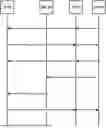


Sources:
- United States Patent and Trademark Office - verify current appl. status at the USPTO↗
Recent applications in this class:
- » 20260156609 2026-06-04
METHOD FOR POSITIONING, TERMINAL DEVICE AND POSITIONING DEVICE - » 20260156608 2026-06-04
BANDWIDTH AGGREGATION FOR RADIO FREQUENCY FINGERPRINT POSITIONING - » 20260156607 2026-06-04
SIDELINK POSITIONING METHOD AND COMMUNICATION DEVICE - » 20260156606 2026-06-04
POSITIONING METHOD AND APPARATUS - » 20260156605 2026-06-04
METHODS OF ESTIMATING LOCATION RELIABILITY - » 20260156604 2026-06-04
METHODS OF ESTIMATING LOCATION RELIABILITY - » 20260156603 2026-06-04
METHODS OF ESTIMATING LOCATION RELIABILITY - » 20260156602 2026-06-04
DETECTING MISCLASSIFICATION OF LINE-OF-SIGHT OR NON-LINE-OF-SIGHT INDICATOR - » 20260156601 2026-06-04
METHODS AND SYSTEMS FOR A CLOUD-BASED MULTI-TECHNOLOGY POSITIONING ENGINE - » 20260156600 2026-06-04
USER EQUIPMENT MOBILITY BETWEEN NON-TERRESTRIAL NETWORK AND TERRESTRIAL NETWORK