METHOD FOR DETECTING A BROCKEN BAR OF AN INDUCTION MOTOR AND APPARATUS FOR IMPLEMENTING THE SAME
US20260160811A1
2026-06-11
19/406,170
2025-12-02
Smart Summary: A method has been developed to find broken bars in the squirrel cage of an induction motor. It starts by measuring the current flowing through the motor's stator windings. Then, a mathematical process called Fourier Transform is used to analyze this current signal. By determining the fundamental frequency and estimating the rotor slip, the method sets up a search window to look for specific peaks in the data. If these peaks meet certain conditions, a signal is generated to indicate that there is at least one broken bar in the motor. 🚀 TL;DR
Abstract:
The invention concerns a method for detecting a broken bar of a squirrel cage of an induction motor, the method comprises:
-
- determining (40) a signal representative of the current flowing through the at least one stator winding,
- computing (44) a Fourier Transform of the determined signal,
- determining (46) the fundamental frequency of the Fourier Transform of the determined signal,
- computing (50) an estimated rotor slip from the electric alternating power voltage applied to the stator windings and from signals representative of the current flowing through the stator windings,
- setting (52) a searching window from the estimated rotor slip and from the fundamental frequency,
- searching (54), a first peak and a second peak in the searching window,
g) checking (56, 58, 62) whether the frequency and/or the amplitude of the first peak and of the second peak fulfill at least one defined condition; if the at least one condition is fulfilled, generating a signal indicative of the presence of at least one broken bar.
Inventors:
- Al Kassem JEBAI 19 🇫🇷 Vernon, France
- Dilshad SURROOP 6 🇫🇷 Saint-Denis, France
- Sofiane BENBERKANE 2 🇫🇷 Poissy, France
- Ali TFAILY 2 🇫🇷 Rueil-Malmaison, France
- Ahmad AWDE 2 🇫🇷 Vernon, France
Applicant:
Interested in similar patents?
Get notified when new applications in this technology area are published.
Classification:
G01R31/343 » CPC main
Arrangements for testing electric properties; Arrangements for locating electric faults; Arrangements for electrical testing characterised by what is being tested not provided for elsewhere; Testing dynamo-electric machines in operation
H02P23/14 » CPC further
Arrangements or methods for the control of AC motors characterised by a control method other than vector control Estimation or adaptation of motor parameters, e.g. rotor time constant, flux, speed, current or voltage
G01R31/34 IPC
Arrangements for testing electric properties; Arrangements for locating electric faults; Arrangements for electrical testing characterised by what is being tested not provided for elsewhere Testing dynamo-electric machines
Description
FIELD OF THE INVENTION
The invention concerns signal processing in the context of sensorless control of induction motor.
BACKGROUND
Induction motors are generally powered via a variable speed drive connected to the induction motor. Classic voltage/frequency control laws are more and more replaced by sensorless control laws that are able to control both the speed and the torque of the electrical motor, without a mechanical speed or position sensor except the variable speed drive.
In the context of the present invention, “sensorless” does not refer to the complete absence of sensors but to the absence of some sensors, such as rotor speed or position sensors. It, however, generally relies on measurements of motor currents (or potentially of motor voltages).
Induction motors are widely used in industry and are essential to industrial processes. Breakdown of induction motor not only leads to high repair expenses but also causes important financial losses due to unexpected downtime. A few induction motor failures result from a cracked or a broken rotor bar of the squirrel cage of the induction motor. Once the rotor bars are cracked or broken in the squirrel cage, the squirrel cage cannot generally be repaired. The squirrel cage fault can also lead to shaft vibration and thus bearing failures and air gap eccentricity, etc. Therefore, the early detection of broken rotor bars is essential not only for rotor protection but also for reducing other types of motor failures.
SUMMARY
An object of the present disclosure is to propose a method for detecting the cracked or broken bar of an induction motor without specific sensor. The method is specially adapted to the detection of a limited number of compromised bars, to mitigate the risk of fault propagation.
For reaching this object, the present disclosure presents a method for detecting a broken bar of a squirrel cage of an induction motor, the induction motor comprising a stator and a rotor, the stator comprising stator-windings to which an electric alternating power voltage is applied, the method being performed by a control device and a determination device configured to measure a signal representative of the current flowing through at least one stator winding, the method comprises:
-
- a) determining a signal representative of the current flowing through the at least one stator winding,
- b) computing a Fourier Transform of the determined signal,
- c) determining the fundamental frequency of the Fourier Transform of the determined signal,
- d) computing an estimated rotor slip from the electric alternating power voltage applied to the stator windings and from signals representative of the current flowing through the stator windings,
- e) setting a searching window from the estimated rotor slip and from the fundamental frequency,
- f) searching, a first peak and a second peak in the searching window, the first peak having a frequency greater to the frequency of the fundamental frequency and the second peak having a frequency lower to the frequency of the fundamental frequency,
- g) checking whether the frequency and/or the amplitude of the first peak and of the second peak fulfill at least one defined condition; if the at least one condition is fulfilled, generating a signal indicative of the presence of one broken bar.
Advantageously, this method is cheap and easy to implement.
Optionally, the checking comprises comparing the difference between a first frequency interval and a second frequency interval to a defined threshold, the first frequency interval being comprised between the frequency of the fundamental frequency and the frequency of the first peak, the second frequency interval being comprised between the frequency of the fundamental frequency and the frequency of the second peak, and wherein the signal indicative of the presence of one broken bar is generated only if the difference between the first frequency interval and the second frequency interval is less than a defined threshold.
Optionally, the checking comprises comparing the amplitude of the first peak and the amplitude of the second peak is to a defined amplitude, and wherein the signal indicative of the presence of one broken bar is generated only if the amplitude of the first peak and the amplitude of the second peak is greater than the defined amplitude.
Optionally, the defined amplitude is greater to 2% of the amplitude of the fundamental frequency.
Optionally, the searching window is bounded by a first limit frequency and a second limit frequency, the first limit frequency being equal to the fundamental frequency minus n-times the estimated rotor slip multiplied by the fundamental frequency, the second limit frequency being equal to the fundamental frequency plus n-times the estimated rotor slip multiplied by the fundamental frequency; n being a real number comprises between 2 and 4.
Optionally, the determined signal is windowed by a Hann window before the computing of the Fourier transform.
Optionally, the determined signal is sampled, and the Fourier Transform computed is a Discrete Fourier Transform.
Optionally, a notch filter is applied to the Fourier Transform of the determined signal to reject a narrow band centred on the fundamental frequency.
Optionally, the determined signal is the current flowing through at least one stator-winding.
Optionally, the stator comprises a first stator-winding, a second stator winding and a third stator-winding, steps a) to g) being performed on the first stator-winding, the second stator winding and the third stator-winding, and wherein the signal indicative of the presence of one broken bar is generated only if the at least one condition is fulfilled for the signal representative of the current flowing through the first stator winding, if the at least one condition is fulfilled for the signal representative of the current flowing through the second stator winding, if the at least one condition is fulfilled for the signal representative of the current flowing through the third stator winding.
Another object of the present disclosure is a variable speed drive, the variable speed drive comprising a processor, a memory operatively coupled to the processor, and an interface for coupling to an induction motor to be driven by the variable speed drive, wherein the variable speed drive is configured to perform a method as mentioned in the above features.
Another object of the present disclosure is a computer program product comprising computer program code tangibly embodied in a computer readable medium, said computer program code comprising instructions to, when provided to a computer system and executed, cause said computer to perform a method as mentioned in the above features.
Another object of the present disclosure is a data set representing, for example through compression or encoding, a computer program product as mentioned in the above feature.
BRIEF DESCRIPTION OF THE DRAWINGS
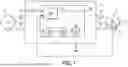
FIG. 1 is a schematic view of a block diagram of an electric drive assembly comprising a variable speed drive according to the present disclosure.
FIG. 2 is a flowchart of the method according to the present disclosure.
FIG. 3 is an example of a Discrete Fourier Transform of a current flowing through a stator-winding of an induction motor having one broken bar.
FIG. 4 is a flowchart of the method according to a second embodiment of the present disclosure.
DETAILED DESCRIPTION
The disclosure applies to a method for detecting at least one broken bar of a squirrel cage of an induction motor.
An example of an electric drive assembly 2 comprising a variable speed drive according to the disclosure is illustrated in FIG. 1.
The electric drive assembly 2 of FIG. 1 comprises an electric network 4, a variable speed drive 8 connected to the electric network, an induction motor 6 connected to the variable speed drive 8.
The induction motor 6 comprises a stator and a rotor. The rotor comprises a squirrel cage which is constituted by two end-rings connected by bars. The stator comprises a first winding, a second winding and a third winding which are not represented in FIG. 1.
The electric network 4 is a three-phase network which supplies an electric alternating power signal to the variable speed drive 8. To this end, electric network 4 comprises three electric network phases 10, 12, 14 which are respectively connected to three entries of the variable speed drive 8. The variable speed drive 8 comprises three outputs 16, 18, 20 adapted to be respectively connected to the three stator windings of the induction motor 6.
The variable speed drive 8 is configured to supply electric alternating power voltage
U s a , U s b , U s c
to the stator-windings of the induction motor. The electric alternating power voltage
U s a , U s b , U s c
is the control voltage of the induction motor.
In the embodiment illustrated in FIG. 1, the electric drive assembly 2 comprises a determination device 22 for measuring a signal representative of the instantaneous current
i s a , i s b , i s c
flowing through each stator winding. This signal may be the instantaneous current. Itself. In this case, the determination device 22 comprises for example ammeters.
Alternatively, this signal can be the voltage between the terminals of the stator winding. In this case, the determination device 22 comprises for example voltmeters. It will be considered for the following of the description and in no way limiting manner that the determination device measures the instantaneous currents passing through each stator winding.
During the operating of the induction motor, the electric alternating power signal
U s a , U s b , U s c
are supplied to the stator-windings to create a magnetic field that rotates in synchronism with the alternating oscillations. This rotating magnetic flux induces currents in the bars of the rotor squirrel cage. To oppose to the current change in the bars, the rotor turns in the direction of the stator magnetic field. The rotation of the rotor also induces a magnetic field in the stator windings. The current flowing through the stator windings and the voltage measured at the terminals of the stator windings are representative of the speed of rotation of the rotor when the induction motor has no defect, and especially when the bars of the squirrel cage are not broken. The rotor rotates at a somewhat slower speed than the stator's magnetic field. Because of the difference between the rotational speed of the stator's magnetic field and the rotational speed of the rotor, induction motors are sometimes called “asynchronous motors”. The difference between the rotational speed of the stator's magnetic field and the rotational speed of the rotor divided by the rotational speed of the rotor is usually called “slip”.
s = ( w s - w r ) / w s
-
- where s is the slip,
- ws is the rotational speed of the stator's magnetic field,
- wr is the rotational speed of the rotor.
In the context of a “sensorless” control law i.e. without a rotor speed sensor or a position sensor, the slip s cannot be measured. The slip also varies according to the load of the induction motor.
Using a mathematical model of the induction motor, it has been theoretically proven that the frequencies of broken bars of the induction motor are defined by the following equation:
f BRB : = ( 1 ± 2 ks ) f s , k ϵ ℕ *
Where
-
- fBRB is the frequency of the broken bars,
- k is a non zero natural integer,
- s is the slip,
- fs is the fundamental frequency of the alternating electrical signal measured between the terminals of the first stator-winding. In the example illustrated in FIG. 3, fs is the fundamental frequency of the current
i s a
-
- flowing through the first stator winding.
In FIG. 1, the variable speed drive 8 comprises a processor 24, for example a controller or a microcontroller.
Processor 24 is configured to operate according to the method hereby described.
The processor may comprise electronic circuits for computation managed by an operating system.
The variable speed drive 8 may also comprise a non-transitory machine-readable or computer readable storage medium. The storage medium is encoded with instructions executable by a processor such as processor 24 to perform the example method hereby described.
A computer readable storage unit according to this disclosure may be any electronic, magnetic, optical or other physical storage device that stores executable instructions.
The computer readable storage unit may be, for example, Random Access Memory (RAM), an Electrically Erasable Programmable Read Only Memory (EEPROM), a storage drive, and optical disk, and the like.
The processor 24 comprises an observer 26 configured to compute an estimate rotor slip ŝ from the currents
i s a
flowing through the stator-windings determined by the determination device 22 and from the control voltage applied to the stator-windings.
-
- In particular, the estimate rotor slip ŝ is computed from the current
i s a
-
- flowing through the first stator-winding, the current
i s b
-
- flowing through the second stator-winding, the current
i s c
-
- flowing through the third-stator winding, the electric alternating power voltage
U s a
-
- applied to the first stator-winding, the electric alternating power voltage
U s b
-
- applied to the second stator-winding, the electric alternating power voltage
U s c
-
- applied to the third stator-winding.
The processor 24 comprises a Fourier transform unit 28 connected to the determination device 22.
The Fourier transform unit 28 is configured to receive a signal representative of the current
i s a
-
- flowing through the first stator winding and to compute the spectrum of this signal.
In some examples, the Fourier transform unit 28 is configured to sample the received signal and to perform a Discrete Fourier Transform on it.
In some examples, the Fourier transform unit 28 is configured to receive also a signal representative of the current
i s b
flowing through the second stator-winding and to compute its spectrum.
In some examples, the Fourier transform unit 28 is also configured to receive also a signal representative of the current
i s c
flowing through the third stator-winding and to compute its spectrum.
The processor 24 comprises a filter unit 30 connected to Fourier transform unit 28. The filter unit 30 is configured to identify the fundamental frequency of the Fourier Transform of the determined signal issued from unit 28. Filter unit 30 is configured to remove the fundamental frequency signal from the Fourier Transform of the determined signal.
The processor 24 can comprise a notch filter which is not represented in FIG. 1. The processor 24 comprises a broken bar detection unit 32. The broken bar detection unit 32 is connected to the observer 26 and to the filter unit 30. The broken bar detection unit 32 is configured to check whether or not the induction motor 6 comprises at least one broken bar. The broken bar detection unit 32 is configured to generate a signal BB indicative of the presence of a broken bar upon detection of the presence of at least one broken bar.
In the example of FIG. 1, observer 26, the Fourier transform unit 28, the filter unit 30 and the broken bar detection unit 32, are each realized, i.e. implemented, as software executable by processor 24.
At a step 40, the method according to the present disclosure comprises the determining of a signal representative of the current
i s a
flowing through the first stator winding, by the determination device 22. This signal is determined for example by measuring.
It will be considered for the following of the description and in a no way limiting manner that the determination device 22 measures the instantaneous current
i s a
passing through the first stator winding. Alternatively, the determination device 22 could also determine the voltage between the terminals of the first stator-winding.
At a step 42, the method comprises the sampling of the determined current
i s a .
The determined current
i s a
can for example be sampled at 4 kHz during a time window of 20 seconds. A time window an be applied to the sampled current
i s a
to enhance its spectral resolution. For example, a Hann window can be applied.
At a step 44, the method comprises the computing of the spectrum of the determined current
i s a .
Discrete Fourier Transform (DFT) of the determined current
i s a
is computed. FIG. 3 illustrates an example of the amplitude of the Discrete Fourier Transform (DFT) of the determined current
i s a
of the first stator-winding of an induction motor having one broken bar.
Alternatively, the method does not comprise a step 42. In this case, a time window is applied to the determined current in analog form and a Fourier Transform (FFT) is computed on the determined current
i s a .
At a step 46, the method comprises the identification of the fundamental frequency fs as the highest peak of the Discrete Fourier Transform (DFT) of the determined current
i s a .
This identification can for example be made by comparing two by two the amplitudes of the Discrete Fourier Transform (DFT) in a table. The fundamental frequency fs can be removed from the Discrete Fourier Transform (DFT) of the determined current
i s a .
In the example of FIG. 3, the fundamental frequency fs has a frequency of 53 Hz.
At a step 48, to increase the recovery accuracy, the method can comprise the applying of a notch filter to attenuate the lobe around the fundamental frequency fs.
At a step 50, the method comprises the computing an estimated rotor slip ŝ. The estimated rotor slip s is estimated by the observer 26 from the current
i s a
flowing through the first stator winding and from the electric alternating power voltage
U s a
applied to the terminals of the first stator winding. This estimated rotor slip ŝ is biased because when a broken bar fault occurs, the discrepancy between the physical system and the mathematical model increases significantly.
At a step 52, the method comprises the setting of a searching window SW from the estimated rotor slip ŝ and from the fundamental frequency fs. The searching window SW is bounded by a first limit frequency and a second limit frequency.
In some examples, the first limit frequency is equal to the fundamental frequency minus n-times the estimated rotor slip ŝ multiplied by the fundamental frequency. The second limit frequency being equal to the fundamental frequency plus n-times the estimated rotor slip ŝ multiplied by the fundamental frequency.
The searching window SW is equal to fs−nŝfs, fs+nŝfs. The number n is a real number comprises between 2 and 4.
For example, the number n is equal to 2.5.
According to another example, the number n is equal to 3. In this case, the searching window SW is equal to fs−3ŝfs, fs+3ŝfs.
The closer the value of the number n is to 2, the faster the detection of a broken bar will be. If the value of the number n is higher, the chances of detecting a broken bar are increased even in cases where the deviation of the slip is significant.
At a step 54, the method comprises the searching, in the searching window SW, of a first peak 55 having a frequency above the fundamental frequency fs and of a second peak 57 having a frequency below the fundamental frequency fs. This search can be done using a peak-finding algorithm.
Theoretically, if the rotor comprises one broken bar, a first peak should have a frequency of fs−2sfs. A second peak should have a frequency of fs+2sfs. However, due to the discrepancy between the slip of the induction motor having a broken bar and the estimated rotor slip ŝ, the searching is conducted in a larger searching window SW.
At a step 56, the method comprises the checking that the frequency and/or the amplitude of the first peak 55 and that the frequency and/or the amplitude of the second peak 57 meet at least one defined condition.
In some examples, the defined condition is that the first peak 55 and the second peak 57 are spaced approximately from the same frequency range from the fundamental frequency fs.
To check this condition, the method comprises the determining of a first frequency interval I1 and of a second frequency interval I2, during a step 58.
The first frequency interval I1 comprises the frequencies between the fundamental frequency fs and the first peak 55. The first frequency interval I1 can be obtained by computing the difference between the frequency of the fundamental frequency fs and the frequency of the first peak 55. The second frequency interval I2 comprises the frequencies between the fundamental frequency fs and the second peak 57. The second frequency interval I2 can be obtained by computing the difference between the frequency of fundamental frequency fs and the frequency of the second peak 57.
The method also comprises the computing of the difference between the first frequency interval I1 and the second frequency interval I2. At least during step 58, the difference is compared to a defined threshold S1.
For example, the threshold S1 is equal to 0.1 Herz.
According to a first embodiment, when the difference between the first frequency interval I1 and the second frequency interval I2 is less than the first defined threshold S1, a signal BB indicative of the presence of at least one broken bar is generated, at a step 60.
According to a second embodiment, when the difference between the first frequency interval I1 and the second frequency interval I2 is less than the first defined threshold S1, the method comprises the checking of a second defined condition, at a step 62.
In some examples, the second defined condition is that the amplitude of the first peak 55 and of the second peak 57 are greater to a defined amplitude A.
To check this condition, the method comprises comparing the amplitude of the first peak 55 and the amplitude of the second peak 57 to a defined amplitude A, during step 62.
Preferably, the defined amplitude A is equal or greater to 2% of the amplitude of the fundamental frequency fs.
Alternatively, the defined amplitude A is a value predefined which is independent from the amplitude of the fundamental frequency fs and more generally which is independent from the determined signal
i s a .
If the amplitude of the first peak 55 and the amplitude of the second peak 57 is greater than the defined amplitude A, a signal BB indicative of the presence of at least one broken bar is generated, at a step 64.
The method according to the present disclosure can be applied only to the first stator-winding. In this case, steps 40 to 64 are implemented only to a signal representative of the current
i s b
flowing through the first stator-winding.
Alternatively, steps 40 to 64 are repeated for the second stator-winding. In step 40, a signal representative of the current
i s b
flowing through the second stator-winding is determined. Steps 42 to 64 are implemented on this signal representative of the current
i s b .
In this case, a signal indicative of the presence of one broken bar is generated only if the at least one condition is fulfilled for the signal
i s a
representative of the current flowing through the first stator-winding and for the signal
i s b
representative of the current flowing through the second stator-winding.
If the at least one condition is fulfilled only for one signal among the signal
i s a
representative of the current flowing through the first stator-winding and the signal
i s b
representative of the current flowing through the second stator-winding, a signal indicative of the presence of a problem on the stator is generated.
Alternatively, in reference to FIG. 4, steps 40 to 64 are performed once for the first stator-winding. Then, steps 40 to 64 are repeated, at step 66; for the second stator-winding and for the third stator-winding. In this case, at step 40, a signal representative of the current
i s b
flowing through the second stator-winding is determined.
Steps 40 to 64 are once again repeated, at step 66; for the third stator-winding. In this later case, at step 40, a signal representative of the current
i s c
flowing through the third stator-winding is determined.
According to this embodiment illustrated in FIG. 4, a signal BB indicative of the presence of one broken bar is generated at step 68 only if the at least one condition is fulfilled for the signal
i s a
representative of the current flowing through the first stator-winding, for the signal
i s b
representative of the current flowing through the second stator-winding and for the signal
i s c
representative of the current flowing through the third stator winding.
If the at least one condition is fulfilled only for one signal among the signal
i s a
representative of the current flowing through the first stator-winding, the signal
i s b
representative of the current flowing through the second stator-winding and the signal
i s c
representative of the current flowing through the third stator-winding, a signal indicative of the presence of a problem on the stator is generated
Claims
1. A method for detecting a broken bar of an induction motor, the induction motor comprising a stator and a rotor, the stator comprising stator-windings to which an electric alternating power voltage
( U s a , U s b , U s c )
is applied, the method being performed by a control device (24) and a determination device (22) configured to measure a signal representative of the current flowing through at least one stator winding, the method comprises:
a) determining (40) a signal
( i s a , i s b , i s c )
representative of the current flowing through the at least one stator winding,
b) computing (44) a Fourier Transform of the determined signal,
c) determining (46) the fundamental frequency (fs) of the Fourier Transform of the determined signal
( i s a , i s b , i s c ) ,
d) computing (50) an estimated rotor slip (s) from the electric alternating power voltage
( i s a , i s b , i s c )
applied to the stator windings and from signals
( U s a , U s b , U s c )
representative of the current flowing through the stator windings,
e) setting (52) a searching window (SW) from the estimated rotor slip (ŝ) and from the fundamental frequency (fs),
f) searching (54), a first peak (55) and a second peak (57) in the searching window (SW), the first peak (55) having a frequency greater to the frequency of the fundamental frequency (fs) and the second peak (57) having a frequency lower to the frequency of the fundamental frequency (fs),
g) checking (56, 58, 62) whether the frequency and/or the amplitude of the first peak and of the second peak fulfill at least one defined condition; if the at least one condition is fulfilled, generating a signal (BB) indicative of the presence of at least one broken bar.
2. The method according to claim 1, wherein the checking comprises comparing (58) the difference between a first frequency interval (I1) and a second frequency interval (I2) to a defined threshold (S1), the first frequency interval being comprised between the frequency of the fundamental frequency (fs) and the frequency of the first peak (55), the second frequency interval (I2) being comprised between the frequency of the fundamental frequency (fs) and the frequency of the second peak, and wherein the signal (BB) indicative of the presence of one broken bar is generated only if the difference between the first frequency interval and the second frequency interval is less than a defined threshold (S1).
3. The method according to any of claims 1 and 2, wherein the checking comprises comparing (62) the amplitude of the first peak (55) and the amplitude of the second peak (57) is to a defined amplitude (A), and wherein the signal (BB) indicative of the presence of one broken bar is generated only if the amplitude of the first peak and the amplitude of the second peak is greater than the defined amplitude (A).
4. The method according to claim 3, wherein the defined amplitude (A) is greater to 2% of the amplitude of the fundamental frequency.
5. The method according to any of claims 1 to 4, wherein the searching window (SW) is bounded by a first limit frequency and a second limit frequency, the first limit frequency being equal to the fundamental frequency minus n-times the estimated rotor slip multiplied by the fundamental frequency, the second limit frequency being equal to the fundamental frequency plus n-times the estimated rotor slip multiplied by the fundamental frequency; n being a real number comprises between 2 and 4.
6. The method according to any of claims 1 to 5, wherein the determined signal
( i s a , i s b , i s c )
is windowed (42) by a Hann window before the computing of the Fourier transform.
7. The method according to any of claims 1 to 6, wherein the determined signal
( i s a , i s b , i s c )
is sampled (42), and the Fourier Transform computed is a Discrete Fourier Transform.
8. The method according to any of claims 1 to 7, wherein a notch filter (48) is applied to the Fourier Transform of the determined signal
( i s a , i s b , i s c )
to reject a narrow band centred on the fundamental frequency (fs).
9. The method according to any of claims 1 to 8, wherein the determined signal is the current
( i s a , i s b , i s c )
flowing through at least one stator-winding.
10. The method according to any of claims 1 to 9, wherein the stator comprises a first stator-winding, a second stator winding and a third stator-winding, steps a) to g) being performed (66) on the first stator-winding, the second stator winding and the third stator-winding, and wherein the signal (BB) indicative of the presence of one broken bar is generated (68) only if the at least one condition is fulfilled for the signal
( i s a )
representative of the current flowing through the first stator winding, if the at least one condition is fulfilled for the signal
( i s b )
representative of the current flowing through the second stator winding, if the at least one condition is fulfilled for the signal
( i s c )
representative of the current flowing through the third stator winding.
11. A variable speed drive, the variable speed drive comprising a processor, a memory operatively coupled to the processor, and an interface for coupling to an induction motor to be driven by the variable speed drive, wherein the variable speed drive is configured to perform a method according to any of claims 1 to 10.
12. A computer program product comprising computer program code tangibly embodied in a computer readable medium, said computer program code comprising instructions to, when provided to a computer system and executed, cause said computer to perform a method according to any of claims 1 to 10.
13. A data set representing, for example through compression or encoding, a computer program product according to claim 12.
Images & Drawings included:






Sources:
- United States Patent and Trademark Office - verify current appl. status at the USPTO↗
Recent applications in this class:
- » 20260169073 2026-06-18
MOTOR MONITORING DEVICE - » 20260160810 2026-06-11
METHODS AND SYSTEMS FOR MONITORING OF AN ELECTRICAL MACHINE - » 20260147045 2026-05-28
REMOVING SPURIOUS SIGNAL COMPONENTS IN A MEASURED MOTOR CURRENT SIGNAL FOR OPTIMIZED MOTOR DIAGNOSIS - » 20260147044 2026-05-28
Method and System for Early Detection of Abnormalities in Motor Ball Bearings - » 20260140184 2026-05-21
ECCENTRICITY MEASUREMENT SYSTEM - » 20260140183 2026-05-21
ECCENTRICITY MEASUREMENT SYSTEM - » 20260126489 2026-05-07
COMPUTER-IMPLEMENTED METHOD FOR PREDICTING A BROKEN BAR DEFECT IN A THREE-PHASE MOTOR - » 20260110738 2026-04-23
Method of Monitoring an Electrical Machine - » 20260098901 2026-04-09
APPARATUSES AND METHODS FOR FACILITATING FAULT DETECTION AND STATUS RECOGNITION FOR MOTORS AND OTHER APPLICATIONS, INCLUDING MOTORS AND APPLICATIONS ASSOCIATED WITH COMMUNICATION NETWORKS AND SYSTEMS - » 20260079207 2026-03-19
Investigating a Motor