FUMIGANT COMPOSITION FOR PEST CONTROL
US20260165321A1
2026-06-18
19/464,511
2026-01-29
Smart Summary: A new pest control product uses a special chemical formula to kill pests. It can be safely used in closed spaces without harming people or the environment if used correctly. The product is designed to be effective against various types of pests. It combines the chemical with other safe ingredients to enhance its effectiveness. Overall, it offers a way to manage pests while keeping health and safety in mind. 🚀 TL;DR
Abstract:
A fumigant composition for pest control includes a chemical compound represented by formula (I) or/and a pesticidally acceptable reagent. By administering an effective amount of the fumigant composition for pest control into a closed space is capable of effectively killing a variety of pests, and will not have a considerable health impact on human and harm to the environment; given an appropriate operation is taken.
Inventors:
- Menghsiao MENG 3 🇹🇼 Taichung City, Taiwan
- Shu-Mei DAI 2 🇹🇼 Taichung City, Taiwan
- Wei-Ming LEU 4 🇹🇼 Taichung City, Taiwan
- Cheng-Cheng LEE 3 🇹🇼 Taichung City, Taiwan
- Ying-Tong LIN 2 🇹🇼 Yunlin County, Taiwan
- Sheng HUANG 3 🇹🇼 Tainan City, Taiwan
Applicant:
Interested in similar patents?
Get notified when new applications in this technology area are published.
Classification:
A01N43/08 » CPC main
Biocides, pest repellants or attractants, or plant growth regulators containing heterocyclic compounds having rings with one or more oxygen or sulfur atoms as the only ring hetero atoms with one hetero atom five-membered rings with oxygen as the ring hetero atom
A01N43/10 » CPC further
Biocides, pest repellants or attractants, or plant growth regulators containing heterocyclic compounds having rings with one or more oxygen or sulfur atoms as the only ring hetero atoms with one hetero atom five-membered rings with sulfur as the ring hetero atom
A01P7/04 » CPC further
Arthropodicides Insecticides
Description
CROSS REFERENCE TO RELATED APPLICATIONS
This application is a Divisional of co-pending application Ser. No. 17/387,518, filed on Jul. 28, 2021, for which priority is claimed under 35 U.S.C. § 120; and this application claims priority of Application No. 109130409 filed in Taiwan on Sep. 4, 2020 under 35 U.S.C. § 119; the entire contents of all of which are hereby incorporated by reference.
BACKGROUND OF THE INVENTION
Field of Invention
The invention relates to a use of a group of chemical compounds for controlling pests, and more particularly to a fumigant composition for pest control.
Related Art
A pest control fumigant refers to a volatile chemical that can kill pests when it reaches the respiration tract of the pests through either burning or evaporation. In general, an optimum control effect can be achieved when the fumigant is used in a closed space. At present, the commonly used pest control fumigants include phosphine, methyl bromide, sulfuryl fluoride, etc. Although a pest control fumigant can effectively kill pests in a closed space, it may cause harm to off-target organisms or the environment during use.
For example, although methyl bromide, once a leading fumigant, has several advantages such as strong insecticidal efficacy, stable chemical properties, and low price, it is banned, except for customs quarantine, after 2015 under the directive of Montreal Protocol because it is an ozone-depleting substance. Phosphine is a fumigant commonly used to control pests in granary, but it has disadvantages such as extreme toxicity to mammals, high chemical reactivity, and more importantly, the emergence of phosphine-resistant insects. The leak of phosphine from the fumigation space would damage the health of nearby people and animals. Sulfuryl fluoride is a greenhouse gas; therefore, the use of the compound will aggravate the global greenhouse effect.
Given the various adverse effects of current pest control fumigants, it is an urgent task to develop alternative fumigants (or fumigant composition) with characteristics such as low toxicity to humans and being friendly to the atmosphere.
SUMMARY OF THE INVENTION
A main object of the invention is to provide a fumigant composition capable of effectively killing various pests in an environment. This fumigant composition exerts less toxicity to mammals than the currently used fumigants and does not cause harm to the environment.
Another object of the invention is to provide a fumigant composition for pest control, which can be prepared easily into a suitable dosage/formulation according to use requirements, use occasions or use methods, and is capable of achieving an efficacy of killing pests.
In order to achieve the above-mentioned efficacy, the invention discloses another use of chemicals of formula (I); specifically, the invention discloses a use of the chemical compound of formula (I) for preparing a fumigant composition for pest control.
And the chemical compound of formula (I) is represented as follows:
-
- wherein:
- X is oxygen or sulfur;
- Y is hydrogen or methyl group;
- Z is methyl or ethyl group.
By administering a fumigant composition for pest control containing an effective amount of the chemical compound of formula (I) into a closed space is capable of effectively killing pests in the space, wherein the pests are insects, mites or nematodes. For example, the insects could be rice weevil (Sitophilus oryzae), German cockroach (Blattella germanica), green peach aphid (Myzus persicae), brown planthopper (Nilaparvata lugens), diamondback moth (Plutella xylostella), sweet potato weevil (Cylas formicarius), lesser grain borer (Rhyzopertha dominica), etc.
Specifically, an administered dosage of the fumigant composition for pest control is no less than 18 mg of the chemical compound of formula (I) per thousand cubic centimeters (1 liter) of space.
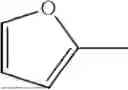
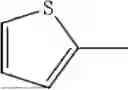
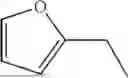
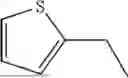
In one embodiment of the invention, the chemical compound of formula (I) is 2,5-dimethylfuran, 2,5-dimethylthiophene, 2-methylfuran, 2-methylthiophene, 2-ethylfuran or 2-ethylthiophene.
In one embodiment of the invention, the fumigant composition for pest control further comprises an acceptable reagent usually used in pesticide formulation, such as water, surfactant, dimethyl sulfoxide, or glycerin.
In one embodiment of the invention, the fumigant composition for pest control is a fumigant or an emulsion.
BRIEF DESCRIPTION OF THE DRAWINGS
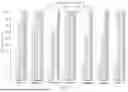
FIG. 1 is the results of testing the mortality caused by different dosages of 2,5-dimethylfuran through fumigation on German cockroach (Blattella germanica), green peach aphid (Myzus persicae), brown planthopper (Nilaparvata lugens), diamondback moth (Plutella xylostella), rice weevil (Sitophilus oryzae), lesser grain borer (Rhyzopertha dominica), and sweet potato weevil (Cylas formicarius);
FIG. 2A is the results of testing the fumigant toxicity of 2,5-dimethylfuran to Sitophilus oryzae;
FIG. 2B is the results of testing the fumigant toxicity of 2-methylfuran to Sitophilus oryzae;
FIG. 2C is the results of testing the fumigant toxicity of 2-ethylfuran to Sitophilus oryzae;
FIG. 2D is the results of testing the fumigant toxicity of 2,5-dimethylthiophene to Sitophilus oryzae;
FIG. 2E is the results of testing the fumigant toxicity of 2-methylthiophene to Sitophilus oryzae; and
FIG. 2F is the results of testing the fumigant toxicity of 2-ethylthiophene to Sitophilus oryzae.
DETAILED DESCRIPTION OF THE INVENTION
The invention discloses a fumigant composition for pest control comprising at least one chemical compound represented by the following formula (I) as an active ingredient:
-
- wherein:
- X is oxygen or sulfur;
- Y is hydrogen or methyl group;
- Z is methyl or ethyl group.
The chemical compound represented by formula (I) is a highly volatile liquid. According to the Material Safety Data Sheet provided by the manufactures and publicly accessible chemical information websites, such as PubChem, the active ingredient disclosed in the invention is a low-toxic substance compared to phosphine, which means that the active ingredient is relatively safer to the human body or other mammals, and there is no known hazard to the environment.
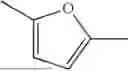
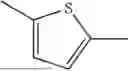
Specifically, the chemical compound represented by formula (I) is 2,5-dimethylfuran, 2,5-dimethylthiophene, 2-methylfuran, 2-methylthiophene, 2-ethylfuran or 2-ethylthiophene, as shown in table 1 below.
| TABLE 1 |
| structural formula of each of the chemical compounds |
| Chemical name | Structural formula | Molecular formula |
| 2,5-dimethylfuran | C6H8O | |
| 2,5- dimethylthiophene | C6H8S | |
| 2-methylfuran | C5H6O | |
| 2-methylthiophene | C5H6S | |
| 2-ethylfuran | C6H8O | |
| 2-ethylthiophene | C6H8S | |
Furthermore, in order to increase the ways of use and adapt to different environmental conditions, the fumigant composition for pest control disclosed in the invention further comprises a pesticidally acceptable reagent, such as an organic chemical substance or a solvent. For example, the pesticidally acceptable reagent is dimethyl sulfoxide, glycerin, surfactant, or water, which can be formulated with the chemical compound of formula (I) disclosed in the invention according to a predetermined ratio and made into an emulsion.
The chemical compound of formula (I) disclosed in the invention has different median lethal concentrations (LC50) for pest insects. Therefore, an effective dosage of the fumigant composition for pest control disclosed in the invention will also vary with factors of place of use, method of use, and object of use. Taking rice weevil (Sitophilus oryzae) as an example, the LC50 of 2,5-dimethylfuran is 29-43 mg/dm3/2 hours; the LC50 of 2,5-dimethylthiophene is 40-90 mg/dm3/2 hours; the LC50 of 2-ethylfuran is 66-78 mg/dm3/2 hours; the LC50 of 2-ethylthiophene is 10-13 mg/dm3/2 hours; the LC50 of 2-methylfuran is 127-155 mg/dm3/2 hours; and the LC50 of 2-methylthiophene is 21-30 mg/dm3/2 hours. The effective dosage or LC50 of the chemical compound of formula (I) in the fumigant composition for pest control disclosed in the invention will vary with the application condition, the reagent used in combination, or the corresponding pests. However, variation of the effective dosage or LC50 of the active ingredient can be achieved by a person having ordinary skill in the art to which the invention pertains through the disclosure of the invention, and therefore shall fall within the protected scope of the invention.
Further, by administering an effective amount of the fumigant composition for pest control into a closed space is capable of killing a variety of pests in a short time. The pests include mites, nematodes, and insects; and the insects include, but not limited to, rice weevil (Sitophilus oryzae), sweet potato weevil (Cylas formicarius), German cockroach (Blattella germanica), and diamondback moth (Plutella xylostella).
For example, using the fumigant composition for pest control disclosed in the invention comprising more than 18 mg of the chemical compound of formula (I) in every thousand cubic centimeters (1 liter) of space is capable of killing a variety of pests within 2 hours.
Hereinafter, in order to further illustrate the technical features and efficacies of the invention, several examples in conjunction with the figures will be used for detailed description as follows.
The poisoning ability index used in the following examples is the internationally commonly used median lethal concentration (LC50), which refers to a dosage required to kill 50% of a group of tested insects. The main test method is to include a number of tested insect (adults or larvae) and the examined chemical at a wide range of dosage in a 1-liter airtight transparent containers for a period of time. Afterward, the airtight containers were opened for ventilation, and the dead insects in the containers were counted. The linear regression between the mortality, expressed as probability unit, and the log dosage was analyzed using the software Priprobit v1.63, from which the value of LC50 could be obtained.
Example 1: Fumigant Toxicity Test (1)
Take several 1-liter airtight transparent containers marked with different doses of 2,5-dimethylfuran, then put 30 insects into each of the transparent containers and add 2,5-dimethylfuran with marked doses (0, 18, 45, 90, 180 mg/dm3), respectively, into each of the transparent containers. Place the containers at room temperature (˜24° C.) for 2 hours, and then quantitate the dead insects in each of the transparent containers. The results are shown in FIG. 1. Wherein, the insects used include German cockroach (Blattella germanica), green peach aphid (Myzus persicae), brown planthopper (Nilaparvata lugens), diamondback moth (Plutella xylostella), rice weevil (Sitophilus oryzae), lesser grain borer (Rhyzopertha dominica), and sweet potato weevil (Cylas formicarius).
From the results shown in FIG. 1, it can be known that 2,5-dimethylfuran indeed has fumigant toxicity to insects belonging to different orders (including Hemiptera, Lepidoptera, Blattodea, Coleoptera). Further, an administered dosage of 18 mg/dm3 is enough to kill all the tested individuals of lesser grain borer (Rhyzopertha dominica) and green peach aphid (Myzus persicae); on the other hand, an administered dosage of 90 mg/dm3 is required to kill all the tested individuals of German cockroach (Blattella germanica), brown planthopper (Nilaparvata lugens), diamondback moth (Plutella xylostella), and rice weevil (Sitophilus oryzae).
The results shown in FIG. 1 indicate that 2,5-dimethylfuran disclosed in the invention is an effective fumigant that can be used to kill a variety of pest insects.
Example 2: Fumigant Toxicity Test (2)
Put 30 adult insects of rice weevil (Sitophilus oryzae) into each of a group of 1-liter transparent containers, on which the name of tested chemical and the predetermined dosage are marked. Wherein, the chemicals to be tested include 2,5-dimethylfuran, 2,5-dimethylthiophene, 2-methylfuran, 2-methylthiophene, 2-ethylfuran and 2-ethylthiophene. The airtight containers, which contain the insect and chemical, are left at room temperature of about 24° C. for 2 hours. Afterward, the containers are opened for ventilation, and the dead rice weevils (Sitophilus oryzae) in each of the containers are counted. The linear regression between mortality and log dosage is analyzed using the software Priprobit v1.63, from which the lethal concentrations 50% (LC50) and 95% (LC95) are calculated. The results are shown in FIG. 2 and table 2 below.
From the results in FIG. 2 and table 2, it can be known that 2,5-dimethylfuran and its analogs, including 2,5-dimethylthiophene, 2-methylfuran, 2-methylthiophene, 2-ethylfuran and 2-ethylthiophene, all have an effectively killing effect on rice weevil (Sitophilus oryzae).
| TABLE 2 |
| Lethal concentration 50% (LC50) and 95% (LC95) of the different |
| chemical compounds toward rice weevil (Sitophilus oryzae) |
| Number | |||
| of tested | LC50 [95% CI] | LC95 [95% CI] | |
| Chemicals | insect | (mg/dm3) | (mg/dm3) |
| 2-methylfuran | 420 | 140.1 | [127.7-154.6] | 329.7 | [274.3-434.6] |
| 2-ethylfuran | 420 | 72.1 | [67.0-77.6] | 146.5 | [128.1-177.2] |
| 2,5-dimethylfuran | 630 | 36.3 | [29.3-42.7] | 111.6 | [89.6-157.7] |
| 2-methylthiophene | 420 | 25.8 | [21.7-29.5] | 54.6 | [45.9-72.5] |
| 2-ethylthiophene | 420 | 11.7 | [10.6-12.9] | 20.6 | [18.2-25.1] |
| 2,5-dimethylthiophene | 420 | 63.8 | [40.4-89.2] | 135.3 | [94.4-830.7] |
Based on the combined results of example 1 and example 2, it can be known that 2,5-dimethylfuran, 2,5-dimethylthiophene, 2-methylfuran, 2-methylthiophene, 2-ethylfuran and 2-ethylthiophene have similar abilities to kill insects, which is sufficient to prove that the chemical compound represented by formula (I) disclosed in the invention has the ability to kill insects with extensive effects, and can be used as the active ingredient of the fumigant composition for pest control.
It is to be understood that the above description is only the embodiments and examples of the invention and is not used to limit the present invention, and changes in accordance with the concepts of the present invention may be made without departing from the spirit of the present invention. For example, the equivalent effects produced by various transformations, variations, modifications and applications made to the configurations or arrangements shall still fall within the scope covered by the appended claims of the present invention.
Claims
What is claimed is:1. A method for controlling pests in a closed space, comprising:
administering an effective amount of a fumigant composition into the closed space;
wherein the fumigant composition comprises an active ingredient and a pesticidally acceptable carrier; and
wherein the active ingredient is selected from the group consisting of 2,5-dimethylfuran, 2,5-dimethylthiophene, 2-methylfuran, 2-methylthiophene, and 2-ethylthiophene.
2. The method of claim 1, wherein the pests are selected from the group consisting of Sitophilus oryzae (rice weevil), Rhizopertha dominica (lesser grain borer), Myzus persicae (green peach aphid), Blattella germanica (German cockroach), and Plutella xylostella (diamondback moth).
3. The method of claim 1, wherein the effective amount of the fumigant composition provides a concentration of the active ingredient in the closed space of at least 18 mg/dm3.
4. The method of claim 1, wherein the effective amount of the fumigant composition provides a concentration of the active ingredient in the closed space in a range from 18 mg/dm3 and 180 mg/dm3.
5. The method of claim 1, comprising maintaining the fumigant composition in the closed space for a duration of at least 2 hours to achieve a mortality rate of greater than 50%.
6. The method of claim 1, wherein the fumigant composition is an emulsion.
Images & Drawings included:
Sources:
- United States Patent and Trademark Office - verify current appl. status at the USPTO↗
Similar patent applications:
- » 20220071207
FUMIGANT COMPOSITION FOR PEST CONTROL - » 20100135914
AZEOTROPIC FUMIGANT COMPOSITIONS AND METHODS OF CONTROLLING PESTS
Recent applications in this class:
- » 20260165320 2026-06-18
COMPOSITION FOR CONTROLLING PLANT VIRUSES CONTAINING LEVAN AS AN EFFECTIVE INGREDIENT AND METHOD FOR CONTROLLING PLANT VIRUSES USING THE SAME - » 20260150836 2026-06-04
DEUTERIUM-LABELLED CANNALACTONE SYNTHESIS AND USE FOR THE DOSAGE OF CANNALACTONE IN ALL TISSUES OR EXUDATES OF LIVING PLANTS OR ORGANISMS - » 20260000077 2026-01-01
CANNALACTONE ANALOGS, SYNTHESIS AND USE FOR STIMULATION OF GERMINATION OF PARASITIC PLANT SEEDS - » 20260000076 2026-01-01
ANTIMICROBIAL COMBINATIONS - » 20250324970 2025-10-23
ANTIMICROBIAL AGENTS AND COMPOSITIONS AND USES THEREOF - » 20250280826 2025-09-11
PLANT GROWTH PROMOTER - » 20250261639 2025-08-21
ZEALACTONE DERIVATIVES AS PLANT GROWTH REGULATORS - » 20250248401 2025-08-07
Regulator for Highland Barley and Preparation Method and Application Thereof - » 20250234861 2025-07-24
LACTONES FOR ENHANCING THE ACTIVITY OF ANTIMICROBIAL AGENTS - » 20250185654 2025-06-12
ALTERNATIVE CORROSION INHIBITORS