DESK SYSTEM WITH LEVELING SENSOR AND/OR QUICK-DISCONNECT LEGS
US20260165463A1
2026-06-18
19/423,136
2025-12-17
Smart Summary: A desk system can be easily set up for use or packed away for storage. It has a flat surface with legs that can be attached and detached quickly. The legs connect to the desk using special flanges that fit together. When the legs are in the unlocked position, they can be moved easily, but they lock securely in place when needed. This design makes it convenient to adjust the desk's height or to transport it. 🚀 TL;DR
Abstract:
A desk system has an operational configuration and a compact, storage/shipping configuration. The desk system comprises a platform that has leg engagement portion connected to an engagement surface of the platform. Each of at least two leg assemblies having platform engagement portions at their respective upper ends. The leg engagement portion and the platform engagement portions each having flanges shaped such that the flanges on the platform engagement portions can be installed in an unlocked position with the flanges of the leg engagement portion disengaged and moved to a locked position in which the flanges of the leg engagement portion engaged with the flanges of the platform engagement portions to form the interlock connections therebetween to secure the legs to the platform.
Inventors:
- Tai Hoon K. MATLIN 72 🇺🇸 Round Lake Beach, IL, United States
- Michael EGAN 15 🇺🇸 Chicago, IL, United States
- James Edward Losser 14 🇺🇸 St. Charles, IL, United States
- Shawn M. APPLEGATE 12 🇺🇸 Streamwood, IL, United States
- Brian Thomas DODGE 1 🇺🇸 Elmhurst, IL, United States
Applicant:
Interested in similar patents?
Get notified when new applications in this technology area are published.
Classification:
A47B3/12 » CPC main
Folding or stowable tables Stowable tables with detachable top leaves
A47B3/06 » CPC further
Folding or stowable tables with separable parts
A47B9/04 » CPC further
Tables with tops of variable height with vertical spindle
A47B13/003 » CPC further
Details of tables or desks Connecting table tops to underframes
A47B13/021 » CPC further
Details of tables or desks; Underframes Fastening devices of the feet
A47B2013/022 » CPC further
Details of tables or desks; Underframes; Fastening devices of the feet with detachable connection of a tubular leg
A47B2200/0061 » CPC further
General construction of tables or desks; Tables or desks with features relating to adjustability or folding; Leg adjustment Height-adjustable desk, electronically regulated with no mechanical link between the legs
A47B13/00 IPC
Details of tables or desks
A47B13/02 IPC
Details of tables or desks Underframes
Description
RELATED APPLICATION(S)
The present application claims priority to U.S. Provisional Application Ser. No. 63/735,169, filed Dec. 17, 2024, the entirety of which is incorporated herein.
BACKGROUND
Field
The present patent application relates to desk systems, and particularly desk systems of adjustable height.
Description of Related Art
Desk systems used for office and home office settings and the like are well-known. Examples of known desk systems include U.S. Pat. Nos. 10,114,352, 10,649,422, and 10,568,418, the entirety of which are incorporated herein by reference. This is only a sample list of table and desk based sit-stand systems that endeavor to support an individual's ergonomic health and general wellbeing. These desk systems are typically referred to as height adjustable desk systems or sit-stand desk systems. These desk systems are generally free-standing and include height adjusters to change the vertical height of the working surface of the platform, i.e., where the user works or a keyboard, display, laptop, etc. is placed, which accommodates users of different heights and also to accommodate use by the same user in both standing and sitting positions. The desk systems include one or more legs with feet that stably engage the floor to create a base, and the height adjusting mechanism/height adjuster moves the platform vertically, as shown in the assignee's patents cited above.
As more and more sit-stand systems are coming onto the market, and there has been a heightened awareness that sitting for prolonged periods of time without an active movement break of some kind can be harmful, office workers have taken notice and requested sit-stand type systems to be available in the workplace. The inventors have recognized several issues with these products. Prior art desk systems are typically sold in a fully or partially disassembled state, thus requiring more work for a user setting up a desk system. For example, some desk systems are sold with disconnected legs that must be assembled to the underside of the upper platform or a frame body. Some desk systems have frames with the legs attached to which the user must attach the upper platform. Since sit-stand table systems are more complex in construction as compared to standard desks and tables used in a typical office, the time and difficulty assembling and setting up these systems may become noticeably prohibitive in regard to the time and labor costs expended by the business to assemble and set up these units.
Also, motorized legs of the sit-stand desk systems currently use sensors within the legs so as to determine extension height. When the legs are not aligned, one must lower the legs to their lowest default height to recalibrate. This type of calibration is problematic if one started with the legs mounted at different heights (e.g., when the bottom ends of the legs are on surfaces of different heights, like a stepped area or one leg on the floor with the other leg on a drawer, box or some furniture). Due to this, many embedded leg systems use different legs (e.g., shorter) when they are mounted on furniture elements which reduces flexibility since one needs to design specific leg heights for specific applications vs. having a universal leg.
The present patent application endeavors to provide various improvements over prior mentioned examples along with any similar examples that may not have been mentioned or included. The present patent application discloses a device that takes into consideration these important observations noted above and solves them in a manner to be unique and beneficial to those seeking these types of systems in the market.
SUMMARY
In one embodiment of the present patent application, a desk system having an operational configuration and a compact, storage/shipping configuration is provided. The desk system comprises a platform extending longitudinally along a longitudinal axis. The platform has a working surface that faces upwardly in the operational configuration of the desk system and an opposing engagement surface that faces downwardly in the operational configuration of the desk system. The platform comprises leg engagement portion connected to the engagement surface of the platform. At least two leg assemblies are configured to be connected to the platform at upper ends thereof for extending vertically, and perpendicular to the longitudinal axis, to support the platform in the operational configuration of the desk system. Each of the at least two leg assemblies having platform engagement portions at their respective upper ends. The platform engagement portions of the at least two leg assemblies and the leg engagement portion of the platform are configured to engage with each other to form interlock connections therebetween that detachably secure the at least two leg assemblies to the platform. The leg engagement portion and the platform engagement portions each having flanges shaped such that the flanges on the platform engagement portions can be installed in an unlocked position with the flanges of the leg engagement portion disengaged and moved to a locked position in which the flanges of the leg engagement portion engaged with the flanges of the platform engagement portions to form the interlock connections therebetween to secure the legs to the platform. The operational configuration of the desk system includes the at least two leg assemblies being connected to the platform with the interlock connections formed therebetween, such that the at least two leg assemblies are oriented vertically, and perpendicular to the longitudinal axis, to support the platform with its working surface facing upwardly. The compact configuration of the desk system includes the at least two leg assemblies being disconnected from the platform and in their storage positions.
In another embodiment of the present patent application, a desk system is provided. The desk system comprises a platform extending longitudinally along a longitudinal axis; at least two leg assemblies configured to be connected to the platform at upper ends thereof for extending vertically, and perpendicular to the longitudinal axis, to support the platform in the operational configuration of the desk system. The platform has a working surface that faces upwardly in an operational configuration of the desk system. Each of the at least two leg assemblies includes a drive mechanism configured to either extend or retract that leg assembly in a direction substantially perpendicular to the longitudinal axis to set a height of the platform in an elevated position. The desk system also comprises a leveling sensor arrangement detachably connected to the platform and operatively connected to the drive mechanism of each of the at least two leg assemblies. The leveling sensor arrangement comprises a housing, a sensor contained in the housing and configured to determine the level of the housing, and a controller having one or more processors. The controller is contained in the housing and is operatively connected to the sensor. The controller is configured to control the drive mechanisms of the at least two leg assemblies in response to the sensor detecting a change in the level of the housing.
In yet another embodiment of the present patent application, a system comprises a plurality of desk systems is provided. Each of the desk system has a platform extending longitudinally along a longitudinal axis; and at least two leg assemblies configured to be connected to the platform at upper ends thereof for extending vertically, and perpendicular to the longitudinal axis, to support the platform in the operational configuration of the desk system. The platform has a working surface that faces upwardly in an operational configuration of the desk system. Each of the at least two leg assemblies includes a drive mechanism configured to either extend or retract that leg assembly in a direction substantially perpendicular to the longitudinal axis to set a height of the platform in an elevated position. The system comprises a sensor arrangement detachably connected to the platform and operatively connected to the drive mechanism of each of the at least two leg assemblies. The sensor arrangement comprises a housing, a sensor contained in the housing and configured to determine one or more conditions of, on and/or in a close proximity of the desk system, and a controller having one or more processors. The controller contained in the housing and operatively connected to the sensor. The controller is configured to control the drive mechanisms of the at least two leg assemblies in response to the sensor detecting a change in the one or more conditions. Each of the desk systems comprises one or more communication devices coupled to the controller thereof for establishing communication between the controllers of the desk systems. Each of the controllers is further configured to transmit a control signal to each other controller via the communication device in response to its respective sensor detecting the change in the one or more conditions.
In yet another embodiment, a desk system having an operational configuration and a compact, storage/shipping configuration is provided. The desk system comprises a platform extending longitudinally along a longitudinal axis. The platform has a working surface that faces upwardly in the operational configuration of the desk system and an opposing engagement surface that faces downwardly in the operational configuration of the desk system. The platform comprises a beam configured to provide support to the platform, the beam connected to the engagement surface of the platform; and at least two threaded posts fixed to the beam and extending away from the engagement surface of the platform. The desk system comprises at least two leg assemblies configured to be connected to the platform at upper ends thereof for extending vertically to support the platform in the operational configuration of the desk system. Each of the at least two leg assemblies have platform engagement portion at their respective upper ends. The platform engagement portions of the at least two leg assemblies and the threaded posts of the platform are configured to engage with each other to form interlock connections therebetween that detachably secure the at least two leg assemblies to the platform. The operational configuration of the desk system includes the at least two leg assemblies being connected to the platform with the interlock connections formed therebetween, such that the at least two leg assemblies are oriented vertically to support the platform with its working surface facing upwardly. The compact configuration of the desk system includes the at least two leg assemblies being disconnected from the platform.
These and other aspects of the present patent application, as well as the methods of operation and functions of the related elements of structure and the combination of parts and economies of manufacture, will become more apparent upon consideration of the following description with reference to the accompanying drawings, all of which form a part of this specification, wherein like reference numerals designate corresponding parts in the various figures. In one embodiment of the present patent application, the structural components illustrated herein are drawn to scale. It is to be expressly understood, however, that the drawings are for the purpose of illustration and description only and are not intended as a definition of the limits of the present patent application. It shall also be appreciated that the features of one embodiment disclosed herein can be used in other embodiments disclosed herein. As used in the specification and in the claims, the singular form of “a”, “an”, and “the” include plural referents unless the context clearly dictates otherwise. In addition, as used in the specification and the claims, the term “or” means “and/or” unless the context clearly dictates otherwise. It should also be appreciated that some of the components and features discussed herein may be discussed in connection with only one (singular) of such components, and that additional like components which may be disclosed herein may not be discussed in detail for the sake of reducing redundancy.
Other aspects, features, and advantages of the present patent application will become apparent from the following detailed description, the accompanying drawings, and the appended claims.
BRIEF DESCRIPTION OF THE DRAWINGS
Various embodiments are disclosed, by way of example only, with reference to the accompanying schematic drawings in which corresponding reference symbols indicate corresponding parts, in which
FIGS. 1-3 show various front elevational views of a desk system in accordance with an embodiment of the present patent application, where the desk system includes a leveling sensor arrangement;
FIG. 4 shows another view of the desk system shown in FIGS. 1-3;
FIG. 5 shows a system comprises a plurality of desk systems in accordance with another embodiment of the present patent application, where the plurality of desk systems is configured to be communication with each other;
FIG. 6 shows one of the plurality of desk systems of system of FIG. 5;
FIG. 7 shows a bottom elevational view of a desk system in accordance with another embodiment of the present patent application, wherein the desk system is in a disassembled, storage/shipping configuration;
FIG. 8 shows sequential bottom views of the desk system of FIG. 7 showing how legs are assembled onto the frame elements within the tabletop/platform;
FIG. 9 shows a bottom elevational view of the desk system of FIG. 7, wherein the desk system is in an assembled, operational configuration;
FIG. 10 shows a cross-sectional front elevational view of the desk system of FIG. 7 showing the right leg assembled thereon and the left leg yet to be assembled;
FIG. 11 shows another cross-sectional front elevational view of the desk system of FIG. 7 showing both the right leg and the left leg assembled thereon;
FIGS. 12 and 13 show additional cross-sectional views showing the interaction of flanges (which surfaces are being involved, camming etc. and showing the interconnection;
FIG. 14 shows a view of a leg assembly of a quick connect/set up desk assembly in accordance with another embodiment of the present patent application, where the leg assembly is shown in an upside down configuration with its foot facing/pointing to a ceiling;
FIGS. 15-16 show side views of the quick connect/set up desk assembly (also in their upside down configurations), where the leg assembly of FIG. 14 is being detachably connected to the platform in FIG. 15 using mounting bolts with knurl knobs and the leg assembly of FIG. 14 is detachably connected to the platform in FIG. 16;
FIG. 17 shows a view of a leg assembly of a quick connect/set up desk assembly in accordance with yet another embodiment of the present patent application, where the leg assembly is shown in an upside down configuration with its foot facing/pointing to the ceiling;
FIGS. 18-19 show side views of the quick connect/set up desk assembly (also in their upside down configurations), where the leg assembly of FIG. 17 is being detachably connected to the platform in FIG. 18 using a pivoting over-center latch mechanism and the leg assembly of FIG. 17 is detachably connected to the platform in FIG. 19;
FIGS. 20-21 show two exemplary over-center mechanisms that are used by the quick connect/set up desk assembly in accordance with an embodiment of the present patent application;
FIG. 22 shows a view of a leg assembly of a quick connect/set up desk assembly in accordance with yet another embodiment of the present patent application, where the leg assembly is shown in an upside down configuration with its foot facing/pointing to a ceiling;
FIGS. 23-25 show side views of the quick connect/set up desk assembly, where the leg assembly of FIG. 22 is being detachably connected to the platform in FIGS. 23-24 using over-center latch with a rotating cam mechanism, and the leg assembly of FIG. 22 is detachably connected to the platform in FIG. 25;
FIG. 26 show top views of the over-center latch with the rotating cam mechanism of FIGS. 23-25 before and after being actuated in accordance with an embodiment of the present patent application;
FIG. 27 shows two views of adjustable feet of leg assemblies of the desk system in accordance with an embodiment of the present patent application;
FIGS. 28A-28D show legs of a height adjustable table having a leg end with threaded openings allowing the foot to be attached in various positions, FIGS. 28C and 28D show the foot to be assembled in two positions/orientations that are perpendicular to each other, FIG. 28A shows the foot being rotated between the two positions/orientations, and FIG. 28B shows platform engagement portion and the leg with the leg end having the threaded openings;
FIGS. 29A and 29B show the height adjustable table where the legs are attached to the underside of the working surface in two orientations since the foot can be rotated between the two example orientations as shown in FIGS. 28C and 28D;
FIGS. 30A and 30B show the height adjustable table where the leg are assembled to the underside of the work surface in two orientations since the foot of the column can be assembled in the two example orientations as shown in FIGS. 28C and 28D;
FIGS. 31A-31C sequentially show how the leg is quickly mounted to an extrusion attached to the underside of the work surface;
FIGS. 32A-33C sequentially show how the leg is quick mounted to the extrusion (attached to the underside of the work surface) by way of T-nuts, FIGS. 32A-32C show the leg with the motor housing mounted along the direction of the extrusion (the motor housing in this orientation aids in supporting the working surface along its greater dimension), FIGS. 33A-33C show the mounting of the leg with the motor housing being perpendicular to the direction of the extrusion;
FIG. 34A shows an alternative to the T-nut assembly;
FIG. 34B shows pivoting elements that can be used throughout the run of the extrusion as to retain cables and cords within;
FIGS. 35A-35B show a configuration using two extrusions with the quick connect T-nut or alternatively attachment means for the height adjustable legs to be assembled to the underside of the working surface, FIG. 35A shows two legs (both right and left) use an elongated mounting plate that traverses the extrusions, FIG. 35B shows four legs that attach directly by means of the quick attachment or alternatively, directly to the extrusions; and
FIGS. 36A-36B show a configuration using extrusions in a “V” or “Y” shape with the quick connect T-nut or alternatively attachment means for the height adjustable legs to be assembled to the underside of the working surface, FIG. 36A shows two legs (both right and left) use an elongated mounting plate that traverses the extrusions, FIG. 36B shows four legs that attach directly by means of the quick attachment or alternatively, directly to the extrusion.
DETAILED DESCRIPTION OF THE DRAWINGS
The present patent application incorporates by reference in their entirety U.S. Patent Application Ser. No. 63/734,590 titled “Desk Having One or More Compact Configurations” and U.S. Patent Application Ser. No. 63/736,645 titled “Height Adjustable Desk System With Privacy Divider Improvements”. These two patent applications are commonly owned by the same assignee as the present patent application.
As shown in FIGS. 1-4, a desk system 100 comprises a platform 102 extending longitudinally along a longitudinal axis L-L (e.g., as shown in FIG. 7) and at least two leg assemblies 104. The at least two leg assemblies 104 are configured to be connected to the platform 104 at upper ends 106 thereof for extending vertically, and perpendicular to the longitudinal axis L-L, to support the platform 102 in the operational configuration of the desk system 100. The platform 102 has a working surface 108 that faces upwardly (e.g., in the direction of an arrow U) in an operational configuration of the desk system 100.
In this patent application, in one embodiment, the tilt angle of the (four legged) desk system 100 may be configured to be adjusted, for example, for ergonomic and work surface optimization reasons. In one embodiment, the tilt angle of the desk system 100 may be configured to be adjustable using two motors, where one of the two motors may be configured to control two front legs and the other of the two motors may be configured to control the two back legs. In another embodiment, the tilt angle of the desk system 100 may be configured to be adjustable using four motors, each motor may be configured to control one of the four legs.
The term operational configuration refers to the normal use condition of the desk system 100 in which the legs/leg assemblies 104 extend vertically, stabilized by feet 145, to support the platform 102 facing vertically upwardly, such as for writing, supporting a computer, tablet, display monitor, keyboard, mouse etc. The operational configuration may include one or more operational configurations in which the legs 104 extend vertically, stabilized by the feet 145, to support the platform 102 at various/different heights according to the user's preference. For example, a fully lowered operational configuration may be operational configuration in which the user may use the desk system 100 in a sitting position and a fully raised operational configuration may be operational configuration in which the user may use the desk system 100 in a standing position. The platform 102 may be moved at one or more intermediate operational configurations between the fully raised operational configuration and the fully lowered operational configuration. As will be described in detail below, the platform 102 may be locked at each of one or more operational configurations.
In one embodiment, the range of motion (i.e., between the fully lowered operational configuration in which the user may use the desk system 100 in the sitting position and the fully raised operational configuration in which the user may use the desk system 100 in the standing position) may generally be within approximately 22 inches and approximately 52 inches. In one embodiment, the fully lowered operational configuration (or a general sitting configuration for a user whose height is around approximately 5 feet 10 inches) may be around approximately 26 inches. In one embodiment, the fully raised operational configuration (or a general standing configuration for a user whose height is around approximately 5 feet 10 inches) may be around approximately 43 inches.
In one embodiment, the range of motion (i.e., between the fully lowered operational configuration in which the user may use the desk system 100 in the sitting position and the fully raised operational configuration in which the user may use the desk system 100 in the standing position) may include the details provided in https://deskadvisor.org/standard-desk-height/, titled “What is the standard desk height for best posture and ergonomics?”, which is accessed on Dec. 16, 2024 and which is incorporated by reference in its entirety.
The platform 102 may also be referred to as a tabletop or a desktop. The platform may have a rectangular, a square, a circular, a polygonal or an elliptical shaped configuration. However, it is contemplated that the platform may have other sizes, shapes or configurations that would be appreciated by one skilled in the art. The platform 102 may be formed from a glass (e.g., tempered glass), wood, plastic, composite, Medium-density fiberboard (MDF), laminated plywood, ceramic, natural stone, and/or metal material.
The platform 102 may be detachably connected to the leg assemblies 104. The underside/bottom surface of the platform 102 may include one or more leg connector portions that are configured to interengage and lock with one or more platform connector portions that are positioned on the upper ends 106 of the leg assemblies 104. In one embodiment, the platform connector portions and the leg connector portions may take the form of flanges as shown in and described in detail with respect to FIGS. 7-11. In another embodiment, the platform connector portions and the leg connector portions may include any interengaging shapes and configurations, as would be appreciated by a person of ordinary skill in the art, that interconnect so as to lock the leg assemblies 104 and the platform 102. Tools may or may not be needed to enable the interconnection and locking between the platform connector portions and the leg connector portions.
In another embodiment, the platform 102 may be fixedly/permanently connected to the leg assemblies 104. In such an embodiment, the leg assemblies 104 may be hingedly connected to the platform 102 for storage and/or shipping purposes.
The at least two leg assemblies 104 of the desk system 100 may include two leg assemblies 104. The at least two leg assemblies 104 may include four leg assemblies 104. The number of leg assemblies 104 in the desk system 100 may vary. Each of the leg assemblies 104 may include a plurality of leg segments. The leg segments may be made of a metal, a plastic, or a composite material. The leg segments are generally hollow and have the same shaped configurations. One of leg segments is constructed and arranged to be received by and extending in and out of other of the leg segments to facilitate telescopic (e.g., in a direction that is vertical and substantially perpendicular to the longitudinal axis L-L of the platform of the desk system) movement therebetween. In another embodiment, one of leg segments is constructed and arranged to be extending in and out of other of the leg segments to facilitate sliding (e.g., in a direction that is vertical and substantially perpendicular to the longitudinal axis L-L of the platform of the desk system) movement therebetween. Other designs for slidably connecting leg segments for extending and retracting movement, such as rails, guides, etc. may be used also.
The leg assemblies 104 may be either gas spring assisted or motor assisted to enable their telescopic or sliding movement. The leg assemblies 104 may include leg members/segments that support the platform 102 on the support surface/ground, base members/feet 145 on the lower ends of the leg members/segments, as well as connector portions (e.g., 313 in FIGS. 7-11) that connect/interengage with connector portions (e.g., 311 in FIGS. 7-11) of the platform 102 to connect the leg assemblies 104 with the platform 102.
Each of the at least two leg assemblies 104 includes a drive mechanism 110 configured to either extend or retract that leg assembly 104 in the direction substantially perpendicular to the longitudinal axis L-L to set a height of the platform 102 in an elevated position. A controller 118 of the desk system 100 is operatively connected to the drive mechanisms 110 of each of the at least two leg assemblies 104. In one embodiment, the drive mechanism 110 (e.g., motor) is configured to provide power to extend or retract the leg assemblies 104 in the vertical direction substantially perpendicular to the longitudinal axis L-L. That is, the drive mechanism 110 is configured to adjust the height of the desk system 100 from the floor/ground/support surface on which the desk system 100 is supported on. The drive mechanism 110 may include an electric motor. The motor may be a brushless DC motor. In other embodiments, the drive mechanism may include a battery operated motor or other drive mechanisms that are configured to provide power to extend or retract the leg assemblies 104. The drive mechanism 110 may include a drive shaft (threaded screw) or a linear actuator. The drive mechanism 110 may also include gears and pinions to connect the motor output shaft to the drive shaft. The drive shaft is connected to one of the telescopic/sliding leg members to extend or retract that leg member (with respect to the other leg member of the leg assembly) as the drive shaft is rotated by the motor.
In another embodiment, the drive mechanism may include a hydraulic mechanism, pneumatic mechanism, pressurized gas mechanism or mechanical mechanism (e.g., screw shaft assembly) for adjusting the vertical height of the leg assemblies 104 from the floor/support surface. The drive mechanism 110 may include a pneumatic cylinder assembly (i.e., gas charged piston). In one embodiment, the adjustment of the height of the leg assemblies 104 from the floor/support surface adjusts the height of the platform 102, supported on the leg assemblies 104, from the floor/support surface.
The desk system 100 also comprises a leveling sensor arrangement 112 that is detachably connected to the platform 102 and is operatively connected to the drive mechanism 110 of each of the at least two leg assemblies 104. The leveling sensor arrangement may be a self-leveling sensor arrangement that may be used with a sit-stand desk system 100 that includes motorized leg extensions.
The leveling sensor arrangement 112 comprises a housing 114, a sensor 116, and the controller 118 having one or more processors 120. The sensor 116 is contained in the housing 114 and is configured to determine the level of the housing 114. The controller 118 is also contained in the housing 114 and is operatively connected to the sensor 116. The controller 118 is configured to control the drive mechanisms 110 of the at least two leg assemblies 104 in response to the sensor 116 detecting a change in the level of the housing 114.
The term level may include the level of the planar surface of the housing 114 of the leveling sensor arrangement 112 with respect to the support surface on which the desk system 100 is positioned. The level may also be referred to as an angle, a slant, a gradient, a steepness, a slope, an inclination, and a tilt. In other embodiments, as discussed in detail below, the sensor may be configured to sense the level of the surface of the user interface/control panel (where the sensor 116 is located). The sensor may also be configured to sense the level of the surface of the platform 102. Such a sensor will be typically of the type that is designed to detect horizontal levelling of the platform 102 directly. However, a sensor oriented to detect when it is levelled in the vertical direction may also be used to indirectly detect when the platform 102 is level, as the sensor may be used on an axis perpendicular to the platform 102.
The housing 114 of the leveling sensor arrangement 112 may include features/members thereon to facilitate a detachable connection between the leveling sensor arrangement 112 and the platform 102. In one embodiment, these features/members on the housing 114 of the leveling sensor arrangement 112 may interengage and lock with features/members on the platform 102. That is, the features/members both on the housing 114 and the platform 102 serve as connectors to detachably connect the leveling sensor arrangement 112 to the platform 102.
The leveling sensor arrangement 112 may be configured to be repositionable with respect to the platform 102 and/or the leg assemblies 104. In one embodiment, the leveling sensor arrangement 112 is configured to be pre-assembled onto (e.g., the platform 102 and/or one of the leg assemblies 104 of) the desk system 100 at the factory so as to minimize the time the customer/user spends going from out of the box to up and running operational configuration. In another embodiment, the desk system 100 may include a separately attached (i.e., added to the desk system 100 later on (retrofitted)) leveling sensor arrangement 112. In one embodiment, the leveling sensor arrangement 112 is configured to be easily retrofitted by the user to the desk system's platform 102, leg assemblies 104, and/or other components with some or no tools. In yet another embodiment, the leveling sensor arrangement 112 may be an optional element that can be applied to any desk system.
The housing 114 may be shaped and constructed to house and accommodate the sensor 116, the controller 118 having the one or more processors 120, and/or other electronic components thereof.
The sensor 116 may be referred to as a self-leveling sensor, an automatic leveling sensor or an auto leveling sensor. The sensor 116 may include an air bubble in a liquid-filled tube but also may include with sensitive electronics that can detect even the tiniest change in tilt of the surface (e.g., the surface of the platform 102, the surface of the sensor housing 114 of the leveling sensor arrangement 112 and/or the surface of the control panel/user interface 107 (as shown in FIG. 4)). For example, an arrangement of electrodes is configured to sense the exact position of the bubble in the electrolytic solution, to a high degree of precision.
The sensor may be a tiltmeter or an inclinometer. The sensor 116 may include Microelectromechanical systems (MEMS) sensor. The sensor 116 may be a Hall-Effect sensor, an inductive sensor, a capacitive sensor, an infrared (IR) sensor, a piezoelectric sensor, a proximity sensor, or other such types of sensors.
The sensor 116 may be configured to precisely measure the tilt/inclination/level of the surface of the desk system 100. The sensor 116 may be configured to detect the change in tilt (from reference surface). The sensor 116 may be configured to measure the magnitude of inclination angle, slope, tilt, elevation, or depression of the surface of the desk system 100 with respect to the gravity.
The sensor 116 may be configured to scan the surface of the desk system 100, for example, at multiple/different locations of the surface of the desk system 100. The sensor 116 may be configured to measure and provide one-dimensional angle measurements/data of the surface with respect to at least two of mutually perpendicular X, Y and Z axes. The sensor 116 may also be configured to measure and provide two-dimensional angle measurements/data of the surface plane with respect to at least two of mutually perpendicular X, Y and Z axes. For example, the rotational movement about the X axis generally refers to left or right side tilting movement of the surface of the desk system 100, while the rotational movement about the Y axis generally refers to forward or (rearward) backward tilting movement of the surface of the desk system 100. The sensor 116 may be configured to measure the side tilt/inclination/angle of the surface of the desk system 100. The side tilt of the surface of the desk system 100 includes downward tilt of the surface at either the left side or the right side of the surface. The sensor 116 may also be configured to measure the forward or the rearward tilt/inclination/angle of the surface of the desk system 100. The forward tilt of the surface of the desk system 100 includes tilt of the surface at forward or front of the surface. The rearward tilt of the surface of the desk system 100 includes tilt of the surface at rearward or rear of the surface.
In one embodiment, the leveling sensor arrangement 112 is configured to determine the level of the control panel/user interface 107 (where the sensor 116 is located) to ensure the legs 104 are raising in a manner so as to keep the tabletop/platform/frame top 102 levelled. In such an embodiment, the sensor 116 may be built in the user interface 107 such that installing the user interface 107 installs the sensor 116 also. The user interface 107 may form the top surface of the sensor housing and the sensor 116 may be configured to determine the level of the control panel/user interface 107.
The controller 118 of the desk system 100 may include a control circuit. However, the controller may alternatively include any other type of suitable controller without deviating from the scope of the present patent application. For example, the controller 118 may include a processor executing code; an integrated computer system running a program; analog or digital circuitry; etc. The controller 118 may be configured to be in communication with the sensor 116 to receive the sensor inputs. The controller 118, based on the received sensor inputs, may be also configured to control the operation of desk system 100. The controller 118 may be configured to be in communication with the drive mechanism 110 to control the operation of the drive mechanism 110.
In one embodiment, the controller 118 of the leveling sensor arrangement 112 may be the only controller in the desk system 100. In such embodiment, the controller 118 is configured to control the leg assemblies 104, to process the sensor input data, to optionally communicate (e.g., transmit and/or receive information/data) with controllers of other desk systems 100, etc.
In another embodiment, when the leveling sensor arrangement 112 is retrofitted, the controller 118 of the leveling sensor arrangement 112 may be one of the multiple controllers of the desk system 100. That is, the desk system 100 may include a controller that is different from the controller 118 of the level sensing arrangement 112. The other controller is configured to control the leg assemblies 104, to communicate (e.g., transmit and/or receive information/data) with controllers of other desk systems 100, to communicate (e.g., transmit and/or receive information/data) with the controller 118 of the leveling sensor arrangement 112, etc. In this embodiment, the controller 118 of the leveling sensor arrangement 112 is configured to process the sensor input data, to communicate (e.g., transmit and/or receive information/data) with other controller(s) of the desk system 100, etc.
In one embodiment, the sensor 116, the drive mechanism 110, the controller 118, the user interface 107, or other devices in the same desk system 100 may be operatively connected (e.g., communicate to receive and transmit signals, information and data) to each other using wired connections (e.g., wires, cables, etc.). In another embodiment, the sensor 116, the drive mechanism 110, the controller 118, the user interface 107, or other devices in the same desk system 100 may be operatively connected (e.g., communicate to receive and transmit signals, information and data) to each other wirelessly using wireless communication protocols.
The desk system 100 may include the control panel/user interface 107. In one embodiment, although the user interface 107 is shown as a separate member of the desk system 100, the user interface 107 may be part of the leveling sensor arrangement 112. For example, the user interface 107 forms the top/upper surface or side surface of the housing 114 of the leveling sensor arrangement 112. In such an embodiment, the sensor 116 detects a change in the level of the user interface 107.
In another embodiment, when the leveling sensor arrangement 112 is retrofitted to the desk system 100, the user interface 107 may be separate from the leveling sensor arrangement 112 but is operatively connected to the leveling sensor arrangement 112. In such an embodiment, the sensor 116 detects a change in the level of the housing 114 of the leveling sensor arrangement 112.
The desk system 100, shown in FIG. 1, is slightly titled on one end/side (e.g., the platform 102 is side tilted towards its right-hand side). In this scenario, the sensor 116 of the leveling sensor arrangement 112 detects change in the level of the housing 114 and sends this information/data to the controller 118. The controller 118 then controls the drive mechanisms 110 of the at least two leg assemblies 104 in response to the sensor 116 detecting a change in the level of the housing 114. Thus, the leg assemblies 104 of the desk system 100 are adjusted in a manner so as to keep the desk system 100/platform 102 automatically levelled as shown in FIG. 2
For example, in one embodiment, the controller 118 is configured to receive the sensor data and compare the sensor data with its corresponding predetermined threshold. The controller 118, based on the comparison of the sensor data with its corresponding predetermined threshold, is configured to operate the drive mechanism 110 to extend or retract the leg assemblies 104 in the vertical direction substantially perpendicular to the longitudinal axis L-L to set the level of the surface of the desk system 100 at horizontal.
When using the leveling sensor arrangement 112 and when the motorized legs 104 of the sit-stand desk system 100 are not aligned or leveled, the motorized legs 104 do not need to be lowered to their lowest default height to recalibrate.
The leveling sensor arrangement 112 may also be useful in an application where one of the leg assemblies 104 of the desk system 100 is being supported on a support surface/ground and the other of the leg assemblies 104 of the desk system 100 is being supported on an elevated furniture as shown in FIG. 3 or a stepped area. The leveling sensor arrangement 112 then detects a change in the level of the housing 114. The controller 118 receives the detected sensor data and controls the drive mechanisms 110 of the at least two leg assemblies 104 in response to the sensor 116 detecting a change in the level of the housing 114. Thus, the leg assemblies 104 of the desk system 100 are adjusted in a manner so as to keep the desk system 100/platform 102 automatically levelled as shown in FIG. 3.
When the motorized legs 104 of the sit-stand desk system 100 are mounted on furniture elements (as shown in FIG. 3) or stepped areas, the desk system 100 does not need to have specific leg heights for specific applications. Rather, the desk system 100 uses universal height motorized legs 104 mounted on furniture elements. The leveling sensor arrangement 112 automatically levels the desk system 100 on which one motorized leg 104 is mounted on the support surface/floor and the other motorized leg 104 (i.e., shorter) is mounted on furniture elements. This type of level sensing allows the legs 104 to be universal with some being mounted to or embedded within furniture elements easily and effectively.
The desk system 100 also may include a memory device connected to, or integral with, the controller 118 for storing information related to the desk system 100. The stored information, for example, may include predetermined threshold ranges, predetermined criteria, determined cycles, patterns and usage of the desk system 100. The memory device may also be configured to store other settings or parameters of the desk system 100. The controller 118 may store information within the memory device and may subsequently retrieve the stored information from the memory device. The memory device may include any suitable type of memory, such as, for example, a hard disk, a CD-ROM, an optical storage device, a magnetic storage device, a ROM (Read Only Memory), a PROM (Programmable Read Only Memory), an EPROM (Erasable Programmable Read Only Memory), an EEPROM (Electrically Erasable Programmable Read Only Memory), a Flash memory or any other suitable memory.
The controller 118 is also configured to take into consideration other sensor (i.e., other sensors of the desk system 100) readings when actuating the desk system 100 to react, signal, communicate, and automatically respond to the received sensor signals depending on the predetermined conditions programmed into the desk system 100 and/or a virtual digital machine residing in “the cloud” computing system or a remote computing system/server in communication with the desk system 100.
The controller 118 may also be configured to produce/generate an alarm in response to the determination that the one or more components of the desk system 100 are not functioning in accordance with the predetermined criteria.
The desk system 100 may also have an actuator that is easily accessible to the user/operator. For example, the actuator is configured to actuate a lock assembly to selectively lock the leg assemblies 104 at one of a plurality of longitudinally extended or retracted operational positions.
The desk system 100 may include a cord management grommet assembly. The cord management grommet assembly may have cord management gutters attached. Modular components that fit into the cord management grommet assembly may include cords such as USB cords, power cords, and phone charge cords, or any other additional cords. The cord management grommet assembly may also include USB connectors, power sockets, wireless charging modules, etc. The desk system 100 may also include a power switch and other electrical contacts for connecting a power cord from a source of electricity for operation of the desk system 100. Typically, the power supply will be a standard power cord with a plug on its end that plugs into a standard AC outlet.
The desk system 100 may also be configured to support or include various accessories, such as, a storage tray installed underneath the platform for storage, lighting/LEDs provided in/on the platform, a cell phone or tablet holder detachably connected to the platform, a monitor support detachably connected to the platform and optimized to improve the viewing angle of standard monitors positioned thereon (similar to a monitor stand); etc. For example, the storage tray may be configured to hold input devices such as a standard keyboard and mouse. The lighting may be provided in a housing that similar to the sensor arrangement housing described above. One or more such lighting housings may be positioned around the perimeter of the platform and may be configured to be connected to the platform in a similar way as the sensor arrangement housing to provide additional lightning in and around the area of the platform.
The user interface 107 of the desk system 100 may be operatively connected to the controller 118 of the desk system 100 and is configured to display information (e.g., operational performance) of the desk system 100 to a user, and/or solicit information from the user (e.g., allow the user to enter data and/or other parameters of the desk system 100).
The control panel/user interface 107 is configured to be operatively connected to the desk system 100 to control the operation of the desk system 100. The control panel/user interface 107 may include one or more buttons or other controls that allow the user to modify one or more parameters of the desk system 100. For example, the one or more buttons or other controls of the user interface 107 may be operated by touch or tactile manipulation or mechanical type control.
In one embodiment, the controller of the desk system 100 may utilize a unique arrangement whereas the control panel/user interface assembly (e.g., an actuator) is used vs. the standard tactile buttons. The control panel/user interface assembly may have an actuator with upper and/or lower surfaces facilitating actuation by way of touching of these upper and lower surfaces thereby actuating the telescoping legs 104 to operably raise or lower the platform accordingly. The control panel/user interface assembly has two opposing sensor elements that allow the operator/user to simple touch portions of the control panel/user interface to initiate the motorized telescoping/sliding leg assemblies 104 to extend or raise the platform 102 upwards. On one mode, touching the lower side/surface of the control panel/user interface assembly extends the telescoping leg assemblies move the platform downwards. In the opposing mode, touching the upper side of the control panel/user interface retracts the telescoping leg assemblies move the platform downwards.
The control panel/user interface 107 may reside on the desk system 100 to provide feedback about the state of operation of the desk system 100 to the user. The control panel/user interface 107 may optionally have input controls for the user. The input controls of the user interface may change the orientation of, and/or the information displayed thereon. The control panel/user interface 107 is configured to display one or more of the following data: sensor readings, operational state of the desk system 100, etc. The control panel/user interface 107 is configured to display sensor data in an easily understandable format to the user. Based on the displayed data/information, the user can observe the desk system's state of operation and its effectiveness, and/or the user can determine if the settings of the desk system 100 are optimized. The control panel/user interface 107 may be hardwired or wireless. The control panel/user interface 107 may be battery powered or may be powered by the power source of the desk system. The control panel/user interface 107 may include a controller therein.
The desk system 100 may also include a built-in power supply that is configured to power the drive mechanism 110 and to the leveling sensor arrangement 112, including the sensor 116 and the controller 118 and its one or more processors 120. The drive mechanism 110 of each of the at least two leg assemblies 104 are configured to be in communication with the sensor 116 and the controller 118/processors 120 of the leveling sensor arrangement 112. The built-in power supply is also configured to power the activity sensor arrangement 212 shown and described with respect to FIGS. 5-6.
The leg assemblies 104 may also include leveling caps provided on their feet 145 that are configured to enable the desk system 100 to be placed firmly on the surface without rocking, to prevent scratching of the support surface, and/or to increase friction on the support surface to prevent shifting or sliding of the desk system 100 while in use. The leveling caps may be adjusted or turned until the rocking motion of the desk system 100 on the support surface is eliminated. The leveling caps may be configured to compensate for any unevenness of the surface and/or any misalignment of the members of the leg assemblies 104.
In the embodiment of FIGS. 1-4, the desk system 100 is shown and explained as a stand-alone desk system. In another embodiment, as shown in FIG. 5, the desk system may be part of a system 201 having a plurality of desk systems 200, 203, 205, and 207. FIG. 6 shows one of the plurality of desk systems 200, 203, 205, and 207. The desk systems 200, 203, 205, and 207 may have similar configurations as desk system 100 of FIGS. 1-4 or desk system 300 of FIGS. 7-11.
In one embodiment, each desk system 200, 203, 205, and 207 of the system 201 may be configured to detect the presence of other desk systems 200, 203, 205, and 207 of the system 201 that are nearby, adjacent, within its given proximity or within the same physical space (e.g., in the same building, the same room, the same floor, etc.). For example, using emitters and receivers or other wired or wireless signal systems (e.g., Near Field Communication (NFC), Local Area Network (LAN), Wireless Local Area Network (WLAN), Bluetooth, RF, Wi-Fi, etc.), other desk systems 200, 203, 205, and 207 nearby, adjacent, within a given proximity or within the same physical space of the desk system 201 are detected so as to allow one of the desk systems 200, 203, 205, and 207 to be designated as the master and the other desk systems 200, 203, 205, and 207 to be designated as the slaves. This ‘master-slave’ arrangement of the system 201 allows for simple control of multiple desk systems 200, 203, 205, and 207 within a given physical space. The term physical space may include a room, an office, a building, a warehouse, a research laboratory, a home office, a store, etc. For example, the desk system 200, 203, 205, and 207 may recognize the presence of other desk systems 200, 203, 205, and 207 and coordinates the controllers 218 to work together to control the operations of the desk systems 200, 203, 205, and 207.
Although four desk systems are shown in the illustrated embodiment of FIG. 5, the number of desk systems in the system 201 may vary based on the requirements of the user. Also, the positioning of the desk systems in FIG. 5 is exemplary and should not be construed to be limiting in anyway. In one embodiment, the desk systems may be physically separate and spaced-apart from one another. The desk systems may generally be spaced-apart from one another by a predetermined distance. The desk systems may also be randomly spaced from one another. In another embodiment, the desk systems may be physically adjacent/next to each other. That is, the plurality of desk systems may include two or more that are positioned adjacent to each other, for example, to form an L-shaped desk configuration, to form a longer (along the longitudinal direction of the platform) desk configuration or to form a wider (perpendicular the longitudinal direction of the platform) desk configuration.
The desk systems 200, 203, 205, and 207 may also be operatively connected/linked to a separate computer device, by a wired and a wireless means, so as to coordinate the control/operation of the desk systems 200, 203, 205, and 207 as well as to notify and communicate when service or maintenance is needed by one, any or all the desk systems in communications with one another. In another embodiment, the desk systems 200, 203, 205, and 207 may also be operatively connected/linked to a cloud computing system 250.
As each of these desk systems 200, 203, 205, and 207 of the system 201 are identical, only the components and/or the operation is discussed with respect to desk system 200. Also, each of the desk system 200, 203, 205, and 207 may have configuration and/or operation that are similar to that the desk system 100 shown in FIG. 1 and/or the desk system 300 shown in FIGS. 7-11.
As shown in FIG. 6, the desk system 200 includes a platform 202 extending longitudinally along the longitudinal axis L-L (same as that shown in FIG. 7) and at least two leg assemblies 204. The at least two leg assemblies 204 are configured to be connected to the platform 202 at upper ends 206 thereof for extending vertically, and perpendicular to the longitudinal axis L-L, to support the platform 202 in the operational configuration of the desk system 200. The platform 202 has a working surface 208 that faces upwardly (in the direction of an arrow U) in an operational configuration of the desk system 200. Each of the at least two leg assemblies 204 includes a drive mechanism 210 configured to either extend or retract that leg assembly 204 in a direction substantially perpendicular to the longitudinal axis L-L to set a height H of the platform 202 in an elevated position. Each of the platform 202, the leg assemblies 204, the working surface 208, and the drive mechanism 210 of the desk system 200 have same configuration and operation of the corresponding components of the desk system 100 and, thus, will not be described in detail here again.
The system 201 comprises an activity sensor arrangement 212 that is detachably connected to the platform 202 and is operatively connected to the drive mechanism 210 of each of the at least two leg assemblies 204.
The activity sensor arrangement 212 comprises a housing 214, a sensor 216 contained in the housing 214 and configured to determine one or more conditions of, on and/or in a close proximity of the desk system 200, and a controller 218 having one or more processors 220. The controller 218 is contained in the housing 214 and is operatively connected to the sensor 216. The controller 218 is configured to control the drive mechanisms 210 of the at least two leg assemblies 204 in response to the sensor 216 detecting a change in the one or more conditions.
The housing 214, the controller 218, and the one or more processors 220 have same configuration and operation of the corresponding components of the desk system 100 and, thus, will not be described in detail here again. In one embodiment, the sensor 216 may include a presence sensor, a movement sensor, a position sensor, an audio/sound sensor, a motion sensor, a proximity sensor, and/or other types of sensor. In another embodiment, the sensor 216 may include a leveling sensor (e.g., sensor 116). The sensor 216 may include an inductive sensor, a capacitive sensor, an infrared (IR) sensor, a piezoelectric sensor, a proximity sensor, or other such types of sensors. The sensor 216 may include the functionality of the sensor 116. The sensor 216 may be configured to perform employee/user identification (e.g., by scanning employee/user identification card, by performing employee/user facial recognition identification, by performing employee/user fingerprint identification, by performing other biometric/user or employee identification protocols, etc.).
The sensor or sensing device 216 of the desk system 200 may be configured to determine one or more conditions of, on and/or in a close proximity of its respective desk system 200. The controller 218 of the desk system 200 may then be configured to respond to the determined one or more conditions.
Each of the desk systems 200, 203, 205, and 207 comprises one or more communication devices 222 coupled to the controller 218 thereof for establishing communication between the controllers 220 of the desk systems 200, 203, 205, and 207. Each of the controllers 218 is further configured to transmit a control signal to each other controller 218 via the communication device 222 in response to its respective sensor 216 detecting the change in the one or more conditions. Each of the controllers 218 is further configured to receive a control signal from each other controller 218 via the communication device 222.
The communication device 222 is coupled to its controller 218 for establishing communication between the controllers 218 of the other desk systems in the system 201. The one or more the communication devices 222 may include a receiver for receiving information, data or signals from one or more controllers 218 of the other desk systems in the system 210 and a transmitter for transmitting the information, data or signals to one or more controllers 218 of the other desk systems in the system 201. The receivers and the transmitters of the desk systems are configured to establish a communication link or communication network between one or more controllers 218 of the desk systems prior to the transmission of information, data or signals. The communication network may include any communication network such as the telephone network, wide area network, local area network, Internet or wireless communication network. Examples of wireless communications may include Bluetooth, RF, Wi-Fi, infrared, ultrasonic, or any other wireless connection.
The plurality of desk systems 200, 203, 205, and 207 may be configured to be physically positioned adjacent to/next to or in close proximity to each other and also communicatively linked to each other to form a smart, collaborative desk system.
In one embodiment, the plurality of desk systems may include two or more desk systems that are physically positioned adjacent to/next to each other or in close proximity to each other (such as in the room/office/home/business) so as to flush at one or more sides of their working surfaces/platforms. That is, the modular desk systems (such as shown in FIGS. 1-4) may be physically positioned together into any desired/user preferred configuration, for example, to form a conference room desk/table, to provide an L-shaped desk configuration, to form a longer (along the longitudinal direction of the platform) desk configuration, to form a wider (perpendicular the longitudinal direction of the platform) desk configuration, etc. This collaborative desk system enables optimal use of space for the available work area.
The user may change/adjust the height of one of these physically positioned together desk systems according to his/her personal preference. This may be done inputting the desired/preferred height (as a percentage or as a number) using a user interface operatively connected to the desk system or simply actuating the actuator operatively connected to the desk system. The sensor 216 of the desk system may be configured to detect the change in the height of the desk system 200. The sensor 216 may also be configured to detect that the desk system whose height is being adjusted is also physically adjacent/next to or in close proximity to other (one or more) desk systems. The sensor 216 is configured to send all this information to the controller 218. The controller 218 may process this information and solicit the user, via the user interface, whether he/she would like all the physically positioned together desk systems to be adjusted to the same height. Based on the user's response, the controller 218 and the communication device 222 are configured to transmit this information to (controllers/communication devices of) other desk systems. The controllers 218 of the other desk systems may be configured to control their respective drive mechanisms 210 of their respective at least two leg assemblies 204 in response to the received information from the desk system. Thus, the plurality of desk systems that are positioned adjacent to/next to or in close proximity to each other will all be adjusted to the same user preferred/desired height. In one embodiment, the user soliciting procedure is optional, the plurality of desk systems that are positioned adjacent to/next to or in close proximity to each other will all be automatically adjusted to the same user preferred/desired height.
In another embodiment, the plurality of desk systems 200, 203, 205, and 207 may be configured to be communicatively linked to each other (and are not physically positioned adjacent to/next to or in close proximity to each other) and to the separate computer processing system/cloud processing system to form a collaborative desk system.
The collaborative desk system may be configured to save the user/employee preferences or settings in the separate computing system/cloud computing system. The separate computing system/cloud computing system may be specific for an employer.
The sensor 216 and the controller 218 are configured to verify the identity of the user/the employee based on the employee identification card, the facial recognition identification, the fingerprint identification, other biometric/user or employee identification protocols, etc. The controller 218 (via the communication device 222) may be configured to send/transmit this verified user identification information to the separate computer processing system/cloud processing system. Based on the received verified user identification information from the controller 218, the separate computer processing system/cloud processing system 222 may then be configured to send/transmit the user/employee preferences or settings back the controller 218. Based on the received user user/employee preference information, the controller 218 may be configured to adjust/control the drive assemblies 210 to automatically adjust the settings of the desk system of the verified/identified user according to their saved personal preferences.
In one embodiment, the computer processing system/cloud processing system may also be communicatively linked to other systems that control/adjust the environment settings (e.g., lighting or climate control) of the room(s)/office(s) in which the desk system(s) are positioned in. As all the desk systems are connected to each other and to the network/cloud computing system, the desk system may also be configured to send the verified user/employee information to the network/cloud computing system to control other systems that can automatically adjust the environment settings (e.g., lighting or climate control) that room/office according to their personal preferences.
Thus, the smart, collaborative desk system is configured to provide a system, for example, for an employer in which their employees have flexibility to use any desk system and/or any office/room at their work/office and still be able to have the desk system and/or the room/office be customized and ready for their use in a very short time and without much effort from the user/employee.
The sensor 216 may be configured to sense position and movement of a user/an employee on the platform and the area proximate the platform/the desk system. The desk system 200 may be configured to save the data/information from the sensor 216, for example, in the cloud computing system/separate computing system. The controller/processor in the cloud computing system/separate computing system may use machine learning algorithms to understand the cycles, the patterns and usage of the desk systems by various users/employees, and to generate ergonomic health and general wellbeing recommendations based thereon. These recommendations may be presented to the user/employee on the user interface. These recommendations may also be sent to the controller to be implemented as descried below.
For example, based on the recommendations sent/transmitted from the cloud computing system/separate computing system, the desk system may be configured to provide limited adjustment movements to the platform, when the platform is in the raised/user standing position or the platform is in the lowered/user sitting position, to change the position of the user. The controller may be configured to control the drive mechanism to provide these limited adjustment movements to the platform. These movements may be small or micro movements of the platform within an acceptable predetermined range (e.g., about two inches) of the user's desired upper (standing) and lower (sitting) positions of the platform. The limited/small/micro movements of the platform within the optimal standing or sitting heights are found to be advantageous to the user. In one embodiment, the desired upper (standing) and lower (sitting) positions for the platform for a user are observed or received from the user. These desired settings are then saved in the system. Within these desired settings of the user, the height of the platform is configured to vary automatically and seemingly randomly within an acceptable range (e.g., two inches) by moving a quarter of an inch, then one inch, and then reversing itself one inch, and then quarter inch etc. These small/micro movements of the platform may be slowed or adjusted so as to make the user unaware that the platform is actually changing its state and to not interfere with the user's daily tasks yet still aid the user as intended by this feature.
Thus, the smart, collaborative desk system is configured to improve the work quality of life for those seeking a more proactive healthy working environment above and beyond what a standard chair or desk can offer.
The sensor 216 is configured to detect to one or more conditions in the predetermined area proximate its respective desk system. For example, the sensor 216 may be an audio sensor capable of detecting sounds or noise levels indicating any object (person or other movable living things) within the predetermined area proximate its respective desk system. The sensor 216 may be a sensor capable of detecting motion, movement, and/or presence indicating any object (person or other movable living things) within the predetermined area proximate its respective desk system. The desk system 200 may be configured to use the input from the sensor 216, for example, to calculate when the desk system 200 may go to the power-off/sleep mode so as to provide energy savings and/or to reset the height of the desk system from the custom/preferred height set by a particular user to the standard/optimal height. The later may be performed in a business setting where the same desk system may be used by two or more users/employees. This embodiment may or may not involve interacting or communicating with other desk systems. In one embodiment, this embodiment may be performed individually by the desk system 200 itself. In another embodiment, the central computing system may send signals to all the desk systems in the system 201, at a certain time of the day (e.g., in the evenings/nights) to actuate the energy savings routine and/or restore to default/standard settings routine. In the energy savings routine, each desk system detects the motion, presence, movement and/or the sound in the predetermined area proximate its respective desk system and, based on the detection, initiates the power-off/sleep mode for the desk system to turn off power to the desk system and its components. In the restore to default/standard settings routine, each desk system may be configured to perform the same detection as above, but, based on the detection, initiates restore to default/standard settings routine where the platform and/or other customizable components of the desk system are moved to the default/standard settings.
The present patent application also discloses the desk system 300 having an operational configuration and a compact configuration. One non-limiting embodiment of the desk system 300 having such configurations are shown in FIGS. 7-11. As will be clear from the discussions below, the desk system 300 may include quick connect leg system that facilitates the movement of the desk system between the operational configuration and the compact configuration. The quick connect leg system is also modular and can be used with any quick connect platform having interengaging portions. The interengaging portions of the quick connect platform are configured to engage and lock with the interengaging portions of the quick connect leg system so as to position the desk system in its operational configuration.
The configurations of the desk system 300 may be used/applied for the desk system 100 as shown and described in FIGS. 1-4 and the desk system 200 as shown and described in FIGS. 5-6. Similarly, the configurations of the desk system 100 (e.g., with its self-leveling sensor arrangement 112)and the configurations of the desk system 200 (e.g., with its sensor arrangement 212) may be used/applied the desk system 300 as shown and described in FIGS. 7-11. That is, the quick connect leg system of the desk system 300 can work together with the leveling sensor arrangement (as shown in FIGS. 1-4) since the same modular leg can be attached by a quick connect on single and multiple platform surfaces and to the leveling sensor arrangement to work in unison (if/as desired) when the leveling sensor arrangement is present. The desk system 300 may also be used as a part (i.e., one of the plurality of desk systems) of the system 201 as shown and described in FIGS. 5-6.
In one embodiment, as shown in FIGS. 7-11, the desk system 300 has the operational configuration and the compact, storage/shipping configuration. The operational configuration is described in detail above with respect to FIGS. 1-4. The compact, storage/shipping configuration may be used, e.g., for shipping, such as when the desk system is being transported to a point of sale, or to the end user/customer. The compact, storage/shipping configuration may also be used by an end user/customer that desires to store the desk system in a compact storage configuration. As such, the compact, storage/shipping configuration may serve as a shipping configuration or a long-term storage configuration. These purposes are not limiting characterizations, and the compact configuration can be used for any purpose. For example, the compact configuration of the desk system 300 may include the at least two leg assemblies 304 being oriented parallel to the longitudinal axis L-L of the platform 302 and on their sides for storage (as shown in FIGS. 7-8).
FIG. 7 shows the quick set up (sit stand table assembly) desk system 300 in the compact, storage/shipping (e.g., disassembled or folded) configuration (i.e., out of the box configuration, storage configuration or shipping configuration). The bottom view of its platform 302 is shown in FIG. 7 along with the leg assemblies 304, controller assembly (e.g., housing 314, sensor 316, controller including one or more processors 320, user interface 307, etc.).
The platform 302 generally has the same configurations as platforms 102 or 202 described in detail above, except for the differences (e.g., engagement portions 311 connected to leg engagement surface 309 of the platform 302) noted below. In one embodiment, the platform 302 is one of a plurality of different platforms. The plurality of different platforms are interchangeable such that a first of the plurality of different platforms, detachably secured to the at least two leg assemblies 304 by the interlock connections formed therebetween, is disconnected from the at least two leg assemblies 304, and a second of the plurality of different platforms is then detachably secured to the at least two leg assemblies 304 by the interlock connections formed therebetween.
Also, the leg assemblies 304 and their corresponding drive mechanisms 310 have the same configurations as the leg assemblies 104 or 204 and their corresponding drive mechanisms 110 or 210 described in detail above, except for the differences (e.g., platform engagement portions 313 of the leg assemblies 304 at their respective upper ends 306) noted below.
The controller assembly of the desk system 300 may include the housing 314, the sensor 316, the controller 318 including the one or more processors 320, the user interface 307, and/or other electronic components. The controller assembly (including the controller 318) may be detachably connected to the platform 302 and operatively connected to the each of the at least two leg assemblies 304. The controller 318 is configured to control an operation of the at least two leg assemblies 304 and/or an operation of the desk system 300.
The housing 314 of the controller assembly may be configured to receive/house the sensor 316, the controller 318 including one or more processors 320, the user interface 307, and/or other electronic components. In one embodiment, the user interface 307 may form top/side exposed surfaces (e.g., that can be accessed by the user) of the housing 314. The housing 314 may be integrally formed with the platform or may be a separate unit that is (retrofitted or) connected to the platform. The housing 314, the sensor 316, the controller 318, the processors 320, the under interface 307 may have the same configurations as the housing 114 or 214, the sensor 116 or 216, the controller 118 or 218, the processors 120 or 220, the under interface 107 or 207 described in detail above and will not be described here.
In FIG. 7, the legs/leg assemblies 304 are shown in their shipping configuration, laying on their sides and the control panel 307 and cables 349 are shown as separate/disconnected members (i.e., before their assembly to the desk system) along with threaded assembly bolts 351 with knobs 353.
The cables 349 may be configured to provide wired connections between the controller assembly arrangement and the drive mechanisms 310 of the leg assemblies 304. For example, one of the cables 349 may provide wired connection between the controller assembly arrangement and one of the drive mechanisms 310 of the leg assemblies 304, while the other of the cables 349 may provide wired connection between the controller assembly arrangement and the other of the drive mechanisms 310 of the leg assemblies 304.
The cables 349 may be communication cables, USB cables, ethernet or other wired communication transfer wires/cables. The cables 349 may be configured to facilitate communication via telephone communication network, cable communication network, wired internet communication network, fiber-optic communication network, and/or other wired communication network as would be appreciated by one skilled in the art. In another embodiment, the controller assembly arrangement and the drive mechanism 310 of the leg assemblies 304 may be operatively (i.e., communicatively) connected to each other by wireless communication connections (e.g., wireless wide area network, local area network, wireless internet, Bluetooth, RF, Wi-Fi, infrared, ultrasonic, or any other wireless connection as would be appreciated by one skilled in the art).
The desk system 300 comprises the platform 302 extending longitudinally along a longitudinal axis L-L (as shown in FIG. 7). The platform 302 has a working surface 308 (as shown in FIG. 10) that faces upwardly (in the direction of an arrow U as shown in FIG. 10) in the operational configuration of the desk system 300 and the opposing engagement surface 309 that faces downwardly (in the direction of an arrow D as shown in FIG. 10) in the operational configuration of the desk system 300.
The platform 302 comprises leg engagement portions 311 that are connected to the engagement surface 309 of the platform 302. FIG. 7 shows two leg engagement portions (or referred to as engagement details) 311. Each of the leg engagement portions 311 are shaped like a channel or a slot. The leg engagement portion 311 acts as a female member/portion that is configured to engage with a male member/portion or a platform engagement portion 313 of the leg assembly 304. The leg engagement portion 311 are also referred to as brackets that may function to add additional structure to the platform 302 (e.g., when lower cost platform/lower strength platform are being used). The leg engagement portion 311 may be machined or stamped relief slots. The leg engagement portion 311 of the platform 302 may made of a metal material, a plastic material, and/or a composite material. The leg engagement portions 311 are configured to allow the legs/leg assemblies 304 to be easily and securely assembled to the platform 302 without the need for any tools.
FIG. 7 shows the desk system 300 having two leg engagement portions 311 that are extending parallel to the longitudinal axis L-L of the desk system 300 and extending along most of the length of the desk system 300. In another embodiment, the desk system 300 may have four leg engagement portions 311 (two in the right half and two in the left half) that are extending parallel to the longitudinal axis L-L of the desk system 300 and extending for about less than half of the length of the desk system 200. In such an embodiment, two additional leg engagement portions 311 that are extending perpendicular to the longitudinal axis L-L of the desk system 300 may be positioned in the center of the desk assembly 300 and between the four leg engagement portions 311. The two additional leg engagement portions 311 may be configured to provide additional leg engagement connections to connect two more/additional legs, for example, to support a wider platform (i.e., platform has wider dimension in a direction that is perpendicular to the longitudinal axis L-L). Such additional leg engagement connections may be provided on top/bottom (e.g., extending in a direction perpendicular to the longitudinal axis L-L) of the four leg engagement portions 311.
The desk system 300 includes the at least two leg assemblies 304 are configured to be connected to the platform 302 at upper ends 306 thereof for extending vertically, and perpendicular to the longitudinal axis, to support the platform 302 in the operational configuration of the desk system 300.
Each of the at least two leg assemblies 304 having platform engagement portions 313 at their respective upper ends 306. The platform engagement portions 313 of the at least two leg assemblies 304 and the leg engagement portions 311 of the platform 302 are configured to engage with each other to form interlock connections therebetween that detachably secure the at least two leg assemblies 304 to the platform 302. The platform engagement portions 313 of the at least two leg assemblies 304 may made of a metal material, a plastic material, and/or a composite material.
The leg engagement portions 311 and the platform engagement portions 313 each have flanges 315, 317 shaped such that the flanges 315 on the platform engagement portions 313 can be installed in an unlocked position with the flanges 317 of the leg engagement portions 311 disengaged and moved to a locked position in which the flanges 317 of the leg engagement portions 311 engaged with the flanges 315 of the platform engagement portions 313 to form the interlock connections therebetween to secure the legs 304 to the platform 302.
The operational configuration of the desk system 300 includes the at least two leg assemblies 304 being connected to the platform 302 with the interlock connections formed therebetween, such that the at least two leg assemblies 304 are oriented vertically, and perpendicular to the longitudinal axis L-L, to support the platform 302 with its working surface 308 facing upwardly. The compact configuration of the desk system 300 includes the at least two leg assemblies 304 being disconnected from the platform 302 and in their storage positions (e.g., as shown in FIG. 7).
FIG. 8 is a sequential bottom view drawing showing how the legs/leg assemblies 304 are assembled onto the leg engagement portions/embedded frame elements 311 attached to the platform 302. The at least two leg assemblies 304 are detectably secured to the platform 302 without requiring the use of tools.
For the assembly, the platform 302 is first positioned, as shown in FIGS. 7 and 8, such that the engagement surface 309 of the platform 302 is facing away from the ground and is facing the ceiling. The legs 304 are then pivoted upwards from their shipping or storage configuration (e.g., where the legs 304 were laying on their sides) such bottom surfaces of the feet 345 of legs 304 are facing away from the platform 302 and towards the ceiling. That is, each of the at least two leg assemblies 304 is moved from its storage position to a generally vertical position, and perpendicular to the longitudinal axis L-L, such that the flanges 315 of the platform engagement portions 313 of each of the at least two leg assemblies 304 can be installed in the unlocked position in which the flanges of the platform engagement portions are disengaged from the flanges 317 of the leg engagement portions 311 of the platform 302. The same process could be performed with the platform 302 resting on its side.
The legs 304 are then inserted as shown between the flanges 317 of the leg engagement portions 311 of the platform 302 with the corners/flanges 315 of the platform engagement portions 313 disposed between the slots/leg engagement portions 311 of the platform 302. Then, the flanges 315 of the platform engagement portions 313 are rotated to the locked position in which the flanges 317 of the leg engagement portions 311 are engaged with the flanges 315 of the platform engagement portions 313 to form the interlock connections therebetween that detectably secure that leg assembly 304 to the platform 302 and to position that leg assembly 304 vertically, and perpendicular to the longitudinal axis L-L, to support the platform 302 with its working surface 308 facing upwardly.
The leg 304 may be rotated into place, interlocking the corners/flanges 315 of the platform engagement portions 313 of the legs 304 within the flanges/slots 317 of the leg engagement portions 311 of the platform 302 as the leg 304 is being rotated into place. This rotation of the leg 304 secures the flanges 315 on the leg 304 and the flanges 317 on the platform 302 together. The rotation of the leg 304 and the slot configuration of the flanges 317 of the platform 302 ensure that the corners/flanges 315 of the platform engagement portions 313 of the legs 304 and the flanges/slots 317 of the leg engagement portions 311 of the platform 302 are tightened into place since the slots/leg engagement portions 311 of the platform 302 narrow and start to interfere with the corners/flanges 315 of the platform engagement portions 313 of the legs 304 in a manner as to ensure a secure and tight connection between the platform engagement portions 313 of the legs 304 and the leg engagement portions 311 of the platform 302.
In one embodiment, top and bottom surfaces (in the vertical direction) of the slots 317 gradually taper towards each other from a first end portion of the slot and at an opposing second end portion of the slot. For example, the first end portion and the opposing second end portion of the slots 317 are disposed along the longitudinal axis L-L of the platform. At the first end portion of the slots 317, the top and bottom surfaces of the slots are spaced apart to receive (without engaging them) the corners 315 as the legs are being rotated. The first end portion of the slot 317 is one of the first portions of the slot at which the corners 315 of the legs are received in the slots 317. At the second end portion of the slots 317, the top and bottom surfaces of the slots are tapered towards each other to form camming surfaces. As the legs are further rotated into place with respect to the platform, the camming surfaces at or near the second end portion of the slots engage with the corners 315 to bound or hold them in place by an interference fit.
In one embodiment, a sliding engagement between the flanges 315 of the platform engagement portions 313 of the at least two leg assemblies 304 and the flanges 317 of the leg engagement portions 311 of the platform 302 facilitates the interlock connections to be formed therebetween to detectably secure the at least two leg assemblies 304 to the platform 302. In one embodiment, an axial movement and/or a rotational movement of the at least two leg assemblies 304 with respect to the platform 302 facilitates the interlock connections to be formed between the platform engagement portions 313 of the at least two leg assemblies 304 and the leg engagement portions 311 of the platform 302 to detectably secure the at least two leg assemblies 304 to the platform 302.
The desk system 300 provides flanges 315, 317 that engage with each other for the securement between the legs 304 and the platform 302 and also for the quick disconnection of the legs 304 from the platform 302. That is, the desk system 300 may in some embodiments exclude any screws/fasteners for connecting the legs 304 to the platform 302 and uses the flanges 315, 317 instead to accomplish the securement between the legs 304 and the platform 302 and also for the quick disconnection of the legs 304 from the platform 302. In one embodiment, flanges 315, 317 may include cams or wedges to make sure the legs 304 are tightly bound in place.
The leg engagement portions 311 and the platform engagement portions 313 provide universal design configurations. That is, the leg engagement portions 311 may be configured to engage/work with any of platform engagement portions 313, and vice versa.
Also, although the leg engagement portions 311 are being described as male connectors and the platform engagement portions 313 are being described as female connectors in the illustrated embodiments in FIGS. 7-11, in another embodiment, as would be appreciated by one skill in the art, the leg engagement portions 311 may be female connectors and the platform engagement portions 313 may be male connectors. In another embodiment, the leg engagement portions 311 and the platform engagement portions 313 may together be in the form of mortise/hole and tenon/tongue joint or dovetail joint that generally include two members configured to interlock into place by interengagement therebetween without any tools. In yet another embodiment, one of the leg engagement portions 311 and the platform engagement portions 313 may include cam members and the other of the leg engagement portions 311 and the platform engagement portions 313 may include cam surfaces, where the cam members and the cam surfaces interlock into place by interengagement therebetween without any tools. Further, other interlock/interengaging joint connections that require no tools may also use to connect the platform 302 and the leg assemblies 304 to each other.
In one embodiment, to further ensure a secure engagement between the platform 302 and the legs 304, the threaded bolts 351 with knurl knobs 353 may be used (e.g., simply hand tightened). That is, the threaded bolts 351 with knurl knobs 353 are inserted into the corresponding threaded frame detail 355. The corresponding threaded frame detail 355 may include openings 355 through which the threaded bolts 351 may pass through to engage with and to exert force onto the platform engagement portions 313 of the legs 304 so as to further securely engage the platform engagement portions 313 of the legs 304 with the slots/leg engagement portions 311 of the platform 302. The threaded bolts 351 with knurl knobs 353 may be referred to as securement members that are configured to releasably engage with the platform engagement portions 313 of one of the at least two leg assemblies 304 and the corresponding leg engagement portions 311 of the platform 302, when that leg assembly 304 in oriented vertically, and perpendicular to the longitudinal axis, to support the platform 302, so as to further secure the engagement between the platform engagement portions 313 of one of the at least two leg assemblies 304 and the corresponding leg engagement portions 311 of the platform 302.
FIG. 9 is a bottom view of the assembled desk system 300 with the legs 304, the controller 318 and cables 349 connected. FIG. 10 is a cross section front view of the right leg 304 assembled on the platform 302 and the left leg yet to be assembled on the platform 302. The threaded bolt 351 with knurl knob 353 threaded in place with the right side fully tightened and the left leg 304 yet to be tightened (i.e., this is done once the leg 304 is rotationally or twistedly installed into the upper frame assembly slot 311 of the platform). For this version, knobs are used but the knobs can also be replaced by threaded bolts with no knobs-the legs may be configured to hide their placement. The threaded bolt 351 on the knob 353 pushes up against the slots/leg engagement portions 311 of the platform 302, and that causes the camming surfaces of the slots 317 to push into tight engagement with the corners 315. Threaded bolt with knob may be threaded through the bracket. When tightened, the threaded bolt with knob may be configured to press against surfaces 313 and 315 of the leg. In one embodiment, a complete snap in arrangement where the tip of the leg 313 is toed in and the flange 315 snaps into a spring actuated receiving member (e.g., mechanism 539 of FIG. 18 may be replaced by a spring actuated receiving member).
FIG. 11 is a cross section front view of both the right leg 304 and the left leg 304 assembled on the platform 302.
FIGS. 12 and 13 show additional cross-sectional views showing the interaction of flanges 315 and 317 (which surfaces are being involved, camming etc. and showing the interconnection. For example, the flanges 315, 317 of the desk system 300 may be configured to engage with each other for the securement between the legs 304 and the platform 302 and also for the quick disconnection of the legs 304 from the platform 302. To further ensure a secure engagement between the platform 302 and the legs 304, the threaded bolts with knurl knobs may be used (e.g., simply hand tightened) as shown in FIGS. 12 and 13.
The additional U-shaped detail 323 in FIGS. 12-13 may be an optional cord management trough integrated into the support frame. The top underside may be routed out so as to minimize the protrusion of the support brackets. The system with two support brackets may be designed to need in which only one support bracket while still allowing the legs to engage with the single bracket.
FIG. 14 shows a view of a leg assembly 404 of a quick connect/set up desk assembly 400, where the leg assembly 404 is shown in an upside-down configuration with its feet 445 facing/pointing to a ceiling. The leg assembly 404 is shown along with threaded mounting bolts 431 with hand actuated knurled knobs 433 that are attached to leg assembly 404. In one embodiment, knurl knobs 433 may be replaced by and/or may have additional engagement points, for example, by hex head, or Allen wrench, or any other shapes/shaped heads that allow for tool actuated rotation of the mounting bolts 431.
FIGS. 15-16 show side views of the quick connect/set up desk assembly 400 (the quick connect/set up desk assembly 400 is also in an upside down configuration), where the leg assembly 404 of FIG. 14 is being detachably connected to the platform 402 in FIG. 15 using mounting bolts 431 with knurl knobs 433 and the leg assembly 404 of FIG. 14 is detachably connected to the platform 402 in FIG. 16. FIGS. 15-16 also show upside down configurations of the quick connect/set up desk assembly 400 with its feet 445 facing/pointing to the ceiling.
The flanges of the leg engagement portions 411 of the platform 402 may be referred to as the retaining flanges and may be made of sheet metal material. The flanges of the leg engagement portions 411 of the platform 402 may have a generally U-shaped configuration with elements 435 protruding into the U-shaped configuration from both sides. The flanges of the leg engagement portions 411 of the platform 402 may be assembled to the underside of the platform 402 (e.g., prior to shipment of the platform 402) and may be configured to strengthen the platform 402. The flanges of the leg engagement portions 411 of the platform 402 may also function as the upper support frame as to minimize the frame, improving material efficiency, shipping, and assembly. These elements 435 may guide and/or retain the flanges of the platform engagement portions 413 of the leg assembly 404 when they are received by the flanges of the leg engagement portions 411 of the platform 402. The flanges of the platform engagement portions 413 of the leg assembly 404 may be referred to as leg brackets and may be made of sheet metal material.
During the assembly of the leg assembly 404 and the platform 402, the leg assembly 404 is first inserted/positioned on the flanges of the leg engagement portions 411 of the platform 402 such that the foot 445 is extending in a direction along or parallel to the longitudinal axis L-L of the platform 402 as shown in FIG. 15. The leg assembly 404 is then rotated (in the direction of the arrow R) such that the flanges of the platform engagement portions 413 of the leg assembly 404 are received in the flanges of the leg engagement portions 411 of the platform 402 as in FIG. 16. Also, as shown in FIG. 16, after the rotation, the foot 445 is extending in a direction perpendicular to the longitudinal axis L-L of the platform 402. In the position, as shown in FIG. 16, the threaded mounting bolts 431 are tightened, this causes the leg assembly 404 to push up against the surfaces of the flanges of the leg engagement portions 411 of the platform 402 (i.e., on both sides of the leg assembly 404). The retaining flanges of the leg engagement portions 411 of the platform 402 may be designed to engage the flanges of the platform engagement portions 413 of the leg assembly 404 with sufficient surface contact as to ensure stable engagement once the threaded mounting bolts 431 are fully tightened.
FIG. 17 shows a view of a leg assembly 504 of a quick connect/set up desk assembly 500, where the leg assembly 504 is shown in an upside-down configuration with its foot 545 facing/pointing to a ceiling.
FIGS. 18-19 show side views of the quick connect/set up desk assembly 500 (also in their upside-down configurations), where the leg assembly 504 of FIG. 17 is being detachably connected to the platform in FIG. 18 using a pivoting over-center latch mechanism and the leg assembly of FIG. 17 is detachably connected to the platform in FIG. 19.
The flanges of the leg engagement portions 511 of the platform 502 are made of the same material as and have the same configuration as the flanges of the leg engagement portions 411 of the platform 402. Similarly, the flanges of the platform engagement portions 513 of the leg assembly 504 are made of the same material as and have the same configuration as the flanges of the platform engagement portions 413 of the leg assembly 404.
During the assembly of the leg assembly 504 and the platform 502, the leg assembly 504 is positioned in the flanges of the leg engagement portions 511 of the platform 502 by first toeing in one end 537 of the flanges of the platform engagement portions 513 of the leg assembly 504 under the element 535 of the flanges of the leg engagement portions 511 of the platform 502.
As one side/end 537 of the flanges of the platform engagement portions 513 of the leg assembly 504 is retained by element 535, the opposing side/end 537 of the flanges of the platform engagement portions 513 of the same leg assembly 504 is then seated into place so as to allow the leg assembly 504 to rest within the corresponding registrations (e.g., U-shaped configuration with elements 535 that are protruding into the U-shaped configuration of the flanges of the leg engagement portions 511 of the platform 502) on both sides of the leg assembly 504.
Once in position, a pivoting latch over-center mechanism 539 is actuated to engage with and place constant pressure on at least one side/end of the flanges of the platform engagement portions 513 of the leg assembly 504. This constant pressure ensures the leg assembly 504 to be securely in place with respect to the platform 502. A secondary means such as a bent bracket and screw or retaining means can also be added to this assembly so as to ensure the over-center latching mechanism remains latched. FIGS. 20-21 show two exemplary simplified versions over-center mechanisms 539 that are used by the quick connect/set up desk assembly 500 so as to retain the leg assembly 504 in position. As would be appreciated by one skilled in the art, the configuration and/or operation of the pivoting latch over-center mechanism 539 are generally known and, therefore, will not described in detail here.
FIG. 22 shows a view of a leg assembly 604 of a quick connect/set up desk assembly, where the leg assembly 604 is shown in an upside down configuration with its foot 645 facing/pointing to the ceiling. FIGS. 23-25 show side views of the quick connect/set up desk assembly 600 (also in their upside down configurations), where the leg assembly 604 of FIG. 22 is being detachably connected to the platform in FIGS. 23-24 using an over-center latch mechanism 661 with a rotating cam 663, and the leg assembly 604 of FIG. 22 is detachably connected to the platform 602 in FIG. 25. FIG. 26 show top views of the over-center latch mechanism 661 with the rotating cam 663 of FIGS. 23-25 before and after being actuated in accordance with an embodiment of the present patent application.
The flanges of the leg engagement portions 611 of the platform 602 are made of the same material as and have the same configuration as the flanges of the leg engagement portions 411, 511 of the platform 402, 502. Similarly, the flanges of the platform engagement portions 613 of the leg assembly 604 are made of the same material as and have the same configuration as the flanges of the platform engagement portions 413, 513 of the leg assembly 404, 504.
This embodiment in FIGS. 22-26 is similar to the previous embodiment in FIGS. 17-21 but replaces the over-center latch 539 with the rotating cam 663. The rotating cam 663 is shown in FIGS. 24 and 25 on one side (right side) of the flanges of the platform engagement portions 613 of the leg assembly 604. In another embodiment, the rotating cams may be used on both sides of the leg assembly 604.
The rotating cam 663 is generally configured to pivot about a center point by being manually rotated (e.g., in the direction of the arrow CR in FIGS. 25-26) once the leg assembly 604 is seated within the flanges of the leg engagement portions 611 of the platform 602. As the cam 663 is rotated (in the direction of the arrow CR in FIGS. 25-26), the eccentric elongated flange/cam 663 engages with a slot 665 created in the flanges of the leg engagement portions 611 of the platform 602 in a manner as to engage more of the off centered portion 667 of the cam 663 deeper within the slot 665 of the flanges of the leg engagement portions 611 of the platform 602 as to tighten the leg assembly 604 and the platform 602 by drawing the two parts (i.e., the leg assembly 604 and the platform 602) together firmly.
The flexibility of the elongated flange/cam 663 and its slightly angular shape allows the engagement of the surface of the cam 663 to the slot 665 as to create a positive fully engaged state, for example, by way of a detent engaging with an edge of the slot 665 as to flex and lock into position when the cam 663 is rotated into its final locking position.
Referring to FIGS. 10-11, the desk system 300 also comprises elongated feet 345 connected to the at least two legs 304 at their lower ends. In particular, each foot 345 extends forwardly and rearwardly from their legs 304 in a direction perpendicular to the longitudinal direction L-L of the platform 302. The elongated shape of the feet 345 provides enhanced stability to the desk system 300. In another embodiment, the feet may not have an elongated shape, for example, when four legs are supporting the platform instead of just two legs. Also, in the four legs configuration, some of the feet 345 may extend sideward from their legs 304 in a direction parallel to the longitudinal direction L-L of the platform 302. The bottom of the feet 345 may have an anti-slip friction pad 347 that engages the ground surface, and thus resists movement of the desk system 300 on the ground surface. The friction pad 347 is a well-known feature in the art and readily understood by a person of ordinary skill. The material of such a pad is any suitable material that increases frictional resistance to sliding of the leg bottom surface, and hence the desk system 300, on a ground surface. Examples of such a material (for this anti-slip friction pad and others mentioned herein) include rubber, softer plastics, and/or other anti-slip friction materials.
FIG. 27 shows two views of adjustable (expanding/extending and retracting) feet of leg assemblies 304 of the desk system 300 in accordance with an embodiment of the present patent application.
As shown in FIG. 27, the leg assembly 304 may include two or more adjustable foot members 371, 373 (i.e., a right side foot member and a left side foot member, and/or a forward foot member and a rear foot member), and one or more support members 375 that are disposed in the leg assembly 304 and configured to (e.g., movably or slideably) support the adjustable foot members 371, 373 thereon.
The two adjustable foot members 371, 373 are configured to slide on the support member 375 disposed in the leg assembly 304. In one embodiment, portions 377 of the support member 375 of the leg assembly 304 are configured to be received in/by portions/openings 379 in each of the adjustable foot members 371, 373. Lower end 391 of the leg assembly 304 includes a housing member 385 in which the support member 375 is disposed. Some portions of the support member 375 extend outwardly from the housing member 385. The housing member 385 includes openings 387 to receive portions 389 of the two adjustable foot members 371, 373 therein, while the portions 377 of the support member 375 are received in/by the portions/openings 379 of the adjustable foot members 371, 373.
The top view of FIG. 27 shows the foot members 371, 373 of the leg assembly 304 in their (fully) retracted positions where portions/surfaces 383 of the foot members 371, 373 are abutting each other. The bottom view of FIG. 27 shows the foot members 371, 373 of the leg assembly 304 in their (fully) extended positions where portions/surfaces 383 of the foot members 371, 373 are spaced apart (e.g., by a distance S) from each other. The foot members 371, 373 of the leg assembly 304 may also be configured to be placed in one or more intermediate positions (e.g., when in an off-center leg configuration as described in detail below) between their fully retracted and extended positions (that are shown in FIG. 27).
In one embodiment, one of the adjustable foot members may be extended outwardly away from the leg assembly 304 (e.g., in the direction of arrow O) with respect to the support member 375 (i.e., on one side or another side of it), while the other of the adjustable foot members is not extended at all or is extended to have an extension that is less than or more than the extension of the one of the adjustable foot members to create the off-center leg configuration. In this off-center leg configuration, the portions/surfaces 383 of the foot members 371, 373 are spaced apart from each other by a distance less than the distance S. In another embodiment, both adjustable foot members may be extended equally with respect to the support member 375 so as to create a centered leg position/configuration. In such an embodiment, the portions/surfaces 383 of the foot members 371, 373 may be spaced apart from each other by a distance less than the distance S or the portions/surfaces 383 of the foot members 371, 373 are spaced apart from each other by the distance S.
The desk system 100 may include a lock assembly to selectively lock the foot members 371, 373 at one of a plurality of extended, intermediate or retracted positions. The lock assembly may include a threaded bolt 381 that is configured to be threaded through openings 393 of the housing member 385 to bear against the foot members 371, 373 (i.e., received in the housing member 385 and receiving the support member 375 therein) so as to selectively lock the foot members 371, 373 at one of a plurality of extended, intermediate or retracted positions with respect to the leg assembly 304. That is, once the desired length and foot position is set, the threaded bolt 381 can be tightened. The threaded bolt 381 may be manually tightened if a knob is used. A hex head, an Allen head or other tool actuated heads may be provided on the threaded bolt 381 that can be used to rotate the threaded bolt 381 so as to ensure the extendable foot is secured in that desired position.
In one embodiment, the two adjustable foot members 371, 373 may include a right side foot member and a left side foot member that extend along a direction parallel to the longitudinal axis L-L of the platform. In such an embodiment, the desk system 300 includes the support member 375 that is disposed in the leg assembly 304 and extends along the direction parallel to the longitudinal axis L-L of the platform.
In another embodiment, the two adjustable foot members 371, 373 may include a rearward side foot member and a forward side foot member that extend along a direction perpendicular to the longitudinal axis L-L of the platform. In such an embodiment, the desk system 300 includes the support member 375 that is disposed in the leg assembly 304 and extends along the direction perpendicular to the longitudinal axis L-L of the platform.
In yet another embodiment, the leg assembly 304 may include four adjustable foot members including a rearward side foot member and a forward side foot member that extend along a direction perpendicular to the longitudinal axis L-L of the platform and a right side foot member and a left side foot member that extend along a direction parallel to the longitudinal axis L-L of the platform. For example, the leg assembly 304 with four adjustable foot members may provide a pedestal leg configuration. In such an embodiment, the desk system 300 includes the two support members 375 that are disposed on the leg assembly 304, one of the two support members 375 extends along the direction perpendicular to the longitudinal axis L-L of the platform and the other of the two support members 375 extends along the direction parallel to the longitudinal axis L-L of the platform. In this embodiment, portions 383 of the foot members may or may not engage with each other in their fully retracted positions.
In one embodiment, the leg engagement portion comprises a plurality of leg engagement portions (e.g., leg engagement portions 311 described in detail above and leg engagement portions 811 as shown in FIGS. 30, 35A-35B, and 36A-36B). In one embodiment, the leg engagement portion may be a singular or one member (e.g., leg engagement portion 811 as shown in FIGS. 30, 32A-32C, 33A-33C) as will be clear from the discussions below.
FIGS. 28A-28D show legs 804 of the height adjustable table 800 having a leg end 864 with threaded openings 856 allowing foot 845 to be attached in various positions. For example, FIGS. 28C and 28D show the foot 845 can be assembled in two positions/orientations/configurations that are perpendicular to each other. FIG. 28C shows the first configuration in which the foot 845 is disposed such that longer sides 866 of the foot 845 are parallel to longer sides 868 of the platform engagement portion 813. In the first configuration, the foot 845 is disposed such that shorter sides 870 of the foot 845 are parallel to shorter sides 872 of the platform engagement portion 813.
FIG. 28D shows the second configuration in which the foot 845 is disposed such that the longer sides 866 of the foot 845 are perpendicular to the longer sides 868 of the platform engagement portion 813. In the second configuration, the foot 845 is disposed such that shorter sides 870 of the foot 845 are perpendicular to the shorter sides 872 of the platform engagement portion 813.
FIG. 28A shows the foot 845 being rotated between the two positions/orientations. FIG. 28B shows platform engagement portion 813 and the leg 804 with the leg end 864 having the threaded openings 856. The embodiment allows the leg 804 to be assembled in two positions that are perpendicular to each other. The openings 858 of the foot 845 may be aligned with the openings 856 of the leg end 864 to receive fasteners so as to connect the foot 845 to the leg 804. The ability to change the rotational position of the foot enables the foot to be oriented correctly regardless of the platform engagement portion 813′ orientation, which can be in any of the orientations illustrated.
FIGS. 29A and 29B show the height adjustable table 800 with the legs 804 attached to the underside (i.e., leg engagement surface 809) of the working surface/platform 802 in two orientations since the foot 845 can be rotated as shown in and described with respect to FIGS. 28A-28D. The height adjustable table 800 in FIGS. 29A and 29B also includes an extrusion (that prevents surface sag) 874 optionally embedded into the underside 809 of the working surface 802 which facilitates the direct attachment of the height adjustable leg 804 to the working surface 802. The extrusion 874 is shown in and described in detail with respect to FIGS. 31A-31C. In one embodiment, the extrusion 874 may be interchangeably referred to as supportive extrusion, (work) surface brace extrusion, work surface support extrusion, or embedded supportive extrusion. In some embodiments, the extrusion 874 may also be attached to the underside of the platform in other embodiments. In some embodiments, a rail may be used in the same manner to provide the leg engagement portion(s) 811, but without being designed for adding structural support to the platform 802. Thus, any reference to the extrusion in this and other embodiments may be considered as also applying to a rail.
The platform engagement portion 813 may include two pairs of openings 860, 862. One pair of openings 860 may be disposed on the shorter sides 872 of the platform engagement portion 813. The other pair of openings 862 may be disposed on longer sides 868 of the platform engagement portion 813. For example, as shown in FIG. 30A, the platform engagement portions 813 are disposed such that the pair of openings 860 are used to connect the platform engagement portion 813 to the leg engagement portion 811. As shown in FIG. 30B, the platform engagement portions 813 are disposed such that the pair of openings 862 are used to connect the platform engagement portion 813 to the leg engagement portion 811. FIGS. 30A and 30B show the height adjustable table 800 in which the legs 804 are assembled to the underside 809 of the work surface 802 in two orientations since the foot 845 of the column 804 can be assembled in the two example orientations as shown. In FIGS. 30A and 30B, the legs 804 can also slide inwardly or outwardly as needed to properly support the working surface 802.
In one embodiment, as shown in FIGS. 7, 30, 32A-32C, 33A-33C, 35A-35B, and 36A-36B, the leg engagement portions 811 each have an elongated slot 884 formed between said flanges 317 thereof. Each slot 884 enables the leg assembly 804 to be selectively engaged along the slot 884 by the flanges 315 on the platform engagement portions 313 thereof. The configurations in FIGS. 30, 32A-32C, 33A-33C, 35A-35B allow the legs 804 to be positioned at any desired location along the length of the slot 884 for different looks or spacing. For example, the legs 804 may be disposed closer to the center for concentrated load support or farther apart to maximize lateral stability. The user can also selectively vary the spacing, orientation, and visual arrangement of the legs 804 to accommodate different work surface sizes, shapes, load distributions, or aesthetic preferences.
In one embodiment, referring to FIGS. 31A-31C, 32A-32C, and 33A-33C, the platform engagement portions 813 each include a rotatable threaded member 876 and an elongated member 878 with a threaded opening 840 received on the rotatable threaded member 876. The elongated member 878 provides the flanges 815 of its associated platform engagement portion 813 and each the rotatable threaded member 876 is rotatable to position the elongated member 878 thereon for forced engagement of its flanges 815 with the flanges 882/817 of the leg engagement portion 811.
In an alternative embodiment, an enlarged opening(s) may be provided at some point(s) along the leg engagement portion 811 to receive an “oversized” element(s) 878 that is threaded and, therefore, tightened along the threaded bolt 876. The elongated member (or alternatively oversized member) 878 may be replaced by a different shape, such as square or circular, that is wider than the slot of the leg engagement portion 811. That slot may have an oversized region for receipt of the oversized elongated member 878, and the leg assembly 804 can be slid along the slot to its desired location. That is, the oversized elongated member 878 is introduced though the enlarged opening, slid further down to a desired location and then tightened. By oversized, it is meant that the slot has an area of wider spacing such that the oversized elongated member 878 can be inserted therein, and when the oversized elongated member 878 is aligned with a narrower portion it is entrapped and regardless of its orientation and can be tightened for securement. The flanges would considered the opposing sides that engage the leg engagement member surfaces adjacent the slot, and need not be distinct (e.g., opposing sides of a circular member could be considered the flanges). This approach may be applied to any embodiment discussed herein.
In one embodiment, the leg engagement portion 811 is a single leg engagement portion (as shown in FIGS. 30, 32A-32C, and 33A-33C) with the elongated slot 884 formed between the flanges 817 thereof and extending in the longitudinal direction. The slot 884 enabling the leg assemblies 804 to be selectively engaged along the slot 884 by the flanges 815 on the platform engagement portions 813 thereof. In one embodiment, as shown in FIGS. 35A-35B and 36A-36B, the leg engagement portion 811 comprises a plurality of leg engagement portions 811. The leg engagement portions 811 each have the elongated slot 884 formed between the flanges 817 thereof. Each slot 884 enabling the leg assembly 804 to be selectively engaged along the slot 884 by the flanges 815 on the platform engagement portions 813 thereof. In one embodiment, the elongated slot 884 extends in the longitudinal direction as shown in FIGS. 35A-35B. In one embodiment, the elongated slot 884 extends at an angle to the longitudinal direction as shown in FIGS. 36A-36B.
FIGS. 31A-31C sequentially shows how the leg 804 is quickly mounted to the extrusion 874 attached to the underside 809 of the work surface 802. The extrusion 874 may be made from aluminum material. The extrusion 874 may be made from an alternative bent steel configuration.
In FIG. 31A, the leg 804 (motor housing/drive mechanisms 810 shown) has the threaded post 876 downwardly projected which a T-nut 878 has been threadedly attached and positioned so as to allow the slim oriented profile of the T-nut 878 to fit into the extrusion 874. The T-nut 878 provides the flanges 815 for the platform engaging portion 813. The threaded post 876 may interchangeably be referred to as the rotatable threaded member 876. The T-nut 878 may interchangeably be referred to as the elongated member 878 (with the threaded opening 840). The extrusion 874 may interchangeably be referred to as the leg engagement portion 811. The leg 804 is now set onto the underside 809 of the working surface 802 and bolt head 880 rotated by a hex wrench, tightening the T-nut 878 to underside flanges/walls 882 of the extrusion 874, thereby securing the 804 to the underside 809 of the work surface 802. The leg column, lift column, and leg may be interchangeably used in some embodiments.
In one embodiment, a method of attaching the leg 804 comprises: threading the T-nut 878 onto a downwardly projecting post 876; inserting the T-nut 878 into the channel 884 of the extrusion 874; placing the leg 804 against the underside 809 of the work surface 802; and tightening the bolt head 880 to rotate and clamp/tighten the T-nut 878 against the flanges/walls 882 of the extrusion 874.
FIGS. 32A-33C sequentially show how the leg 804 is quick-mounted to the extrusion 874 (attached to the underside 809 of the work surface 802) by way of the T-nuts 878. FIGS. 32A-32C show the leg 804 with the motor housing 810 mounted along the direction of the extrusion 874 (the motor housing 810 in this orientation aids in supporting the working surface 802 along its greater dimension). FIGS. 33A-33C show the mounting of the leg 804 with the motor housing 810 being perpendicular to the direction of the extrusion 874.
This quick-mount system allows the leg 804 to be connected to the work surface 802 in any angular orientation relative to the extrusion 874. For example, the leg 804 may be mounted parallel, perpendicular, or at any intermediate angle with respect to the direction of the extrusion 874, as long as the T-nuts 878 engage the internal flanges/walls 882. Because the T-nuts 878 slide into the channel 884 of the extrusion 874, the leg 804 can also be positioned anywhere along the length of the extrusion 874 before being tightened. This enables desired placement to suit different work surface sizes, accessory layouts, cable routing needs, or user preferences.
Orienting the motor housing 810 parallel to the extrusion 874 may distribute loads more effectively along the longitudinal dimension of the work surface 802. Orienting the motor housing 810 perpendicular to the extrusion 874 may improve torsional rigidity or provide better clearance for under-desk components and accessories. In one embodiment, the user can mount or reposition the leg 804 using a single tool, such as a hex wrench.
The extrusion 874 may use any internal channel profile, such as a T-slot, C-slot, dovetail, rectangular, or hybrid configuration, as long as the extrusion 874 can receive the T-nuts 878. In one embodiment, instead of T-nuts 878, different types of clamping members may be used, including cam-style clamps, sliding nuts, etc. The method for attaching the leg 804 to the work surface 902 remains the same regardless of its rotational orientation relative to the extrusion 874. In all cases, the T-nuts 878 are threaded onto the downward post 876, inserted into the extrusion 874, the leg 804 is set in the desired position, and the bolt head 880 is tightened to secure the assembly.
FIG. 34A shows an alternative to the T-nut assembly in FIGS. 31A-33C, where a threaded post 886 is welded or cold inserted into an inner base wall 888 of the extrusion 874 (which in turn has been screwed into the underside working surface 802 as shown). The protruding threaded post 886 is then used to assemble the leg 804 to the underside 809 of the working surface 802 using the correspondingly threaded nut(s) 890. The post 886 may have different lengths or diameters for different leg designs or load requirements. The post 886 may be press-fit, adhesively bonded, or formed as an integral part of the extrusion 874. Because the post 886 is fixed directly to the extrusion 874, this arrangement can offer improved rigidity and eliminate the small amount of rotational movement that can occur with the T-nut(s) 878. This arrangement can also make installation easier in situations where space is limited and rotating the T-nut 878 within the extrusion 874 would be difficult.
In this configuration, the leg 804 can be secured without having to rotate the T-nut(s) 878 inside the extrusion 874. Instead, the threaded post 886 is fixed in place and extends upwardly to provide a fastening point, allowing the leg 804 to be attached simply by tightening the one or more nuts 890. This configuration works the same regardless of the orientation of the motor housing 810 whether parallel, perpendicular, or at any angle relative to the extrusion 874.
As illustrated in FIG. 34B, the extrusion 874 may also include an interior cavity 896 that can be used for routing electrical cables/wires, control wires, or power harnesses 894 associated with the height-adjustable system. FIG. 34B shows pivoting elements 892 that can be used throughout the run of the extrusion 874 so as to retain cables and cords 894 within. They can run alternatively (one on one side of the extrusion, the next on the other side and so on) as to capture the cables 894 contained within from falling out of the extrusion's middle slot when the surface is inverted after assembling the legs in place. In one embodiment, the placement of the threaded post 886 can be chosen so that it does not interfere with any routed components 894.
The extrusion 874 may interchangeably be referred to beam 874. The platform 802 comprises the beam 874 that is configured to provide support to the platform 802. The beam 874 may be connected to the engagement surface 809 of the platform 802.
The platform 802 comprises at least two threaded posts 886 fixed to the beam 874 and extending away from the engagement surface 809 of the platform 802. Each of the at least two leg assemblies 804 have platform engagement portion 813 at their respective upper ends. The platform engagement portions 813 of the at least two leg assemblies 804 and the threaded posts 886 of the platform 802 are configured to engage with each other to form interlock connections therebetween that detachably secure the at least two leg assemblies 804 to the platform 802. The platform engagement portion 813 includes an opening 834 that is configured to receive at least a portion of the respective threaded post 886 therein. The platform engagement portion 813 includes a fastener (e.g., nut 890) that is configured to engage with at least a portion of the respective threaded post 886 after the respective threaded post 886 is received in the opening 834.
The pivoting element 892 may interchangeably referred to as the retainer 892. The retainer 892 is connected to the beam 874 and is configured to retain the electrical and control wires therein. The retainer 892 may be removably attached to the beam 874. The retainer 892 may be slidably engaged with the beam. The retainer 892 may be snap-fit or press-fit with the beam 874. The retainer 892 may have entry ports or exit posts for the electrical and control wires.
FIG. 35A shows a configuration using two extrusions 874 with the quick connect T-nut 878 or alternatively attachment means (e.g., 886) for height adjustable lifting columns/legs 804 to be assembled to the underside 809 of the working surface 802. The two legs (both right and left) 802 use an elongated mounting plate 898 that traverses the extrusions 874 (similar to those described in other embodiments of this patent application). FIG. 35B shows four legs 804 are attached directly by means of the quick attachment or alternatively, directly to the aluminum extrusion (threaded post). In one embodiment, the legs 804 each may have integrated motor (four per table).
FIGS. 36A-36B show a configuration using extrusions 874′ in a “V” or “Y” shape with the quick connect T-nut 878 or alternatively attachment means (e.g., 886) for the height adjustable legs 804 to be assembled to the underside 809 of the working surface 802. FIG. 36A shows two legs (both right and left) 802 use an elongated mounting plate 898′ that traverses the extrusions 874′. FIG. 36B shows four legs 804 are mounted or assembled directly to the “V” or “Y” configured extrusions 874′. The above configuration in FIGS. 36A-36B also allow a sliding mechanism to be inserted into the “V” or “Y” section for the angled leg configurations whereas the legs with the inserted motors are mounted by way of a sliding track oriented in a complex angle as to self-center the working surface to the supportive lifting column assembly as the working surface is extended (raised) and retracted (lowered).
The present patent application and its various embodiments as described above uniquely address the observed, noted and researched findings and improve on the prior and current state of the art tables and desks. The listed products, features and embodiments as described in the present patent application should not be considered as limiting in any way. The disclosed features and embodiments of the present patent application can be applied to a range of products that are moving platform based products.
Although the present patent application has been described in detail for the purpose of illustration, it is to be understood that such detail is solely for that purpose and that the present patent application is not limited to the disclosed embodiments, but, on the contrary, is intended to cover modifications and equivalent arrangements that are within the spirit and scope of the appended claims. In addition, it is to be understood that the present patent application contemplates that, to the extent possible, one or more features of any embodiment can be combined with one or more features of any other embodiment.
The illustration of the embodiments of the present patent application should not be taken as restrictive in any way since a myriad of configurations and methods utilizing the present patent application can be realized from what has been disclosed or revealed in the present patent application. The systems, features and embodiments described in the present patent application should not be considered as limiting in any way. The illustrations are representative of possible construction and mechanical embodiments and methods to obtain the desired features. The location and/or the form of any minor design detail or the material specified in the present patent application can be changed and doing so will not be considered new material since the present patent application covers those executions in the broadest form.
The foregoing illustrated embodiments have been provided to illustrate the structural and functional principles of the present patent application and are not intended to be limiting. To the contrary, the present patent application is intended to encompass all modifications, alterations and substitutions within the spirit and scope of the appended claims.
Claims
What is claimed is:1. A desk system having an operational configuration and a compact, storage/shipping configuration, the desk system comprising:
a platform extending longitudinally along a longitudinal axis, the platform having a working surface that faces upwardly in the operational configuration of the desk system and an opposing engagement surface that faces downwardly in the operational configuration of the desk system,
the platform comprising a leg engagement portion connected to the engagement surface of the platform,
at least two leg assemblies configured to be connected to the platform at upper ends thereof for extending vertically to support the platform in the operational configuration of the desk system,
each of the at least two leg assemblies having platform engagement portions at their respective upper ends;
wherein the platform engagement portions of the at least two leg assemblies and the leg engagement portion of the platform are configured to engage with each other to form interlock connections therebetween that detachably secure the at least two leg assemblies to the platform,
wherein the leg engagement portion and the platform engagement portions each have flanges shaped such that the flanges on the platform engagement portions can be installed in an unlocked position with the flanges of the leg engagement portion disengaged, and moved to a locked position in which the flanges of the platform engagement portion are engaged with the flanges of the leg engagement portions to form the interlock connections therebetween to secure the legs to the platform,
wherein the operational configuration of the desk system includes the at least two leg assemblies being connected to the platform with the interlock connections formed therebetween, such that the at least two leg assemblies are oriented vertically to support the platform with its working surface facing upwardly, and
wherein the compact configuration of the desk system includes the at least two leg assemblies being disconnected from the platform.
2. The desk system of claim 1, wherein the compact configuration of the desk system includes the at least two leg assemblies being oriented parallel to the longitudinal axis of the platform for storage.
3. The desk system of claim 1, further comprising a controller connected to the platform and operatively connected to the each of the at least two leg assemblies, and
wherein the controller is configured to control an operation of the at least two leg assemblies and/or an operation of the desk system.
4. The desk system of claim 3, wherein each of the at least two leg assemblies includes a drive mechanism configured to either extend or retract that leg assembly to set a height of the platform in an elevated position, and
wherein the controller is operatively connected to the drive mechanism of each of the at least two leg assemblies.
5. The desk system of claim 4, further comprising a user interface operatively connected to the controller,
wherein the user interface is configured to display information of the desk system to a user and/or solicit information as well as allow a user to enter data and/or other parameters of the desk system.
6. The desk system of claim 1, wherein the leg engagement portion comprises a plurality of leg engagement portions.
7. The desk system of claim 6, further comprising securement members configured to releasably engage with the platform engagement portions of one of the at least two leg assemblies and the corresponding leg engagement portions of the platform, when that leg assembly in oriented vertically to support the platform, so as to further secure the engagement between the platform engagement portions of one of the at least two leg assemblies and the corresponding leg engagement portions of the platform.
8. The desk system of claim 1, wherein the at least two leg assemblies are detectably secured to the platform without requiring the use of tools.
9. The desk system of claim 6, wherein each of the at least two leg assemblies is moved from its storage position to a generally vertical position such that the flanges of the platform engagement portions of each of the at least two leg assemblies are installed in the unlocked position in which the flanges of the platform engagement portions are disengaged from the flanges of the leg engagement portions, and
wherein the flanges of the platform engagement portions are then rotated to the locked position in which the flanges of the leg engagement portions are engaged with the flanges of the platform engagement portions to form the interlock connections therebetween that detectably secure that leg assembly to the platform and to position that leg assembly vertically to support the platform with its working surface facing upwardly.
10. The desk system of claim 9, wherein a sliding engagement between the flanges of the platform engagement portions of the at least two leg assemblies and the flanges of the leg engagement portions of the platform facilitates the interlock connections to be formed therebetween to detectably secure the at least two leg assemblies to the platform.
11. The desk system of claim 6, wherein an axial movement and/or a rotational movement of the at least two leg assemblies with respect to the platform facilitates the interlock connections to be formed between the platform engagement portions of the at least two leg assemblies and the leg engagement portions of the platform to detectably secure the at least two leg assemblies to the platform.
12. The desk system of claim 1, wherein the platform is one of a plurality of different platforms, and
wherein the plurality of different platforms are interchangeable such that a first of the plurality of different platforms, detachably secured to the at least two leg assemblies by the interlock connections formed therebetween, is disconnected from the at least two leg assemblies, and a second of the plurality of different platforms is then detachably secured to the at least two leg assemblies by the interlock connections formed therebetween.
13. The desk system of claim 1, further comprising a leveling sensor system operatively connected to the drive mechanism of each of the at least two leg assemblies,
wherein the leveling sensor system comprises:
a housing,
a sensor contained in the housing and configured to determine the level of the housing, and
a controller having one or more processors, the controller contained in the housing and operatively connected to the sensor, the controller being configured to control the drive mechanisms of the at least two leg assemblies in response to the sensor detecting a change in the level of the housing.
14. The desk system of claim 1, further comprising an activity sensor system connected to the platform and operatively connected to the drive mechanism of each of the at least two leg assemblies,
wherein the activity sensor system comprises: a housing, a sensor contained in the housing and configured to determine one or more conditions of, on and/or in a close proximity of the desk system, and a controller having one or more processors, the controller contained in the housing and operatively connected to the sensor, the controller being configured to control the drive mechanisms of the at least two leg assemblies in response to the sensor detecting a change in the one or more conditions.
15. The desk system of claim 14, further comprising a controller and one or more communication devices coupled to the controller for establishing communication between the controller and other controllers of other desk systems, and
wherein the controller is further configured to transmit a control signal to the other controllers via the communication device in response to its respective sensor detecting the change in the one or more conditions.
16. The desk system of claim 6, wherein the leg engagement portions each have an elongated slot formed between said flanges thereof, each slot enabling the leg assembly to be selectively engaged along said slot by the flanges on the platform engagement portions thereof.
17. The desk system of claim 1, wherein the platform engagement portions each include a rotatable threaded member and an elongated member with a threaded opening received on the rotatable threaded member, the elongated member providing said flanges of its associated platform engagement portion and each said rotatable threaded member being rotatable to position the elongated member thereon for forced engagement of its flanges with the flanges of the leg engagement portion.
18. The desk system of claim 17, wherein the leg engagement portion is a single leg engagement portion with an elongated slot formed between the flanges thereof and extending in the longitudinal direction, the slot enabling the leg assemblies to be selectively engaged along said slot by the flanges on the platform engagement portions thereof.
19. The desk system of claim 17, wherein the leg engagement portion comprises a plurality of leg engagement portions, wherein the leg engagement portions each have an elongated slot formed between said flanges thereof, each slot enabling the leg assembly to be selectively engaged along said slot by the flanges on the platform engagement portions thereof.
20. The desk system of claim 19, wherein each elongated slot extends in the longitudinal direction.
21. The desk system of claim 19, wherein each elongated slot extends at an angle to the longitudinal direction.
22. A desk system comprising:
a platform extending longitudinally along a longitudinal axis, the platform having a working surface that faces upwardly in an operational configuration of the desk system;
at least two leg assemblies configured to be connected to the platform at upper ends thereof for extending vertically, and perpendicular to the longitudinal axis, to support the platform in the operational configuration of the desk system, each of the at least two leg assemblies includes a drive mechanism configured to either extend or retract that leg assembly in a direction substantially perpendicular to the longitudinal axis to set a height of the platform in an elevated position; and
a leveling sensor arrangement detachably connected to the platform and operatively connected to the drive mechanism of each of the at least two leg assemblies, the leveling sensor arrangement comprising:
a housing,
a sensor contained in the housing and configured to determine the level of the housing, and
a controller having one or more processors, the controller contained in the housing and operatively connected to the sensor, the controller being configured to control the drive mechanisms of the at least two leg assemblies in response to the sensor detecting a change in the level of the housing.
23. A system comprising:
a plurality of desk systems, each of the desk system having
a platform extending longitudinally along a longitudinal axis, the platform having a working surface that faces upwardly in an operational configuration of the desk system, and
at least two leg assemblies configured to be connected to the platform at upper ends thereof for extending vertically, and perpendicular to the longitudinal axis, to support the platform in the operational configuration of the desk system, each of the at least two leg assemblies includes a drive mechanism configured to either extend or retract that leg assembly in a direction substantially perpendicular to the longitudinal axis to set a height of the platform in an elevated position; and
a sensor arrangement detachably connected to the platform and operatively connected to the drive mechanism of each of the at least two leg assemblies, the sensor arrangement comprising: a housing, a sensor contained in the housing and configured to determine one or more conditions of, on and/or in a close proximity of the desk system, and a controller having one or more processors, the controller contained in the housing and operatively connected to the sensor, the controller being configured to control the drive mechanisms of the at least two leg assemblies in response to the sensor detecting a change in the one or more conditions,
wherein each of the desk systems comprising one or more communication devices coupled to the controller thereof for establishing communication between the controllers of the desk systems, and
wherein each of the controllers is further configured to transmit a control signal to each other controller via the communication device in response to its respective sensor detecting the change in the one or more conditions.
24. A desk system having an operational configuration and a compact, storage/shipping configuration, the desk system comprising:
a platform extending longitudinally along a longitudinal axis, the platform having a working surface that faces upwardly in the operational configuration of the desk system and an opposing engagement surface that faces downwardly in the operational configuration of the desk system,
the platform comprising:
a beam configured to provide support to the platform, the beam connected to the engagement surface of the platform; and
at least two threaded posts fixed to the beam and extending away from the engagement surface of the platform;
at least two leg assemblies configured to be connected to the platform at upper ends thereof for extending vertically to support the platform in the operational configuration of the desk system,
each of the at least two leg assemblies having platform engagement portion at their respective upper ends;
wherein the platform engagement portions of the at least two leg assemblies and the threaded posts of the platform are configured to engage with each other to form interlock connections therebetween that detachably secure the at least two leg assemblies to the platform,
wherein the operational configuration of the desk system includes the at least two leg assemblies being connected to the platform with the interlock connections formed therebetween, such that the at least two leg assemblies are oriented vertically to support the platform with its working surface facing upwardly, and
wherein the compact configuration of the desk system includes the at least two leg assemblies being disconnected from the platform.
25. The desk system of claim 24, wherein the platform engagement portion includes an opening that is configured to receive at least a portion of the respective threaded post therein, and
wherein the platform engagement portion includes a fastener that is configured to engage with at least a portion of the respective threaded post after it is received in the opening.
26. The desk system of claim 24, wherein the beam includes an interior cavity for routing electrical and control wires associated with the desk system.
27. The desk system of claim 25, further comprises a retainer that is connected to the beam and is configured to retain the electrical and control wires therein.
Images & Drawings included:

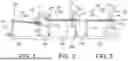


Sources:
- United States Patent and Trademark Office - verify current appl. status at the USPTO↗
Recent applications in this class:
- » 20250280950 2025-09-11
Portable Folding Outdoor Table - » 20250143448 2025-05-08
FLAT-PACK TABLE HAVING TOOL-FREE ASSEMBLY - » 20250143447 2025-05-08
DETACHABLE TABLE LEG STRUCTURE, DETACHABLE UNDER-TABLE STRUCTURE, AND TABLE - » 20240398108 2024-12-05
SPLICABLE DESKTOP PANEL FOR HEIGHT-ADJUSTABLE TABLE - » 20240122337 2024-04-18
PORTABLE TABLE TOP DISPLAY - » 20210076815 2021-03-18
Folding work surface - » 20200305593 2020-10-01
Foldable closed cell foam sleeping pad - » 20200305592 2020-10-01
SLEEPING PAD WITH DUAL COATED BOTTOM SHEET AND CENTRAL LAYER - » 20200253372 2020-08-13
DOUBLE-WALLED SHELTER - » 20200196746 2020-06-25
T-link hinge mechanism