MEDICAL INJECTOR AND CONNECTOR SYSTEM
US20260166232A1
2026-06-18
19/250,636
2025-06-26
Smart Summary: A syringe is designed with a barrel that has a space inside, which runs from one end to the other. At one end, there is a nozzle that allows for the injection of fluids. Inside the syringe, a plunger moves to change the volume of the space, helping to push the fluid out. There is also a connector with multiple jaws that can hold an injector fastener securely in place. These jaws can flex to grip the fastener, ensuring it stays attached while using the syringe. 🚀 TL;DR
Abstract:
A syringe including a barrel having an interior surface defining an interior extending along a longitudinal axis between an open end and a closed end opposite the open end. The closed end has an orifice that opens to a nozzle extending from the closed end. The syringe includes a plunger including a support and a seal attached to the support. The seal defines a selectively variable volume hollow cavity within the interior of the barrel. A receiver extends longitudinally from a connector face of the support. The receiver includes multiple jaws spaced for receiving an injector fastener having an insertion end and a retention land. Each jaw has an elastically deformable arm and a catching surface for engaging a retention land of the injector fastener when the injector fastener is seated between the jaws.
Inventors:
- John Edward Powers 4 🇺🇸 Wildwood, MO, United States
- Thomas D. Winkler 3 🇺🇸 Fenton, MO, United States
- David L. Wojcicki 2 🇺🇸 Dittmer, MO, United States
Applicant:
Interested in similar patents?
Get notified when new applications in this technology area are published.
Classification:
A61M5/31515 » CPC main
Devices for bringing media into the body in a subcutaneous, intra-vascular or intramuscular way; Accessories therefor, e.g. filling or cleaning devices, arm-rests; Syringes; Details; Pistons; Piston-rods; Guiding, blocking or restricting the movement of the rod or piston ; Appliances on the rod for facilitating dosing ; Dosing mechanisms; Piston or piston-rod constructions, e.g. connection of piston with piston-rod Connection of piston with piston rod
A61M5/1452 » CPC further
Devices for bringing media into the body in a subcutaneous, intra-vascular or intramuscular way; Accessories therefor, e.g. filling or cleaning devices, arm-rests; Infusion devices, e.g. infusing by gravity; Blood infusion; Accessories therefor; Pressure infusion, e.g. using pumps using pressurised reservoirs, e.g. pressurised by means of pistons pressurised by means of pistons
A61M5/1456 » CPC further
Devices for bringing media into the body in a subcutaneous, intra-vascular or intramuscular way; Accessories therefor, e.g. filling or cleaning devices, arm-rests; Infusion devices, e.g. infusing by gravity; Blood infusion; Accessories therefor; Pressure infusion, e.g. using pumps using pressurised reservoirs, e.g. pressurised by means of pistons pressurised by means of pistons with a replaceable reservoir comprising a piston rod to be moved into the reservoir, e.g. the piston rod is part of the removable reservoir
A61M5/3134 » CPC further
Devices for bringing media into the body in a subcutaneous, intra-vascular or intramuscular way; Accessories therefor, e.g. filling or cleaning devices, arm-rests; Syringes; Details; Syringe barrels characterised by constructional features of the distal end, i.e. end closest to the tip of the needle cannula
A61M5/31511 » CPC further
Devices for bringing media into the body in a subcutaneous, intra-vascular or intramuscular way; Accessories therefor, e.g. filling or cleaning devices, arm-rests; Syringes; Details; Pistons; Piston-rods; Guiding, blocking or restricting the movement of the rod or piston ; Appliances on the rod for facilitating dosing ; Dosing mechanisms Piston or piston-rod constructions, e.g. connection of piston with piston-rod
A61M5/31513 » CPC further
Devices for bringing media into the body in a subcutaneous, intra-vascular or intramuscular way; Accessories therefor, e.g. filling or cleaning devices, arm-rests; Syringes; Details; Pistons; Piston-rods; Guiding, blocking or restricting the movement of the rod or piston ; Appliances on the rod for facilitating dosing ; Dosing mechanisms; Piston or piston-rod constructions, e.g. connection of piston with piston-rod Piston constructions to improve sealing or sliding
A61M5/007 » CPC further
Devices for bringing media into the body in a subcutaneous, intra-vascular or intramuscular way; Accessories therefor, e.g. filling or cleaning devices, arm-rests for contrast media
A61M2205/33 » CPC further
General characteristics of the apparatus Controlling, regulating or measuring
A61M5/315 IPC
Devices for bringing media into the body in a subcutaneous, intra-vascular or intramuscular way; Accessories therefor, e.g. filling or cleaning devices, arm-rests; Syringes; Details Pistons; Piston-rods; Guiding, blocking or restricting the movement of the rod or piston ; Appliances on the rod for facilitating dosing ; Dosing mechanisms
A61M5/00 IPC
Devices for bringing media into the body in a subcutaneous, intra-vascular or intramuscular way; Accessories therefor, e.g. filling or cleaning devices, arm-rests
A61M5/145 IPC
Devices for bringing media into the body in a subcutaneous, intra-vascular or intramuscular way; Accessories therefor, e.g. filling or cleaning devices, arm-rests; Infusion devices, e.g. infusing by gravity; Blood infusion; Accessories therefor; Pressure infusion, e.g. using pumps using pressurised reservoirs, e.g. pressurised by means of pistons
A61M5/31 IPC
Devices for bringing media into the body in a subcutaneous, intra-vascular or intramuscular way; Accessories therefor, e.g. filling or cleaning devices, arm-rests; Syringes Details
Description
REFERENCE TO RELATED APPLICATION
This is a Divisional of co-pending U.S. patent application Ser. No. 16/597,342 filed on Oct. 9, 2019, and entitled, “MEDICAL INJECTOR, SYRINGE, AND CONNECTOR,” which was a Continuation-in-Part of then co-pending U.S. Patent Provisional Application No. 62/743,174 filed on Oct. 9, 2018, and entitled, “MEDICAL INJECTOR, SYRINGE, AND CONNECTOR,” both of which are hereby incorporated by reference in their respective entireties.
BACKGROUND
The present disclosure generally relates to syringes, and, more particularly, to a medical injector syringe and connector.
Medical injectors are used to inject fluids such as contrast media into patients for imaging biological structures. Many conventional injectors use specialized syringes, particularly configured for use with the specific medical injector type. Because the syringes are specialized, manufacturing cost for the syringes is substantially higher than conventional medical syringes. These specialized syringes typically include both uniquely adapted barrels and uniquely adapted plungers. Frequently, the injectors are inoperable when use with a syringe other than the specialized syringe is attempted. In some instances, the additional cost may provide advantages such as providing syringe encoding for verifying whether the syringe is properly positioned in the injector or whether the syringe is empty. Many of these advantages can be accomplished without requiring specialized syringes. In some instances, the advantages are unnecessary or rarely used.
Manufacturers of conventional medical injectors pass the cost of the specialized syringes on to health care providers, increasing the cost of medical care. The manufacturers or their licensees may be the only available source for the syringes, minimizing or eliminating competition and allowing higher pricing. Although manufacturers benefit from higher pricing, the benefit comes at the expense of healthcare consumers. Therefore, there is a need for a medical injector syringe and connector system having a reduced manufacturing cost.
SUMMARY
In one aspect, the description includes a syringe, comprising a tubular syringe barrel having an interior surface defining an interior of the barrel extending along a longitudinal axis between an open end and a closed end opposite the open end. The closed end has an orifice that opens to a nozzle that extends from the closed end of the syringe barrel opposite the hollow interior. Further, the syringe includes a syringe plunger, comprising a support having a seal face and a connector face opposite the seal face. A seal is attached to the seal face of the support. The seal is sized and shaped for sealing slidable engagement with the interior surface of the syringe barrel. The seal defines a selectively variable volume hollow cavity within the interior of the syringe barrel between the seal and the closed end of the syringe barrel. A receiver extends longitudinally from the connector face of the support. The receiver comprising a plurality of jaws spaced for receiving an injector fastener having an insertion end and a retention land spaced from the insertion end. Each jaw has an elastically deformable arm and a catching surface spaced from the connector face for engaging the retention land of the injector fastener when the injector fastener is seated between the jaws.
In another aspect, the description includes a method of adapting a syringe plunger for use in combination with an injector fastener having an insertion end and a retainer spaced from the insertion end. The plunger includes a disk-shaped support, a seal attached to a first face of the support, and a stem extending from a second face of the support to a head. The stem has a cross section including two pairs of elongate blades extending radially outward from a common axis to an outer edge. Each blade of the pair is coplanar with the other blade of the pair of blades. Each pair of blades is perpendicular to the other pair of blades. The method comprises partitioning a first pair of plunger stem blades to a predetermined configuration. The plunger is rotated ninety degrees about the common axis of the pairs of blades and a second pair of plunger stem blades is partitioned to the predetermined configuration. The stem is separated along cuts formed during the partitioning steps to form an adapted plunger having a receiver comprising a plurality of jaws spaced for receiving the injector fastener.
In yet another aspect, the description includes a connector, comprising a fastener having an insertion end and a retention land spaced from the insertion end. The connector also includes a plurality of jaws extending from a common body. The plurality of jaws is spaced for receiving the fastener. Each jaw of the plurality of jaws has an elastically deformable stem and a catch spaced from the body for engaging the retention land of the injector fastener when the fastener is seated between the jaws of the receiver, providing a particular geometry adapted to automatically join and release the connector from the receiver.
In still another aspect, the description includes an injector, comprising a syringe receiver having at least three cylindrical ports. Each port is sized and shaped for receiving a barrel of a syringe having a longitudinal axis and a plunger reciprocatably received in the barrel for movement along the longitudinal axis. The injector also includes an actuator positionable for moving parallel to the longitudinal axis of at least one syringe when the syringe is received within a port. In addition, the injector has a connector mounted on the actuator for selectively joining the actuator to the syringe and a controller operatively connected to the actuator for controlling the actuator to drive the plunger of the syringe for movement along the longitudinal axis.
Other aspects of the present disclosure will be apparent in view of the following description and claims.
BRIEF DESCRIPTION OF DRAWINGS
Non-limiting examples are illustrated in the accompanying drawings.
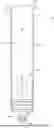
FIG. 1 is a front elevation of a syringe as described;
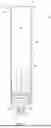
FIG. 2 is a vertical cross section of a plunger of the syringe;
FIG. 3 is a perspective of a medical injector using syringes as described;
FIG. 4 is a front elevation of a connector of the medical injector system;
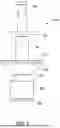
FIG. 5 is a fragmentary vertical cross sectional of the medical injector system holding a syringe;
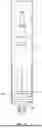
FIG. 6 is a front elevation of the syringe in section and the connector when the connector is lowered into the syringe;
FIG. 7 is a front elevation of the syringe and the connector showing the connector deflecting the plunger blades;
FIG. 8 is a front elevation of the syringe and the connector showing the connector joined with the syringe;
FIG. 9 is a front elevation of the syringe and the connector showing the connector raised to pull the plunger upward;
FIG. 10 is a front elevation of the syringe and the connector showing the connector contacting a stop of the system illustrated schematically;
FIG. 11 is a front elevation of the syringe and the connector showing the spreader spreading the plunger blades to release the connector from the plunger;
FIG. 12 is a fragmentary front elevation of the syringe and the connector showing an alternative spring-biased spreader stop;
FIG. 13 is a front elevation of a plunger illustrating curfs made during a first cutting step of one method of manufacturing the plunger;
FIG. 14 is a cross section of the plunger taken in the plane of line 14-14 of FIG. 13;
FIG. 15 is a front elevation of a plunger illustrating curfs made during a second cutting step of the method of manufacturing the plunger; and
FIG. 16 is a cross section of the plunger taken in the plane of line 16-16 of FIG. 15.
Corresponding reference characters indicate corresponding parts throughout the drawings.
DETAILED DESCRIPTION
Referring to FIG. 1, a syringe is designated in its entirety by the reference number 50. The syringe 50 generally comprises a tubular cylindrical barrel (generally designated by 52) and a plunger (generally designated by 54). The barrel 52 has an interior surface 60 defining a hollow interior 62 extending along an imaginary central longitudinal axis designated by A. The barrel 52 has an open upper end 64 and a closed lower end 66 opposite the open end. A nozzle 68 having an orifice 70 and a Luer tip connector 72 is provided at the closed end 66 of the barrel 52, allowing fluid to be drawn into and expelled from the hollow interior 62 in a conventional manner. A flange 74 surrounds the open end 64 of the barrel 52. Other features of the barrel 52 are conventional, and will not be described in further detail.
Although the barrel may be made of other materials, in the illustrated example the barrel is made from polypropylene.
As illustrated in FIG. 2, the syringe plunger 54 comprises a support, generally designated by 80, and a seal, generally designated by 82. The support 80 includes a circular disk 84 having a button 86 extending downward from a lower seal face 88 and receiver, generally designated by 90, extending upward from an upper connector face 92. The plunger seal 82 is attached to the button 86 of the support 80. The seal 82 is sized and shaped for sealing slidable engagement with the interior surface 60 of the syringe barrel 52. Those skilled in the art will appreciate that the seal 82 forms an upper boundary of a cavity formed in the interior of the syringe barrel 52 having a selectively variable volume. The cavity extends to the closed end 66 and is surrounded by the interior surface 60 of the barrel 52 below the seal 82. As the seal 82 moves away from the closed end 66 (upward as shown), the volume of the cavity increases, and as the seal moves toward the closed end (downward), the volume of the cavity decreases. Other features of the seal 82 are conventional and will not be described in further detail. Although the seal may be made of other materials, in the illustrated example the seal 82 is made from a thermoplastic elastomer.
As further shown in FIG. 2, the receiver 90 includes cooperating pairs of hooked blades 100 forming opposing jaws. Each blade 100 includes a head 102 having a curved, sloped inner surface 104 for guiding a connector 160 (FIG. 5) between the jaws as will be explained. The sloped surface 104 extends between a terminal end 106 of each blade 100 and a catching surface 108 extending perpendicular to the longitudinal axis A (FIG. 1). In the illustrated example, each blade 100 has a thickness measured circumferentially of about 0.07 inches. Each illustrated blade 100 has a length measured longitudinally between the terminal end 106, and the connector face 92 of the disk 84 of about 1.20 inches. A narrower elastically deformable arm 110 adjacent the catching surface 108 allows the blade 100 to twist and bend when receiving or releasing a connector 160 (FIG. 5) as will be described below with reference to FIGS. 5-11. Each arm 110 of the illustrated example has a width measured in a radial direction of the disk 84 of about 0.22 inches. A socket or receptacle 112 is formed between the arms 110 of each pair of blades 100 for receiving a fastener of the connector as will be described below. A broad base 114 is provided between each arm 106 and the disk 84. The bases 114 strengthen the disk 84 to prevent the disk from deflecting as the arms deform. In the illustrated example, the receiver 90 has two pairs of opposing jaws each formed by two blades 100. Receivers having other numbers of blades are envisioned. Although the receiver may be made of other materials, in the illustrated example the receiver 90 is made from polyethylene or polypropylene.
FIG. 3 shows a medical injector, generally designated by 150, in which one or more syringes 50 as described above are installed to inject fluids, such as contrast media, into a patient for imaging biological structures. The injector 150 includes a mount 152 for receiving linear actuators 154. Each actuator 154 has a rod 156 that extends or retracts depending upon a signal received from a control unit (not shown). Although other actuators may be used, the illustrated actuators are WhisperTrak linear actuators available from Thomson Industries, Inc. of Marengo, Illinois, and Radford, Virginia. In the illustrated example, a clamp 158 provided on the mount 152 clamps the lower end of each actuator 150 to the mount and the upper end of each actuator is pivotally connected to the mount 152. A connector, generally designated by 160, is pivotably fastened to a lower end of the rod 156. The actuator 154 drives the connector 160 downward as the rod 156 extends from the actuator 154 and pulls the connector upward as the rod retracts. A stop 162 and a syringe receiver 164 extend from the mount 152 generally below the actuators 154. As illustrated in FIG. 4, the stop 162 includes a series of openings 166 permitting the rod 156 of the actuators 154 to extend through the stop. The openings 166 are sized to engage a portion of the connectors 160 when disconnecting the connector from the corresponding syringe plunger as will be described below with respect to FIG. 10. The syringe receiver 164 includes cylindrical ports 168, each of which is sized for receiving the barrel 52 of a corresponding syringe 50 to hold the syringe in alignment with the connector 160. Each port 168 is counterbored for receiving the flange 74 surrounding the open end 64 of the barrel 52. The receiver 164 is selectively pivotable downward to expose the ports 168 for inserting and removing syringes from the ports 168. Once the syringes 50 are inserted, the receiver 164 is pivoted upward to the position shown in FIGS. 3 and 4 so the receiver 164 is positioned below a clamping plate 170 extending from the mount 152 to retain the syringes in position in the receiver. A catch (not shown) holds the receiver 164 in the closed position with the connectors 160 and syringes aligned as shown in FIGS. 3 and 4. Although the illustrated injector 150 includes three actuators 154 and accommodates three syringes 50, injectors having other numbers of actuators and accommodating other numbers of syringes are envisioned. Further, the mount 154, stop 162, and clamping plate 170 of the illustrated example are formed from aluminum plate, but other materials are envisioned.
As illustrated in FIG. 5, the connector 160 includes a cylindrical fastener element or fastener 180 having a rounded lower insertion end 182 and an annular planar upper retention land 184 spaced from the insertion end. A shaft 186 extends upward from the fastener 180 to a collar 188. A tongue 190 extending upward from the collar 188, is adapted to connect the connector 160 to the rod 156 of the actuator 154. The tongue 190 is received in a clevis 192 formed on the lower end of the rod 156 and pinned in place, providing a pivoting connection for aligning the connector 160 with the syringe. Although the illustrated example has a clevis connection, other connector types may be used. A conical spreader 200 is positioned on the connector shaft 186 for sliding movement upward and downward along the shaft between the fastener element 180 and the collar 188. The conical spreader 200 includes a planar upper face 202 for engaging the stop 162 of the injector 150. The face 202 has a diameter greater than the openings 166 in the stop to prevent the spreader 200 from passing through the openings as the actuator 154 raises the connector 160. In the illustrated example, the spreader 200 forms an angle of about 45 degrees with the longitudinal axis A (FIG. 1). Although the connector may be made of other materials, in the illustrated example the connector 200 is made from stainless steel.
With reference to FIGS. 6-11, the connector 160 and syringe plunger 54 are adapted to automatically join when the actuator 154 pushes the connector downward against the plunger and to automatically release as the actuator pulls the connector upward. Although it is envisioned that the syringe may be filled with fluid prior to being loaded into the injector under some circumstances or protocols, the syringe 50 of the illustrated example is empty when loaded into the injector 150 and the plunger is positioned so the plunger seal 84 is seated against the closed end 66 of the syringe barrel 52 as shown in FIG. 6. The actuator 154 lowers the connector 160 into the barrel 52 of the syringe 50 in alignment with the central longitudinal axis A of the syringe. When the fastener 180 of the connector 160 engages the jaws of the plunger 54, the blades 100 deflect outward until the blades contact the inner surface 60 of the barrel 52 and then twist as shown in FIG. 7 to allow the fastener to pass between the jaws. As the actuator pushes the connector farther downward, the retention land 184 of the fastener passes the catching surfaces 108 of the blades and enters the receptacle 112. The resilient blades return to their undeflected shapes, so the catching surface 108 of each blade overlies the retention land 184. In this configuration, which is shown in FIG. 9, the connector 160 is joined to the plunger 54, so the plunger is drawn upward as the actuator 154 pulls the connector upward. The overlap between the catching surface 108 and retention land 184 is sufficient to prevent the jaws from releasing the fastener 180 even should the blades 100 deflect a minimal amount.
As the actuator 154 pulls the connector 160 farther upward, the engaging face 202 of the spreader 200 eventually engages the stop162 (illustrated schematically in FIGS. 10 and 11), preventing the spreader from moving farther upward. When the actuator 154 pulls the connector 160 farther upward after the engaging surface 202 contacts the stop 162, the spreader 200 deflects the arms 110 outward. Because the blades 100 are outside the barrel 52 of the syringe 50, the arms 110 are free to deflect sufficiently to allow the fastener 180 to pass between the jaws to release the connector 160 from the receiver 164. Comparing FIG. 7 to FIG. 11, the arms 110 of the blades 100 twist more when the connector 160 is joining the plunger 54 than when the jaws of the plunger release the connector. Further, the arms 110 of the blades 100 deflect radially outward more when the plunger 54 is releasing the connector 160.
FIG. 12 illustrates an alternative spring-biased spreader stop, generally designated by 210, which is used instead of the stop 162 described above. Each stop 210 includes a head 212 having an opening 214 sized to receive the shaft 186 of a connector 160 and prevent the spreader 200 from passing. A coil spring 216 surrounding the actuator rod 156 between the head 212 and the actuator clamp 158 biases the head downward and away from the actuator rod. As the rod 156 pulls the connector 160 upward, the engaging surface 202 of the spreader 200 contacts the head 212, pushing the spreader downward against the jaws of the plunger 54. When the rod 156 is sufficiently retracted, concentric tubes 218, 220 surrounding the actuator rod 156 between the actuator 154 and the head 212 engage the head to prevent the head from moving farther upward. When the actuator 154 pulls the connector 160 farther upward after the engaging surface 202 contacts the head 212, the spreader 200 deflects the arms 110 outward as described above. A collar 222 surrounding the tubes 218, 220 above the head 212 is positioned between the spring 216 and the head. As will be appreciated by those skilled in the art, the spring 216 and the collar 222 are sized to ensure the plunger 54 releases the connector 160 while a portion of the rod 156 extends from the actuator 154, thereby preventing the actuator from being damaged.
The syringe 50 described above may be manufactured from a conventional syringe such as a 60 mL standard syringe available from Cardinal Health, Inc. of Dublin, Ohio. The plunger 54 and the barrel 52 are separated so the plunger can be modified as shown in FIGS. 11-14. The barrel 52 of the syringe is not modified. The conventional plunger 54 has an X-shaped cross section. First, the plunger 54 is mounted in a cutting fixture, and opposite blades of the plunger are partitioned, forming a curf 230 having a shape as shown in FIGS. 11 and 12. The plunger 54 is rotated ninety degrees about the longitudinal axis, positioned in the fixture, and the remaining blades of the plunger are partitioned, forming a curf 230 shaped as shown in FIGS. 13 and 14. The stem of the partitioned plunger is twisted to separate the central portion of the stem. The resulting plunger 54 has a configuration as described above. Those skilled in the art will appreciate that twisting the stem to shear the central portion of the stem results in a small projection at the center of the plunger receptacle 112. The projection need not be removed. A dimple may be formed in the connecting end of the fastener to accommodate the projection if desired.
When introducing elements in this description and the claims, the articles “a”, “an”, “the”, and “said” are intended to indicate one or more of the elements. The terms “comprising”, “including”, and “having” are intended to be inclusive and indicate there may be additional elements other than the listed elements.
As those skilled in the art could make various changes to the above constructions, products, and methods without departing from the intended scope of the description, all matter in the above description and accompanying drawings should be interpreted as illustrative and not in a limiting sense. The patentable scope of the disclosure is defined by the claims, and can include other constructions and methods that would occur to those skilled in the art. Such other constructions are intended to be within the scope of the claims if the structural elements of the constructions do not differ from the literal language of the claims, or if the constructions include equivalent structural elements having insubstantial differences from the literal languages of the claims.
To the extent that the specification, including the claims and accompanying drawings, discloses any additional subject matter that is not within the scope of the claims below, the disclosures are not dedicated to the public and the right to file one or more applications to claims such additional disclosures is reserved.
Claims
1-8. (canceled)
9. An injector for use in combination with a plurality of syringes, each syringe of said plurality of syringes having a hollow barrel extending along a longitudinal axis and a plunger positioned in the hollow barrel and slidably moveable along the longitudinal axis, said injector comprising:
a syringe receiver having at least three cylindrical ports, each port of said at least three cylindrical ports having a central axis and being configured to receive the barrel of at least one syringe selected from the plurality of syringes so the longitudinal axis of the selected syringe coincides with the central axis of the port receiving the selected syringe;
an actuator adapted to move parallel the central axis of the port receiving the selected syringe;
a connector mounted on the actuator and being connectable to the plunger of the selected syringe; and
a controller operatively connected to the actuator and being configured to control the actuator to move the plunger of the selected syringe when the connector is connected to the plunger.
10. An injector as set forth in claim 9, wherein the receiver has three cylindrical ports consisting of a first port, a second port, and a third port.
11. An injector as set forth in claim 10, wherein the three cylindrical ports have identical sizes and shapes.
12. An injector as set forth in claim 10, wherein:
the central axis of the first port is parallel to the central axis of the second port; and
the central axis of the second port is parallel to the central axis of the third port.
13. An injector as set forth in claim 10, wherein:
said actuator is a first actuator; and
said connector is a first connector mounted on said first actuator and aligned with the central axis of said first port of the syringe receiver;
wherein said first actuator is adapted to move said first connector parallel to the central axis of said first port.
14. An injector as set forth in claim 13, further comprising:
a second actuator and a second connector mounted on said second actuator and aligned with the central axis of said second port of the syringe receiver, said second actuator being adapted to move said second connector parallel to the central axis of said second port; and
a third actuator and a third connector mounted on said third actuator and aligned with the central axis of said third port of the syringe receiver, said third actuator being adapted to move said third connector parallel to the central axis of said third port; and
wherein the controller is operatively connected to said second actuator to control movement of said second actuator; and
the controller is operatively connected to said third actuator to control movement of said third actuator.
15. An injector as set forth in claim 14, wherein:
the controller controls movement of said first actuator independently of movement of said second actuator and said third actuator;
the controller controls movement of said second actuator independently of movement of said first actuator and said third actuator; and
the controller controls movement of said third actuator independently of movement of said first actuator and said second actuator.
16. An injector as set forth in claim 9, in combination with the selected syringe chosen from said plurality of syringes, wherein:
the connector includes a fastener element having an insertion end and a retention land spaced from the insertion end; and
the plunger of said selected syringe comprises:
a support having a seal face and a connector face opposite said seal face;
an elastomeric seal attached to the seal face of the support configured to seal against the interior surface of the barrel of the selected syringe as the plunger moves along the longitudinal axis of said barrel; and
a plurality of jaws extending from the connector face of the support arranged in a circular pattern centered around the longitudinal axis, each jaw of said plurality of jaws including an elastically moveable arm having an elongated cross section and a catching surface positioned to radially overlap the retention land of the fastener element when the fastener element is positioned between said plurality of jaws and between the catching surface and the connector face of the support;
wherein the elongated cross section of the arm of each jaw of said plurality of jaws has a thickness measured in a radial direction;
wherein the elongated cross section of the arm of each jaw of said plurality of jaws has a width measured transverse to the radial direction; and
wherein the width of the cross section is less than the thickness of the cross section.
17. An injector as set forth in claim 9, in combination with selected syringe chosen from said plurality of syringes, wherein:
the connector includes a fastener element having an insertion end and a retention land spaced from the insertion end; and
the plunger of said selected syringe comprises:
a support having a seal face and a connector face opposite said seal face;
an elastomeric seal attached to the seal face of the support configured to seal against the interior surface of the barrel of the selected syringe as the plunger moves along the longitudinal axis of said barrel; and
a plurality of jaws extending from the connector face of the support arranged in a circular pattern centered around the longitudinal axis, each jaw of said plurality of jaws including an elastically moveable arm and a catching surface positioned to radially overlap the retention land of the fastener element when the fastener element is positioned between said plurality of jaws and between the catching surface and the connector face of the support, each jaw of said plurality of jaws extending from the support to a terminal end and each jaw of said plurality of jaws having a sloping surface extending between the terminal end and the catching surface, said sloping surface being positioned closer to the longitudinal axis of the syringe barrel adjacent to the catching surface than adjacent to the terminal end of the jaw;
wherein each arm of each jaw of said plurality of jaws is adapted to twist elastically from an undeformed shape to a deformed shape when the insertion end of the fastener element presses against the sloping surface of said jaw to allow the fastener element to pass the catching surface of said jaw; and
wherein each arm of each jaw of said plurality of jaws is adapted to untwist from the deformed shape to the undeformed shape thereby radially overlapping the retention land of the fastener element when the fastener element is positioned between said plurality of jaws and between the catching surface and the connector face of the support.
18. A connector system comprising:
a fastener element having an insertion end and a retention land spaced from the insertion end; and
a receiver comprising:
a rigid support having a connector face centered on a longitudinal axis;
a plurality of jaws extending from the connector face of the support arranged in a circular pattern centered around the longitudinal axis, each jaw of said plurality of jaws including an elastically moveable arm having an elongated cross section and a catching surface positioned to radially overlap the retention land of the fastener element when the fastener element is positioned between said plurality of jaws and between the catching surface and the connector face of the support;
wherein the elongated cross section of the arm of each jaw of said plurality of jaws has a thickness measured in a radial direction;
wherein the elongated cross section of the arm of each jaw of said plurality of jaws has a width measured transverse to the radial direction; and
wherein the width of the cross section is less than the thickness of the cross section.
19. A connector system as set forth in claim 18, wherein the elongated cross section comprises a rectangular cross section.
20. A connector system as set forth in claim 18, wherein the elongated cross section is centered about a radial line extending from the longitudinal axis.
21. A connector system as set forth in claim 18, wherein:
each jaw of said plurality of jaws extends from the support to a terminal end; and
each jaw of said plurality of jaws has a sloping surface extending between the terminal end and the catching surface, said sloping surface being positioned closer to the longitudinal axis of the syringe barrel at the catching surface than at the terminal end of the jaw.
22. A connector system as set forth in claim 21, wherein:
each arm of each jaw of said plurality of jaws is adapted to twist elastically from an undeformed shape to a deformed shape when the insertion end of the fastener element presses against the corresponding sloping surface allowing the fastener element to pass the catching surface of said jaw; and
each arm of each jaw of said plurality of jaws is adapted to untwist from the deformed shape to the undeformed shape as the catching surface passes the retention land so the catching surface overlaps the retention land to connect the fastener element to the receiver.
23. A connector system comprising:
a fastener element having an insertion end and a retention land spaced from the insertion end; and
a receiver comprising:
a support having a seal face and a connector face opposite said seal face; and
a plurality of jaws extending from the connector face of the support arranged in a circular pattern centered around the longitudinal axis, each jaw of said plurality of jaws including an elastically moveable arm and a catching surface positioned to radially overlap the retention land of the fastener element when the fastener element is positioned between said plurality of jaws and between the catching surface and the connector face of the support, each jaw of said plurality of jaws extending from the support to a terminal end and each jaw of said plurality of jaws having a sloping surface extending between the terminal end and the catching surface, said sloping surface being positioned closer to the longitudinal axis of the syringe barrel adjacent to the catching surface than adjacent to the terminal end of the jaw;
wherein each arm of each jaw of said plurality of jaws is adapted to twist elastically from an undeformed shape to a deformed shape when the insertion end of the fastener element presses against the sloping surface of said jaw to allow the fastener element to pass the catching surface of said jaw; and
wherein each arm of each jaw of said plurality of jaws is adapted to untwist from the deformed shape to the undeformed shape thereby radially overlapping the retention land of the fastener element when the fastener element is positioned between said plurality of jaws and between the catching surface and the connector face of the support.
24. (canceled)
25. (canceled)
Images & Drawings included:





Sources:
- United States Patent and Trademark Office - verify current appl. status at the USPTO↗
Recent applications in this class:
- » 20260069789 2026-03-12
ASSEMBLABLE COMPACT SYRINGE WITH SIDE MOUNTED PLUNGER ROD - » 20250295858 2025-09-25
Universal Plunger Rod and Method for Connecting and Disconnecting the Plunger Rod and a Plunger Stopper - » 20250177655 2025-06-05
MEDICAMENT DELIVERY DEVICE - » 20250009976 2025-01-09
STOPPER PLACEMENT IN A SYRINGE - » 20240424220 2024-12-26
PLUNGER ROD AND ASSEMBLY HAVING MODIFIED THREAD GEOMETRY - » 20240342383 2024-10-17
Connected Drug Delivery Device - » 20240335615 2024-10-10
Automated System for Assembling A Pre-Filled Syringe - » 20240293623 2024-09-05
ASSEMBLABLE COMPACT SYRINGE WITH SIDE MOUNTED PLUNGER ROD - » 20240198008 2024-06-20
PLUNGER ROD AND SYRINGE ASSEMBLY SYSTEM AND METHOD - » 20240165338 2024-05-23
DRUG DELIVERY DEVICE