TOY MANUFACTURING SYSTEM AND PROCESS
US20260166445A1
2026-06-18
18/978,783
2024-12-12
Smart Summary: A new system helps people make their own toys easily. It includes special machines and stations designed for toy manufacturing. Even if someone has no experience in making toys, they can still create their own custom designs. One type of toy that can be made is personalized plushies. This process allows for fun and creativity in toy making. 🚀 TL;DR
Abstract:
A manufacturing system and process for creating custom products. The system and process includes a toy manufacturing system and process and provides inventive toy manufacturing stations including inventive toy manufacturing apparatuses. The manufacturing system and process enables users with no toy manufacturing experience or skills to manufacture customized toys. In some embodiments, the customized toys may include customized plushies.
Inventors:
- Chris Lee 1 🇺🇸 San Marino, CA, United States
- Jasmine Lee 1 🇺🇸 San Marino, CA, United States
- Winnie Lee 1 🇺🇸 San Marino, CA, United States
Applicant:
Interested in similar patents?
Get notified when new applications in this technology area are published.
Classification:
A63H9/00 » CPC main
Special methods or compositions for the manufacture of dolls, toy animals, toy figures, or parts thereof
A63H3/02 » CPC further
Dolls made of fabrics or stuffed
D10B2503/00 » CPC further
Domestic or personal
D04B1/22 IPC
Weft knitting processes for the production of fabrics or articles not dependent on the use of particular machines; Fabrics or articles defined by such processes specially adapted for knitting goods of particular configuration
D04B15/48 IPC
Details of, or auxiliary devices incorporated in, weft knitting machines, restricted to machines of this kind; Devices for supplying, feeding, or guiding threads to needles Thread-feeding devices
D04B21/20 IPC
Warp knitting processes for the production of fabrics or articles not dependent on the use of particular machines; Fabrics or articles defined by such processes specially adapted for knitting articles of particular configuration
D04B27/10 IPC
Details of, or auxiliary devices incorporated in, warp knitting machines, restricted to machines of this kind Devices for supplying, feeding, or guiding threads to needles
Description
FIELD OF THE INVENTION
This invention relates to a toy manufacturing process, including a manufacturing system and process for making customized stuffed plushies.
BACKGROUND
Stuffed plushie toys (e.g., soft stuffed animal toys) are popular throughout the world, especially with children.
However, there is currently no manufacturing process for such plushie toys for the children to participate in, to learn step-by-step manufacturing processes from, and to customize their own vision of the plushie toys.
Accordingly, there is a need for toy manufacturing system and process to enable children to interact with the manufacturing process to build their own customized plushie toys.
BRIEF DESCRIPTION OF THE DRAWINGS
Various other objects, features and attendant advantages of the present invention will become fully appreciated as the same becomes better understood when considered in conjunction with the accompanying drawings, in which like reference characters designate the same or similar parts throughout the several views, and wherein:
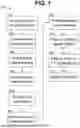
FIG. 1 shows actions taken by a manufacturing method according to exemplary embodiments hereof;
FIG. 2 shows aspects of a manufacturing system and method according to exemplary embodiments hereof;
FIGS. 3-6 show aspects of a manufacturing apparatus according to exemplary embodiments hereof; and
FIG. 7 shows exemplary plushies manufactured by the manufacturing method according to exemplary embodiments hereof.
DETAILED DESCRIPTION OF EXEMPLARY EMBODIMENTS
In general, the inventive toy manufacturing system and process includes providing inventive toy manufacturing stations including inventive toy manufacturing apparatuses. The manufacturing system and process enables users with no toy manufacturing experience or skills to manufacture customized toys (e.g., customized plushies). In some embodiments, the inventive system and process includes a series of steps or acts for performing a function or accomplishing a result. In some embodiments, the inventive system and process includes a machine including parts or devices including mechanical devices. In some embodiments, the system and process includes a method to manufacture finished goods from raw or prepared materials by giving them new forms, qualities, properties, or combinations.
In some embodiments, as shown in FIG. 1, the inventive method may include the following actions 300:
At 302, the system 10 may provide the user with a plurality of different models (e.g., physical, virtual, etc.), templates, schematics, images, instructions, and/or other materials that may each represent different items P (and/or different versions of different items P) that may be manufactured by the user using the system 10. This may occur at a first station S1.
At 304, the user may then choose a particular item P1 that he/she may wish to manufacture using the system 10.
At 306, the system 10 may provide first raw materials 12 to the user, e.g., at a second station S2. The first raw materials 12 may include the particular raw materials 12 required to manufacture the particular item P1 chosen by the user. In some embodiments, this may include providing an assortment of raw materials 12 to the user from which the user may choose at least some of the first raw materials 12. For example, the system 10 may provide an assortment of different colored yarn to the user to choose from (e.g., to choose a primary color of the item P1). To expand upon this example, the system 10 also may provide different types of yarn to choose from (e.g., different thicknesses, different materials, different smoothness, etc.).
At 308, a user may choose one or more particular raw materials 12 that he/she may then transform, using the system 10, into a finished good, e.g., into the item P1.
At 310, the system 10 may provide a first manufacturing apparatus 100 for the user to use during a first transformation stage T1 of the first raw materials 12, that is, for the user to use to transform the first raw materials 12 into a first stage T1 of the finished item P1. This may occur at a third station S3. In some embodiments, the first manufacturing apparatus may include a knitting loom 102 or other knitting apparatus, and the first stage transformation T1 may include knitting a section of material using the first raw materials 12 (that is, the yarn). As such, the first stage T1 of the product P1 may include a knitted section of material knitted using the yarn via the knitting loom 102. The knitting loom 102 may be manual (preferably), automatic, and/or semi-automatic. Specific details of the first manufacturing apparatus 100 and the first stage T1 will be described in other sections.
At 312, the system 10 may instruct the user on how to use the first manufacturing apparatus 100 (e.g., the first loom 102) to transform at least some of the first raw materials 12 into the first stage T1 of the item P1. Details of this will be described in other sections.
At 314, the system 10 may provide the user with second raw materials 12 that may be used by the user to transform the first stage T1 of the item P1 into a second stage T2 of the item P1. This may include using second raw materials 12 including stuffing to stuff an inner volume of the section of knitted (the first stage T1 of the product P1) to form a second stage T2 of the product P1 including a stuffed section of knitted material. This may occur at a fourth station S4. Details of this will be described in other sections.
At 316, the system 10 may provide the user with third raw materials 12 and second manufacturing apparatuses 104 (along with instructions) to use with the third raw materials 12 to transform the second stage T2 of the item P1 into a third stage T3 of the item P1. This may include attaching feature elements (e.g., eyes, nose, mouth, teeth, spikes, whiskers, cheek blushes, and other features onto the second stage T2 of the product P1 to form the third stage T3. This may occur at the fourth station S4. Details of this will be described in other sections.
At 318, the system 10 may instruct the user on how to finalize the item P1 into a final version of the finished goods, and at 320, the user may finalize the finished product P1.
It is understood that the above description is for demonstration and that one or more of the stations S may be combined with other stations S and/or split into additional stations. It also is understood that the raw material transformations T may be combined with other transformations T and/or split into additional transformations T. It also is understood that not all of the actions 300 may be necessary and that the actions 300 may be performed in different order(s).
FIG. 2 shows a block diagram of the stations S2, S3, and S4 that the system 10 may provide to the user to transform the first and second raw materials 12 into the first stage T1, the second stage T2, and the final version of the product P1. As shown, in some embodiments, the second station S2 may include a plurality of raw materials 12 for the user to choose from, and upon choosing the particular raw materials 12 to manufacture the particular item P1 (e.g., the particular color and style of the yarn), the user may move to the third station S3 (with the chosen raw materials 12).
In some embodiments, the third station S3 may include the first apparatus 100 (e.g., the knitting loom 102), and the user may be instructed to use the first apparatus 100 at the third station S3 to transform the raw materials 12 into the first stage T1 of the product P1.
In some embodiments, upon transforming the raw materials 12 into the first stage T1 of the product P1, the user may move to the fourth station S4 (with the first stage T1 of the product P1). In some embodiments, the fourth station S4 may include the second apparatuses 104 and the second raw materials 12 that may be used by the user to transform the first stage T1 of the item P1 into a second stage T2 of the item P1. The user may then finalize the item P1.
FIG. 3 shows a side view of the first apparatus 100 and an apparatus support assembly 200 arranged along median axis M, and FIG. 4 shows an exploded view of the same. FIG. 5 shows a top view of the first apparatus 100 and the apparatus support assembly 200 arranged along median axis MT, and FIG. 6 shows an exploded view of the same.
In some embodiments, as shown in FIGS. 3-4, the support assembly 200 is designed to receive the first apparatus 100 (e.g., the knitting loom 102), to act as a base to the loom 102, to provide support to the loom 102, and hold the loom 102 in the proper positioning and orientation for use by the user during his/her interaction with the system 10.
In some embodiments, as shown in FIGS. 3-4, the support assembly 200 includes an upper support base 202 including an upper surface 204 designed to receive and support the loom 102. The upper surface 204 preferably includes a footprint that generally corresponds to the bottom side footprint of the loom 102 so that the loom 102 may rest upon and be supported by the upper surface 204.
In some embodiments, as shown in FIGS. 3-4, the support assembly 200 also includes one or more support legs 206 coupled to and extending generally downward from the support base 202. Each support leg 206 may be elongate with a proximal end coupled to the support base 202 and a distal end designed to rest upon a ground surface. In this way, the support legs 206 may elevate and support the support base 202 and the loom 102 resting thereon. It is preferable that the support legs 206 be dimensioned to elevate the support base 202 and the loom 102 thereon to a preferred elevation, e.g., to an elevation that provides ergonomic use of the loom 102 for the user as the user sits next to the loom 102 (e.g., on a stool provided by the system 10). In some embodiments, the support legs 206 may be dimensioned to provide ergonomic use of the loom 102 while standing next to the loom 102. In other embodiments, the support legs 206 may be telescoping or otherwise adjustable to provide different elevations of the loom 102 as desired. In some embodiments, the distal ends of the support legs 206 may be anchored to the ground surface (e.g., bolted to the floor) so that the first apparatus 100 may be held fixedly stationary during its use.
In some embodiments, as shown in FIGS. 5-6, the loom 102 includes a knitting mechanism assembly 106 (e.g., an array of needles) arranged in a circle circumferentially positioned about an inner opening 108 within the loom 102. The inner opening 108 enables the knitted material (e.g., the first stage T1 of the product P1) to extend downward and through the inner opening 108 as it is formed by the user (as it grows in size). In addition, the loom 102 may include a side handle 107 that the user cranks to rotate the knitting mechanism assembly 106 to knit the raw materials 12 into the first stage T1 of the product P1. As the yarn is knitted, the knitted section may generally expand downward. The side handle 107 is preferably positioned on the left or right side of the loom 102 as the user faces the loom 102.
In some embodiments, the support assembly's upper base 202 includes an aperture 208 passing through the base 202, i.e., passing through the upper surface 204 and extending through the base 202, that corresponds and registers with the open inner opening 108 of the loom 102. In this way, as the raw materials 12 are knitted into the first stage T1 of the product P1, the first stage will extend from the knitting mechanism assembly 106 downward and through the loom's inner opening 108, and through the support assembly's inner aperture 208 as the first stage T1 grows in size.
In some embodiments, as shown in FIGS. 3-6, the support assembly 200 includes a raw materials container 210 coupled to one or more of the assembly's support legs 206 and positioned beneath the assembly's aperture 208 in its upper base 202. In some embodiments, the container 210 is vertically aligned with the assembly's aperture 208 which is vertically aligned with the loom's open inner opening 108. The container 210 may preferably include a receptacle including an inner bottom surface and sidewalls defining a container inner volume such that the raw materials 12 may be contained and held secure within the container's inner volume. However, it also is contemplated that the container 210 may include a shelf, a ledge, and/or other suitable types of containers.
In some embodiments, the raw materials 12 from the step 308 (see FIG. 1) is placed into the container 210 per instructions provided by the system 10. For example, when the raw materials 12 includes a ball of yarn of a particular color, the ball of yarn may be placed into the container 210 for use in forming the first stage T1 of the product P1.
In some embodiments, the support assembly 200 includes a yarn guide 212 (e.g., a loop) attached to the assembly 200 at a position above the container 210, and preferably at an upper outer position on a support leg 206 and/or at an outer position on the support base 202. The yarn guide 212 may receive a streaming length of yarn from the yarn within the container 210 and guide it to an area outside of the support assembly 200 (see FIG. 3) and to the loom's yarn feeder 110 located at an upper portion of the loom 102 adjacent the knitting mechanism assembly 106. The yarn feeder 110 may generally feed the yarn to the knitting mechanism assembly 106 to be knitted into the first stage T1 of the product P1.
As is known, it is not uncommon for yarn to become tangled and/or caught (stuck or knotted) during use. For example, yarn bundled into a ball or on a spool may become tangled and/or caught by the ball or spool itself. In addition, in the arrangement described above, and while not preferable, the yarn may become caught or tangled by the yarn guide 212, by other elements of the support assembly 200 as the yarn streams from the container 212 through the yarn guide 212 and to the loom's yarn feeder 110, and/or by other structural elements.
Given the above, it is critical that the user continually monitor the yarn as it streams along this path during the knitting procedure to ensure that the yarn does not get jammed, tangled, knotted, caught, and/or otherwise configured incorrectly. To enable this, in some embodiments, as shown in FIG. 3, the support assembly 200 provides an open line-of-sight V between where the user may be positioned and the entirety of the raw materials 12 (e.g., the yarn) as it extends and streams from within the container 210, through the yarn guide 212, to outside the assembly 200, to and through the yarn feeder 110, and to the knitting mechanism assembly 106. In some embodiments, a user may generally be sitting beside the loom 102 such that his/her eyes are level with or above the upper portion of the loom 102. As such, the line-of-sight V is preferably defined a providing visibility from this eye level.
In some embodiments, this line-of-sight V is provided by one or more side openings 216 in the support assembly 200. In some embodiments, the side openings 216 may be configured in and/or between the assembly's support legs 206. The side openings 216 also may provide a path for the yarn to travel from within the support assembly 200 (e.g., within the container 210 and/or within the assembly's inner volume defined by the support legs 206 and upper base 202) to outside the support assembly 200 as shown in FIG. 3.
It may be preferable that the side openings 216 extend unobstructed from the base support 202 to the container 210 and between adjacent support legs 206. It also is preferable that the side openings 216 provide full visibility of the container 210 and the yarn therein (since the yarn may become tangled within the container 210). In addition, in some embodiments, the container 210 preferably comprises a transparent material (and/or a mesh or grating) so that the entirety of the raw materials 12 (e.g., the yarn) within the container 210 may be visible to the user during the entire manufacturing process. The above-described arrangement also may enable the user to monitor the tension of the yarn as it streams from within the container 210 to the loom 102 (which also is critical for the knitting process as the tension should not be overly taut).
In some embodiments, as shown in FIG. 4, the first apparatus 100 (e.g., the loom 102) is removable from the support assembly's base 202. For example, the first apparatus 100 may be releasably attached to the upper surface 204 of the base 202 using a releasable attachment mechanism 218 such as hook and loop material, snaps, latches, notches, levers, tabs, slots, other releasable attachment mechanisms, and/or any combinations thereof. In this way, especially because the support assembly 200 may be anchored to the floor, the apparatus 100 may be removed from the support assembly 200 for maintenance, cleaning, for use elsewhere, etc. The apparatus 100 also may be removed from the support assembly 200 to be repositioned as required for the user, e.g., to position the loom's side handle 107 to the right for right-handed users and to the left for left-handed users.
In some embodiments, as shown in FIGS. 3-4, the container 210 is preferably removable from the support assembly 200, e.g., in order to configure the raw materials 12 therein and to confirm that the raw materials 121 (e.g., the yarn) are not tangled or otherwise configured incorrectly within the container 210. Accordingly, in some embodiments, the container 210 is releasably attached to the support assembly 200 using one or more releasable attachment mechanisms 220. The releasable attachment mechanisms 220 may include hooks, tabs, loops, other types of attachment mechanisms, and/or any combinations thereof. In some embodiments, the container 210 may be held between opposing support legs 206 (and/or between horizontal cross support beams extending between adjacent support legs 206, etc.) by pressure fit. As such, it may be preferable that the container 210 include outwardly slanted sidewalls that act as wedges that may engage the cross beams extending between the support legs 206. Other types of releasable attachment techniques also are contemplated.
In some embodiments, as shown in FIGS. 3-6, the support assembly 200 includes four support legs 206 arranged to form a perimeter of an upright cuboid (or similar) with one leg 206 in each corner. In some embodiments, the base 202 may include horizontal upper support beams that extend between the proximal ends of adjacent support legs 206. In this way, the support base 202 may form a square or rectangular structure with the proximal ends of each respective support leg 206 positioned in each corner. In this way, the support assembly's side openings 214 may include open space between adjacent support legs 206.
In some embodiments, the first apparatus 100 and the support assembly 200 together form the third station S3.
First Stage T1 of the Product P1
In some embodiments, as described in other sections, the first stage transformation T1 of the product P1 may include transforming the raw materials 12 into a knitted section of material knitted using the knitting loom 102. The section may generally include a tube of knitted material including an open upper end, and open lower end, and an inner volume extending from the open upper end to the open lower end. In some embodiments, this portion of knitted material may form the first stage T1 that may be used to form the body of a plushie toy P1.
Actions taken during the first stage T1 transformation of the raw materials 12 may include:
-
- The system 10 (e.g., an attendant working with the system 10) provides a selection of raw materials 12 (e.g., yarn) to the user at the second station S2 (e.g., in a cabinet). The user is instructed to choose a color and style of yarn to form the customized product P1.
The user is provided with the chosen yarn (e.g., a ball of yarn), and is instructed to take the ball of yarn to the third station S3 (e.g., to the loom 102 and associated support assembly 200).
The user is instructed to place the ball of yarn into the lower container 210 configured with the loom's support assembly 200.
The user is instructed to pull a free end of yarn from the middle of the ball of yarn and extend it up and through the support assembly's side opening 214 facing the user, through the yarn guide 212, and to the loom's yarn feeder 110.
The sure is then instructed on how to “cast on” the yarn into the knitting mechanism assembly 106 (the loom's ring of knitting needles) to begin the knitting process. The loom's counter is set to zero. The user is instructed to leave the end length hanging down through the middle opening 108 of loom. The user is instructed to manually perform a casting on over-under pattern with each needle starting at needle #1 for one rotation without the use of the yarn feeder 110.
After the casting on process is completed, the loom's counter will show “1”.
The user is then instructed to slip the yarn into the yarn feeder 110 and to confirm that the yarn extends freely from the container 210, through the support assembly's side opening 214, through the yarn feeder 110, and to the knitting mechanism assembly 106.
The user is instructed to begin cranking the loom's knitting handle 107 in the forward direction.
The user is instructed to continue cranking the loom's handle until the counter reaches “50”. This indicates that the section of knitted material includes 50 rows of stitching.
The user is instructed to cut the yarn while leaving about 2-3 feet length hanging down, to take the yarn out of the loom's yarn feeder 110, and to rotate the knitting mechanism assembly 106 one more time by cranking the handle 107.
The user is then instructed on how to “cast off” the knitted section from the knitting mechanism assembly 106 by looping a needle through each stitch under the yarn and between the two opposing prongs, and then pulling upward to remove the yarn from the prongs. This can be done with multiple sets of prongs at a time to quicken the process. The user is instructed to hold the yarn down on the next sequential set of prongs while removing the yarn to make sure that stitch remains intact during the removal of the prior.
The casting off procedure is performed until the entire knitted section is removed from the loom 102.
The user is instructed on how to close the top of the section of knitted material (the tube of knitted material) by pulling on the associated free end of the yarn on one side to cinch the knit section tight together.
The user is then moved from the third station S3 to the fourth station S4.
Second Stage T2 of the Product P1
In some embodiments, as described in other sections, the second stage transformation T2 of the product P1 may include placing stuffing into the inner volume of the section of knitted (the first stage T1 of the product P1) to form a stuffed section of knitted material (the second stage T2 of the product P1).
Actions taken during the second stage T2 transformation of the first stage T1 may include:
The user is provided with one or more needles (e.g., second apparatuses 104 such as knitting needles, crochet needles, etc.) and is instructed on how to stitch the cinched bottom side of the section of knitted material closed by using the needle to thread the yarn through the hole from side to side about 3-5 times. The yarn is then tied into a knot and then cut leaving about a hands length of the free end of the yarn.
The user is then instructed to turn the knit section inside out (so that it is right side in) and to leave the tail of yarn sticking out.
Customer is provided with an amount of stuffing and instructed to break up the stuffing into smaller pieces and to add the pieces of stuffing in layers into the knitted section's inner volume. In this way, the stuffing is not lumpy and may be positioned uniformly within.
Once stuffed (and/or during the stuffing process), the free end of the yarn can be pulled to begin closing the material's upper side.
The user is then instructed to place the stuffed section on its side and to massage it so that it transforms from a stout round shape to a taller oblong shape.
The customer is instructed to perform a “hug test” to confirm that the amount of stuffing is satisfactory, and the user may add or remove stuffing to fine tune huggability.
The user is instructed to close the top using a needle back and forth as described prior and to tie a knot.
The user is then instructed to thread the needle into the stuffed section at a different location (e.g., on an opposite side of the section), through the stuffing and out where the free end of the yarn is located, to grab the free end using the needle and to pull the free end into the section's inner volume to hide it.
Third Stage T3 of the Product P1
In some embodiments, as described in other sections, the third stage transformation T3 of the product P1 may include attaching feature elements (e.g., eyes, nose, mouth, teeth, spikes, whiskers, cheek blushes, and other features) onto the second stage T2 of the product P1 to form the third stage T3.
FIG. 7 shows a variety of finished products P1, each with one or more features (e.g., eyes, nose, mouth, ears, spikes, whiskers, etc.).
Actions taken during the third stage T3 transformation of the second stage T2 may include:
The system 10 (e.g., an attendant working with the system 10) may provide the user with hardware for eyes, nose, mouth, and other features.
The user is instructed to push the eye posts into the plushie body to check the positioning. Once positioned properly, the user is instructed to open up the knitting to the side of the front eye post (e.g., to find a natural hole between the stitches), to slip his/her finger and the eye backing into the inner volume, and to snap the eye backing onto the eye post to secure the eye in place.
A similar procedure is performed for the nose and other features if included (e.g., for the cat or bear).
The user is instructed to place large colored pins pushed into the face portion of the plushie to designate where the mouth, left and right cheek blushes, and teeth will go (if included). This can then be compared to a finished plushie or template to check location of each feature.
The user is then provided with pre-cut yarn for the features and instructed how to thread the pre-cut yarn into the plushie to form the features.
For example, for the mouth: Thread mouth yarn into a needle, thread the needle into and out where the mouth will start, extend the yarn across to where the mouth ends, push needle back into the plushie and pull end of yarn out. Come out the same hole where the needle went in so that the two ends can be tied together and then pushed through the hole to hide the yarn and knot inside. Extend crochet needle into plushie at different location and then out through the yarn's hole, then grab the knot with the needle and pull it into the plushie to hide.
A similar technique may be used for the cheek blushes, whiskers (e.g., for cats), and teeth.
The user is then provided with additional features including for example, pre-formed ears, or Dino spikes, etc. FIG. 7 shows an image of several finalized products P1, showing, for example, ears (characters in the middle of the image), spikes (dinosaur at the far right in the image), etc.
The ears may include two free ends of yarn extending from the bottom of the ear feature, one long end and one shorter end. These are to be used to attach each ear to the plushie body (e.g., at the upper left and right of the body).
The user is instructed to use a template or finished plushie to position the features as desired.
The user is instructed to thread the long end of yarn from the feature into a needle and to sow the feature onto the plushie by pressing the needle into the body and then into the feature, back into the body, back through the feature, over and over along the length of the feature until to the opposite side (all while pulling it tight along the way). The needle is then used to position the end of the yarn being used to be adjacent to the other free end of yarn, and the two ends are tied together and hidden within the plushie body as described in other sections.
Ears are sewn in a circle around the ears. Spikes (sewn onto the top of the plushie and extending down one side, e.g., down the right side as shown in FIG. 7) are longer so they are sewn along the length of the front or back side of the spike. There are three spikes (preferably connected to one another) and they are to be sewn one after the other.
For spikes, the long end of free yarn is placed at the top of the plushie so that the spikes extend form this position down the side. The long end of yarn is then used to sew the spikes to the body with the short free end of yarn positioned on opposite side of the spikes. The spikes are sewn using similar procedure as the ears resulting in the two free ends of yarn being adjacent to be tied and hidden within the plushie as described.
Optional accessories such as a strawberry, a bow, a rice ball, bobas, Macha latte, glasses, swivel clasps, keyrings, tags, etc. may be sewn onto the plushie using similar procedures as described above or simply pressed into the plushie (e.g., glasses).
The user may then take photos, selfies, etc., by the yarn wall/cabinet, by a signage wall, by the loom 102, etc.
It is understood that the user may be instructed by the system 10 (e.g., by an attendant, by another information source such as a tablet computer, a mobile application, a laptop computer, a smartphone, hardcopies of instructions and/or templates, etc.) on how to perform any of the actions described herein as necessary for the user to form a custom plushie P1 using the system 10 and its inventive manufacturing method.
It also is understood that any aspect and/or element of any embodiment of the assembly 10 described herein or otherwise may be combined in any way with any other aspect and/or element of any other embodiment of the assembly 10 to form additional embodiments of the assembly 10 all of which are within the scope of the assembly 10.
Where a process is described herein, those of ordinary skill in the art will appreciate that the process may operate without any user intervention. In another embodiment, the process includes some human intervention (e.g., a step is performed by or with the assistance of a human).
As used herein, including in the claims, the phrase “at least some” means “one or more,” and includes the case of only one. Thus, e.g., the phrase “at least some ABCs” means “one or more ABCs” and includes the case of only one ABC.
As used herein, including in the claims, term “at least one” should be understood as meaning “one or more”, and therefore includes both embodiments that include one or multiple components. Furthermore, dependent claims that refer to independent claims that describe features with “at least one” have the same meaning, both when the feature is referred to as “the” and “the at least one”.
As used in this description, the term “portion” means some or all. So, for example, “A portion of X” may include some of “X” or all of “X”. In the context of a conversation, the term “portion” means some or all of the conversation.
As used herein, including in the claims, the phrase “using” means “using at least,” and is not exclusive. Thus, e.g., the phrase “using X” means “using at least X.” Unless specifically stated by use of the word “only”, the phrase “using X” does not mean “using only X.”
As used herein, including in the claims, the phrase “based on” means “based in part on” or “based, at least in part, on,” and is not exclusive. Thus, e.g., the phrase “based on factor X” means “based in part on factor X” or “based, at least in part, on factor X.” Unless specifically stated by use of the word “only”, the phrase “based on X” does not mean “based only on X.”
In general, as used herein, including in the claims, unless the word “only” is specifically used in a phrase, it should not be read into that phrase.
As used herein, including in the claims, the phrase “distinct” means “at least partially distinct.” Unless specifically stated, distinct does not mean fully distinct. Thus, e.g., the phrase, “X is distinct from Y” means that “X is at least partially distinct from Y,” and does not mean that “X is fully distinct from Y.” Thus, as used herein, including in the claims, the phrase “X is distinct from Y” means that X differs from Y in at least some way.
It should be appreciated that the words “first,” “second,” and so on, in the description and claims, are used to distinguish or identify, and not to show a serial or numerical limitation. Similarly, letter labels (e.g., “(A)”, “(B)”, “(C)”, and so on, or “(a)”, “(b)”, and so on) and/or numbers (e.g., “(i)”, “(ii)”, and so on) are used to assist in readability and to help distinguish and/or identify, and are not intended to be otherwise limiting or to impose or imply any serial or numerical limitations or orderings. Similarly, words such as “particular,” “specific,” “certain,” and “given,” in the description and claims, if used, are to distinguish or identify, and are not intended to be otherwise limiting.
As used herein, including in the claims, the terms “multiple” and “plurality” mean “two or more,” and include the case of “two.” Thus, e.g., the phrase “multiple ABCs,” means “two or more ABCs,” and includes “two ABCs.” Similarly, e.g., the phrase “multiple PQRs,” means “two or more PQRs,” and includes “two PQRs.”
The present invention also covers the exact terms, features, values and ranges, etc. in case these terms, features, values and ranges etc. are used in conjunction with terms such as about, around, generally, substantially, essentially, at least etc. (i.e., “about 3” or “approximately 3” shall also cover exactly 3 or “substantially constant” shall also cover exactly constant).
As used herein, including in the claims, singular forms of terms are to be construed as also including the plural form and vice versa, unless the context indicates otherwise. Thus, it should be noted that as used herein, the singular forms “a,” “an,” and “the” include plural references unless the context clearly dictates otherwise.
Throughout the description and claims, the terms “comprise”, “including”, “having”, and “contain” and their variations should be understood as meaning “including but not limited to” and are not intended to exclude other components unless specifically so stated.
It will be appreciated that variations to the embodiments of the invention can be made while still falling within the scope of the invention. Alternative features serving the same, equivalent, or similar purpose can replace features disclosed in the specification, unless stated otherwise. Thus, unless stated otherwise, each feature disclosed represents one example of a generic series of equivalent or similar features.
The present invention also covers the exact terms, features, values, and ranges, etc. in case these terms, features, values and ranges etc. are used in conjunction with terms such as about, around, generally, substantially, essentially, at least etc. (i.e., “about 3” shall also cover exactly 3 or “substantially constant” shall also cover exactly constant).
Use of exemplary language, such as “for instance”, “such as”, “for example” (“e.g.,”) and the like, is merely intended to better illustrate the invention and does not indicate a limitation on the scope of the invention unless specifically so claimed.
While the invention has been described in connection with what is presently considered to be the most practical and preferred embodiments, it is to be understood that the invention is not to be limited to the disclosed embodiment, but on the contrary, is intended to cover various modifications and equivalent arrangements included within the spirit and scope of the appended claims.
Claims
1. A method of manufacturing a toy plushie, the method comprising:
Providing, to a customer, one or more first raw materials;
Providing, to the customer, a knitting apparatus;
instructing the customer on how to use the knitting apparatus to transform the one or more raw materials into a first stage of the toy plushie;
providing the customer with one or more second raw materials;
providing, to the customer, one or more tools;
instructing the customer on how to use the one or more tools and the one or more second raw materials to transform the first stage of the toy plushie into a second stage of the toy plushie; and
providing, to the customer, one or more third raw materials;
instructing the customer on how to use the one or more tools and the one or more third raw materials to transform the second stage of the toy plushie into a third stage of the toy plushie.
2. The method of claim 1 wherein the one or more first raw materials includes yarn and the first stage of the toy plushie includes a knitted section of the yarn.
3. The method of claim 2 wherein the one or more second raw materials includes stuffing and the second stage of the toy plushie includes a stuffed portion of the knitted section of yarn.
4. The method of claim 3 wherein the one or more tools includes a needle, and the one or more third raw materials includes at least one chosen from group of an eye, a nose, an ear, and a spike.
5. The method of claim 4 wherein the third stage of the plushie toy includes the stuffed portion of the knitted section of the yarn with at least one of the one or more third raw materials attached to an outer surface of the stuffed portion of the knitted section of the yarn.
6. The method of claim 1 wherein the knitting apparatus comprises:
a knitting loom;
a loom support assembly including an upper surface adapted to support the knitting loom and at least one support structure extending downward from the upper surface and adapted to engage a floor surface;
a container adapted to hold the one or more first raw materials and coupled to the loom support assembly below the upper surface;
7. The method of claim 6 wherein the knitting loom includes a first inner opening passing through the knitting loom from a top of the knitting loom to a bottom of the knitting loom, and wherein the upper support surface includes a second inner opening passing through the upper surface and aligned with the first inner opening along a vertical axis.
8. The method of claim 7 wherein the container is configured below the first inner opening and the second inner opening and is aligned with the first inner opening and with the second inner opening along the vertical axis.
9. The method of claim 8 wherein the loom support assembly includes an interior portion defined by the at least one support structure, and wherein the container is configured within the interior portion.
10. The method of claim 9 wherein the at least one support structure includes at least one side opening that extends from an outer surface of the loom support assembly to the interior portion.
11. The method of claim 10 wherein the at least one side opening is configured to provide an unobstructed line-of-sight from a location outside the loom support assembly and at or above the top of the knitting loom to the container.
12. The method of claim 11 wherein the line-of-sight provides an unobstructed view of the entire container.
13. The method of claim 12 wherein the container is transparent.
14. The method of claim 10 further comprising a raw material guide configured to receive at least a portion of the one or more first raw materials and to guide the at least a portion of the one or more first raw materials from within the interior portion of the loom support assembly to outside of the interior portion of the loom support assembly.
15. The method of claim 1 wherein the container is removable from the loom support assembly.
Images & Drawings included:



Sources:
- United States Patent and Trademark Office - verify current appl. status at the USPTO↗
Recent applications in this class:
- » 20260138039 2026-05-21
FLUID ABSORBING TOY AND A FLUID RESPONSIVE TOY KIT - » 20260014487 2026-01-15
TOY FIGURE MANUFACTURING - » 20250381495 2025-12-18
TOY FIXTURE AND PRINTING SYSTEM - » 20250303312 2025-10-02
INTERACTION APPARATUS - » 20250269293 2025-08-28
TOY SYSTEM - » 20250222369 2025-07-10
DIY MEMORIAL PLUSHY KIT SYSTEM AND METHOD - » 20250177877 2025-06-05
SOLID BATH AGENT - » 20250170493 2025-05-29
DOLL AND METHOD FOR MANUFACTURING DOLL - » 20250114717 2025-04-10
FIGURE AND MANUFACTURING METHOD THEREOF - » 20240252941 2024-08-01
BUILD-YOUR-OWN CUSTOMIZABLE SLIME PROCESS