PROFILED WING SYSTEM
US20260167313A1
2026-06-18
19/132,595
2023-11-22
Smart Summary: A telescopic wing system helps a vehicle move using wind power. It has a main pole called a mast and several segments that can slide in and out. When the segments are extended, they form a wing shape that catches the wind. The system can change from this wing shape to a compact form by sliding the segments back together. This makes it easier to store the wing when it's not in use. 🚀 TL;DR
Abstract:
A telescopic profiled wing system, for propelling a vehicle by the wind, the profiled wing system including a mast, and a set of telescopic segments, cooperating with one another during guidance. The telescopic segments form a profiled wing at least in a deployed position in which the various telescopic segments extend, with respect to one another, in the direction of the mast by forming the profiled wing, the profiled wing having a first wing surface and a second wing surface distributed on either side of the mast, the system switches from the deployed position to a retracted position in which the various segments are telescoped into one another, the profiled wing then in a position that takes up less space with respect to the deployed position.
Assignee:
- Philippe MARCOVICH 4 🇫🇷 LAMORLAYE, France
- Hugues DE TURCKHEIM 3 🇫🇷 SAINT ANDRE LES ALPES, France
Applicant:
Interested in similar patents?
Get notified when new applications in this technology area are published.
Classification:
B63H9/061 » CPC main
Marine propulsion provided directly by wind power using sails or like wind-catching surfaces; Types of sail; Constructional features of sails; Arrangements thereof on vessels Rigid sails; Aerofoil sails
B63H9/1021 » CPC further
Marine propulsion provided directly by wind power using sails or like wind-catching surfaces; Connections of sails to masts, spars, or the like; Running rigging, e.g. reefing equipment Reefing
B63H9/10 IPC
Marine propulsion provided directly by wind power using sails or like wind-catching surfaces; Connections of sails to masts, spars, or the like Running rigging, e.g. reefing equipment
Description
The present disclosure relates to a telescopic profiled wing system for propelling a vehicle by wind.
TECHNICAL FIELD
The present disclosure relates to the field of rigging, and more particularly wind propulsion devices, in particular profiled wings or profiled sails, also called “wing sails” or “thick sails” by the person skilled in the art.
BACKGROUND
It is known from the prior art in particular of document WO2021148734 a rigging including a flexible profiled sail and cambering devices configured to change the camber of the profiled sail according to the wind conditions, and which can be lowered and hoisted, by limiting the risks of entanglement of the components thereof.
Such rigging prior art is particularly efficient, in terms of optimising the efficiency of the rigging for wind propulsion.
According to the findings of the inventor, such a solution relies on a flexible sail that is liable to tear, and requires careful maintenance.
The prior art also knows from EP 3 299 275, a profiled sail including two surfaces of sails in contact with the wind, flexible, typically made of canvas or flexible film, and liable to be torn, as in document WO2021148734.
SUMMARY
The present disclosure improves the situation.
A telescopic profiled wing system is proposed for propelling a vehicle by wind, said profiled wing system comprising a mast, and a set of telescopic segments, cooperating with one another during guidance,
-
- and wherein said telescopic segments are configured to form a profiled wing at least in a deployed position in which the various telescopic segments extend, with respect to one another, in the direction of the mast by forming said profiled wing, said profiled wing having a first wing surface and a second wing surface distributed on either side of the mast, said system being configured to switch from said deployed position to a retracted position in which the various segments are telescoped into one another, said profiled wing then in a position that takes up less space with respect to the deployed position,
- and all or part of the telescopic segments comprising an elastically deformable, semi-rigid structure, including:
- two length sections, extending in front of one another, forming respectively a first length section forming the first wing surface of the profiled wing and a second length section integral with a second surface of the profiled wing forming the second wing surface of the profiled wing,
- a U-shaped connecting section, interconnecting the first length section and the second length section by extending them at the leading edge of the profiled wing, the two length sections terminating at the trailing edge of the sail by two free ends,
- and wherein said system includes, for all or part of the telescopic segments, actuating means interconnecting, on the one hand, at least one of the two free ends, and, on the other hand, the U-shaped connecting section, configured to camber the first length section and the second length section of the semi-rigid structure by tensioning one of the two free ends with the U-shaped connecting section of the semi-rigid structure and the generation of an offset between the two free ends.
According to one embodiment, the actuating means configured to camber the first length section and the second length section of the semi-rigid structure comprise at least one actuator, having two longitudinal ends, said actuator, able to be activated, being retractable when activated with the two longitudinal ends thereof brought closer one another, said at least one actuator extending along one of the two length sections of the semi-rigid structure, the first length section or the second length section, said actuator being internal to the semi-rigid structure, contained in the semi-rigid structure,
-
- and wherein one of the longitudinal ends of said at least one actuator is connected to one of the two free ends, whereas the other of the two longitudinal ends of said at least one actuator is connected to at least one anchor point integral with the U-shaped connecting section.
According to one embodiment, said actuator connecting the anchor point of the U-shaped connecting section to one of the free ends of the first length section according to the first possibility, and/or of the second length section according to the possibility section, bypasses the mast by the side opposite to the first length section according to the second possibility, or bypasses the mast by the side opposite to the second length section, according to the second possibility.
According to one embodiment, the actuating means are configured to camber the semi-rigid structure selectively:
-
- in a first cambered position wherein said first length section has a concave profile when said second length section has a convex profile,
- in a second cambered position wherein said second length section has a concave profile when said first length section has a convex profile.
According to one embodiment, said at least one actuator of the actuating means comprises:
-
- a first actuator configured to camber the semi-rigid structure in said first cambered position, one of the longitudinal ends of which is connected to the anchor point of the U-shaped section while the other longitudinal end is connected to the free end of the second length section, said first actuator being configured, in an active state, to retract and pull on the free end connected by the first actuator, on the one hand, and on said at least one anchor point on the other hand, until the offset is created, the connected free end advancing towards the leading edge with respect to the other free end by causing the semi-rigid structure to camber, the first length section taking a concave profile, the second length section taking a convex profile in said first cambered position.
- a second actuator configured to camber the semi-rigid structure in said second cambered position, one of the free ends of which is connected to the anchor point of the U-shaped section while the other longitudinal end is connected to the free end of the first length section, said second actuator being configured, in an active state, to retract and pull on the free end connected by the second actuator, on the one hand, and on said at least one anchor point on the other hand, until the offset is created, the connected free end advancing towards the leading edge with respect to the other free end by causing the semi-rigid structure to camber, the second length section taking a concave profile, the first length section taking a convex profile in said second cambered position.
According to one embodiment, the profiled wing system comprises a control means configured to selectively:
-
- activate the first actuator by keeping the second actuator non-activated to cause said first cambered position,
- activate the second actuator by keeping the first actuator non-activated to cause said second cambered position.
According to one embodiment, all or part of the telescopic segments of the profiled wing has a securing system, able to be activated/deactivated, configured to ensure securing of the profiled wing on the mast, the securing system comprising:
-
- a first flexible strand connected to the first length section by two longitudinal ends of the first strand, the first strand bypassing the mast from the first length section,
- a second flexible strand connected to the second length section by two longitudinal ends of the second strand, the second strand bypassing the mast from the second length section,
- an actuator system, able to be activated, internal to the structure configured to switch the first strand and the second strand to a retracted state configured to block the telescopic segment on the mast, clasped between the first strand and the second strand, inside the semi-rigid structure, the mast held at a distance from the two length sections by the tensioned first strand and second strand, and into a deployed state of the first strand and second strand configured to release the mast; and thus permit the movement of the cambering device along the mast.
According to one embodiment, the semi-rigid structures of the various telescopic segments comprise in whole or in part a spacer system comprising a first spacer, interconnecting the first length section and the second length section, as well as a second spacer interconnecting the first length section and the second length section, parallel to said first spacer,
-
- and wherein the longitudinal ends of the first strand are secured at two attachment points on the first length section at the junction areas between the first and second spacers respectively and the first length section, the longitudinal ends of the second strand being secured at two attachment points on the second length section at the junction areas between the first and second spacers respectively. The mast extends between the spacers consisting of the first spacer and the second spacer, the first strand and the second strand clasped onto the mast ensuring holding of the mast at a distance from the first spacer, on the one hand, and of the mast from the second spacer, on the other hand.
According to one embodiment, said at least one girding actuating member of the securing system and/or said at least one actuator of the actuating means is an artificial muscle, being contracted when supplied with pressure by a fluid, and being relaxed when the pressure of the fluid decreases, said artificial muscle having an envelope receiving inside a balloon supplied with or discharged from the fluid, the flexible envelope in particular in the form of a braid, being configured to retract lengthwise when the section thereof increases under the increase of the balloon supplied or fluid, and being deployed lengthwise when the section thereof decreases when the balloon is discharged from the fluid.
According to one embodiment, the various telescopic segments are of decreasing dimensions, according to the height of the mast, in said deployed position, such that a telescopic segment, upper in the deployed position is, with respect to a consecutive telescopic segment, lower, brought to be inserted into the lower telescopic segment, in said retracted position in which the various telescopic segments are telescoped into one another.
According to one embodiment, the profiled wing system includes guide means between the consecutive telescopic segments, including, at least one first guide element, extending along the height of a telescopic segment, lower, preferably, internal to the semi-rigid structure of the telescopic segment, and cooperating during guidance with at least one second guide element, preferably external, in the lower part of an upper telescopic segment, the second guide element cooperating with the first guide element during guidance along a limited travel to ensure the sliding between the two consecutive telescopic segments between the retracted position and said deployed position of the profiled wing.
According to one embodiment, the various telescopic segments include a top telescopic segment, which constitutes the uppermost telescopic segment in said deployed position of said profiled wing, and a bottom telescopic segment that is integral in the lower part of the mast and that constitutes the lowermost telescopic segment in said deployed position and wherein the top telescopic segment is connected to a hoisting halyard bearing on a boom at the top of the mast, the halyard configured to ensure the deployment of the various telescopic segments from the retracted position to the deployed position of said profiled wing.
According to one embodiment, the bottom telescopic segment is connected to the mast via an adjustment device configured to ensure an orientation of the profiled wing around the mast, including a mechanism for adjusting the orientation of the bottom telescopic segment around the mast.
According to one embodiment, the mechanism for adjusting the orientation of the bottom telescopic segment around the mast comprises:
-
- a first part rotatably connected to the mast, without the possibility of rotation between the first part and the mast,
- a second part integral with the semi-rigid structure of the bottom telescopic segment, via a system of spacers of the bottom telescopic segment, the spacers interconnecting the first length section and the second length section, in a hinged manner,
- a mechanical, preferably motorised transmission ensuring an adjustment of the rotational position of the second part about the first part.
In particular, the mechanical transmission may comprise:
-
- a ring gear rotatably connected to the first part,
- a motorised pinion embedded in the second part,
- a toothed belt connecting the ring gear to the motorised pinion,
- said transmission configured such that a rotation of the motorised pinion causes the rotation of the second part with respect to the first part, by changing the orientation of the telescopic base segment around the mast.
The present disclosure is still related to a vehicle such as a ship including a wind propulsion including at least one telescopic wing system according to the present disclosure.
The vehicle may be a ship including an upper deck above which the mast extends, and said profiled wing in said deployed, from the lower, bottom, telescopic segment to the upper top telescopic segment.
Said mast may extend below the upper deck, through a formwork, the mast anchored to a structure of the ship under the formwork, said formwork, arranged below the level of the upper deck, and wherein said telescopic wing in said retracted position is configured to be lowered through an opening of the upper deck under the upper deck and stowed in said formwork.
The vehicle may include a cover system, configured to close the upper opening in said retracted and stowed position of said telescopic wing in the formwork, and in the deployed position of said telescopic wing, outside the formwork by bearing on the mast.
BRIEF DESCRIPTION OF THE DRAWINGS
Other features, details and advantages will appear upon reading the detailed description hereinafter, and on analysis of the appended drawings, wherein:
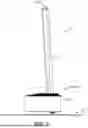
FIG. 1 is a view of the profiled wing system, according to one embodiment, in a retracted position of the profiled wing that takes up less vertical space in which the telescopic segments are telescoped into one another in a state that takes up less vertical space, the thus retracted profiled wing arranged above an upper deck of a ship.
FIG. 2 is a perspective view of FIG. 1, illustrating the profiled wing, in the retracted position, above a formwork, having an upper opening intended to be passed through by the retracted profiled wing, the upper opening of the formwork closed by a cover system.
FIG. 3 is a consecutive view of FIG. 3, illustrating the lowering of the profiled wing in said retracted position, through the upper opening of the cover, after opening the cover system.
FIG. 4 is a view of the profiled wing in the retracted position, fully housed and stowed in the formwork under the upper deck of the ship, the upper opening of the formwork closed by the cover system.
FIG. 5 is a front view, and a perspective view of the profiled wing in the deployed position in which the various segments extend over the height of the mast.
FIG. 6 is a detail view of FIG. 5, illustrating the uppermost telescopic segment, hereinafter referred to as the top telescopic segment, coupled to a halyard via a spacer, said spacer connecting a first length section and a second length section of a semi-rigid structure forming the top telescopic segment.
FIG. 7 is a view of the guide means between two consecutive telescopic segments of the profiled wing including a first guide element extending along the height of the lower telescopic segment, and a second guide element integral with a lower end of the upper telescopic segment, configured to cooperate during guidance, along a limited travel, with deployment along the first guide element.
FIG. 8 is a transparent view of the profiled wing in the deployed position thereof, illustrating in particular the actuation means comprising a first actuator and a second actuator, configured to camber the semi-rigid structure of the segment, respectively according to two camber positions, as well as a system for securing the segment to the mast and that comprises a first strand extending from the first length section of the structure by bypassing the mast, and a second strand extending from the second length section of the structure by bypassing the mast, the first strand and the second strand consisting of actuators able to be activated, internal to the structure configured to switch the first strand and the second strand to a retracted state configured to block the telescopic segment on the mast, clasped between the first strand and the second strand, inside the semi-rigid structure, the mast held at a distance from the two length sections by the first strand and the second strand under tension.
FIG. 9 is a detail view of FIG. 8.
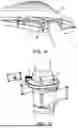
FIG. 10 is a transparent view of the bottom telescopic segment, the lowest segment of the profiled wing, illustrating more particularly a mechanism for changing the orientation of the bottom telescopic segment around the mast, including a first part rotatably connected to the mast, and a second part, pivotably mounted around the first part, attached via a system of spacers to the semi-rigid structure of the segment, and a mechanical transmission configured to pivot the second part about the first part, the mechanical transmission including a motorised pinion embedded on the second part, a ring gear integral with the first part, and a toothed belt meshing between the motorised pinion and the ring gear.
FIG. 11 is a bottom view of FIG. 10.
FIG. 12 is a view of the orientation change device when the semi-rigid structure of the bottom telescopic segment is hidden.
FIG. 13 is a detail view of the ring gear of the mechanical transmission.
FIG. 14 is a view of the semi-rigid structure of a telescopic segment in the rest position, and of the first actuator and of the second actuator that are configured to camber the structure selectively in a first cambered position and in a second cambered position.
FIG. 15 is a schematic view of the section of the semi-rigid structure of the segment of FIG. 14, as a solid line, in the rest position, and as dotted lines in two distinct cambered positions, namely the first cambered position and the second cambered position, in one direction and in the other with respect to the rest position, FIG. 15 illustrating to the right the offset marked “d” between the two free ends of the first length section and the second length section of the structure, when cambering the structure in the first cambered position.
FIG. 16 is a detail view of the two free ends of the semi-rigid structure, respectively connected by the first actuator and the second actuator via inner tendons.
FIG. 17 is a detail view of an actuation system of the securing system according to a first possible variant, the first strand comprising a retractable first actuating member, and the second strand comprising a retractable second actuating member, the first actuating member and the second actuating member in the retracted state thereof such that the mast is clasped between the first strand and the second strand, secured in position with remote holding of the mast, not only with the first length section and the second length section of the semi-rigid structure, but also holding at a distance from the mast with spacers joining the first length section and the second length section together.
FIG. 18 is a detail view of FIG. 17, in the deployed state of the first actuating member and of the second actuating member, the first strand and the second strand, loose, releasing the mast.
FIG. 19 is a schematic view of an artificial muscle in the non-activated position thereof, namely the muscle discharged from the pressurised fluid.
FIG. 20 is a schematic view of the artificial muscle of FIG. 19 in the activated position thereof, namely the muscle supplied with the pressurised fluid, which causes an increase in the section thereof and the lengthwise retraction of the actuator with the longitudinal ends thereof brought closer to one another.
FIG. 21 is a sectional view of FIG. 20 illustrating in section the envelope in the form of a braid, and the (sealed) balloon received inside the envelope supplied with the pressurised fluid.
FIG. 22 is a view of the profiled wing in the deployed position thereof, the various telescopic segments secured on the mast by clasping the first strand and second strand of the securing system, the view transparently illustrating the bottom telescopic segment in which the first actuator activated, the second actuator released, the first actuator configured to camber the telescopic segment in the first cambered position, the first actuator retracting and pulling on the free end of the second length section, connected by the first actuator, on the one hand, and on said at least one anchor point, on the other hand, until the offset d is created, the free end of the first length section advancing towards the leading edge BA with respect to the other free end of the first length section, by causing the semi-rigid structure to camber in the first cambered position.
FIG. 23 is a view according to FIG. 22, transparently illustrating the actuators and the system for securing a telescopic segment of the wing, higher than the bottom telescopic segment.
DETAILED DESCRIPTION
The present disclosure relates to a telescopic profiled wing system 1, for propelling a vehicle by wind, said profiled wing system comprising a mast M, and a set of telescopic segments SG, cooperating with one another during guidance.
The mast M may be a one-piece element, typically tubular, according to the illustrated embodiment, or may be itself telescopic to extend and retract, and according to an embodiment not illustrated.
Said telescopic segments are configured to form a profiled wing AP, at least in a deployed position P1 in which the various telescopic segments extend, with respect to one another, in the direction of the mast M by forming said profiled wing. The profiled wing AP has a first wing surface S1 and a second wing surface S2 distributed on either side of the mast M. Such a deployed position P1 of the profiled wing AP is illustrated in FIG. 5.
The system is configured to switch from said deployed position P1 to a retracted position P2 in which the various segments SG are telescoped into one another, said profiled wing AP then in a position that takes up less space with respect to the deployed position P1. Such a retracted position of said profiled wing AP is illustrated in FIGS. 1 to 4.
According to the present disclosure, all or part of the telescopic segments (each) comprise an elastically deformable, semi-rigid structure 2, including:
-
- two length sections, extending in front of one another, forming respectively a first length section 20 forming the first wing surface S1 of the profiled wing and a second length section 21 forming the second wing surface S2 of the profiled wing,
- a U-shaped connecting section 22, interconnecting the first length section 20 and the second length section 21 by extending them at the leading edge BA of the profiled wing, the two length sections terminating at the trailing edge BF of the sail by two free ends 23, 24.
The profiled wing system also includes, for all or part of the telescopic segments SG, actuating means 4 interconnecting, on the one hand, at least one of the two free ends 23, 24 and, on the other hand, the U-shaped connecting section 22. The actuating means 4 are configured to camber the first length section and the second length section of the semi-rigid structure by tensioning one of the two free ends 23, 24 with the U-shaped connecting section 22 of the semi-rigid structure 2 and the generation of an offset d between the two free ends 23, 24. Such an offset d is illustrated in FIG. 15.
The semi-rigid structures 2 can typically be made of composite material, and typically in whole or in part in the form of flat elements (such as panels) shaped to extend continuously along the section of the structure to form the U-shaped connecting section 22, as well as the first length section 20 and the second length section 21 respectively. The flat element extends in the direction of the mast M, heightwise, along a dimension forming the length of the telescopic segment. Alternatively, the flat elements can be obtained by assembling a plurality of sections of flats forming articularly the U-shaped connecting section 22, respectively, and the two length sections (first and second marked 21 and 22). In general, each semi-rigid structure extends according to said dimension forming the length of the telescopic segment in the direction of the mast.
The first wing surface and the second wing surface S1, S2 of the profiled wing formed by the extensions of the various segments are therefore obtained by the semi-rigid structure 2. A robust system is obtained, avoiding risks of tearing, such as can be encountered in profiled, flexible sails, according to the prior art for example disclosed by WO2021148734.
In other words, the first wing surface S1 and the second wing surface S2 in particular in the deployed position P1, are obtained by extending the semi-rigid structures 2 (exclusively) with respect to one another, in the direction of the mast, and as illustrated particularly in FIG. 5 and following. Consequently, the wing surfaces S1 and S2 therefore do not comprise a tensioned fabric (or flexible film) liable to be torn, and in particular contrary to the prior art disclosed particularly by WO2021148734 or EP 3 299 275 the surfaces of which in contact with the wind are composed of flexible sails, namely a flexible material such as film or fabric.
The semi-rigid structures 2 forming the various telescopic segments are shaped, and therefore self-supporting, components, in particular in the retracted position P2 in which the segments are retracted into each other, and as illustrated particularly in FIGS. 1 to 3. The telescopic segments retain their hold in the deployed position P1, but still in the retracted position P2 in which the various semi-rigid structures 2 are telescoped into one another.
The various segments SG may also comprise a spacer system 3, comprising at least one spacer interconnecting the first length section 20 and the second length section 21, said spacer configured to work in compression and in tension, to keep a spacing between the two length sections 20, 21. The spacer system 3 can typically comprise a first spacer 30, interconnecting the first length section 20 and the second length section 21, as well as a second spacer 31, interconnecting the first length section 20 and the second length section 21, parallel to said first spacer 30. The spacers are of fixed or optionally telescopic lengths.
It should be noted that the mast M extends between the spacers consisting of the first spacer 30 and the second spacer 31. The spacers (first and second) are configured to work in tension and in compression. Optionally, a third spacer 33, may extend in parallel, connecting the first length section 20 and the second length section 21. This third spacer 33 is disposed inside the structure 2 disposed between the second spacer 32 and the trailing edge BF of the profiled wing AP.
Each spacer consisting of the first spacer and the second spacer 30, 31 or even the third spacer 33 of the spacer system 3 may be pivotably hinged at the ends thereof, respectively to the first length section 20 according to an axis perpendicular to the plane of the semi-rigid structure and to the second length section 21 according to an axis perpendicular to the plane of the semi-rigid structure, the or each spacer 30, 31 being configured to pivot with respect to the two length sections, the first length section 20 and the second length section 21 during cambering and offset of the free ends 23, 24; under the effect of the actuating means 4.
To this end, hinged connectors 32, comprising a first part secured to the first length section 20 or to the second length section 21, or even a second part receiving one end of the spacer 30; 31, the second part being hinged to the first part 33 according to a pivot axis substantially perpendicular to the plane of the semi-rigid structure 2 to pivot with respect to the two length sections during cambering and offset of the free ends 23, 24; under the effect of the actuating means.
Control means are configured to control, together in the same direction, the various actuating means 4 of the telescopic segments SG to camber the first profiled wing surface S1 and the second profiled wing surface S2. For example, the various segments SG may take on a (particularly first) cambered position in which the first length section 20 takes on a concave profile when the second length section takes on a convex profile and/or a (particularly second) cambered position wherein said second length section 21 has a concave profile when said first length section 20 has a convex profile.
The semi-rigid structure 2 may have a profile having a plane of symmetry, in a rest position Pr of the semi-rigid structure 2 wherein the first length section 20 and the second length section 21 have a convex profile. The plane of symmetry of the semi-rigid structure 2 in the resting position thereof extends in the direction between the leading edge BA and the trailing edge BF, parallel to the mast M.
In the rest position Pr of the semi-rigid structure, it can be noted that the first spacer 30 and the second spacer 31 extend respectively substantially perpendicular to the plane of symmetry.
In at least one cambered position Pc1 and/or Pc2 of the semi-rigid structure 2 under the action of the actuating means 4, said first length section 20 has a concave profile when said second length section 21 has a convex profile, or said second length section 21 has a concave profile when said first length section 20 has a convex profile.
According to one embodiment, the actuating means 4 configured to camber the first length section and the second length section of the semi-rigid structure comprise at least one actuator 40, 41, having two longitudinal ends 40a; 41a, 40b; 41b, said actuator 40, 41 able to be activated, being retractable when activated with the two longitudinal ends thereof being brought closer to one another, said at least one actuator 40, 41 extending along one of the two length sections of the semi-rigid structure, the first length section 20 or the second length section 21, said actuator 40, 41 being internal to the semi-rigid structure 2, contained in the semi-rigid structure 2.
One of the longitudinal ends 40a, 41a of said at least one actuator 40, 41 is connected to one of the two free ends 23, 24 while the other 40b, 41b of the two longitudinal ends of said at least one actuator 40, 41 is connected to at least one anchor point secured to the U-shaped connecting section 22. In particular, one of the longitudinal ends 40a, 41a is connected to one of the ends by an inner tendon 42 which is guided by a guide 45 secured to the length section carrying the longitudinal end.
According to one embodiment, said actuator 40, 41 connecting the anchor point of the U-shaped connecting section 22 to one of the free ends of the first length section 20 according to the first possibility, or to one of the free ends of the second length section 21 according to the possibility section, bypasses the mast M by the side opposite to the first length section 20 according to the second possibility, or bypasses the mast M by the side opposite the second length section 21 according to the second possibility. Such an embodiment is illustrated in FIG. 4. According to another possibility, however, less favourable in terms of camber performance, the actuator can bypass the mast on the other side.
According to one embodiment, the actuating means 4 are configured to camber the semi-rigid structure selectively:
-
- in a first cambered position Pc1 wherein said first length section 20 has a concave profile when said second length section 21 has a convex profile,
- in a second cambered position Pc2 wherein said second length section 21 has a concave profile when said first length section 20 has a convex profile.
The cambered position can be adjusted during manoeuvres, for example by switching from the first cambered position Pc1 to the second cambered position Pc2 of the cambering devices (with opposite concavity) during edge change manoeuvres, whether tack manoeuvres or gybe manoeuvres.
The actuators used for the actuating means may be progressive (and not on or off) and take on a plurality of positions making it possible to camber more or less strongly the first and the second sail surface, in either direction. It is possible to adjust the concavity of the surface of the sail exposed to the wind in order to maximise the force necessary for advancing the vehicle according to the wind conditions.
According to one embodiment, said at least one actuator of the actuating means may comprise:
-
- a first actuator 40 configured to camber the semi-rigid structure in said first cambered position Pc1, one of the longitudinal ends 40a of which is connected to the anchor point of the U-shaped section while the other longitudinal end 40b is connected to the free end 24 of the second length section 21, said first actuator 40 being configured, in an active state, to retract and pull on the free end 24 connected by the first actuator 40, on the one hand, and on said at least one anchor point on the other hand, until the offset d is created, the free connected end 24 advancing towards the leading edge BA with respect to the other free end 23 by causing the semi-rigid structure to camber, the first length section 20 taking a concave profile, the second length section 21 taking a convex profile in said first cambered position Pc1,
- a second actuator 41 configured to camber the semi-rigid structure in said second cambered position Pc2, one of the free ends 41a of which is connected to the anchor point of the U-shaped section while the other longitudinal end 41b is connected to the free end 23 of the first length section 20, said second actuator 41 being configured, in an active state, to retract and pull on the free end 23 connected by the second actuator 41, on the one hand, and on said at least one anchor point on the other hand, until the offset is created, the connected free end 23 advancing towards the leading edge BA with respect to the other free end 24 by causing the semi-rigid structure to camber, the second length section 21 taking a concave profile, the first length section 20 taking a convex profile in said second cambered position Pc2.
According to one embodiment, the profiled wing system may comprise a control means configured to selectively:
-
- activate the first actuator 40 by keeping the second actuator 41 not activated to cause said first cambered position Pc1,
- activate the second actuator 41 by keeping the first actuator 40 not activated to cause said second cambered position Pc2.
According to one embodiment, all or part of the telescopic segments SG has a securing system 7, able to be activated/deactivated, configured to ensure the securing of the profiled wing on the mast.
In the activated state thereof, the securing system 7 is advantageously configured to keep the mast at a distance from the semi-rigid structure of the system while ensuring deflection of the lateral support due to the pressure of the wind on the profiled wing on the mast. The securing system 7 positions said profiled wing by avoiding impacts between the mast M and the damagable parts of the profiled wing system, and in particular impacts with the spacers 30, 31.
As can be seen by way of indication in the figures, the securing system 7 comprises:
-
- a first flexible strand 71 connected to the first length section 21 by two longitudinal ends of the first strand 71, the first strand bypassing the mast M from the first length section 20,
- a second flexible strand 72 connected to the second length section 20 by two longitudinal ends of the second strand, the second strand bypassing the mast M from the second length section 21.
Thus, the mast extends between the first strand 71 and the second strand 72.
The securing system further also comprises an actuator system, able to be activated, internal to the semi-rigid structure 2, configured to switch the first strand and the second strand to a retracted state configured to clamp the cambering device on the mast M, clasped between the first strand 71 and the second strand 72, inside the semi-rigid structure, and as illustrated in the detail view of FIG. 17.
Advantageously, the mast thus clasped by the first strand 71 and the second strand 72 is held at a distance from the two length sections 20, 21 by the tensioned first strand 71 and second strand 72, as well as held at a distance from the spacers, the first spacer 31 and the second spacer 32 when present. The force of the wind on the profiled wing is diverted to the mast by the tensioned first strand 72 and second strand 72.
Conversely and when the actuator system is deactivated, the latter is configured to cause a deployed state of the first strand and second strand configured to release the mast; and permit the easy movement of the telescopic segments, along the mast from the first deployed position P1 to the retracted position P2, or vice versa.
The semi-rigid structures of the various telescopic segments SG may comprise, in whole or in part, the spacer system 3 comprising a first spacer 30, interconnecting the first length section 20 and the second length section 21, as well as a second spacer 31, interconnecting the first length section 20 and the second length section 21, parallel to said first spacer 30.
Advantageously, the longitudinal ends of the first strand 71 are secured at two attachment points on the first length section 20 respectively at the junction areas between the first and second spacers 30, 31 and the first length section 20, the longitudinal ends of the second strand 72 being secured at two attachment points on the second length section 21 respectively at the junction areas between the first and second spacers 30, 31.
The mast M then extends between the spacers consisting of the first spacer 30 and the second spacer 31, the first strand 71 and the second strand 72 clasped on the mast ensuring holding of the mast at a distance from the first spacer 30, on the one hand, and from the second spacer 31, on the other hand.
As regards the first and second spacers 30, 31, it will be noted that such spacers 30, 31 promote the reliable and firm clamping of the mast by the first strand 71 and the second strand 72, by the compressive work of the spacers which opposes the retraction of the first and second strands 71, 72.
In order to optimise the synergy between the spacers 30, 31 and the strands 71, 72:
-
- the longitudinal ends of the first strand 71 may be secured at two attachment points on the first length section 20 respectively at the junction areas between the first and second spacers 30, 31, on the one hand, and the first length section 20, on the other hand,
- the longitudinal ends of the second strand 72 may be secured at two attachment points on the second length section 21 respectively at the junction areas between the first and second spacers 30, 31, on the one hand, and the second length section 21, on the other hand.
Each spacer consisting of the first spacer and the second spacer 30, 31 of the spacer system 3 can be pivotably hinged at the ends thereof, respectively to the first length section 20 according to an axis perpendicular to the plane of the semi-rigid structure and to the second length section 21 according to an axis perpendicular to the plane of the semi-rigid structure, the or each spacer 30, 31 being configured to pivot with respect to the two length sections, the first length section 20 and the second length section 21 during cambering and offset of the free ends 23, 24; under the effect of the actuating means 4.
To this end, the telescopic segment SG may comprise hinged connectors 32, comprising a first part secured to the first length section 20 or to the second length section 21, or even a second part receiving one end of the spacer 30; 31, the second part being hinged to the first part according to a pivot axis substantially perpendicular to the plane of the semi-rigid structure 2 to pivot with respect to the two length sections during cambering and offset of the free ends 23, 24; under the effect of the actuating means.
In addition, the longitudinal ends of the first strand 71 may advantageously be attached to the first parts of the connectors 32 secured to the first length section 20 and the longitudinal ends of the second strand 72 are attached to the first parts of the connectors 32 secured to the second length section 21.
According to one embodiment, the actuator system of the securing system 7 comprises at least one girding actuating member m having two longitudinal ends e1, e2, said actuating member, able to be activated, being retractable when activated with the two longitudinal ends e1, e2 thereof brought closer to one another.
Said girding actuating member may be an artificial muscle, particularly a pneumatic muscle. Such an actuator has an envelope internally receiving a balloon supplied with or discharged from the fluid. The flexible envelope retracts lengthwise when the section thereof increases under the increase of the balloon supplied with fluid (contraction of the muscle), and deploys lengthwise when the section thereof decreases when the balloon is discharged from the fluid (decrease in the pressure of the fluid). The retraction of the actuator may be progressive by controlling the amount of the fluid supplied into the balloon.
Such pneumatic actuation systems are commonly referred to as “artificial muscles” consisting of inflatable tubes inserted into protective braids forming an envelope, such that the artificial muscle contracts or expands depending on whether the internal fluid pressure thereof increases or decreases. Such artificial muscles are described, for example, by B. Tondu and P. Lopez in “Compte Rendu de l'Academie des Sciences”, t. 320, PP 105-114, 1995.
Such an artificial muscle is schematically illustrated in the deployed position thereof in FIG. 19 and in the retracted position thereof in FIG. 20, as well as according to a sectional view in FIG. 21.
When the balloon B is supplied with pressurised fluid (for example air), the section of the balloon increases, which causes an increase in the section of the envelope Ev in the form of a braid in FIG. 11.
Under the effect of the increase in the section of the envelope, braiding of the envelope generates a force ensuring the retraction of the artificial muscle, by bringing the longitudinal ends e1 or e2 closer to one another.
Such an actuator has the advantage of:
-
- requiring no electrification of said profiled wing,
- being a flexible component; not likely to be aggressive, or even likely to come directly into contact to clasp the mast without any risk of altering the surface of the mast M.
According to a first embodiment, the first strand 71 may comprise a first girding actuating member m1, in particular a first artificial muscle, and the second strand 72 may comprise a second girding actuating member m2, particularly a second artificial muscle.
Such an embodiment is illustrated by way of indication in FIG. 17 when the first girding actuating member m1 and the second girding actuating member m2 are artificial muscles. The longitudinal ends e1 and e2 of the first girding actuating member m1 are secured at two attachment positions on the first parts of the connectors 32 connected to the first length section 20, respectively at the junction area with the first spacer 30 and the second spacer 31. Similarly, the longitudinal ends e1 and e2 of the second girding actuating member m2 are secured at two attachment positions on the first parts of the connectors 32 connected to the second length section 21 respectively at the junction area with the first spacer 30 and the second spacer 31.
Said at least one actuator ensuring cambering of the structure, where appropriate the first actuator 40 and the second actuator 41, may be an actuator that retracts when supplied with fluid such as an artificial muscle, particularly a pneumatic muscle. Such an actuator, previously described, and is not redeveloped. It has an envelope internally receiving a balloon supplied with or discharged from the fluid. The flexible envelope retracts lengthwise when the section thereof increases under the increase of the balloon supplied with fluid (contraction of the muscle), and deploys lengthwise when the section thereof decreases when the balloon is discharged from the fluid (decrease in the pressure of the fluid). The retraction of the actuator may be progressive by controlling the amount of the fluid supplied into the balloon. The actuator (particularly the first or second) may still be a pneumatic cylinder.
According to one embodiment, the artificial muscles of the actuators 40, 41 and/or of the actuating members m of the plurality of segments are supplied with fluid by one or more flexible elastic hose(s) AL1, AL2, AL3, shaped in the form of a coil (not illustrated), extending in the direction of the height of the mast M. The flexible elastic hose(s) are configured to be deployed by spacing the turns of the coil in the deployed position of the profiled wing, and to retract by bringing the turns of the coil closer to one another under the elasticity of the coil, in the retracted position P2 of the profiled wing AP.
According to one embodiment, the various telescopic segments SG, and in particular the various associated semi-rigid structures, are of decreasing dimensions (in particular according to directions perpendicular to the mast), according to the height of the mast M, in said deployed position P1, such that a telescopic segment, upper in the deployed position is, with respect to a consecutive telescopic segment, lower, brought to be inserted into the lower telescopic segment, in said retracted position P2 in which the various telescopic segments are telescoped into one another.
In general, said at least one actuator 40, 41 and/or the first girding actuating member m1 and the second girding actuating member m2, are positioned, in the semi-rigid structure, preferably at the lower end of the telescopic segment SG. SG. Such positioning makes it possible in the retracted position P2 to telescope the various segments SG into one another, by maximising the entanglement between the segments, as well as the vertical compactness of the profiled wing in the retracted position P2, and without said at least one actuator and/or the first girding actuating member m1 and the second girding actuating member m2 constituting an obstacle substantially limiting the retraction of the segments.
In general, the profiled wing system may include guide means between the consecutive telescopic segments, including, at least one first guide element GD1, extending along the height of a telescopic segment SG, lower, preferably, internal to the semi-rigid structure 2 of the telescopic segment, and cooperating during guidance with at least one second guide element GD2, preferably external, at the lower part of an upper telescopic segment.
The second guide element GD2 cooperates with the guide element GD1 during guidance along a limited travel to ensure the sliding between the two consecutive telescopic segments between the retracted position P2 and said deployed position P1 of the profiled wing AP. The profiled wing system AP may preferably include a plurality of pairs of first guide element GD1/second guide element GD1, which are distributed over the first length sections 20 of the two consecutive segments and that are distributed over the second length sections 21 of the two consecutive segments. The first guide element GD1 may be a longitudinal flexible element and the second guide element GD2, a loop sliding on the longitudinal flexible element.
In general, the various telescopic segments SG include a top telescopic segment SGT that constitutes the uppermost telescopic segment in said deployed position P1 of said profiled wing AP, and a bottom telescopic segment SGP that is integral in the lower part of the mast and that constitutes the lowermost telescopic segment in said deployed position P1.
The top telescopic segment SGT is connected to a hoisting halyard DR bearing on a boom POT at the top of the mast M. The halyard is configured to ensure the deployment of the various telescopic segments from the retracted position P2 to the deployed position P1 of said profiled wing AP.
The bottom telescopic segment SGP is connected to the mast, preferably via an adjustment device configured to ensure an orientation of the profiled wing AP around the mast M. Such an adjustment device includes a mechanism 5 for adjusting the orientation of the bottom telescopic segment SGP around the mast M.
The mechanism 5 for adjusting the orientation of the bottom telescopic segment SGP around the mast M may comprise:
-
- a first part 51 rotatably connected to the mast, without the possibility of rotation between the first part 51 and the '<mast M,
- a second part 52 secured to the semi-rigid structure of the bottom telescopic segment, via a spacer system 3 of the bottom telescopic segment, the spacers interconnecting the first length section 20 and the second length section 21, in a hinged manner,
- a mechanical transmission 6, preferably motorised, ensuring an adjustment of the rotational position of the second part 52 about the first part 51.
The spacer system may comprise the first spacer 30, the second spacer 31, and a third spacer 33. It should be noted that the first spacer 30 and the second spacer 31 are hinged in the middle portion thereof on the second part 52, typically via axis pivots substantially parallel to the mast. The third spacer 33 is hinged to the second part 52, for example via a ball-and-socket connection.
In general, the mechanical transmission 6 may comprise:
-
- a ring gear 60 rotatably connected to the first part,
- a motorised pinion 61 embedded in the second part,
- a toothed belt 62 connecting the ring gear 60 to the motorised pinion 61.
The mechanical transmission 6 is thus configured such that a rotation of the motorised pinion causes the rotation of the second part 52 with respect to the first part 51 by changing the orientation of the bottom telescopic segment SGP around the mast M.
The first part 51 rotatably connected to the mast may optionally slide with respect to the mast according to a travel limited to the descent, and in order to stow the profiled wing in the retracted position thereof in a formwork preferably arranged under the upper deck PTA or, on the contrary, during the rise, in order to extend the retracted wing from the formwork and position it above the upper deck PT of the ship.
The present disclosure is still related to a vehicle such as a ship including wind propulsion including at least one telescopic profiled wing system, according to the present disclosure.
The vehicle may be a ship, for example monohull or multihull, including an upper deck above which the mast M extends, at least in part, and said profiled wing in said deployed position P1, of the bottom, lower telescopic segment SGP, up to the top upper telescopic segment SGT.
According to one embodiment, said mast extends below the upper deck PT, through a formwork, the mast anchored to a structure of the ship below the level of the formwork. Said formwork is arranged below the level of the upper deck. In such a case, said telescopic wing then in said retracted position is configured to be lowered through an opening of the upper deck under the upper deck PT and stowed in said formwork.
A cover system CV, may be configured to close the upper opening in said retracted and stowed position P1 of said telescopic wing AP in the formwork. The cover system CV may also be configured to close the opening in the upper deck PT in the deployed position P1 of said telescopic wing, said profiled wing then outside the formwork. In this latter closed position, the cover system may come to rest on the mast, remotely and above the anchoring thereof to the ship made under the formwork. Such a support of the cover system on the mast enhances the holding of the mast and the resistance to bending thereof under the force of the profiled wing.
List of Reference Signs
-
- 1 Profiled wing system,
- 2 Semi-rigid structure
- 20, 21: First length section and second length section,
- 22. U-shaped connecting section
- 23, 34: Free ends of the first and second sections respectively,
- 3. Spacer system,
- 30, 31. First spacer and second spacer,
- 33. Third spacer
- 32. Connector,
- 4 Actuating means,
- 40, 41. Actuators, first and second;
- 42. Inner tendons
- 5. Mechanism for adjusting the orientation of the bottom telescopic segment (SGP) around the mast,
- 51, 52. First part and second part,
- 6. Mechanical transmission,
- 60, 61, 62. Respectively ring gear, motorised gear and toothed belt (mechanical transmission)
- 7. Securing system (for blocking and securing the segments on the mast),
- 71, 72, First strand and second strand,
- AP. Profiled wing
- AS. Plane of symmetry of the semi-rigid structure
- B. Balloon (artificial muscle),
- Ev Envelope (particularly braid),
- BA. Leading edge
- BF Trailing edge
- Ev. Envelope
- d: offset between the two free ends
- m, m1, m2. Respectively at least one girding actuating member, first and second girding actuating members,
- Pr. Rest position,
- Pc1. First camber position,
- Pc2. Second camber position,
Claims
1-19. (canceled)
20. A telescopic profiled wing system, for propelling a vehicle by wind, said profiled wing system comprising: a mast, and a set of telescopic segments, cooperating with one another during guidance,
and wherein said telescopic segments are configured to form a profiled wing at least in a deployed position in which the various telescopic segments extend, with respect to one another, in the direction of the mast by forming said profiled wing, said profiled wing having a first wing surface and a second wing surface distributed on either side of the mast, said system being configured to switch from said deployed position to a retracted position in which the various segments are telescoped into one another, said profiled wing then in a position that takes up less space with respect to the deployed position,
and said telescopic segments each comprising an elastically deformable, semi-rigid structure, extending along a dimension forming the length of the telescopic segment in the direction of the mast, including:
two length sections, extending in front of one another, respectively forming a first length section forming a first wing surface of the profiled wing and a second length section secured to a second surface of the profiled wing forming the second wing surface of the profiled wing,
a U-shaped connecting section, interconnecting the first length section and the second length section by extending them at the leading edge of the profiled wing, the two length sections terminating at the trailing edge of the sail by two free ends,
and wherein said system includes, for all or part of the telescopic segments, actuating means interconnecting, on the one hand, at least one of the two free ends, and, on the other hand, the U-shaped connecting section, configured to camber the first length section and the second length section of the semi-rigid structure by tensioning one of the two free ends with the U-shaped connecting section of the semi-rigid structure and the generation of an offset between the two free ends,
and wherein the first wing surface and the second wing surface of the profiled wing formed by the extensions of the various telescopic segments are obtained by said semi-rigid extensional structures.
21. The telescopic profiled wing system according to claim 20, wherein the actuating means configured to camber the first length section and the second length section of the semi-rigid structure comprise at least one actuator, having two longitudinal ends, said actuator able to be activated, being retractable when activated with the two longitudinal ends thereof being brought closer to one another, said at least one actuator extending along one of the two length sections of the semi-rigid structure, the first length section or the second length section, said actuator being internal to the semi-rigid structure, contained in the semi-rigid structure,
and wherein one of the longitudinal ends of said at least one actuator is connected to one of the two free ends while the other of the two longitudinal ends of said at least one actuator is connected to at least one anchor point secured to the U-shaped connecting section.
22. The telescopic profiled wing system according to claim 21 wherein said actuator connecting the anchor point of the U-shaped connecting section to one of the free ends of the first length section according to the first possibility, or of the second length section according to the possibility section, bypasses the mast by the side opposite the first length section according to the second possibility, or bypasses the mast by the side opposite the second length section according to the second possibility.
23. The telescopic profiled wing system according to claim 20, wherein the actuating means are configured to camber the semi-rigid structure selectively:
in a first cambered position wherein said first length section has a concave profile when said second length section has a convex profile,
in a second cambered position wherein said second length section has a concave profile when said first length section has a convex profile.
24. The telescopic profiled wing system according to claim 21, wherein said at least one actuator of the actuating means comprises:
a first actuator configured to camber the semi-rigid structure in said first cambered position, one of the longitudinal ends of which is connected to the anchor point of the U-shaped section while the other longitudinal end is connected to the free end of the second length section, said first actuator being configured, in an active state, to retract and pull on the free end connected by the first actuator, on the one hand, and on said at least one anchor point on the other hand, until the offset is created, the connected free end advancing towards the leading edge with respect to the other free end by causing the semi-rigid structure to camber, the first length section taking a concave profile, the second length section taking a convex profile in said first cambered position,
a second actuator configured to camber the semi-rigid structure in said second cambered position, one of the free ends of which is connected to the anchor point of the U-shaped section while the other longitudinal end is connected to the free end of the first length section, said second actuator being configured, in an active state, to retract and pull on the free end connected by the second actuator, on the one hand, and on said at least one anchor point on the other hand, until the offset is created, the connected free end advancing towards the leading edge with respect to the other free end by causing the semi-rigid structure to camber, the second length section taking a concave profile, the first length section taking a convex profile in said second cambered position.
25. The telescopic profiled wing system according to claim 24, further comprising a control means configured to selectively:
activate the first actuator by keeping the second actuator not activated to cause said first cambered position,
activate the second actuator by keeping the first actuator not activated to cause said second cambered position.
26. The telescopic profiled wing system according to claim 20, wherein all or part of the wing telescopic segments has a securing system, able to be activated/deactivated, configured to ensure securing of the profiled wing on the mast, the securing system comprising:
a first flexible strand connected to the first length section by two longitudinal ends of the first strand, the first strand bypassing the mast from the first length section,
a second flexible strand connected to the second length section by two longitudinal ends of the second strand, the second strand bypassing the mast from the second length section,
an actuator system, able to be activated, internal to the structure configured to switch the first strand and the second strand to a retracted state configured to block the telescopic segment on the mast, clasped between the first strand and the second strand, inside the semi-rigid structure, the mast held at a distance from the two length sections by the tensioned first strand and second strand, and up to a deployed state of the first strand and second strand configured to release the mast; and permit the movement of the cambering device along the mast.
27. The telescopic profiled wing system according to claim 26, wherein the semi-rigid structures of the various telescopic segments comprise in whole or in part a spacer system comprising a first spacer, interconnecting the first length section and the second length section, as well as a second spacer interconnecting the first length section and the second length section, parallel to said first spacer,
and wherein the longitudinal ends of the first strand are secured at two attachment points on the first length section respectively at the junction areas between the first and second spacers and the first length section, the longitudinal ends of the second strand being secured at two attachment points on the second length section respectively at the junction areas between the first and second spacers,
and wherein the mast extends between the spacers consisting of the first spacer and the second spacer, the first strand and the second strand clasped on the mast ensuring holding of the mast at a distance from the first spacer, on the one hand, and from the second spacer, on the other hand.
28. The telescopic profiled wing system according to claim 21, wherein said at least one girding actuating member of the securing system and/or said at least one actuator of the actuating means is an artificial muscle, being contracted when supplied with pressure by a fluid, and being relaxed when the pressure of the fluid decreases, said artificial muscle having an envelope receiving inside a balloon supplied with or discharged from the fluid, the flexible envelope in particular in the form of a braid, being configured to retract in length when the section thereof increases under the increase of the balloon supplied with fluid, and being deployed lengthwise when the section thereof decreases when the balloon is discharged from the fluid.
29. The telescopic profiled wing system according to claim 20, wherein the various telescopic segments are of decreasing dimensions, according to the height of the mast, in said deployed position, such that a telescopic segment, upper in the deployed position is, with respect to a consecutive telescopic segment, lower, brought to be inserted into the lower telescopic segment, in said retracted position in which the various telescopic segments are telescoped into one another.
30. The telescopic profiled wing system according to claim 20, further comprising guide means between the consecutive telescopic segments, including, at least one first guide element, extending along the height of a telescopic segment, lower, preferably, internal to the semi-rigid structure of the telescopic segment, and cooperating during guidance with at least one second guide element, preferably external, at the lower part of an upper telescopic segment, the second guiding element cooperating with the first guide element during guidance according to a limited travel to ensure sliding between the two consecutive telescopic segments between the retracted position and said deployed position of the profiled wing.
31. The telescopic profiled wing system according to claim 20, wherein the various telescopic segments include a top telescopic segment, which constitutes the uppermost telescopic segment in said deployed position of said profiled wing, and a bottom telescopic segment that is integral in the lower part of the mast and that constitutes the lowermost telescopic segment in said deployed position and wherein the top telescopic segment is connected to a hoisting halyard bearing on a boom at the top of the mast, the halyard configured to ensure the deployment of the various telescopic segments from the retracted position to the deployed position of said profiled wing.
32. The telescopic profiled wing system according to claim 31, wherein the bottom telescopic segment is connected to the mast via an adjustment device configured to ensure an orientation of the profiled wing around the mast, including a mechanism for adjusting the orientation of the bottom telescopic segment around the mast.
33. Telescopic wing system according to claim 32, wherein the mechanism for adjusting the orientation of the bottom telescopic segment around the mast comprises:
a first part rotatably connected to the mast, without the possibility of rotation between the first part and the mast,
a second part integral with the semi-rigid structure of the bottom telescopic segment, via a spacer system of the bottom telescopic segment, the spacers interconnecting the first length section and the second length section, in a hinged manner,
a mechanical transmission, preferably motorised, ensuring an adjustment of the rotational position of the second part about the first part.
34. The telescopic profiled wing system according to claim 33, wherein the mechanical transmission comprises:
a ring gear rotatably connected to the first part,
a motorised pinion embedded in the second part,
a toothed belt connecting the ring gear to the motorised pinion said transmission configured such that a rotation of the motorised pinion causes the rotation of the second part with respect to the first part by changing the orientation of the bottom telescopic segment around the mast.
35. A vehicle such as a ship including wind propulsion including at least one telescopic wing system according to claim 20.
36. The vehicle according to claim 35 which is a ship including an upper deck above which the mast extends, and said profiled wing in said deployed position, from the bottom, lower telescopic segment, to the top, upper telescopic segment.
37. The vehicle according to claim 36 wherein said mast extends below the upper deck, through a formwork, the mast anchored to a structure of the ship under the formwork, said formwork, arranged below the level of the upper deck, and wherein said profiled wing in said retracted position is configured to be lowered through an opening of the upper deck under the upper deck and stowed in said formwork.
38. The vehicle according to claim 37 including a cover system, configured to close the upper opening in said retracted and stowed position of the profiled wing in the formwork, and in the deployed position of said telescopic wing, outside the formwork by bearing on the mast.
Images & Drawings included:





Sources:
- United States Patent and Trademark Office - verify current appl. status at the USPTO↗
Similar patent applications:
- » 20090097974
Aeolian system comprising power wing profiles and process for producing electric energy - » 20130078097
Actuating systems for controlling the flight of a power wing profile for conversion of wind energy into electrical or mechanical energy - » 20140077495
System for converting wind energy into electrical energy through the flight of power wing profiles tethered to the ground by cables of a fixed length, without passive phases, and with automatic adaptation to wind conditions
Recent applications in this class:
- » 20250050986 2025-02-13
WIND PROPULSION UNIT AND VESSEL COMPRISING SUCH A UNIT - » 20240326968 2024-10-03
SELF-DEPLOYING AERODYNAMIC SYSTEM - » 20240317374 2024-09-26
SUBMERGED SAILING VESSEL - » 20240262478 2024-08-08
SAIL-DRIVEN VEHICLE - » 20240227999 2024-07-11
SHIP WITH SAIL PROPULSION - » 20230348033 2023-11-02
Unmanned sailing vehicle control system - » 20230286631 2023-09-14
Forward pushing sail - » 20230271687 2023-08-31
Submerged sailing vessel - » 20230067148 2023-03-02
CAMBERING DEVICE FOR PROFILED SAIL - » 20230030126 2023-02-02
Wind-propelled boat having parallel self-righting paired masts for wind-assisted propulsion for boats
Recent applications for this Assignee:
- » 20250319955 2025-10-16
ASSEMBLY COMPRISING A PROFILED SAIL; A MAST AND A PLURALITY OF CAMBERING DEVICES FOR A PROFILED SAIL - » 20250319955 2025-10-16
ASSEMBLY COMPRISING A PROFILED SAIL; A MAST AND A PLURALITY OF CAMBERING DEVICES FOR A PROFILED SAIL - » 20250136257 2025-05-01
ASSEMBLY COMPRISING A PROFILED SAIL; A MAST AND SEVERAL CAMBERING DEVICES FOR A PROFILED SAIL, AND A SYSTEM FOR REDUCING THE SURFACE AREA OF THE PROFILED SAIL EXPOSED TO THE WIND - » 20250136257 2025-05-01
ASSEMBLY COMPRISING A PROFILED SAIL; A MAST AND SEVERAL CAMBERING DEVICES FOR A PROFILED SAIL, AND A SYSTEM FOR REDUCING THE SURFACE AREA OF THE PROFILED SAIL EXPOSED TO THE WIND - » 20230067148 2023-03-02
CAMBERING DEVICE FOR PROFILED SAIL