WORK MACHINE AND METHOD FOR CONTROL OF EARTH WORKING TOOL AND PROPULSION USING JOYSTICK INPUTS
US20260168205A1
2026-06-18
18/982,354
2024-12-16
Smart Summary: A work machine like an excavator has two parts for moving and a tool for digging. It uses foot pedals and joysticks in the operator's cab to control these parts. In one mode, the machine uses signals from the foot pedals to move and signals from the joysticks to operate the digging tool. In another mode, it can use slide switches along with the joysticks to control movement, especially for straight travel. The machine generates signals to manage both the movement and the digging tool based on these inputs. 🚀 TL;DR
Abstract:
A work machine, such as an excavator, comprises left and right traction units, an earth working tool, left and right foot pedals, one or more joysticks mounted in an operator cab, and one or more slide switches integrated with the joystick(s). In a first operating mode, first target values are determined for operation of the traction units based on electronic signals from the foot pedals, and second target values are determined for operation of the earth working tool based on signals from the joystick(s). In a second (straight travel) operating mode, the first target values are determined for operation of the traction units based on signals from the slide switches, instead of/ supplemental to the signals from the foot pedals. Control signals are generated for controlling the traction units based on the determined first target values, and for controlling the earth working tool based on the determined second target values.
Applicant:
Interested in similar patents?
Get notified when new applications in this technology area are published.
Classification:
E02F9/2004 » CPC main
Component parts of dredgers or soil-shifting machines, not restricted to one of the kinds covered by groups - ; Drives; Control devices Control mechanisms, e.g. control levers
E02F9/2037 » CPC further
Component parts of dredgers or soil-shifting machines, not restricted to one of the kinds covered by groups - ; Drives; Control devices; Particular purposes of control systems not otherwise provided for Coordinating the movements of the implement and of the frame
E02F3/32 » CPC further
Dredgers; Soil-shifting machines mechanically-driven with digging tools mounted on a dipper- or bucket-arm, i.e. there is either one arm or a pair of arms , e.g. dippers, buckets with a dipper-arm pivoted on a cantilever beam, i.e. boom working downwardly and towards the machine, e.g. with backhoes
E02F3/435 » CPC further
Dredgers; Soil-shifting machines mechanically-driven with digging tools mounted on a dipper- or bucket-arm, i.e. there is either one arm or a pair of arms , e.g. dippers, buckets; Component parts; Drives for dippers, buckets, dipper-arms or bucket-arms; Control of dipper or bucket position; Control of sequence of drive operations for dipper-arms, backhoes or the like
E02F9/20 IPC
Component parts of dredgers or soil-shifting machines, not restricted to one of the kinds covered by groups - Drives; Control devices
E02F3/43 IPC
Dredgers; Soil-shifting machines mechanically-driven with digging tools mounted on a dipper- or bucket-arm, i.e. there is either one arm or a pair of arms , e.g. dippers, buckets; Component parts; Drives for dippers, buckets, dipper-arms or bucket-arms Control of dipper or bucket position; Control of sequence of drive operations
E02F9/02 » CPC further
Component parts of dredgers or soil-shifting machines, not restricted to one of the kinds covered by groups - Travelling-gear, e.g. associated with slewing gears
Description
FIELD OF THE DISCLOSURE
The present disclosure relates generally to work machines having ground-engaging traction units and user interface units such as for example foot pedals and joysticks, and more particularly to systems and methods having at least one operating mode for propulsion control of the traction units and operational control of an earth working tool based on joystick inputs.
BACKGROUND
Work machines of this type may for example include excavator machines, among others having traction units, such as potentially skid steer loaders and the like. Propulsion and steering controls for conventional excavators are typically provided via foot pedals that independently control the left and right traction units of the machine undercarriage. Additional controls for such excavators may be provided via one or more hand-operable joysticks. For example, movement of the joystick in x- and y-axes may generate controls for an earth working tool or other implement associated with the work machine, while slide switches (e.g., variable switches, rollers, or an equivalent user interface device) may be integrated with the one or more joysticks for further controlling auxiliary functions for the work machine.
These controls can be uncomfortable to operate, particularly when controlling movement of the work machine across a substantial distance, where the operator must maintain continuous engagement with both pedals. One known technique for addressing this issue in a more ergonomic manner includes a mode known as “stick steer” to command travel using one joystick instead of the foot pedals, wherein the operator is enabled to command travel forward/backwards with the y-axis of the joystick, and then a direction using the left/right on the x-axis of the joystick. One limitation of the stick steer mode, however, is that the operator would then lose the base functionality of the joystick that the stick steer replaced, typically limiting the operator to not be able to use the swing and arm commands while in the “stick steer” driving mode.
BRIEF SUMMARY
The current disclosure provides an enhancement to conventional systems, at least in part by introducing a novel work machine, control system, and method for allowing the work machine operator to drive the machine in an ergonomic manner while also retaining full control of the base functionality of the machine.
In one particular and exemplary embodiment, a method is provided for controlling a plurality of traction units configured to independently operate in fore or aft directions for propelling a work machine across a ground surface, and further controlling one or more operations associated with at least one earth working tool of the work machine, in each of a plurality of selectable operating modes. Electronic signals are received during operation of the work machine comprising: a first set of signals representing respective amounts of user engagement of left and right foot pedals mounted in an operator cab of the work machine; a second set of signals representing respective amounts of user engagement of one or more joysticks mounted in an operator cab of the work machine, along x- and/or y-axes with respect to a neutral position; and a third set of signals representing respective amounts of user engagement of one or more slide switches integrated with the one or more joysticks. In a first operating mode, one or more first target values are determined for operation of the plurality of traction units based on the first set of signals, and one or more second target values are determined for operation of the at least one earth working tool based on the second set of signals. In a second operating mode, one or more first target values are determined for operation of the plurality of traction units based on the third set of signals, and one or more second target values are determined for operation of the at least one earth working tool based on the second set of signals. Control signals are generated to one or more actuators for controlling the plurality of traction units based on the determined one or more first target values, and to one or more actuators for controlling the at least one earth working tool based on the determined one or more second target values.
In one optional and exemplary aspect according to the above-referenced method embodiment, a first slide switch may be integrated with a first joystick, and the third set of signals generated thereby during the second operating mode may be used to determine first target values for controlling each of the plurality of traction units at a common speed.
In another optional and exemplary aspect according to the above-referenced method embodiment, first and second slide switches may be provided, wherein the third set of signals generated thereby during the second operating mode comprises signals from the first slide switch which are applied to command forward or backward propulsion via the plurality of traction units, and signals from the second slide switch which are further applied to command left or right steering via the plurality of traction units.
In another optional and exemplary aspect according to the above-referenced method embodiment, the first and second slide switches may be integrated with first and second joysticks, respectively.
In another optional and exemplary aspect according to the above-referenced method embodiment, a first slide switch may be integrated with a first joystick, wherein the third set of signals generated thereby during the second operating mode is applied to command forward or backward propulsion via the plurality of traction units, and signals from the left and right foot pedals may be further applied to command left or right steering via the plurality of traction units.
In another exemplary embodiment as disclosed herein, a work machine comprises: a plurality of traction units configured to independently operate in fore or aft directions for propelling the work machine across a ground surface; at least one earth working tool configured to perform earth working operations when the work machine is propelled across the ground surface and/or through movement of the at least one earth working tool relative to a frame of the work machine; left and right foot pedals mounted in an operator cab of the work machine and configured to generate a first set of signals representative of user engagement thereof; one or more joysticks mounted in an operator cab of the work machine and configured to generate a second set of signals representing respective amounts of user engagement thereof and along x- and/or y-axes with respect to a neutral position; and one or more slide switches integrated with the one or more joysticks and configured to generate a third set of signals representing respective amounts of user engagement thereof. One or more processors are configured to direct the performance of steps in a method according to the above-referenced embodiment, and optionally one or more of the exemplary aspects thereof.
Numerous objects, features, and advantages of the embodiments set forth herein will be readily apparent to those skilled in the art upon reading of the following disclosure when taken in conjunction with the accompanying drawings.
BRIEF DESCRIPTION OF THE DRAWINGS
FIG. 1 is a side view representing an excavator as an exemplary self-propelled work machine according to an embodiment of the present disclosure.
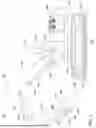
FIG. 2 is a simplified perspective view representing user interface tools in an operator station, comprising a pair of hand-operable joysticks having various slide switches according to an embodiment of the present disclosure.
FIG. 3 is an overhead view representing fore/ aft motion of tracks for an excavator according to an embodiment of the present disclosure.
FIG. 4 is a block diagram representing an exemplary control system according to an embodiment of the present disclosure.
FIG. 5 is a flowchart representing an exemplary embodiment of a method as disclosed herein.
DETAILED DESCRIPTION
Referring now to FIGS. 1- 5, various embodiments may now be described of a work machine, control system, and method for allowing work machine operators to drive the machine in an ergonomic manner using slide switches (hand-activated interface tools integrated with one or more joysticks in the operator cab) while also retaining full control of the base functionality of the machine using movement of the joysticks themselves.
FIG. 1 depicts a representative self-propelled work machine 120 in the form of, for example, a tracked excavator machine. Although an excavator is primarily described herein as an example of the work machine 120, other types of work machines within the scope of the present disclosure may in various embodiments include a loader, a bulldozer, a motor grader, or another construction, agricultural, or utility vehicle, for example.
The work machine 120 includes an undercarriage 122 including first and second traction units 124. Traction units as described herein are in the form of tracks, but in alternative embodiments within the scope of the present disclosure may include wheels, for example. Only one of the traction units is shown in FIG. 1. The other traction unit is parallel to the illustrated traction unit. Each of the traction units 124 may typically include a front idler, a drive sprocket, and a track chain extending around the front idler and the drive sprocket. A travel motor for each traction device drives its respective drive sprocket. The traction units can be driven at the same velocity to move the undercarriage forward (e.g., in a forward direction indicated by an arrow 126) or backward (e.g., in a direction opposite the arrow 126) with respect to underlying terrain 128 (e.g., ground or other material supporting the undercarriage). The traction units can also be driven at different velocities to enable the undercarriage to turn with respect to the terrain at an angle with respect to the forward direction represented by the arrow 126.
A main frame 130 is supported from the undercarriage 122 by a swing bearing 132 such that the main frame is pivotable about a main frame pivot axis 134 relative to the undercarriage. The pivot axis is substantially vertical when the underlying ground terrain 128 engaged by the traction units 124 is substantially horizontal. (In the discussion herein, “horizontal” and “vertical” are referenced to a plane defined by the traction units.) A swing motor (not shown) is configured to pivot the main frame on the swing bearing about the pivot axis relative to the undercarriage.
In the illustrated embodiment wherein the work machine 120 is an excavator, a work implement 140 extends from the main frame 130. In FIG. 1, the work implement is configured as a boom assembly. The work implement includes conventional components in the form of a boom 142, an arm 144, and a working tool 146. The working tool includes a point-of-interest (POI) 148, which engages portions of terrain (or other materials) to be moved or removed.
The boom 142 is pivotally connected to the main frame by a boom-to-frame linkage joint 150, which provides a horizontal pivot axis for the boom. The arm is pivotally connected to the boom at an arm-to-boom linkage joint 152. In the illustrated embodiment, the working tool 146 is an excavator shovel, which is pivotally connected to the arm 144 at a working tool-to-arm linkage joint 154, which is positioned near a free end of the arm. In the illustrated embodiment, a first end of a dogbone connector 160 is pivotally connected to the arm at a dogbone-to-arm linkage joint 162, which is displaced from the free end of the arm. A second end of the dogbone connector is pivotally connected to a tool link 164. In the context of the illustrated (excavator) work machine 120, the tool link is a bucket link.
The boom 142 is caused to move pivotally with respect to the main frame 130 by a boom actuator 170. The boom actuator can be a hydraulic motor. In the illustrated embodiment, the boom actuator is a hydraulic piston-cylinder unit that is selectively provided with pressurized hydraulic fluid to move the piston within the cylinder to extend or extract the piston. The pressurized hydraulic fluid is provided by a hydraulic system (not shown) and is controlled by manual controls, automatic controls, or a combination of manual and automatic controls. In a similar manner, the arm 144 is caused to pivot with respect to the boom by an arm actuator 172. The working tool (bucket) 146 is caused to pivot with respect to the arm by a working tool actuator 174 acting on the working tool via the dogbone connector 160, the dogbone-to-arm linkage joint 162, and the tool link 164.
The work implement 140 extends from the main frame 130 along a working direction (represented by arrow 176) of the work implement. In FIG. 1, the working direction is referenced to the main frame. Although illustrated as parallel to the forward direction (arrow 126) of the undercarriage 122, the working direction can be at an angle to the forward direction depending on the rotational position of the main frame with respect to the undercarriage. The working direction can also be described as a working direction of the boom 142.
As described herein, control of the work implement 140 relates to controlling the positioning of any one or more of the associated components (e.g., the boom 142, the arm 144, and the working tool 146) to control the movement of the point-of-interest 148 of the working tool with respect to material to be manipulated (e.g., the material to be moved or removed).
The actuators 170, 172, 174 of the work implement 140 can be selectively actuated to pivotally move the boom 142 with respect to the respective boom-to-frame linkage joint 150, to pivotally move the arm 144 with respect to the arm-to-boom linkage joint 152, and/or to pivotally move the working tool 146 with respect to the working tool-to-arm linkage joint 154. By coordinating the movements of the boom, the arm, and the working tool of the work implement, the point-of-interest of the working tool engages and acts upon the material to be manipulated along a selected trajectory and at a target velocity. The selected trajectory can be curved as shown (e.g., by pivoting the working tool about the working tool-to-arm linkage joint or by pivoting the arm about the arm-to-boom linkage joint). The selected trajectory can also be linear by coordinating the pivoting of the boom, the arm, and the working tool using inverse kinematic techniques or other suitable techniques (e.g., open loop modeling) to determine the respective pivotal velocities of the three components of the work implement 140.
The main frame 130 also supports an engine 196 for powering the work machine 120. The engine can be a diesel internal combustion engine or another source of power. In the illustrated embodiment, the engine drives at least one hydraulic pump (not shown) to provide hydraulic power to the various operating systems of the work machine.
In the illustrated embodiment, an operator’s cab 192 is located on the main frame 130. In the illustrated embodiment, the operator’s cab and the work implement 140 are both mounted on the main frame so that the operator’s cab faces in the working direction (arrow 176) of the work implement. In the illustrated embodiment, a control station 194 is located in the operator’s cab 192. The control station 194 includes user interface devices 202 which are selectively engaged by the operator to direct the performance of various elements and operations of the work machine 120.
Not expressly illustrated in FIG. 1, but referenced as part of a machine control system 200 as illustrated in FIG. 4, the user interface devices 202 may include at least left and right foot pedals 204, one or more (e.g., left and right) joysticks 206, and one or more slide switches 208.
As represented in FIG. 2, each of a left joystick 206a and a right joystick 206b may be provided with respective slide switches 208a-b and further switches (e.g., toggle switches, rocker switches, push button switches) 210a-b, 212a-b, 214a-b, 216a-b, 218a-b, 220a-b. One of skill in the art may appreciate that the represented configuration is merely illustrative and that fewer or additional devices may be integrated with either or both of the joysticks, or that the joysticks themselves may take on different forms. The term “joystick” may for example encompass mechanical devices 206a, 206b such as those illustrated in FIG. 2 and which generate signals responsive to modulation 222 thereof in either or both of the x- and y-axes, but also may encompass touchscreen consoles having equivalent interface functionality, virtual devices wherein interface functionality is enabled via detected motions of the operator relative thereto, and the like.
As schematically illustrated in FIG. 4, the self-propelled work machine 120 includes or is associated with a control system 200 that includes a controller 240 which receives inputs from the various above-referenced user interface devices 202, including for example at least left and right foot pedals 204, one or more (e.g., left and right) joysticks 206, and one or more slide switches 208. The controller may be part of the machine control system of the work machine 120, or it may be a separate control module. The controller is optionally mounted in the operator’s cab 192 at the control station 194. The machine controller can include or otherwise be functionally linked to a control panel with a display unit 258.
Although not expressly shown in FIG. 4, the controller 210 may receive signals from the machine control system, signals from machine location determining sensors such as a global navigation satellite system (GNSS) receiver, ground speed sensors, steering sensors, or the like, and/or work implement position sensors such as for example rotary pin encoders mounted at pivot pins to detect the relative rotational positions of the respective components, linear encoders mounted on hydraulic cylinders to detect the respective extensions thereof, and the like. Additional sensors may be provided and configured to produce signals representing a position, state, or velocity of respective actuators, for example including hydraulic piston-cylinder units associated with respective work machine components.
The controller 240 can be configured to generate control signals for controlling the operation of respective actuators, or generate signals for indirect control via intermediate devices, associated with a left track control unit 260, a right track control unit 262, an earth working tool control unit 264, an auxiliary control unit 266, and the like. The machine controller 240 can generate control signals for controlling the operation of various actuators, such as hydraulic motors or hydraulic piston-cylinder units. The control signals from the controller can be received by electro-hydraulic control valves associated with the actuators such that the electro-hydraulic control valves control the flow of hydraulic fluid to and from the respective hydraulic actuators to control the actuation thereof in response to the control signal from the controller.
Where the earth working tool 140 comprises a number of independently movable elements such as the components of a boom assembly, as illustrated in FIG. 1, the control signals to the relevant control unit 264 may be generated based at least in part on information provided from sensors mounted on the various components. In an embodiment, for each of at least one linkage joint associated with the earth working tool 140 (e.g., each coupled set of components in a boom assembly), sense elements from the received work implement position sensor output signals may be fused in an independent coordinate frame associated at least in part with the respective linkage joint, the independent coordinate frame of which is independent of a global navigation frame for the work machine 120, wherein for example measurements received by work implement position sensors may be merged to produce a desired output in the work implement of the work machine.
Alternative position sensors for the earth working tool 140 may for example include rotary pin encoders mounted at pivot pins to detect the relative rotational positions of the respective components, linear encoders mounted on hydraulic cylinders to detect the respective extensions thereof, and the like. Additional sensors may be provided and configured to produce velocity measurement signals representing a velocity measurement of respective actuators, for example including hydraulic piston-cylinder units associated with respective components of a work implement (e.g., boom assembly).
In an embodiment, consistent with the work machine 120 illustrated in FIG. 1, control of the work implement 140 relates to controlling the positioning of any one or more of the associated components (e.g., the boom 142, the arm 144, and the working tool 146) to control the movement of the point-of-interest 148 of the working tool with respect to material to be manipulated (e.g., the material to be moved or removed).
The actuators 170, 172, 174 of the work implement 140 can be selectively actuated to pivotally move the boom 142 with respect to the respective boom-to-frame linkage joint 150, to pivotally move the arm 144 with respect to the arm-to-boom linkage joint 152, and/or to pivotally move the working tool 146 with respect to the working tool-to-arm linkage joint 154. By coordinating the movements of the boom, the arm, and the working tool of the work implement, the point-of-interest of the working tool engages and acts upon the material to be manipulated along a selected trajectory and at a target velocity. The selected trajectory can be curved as shown (e.g., by pivoting the working tool about the working tool-to-arm linkage joint or by pivoting the arm about the arm-to-boom linkage joint). The selected trajectory can also be linear by coordinating the pivoting of the boom, the arm, and the working tool using inverse kinematic techniques or other suitable techniques (e.g., open loop modeling) to determine the respective pivotal velocities of the three components of the work implement 140.
The controller 240 may include, or be associated with, a processor 250, a computer readable medium 252, a communication unit 254, data storage 256 such as for example a database network, and the aforementioned user interface (control panel) having the display unit 258 and the various user interface devices 202 by which a human operator may input instructions to the controller.
The controller described herein may be a single controller having all of the described functionality, or it may include multiple controllers wherein the described functionality is distributed among the multiple controllers. The data storage may generally encompass hardware such as volatile or non-volatile storage devices, drives, memory, or other storage media, as well as one or more databases residing thereon.
Not specifically represented in FIG, 4, the controller 240 of the work machine 120 may in some embodiments further receive inputs from and generate outputs to remote devices associated with a user via a respective user interface, for example a display unit with touchscreen interface. Data transmission between, for example, a machine control system and a remote user interface may take the form of a wireless communications system and associated components as are conventionally known in the art. In certain embodiments, a remote user interface and vehicle control systems for respective work machines may be further coordinated or otherwise interact with a remote server or other computing device for the performance of certain operations in a system as disclosed herein.
Various “computer-implemented” operations, steps or algorithms as described in connection with the controller 240 or in connection with alternative but equivalent computing devices or systems can be embodied directly in hardware, in a computer program product such as a software module executed by the processor 250, or in a combination of the two. The computer program product can reside in RAM memory, flash memory, ROM memory, EPROM memory, EEPROM memory, registers, hard disk, a removable disk, or any other form of computer-readable medium 252 known in the art. An exemplary computer-readable medium 252 can be coupled to the processor 250 such that the processor 250 can read information from, and write information to, the memory/storage medium 252. In the alternative, the computer-readable medium 252 can be integral to the processor 250. The processor 250 and the computer-readable medium 252 can reside in an application specific integrated circuit (ASIC). The ASIC can reside in a user terminal. In the alternative, the processor 250 and the medium 252 can reside as discrete components in a user terminal.
The term “processor” as used herein may refer to at least general-purpose or specific-purpose processing devices and/or logic as may be understood by one of skill in the art, including but not limited to a microprocessor, a microcontroller, a state machine, and the like. A processor can also be implemented as a combination of computing devices (e.g., a combination of a digital signal processor (DSP) and a microprocessor), a plurality of microprocessors, one or more microprocessors in conjunction with a DSP core, or any other such configuration.
The communication unit 254 can support or provide communications between the machine controller 240 and external systems or devices, and/or support or provide communication interface with respect to internal components of the self-propelled work machine 120. The communications unit 254 can include wireless communication system components (e.g., via cellular modem, Wi-Fi® systems, Bluetooth® systems, or the like) and/or may include one or more wired communications terminals such as universal serial bus ports.
Referring next to FIG. 5, and still using an excavator as an example of the work machine 120 for illustrative purposes, an exemplary embodiment of a method of operation 300 may now be described. Unless otherwise expressly noted, various steps of the method may be performed at the level of a local work machine controller 240, at the level of a computing device associated with an operator of a work machine or other user, and/or at the level of one or more remote servers communicatively linked thereto. While the illustrated embodiment may include a specific arrangement of steps, inputs, outputs, and the like, it may be understood that certain steps may be combined, performed in a different order, or even omitted altogether in other embodiments within the scope of the present disclosure, unless otherwise specifically noted herein.
The method 300 as illustrated may for example begin in step 302 with operation of the work machine 120 generally, and further in some embodiments with user selection of a particular operating mode 304. In some embodiments, the operating mode may be selected automatically or at least partially automatically, for example as prompted to the operator and confirmed via user input. As further described below, electronic signals representative of mechanical operator inputs (e.g., via the joysticks, slide switches, and foot pedals) are provided to the controller, which will then in turn arbitrate what final output commands the hydraulic system should do in response, dependent on the operating mode.
In a first operating mode 306, which may be characterized for illustrative purposes as a normal operating mode, the method 300 includes steps 310, 312, 314 for receiving input signals corresponding to user engagement with the one or more joystick-integrated slide switches, receiving input signals corresponding to modulation of the one or more joysticks along x- and/or y-axes with respect to a neutral position, and receiving input signals corresponding to user engagement and manipulation of the respective first and/or second foot pedals.
Although not illustrated, each foot pedal in some embodiments may be associated with levers mechanically attached thereto to at least partially allow for hand control of the respective functions. The operator may use the left and right foot pedals in at least the first mode 306 to control the travel speed of the traction units 124A, 124B by moving the left and right foot pedals 202, 204 by a desired distance. For a given operation, the operator may designate a desired speed for the engine and a desired speed for the traction unit motors via one or more speed inputs, and then the operator may fine-tune or adjust the travel speed of the work machine 120 using at least the left and right foot pedals 204. The operator may also use foot pedals to control the travel direction of the traction units by moving foot pedals in a desired direction, such as either forward or backward, for example. The operator may command forward movement of the work machine by pressing a desired foot pedal forward (e.g., by applying pressure with the ball of the operator's foot), and may command rearward movement of the work machine by pressing a desired foot pedal backward (e.g., by applying pressure with the heel of the operator's foot).
Typically, with reference to FIG. 3, the left foot pedal generates signals representative of a desired fore or aft propulsion control for the left traction unit 124A, and the right foot pedal generates signals representative of a desired fore or aft propulsion control for the right traction unit 124B.
As illustrated in FIG. 5, and in association with the first operating mode 306, input signals received via the slide switches 310 may be used for control of one or more low flow and/or primary auxiliary functions via auxiliary control unit 266. Input signals received via modulation of the joysticks 312 may be used for control of the earth working tool (or equivalent machine-mounted, machine-integrated, or otherwise attached work implement) via earth working tool control unit 264. Input signals received via user engagement and manipulation of the left and right foot pedals 314 may be used for control of the left and right tracks, respectively, via left and right track control units 260, 262.
In a second operating mode 308, which may be characterized for illustrative purposes as a straight travel operating mode, the method 300 includes step 316 for receiving input signals corresponding to modulation of the one or more joysticks along x- and/or y-axes with respect to a neutral position, step 318 for receiving input signals corresponding to user engagement with the one or more joystick-integrated slide switches, and in some embodiments further includes step 314 for receiving input signals corresponding to user engagement and manipulation of the respective first and/or second foot pedals.
As illustrated in FIG. 5, and in association with the second operating mode 308, input signals received via the slide switches 318 may be used for control of the left and right tracks, respectively, via left and right track control units 260, 262. In an embodiment, as represented in FIG. 2, one of the slide switches 208b may be configured vertically wherein user input thereof generates a signal to drive both the left traction unit 124A and the right traction unit 124B of the work machine 120 equally, thereby at least theoretically providing a straight trajectory of motion either a forward or reverse direction, dependent on the direction of the user input with respect to the slide switch 208b. However, there are known issues in conventional operation of a work machine using a single input (primarily, from a single foot pedal configured accordingly) for travel in a “straight” direction, including the potential for the work machine to start tracking off-course. Various exemplary reasons for why a machine might start tracking off course include, for example and without limitation: slight misalignment in the machine tracking system, causing one traction unit to operate at a slightly different speed than the other; changing terrain, whereby the track or road is not a straight line; differing traction conditions between the left and right traction units causing slight mis-tracking; the machine direction not being properly established at the start of tracking, etc.
Accordingly, in an embodiment another of the slide switches 208a may be configured horizontally wherein user input thereof generates a signal to independently adjust the relative travel speeds of the left traction unit 124A and the right traction unit 124B, thereby providing for steering of the work machine 120 to the left or to the right, dependent on the direction of the user input with respect to the slide switch 208a.
It may be understood that wherein first and second slide switches are implemented, the configuration of such slide switches is not limited to that illustrated in FIG. 2, and that various embodiments within the scope of the present disclosure may include two slide switches being reversed from the illustrated configuration, two slide switches integrated on the same joystick, only a single slide switch on either of the joysticks, etc.
In an embodiment, only a single slide switch 208b may be provided to enable drive signals to both of the left traction unit 124A and the right traction unit 124B of the work machine 120 equally, wherein straight travel is easily provided, while still enabling operator engagement of the left and/or right foot pedals to independently adjust the relative travel speeds of the left traction unit 124A and the right traction unit 124B, thereby providing for steering of the work machine 120 to the left or to the right.
In an embodiment wherein left and right foot pedals are used to control left and right steering of the work machine, in addition to the straight forward/ backward propulsion control enabled by the first slide switch, the method 300 may include normalizing of the signals received from the respective inputs to a common unit scale (e.g., a percentage scale), adding the left and rights signals respectively to the first slide switch signals to generate respective track command signals, and normalizing the respective track command signals to generate respective control outputs for the left and right track control units. This technique may have the potential effect of reducing the command for one traction unit when the operator is trying to inject a signal to the opposite traction unit, ultimately causing the machine to course correct in the direction desired by the operator, but by slowing down one traction unit instead of speeding up the other.
Likewise, in an embodiment wherein multiple slide switches are utilized, left or right ‘swiping’ of the horizontal slide switch (or equivalent thereof) may generate signals for offsetting a value of the signals received from the vertical slide switch (alone, or itself further added to or otherwise defined in view of a baseline speed setting), and thereby generating respective and independent control outputs for left and right track control units.
In various embodiments of the second operating mode 308 as disclosed herein, the operator may temporarily be unable to command the low flow aux and primary auxiliary systems until returning to the first operating mode 306. However, the second operating mode 308 yields various benefits over conventional techniques, for example including the distinct advantage of allowing the operator to track easily in a straight line while performing a work machine operation such as trenching, while also enabling full control of the core functions of the work machine at all times and not requiring the operator to stop the machine and switch operating modes.
As used herein, the phrase “one or more of,” when used with a list of items, means that different combinations of one or more of the items may be used and only one of each item in the list may be needed. For example, “one or more of” item A, item B, and item C may include, for example, without limitation, item A or item A and item B. This example also may include item A, item B, and item C, or item Band item C.
Thus, it is seen that the apparatus and methods of the present disclosure readily achieve the ends and advantages mentioned as well as those inherent therein. While certain preferred embodiments of the disclosure have been illustrated and described for present purposes, numerous changes in the arrangement and construction of parts and steps may be made by those skilled in the art, which changes are encompassed within the scope and spirit of the present disclosure as defined by the appended claims. Each disclosed feature or embodiment may be combined with any of the other disclosed features or embodiments.
Claims
What is claimed is:1. A method of controlling a plurality of traction units configured to independently operate in fore or aft directions for propelling a work machine across a ground surface, and further controlling one or more operations associated with at least one earth working tool of the work machine, in each of a plurality of selectable operating modes, the method comprising:
receiving electronic signals during operation of the work machine comprising:
a first set of signals representing respective amounts of user engagement of left and right foot pedals mounted in an operator cab of the work machine;
a second set of signals representing respective amounts of user engagement of one or more joysticks mounted in an operator cab of the work machine, along x- and/or y-axes with respect to a neutral position; and
a third set of signals representing respective amounts of user engagement of one or more slide switches integrated with the one or more joysticks;
in a first operating mode, determining one or more first target values for operation of the plurality of traction units based on the first set of signals, and determining one or more second target values for operation of the at least one earth working tool based on the second set of signals;
in a second operating mode, determining one or more first target values for operation of the plurality of traction units based on the third set of signals, and determining one or more second target values for operation of the at least one earth working tool based on the second set of signals; and
generating control signals to one or more actuators for controlling the plurality of traction units based on the determined one or more first target values, and to one or more actuators for controlling the at least one earth working tool based on the determined one or more second target values.
2. The method of claim 1, wherein a first slide switch is integrated with a first joystick, and the third set of signals generated thereby during the second operating mode is used to determine first target values for controlling each of the plurality of traction units at a common speed.
3. The method of claim 1, wherein first and second slide switches are provided, and the third set of signals generated thereby during the second operating mode comprises signals from the first slide switch which are applied to command forward or backward propulsion via the plurality of traction units, and signals from the second slide switch which are further applied to command left or right steering via the plurality of traction units.
4. The method of claim 3, wherein the first and second slide switches are integrated with first and second joysticks, respectively.
5. The method of claim 1, wherein a first slide switch is integrated with a first joystick, and the third set of signals generated thereby during the second operating mode is applied to command forward or backward propulsion via the plurality of traction units, and signals from the left and right foot pedals are further applied to command left or right steering via the plurality of traction units.
6. A work machine comprising:
a plurality of traction units configured to independently operate in fore or aft directions for propelling the work machine across a ground surface;
at least one earth working tool configured to perform earth working operations when the work machine is propelled across the ground surface and/or through movement of the at least one earth working tool relative to a frame of the work machine;
left and right foot pedals mounted in an operator cab of the work machine and configured to generate a first set of signals representative of user engagement thereof;
one or more joysticks mounted in an operator cab of the work machine and configured to generate a second set of signals representing respective amounts of user engagement thereof and along x- and/or y-axes with respect to a neutral position;
one or more slide switches integrated with the one or more joysticks and configured to generate a third set of signals representing respective amounts of user engagement thereof; and
one or more processors configured to:
in a first operating mode, determine one or more first target values for operation of the plurality of traction units based on the first set of signals, and determine one or more second target values for operation of the at least one earth working tool based on the second set of signals;
in a second operating mode, determine one or more first target values for operation of the plurality of traction units based on the third set of signals, and determine one or more second target values for operation of the at least one earth working tool based on the second set of signals; and
generate control signals to one or more actuators for controlling the plurality of traction units based on the determined one or more first target values, and to one or more actuators for controlling the at least one earth working tool based on the determined one or more second target values.
7. The work machine of claim 6, wherein a first slide switch is integrated with a first joystick, and the third set of signals generated thereby during the second operating mode is used to determine first target values for controlling each of the plurality of traction units at a common speed.
8. The work machine of claim 6, wherein first and second slide switches are provided, and the third set of signals generated thereby during the second operating mode comprises signals from the first slide switch which are applied to command forward or backward propulsion via the plurality of traction units, and signals from the second slide switch which are further applied to command left or right steering via the plurality of traction units.
9. The work machine of claim 8, wherein the first and second slide switches are integrated with first and second joysticks, respectively.
10. The work machine of claim 6, wherein a first slide switch is integrated with a first joystick, and the third set of signals generated thereby during the second operating mode is applied to command forward or backward propulsion via the plurality of traction units, and signals from the left and right foot pedals are further applied to command left or right steering via the plurality of traction units.
Images & Drawings included:



Sources:
- United States Patent and Trademark Office - verify current appl. status at the USPTO↗
Recent applications in this class:
- » 20260139453 2026-05-21
WORK VEHICLE - » 20260085492 2026-03-26
WORKING MACHINE - » 20260055576 2026-02-26
METHOD AND APPARATUS FOR CONTROLLING A LOADER (THIRD FUNCTION AUXILLARY) - » 20250376828 2025-12-11
WORKING VEHICLE - » 20250354350 2025-11-20
OPERATION MECHANISM AND WORKING VEHICLE - » 20250333929 2025-10-30
MACHINE THAT MOVES LEVER, AND COMPUTER CONNECTED TO MACHINE - » 20250297455 2025-09-25
CONTROL DEVICE, CONTROL METHOD, AND WORKING MACHINE - » 20250290283 2025-09-18
WORK MACHINE - » 20250263904 2025-08-21
LEVER DEVICE AND WORKING MACHINE INCLUDING THE SAME - » 20250215663 2025-07-03
EXCAVATOR, DISPLAY APPARATUS, AND REMOTE OPERATION ASSISTANCE APPARATUS