METHOD FOR MAKING FORT COUNTRY LOG FORTS
US20260168239A1
2026-06-18
19/411,686
2025-12-08
Smart Summary: Lightweight logs are designed for easy movement by teenagers and adults, allowing them to build log cabins together. The design focuses on reducing the weight of each log, making construction simple and fun. People enjoy the look and smell of the cedar logs, which can be assembled and disassembled in various ways. This portable playground is affordable and can be transported in a pickup truck. Users can create a whole community of log forts, referred to as "Fort Country." 🚀 TL;DR
Abstract:
This invention provides exceptionally light weight logs to be easily moved around by teenagers and adults so they can work together to build log cabins and then go inside together. This invention combines many different aspects, each reducing the weight of the log. It also gives people a happy feeling when they see and smell the giant cedar log forts that they can take apart and put back together in many ways. It's one of the lowest cost portable playgrounds available that can be moved from place to place in a pickup truck. These log cabin forts can be combined into a city, state, or country of log forts and therefore named “Fort Country”.
Applicant:
Interested in similar patents?
Get notified when new applications in this technology area are published.
Classification:
E04B2/702 » CPC main
Walls, e.g. partitions, for buildings; Wall construction with regard to insulation; Connections specially adapted to walls walls of framework or pillarwork Load-bearing ; Walls incorporating load-bearing elongated members with elongated members of wood with integrated supporting and obturation function with longitudinal horizontal elements
E04B2/70 IPC
Walls, e.g. partitions, for buildings; Wall construction with regard to insulation; Connections specially adapted to walls walls of framework or pillarwork Load-bearing ; Walls incorporating load-bearing elongated members with elongated members of wood
Description
CROSS-REFERENCE TO RELATED APPLICATIONS
Not applicable.
BACKGROUND OF THE INVENTION
The present invention relates to improvements in the design of playground equipment that are interactive and challenges a person's creativity and makes them think while interacting with others. It also makes kids set down their cell phones to pick up a lightweight cedar log with two hands. This invention looks like Lincoln Logs from the 1980's but these pieces are 12 times longer and wider. These logs are 6 inch diameter and are cut into pieces 10″, 20″, 30″, 50″, 70″ and 90″ long.
The closest related art is the giant Lego Set in The Mall of America in Minneapolis MN. Some toys can be made many times larger but only a few can get 12 times larger so you can play inside and still be light weight so the pieces can be easily carried, moved around, and transported to different locations in a pickup truck. This invention combines several creative solutions that are not obvious to one well known to playground equipment.
BRIEF SUMMARY OF THE INVENTION
The present invention encompasses various embodiments of a giant set of building blocks that are so big that numerous people can go inside the fort at the same time. It encourages team building, communication skills, and interacting with people in a dry and warm environment even after the sun goes down. People of all ages can interact with these log forts, but teenagers are the target audience for the daily or hourly dismantling and rebuilding of the forts.
Most playground equipment is boring; it has no place to hide; it does not provide a sense of accomplishment after building something; and it is not designed with teenager's needs in mind.
BRIEF DESCRIPTION OF DRAWINGS
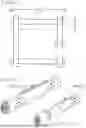
FIG. 1: This is a Top View of the Small Package of logs up to 50 inches long. The Medium Package consists of logs up to 70 inches long. The Large Package consists of logs up to 90 inches long.
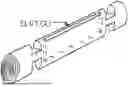
FIG. 2: This is one typical 50-inch-long log. It shows the elements of a weight reduction slot.
FIG. 3: This is an alternative design considered.
DETAILED DESCRIPTION OF THE INVENTION
Multiple different elements each help reduce the weight of a log and when all elements are done at the same time the unexpected becomes possible. A light weight easily moved set of logs can be turned into whatever the person can imagine.
A slot, slots, or holes can cut the weight of each log significantly and without the holes being noticed from a distance. The best mode of practice is the design with the lightest weight log, sufficiently strong log, best looking log, and best smelling log. To achieve this goal, use a chainsaw to cut slots 4 inches wide by 12 inches long through the top of the logs.
The best type of tree is Northern White Cedar because it is the lightest by nature. It is lighter than the more available Red Cedar that grows in the Pacific West Coast. This element of white cedar can reduce the weight significantly especially if the cedar is dried thoroughly and kept dry out of the weather. It requires shelter from the rain such as inside a building or under a Park Pavillion roof.
The best mode of finishing the surface is by a mechanical rough turning lathe at a sawmill such as Kramer Forest Products Inc. It removes the bark which allows the inner wood to dry out faster and provides a less messy log for people to lift. A final sanding with 60-80 grit sandpaper helps a great deal. A combination of belt sander, rotary sander, and orbital sanders are the best mode of practice for rounding sharp edges and smoothing the surface. Wiping with a damp cloth is the final step.
Alternative designs for lightening holes include drilling 2″ to 4″ diameter holes every few inches across the entire length of the log or at many different angles.
This invention addresses many current social problems with young people between 13-20 years old that have little to do that interests them especially after dark and in the cold winter.
Claims
I claim:1. A wooden log comprising:
a set of notches on top and bottom of both ends of the log to allow stacking of similar notched logs at 90 degrees to each other,
a set of logs of specific different lengths to allow different combinations of logs to be stacked in many ways and configurations to create windows and doors of a fort.
2. The wooden log of claim 1, further comprising:
the slot for reducing the weight of the log.
3. The wooden log of claim 2, further comprising:
to be oriented vertically so people cannot see into the log cabin fort.
4. The wooden log of claim 2, further comprising:
to be as wide and as long as possible without the log breaking during rough use.
5. The wooden log of claim 1, further comprising:
to be a series of holes which come to within ¼″ of each other.
6. The wooden log of claim 1, further comprising:
to be not attached to other logs.
7. The wooden log of claim 1, further comprising:
to be under 50 pounds.
8. The wooden log of claim 1, further comprising:
to be between 3 inch and 9 inch diameter cedar wood.
Images & Drawings included:
Sources:
- United States Patent and Trademark Office - verify current appl. status at the USPTO↗
Recent applications in this class:
- » 20240318422 2024-09-26
Logging Notch Assembly - » 20240254761 2024-08-01
BOARDS, KIT AND METHODS FOR CONSTRUCTION OF PREFABRICATED STRUCTURES - » 20240240455 2024-07-18
ARCHITECTURAL STRUCTURE AND WALL MEMBER FOR THE SAME - » 20220333374 2022-10-20
Beam and bolting construction system and method - » 20220195725 2022-06-23
Modular building - » 20210348386 2021-11-11
PRE-FINISHED LOG WALL PANEL SYSTEM - » 20210156144 2021-05-27
Beam and bolting construction system and method - » 20210062504 2021-03-04
Beam and bolting construction system and method - » 20210040734 2021-02-11
Pre-finished log wall panel system - » 20190330843 2019-10-31
CONSTRUCTION APPARATUS AND METHOD