INTERNAL COMBUSTION ENGINE
US20260168461A1
2026-06-18
19/361,053
2025-10-17
Smart Summary: An internal combustion engine has a piston designed with a special cavity. This cavity features a raised center and a protrusion that goes around the outer edge. A connecting part links the protrusion to the raised center and has a curved surface. There is also a flat surface that slopes downward from the curved part towards the outer edge. A step is formed between this flat surface and the raised center, creating a unique shape for better performance. 🚀 TL;DR
Abstract:
A piston of an internal combustion engine is provided with a cavity, which includes: a raised portion provided in a central portion, a protrusion provided along a circumferential direction of the piston on an outer side of the raised portion, and a connecting portion that connects the protrusion and the raised portion. The connecting portion includes: a curved surface continuous with the protrusion, a flat surface that is continuous with the curved surface on the radially inner side, and a step portion formed between the flat surface 54 and the raised portion. The flat surface is inclined between a connection point with the curved surface and the step portion so as to become lower toward the radially outer side.
Applicant:
Interested in similar patents?
Get notified when new applications in this technology area are published.
Classification:
F02F3/28 » CPC main
Pistons Other pistons with specially-shaped head
F02F3/24 » CPC further
Pistons having means for guiding gases in cylinders, e.g. for guiding scavenging charge in two-stroke engines
Description
CROSS-REFERENCE TO RELATED APPLICATIONS
The present application claims priority to Japanese Patent Application number 2024-221749, filed on December 18, 2024 contents of which are incorporated herein by reference in their entirety.
BACKGROUND OF THE INVENTION
The present disclosure relates to an internal combustion engine having a piston in which a cavity is formed. In order to mix fuel (unburned fuel) and air, the cavity of a piston disclosed in Japanese Unexamined Patent Application Publication No. 2021-11843 is provided with a step portion for separating the fuel flowing along the curved portion toward the raised portion at the center.
However, in the above-described technique, the fuel separated from the step portion easily comes into contact with the raised portion before mixing with the surrounding air, resulting in insufficient air intake and reduced fuel–air mixing.
BRIEF SUMMARY OF THE INVENTION
The present disclosure has been made in view of these points, and its object is to promote the mixing of fuel and air in a cavity.
One aspect of the present disclosure provides an internal combustion engine including: a piston having a cavity formed in a central portion of a top surface thereof; and an injector that injects fuel into the cavity, wherein the cavity includes: a raised portion provided in a central portion of the piston in a radial direction; a protrusion provided along a circumferential direction of the piston on an outer side of the raised portion in the radial direction; and a connecting portion that is provided so as to surround the raised portion and connects the protrusion and the raised portion, wherein the connecting portion includes a curved surface continuous with the protrusion, a flat surface that is continuous with the curved surface on an inner side in the radial direction, and a step portion formed between the flat surface and the raised portion, and the flat surface is inclined between the curved surface and the step portion so as to become lower toward an outer side in the radial direction.
BRIEF DESCRIPTION OF THE DRAWINGS
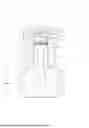
FIG. 1 is a schematic view showing a configuration of an internal combustion engine 1 according to one embodiment.
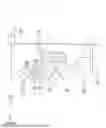
FIG. 2 is a schematic view showing a cross-sectional configuration of a cavity 40.
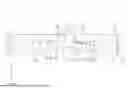
FIG. 3 is a schematic view showing a state in which an injector 22 has sprayed fuel onto a protrusion 45.
FIG. 4 is a schematic view showing a state in which the fuel flows along a flat surface 54.
FIG. 5 is a schematic view showing a state in which the fuel is separated from the tip of the flat surface 54.
FIG. 6 is a schematic view showing a modification of a cross-sectional configuration of a cavity 40.
DETAILED DESCRIPTION OF THE INVENTION
Hereinafter, the present disclosure will be described through exemplary embodiments, but the following exemplary embodiments do not limit the invention according to the claims, and not all of the combinations of features described in the exemplary embodiments are necessarily essential to the solution means of the invention.
Configuration of an internal combustion engine
FIG. 1 is a schematic view showing a configuration of an internal combustion engine 1 according to one embodiment. Here, the internal combustion engine 1 is mounted on a vehicle such as a truck, but is not limited thereto, and may be mounted on, for example, a ship.
The internal combustion engine 1 is, for example, a diesel engine. The internal combustion engine 1 is a power source that generates power for causing a vehicle to travel by burning and expanding an air-fuel mixture of intake air and fuel in a combustion chamber 2. The internal combustion engine 1 includes a cylinder block 10, a cylinder head 20, a piston 30, and a crankshaft 60.
The cylinder block 10 includes a cylinder 12 that houses the piston 30 in a manner allowing the piston 30 to reciprocate, and a crankcase 16 that houses the crankshaft 60. An oil pan 18 that reserves lubricating oil is attached to the crankcase 16.
The cylinder head 20 is provided to an upper portion of the cylinder block 10. The cylinder head 20 includes an injector 22, an intake valve 25, and an exhaust valve 26. The injector 22 injects fuel into the combustion chamber 2 defined by a top surface of the piston 30, an inner wall surface 13 of the cylinder 12, and the cylinder head 20. The intake valve 25 opens and closes to introduce intake air (air) from an intake port 23 into the combustion chamber 2. The exhaust valve 26 opens and closes to guide the exhaust gas from the combustion chamber 2 into the exhaust port 24.
The piston 30 reciprocates within the cylinder 12. When the piston 30 reciprocates between a top dead center and a bottom dead center, the piston 30 slides on the inner wall surface 13 of the cylinder 12. The lubricating oil is supplied to the inner wall surface 13 to form an oil film. Since the oil film is formed on the inner wall surface 13, frictional force when the piston 30 slides on the inner wall surface 13 can be reduced.
A top surface 31 of the piston 30 is provided with a cavity 40 (see FIG. 2). The cavity 40 is formed by recessing the top surface 31, and constitutes a part of the combustion chamber 2. For example, when the piston 30 is near the top dead center, the injector 22 injects fuel into the cavity 40. The fuel injected into the cavity 40 is mixed with air within the cavity 40 and combusts. A detailed configuration of the piston 30 will be described later.
The crankshaft 60 is coupled to the piston 30 via a connecting rod (hereinafter referred to as “con rod”) 62. The crankshaft 60 converts reciprocating motion of the piston 30 into rotational motion.
Detailed configuration of the cavity
FIG. 2 is a schematic view showing a cross-sectional configuration of the cavity 40. The vertical direction shown in FIG. 2 is parallel to the axial direction of the piston 30. Furthermore, the up-down direction is parallel to the vertical direction. FIG. 2 shows the piston 30 positioned near the top dead center.
The cavity 40 is formed by recessing the central portion of the top surface 31 of the piston 30. As shown in FIG. 2, the cavity 40 includes a raised portion 42, a protrusion 45, and a connecting portion 50.
The raised portion 42 is a portion raised from the bottom portion of the cavity 40 toward the injector 22. As one example, the raised portion 42 is raised in a conical shape. The raised portion 42 is provided at the radially central portion of the piston 30. The raised portion 42 faces the injector 22 when the piston 30 is at the top dead center. The apex of the raised portion 42 is positioned on the central axis C of the piston 30 and the injector 22.
The raised portion 42 has an inclined surface 43. The inclined surface 43 is inclined downward in the vertical direction from the apex of the raised portion 42 toward the radially outer side. The inclined surface 43 is, for example, a flat surface inclined at a predetermined angle. However, the present disclosure is not limited thereto, and the inclined surface 43 may be a curved surface.
The protrusion 45 protrudes upward in the vertical direction at a position outside the raised portion 42 in the radial direction of the piston 30. The protrusion 45 is located closer to the top surface 31 of the piston 30 than the raised portion 42 in the cavity 40.
Specifically, the protrusion 45 is located vertically above the apex of the raised portion 42. It should be noted that the vertical relationship between the protrusion 45 and the raised portion 42 can be appropriately varied depending on specifications required of the internal combustion engine 1. The protrusion 45 is provided along the circumferential direction of the piston 30. Here, the protrusion 45 is continuously provided over the entire circumference so as to surround the raised portion 42 in the circumferential direction.
As shown in FIG. 2, the injector 22 sprays fuel toward the protrusion 45. The injector 22 has a plurality of injection holes provided at predetermined intervals in the circumferential direction, and each injection hole sprays fuel. In FIG. 2, for convenience of explanation, only the fuel injection direction by one injection hole is shown. The fuel injected by the injector 22 (specifically, the fuel spray) is diverted by the protrusion 45. Some of the diverted fuel flows toward the connecting portion 50, as indicated by the arrow A1 in FIG. 2, while the remaining fuel flows outward in the radial direction of the cavity 40, as indicated by the arrow A2.
The connecting portion 50 is located between the raised portion 42 and the protrusion 45 in the radial direction of the piston 30, and connects the protrusion 45 and the raised portion 42. The connecting portion 50 is located vertically below the protrusion 45. The connecting portion 50 is provided at a position corresponding to the protrusion 45 in the circumferential direction. The protrusion 45 is provided so as to surround the raised portion 42 in the circumferential direction, and the connecting portion 50 is also provided so as to surround the raised portion 42. Here, the connecting portion 50 is provided along the circumferential direction of the piston 30. Some of the fuel (unburned fuel) diverted from the protrusion 45 flows along the connecting portion 50 toward the center of the cavity 40.
As shown in FIG. 2, the connecting portion 50 has a curved surface 52, a flat surface 54, and a step portion 56. The curved surface 52 is a portion of the connecting portion 50 located on the outer side in the radial direction of the piston 30, and is continuous with the protrusion 45. The curved surface 52 serves as a guide surface, guiding the fuel diverted by the protrusion 45 toward the center of the cavity 40. Here, the curved surface 52 is curved with a predetermined curvature to facilitate guiding the fuel toward the center of the cavity 40.
The curved surface 52 is provided along the circumferential direction. The curved surface 52 is formed continuously over the entire circumference in the circumferential direction so as to surround the raised portion 42. Accordingly, even if the fuel diverted by the protrusion 45 spreads in the circumferential direction, it can flow more easily along the curved surface 52, thereby facilitating its guidance toward the center of the cavity 40.
The flat surface 54 is located on the inner side (central side) of the curved surface 52 in the radial direction of the piston 30. Specifically, the flat surface 54 is located between the curved surface 52 and the step portion 56 in the radial direction of the piston 30. One end of the flat surface 54 is continuous with the curved surface 52, and the other end of the flat surface 54 is continuous with the step portion 56. Similarly to the curved surface 52, the flat surface 54 is provided along the circumferential direction. Similarly to the curved surface 52, the flat surface 54 is provided continuously over the entire circumference in the circumferential direction. Continuing from the curved surface 52, the flat surface 54 guides the fuel toward the center of the cavity 40.
The flat surface 54 is inclined at a predetermined angle in the radial direction. The flat surface 54 is inclined so that a connecting portion (one end of the flat surface 54) with the curved surface 52 is located below a connecting portion (the other end of the flat surface 54) with the step portion 56 in the vertical direction. The flat surface 54 is inclined between the curved surface 52 and the step portion 56, so as to become lower toward the radially outer side. Here, the flat surface 54 is parallel to the inclined surface 43 of the raised portion 42. However, the present embodiment is not limited to this, and the flat surface 54 does not need to be parallel to the inclined surface 43. Since the flat surface 54 is inclined in this way, the fuel flowing along the flat surface 54 can proceed straight toward the radially central portion and upward in the vertical direction.
The step portion 56 is a portion that forms a step between the raised portion 42 and the connecting portion 50. The step portion 56 is formed between the raised portion 42 and the flat surface 54. Specifically, the step portion 56 is formed between the inclined surface 43 and the flat surface 54 of the raised portion 42. The step portion 56 is provided along the circumferential direction. The step portion 56 is provided continuously over the entire circumference in the circumferential direction. Providing the step portion 56 allows the fuel flowing straight along the flat surface 54 to be more easily separated at the step portion 56. In other words, the fuel flowing straight along the flat surface 54 can be more easily separated from the surface forming the cavity 40 at the step portion 56.
The step portion 56 has a step surface 57, an upper end portion 64, and a lower end portion 65. The step surface 57 is a surface inclined with respect to the flat surface 54, and is, for example, a flat surface perpendicular to the flat surface 54. The upper end portion 64 is a portion that connects the step surface 57 and the flat surface 54 at one end (upper end) of the step surface 57. Since the step surface 57 is perpendicular to the flat surface 54, the upper end portion 64 forms a corner portion. The lower end portion 65 is a portion that connects the step surface 57 and the inclined surface 43 at the other end (lower end) of the step surface 57. The fuel flowing along the flat surface 54 is more easily separated from the surface forming the cavity 40 at the upper end portion 64, which is the corner portion. The fuel flowing along the connecting portion 50 proceeds straight toward the radially central portion and upward in the vertical direction while flowing along the flat surface 54. The fuel that has flowed along the flat surface 54 proceeds straight without changing its direction even after passing through the upper end portion 64. Therefore, the fuel flowing along the flat surface 54 separates from the surface forming the cavity 40 at the upper end portion 64, where the flat surface 54 and the step surface 57 are connected, and continues to proceed.
The lower end portion 65 of the step portion 56 connected to the inclined surface 43 is located below the upper end portion 64 of the step portion 56 connected to the flat surface 54 in the vertical direction. In the above description, the step surface 57 is a flat surface, but is not limited thereto, and the step surface 57 may be a curved surface.
The flat surface 54 is provided such that an imaginary line B, extending from the flat surface 54 shown in FIG. 2, passes above the apex of the raised portion 42. The imaginary line B is an imaginary line extending from the flat surface 54 toward the radially inner side (center side) of the piston 30 along the surface of the flat surface 54. Specifically, the imaginary line B extending from the flat surface 54 passes between the apex of the raised portion 42 and the injector 22. Accordingly, the separated fuel can flow away more easily from the inclined surface 43 of the raised portion 42, allowing the fuel to draw in air around the inclined surface 43, and thereby promoting the mixing of fuel and air. It should be noted that the imaginary line B extending from the flat surface 54 may pass through the injector 22 when the piston 30 is at the top dead center.
Here, the flow of the fuel injected by the injector 22 in the cavity 40 will be described with reference to FIGS. 3 to 5. FIG. 3 is a schematic view showing the state immediately after the injector 22 has sprayed fuel onto the protrusion 45. FIG. 4 is a schematic view showing the state in which the fuel flows along the flat surface 54. FIG. 5 is a schematic view showing the state in which the fuel is separated from the surface forming the cavity 40 at the upper end portion 64. FIG. 3 shows the piston 30 positioned near the top dead center, and FIGS. 4 and 5 show the state in which the piston 30 is moving toward the bottom dead center.
Here, it is assumed that the injector 22 has sprayed fuel when the piston 30 is near the top dead center. As shown in FIG. 3, the injector 22 sprays fuel toward the protrusion 45. The injected fuel impinges on the protrusion 45 and is diverted. Some of the diverted fuel flows over the protrusion 45 toward the outer side in the radial direction, while the remaining fuel flows onto the curved surface 52 of the connecting portion 50.
After the injector 22 has sprayed the fuel, the piston 30 moves toward the bottom dead center. At this time, as shown in FIG. 4, the fuel that has flowed from the protrusion 45 onto the curved surface 52 flows along the flat surface 54, in continuation from the curved surface 52. By flowing along the flat surface 54, the fuel’s flow direction becomes straight. Specifically, the fuel flows directly along the flat surface 54 toward the radially central portion and upward in the vertical direction.
When the piston 30 further moves toward the bottom dead center, as shown in FIG. 5, the fuel flowing along the flat surface 54 separates from the surface that forms the cavity 40 at the upper end portion 64 connected to the step surface 57 of the flat surface 54. In particular, because the fuel flows directly along the flat surface 54, the fuel separates more easily. In contrast to the present embodiment, when the curved surface 52 is connected directly to the step surface 57 without the flat surface 54, the fuel’s flow direction is not straight, making it less likely to separate. Further, even if the fuel separates, the fuel’s flow direction is not straight, and therefore the fuel is more likely to come into contact with the raised portion 42.
The separated fuel does not contact the raised portion 42 (specifically, the inclined surface 43), and flows away from the inclined surface 43. At this time, the fuel draws in ambient air and combusts. In particular, because a space exists between the flowing fuel and the inclined surface 43, air is easily drawn into the fuel from this space, thereby promoting fuel combustion.
Modification
FIG. 6 is a schematic view showing a modified example of the cross-sectional configuration of the cavity 40. In the modification, a width L1 of the flat surface 54 in the radial direction is longer than a width L2 of the curved surface 52 in the radial direction. With the longer width L1 of the flat surface 54 as described above, a straight flow of the fuel along the flat surface 54 is more easily formed, causing the fuel to separate more easily at the upper end portion 64.
In the modification shown in FIG. 6, by increasing the width L1 of the flat surface 54 in the radial direction, the width of the inclined surface 43 in the radial direction becomes smaller. Further, in the modification, since the length between the upper end portion 64 and the lower end portion 65 of the step surface 57 is reduced, the inclination angle of the inclined surface 43 continuous with the lower end portion 65 is reduced. As a result, the volume of the space of the cavity 40, which is the recessed portion, can be reduced, and thus the compression ratio during the compression stroke of the internal combustion engine 1 can be increased.
In the above description, the step portion 56 and the flat surface 54 are continuously provided around the raised portion 42 along the circumferential direction over the entire circumference, but the present embodiment is not limited thereto. For example, a plurality of step portions 56 and a plurality of flat surfaces 54 are provided at predetermined intervals in the circumferential direction. Specifically, the step portion 56 and the flat surface 54 are provided in accordance with the positions of the plurality of injection holes of the injector 22 in the circumferential direction. Even in this case, the fuel injected from each injection hole of the injector 22 and flowing along the connecting portion 50 is likely to separate at the upper end portion 64.
Effects of the Embodiment
The cavity 40 of the piston 30 of the above-described embodiment includes: the raised portion 42 provided at the radially central portion of the piston 30; the protrusion 45 provided along the circumferential direction on the outer side of the raised portion 42; and the connecting portion 50 provided so as to surround the raised portion 42 and connecting the protrusion 45 and the raised portion 42. The connecting portion 50 includes: the curved surface 52 continuous with the protrusion 45, the flat surface 54 continuous with the curved surface 52 on the radially inner side; and the step portion 56 formed between the flat surface 54 and the raised portion 42. The flat surface 54 is inclined between the curved surface 52 and the step portion 56, so as to become lower toward the radially outer side. Providing the above-described flat surface 54 allows the fuel that has flowed along the flat surface 54 and along the curved surface 52 to be more easily separated at the upper end portion 64 that connects the flat surface 54 and the step portion 56. In addition, by having the flat surface 54 inclined so as to recede from the bottom portion of the cavity 40, the separated fuel is less likely to come into contact with the raised portion 42, and it becomes easier to draw in the surrounding air. As a result, the mixing of the separated fuel and air is promoted, thereby increasing combustion efficiency.
The present disclosure is explained based on the exemplary embodiments. The technical scope of the present disclosure is not limited to the scope explained in the above embodiments and it is possible to make various changes and modifications within the scope of the disclosure. For example, all or part of the apparatus can be configured with any unit which is functionally or physically dispersed or integrated. Further, new exemplary embodiments generated by arbitrary combinations of them are included in the exemplary embodiments. Further, effects of the new exemplary embodiments brought by the combinations also have the effects of the original exemplary embodiments.
Claims
What is claimed is:1. An internal combustion engine comprising:
a piston having a cavity formed in a central portion of a top surface thereof; and
an injector that injects fuel into the cavity, wherein the cavity includes:
a raised portion provided in a central portion of the piston in a radial direction;
a protrusion provided along a circumferential direction of the piston on an outer side of the raised portion in the radial direction; and
a connecting portion that is provided so as to surround the raised portion and connects the protrusion and the raised portion, wherein
the connecting portion includes a curved surface continuous with the protrusion, a flat surface that is continuous with the curved surface on an inner side in the radial direction, and a step portion formed between the flat surface and the raised portion, and
the flat surface is inclined between the curved surface and the step portion so as to become lower toward an outer side in the radial direction.
2. The internal combustion engine according to claim 1, wherein, along a surface of the flat surface, an imaginary line extending from the flat surface toward the inner side in the radial direction passes between an apex of the raised portion and the injector.
3. The internal combustion engine according to claim 1, wherein the raised portion has an inclined surface inclined from an apex of the raised portion outward in the radial direction, and
the step portion is formed between the inclined surface and the flat surface.
4. The internal combustion engine according to claim 3, wherein the step portion includes a step surface inclined with respect to the flat surface, an upper end portion connecting the step surface and the flat surface, and a lower end portion connecting the step surface and the inclined surface, and
the lower end portion is located below the upper end portion in a vertical direction.
5. The internal combustion engine according to claim 3, wherein the flat surface is parallel to the inclined surface.
6. The internal combustion engine according to claim 1, wherein the flat surface and the step portion are provided along the circumferential direction.
7. The internal combustion engine according to claim 1, wherein a plurality of flat surfaces and a plurality of step portions are provided at predetermined intervals in the circumferential direction.
8. The internal combustion engine according to claim 1, wherein a width of the flat surface in the radial direction is longer than a width of the curved surface in the radial direction.
9. The internal combustion engine according to claim 2, wherein the apex of the raised portion is located below the protrusion in a vertical direction.
Images & Drawings included:



Sources:
- United States Patent and Trademark Office - verify current appl. status at the USPTO↗
Similar patent applications:
- » 20240410323
CONTROL DEVICE FOR AN INTERNAL COMBUSTION ENGINE, INTERNAL COMBUSTION ENGINE ASSEMBLY INCLUDING AN INTERNAL COMBUSTION ENGINE AND A CONTROL DEVICE OF THIS TYPE, METHOD FOR OPERATING AN INTERNAL COMBUSTION ENGINE, AND METHOD FOR DETERMINING A COMPONENT CHARACTERISTIC MAP - » 20170234249
Control system for internal combustion engine, internal combustion engine and method of controlling internal combustion engine - » 20180238262
Controller for internal combustion engine, internal combustion engine, and control method of internal combustion engine - » 20250264066
CONTROL SYSTEM FOR INTERNAL COMBUSTION ENGINE, INTERNAL COMBUSTION ENGINE SYSTEM, AND METHOD OF CONTROLLING INTERNAL COMBUSTION ENGINE - » 20180347451
CYLINDER HEAD FOR AN INTERNAL COMBUSTION ENGINE, INTERNAL COMBUSTION ENGINE, AND METHOD FOR OPERATING AN INTERNAL COMBUSTION ENGINE - » 20080163679
Method for Operating an Internal Combustion Engine, Internal Combustion Engine, and Control Unit for an Internal Combustion Engine - » 20240060856
SENSOR WHEEL FOR AN INTERNAL COMBUSTION ENGINE, INTERNAL COMBUSTION ENGINE, AND METHOD FOR OPERATING AN INTERNAL COMBUSTION ENGINE - » 20150081194
Method for operating an internal combustion engine, internal combustion engine and maintenance system for an internal combustion engine, self-executable computer program product and non-volatile storage medium - » 20250172101
CONTROL SYSTEM FOR AN INTERNAL COMBUSTION ENGINE, INTERNAL COMBUSTION ENGINE SYSTEM, AND METHOD FOR CONTROLLING INTERNAL COMBUSTION ENGINE - » 20250369397
CONTROL SYSTEM FOR AN INTERNAL COMBUSTION ENGINE, INTERNAL COMBUSTION ENGINE SYSTEM, AND METHOD FOR CONTROLLING INTERNAL COMBUSTION ENGINE
Recent applications in this class:
- » 20260168460 2026-06-18
PISTON FOR RECIPROCATING WITHIN A CYLINDER IN AN INTERNAL COMBUSTION ENGINE - » 20260132756 2026-05-14
PISTON AND INJECTOR FOR REDUCED HEAD THERMAL LOADING - » 20260098508 2026-04-09
PISTON, INTERNAL COMBUSTION ENGINE, AND VEHICLE - » 20260098507 2026-04-09
PISTON, INTERNAL COMBUSTION ENGINE, AND VEHICLE - » 20260043374 2026-02-12
INTERNAL COMBUSTION ENGINE - » 20260043373 2026-02-12
INTERNAL COMBUSTION ENGINE - » 20250198362 2025-06-19
PROFILED COVER PLATE FOR A PISTON - » 20250179971 2025-06-05
INTERNAL COMBUSTION ENGINE WITH MEANS FOR CONDENSATION FLUID REMOVAL - » 20250075671 2025-03-06
DRIVING ENGINE FOR VEHICLES - » 20240376849 2024-11-14
PISTON FOR AN INTERNAL COMBUSTION ENGINE