ADJUSTABLE MODULAR LED LIGHTING SYSTEM
US20260168660A1
2026-06-18
19/532,416
2026-02-06
Smart Summary: An adjustable modular LED lighting system includes two main parts called housings, which can move relative to each other. One housing has space inside for electrical drivers that power the lights. A U-shaped support rail is placed inside the first housing to help hold the drivers securely. This rail has cut-out sections that line up with openings in the housing for better functionality. Overall, the design allows for flexible lighting options and easy adjustments. 🚀 TL;DR
Abstract:
The present disclosure relates to a lighting system (10). The lighting system (10) may include a first housing (12), a second housing (14), one or more drivers (24), a U-shaped support rail (20), and one or more lighting devices (40a, 40b, 40c). The first housing (12) may define a first hollow portion. The second housing (14) may be pivotably coupled to the first housing (12) and may define a second hollow portion. The one or more drivers (24) may be disposed in the first hollow portion of the first housing. Further, the U-shaped support rail (20) may be disposed along an inner peripheral surface of the first housing (12) and may be adapted to mount the one or more drivers (24) in the first housing (12). Herein, the U-shaped support rail (20) may include a plurality of cut-out portions (52) aligned with corresponding openings (54) in the first housing (12).
Inventors:
- Ishavarbhai Patel 3 🇺🇸 Pendleton, SC, United States
- NAVEEN KUMAR 2 🇮🇳 Noida, India
- HIMANSHU TYAGI 2 🇮🇳 Noida, India
- PUSHPRAJ GIRI 2 🇮🇳 Noida, India
- SOMSUBHRA METIA 2 🇮🇳 Noida, India
Applicant:
Interested in similar patents?
Get notified when new applications in this technology area are published.
Classification:
F21V23/009 » CPC main
Arrangement of electric circuit elements in or on lighting devices the elements being electronics drivers or controllers for operating the light source, e.g. for a LED array enclosed in a casing the casing being inside the housing of the lighting device
F21S2/005 » CPC further
Systems of lighting devices, not provided for in main groups - or , e.g. of modular construction of modular construction
F21S8/036 » CPC further
Lighting devices intended for fixed installation of surface-mounted type the surface being a wall or like vertical structure, e.g. building facade by means of a rigid support, e.g. bracket or arm
F21V17/166 » CPC further
Fastening of component parts of lighting devices, e.g. shades, globes, refractors, reflectors, filters, screens, grids or protective cages characterised by specific fastening means or way of fastening by deformation of parts; Snap action mounting the parts being subjected to torsion, e.g. spiral springs
F21V23/002 » CPC further
Arrangement of electric circuit elements in or on lighting devices the elements being electrical wires or cables Arrangements of cables or conductors inside a lighting device, e.g. means for guiding along parts of the housing or in a pivoting arm
F21V23/06 » CPC further
Arrangement of electric circuit elements in or on lighting devices the elements being coupling devices, e.g. connectors
F21V29/70 » CPC further
Protecting lighting devices from thermal damage; Cooling or heating arrangements specially adapted for lighting devices or systems; Cooling arrangements characterised by passive heat-dissipating elements, e.g. heat-sinks
F21Y2115/10 » CPC further
Light-generating elements of semiconductor light sources Light-emitting diodes [LED]
F21V23/00 IPC
Arrangement of electric circuit elements in or on lighting devices
F21S2/00 IPC
Systems of lighting devices, not provided for in main groups - or , e.g. of modular construction
F21S2/00 IPC
Electric lighting
F21S8/00 IPC
Lighting devices intended for fixed installation
F21V17/16 IPC
Fastening of component parts of lighting devices, e.g. shades, globes, refractors, reflectors, filters, screens, grids or protective cages characterised by specific fastening means or way of fastening by deformation of parts; Snap action mounting
Description
CROSS-REFERENCE TO RELATED APPLICATIONS
The present patent application is a continuation of the U.S. patent application Ser. No. 18/918,439 filed on Oct. 17, 2024, and presently pending, which claims the benefit of U.S. provisional application No. 63/591620 filed on 19 Oct. 2023. The present application comprises an improvement or a modification of the invention claimed in the specification of the main patent applied in the U.S. patent application Ser. No. 18/918,439.
FIELD OF THE INVENTION
The disclosure generally relates to a lighting system. More specifically, the disclosure relates to an adjustable modular Light-emitting diode (LED) lighting system.
BACKGROUND
Generally, lighting assemblies, such as Light Emitting Diodes (LEDs) assemblies, are equipped in various places, such as residential buildings and commercial buildings to generate illumination. Typically, a lighting assembly is a two-piece housing that is formed using an upper member and a lower member joined to the upper member. Further, the lighting assembly includes an LED, and an LED driver electrically coupled to the lighting device. Generally, the LEDs and the driver are mounted on the same platform, such as a Printed Circuit Board (PCB), with each other to form a sub-assembly which is disposed in one of the upper member and the lower member.
The lighting system of the U.S. patent application Ser. No. 18/918,439 comprises a first housing, a second housing, one or more drivers, one or more lighting devices, and a support rail. The first housing defines a first hollow portion. Further, the second housing is pivotably coupled to the first housing and defines a second hollow portion opposite to the first hollow portion, such that the first hollow portion and the second hollow portion together define an interior space. The one or more drivers are disposed in the first hollow portion of the first housing. Herein, the support rail is disposed along an inner peripheral surface of the first housing and is adapted to mount the one or more drivers in the first housing. However, the support rail does not have any mounting provision to support the first housing. Therefore, the assembly of the first housing and the support rail consumes significant time and effort, which makes the assembly process more complex.
Accordingly, a modification in the lighting system of the U.S. patent application Ser. No. 18/918,439 is desirable to further improve the overall operation of the lighting system.
SUMMARY
This summary is provided to introduce a selection of concepts in a simplified format that are further described in the detailed description of the disclosure. This summary is not intended to identify key or essential inventive concepts of the disclosure, nor is it intended to determine the scope of the disclosure.
The present disclosure relates to a lighting system. The lighting system may include a first housing, a second housing, one or more drivers, a U-shaped support rail, and one or more lighting devices. The first housing may define a first hollow portion. The second housing may be pivotably coupled to the first housing and may define a second hollow portion opposite to the first hollow portion, such that the first hollow portion and the second hollow portion together define an interior space. The one or more drivers may be disposed in the first hollow portion of the first housing. Further, the U-shaped support rail may be disposed along an inner peripheral surface of the first housing and may be adapted to mount the one or more drivers in the first housing. Herein, the U-shaped support rail may include a plurality of cut-out portions aligned with corresponding openings in the first housing. The one or more lighting devices may be disposed in the second hollow portion of the second housing and electrically connected to the one or more drivers.
As explained above, the lighting system includes a plurality of cut-out portions aligned with corresponding openings in the first housing, to position in the U-shaped support rail along the inner peripheral surface of the first housing. Further, the U-shaped support rail 20 may include a plurality of attachment holes that may be adapted to receive the plurality of fasteners to secure the U-shaped support rail to the first housing. Herein, the implementation of the plurality of cut-out portions and the plurality of attachment holes provides mounting provisions to mount the U-shaped support rail on the first housing. Thus, the assembly of the first housing and the support rail becomes easier and requires less time and effort, which increases the overall productivity. This reduces the overall cost associated with the assembly of the lighting system.
Additionally, the one or more drivers may be disposed in the first housing and the one or more lighting devices may be disposed in the second housing. Herein, there is only an electrical connection between the one or more drivers or the one or more lighting devices. Thus, the one or more drivers or the one or more lighting devices can be individually repaired or replaced for maintenance purposes or in case of any failure. This reduces the time and effort required in the maintenance of the lighting system, which further reduces the overall cost associated with the maintenance of the lighting system.
In a further advantageous embodiment, the lighting system may include a spring-loaded locking mechanism positioned in the first housing and adapted to releasably lock a distal end of the first housing to a distal end of the second housing in a locked position.
In a further advantageous embodiment, the spring-loaded locking mechanism may include a fixed member, a movable member, and a resilient member. The fixed member may be positioned in the first housing. The movable member may be coupled with the fixed member and may be adapted to be pressed to move with respect to the fixed member to unlock the second housing from the first housing in an open position. The resilient member may be coupled with the movable member to provide a resilient force to the movable member.
In a further advantageous embodiment, the lighting system may include a plurality of fastening members adapted to mount each lighting device in the second housing.
In a further advantageous embodiment, the lighting system may include a support plate positioned in the first housing, below the one or more drivers, and adapted to mount the one or more drivers.
In a further advantageous embodiment, each lighting device may include a heat sink adapted to absorb heat dissipated by the respective lighting device.
In a further advantageous embodiment, each driver may include a heat sink adapted to absorb heat dissipated by the respective driver.
In a further advantageous embodiment, the second housing may include a plurality of openings adapted to accommodate the one or more lighting devices.
In a further advantageous embodiment, the U-shaped support rail may include a plurality of attachment holes adapted to receive a plurality of fasteners to secure the U-shaped support rail to the first housing.
In a further advantageous embodiment, the lighting system may include a position selector and a first support member. The position selector may be mounted on an inner peripheral surface of the second housing and having a plurality of slots. The first support member may be pivotally coupled to the U-shaped support rail and the position selector of the second housing and adapted to guide the movement of the second housing with respect to the first housing between the open position and the locked position.
In a further advantageous embodiment, the first support member may include a first end and a second end opposite to the first end. The first end may be pivotally coupled to the support rail. The second end may define a prong adapted to be engaged with a slot from among the plurality of slots, of the position selector, to guide the movement of the second housing.
In a further advantageous embodiment, the lighting system may include a second support member pivotally coupled to the first housing and the support plate accommodating the one or more drivers and adapted to guide the movement of the support plate with respect to the first housing.
In a further advantageous embodiment, the second support member may include a primary end and a secondary end opposite to the primary end. The primary end may be pivotally coupled with the first housing. The secondary end may be pivotally coupled to the first housing and the support plate to guide the movement of the support plate with respect to the first housing.
In a further advantageous embodiment, the lighting system may include a control unit positioned in the first housing and adapted to control one or more operations of the one or more lighting devices.
In a further advantageous embodiment, the lighting system may include an adjustable mounting bracket coupled with the first housing and adapted to adjust a pivoting angle of the first housing relative to a mounting platform.
To further clarify the advantages and features of the method and system, a more particular description of the method and system will be rendered by reference to specific embodiments thereof, which is illustrated in the appended drawing. It is appreciated that these drawings depict only typical embodiments of the disclosure and are therefore not to be considered limiting its scope. The disclosure will be described and explained with additional specificity and detail with the accompanying drawings.
BRIEF DESCRIPTION OF THE DRAWINGS
These and other features, aspects, and advantages will become better understood when
the following detailed description is read with reference to the accompanying drawings in which like characters represent like parts throughout the drawings, wherein:
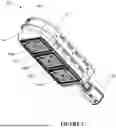
FIG. 1 illustrates a perspective view of an adjustable modular Light-emitting diode (LED) lighting system, according to an embodiment of the present disclosure;
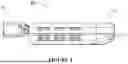
FIG. 2 illustrates a top view of the adjustable modular LED lighting system, according to an embodiment of the present disclosure;
FIG. 3A illustrates an exploded view of the adjustable modular LED lighting system, according to an embodiment of the present disclosure;
FIG. 3B illustrates a partial perspective of a first housing of the adjustable modular LED lighting system, according to an embodiment of the present disclosure;
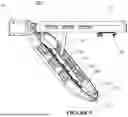
FIGS. 4 and 5 illustrate side views of the adjustable modular LED lighting system depicting a locked position and an open position of the adjustable modular LED lighting system, respectively, according to an embodiment of the present disclosure;
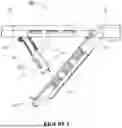
FIGS. 6 and 7A illustrate different side views of the adjustable modular LED lighting system depicting the one or more drivers, a support plate, and a second support member in the open position of the adjustable modular LED lighting system, according to an embodiment of the present disclosure;
FIG. 7B illustrates a side view of the adjustable modular LED lighting system depicting an electrical connection between the one or more drivers and the one or more lighting devices, according to an embodiment of the present disclosure;
FIG. 8 illustrates a perspective view of the one or more drivers of the adjustable modular LED lighting system, according to an embodiment of the present disclosure;
FIG. 9 illustrates a side view of a spring-loaded locking mechanism of the adjustable modular LED lighting system, according to an embodiment of the present disclosure; and
FIGS. 10a, 10b and 10c illustrate front views of the adjustable modular LED lighting system, according to an embodiment of the present disclosure.
Further, skilled artisans will appreciate that elements in the drawings are illustrated for simplicity and may not have necessarily been drawn to scale. For example, the flow charts illustrate the method in terms of the most prominent steps involved to help to improve understanding of aspects of the disclosure. Furthermore, in terms of the construction of the device, one or more components of the device may have been represented in the drawings by conventional symbols, and the drawings may show only those specific details that are pertinent to understanding the embodiments of the disclosure so as not to obscure the drawings with details that will be readily apparent to those of ordinary skill in the art having the benefit of the description herein.
DETAILED DESCRIPTION
For the purpose of promoting an understanding of the principles of the disclosure, reference will now be made to the various embodiments, and specific language will be used to describe the same. It will nevertheless be understood that no limitation of the scope of the disclosure is thereby intended, such alterations and further modifications in the illustrated system, and such further applications of the principles of the disclosure as illustrated therein being contemplated as would normally occur to one skilled in the art to which the disclosure relates.
It will be understood by those skilled in the art that the foregoing general description and the following detailed description are explanatory of the disclosure and are not intended to be restrictive thereof.
Reference throughout this specification to “an aspect”, “another aspect” or similar language means that a particular feature, structure, or characteristic described in connection with the embodiment is included in at least one embodiment of the disclosure. Thus, appearances of the phrase “in an embodiment”, “in another embodiment”, “some embodiments”, “one or more embodiments” and similar language throughout this specification may, but do not necessarily, all refer to the same embodiment.
The terms “comprises”, “comprising”, or any other variations thereof, are intended to cover a non-exclusive inclusion, such that a process or method that comprises a list of steps does not include only those steps but may include other steps not expressly listed or inherent to such process or method. Similarly, one or more devices or sub-systems or elements or structures or components proceeded by “comprises . . . a” does not, without more constraints, preclude the existence of other devices or other sub-systems or other elements or other structures or other components or additional devices or additional sub-systems or additional elements or additional structures or additional components.
Embodiments of the disclosure will be described below in detail with reference to the accompanying drawings.
FIG. 1 illustrates a perspective view of an adjustable modular Light-emitting diode (LED) lighting system 10, according to an embodiment of the present disclosure. FIG. 2 illustrates a top view of the adjustable modular LED lighting system 10, according to an embodiment of the present disclosure. FIG. 3A illustrates an exploded view of the adjustable modular LED lighting system 10, according to an embodiment of the present disclosure. FIG. 3B illustrates a partial perspective view of a first housing 12 of the adjustable modular LED lighting system 10, according to an embodiment of the present disclosure.
It should be noted that the lighting system 10 of the present disclosure is designed by modifying and improving constructional features of at least one sub-component, such as a U-shaped support rail 20 of the lighting system 10 disclosed in the U.S. patent application Ser. No. 18/918,439 to further improve the overall operation of the lighting system 10. Operational and constructional details of other sub-components of the lighting system 10 may remain substantially similar to the sub-components of the lighting system 10 as disclosed in the U.S. patent application Ser. No. 18/918,439.
Referring to FIGS. 1, 2 and 3A-B, the adjustable modular LED lighting system 10 may be installed at various places such as residential buildings and commercial buildings to generate illumination. In a non-limiting embodiment, the adjustable modular LED lighting system 10 may be installed in parking lots, streets or pathways to generate illumination for one or more vehicles and/or one or more pedestrians. In another embodiment, the adjustable modular LED lighting system 10 may be embodied as a linear high bay installed in warehouses, gymnasiums, or large indoor spaces, to generate uniform illumination from greater heights. For the sake of readability, in the subsequent paragraphs, the adjustable modular LED lighting system 10 may be interchangeably referred to as the lighting system 10, without departing from the scope of the present disclosure.
In one embodiment, the lighting system 10 may be embodied as a full cutoff wall pack to generate the illumination in a downward direction, such that light spillage and light pollution may be prevented by ensuring that no light is emitted above a horizontal plane. In another embodiment, the lighting system 10 may be embodied as a semi-cutoff wall pack to produce the light dispersion above the horizontal plane. In yet another embodiment, the lighting system 10 may be embodied as a canopy light that can be installed under canopy areas to generate the targeted illumination to ensure bright and shadow-free lighting.
The lighting system 10 may be adapted to mount on a mounting platform. In an embodiment, the mounting platform may be a pole or a wall, without departing from the scope of the present disclosure. Herein, the lighting system 10 may be adapted to adjust relative to the mounting platform. Such adjustments may be performed to achieve efficient illumination.
In an example, the lighting system 10 may be adjusted to generate more focused and far-reaching illumination when the lighting system 10 is installed in the streets. In an embodiment, the lighting system 10 may include, but is not limited to, one or more motion sensors adapted to sense the motion of one or more objects or pedestrians in the surrounding environment. Thus, the lighting system 10 may be adjusted based on the motion sensing.
In an embodiment, the lighting system 10 may include, but is not limited to, the first housing 12, the second housing 14, an adjustable mounting bracket 18, one or more drivers 24, one or more lighting devices 40a, 40b, 40c, and a spring-loaded locking mechanism 46. The first housing 12 defines a first hollow portion. Herein, the one or more drivers 24 may be disposed in the first hollow portion of the first housing 12. In an embodiment, each driver 24 comprises a heat sink 24a (best shown in FIG. 8) adapted to absorb a heat dissipated by the respective driver 24.
In the illustrated embodiment, the one or more drivers 24 may include three drivers 24 connected with the one or more lighting devices 40a, 40b, 40c and adapted to supply power to the one or more lighting devices 40a, 40b, 40c. In another embodiment, the single driver 24 may be connected with the one or more lighting devices 40a, 40b, 40c to supply power to the one or more lighting devices 40a, 40b, 40c. Herein, each driver 24 may include an input voltage indicator and an output voltage indicator for troubleshooting purposes. In a non-limiting embodiment, all LED panels include an LED power indicator for quick troubleshooting.
The first housing 12 may be embodied as an upper housing, without departing from the scope of the present disclosure. In an embodiment, the first housing 12 may be formed of a polymeric material. In another embodiment, the first housing 12 may be formed of a metallic material.
The adjustable mounting bracket 18 may be coupled with the first housing 12. In an embodiment, the adjustable mounting bracket 18 may be coupled to the first housing 12 via a plurality of fasteners. Herein, the adjustable mounting bracket 18 may be adapted to facilitate the mounting of the lighting system 10 on the mounting platform.
Further, the adjustable mounting bracket 18 may be adapted to adjust a pivoting angle of the first housing 12 relative to the mounting platform, such that the lighting system 10 may be adjusted relative to the mounting platform to adjust the illumination. In an embodiment, the adjustable mounting bracket 18 may be formed of a polymeric material. In another embodiment, the adjustable mounting bracket 18 may be formed of a metallic material.
The second housing 14 may be pivotably coupled to the first housing 12 via a hinge 16. In an embodiment, the second housing 14 may have a shape identical to the shape of the first housing 12, such that the first housing 12 may be coupled with the second housing 14. The second housing 14 defines a second hollow portion opposite to the first hollow portion, such that the first hollow portion and the second hollow portion together define an interior space. The second hollow portion may be adapted to accommodate the one or more lighting devices 40a, 40b, 40c.
The one or more lighting devices 40a, 40b, 40c may be disposed in the second hollow portion of the second housing 14. Herein, the one or more lighting devices 40a, 40b, 40c may be electrically connected to the one or more drivers 24 via one or more connectors 44 (shown in FIG. 7B). In an embodiment, each lighting device 40a, 40b, 40c may include a heat sink 42a, 42b, 42c adapted to absorb the heat dissipated by the respective lighting device 40a, 40b, 40c. In an embodiment, each lighting device 40a, 40b, 40c may be embodied as a Light Emitting Diode (LED), without departing from the scope of the present disclosure. In an embodiment, the one or more lighting devices 40a, 40b, 40c may have generated the illumination in different colors.
As shown in FIGS. 3A and 5, the lighting system 10 may include a plurality of fastening members 36 adapted to mount each lighting device 40a, 40b, 40c in the second housing 14. In the illustrated embodiment, as shown in FIG. 3B, the fastening member 36 is securing support plate 22 within the first housing 12. In an embodiment, the plurality of fastening members 36 may be embodied as a plurality of wing nuts 36, without departing from the scope of the present disclosure. The implementation of the plurality of wing nuts 36 facilitates the easy mounting of each lighting device 40a, 40b, 40c in the second housing 14, and the support plate 22 in the first housing 12.
Further, the second housing 14 may include a plurality of openings 34 adapted to accommodate the one or more lighting devices 40a, 40b, 40c. Herein, the second housing 14 may include a plurality of cross brace members 38 attached to a surface of the second housing 14 to form the plurality of openings 34. The plurality of cross brace members 38 may be adapted to support the one or more lighting devices 40a, 40b, 40c positioned in the plurality of openings 34.
In an embodiment, the plurality of openings 34 may correspond to the one or more lighting devices 40a, 40b, 40c. In the illustrated embodiment, the second housing 14 includes three openings 34 adapted to accommodate three lighting devices 40a, 40b, 40c, without departing from the scope of the present disclosure. Herein, each opening 34 may be adapted to accommodate a lighting device from among the one or more lighting devices 40a, 40b, 40c. The installation of each lighting device 40a, 40b, 40c in the respective opening 34 facilitates the replacement of individual lighting devices 40a, 40b, 40c for maintenance purposes.
The second housing 14 may include an inner peripheral surface 14-2 defining the plurality of openings 34. The peripheral surface may be adapted to receive a lens (not shown). In an embodiment, the lens may be attached to the inner peripheral surface 14-2 of the second housing 14 via a plurality of fasteners. In another embodiment, the lens may be attached to the inner peripheral surface 14-2 via adhesives. In one more embodiment, the lens may be attached to the inner peripheral surface 14-2 via one of a plastic welding process, or a plurality of snap locks. In an embodiment, a single lens may be attached to the inner peripheral surface 14-2 to cover the plurality of openings 34.
In another embodiment, the plurality of lenses may be attached to the inner peripheral surface 14-2 to cover the plurality of openings 34. In an embodiment, the second housing 14 may be embodied as a lower housing 14, without departing from the scope of the present disclosure. In an embodiment, the second housing 14 may be formed of a polymeric material. In another embodiment, the second housing 14 may be formed of a metallic material.
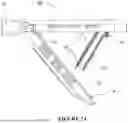
FIGS. 4 and 5 illustrate side views of the adjustable modular LED lighting system 10 depicting a locked position and an open position of the adjustable modular LED lighting system 10, respectively, according to an embodiment of the present disclosure. FIGS. 6 and 7A illustrate different side views of the adjustable modular LED lighting system 10 depicting the one or more drivers 24, a support plate 22, and a second support member 30 in the open position of the adjustable modular LED lighting system 10, according to an embodiment of the present disclosure. FIG. 7B illustrates a side view of the adjustable modular LED lighting system 10 depicting an electrical connection between the one or more drivers 24 and the one or more lighting devices 40a, 40b, 40c, according to an embodiment of the present disclosure. FIG. 8 illustrates a perspective view of the one or more drivers 24 of the adjustable modular LED lighting system 10, according to an embodiment of the present disclosure.
Referring to FIGS. 4, 5, 6, 7A-B and 8, the second housing 14 may be adapted to be moved with respect to the first housing 12 between the open position and the locked position to provide easy access to one or more components accommodated within the first housing 12 and the second housing 14. In the locked position, as shown in FIG. 4, the second housing 14 may be engaged with the first housing 12. In the open position, as shown in FIG. 5, the second housing 14 may be pivotally moved away from the first housing 12.
The lighting system 10 may include the support plate 22, the U-shaped support rail 20 (best shown in FIGS. 3A and 3B), a position selector 28, and a first support member 26. The support plate 22 may be positioned in the first housing 12, below the one or more drivers 24. Herein, the support plate 22 may be adapted to mount the one or more drivers 24. In an embodiment, the support plate 22 may have a U-shape, without departing from the scope of the present disclosure. Further, the support plate 22 may be pivotally mounted on a pair of distal end portions of the U-shaped support rail 20.
The U-shaped support rail 20 may be disposed along an inner peripheral surface of the first housing 12. The U-shaped support rail 20 may be adapted to mount the one or more drivers 24 in the first housing 12. Herein, the U-shaped support rail 20 may include a plurality of cut-out portions 52 aligned with corresponding openings 54 in the first housing 12. The cut-out portions 52 may be aligned with the corresponding openings 54 of the first housing 12 to be positioned in the U-shaped support rail 20 along the inner peripheral surface of the first housing 12.
Further, the U-shaped support rail 20 may include a plurality of attachment holes adapted to receive a plurality of fasteners to secure the U-shaped support rail 20 to the first housing 12. In an embodiment, the U-shaped support rail 20 may be adapted to provide structural rigidity to the first housing 12. The U-shaped support rail 20 may be adapted to provide one or more mounting locations for the components of the lighting system 10.
The position selector 28 may be mounted on an inner peripheral surface of the second housing 14 and include a plurality of slots. The first support member 26 may be pivotally coupled to the U-shaped support rail 20 and the position selector 28 of the second housing 14. The first support member 26 may be adapted to guide the movement of the second housing 14 with respect to the first housing 12 between the open position and the locked position.
In an embodiment, the first support member 26 may include a first end and a second end. The first end may be pivotally coupled to the U-shaped support rail 20. The second end may be opposite to the first end. The second end defines a prong 26a adapted to be engaged with a slot from among the plurality of slots, of the position selector 28, to guide the movement of the second housing 14. Herein, the engagement of the prong 26a and the position selector 28 may restrict the opening of the second housing 14 at a specific position.
Referring to the illustrated embodiment shown in FIGS. 6 and 7, the lighting system 10 may include the second support member 30 and a position adjuster 32. The second support member 30 may be pivotally coupled to the first housing 12 and the support plate 22 for accommodating the one or more drivers 24. The second support member 30 may be adapted to guide the movement of the support plate 22 with respect to the first housing 12.
In an embodiment, the second support member 30 may include a primary end and a secondary end opposite to the primary end. The primary end may be pivotally coupled with the first housing 12. Further, the secondary end may be pivotally coupled to the position adjuster 32 and the support plate 22 to guide the movement of the support plate 22 with respect to the first housing 12. Herein, the secondary end defines the prong 30a adapted to be engaged with the position adjuster 32, such that the movement of the support plate 22 with respect to the first housing 12 can be guided.
As shown in FIG. 8, the one or more drivers 24 may be arranged in series to form a sub-assembly, such that the one or more drivers 24 can be mounted on the support plate 22 in a compact and organized manner. In an embodiment, the support plate 22 may include a plurality of cassette-type slots 22a extending substantially along a longitudinal direction of the support plate 22. Each cassette-type slot 22a may be configured to receive a corresponding driver 24 in a slidable manner, thereby enabling controlled insertion of the driver 24 into a predefined mounted position on the support plate 22.
In an embodiment, each driver 24 may be slidably received within a respective cassette-type slot 22a from an end portion of the support plate 22. The cassette-type slots 22a may be dimensioned to partially engage side surfaces of the drivers 24, such that lateral displacement of the drivers 24 is restricted after installation. This slidable engagement may allow the drivers 24 to be installed and un-installed without the use of tools, fasteners, or permanent fixing elements, thereby simplifying the assembly process and reducing installation time.
In a further embodiment, the cassette-type configuration may permit selective removal of an individual driver 24 by sliding the driver 24 outward from the corresponding slot 22a, while the remaining drivers 24 remain mounted on the support plate 22. Such modularity may be advantageous during repair or replacement, as access to a single driver 24 may be achieved without dismantling the entire driver sub-assembly. This arrangement may also reduce the likelihood of damage to adjacent drivers 24 during maintenance operations.
Further, the support plate 22 may define one or more gaps or spaces between adjacent cassette-type slots 22a. These gaps may be configured to provide dedicated pathways for routing electrical wires associated with the drivers 24. In an embodiment, the spacing between neighboring drivers 24 may allow for orderly placement of conductors extending from the drivers 24 to the connectors 44, without causing congestion or interference during sliding movement of the drivers 24 within the slots 22a.
In one embodiment, the support plate 22 may further include one or more flanges, ribs, or raised boundary portions formed along the edges of the cassette-type slots 22a or adjacent to the gaps between the slots 22a. Such flanges may be adapted to retain routed wires within the intended gaps and may prevent the wires from inadvertently jumping over or crossing into adjacent slots during installation or operation. This guided wire retention may promote neat and predictable wire routing and may reduce the risk of pinching or abrasion of wires when the support plate 22 is pivoted.
Additionally, peripheral regions of the support plate 22 may include open margins or recessed areas configured to accommodate slack portions of the wiring or connectors 44. These peripheral regions, in combination with the flanges and inter-slot gaps, may help maintain minimum bend radii of the wires and may facilitate strain relief. Such features may contribute to long-term reliability of the electrical connections by minimizing mechanical stress on the conductors during movement of the support plate 22.
The support plate 22 may be pivotally mounted in the first housing 12, such that the support plate 22 and the drivers 24 mounted thereon can be moved between an operational position and an accessible position. The drivers 24 may be electrically connected to the one or more lighting devices 40a, 40b, 40c via one or more connectors 44, as shown in FIG. 7B. The combination of slidable cassette-type mounting, defined wire-routing gaps, retaining flanges, and detachable connectors 44 may allow the drivers 24 to be installed, disconnected, and removed with minimal effort, thereby improving serviceability, reducing assembly complexity, and enhancing the overall efficiency of the lighting system 10.
FIG. 9 illustrates a side view of the spring-loaded locking mechanism 46 of the adjustable modular LED lighting system 10, according to an embodiment of the present disclosure. With further reference to FIGS. 3A, 5, and 7, the spring-loaded locking mechanism 46 may be positioned in the first housing 12. Herein, the spring-loaded locking mechanism 46 may be adapted to releasably lock a distal end of the first housing 12 to a distal end of the second housing 14 in the locked position. In an embodiment, the spring-loaded locking mechanism 46 may be adapted to prevent unauthorized access to the first housing 12 and the second housing 14.
In an embodiment, the spring-loaded locking mechanism 46 may include a fixed member 46-1, a movable member 46-2, and a resilient member 46-3. The fixed member 46-1 may be positioned in the first housing 12. The movable member 46-2 may be coupled with the fixed member 46-1. The movable member 46-2 is arranged to releasably engage a catch portion 14-1 carried by second housing 14.
The movable member 46-2 may be adapted to be pressed to move with respect to the fixed member 46-1 to unlock the second housing 14 from the first housing 12 in an open position. In an embodiment, the movable member 46-2 defines a knob 46-4 adapted to be pressed by a user to move the movable member 46-2.
With the movement of the movable member 46-2, catch portion 14-1 of the second housing 14 may be released by the spring-loaded locking mechanism 46. This allows the movement of the second housing 14 towards the open position, away from the first housing 12. Further, the resilient member 46-3 may be coupled with the movable member 46-2 to provide a resilient force to the movable member 46-2.
The lighting system 10 may include a control unit 48 positioned in the first housing 12. The control unit 48 may be adapted to control one or more operations of the one or more lighting devices 40a, 40b, 40c. In an embodiment, the one or more operations may be switch-ON or switch-OFF of the one or more lighting devices 40a, 40b, 40c. Herein, the one or more lighting devices 40a, 40b, 40c may be switched ON or switched OFF based on one or more environmental conditions. For example, the one or more lighting devices 40a, 40b, 40c may be switched ON during the sunset and the one or more lighting devices 40a, 40b, 40c may be switched OFF at sunrise.
In addition to basic ON/OFF control, the control unit 48 may be configured to perform advanced operations such as sensor integration, wherein motion sensors, ambient light sensors, or occupancy sensors can be communicatively coupled to the control unit to enable adaptive lighting based on real-time environmental inputs. The control unit 48 may also support smart device integration, allowing remote monitoring and control through mobile applications or cloud-based platforms via wired or wireless communication protocols.
Further, the control unit 48 may enable luminaire dimming functionality to adjust brightness levels dynamically for energy efficiency or user preference. In an embodiment, dimming may be manual, scheduled, or automated based on sensor feedback. The control unit 48 may also facilitate luminaire health monitoring, wherein operational parameters such as temperature, voltage, and current are continuously tracked to predict failures and schedule preventive maintenance.
Additionally, the control unit 48 may be adapted to process other power and control signals, including but not limited to emergency shutdown commands, load balancing instructions, and integration with building management systems (BMS) for centralized control. These advanced features collectively enhance the flexibility, energy efficiency, and reliability of the lighting system 10.
In the illustrated embodiment, the control unit 48 may be exposed from an external surface of the first housing 12. In an embodiment, the control unit 48 may include a pair of wire sensors communicatively coupled with a base station via a wired or wireless network, such that the lighting system 10 can be remotely operated.
FIGS. 10a, 10b, and 10c illustrate front views of the adjustable modular LED lighting system 10, according to an embodiment of the present disclosure. In an exemplary embodiment, as shown in FIG. 10a, the lighting system 10 may include three lighting devices 40a, 40b, 40c installed to generate illumination. Herein, the lighting system 10 may be adapted to be operated at a predefined power of 300-350 W. As shown in FIG. 10b, the lighting system 10 may include two lighting devices 40a, 40b, and a decorative panel 50a. The decorative panel 50a may act as a placeholder in place of the lighting device 40c. Herein, the lighting system 10 may be adapted to be operated at a predefined power of 200-250 W.
As shown in FIG. 10c, the adjustable modular LED lighting system 10 may include a lighting device 40a and two decorative panels 50a, 50b. The decorative panels 50a, 50b may act as placeholders in place of the lighting devices 40a, 40c. Herein, the lighting system 10 may be adapted to be operated at a predefined power of 100-120 W. Thus, the lighting system 10 of the present disclosure may be operated with different powers.
In the present disclosure, the lighting system 10 includes a plurality of cut-out portions 52 aligned with corresponding openings 54 in the first housing 12, to position in the U-shaped support rail 20 along the inner peripheral surface of the first housing 12. Further, the plurality of attachment holes may be adapted to receive the plurality of fasteners to secure the U-shaped support rail 20 to the first housing 12. Herein, the implementation of the plurality of cut-out portions 52 and the plurality of attachment holes provides mounting provisions to mount the U-shaped support rail 20 on the first housing 12. Thus, the assembly of the first housing 12 and the support rail 20 becomes easier and requires less time and effort, which increases the overall productivity. This reduces the overall cost associated with the assembly of the lighting system 10. Unlike the lighting system disclosed in the U.S. patent application Ser. No. 18/918,439, the lighting system 10 offers a smooth and easy assmebly of the first housing 12 and the support rail 20, which requires less time and effort.
Additionally, the lighting system 10 includes the one or more drivers 24 disposed in the first housing 12, and the one or more lighting devices 40a, 40b, 40c disposed in the second housing 14. Herein, there is only an electrical connection between the one or more drivers 24 or the one or more lighting devices 40a, 40b, 40c. Thus, the one or more drivers 24 or the one or more lighting devices 40a, 40b, 40c can be individually repaired or replaced for maintenance purposes or in case of any failure. This reduces the time and effort required in the maintenance of the lighting system 10, which further reduces the overall cost associated with the maintenance of the lighting system 10. Therefore, the present disclosure provides a simpler, more efficient, flexible, and cost-effective lighting system 10.
As would be apparent to a person in the art, various working modifications may be made to the method in order to implement the inventive concept as taught herein. Moreover, the actions of any flow diagram need not be implemented in the order shown; nor do all the acts necessarily need to be performed. Also, those acts that are not dependent on other acts may be performed in parallel with the other acts. The drawings and the forgoing description give examples of embodiments. Those skilled in the art will appreciate that one or more of the described elements may well be combined into a single functional element. Alternatively, certain elements may be split into multiple functional elements. Elements from one embodiment may be added to another embodiment. For example, orders of processes described herein may be changed and are not limited to the manner described herein.
Benefits, other advantages, and solutions to problems have been described above regarding specific embodiments. However, the benefits, advantages, solutions to problems, and any component(s) that may cause any benefit, advantage, or solution to occur or become more pronounced are not to be construed as a critical, or essential feature or component of any or all the claims.
Claims
What is claimed is:1. A lighting system (10), comprising:
a first housing (12) defining a first hollow portion;
a second housing (14) pivotably coupled to the first housing (12) and defining a second hollow portion opposite to the first hollow portion, such that the first hollow portion and the second hollow portion together define an interior space;
one or more drivers (24) disposed in the first hollow portion of the first housing (12);
a U-shaped support rail (20) disposed along an inner peripheral surface of the first housing (12) and adapted to mount the one or more drivers (24) in the first housing (12), wherein the U-shaped support rail (20) includes a plurality of cut-out portions (52) aligned with corresponding openings (54) in the first housing (12); and
one or more lighting devices (40a, 40b, 40c) disposed in the second hollow portion of the second housing (14) and electrically connected to the one or more drivers (24).
2. The lighting system (10) of claim 1, comprising a spring-loaded locking mechanism (46) positioned in the first housing (12) and adapted to releasably lock a distal end of the first housing (12) to a distal end of the second housing (14) in a locked position.
3. The lighting system (10) of claim 2, wherein the spring-loaded locking mechanism (46) comprises:
a fixed member (46-1) positioned in the first housing (12);
a movable member (46-2) coupled with the fixed member (46-1) and adapted to be pressed to move with respect to the fixed member to unlock the second housing (14) from the first housing (12) in an open position; and
a resilient member (46-3) coupled with the movable member (46-2) to provide a resilient force to the movable member (46-2).
4. The lighting system (10) of claim 1, comprising a plurality of fastening members (36) adapted to mount each lighting device (40a, 40b, 40c) in the second housing (14).
5. The lighting system (10) of claim 1, comprising a support plate (22) positioned in the first housing (12), below the one or more drivers (24), and adapted to mount the one or more drivers (24).
6. The lighting system (10) of claim 5,
wherein the support plate (22) comprises a plurality of cassette-type slots (22a), and wherein each cassette-type slot (22a) is configured to slidably receive a corresponding driver (24) to enable installation and removal of the driver (24) from the support plate (22) in a sliding manner.
7. The lighting system (10) of claim 1, wherein each lighting device (40a, 40b, 40c) comprises a heat sink (42a, 42b, 42c) adapted to absorb heat dissipated by the respective lighting device (40a, 40b, 40c).
8. The lighting system (10) of claim 1, wherein each driver (24) comprises a heat sink adapted to absorb heat dissipated by the respective driver (24).
9. The lighting system (10) of claim 1, wherein the second housing (14) comprises a plurality of openings (34) adapted to accommodate the one or more lighting devices (40a, 40b, 40c).
10. The lighting system (10) of claim 1, wherein the U-shaped support rail (20) includes a plurality of attachment holes adapted to receive a plurality of fasteners to secure the U-shaped support rail (20) to the first housing (12).
11. The lighting system (10) of claim 10, comprising:
a position selector (28) mounted on an inner peripheral surface of the second housing (14) and having a plurality of slots; and
a first support member (26) pivotally coupled to the U-shaped support rail (20) and the position selector (28) of the second housing (14) and adapted to guide the movement of the second housing (14) with respect to the first housing (12) between the open position and the locked position.
12. The lighting system (10) of claim 1, wherein the first support member (26) comprises:
a first end pivotally coupled to the support rail (20); and
a second end opposite to the first end and defining a prong adapted to be engaged with a slot from among the plurality of slots, of the position selector, to guide the movement of the second housing (14).
13. The lighting system (10) of claim 5, comprising a second support member (30) pivotally coupled to the first housing (12) and the support plate (22) accommodating the one or more drivers (24) and adapted to guide the movement of the support plate (22) with respect to the first housing (12).
14. The lighting system (10) of claim 11, wherein the second support member (30) comprises:
a primary end pivotally coupled with the first housing (12); and
a secondary end opposite to the primary end and pivotally coupled to the first housing (12) and the support plate (22) to guide the movement of the support plate (22) with respect to the first housing (12).
15. The lighting system (10) of claim 1, comprising a control unit (48) positioned in the first housing (12) and adapted to control one or more operations of the one or more lighting devices (40a, 40b, 40c).
16. The lighting system (10) of claim 1, comprising:
an adjustable mounting bracket (18) coupled with the first housing (12) and adapted to adjust a pivoting angle of the first housing (12) relative to a mounting platform.
Images & Drawings included:





Sources:
- United States Patent and Trademark Office - verify current appl. status at the USPTO↗
Similar patent applications:
- » 20250129902
ADJUSTABLE MODULAR LED LIGHTING SYSTEM
Recent applications in this class:
- » 20260071743 2026-03-12
WIRELESS COMMUNICATION SYSTEM FOR CONTROLLING LIGHTING DEVICES - » 20260055882 2026-02-26
Control Module for a Lighting Fixture - » 20250283590 2025-09-11
WIRELESS COMMUNICATION SYSTEM FOR CONTROLLING LIGHTING DEVICES - » 20250237373 2025-07-24
LED LIGHT WITH REPLACEABLE MODULE AND INTELLIGENT CONNECTIVITY - » 20250198608 2025-06-19
POINT-CONTROL LAMP AND LAMP STRING - » 20250137633 2025-05-01
WHITE LIGHT ENGINE HAVING MODULAR AND INTERCHANGEABLE DESIGN - » 20250043946 2025-02-06
POINT-CONTROL LAMP AND LAMP STRING - » 20240377052 2024-11-14
Control Module for a Lighting Fixture - » 20240035652 2024-02-01
Point light-source, lamp, assembly, and system - » 20230151953 2023-05-18
Control module for a lighting fixture