REFLECTIVE PHOTOMASK, REFLECTIVE PHOTOMASK BLANK, AND METHOD FOR MANUFACTURING REFLECTIVE PHOTOMASK
US20260169367A1
2026-06-18
19/419,578
2025-12-15
Smart Summary: A reflective photomask is designed to help in the manufacturing of tiny electronic components. It consists of several layers, including a substrate, a reflective film, a protective layer, and a light-absorbing film. The protective layer is very thin and helps improve performance, while the light-absorbing film is made from materials containing ruthenium and platinum. This light-absorbing layer is also thin and has specific properties that allow it to effectively manage light exposure. Overall, the photomask is engineered to work well with extreme ultraviolet light, which is used in advanced manufacturing processes. 🚀 TL;DR
Abstract:
A reflective photomask including a substrate, a multilayer reflection film, a protection film and a pattern of a light absorbing film is provided. The protection film has an extinction coefficient of 0.018 to 0.035, and a thickness of 1 to 6 nm, the light absorbing film is constituted of a single layer or multiple layers, the single layer or each layer of the multiple layers is composed of a material that contains ruthenium and platinum, and has a ruthenium content of 30 to 70 at %, a platinum content of 30 to 70 at %, and a total content of ruthenium and platinum of not less than 96 at %, the light absorbing film has a thickness of 32 to 38 nm, and a reflectance of 1 to 8% and a phase shift of 190 to 240 degrees, with respect to exposure light being light in extreme ultraviolet range.
Inventors:
- Keisuke SAKURAI 12 🇯🇵 Joetsu-shi, Japan
- Shohei MIMURA 13 🇯🇵 Joetsu-shi, Japan
- Ryoto KAWAMURA 3 🇯🇵 Joetsu-shi, Japan
Assignee:
- SHIN-ETSU CHEMICAL CO., LTD 5,077 🇯🇵 Tokyo, Japan
Applicant:
Interested in similar patents?
Get notified when new applications in this technology area are published.
Classification:
G03F1/24 » CPC main
Originals for photomechanical production of textured or patterned surfaces, e.g., masks, photo-masks, reticles; Mask blanks or pellicles therefor; Containers specially adapted therefor; Preparation thereof; Masks or mask blanks for imaging by radiation of 100nm or shorter wavelength, e.g. X-ray masks, extreme ultra-violet [EUV] masks; Preparation thereof Reflection masks; Preparation thereof
G03F7/0005 » CPC further
Photomechanical, e.g. photolithographic, production of textured or patterned surfaces, e.g. printing surfaces; Materials therefor, e.g. comprising photoresists; Apparatus specially adapted therefor Production of optical devices or components in so far as characterised by the lithographic processes or materials used therefor
G03F7/00 IPC
Photomechanical, e.g. photolithographic, production of textured or patterned surfaces, e.g. printing surfaces; Materials therefor, e.g. comprising photoresists; Apparatus specially adapted therefor
Description
CROSS-REFERENCE TO RELATED APPLICATION
This non-provisional application claims priority under 35 U.S.C. § 119 (a) on Patent Application No. 2024-220468 filed in Japan on Dec. 17, 2024, the entire contents of which are hereby incorporated by reference.
TECHNICAL FIELD
The present invention relates to a reflective photomask that is used in manufacturing semiconductor devices and others, a reflective photomask blank that is used as a material for manufacturing a reflective photomask, and a method for manufacturing a reflective photomask from a reflective photomask blank.
BACKGROUND ART
It is required that projection exposure has high pattern resolution in accordance with miniaturization of semiconductor devices, particularly, in accordance with high integration of large-scale integrated circuits. So, as a photomask, a phase shift photomask (a phase shift mask) has been developed as a means for improving the resolution of a transfer pattern. A principle of phase shift method is that, by adjusting so as to invert a phase of transmitted light that has been passed through an opening of a phase shift film of a photomask by about 180 degrees with respect to a phase of transmitted light that has been passed through the portion of the phase shift film adjacent to the opening, interference between the transmitted lights reduces a light intensity at the boundary of the opening and the portion adjacent to the opening. As a result, resolution and depth of focus of a transfer pattern are improved. A photomask utilizing this principle is generally called a phase shift photomask. The phase shift photomask in this case is a type of transmissive photomask that transmits exposure light.
A most common phase shift photomask blank, as a material for the phase shift photomask, that is used for manufacturing the phase shift photomask has a structure in which a phase shift film is laminated on a transparent substrate such as a glass substrate, and a film composed of a material containing chromium (Cr) is laminated on the phase shift film. The phase shift film usually has a phase shift of 175 to 185 degrees and a transmittance of about 6 to 30% with respect to exposure light, and a mainstream phase shift film is a film containing silicon (Si), particularly a film composed of a material containing molybdenum (Mo) and silicon (Si). Generally, the film composed of a material containing chromium (Cr) is adjusted so as to have a thickness that provides a desired optical density together with the phase shift film, and the film composed of a material containing chromium (Cr) is provided as a light-shielding film, and is also used as an etching mask in etching the phase shift film.
As a general method for manufacturing a phase shift photomask by patterning a phase shift film from a phase shift photomask blank in which a phase shift film that is composed of a material containing silicon (Si), and a light-shielding film that is composed of a material containing chromium (Cr) are formed in this order on a transparent substrate, the following method is exemplified. First, a resist film is formed on the light-shielding film composed of a material containing chromium (Cr) of the phase shift photomask blank, and a pattern of the resist film (a resist pattern) is formed by drawing a pattern onto the resist film by light or an electron beam, and developing. Next, the light-shielding film composed of a material containing chromium (Cr) is dry-etched with using the resist pattern as an etching mask, and a chlorine-based gas to form a pattern of the light-shielding film. Further, the phase shift film composed of a material containing silicon (Si) is dry-etched with using the pattern of the light-shielding film as an etching mask, and a fluorine-based gas to form a pattern of the phase shift film. Then, the resist pattern is removed, and the pattern of the light-shielding film is removed by dry etching using a chlorine-based gas.
In this case, the light-shielding film is left at the portion outside the portion in which the pattern of the phase shift film (a circuit pattern) is formed, and a light-shielding portion (light-shielding pattern) having an optical density of not less than 3 in the combination of the phase shift film and the light-shielding film is formed at the outer periphery portion of the phase shift photomask. This is to prevent irradiation of exposure light caused by leaking the exposure light at the outer periphery portion of the phase shift photomask from the portion located outside the circuit pattern to the resist film on a wafer for an adjacent chip in transferring the circuit pattern to the wafer by a wafer exposure apparatus. In a general method for forming such a light-shielding pattern, after forming the pattern of the phase shift film and removing the resist pattern, a resist film is anew formed, and a resist pattern that remains at the outer periphery portion of the light-shielding film is formed by drawing a pattern and developing. Then, the light-shielding film composed of a material containing chromium (Cr) is etched with using the resist pattern as an etching mask to left the light-shielding film at the outer periphery portion of the phase shift photomask.
A mainstream etching in a phase shift photomask blank that requires pattern formation with highly accurate is dry etching using gas plasma. Dry etching using a chlorine-based gas (chlorine-based dry etching) is used as dry etching for a film composed of a material containing chromium (Cr), and dry etching using a fluorine-based gas (fluorine-based dry etching) is used as dry etching for a film containing silicon (Si) and a film containing molybdenum and silicon. Particularly, it is known that, in dry etching for a film composed of a material containing chromium (Cr), chemical reactivity and etching rate are increased by applying a dry etching using a chlorine-based gas containing oxygen (O), in particular, an etching gas of chlorine gas (Cl2 gas) mixed with 10 to 25 vol % of oxygen gas (O2 gas).
According to miniaturization of circuit patterns, a circuit pattern of the phase shift photomask also requires a technique for fine pattern formation. Particularly, assist patterns of line patterns, which assist resolution of main patterns of the phase shift photomask, are needed to be formed smaller than the main patterns so as not to be transferred to a wafer when circuit patterns are transferred to the wafer by a wafer exposure apparatus. In a phase shift photomask of a generation in which a half pitch of line and space patterns on the wafer is 10 nm, a line width for the assist patterns of the line patterns in a circuit on the phase shift photomask is required to be about 40 nm.
A chemically amplified resist, which can form fine patterns, consists of a base resin, an acid generator, a surfactant and others, and can be applied to many reactions in which the acid generated by exposure acts as a catalyst. Thus, the chemically amplified resist can have high sensitivity. By using the chemically amplified resist, it possible to form a mask pattern such as a fine pattern of the phase shift film that has a line width of 0.1 μm or less. The resist is applied onto a photomask blank by spin coating using a resist coater.
A typical thickness of a resist film used in manufacturing a phase shift photomask is about 100 to 150 nm. However, it is difficult to form a finer assist pattern on a phase shift photomask by such thickness. This is because when a thick resist film formed on a film composed of a material containing chromium (Cr) is used, a resist pattern having a high high-width ratio (aspect ratio) is formed in the case of a narrow linewidth for forming an assist pattern, and in a development process for forming the resist pattern, the resist pattern collapses due to impact by a development solution or impact by pure water in rinsing.
To reduce the impact by a development solution or the impact by pure water in rinsing, it is required that a resist film is formed thinner under the consideration for reducing the high-width ratio (aspect ratio) of the resist pattern. However, in the case that the resist film is thinned, when the resist film disappears during dry etching of a film composed of a material containing chromium (Cr), defects such as pinholes are formed in the film composed of a material containing chromium (Cr). If a film composed of a material containing silicon (Si) is dry-etched with using, as an etching mask, a pattern of the film composed of a material containing chromium (Cr) and having pinholes or other defects, a plasma reaches the film composed of a material containing silicon (Si) through the pinholes during etching of the film composed of a material containing silicon (Si), and pinhole defects are formed also in the film composed of a material containing silicon (Si). In this case, it is hard to form a pattern of the film composed of material containing silicon (Si) (ex. a phase shift film) without defects, and a good photomask (ex. a phase shift photomask) cannot be manufactured.
To solve this problem, a method in which a film composed of a material containing silicon (Si) is provided on the film composed of a material containing chromium (Cr), and is used as a hard mask has been considered. In this case, the film composed of a material containing silicon (Si) is a thin film having a thickness of 5 to 15 nm, and the resist film formed on the film composed of a material containing silicon (Si) can be thinned to 80 to 110 nm.
When a film composed of a material containing chromium (Cr) is dry-etched with using a chlorine-based gas containing oxygen (O), it is necessary to perform the dry etching for a time that includes a clear time until the film composed of a material containing chromium (Cr) disappears, and a time of 100 to 300% of the clear time for over etching. This is because the dry etching using a chlorine-based gas containing oxygen (O) is an isotropic etching dominated by chemical components, when the dry etching is performed for only the clear time, a flared shape at the boundary with the film composed of a material containing silicon (Si) is formed, result in an insufficient shape in the pattern of the film composed of a material containing chromium (Cr). Thus, a desired pattern width is not formed stably.
Further, dry etching using a chlorine-based gas containing oxygen (O) is an isotropic etching dominated by chemical components, and therefore a plasma of the chlorine-based gas containing oxygen (O) moves vertical direction and horizontal direction relative to the main surface of a substrate, causing side etching of the pattern in the film composed of a material containing chromium (Cr). To obtain an equivalent amount of side etching across the entire main surface of a photomask for making a uniform critical dimension (CD), which is a pattern line width, across the entire main surface of the photomask, a long over etching time is required until the amount of side etching saturates across the entire main surface of the photomask (until the side etching stops and the amount of the side etching is constantly maintained).
On the other hand, dry etching using a fluorine-based gas is used for dry etching of the film composed of a material containing silicon (Si). When the film composed of a material containing silicon (Si) is dry-etched with using a fluorine-based gas, the dry etching is performed for a time that includes a clear time until the film composed of a material containing silicon (Si) disappears, and a time of not more than about 20% of the clear time (ex. a short time of 1 to 6 seconds) for over etching.
The reason why the over etching can be performed shortly when the film composed of a material containing silicon (Si) is dry-etched with using a fluorine-based gas is that the dry etching using a fluorine-based gas is anisotropic etching dominated by physical components, and therefore the flared shape is not formed in the pattern of the film composed of a material containing silicon (Si) at the boundary with the film composed of a material containing chromium (Cr). Further, a plasma of the fluorine-based gas moves vertical direction relative to the main surface of a substrate, faithfully duplicating the CD of the resist pattern in the pattern of the film composed of a material containing silicon (Si).
Dry etching using fluorine-based gases is anisotropic etching dominated by physical components, so a loss amount of the resist during the dry etching is generally larger than that during dry etching using chlorine-based gases containing oxygen (O). Therefore, a resist film used for forming the pattern of the film composed of a material containing silicon (Si) must be relatively thick. On the other hand, the film composed of a material containing silicon (Si) functions as an etching mask when the film composed of a material containing chromium (Cr) is dry-etched with using a chlorine-based gas containing oxygen (O). Since the film composed of a material containing silicon (Si) has sufficient etching resistance to dry etching using a chlorine-based gas containing oxygen (O), the film composed of a material containing silicon (Si) as the hard mask film can be formed as a relatively thin film. A thinner film composed of a material containing silicon (Si) shortens the time required for the dry etching using a fluorine-based gas to the film composed of a material containing silicon (Si). As a result, the resist film required to form the pattern of the film composed of a material containing silicon (Si) can also be thinner.
Furthermore, in higher pattern resolution that has been recently required for projection exposure, it has been difficult to obtain a desired pattern resolution even when a transmission type phase shift photomask is used. Therefore, for the logic 7 nm generation and later, EUV lithography using light in extreme ultraviolet range (EUV light) as the exposure light has come to be used.
The light in extreme ultraviolet range is easily absorbed by all materials, and transmission lithography such as conventional photolithography using ArF excimer laser light cannot be used. Therefore, a reflective optical system is used in the EUV lithography. The light in extreme ultraviolet range has a wavelength of 13 to 14 nm is used in the EUV lithography, while the conventional ArF excimer laser light has a wavelength of is 193 nm. Therefore, compared to the photolithography using the conventional ArF excimer laser light, the exposure wavelength is shorter, and finer patterns in a photomask can be transferred.
A photomask used in EUV lithography is a reflective photomask in which the exposure light is reflected by the photomask, and generally has a structure in which a reflection film that reflects light in extreme ultraviolet range, a protection film for protecting the reflection film, and a pattern of a light absorbing film that absorbs the light in extreme ultraviolet range in this order on a substrate such as a glass substrate. As the reflection film, a multilayer reflection film in which low refractive index layers and high refractive index layers are alternately stacked so as to increase reflectance when the light in extreme ultraviolet range is irradiated onto the surface of the reflection film is used. Usually, for the multilayer reflection film, a molybdenum (Mo) layer and a silicon (Si) layer are used as the low refractive index layer, and the high refractive index layer, respectively. As the protection film, a ruthenium (Ru) film is usually used. On the other hand, a material having a high absorption coefficient with respect to the light in extreme ultraviolet range, in particular, a material containing, for example, chromium (Cr) or tantalum (Ta), as a main component, is used for the light absorbing film. In early-generation EUV lithography, a binary-type reflective photomask in which light is not reflected by the light absorbing film is used.
As a general method for manufacturing a reflective photomask by patterning a light absorbing film from a reflective photomask blank in which a reflection film that reflects light in extreme ultraviolet range, a protection film for protecting the reflection film, and a light absorbing film that absorbs the light in extreme ultraviolet range are formed in this order on a substrate, in particular, the following method is exemplified. First, a resist film is formed on the light absorbing film, a pattern is drawn onto the resist film by light or an electron beam, and developed to form a resist pattern. Next, the light absorbing film is dry-etched with using the resist pattern as an etching mask to form a pattern of the light absorbing film, and then the resist pattern is removed.
CITATION LIST
- Patent Document 1: JP 2022-24617 A
- Patent Document 2: JP 2023-86742 A
SUMMARY OF THE INVENTION
In EUV lithography, for the logic 3 nm generation and later, a reflective photomask (reflective phase shift photomask) that includes a pattern of a light absorbing film having a phase shift function is used to form a finer pattern on a wafer. By using the reflective phase shift photomask, higher wafer transfer characteristics can be obtained compared to a binary-type reflective photomask. The wafer transfer characteristics can be expressed by NILS (Normalized Image Log Slope), which corresponds to contrast of light intensity transferred to a wafer, and the NILS can be calculated by the following expression:
NILS=(dI/dx)/(W×Ith),
wherein W is a desired pattern dimension, Ith is a threshold of light intensity providing W, and dI/dx is a gradient of aerial image. When the NILS value is large, the optical image is steep, improving dimensional controllability of a resist pattern on the wafer. Therefore, to form a finer pattern on the wafer, a large NILS value is effective, and the reflective phase shift photomask, which can provide a larger NILS value compared to the binary-type reflective photomask, is used.
Further, in EUV lithography using a reflective phase shift photomask, when sizes (pitches) of line and space of a line and space pattern on a wafer is 10 to 20 nm, the optimal focus value varies depending on the sizes (pitches) of line and space. When a single device circuit pattern has a mixture of line and space patterns that include lines and spaces having different sizes (pitches), to form a good device circuit pattern in each of the line and space patterns, device circuit patterns including good line and apace patterns can be formed by a light absorbing film having a phase shift function and a reflectance of about 5% with respect to exposure light since such a film has a small difference in optimal focus values between line and space patterns that include lines and spaces having different sizes (pitches).
A light absorbing film is necessary to have a thickness enough to partially absorb exposure light and have a predetermined reflectance. In a reflective photomask, the exposure light is incident on the reflective photomask at an angle and is reflected at an angle. A shadowing effect in which the exposure light is blocked by the light absorbing film when the exposure light is incident and is reflected, notably affects a thick light absorbing film. Therefore, to reduce the shadowing effect, a thinner light absorbing film having a predetermined reflectance is advantageous.
In a reflective photomask that is necessary for EUV lithography, an assist pattern for the line and space pattern, which assists resolution of a main pattern, has been required to be even smaller depending on miniaturization of the main pattern, and the line width of the assist patterns needs to be reduced to around 30 nm, particularly around 25 nm. Therefore, compared to a conventional transmissive phase shift photomask blank, a reflective photomask blank requires an even thinner resist film. In the reflective photomask, to form the assist pattern for a line and space pattern having a width of around 30 nm, particularly around 25 nm, a resist film having a thickness of not more than 80 nm is required.
In EUV lithography, an optical system having a numerical aperture (NA) of 0.55 altered from 0.33 in an exposure system is used to form a finer pattern on a wafer. In this case, in a reflective photomask, an assist pattern, which assists resolution of a main pattern in a line and space pattern, has been required to be even smaller depending on miniaturization of the main pattern, and the line width of the assist pattern is required to be reduced to around 25 nm, particularly around 20 nm. Therefore, to manufacture a reflective photomask for use in the exposure system having a numerical aperture of 0.55, it is necessary to further thin the resist film used in the reflective photomask blank.
Furthermore, even when the assist pattern of the line and space pattern is fine, in the case that the fine line pattern disappears during a process of manufacturing a reflective photomask from a reflective photomask blank, the desired pattern cannot be obtained. Therefore, it is also necessary to improve a resolution limit.
For example, JP 2022-24617 A (Patent Document 1) discloses a reflective mask blank for EUV lithography in which a multilayer reflection film that reflects EUV light and a phase shift film that shifts a phase of EUV light are formed in that order on a substrate. The document also discloses that the phase shift film has a layer containing ruthenium (Ru) and at least one selected from the group consisting of oxygen (O) and nitrogen (N), and that, in diffraction peaks derived from the phase shift film that are observed between 20:20° and 50° by out-of-plane XRD method, the phase shift film has a full width at half maximum (FWHM) of the most intense peak of not less than 1.0°.
JP 2022-24617 A (Patent Document 1) discloses that the layer containing ruthenium (Ru) and at least one selected from the group consisting of oxygen (O) and nitrogen (N) contains the elements in the range of a total content of Ru and element (X) of 40 to 99 at % and an O content of 1 to 60 at %, a total content of Ru and element (X) of 30 to 98 at %, an O content of 1 to 69 at % and a N content of 1 to 69 at %, or a total content of Ru and element (X) of 30 to 90 at % and a N content of 10 to 70 at %, and in the range of a Ru:X ratio of 20:1 to 1:5 (at %). Further, as the element (X), chromium (Cr), tantalum (Ta), titanium (Ti), rhenium (Re), tungsten (W), bismuth (Bi), manganese (Mn), platinum (Pt), copper (Cu), iridium (Ir) and vanadium (V) are disclosed.
JP 2022-24617 A (Patent Document 1) discloses that the phase shift film has a phase shift of is 150 to 250 degrees and a relative reflectance of 2 to 37%. Further, J P 2022-24617 A (Patent Document 1) discloses, as the phase shift film having a reflectance of about 5% with respect to exposure light, a RuReON film (Ru:Re:O:N=16:71:12:11 (at %), Example 11) having a phase shift of 216 degrees and a relative reflectance of 6.1%, and a RuCrO film (Ru:Cr:O=20:30:50 (at %), Example 15) having a phase shift of 216 degrees, a relative reflectance of 7.3%, and a thickness of 40 nm.
However, each of the phase shift films does not have a thickness sufficiently reduced. Furthermore, when a pattern of the light absorbing film formed in a reflective photomask is corrected, a film containing ruthenium (Ru) can usually be etched by dry etching using a fluorine-based gas activated by an electron beam, however, a film containing a large amount of chromium (Cr) or rhenium (Re) cannot be effectively etched by the dry etching using a fluorine-based gas activated by an electron beam.
JP 2023-86742 A (Patent Document 2) discloses a reflective mask blank for EUV lithography in which a multilayer reflection film that reflects EUV light and a phase shift film that shifts a phase of the EUV light are formed in that order on a substrate. Further, the document also discloses that the phase shift film has a surface roughness (rms) of not more than 0.50 nm, the phase shift film includes a layer (1) containing ruthenium (Ru) and nitrogen (N) and having an absolute value of film stress of not more than 1000 MPa, the phase shift film includes a layer (2) containing an element (X), the layer (2) may contain Ru, and at least one of O and N with a Ru:X ratio of 20:1 to 1:5 (at %). Furthermore, as the element (X), chromium (Cr), tantalum (Ta), titanium (Ti), rhenium (Re), tungsten (W), bismuth (Bi), manganese (Mn), platinum (Pt), copper (Cu), iridium (Ir) and vanadium (V) are disclosed.
JP 2023-86742 A (Patent Document 2) discloses that the phase shift film has a phase shift of is 150 to 250 degrees and a relative reflectance of 2 to 37%, however, does not disclose any concreate phase shift film having a reflectance of about 5% with respect to exposure light. Further, the layer (1) is not a layer containing Ru, and the document does not disclose any concreate layer (2) containing ruthenium (Ru) together with the element (X). Particularly, when the phase shift film includes the layer (2), the phase shift film has a two-layer structure consisting of the layer (1) not containing element (X) and the layer (2) containing element (X).
In this case, when a pattern of the light absorbing film formed in the reflective photomask is corrected, the layer (2) cannot be effectively etched by the dry etching using a fluorine-based gas activated by an electron beam in the case of some kinds of the element (X) which is a metal element. Therefore, different etching gases must be used for etching the layer (1) and the layer (2), respectively, and correction is performed by multiple types of etching, and the multiple types of etching significantly reduce possibility of success of correcting the pattern of the light absorbing film compared to correction by a single type of etching.
On the other hand, even when the layer (2) can be etched by the dry etching using a fluorine-based gas activated by an electron beam, the layer (1) not containing the element (X) and the layer (2) containing the element (X), particularly the layer (2) containing a relatively large amount of the element (X) have different etching characteristics. Therefore, it is difficult to control the etching in correction of the pattern of the light absorbing film, and the correction of the pattern of the light absorbing film is not easy.
The present invention has been made to solve the above problems. A first object of the present invention is to provide a reflective photomask including a thinner light absorbing film that has high wafer transfer characteristics (a high NILS value), has a reflectance of approximately 5% which provides small difference in optimal focus values of line and space patterns having different sizes (pitches), can be removed by etching using fluorine-based gas in whole, is easily corrected in its pattern, and is minimally affected by shadowing effect. A second object of the present invention is to provide, as a reflective photomask blank for manufacturing a reflective photomask, a reflective photomask blank that enables to use a thinner resist film in forming a pattern of a light absorbing film and has an improved resolution limit in forming the pattern of the light absorbing film. A third object of the present invention is to provide a method for manufacturing a reflective photomask from a reflective photomask blank.
With respect to a light absorbing film having a phase shift function in a reflective photomask blank and a reflective photomask, the inventors have made earnestly studies to solve the above problems. As a result, the inventors found that the above problems can be solved by a light absorbing film that is constituted of a single layer or multiple layers composed of a material containing ruthenium (Ru) and platinum (Pt), and having a ruthenium (Ru) content of not less than 30 at % and not more than 70 at %, a platinum (Pt) content of not less than 30 at % and not more than 70 at %, and a total content of ruthenium (Ru) and platinum (Pt) of not less than 96 at %, and has a thickness of not less than 32 nm and not more than 38 nm, a reflectance of not less than 1% and not more than 8% with respect to exposure light, and a phase shift of not less than 190 degrees and not more than 240 degrees with respect to the exposure light. Further, with respect to a reflective photomask blank for manufacturing a reflective photomask, the inventors have made earnestly studies to solve the above problems. As a result, the inventors found that the above problems can be solved by a reflective photomask blank including a hard mask film formed in contact with the light absorbing film.
In one aspect, the invention provides a reflective photomask including
-
- a substrate,
- a multilayer reflection film that is formed on the substrate and reflects exposure light being light in extreme ultraviolet range,
- a protection film that is formed on the multilayer reflection film to protect the multilayer reflection film, and
- a pattern of a light absorbing film that is formed on and in contact with the protection film, absorbs the exposure light, and has a phase shift function, wherein
- the protection film has an extinction coefficient of not less than 0.018 and not more than 0.035, and a thickness of not less than 1 nm and not more than 6 nm,
- the light absorbing film is constituted of a single layer or multiple layers, the single layer or each layer of the multiple layers is composed of a material that contains ruthenium (Ru) and platinum (Pt), and has a ruthenium (Ru) content of not less than 30 at % and not more than 70 at %, a platinum (Pt) content of not less than 30 at % and not more than 70 at %, and a total content of ruthenium (Ru) and platinum (Pt) of not less than 96 at %,
- the light absorbing film has a thickness of not less than 32 nm and not more than 38 nm, and
- the light absorbing film has a reflectance of not less than 1% and not more than 8% with respect to the exposure light, and a phase shift of not less than 190 degrees and not more than 240 degrees with respect to the exposure light.
Preferably, the light absorbing film further contains niobium (Nb), and has a niobium (Nb) content of not more than 4 at %.
Preferably, the material forming the light absorbing film is resistant to dry etching using a chlorine-based gas, and is removal by dry etching using a fluorine-based gas.
Preferably, the protection film and the light absorbing film have etching rates of dry etching under the same condition using a fluorine-based gas activated by an electron beam, and a ratio of the etching rate of the light absorbing film to the etching rate of the protection film is not less than 50.
In another aspect, the invention provides a reflective photomask blank including
-
- a substrate,
- a multilayer reflection film that is formed on the substrate and reflects exposure light being light in extreme ultraviolet range,
- a protection film that is formed on the multilayer reflection film to protect the multilayer reflection film,
- a light absorbing film that is formed on and in contact with the protection film, absorbs the exposure light, and has a phase shift function, and
- a hard mask film that is formed on and in contact with the light absorbing film, wherein
- the protection film has an extinction coefficient of not less than 0.018 and not more than 0.035, and a thickness of not less than 1 nm and not more than 6 nm,
- the light absorbing film is constituted of a single layer or multiple layers, the single layer or each layer of the multiple layers is composed of a material that contains ruthenium (Ru) and platinum (Pt), and has a ruthenium (Ru) content of not less than 30 at % and not more than 70 at %, a platinum (Pt) content of not less than 30 at % and not more than 70 at %, and a total content of ruthenium (Ru) and platinum (Pt) of not less than 96 at %,
- the light absorbing film has a thickness of not less than 32 nm and not more than 38 nm, and
- the light absorbing film has a reflectance of not less than 1% and not more than 8% with respect to the exposure light, and a phase shift of not less than 190 degrees and not more than 240 degrees with respect to the exposure light.
Preferably, the light absorbing film further contains niobium (Nb), and has a niobium (Nb) content of not more than 4 at %.
Preferably, the material forming the light absorbing film is resistant to dry etching using a chlorine-based gas, and is removal by dry etching using a fluorine-based gas.
Preferably, the protection film and the light absorbing film have etching rates of dry etching under the same condition using a fluorine-based gas activated by an electron beam, and a ratio of the etching rate of the light absorbing film to the etching rate of the protection film is not less than 50.
Preferably, the protection film and the light absorbing film have etching rates of dry etching under the same condition using a plasma formed by a fluorine-based gas, and a ratio of the etching rate of the light absorbing film to the etching rate of the protection film is not less than 4.
Preferably, the hard mask film includes a first layer that is in contact with the light absorbing film, and functions as an etching mask in patterning the light absorbing film by dry etching, and the first layer of the hard mask film is composed of a material that is resistant to dry etching using a fluorine-based gas, and is removal by dry etching using a chlorine-based gas.
Preferably, the first layer of the hard mask film contains either or both of chromium (Cr) and ruthenium (Ru), is free of silicon (Si) and tantalum (Ta), and has a thickness of not less than 2 nm and not more than 14 nm.
Preferably, the hard mask film includes a second layer that is in contact with the first layer of the hard mask film, and functions as an etching mask in patterning the first layer of the hard mask film by dry etching, and the second layer of the hard mask film is composed of a material that is resistant to dry etching using a chlorine-based gas, and is removal by dry etching using a fluorine-based gas.
Preferably, the second layer of the hard mask film contains either or both of silicon (Si) and tantalum (Ta), is free of chromium (Cr) and ruthenium (Ru), and has a thickness of not less than 2 nm and not more than 14 nm.
In another aspect, the invention provides a method for manufacturing the reflective photomask from the reflective photomask blank wherein
-
- the method includes the steps of:
- (A1) forming a resist film in contact with the first layer of the hard mask film at the side remote from the substrate,
- (B) patterning the resist film to form a resist pattern,
- (C1) patterning the first layer of the hard mask film to form a pattern of the first layer of the hard mask film by dry etching using a chlorine-based gas and the resist pattern as an etching mask,
- (D) removing the resist pattern,
- (F1) patterning the light absorbing film to form a pattern of the light absorbing film by dry etching using a fluorine-based gas and the pattern of the first layer of the hard mask film as an etching mask, and
- (G1) removing the pattern of the first layer of the hard mask film by dry etching using a chlorine-based gas.
In the other aspect, the invention provides a method for manufacturing the reflective photomask from the reflective photomask blank wherein the method includes the steps of:
-
- (A2) forming a resist film in contact with the second layer of the hard mask film at the side remote from the substrate,
- (B) patterning the resist film to form a resist pattern,
- (C2) patterning the second layer of the hard mask film to form a pattern of the second layer of the hard mask film by dry etching using a fluorine-based gas and the resist pattern as an etching mask,
- (D) removing the resist pattern,
- (E2) patterning the first layer of the hard mask film to form a pattern of the first layer of the hard mask film by dry etching using a chlorine-based gas and the pattern of the second layer of the hard mask film as an etching mask,
- (F2) patterning the light absorbing film to form a pattern of the light absorbing film by dry etching using a fluorine-based gas and the pattern of the first layer of the hard mask film as an etching mask with removing the pattern of the second layer of the hard mask film, and
- (G2) removing the pattern of the first layer of the hard mask film by dry etching using a chlorine-based gas.
Advantageous Effects of the Invention
According to the invention, a reflective photomask including a thinner light absorbing film that has high wafer transfer characteristics (a high NILS value), has a reflectance of approximately 5% which provides small difference in optimal focus values of line and space patterns having different sizes (pitches), can be removed by etching using fluorine-based gas in whole, is easily corrected in its pattern, and is minimally affected by shadowing effect can be provided. Further, according to the invention, a reflective photomask blank that enables to use a thinner resist film in forming a pattern of a light absorbing film and has an improved resolution limit in forming the pattern of the light absorbing film.
BRIEF DESCRIPTION OF THE DRAWINGS
FIG. 1 is a cross-sectional view illustrating an example of a first embodiment of a reflective photomask blank of the invention.
FIG. 2 is a cross-sectional view illustrating an example of a second embodiment of a reflective photomask blank of the invention.
FIG. 3 is a cross-sectional view illustrating an example of a third embodiment of a reflective photomask blank of the invention.
FIG. 4 is a cross-sectional view illustrating an example of a fourth embodiment of a reflective photomask blank of the invention.
FIG. 5 is a cross-sectional view illustrating an example of a reflective photomask of the invention.
FIGS. 6A to 6F are cross-sectional views illustrating an example of steps for manufacturing a reflective photomask from a reflective photomask blank of the first or third embodiment of the of the invention.
FIGS. 7A to 7G are cross-sectional views illustrating an example of steps for manufacturing a reflective photomask from a reflective photomask blank of the second or fourth embodiment of the invention.
DESCRIPTION OF THE PREFERRED EMBODIMENT
A reflective photomask of the invention includes a substrate, a multilayer reflection film that is formed on the substrate, a protection film that is formed on the multilayer reflection film, and a pattern of a light absorbing film that is formed on the protection film. A reflective photomask blank of the invention includes a substrate, a multilayer reflection film that is formed on the substrate, a protection film that is formed on the multilayer reflection film, a light absorbing film that is formed on the protection film, and a hard mask film that is formed on the light absorbing film. The hard mask film preferably includes a first layer that functions as an etching mask in patterning the light absorbing film by dry etching. Further, the hard mask film more preferably includes a second layer that functions as an etching mask in patterning the first layer of the hard mask film by dry etching.
When a reflective photomask is held on a mask stage of an exposure apparatus, usually, the reflective photomask is secured by an electrostatic chuck. Therefore, the reflective photomask blank and the reflective photomask of the invention may include a conducting film (backside film) on the back surface of the substrate (the surface opposite to the front surface on which the multilayer reflection film or others are formed) for securing the reflective photomask by an electrostatic chuck. Further, the reflective photomask blank of the invention may further include a resist film formed on the hard mask film directly or via another film.
From the reflective photomask blank of the invention, for example, a reflective photomask including a substrate, a multilayer reflection film that is formed on the substrate, a protection film that is formed on the multilayer reflection film, and a pattern (circuit pattern or photomask pattern) of a light absorbing film that is formed on the protection film can be obtained.
The structures of the reflective photomask blank and the reflective photomask of the invention are described below with reference to the drawings. In the descriptions for the drawings, identical components may be given the same reference symbols and their duplicate descriptions may be omitted. In addition, the drawings may be enlarged for convenience, and the dimensional ratio of each component may not be the same as the actual ratio.
FIG. 1 is a cross-sectional view illustrating an example of a first embodiment of a reflective photomask blank of the invention. This reflective photomask blank 100 includes a substrate 1, a multilayer reflection film 2 that is formed on the substrate 1 and in contact with the substrate 1, a protection film 3 that is formed on the multilayer reflection film 2 and in contact with the multilayer reflection film 2, a light absorbing film 4 that is formed on the protection film 3 and in contact with the protection film 3, and a hard mask film 5 that is formed on the light absorbing film 4 and in contact with the light absorbing film 4. In this case, the hard mask film is constituted of a first layer 51 only.
FIG. 2 is a cross-sectional view illustrating an example of a second embodiment of a reflective photomask blank of the invention. This reflective photomask blank 200 includes a substrate 1, a multilayer reflection film 2 that is formed on the substrate 1 and in contact with the substrate 1, a protection film 3 that is formed on the multilayer reflection film 2 and in contact with the multilayer reflection film 2, a light absorbing film 4 that is formed on the protection film 3 and in contact with the protection film 3, and a hard mask film 5 that is formed on the light absorbing film 4 and in contact with the light absorbing film 4. In this case, the hard mask film is constituted of a first layer 51 that is formed in contact with the light absorbing film 4, and a second layer 52 that is formed in contact with the first layer 51.
FIG. 3 is a cross-sectional view illustrating an example of a third embodiment of a reflective photomask blank of the invention. In this reflective photomask blank 101, a resist film 6 is formed in contact with the first layer 51 of the hard mask film 5 of the reflective photomask blain 100 in the first embodiment.
FIG. 4 is a cross-sectional view illustrating an example of a fourth embodiment of a reflective photomask blank of the invention. In this reflective photomask blank 201, a resist film 6 is formed in contact with the second layer 52 of the hard mask film 5 of the reflective photomask blain 200 in the second embodiment.
FIG. 5 is a cross-sectional view illustrating an example of a reflective photomask of the invention. This reflective photomask 300 includes, a substrate 1, a multilayer reflection film 2 that is formed on the substrate 1 and in contact with the substrate 1, a protection film 3 that is formed on the multilayer reflection film 2 and in contact with the multilayer reflection film 2, and a pattern of a light absorbing film 4a that is formed on the protection film 3 and in contact with the protection film 3.
A material or dimensions of the substrate are not particularly limited, and the substrate for the reflective photomask blank and the reflective photomask may or may not be transparent at the wavelength of exposure light. As the substrate, a glass substrate such as a quartz substrate may be used. A suitable substrate is, for example, a substrate called a 6025 substrate having dimensions of 6 inches square and 0.25 inches thick, which is defined in the SEMI standard. The 6025 substrate is generally represented a substrate having dimensions of 152 mm square and 6.35 mm thick in the SI unit system.
The multilayer reflection film is a film that reflects exposure light being light in extreme ultraviolet range. The multilayer reflection film is preferably formed in contact with the substrate. This light in extreme ultraviolet region is called EUV light, and the EUV light has a wavelength of 13 to 14 nm, and the EUV light generally has a wavelength of about 13.5 nm.
The multilayer reflection film is preferably composed of a material that is resistant to dry etching using a chlorine-based gas (chlorine-based dry etching), particularly, dry etching using a mixed gas of chlorine gas (Cl2 gas) and oxygen gas (O2 gas)) as the chlorine-based gas (dry etching using a chlorine-based gas containing oxygen (O)).
In particular, as materials forming the multilayer reflection film, for example, silicon (Si), molybdenum (Mo) and others are exemplified. As the multilayer reflection film, a laminated film (Si/Mo laminated film) in which about 20 to 60 layers of silicon (Si) layers and molybdenum (Mo) layers are alternately laminated is generally used.
The multilayer reflection film has a thickness of preferably not less than 200 nm, more preferably not less than 220 nm, and preferably not more than 340 nm, more preferably not more than 280 nm. The silicon (Si) layer has a thickness of preferably not less than 2 nm, more preferably not less than 3 nm, and preferably not more than 6 nm, more preferably not more than 5 nm. The molybdenum (Mo) layer has a thickness of preferably not less than 1 nm, more preferably not less than 2 nm, and preferably not more than 5 nm, more preferably not more than 4 nm.
The protection film is a film to protect the multilayer reflection film. The protection film is preferably formed in contact with the multilayer reflection film. The protection film is provided to protect the multilayer reflection film, for example, during cleaning in processing into a reflective photomask, during cleaning of the reflective photomask, or during correction of a pattern of a light absorbing film. Further, the protection film preferably has a function of protecting the multilayer reflection film when the light absorbing film is patterned by etching, or a function of preventing oxidation of the multilayer reflection film.
The protection film is preferably composed of a material that is resistant to dry etching using a chlorine-based gas (chlorine-based dry etching), particularly, dry etching using a mixed gas of chlorine gas (Cl2 gas) and oxygen gas (O2 gas)) as the chlorine-based gas (dry etching using a chlorine-based gas containing oxygen (O)). Further, the material forming the protection film is preferably a material that is resistant to a cleaning solution containing sulfuric acid or a cleaning solution containing an alkaline.
The protection film is preferably composed of a material that is more difficult to be etched by dry etching using a fluorine-based gas activated by an electron beam, compared to a light absorbing film. The protection film is preferably composed of a material that is more difficult to be etched by dry etching using a plasma formed by a fluorine-based gas, compared to a light absorbing film.
As the material forming the protection film, in particular, for example, a material containing ruthenium (Ru) is exemplified. The material forming the protection film may be ruthenium (Ru) only, or a ruthenium (Ru) compound containing ruthenium (Ru), and at least one selected from the group consisting of molybdenum (Mo), niobium (Nb), zirconium (Zr), yttrium (Y), boron (B), rhodium (Rh), titanium (Ti) and lanthanum (La), however, is preferably free of ruthenium (Ru). Further, the material for forming protection film may contain oxygen (O), nitrogen (N), carbon (C) or others, however, is preferably a ruthenium (Ru) compound consisting of ruthenium (Ru), and at least one selected from the group consisting of molybdenum (Mo), niobium (Nb), zirconium (Zr), yttrium (Y), boron (B), rhodium (Rh), titanium (Ti) and lanthanum (La),
The protection film may be a single layer film or a multilayer film (for example, a film constituted of two to four layers). Further, the protection film may also be a film having a gradient composition. When the protection film is thin, a reflectance of exposure light from the multilayer reflection film of the reflective photomask is high, and in exposure using the reflective photomask, a larger amount of exposure light is irradiated onto a wafer, improving productivity in exposure using the reflective photomask. On the other hand, when the protection film is too thin, the protection film may be lost by dry etching or a cleaning solution in manufacturing a reflective photomask or using a reflective photomask, or the function as a protection film to protect the multilayer reflection film may be lost. Therefore, the protection film has a thickness of preferably not less than 1 nm, more preferably not less than 1.2 nm, and preferably not more than 6 nm, more preferably not more than 4 nm.
A high reflectance in the combination of the multilayer reflection film and the protection film can provide a large amount of exposure light for utilizing photolithograph, therefore, the combination of the multilayer reflection film and the protection film has a reflectance of preferably not less than 63.5%, more preferably not less than 65%.
When the protection film blocks both exposure light incident on the multilayer reflection film and light reflected from the multilayer reflection film, the reflectance from the multilayer reflection film decreases, and an amount of reflected light that can be effectively used for wafer exposure is reduced. Therefore, the protection film has an extinction coefficient of preferably not more than 0.035, more preferably not more than 0.03. On the other hand, when the extinction coefficient is too low, the protection film loses the function as a protection film to protect the multilayer reflection film. Therefore, the protection film has an extinction coefficient of preferably not less than 0.018, more preferably not less than 0.02.
The light absorbing film is a film that absorbs exposure light being light in extreme ultraviolet range. The light absorbing film is usually formed in contact with the protection film. The light absorbing film may be constituted of a single layer or multiple layers (for example, 2 to 5 layers). Further, the light absorbing film may has a gradient composition.
The light absorbing film is preferably composed of a material that that can be etched by dry etching using a fluorine-based gas (for example, sulfur hexafluoride gas (SF6), carbon tetrafluoride gas (CF4) or others) (fluorine-based dry etching), in particular, for example, dry etching using a mixed gas of sulfur hexafluoride gas (SF6) and helium gas (He). Further, the light absorbing film is preferably composed of a material that is resistant to dry etching using a chlorine-based gas (chlorine-based dry etching), particularly, dry etching using a mixed gas of chlorine gas (Cl2 gas) and oxygen gas (O2 gas)) as the chlorine-based gas (dry etching using a chlorine-based gas containing oxygen (O)).
The light absorbing film contains ruthenium (Ru) and platinum (Pt). In the case that the light absorbing film is constituted of multiple layers, each layer constituting the multiple layers contains both ruthenium (Ru) and platinum (Pt). As the material constituting the light absorbing film (a single layer or each layer constituting multiple layers), in particular, for example, ruthenium platinum (RuPt) is exemplified. Further, after a reflective photomask blank is processed to a reflective photomask, the light absorbing film is exposed to the air in environment for storage or environment for use in a wafer exposure apparatus. Therefore, the light absorbing film containing niobium (Nb) along with ruthenium (Ru) and platinum (Pt) is advantageous in the viewpoint of resistance to oxygen contained in the air. In particular, as the material containing niobium (Nb), for example, ruthenium platinum niobium (RuPtNb) is exemplified. The light absorbing film (a single layer or each layer constituting multiple layers) may contain at least one selected from the group consisting of oxygen (O), nitrogen (N), carbon (C) and boron (B), however, preferably consists of ruthenium (Ru) and platinum (Pt), or ruthenium (Ru), platinum (Pt) and niobium (Nb).
The light absorbing film (a single layer or each layer constituting multiple layers) has a ruthenium (Ru) content contained therein of preferably not less than 30 at %, more preferably not less than 40 at %, and preferably not more than 70 at %, more preferably not more than 60 at %. The light absorbing film (a single layer or each layer constituting multiple layers) has a platinum (Pt) content contained therein of preferably not less than 30 at %, more preferably not less than 40 at %, and preferably not more than 70 at %, more preferably not more than 60 at %. In addition, a total content of ruthenium (Ru) and platinum (Pt) of the light absorbing film is preferably not less than 96 at %, more preferably not less than 97 at %, and may be 100 at %. In the case that the light absorbing film contains niobium (Nb), the light absorbing film has a niobium (Nb) content of preferably not more than 4 at %, more preferably not more than 3 at %. In this case, the lower limit of the niobium (Nb) content is more than 0 at %, and the niobium (Nb) content is preferably not less than 1 at %, however, not particularly limited thereto.
In the invention, the light absorbing film is a film having a phase shift function, i.e., a phase shift film. A light absorbing film having a phase shift function is a film that absorbs a part of exposure light and reflects the remaining part with changing (shifting) phase relative to phase of the exposure light reflected from the multilayer reflection film, thereby obtaining a phase shift function due to phase shift between the light reflected from the multilayer reflection film and the light reflected from the light absorbing film.
The reflective photomask blank and the reflective photomask of the invention can be referred to as a reflective photomask blank having a phase shift function (a reflective phase shift photomask blank) and a reflective photomask having a phase shift function (a reflective phase shift photomask), respectively. The light absorbing film having the phase shift function can improve wafer transfer characteristics (NILS).
When the light absorbing film has a high reflectance with respect to exposure light being light in extreme ultraviolet range, the light absorbing film having a phase shift function (a phase shift film) tends to have a large difference of optimal focus values depending on the sizes (pitches) of a line and space pattern on a wafer. When the light absorbing film has a large difference of optimal focus values depending on the sizes (pitches) of line and space pattern on a wafer, line and space patterns having different sizes (pitches) cannot be provided in one device circuit pattern, and design for a photomask significantly restricted.
When a single device circuit pattern has a mixture of line and space patterns that include lines and spaces having different sizes (pitches), in the viewpoint of obtaining a good device circuit pattern in each of the line and space patterns, the light absorbing film having a phase shift function (phase shift film) has a reflectance of preferably not less than 1%, more preferably not less than 2%, and preferably not more than 8%, more preferably not more than 6%, with respect to exposure light being light in extreme ultraviolet range. The light absorbing film having such a reflectance has a small difference in optimal focus values of line and space patterns having different sizes (pitches), and it is advantageous in providing line and space patterns having different sizes (pitches) in a single device circuit pattern.
The reflectance is a relative reflectance with respect to a portion where the light absorbing film is not formed. In particular, the reflectance is a ratio of the reflectance of the light reflected from the light absorbing film that is formed via the multilayer reflection film and the protection film on the substrate relative to the reflectance of the light reflected from the multilayer reflection film and the protective film that are formed on the substrate.
The light absorbing film having a phase shift function (phase shift film) has a phase shift of preferably not less than 190 degrees, more preferably not less than 200 degrees, and preferably not more than 240 degrees, more preferably not more than 230 degrees, with respect to exposure light being light in extreme ultraviolet range. The phase shift is a relative phase shift with respect to a portion where the light absorbing film is not formed. In particular, the phase shift is a difference between the phase of the light reflected from the multilayer reflection film and the protective film that are formed on the substrate, and the phase of the light reflected from the light absorbing film that is formed via the multilayer reflection film and the protection film on the substrate.
The light absorbing film has a thickness of preferably not less than 32 nm, more preferably not less than 34 nm, and preferably not more than 38 nm, more preferably not more than 37 nm, even more preferably not more than 36 nm, in the viewpoint of ensuring a light absorbing function and a phase shift function, and reducing influence of shadowing effect.
In the case that the pattern of the light absorbing film does not have a desired shape, the pattern is subjected to correction. For correcting a reflective photomask, electron beam correction having high processing accuracy for a photomask pattern is mainly used. The correction for a light absorbing film composed of a material containing ruthenium (Ru) and platinum (Pt), a fluorine-based gas such as xenon fluoride (XeF2) is used, and a minute area can be processed by dry etching using a fluorine-based gas activated by an electron beam to correct the pattern of the light absorbing film. The light absorbing film is preferably composed of a material that is etched by only the dry etching using a fluorine-based gas activated by an electron beam. Further, the light absorbing film preferably has a structure than can be etched by only the dry etching using a fluorine-based gas activated by an electron beam. As a film having the structure, a single-layer light absorbing film, or a multilayer (for example, 2 to 5 layers) light absorbing film that is constituted of layers with the same or similar etching characteristics.
In the etching of the pattern of the light absorbing film, after the pattern of the light absorbing film is etched, the etching reaches the protection film. Thus, there is a risk that the protection film may also be etched. If the protection film is completely lost, in a reflective mask, the protection film no longer functions. To apply electron beam correction to a pattern of a light absorbing film composed of a material containing ruthenium (Ru) and platinum (Pt), the protection film and the light absorbing film have etching rates of dry etching under the same condition using a fluorine-based gas activated by an electron beam, and a ratio (selectivity ratio) of the etching rate of the light absorbing film to the etching rate of the protection film is preferably not less than 50, more preferably not less than 70, even more preferably not less than 100.
Further, in the etching of the pattern of the light absorbing film, after the pattern of the light absorbing film is etched, the etching reaches the protection film. Thus, there is a risk that the protection film may also be etched. If the protection film is completely lost, in a reflective mask, the protection film no longer functions. Particularly, in the case that an etching rate of the light absorbing film is too low compared to an etching rate of the protection film, the protection film may be lost due to over etching of the light absorbing film. Therefore, the protection film and the light absorbing film have etching rates of dry etching under the same condition using a plasma formed by a fluorine-based gas, and a ratio of the etching rate of the light absorbing film to the etching rate of the protection film is preferably not less than 4, more preferably not less than 5, even more preferably not less than 8.
Furthermore, in a manufacturing process of a reflective photomask, a cleaning process may be performed multiple times to remove foreign matter on the photomask. Therefore, the protection film has a thickness of preferably not less than 1 nm, more preferably note less than 1.2 nm just after forming the pattern of the light absorbing film, and obtaining the reflective photomask from the reflective photomask blank.
The hard mask film is a film that functions as an etching mask in etching the light absorbing film. The hard mask film is usually formed in contact with the light absorbing film. The hard mask film may be constituted of a single layer film or a multilayer film (for example, two layers, three layers, four layers or five layers). Further, the hard mask film may also be a film having a gradient composition.
The hard mask film preferably includes a first layer that is in contact with the light absorbing film, and functions as an etching mask in patterning the light absorbing film by dry etching. The first layer of the hard mask film is preferably composed of a material that is resistant to dry etching using a fluorine-based gas (for example, sulfur hexafluoride gas (SF6), carbon tetrafluoride gas (CF4) or others) (fluorine-based dry etching), in particular, for example, dry etching using a mixed gas of sulfur hexafluoride gas (SF6) and helium gas (He). Further, the first layer of the hard mask film is preferably composed of a material that can be etched by dry etching using a chlorine-based gas (chlorine-based dry etching), particularly, dry etching using a mixed gas of chlorine gas (Cl2 gas) and oxygen gas (O2 gas)) as the chlorine-based gas (dry etching using a chlorine-based gas containing oxygen (O)).
The first layer of the hard mask film is preferably composed of a material that contains either or both of chromium (Cr) and ruthenium (Ru). The first layer of the hard mask film is preferably composed of a material that is free of both silicon (Si) and tantalum (Ta). The material forming the first layer of the hard mask film may contain at least one selected from the group consisting of oxygen (O), nitrogen (N), carbon (C) and boron (B). As the material of the first layer of the hard mask film, in particular, chromium oxide (CrO), chromium nitride (CrN), chromium oxynitride (CrON), chromium carbide (CrC), chromium oxynitride carbide (CrONC), ruthenium oxide (RuO), ruthenium nitride (RUN), and ruthenium oxynitride (RuON) are exemplified.
If the first layer of the hard mask film is too thin, the function as an etching mask in etching the light absorbing film may be lost, and sensitivity of defect inspection of the first layer of the hard mask film may decrease. Therefore, the first layer of the hard mask film has a thickness of preferably not less than 2 nm, more preferably not less than 4 nm. Further, when the first layer of the hard mask film is removed by dry etching, usually, the protection film is also exposed to dry etching at the same time. If the first layer of the hard mask film is too thick, a large amount of the protection film is lost. Therefore, the first layer of the hard mask film has a thickness of preferably not more than 14 nm, more preferably not more than 10 nm.
Further, the hard mask film preferably includes a second layer that is in contact with the first layer of the hard mask film, and functions as an etching mask in patterning the first layer of the hard mask film by dry etching. The second layer of the hard mask film is preferably composed of a material that is resistant to dry etching using a chlorine-based gas (chlorine-based dry etching), particularly, dry etching using a mixed gas of chlorine gas (Cl2 gas) and oxygen gas (O2 gas)) as the chlorine-based gas (dry etching using a chlorine-based gas containing oxygen (O)). Further, the second layer of the hard mask film is preferably composed of a material that can be etched by dry etching using a fluorine-based gas (for example, sulfur hexafluoride gas (SF6), carbon tetrafluoride gas (CF4) or others) (fluorine-based dry etching), in particular, for example, dry etching using a mixed gas of sulfur hexafluoride gas (SF6) and helium gas (He).
The second layer of the hard mask film is preferably composed of a material that contains either or both of silicon (Si) and tantalum (Ta). The second layer of the hard mask film is preferably composed of a material that is free of both chromium (Cr) and ruthenium (Ru). The material forming the second layer of the hard mask film may contain at least one selected from the group consisting of oxygen (O), nitrogen (N), carbon (C) and boron (B). As the material of the second layer of the hard mask film, in particular, silicon nitride (SiN), silicon oxynitride (SiON), tantalum oxide (TaO), tantalum nitride (TaN), and tantalum oxynitride (TaON) are exemplified.
If the second layer of the hard mask film is too thin, the function as an etching mask in etching the first layer of the hard mask film may be lost, and sensitivity of defect inspection of the second layer of the hard mask film may decrease. Therefore, the second layer of the hard mask film has a thickness of preferably not less than 2 nm, more preferably not less than 4 nm. Further, a resist film is usually used for etching the second layer of the hard mask film, and a thin resist film has an advantage in miniaturization of pattern formation. Therefore, the second layer of the hard mask film has a thickness of preferably not more than 14 nm, more preferably not more than 10 nm.
The conducting film is preferably formed in contact with the substrate. The conducting film preferably has a sheet resistance of not more than 100 Ω/square, and the conducting film does not have any limitation in materials. As the material for the conducting film, for example, a material containing tantalum (Ta) or chromium (Cr) is exemplified. Further, the material containing tantalum (Ta) or chromium (Cr) may contain at least one selected from the group consisting of oxygen (O), nitrogen (N), carbon (C) and boron (B). The conducting film has a thickness enough to act for use in electrostatic chucking, and usually has a thickness of about 20 to 300 nm, however, not particularly limited thereto.
In the invention, an electron beam resist that is drawn with an electron beam or a photoresist that is drawn with light may be used for the resist film, and a chemically amplified resist is preferable. The chemically amplified resist may be a positive type or a negative type, and examples of the resists include a resist containing a base resin such as a hydroxystyrene-based resin or a (meth)acrylic acid-based resin, and an acid generator, and optionally containing a cross-linking agent, a quencher, a surfactant, or other components.
The resist film has a thickness of preferably not more than 100 nm, more preferably not more than 80 nm. With respect to a resist pattern for forming a fine assist pattern, in the developing step for forming the resist pattern, in the viewpoint of forming the resist pattern that is hard to be collapsed by impact of a development solution or impact of pure water during rinsing process, the resist film has a thickness of even more preferably not more than 60 nm. The resist film has a thickness as a lower limit that functions as an etching mask in etching, i.e., a thickness that can maintain a resist pattern on the entire surface of the film to be etched after etching, and can be formed with a stable thickness. The lower limit is preferably not less than 30 nm, more preferably not less than 40 nm.
In the invention, the multilayer reflection film, the protection film, the light absorbing film, the hard mask film and the conducting film are preferably formed by a sputtering method since the sputtering method has good controllability and is easy to form a film having predetermined characteristics, however, not particularly limited thereto. As a system of the sputtering, a DC sputtering system or an RF sputtering system can be applied, however, not particularly limited thereto.
When a laminated film of molybdenum (Mo) layers and silicon (Si) layers is formed as the multilayer reflection film, a molybdenum (Mo) target and a silicon (Si) target may be used as sputtering targets.
When the protection film is composed of a material containing ruthenium (Ru), a ruthenium (Ru) target may be used as a sputtering target, and a target containing another element constituting the protection film may be used, if needed.
When the light absorbing film is composed of a material containing ruthenium (Ru) and platinum (Pt), a ruthenium (Ru) target and a platinum (Pt) target may be used as sputtering targets. Further, in the case that the light absorbing film is composed of a material containing niobium (Nb) along with ruthenium (Ru) and platinum (Pt), a niobium (Nb) target may be used as a sputtering target.
When a layer composed of a material containing chromium (Cr) is formed as the first layer of the hard mask film, a chromium (Cr) target may be used as a sputtering target. Further, when a layer composed of a material containing ruthenium (Ru) is formed as the first layer of the hard mask film, a ruthenium (Ru) target may be used as a sputtering target.
On the other hand, when a layer composed of a material containing silicon (Si) is formed as the second layer of the hard mask film, a silicon (Si) target may be used as a sputtering target. Further, when a layer composed of a material containing tantalum (Ta) is formed as the second layer of the hard mask film, a tantalum (Ta) target may be used as a sputtering target.
When a conducting film is composed of a material containing tantalum (Ta) or chromium (Cr), a tantalum (Ta) target or a chromium (Cr) target may be used as a sputtering target.
In the case that the film or the layer constituting the film contains boron (B), a target containing the metal constituting the above-mentioned target added with boron (B) (a metal boride target or others) may be used.
A power to be supplied to the sputtering target may be appropriately set depending on dimensions of the sputtering target, cooling efficiency, controllability of film formation or others. The power is normally 50 to 3000 W/cm2 as a power per area of the sputtering surface of the sputtering target. Further, as a sputtering gas, a rare gas such as helium gas (He gas), neon gas (Ne gas), argon gas (Ar gas) or others may be used. When the film or the layer constituting the film that contains only the element constituting the target is formed, only the rare gas may be used as the sputtering gas.
When the film or the layer constituting the film is composed of a material containing oxygen (O), nitrogen (N) or carbon (C), the sputtering is preferably reactive sputtering. A rare gas such as helium gas (He gas), neon gas (Ne gas), argon gas (Ar gas) and others, and a reactive gas are used as sputtering gases for the reactive sputtering.
When the film or the layer constituting the film is composed of a material containing oxygen (O), oxygen gas (O2 gas) may be used as the reactive gas. When the film or the layer constituting the film is composed of a material containing nitrogen (N), nitrogen gas (N2 gas) may be used as the reactive gas. When the film or the layer constituting the film is composed of a material containing oxygen (O) and nitrogen (N), the reactive gas may be appropriately selected and used from oxygen gas (O2 gas), nitrogen gas (N2 gas), and a nitrogen oxide gas such as nitrogen monoxide gas (NO gas), nitrogen dioxide gas (NO2 gas) and nitrous oxide gas (N2O gas). When the film or the layer constituting the film is composed of a material containing carbon, a gas containing carbon such as methane gas (CH4), carbon monoxide gas (CO gas) and carbon dioxide gas (CO2 gas) may be used as the reactive gas. When the film or the layer constituting the film is composed of a material containing nitrogen (N), oxygen (O) and carbon (C), for example, nitrogen gas (N2 gas), oxygen gas (O2 gas), and carbon dioxide gas (CO2) may be used simultaneously.
A pressure in forming the film or the layer constituting the film may be appropriately set in consideration of film stress, chemical resistance, cleaning resistance or others. Particularly, the chemical resistance is improved by setting the pressure at preferably not less than 0.01 Pa, more preferably not less than 0.03 Pa, and preferably not more than 1 Pa, more preferably not more than 0.3 Pa. Further, a flow rate of each gas may be appropriately set so as to obtain a desired composition, and may be set to normally 0.1 to 100 sccm.
In a manufacturing process of the reflective photomask blank, the substrate or the substrate and the film formed on the substrate may be heat-treated before forming the resist film. As a method of the heat treatment, an infrared heating, a resistance heating or others can be applied, and conditions for the treatment are not particularly limited. The heat treatment may be performed, for example, under an atmosphere of a gas containing oxygen (O). The gas containing oxygen (O) has a concentration of, for example, 1 to 100 vol % in the case of oxygen gas (O2 gas), however, not particularly limited thereto. The heat treatment is performed at a temperature of preferably not less than 200° C., more preferably not less than 400° C.
In a manufacturing process of the reflective photomask blank, before forming the resist film, the films that are formed on the substrate may be subjected to ozone treatment, or plasma treatment, and conditions for the treatment are not particularly limited. Each treatment may be performed to increase oxygen (O) concentration in the surface portion of the film. In this case, conditions for the treatment may be appropriately adjusted so as to obtain a predetermined oxygen (O) concentration. In addition, in the case that the film is formed by sputtering, the oxygen (O) concentration in the surface portion of the film can be increased also by adjusting a ratio of a rare gas, and a gas containing oxygen (oxidizing gas) such as oxygen gas (O2 gas), carbon monoxide gas (CO gas), and carbon dioxide gas (CO2 gas) in the sputtering gas.
In a manufacturing process of the reflective photomask blank, before forming the resist film, a cleaning treatment may be performed to remove defects which present on the surface of the substrate or the film formed on the substrate. The cleaning can be performed with using either or both of ultrapure water and a functional water, which is ultrapure water containing ozone gas (O3 gas), hydrogen gas (H2 gas), or others. Further, the cleaning may be performed by ultrapure water containing a surfactant, followed by cleaning with either or both of ultrapure water and the functional water. The cleaning may be performed while irradiating with ultrasonic wave, if need, and may be further performed with combining UV light irradiation.
A method of forming the resist film (applying the resist) is not particularly limited, and a known method such as spin coating may be applied.
From a reflective photomask blank of the invention, a reflective photomask including a substrate, a multilayer reflection film, a protection film and a pattern of a light absorbing film can be manufactured.
In manufacturing the reflective photomask, when no resist film is formed in the reflective photomask blank, a resist film is formed in contact with the film remotest from the substrate of the reflective photomask blank, for example, the hard mask film, at the side remote from the substrate. After that, the reflective photomask can be manufactured by patterning the film in contact with the resist film with using a resist pattern obtained by patterning the resist film, as an etching mask, and appropriately selecting an etching according to etching characteristics of the film, and further, by patterning the film at the substrate-side with appropriately selecting an etching according to etching characteristics of the film in sequence. In manufacturing the reflective photomask, the resist pattern can be removed by a sulfuric acid-hydrogen peroxide mixture (SPM).
In particular, as a method for manufacturing a reflective photomask from the reflective photomask blank of the invention, the following method is exemplified.
In the case that a reflective photomask is manufactured from a reflective photomask brank including the first layer of the hard mask film (a reflective photomask blank of the first embodiment), the reflective photomask can be manufactured by a method (a manufacturing method of a first embodiment) including the steps of:
-
- (A1) forming a resist film in contact with the first layer of the hard mask film at the side remote from the substrate,
- (B) patterning the resist film to form a resist pattern,
- (C1) patterning the first layer of the hard mask film to form a pattern of the first layer of the hard mask film by dry etching using a chlorine-based gas and the resist pattern as an etching mask,
- (D) removing the resist pattern,
- (F1) patterning the light absorbing film to form a pattern of the light absorbing film by dry etching using a fluorine-based gas and the pattern of the first layer of the hard mask film as an etching mask, and
- (G1) removing the pattern of the first layer of the hard mask film by dry etching using a chlorine-based gas. When the reflective photomask blank including a resist film (a reflective photomask blank of the third embodiment) is used, the step (A1) may be omitted.
FIGS. 6A to 6F are cross-sectional views illustrating an example of steps for manufacturing a reflective photomask from a reflective photomask blank of the first or third embodiment of the of the invention. In the manufacturing method of the first embodiment, the reflective photomask can be manufactured by preforming the following steps in sequence.
First, (A1) a resist film is formed in contact with the first layer of the hard mask film at the side remote from the substrate, if needed (FIG. 6A). When the reflective photomask blank 100 of the first embodiment is used, a resist film 6 is formed thereon, and when the reflective photomask blank 101 of the third embodiment including the resist film 6 is used, the reflective photomask blank 101 can be used without performing this step.
Next, (B) the resist film 6 is patterned to form a resist pattern 6a (FIG. 6B).
Next, (C1) the first layer 51 of the hard mask film is patterned to form a pattern a of the first layer 51a of the hard mask film by dry etching using a chlorine-based gas and the resist pattern 6a as an etching mask (FIG. 6C).
Next, (D) the resist pattern 6a is removed (FIG. 6D). The step (D) may be performed after the step (C1) or the step (F1).
Next, (F1) the light absorbing film 4 is patterned to form a pattern of the light absorbing film 4a by dry etching using a fluorine-based gas and the pattern of the first layer 51a of the hard mask film as an etching mask (FIG. 6E).
Next, (G1) the pattern of the first layer 51a of the hard mask is removed by dry etching using a chlorine-based gas (FIG. 6F), thereby obtaining a reflective photomask 300.
The dry etching using a fluorine-based gas in step (F1) and the subsequent dry etching using a chlorine-based gas in step (G1) are preferably conducted so that the protection film remains after the pattern of the first layer is removed (after the etching of the pattern of the first layer is completed), in particular, so that the protection film remains at a thickness of preferably not less than 1 nm, more preferably not less than 1.2 nm.
In the case that a reflective photomask is manufactured from a reflective photomask brank including the first and second layers of the hard mask film (a reflective photomask blank of the second embodiment), the reflective photomask can be manufactured by a method (a manufacturing method of a second embodiment) including the steps of:
-
- (A2) forming a resist film in contact with the second layer of the hard mask film at the side remote from the substrate,
- (B) patterning the resist film to form a resist pattern,
- (C2) patterning the second layer of the hard mask film to form a pattern of the second layer of the hard mask film by dry etching using a fluorine-based gas and the resist pattern as an etching mask,
- (D) removing the resist pattern,
- (E2) patterning the first layer of the hard mask film to form a pattern of the first layer of the hard mask film by dry etching using a chlorine-based gas and the pattern of the second layer of the hard mask film as an etching mask,
- (F2) patterning the light absorbing film to form a pattern of the light absorbing film by dry etching using a fluorine-based gas and the pattern of the first layer of the hard mask film as an etching mask with removing the pattern of the second layer of the hard mask film, and
- (G2) removing the pattern of the first layer of the hard mask film by dry etching using a chlorine-based gas. When the reflective photomask blank including a resist film (a refractive photomask blank of the fourth embodiment) is used, the step (A2) may be omitted.
FIGS. 7A to 7G are cross-sectional views illustrating an example of steps for manufacturing a reflective photomask from a reflective photomask blank of the second or fourth embodiment of the invention. In the manufacturing method of the second embodiment, the reflective photomask can be manufactured by preforming the following steps in sequence.
First, (A2) a resist film is formed in contact with the second layer of the hard mask film at the side remote from the substrate, if needed (FIG. 7A). When the reflective photomask blank 200 of the second embodiment is used, a resist film 6 is formed thereon, and when the reflective photomask blank 201 of the fourth embodiment including the resist film 6 is used, the reflective photomask blank 201 can be used without performing this step.
Next, (B) the resist film 6 is patterned to form a resist pattern 6a (FIG. 7B).
Next, (C2) the second layer 52 of the hard mask film is patterned to form a pattern a of the second layer 52a of the hard mask film by dry etching using a fluorine-based gas and the resist pattern 6a as an etching mask (FIG. 7C).
Next, (D) the resist pattern 6a is removed (FIG. 7D). The step (D) may be performed after the step (C2) or the step (E2).
Next, (E2) the first layer 51 of the hard mask film is patterned to form a pattern a of the first layer 51a of the hard mask film by dry etching using a chlorine-based gas and the pattern a of the second layer 52a of the hard mask film as an etching mask (FIG. 7E).
Next, (F2) the light absorbing film 4 is patterned to form a pattern of the light absorbing film 4a by dry etching using a fluorine-based gas and the pattern of the first layer 51a of the hard mask film as an etching mask with removing the pattern of the second layer 52a of the hard mask film (FIG. 7F).
Next, (G2) the pattern of the first layer 51a of the hard mask is removed by dry etching using a chlorine-based gas (FIG. 7G), thereby obtaining a reflective photomask 300.
The dry etching using a fluorine-based gas in step (F2) and the subsequent dry etching using a chlorine-based gas in step (G2) are preferably conducted so that the protection film remains after the pattern of the first layer is removed (after the etching of the pattern of the first layer is completed), in particular, so that the protection film remains at a thickness of preferably not less than 1 nm, more preferably not less than 1.2 nm.
From the reflective mask blank of the invention, even when a resist film used for manufacturing a reflective mask is thin, for example, even when the resist film has a thickness of about 60 nm, a good assist pattern having a line width of about 25 nm, particularly about 20 nm, can be formed.
EXAMPLES
Examples of the invention are given below by way of illustration and not by way of limitation.
Example 1A
A reflective photomask blank was manufactured by laminating a multilayer reflection film, a protection film, a light absorbing film and a hard mask film (a first layer and a second layer) in the order on a quartz substrate having dimensions of 152 mm square and about 6 mm thick.
First, the multilayer reflection film that was a laminated film (thickness: 280 nm) in which molybdenum (Mo) layers and silicon (Si) layers were alternately laminated and had a reflectance of 65% with respect to light having a wavelength of 13.5 nm was formed on the quartz substrate with using a molybdenum (Mo) target and a silicon (Si) target as targets, and argon gas (Ar gas) as a sputtering gas, by performing sputtering of the molybdenum (Mo) target and sputtering of the silicon (Si) target, alternately, with adjusting applied powers to the targets and a flow rate of the sputtering gas. The molybdenum (Mo) layers and the silicon (Si) layers were laminated for 40 cycles (40 molybdenum (Mo) layers and 40 silicon (Si) layers, respectively).
Next, a film composed of ruthenium niobium rhodium (RuNbRh) as the protection film was formed on the multilayer reflection film with using a ruthenium (Ru) target, a niobium (Nb) target and a rhodium (Rh) target as targets, and argon gas (Ar gas) as a sputtering gas, by performing sputtering of the ruthenium (Ru) target, the niobium (Nb) target and the rhodium (Rh) target with adjusting applied powers to the targets and a flow rate of the sputtering gas.
In connection with the protection film, the compositions, the extinction coefficient k, and the thickness, and the reflectance R(M+P), which was a reflectance of the combination of the multilayer reflection film and protection film with respect to light having a wavelength of 13.5 nm, are shown in Table 1. The extinction coefficient was measured by a refractive index/extinction coefficient measuring device, and the same method was applied to the measurement of extinction coefficient in followings. The thickness was measured by an X-ray diffraction device, and the same method was applied to the measurement of thickness in followings (except for the measurement of thickness for the resist pattern (resist film)). The reflectance was measured by a reflectometer with respect to light having an incident angle of 6 degrees, and the same method was applied to the measurement of reflectance in followings.
Next, the light absorbing film composed of ruthenium platinum (RuPt) was formed on the protection film with using a ruthenium (Ru) target and a platinum (Pt) target as targets, and argon gas (Ar gas) as a sputtering gas, by sputtering with adjusting applied powers to the targets and a flow rate of the sputtering gas.
In connection with the light absorbing film, the compositions and the thickness, and the reflectance (relative reflectance R(A) to the multilayer reflection film and the protection film), and the phase shift (relative phase shift to the multilayer reflection film and the protection film), with respect to light having a wavelength of 13.5 nm, are shown in Table 1. The compositions were analyzed by an X-ray photoelectron spectrometer, and the same method was applied to the analysis of composition in followings. The refractive index and extinction coefficient were measured by a refractive index/extinction coefficient measuring instrument, and the phase shift was calculated from these measured values, and the same method was applied to the calculation of phase shift in followings.
Next, the first layer of the hard mask film composed of chromium oxynitride carbide (CrONC) was formed on the light absorbing film with using a chromium (Cr) target as a target, and argon gas (Ar gas), oxygen gas (O2 gas), nitrogen gas (N2 gas) and carbon dioxide gas (CO2 gas), as sputtering gases, by sputtering with adjusting an applied power to the target and flow rates of the sputtering gases.
Next, the second layer of the hard mask film composed of silicon nitride (SiN) was formed on the first layer of the hard mask film with using a silicon (Si) target as a target, and argon gas (Ar gas) and nitrogen gas (N2 gas), as sputtering gases, by sputtering with adjusting an applied power to the target and flow rates of the sputtering gases. As a result, the reflective photomask blank was obtained. In connection with the first layer and the second layer of the hard mask film, the compositions and the thicknesses are shown in Table 2.
Examples 2A to 10A, Comparative Examples 1A to 9A and Reference Example 1A
The multilayer reflection film was formed in the same manner as in Example 1A. The protection film was formed in the same manner as in Example 1A, under the same or different conditions in the applied powers to the targets, the flow rate of the sputtering gas, and the sputtering time. The light absorbing film was formed in the same manner as in Example 1A, with different conditions in the applied powers to the targets, the flow rate of the sputtering gas, and the sputtering time. The first layer of the hard mask film alone (in Examples 9A and 10A), or both of the first and second layers of the hard mask film (in Examples 2A to 8A and Comparative Examples 1A to 9A) were formed in the same manner as in Example 1A, under the same or different conditions in the applied power to the target, the flow rates of the sputtering gases, and the sputtering time. In Reference Example 1A, the first and second layers of the hard mask film were not formed. As a result, the reflective photomask blanks were obtained.
In Example 4A, a layer composed of silicon oxynitride (SiON) as the second layer of the hard mask film was formed with using a silicon (Si) target as a target, and argon gas (Ar gas), oxygen gas (O2 gas) and nitrogen gas (N2 gas), as sputtering gases, by sputtering with adjusting an applied power to the target and flow rates of the sputtering gases. Other than the second layer of the hard mask film, the same manner as in Example 1A was applied.
In Example 5A, a layer composed of tantalum oxynitride (TaON) as the second layer of the hard mask film was formed with using a tantalum (Ta) target as a target, and argon gas (Ar gas), oxygen gas (O2 gas) and nitrogen gas (N2 gas), as sputtering gases, by sputtering with adjusting an applied power to the target and flow rates of the sputtering gases. Other than the second layer of the hard mask film, the same manner as in Example 1A was applied.
In Example 6A, a layer composed of chromium oxynitride (CrON) as the first layer of the hard mask film was formed with using a chromium (Cr) target as a target, and argon gas (Ar gas), oxygen gas (O2 gas) and nitrogen gas (N2 gas), as sputtering gases, by sputtering with adjusting an applied power to the target and flow rates of the sputtering gases. Other than the first layer of the hard mask film, the same manner as in Example 1A was applied.
In Example 7A, a layer composed of ruthenium oxynitride (RuON) as the first layer of the hard mask film was formed with using a ruthenium (Ru) target as a target, and argon gas (Ar gas), oxygen gas (O2 gas) and nitrogen gas (N2 gas), as sputtering gases, by sputtering with adjusting an applied power to the target and flow rates of the sputtering gases. Other than the first layer of the hard mask film, the same manner as in Example 1A was applied.
In Example 8A, a film composed of ruthenium platinum niobium (RuPtNb) as the light absorbing film was formed with using a ruthenium (Ru) target, a platinum (Pt) target and a niobium (Nb) target as targets, and argon gas (Ar gas) as a sputtering gas, by sputtering with adjusting applied powers to the targets and a flow rate of the sputtering gas. Other than the light absorbing film, the same manner as in Example 1A was applied.
In Example 9A, the second layer of the hard mask film was not formed.
In Example 10A, a layer composed of chromium oxynitride (CrON) as the first layer of the hard mask film was formed with using a chromium (Cr) target as a target, and argon gas (Ar gas), oxygen gas (O2 gas) and nitrogen gas (N2 gas), as sputtering gases, by sputtering with adjusting an applied power to the target and flow rates of the sputtering gases, and the second layer of the hard mask film was not formed. Other than the first layer of the hard mask film, the same manner as in Example 1A was applied.
In Comparative Example 1A, a film composed of tantalum nitride (TaN) as the light absorbing film was formed with using a tantalum (Ta) target as a target, and argon gas (Ar gas) and nitrogen gas (N2 gas), as sputtering gases, by sputtering with adjusting an applied power to the target and flow rates of the sputtering gases. Other than the light absorbing film, the same manner as in Example 1A was applied.
In Comparative Examples 2A and 3A, a film composed of ruthenium chromium (RuCr) as the light absorbing film was formed with using a ruthenium (Ru) target and a chromium (Cr) target as targets, and argon gas (Ar gas) as a sputtering gas, by sputtering with adjusting applied powers to the targets and a flow rate of the sputtering gas. Other than the light absorbing film, the same manner as in Example 1A was applied.
In Comparative Example 4A, a film composed of ruthenium chromium nitride (RuCrN) as the light absorbing film was formed with using a ruthenium (Ru) target and a chromium (Cr) target as targets, and argon gas (Ar gas) and nitrogen gas (N2 gas), as sputtering gases, by sputtering with adjusting applied powers to the targets and flow rates of the sputtering gases. Other than the light absorbing film, the same manner as in Example 1A was applied.
In Comparative Example 9A, a film composed of ruthenium niobium (RuNb) as the protection film was formed with using a ruthenium (Ru) target and a niobium (Nb) target as targets, and argon gas (Ar gas) as a sputtering gas, by sputtering with adjusting applied powers to the targets and a flow rate of the sputtering gas. Other than the protection film, the same manner as in Example 1A was applied.
In Reference Example 1A, both the first and second layers of the hard mask film were not formed.
In connection with the protection film, the compositions, the extinction coefficient k, and the thickness, and the reflectance R(M+P), which was a reflectance of the combination of the multilayer reflection film and protection film with respect to light having a wavelength of 13.5 nm, are shown in Table 1. Further, in connection with the light absorbing film, the compositions and the thickness, and the reflectance (relative reflectance R (A) to the multilayer reflection film and the protection film), and the phase shift (relative phase shift to the multilayer reflection film and the protection film), with respect to light having a wavelength of 13.5 nm, are shown in Table 1. Furthermore, in connection with the first layer and the second layer of the hard mask film, the compositions and the thicknesses are shown in Table 2.
[Clear Time in Dry Etching Using Fluorine-Based Gas to Second Layer of Hard Mask Film]
With respect to each sample of the reflective photomask blanks obtained in Examples 1A to 8A and Comparative Examples 1A to 9A, a time (clear time T(H2)) for which the second layer of the hard mask film disappeared by dry etching using a fluorine-based gas was measured. The clear time was measured as a time for which an end point was detected (a time until the end point) when the dry etching was performed to the second layer of the hard mask film under the following conditions (Condition 1). The results are shown in Table 2.
[Conditions for Dry Etching Using Fluorine-Based Gas (Condition 1)]
-
- Apparatus: ICP (Inductively Coupled Plasma) System
- Gas: SF6 gas and He gas
- Gas pressure: 4.0 mTorr (0.53 Pa)
- ICP power: 400 W
[Cleat-Time in Dry Etching Using Chlorine-Based Gas to First Layer of Hard Mask Film]
With respect to each sample of the reflective photomask blanks obtained in Examples 1A to 8A and Comparative Examples 1A to 9A after measuring the clear time in dry etching using a fluorine-based gas to the second layer of the hard mask film, and with respect to each sample of the reflective photomask blanks obtained in Examples 9A and 10A, a time (clear time T(H1))) for which the first layer of the hard mask film disappeared by dry etching using an oxygen (O)-containing chlorine-based gas was measured. The clear time was measured as a time for which an end point was detected (a time until the end point) when the dry etching was performed to the first layer of the hard mask film under the following conditions (Condition 2). The results are shown in Table 2 (and in Table. 3 also).
[Conditions for Dry Etching Using Chlorine-Based Gas (Condition 2)]
-
- Apparatus: ICP (Inductively Coupled Plasma) System
- Gas: C12 gas and O2 gas
- Gas pressure: 3.0 mTorr (0.40 Pa)
- ICP power: 350 W
| TABLE 1 | |||
| Protection Film | Light Absorbing Film |
| Extinction | Reflectance | Phase | |||||
| Coefficient | Thickness | R(M + P) | Composition [at %] | Thickness | Reflectance | Shift |
| Composition | k | [nm] | [%] | Ru | Cr | Nb | Ta | O | N | [nm] | [%] | [deg] | |
| Example | 1A | RuNbRh | 0.030 | 2.2 | 65.2 | 52 | 48 | 0 | 0 | 0 | 0 | 36 | 4.9 | 211 |
| 2A | RuNbRh | 0.028 | 2.3 | 65.1 | 33 | 67 | 0 | 0 | 0 | 0 | 35 | 1.8 | 216 | |
| 3A | RuNbRh | 0.032 | 5.8 | 63.6 | 43 | 57 | 0 | 0 | 0 | 0 | 37 | 5.0 | 209 | |
| 4A | RuNbRh | 0.020 | 5.8 | 64.1 | 52 | 48 | 0 | 0 | 0 | 0 | 36 | 4.9 | 211 | |
| 5A | RuNbRh | 0.030 | 2.2 | 65.2 | 52 | 48 | 0 | 0 | 0 | 0 | 36 | 4.9 | 211 | |
| 6A | RuNbRh | 0.030 | 2.2 | 65.2 | 52 | 48 | 0 | 0 | 0 | 0 | 36 | 4.9 | 211 | |
| 7A | RuNbRh | 0.032 | 3.5 | 64.0 | 52 | 48 | 0 | 0 | 0 | 0 | 36 | 4.9 | 211 | |
| 8A | RuNbRh | 0.030 | 2.2 | 65.2 | 50 | 48 | 2 | 0 | 0 | 0 | 37 | 4.6 | 213 | |
| 9A | RuNbRh | 0.030 | 2.2 | 65.2 | 51 | 49 | 0 | 0 | 0 | 0 | 37 | 5.0 | 209 | |
| 10A | RuNbRh | 0.030 | 2.4 | 65.2 | 51 | 49 | 0 | 0 | 0 | 0 | 37 | 5.0 | 209 | |
| Comparative | 1A | RuNbRh | 0.030 | 2.2 | 65.2 | 0 | 0 | 0 | 60 | 0 | 40 | 68 | 1.7 | 180 |
| Example | 2A | RuNbRh | 0.030 | 5.8 | 63.4 | 66 | 0 | 0 | 0 | 36 | 0 | 40 | 15.8 | 205 |
| 3A | RuNbRh | 0.030 | 5.8 | 63.4 | 86 | 0 | 0 | 0 | 14 | 0 | 38 | 21.7 | 179 | |
| 4A | RuNbRh | 0.030 | 15.0 | 58.7 | 10 | 0 | 0 | 0 | 87 | 3 | 50 | 5.1 | 228 | |
| 5A | RuNbRh | 0.030 | 2.2 | 65.2 | 71 | 29 | 0 | 0 | 0 | 0 | 36 | 9.5 | 218 | |
| 6A | RuNbRh | 0.030 | 2.2 | 65.2 | 52 | 48 | 0 | 0 | 0 | 0 | 39 | 10.2 | 241 | |
| 7A | RuNbRh | 0.030 | 2.2 | 65.2 | 52 | 48 | 0 | 0 | 0 | 0 | 31 | 15.5 | 189 | |
| 8A | RuNbRh | 0.030 | 2.2 | 65.2 | 29 | 71 | 0 | 0 | 0 | 0 | 32 | 0.8 | 219 | |
| 9A | RuNb | 0.017 | 3.1 | 64.9 | 52 | 48 | 0 | 0 | 0 | 0 | 36 | 15.5 | 189 |
| R E* 1A | RuNbRh | 0.030 | 2.2 | 65.2 | 52 | 48 | 0 | 0 | 0 | 0 | 36 | 4.9 | 211 |
| *R E: Reference Example |
| TABLE 2 | ||
| First Layer of Hard Mask Film | Second Layer of Hard Mask Film |
| Clear | Clear |
| time | time |
| Composition [at %] | Thickness | T(H1) | Composition [at %] | Thickness | T(H2) |
| Cr | Ru | O | N | C | [nm] | [sec] | Si | Ta | O | N | [nm] | [sec] | |
| Example | 1A | 38 | 0 | 34 | 18 | 10 | 10 | 16 | 47 | 0 | 0 | 53 | 10 | 9 |
| 2A | 38 | 0 | 34 | 18 | 10 | 10 | 16 | 47 | 0 | 0 | 53 | 10 | 9 | |
| 3A | 38 | 0 | 34 | 18 | 10 | 10 | 16 | 47 | 0 | 0 | 53 | 10 | 9 | |
| 4A | 38 | 0 | 34 | 18 | 10 | 10 | 16 | 32 | 0 | 66 | 2 | 10 | 11 | |
| 5A | 38 | 0 | 34 | 18 | 10 | 10 | 16 | 0 | 40 | 20 | 40 | 10 | 12 | |
| 6A | 54 | 0 | 14 | 32 | 0 | 10 | 20 | 47 | 0 | 0 | 53 | 10 | 9 | |
| 7A | 0 | 89 | 4 | 7 | 0 | 10 | 80 | 47 | 0 | 0 | 53 | 10 | 9 | |
| 8A | 38 | 0 | 34 | 18 | 10 | 10 | 16 | 47 | 0 | 0 | 53 | 10 | 9 |
| 9A | 38 | 0 | 34 | 18 | 10 | 10 | 16 | N/A | |
| 10A | 54 | 0 | 14 | 32 | 0 | 13 | 26 | N/A |
| Comparative | 1A | 38 | 0 | 34 | 18 | 10 | 10 | 16 | 47 | 0 | 0 | 53 | 10 | 9 |
| Example | 2A | 38 | 0 | 34 | 18 | 10 | 5 | 8 | 47 | 0 | 0 | 53 | 10 | 9 |
| 3A | 38 | 0 | 34 | 18 | 10 | 5 | 8 | 47 | 0 | 0 | 53 | 10 | 9 | |
| 4A | 38 | 0 | 34 | 18 | 10 | 5 | 8 | 47 | 0 | 0 | 53 | 10 | 9 | |
| 5A | 38 | 0 | 34 | 18 | 10 | 10 | 16 | 47 | 0 | 0 | 53 | 10 | 9 | |
| 6A | 38 | 0 | 34 | 18 | 10 | 10 | 16 | 47 | 0 | 0 | 53 | 10 | 9 | |
| 7A | 38 | 0 | 34 | 18 | 10 | 10 | 16 | 47 | 0 | 0 | 53 | 10 | 9 | |
| 8A | 38 | 0 | 34 | 18 | 10 | 10 | 16 | 47 | 0 | 0 | 53 | 10 | 9 | |
| 9A | 38 | 0 | 34 | 18 | 10 | 10 | 16 | 47 | 0 | 0 | 53 | 10 | 9 |
| R E* 1A | N/A | N/A |
| *R E: Reference Example |
[Clear Time in Dry Etching Using Fluorine-Based Gas to Light Absorbing Film]
With respect to each sample of the reflective photomask blanks obtained in Examples 1A to 10A and Comparative Examples 1A to 9A after measuring the clear time in dry etching using a chlorine-based gas to the first layer of the hard mask film, and with respect to a sample of the reflective photomask blank obtained in Reference Example 1A, a time (clear time T(A)) for which the light absorbing film disappeared by dry etching using a fluorine-based gas was measured. The clear time was measured as a time for which an end point was detected (a time until the end point) when the dry etching was performed to the light absorbing film under the above-described conditions for the dry etching using a fluorine-based gas (Condition 1). An etching rate E(AF) of the light absorbing film by dry etching using a fluorine-based gas was calculated from the thickness and the clear time of the light absorbing film. The results are shown in Table 3.
[Clear Time in Dry Etching Using Fluorine-Based Gas to Protection Film]
With respect to each sample of the reflective photomask blanks obtained in Examples 1A to 10A, Comparative Examples 1A to 9A and Reference Example 1A after measuring the clear time in dry etching using a fluorine-based gas to the light absorbing film, a time (clear time) for which the protection film disappeared by dry etching using a fluorine-based gas was measured. The clear time was measured as a time for which an end point was detected (a time until the end point) when the dry etching was performed to the protection film under the above-described conditions for the dry etching using a fluorine-based gas (Condition 1). An etching rate E(PF) of the protection film by dry etching using a fluorine-based gas was calculated from the thickness and the clear time of the protection film. The results are shown in Table 3. Further, as a selectivity ratio, a ratio (E(AF)/E(PF)) of the etching rate (E(AF)) of the light absorbing film to the etching rate (E(PF)) of the protection film in dry etching using a fluorine-based gas was calculated. The results are shown in Table 3.
[Clear Time in Dry Etching Using Chlorine-Based Gas to Protection Film]
With respect to each sample of the reflective photomask blanks obtained in Examples 1A to 10A, Comparative Examples 1A to 9A and Reference Example 1A after measuring the clear time in dry etching using a fluorine-based gas to the light absorbing film, a time (clear time) for which the protection film disappeared by dry etching using an oxygen (O)-containing chlorine-based gas was measured. The clear time was measured as a time for which an end point was detected (a time until the end point) when the dry etching was performed to the protection film under the above-described conditions for the dry etching using a chlorine-based gas (Condition 2). An etching rate E(PC) of the protection film by dry etching using a chlorine-based gas was calculated from the thickness and the clear time of the protection film. The results are shown in Table 3.
[Loss Amount of Protection Film in Manufacturing Reflective Photomask]
The protection film is exposed to over etching during dry etching using a fluorine-based gas when the light absorbing film is patterned, and the reflective photomask blank including the first layer of the hard mask film is exposed to dry etching (including over etching) using a chlorine-based gas when the pattern of the first layer of hard mask film is removed.
With respect to each sample of the reflective photomask blanks obtained in Examples 1A to 10A, Comparative Examples 1A to 9A and Reference Example 1A, a loss amount (thickness) of the protection film in manufacturing a reflective photomask from the reflective photomask blank was calculated by the following expression:
T(A)×15%×E(PF)+T(H1)×(100%+100%)×E(PC),
with the clear time T(A) of the light absorbing film in dry etching using a fluorine-based gas, the etching rate E(PF) of the protection film in dry etching using a fluorine-based gas, the clear time T(H1) of the first layer of the hard mask film in dry etching using a chlorine-based gas, and the etching rate E(PC) of the protection film in dry etching using a chlorine-based gas. The over etching of the light absorbing film in dry etching using a fluorine-based gas was set to 15%, and the over etching of the first layer of the hard mask film in dry etching using a chlorine-based gas was set to 100%. In this case, the time for which the protection film was exposed to the dry etching using a fluorine-based gas was the time of the over etching only, and the time for which the protection film was exposed to the dry etching using a chlorine-based gas was the total of the clear time and time of the over etching.
Further, the remaining amount (thickness) of the protection film after manufacturing a reflective photomask from the reflective photomask blank was calculated from the thickness of the formed (original) protection film and the amount (thickness) of the protection film that had disappeared. The results are shown in Table 3.
| TABLE 3 | |||||
| Protection | First Layer | ||||
| Light Absorbing Film | Film | of Hard | Protection Film |
| Clear | Mask Film | Etching | Loss | Remaining | |||
| time | Etching Rate | Selectivity | Clear time | Rate | Amount | Amount |
| T(A) | E(AF) | E(PF) | Ratio | T(H1) | E(PC) | (Thickness) | (Thickness) |
| [sec] | [nm/sec] | E(AF)/E(PF) | [sec] | [nm/sec] | [nm] | [nm] | |
| Example | 1A | 486 | 0.074 | 0.013 | 5.7 | 16 | 0.007 | 1.2 | 1.0 |
| 2A | 402 | 0.087 | 0.015 | 5.8 | 16 | 0.010 | 1.2 | 1.1 | |
| 3A | 457 | 0.081 | 0.010 | 8.1 | 16 | 0.005 | 0.8 | 5.0 | |
| 4A | 486 | 0.074 | 0.016 | 4.6 | 16 | 0.013 | 1.6 | 4.2 | |
| 5A | 486 | 0.074 | 0.013 | 5.7 | 16 | 0.007 | 1.2 | 1.0 | |
| 6A | 486 | 0.074 | 0.013 | 5.7 | 20 | 0.007 | 1.2 | 1.0 | |
| 7A | 486 | 0.074 | 0.010 | 7.4 | 80 | 0.007 | 1.8 | 1.7 | |
| 8A | 51 | 0.730 | 0.013 | 56 | 16 | 0.007 | 0.3 | 1.9 | |
| 9A | 493 | 0.075 | 0.013 | 5.8 | 16 | 0.007 | 1.2 | 1.0 | |
| 10A | 493 | 0.075 | 0.013 | 5.8 | 26 | 0.007 | 1.3 | 1.1 | |
| Comparative | 1A | 78 | 0.877 | 0.013 | 67 | 16 | 0.015 | 0.6 | 1.6 |
| Example | 2A | 2500 | 0.016 | 0.013 | 1.2 | 8 | 0.007 | 5.0 | 0.8 |
| 3A | 1520 | 0.025 | 0.013 | 1.9 | 8 | 0.007 | 3.1 | 2.7 | |
| 4A | 6250 | 0.008 | 0.013 | 0.6 | 8 | 0.007 | 12.3 | 2.7 | |
| 5A | 563 | 0.064 | 0.013 | 4.9 | 16 | 0.007 | 1.3 | 0.9 | |
| 6A | 527 | 0.074 | 0.013 | 5.7 | 16 | 0.007 | 1.2 | 1.0 | |
| 7A | 419 | 0.074 | 0.013 | 5.7 | 16 | 0.007 | 1.0 | 1.2 | |
| 8A | 356 | 0.090 | 0.013 | 6.9 | 16 | 0.007 | 0.7 | 1.5 | |
| 9A | 486 | 0.074 | 0.025 | 3.0 | 16 | 0.015 | 2.3 | 0.8 |
| R E* 1A | 486 | 0.074 | 0.013 | 5.7 | 0 | 0.007 | 0.9 | 1.3 |
| *R E: Reference Example |
Examples 1B to 8B and Comparative Examples 1B to 9B
To evaluate a NILS and a range of optimal focus values, a reflective photomask was manufactured from each sample of the reflective photomask blanks obtained in Examples 1A to 8A and Comparative Examples 1A to 9A. First, a positive chemically amplified electron beam resist was spin-coated on the second layer of the hard mask film to form a resist film having a thickness of 60 nm.
Next, a line and space pattern (long side dimension: 1000 nm, 100000 line patterns) was drawn at a dose of 100 μC/cm2 by an electron beam lithography apparatus. In connection with the widths of the line and space pattern, the widths of the line pattern were set to 13 different widths with changing at 2 nm intervals within the range of 88 to 112 nm, and the widths of the space patterns were set to 41 different widths with changing at 2 nm intervals within the range of 88 to 168 nm. The widths of the line and space pattern were changed in various combinations to form the line and space pattern. Next, a heat treatment (PEB: Post Exposure Bake) was performed at 110° C. for 14 minutes by a heat treatment apparatus. Next, a development process was performed for 40 seconds by paddle development to form a resist pattern.
Next, dry etching using a fluorine-based gas was performed to the second layer of the hard mask film for an etching time that was the total of the etching clear time T(H2) of the second layer of the hard mask film and a time of 15% of the clear time for over etching under the above-described conditions for the dry etching using a fluorine-based gas (Condition 1) with using the obtained resist pattern as an etching mask, to form a pattern of the second layer of the hard mask film.
Next, the remaining resist pattern was removed by washing with a sulfuric acid-hydrogen peroxide mixture (a mixture of sulfuric acid and hydrogen peroxide (sulfuric acid/hydrogen peroxide=3/1 (volume ratio))). The same method was applied to the removal of the resist pattern in the followings.
Next, dry etching using a chlorine-based gas was performed to the first layer of the hard mask film for an etching time that was the total of the etching clear time T(H1) of the first layer of the hard mask film and a time of 300% of the clear time for over etching under the above-described conditions for the dry etching using a chlorine-based gas (Condition 2) with using the obtained pattern of the second layer of the hard mask film as an etching mask, to form a pattern of the first layer of the hard mask film.
Next, dry etching using a fluorine-based gas was performed to the light absorbing film for an etching time that was the total of the etching clear time T(A) of the light absorbing film and a time of 15% of the clear time for over etching under the above-described conditions for the dry etching using a fluorine-based gas (Condition 1) with using the obtained pattern of the first layer of the hard mask film as an etching mask, to form a pattern of the light absorbing film, and the pattern of the second layer of the hard mask film was simultaneously removed.
Next, dry etching using a chlorine-based gas was performed to the pattern of the first layer of the hard mask film for an etching time that was the total of the etching clear time T(H1) of the first layer of the hard mask film and a time of 100% of the clear time for over etching under the above-described conditions for the dry etching using a chlorine-based gas (Condition 2), to remove the pattern of the first layer of the hard mask film. As a result, the reflective photomask was obtained.
Examples 9B and 10B
To evaluate a NILS and a range of optimal focus values, a reflective photomask was manufactured from each sample of the reflective photomask blanks obtained in Examples 9A and 10A. First, a positive chemically amplified electron beam resist was spin-coated on the first layer of the hard mask film to form a resist film having a thickness of 60 nm.
Next, in the same manner as in Example 1B, the line and space pattern was formed, and the heat treatment and the development process were performed to form a resist pattern.
Next, dry etching using a chlorine-based gas was performed to the first layer of the hard mask film for an etching time that was the total of the etching clear time T(H1) of the first layer of the hard mask film and a time of 300% of the clear time for over etching under the above-described conditions for the dry etching using a chlorine-based gas (Condition 2) with using the obtained resist pattern as an etching mask, to form a pattern of the first layer of the hard mask film.
Next, the remaining resist pattern was removed by washing with a sulfuric acid-hydrogen peroxide mixture.
Next, dry etching using a fluorine-based gas was performed to the light absorbing film for an etching time that was the total of the etching clear time T(A) of the light absorbing film and a time of 15% of the clear time for over etching under the above-described conditions for the dry etching using a fluorine-based gas (Condition 1) with using the obtained pattern of the first layer of the hard mask film as an etching mask, to form a pattern of the light absorbing film.
Next, dry etching using a chlorine-based gas was performed to the pattern of the first layer of the hard mask film for an etching time that was the total of the etching clear time T(H1) of the first layer of the hard mask film and a time of 100% of the clear time for over etching under the above-described conditions for the dry etching using a chlorine-based gas (Condition 2), to remove the pattern of the first layer of the hard mask film. As a result, the reflective photomask was obtained.
Reference Example 1B
To evaluate a NILS and a range of optimal focus values, a reflective photomask was manufactured from a sample of the reflective photomask blank obtained in Reference Example 1A. First, a positive chemically amplified electron beam resist was spin-coated on the light absorbing film to form a resist film having a thickness of 1200 nm. In this case, the resist film was formed thick so that the resist pattern would not be completely lost in forming a pattern of the light absorbing film.
Next, in the same manner as in Example 1B, the line and space pattern was formed, and the heat treatment and the development process were performed to form a resist pattern, except that the developing time was set to 220 seconds. In this case, the long developing time was set since the resist film was thick.
Next, dry etching using a fluorine-based gas was performed to the light absorbing film for an etching time that was the total of the etching clear time T(A) of the light absorbing film and a time of 15% of the clear time for over etching under the above-described conditions for the dry etching using a fluorine-based gas (Condition 1) with using the obtained resist pattern as an etching mask, to form a pattern of the light absorbing film.
Next, the remaining resist pattern was removed by washing with a sulfuric acid-hydrogen peroxide mixture. As a result, the reflective photomask was obtained.
[Evaluation of NILS]
A NILS of the line and space pattern of the light absorbing film in the resulting reflective photomask was evaluated under the following conditions (Condition 3) by a wafer transfer simulator capable of measuring gradient of aerial image. The wafer transfer simulator capable of measuring gradient of aerial image has an illumination system and a projection system that are almost the same to a wafer exposure apparatus, and can measure the gradient of aerial image of a specific pattern by irradiating exposure light to a minute region of the reflective photomask.
[Setting Conditions for Wafer Transfer Simulator (Condition 3)]
-
- NA (numerical aperture of wafer exposure apparatus): 0.33
- Illumination conditions: Dipole
- Simga-in: 0.7
- Sigma-out: 0.9
- Center angle: 0 degrees
- Blade angle: 30 degrees
- Wafer defocus: 0.03 μm
In connection with all line patterns and space patterns that had been varied in the dimensions of the line patterns and space patterns, each NILS was evaluated in the resulting reflective photomask, and the maximum NILS value was evaluated. The NILS was calculated by the following expression:
NILS=(dI/dx)/(W×Ith),
wherein W is a desired pattern dimension, Ith is a threshold of light intensity providing W, and dI/dx is a gradient of aerial image. In Reference Example 1B (using the reflective photomask blank of Reference Example 1A) in which the resist film was thick, the line patterns and the space patterns having the set widths could not be resolved, and therefore this evaluation was not conducted. The NILS (maximum value) and the difference to the NILS (maximum value) of Comparative Example 1B which corresponds to the case of a binary type reflective photomask are shown in Table 4.
[Evaluation of Range of Optimal Focus Values]
In connection with all line patterns and space patterns that had been varied in the dimensions of the line patterns and space patterns, each focus value was evaluated in the resulting reflective photomask, and with respect to the line patterns and the space patterns, a range of the widths (difference between the maximum value and the minimum value) having an optimal focus value was evaluated. In Reference Example 1B (using the reflective photomask blank of Reference Example 1A) in which the resist film was thick, the line patterns and the space patterns having the set widths could not be resolved, and therefore this evaluation was not conducted. The range of optimal focus values, and the difference relative to the range of optimal focus values of the light absorbing film having a reflectance of about 5% in Comparative Example 4B are shown in Table 4.
| TABLE 4 | |||||
| Reflective | NILS | Difference to | Range of | Difference to | |
| Photomask | [maximum | Comparative | Optimal | Comparative | |
| Blank | value] | Example 1B | Focus Values | Example 4B | |
| Example | 1B | 1A | 2.91 | 0.32 | 78 | −18 |
| 2B | 2A | 2.96 | 0.37 | 73 | −23 | |
| 3B | 3A | 2.93 | 0.34 | 76 | −20 | |
| 4B | 4A | 2.91 | 0.32 | 78 | −18 | |
| 5B | 5A | 2.91 | 0.32 | 78 | −18 | |
| 6B | 6A | 2.91 | 0.32 | 78 | −18 | |
| 7B | 7A | 2.91 | 0.32 | 78 | −18 | |
| 8B | 8A | 2.91 | 0.32 | 78 | −18 | |
| 9B | 9A | 2.91 | 0.32 | 78 | −18 | |
| 10B | 10A | 2.91 | 0.32 | 78 | −18 | |
| Comparative | 1B | 1A | 2.59 | — | 82 | −14 |
| Example | 2B | 2A | 2.78 | 0.19 | 104 | 8 |
| 3B | 3A | 2.71 | 0.12 | 101 | 5 | |
| 4B | 4A | 2.61 | 0.02 | 96 | — | |
| 5B | 5A | 2.76 | 0.17 | 82 | −14 | |
| 6B | 6A | 2.73 | 0.14 | 80 | −16 | |
| 7B | 7A | 2.70 | 0.11 | 81 | −15 | |
| 8B | 8A | 2.42 | −0.17 | 71 | −25 | |
| 9B | 9A | 2.91 | 0.32 | 78 | −18 |
| R E* 1B | R E* 1A | Not evaluated |
| *R E: Reference Example |
[Evaluation of Loss Amount of Resist Film]
A positive chemically amplified electron beam resist was spin-coated on each sample of the reflective photomask blanks obtained in Examples 1A to 10, Comparative Examples 1A to 9A and Reference Example 1A to form a resist film having a predetermined thickness. A total of 20 isolated line patterns having a long side of 100000 nm and a short side of 60 nm in each were drawn at a dose of 100 μC/cm2 by an electron beam lithography apparatus. Next, a heat treatment (PEB: Post Exposure Bake) was performed at 115° C. for 14 minutes by a heat treatment apparatus. Next, a development process was performed for a predetermined time by paddle development to form a resist pattern. Next, dry etching was performed to the film or layer in contact with the resist film with using the resist pattern as an etching mask to form a pattern of film or layer in contact with the resist film. After that the thickness of the resist pattern remaining on the pattern of the film or layer in contact with the resist pattern was measured, and the lost thickness was calculated. The results are shown in Table 5. The thickness of the resist pattern (resist film) was measured by an atomic force microscope (AFM), and a square area of 200 nm×200 nm, as a measurement range, was set.
With respect to each sample of the reflective photomask blanks obtained in Examples 1A to 8A and Comparative Examples 1A to 9A, a loss amount (thickness) of the resist film in forming the pattern of the second layer of the hard mask film by dry etching using a fluorine-based gas was evaluated. The thickness of the resist film was set to 80 nm, the developing time for forming the resist pattern was set to 40 seconds, and the etching time was set to the total of the etching clear time T(H2) of the second layer of the hard mask film and a time of 15% of the clear time for over etching. The second layer of the hard mask film was dry-etched under the above-described conditions for the dry etching using a fluorine-based gas (Condition 1).
With respect to each sample of the reflective photomask blanks obtained in Examples 9A and 10A, a loss amount (thickness) of the resist film in forming the pattern of the first layer of the hard mask film by dry etching using a chlorine-based gas was evaluated. The thickness of the resist film was set to 80 nm, the developing time for forming the resist pattern was set to 40 seconds, and the etching time was set to the total of the etching clear time T(H1) of the first layer of the hard mask film and a time of 300% of the clear time for over etching. The first layer of the hard mask film was dry-etched under the above-described conditions for the dry etching using a chlorine-based gas (Condition 2).
With respect to a sample of the reflective photomask blank obtained in Reference Example 1A, a loss amount (thickness) of the resist film in forming the pattern of the light absorbing film by dry etching using a fluorine-based gas was evaluated. The thickness of the resist film was set to 1500 nm, the developing time for forming the resist pattern was set to 220 seconds, and the etching time was set to the total of the etching clear time T(A) of the light absorbing film and a time of 15% of the clear time for over etching. The light absorbing film was dry-etched under the above-described conditions for the dry etching using a fluorine-based gas (Condition 1).
[Determining Minimum Thickness of Resist Film]
When the resist pattern remaining after etching is too thin, plasma during dry etching reaches the film or the layer in contact with the resist pattern, resulting in forming pinhole defects. Therefore, the thickness of the resist pattern remaining after dry etching was set to 15 nm, and based on the loss amount of the resist pattern, a required minimum thickness of the resist film at which the resist pattern was left at a thickness of 15 nm was calculated. The results are shown in Table 5.
In the case that the minimum thickness of the resist film was not less than 40 nm, the calculated thickness was set to the thickness of the resist film for the evaluation of resolution limit described later. In the case that the minimum thickness of the resist film was less than 40 nm, the thickness of the resist film was set to 40 nm which was the lower limit for forming the resist film having a stable thickness by the used resist material for the evaluation of resolution limit described later. The thicknesses of resist film used for the evaluation of resolution limit are shown in Table 5.
Examples 1C to 8C and Comparative Examples 1C to 9C
To evaluate a resolution limit of a fine pattern that corresponds to an assist pattern of an isolated line pattern, a reflective photomask was manufactured from each sample of the reflective photomask blanks obtained in Examples 1A to 8A and Comparative Examples 1A to 9A. First, a positive chemically amplified electron beam resist was spin-coated on the second layer of the hard mask film to form a resist film having a thickness for evaluation of resolution limit shown in Table 5.
Next, as a test pattern that corresponds to an assist pattern of a line pattern, 200000 of isolated patterns that have a long side of 80 nm and different dimensions of short side with changing at 1 nm intervals within the range of 10 to 50 nm was drawn at a dose of 100 μC/cm2 by an electron beam lithography apparatus. Next, a heat treatment (PEB: Post Exposure Bake) was performed at 110° C. for 14 minutes by a heat treatment apparatus. Next, a development process was performed for 40 seconds by paddle development to form a resist pattern.
Next, dry etching using a fluorine-based gas was performed to the second layer of the hard mask film for an etching time that was the total of the etching clear time T(H2) of the second layer of the hard mask film and a time of 15% of the clear time for over etching under the above-described conditions for the dry etching using a fluorine-based gas (Condition 1) with using the obtained resist pattern as an etching mask, to form a pattern of the second layer of the hard mask film.
Next, the remaining resist pattern was removed by washing with a sulfuric acid-hydrogen peroxide mixture.
Next, dry etching using a chlorine-based gas was performed to the first layer of the hard mask film for an etching time that was the total of the etching clear time T(H1) of the first layer of the hard mask film and a time of 300% of the clear time for over etching under the above-described conditions for the dry etching using a chlorine-based gas (Condition 2) with using the obtained pattern of the second layer of the hard mask film as an etching mask, to form a pattern of the first layer of the hard mask film.
Next, dry etching using a fluorine-based gas was performed to the light absorbing film for an etching time that was the total of the etching clear time T(A) of the light absorbing film and a time of 15% of the clear time for over etching under the above-described conditions for the dry etching using a fluorine-based gas (Condition 1) with using the obtained pattern of the first layer of the hard mask film as an etching mask, to form a pattern of the light absorbing film, and the pattern of the second layer of the hard mask film was simultaneously removed.
Next, dry etching using a chlorine-based gas was performed to the pattern of the first layer of the hard mask film for an etching time that was the total of the etching clear time T(H1) of the first layer of the hard mask film and a time of 100% of the clear time for over etching under the above-described conditions for the dry etching using a chlorine-based gas (Condition 2), to remove the pattern of the first layer of the hard mask film. As a result, the reflective photomask was obtained.
Examples 9C and 10C
To evaluate a resolution limit of a fine pattern that corresponds to an assist pattern of an isolated line pattern, a reflective photomask was manufactured from each sample of the reflective photomask blanks obtained in Examples 9A and 10A. First, a positive chemically amplified electron beam resist was spin-coated on the first layer of the hard mask film to form a resist film having a thickness for evaluation of resolution limit shown in Table 5.
Next, in the same manner as in Example 1C, the isolated patterns were formed, and the heat treatment and the development process were performed to form a resist pattern.
Next, dry etching using a chlorine-based gas was performed to the first layer of the hard mask film for an etching time that was the total of the etching clear time T(H1) of the first layer of the hard mask film and a time of 300% of the clear time for over etching under the above-described conditions for the dry etching using a chlorine-based gas (Condition 2) with using the obtained resist pattern as an etching mask, to form a pattern of the first layer of the hard mask film.
Next, the remaining resist pattern was removed by washing with a sulfuric acid-hydrogen peroxide mixture.
Next, dry etching using a fluorine-based gas was performed to the light absorbing film for an etching time that was the total of the etching clear time T(A) of the light absorbing film and a time of 15% of the clear time for over etching under the above-described conditions for the dry etching using a fluorine-based gas (Condition 1) with using the obtained pattern of the first layer of the hard mask film as an etching mask, to form a pattern of the light absorbing film.
Next, dry etching using a chlorine-based gas was performed to the pattern of the first layer of the hard mask film for an etching time that was the total of the etching clear time T(H1) of the first layer of the hard mask film and a time of 100% of the clear time for over etching under the above-described conditions for the dry etching using a chlorine-based gas (Condition 2), to remove the pattern of the first layer of the hard mask film. As a result, the reflective photomask was obtained.
Reference Example 1C
To evaluate a resolution limit of a fine pattern that corresponds to an assist pattern of an isolated line pattern, a reflective photomask was manufactured from a sample of the reflective photomask blank obtained in Reference Example 1A. First, a positive chemically amplified electron beam resist was spin-coated on the light absorbing film to form a resist film having a thickness for evaluation of resolution limit shown in Table 5.
Next, in the same manner as in Example 1C, the isolated patterns were formed, and the heat treatment and the development process were performed to form a resist pattern, except that the developing time was set to 220 seconds. In this case, the long developing time was set since the resist film was thick.
Next, dry etching using a fluorine-based gas was performed to the light absorbing film for an etching time that was the total of the etching clear time T(A) of the light absorbing film and a time of 15% of the clear time for over etching under the above-described conditions for the dry etching using a fluorine-based gas (Condition 1) with using the obtained resist pattern as an etching mask, to form a pattern of the light absorbing film.
Next, the remaining resist pattern was removed by washing with a sulfuric acid-hydrogen peroxide mixture. As a result, the reflective photomask was obtained.
[Evaluation of Resolution Limit]
A resolution limit of the test pattern of the obtained photomask was evaluated by a mask visual inspection device. All isolated patterns were evaluated for pattern disappearance, pattern collapse, and pattern shape defects, and an isolated pattern having any of pattern disappearance, pattern collapse, and pattern shape defects detected by the mask visual inspection device was regarded as a defect, and the resolution limit was evaluated as the minimum dimension of the short side of the isolated pattern without the defect. In Reference Example 1C (using the reflective photomask blank of Reference Example 1A) in which the resist film was thick, the line patterns and the space patterns having the set widths could not be resolved, and therefore this evaluation was not conducted. The results are shown in Table 6.
| TABLE 5 | ||
| Resist Film |
| Thickness for | |||||
| Reflective | Loss Amount | Minimum | Evaluation of | Resolution | |
| Photomask | (Thickness) | Thickness | Resolution Limit | Limit | |
| Blank | [nm] | [nm] | [nm] | [nm] | |
| Example | 1C | 1A | 22 | 37 | 40 | 16 |
| 2C | 2A | 22 | 37 | 40 | 16 | |
| 3C | 3A | 22 | 37 | 40 | 16 | |
| 4C | 4A | 26 | 41 | 41 | 17 | |
| 5C | 5A | 28 | 43 | 43 | 16 | |
| 6C | 6A | 22 | 37 | 40 | 16 | |
| 7C | 7A | 22 | 37 | 40 | 16 | |
| 8C | 8A | 22 | 37 | 40 | 16 | |
| 9C | 9A | 25 | 40 | 40 | 17 | |
| 10C | 10A | 41 | 56 | 56 | 26 | |
| Comparative | 1C | 1A | 22 | 37 | 40 | 16 |
| Example | 2C | 2A | 22 | 37 | 40 | 16 |
| 3C | 3A | 22 | 37 | 40 | 16 | |
| 4C | 4A | 22 | 37 | 40 | 16 | |
| 5C | 5A | 22 | 37 | 40 | 16 | |
| 6C | 6A | 22 | 37 | 40 | 16 | |
| 7C | 7A | 22 | 37 | 40 | 16 | |
| 8C | 8A | 22 | 37 | 40 | 16 | |
| 9C | 9A | 22 | 37 | 40 | 16 |
| R E* 1C | R E* 1A | 1137 | 1152 | 1152 | Not |
| evaluated | |||||
| *R E: Reference Example |
With respect to each of the light absorbing film and the protection film of each sample of the reflective photomask blanks obtained in Examples 1C to 10C, Comparative Examples 1C to 9C and Reference Example 1C, dry etching using a fluorine-based gas activated by an electron beam, which was used for correction of a pattern of a light absorbing film in a reflective photomask, was performed under the following conditions (Condition 4). Etched amounts (thicknesses) and etching times were measured, the etching rate was calculated from them, and as a selectivity ratio, a ratio of the etching rate of the light absorbing film to the etching rate of the protection film was calculated. The results are shown in Table 6.
[Conditions for Dry Etching Using Fluorine-Based Gas Activated by Electron Beam (Condition 4)]
Apparatus: Electron Beam Repair Tool (MeRiT Next, manufactured by Carl Zeiss AG)
Gas: XeF2 gas
| TABLE 6 | ||
| Etching Rate [nm/sec] |
| Reflective | Light | |||
| Photomask | Absorbing | Protection | Selectivity | |
| Blank | Film | Film | Ratio | |
| Example | 1C | 1A | 4.6 | 0.05 | 92 |
| 2C | 2A | 5.1 | 0.04 | 128 | |
| 3C | 3A | 4.8 | 0.03 | 160 | |
| 4C | 4A | 4.6 | 0.09 | 51 | |
| 5C | 5A | 4.6 | 0.05 | 92 | |
| 6C | 6A | 4.6 | 0.05 | 92 | |
| 7C | 7A | 4.6 | 0.03 | 153 | |
| 8C | 8A | 4.5 | 0.05 | 90 | |
| 9C | 9A | 4.6 | 0.05 | 92 | |
| 10C | 10A | 4.6 | 0.05 | 92 | |
| Comparative | 1C | 1A | 6.5 | 0.05 | 130 |
| Example | 2C | 2A | 1.4 | 0.05 | 28 |
| 3C | 3A | 1.4 | 0.05 | 28 | |
| 4C | 4A | 1.4 | 0.05 | 28 | |
| 5C | 5A | 3.9 | 0.05 | 78 | |
| 6C | 6A | 4.6 | 0.05 | 92 | |
| 7C | 7A | 4.6 | 0.05 | 92 | |
| 8C | 8A | 5.2 | 0.05 | 104 | |
| 9C | 9A | 4.6 | 0.11 | 42 |
| R E* 1C | R E* 1A | 4.6 | 0.05 | 92 |
| *R E: Reference Example |
The invention is not limited to the above embodiment. The above-described embodiment is an example, and any other embodiments having the same or substantially the same configuration as the technical idea of the invention and having the same or similar effects can be regarded as the invention included in the scope of the inventive technical range.
Japanese Patent Application No. 2024-220468 is incorporated herein by reference.
Although some preferred embodiments have been described, many modifications and variations may be made thereto in light of the above teachings. It is therefore to be understood that the invention may be practiced otherwise than as specifically described without departing from the scope of the appended claims.
Claims
1. A reflective photomask comprising
a substrate,
a multilayer reflection film that is formed on the substrate and reflects exposure light being light in extreme ultraviolet range,
a protection film that is formed on the multilayer reflection film to protect the multilayer reflection film, and
a pattern of a light absorbing film that is formed on and in contact with the protection film, absorbs the exposure light, and has a phase shift function, wherein
the protection film has an extinction coefficient of not less than 0.018 and not more than 0.035, and a thickness of not less than 1 nm and not more than 6 nm,
the light absorbing film is constituted of a single layer or multiple layers, the single layer or each layer of the multiple layers is composed of a material that comprises ruthenium (Ru) and platinum (Pt), and has a ruthenium (Ru) content of not less than 30 at % and not more than 70 at %, a platinum (Pt) content of not less than 30 at % and not more than 70 at %, and a total content of ruthenium (Ru) and platinum (Pt) of not less than 96 at %,
the light absorbing film has a thickness of not less than 32 nm and not more than 38 nm, and
the light absorbing film has a reflectance of not less than 1% and not more than 8% with respect to the exposure light, and a phase shift of not less than 190 degrees and not more than 240 degrees with respect to the exposure light.
2. The reflective photomask of claim 1 wherein the light absorbing film further comprises niobium (Nb), and has a niobium (Nb) content of not more than 4 at %.
3. The reflective photomask of claim 1 wherein the material forming the light absorbing film is resistant to dry etching using a chlorine-based gas, and is removal by dry etching using a fluorine-based gas.
4. The reflective photomask of claim 1 wherein the protection film and the light absorbing film have etching rates of dry etching under the same condition using a fluorine-based gas activated by an electron beam, and a ratio of the etching rate of the light absorbing film to the etching rate of the protection film is not less than 50.
5. A reflective photomask blank comprising
a substrate,
a multilayer reflection film that is formed on the substrate and reflects exposure light being light in extreme ultraviolet range,
a protection film that is formed on the multilayer reflection film to protect the multilayer reflection film,
a light absorbing film that is formed on and in contact with the protection film, absorbs the exposure light, and has a phase shift function, and
a hard mask film that is formed on and in contact with the light absorbing film, wherein
the protection film has an extinction coefficient of not less than 0.018 and not more than 0.035, and a thickness of not less than 1 nm and not more than 6 nm,
the light absorbing film is constituted of a single layer or multiple layers, the single layer or each layer of the multiple layers is composed of a material that comprises ruthenium (Ru) and platinum (Pt), and has a ruthenium (Ru) content of not less than 30 at % and not more than 70 at %, a platinum (Pt) content of not less than 30 at % and not more than 70 at %, and a total content of ruthenium (Ru) and platinum (Pt) of not less than 96 at %,
the light absorbing film has a thickness of not less than 32 nm and not more than 38 nm, and
the light absorbing film has a reflectance of not less than 1% and not more than 8% with respect to the exposure light, and a phase shift of not less than 190 degrees and not more than 240 degrees with respect to the exposure light.
6. The reflective photomask blank of claim 5 wherein the light absorbing film further comprises niobium (Nb), and has a niobium (Nb) content of not more than 4 at %.
7. The reflective photomask blank of claim 5 wherein the material forming the light absorbing film is resistant to dry etching using a chlorine-based gas, and is removal by dry etching using a fluorine-based gas.
8. The reflective photomask blank of claim 5 wherein the protection film and the light absorbing film have etching rates of dry etching under the same condition using a fluorine-based gas activated by an electron beam, and a ratio of the etching rate of the light absorbing film to the etching rate of the protection film is not less than 50.
9. The reflective photomask blank of claim 5 wherein the protection film and the light absorbing film have etching rates of dry etching under the same condition using a plasma formed by a fluorine-based gas, and a ratio of the etching rate of the light absorbing film to the etching rate of the protection film is not less than 4.
10. The reflective photomask blank of claim 5 wherein the hard mask film comprises a first layer that is in contact with the light absorbing film, and functions as an etching mask in patterning the light absorbing film by dry etching, and the first layer of the hard mask film is composed of a material that is resistant to dry etching using a fluorine-based gas, and is removal by dry etching using a chlorine-based gas.
11. The reflective photomask blank of claim 10 wherein the first layer of the hard mask film comprises either or both of chromium (Cr) and ruthenium (Ru), is free of silicon (Si) and tantalum (Ta), and has a thickness of not less than 2 nm and not more than 14 nm.
12. The reflective photomask blank of claim 10 wherein the hard mask film comprises a second layer that is in contact with the first layer of the hard mask film, and functions as an etching mask in patterning the first layer of the hard mask film by dry etching, and the second layer of the hard mask film is composed of a material that is resistant to dry etching using a chlorine-based gas, and is removal by dry etching using a fluorine-based gas.
13. The reflective photomask blank of claim 12 wherein the second layer of the hard mask film comprises either or both of silicon (Si) and tantalum (Ta), is free of chromium (Cr) and ruthenium (Ru), and has a thickness of not less than 2 nm and not more than 14 nm.
14. A method for manufacturing the reflective photomask from the reflective photomask blank of claim 10 wherein
the method comprises the steps of:
(A1) forming a resist film in contact with the first layer of the hard mask film at the side remote from the substrate,
(B) patterning the resist film to form a resist pattern,
(C1) patterning the first layer of the hard mask film to form a pattern of the first layer of the hard mask film by dry etching using a chlorine-based gas and the resist pattern as an etching mask,
(D) removing the resist pattern,
(F1) patterning the light absorbing film to form a pattern of the light absorbing film by dry etching using a fluorine-based gas and the pattern of the first layer of the hard mask film as an etching mask, and
(G1) removing the pattern of the first layer of the hard mask film by dry etching using a chlorine-based gas.
15. A method for manufacturing the reflective photomask from the reflective photomask blank of claim 12 wherein
the method comprises the steps of:
(A2) forming a resist film in contact with the second layer of the hard mask film at the side remote from the substrate,
(B) patterning the resist film to form a resist pattern,
(C2) patterning the second layer of the hard mask film to form a pattern of the second layer of the hard mask film by dry etching using a fluorine-based gas and the resist pattern as an etching mask,
(D) removing the resist pattern,
(E2) patterning the first layer of the hard mask film to form a pattern of the first layer of the hard mask film by dry etching using a chlorine-based gas and the pattern of the second layer of the hard mask film as an etching mask,
(F2) patterning the light absorbing film to form a pattern of the light absorbing film by dry etching using a fluorine-based gas and the pattern of the first layer of the hard mask film as an etching mask with removing the pattern of the second layer of the hard mask film, and
(G2) removing the pattern of the first layer of the hard mask film by dry etching using a chlorine-based gas.
Images & Drawings included:
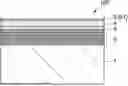
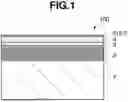
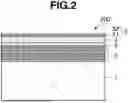
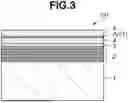

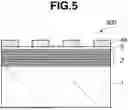
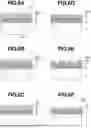

Sources:
- United States Patent and Trademark Office - verify current appl. status at the USPTO↗
Similar patent applications:
- » 20230333460
REFLECTIVE PHOTOMASK BLANK, METHOD FOR MANUFACTURING REFLECTIVE PHOTOMASK, AND REFLECTIVE PHOTOMASK - » 20250138410
REFLECTIVE PHOTOMASK BLANK AND METHOD FOR MANUFACTURING REFLECTIVE PHOTOMASK BLANK - » 20090042110
Reflection type photomask blank, manufacturing method thereof, reflection type photomask, and manufacturing method of semiconductor device - » 20260169369
Reflective Photomask, Reflective Photomask Blank, and Method for Manufacturing Reflective Photomask - » 20250138411
REFLECTIVE PHOTOMASK BLANK AND METHOD FOR MANUFACTURING REFLECTIVE PHOTOMASK - » 20250328069
REFLECTIVE PHOTOMASK BLANK, AND METHOD FOR MANUFACTURING REFLECTIVE PHOTOMASK - » 20260023316
REFLECTIVE PHOTOMASK BLANK, AND METHOD FOR MANUFACTURING REFLECTIVE PHOTOMASK - » 20260104636
Reflective Photomask Blank, and Method for Manufacturing Reflective Photomask - » 20260169368
REFLECTIVE PHOTOMASK, REFLECTIVE PHOTOMASK BLANK, AND METHOD FOR MANUFACTURING REFLECTIVE PHOTOMASK - » 20230367199
Reflective Photomask Blank, and Method for Manufacturing Reflective Photomask
Recent applications in this class:
- » 20260169369 2026-06-18
Reflective Photomask, Reflective Photomask Blank, and Method for Manufacturing Reflective Photomask - » 20260169368 2026-06-18
REFLECTIVE PHOTOMASK, REFLECTIVE PHOTOMASK BLANK, AND METHOD FOR MANUFACTURING REFLECTIVE PHOTOMASK - » 20260161068 2026-06-11
PHOTOMASK BLANK AND METHOD FOR MANUFACTURING PHOTOMASK - » 20260147268 2026-05-28
SUBSTRATE WITH CONDUCTIVE FILM, REFLECTIVE MASK BLANK, REFLECTIVE MASK, AND METHOD FOR MANUFACTURING SEMICONDUCTOR DEVICE - » 20260140436 2026-05-21
HOMOGENOUS SILICA-TITANIA GLASS - » 20260140435 2026-05-21
HOMOGENOUS SILICA-TITANIA GLASS - » 20260133479 2026-05-14
REFLECTIVE MASK BLANK, REFLECTIVE MASK, AND METHOD OF MANUFACTURING SEMICONDUCTOR DEVICE - » 20260133478 2026-05-14
EXTREME ULTRAVIOLET MASK - » 20260126716 2026-05-07
EXTREME ULTRAVIOLET MASK WITH ALLOY BASED ABSORBERS - » 20260126715 2026-05-07
BLANKMASK AND PHOTOMASK FOR EUV LITHOGRAPHY WITH HARD MASK FILM CONTAINING CHROME AND NIOBIUM
Recent applications for this Assignee:
- » 20260169380 2026-06-18
RESIST COMPOSITION, LAMINATE, AND PATTERNING PROCESS - » 20260169379 2026-06-18
ONIUM SALT, CHEMICALLY AMPLIFIED POSITIVE RESIST COMPOSITION AND RESIST PATTERN FORMING PROCESS - » 20260169369 2026-06-18
Reflective Photomask, Reflective Photomask Blank, and Method for Manufacturing Reflective Photomask - » 20260169368 2026-06-18
REFLECTIVE PHOTOMASK, REFLECTIVE PHOTOMASK BLANK, AND METHOD FOR MANUFACTURING REFLECTIVE PHOTOMASK - » 20260168074 2026-06-18
FILM-FORMING MATERIAL, FILM-FORMING SLURRY, SPRAY COATED FILM, AND SPRAY COATED MEMBER - » 20260167652 2026-06-18
ALDEHYDE-MODIFIED SILICONE AND METHOD FOR PRODUCING SAME - » 20260167651 2026-06-18
METHOD FOR PRODUCING ORGANOSILICON COMPOUND HAVING (METH)ACRYLOXY GROUP, AND ORGANOSILICON COMPOUND HAVING ACRYLOXY GROUP - » 20260166660 2026-06-18
CURABLE RESIN COMPOSITION FOR SOLDER RESIST USE - » 20260161083 2026-06-11
MULTILAYER-STRUCTURE-TYPE PHOTOSENSITIVE DRY FILM, PATTERNING PROCESS, DISPLAY, AND MICRO-LED DISPLAY - » 20260161081 2026-06-11
PATTERNING PROCESS