TRIGGERING RESPONSES TO REQUESTS FOR PROCESSOR-BASED RESOURCES UPON STORAGE OF REQUEST DATA TO PERSISTENT DATA STORAGE
US20260169804A1
2026-06-18
18/982,321
2024-12-16
Smart Summary: When a user asks for a resource from a computer, the system first locks that resource to prevent others from making requests for it at the same time. Next, it saves the details of the request in a permanent storage area. Once the request is saved, the system sends a response back to the user. After responding, the system performs any necessary follow-up tasks related to the request. Finally, it unlocks the resource so that others can use it again once all tasks are completed. 🚀 TL;DR
Abstract:
Techniques are provided for responding to user requests to processor-based resources upon storage of request data to persistent data storage. One method comprises obtaining a request directed to a resource, wherein the a request identifies at least a portion of the resource; locking the at least the portion of the resource, wherein the locking prevents one or more additional requests from being processed for the at least the portion of the resource; updating a data portion associated with the request in a persistent storage device; sending, in response to the updating the data portion associated with the request in the persistent storage device, a response to the request; performing at least one designated post-response task for the request; and releasing the locked at least the portion of the resource, in response to a completion of the at least one designated post-response task.
Inventors:
- Dvir Koren 6 🇮🇱 Nahalal, Israel
- Tal Abir 8 🇮🇱 Nesher, Israel
- Avi Puder 1 🇮🇱 Zichron Ya,akov, Israel
Applicant:
Interested in similar patents?
Get notified when new applications in this technology area are published.
Classification:
G06F9/5027 » CPC main
Arrangements for program control, e.g. control units using stored programs, i.e. using an internal store of processing equipment to receive or retain programs; Multiprogramming arrangements; Allocation of resources, e.g. of the central processing unit [CPU] to service a request the resource being a machine, e.g. CPUs, Servers, Terminals
G06F9/50 IPC
Arrangements for program control, e.g. control units using stored programs, i.e. using an internal store of processing equipment to receive or retain programs; Multiprogramming arrangements Allocation of resources, e.g. of the central processing unit [CPU]
Description
BACKGROUND
The number of input/output (I/O) operations and other requests directed to resources, such as storage resources, processes and/or file systems, often increases significantly over time. One or more dependent I/O operations, for example, may be associated with a given I/O operation. Such dependent I/O operations typically cannot be processed until processing of the given I/O operation is complete.
SUMMARY
Illustrative embodiments of the disclosure provide techniques for responding to user requests to processor-based resources upon storage of request data to persistent data storage. An exemplary method comprises obtaining at least one request directed to at least one processor-based resource, wherein the at least one request identifies at least a portion of the at least one processor-based resource; locking the at least the portion of the at least one processor-based resource, wherein the locking prevents one or more additional requests from being processed for the at least the portion of the at least one processor-based resource; updating at least one data portion associated with the at least one request in at least one persistent storage device; sending, in response to the updating the at least one data portion associated with the at least one request in the at least one persistent storage device, a response to the at least one request; performing, following the sending, one or more designated post-response tasks for the at least one request; and releasing the locked at least the portion of the at least one processor-based resource, in response to a completion of the one or more designated post-response tasks.
Illustrative embodiments can provide significant advantages relative to conventional techniques. For example, problems associated with managing latency associated with resource requests are overcome in one or more embodiments by sending a response (e.g., an acknowledgement), in response to a data portion associated with a given resource request being stored in a persistent storage device, thereby allowing one or more additional resource requests to be sent while one or more designated post-response tasks associated with the given resource request are performed by (or on behalf of) the resource.
Other illustrative embodiments include, without limitation, apparatus, systems, methods and computer program products comprising processor-readable storage media.
BRIEF DESCRIPTION OF THE DRAWINGS
FIG. 1 illustrates a network computing environment that can be configured for responding to user requests to processor-based resources upon storage of request data to persistent data storage in accordance with an illustrative embodiment;
FIG. 2 illustrates a storage data server of FIG. 1 in further detail in accordance with an illustrative embodiment;
FIGS. 3 and 4 illustrate a processing of requests directed to a resource in accordance with illustrative embodiments;
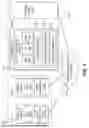
FIG. 5 is a process diagram illustrating an exemplary implementation of a resource request processing routine in accordance with an illustrative embodiment;
FIG. 6 is a process diagram illustrating an exemplary implementation of a recovery process in accordance with an illustrative embodiment;
FIG. 7 is a flow diagram illustrating an exemplary implementation of a method for responding to user requests to processor-based resources upon storage of request data to persistent data storage in accordance with an illustrative embodiment;
FIG. 8 illustrates an exemplary processing platform that may be used to implement at least a portion of one or more embodiments of the disclosure comprising a cloud infrastructure; and
FIG. 9 illustrates another exemplary processing platform that may be used to implement at least a portion of one or more embodiments of the disclosure.
DETAILED DESCRIPTION
Illustrative embodiments of the present disclosure will be described herein with reference to exemplary communication, storage and processing devices. It is to be appreciated, however, that the disclosure is not restricted to use with the particular illustrative configurations shown. One or more embodiments of the disclosure provide methods, apparatus, and computer program products for responding to user requests to processor-based resources upon storage of request data to persistent data storage.
In one or more embodiments, techniques are provided for responding to user requests to processor-based resources upon storage of request data to persistent data storage. As noted above, one or more dependent I/O operations may be associated with a given I/O operation. Such dependent I/O operations cannot be processed until a processing of the given I/O operation is finished. Such dependent I/O operations can impact the latency associated with I/O operations and other resource requests. An application may have to wait for the given I/O to finish before sending one or more dependent I/O operations. The latency of an I/O operation may be measured in some embodiments as the time it takes for an I/O operation to return with a response.
A lock is often employed to protect a portion of a resource (e.g., a range of a storage resource) associated with a resource request. The lock prevents two I/O operations (e.g., two write operations or a read operation and a write operation) that are partially or fully overlapping from being performed at the same time (e.g., in parallel). In this manner, the lock prevents parallel write I/O operations from being performed at the same time or one or more read I/O operations from being performed while a write I/O operation is being performed.
FIG. 1 schematically illustrates a computing environment 100 that can be configured for responding to user requests to processor-based resources upon storage of request data to persistent data storage, according to an exemplary embodiment of the disclosure. In particular, FIG. 1 schematically illustrates one or more compute nodes 110-1. . . 110-h (collectively, compute nodes 110), a communications network 120 and a data storage system 130 comprising a plurality of storage nodes 132-1 … 132-n (collectively, storage nodes 132).
In some embodiments, each compute node 110-1. . . 110-h respectively comprises a storage data client (SDC) 112-1…112-h and a non-volatile memory express (NVMe) initiator 114-1…114-h (or NVMe initiator 114), the functions of which will be explained below.
As further shown in FIG. 1, the storage node 132-1 comprises a storage control system 140, storage devices 150, a storage device target 152 and a metadata manager (MDM) 155. The storage device target 152, for example, of a given storage node 132 can be a backend target configured to manage storage devices 150 and to coordinate a processing of I/O operations on one or more of the storage devices 150, as discussed further below in conjunction with FIG. 4.
In some embodiments, the storage control system 140 is a software-defined storage control system that comprises a storage data server (SDS) 142, a storage data target (SDT) 144 and a storage data replicator (SDR) 146, the functions of which will be explained below. In some embodiments, the other storage nodes (e.g., storage node 132-n) have the same or similar configuration as the storage node 132-1 shown in FIG. 1. The SDT 144 can be a front-end target that is a software component configured to provide support for one or more communication protocols.
The compute nodes 110 may comprise physical server nodes and/or virtual server nodes that host and execute applications that are configured to process data and execute tasks/workloads and perform computational work, either individually, or in a distributed manner, to thereby provide compute services to one or more users (the term “user” herein is intended to be broadly construed so as to encompass numerous arrangements of human, hardware, software or firmware entities, as well as combinations of such entities, including clients and/or application programming interfaces employed by the user). In some embodiments, the compute nodes 110 comprise application servers, database servers, etc. The compute nodes 110 can include virtual nodes such as virtual machines and container systems. In some embodiments, the compute nodes 110 comprise a cluster of computing nodes of an enterprise computing system, a cloud-based computing system, or other types of computing systems or information processing systems comprising multiple computing nodes associated with respective users. The compute nodes 110 issue data access requests to the data storage system 130, wherein the data access requests include (i) write requests to store data in one or more of the storage nodes 132 and (ii) read requests to access data that is stored in one or more of the storage nodes 132.
The communications network 120 is configured to enable communication between the compute nodes 110 and the storage nodes 132, as well as peer-to-peer communications between the storage nodes 132. In this regard, while the communications network 120 is generically depicted in FIG. 1, it is to be understood that the communications network 120 may comprise any known communication network such as, a global computer network (e.g., the Internet), a wide area network (WAN), a local area network (LAN), an intranet, a satellite network, a telephone or cable network, a cellular network, a wireless network such as Wi-Fi or WiMAX, a storage fabric (e.g., IP-based or Fiber Channel storage fabric), or various portions or combinations of these and other types of networks. In this regard, the term “network” as used herein is therefore intended to be broadly construed so as to encompass a wide variety of different network arrangements, including combinations of multiple networks possibly of different types, that enable communication using, e.g., Transfer Control Protocol/Internet Protocol (TCP/IP) or other communication protocols such as Fibre Channel (FC), FC over Ethernet (FCoE), RDMA over Converged Ethernet (RoCE), Internet Small Computer System Interface (iSCSI), Peripheral Component Interconnect express (PCIe), InfiniBand, Gigabit Ethernet, etc., to implement I/O channels and support storage network connectivity. Numerous alternative networking arrangements are possible in a given embodiment, as will be appreciated by those skilled in the art.
In some embodiments, each storage node 132 comprises a server node (e.g., storage-only node) that is implemented on, e.g., a physical server machine or storage appliance comprising hardware processors, system memory, and other hardware resources that execute software and firmware to implement the functionality of the storage node 132 and the associated storage control system 140. In some embodiments, each storage node 132 comprises a plurality of control processors that execute a lightweight operating system (e.g., a customized lightweight Linux kernel) and functional software (e.g., software-defined storage software) to implement functions of the storage control system 140, as discussed in further detail below.
The storage devices 150 of a given storage node 132 can be internal storage devices and/or direct-attached storage devices, and may comprise one or more of various types of storage devices such as hard-disk drives (HDDs), solid-state drives (SSDs), flash memory cards (e.g., PCIe cards), or other types of non-volatile memory (NVM) devices including, but not limited to, non-volatile random-access memory (NVRAM), phase-change RAM (PC-RAM), magnetic RAM (MRAM), and other types of storage media, etc. In some embodiments, the storage devices 150 comprise flash memory devices such as NAND flash memory, NOR flash memory, etc. The NAND flash memory can include single-level cell (SLC) devices, multi-level cell (MLC) devices, triple-level cell (TLC) devices, or quad-level cell (QLC) devices. These and various combinations of multiple different types of storage devices 150 may be implemented on each storage node 132. In this regard, the term “storage device” as used herein should be broadly construed to encompass all types of persistent storage media including hybrid drives. On a given storage node 132, the storage control system 140 is configured to communicate with the storage devices 150 through any suitable host interface, e.g., a host bus adapter, using suitable protocols such as Advanced Technology Attachment (ATA), serial ATA (SATA), external SATA (eSATA), parallel ATA (PATA), non-volatile memory express (NVMe), small computer system interface (SCSI), serial attached SCSI (SAS), peripheral component interconnect express (PCIe), etc.
The data storage system 130 may comprise any type of data storage system, or a combination of data storage systems, including, but not limited to, a storage area network (SAN) system, a dynamic scale-out data storage system, or other types of distributed data storage systems comprising software-defined storage, clustered or distributed virtual and/or physical infrastructure. The term “data storage system” as used herein should be broadly construed and not viewed as being limited to storage systems of any particular type or types. In some embodiments, the data storage system 130 comprises a dynamic scale-out storage system that allows additional storage nodes to be added (or removed) to the cluster to scale the performance and storage capacity of the data storage system 130. It is to be noted that each storage node 132 and associated storage devices 150 is an example of what is more generally referred to herein as a “storage system” or a “storage array.”
In some embodiments, the data storage system 130 comprises a dynamic scale-out software-defined storage system that is configured to implement a high-capacity block-level SAN storage system (e.g., virtual SAN system) that consolidates the capacity of the storage devices 150 (e.g., HDDs, SSDs, NVMe flash storage, flash PCIe cards etc.) of the storage nodes 132 into shared block storage that is logically partitioned into logical storage volumes identified by, e.g., logical unit numbers (LUNs). In an exemplary embodiment of a scale-out software-defined SAN storage system, the storage control systems 140 comprise software components of a software-defined storage system, that are executed on the storage nodes 132 to implement a software-defined storage environment in which the storage nodes 132 form a loosely coupled storage server cluster and collectively communicate and operate to create a server-based SAN system (e.g., virtual SAN) to provide host access to a virtual pool of block storage using the combined storage capacity (e.g., storage devices 150) of the storage nodes 132.
In some embodiments, the SDCs 112, the MDMs 155, the SDSs 142, the SDTs 144, and the SDRs 146, for example, of the storage nodes 132 comprise software components of a software-defined storage platform, wherein the software components are installed on physical server machines (or server nodes) such as application servers, storage servers, control servers, etc. In some embodiments, virtual machines (e.g., Linux-based virtual machines) are utilized to host the software components of the software-defined storage platform. The software components collectively implement various functions for deploying and managing a software-defined, scale-out server SAN architecture that can grow from a few servers to thousands of severs.
For example, the SDS 142 comprises a service that is configured to manage the storage capacity (e.g., storage devices 150) of a single server (e.g., storage node 132) and provide back-end access to the storage devices of the server. In other words, the SDS 142 is installed on each server that contributes some or all of the capacity of its local storage devices to the scale-out data storage system. More specifically, in the scale-out software-defined storage environment, the SDSs 142 of the storage control systems 140 are configured to create and manage storage pools (e.g., virtual pools of block storage) by aggregating storage capacity of the respective storage devices 150 and dividing each storage pool into one or more volumes, wherein the volumes are exposed to the SDCs 112 of the compute nodes 110 as virtual block devices. For example, a virtual block device can correspond to a volume of a storage pool. Each virtual block device comprises any number of actual physical storage devices, wherein each virtual block device is preferably homogenous in terms of the type of storage devices that make up the block device (e.g., a block device can include only HDD devices or SSD devices, etc.). In this regard, each instance of the SDS 142 that runs on a respective one of the storage nodes 132 contributes some or all of its local storage space to an aggregated virtual pool of block storage with varying performance tiers (e.g., HDD, SSD, etc.) within a virtual SAN.
In some embodiments, each SDC 112 that executes on a given compute node 110 comprises a lightweight block device driver that is deployed to expose shared block volumes to the compute nodes 110. An SDC 112 may expose one or more designated test volumes, discussed further below. In particular, each SDC 112 is configured to expose the storage volumes as block devices to the applications located on the same server (e.g., application server) on which the SDC 112 is installed. In other words, as shown in FIG. 1, the SDCs 112 run on the same server machines as the compute nodes 110 that require access to the block devices exposed and managed by the SDSs 142 of the storage nodes 132. The SDC 112 of a given compute node 110 exposes block devices representing the virtual storage volumes that are currently mapped to the given compute node 110. In particular, the SDC 112 for a given compute node 110 serves as a block driver for the compute node 110, wherein the SDC 112 intercepts I/O requests, and utilizes the intercepted I/O request to access the block storage that is managed by the SDSs 142. The SDCs 112 are installed in the operating system or hypervisor hosting the application layer and provide the operating system or hypervisor (that runs the SDC 112) access to the logical block devices (e.g., volumes). The SDCs 112 have knowledge of which SDSs 142 hold its block data, so multipathing can be accomplished natively through the SDCs 112, where the communications network 120 is configured to provide an any-to-any connection between the compute nodes 110 and the storage nodes 132. More specifically, each SDC 112 connects to every SDS 142, which eliminates the need for multipath software, in at least some embodiments.
In some embodiments, the MDMs 155 implement a management layer on one or more of the storage nodes 132 that manages and configures the software-defined storage system in the computing environment 100. The MDMs 155 are services that function as a monitoring and configuration agent of the storage environment. More specifically, in some embodiments, the management layer is configured to supervise the operations of the storage cluster and manage storage cluster configurations. For example, the MDMs 155 (or an MDM cluster) manage the storage system by aggregating the entire storage exposed to the MDM cluster by the SDSs 142 to generate a virtual storage layer (e.g., virtual SAN storage layer), wherein logical volumes can be defined over storage pools and exposed to host applications as a local storage device using the SDCs 112.
Further, the MDMs 155 are configured to manage various types of metadata associated with the software-defined storage system. For example, such metadata includes a mapping of the SDCs 112 to the SDSs 142 of the storage nodes 132, wherein such mapping information is provided to the SDCs 112 and the SDSs 142 to allow such components to control I/O data path operations (e.g., allow the SDCs 112 to communicate with target SDSs 142 to access data in logical volumes that are mapped to the SDCs 112). In addition, the MDMs 155 collect connectivity status updates from the SDCs 112 to monitor all connections between SDCs 112 and the SDSs 142 to determine the current system state, and post events whenever a given SDC 112 connects to or disconnects from a specific IP address of a given SDS 142.
In addition, the MDMs 155 may be configured to manage various management operations such as data migration, rebuilds, and other system-related functions. In this regard, the MDMs 155 generate and manage various types of metadata that are required to perform various management operations in the storage environment such as, e.g., performing data migration operations, performing rebalancing operations, managing configuration changes, managing the SDCs 112 and the SDSs 142, maintaining and updating device mappings, maintaining management metadata for controlling data protection operations such as snapshots, replication, RAID configurations, etc., managing system capacity including storage device allocations and/or release of capacity, performing operations for recovery from errors and failures, and system rebuild tasks, etc. The MDMs 155 communicate with the SDCs 112 to provide notification of changes in data layout, and communicate with the SDSs 142 to coordinate rebalancing operations. In some embodiments, the MDMs 155 are configured to implement a distributed cluster management system.
In some embodiments, the software-defined storage system utilizes various logical entities that link the physical layer to the virtual storage layer, wherein such logical entities include protection domains, fault sets, and storage pools. In some embodiments, a protection domain is a logical entity that comprises a group of SDSs 142 that provide backup for each other. Each SDS 142 belongs to only one protection domain such that each protection domain comprises a unique set of SDSs 142. In some embodiments, each protection domain can have up to a maximum number of SDS nodes (e.g., 128 SDS nodes). The use of protection domains enables optimal performance, reduction of mean time between failure (MTF) issues, and the ability to sustain multiple failures in different protection domains.
Further, in some embodiments, a fault set is a logical entity that defines a logical group of SDS nodes (within a protection domain) that are more inclined to fail together, e.g., a group of SDS nodes within a given protection domain that are all powered in a same rack. By grouping SDS nodes into a given fault set, the system is configured to mirror the data for all storage devices in the given fault set, wherein mirroring is performed on SDS nodes that are outside the given fault set. A fault unit can be either a fault set or an SDS node that is not associated with a fault set. In some embodiments, user data is maintained in a RAID-1 mesh mirrored layout, where each piece of data is stored on two different fault units. The copies are distributed over the storage devices according to an algorithm that ensures uniform load of each fault unit in terms of capacity and expected network load.
Moreover, in some embodiments, a storage pool is a logical entity that defines a set of physical storage devices in a protection domain, wherein each storage device belongs to only one storage pool. When a volume is configured over the virtualization storage layer, in some embodiments, the volume is distributed over all devices residing in the same storage pool. Each storage pool comprises a homogeneous set of storage devices (e.g., HDD storage pool, or SSD storage pool) to enable storage tiering. In some embodiments, each volume block has two copies located on two different fault units (e.g., two different SDS nodes), that allows the system to maintain data availability following a single-point failure.
The SDR 146 is a software component that is configured to implement a data replication system, e.g., journal-based asynchronous replication. In some embodiments, asynchronous replication is performed between two peer data storage systems, which are connected via a WAN. In general, in some embodiments, asynchronous replication involves writing data to a source (primary) volume in a first data storage system and acknowledging completion of an I/O write operation to a host application before the data is replicated to a target (replica) volume in a second (remote) data storage system (e.g., the source (primary) volume and the target (replica) volume do not share hardware elements in at least some embodiments). With asynchronous replication, the I/O write operations at a source storage node are logged in a replication journal by a source SDR 146 on the source storage node, and the replication journal is periodically transmitted at scheduled times to a target storage node, wherein a target SDR 146 on the target storage node processes the received replication journal to replicate data to a target (replica) volume. The data replication system can be utilized for various purposes including, but not limited to, recovering from a physical or logical disaster, migrating data, testing data at a remote site, or offloading a data backup operation.
More specifically, in the exemplary embodiment of FIG. 1, the SDR 146 is responsible for processing all I/O requests associated with replicated volumes. In the source system, for replicated volumes, the SDCs 112 communicate with the SDR 146. For non-replicated volumes, the SDCs 112 communicate directly with the SDSs 142. At a source storage node, application I/O requests associated with a replicated volume are sent in some embodiments by an SDC 112 to a source SDR 146. The source SDR 146 will write the required journal data to a replication journal volume, and then send a duplicate of the replication I/O write request and associated user data to the SDS 142 wherein the SDS 142 performs write operations to write the received I/O user data in a primary volume. The journal data is then transmitted to a target SDR 146 on a target storage node, which processes the received replication journal to replicate data to the target (replica) volume. In some embodiments, a minimum of two SDRs are deployed on the source and target storage nodes to maintain high availability. If one SDR fails, the management layer (e.g., one or more MDM nodes) directs the SDCs to send the I/O requests for replicated volumes to an available SDR 146.
The SDT 144 can be a front-end target that is a software component configured to provide support for, for example, NVMe-oF, in particular, NVMe over TCP (NVMe/TCP) that enables NVMe-oF across a standard Ethernet network. In some embodiments, the SDT 144 is configured in the storage layer to handle the I/O requests of the NVMe initiators 114 to provide support for the NVMe/TCP storage protocol for front end connectivity, and thus, allow the use of NVMe/TCP hosts in addition to the SDCs 112. In some embodiments, the SDT 144 is an NVMe target that is configured to translate control and I/O data path packets to the NVMe standard protocol, wherein each NVMe initiator 114 is serviced by multiple SDTs 144 depending on the supported number of paths in the NVMe multipathing driver. In essence, I/O requests are sent from a host NVMe initiator 114 (which is installed in the host operating system or hypervisor) to the SDT 144, and the SDT 144 communicates with a target SDS 142 to direct the I/O request to the target SDS 142.
A distributed storage system may employ user data storage volumes for storing user data, and metadata storage volumes for storing the metadata corresponding to the user data. The metadata associated with a given SDS may be managed by one or more metadata units. The ownership of the user data storage capacity may be spread among multiple metadata units. The number of metadata units on a given SDS may vary. The different metadata units on an SDS may each have a different number of metadata pages at a given time. In order to provide a scalable system, one or more aspects of the disclosure recognize that the metadata storage volumes should start at a designated size and be expandable to support additional metadata pages.
FIG. 2 illustrates an SDS of FIG. 1 in further detail in accordance with an illustrative embodiment. In the example of FIG. 2, an SDS 200 comprises one or more metadata units 210-1 . . . 210-p (collectively, metadata units 210) and a storage device target 230. In some embodiments, metadata unit 210-1 comprises a respective page manager 212-1, one or more metadata storage volumes 216-1, one or more user data storage volumes 218-1 and a write cache 220-1. Similarly, metadata unit 210-p comprises a respective page manager 212-p, one or more metadata storage volumes 216-p, one or more user data storage volumes 218-p and a write cache 220-p. The metadata storage volumes 216 and the user data storage volumes 218 are configured to store metadata pages and user data pages, respectively, and may also store additional information, such as checkpoints and write journals. The write cache 220 may be used to improve performance by using a volatile memory (e.g., RAM) to gather write commands sent to a storage device 150.
As noted above, a storage device target 230 of a given SDS 200 can be a backend target configured to manage storage devices and to coordinate a processing of I/O operations on such storage devices.
The page manager 212 splits the metadata storage volumes 216 into metadata pages (not shown in FIG. 2), and processes requests to allocate and deallocate metadata pages on a metadata storage volume. In some fault scenarios, the page manager 212 may rebuild the metadata stored in one or more of the metadata storage volumes 216. Generally, a metadata page characterizes a plurality of user data pages stored on user data storage volumes 218. For example, in a given set of user data pages, each of the user data pages may be characterized by a storage volume identifier, an offset and possibly a signature.
A given “page” as the term is broadly used herein should not be viewed as being limited to any particular range of fixed sizes. In some embodiments, a page size of 8 kilobytes (KB) is used, but this is by way of example only and can be varied in other embodiments. For example, page sizes of 4KB, 16KB or other values can be used. Accordingly, illustrative embodiments can utilize any of a wide variety of alternative paging arrangements for organizing the metadata pages and/or the user data pages.
The user data pages are part of the user data storage volumes 218 (e.g., LUNs) configured to store files, blocks, objects or other arrangements of data, each also generally referred to herein as a “data item,” on behalf of users. The user data stored in the user data pages can include any type of user data that may be utilized in the computing environment 100. The terms “metadata page” and “user data” herein are therefore also intended to be broadly construed.
While one or more embodiments are described herein in connection with I/O requests (including I/O operations generated by applications of a given user and operations directly related to user I/O operations, such as requests to clear a write cache or requests to update metadata or other data structures) associated with the storage environment of FIGS. 1 and 2, for example, the disclosed techniques for responding to user requests to processor-based resources upon storage of request data to persistent data storage may be employed in different storage environments, as well as with requests associated with different types of resources, such as storage resources, processes, file systems or server resources (e.g., requests processed by HTTP servers, such as put, post, delete and/or get commands for HTTP servers), as would be apparent to a person of ordinary skill in the art.
FIG. 3 illustrates a processing of requests 315-1 and 315-Q, directed to a resource 305, by a server node 300 in accordance with an illustrative embodiment. The resource 305 may comprise, for example, a storage resource, such as one or more disks or solid-state drives, a network resource and/or one or more HTTP servers. In the example of FIG. 3, the resource 305 employs a persistent cache 307 to persistently store data associated with resource requests (e.g., the payload, or a portion thereof, of an I/O operation) in accordance with the disclosed techniques for responding to user requests to processor-based resources upon storage of request data to persistent data storage.
The requests 315-1 and 315-Q are generated by one or more user devices 310-1 through 310-M. The user device 310-1 may be associated with an internal user that may be collocated with the server node 300. The user device 310-1 associated with the internal user may generate one or more user I/O operations and/or one or more dependent I/O operations, for example. In the example of FIG. 3, the user device 310-1 generates a request 315-1 directed to the resource 305 and receives a corresponding response 320-1 from the resource 305.
In at least some embodiments, the requests 315-1 and 315-Q have a request format comprising an opcode (e.g., an instruction to be executed by the resource 305), a data portion and header data. The requests 315-1 and 315-Q may comprise user I/O operations (e.g., read and/or write operations), network packets and HTTP requests (e.g., put, get, post and/or delete operations), for example.
The user device 310-M may be associated with one or more external users that communicate with the server node 300 over a communications network 340. The user device 310-M associated with the external user may generate one or more user I/O operations and/or one or more dependent I/O operations, for example. In the example of FIG. 3, the user device 310-M generates a request 315-Q directed to the resource 305 over the communications network 340 and receives a corresponding response 320-Q from the resource 305. In one or more embodiments, the responses 320-1 and 320-Q have a response format comprising a return code (e.g., an acknowledgement, success, failure and/or another return code) and data. One or more synchronous tasks (e.g., performing a validation and/or locking at least a portion of the resource 305 and storing a data portion associated with the requests 315 in the persistent cache 307) associated with the requests 315 may be performed before the corresponding response 320 is sent.
In one or more embodiments, latency associated with requests 315 is improved by sending a response 320 (e.g., an acknowledgement) to a user device 310, in response to a data portion associated with a given request 315 being stored in the persistent cache 307 (or another persistent storage device). In at least some embodiments, once the response 320 is sent to the user device 310, one or more designated post-response tasks associated with the requests 315 may be asynchronously performed by (or on behalf of) the resource 305, to improve latency.
FIG. 4 illustrates an exemplary processing of a request 420, from a client 415 executing on a user device 410, directed to a resource 408 (e.g., a disk), by a server node 400, in accordance with an illustrative embodiment. In the example of FIG. 4, the client 415 of the user device 410 sends the request 420, generated by user device 410, over a communications network 440 to the server node 400. The user device 410 may be associated with, for example, one or more external users that communicate with the server node 400 over the communications network 440. In other embodiments, the user device 410 may be associated with one or more internal users that communicate directly with the server node 400. The user device 410 may generate, for example, one or more user I/O operations and/or one or more dependent I/O operations. The user device 410 may receive a corresponding response 430 (e.g., an acknowledgement) to the request 420 from the resource 408.
In the example of FIG. 4, the server node 400 controls access to the resource 408. The server node 400 may comprise a resource limiter 405 that determines a penalty. The penalty may be based at least in part on a resource utilization associated with requests directed to the resource 408. The penalty may indicate an amount of time to wait before sending at least one additional request to the resource 408.
The server node 400 may also comprise persistent cache 407 to persistently store data associated with requests 420 (e.g., the payload, or a portion thereof, of an I/O operation) in accordance with the disclosed techniques for responding to user requests to processor-based resources upon storage of request data to persistent data storage.
In at least some embodiments, the request 420 may have a request format similar to the request format of FIG. 3. The request 420 may comprise one or more user I/O operations (e.g., read and/or write operations), one or more network packets and one or more HTTP requests (e.g., put, get, post and/or delete operations), for example. In addition, the response 430 may have a response format similar to the response format of FIG. 3 (e.g., comprising an acknowledgement, a return code and data). The response 430 is initially provided to the client 415 of the user device 410. The client 415 provides the response 430 (e.g., an acknowledgement of the request 420) to the given user.
One or more synchronous tasks (e.g., performing a validation and/or locking at least a portion of the resource 408 and storing a data portion associated with the requests 420 in the persistent cache 407) associated with the requests 420 may be performed before the corresponding response 430 is sent.
In one or more embodiments, latency associated with requests 420 is improved by sending a response 430 (e.g., an acknowledgement) to a user device 410, in response to a data portion associated with a given request 420 being stored in the persistent cache 407 (or another persistent storage device). In at least some embodiments, once the response 430 is sent to the user device 410, one or more designated post-response tasks associated with the requests 420 may be asynchronously performed by (or on behalf of) the resource 408, to improve latency.
FIG. 5 is a process diagram illustrating an exemplary implementation of a resource request processing routine 500 in accordance with an illustrative embodiment. In the example of FIG. 5, a user I/O request is obtained in step 1 directed to at least a portion of one or more target storage resources. For example, a storage system may have an atomic unit for I/O operations of 8 KBs and a given sub-chunk write operation received in step 1 may comprise 4 KBs. A legitimacy of the obtained user I/O request is validated in step 2. The validation may perform one or more evaluations to confirm that the obtained user I/O request may be further processed. For example, the evaluations performed in step 2 may comprise determining whether the obtained user I/O request is allowed (e.g., when a storage volume is being unmounted, user I/O request are blocked, when a storage volume is reserved, it can only be used by one cluster node; or whether the obtained user I/O request is a valid size or out of range). A data portion of the obtained user I/O request is compressed in step 3.
In step 4, a portion of the one or more target storage resources associated with the obtained user I/O request is locked. The lock blocks a second user I/O request to the same portion of the resource (e.g., two I/O operations that are directed to the same location or have an overlapped (or partially overlapped) range). For example, a first I/O operation from address 10 through 16 and a second I/O operation from 14 through 20 may be considered to overlap. Such I/O operations need to be serialized (e.g., the second IO will wait for the first one to end). The two I/O operations may comprise two write operations or a write operation and at least one read operation.
The data portion of obtained user I/O request is written to a write cache (or another persistent storage device) in step 5 and an acknowledgement (or another response) is sent to the user in step 6 (but the lock is maintained and the subsequent steps of resource request processing routine 500 may be performed in an asynchronous manner). In this manner, the latency experienced by the user is significantly reduced, as existing approaches wait until a completion of the processing of the obtained user I/O request before sending an acknowledgement (or another response). The latency indicates an amount of time that it takes for an I/O operation or another request to return with a response (e.g., an acknowledgement).
An atomic unit (e.g., 8 KBs) of the prior data is read from the portion of the one or more target storage resources in step 7. The data portion of the obtained user I/O request is merged in step 8 into the atomic unit of the one or more target storage resources that was read in step 7. The merged data portion of the obtained user I/O request is written to the write cache (or another persistent storage device) in step 9.
An index table is updated in step 10 to identify a stored location, in the one or more target storage resources, of the stored data portion of the obtained user I/O request. The index table may comprise a persistent data element (e.g., a data structure) that can map each data unit to a stored location. The locked portion of the one or more target storage resources is then released in step 11.
FIG. 6 is a process diagram illustrating an exemplary implementation of a recovery process 600 in accordance with an illustrative embodiment. When a system crashes or fails over to a different node, a recovery procedure may be performed to maintain data consistency. In the following recovery process 600, write operations in the write cache are identified that were not fully completed before a compute process (e.g., an SDS 142 of FIG. 1) crashed or failed.
In the example of FIG. 6, the following recovery process 600 is initiated in step 1 in response to a failure of a server device. In step 2, one or more pending requests are obtained from a persistent cache that were in process at a time of failure. The portion of the one or more target storage resources associated with the pending requests are locked in step 3. One or more designated post-response tasks are performed in step 4 for the pending requests.
The lock of the portions of the one or more target storage resources for the pending requests is released in step 5, in response to a completion of the one or more designated post-response tasks for the pending requests.
FIG. 7 is a flow diagram illustrating an exemplary implementation of a method for responding to user requests to processor-based resources upon storage of request data to persistent data storage in accordance with an illustrative embodiment. In the example of FIG. 7, at least one request directed to at least one processor-based resource is obtained in step 702, where the at least one request identifies at least a portion (e.g., a target address for an I/O operation, an object identifier in a database system or an offset and size) of the at least one processor-based resource. The request may comprise, for example, an I/O operation, an update of an object and/or an insertion of a new object.
In step 704, the at least the portion of the at least one processor-based resource is locked, wherein the locking prevents one or more additional requests from being processed for the at least the portion of the at least one processor-based resource. The at least the portion of the at least one processor-based resource may comprise, for example, a range of a storage resource or an object identifier in an object store. As noted above, a storage system may have an atomic unit for I/O operations of 8 KBs and a given sub-chunk write operation received may comprise 4 KBs, for example. The atomic unit of 8 KBs that comprises the 4 KBs associated with the write operation will be locked in step 704.
At least one data portion (e.g., one or more fields) associated with the at least one request is updated in step 706 in at least one persistent storage device (e.g., a write cache or another persistent cache).
In step 708, a response is sent to the at least one request, in response to the updating the at least one data portion associated with the at least one request in the at least one persistent storage device. One or more designated post-response tasks for the at least one request are performed, following the sending, in step 710. The locked at least the portion of the at least one processor-based resource is released in step 712, in response to a completion of the one or more designated post-response tasks.
In some embodiments, the process of FIG. 7 may also comprise validating a legitimacy of the at least one request prior to the locking. The validating the legitimacy of the at least one request prior to the locking may comprise at least one of: determining whether the request is allowed; determining if requests to the at least the portion of the at least one processor-based resource are currently blocked; evaluating a size of the at least one data portion; or determining whether the at least the portion of the at least one processor-based resource is out of range.
In one or more embodiments, the process of FIG. 7 may also comprise compressing the at least one data portion associated with the at least one request in memory. The at least one request may comprise at least one input/output operation, wherein the at least one processor-based resource comprises one or more target storage resources, wherein the response comprises an acknowledgement, wherein the at least one persistent storage device comprises at least one write cache and wherein the one or more designated post-response tasks comprise (i) reading a minimum data portion (e.g., an atomic unit) of the at least one processor-based resource that encompasses the at least the portion of the one or more target storage resources; (ii) merging the at least one data portion associated with the at least one request into the minimum data portion of the one or more target storage resources that was read; (iii) writing the merged data portion of the at least one request to the write cache (for example, to be moved to a backend storage device at a later time); and (iv) updating an index table to identify a stored location, in the one or more target storage resources, of the at least one data portion associated with the at least one request.
In at least one embodiment, the at least one processor-based resource comprises one or more of an object store, a server, a storage system, a file system and a database, and wherein the one or more designated post-response tasks comprise one or more of updating metadata associated with at least one object and updating at least one index. The locking of the at least the portion of the at least one processor-based resource may be maintained until the releasing. A user may send an additional request in response to receiving the response.
In some embodiments, a recovery process may obtain the at least one data portion associated with the at least one request from the at least one persistent storage device for one or more requests that were being processed at a time of failure, locks the at least the portion of the at least one processor-based resource associated with the one or more requests that were being processed, performs the one or more designated post-response tasks for the one or more requests that were being processed and releases the locked at least the portion of the at least one processor-based resource for the one or more requests that were being processed, in response to a completion of the one or more designated post-response tasks for the one or more requests that were being processed.
The particular processing operations and other network functionality described in conjunction with the diagrams of FIGS. 3-7 are presented by way of illustrative example only and should not be construed as limiting the scope of the disclosure in any way. Alternative embodiments can use other types of processing operations for responding to user requests to processor-based resources upon storage of request data to persistent data storage. For example, the ordering of the process steps may be varied in other embodiments, or certain steps may be performed concurrently with one another rather than serially. In one aspect, the process can skip one or more of the steps. In other aspects, one or more of the steps are performed simultaneously. The processing of one or more of the steps can also be distributed between multiple components. In some aspects, additional steps can be performed.
In some embodiments, techniques are provided for responding to user requests to processor-based resources upon storage of request data to persistent data storage. In at least some embodiments, latency associated with processing resource requests is improved by sending a response (such as an acknowledgement) to a user device, in response to a data portion associated with a given resource request being stored in a persistent cache (or another persistent storage device). In at least one embodiment, once the response is sent to the user device, one or more additional resource requests may be sent by the user device, to improve latency, while one or more designated post-response tasks associated with the given resource request may be performed by (or on behalf of) the resource.
One or more embodiments of the disclosure provide improved methods, apparatus and computer program products for responding to user requests to processor-based resources upon storage of request data to persistent data storage. The foregoing applications and associated embodiments should be considered as illustrative only, and numerous other embodiments can be configured using the techniques disclosed herein, in a wide variety of different applications.
It should also be understood that the disclosed resource request processing techniques, as described herein, can be implemented at least in part in the form of one or more software programs stored in memory and executed by a processor of a processing device such as a computer. As mentioned previously, a memory or other storage device having such program code embodied therein is an example of what is more generally referred to herein as a “computer program product.”
The disclosed techniques for responding to user requests to processor-based resources upon storage of request data to persistent data storage may be implemented using one or more processing platforms. One or more of the processing modules or other components may therefore each run on a computer, storage device or other processing platform element. A given such element may be viewed as an example of what is more generally referred to herein as a “processing device.”
As noted above, illustrative embodiments disclosed herein can provide a number of significant advantages relative to conventional arrangements. It is to be appreciated that the particular advantages described above and elsewhere herein are associated with particular illustrative embodiments and need not be present in other embodiments. Also, the particular types of information processing system features and functionality as illustrated and described herein are exemplary only, and numerous other arrangements may be used in other embodiments.
In these and other embodiments, compute services can be offered to cloud infrastructure tenants or other system users as a PaaS offering, although numerous alternative arrangements are possible.
Some illustrative embodiments of a processing platform that may be used to implement at least a portion of an information processing system comprise cloud infrastructure including virtual machines implemented using a hypervisor that runs on physical infrastructure. The cloud infrastructure further comprises sets of applications running on respective ones of the virtual machines under the control of the hypervisor. It is also possible to use multiple hypervisors each providing a set of virtual machines using at least one underlying physical machine. Different sets of virtual machines provided by one or more hypervisors may be utilized in configuring multiple instances of various components of the system.
These and other types of cloud infrastructure can be used to provide what is also referred to herein as a multi-tenant environment. One or more system components such as a cloud-based resource request processing engine, or portions thereof, are illustratively implemented for use by tenants of such a multi-tenant environment.
Cloud infrastructure as disclosed herein can include cloud-based systems. Virtual machines provided in such systems can be used to implement at least portions of a cloud-based resource request processing platform in illustrative embodiments. The cloud-based systems can include block storage.
In some embodiments, the cloud infrastructure additionally or alternatively comprises a plurality of containers implemented using container host devices. For example, a given container of cloud infrastructure illustratively comprises a Docker container or other type of Linux Container (LXC). The containers may run on virtual machines in a multi-tenant environment, although other arrangements are possible. The containers may be utilized to implement a variety of different types of functionality within the storage devices. For example, containers can be used to implement respective processing devices providing compute services of a cloud-based system. Again, containers may be used in combination with other virtualization infrastructure such as virtual machines implemented using a hypervisor.
Illustrative embodiments of processing platforms will now be described in greater detail with reference to FIGS. 8 and 9. These platforms may also be used to implement at least portions of other information processing systems in other embodiments.
FIG. 8 shows an example processing platform comprising cloud infrastructure 800. The cloud infrastructure 800 comprises a combination of physical and virtual processing resources that may be utilized to implement at least a portion of an information processing system. The cloud infrastructure 800 comprises multiple virtual machines (VMs) and/or container sets 802-1, 802-2, . . . 802-L implemented using virtualization infrastructure 804. The virtualization infrastructure 804 runs on physical infrastructure 805, and illustratively comprises one or more hypervisors and/or operating system level virtualization infrastructure. The operating system level virtualization infrastructure illustratively comprises kernel control groups of a Linux operating system or other type of operating system.
The cloud infrastructure 800 further comprises sets of applications 810-1, 810-2, . . . 810-L running on respective ones of the VMs/container sets 802-1, 802-2, . . . 802-L under the control of the virtualization infrastructure 804. The VMs/container sets 802 may comprise respective VMs, respective sets of one or more containers, or respective sets of one or more containers running in VMs.
In some implementations of the FIG. 8 embodiment, the VMs/container sets 802 comprise respective VMs implemented using virtualization infrastructure 804 that comprises at least one hypervisor. Such implementations can provide resource request processing functionality of the type described above for one or more processes running on a given one of the VMs. For example, each of the VMs can implement resource request processing control logic and associated functionality for responding to resource requests once a data portion of a given resource request has been stored in a persistent storage device.
An example of a hypervisor platform that may be used to implement a hypervisor within the virtualization infrastructure 804 is a compute virtualization platform which may have an associated virtual infrastructure management system such as server management software. The underlying physical machines may comprise one or more distributed processing platforms that include one or more storage systems.
In other implementations of the FIG. 8 embodiment, the VMs/container sets 802 comprise respective containers implemented using virtualization infrastructure 804 that provides operating system level virtualization functionality, such as support for Docker containers running on bare metal hosts, or Docker containers running on VMs. The containers are illustratively implemented using respective kernel control groups of the operating system. Such implementations can provide resource request processing functionality of the type described above for one or more processes running on different ones of the containers. For example, a container host device supporting multiple containers of one or more container sets can implement one or more instances of resource request processing control logic and associated functionality for responding to resource requests once a data portion of a given resource request has been stored in a persistent storage device.
As is apparent from the above, one or more of the processing modules or other components of the information processing system may each run on a computer, server, storage device or other processing platform element. A given such element may be viewed as an example of what is more generally referred to herein as a processing device. The cloud infrastructure 800 shown in FIG. 8 may represent at least a portion of one processing platform. Another example of such a processing platform is processing platform 900 shown in FIG. 9.
The processing platform 900 in this embodiment comprises at least a portion of the given system and includes a plurality of processing devices, denoted 902-1, 902-2, 902-3, . . . 902-K, which communicate with one another over a network 904. The network 904 may comprise any type of network, such as a WAN, a LAN, a satellite network, a telephone or cable network, a cellular network, a wireless network such as WiFi or WiMAX, or various portions or combinations of these and other types of networks.
The processing device 902-1 in the processing platform 900 comprises a processor 910 coupled to a memory 912. The processor 910 may comprise a microprocessor, a microcontroller, an application specific integrated circuit (ASIC), a field programmable gate array (FPGA), a central processing unit (CPU), a graphical processing unit (GPU), a tensor processing unit (TPU), a video processing unit (VPU), a neural processing unit (NPU), a data processing unit (DPU), a System-On-Chip (SOC) or other type of processing circuitry, as well as portions or combinations of such circuitry elements, and the memory 912, which may be viewed as an example of a “processor-readable storage media” storing executable program code of one or more software programs.
Articles of manufacture comprising such processor-readable storage media are considered illustrative embodiments. A given such article of manufacture may comprise, for example, a storage array, a storage disk or an integrated circuit containing RAM, ROM or other electronic memory, or any of a wide variety of other types of computer program products. The term “article of manufacture” as used herein should be understood to exclude transitory, propagating signals. Numerous other types of computer program products comprising processor-readable storage media can be used.
Also included in the processing device 902-1 is network interface circuitry 914, which is used to interface the processing device with the network 904 and other system components, and may comprise conventional transceivers.
The other processing devices 902 of the processing platform 900 are assumed to be configured in a manner similar to that shown for processing device 902-1 in the figure.
Again, the particular processing platform 900 shown in the figure is presented by way of example only, and the given system may include additional or alternative processing platforms, as well as numerous distinct processing platforms in any combination, with each such platform comprising one or more computers, storage devices or other processing devices.
Multiple elements of an information processing system may be collectively implemented on a common processing platform of the type shown in FIGS. 8 or 9, or each such element may be implemented on a separate processing platform.
For example, other processing platforms used to implement illustrative embodiments can comprise different types of virtualization infrastructure, in place of or in addition to virtualization infrastructure comprising virtual machines. Such virtualization infrastructure illustratively includes container-based virtualization infrastructure configured to provide Docker containers or other types of LXCs.
As another example, portions of a given processing platform in some embodiments can comprise converged infrastructure.
It should therefore be understood that in other embodiments different arrangements of additional or alternative elements may be used. At least a subset of these elements may be collectively implemented on a common processing platform, or each such element may be implemented on a separate processing platform.
Also, numerous other arrangements of computers, servers, storage devices or other components are possible in the information processing system. Such components can communicate with other elements of the information processing system over any type of network or other communication media.
As indicated previously, components of an information processing system as disclosed herein can be implemented at least in part in the form of one or more software programs stored in memory and executed by a processor of a processing device. For example, at least portions of the functionality shown in one or more of the figures are illustratively implemented in the form of software running on one or more processing devices.
It should again be emphasized that the above-described embodiments are presented for purposes of illustration only. Many variations and other alternative embodiments may be used. For example, the disclosed techniques are applicable to a wide variety of other types of information processing systems. Also, the particular configurations of system and device elements and associated processing operations illustratively shown in the drawings can be varied in other embodiments. Moreover, the various assumptions made above in the course of describing the illustrative embodiments should also be viewed as exemplary rather than as requirements or limitations of the disclosure. Numerous other alternative embodiments within the scope of the appended claims will be readily apparent to those skilled in the art.
Claims
What is claimed is:1. A method, comprising:
obtaining at least one request directed to at least one processor-based resource, wherein the at least one request identifies at least a portion of the at least one processor-based resource;
locking the at least the portion of the at least one processor-based resource, wherein the locking prevents one or more additional requests from being processed for the at least the portion of the at least one processor-based resource;
updating at least one data portion associated with the at least one request in at least one persistent storage device;
sending, in response to the updating the at least one data portion associated with the at least one request in the at least one persistent storage device, a response to the at least one request;
performing, following the sending, one or more designated post-response tasks for the at least one request; and
releasing the locked at least the portion of the at least one processor-based resource, in response to a completion of the one or more designated post-response tasks;
wherein the method is performed by at least one processing device comprising a processor coupled to a memory.
2. The method of claim 1, further comprising validating a legitimacy of the at least one request prior to the locking.
3. The method of claim 2, wherein the validating the legitimacy of the at least one request prior to the locking comprises at least one of: determining whether the request is allowed; determining if requests to the at least the portion of the at least one processor-based resource are currently blocked; evaluating a size of the at least one data portion; or determining whether the at least the portion of the at least one processor-based resource is out of range.
4. The method of claim 1, further comprising compressing the at least one data portion associated with the at least one request in memory.
5. The method of claim 1, wherein the at least one request comprises at least one input/output operation, wherein the at least one processor-based resource comprises one or more target storage resources, wherein the response comprises an acknowledgement, wherein the at least one persistent storage device comprises at least one write cache and wherein the one or more designated post-response tasks comprise (i) reading a minimum data portion of the at least one processor-based resource that encompasses the at least the portion of the one or more target storage resources; (ii) merging the at least one data portion associated with the at least one request into the minimum data portion of the one or more target storage resources that was read; (iii) writing the merged data portion of the at least one request to the write cache; and (iv) updating an index table to identify a stored location, in the one or more target storage resources, of the at least one data portion associated with the at least one request.
6. The method of claim 1, wherein the at least one processor-based resource comprises one or more of an object store, a server, a storage system, a file system and a database, and wherein the one or more designated post-response tasks comprise one or more of updating metadata associated with at least one object and updating at least one index.
7. The method of claim 1, wherein the locking of the at least the portion of the at least one processor-based resource is maintained until the releasing.
8. The method of claim 1, wherein a user sends at least one additional request in response to receiving the response.
9. The method of claim 1, wherein a recovery process obtains the at least one data portion associated with the at least one request from the at least one persistent storage device for one or more requests that were being processed at a time of failure, locks the at least the portion of the at least one processor-based resource associated with the one or more requests that were being processed, performs the one or more designated post-response tasks for the one or more requests that were being processed and releases the locked at least the portion of the at least one processor-based resource for the one or more requests that were being processed, in response to a completion of the one or more designated post-response tasks for the one or more requests that were being processed.
10. An apparatus comprising:
at least one processing device comprising a processor coupled to a memory;
the at least one processing device being configured to implement the following steps:
obtaining at least one request directed to at least one processor-based resource, wherein the at least one request identifies at least a portion of the at least one processor-based resource;
locking the at least the portion of the at least one processor-based resource, wherein the locking prevents one or more additional requests from being processed for the at least the portion of the at least one processor-based resource;
updating at least one data portion associated with the at least one request in at least one persistent storage device;
sending, in response to the updating the at least one data portion associated with the at least one request in the at least one persistent storage device, a response to the at least one request;
performing, following the sending, one or more designated post-response tasks for the at least one request; and
releasing the locked at least the portion of the at least one processor-based resource, in response to a completion of the one or more designated post-response tasks.
11. The apparatus of claim 10, wherein the at least one request comprises at least one input/output operation, wherein the at least one processor-based resource comprises one or more target storage resources, wherein the response comprises an acknowledgement, wherein the at least one persistent storage device comprises at least one write cache and wherein the one or more designated post-response tasks comprise (i) reading a minimum data portion of the at least one processor-based resource that encompasses the at least the portion of the one or more target storage resources; (ii) merging the at least one data portion associated with the at least one request into the minimum data portion of the one or more target storage resources that was read; (iii) writing the merged data portion of the at least one request to the write cache; and (iv) updating an index table to identify a stored location, in the one or more target storage resources, of the at least one data portion associated with the at least one request.
12. The apparatus of claim 10, wherein the at least one processor-based resource comprises one or more of an object store, a server, a storage system, a file system and a database, and wherein the one or more designated post-response tasks comprise one or more of updating metadata associated with at least one object and updating at least one index.
13. The apparatus of claim 10, wherein the locking of the at least the portion of the at least one processor-based resource is maintained until the releasing.
14. The apparatus of claim 10, wherein a user sends at least one additional request in response to receiving the response.
15. The apparatus of claim 10, wherein a recovery process obtains the at least one data portion associated with the at least one request from the at least one persistent storage device for one or more requests that were being processed at a time of failure, locks the at least the portion of the at least one processor-based resource associated with the one or more requests that were being processed, performs the one or more designated post-response tasks for the one or more requests that were being processed and releases the locked at least the portion of the at least one processor-based resource for the one or more requests that were being processed, in response to a completion of the one or more designated post-response tasks for the one or more requests that were being processed.
16. A non-transitory processor-readable storage medium having stored therein program code of one or more software programs, wherein the program code when executed by at least one processing device causes the at least one processing device to perform the following steps:
obtaining at least one request directed to at least one processor-based resource, wherein the at least one request identifies at least a portion of the at least one processor-based resource;
locking the at least the portion of the at least one processor-based resource, wherein the locking prevents one or more additional requests from being processed for the at least the portion of the at least one processor-based resource;
updating at least one data portion associated with the at least one request in at least one persistent storage device;
sending, in response to the updating the at least one data portion associated with the at least one request in the at least one persistent storage device, a response to the at least one request;
performing, following the sending, one or more designated post-response tasks for the at least one request; and
releasing the locked at least the portion of the at least one processor-based resource, in response to a completion of the one or more designated post-response tasks.
17. The non-transitory processor-readable storage medium of claim 16, wherein the at least one request comprises at least one input/output operation, wherein the at least one processor-based resource comprises one or more target storage resources, wherein the response comprises an acknowledgement, wherein the at least one persistent storage device comprises at least one write cache and wherein the one or more designated post-response tasks comprise (i) reading a minimum data portion of the at least one processor-based resource that encompasses the at least the portion of the one or more target storage resources; (ii) merging the at least one data portion associated with the at least one request into the minimum data portion of the one or more target storage resources that was read; (iii) writing the merged data portion of the at least one request to the write cache; and (iv) updating an index table to identify a stored location, in the one or more target storage resources, of the at least one data portion associated with the at least one request.
18. The non-transitory processor-readable storage medium of claim 16, wherein the at least one processor-based resource comprises one or more of an object store, a server, a storage system, a file system and a database, and wherein the one or more designated post-response tasks comprise one or more of updating metadata associated with at least one object and updating at least one index.
19. The non-transitory processor-readable storage medium of claim 16, wherein the locking of the at least the portion of the at least one processor-based resource is maintained until the releasing.
20. The non-transitory processor-readable storage medium of claim 16, wherein a recovery process obtains the at least one data portion associated with the at least one request from the at least one persistent storage device for one or more requests that were being processed at a time of failure, locks the at least the portion of the at least one processor-based resource associated with the one or more requests that were being processed, performs the one or more designated post-response tasks for the one or more requests that were being processed and releases the locked at least the portion of the at least one processor-based resource for the one or more requests that were being processed, in response to a completion of the one or more designated post-response tasks for the one or more requests that were being processed.
Images & Drawings included:



Sources:
- United States Patent and Trademark Office - verify current appl. status at the USPTO↗
Recent applications in this class:
- » 20260169813 2026-06-18
PLATFORM-LEVEL INTELLIGENCE SYSTEM FOR CONTROL PLANE AND RUNTIME ORCHESTRATION OF MULTI-CLOUD DEPLOYMENT NORMALIZATION - » 20260169812 2026-06-18
Deterministic Control of Artificial Intelligence Execution at the Operating-System Level - » 20260169811 2026-06-18
SYSTEMS, METHODS, AND APPARATUSES FOR NETWORK INTEGRATION - » 20260169810 2026-06-18
METHOD OF PROMPTING FOR IMAGE PROCESSING, ELECTRONIC DEVICE, AND STORAGE MEDIUM - » 20260169809 2026-06-18
Method of Managing Vehicle Controller Having Plurality of Processing Units and Vehicle - » 20260169808 2026-06-18
COMPUTE RESOURCE ORCHESTRATION FRAMEWORK FOR BALANCING ARTIFICIAL INTELLIGENCE WORKLOADS AND NETWORK PERFORMANCE - » 20260169807 2026-06-18
Optimized Resource Provisioning - » 20260169806 2026-06-18
EVENTS-AWARE AUTOSCALING - » 20260169805 2026-06-18
INTELLIGENT ROUTER FOR DISTRIBUTING REQUESTS TO DIFFERENT GENERATIVE AI INSTANCES - » 20260169803 2026-06-18
BATCH JOINING OF COMPUTING NODES TO A CLUSTER