JU_ORCA
US20260170524A1
2026-06-18
18/982,936
2024-12-16
Smart Summary: JU_ORCA is an AI chatbot that helps estimate construction costs. It uses data from Building Information Modeling (BIM) to provide accurate estimates. The system learns from this data using deep learning techniques. It can chat with users to answer questions and give cost insights. Additionally, it connects to a central database to ensure the cost information is current and relevant. 🚀 TL;DR
Abstract:
This invention relates to an AI-driven chatbot system designed to generate accurate construction cost estimates by leveraging Building Information Modeling (BIM) model data encoded in JSON. The system employs deep learning algorithms to analyze BIM data, interact with users, and provide cost insights. It is connected to a centralized cost database, ensuring up-to-date and contextually relevant cost information.
Applicant:
Interested in similar patents?
Get notified when new applications in this technology area are published.
Classification:
G06Q30/0206 » CPC main
Commerce, e.g. shopping or e-commerce; Marketing, e.g. market research and analysis, surveying, promotions, advertising, buyer profiling, customer management or rewards; Price estimation or determination; Market predictions or demand forecasting Price or cost determination based on market factors
G06F8/315 » CPC further
Arrangements for software engineering; Creation or generation of source code; Programming languages or programming paradigms Object-oriented languages
G06F8/427 » CPC further
Arrangements for software engineering; Transformation of program code; Compilation; Syntactic analysis Parsing
G06Q10/06311 » CPC further
Administration; Management; Resources, workflows, human or project management, e.g. organising, planning, scheduling or allocating time, human or machine resources; Enterprise planning; Organisational models; Operations research or analysis; Resource planning, allocation or scheduling for a business operation Scheduling, planning or task assignment for a person or group
G06Q50/08 » CPC further
Systems or methods specially adapted for specific business sectors, e.g. utilities or tourism Construction
G06Q30/0201 IPC
Commerce, e.g. shopping or e-commerce; Marketing, e.g. market research and analysis, surveying, promotions, advertising, buyer profiling, customer management or rewards; Price estimation or determination Market data gathering, market analysis or market modelling
G06F8/30 IPC
Arrangements for software engineering Creation or generation of source code
G06F8/41 IPC
Arrangements for software engineering; Transformation of program code Compilation
G06Q10/0631 IPC
Administration; Management; Resources, workflows, human or project management, e.g. organising, planning, scheduling or allocating time, human or machine resources; Enterprise planning; Organisational models; Operations research or analysis Resource planning, allocation or scheduling for a business operation
Description
BACKGROUND
The construction industry often faces challenges in accurately estimating project costs due to the complexity and variability of project designs. Traditional methods rely heavily on manual input and static data, leading to inefficiencies and inaccuracies. This invention aims to improve cost estimation by using advanced Al techniques to process dynamic BIM data.
SUMMARY OF THE INVENTION
The invention is a chatbot system that uses deep learning to interpret BIM model JSON data and provide real-time construction cost estimates. It interfaces with a centralized cost database to ensure the accuracy and relevance of cost data. The system is designed to interact with users, answer queries, and refine estimates based on user feedback and additional data inputs.
BRIEF DESCRIPTION OF THE DRAWINGS
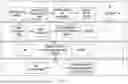
FIG. 1 is a systems data flow/product road map illustrating how the inputs and outputs are connected.
DETAILED DESCRIPTION
System Architecture
-
- a. Al Chatbot Module: Utilizes natural language processing (NLP) to interact with users and understand queries related to construction cost estimation.
- b. Deep Learning Engine: Analyzes BIM model JSON data to extract relevant parameters for cost estimation.
- c. Centralized Cost Database: Stores and regularly updates cost data for various construction materials, labor, and equipment.
- d. Integration Layer: Facilitates communication between the chatbot, deep learning engine, and cost database.
Functionality
-
- a. Data Extraction: The system parses BIM model JSON data to identify key parameters such as materials, dimensions, and project phases.
- b. Cost Estimation: Uses deep learning models trained on historical data to compute cost estimates, considering factors like location, project scale, and market trends.
- c. Scheduling: Uses estimate to generate a schedule for construction based on preceding items and linking priorities combined with total manhours and equipment hours for each task.
- d. Planning: Optimizes duration and costs for each project based on generated estimate and schedule.
- e. Risk: Identifies/determines project risk items based on lead times, environmental risks, market risks, geopolitical risks and generates a risk registry and applies values to run a statistical model for risk assessment.
- f. Value Engineering: Identifies tasks/line items/design features and materials that can be replaced or changed to save time and money on a project.
- g. User Interaction: The chatbot answers user queries, provides explanations for cost estimates, and updates estimates based on additional user-provided data.
- h. Feedback Loop: Collects user feedback to improve the accuracy of future estimates through continuous learning along with schedules/planning/risk/value engineering.
Claims
1. A system for generating construction cost estimates, comprising a data extraction module configured to parse Building Information Modeling (BIM) model JavaScript Object Notation (JSON) data to identify the following parameters: materials, dimensions, and project phases.
2. The system of claim 1, further comprising a cost estimation module configured to interact with deep learning models trained on historical data to compute cost estimates, taking into account factors such as location, project scale, and market trends.
3. The system of claim 2, wherein the cost estimation module is linked to a centralized database to enhance accuracy and currency of cost estimates by sourcing data on material costs, labor rates, and equipment expenses.
4. The system of claim 1, further comprising a scheduling module configured to create a construction schedule based on cost estimates, linking priorities along with total man-hours and equipment hours for each task.
5. The system of claim 1, further comprising planning module configured to optimize project duration and costs based on generated estimates and schedules.
6. The system of claim 1, further comprising a risk assessment module configured to identify project risks related to lead times, environmental factors, market conditions, and geopolitical issues, wherein the risk assessment module is further configured to create a risk registry for statistical evaluation.
7. The system of claim 1, further comprising a value engineering module configured to identify tasks, line items, design features, and materials that can be replaced or modified to reduce project time and costs.
8. The system of claim 1, further comprising a user interaction module configured to address user queries concerning construction costs and project planning, wherein the user interaction model is further configured to explain cost estimates and schedules, and to update estimates based on additional user-provided information.
9. The system of claim 1, further comprising a feedback loop module configured to gather user feedback to improve the accuracy of future estimates, schedules, planning, risk assessments, and value engineering processes through continual learning.
10. The system of claim 4, wherein the scheduling module is configured to create a construction schedule that considers cost estimates and project priorities, optimizing project duration and costs based on estimates and schedules, assessing project risks and producing a risk registry for statistical analysis, suggesting value engineering solutions to enhance project efficiency, and engaging with users to refine estimates and plans based on their feedback.
Images & Drawings included:

Sources:
- United States Patent and Trademark Office - verify current appl. status at the USPTO↗
Recent applications in this class:
- » 20260148255 2026-05-28
TOKENIZED ENERGY MANAGEMENT - » 20260141416 2026-05-21
Method and System for Determining Countermeasure Against Service Quality Degradation - » 20260127627 2026-05-07
METHOD OF PROVIDING PRODUCT PRICE PREDICTION SERVICE AND SERVER FOR PERFORMING SAME - » 20260111924 2026-04-23
Cloud-Based Control Platform For Controlling Remote System Settings - » 20260111923 2026-04-23
Automated Machine Learning Based Hotel Room Pricing - » 20260111922 2026-04-23
SYSTEM, METHOD AND DEVICE FOR DIGITIZING, INVENTORYING AND PRICING ITEMS AND IDENTIFYING RELATED SERVICES - » 20260099858 2026-04-09
COMPUTATION OF USER-SPECIFIC ITEM-RELATED VALUES ON AN ELECTRONIC PROCESSING PLATFORM - » 20260099857 2026-04-09
COMPETITIVE PRICING ENABLER AND METHOD ASSISTED BY GENERATIVE ARTIFICIAL INTELLIGENCE (GenAI) MODELS - » 20260094177 2026-04-02
SYSTEMS AND METHODS FOR PRICE DETERMINATION - » 20260073418 2026-03-12
NATURAL LANGUAGE MODEL BASED REAL ESTATE TREND PREDICTIONS