VOLUME SCATTERING MODEL DETERMINATION DEVICE AND VOLUME SCATTERING MODEL DETERMINATION METHOD
US20260172080A1
2026-06-18
19/531,479
2026-02-05
Smart Summary: A device helps determine a volume scattering model by first acquiring a covariance matrix related to a scattering matrix of an observation target. It then sets various patterns of model parameters to create multiple generalized volume scattering models. Each of these models has fitting coefficients that are adjusted for better accuracy. After adjusting, the device compares the differences between the models to find the best fit. Finally, it selects the most suitable generalized volume scattering model based on this comparison. 🚀 TL;DR
Abstract:
A volume scattering model determination device includes: a covariance matrix acquisition unit to acquire a covariance matrix corresponding to a scattering matrix of an observation target; a parameter setting unit to set a plurality of patterns of values of model parameters, as model parameters of a generalized volume scattering model on which scattering matrices of a plurality of scatterers are mapped, and output a plurality of the generalized volume scattering models including the set model parameters; a coefficient adjustment unit to multiply fitting coefficients on the respective plurality of generalized volume scattering models output, and adjust each of the fitting coefficients; and a model selection unit to compare a plurality of the differences obtained after the adjustment of the fitting coefficients, and select one generalized volume scattering model from among the plurality of generalized volume scattering models output on the basis of a comparison result of the differences.
Assignee:
- MITSUBISHI ELECTRIC CORPORATION 17,143 🇯🇵 TOKYO, Japan
Applicant:
Interested in similar patents?
Get notified when new applications in this technology area are published.
Classification:
H04B7/0456 » CPC main
Radio transmission systems, i.e. using radiation field; Diversity systems; Multi-antenna system, i.e. transmission or reception using multiple antennas using two or more spaced independent antennas; MIMO systems Selection of precoding matrices or codebooks, e.g. using matrices antenna weighting
H04B1/40 » CPC further
Details of transmission systems, not covered by a single one of groups - ; Details of transmission systems not characterised by the medium used for transmission; Transceivers, i.e. devices in which transmitter and receiver form a structural unit and in which at least one part is used for functions of transmitting and receiving Circuits
Description
CROSS REFERENCE TO RELATED APPLICATION
This application is a Continuation of PCT International Application No. PCT/JP2023/033111, filed on Sep. 12, 2023, which is hereby expressly incorporated by reference into the present application.
TECHNICAL FIELD
The present disclosure relates to a volume scattering model determination device and a volume scattering model determination method.
BACKGROUND ART
There is a volume scattering model determination device that determines a volume scattering model from scattering data obtained by radiating a polarized wave toward an observation target. The volume scattering model is a model that expresses radio wave scattering from a plurality of scatterers dispersed in space.
As for such a volume scattering model determination device, for example, Patent Literature 1 discloses a device that uses a scattering component included in scattering data to determine a volume scattering model that is not generalized. The volume scattering model that is not generalized is a model whose scatterers are fixed to a dipole, and a distribution of a plurality of scatterers and an average inclination angle of the plurality of scatterers are each fixed.
CITATION LIST
Patent Literature
- Patent Literature 1: JP 2020-180865 A
SUMMARY OF INVENTION
Technical Problem
The device disclosed in Patent Literature 1 has a problem in that, in a case where a scatterer is not a dipole, in a case where a distribution of a plurality of scatterers dispersed in space is different from a fixed distribution, or in a case where the average inclination angle of the plurality of scatterers is different from a fixed average inclination angle, a volume scattering model that simulates a feature of a scatterer cannot be correctly obtained.
The present disclosure has been made to solve the above problem, and an object of the present disclosure is to obtain a volume scattering model determination device that can obtain a generalized volume scattering model that simulates a feature of a scatterer.
Solution to Problem
A volume scattering model determination device according to the present disclosure includes: covariance matrix acquisition circuitry to acquire a covariance matrix corresponding to a scattering matrix of an observation target obtained by alternately radiating two mutually orthogonal polarized waves toward the observation target; and parameter setting circuitry to set a plurality of patterns of values of model parameters, as model parameters of a generalized volume scattering model on which scattering matrices of a plurality of scatterers are mapped, and output a plurality of the generalized volume scattering models including the set model parameters, the model parameters including a parameter indicating an element of a scattering matrix of each of the plurality of scatterers, a parameter indicating a distribution of the plurality of scatterers, and a parameter indicating an average inclination angle of the plurality of scatterers. Furthermore, the volume scattering model determination device includes: coefficient adjustment circuitry to multiply fitting coefficients on the respective plurality of generalized volume scattering models output from the parameter setting circuitry, and adjust each of the fitting coefficients in such a way as to reduce a difference between each of the generalized volume scattering models obtained after the multiplication of a corresponding one of the fitting coefficients and the covariance matrix; and model selection circuitry to compare a plurality of the differences obtained after the coefficient adjustment circuitry adjusts the fitting coefficients, with each other, and select one generalized volume scattering model from among the plurality of generalized volume scattering models output from the parameter setting circuitry on a basis of a comparison result of the differences.
Advantageous Effects of Invention
According to the present disclosure, it is possible to obtain a generalized volume scattering model that simulates a feature of a scatterer.
BRIEF DESCRIPTION OF DRAWINGS
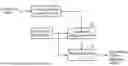
FIG. 1 is a configuration diagram illustrating a volume scattering model determination device according to Embodiment 1.
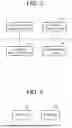
FIG. 2 is a hardware configuration diagram illustrating hardware of the volume scattering model determination device according to Embodiment 1.
FIG. 3 is a hardware configuration diagram of a computer in a case where the volume scattering model determination device is implemented by software, firmware, or the like.
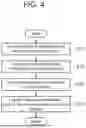
FIG. 4 is a flowchart illustrating a volume scattering model determination method that is a processing procedure performed in the volume scattering model determination device.
FIG. 5 is an explanatory view illustrating a relationship between a fitting coefficient xg and eigenvalues λ1, λ2, and λ3 of [C0].
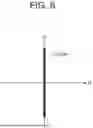
FIG. 6 is an explanatory view illustrating a dipole vertically inclined in a polarization plane.
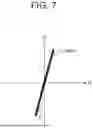
FIG. 7 is an explanatory view illustrating a dipole inclined at ψ in the polarization plane.
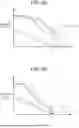
FIG. 8A is an explanatory view illustrating a relationship between the fitting coefficient xg and the eigenvalues λ1, λ2, and λ3 of [C0] in a case where <[Cm]> and <[Cvg(α, β, σ, and ψ0)]> do not match, and FIG. 8B is an explanatory view illustrating a relationship between the fitting coefficient xg and the eigenvalues λ1, λ2, and λ3 of [C0] in a case where <[Cm]> and <[Cvg(α, β, σ, and ψ0)]> match.
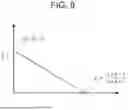
FIG. 9 is an explanatory view illustrating that a total sum of eigenvalues becomes zero when x0=(A+B+C)/(a+b+c) holds.
FIG. 10 is an explanatory view illustrating an example of a Polarimetric Signature (PS) shape of a feature simulated by a generalized volume scattering model Cvg.
FIG. 11 is a configuration diagram illustrating a volume scattering model determination device according to Embodiment 2.
FIG. 12 is a hardware configuration diagram illustrating hardware of the volume scattering model determination device according to Embodiment 2.
DESCRIPTION OF EMBODIMENTS
Hereinafter, a mode for carrying out the present disclosure will be described with reference to the accompanying drawings to describe the present disclosure in more detail.
Embodiment 1
FIG. 1 is a configuration diagram illustrating a volume scattering model determination device according to Embodiment 1.
FIG. 2 is a hardware configuration diagram illustrating hardware of the volume scattering model determination device according to Embodiment 1.
The volume scattering model determination device illustrated in FIG. 1 includes a covariance matrix acquisition unit 1, a parameter setting unit 2, a coefficient adjustment unit 3, and a model selection unit 4.
The covariance matrix acquisition unit 1 is implemented by, for example, a covariance matrix acquisition circuit 11 illustrated in FIG. 2.
The covariance matrix acquisition unit 1 acquires a covariance matrix Cm corresponding to a scattering matrix [S] of an observation target obtained by alternately radiating two mutually orthogonal polarized waves toward the observation target. The observation target includes one or more scatterers dispersed in space.
The covariance matrix acquisition unit 1 outputs the covariance matrix Cm to the coefficient adjustment unit 3.
The parameter setting unit 2 is implemented by, for example, a parameter setting circuit 12 illustrated in FIG. 2.
The parameter setting unit 2 sets, as model parameters of a generalized volume scattering model Cv on which the scattering matrices [S] of a plurality of scatterers are mapped, a plurality of patterns of values of model parameters (α, β, σ, and ψ0) including parameters α and β (see the equation (1) to be described later) indicating an element of a scattering matrix of each of the scatterers, a parameter σ indicating a distribution of the plurality of the scatterers, and a parameter ψ0 indicating an average inclination angle of the plurality of scatterers. The generalized volume scattering model Cv is a model in which the distribution of the plurality of scatterers or the average inclination angle of the plurality of scatterers is can be set optionally.
The model parameter α is an element of the scattering matrix [S], and a range of the model parameter α=|α|exp(jψα) is 0≤|α|≤+1. −180≤ψα≤+180.
The model parameter β is an element of the scattering matrix [S], and a range of the model parameter β=|β|exp(jψβ) is 0≤|β|≤+1. −180≤ψβ≤+180.
The model parameter σ is a parameter that indicates the distribution of the plurality of scatterers, and a range of the model parameter σ is 0≤σ≤(π2/12)1/2.
The model parameter ψ0 is a parameter indicating the average inclination angle of the plurality of scatterers, and a range of the model parameter ψ0 is −90≤ψ0≤+90.
The parameter setting unit 2 outputs a plurality of the generalized volume scattering models Cv including the set model parameters (α, β, σ, and ψ0) to the coefficient adjustment unit 3 and the model selection unit 4.
Here, the model parameters included in the generalized volume scattering model Cv are (α, β, σ, and ψ0). However, this is merely an example, and the generated volume scattering model Cv may include different model parameters from (α, β, σ, and ψ0).
The coefficient adjustment unit 3 is implemented by, for example, a coefficient adjustment circuit 13 illustrated in FIG. 2.
The coefficient adjustment unit 3 acquires the covariance matrix Cm from the covariance matrix acquisition unit 1, and acquires the plurality of generalized volume scattering models Cv from the parameter setting unit 2.
The coefficient adjustment unit 3 multiplies fitting coefficients x on the respective plurality of generalized volume scattering models.
The coefficient adjustment unit 3 adjusts each of the fitting coefficients x in such a way as to reduce a difference between each of the generalized volume scattering models Cv obtained after the multiplication of a corresponding one of the fitting coefficients and the covariance matrix Cm.
The coefficient adjustment unit 3 outputs a plurality of differences obtained after adjustment of the fitting coefficients, as the differences between the respective generalized volume scattering models Cv and the covariance matrix Cm, to the model selection unit 4.
The model selection unit 4 is implemented by, for example, a model selection circuit 14 illustrated in FIG. 2.
The model selection unit 4 acquires the plurality of generalized volume scattering models Cv from the parameter setting unit 2, and acquires the plurality of differences obtained after adjustment of the fitting coefficients from the coefficient adjustment unit 3.
The model selection unit 4 compares the plurality of differences with each other, and selects one generalized volume scattering model from among the plurality of generalized volume scattering models Cv on the basis of a comparison result of the plurality of differences.
FIG. 1 assumes that each of the covariance matrix acquisition unit 1, the parameter setting unit 2, the coefficient adjustment unit 3, and the model selection unit 4 that are the components of the volume scattering model determination device is implemented by dedicated hardware as illustrated in FIG. 2. That is, it is assumed that the volume scattering model determination device is implemented by the covariance matrix acquisition circuit 11, the parameter setting circuit 12, the coefficient adjustment circuit 13, and the model selection circuit 14.
Each of the covariance matrix acquisition circuit 11, the parameter setting circuit 12, the coefficient adjustment circuit 13, and the model selection circuit 14 corresponds to, for example, a single circuit, a composite circuit, a programmed processor, a parallel-programmed processor, an Application Specific Integrated Circuit (ASIC), a Field-Programmable Gate Array (FPGA), or a combination thereof.
The components of the volume scattering model determination device are not limited to components that are implemented by the dedicated hardware, and the volume scattering model determination device may be implemented by software, firmware, or a combination of software and firmware.
Software or the firmware is stored as programs in a memory of a computer. The computer means hardware that executes the programs, and may correspond to, for example, a Central Processing Unit (CPU), a Graphics Processing Unit (GPU), a center processing device, a processing device, an arithmetic operation device, a microprocessor, a microcomputer, a processor, or a Digital Signal Processor (DSP).
FIG. 3 is a hardware configuration diagram of a computer in a case where the volume scattering model determination device is implemented by software, firmware, or the like.
In a case where the volume scattering model determination device is implemented by software, firmware, or the like, programs for causing the computer to execute processing procedures performed in the covariance matrix acquisition unit 1, the parameter setting unit 2, the coefficient adjustment unit 3, and the model selection unit 4 are stored in a memory 21. Furthermore, a processor 22 of the computer executes the programs stored in the memory 21.
Furthermore, FIG. 2 illustrates an example where each of the components of the volume scattering model determination device is implemented by dedicated hardware, and FIG. 3 illustrates an example where the volume scattering model determination device is implemented by software, firmware, or the like. However, these are merely examples, and part of the components of the volume scattering model determination device may be implemented by dedicated hardware, and the rest of the components may be implemented by software, firmware, or the like.
Next, an operation of the volume scattering model determination device illustrated in FIG. 1 will be described.
FIG. 4 is a flowchart illustrating a volume scattering model determination method that is a processing procedure performed in the volume scattering model determination device.
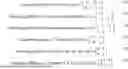
FIG. 5 is an explanatory view illustrating an example of the generalized volume scattering model Cv on which scattering matrices [S] of five scatterers are mapped.
In the generalized volume scattering model Cv illustrated in FIG. 5, a scattering matrix [S] of a levorotatory scatterer that turns left, a scattering matrix [S] of a dextrorotatory scatterer that turns right, a scattering matrix [S] of a scatterer of a dihedral CR that is a dihedral corner reflector, a scattering matrix [S] of one of a scatterer of a dipole or a scatterer of a wire, and a scattering matrix [S] of one of a scatterer of a sphere, a scatterer of a plane, or a scatterer of a trihedral CR are mapped.
The scattering matrix [S] of the levorotatory scatterer, the scattering matrix [S] of the dextrorotatory scatterer, and the scattering matrix [S] of the scatterer of the trihedral CR or the like are isotropic scatterers, and the scattering matrix [S] of the scatterer of the dihedral CR and the scattering matrix [S] of the scatterer of the dipole or the like are anisotropic scatterers.
The scattering matrix [S] of each scatterer includes elements expressed by α and β as expressed in the following equation (1). Particularly, the scattering matrix [S] of the levorotatory scatterer is expressed as in the following equation (2), and the scattering matrix [S] of the dextrorotatory scatterer is expressed as in the following equation (3). Furthermore, the scattering matrix [S] of the scatterer of the dihedral CR is expressed as in the following equation (4), the scattering matrix [S] of the scatterer of the dipole or the like is expressed as in the following equation (5), and the scattering matrix [S] of the scatterer of the trihedral CR or the like is expressed as in the following equation (6).
Scattering Matrix of Scatterer [ S ] = [ α β · j β · j 1 ] ( 1 ) Scattering Matrix of Levorotatory Scatterer [ S ] = [ - 1 + j + j 1 ] ( 2 ) Scattering Matrix of Dextrorotatory Scatterer [ S ] = [ - 1 - j - j 1 ] ( 3 ) Scattering Matrix of Dihedral CR [ S ] = [ - 1 0 0 1 ] ( 4 ) Scattering Matrix of Dipole or the like [ S ] = [ 0 0 0 1 ] ( 5 ) Scattering Matrix of Trihedral CR or the like [ S ] = [ 1 0 0 1 ] ( 6 )
For example, a scattering matrix [Sdipole] in a case where an H polarized wave that is a horizontally polarized wave and a V polarized wave that is a vertically polarized wave are radiated to a vertically inclined dipole in a polarization plane that is a vertical plane to a traveling direction of a radio wave as illustrated in FIG. 6 is expressed as in the following equation (7).
A scattering matrix [Sdipole (w)] in a case where the dipole is inclined at ψ in the polarization plane as illustrated in FIG. 7 is expressed using a rotation matrix [R(ψ)] as expressed in the following equation (8).
FIG. 6 is an explanatory view illustrating a dipole vertically inclined in the polarization plane.
FIG. 7 is an explanatory view illustrating a dipole inclined at y in the polarization plane.
In FIGS. 6 and 7, the horizontal axis indicates a direction of the H polarized wave, and the vertical axis indicates a direction of the V polarized wave.
[ S dipole ] = [ S hh S hv S hv S vv ] = [ 0 0 0 1 ] ( 7 ) [ S dipole ( ψ ) ] = [ R ( ψ ) ] [ S dipole ] [ R ( - ψ ) ] ( 8 )
A covariance matrix [Cdipole(ψ)] corresponding to the scattering matrix [Sdipole (ψ)] of the scatterer is expressed as in the following equation (9).
[ C dipole ( ψ ) ] = [ sin 4 ψ 2 sin 3 ψ cos ψ sin 2 ψ cos 2 ψ 2 sin 3 ψ cos ψ 2 sin 2 ψ cos 2 ψ 2 sin ψ cos 3 ψ sin 2 ψ cos 2 ψ 2 sin ψ cos 3 ψ cos 4 ψ ] ( 9 )
A covariance matrix Cv in a case where there are an infinite number of such scatterers in accordance with a certain distribution Pv(ψ) is expressed as in the following equation (10).
By changing an inclination angle of the scatterer and the distribution Pv(ψ), it is possible to express multiple scatterer groups.
By replacing a distribution Pv with a simpler index p and solving an integral of the equation (10), it is possible to obtain the generalized volume scattering model Cv.
〈 [ C v ] 〉 = ∫ 0 2 π [ C dipole ( ψ ) ] P v ( ψ - ψ 0 ) d ψ ( 10 )
The covariance matrix acquisition unit 1 acquires the covariance matrix Cm corresponding to the scattering matrix [S] of an observation target obtained by alternately radiating two mutually orthogonal polarized waves toward the observation target.
More specifically, in a case where the observation target includes for example, a plurality of observation areas AR1 to ARN, the covariance matrix acquisition unit 1 acquires the covariance matrix Cm corresponding to the scattering matrix [S] of one observation area ARn in order from among the plurality of observation areas AR1 to ARN. n=1, . . . , and N holds, and N represents an integer equal to or more than one.
The covariance matrix acquisition unit 1 outputs the covariance matrix Cm corresponding to the scattering matrix [S] of the observation area ARn to the coefficient adjustment unit 3.
Here, one covariance matrix C0 corresponding to the scattering matrix [S] is expressed as in the following equation (11).
[ C 0 ] = [ ❘ "\[LeftBracketingBar]" s hh ❘ "\[RightBracketingBar]" 2 2 s hh s hv * s hh s vv * 2 s hv s hh * 2 ❘ "\[LeftBracketingBar]" s hv ❘ "\[RightBracketingBar]" 2 2 s hv s vv * s vv s hh * 2 s vv s hv * ❘ "\[LeftBracketingBar]" s vv ❘ "\[RightBracketingBar]" 2 ] ( 11 )
The covariance matrix C0 can be calculated from one pixel, and corresponds to one scatterer. For the purpose of calculating an average of a plurality of scatterers, the covariance matrix Cm corresponding to the scattering matrix [S] is expressed as in the following equation (12) by using surrounding pixel groups.
[ Cm ] = 1 M ( [ C 1 0 ] + [ C 2 0 ] + … + [ C M 0 ] ) = 1 M ∑ i = 1 M [ C i 0 ] = 〈 [ C 0 ] 〉 ( 12 )
In the equation (12), for example, M represents 100 (10 pixels long×10 pixels wide).
The parameter setting unit 2 sets the plurality of patterns of values of the model parameters (α, β, σ, and ψ0) included in the generalized volume scattering model Cv on which the scattering matrices [S] of the plurality of scatterers are mapped.
More specifically, the parameter setting unit 2 sets G patterns of the values of the model parameters (α, β, σ, and ψ0) within a range of the values that can be taken by the model parameters (α, β, σ, and ψ0) included in the generalized volume scattering model Cv (step ST2 in FIG. 4). G represents an integer equal to or more than two.
The parameter setting unit 2 outputs G generalized volume scattering models Cv1 to CvG including the set model parameters (α, β, σ, and ψ0) to the coefficient adjustment unit 3 and the model selection unit 4. g=1, . . . , and G holds.
The coefficient adjustment unit 3 acquires the covariance matrix Cm from the covariance matrix acquisition unit 1, and acquires the G generalized volume scattering models Cv1 to CvG from the parameter setting unit 2.
The coefficient adjustment unit 3 multiplies a fitting coefficient xg (g=1, . . . , and G) on the generalized volume scattering model Cvg (g=1, . . . , and G) as expressed in the following equation (13). A generalized volume scattering model Cvg is expressed by a matrix.
〈 [ C m ] 〉 = x g 〈 [ Cv g ( α , β , σ , ψ 0 ) ] 〉 + [ C 0 ] ( 13 )
In the equation (13), C0 represents a surplus component at a time of fitting, and, as C0 is smaller, fitting accuracy is higher.
The coefficient adjustment unit 3 adjusts the fitting coefficient xg in such a way as to reduce [C0] that is a difference ΔCg between the generalized volume scattering model Cvg and the covariance matrix Cm as expressed in the following equation (14) (step ST3 in FIG. 4).
In the volume scattering model determination device illustrated in FIG. 1, the coefficient adjustment unit 3 calculates the fitting coefficient xg that minimizes [C0].
[ C 0 ] = 〈 [ C m ] 〉 - x g 〈 [ Cv g ( α , β , σ , ψ 0 ) ] 〉 ( 14 )
Generally, <[Cm]> and <[Cvg(α, β, σ, and ψ0)]> do not usually match. As the fitting coefficient xg increases, an eigenvalue λ of [C0] monotonically decreases and takes a negative value as illustrated in FIG. 8A.
FIG. 8A is an explanatory view illustrating a relationship between the fitting coefficient xg and eigenvalues λ1, λ2, and λ3 of [C0] in a case where <[Cm]> and <[Cvg(α, β, σ, and ψ0)]> do not match.
In an example in FIG. 8A, the eigenvalue 23 of the three eigenvalues λ1, λ2, and λ3 first takes a negative value in a case of x′, and a sum of total eigenvalues at this time is λ1+λ2.
On the other hand, in a case where <[Cm]> and <[Cvg(α, β, σ, and ψ0)]> match, that is, in a case where [C0] is a zero matrix, the eigenvalues λ1, λ2, and λ3 of [C0] simultaneously becomes zero when x=1 holds as illustrated in FIG. 8B.
FIG. 8B is an explanatory view illustrating a relationship between the fitting coefficient xg and the eigenvalues λ1, λ2, and λ3 of [C0] in the case where <[Cm]> and <[Cvg(α, β, σ, and ψ0)]> match.
In view of the above, in a case where <[Cvg(α, β, σ, and ψ0)] that is the closest to <[Cm]> needs to be obtained by creating <[Cvg(α, β, σ, and ψ0)]> using various model parameters and comparing <[Cvg(α, β, σ, and ψ0)]> and <[Cm]>, it is possible to handle a sum of the eigenvalues λ1, λ2, and λ3 of [C0] as an evaluation index. Here, the equation (13) is expressed as in the following equation (15) to analytically evaluate the eigenvalues λ1, λ2, and λ3 of [C0].
C 0 = [ A D F D * B E F * E * C ] - x [ a d f d * b e f * e * c ] = [ P S U S * Q T U * T * R ] ( 15 )
Hence, a determinant that expresses eigenvalues of this matrix is expressed as in the following equation (16).
det ❘ "\[LeftBracketingBar]" [ C 0 ] - λ [ I ] ❘ "\[RightBracketingBar]" = det ❘ "\[LeftBracketingBar]" [ P - λ S U S * Q - λ T U * T * R - λ ] ❘ "\[RightBracketingBar]" = ( P - λ ) ( Q - λ ) ( R - λ ) + STU * + S * T * U - ❘ "\[LeftBracketingBar]" U ❘ "\[RightBracketingBar]" 2 ( Q - λ ) - ❘ "\[LeftBracketingBar]" S ❘ "\[RightBracketingBar]" 2 ( R - λ ) - ❘ "\[LeftBracketingBar]" T ❘ "\[RightBracketingBar]" 2 ( P - λ ) = - λ 3 + ( P + Q + R ) λ 2 + { ❘ "\[LeftBracketingBar]" S ❘ "\[RightBracketingBar]" 2 + ❘ "\[LeftBracketingBar]" T ❘ "\[RightBracketingBar]" 2 + ❘ "\[LeftBracketingBar]" U ❘ "\[RightBracketingBar]" 2 - ( PQ + QR + RP ) } λ + … = L λ 3 + M λ 2 + N λ + … ( 16 )
According to a relationship between solutions and coefficients of a cubic equation, the sum of the three eigenvalues can be calculated as in the following equation (17).
∑ i = 1 3 λ i = - M L = P + Q + R = ( A - xa ) + ( B - xb ) + ( C - xc ) = ( A + B + C ) - ( a + b + c ) x ( 17 )
Diagonal components of <[Cvg(α, β, σ, and ψ0)]> and <[Cm]> that are covariance matrices are always positive real numbers. Hence, the equation (17) is a linear function having a negative inclination as illustrated in FIG. 9, and a total sum of eigenvalues becomes zero when x0=(A+B+C)/(a+b+c) holds.
FIG. 9 is an explanatory view illustrating that the total sum of the eigenvalues becomes zero when x0=(A+B+C)/(a+b+c) holds.
Accordingly, in a case where <[Cm]> and <[Cvg(α, β, σ, and ψ0)]> are identical, a total of all eigenvalues of [C0] becomes zero when x=x0=1 holds, and each eigenvalue becomes zero.
Taking into account that, as a difference between <[Cm]> and <[Cvg(α, β, σ, and ψ0)]> becomes greater, each eigenvalue becomes apart from zero, it is possible to obtain <[Cvg(α, β, σ, and ψ0)]> that is the same as <[Cm]> or <[Cvg(α, β, σ, and ψ0)]> that is similar to <[Cm]> by evaluating an index obtained by adding up absolute values of the eigenvalues when x=x0 holds.
By applying a square root to the total sum of the eigenvalues expressed in the equation (17), an evaluation function Ge(α, β, σ, and ψ0) is defined as a distance between the eigenvalues as expressed in the following equation (18) to obtain a model parameter that minimizes an evaluation function Ge(α, β, σ, and ψ0).
G e ( α , β , σ , ψ 0 ) = ∑ i = 1 3 ❘ "\[LeftBracketingBar]" λ i ❘ "\[RightBracketingBar]" 2 ( 18 )
This index can be also obtained using the relationship between solutions and coefficients of a cubic equation as in the following equation (19).
( λ 1 + λ 2 + λ 3 ) 2 = λ 1 2 + λ 2 2 + λ 3 2 + 2 ( λ 1 λ 2 + λ 3 λ 3 + λ 3 λ 1 ) - M L ( 19 )
The equation (19) is rewritten using the equation (17). Here, it needs to be noted that, since all eigenvalues of a Hermitian matrix are real numbers, the simply squared eigenvalues are positive real numbers at all times.
( - M L ) 2 = λ 1 2 + λ 2 2 + λ 3 2 + 2 M L ⇒ ∑ i = 1 3 ❘ "\[LeftBracketingBar]" λ i ❘ "\[RightBracketingBar]" 2 = ( - M L ) 2 - 2 M L = M 2 + 2 N ( 20 )
Thus, it is possible to obtain the evaluation function Ge(α, β, σ, and ψ0) as in the following equation (21) when x=x0 holds.
G e ( α , β , σ , ψ 0 ) = M 2 + 2 N ( 21 )
The coefficient adjustment unit 3 calculates the evaluation function Ge(α, β, σ, and ψ0) as expressed in the equation (21) for various model parameters.
The evaluation function Ge(α, β, σ, and ψ0) corresponds to the difference ΔCg between the generalized volume scattering model Cvg(g=1, . . . , and G) and the covariance matrix Cm. When a product of the fitting coefficient xg and the covariance matrix Cm matches with the generalized volume scattering model Cvg, the evaluation function Ge(α, β, σ, and ψ0)=0 holds. As a difference between the product of the fitting coefficient xg and the covariance matrix Cm and the generalized volume scattering model Cvg is greater, the evaluation function Ge(α, β, σ, and ψ0) becomes larger.
The coefficient adjustment unit 3 outputs, to the model selection unit 4, as G differences ΔC1 to ΔCg obtained after adjustment of the fitting coefficient xg, all of the evaluation functions Ge(α, β, σ, and ψ0) calculated in accordance with the equation (21).
The model selection unit 4 acquires all of the evaluation functions Ge(α, β, σ, and ψ0) as the G differences ΔC1 to ΔCg from the coefficient adjustment unit 3, and acquires the G generalized volume scattering models Cv1 to CvG from the parameter setting unit 2.
The model selection unit 4 compares all of the evaluation functions Ge(α, β, σ, and ψ0) with each other. Comparing all of the evaluation functions Ge(α, β, σ, and ψ0) with each other corresponds to comparing the G differences ΔC1 to ΔCg with each other.
The model selection unit 4 selects one generalized volume scattering model from among the G generalized volume scattering models Cv1 to CvG on the basis of a comparison result of G differences ΔC1 to ΔCG (step ST4 in FIG. 4).
More specifically, the model selection unit 4 identify, for example, a minimum difference ΔCmin among the G differences ΔC1 to ΔCG.
Furthermore, the model selection unit 4 selects the generalized volume scattering model Cvg related to the identified minimum difference ΔCmin from the G generalized volume scattering models Cv1 to CvG.
In the volume scattering model determination device illustrated in FIG. 1, the model selection unit 4 selects the generalized volume scattering model Cvg related to the minimum difference ΔCmin from among the G generalized volume scattering models Cv1 to CvG. However, this is merely an example, and, the model selection unit 4 may select the generalized volume scattering model Cvg related to the difference ΔCmin other than the minimum difference as long as there is no practical problem. The model selection unit 4 may select, for example, the generalized volume scattering model Cvg related to the second smallest difference ΔCmin.
The generalized volume scattering model Cvg selected by the model selection unit 4 is a generalized volume scattering model for one observation area ARn among the plurality of observation areas AR1 to ARN.
Until the generalized volume scattering models of all of the observation areas AR1 to ARN, processing in steps ST1 to ST4 in FIG. 4 is repeated.
The generalized volume scattering model Cvg selected by the model selection unit 4 can be expressed as a Polarimetric Signature (PS) shape of a feature that is a scatterer existing in the observation area ARn (n=1, . . . , and N).
FIG. 10 is an explanatory view illustrating an example of the PS shape of the feature simulated by the generalized volume scattering model Cvg.
In FIG. 10, ψ represents an orientation angle, and x represents an ellipticity angle.
FIG. 10 exemplifies a PS shape in a case where the feature is an urban area, a PS shape in a case where the feature is vegetation, and a PS shape in a case where the feature is a sea level.
Furthermore, FIG. 10 exemplifies a PS shape in a case where a transmission polarized wave and a reception polarized wave are parallel polarized waves (Co-Pol), and a PS shape in a case where a transmission polarized wave and a reception polarized wave are orthogonal polarized waves (X-Pol).
Accordingly, for example, an unillustrated image processing device can identify a feature type by analyzing the PS shape of the feature simulated by the generalized volume scattering model Cvg.
According to above Embodiment 1, the volume scattering model determination device is configured to include: the covariance matrix acquisition unit 1 that acquires a covariance matrix corresponding to a scattering matrix of an observation target obtained by alternately radiating two mutually orthogonal polarized waves toward the observation target; and the parameter setting unit 2 that sets, as model parameters of a generalized volume scattering model on which the scattering matrices of a plurality of scatterers are mapped, a plurality of patterns of values of model parameters including a parameter indicating an element of a scattering matrix of each of the scatterers, a parameter indicating a distribution of the plurality of the scatterers, and a parameter indicating an average inclination angle of the plurality of scatterers, and outputs a plurality of the generalized volume scattering models including the set model parameters. Furthermore, the volume scattering model determination device includes: the coefficient adjustment unit 3 that multiplies fitting coefficients on the respective plurality of generalized volume scattering models output from the parameter setting unit 2, and adjusts each of the fitting coefficients in such a way as to reduce a difference between each of the generalized volume scattering models obtained after the multiplication of a corresponding one of the fitting coefficients and the covariance matrix; and the model selection unit 4 that compares a plurality of the differences obtained after the coefficient adjustment unit 3 adjusts the fitting coefficients, with each other, and selects one generalized volume scattering model from among the plurality of generalized volume scattering models output from the parameter setting unit 2 on the basis of a comparison result of the differences. Accordingly, the volume scattering model determination device can obtain a generalized volume scattering model that simulates a feature of a scatterer.
Embodiment 2
A volume scattering model determination device including a parameter setting unit 5 will be described in Embodiment 2.
FIG. 11 is a configuration diagram illustrating the volume scattering model determination device according to Embodiment 2. Note that, in FIG. 11, the same reference numerals as those in FIG. 1 indicate identical or corresponding parts, and therefore detailed description thereof will be omitted.
FIG. 12 is a hardware configuration diagram illustrating hardware of the volume scattering model determination device according to Embodiment 2. Note that, in FIG. 12, the same reference numerals as those in FIG. 2 indicate identical or corresponding parts, and therefore detailed description thereof will be omitted.
The volume scattering model determination device illustrated in FIG. 11 includes the covariance matrix acquisition unit 1, the parameter setting unit 5, the coefficient adjustment unit 3, and the model selection unit 4.
The parameter setting unit 5 is implemented by, for example, a parameter setting circuit 15 illustrated in FIG. 12.
The parameter setting unit 5 sets, as model parameters of a generalized volume scattering model Cv on which scattering matrices [S] of a plurality of scatterers are mapped, a plurality of patterns of values of model parameters (α, β, σ, and ψ0) including parameters α and β indicating elements of a scattering matrix of each of the scatterers, a parameter σ indicating a distribution of the plurality of the scatterers, and a parameter ψ0 indicating an average inclination angle of the plurality of scatterers.
More specifically, the parameter setting unit 5 sets the plurality of patterns of the values of the model parameters (α, β, σ, and ψ0) in such a way that a step size of values of the anisotropic parameters (σ and ψ0) included in the model parameters (α, β, σ, and ψ0) related to the isotropic scatterers is rough compared to a step size of values of the anisotropic parameters (σ and ψ0) included in the model parameters (α, β, σ, and ψ0) related to the anisotropic scatterers.
The parameter setting unit 5 outputs a plurality of the generalized volume scattering models Cv including the set model parameters (α, β, σ, and ψ0) to the coefficient adjustment unit 3 and the model selection unit 4.
FIG. 11 assumes that each of the covariance matrix acquisition unit 1, the parameter setting unit 5, the coefficient adjustment unit 3, and the model selection unit 4 that are the components of the volume scattering model determination device is implemented by dedicated hardware as illustrated in FIG. 12. That is, it is assumed that the volume scattering model determination device is implemented by the covariance matrix acquisition circuit 11, the parameter setting circuit 15, the coefficient adjustment circuit 13, and the model selection circuit 14.
Each of the covariance matrix acquisition circuit 11, the parameter setting circuit 15, the coefficient adjustment circuit 13, and the model selection circuit 14 corresponds to, for example, a single circuit, a composite circuit, a programmed processor, a parallel-programmed processor, an ASIC, an FPGA, or a combination thereof.
The components of the volume scattering model determination device are not limited to components that are implemented by the dedicated hardware, and the volume scattering model determination device may be implemented by software, firmware, or a combination of software and firmware.
In a case where the volume scattering model determination device is implemented by software, firmware, or the like, programs for causing the computer to execute processing procedures performed in the covariance matrix acquisition unit 1, the parameter setting unit 5, the coefficient adjustment unit 3, and the model selection unit 4 are stored in the memory 21 illustrated in FIG. 3. Furthermore, the processor 22 illustrated in FIG. 3 executes the programs stored in the memory 21.
Furthermore, FIG. 12 illustrates an example where each of the components of the volume scattering model determination device is implemented by dedicated hardware, and FIG. 3 illustrates an example where the volume scattering model determination device is implemented by software, firmware, or the like. However, these are merely examples, and part of the components of the volume scattering model determination device may be implemented by dedicated hardware, and the rest of the components may be implemented by software, firmware, or the like.
Next, an operation of the volume scattering model determination device illustrated in FIG. 11 will be described. In this regard, the components other than the parameter setting unit 5 are the same as those in the volume scattering model determination device illustrated in FIG. 1. Hence, only an operation of the parameter setting unit 5 will be described hereinafter.
In the example in FIG. 5, the scattering matrix [S] of the levorotatory scatterer, the scattering matrix [S] of the dextrorotatory scatterer, and the scattering matrix [S] of the scatterer of the trihedral CR or the like are isotropic scatterers, and the scattering matrix [S] of the scatterer of the dihedral CR and the scattering matrix [S] of the scatterer of the dipole or the like are anisotropic scatterers.
The isotropic scatterer has low sensitivity for rotation compared to the anisotropic scatterer. Hence, setting rough step sizes for anisotropic model parameters (σ and ψ0) among the model parameters (α, β, σ, and ψ0) related to the isotropic scatterers does not cause any problem to obtain appropriate model parameters.
Hence, the parameter setting unit 5 sets the plurality of patterns of the values of the model parameters (α, β, σ, and ψ0) in such a way that the step size of values of the anisotropic parameters (σ and ψ0) included in the model parameters (α, β, σ, and ψ0) related to the isotropic scatterers is rough compared to the step size of values of the anisotropic parameters (σ and ψ0) included in the model parameters (α, β, σ, and ψ0) related to the anisotropic scatterers.
The parameter setting unit 5 outputs the G generalized volume scattering models Cv1 to CvG including the model parameters (α, β, σ, and ψ0) of different values to the coefficient adjustment unit 3 and the model selection unit 4.
According to above Embodiment 2, the volume scattering model determination device illustrated in FIG. 11 is configured in such a way that the parameter setting unit 5 sets the plurality of patterns of the values of the model parameters in such a way that the step size of values of the anisotropic parameters included in the model parameters related to the isotropic scatterers is rough compared to the step size of values of the anisotropic parameters included in the model parameters related to the anisotropic scatterers. Accordingly, the volume scattering model determination device illustrated in FIG. 11 can obtain a generalized volume scattering model that simulates a feature of a scatterer similarly to the volume scattering model determination device illustrated in FIG. 1, and can reduce a processing load of the coefficient adjustment unit 3 compared to the volume scattering model determination device illustrated in FIG. 1.
In the volume scattering model determination device illustrated in each of FIGS. 1 and 11, the covariance matrix acquisition unit 1 acquires the covariance matrix Cm corresponding to the scattering matrix [S] of the observation target, and outputs the covariance matrix Cm to the coefficient adjustment unit 3. However, this is merely an example, and the covariance matrix acquisition unit 1 may transform the covariance matrix Cm into a coherency matrix Tm using a transformation matrix L as expressed in, for example, the following equation (22), and output the coherency matrix Tm as the covariance matrix Cm to the coefficient adjustment unit 3. That is, the matrix output from the covariance matrix acquisition unit 1 to the coefficient adjustment unit 3 is not limited to the covariance matrix Cm, and may be any matrix as long as the matrix can be transformed from the covariance matrix Cm using the transformation matrix.
Tm = L T CmL ( 22 ) L = 1 2 [ 1 1 0 0 0 2 1 - 1 0 ] ( 23 )
In the equation (24), T represents a mathematical symbol indicating transposition.
Note that the present disclosure allows free combinations of the embodiments, modification of any components in the embodiments, or omission of any components in the embodiments.
INDUSTRIAL APPLICABILITY
The present disclosure is suitable for the volume scattering model determination device and the volume scattering model determination method.
REFERENCE SIGNS LIST
-
- 1: Covariance matrix acquisition unit, 2: Parameter setting unit, 3: Coefficient adjustment unit, 4: Model selection unit, 5: Parameter setting unit, 11: Covariance matrix acquisition circuit, 12: Parameter setting circuit, 13: Coefficient adjustment circuit, 14: Model selection circuit, 15: Parameter setting circuit, 21: Memory, 22: Processor
Claims
1. A volume scattering model determination device comprising:
covariance matrix acquisition circuitry to acquire a covariance matrix corresponding to a scattering matrix of an observation target obtained by alternately radiating two mutually orthogonal polarized waves toward the observation target;
parameter setting circuitry to set a plurality of patterns of values of model parameters, as model parameters of a generalized volume scattering model on which scattering matrices of a plurality of scatterers are mapped, and output a plurality of the generalized volume scattering models including the set model parameters, the model parameters including a parameter indicating an element of a scattering matrix of each of the plurality of scatterers, a parameter indicating a distribution of the plurality of scatterers, and a parameter indicating an average inclination angle of the plurality of scatterers;
coefficient adjustment circuitry to multiply fitting coefficients on the respective plurality of generalized volume scattering models output from the parameter setting circuitry, and adjust each of the fitting coefficients in such a way as to reduce a difference between each of the generalized volume scattering models obtained after the multiplication of a corresponding one of the fitting coefficients and the covariance matrix; and
model selection circuitry to compare a plurality of the differences obtained after the coefficient adjustment circuitry adjusts the fitting coefficients, with each other, and select one generalized volume scattering model from among the plurality of generalized volume scattering models output from the parameter setting circuitry on a basis of a comparison result of the differences.
2. The volume scattering model determination device according to claim 1, wherein the parameter setting circuitry sets the plurality of patterns of the values of the model parameters within a range of values capable of being taken by the model parameters included in the generalized volume scattering model on which the scattering matrices of the plurality of scatterers are mapped.
3. The volume scattering model determination device according to claim 1, wherein
a scattering matrix of an isotropic scatterer and a scattering matrix of an anisotropic scatterer are mapped on the generalized volume scattering model to which the parameter setting circuitry sets the values of the model parameters,
the generalized volume scattering model includes the parameter indicating the element of the scattering matrix and an anisotropic parameter as the model parameters, and
the parameter setting circuitry sets the plurality of patterns of the values of the model parameters in such a way that a step size of a value of the anisotropic parameter included in the model parameter related to the isotropic scatterer is rough compared to a step size of a value of the anisotropic parameter included in the model parameter related to the anisotropic scatterer.
4. A volume scattering model determination method comprising:
acquiring a covariance matrix corresponding to a scattering matrix of an observation target obtained by alternately radiating two mutually orthogonal polarized waves toward the observation target;
setting a plurality of patterns of values of model parameters, as model parameters of a generalized volume scattering model on which scattering matrices of a plurality of scatterers are mapped, and outputting a plurality of the generalized volume scattering models including the set model parameters, the model parameters including a parameter indicating an element of a scattering matrix of each of the plurality of scatterers, a parameter indicating a distribution of the plurality of scatterers, and a parameter indicating an average inclination angle of the plurality of scatterers;
multiplying fitting coefficients on the respective plurality of generalized volume scattering models output, and adjusting each of the fitting coefficients in such a way as to reduce a difference between each of the generalized volume scattering models obtained after the multiplication of a corresponding one of the fitting coefficients and the covariance matrix; and
comparing a plurality of the differences obtained after the adjustment of the fitting coefficients, with each other, and selecting one generalized volume scattering model from among the plurality of generalized volume scattering models output on a basis of a comparison result of the differences.
Images & Drawings included:





Sources:
- United States Patent and Trademark Office - verify current appl. status at the USPTO↗
Recent applications in this class:
- » 20260172081 2026-06-18
PRECODING CONFIGURATION METHOD AND APPARATUS - » 20260172079 2026-06-18
METHOD FOR DETERMINING FULLY-COHERENT TRANSMISSION CODEBOOK FOR UPLINK MIMO TRANSMISSION AND COMMUNICATION DEVICE - » 20260172078 2026-06-18
COMMUNICATION APPARATUS, COMMUNICATION METHOD, ELECTRONIC DEVICE, AND STORAGE MEDIUM - » 20260163617 2026-06-11
LAYERED ANALOG WEIGHTING WITH STATIC AND REAL-TIME STAGES OF RF SIGNALS IN A WIRELESS COMMUNICATION SYSTEM - » 20260155867 2026-06-04
JOINT COMMUNICATIONS AND SENSING SIGNALING AND PROCESSING BETWEEN COMMUNICATIONS DEVICES - » 20260155866 2026-06-04
CHANNEL INFORMATION FEEDBACK METHOD, APPARATUS, AND STORAGE MEDIUM - » 20260149491 2026-05-28
INFORMATION TRANSMISSION METHOD, DEVICE, AND STORAGE MEDIUM - » 20260149490 2026-05-28
TECHNIQUES FOR LOW-COMPLEXITY MESSAGE PASSING - » 20260142697 2026-05-21
RADIO NETWORK NODE, AND METHOD PERFORMED THEREIN - » 20260142696 2026-05-21
SPINAL CODING SCHEMES FOR MULTIPLE INPUT MULTIPLE OUTPUT WIRELESS COMMUNICATIONS
Recent applications for this Assignee:
- » 20260173983 2026-06-18
SEMICONDUCTOR DEVICE - » 20260173982 2026-06-18
SEMICONDUCTOR MODULE - » 20260173548 2026-06-18
ELECTROMAGNETIC WAVE DETECTOR AND ELECTROMAGNETIC WAVE DETECTOR ARRAY - » 20260173238 2026-06-18
INFORMATION PROCESSING APPARATUS, LIVING BODY DETECTION SYSTEM, AND INFORMATION PROCESSING METHOD - » 20260172004 2026-06-18
BANDPASS FILTER - » 20260171848 2026-06-18
WIRELESS SENSOR AND RAISING/LOWERING DEVICE INFORMATION COLLECTION SYSTEM - » 20260170368 2026-06-18
FACTOR ANALYSIS DEVICE, FACTOR ANALYSIS METHOD, AND NON-TRANSITORY COMPUTER-READABLE STORAGE MEDIUM - » 20260169851 2026-06-18
FAULT DIAGNOSIS METHOD AND FAULT DIAGNOSIS SYSTEM - » 20260169155 2026-06-18
VEHICLE-CABIN RADAR DEVICE AND VEHICLE - » 20260169119 2026-06-18
POSITION ESTIMATION APPARATUS, POSITION ESTIMATION SYSTEM, POSITION ESTIMATION METHOD, CONTROL CIRCUIT, AND STORAGE MEDIUM