INAPPLICABLE CONFIGURATION HANDLING IN WIRELESS COMMUNICATIONS
US20260173085A1
2026-06-18
18/716,372
2024-04-25
Smart Summary: A communication device in wireless systems can receive two different settings for how it moves, called configurations. It first uses the setting for the first type of movement. Then, it checks what kind of movement this first setting allows, which can be either moving between different nodes or within the same node. If the type of movement for the first setting is not the same as the second setting, the device sends a message saying the second setting cannot be used. This helps ensure that the device only uses the correct settings for its movement. 🚀 TL;DR
Abstract:
The present disclosure relates to inapplicable configuration handling in wireless communications. According to an embodiment of the present disclosure, a method performed by a communication device adapted to operate in a wireless communication system comprises: receiving a first configuration for a first mobility and a second configuration for a second mobility; applying the first configuration for the first mobility; determining a mobility type of the first mobility based on information received from a network, wherein the mobility type comprises at least one of an inter-node mobility or an intra-node mobility; and based on the mobility type of the first mobility being different from that of the second mobility, transmitting a notification that the second configuration for the second mobility is not applicable after applying the first configuration for the first mobility.
Inventors:
- Sangwon Kim 370 🇰🇷 Seoul, South Korea
- Sunghoon JUNG 630 🇰🇷 Seoul, South Korea
- Hongsuk KIM 128 🇰🇷 Seoul, South Korea
- Siyoung CHOI 17 🇰🇷 Seoul, South Korea
Applicant:
Interested in similar patents?
Get notified when new applications in this technology area are published.
Classification:
H04W8/08 » CPC further
Network data management; Processing of mobility data, e.g. registration information at HLR [Home Location Register] or VLR [Visitor Location Register]; Transfer of mobility data, e.g. between HLR, VLR or external networks Mobility data transfer
H04W24/10 » CPC further
Supervisory, monitoring or testing arrangements Scheduling measurement reports ; Arrangements for measurement reports
Description
CROSS-REFERENCE TO RELATED APPLICATIONS
This application is the National Stage filing under 35 U.S.C. 371 of International Application No. PCT/KR2024/005588, filed on Apr. 25, 2024, which claims the benefit of U.S. Patent Application No. 63/461,912 filed on Apr. 26, 2023, which is all hereby incorporated by reference herein in its entirety.
TECHNICAL FIELD
The present disclosure is related to inapplicable configuration handling in wireless communications.
BACKGROUND
3rd Generation Partnership Project (3GPP) Long-Term Evolution (LTE) is a technology for enabling high-speed packet communications. Many schemes have been proposed for the LTE objective including those that aim to reduce user and provider costs, improve service quality, and expand and improve coverage and system capacity. The 3GPP LTE requires reduced cost per bit, increased service availability, flexible use of a frequency band, a simple structure, an open interface, and adequate power consumption of a terminal as an upper-level requirement.
Work has started in International Telecommunication Union (ITU) and 3GPP to develop requirements and specifications for New Radio (NR) systems. 3GPP has to identify and develop the technology components needed for successfully standardizing the new RAT timely satisfying both the urgent market needs, and the more long-term requirements set forth by the ITU Radio communication sector (ITU-R) International Mobile Telecommunications (IMT)-2020 process. Further, the NR should be able to use any spectrum band ranging at least up to 100 GHz that may be made available for wireless communications even in a more distant future.
The NR targets a single technical framework addressing all usage scenarios, requirements and deployment scenarios including enhanced Mobile BroadBand (eMBB), massive Machine Type Communications (mMTC), Ultra-Reliable and Low Latency Communications (URLLC), etc. The NR shall be inherently forward compatible.
In wireless communications, a communication device may receive a plurality of configurations for various types of mobility. The communication device may keep configuration(s) for a mobility after performing another type of mobility. However, some configuration(s) may be inapplicable after a certain type of mobility is performed.
SUMMARY
An aspect of the present disclosure is to provide method and apparatus for inapplicable configuration handling in a wireless communication system.
According to an embodiment of the present disclosure, a method performed by a communication device adapted to operate in a wireless communication system comprises: receiving a first configuration for a first mobility and a second configuration for a second mobility; applying the first configuration for the first mobility; determining a mobility type of the first mobility based on information received from a network, wherein the mobility type comprises at least one of an inter-node mobility or an intra-node mobility; and based on the mobility type of the first mobility being different from that of the second mobility, transmitting a notification that the second configuration for the second mobility is not applicable after applying the first configuration for the first mobility.
According to an embodiment of the present disclosure, a method performed by a network node configured to operate in a wireless communication system comprises: transmitting, to a communication device, a first configuration for a first mobility and a second configuration for a second mobility; and based on a mobility type of the first mobility being different from that of the second mobility, receiving, from the communication device, a notification that the second configuration for the second mobility is not applicable after the first configuration for the first mobility is applied, wherein the mobility type of the first mobility is determined based on information transmitted by the network node, and wherein the mobility type comprises at least one of an inter-node mobility or an intra-node mobility.
According to an embodiment of the present disclosure, apparatuses implementing the above methods are described.
The present disclosure may have various advantageous effects.
For example, the UE discriminates and reports which candidate cell is related to inapplicable cell group configuration for the next subsequent mobility so that the UE can prevent mobility failure or configuration failure for the next mobility.
Advantageous effects which can be obtained through specific embodiments of the present disclosure are not limited to the advantageous effects listed above. For example, there may be a variety of technical effects that a person having ordinary skill in the related art can understand and/or derive from the present disclosure. Accordingly, the specific effects of the present disclosure are not limited to those explicitly described herein, but may include various effects that may be understood or derived from the technical features of the present disclosure.
BRIEF DESCRIPTION OF DRAWINGS
FIG. 1 shows an example of a communication system to which implementations of the present disclosure is applied.
FIG. 2 shows an example of wireless devices to which implementations of the present disclosure is applied.
FIG. 3 shows an example of UE to which implementations of the present disclosure is applied.
FIGS. 4 and 5 show an example of protocol stacks in a 3GPP based wireless communication system to which implementations of the present disclosure is applied.
FIG. 6 shows a frame structure in a 3GPP based wireless communication system to which implementations of the present disclosure is applied.
FIG. 7 shows a data flow example in the 3GPP NR system to which implementations of the present disclosure is applied.
FIG. 8 shows an example of a dual connectivity (DC) architecture to which technical features of the present disclosure can be applied.
FIG. 9 shows an example of a conditional mobility procedure according to an embodiment of the present disclosure.
FIG. 10 shows an example of a procedure for conditional SN change according to an embodiment of the present disclosure.
FIG. 11 shows an example of a signaling procedure for LTM according to an embodiment of the present disclosure.
FIG. 12 shows an example of a DC scenario according to an embodiment of the present disclosure.
FIG. 13 shows an example of a case of invalid cell switch configuration according to an embodiment of the present disclosure.
FIG. 14 shows an example of a case of LTM execution failure according to an embodiment of the present disclosure.
FIG. 15 shows an example of a method performed by a communication device for inapplicable configuration handling according to an embodiment of the present disclosure.
FIG. 16 shows an example of a procedure for inapplicable configuration handling according to an embodiment of the present disclosure.
FIG. 17 shows an example of a method for checking inapplicable cell group configuration(s) according to an embodiment of the present disclosure.
FIG. 18 shows an example of a method for indicating an inapplicability of an LTM configuration according to an embodiment of the present disclosure.
FIG. 19 shows an example of a method for indicating an inapplicability of a subsequent CPC configuration according to an embodiment of the present disclosure.
DETAILED DESCRIPTION
The following techniques, apparatuses, and systems may be applied to a variety of wireless multiple access systems. Examples of the multiple access systems include a Code Division Multiple Access (CDMA) system, a Frequency Division Multiple Access (FDMA) system, a Time Division Multiple Access (TDMA) system, an Orthogonal Frequency Division Multiple Access (OFDMA) system, a Single Carrier Frequency Division Multiple Access (SC-FDMA) system, and a Multi Carrier Frequency Division Multiple Access (MC-FDMA) system. CDMA may be embodied through radio technology such as Universal Terrestrial Radio Access (UTRA) or CDMA2000. TDMA may be embodied through radio technology such as Global System for Mobile communications (GSM), General Packet Radio Service (GPRS), or Enhanced Data rates for GSM Evolution (EDGE). OFDMA may be embodied through radio technology such as Institute of Electrical and Electronics Engineers (IEEE) 802.11 (Wi-Fi), IEEE 802.16 (WiMAX), IEEE 802.20, or Evolved UTRA (E-UTRA). UTRA is a part of a Universal Mobile Telecommunications System (UMTS). 3rd Generation Partnership Project (3GPP) Long-Term Evolution (LTE) is a part of Evolved UMTS (E-UMTS) using E-UTRA. 3GPP LTE employs OFDMA in downlink (DL) and SC-FDMA in uplink (UL). Evolution of 3GPP LTE includes LTE-Advanced (LTE-A), LTE-A Pro, and/or 5G New Radio (NR).
For convenience of description, implementations of the present disclosure are mainly described in regards to a 3GPP based wireless communication system. However, the technical features of the present disclosure are not limited thereto. For example, although the following detailed description is given based on a mobile communication system corresponding to a 3GPP based wireless communication system, aspects of the present disclosure that are not limited to 3GPP based wireless communication system are applicable to other mobile communication systems.
For terms and technologies which are not specifically described among the terms of and technologies employed in the present disclosure, the wireless communication standard documents published before the present disclosure may be referenced.
In the present disclosure, “A or B” may mean “only A”, “only B”, or “both A and B”. In other words, “A or B” in the present disclosure may be interpreted as “A and/or B”. For example, “A, B or C” in the present disclosure may mean “only A”, “only B”, “only C”, or “any combination of A, B and C”.
In the present disclosure, slash (/) or comma (,) may mean “and/or”. For example, “A/B” may mean “A and/or B”. Accordingly, “A/B” may mean “only A”, “only B”, or “both A and B”. For example, “A, B, C” may mean “A, B or C”.
In the present disclosure, “at least one of A and B” may mean “only A”, “only B” or “both A and B”. In addition, the expression “at least one of A or B” or “at least one of A and/or B” in the present disclosure may be interpreted as same as “at least one of A and B”.
In addition, in the present disclosure, “at least one of A, B and C” may mean “only A”, “only B”, “only C”, or “any combination of A, B and C”. In addition, “at least one of A, B or C” or “at least one of A, B and/or C” may mean “at least one of A, B and C”.
Also, parentheses used in the present disclosure may mean “for example”. In detail, when it is shown as “control information (PDCCH)”, “PDCCH” may be proposed as an example of “control information”. In other words, “control information” in the present disclosure is not limited to “PDCCH”, and “PDCCH” may be proposed as an example of “control information”. In addition, even when shown as “control information (i.e., PDCCH)”, “PDCCH” may be proposed as an example of “control information”.
Technical features that are separately described in one drawing in the present disclosure may be implemented separately or simultaneously.
Although not limited thereto, various descriptions, functions, procedures, suggestions, methods and/or operational flowcharts of the present disclosure disclosed herein can be applied to various fields requiring wireless communication and/or connection (e.g., 5G) between devices.
Hereinafter, the present disclosure will be described in more detail with reference to drawings. The same reference numerals in the following drawings and/or descriptions may refer to the same and/or corresponding hardware blocks, software blocks, and/or functional blocks unless otherwise indicated.
FIG. 1 shows an example of a communication system to which implementations of the present disclosure is applied.
The 5G usage scenarios shown in FIG. 1 are only exemplary, and the technical features of the present disclosure can be applied to other 5G usage scenarios which are not shown in FIG. 1.
Three main requirement categories for 5G include (1) a category of enhanced Mobile BroadBand (eMBB), (2) a category of massive Machine Type Communication (mMTC), and (3) a category of Ultra-Reliable and Low Latency Communications (URLLC).
Referring to FIG. 1, the communication system 1 includes wireless devices 100a to 100f, Base Stations (BSs) 200, and a network 300. Although FIG. 1 illustrates a 5G network as an example of the network of the communication system 1, the implementations of the present disclosure are not limited to the 5G system, and can be applied to the future communication system beyond the 5G system.
The BSs 200 and the network 300 may be implemented as wireless devices and a specific wireless device may operate as a BS/network node with respect to other wireless devices.
The wireless devices 100a to 100f represent devices performing communication using Radio Access Technology (RAT) (e.g., 5G NR or LTE) and may be referred to as communication/radio/5G devices. The wireless devices 100a to 100f may include, without being limited to, a robot 100a, vehicles 100b-1 and 100b-2, an extended Reality (XR) device 100c, a hand-held device 100d, a home appliance 100e, an Internet-of-Things (IoT) device 100f, and an Artificial Intelligence (AI) device/server 400. For example, the vehicles may include a vehicle having a wireless communication function, an autonomous driving vehicle, and a vehicle capable of performing communication between vehicles. The vehicles may include an Unmanned Aerial Vehicle (UAV) (e.g., a drone). The XR device may include an Augmented Reality (AR)/Virtual Reality (VR)/Mixed Reality (MR) device and may be implemented in the form of a Head-Mounted Device (HMD), a Head-Up Display (HUD) mounted in a vehicle, a television, a smartphone, a computer, a wearable device, a home appliance device, a digital signage, a vehicle, a robot, etc. The hand-held device may include a smartphone, a smartpad, a wearable device (e.g., a smartwatch or a smartglasses), and a computer (e.g., a notebook). The home appliance may include a TV, a refrigerator, and a washing machine. The IoT device may include a sensor and a smartmeter.
In the present disclosure, the wireless devices 100a to 100f may be called User Equipments (UEs). A UE may include, for example, a cellular phone, a smartphone, a laptop computer, a digital broadcast terminal, a Personal Digital Assistant (PDA), a Portable Multimedia Player (PMP), a navigation system, a slate Personal Computer (PC), a tablet PC, an ultrabook, a vehicle, a vehicle having an autonomous traveling function, a connected car, an UAV, an AI module, a robot, an AR device, a VR device, an MR device, a hologram device, a public safety device, an MTC device, an IoT device, a medical device, a FinTech device (or a financial device), a security device, a weather/environment device, a device related to a 5G service, or a device related to a fourth industrial revolution field.
The wireless devices 100a to 100f may be connected to the network 300 via the BSs 200. An AI technology may be applied to the wireless devices 100a to 100f and the wireless devices 100a to 100f may be connected to the AI server 400 via the network 300. The network 300 may be configured using a 3G network, a 4G (e.g., LTE) network, a 5G (e.g., NR) network, and a beyond-5G network. Although the wireless devices 100a to 100f may communicate with each other through the BSs 200/network 300, the wireless devices 100a to 100f may perform direct communication (e.g., sidelink communication) with each other without passing through the BSs 200/network 300. For example, the vehicles 100b-1 and 100b-2 may perform direct communication (e.g., Vehicle-to-Vehicle (V2V)/Vehicle-to-everything (V2X) communication). The IoT device (e.g., a sensor) may perform direct communication with other IoT devices (e.g., sensors) or other wireless devices 100a to 100f.
Wireless communication/connections 150a, 150b and 150c may be established between the wireless devices 100a to 100f and/or between wireless device 100a to 100f and BS 200 and/or between BSs 200. Herein, the wireless communication/connections may be established through various RATs (e.g., 5G NR) such as uplink/downlink communication 150a, sidelink communication (or Device-to-Device (D2D) communication) 150b, inter-base station communication 150c (e.g., relay, Integrated Access and Backhaul (IAB)), etc. The wireless devices 100a to 100f and the BSs 200/the wireless devices 100a to 100f may transmit/receive radio signals to/from each other through the wireless communication/connections 150a, 150b and 150c. For example, the wireless communication/connections 150a, 150b and 150c may transmit/receive signals through various physical channels. To this end, at least a part of various configuration information configuring processes, various signal processing processes (e.g., channel encoding/decoding, modulation/demodulation, and resource mapping/de-mapping), and resource allocating processes, for transmitting/receiving radio signals, may be performed based on the various proposals of the present disclosure.
NR supports multiples numerologies (and/or multiple Sub-Carrier Spacings (SCS)) to support various 5G services. For example, if SCS is 15 kHz, wide area can be supported in traditional cellular bands, and if SCS is 30 kHz/60 kHz, dense-urban, lower latency, and wider carrier bandwidth can be supported. If SCS is 60 kHz or higher, bandwidths greater than 24.25 GHz can be supported to overcome phase noise.
The NR frequency band may be defined as two types of frequency range, i.e., Frequency Range 1 (FR1) and Frequency Range 2 (FR2). The numerical value of the frequency range may be changed. For example, the frequency ranges of the two types (FR1 and FR2) may be as shown in Table 1 below. For ease of explanation, in the frequency ranges used in the NR system, FR1 may mean “sub 6 GHz range”, FR2 may mean “above 6 GHz range,” and may be referred to as millimeter Wave (mmW).
| TABLE 1 | |||
| Frequency | |||
| Range | Corresponding | Subcarrier | |
| designation | frequency range | Spacing | |
| FR1 | 450 MHz-6000 MHz | 15, 30, 60 kHz | |
| FR2 | 24250 MHz-52600 MHz | 60, 120, 240 kHz | |
As mentioned above, the numerical value of the frequency range of the NR system may be changed. For example, FR1 may include a frequency band of 410 MHz to 7125 MHz as shown in Table 2 below. That is, FR1 may include a frequency band of 6 GHz (or 5850, 5900, 5925 MHz, etc.) or more. For example, a frequency band of 6 GHZ (or 5850, 5900, 5925 MHz, etc.) or more included in FR1 may include an unlicensed band. Unlicensed bands may be used for a variety of purposes, for example for communication for vehicles (e.g., autonomous driving).
| TABLE 2 | |||
| Frequency | |||
| Range | Corresponding | Subcarrier | |
| designation | frequency range | Spacing | |
| FR1 | 410 MHz-7125 MHz | 15, 30, 60 kHz | |
| FR2 | 24250 MHz-52600 MHz | 60, 120, 240 kHz | |
Here, the radio communication technologies implemented in the wireless devices in the present disclosure may include NarrowBand IoT (NB-IoT) technology for low-power communication as well as LTE, NR and 6G. For example, NB-IoT technology may be an example of Low Power Wide Area Network (LPWAN) technology, may be implemented in specifications such as LTE Cat NB 1 and/or LTE Cat NB2, and may not be limited to the above-mentioned names. Additionally and/or alternatively, the radio communication technologies implemented in the wireless devices in the present disclosure may communicate based on LTE-M technology. For example, LTE-M technology may be an example of LPWAN technology and be called by various names such as enhanced MTC (eMTC). For example, LTE-M technology may be implemented in at least one of the various specifications, such as 1) LTE Cat 0, 2) LTE Cat M1, 3) LTE Cat M2, 4) LTE non-bandwidth limited (non-BL), 5) LTE-MTC, 6) LTE Machine Type Communication, and/or 7) LTE M, and may not be limited to the above-mentioned names. Additionally and/or alternatively, the radio communication technologies implemented in the wireless devices in the present disclosure may include at least one of ZigBee, Bluetooth, and/or LPWAN which take into account low-power communication, and may not be limited to the above-mentioned names. For example, ZigBee technology may generate Personal Area Networks (PANs) associated with small/low-power digital communication based on various specifications such as IEEE 802.15.4 and may be called various names. FIG. 2 shows an example of wireless devices to which implementations of the present disclosure is applied.
In FIG. 2, The first wireless device 100 and/or the second wireless device 200 may be implemented in various forms according to use cases/services. For example, {the first wireless device 100 and the second wireless device 200} may correspond to at least one of {the wireless device 100a to 100f and the BS 200}, {the wireless device 100a to 100f and the wireless device 100a to 100f} and/or {the BS 200 and the BS 200} of FIG. 1. The first wireless device 100 and/or the second wireless device 200 may be configured by various elements, devices/parts, and/or modules.
The first wireless device 100 may include at least one transceiver, such as a transceiver 106, at least one processing chip, such as a processing chip 101, and/or one or more antennas 108.
The processing chip 101 may include at least one processor, such a processor 102, and at least one memory, such as a memory 104. Additional and/or alternatively, the memory 104 may be placed outside of the processing chip 101.
The processor 102 may control the memory 104 and/or the transceiver 106 and may be adapted to implement the descriptions, functions, procedures, suggestions, methods and/or operational flowcharts described in the present disclosure. For example, the processor 102 may process information within the memory 104 to generate first information/signals and then transmit radio signals including the first information/signals through the transceiver 106. The processor 102 may receive radio signals including second information/signals through the transceiver 106 and then store information obtained by processing the second information/signals in the memory 104.
The memory 104 may be operably connectable to the processor 102. The memory 104 may store various types of information and/or instructions. The memory 104 may store a firmware and/or a software code 105 which implements codes, commands, and/or a set of commands that, when executed by the processor 102, perform the descriptions, functions, procedures, suggestions, methods and/or operational flowcharts disclosed in the present disclosure. For example, the firmware and/or the software code 105 may implement instructions that, when executed by the processor 102, perform the descriptions, functions, procedures, suggestions, methods and/or operational flowcharts disclosed in the present disclosure. For example, the firmware and/or the software code 105 may control the processor 102 to perform one or more protocols. For example, the firmware and/or the software code 105 may control the processor 102 to perform one or more layers of the radio interface protocol.
Herein, the processor 102 and the memory 104 may be a part of a communication modem/circuit/chip designed to implement RAT (e.g., LTE or NR). The transceiver 106 may be connected to the processor 102 and transmit and/or receive radio signals through one or more antennas 108. Each of the transceiver 106 may include a transmitter and/or a receiver. The transceiver 106 may be interchangeably used with Radio Frequency (RF) unit(s). In the present disclosure, the first wireless device 100 may represent a communication modem/circuit/chip.
The second wireless device 200 may include at least one transceiver, such as a transceiver 206, at least one processing chip, such as a processing chip 201, and/or one or more antennas 208.
The processing chip 201 may include at least one processor, such a processor 202, and at least one memory, such as a memory 204. Additional and/or alternatively, the memory 204 may be placed outside of the processing chip 201.
The processor 202 may control the memory 204 and/or the transceiver 206 and may be adapted to implement the descriptions, functions, procedures, suggestions, methods and/or operational flowcharts described in the present disclosure. For example, the processor 202 may process information within the memory 204 to generate third information/signals and then transmit radio signals including the third information/signals through the transceiver 206. The processor 202 may receive radio signals including fourth information/signals through the transceiver 106 and then store information obtained by processing the fourth information/signals in the memory 204.
The memory 204 may be operably connectable to the processor 202. The memory 204 may store various types of information and/or instructions. The memory 204 may store a firmware and/or a software code 205 which implements codes, commands, and/or a set of commands that, when executed by the processor 202, perform the descriptions, functions, procedures, suggestions, methods and/or operational flowcharts disclosed in the present disclosure. For example, the firmware and/or the software code 205 may implement instructions that, when executed by the processor 202, perform the descriptions, functions, procedures, suggestions, methods and/or operational flowcharts disclosed in the present disclosure. For example, the firmware and/or the software code 205 may control the processor 202 to perform one or more protocols. For example, the firmware and/or the software code 205 may control the processor 202 to perform one or more layers of the radio interface protocol.
Herein, the processor 202 and the memory 204 may be a part of a communication modem/circuit/chip designed to implement RAT (e.g., LTE or NR). The transceiver 206 may be connected to the processor 202 and transmit and/or receive radio signals through one or more antennas 208. Each of the transceiver 206 may include a transmitter and/or a receiver. The transceiver 206 may be interchangeably used with RF unit. In the present disclosure, the second wireless device 200 may represent a communication modem/circuit/chip.
Hereinafter, hardware elements of the wireless devices 100 and 200 will be described more specifically. One or more protocol layers may be implemented by, without being limited to, one or more processors 102 and 202. For example, the one or more processors 102 and 202 may implement one or more layers (e.g., functional layers such as Physical (PHY) layer, Media Access Control (MAC) layer, Radio Link Control (RLC) layer, Packet Data Convergence Protocol (PDCP) layer, Radio Resource Control (RRC) layer, and Service Data Adaptation Protocol (SDAP) layer). The one or more processors 102 and 202 may generate one or more Protocol Data Units (PDUs), one or more Service Data Unit (SDUs), messages, control information, data, or information according to the descriptions, functions, procedures, suggestions, methods and/or operational flowcharts disclosed in the present disclosure. The one or more processors 102 and 202 may generate signals (e.g., baseband signals) including PDUs, SDUs, messages, control information, data, or information according to the descriptions, functions, procedures, suggestions, methods and/or operational flowcharts disclosed in the present disclosure and provide the generated signals to the one or more transceivers 106 and 206. The one or more processors 102 and 202 may receive the signals (e.g., baseband signals) from the one or more transceivers 106 and 206 and acquire the PDUs, SDUs, messages, control information, data, or information according to the descriptions, functions, procedures, suggestions, methods and/or operational flowcharts disclosed in the present disclosure.
The one or more processors 102 and 202 may be referred to as controllers, microcontrollers, microprocessors, or microcomputers. The one or more processors 102 and 202 may be implemented by hardware, firmware, software, or a combination thereof. As an example, one or more Application Specific Integrated Circuits (ASICs), one or more Digital Signal Processors (DSPs), one or more Digital Signal Processing Devices (DSPDs), one or more Programmable Logic Devices (PLDs), or one or more Field Programmable Gate Arrays (FPGAs) may be included in the one or more processors 102 and 202. For example, the one or more processors 102 and 202 may be configured by a set of a communication control processor, an Application Processor (AP), an Electronic Control Unit (ECU), a Central Processing Unit (CPU), a Graphic Processing Unit (GPU), and a memory control processor.
The one or more memories 104 and 204 may be connected to the one or more processors 102 and 202 and store various types of data, signals, messages, information, programs, code, instructions, and/or commands. The one or more memories 104 and 204 may be configured by Random Access Memory (RAM), Dynamic RAM (DRAM), Read-Only Memory (ROM), electrically Erasable Programmable Read-Only Memory (EPROM), flash memory, volatile memory, non-volatile memory, hard drive, register, cash memory, computer-readable storage medium, and/or combinations thereof. The one or more memories 104 and 204 may be located at the interior and/or exterior of the one or more processors 102 and 202. The one or more memories 104 and 204 may be connected to the one or more processors 102 and 202 through various technologies such as wired or wireless connection.
The one or more transceivers 106 and 206 may transmit user data, control information, and/or radio signals/channels, mentioned in the descriptions, functions, procedures, suggestions, methods and/or operational flowcharts disclosed in the present disclosure, to one or more other devices. The one or more transceivers 106 and 206 may receive user data, control information, and/or radio signals/channels, mentioned in the descriptions, functions, procedures, suggestions, methods and/or operational flowcharts disclosed in the present disclosure, from one or more other devices. For example, the one or more transceivers 106 and 206 may be connected to the one or more processors 102 and 202 and transmit and receive radio signals. For example, the one or more processors 102 and 202 may perform control so that the one or more transceivers 106 and 206 may transmit user data, control information, or radio signals to one or more other devices. The one or more processors 102 and 202 may perform control so that the one or more transceivers 106 and 206 may receive user data, control information, or radio signals from one or more other devices.
The one or more transceivers 106 and 206 may be connected to the one or more antennas 108 and 208. Additionally and/or alternatively, the one or more transceivers 106 and 206 may include one or more antennas 108 and 208. The one or more transceivers 106 and 206 may be adapted to transmit and receive user data, control information, and/or radio signals/channels, mentioned in the descriptions, functions, procedures, suggestions, methods and/or operational flowcharts disclosed in the present disclosure, through the one or more antennas 108 and 208. In the present disclosure, the one or more antennas 108 and 208 may be a plurality of physical antennas or a plurality of logical antennas (e.g., antenna ports).
The one or more transceivers 106 and 206 may convert received user data, control information, radio signals/channels, etc., from RF band signals into baseband signals in order to process received user data, control information, radio signals/channels, etc., using the one or more processors 102 and 202. The one or more transceivers 106 and 206 may convert the user data, control information, radio signals/channels, etc., processed using the one or more processors 102 and 202 from the base band signals into the RF band signals. To this end, the one or more transceivers 106 and 206 may include (analog) oscillators and/or filters. For example, the one or more transceivers 106 and 206 can up-convert OFDM baseband signals to OFDM signals by their (analog) oscillators and/or filters under the control of the one or more processors 102 and 202 and transmit the up-converted OFDM signals at the carrier frequency. The one or more transceivers 106 and 206 may receive OFDM signals at a carrier frequency and down-convert the OFDM signals into OFDM baseband signals by their (analog) oscillators and/or filters under the control of the one or more processors 102 and 202.
Although not shown in FIG. 2, the wireless devices 100 and 200 may further include additional components. The additional components 140 may be variously configured according to types of the wireless devices 100 and 200. For example, the additional components 140 may include at least one of a power unit/battery, an Input/Output (I/O) device (e.g., audio I/O port, video I/O port), a driving device, and a computing device. The additional components 140 may be coupled to the one or more processors 102 and 202 via various technologies, such as a wired or wireless connection.
In the implementations of the present disclosure, a UE may operate as a transmitting device in Uplink (UL) and as a receiving device in Downlink (DL). In the implementations of the present disclosure, a BS may operate as a receiving device in UL and as a transmitting device in DL. Hereinafter, for convenience of description, it is mainly assumed that the first wireless device 100 acts as the UE, and the second wireless device 200 acts as the BS. For example, the processor(s) 102 connected to, mounted on or launched in the first wireless device 100 may be adapted to perform the UE behavior according to an implementation of the present disclosure or control the transceiver(s) 106 to perform the UE behavior according to an implementation of the present disclosure. The processor(s) 202 connected to, mounted on or launched in the second wireless device 200 may be adapted to perform the BS behavior according to an implementation of the present disclosure or control the transceiver(s) 206 to perform the BS behavior according to an implementation of the present disclosure.
In the present disclosure, a BS is also referred to as a node B (NB), an eNode B (eNB), or a gNB.
FIG. 3 shows an example of UE to which implementations of the present disclosure is applied.
Referring to FIG. 3, a UE 100 may correspond to the first wireless device 100 of FIG. 2.
A UE 100 includes a processor 102, a memory 104, a transceiver 106, one or more antennas 108, a power management module 141, a battery 142, a display 143, a keypad 144, a Subscriber Identification Module (SIM) card 145, a speaker 146, and a microphone 147.
The processor 102 may be adapted to implement the descriptions, functions, procedures, suggestions, methods and/or operational flowcharts disclosed in the present disclosure. The processor 102 may be adapted to control one or more other components of the UE 100 to implement the descriptions, functions, procedures, suggestions, methods and/or operational flowcharts disclosed in the present disclosure. Layers of the radio interface protocol may be implemented in the processor 102. The processor 102 may include ASIC, other chipset, logic circuit and/or data processing device. The processor 102 may be an application processor. The processor 102 may include at least one of DSP, CPU, GPU, a modem (modulator and demodulator). An example of the processor 102 may be found in SNAPDRAGON™ series of processors made by Qualcomm®, EXYNOS™ series of processors made by Samsung®, A series of processors made by Apple®, HELIO™ series of processors made by MediaTek®, ATOM™ series of processors made by Intel® or a corresponding next generation processor.
The memory 104 is operatively coupled with the processor 102 and stores a variety of information to operate the processor 102. The memory 104 may include ROM, RAM, flash memory, memory card, storage medium and/or other storage device. When the embodiments are implemented in software, the techniques described herein can be implemented with modules (e.g., procedures, functions, etc.) that perform the descriptions, functions, procedures, suggestions, methods and/or operational flowcharts disclosed in the present disclosure. The modules can be stored in the memory 104 and executed by the processor 102. The memory 104 can be implemented within the processor 102 or external to the processor 102 in which case those can be communicatively coupled to the processor 102 via various means as is known in the art.
The transceiver 106 is operatively coupled with the processor 102, and transmits and/or receives a radio signal. The transceiver 106 includes a transmitter and a receiver. The transceiver 106 may include baseband circuitry to process radio frequency signals. The transceiver 106 controls the one or more antennas 108 to transmit and/or receive a radio signal.
The power management module 141 manages power for the processor 102 and/or the transceiver 106. The battery 142 supplies power to the power management module 141.
The display 143 outputs results processed by the processor 102. The keypad 144 receives inputs to be used by the processor 102. The keypad 144 may be shown on the display 143.
The SIM card 145 is an integrated circuit that is intended to securely store the International Mobile Subscriber Identity (IMSI) number and its related key, which are used to identify and authenticate subscribers on mobile telephony devices (such as mobile phones and computers). It is also possible to store contact information on many SIM cards.
The speaker 146 outputs sound-related results processed by the processor 102. The microphone 147 receives sound-related inputs to be used by the processor 102.
FIGS. 4 and 5 show an example of protocol stacks in a 3GPP based wireless communication system to which implementations of the present disclosure is applied.
In particular, FIG. 4 illustrates an example of a radio interface user plane protocol stack between a UE and a BS and FIG. 5 illustrates an example of a radio interface control plane protocol stack between a UE and a BS. The control plane refers to a path through which control messages used to manage call by a UE and a network are transported. The user plane refers to a path through which data generated in an application layer, for example, voice data or Internet packet data are transported. Referring to FIG. 4, the user plane protocol stack may be divided into Layer 1 (L1, for example PHY layer) and Layer 2 (L2, for example MAC/RLC/PDCP layer). Referring to FIG. 5, the control plane protocol stack may be divided into Layer 1 (L1, for example PHY layer), Layer 2 (L2, for example MAC/RLC/PDCP layer), Layer 3 (L3, for example an RRC layer), and a non-access stratum (NAS) layer. Layer 1, Layer 2 and Layer 3 are referred to as an access stratum (AS).
In the 3GPP LTE system, the Layer 2 is split into the following sublayers: MAC, RLC, and PDCP. In the 3GPP NR system, the Layer 2 is split into the following sublayers: MAC, RLC, PDCP and SDAP. The PHY layer offers to the MAC sublayer transport channels, the MAC sublayer offers to the RLC sublayer logical channels, the RLC sublayer offers to the PDCP sublayer RLC channels, the PDCP sublayer offers to the SDAP sublayer radio bearers. The SDAP sublayer offers to 5G core network quality of service (QoS) flows.
In the 3GPP NR system, the main services and functions of the MAC sublayer include: mapping between logical channels and transport channels; multiplexing/de-multiplexing of MAC SDUs belonging to one or different logical channels into/from transport blocks (TB) delivered to/from the physical layer on transport channels; scheduling information reporting; error correction through hybrid automatic repeat request (HARQ) (one HARQ entity per cell in case of carrier aggregation (CA)); priority handling between UEs by means of dynamic scheduling; priority handling between logical channels of one UE by means of logical channel prioritization; padding. A single MAC entity may support multiple numerologies, transmission timings and cells. Mapping restrictions in logical channel prioritization control which numerology (ies), cell(s), and transmission timing(s) a logical channel can use.
Different kinds of data transfer services are offered by MAC. To accommodate different kinds of data transfer services, multiple types of logical channels are defined, i.e., each supporting transfer of a particular type of information. Each logical channel type is defined by what type of information is transferred. Logical channels are classified into two groups: control channels and traffic channels. Control channels are used for the transfer of control plane information only, and traffic channels are used for the transfer of user plane information only. Broadcast control channel (BCCH) is a downlink logical channel for broadcasting system control information, paging control channel (PCCH) is a downlink logical channel that transfers paging information, system information change notifications and indications of ongoing public warning service (PWS) broadcasts, common control channel (CCCH) is a logical channel for transmitting control information between UEs and network and used for UEs having no RRC connection with the network, and dedicated control channel (DCCH) is a point-to-point bi-directional logical channel that transmits dedicated control information between a UE and the network and used by UEs having an RRC connection. Dedicated traffic channel (DTCH) is a point-to-point logical channel, dedicated to one UE, for the transfer of user information. A DTCH can exist in both uplink and downlink. In downlink, the following connections between logical channels and transport channels exist: BCCH can be mapped to broadcast channel (BCH); BCCH can be mapped to downlink shared channel (DL-SCH); PCCH can be mapped to paging channel (PCH); CCCH can be mapped to DL-SCH; DCCH can be mapped to DL-SCH; and DTCH can be mapped to DL-SCH. In uplink, the following connections between logical channels and transport channels exist: CCCH can be mapped to uplink shared channel (UL-SCH); DCCH can be mapped to UL-SCH; and DTCH can be mapped to UL-SCH.
The RLC sublayer supports three transmission modes: transparent mode (TM), unacknowledged mode (UM), and acknowledged node (AM). The RLC configuration is per logical channel with no dependency on numerologies and/or transmission durations. In the 3GPP NR system, the main services and functions of the RLC sublayer depend on the transmission mode and include: transfer of upper layer PDUs; sequence numbering independent of the one in PDCP (UM and AM); error correction through ARQ (AM only); segmentation (AM and UM) and re-segmentation (AM only) of RLC SDUs; reassembly of SDU (AM and UM); duplicate detection (AM only); RLC SDU discard (AM and UM); RLC re-establishment; protocol error detection (AM only).
In the 3GPP NR system, the main services and functions of the PDCP sublayer for the user plane include: sequence numbering; header compression and decompression using robust header compression (ROHC); transfer of user data; reordering and duplicate detection; in-order delivery; PDCP PDU routing (in case of split bearers); retransmission of PDCP SDUs; ciphering, deciphering and integrity protection; PDCP SDU discard; PDCP re-establishment and data recovery for RLC AM; PDCP status reporting for RLC AM; duplication of PDCP PDUs and duplicate discard indication to lower layers. The main services and functions of the PDCP sublayer for the control plane include: sequence numbering; ciphering, deciphering and integrity protection; transfer of control plane data; reordering and duplicate detection; in-order delivery; duplication of PDCP PDUs and duplicate discard indication to lower layers.
In the 3GPP NR system, the main services and functions of SDAP include: mapping between a QoS flow and a data radio bearer; marking QoS flow ID (QFI) in both DL and UL packets. A single protocol entity of SDAP is configured for each individual PDU session.
In the 3GPP NR system, the main services and functions of the RRC sublayer include: broadcast of system information related to AS and NAS; paging initiated by 5GC or NG-RAN; establishment, maintenance and release of an RRC connection between the UE and NG-RAN; security functions including key management; establishment, configuration, maintenance and release of signaling radio bearers (SRBs) and data radio bearers (DRBs); mobility functions (including: handover and context transfer, UE cell selection and reselection and control of cell selection and reselection, inter-RAT mobility); QoS management functions; UE measurement reporting and control of the reporting; detection of and recovery from radio link failure; NAS message transfer to/from NAS from/to UE.
FIG. 6 shows a frame structure in a 3GPP based wireless communication system to which implementations of the present disclosure is applied.
The frame structure shown in FIG. 6 is purely exemplary and the number of subframes, the number of slots, and/or the number of symbols in a frame may be variously changed. In the 3GPP based wireless communication system, OFDM numerologies (e.g., subcarrier spacing (SCS), transmission time interval (TTI) duration) may be differently configured between a plurality of cells aggregated for one UE. For example, if a UE is configured with different SCSs for cells aggregated for the cell, an (absolute time) duration of a time resource (e.g., a subframe, a slot, or a TTI) including the same number of symbols may be different among the aggregated cells. Herein, symbols may include OFDM symbols (or CP-OFDM symbols), SC-FDMA symbols (or discrete Fourier transform-spread-OFDM (DFT-s-OFDM) symbols).
Referring to FIG. 6, downlink and uplink transmissions are organized into frames. Each frame has Tf=10 ms duration. Each frame is divided into two half-frames, where each of the half-frames has 5 ms duration. Each half-frame consists of 5 subframes, where the duration Tsf per subframe is 1 ms. Each subframe is divided into slots and the number of slots in a subframe depends on a subcarrier spacing. Each slot includes 14 or 12 OFDM symbols based on a cyclic prefix (CP). In a normal CP, each slot includes 14 OFDM symbols and, in an extended CP, each slot includes 12 OFDM symbols. The numerology is based on exponentially scalable subcarrier spacing βf=2u*15 kHz.
Table 3 shows the number of OFDM symbols per slot Nslotsymb, the number of slots per frame Nframe,uslot, and the number of slots per subframe Nsubframe,uslot for the normal CP, according to the subcarrier spacing βf=2u*15 kHz.
| TABLE 3 | ||||
| u | Nslotsymb | Nframe, uslot | Nsubframe, uslot | |
| 0 | 14 | 10 | 1 | |
| 1 | 14 | 20 | 2 | |
| 2 | 14 | 40 | 4 | |
| 3 | 14 | 80 | 8 | |
| 4 | 14 | 160 | 16 | |
Table 4 shows the number of OFDM symbols per slot Nslotssymb, the number of slots per frame Nframe,uslot, and the number of slots per subframe Nsubframe,uslot for the extended CP, according to the subcarrier spacing βf=2u*15 kHz.
| TABLE 4 | ||||
| u | Nslotsymb | Nframe, uslot | Nsubframe, uslot | |
| 2 | 12 | 40 | 4 | |
A slot includes plural symbols (e.g., 14 or 12 symbols) in the time domain. For each numerology (e.g., subcarrier spacing) and carrier, a resource grid of Nsize,ugrid,x*NRBsc subcarriers and Nsubframe,usymb OFDM symbols is defined, starting at common resource block (CRB) Nstart,ugrid indicated by higher-layer signaling (e.g., RRC signaling), where Nsize,ugrid,x is the number of resource blocks (RBs) in the resource grid and the subscript x is DL for downlink and UL for uplink. NRBsc is the number of subcarriers per RB. In the 3GPP based wireless communication system, NRBsc is 12 generally. There is one resource grid for a given antenna port p, subcarrier spacing configuration u, and transmission direction (DL or UL). The carrier bandwidth Nsize,ugrid for subcarrier spacing configuration u is given by the higher-layer parameter (e.g., RRC parameter). Each element in the resource grid for the antenna port p and the subcarrier spacing configuration u is referred to as a resource element (RE) and one complex symbol may be mapped to each RE. Each RE in the resource grid is uniquely identified by an index k in the frequency domain and an index/representing a symbol location relative to a reference point in the time domain. In the 3GPP based wireless communication system, an RB is defined by 12 consecutive subcarriers in the frequency domain. As shown in FIG. 6, as SCS doubles, the slot length and symbol length are halved. For example, when SCS is 15 kHz, the slot length is 1 ms, which is the same as the subframe length. When SCS is 30 kHz, the slot length is 0.5 ms (=500 us), and the symbol length is half of that when the SCS is 15 kHz. When SCS is 60 kHz, the slot length is 0.25 ms (=250 us), and the symbol length is half of that when the SCS is 30 kHz. When SCS is 120 kHz, the slot length is 0.125 ms (=125 us), and the symbol length is half of that when the SCS is 60 kHz. When SCS is 240 kHz, the slot length is 0.0625 ms (=62.5 us), and the symbol length is half of that when the SCS is 120 kHz.
In the 3GPP NR system, RBs are classified into CRBs and physical resource blocks (PRBs). CRBs are numbered from 0 and upwards in the frequency domain for subcarrier spacing configuration u. The center of subcarrier 0 of CRB 0 for subcarrier spacing configuration u coincides with ‘point A’ which serves as a common reference point for resource block grids. In the 3GPP NR system, PRBs are defined within a bandwidth part (BWP) and numbered from 0 to NsizeBWP.i−1, where i is the number of the bandwidth part. The relation between the physical resource block nPRB in the bandwidth part i and the common resource block nCRB is as follows: nPRB=nCRB+NsizeBWP,i, where NsizeBWP,i is the common resource block where bandwidth part starts relative to CRB 0. The BWP includes a plurality of consecutive RBs. A carrier may include a maximum of N (e.g., 5) BWPs. A UE may be configured with one or more BWPs on a given component carrier. Only one BWP among BWPs configured to the UE can active at a time. The active BWP defines the UE's operating bandwidth within the cell's operating bandwidth.
In the present disclosure, the term “cell” may refer to a geographic area to which one or more nodes provide a communication system, or refer to radio resources. A “cell” as a geographic area may be understood as coverage within which a node can provide service using a carrier and a “cell” as radio resources (e.g., time-frequency resources) is associated with bandwidth which is a frequency range configured by the carrier. The “cell” associated with the radio resources is defined by a combination of downlink resources and uplink resources, for example, a combination of a DL component carrier (CC) and a UL CC. The cell may be configured by downlink resources only, or may be configured by downlink resources and uplink resources. Since DL coverage, which is a range within which the node is capable of transmitting a valid signal, and UL coverage, which is a range within which the node is capable of receiving the valid signal from the UE, depends upon a carrier carrying the signal, the coverage of the node may be associated with coverage of the “cell” of radio resources used by the node. Accordingly, the term “cell” may be used to represent service coverage of the node sometimes, radio resources at other times, or a range that signals using the radio resources can reach with valid strength at other times.
In CA, two or more CCs are aggregated. A UE may simultaneously receive or transmit on one or multiple CCs depending on its capabilities. CA is supported for both contiguous and non-contiguous CCs. When CA is configured, the UE only has one RRC connection with the network. At RRC connection establishment/re-establishment/handover, one serving cell provides the NAS mobility information, and at RRC connection re-establishment/handover, one serving cell provides the security input. This cell is referred to as the primary cell (PCell). The PCell is a cell, operating on the primary frequency, in which the UE either performs the initial connection establishment procedure or initiates the connection re-establishment procedure. Depending on UE capabilities, secondary cells (SCells) can be configured to form together with the PCell a set of serving cells. An SCell is a cell providing additional radio resources on top of special cell (SpCell). The configured set of serving cells for a UE therefore always consists of one PCell and one or more SCells. For dual connectivity (DC) operation, the term SpCell refers to the PCell of the master cell group (MCG) or the primary SCell (PSCell) of the secondary cell group (SCG). An SpCell supports PUCCH transmission and contention-based random access, and is always activated. The MCG is a group of serving cells associated with a master node, comprised of the SpCell (PCell) and optionally one or more SCells. The SCG is the subset of serving cells associated with a secondary node, comprised of the PSCell and zero or more SCells, for a UE configured with DC. For a UE in RRC_CONNECTED not configured with CA/DC, there is only one serving cell comprised of the PCell. For a UE in RRC_CONNECTED configured with CA/DC, the term “serving cells” is used to denote the set of cells comprised of the SpCell(s) and all SCells. In DC, two MAC entities are configured in a UE: one for the MCG and one for the SCG.
FIG. 7 shows a data flow example in the 3GPP NR system to which implementations of the present disclosure is applied.
Referring to FIG. 7, “RB” denotes a radio bearer, and “H” denotes a header. Radio bearers are categorized into two groups: DRBs for user plane data and SRBs for control plane data. The MAC PDU is transmitted/received using radio resources through the PHY layer to/from an external device. The MAC PDU arrives to the PHY layer in the form of a transport block.
In the PHY layer, the uplink transport channels UL-SCH and random access channel (RACH) are mapped to their physical channels physical uplink shared channel (PUSCH) and physical random access channel (PRACH), respectively, and the downlink transport channels DL-SCH, BCH and PCH are mapped to physical downlink shared channel (PDSCH), physical broadcast channel (PBCH) and PDSCH, respectively. In the PHY layer, uplink control information (UCI) is mapped to physical uplink control channel (PUCCH), and downlink control information (DCI) is mapped to physical downlink control channel (PDCCH). A MAC PDU related to UL-SCH is transmitted by a UE via a PUSCH based on an UL grant, and a MAC PDU related to DL-SCH is transmitted by a BS via a PDSCH based on a DL assignment.
FIG. 8 shows an example of a dual connectivity (DC) architecture to which technical features of the present disclosure can be applied.
Referring to FIG. 8, MN 811, SN 821, and a UE 830 communicating with both the MN 811 and the SN 821 are illustrated. As illustrated in FIG. 8, DC refers to a scheme in which a UE (e.g., UE 830) utilizes radio resources provided by at least two RAN nodes comprising a MN (e.g., MN 811) and one or more SNs (e.g., SN 821). In other words, DC refers to a scheme in which a UE is connected to both the MN and the one or more SNs, and communicates with both the MN and the one or more SNs. Since the MN and the SN may be in different sites, a backhaul between the MN and the SN may be construed as non-ideal backhaul (e.g., relatively large delay between nodes).
MN (e.g., MN 811) refers to a main RAN node providing services to a UE in DC situation. SN (e.g., SN 821) refers to an additional RAN node providing services to the UE with the MN in the DC situation. If one RAN node provides services to a UE, the RAN node may be a MN. SN can exist if MN exists.
For example, the MN may be associated with macro cell whose coverage is relatively larger than that of a small cell. However, the MN does not have to be associated with macro cell—that is, the MN may be associated with a small cell. Throughout the disclosure, a RAN node that is associated with a macro cell may be referred to as ‘macro cell node’. MN may comprise macro cell node.
For example, the SN may be associated with small cell (e.g., micro cell, pico cell, femto cell) whose coverage is relatively smaller than that of a macro cell. However, the SN does not have to be associated with small cell—that is, the SN may be associated with a macro cell. Throughout the disclosure, a RAN node that is associated with a small cell may be referred to as ‘small cell node’. SN may comprise small cell node.
The MN may be associated with a master cell group (MCG). MCG may refer to a group of serving cells associated with the MN, and may comprise a primary cell (PCell) and optionally one or more secondary cells (SCells). User plane data and/or control plane data may be transported from a core network to the MN through a MCG bearer. MCG bearer refers to a bearer whose radio protocols are located in the MN to use MN resources. As shown in FIG. 8, the radio protocols of the MCG bearer may comprise PDCP, RLC, MAC and/or PHY.
The SN may be associated with a secondary cell group (SCG). SCG may refer to a group of serving cells associated with the SN, and may comprise a primary secondary cell (PSCell) and optionally one or more SCells. User plane data may be transported from a core network to the SN through a SCG bearer. SCG bearer refers to a bearer whose radio protocols are located in the SN to use SN resources. As shown in FIG. 8, the radio protocols of the SCG bearer may comprise PDCP, RLC, MAC and PHY.
User plane data and/or control plane data may be transported from a core network to the MN and split up/duplicated in the MN, and at least part of the split/duplicated data may be forwarded to the SN through a split bearer. Split bearer refers to a bearer whose radio protocols are located in both the MN and the SN to use both MN resources and SN resources. As shown in FIG. 8, the radio protocols of the split bearer located in the MN may comprise PDCP, RLC, MAC and PHY. The radio protocols of the split bearer located in the SN may comprise RLC, MAC and PHY.
According to various embodiments, PDCP anchor/PDCP anchor point/PDCP anchor node refers to a RAN node comprising a PDCP entity which splits up and/or duplicates data and forwards at least part of the split/duplicated data over X2/Xn interface to another RAN node. In the example of FIG. 8, PDCP anchor node may be MN.
According to various embodiments, the MN for the UE may be changed. This may be referred to as handover, or a MN handover.
According to various embodiments, a SN may newly start providing radio resources to the UE, establishing a connection with the UE, and/or communicating with the UE (i.e., SN for the UE may be newly added). This may be referred to as a SN addition.
According to various embodiments, a SN for the UE may be changed while the MN for the UE is maintained. This may be referred to as a SN change.
According to various embodiments, DC may comprise E-UTRAN NR-DC (EN-DC), and/or multi-radio access technology (RAT)-DC (MR-DC). EN-DC refers to a DC situation in which a UE utilizes radio resources provided by E-UTRAN node and NR RAN node. MR-DC refers to a DC situation in which a UE utilizes radio resources provided by RAN nodes with different RATs.
Hereinafter, contents regarding mobility are described.
The mobility may comprise PCell change, PSCell change (or, secondary node (SN) change), and/or PSCell addition (or, SN addition).
There may be at least two types of mobility: network-controlled mobility (or, legacy mobility) and UE-based mobility (or, conditional mobility).
The network-controlled mobility (or, legacy mobility) is a mobility where the network determines a target cell for mobility, and configures UE with the target cell. The network may transmit, to the UE, an RRCReconfiguration message comprising a configuration for the target cell. The UE may execute a mobility to the target cell and/or apply the configuration for the target cell, upon receiving the cell configuration for the target cell.
The UE-based mobility (or, conditional mobility) is a mobility where the network configures the UE with a plurality of candidate cells, and the UE determines a target cell which satisfies a mobility execution condition among the plurality of candidate cells. The conditional mobility may comprise at least one of a conditional PCell change/conditional handover (CHO) or a conditional PSCell mobility. The conditional PSCell mobility may comprise conditional PSCell addition/change (CPAC), including conditional PSCell addition (CPA) and/or conditional PSCell change (CPC). The network may transmit, to the UE, an RRCReconfiguration message comprising ConditionalReconfiguration information element (IE), which comprises a list of conditional reconfigurations for the plurality of candidate cells. A conditional reconfiguration for a candidate cell may comprise an identifier of the conditional reconfiguration, a mobility execution condition for the candidate cell, and a configuration for the candidate cell. The UE may evaluate the mobility execution conditions for the plurality of candidate cells, and when a mobility execution condition for a candidate cell is satisfied, the UE may consider the candidate cell as a target cell, and execute a mobility to the target cell and/or apply the configuration for the target cell.
According to various embodiments, the mobility execution condition may be satisfied/met when an entry condition (or, entering condition) for the mobility execution condition is satisfied/met for at least a time-to-trigger (TTT) for the mobility execution condition. The entry condition/entering condition may mean that the mobility execution condition is initially met. Once the entry condition is met, the mobility execution condition will be considered to be met if the entry condition is met for time duration TTT continuously.
In the present disclosure, the term “handover (HO)” may mean PCell change, or may be a broad concept that includes not only PCell change but also PSCell change/addition.
In the present disclosure, the terms “handover” and “mobility” can be used interchangeably.
In the present disclosure, the description regarding handover can also be applied to other mobility procedures (e.g., PSCell change/addition).
FIG. 9 shows an example of a conditional mobility procedure according to an embodiment of the present disclosure.
In FIG. 9:
-
- the serving BS may be related to a PCell, which may be a source PCell for CHO;
- the serving BS may be an MN associated with an SN in DC, where the SN may be related to a source PSCell for CPC; and
- the target cell may be a target PCell for CHO, or a target PSCell for CPA/CPC.
Referring to FIG. 9, in step S901, UE may receive, from the serving BS, an RRCReconfiguraiton message comprising a conditional reconfiguration information element (IE) (i.e., CondidtionalReconfiguration). The conditional reconfiguration IE may comprise a list of conditional reconfigurations for candidate cells including the target cell. Each conditional reconfiguration in the list may be related to the corresponding candidate cell, and comprises i) an identifier of the corresponding conditional reconfiguration (i.e., condReconfigld), ii) one or more execution conditions for the corresponding candidate cell (i.e., condExecutionCond), and/or iii) RRC reconfiguration for the corresponding candidate cell (i.e., condRRCReconfig) including a cell configuration for the corresponding candidate cell. The one or more execution conditions may comprise CHO execution condition(s), CPA execution condition(s), and/or CPC execution condition(s).
In step S903, the UE may start evaluating the one or more execution conditions for the candidate cells.
In step S905, if the target cell satisfies the corresponding execution condition(s), the UE may execute the conditional mobility towards the target cell and/or apply the RRC reconfiguration for the target cell including a cell configuration for the target cell. When/upon executing the conditional mobility and/or applying the RRC reconfiguration for the target cell, the UE may start a timer (e.g., T304 timer). While the timer is running, the UE may perform DL synchronization and/or UL synchronization (e.g., random access) towards the target cell. The UE may skip the random access towards the target cell if timing advance (TA) information for the target cell is available.
In step S907, the UE, serving BS and/or BS related to the target cell may perform actions related to conditional mobility completion. For example, upon successful completion of the random access on the corresponding target cell, the UE may stop the timer (e.g., T304 timer).
FIG. 10 shows an example of a procedure for conditional SN change (i.e., conditional SN change procedure/CPC procedure) according to an embodiment of the present disclosure. In FIG. 10, the conditional SN change procedure is initiated by the MN for CPC configuration and CPC execution. Further, the conditional SN change procedure in FIG. 10 may also be applied to CPC procedure.
Referring to FIG. 10, in step S1001, MN initiates the conditional SN change by requesting the candidate SN(s) to allocate resources for the UE by means of the SN Addition procedure, indicating that the request is for CPAC. The MN also provides the candidate cells recommended by MN via the latest measurement results for the candidate SN(s) to choose and configure the SCG cell(s), provides the upper limit for the number of PSCells that can be prepared by the candidate SN.
In step S1003, within the list of cells as indicated within the measurement results indicated by the MN, the candidate SN decides the list of PSCell(s) to prepare (considering the maximum number indicated by the MN) and, for each prepared PSCell, the candidate SN decides other SCG SCells and provides the new corresponding SCG radio resource configuration to the MN in an NR RRCReconfiguration** message contained in the SN Addition Request Acknowledge message with the prepared PSCell ID(s). If data forwarding is needed, the candidate SN provides data forwarding addresses to the MN. The candidate SN includes the indication of the full or delta RRC configuration. The candidate SN can either accept or reject each of the candidate cells listed within the measurement results indicated by the MN, i.e. it cannot configure any alternative candidates.
The MN may trigger the MN-initiated SN Modification procedure (to the source SN) to retrieve the current SCG configuration and to allow provision of data forwarding related information before step S1001.
In step S1005, the MN sends to the UE an RRCReconfiguration message including the CPC configuration, i.e. a list of RRCReconfiguration* messages and associated execution conditions, in which each RRCReconfiguration* message contains the SCG configuration in the RRCReconfiguration** message received from the candidate SN in step S1003 and possibly an MCG configuration. Besides, the RRCReconfiguration message can also include an updated MCG configuration, e.g., to configure the required conditional measurements.
In step S1007, the UE applies the RRCReconfiguration message received in step S1005, stores the CPC configuration and replies to the MN with an RRCReconfigurationComplete message. In case the UE is unable to comply with (part of) the configuration included in the RRCReconfiguration message, it performs the reconfiguration failure procedure.
Upon receiving the MN RRCReconfigurationComplete message from the UE, the MN informs the source SN that the CPC has been configured via Xn-U Address Indication procedure, the source SN, if applicable, together with the Early Status Transfer procedure, starts early data forwarding. The PDCP SDU forwarding may take place during early data forwarding.
Separate Xn-U Address Indication procedures may be invoked to provide different forwarding addresses of the prepared candidate target SNs. In this case, it is up to the MN and the source SN implementations to make sure that the EARLY STATUS TRANSFER message(s) from the source SN, if any, is forwarded to the right target destination. The Xn-U Address Indication procedure may further be invoked to indicate to the source SN to stop already initiated early data forwarding for some SN-terminated bearers if they are no longer subject to data forwarding due to the modification or cancellation of the prepared conditional SN change procedures.
In step S1009, the UE starts evaluating the execution conditions. If the execution condition of one candidate PSCell is satisfied, the UE executes CPC towards the selected candidate PSCell and/or applies RRCReconfiguration* message corresponding to the selected candidate PSCell. When applying the RRCReconfiguration* message, the UE starts a timer (e.g., T304 timer) and/or sends an MN RRCReconfigurationComplete* message, including an NR RRCReconfigurationComplete** message for the selected candidate PSCell, and information enabling the MN to identify the SN of the selected candidate PSCell.
In step S1011, the MN triggers the MN initiated SN Release procedure to inform the source SN to stop providing user data to the UE, and if applicable, triggers the Xn-U Address Indication procedure to inform the source SN the address of the SN of the selected candidate PSCell, to start late data forwarding.
In step S1013, if the RRC connection reconfiguration procedure was successful, the MN informs the SN of the selected candidate PSCell via SN Reconfiguration Complete message, including the SN RRCReconfigurationComplete** message. The MN sends the SN Release Request message(s) to cancel CPC in the other candidate SN(s), if configured. The other candidate SN(s) acknowledges the release request.
In step S1015, the UE synchronizes to the PSCell indicated in the RRCReconfiguration* message applied in step S1009. For example, the UE performs DL synchronization and/or UL synchronization (e.g., random access) towards the PSCell while the timer (e.g., T304 timer) is running. When the random access towards the PSCell is successful, the UE stops the timer and completes the conditional SN procedure/CPC procedure.
Hereinafter, L1/L2-triggered mobility (LTM) is described. In the present disclosure, the terms “LTM” and “cell switch” can be used interchangeably.
LTM is a procedure in which a gNB receives L1 measurement reports from UEs, and on their basis the gNB changes UEs' serving cell(s) through MAC CE. The gNB prepares one or multiple candidate cells and provides the candidate cell configurations to the UE through RRC message. Then LTM cell switch is triggered, by selecting one of the candidate configurations as target configuration for LTM by the gNB. The candidate cell configurations can only be added, modified and released by network via RRC signaling.
An LTM candidate cell may be configured via a RRCReconfiguration message for candidate target cell, and/or a CellGroupConfig 1E for each candidate target cell.
The following principles may apply to LTM:
-
- Candidate cell configuration can be provided as delta configurations on top of a reference configuration. The reference configuration is managed separately, and UE stores the reference configuration as a separate configuration.
- User plane is continued whenever possible (e.g., intra-distributed unit, DU), without reset, with the target to avoid data loss and the additional delay of data recovery.
- Security is not updated in LTM.
- Subsequent LTM between candidates (i.e., UE does not release other candidate cell configurations after LTM is triggered) can be performed without RRC reconfiguration.
LTM supports both intra-gNB-DU and intra-gNB-CU inter-gNB-DU mobility. LTM also supports inter-frequency mobility, including mobility to inter-frequency cell that is not a current serving cell. The following scenarios may be supported:
-
- PCell change in non-CA scenario,
- PCell change without SCell change in CA scenario,
- PCell change with SCell change(s) in CA scenario, including the following cases:
- a) The target PCell/target SCell(s) is not a current serving cell (CA-to-CA scenario with PCell change)
- b) The target PCell is a current SCell
- c) The target SCell is the current PCell.
- Dual connectivity scenario, at least for the PSCell change without MN involvement case, i.e. intra-SN.
Inter-cell beam management is also supported, but is not considered as a prerequisite for using LTM.
The design for intra-DU and inter-DU L1/L2-based mobility should share as much commonality as reasonable.
In some implementations, validity/compliance check of candidate cell configuration are performed upon reception of the candidate cells configuration.
Cell switch trigger information is conveyed in a MAC CE, which contains at least a candidate configuration index. Cell-specific, radio bearer, and measurement configurations can be part of an LTM candidate cell configuration.
In some implementations, the MAC CE can indicate TCI state(s) (or other beam information) to be activated for the target cell(s)
In some implementations, it is possible to perform SCell activation/deactivation (amongst SCells associated with the candidate configuration) simultaneously with the LTM triggering MAC CE.
UE may perform contention-based random access (CBRA) or contention-free random access (CFRA) at cell switch. UE may also skip random access procedure if UE doesn't need to acquire timing advance (TA) for the target cell during cell switch. RACH resources for CFRA are provided in RRC configuration.
In some implementations, the CFRA resources can be provide via MAC CE.
The overall procedure for LTM is shown in FIG. 11 below. Subsequent LTM is done by repeating the early synchronization, LTM execution, and LTM completion steps without releasing other candidates after each LTM completion.
FIG. 11 shows an example of a signaling procedure for LTM according to an embodiment of the present disclosure.
Referring to FIG. 11, in step S1101, UE may send a MeasurementReport message to gNB.
In step S1103, the gNB may decide to use LTM and initiate LTM candidate preparation.
In step S1105, the gNB may transmit an RRCReconfiguration message to the UE including the configuration of one or multiple LTM candidate target cells.
In step S1107, the UE may store the configuration of LTM candidate target cell(s) and transmit a RRCReconfigurationComplete message to the gNB.
In some implementations, the UE may optionally perform early synchronization (or, DL/UL synchronization management) with candidate cell(s). In this case, the UE may perform DL synchronization and/or UL synchronization (e.g., TA acquisition) with candidate target cell(s) before receiving the LTM cell switch command.
For example, DL synchronization for candidate cell(s) before cell switch command may be supported, at least based on SSB.
For example, TA acquisition of candidate cell(s) before LTM cell switch command may be supported, at least based on PDCCH ordered RACH, where the PDCCH order is only triggered by source cell.
The UE may perform the early synchronization before step S1109, after step S1109, or during step S1109.
In step S1109, UE may perform L1 measurements on the configured LTM candidate target cell(s), and transmit lower-layer measurement reports to the gNB. The lower-layer measurement reports may be carried on L1 or MAC.
In step S1111, the gNB may decide to execute LTM cell switch to a target cell.
In step S1113, the gNB may transmit a cell switch command MAC CE triggering LTM cell switch by including the candidate configuration index of the target cell. The UE may switch to the configuration of the LTM candidate target cell.
In step S1115, UE may detach from the source cell, and apply the target cell configuration(s). If TA is not available, the UE may perform a random access procedure (or, RACH procedure) towards the target cell.
In step S1117, the UE may indicate successful completion of the LTM cell switch towards the target cell.
In some implementations, an uplink signal or message after the UE has switched to the target cell may be used to indicate successful completion of the LTM cell switch.
In FIG. 11, the RACH procedure can be skipped (i.e., UE may perform a RACH-less mobility to the target cell), when a RACH-skip condition is satisfied. The RACH-skip condition may comprise one or more of the following conditions:
-
- TA information of the target cell is available to the UE and/or TA of the target cell is valid;
- beam indication of the target cell is available to the UE and/or no beam failure is detected on the target cell; or
- uplink (UL) grant for transmitting the uplink signal indicating successful completion of the LTM cell switch is available to the UE.
When performing the random access procedure/RACH procedure: i) the UE may perform a contention-free random access (CFRA) if CFRA resources/dedicated RACH configuration is available to the UE; and ii) the UE may perform a contention-based random access (CBRA) if CFRA resources/dedicated RACH configuration is not available to the UE.
For the CBRA, the UE may transmit a random access preamble in uplink, to a RAN node. The UE may transmit a message 1 (MSG1) comprising the random access preamble to the RAN node. The random access preamble may be associated with a random access-radio resource temporary identifier (RA-RNTI). The random access preamble may be selected based on the selected RACH resources, and transmitted through a time/frequency resources identified by the selected RACH resources.
For the CFRA, the UE may transmit a dedicated random access preamble in uplink, to a RAN node. The UE may transmit an MSG1 comprising the dedicated random access preamble to the RAN node. The dedicated random access preamble may be associated with a RA-RNTI. The dedicated random access preamble may be selected based on the CFRA resources/dedicated RACH configuration, and transmitted through a time/frequency resources identified by the CFRA resources/dedicated RACH configuration.
In the present disclosure, subsequent mobility (e.g., subsequent CHO/CPC/CPA/LTM) is described. The subsequent mobility may refer to a mobility that is performed without reconfiguration and/or re-initialization from a network after a previous mobility. For example, when a mobility is performed based on receiving a plurality of mobility configurations including a configuration for the mobility, a subsequent mobility may be performed based on a configuration among the already received plurality of mobility configurations, without reconfiguration and/or re-initialization (or, without receiving new configuration(s)) from the network.
Meanwhile, NR dual connectivity (NR-DC) is a generalization of the intra-NR dual connectivity (DC), where a multiple Rx/Tx capable UE may be configured to utilise resources provided by two different nodes connected via non-ideal backhaul, both providing NR accesses. One node may act as the master node (MN) and the other as the secondary node (SN). The MN and SN may be connected via a network interface and at least the MN is connected to the core network.
For robust SN mobility, the conditional PSCell change (CPC) is introduced. For CPC, the network may provide the UE in advance with the CPC configuration of a candidate serving cell (i.e., pre-configuration of candidate cells for CPC), where the CPC configuration includes a list of RRCReconfiguration messages of candidate cells, associated execution conditions, and/or the required conditional measurements. Then the UE may start evaluating the execution conditions. If the execution condition of one candidate PSCell is satisfied, the UE may perform CPC execution (i.e., apply RRCReconfiguration message corresponding to the candidate PSCell of which execution condition is satisfied, and/or send an RRCReconfigurationComplete message to the network). The UE may synchronize to the PSCell indicated in the RRCReconfiguration message.
In order to reduce latency, overhead and interruption time, L1/L2 triggered mobility (LTM) is introduced. For LTM, the network may provide the UE in advance with the configuration of a candidate serving cell (i.e., pre-configuration of candidate cells for LTM). Then the UE may perform L1 measurement of the candidate cell and report the L1 measurement result to the network. The network may determine the UE executes LTM to the candidate cell based on the L1 measurement reporting. The network may transmit, to the UE, the LTM cell switch command via L1/L2 signaling to trigger the UE to execute the LTM toward the candidate cell. Upon receiving the LTM cell switch command, the UE may initiate the cell switch procedure (i.e. LTM execution to the candidate cell).
CPC supports both intra-/inter-CU mobility scenarios (i.e., intra-SN/inter-SN CPC). On the other hand, LTM only supports the intra-CU mobility scenario. This means that, for NR-DC, LTM can only be used for intra-MN PCell change and/or intra-SN PSCell change.
FIG. 12 shows an example of a DC scenario according to an embodiment of the present disclosure.
Referring to FIG. 12:
-
- The UE is served with DC (e.g., NR-DC), where Cell #1is the PCell and Cell #3is the PSCell;
- Cell #1 and Cell #2 are configured as candidate cells for LTM cell switch of PCell;
- Cell #3 and Cell #4 are configured as candidate cells for LTM cell switch of PSCell; and
- Cell #5 and Cell #6 are configured as candidate cells for inter-SN CPC.
In FIG. 12, it is assumed that the UE is configured with inter-SN CPC and intra-SN LTM simultaneously. In this case, for example, at least one of the following two cases may occur:
Case 1) during inter-SN CPC execution, RRC (connection) reestablishment procedure may be initiated due to invalid RRC configuration (e.g., invalid cell switch configuration(s)).
Case 2) during inter-SN CPC execution, LTM execution may fail if LTM cell switch command indicating PSCell change (i.e., intra-SN mobility) is received.
The cases 1 and 2 are described in detail in FIGS. 13 and 14, respectively.
FIG. 13 shows an example of a case of invalid cell switch configuration according to an embodiment of the present disclosure.
Referring to FIG. 13, during inter-SN CPC execution, RRC (connection) reestablishment procedure may be initiated due to invalid RRC configuration (e.g., invalid cell switch configuration(s)).
In step S1301, DC of MN and SN #1 as shown in FIG. 12 may be established. Cell #1 of MN may be the current serving PCell, and Cell #3 of SN #1 may be the current PSCell.
In step S1303, MN and SN #1 may prepare for LTM candidate cells #3 and #4.
In step S1305, MN may transmit RRCReconfiguration message comprising cell switch configurations for LTM candidate cells #1, #2, #3 and #4.
In step S1307, MN and SN #2 may prepare for CPC candidate cells #3 and #4.
In step S1309, MN may transmit RRCReconfiguration message comprising CPC configurations for CPC candidate cells #5 and #6.
In step S1311, the UE may evaluate execution condition(s) for CPC candidate cells, and determine that execution condition(s) for cell #5 is satisfied.
In step S1313, if the execution condition(s) for cell #5 is satisfied, the UE may execute CPC (i.e., inter-SN CPC) towards cell #5 and/or apply CPC configuration for cell #5. When executing CPC towards cell #5 and/or applying CPC configuration for cell #5, UE may start a timer (i.e., T304 timer) and/or sending RRCReconfigurationComplete message to MN. While the timer T304 is running, the UE may perform a random access towards the cell #5.
In step S1315, UE may detect that the cell switch configurations for candidate cells #3 and #4 become invalid. If inter-SN CPC is executed, the configurations for LTM cell switch of PSCell toward Cell #3 and Cell #4 (i.e., cell switch configurations for candidate cells #3 and #4) may become invalid because the LTM cell switch of PSCell toward Cell #3 and Cell #4 become inter-SN (i.e., inter-CU) mobility after CPC execution, which is not a supported scenario for LTM.
In step S1317, the UE may initiate the RRC connection re-establishment procedure upon detecting the invalid RRC configurations (i.e., invalid cell switch configurations). However, the invalid RRC configurations for LTM due to inter-SN CPC may result in the RRC connection re-establishment procedure, which can cause interruption and latency.
FIG. 14 shows an example of a case of LTM execution failure according to an embodiment of the present disclosure.
Referring to FIG. 14, during inter-SN CPC execution, LTM execution may fail if the LTM cell switch command indicating PSCell change (i.e. intra-SN mobility) is received.
In step S1401, DC of MN and SN #1 as shown in FIG. 12 may be established. Cell #1 of MN may be the current serving PCell, and Cell #3 of SN #1 may be the current PSCell.
In step S1403, MN and SN #1 may prepare for LTM candidate cells #3 and #4.
In step S1405, MN may transmit RRCReconfiguration message comprising cell switch configurations for LTM candidate cells #1, #2, #3 and #4.
In step S1407, MN and SN #2 may prepare for CPC candidate cells #3 and #4.
In step S1409, MN may transmit RRCReconfiguration message comprising CPC configurations for CPC candidate cells #5 and #6.
In step S1411, the UE may evaluate execution condition(s) for CPC candidate cells, and determine that execution condition(s) for cell #5 is satisfied.
In step S1413, if the execution condition(s) for cell #5 is satisfied, the UE may execute CPC (i.e., inter-SN CPC) towards cell #5 and/or apply CPC configuration for cell #5. When executing CPC towards cell #5 and/or applying CPC configuration for cell #5, UE may start a timer (i.e., T304 timer) and/or sending RRCReconfigurationComplete message to MN. While the timer T304 is running, the UE may perform a random access towards the cell #5.
During the transmission of the RRCReconfigurationComplete message for CPC to cell #5 (i.e., the UE has sent the RRCReconfigurationComplete message but the network has not received the RRCReconfigurationComplete message yet) and/or while the timer (e.g., T304 timer) is running, the network may transmit, to the UE, the LTM cell switch command of PSCell to cell #4.
In step S1415, the UE may fail to perform LTM execution. Since the UE applies the RRC configuration corresponding to Cell #5 (i.e., CPC configuration for cell #5), the target cell of LTM cell switch command (i.e., Cell #4) may be an invalid target cell because Cell #5 belongs to inter-SN and/or inter-CU. Eventually, the UE may fail the LTM cell switch toward Cell #4 and consequently initiate RRC (connection) re-establishment or failure recovery procedure, which can cause interruption and latency.
Therefore, in the present disclosure, various embodiments/implementations for inapplicable configuration handling are provided.
FIG. 15 shows an example of a method performed by a communication device for inapplicable configuration handling according to an embodiment of the present disclosure.
Referring to FIG. 15, in step S1501, the communication device may receive a first configuration for a first mobility and a second configuration for a second mobility. The first configuration may comprise a cell group configuration for the first mobility, and the second configuration may comprise a cell group configuration for the second mobility.
In step S1503, the communication device may apply the first configuration for the first mobility.
In step S1505, the communication device may determine a mobility type of the first mobility based on information received from a network. The mobility type may comprise at least one of an inter-node mobility or an intra-node mobility.
In step S1507, based on the mobility type of the first mobility being different from that of the second mobility, the communication device may transmit a notification that the second configuration for the second mobility is not applicable after applying the first configuration for the first mobility.
According to various embodiments, the information informs the mobility type of the first mobility. The communication device may determine the mobility type of the first mobility based on the first configuration for the first mobility including the information. The second configuration for the second mobility may or may not comprise information informing a mobility type of the second mobility.
According to various embodiments, the information may inform a mobility type of the second mobility. The communication device may determine the mobility type of the first mobility based on the first configuration for the first mobility not including the information. The second configuration for the second mobility may comprise the information informing the mobility type of the second mobility. The first configuration for the first mobility may or may not comprise information informing a mobility type of the first mobility.
According to various embodiments, the mobility type of the first mobility may be determined as the inter-node mobility based on a node related to the source cell of the first mobility being different from a node related to the target cell of the first mobility. The mobility type of the first mobility may be determined as the intra-node mobility based on the node related to the source cell of the first mobility being same as the node related to the target cell of the first mobility.
According to various embodiments, the communication device may determine whether the node related to the source cell of the first mobility is different from or same as the node related to the target cell of the first mobility, based on information for differentiating nodes (e.g., node identity).
According to various embodiments, the notification may comprise a cell identity related to a target cell of the second mobility.
According to various embodiments, after transmitting, the notification, the communication device may receive an instruction to remove the second configuration for the second mobility which is not applicable. The communication device may remove the second configuration for the second mobility based on the instruction.
According to various embodiments, the first mobility may comprise a conditional primary secondary cell (PSCell) change and the second mobility comprises a cell switch. The communication device may evaluate an execution condition for the first mobility. The communication device may apply the first configuration for the first mobility based on the execution condition being satisfied.
According to various embodiments, a mobility type of the CPC comprises the inter-node mobility including an inter-secondary node (SN) CPC. A mobility type of the cell switch may comprise the intra-node mobility including an intra-SN cell switch.
According to various embodiments, the first mobility may comprise a cell switch and the second mobility comprises a conditional primary secondary cell (PSCell) change. The communication device may receive, from the network, a cell switch command for a target cell of the first mobility. The communication device may apply the first configuration for the first mobility based on the cell switch command for the target cell.
According to various embodiments, a mobility type of the cell switch may comprise the inter-node mobility including an inter-secondary node (SN) cell switch. A mobility type of the CPC may comprise the intra-node mobility including an intra-SN CPC.
According to various embodiments, the communication device may receive at least one first configuration for network-triggered mobility for a cell group (CG) and at least one second configuration for UE-autonomous mobility for the CG. The communication device may transmit a message, to network, indicating that the first configuration is not applicable with the second configuration, based on checking if the first configuration is applicable after the second configuration is applied. The first configuration may be related to LTM. The second configuration may be related to conditional mobility. The mobility based on the second configuration may be for a cell group change belong to a different node (e.g., inter-SN in case of SCG). The checking can be initiated upon initiating the mobility based on the second configuration or can be initiated before the mobility based on the second configuration. The checking may comprise determining if the first configuration is applicable after the second configuration is applied, based on indication which may be included in the first or the second configuration.
FIG. 16 shows an example of a procedure for inapplicable configuration handling according to an embodiment of the present disclosure.
Referring to FIG. 16, in step S1601, a network node may transmit, to a communication device, a first configuration for a first mobility and a second configuration for a second mobility.
In step S1603, the communication device may apply the first configuration for the first mobility.
In step S1605, the communication device may determine a mobility type of the first mobility based on information received from a network. The mobility type may comprise at least one of an inter-node mobility or an intra-node mobility.
In step S1607, based on a mobility type of the first mobility being different from that of the second mobility, the network node may receive, from the communication device, a notification that the second configuration for the second mobility is not applicable after the first configuration for the first mobility is applied.
Hereinafter, detailed implementations regarding inapplicable configuration handling for mobility are described.
According to implementations of the present disclosure, when performing mobility based on a cell switch command for LTM or when performing mobility based on a conditional reconfiguration for CHO/CPA/CPC, UE may determine which cell group configuration is not applicable for the next mobility. To determine which cell group configuration is not applicable for the next mobility, the UE may check if a (pre-)configuration for LTM is still applicable after a mobility is completed based on CHO/CPA/CPC or the UE may check if a (pre-)configuration for CHO/CPA/CPC is still applicable after a mobility completed based on LTM. If there is an inapplicable cell group configuration in the (pre-)configuration for LTM or the (pre-)configuration for CHO/CPA/CPC, the UE may send a signalling to indicate to a network that there is an inapplicable cell group configuration and the inapplicable cell group configuration for the UE.
To check whether there is an inapplicable cell group configuration, the UE may perform the following detailed steps as illustrated in FIG. 17.
FIG. 17 shows an example of a method for checking inapplicable cell group configuration(s) according to an embodiment of the present disclosure.
Referring to FIG. 17, in step S1701, UE may receive information to check applicability in one or more cell group configurations in a (pre-)configuration of LTM and/or in one or more cell group configurations in a (pre-)configuration of CHO/CPA/CPC. The information may indicate that the related cell group configuration in the (pre-)configuration is for a mobility of a cell group belonging to a different node (e.g., inter central-unit (CU) mobility such as inter MN mobility or inter SN mobility), or to the same node (e.g., intra-CU mobility such as intra-MN mobility or intra-SN mobility). That is, the information may indicate a mobility type comprising at least one of an inter-node mobility or an intra-node mobility.
For example, for the information, the network may include/transmit a single type of mobility. For example, if the information is included/transmitted for indicating a mobility of a cell group belonging to a different node (i.e., inter-node mobility), another information may not be included for indicating a mobility of a cell group belonging to the same node (i.e., intra-node mobility) and vice versa. Then, the UE may assume that a cell group configuration without the information is regarded as another type of mobility.
For example, for the information, the network may include a node identity in each cell group configuration to check if each mobility is initiated within the same node or a different node. The UE can compare the node identities between the source cell and the target cell when performing mobility.
In step S1703, the UE may check the applicability of all cell group configurations in the (pre-)configuration based on the information before/upon initiating a mobility. If the cell group configuration of the mobility includes the information indicating that the mobility is for the mobility of cell group change belongs to a different node (i.e., inter-node mobility), the UE may determine that any cell group configuration in the (pre-)configuration for LTM or in the (pre-)configuration for CHO/CPA/CPC including other information indicating that the related cell group configuration in the (pre-)configuration is for the mobility of cell group belongs to a same node (e.g., intra-node mobility/intra CU mobility such as intra MN mobility or intra SN mobility) is inapplicable for the next mobility.
In step S1705, after checking the applicability, in order to notify the network of inapplicable cell group configuration, the UE may send a signalling to the network with information indicating the inapplicable cell group configuration in the (pre-)configuration.
In some implementations, the signalling message may be an RRC signalling, such as RRC reconfiguration complete message.
In some implementations, the signalling message can be a L2 signalling, such as MAC CE.
The UE may set and/or report the following detailed information about which cell group in the (pre-)configuration is inapplicable after the checking:
-
- Serving cell identity;
- Concerned frequency information; and/or
- Invalid or inapplicable cause, e.g., due to LTM, due to selective cell group (CG) activation.
Before the UE notifies/reports the detailed information, the UE may notify that there is an inapplicable configuration via a simple indication, and may not notify the detailed information until the network requests to retrieve the detailed information.
FIG. 18 shows an example of a method for indicating an inapplicability of an LTM configuration according to an embodiment of the present disclosure. The example in FIG. 18 is related to a case that the LTM configuration becomes applicable when performing subsequent CPC procedure.
Referring to FIG. 18, in step S1801, UE may establish a connection with MN and SN. The UE may apply a DC configuration from a network and may have the connectivity to the MN and the SN.
In step S1803, the UE may receive a (pre-)configuration for LTM and a (pre) configuration for subsequent CPC from the network. Each (pre-)configuration may include a candidate cell list to perform a corresponding mobility, and also include RRC reconfiguration including cell group configuration for each candidate cell. Also, the subsequent CPC (pre-)configuration may (further) include multiple execution conditions corresponding to the candidate cell list. In the cell group configuration, the network may include information (e.g., mobility type) indicating whether the related mobility is for cell change with different node (i.e., inter-node) or not (i.e., intra-node).
In step S1805, the UE may evaluate execution conditions for subsequent CPC and also perform L1 measurements (i.e., measurements without L3 filtering) according to the pre-configuration for LTM.
In step S1807, the UE may determine to perform subsequent CPC to a candidate cell A that satisfies the corresponding execution condition (e.g., execution condition for the candidate cell A).
In step S1809, the UE may check whether the subsequent CPC to the candidate cell A is a mobility for cell change with difference node (i.e., inter-node such as inter-SN CPC) based on the information in cell group configuration in the RRC reconfiguration (of the candidate cell A) for the subsequent CPC.
In step S1811, the UE may apply a configuration for the candidate cell A and/or related cell group configurations for the subsequent CPC. The UE may perform synchronisation with candidate cell A and may perform a random access procedure during performing the subsequent CPC.
In step S1813, during performing the subsequent CPC, the UE may check whether there is an inapplicable cell group configuration in the (pre-)configuration for LTM after applying RRC Reconfiguration to be used to perform subsequent CPC to candidate cell A. For example, the UE may check if there is at least one candidate cell to perform mobility of LTM within the same node (i.e., intra-node mobility such as intra-SN cell switch of LTM) based on the information included in each cell group configuration related to each candidate cell. After checking, the UE may decide to report candidate cell B because the (pre-)configuration/cell group configuration for LTM with candidate cell B is related to an SN mobility within the same node.
In step S1815, the UE may set information to inform candidate cell B and/or cell group configuration of candidate cell B in the (pre-)configuration provided for LTM when the UE successfully performs subsequent CPC and transmit the RRC reconfiguration complete message. This information may include a cell identity of candidate cell B as an inapplicable cell or inapplicable cause.
In step S1817, the network may receive the RRC reconfiguration complete message from the UE and provide new RRC reconfiguration to remove the candidate cell B's information/configuration in the (pre-)configuration for LTM.
FIG. 19 shows an example of a method for indicating an inapplicability of a subsequent CPC configuration according to an embodiment of the present disclosure. The Example in FIG. 19 is related to a case that the subsequent CPC configuration becomes inapplicable when performing LTM cell switch procedure.
Referring to FIG. 19, in step S1901, UE may establish a connection with MN and SN. The UE may apply a DC configuration from a network and may have the connectivity to the MN and the SN.
In step S1903, the UE may receive a (pre-)configuration for LTM and a (pre) configuration for subsequent CPC from the network. Each (pre-)configuration may include a candidate cell list to perform a corresponding mobility, and also include RRC reconfiguration including cell group configuration for each candidate cell. Also, the subsequent CPC (pre-)configuration may (further) include multiple execution conditions corresponding to the candidate cell list. In the cell group configuration, the network may include information (e.g., mobility type) indicating whether the related mobility is for cell change with different node (i.e., inter-node) or not (i.e., intra-node).
In step S1905, the UE may evaluate execution conditions for subsequent CPC and also perform L1 measurements (i.e., measurements without L3 filtering) according to the pre-configuration for LTM.
In step S1907, the UE may receive, from the network, an LTM command/cell switch command to perform cell switch to candidate cell A via L1/L2 signalling (e.g., MAC CE).
In step S1909, the UE may check whether the LTM to the candidate cell A is a mobility for cell change with difference node (i.e., inter-node such as inter-SN mobility) based on the information in cell group configuration in the RRC reconfiguration (of the candidate cell A) for the LTM.
In step S1911, the UE may check whether there is an inapplicable cell group configuration in the (pre-)configuration for the subsequent CPC after applying RRC Reconfiguration to be used to perform the LTM to candidate cell A. For example, the UE may check if there is at least one candidate cell to perform mobility of subsequent CPC within the same node (i.e., intra-node mobility such as intra-SN CPC for subsequent mobility) based on the information included in each cell group configuration related to each candidate cell. After checking, the UE may decide to report candidate cell B because the (pre-)configuration/cell group configuration for the subsequent CPC to candidate cell B is related to an SN mobility within the same node.
In step S1913, the UE may set information to inform candidate cell B and/or cell group configuration of candidate cell B in the (pre-)configuration provided for the subsequent CPC when the UE successfully performs LTM and transmit the RRC reconfiguration complete message. This information may include a cell identity of candidate cell B as an inapplicable cell or inapplicable cause.
In step S1915, the network may receive the RRC reconfiguration complete message from the UE and provide new RRC reconfiguration to remove the candidate cell B's information/configuration in the (pre-)configuration for subsequent CPC.
Furthermore, the method in perspective of the UE described in the present disclosure (e.g., in FIG. 15) may be performed by the first wireless device 100 shown in FIG. 2 and/or the UE 100 shown in FIG. 3.
More specifically, the UE comprises at least one transceiver, at least processor, and at least one computer memory operably connectable to the at least one processor and storing instructions that, based on being executed by the at least one processor, perform operations.
The operations comprise: receiving a first configuration for a first mobility and a second configuration for a second mobility; applying the first configuration for the first mobility; determining a mobility type of the first mobility based on information received from a network, wherein the mobility type comprises at least one of an inter-node mobility or an intra-node mobility; and based on the mobility type of the first mobility being different from that of the second mobility, transmitting a notification that the second configuration for the second mobility is not applicable after applying the first configuration for the first mobility.
Furthermore, the method in perspective of the UE described in the present disclosure (e.g., in FIG. 15) may be performed by a software code 105 stored in the memory 104 included in the first wireless device 100 shown in FIG. 2.
More specifically, at least one computer readable medium (CRM) stores instructions that, based on being executed by at least one processor, perform operations comprising: receiving a first configuration for a first mobility and a second configuration for a second mobility; applying the first configuration for the first mobility; determining a mobility type of the first mobility based on information received from a network, wherein the mobility type comprises at least one of an inter-node mobility or an intra-node mobility; and based on the mobility type of the first mobility being different from that of the second mobility, transmitting a notification that the second configuration for the second mobility is not applicable after applying the first configuration for the first mobility.
Furthermore, the method in perspective of the UE described in the present disclosure (e.g., in FIG. 15) may be performed by control of the processor 102 included in the first wireless device 100 shown in FIG. 2 and/or by control of the processor 102 included in the UE 100 shown in FIG. 3.
More specifically, an apparatus configured to/adapted to operate in a wireless communication system (e.g., wireless device/UE) comprises at least processor, and at least one computer memory operably connectable to the at least one processor. The at least one processor is configured to/adapted to perform operations comprising: receiving a first configuration for a first mobility and a second configuration for a second mobility; applying the first configuration for the first mobility; determining a mobility type of the first mobility based on information received from a network, wherein the mobility type comprises at least one of an inter-node mobility or an intra-node mobility; and based on the mobility type of the first mobility being different from that of the second mobility, transmitting a notification that the second configuration for the second mobility is not applicable after applying the first configuration for the first mobility.
Furthermore, the method in perspective of a network node described in the present disclosure (e.g., in FIG. 16) may be performed by the second wireless device 200 shown in FIG. 2. The network node may be related to a serving cell.
More specifically, the network node comprises at least one transceiver, at least processor, and at least one computer memory operably connectable to the at least one processor and storing instructions that, based on being executed by the at least one processor, perform operations.
The operations comprise: transmitting, to a communication device, a first configuration for a first mobility and a second configuration for a second mobility; and based on a mobility type of the first mobility being different from that of the second mobility, receiving, from the communication device, a notification that the second configuration for the second mobility is not applicable after the first configuration for the first mobility is applied, wherein the mobility type of the first mobility is determined based on information transmitted by the network node, and wherein the mobility type comprises at least one of an inter-node mobility or an intra-node mobility.
The present disclosure may have various advantageous effects.
For example, the UE discriminates and reports which candidate cell is related to inapplicable cell group configuration for the next subsequent mobility so that the UE can prevent mobility failure or configuration failure for the next mobility.
Advantageous effects which can be obtained through specific embodiments of the present disclosure are not limited to the advantageous effects listed above. For example, there may be a variety of technical effects that a person having ordinary skill in the related art can understand and/or derive from the present disclosure. Accordingly, the specific effects of the present disclosure are not limited to those explicitly described herein, but may include various effects that may be understood or derived from the technical features of the present disclosure.
Claims in the present disclosure can be combined in a various way. For instance, technical features in method claims of the present disclosure can be combined to be implemented or performed in an apparatus, and technical features in apparatus claims can be combined to be implemented or performed in a method. Further, technical features in method claim(s) and apparatus claim(s) can be combined to be implemented or performed in an apparatus. Further, technical features in method claim(s) and apparatus claim(s) can be combined to be implemented or performed in a method. Other implementations are within the scope of the following claims.
Claims
1. A method performed by a communication device adapted to operate in a wireless communication system, the method comprising:
receiving a first configuration for a first mobility and a second configuration for a second mobility;
applying the first configuration for the first mobility;
determining a mobility type of the first mobility based on information received from a network, wherein the mobility type comprises at least one of an inter-node mobility or an intra-node mobility; and
based on the mobility type of the first mobility being different from that of the second mobility, transmitting a notification that the second configuration for the second mobility is not applicable after applying the first configuration for the first mobility.
2. The method of claim 1, wherein the information informs the mobility type of the first mobility, and
wherein the determining of the mobility type of the first mobility comprises determining the mobility type of the first mobility based on the first configuration for the first mobility including the information.
3. The method of claim 1, wherein the information informs a mobility type of the second mobility, and
wherein the determining of the mobility type of the first mobility comprises determining the mobility type of the first mobility based on the first configuration for the first mobility not including the information.
4. The method of claim 3, wherein the second configuration for the second mobility comprises the information informing the mobility type of the second mobility.
5. The method of claim 1, wherein the mobility type of the first mobility is determined as the inter-node mobility based on a node related to the source cell of the first mobility being different from a node related to the target cell of the first mobility, and
wherein the mobility type of the first mobility is determined as the intra-node mobility based on the node related to the source cell of the first mobility being same as the node related to the target cell of the first mobility.
6. The method of claim 5, further comprising:
determining whether the node related to the source cell of the first mobility is different from or same as the node related to the target cell of the first mobility, based on information for differentiating nodes.
7. The method of claim 1, wherein the notification comprises a cell identity related to a target cell of the second mobility.
8. The method of claim 1, further comprising:
after transmitting, the notification, receiving an instruction to remove the second configuration for the second mobility which is not applicable; and
removing the second configuration for the second mobility based on the instruction.
9. The method of claim 1, wherein the first mobility comprises a conditional primary secondary cell (PSCell) change and the second mobility comprises a cell switch, and
wherein the applying of the first configuration for the first mobility comprises:
evaluating an execution condition for the first mobility; and
applying the first configuration for the first mobility based on the execution condition being satisfied.
10. The method of claim 9, wherein a mobility type of the CPC comprises the inter-node mobility including an inter-secondary node (SN) CPC, and
wherein a mobility type of the cell switch comprises the intra-node mobility including an intra-SN cell switch.
11. The method of claim 1, wherein the first mobility comprises a cell switch and the second mobility comprises a conditional primary secondary cell (PSCell) change,
wherein the applying of the first configuration for the first mobility comprises:
receiving, from the network, a cell switch command for a target cell of the first mobility; and
applying the first configuration for the first mobility based on the cell switch command for the target cell.
12. The method of claim 11, wherein a mobility type of the cell switch comprises the inter-node mobility including an inter-secondary node (SN) cell switch, and
wherein a mobility type of the CPC comprises the intra-node mobility including an intra-SN CPC.
13. The method of claim 1, wherein the communication device is in communication with at least one of a user equipment (UE), a mobile device, a network, or autonomous vehicles.
14. A user equipment (UE) configured to operate in a wireless communication system, the UE comprising:
at least one transceiver;
at least one processor; and
at least one memory operatively coupled to the at least one processor and storing instructions that, based on being executed by the at least one processor, perform operations comprising:
receiving a first configuration for a first mobility and a second configuration for a second mobility;
applying the first configuration for the first mobility;
determining a mobility type of the first mobility based on information received from a network, wherein the mobility type comprises at least one of an inter-node mobility or an intra-node mobility; and
based on the mobility type of the first mobility being different from that of the second mobility, transmitting a notification that the second configuration for the second mobility is not applicable after applying the first configuration for the first mobility.
15. (canceled)
16. A network node configured to operate in a wireless communication system, the network node comprising:
at least one transceiver;
at least one processor; and
at least one memory operatively coupled to the at least one processor and storing instructions that, based on being executed by the at least one processor, perform operations comprising:
transmitting, to a communication device, a first configuration for a first mobility and a second configuration for a second mobility; and
based on a mobility type of the first mobility being different from that of the second mobility, receiving, from the communication device, a notification that the second configuration for the second mobility is not applicable after the first configuration for the first mobility is applied,
wherein the mobility type of the first mobility is determined based on information transmitted by the network node, and
wherein the mobility type comprises at least one of an inter-node mobility or an intra-node mobility.
17.-20. (canceled)
Images & Drawings included:





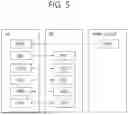




Sources:
- United States Patent and Trademark Office - verify current appl. status at the USPTO↗
Recent applications in this class:
- » 20260173102 2026-06-18
WIRELESS COMMUNICATION METHOD AND COMMUNICATION DEVICE - » 20260173101 2026-06-18
BEAM-BASED COMMUNICATION METHOD AND RELATED APPARATUS - » 20260173100 2026-06-18
SINGLE FREQUENCY NETWORK BASED PDCCH DIVERSITY OVER MULTIPLE TRPs - » 20260173099 2026-06-18
USER EQUIPMENT AND NETWORK ENTITY WITH REPORT CONFIGURATION MESSAGE FOR CHANNEL MEASUREMENT AND REPORTING AT THE UE - » 20260173098 2026-06-18
DOWNLINK QUALITY IMPROVEMENT METHOD AND APPARATUS - » 20260173097 2026-06-18
Bandwidth Parts in Control Channel Repetition - » 20260173096 2026-06-18
SDCI MTRP UNIFIED TCI ACTIVATION DESIGN - » 20260173095 2026-06-18
EARLY INDICATION/INFERENCE OF NR NARROW CHANNEL BANDWIDTH OPERATION - » 20260173094 2026-06-18
METHOD AND APPARATUS FOR DETERMINING UNIFIED TRANSMISSION CONFIGURATION INDICATOR STATE, AND STORAGE MEDIUM - » 20260173093 2026-06-18
METHOD AND APPARATUS FOR PROCESSING CONTINUOUS LISTEN BEFORE TALK FAILURES OF SIDELINK