ADJUSTMENT STRUCTURE FOR LIFTING AND DESCENDING BACKREST
US20260174243A1
2026-06-25
19/420,274
2025-12-15
Smart Summary: An adjustment system helps move a backrest up and down. It includes a support part with teeth, a holder, and a lifter. The lifter can move smoothly and return to its starting position on its own. This system is designed to be easy to connect, which helps keep costs low. Overall, it makes adjusting the backrest simple and efficient. 🚀 TL;DR
Abstract:
An adjustment structure for lifting and descending a backrest contains: a support element with a toothed unit, a holder, and a lifter. The lifter is independently connected on the support element and the holder to be moved downward and upward and returned to an original position stably and smoothly. Preferably, the adjustment structure for lifting and descending the backrest is connected easily to reduce a fabrication cost.
Applicant:
Interested in similar patents?
Get notified when new applications in this technology area are published.
Classification:
A47C7/402 » CPC main
Parts, details, or accessories of chairs or stools; Support for the head or the back for the back adjustable in height
A47C7/40 IPC
Parts, details, or accessories of chairs or stools; Support for the head or the back for the back
Description
TECHNICAL FIELD
The present invention relates to an adjustment structure for lifting and descending a backrest by which the lifter is connected on the support element and the holder to be moved downward and upward and returned to an original position stably and smoothly.
BACKGROUND
According to the current situation, many jobs require operating computers to create files and search for information. A comfortable chair plays a very important role for people. However, sitting in the same posture for a long time will also cause lower back pain for the occupant. The effectiveness of the belt protectors currently on the market that claim to prevent lower back pain has not yet been proven, and over-reliance on belts may have the opposite effect. For computer users who may suffer from lower back pain due to long-term static sitting, they must consider choosing a suitable chair.
The inventor of this case has recently applied for a chair back height adjustment structure of US Pat. No. 9,648,955, which mainly includes a frame, a backboard and an adjustment group. The frame has a central groove and an adjustment plate with a limit groove and two sliding grooves. The backboard is connected to the frame and has an opening. The adjustment group is connected between the frame and the backboard. The adjustment group includes a sliding seat, which has a snap block assembled in the opening, and a groove with a through hole is provided on the snap block; a limiter assembled in the groove, which has a center rod located in the through hole and an extension with a limit rod located in the limit groove, and a C-shaped groove is formed around the center rod; a torsion spring is assembled in the C-shaped groove, and its two ends extend out of the C-shaped groove and are limited by the groove; and two sliders accommodated in the sliding groove, and the slider and the sliding seat are fixed on the backboard. However, the conventional structure is cumbersome and difficult to assemble, the component cost is high, and the operation is unstable and it is easy to cause the snap block of the sliding seat to get stuck.
The present invention has arisen to mitigate and/or obviate the afore-described disadvantages.
SUMMARY
The primary aspect of the present invention is to provide an adjustment structure for lifting and descending a backrest by which the lifter is connected on the support element and the holder to be moved downward and upward and returned to an original position stably and smoothly, and the adjustment structure is connected easily to reduce a fabrication cost.
BRIEF DESCRIPTION OF THE DRAWINGS
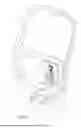
FIG. 1 is a perspective view showing the assembly of an adjustment structure for lifting and descending a backrest according to a preferred embodiment of the present invention.
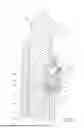
FIG. 2 is a perspective view showing the exploded components of the adjustment structure for lifting and descending the backrest according to the preferred embodiment of the present invention.
FIG. 3 is another perspective view showing the exploded components of the adjustment structure for lifting and descending the backrest according to the preferred embodiment of the present invention.
FIG. 4 is a cross sectional view showing the assembly of the adjustment structure for lifting and descending the backrest according to the preferred embodiment of the present invention.
FIG. 5 is another cross sectional view showing the assembly of the adjustment structure for lifting and descending the backrest according to the preferred embodiment of the present invention.
FIG. 6 is an amplified cross sectional view showing the operation of a part of the adjustment structure for lifting and descending the backrest according to the preferred embodiment of the present invention.
FIG. 7 is another cross sectional view showing the operation of a part of the adjustment structure for lifting and descending the backrest according to the preferred embodiment of the present invention.
FIG. 8 is also another cross sectional view showing the operation of a part of the adjustment structure for lifting and descending the backrest according to the preferred embodiment of the present invention.
FIG. 9 is an amplified cross sectional view of FIG. 9 according to the preferred embodiment of the present invention.
FIG. 10 is still another cross sectional view showing the operation of a part of the adjustment structure for lifting and descending the backrest according to the preferred embodiment of the present invention.
FIG. 11 is an amplified cross sectional view of FIG. 10 according to the preferred embodiment of the present invention.
DETAILED DESCRIPTION
With reference to FIGS. 1-11, an adjustment structure for lifting and descending a backrest according to a preferred embodiment of the present invention comprises: a holder A, a chamber A2 defined on a center of the holder A, a vertical moving space A1 defined on a top of the holder A and communicating with the chamber A2, wherein a slider B1 of a support element B slides in the vertical moving space A1, and the slider B1 includes a toothed unit B2 formed in the chamber A2 of the holder A, wherein the toothed unit B2 includes a locating zone B5 formed therein, and the locating zone B5 has multiple fixing teeth B51 formed therein, wherein each of the multiple fixing teeth B51 has a slot B52 longitudinally extending from a center of each fixing tooth B51, the slot B52 has a top stop face B42 extending upward from an end thereof, and the top stop face B42 has a locking section B4 defined on a top thereof, wherein the locking section B4 has multiple locking teeth B41 formed thereon, and the slot B52 has a bottom stop face B62 extending downward therefrom, wherein a removal section B6 is defined between the bottom stop face B62 and each fixing tooth B51, the removal section B6 has a guide groove B6 defined thereon, wherein the support element B includes an auxiliary rack B3 mounted on a predetermined position thereof, and the support element B includes a receiving trench A5 corresponding to the auxiliary rack B3 so that the auxiliary rack B3 is received in the receiving trench A5. A lifter 1 is defined between the chamber A2 of the holder A and the toothed unit B2 of the support element B, wherein the holder A includes multiple retainers A4 arranged on two inner sides of the chamber A2 thereof, and a recess A3 is defined between any two adjacent retainers A4 of the multiple retainers A4.
The lifter 1 includes: a casing 10, a toothed engagement element 30, an elastic sheet 20.
The casing 10 includes multiple engagement portions 11, and each of the multiple engagement portions 11 corresponds to and engages with the recess A3 of the holder A so that the casing 10 is accommodated in the chamber A2 of the holder A. The casing 10 further includes an accommodation room 12 defined therein, and the accommodation room 12 has an arcuate conduit portion 14 formed on a bottom thereof, a clamp portion 131 fixed on a top of the accommodation room 12, two rotation orifices 15 defined on two internal fences 13 of the accommodation room 12, two main areas 16 formed in the two rotation orifices 15 and being elongated, such that the two main areas 16 have two central fixing portions to defined a first eccentric point M and a second eccentric point N. The two main areas 16 also have two first retaining portions 17 formed on two corners of two tops of the two main areas 16, wherein two tops of the two main areas 16 communicate with two first engaging zones 18, and the two first engaging zones 18 have two second retaining portions 19 formed on two corners of two tops of the two first engaging zones 18.
The toothed engagement element 30 includes an opening 35 from which a rotary shaft 40 extends outward, wherein the toothed engagement element 30 is rotatably connected with and rotates along the two rotation orifices 15 of the casing 10 by using the rotary shaft 40, wherein the opening 35 of the toothed engagement element 30 has an accommodating portion 36 communicating with an extending orifice 37, and a locking portion 38 is formed on a corner of the extending orifice 37. The rotary shaft 40 includes a main extension 41 corresponding to the accommodating portion 36 of the opening 35, a projected portion 42 corresponding to the extending orifice 37 of the opening 35, and a fasten fringe 43 corresponding to the locking portion 38 of the opening 35, such that the rotary shaft 40 is movably rotated in the two rotation orifices 15 of the casing 10. When each toothed section 31 of the toothed engagement element 30 rotatably meshes with each fixing tooth B51 of the support element B, a central position of the main extension 41 of the rotary shaft 40 is aligned with the second eccentric point N of each rotation orifice 15, and the fasten fringe 43 of the rotary shaft 40 is engaged with each first retaining portion 17 of each rotation orifice 15. When each toothed section 31 of the toothed engagement element 30 rotatably removes from each fixing tooth B51 of the support element B, the central position of the main extension 41 of the rotary shaft 40 is aligned with the first eccentric point M of each rotation orifice 15, and the fasten fringe 43 of the rotary shaft 40 is engaged with each second retaining portion 19 of each rotation orifice 15.
The toothed engagement element 30 includes at least two toothed sections 31 extending outward, wherein each of the at least two toothed sections 31 meshes with or removes from each fixing tooth B51 of the support element B. The toothed engagement element 30 further includes a rotatable actuation protrusion 39 corresponding to the slot B52 of the support element B, wherein the rotatable actuation protrusion 39 has a first drive face 391 corresponding to the top stop face B42 of the support element B, the toothed engagement element 30 actuates the first drive face 391 to rotate by using the top stop face B42 so that each toothed section 31 of the toothed engagement element 30 rotatably meshes with each fixing tooth B51 of the support element B. The rotatable actuation protrusion 39 has a second drive face 392 corresponding to the bottom stop face B62 of the support element B, the toothed engagement element 30 actuates the second drive face 392 to rotate by using the bottom stop face B62 so that each toothed section 31 of the toothed engagement element 30 rotatably remove from each fixing tooth B51 of the support element B.
The toothed engagement element 30 further includes an arcuate guide face 34 corresponding to the arcuate conduit portion 14 of the casing 10, when the toothed engagement element 30 rotates in the accommodation room 12 of the casing 10, the arcuate guide face 34 of the toothed engagement element 30 slides on the arcuate conduit portion 14 of the accommodation room 12 of the casing 10.
The toothed engagement element 30 further includes a first abutting portion 33 and a second abutting portion 331 adjacent to the first abutting portion 33.
The elastic sheet 20 is made of manganese steel with a high flexibility, wherein the elastic sheet 20 includes a clamping edge 21 formed on a top thereof, and the elastic sheet 20 includes a force portion 22 formed on a bottom thereof, wherein the clamping edge 21 is engaged with the clamp portion 131 of the casing 10, and the force portion 22 movably abuts against the first abutting portion 33 or the second abutting portion 331 of the toothed engagement element 30. When each toothed section 31 of the toothed engagement element 30 is rotatably engaged with each fixing tooth B51 of the support element B, the force portion 22 of the elastic sheet 20 moves upward to abut against the first abutting portion 33 of the toothed engagement element 30. When each toothed section 31 of the toothed engagement element 30 is rotatably removed from each fixing tooth B51 of the support element B, the force portion 22 of the elastic sheet 20 moves downward to abut against the second abutting portion 331 of the toothed engagement element 30.
Preferably, when the clamping edge 21 of the elastic sheet 20 is engaged with the clamp portion 131 of the casing 10, the clamp portion 131 is reinforced by a reinforcement block 132.
Referring to FIG. 6, a meshing portion 32 is defined between any two toothed sections 31 to mesh with each fixing tooth B51 of the support element B, and the force portion 22 of the elastic sheet 20 abuts against the first abutting portion 33 of the toothed engagement element 30 to force the toothed engagement element 30, thus meshing the lifter 1 with each fixing tooth B51 securely. The central position of the main extension 41 of the rotary shaft 40 is aligned with the second eccentric point N of each rotation orifice 15, and the fasten fringe 43 of the rotary shaft 40 is engaged with each first retaining portion 17 of each rotation orifice 15, wherein the rotatable actuation protrusion 39 of the toothed engagement element 30 of the lifter 1 moves to the top stop face B42 of the slot B52, and each toothed section 31 of the toothed engagement element 30 meshes with each locking tooth B41 of the locking section B4.
As shown in FIG. 7, each toothed section 31 of the toothed engagement element 30 meshes with each fixing tooth B51 of support element B, and the support element B is pulled upward by a user so that the toothed engagement element 30 of the lifter 1 moves downward to a desired height of each fixing tooth B51 of the locating zone B5.
As illustrated in FIGS. 8-9, when the support element B is pulled upward to a maximum height, the rotatable actuation protrusion 39 of the toothed engagement element 30 of the lifter 1 moves into a trough B61 of the removal section B6 of the support element B so that the bottom stop face B62 of the removal section B6 actuates the second drive face 392 of the rotatable actuation protrusion 39 to move, and each toothed section 31 of the toothed engagement element 30 rotatably removes from each fixing tooth B51 of the support element B. In the meantime, the central position of the main extension 41 of the rotary shaft 40 moves to the first eccentric point M of each rotation orifice 15, and the fasten fringe 43 of the rotary shaft 40 is engaged with each second retaining portion 19 of each rotation orifice 15. Furthermore, the force portion 22 of the elastic sheet 20 abuts against the second abutting portion 331 of the toothed engagement element 30 downward, hence the elastic sheet 20 is removed vertically so that the lifter 1 is moved upward and downward merely but is not adjusted to a desired height.
With reference to FIGS. 10-11, when the support element B is moved downward to a maximum height, the first drive face 391 of the rotatable actuation protrusion 39 of the toothed engagement element 30 contacts with the top stop face B42 of the locking section B4 of the support element B so that each toothed section 31 of the toothed engagement element 30 rotatably meshes with each locking tooth B41 of the locking section B4 of the support element B, wherein after the second abutting portion 331 of the toothed engagement element 30 moves from the locking section B4, each toothed section 31 movably meshes with the each fixing tooth B51 at a desired height. When the toothed engagement element 30 rotates, the central position of the main extension 41 of the rotary shaft 40 is moved to the second eccentric point N of each rotation orifice 15, and the fasten fringe 43 of the rotary shaft 40 is movably engaged with each first retaining portion 17 of each rotation orifice 15. Then, the force portion 22 of the elastic sheet 20 abuts against the first abutting portion 33 of the toothed engagement element 30 upward, hence the force portion 22 of the elastic sheet 20 moves upward to force the first abutting portion 33 of the toothed engagement element 30 so that elastic sheet 20 presses the toothed engagement element 30 obliquely, and the lifter 1 is capable of being adjusted to the desired height with respect to the support element B.
Accordingly, the lifter 1 is connected on the support element B and the holder A to be moved downward and upward and returned to an original position stably and smoothly. Preferably, the adjustment structure for lifting and descending the backrest is connected easily to reduce a fabrication cost.
While the first embodiments of the invention have been set forth for the purpose of disclosure, modifications of the disclosed embodiments of the invention as well as other embodiments thereof may occur to those skilled in the art. The scope of the claims should not be limited by the first embodiments set forth in the examples, but should be given the broadest interpretation consistent with the description as a whole.
Claims
What is claimed is:1. An adjustment structure for lifting and descending a backrest comprising:
a holder, a chamber defined on a center of the holder, a vertical moving space defined on a top of the holder and communicating with the chamber, wherein a slider of a support element slides in the vertical moving space, and the slider includes a toothed unit formed in the chamber of the holder, wherein the toothed unit includes a locating zone formed therein, and the locating zone has multiple fixing teeth formed therein, wherein each of the multiple fixing teeth has a slot longitudinally extending from a center of each fixing tooth, and the slot has a bottom stop face extending downward therefrom, wherein a lifter is defined between the chamber of the holder and the toothed unit of the support element, and the lifter includes:
a casing accommodated in the chamber of the holder, wherein the casing includes an accommodation room defined therein, a clamp portion fixed on a top of the accommodation room, and two rotation orifices defined on two internal fences of the accommodation room;
a toothed engagement element including an opening from which a rotary shaft extends outward, wherein the toothed engagement element is rotatably connected with and rotates along the two rotation orifices of the casing by using the rotary shaft; wherein the toothed engagement element includes at least two toothed sections extending outward, each of the at least two toothed sections meshes with or removes from each fixing tooth of the support element, the toothed engagement element further includes a rotatable actuation protrusion corresponding to the slot of the support element, wherein the rotatable actuation protrusion has a first drive face corresponding to the top stop face of the support element, the toothed engagement element actuates the first drive face to rotate by using the top stop face so that each toothed section of the toothed engagement element rotatably meshes with each fixing tooth of the support element, the rotatable actuation protrusion has a second drive face corresponding to the bottom stop face of the support element, the toothed engagement element actuates the second drive face to rotate by using the bottom stop face so that each toothed section of the toothed engagement element rotatably remove from each fixing tooth of the support element; and
an elastic sheet including a clamping edge formed on a top thereof, and the elastic sheet including a force portion formed on a bottom thereof, wherein the clamping edge is engaged with the clamp portion of the casing, and the force portion movably abuts against a rear end of the toothed engagement element.
2. The adjustment structure as claimed in claim 1, wherein the holder includes multiple retainers arranged on two inner sides of the chamber thereof, and a recess is defined between any two adjacent retainers of the multiple retainers; the casing includes multiple engagement portions, and each of the multiple engagement portions corresponds to and engages with the recess of the holder.
3. The adjustment structure as claimed in claim 1, wherein two main areas are formed in the two rotation orifices and being elongated, such that the two main areas have two central fixing portions to defined a first eccentric point and a second eccentric point; the two main areas also have two first retaining portions formed on two corners of two tops of the two main areas, wherein two tops of the two main areas communicate with two first engaging zones, and the two first engaging zones have two second retaining portions formed on two corners of two tops of the two first engaging zones.
4. The adjustment structure as claimed in claim 1, wherein the opening of the toothed engagement element has an accommodating portion communicating with an extending orifice, and a locking portion is formed on a corner of the extending orifice; the rotary shaft includes a main extension corresponding to the accommodating portion of the opening, a projected portion corresponding to the extending orifice of the opening, and a fasten fringe corresponding to the locking portion of the opening, such that the rotary shaft is movably rotated in the two rotation orifices of the casing; when each toothed section of the toothed engagement element rotatably meshes with each fixing tooth of the support element, a central position of the main extension of the rotary shaft is aligned with the second eccentric point of each rotation orifice, and the fasten fringe of the rotary shaft is engaged with each first retaining portion of each rotation orifice; when each toothed section of the toothed engagement element rotatably removes from each fixing tooth of the support element, the central position of the main extension of the rotary shaft is aligned with the first eccentric point of each rotation orifice, and the fasten fringe of the rotary shaft is engaged with each second retaining portion of each rotation orifice.
5. The adjustment structure as claimed in claim 3, wherein the opening of the toothed engagement element has an accommodating portion communicating with an extending orifice, and a locking portion is formed on a corner of the extending orifice; the rotary shaft includes a main extension corresponding to the accommodating portion of the opening, a projected portion corresponding to the extending orifice of the opening, and a fasten fringe corresponding to the locking portion of the opening, such that the rotary shaft is movably rotated in the two rotation orifices of the casing; when each toothed section of the toothed engagement element rotatably meshes with each fixing tooth of the support element, a central position of the main extension of the rotary shaft is aligned with the second eccentric point of each rotation orifice, and the fasten fringe of the rotary shaft is engaged with each first retaining portion of each rotation orifice; when each toothed section of the toothed engagement element rotatably removes from each fixing tooth of the support element, the central position of the main extension of the rotary shaft is aligned with the first eccentric point of each rotation orifice, and the fasten fringe of the rotary shaft is engaged with each second retaining portion of each rotation orifice.
6. The adjustment structure as claimed in claim 1, wherein the accommodation room of the casing has an arcuate conduit portion formed on a bottom thereof, the toothed engagement element further includes an arcuate guide face corresponding to the arcuate conduit portion of the casing, when the toothed engagement element rotates in the accommodation room of the casing, the arcuate guide face of the toothed engagement element slides on the arcuate conduit portion of the accommodation room of the casing.
7. The adjustment structure as claimed in claim 1, wherein the toothed engagement element further includes a first abutting portion and a second abutting portion adjacent to the first abutting portion; when each toothed section of the toothed engagement element is rotatably engaged with each fixing tooth of the support element, the force portion of the elastic sheet moves upward to abut against the first abutting portion of the toothed engagement element; when each toothed section of the toothed engagement element is rotatably removed from each fixing tooth of the support element, the force portion of the elastic sheet moves downward to abut against the second abutting portion of the toothed engagement element.
8. The adjustment structure as claimed in claim 1, wherein the elastic sheet is made of manganese steel with a high flexibility.
9. The adjustment structure as claimed in claim 1, wherein when the clamping edge of the elastic sheet is engaged with the clamp portion of the casing, the clamp portion is reinforced by a reinforcement block.
10. The adjustment structure as claimed in claim 1, wherein the support element includes an auxiliary rack mounted on a predetermined position thereof, and the support element includes a receiving trench corresponding to the auxiliary rack so that the auxiliary rack is received in the receiving trench.
Images & Drawings included:






Sources:
- United States Patent and Trademark Office - verify current appl. status at the USPTO↗
Recent applications in this class:
- » 20260157523 2026-06-11
ADJUSTABLE WAIST SUPPORT CUSHION - » 20260060430 2026-03-05
CHAIR-BACK ADJUSTING STRUCTURE - » 20260033637 2026-02-05
CONVENIENTLY ADJUSTABLE SEAT BACKREST STRUCTURE - » 20250331644 2025-10-30
SLIDE STRUCTURE OF CHAIR BACK ADJUSTING DEVICE - » 20240277153 2024-08-22
SLIDE STRUCTURE OF CHAIR BACK ADJUSTING DEVICE - » 20230225513 2023-07-20
Chair back adjustment system - » 20200383484 2020-12-10
Chair backrest adjustment mechanism - » 20200323349 2020-10-15
Therapeutic chair with adjustable back and method of using the same - » 20200237100 2020-07-30
SELF-ADJUSTABLE BACKREST DEVICE - » 20200205572 2020-07-02
Actuator and backrest device, and piece of seating furniture having one such