HOVER FLOATING TOY
US20260175138A1
2026-06-25
19/427,022
2025-12-19
Smart Summary: A hover floating toy takes in air from outside through an air intake. Inside the toy, there is a drive system with a fan that spins around a shaft. As the fan spins, it pulls in air and pushes it out through a discharge area at the bottom. This creates a hovering effect, allowing the toy to float in the air. The design ensures that the air intake is not located at the top of the shaft, which helps with its performance. 🚀 TL;DR
Abstract:
A hover floating toy includes an outside air intake portion configured to take in air from an outside, and a base portion. A drive portion that has a shaft portion and a fan portion that is attached to the shaft portion are housed inside the base portion. The fan portion is configured to rotate about the shaft portion by the drive portion to inhale the air taken in from the outside air intake portion. A discharge portion is formed on a bottom surface of the base portion and discharges the air inhaled by the rotation of the fan portion to the outside of the hover floating toy. The outside air intake portion is provided in a region other than an upper region of the shaft portion.
Assignee:
- EPOCH COMPANY, LTD. 78 🇯🇵 Tokyo, Japan
Applicant:
Interested in similar patents?
Get notified when new applications in this technology area are published.
Classification:
A63H27/10 » CPC main
Toy aircraft; Other flying toys ; Starting or launching devices therefor Balloons
A63H2027/1033 » CPC further
Toy aircraft; Other flying toys ; Starting or launching devices therefor; Balloons Inflation devices or methods for inflating balloons
Description
CROSS-REFERENCE TO RELATED APPLICATIONS
This application is based on and claims priority under 35 USC 119 from Japanese Patent Application No. 2024-225502 filed on Dec. 20, 2024, the contents of which are incorporated herein by reference.
TECHNICAL FIELD
The present disclosure relates to a hover floating toy.
BACKGROUND ART
Non Patent Literature 1 discloses a hover floating toy including a base portion having a motor and a fan and a cover portion disposed above the base portion. In this hover floating toy, a discharge portion is provided at the bottom of the base portion, and an inhaling portion is provided at the top of the cover portion.
CITATION LIST
Non-Patent Literature
Non Patent Literature 1: “Epoch Games|SUPER MARIO HOVER SHELL STRIKE”, Internet <https://www.youtube.com/watch?v=vHcjEthGsm0>
SUMMARY OF INVENTION
In the hover floating toy according to Non Patent Literature 1, air is taken in from the outside of the hover floating toy through the inhaling portion provided at the top of the cover portion. Therefore, the inhaling portion and a shaft of the fan are aligned in a substantially linear manner in an up-down direction, and inhaling efficiency is high. However, the inhaling portion is provided at the top of the cover portion which is visually recognized by a user of the hover floating toy easily, and thus there is room for improvement in terms of design freedom and designability of the hover floating toy.
An object of the present disclosure is to provide a hover floating toy that can improve design freedom and designability without impairing a function of the hover floating toy.
A hover floating according to one aspect of the present disclosure includes an outside air intake portion configured to take in air from an outside, and a base portion. A drive portion that has a shaft portion and a fan portion that is attached to the shaft portion are housed inside the base portion. The fan portion is configured to rotate about the shaft portion by the drive portion to inhale the air taken in from the outside air intake portion. A discharge portion is formed on a bottom surface of the base portion and discharges the air inhaled by the rotation of the fan portion to the outside of the hover floating toy. The outside air intake portion is provided in a region other than an upper region of the shaft portion.
According to the above configuration, a hover floating toy that can improve design freedom and designability without impairing a function of a hover floating toy can be provided.
BRIEF DESCRIPTION OF DRAWINGS
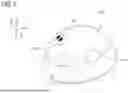
FIG. 1 is a perspective view of a hover floating toy according to an embodiment (hereinafter, also referred to as the present embodiment) of the present disclosure;
FIG. 2 is a plan view of the hover floating toy;
FIG. 3 is a side view of the hover floating toy;
FIG. 4 is a bottom view of the hover floating toy;
FIG. 5 is a plan view of the hover floating toy with a cover portion removed;
FIG. 6 is a diagram illustrating an inside of a base portion; and
FIG. 7 is a cross-sectional view taken along a line A-A in FIG. 3.
DESCRIPTION OF EMBODIMENTS
Hereinafter, a hover floating toy 100 according to an embodiment of the present disclosure will be described in detail with reference to the drawings. In the description of the present embodiment, for convenience of description, a “left-right direction”, an “up-down direction”, and a “front-rear direction” may be appropriately referred to. These directions are relative directions set for the hover floating toy 100 illustrated in FIG. 1. Here, the “left-right direction” is a direction including “leftward” and “rightward”. The “up-down direction” includes “upward” and “downward”. The “front-rear direction” includes “forward” and “rearward”. In the drawings, a reference sign U indicates upward. A reference sign D indicates downward. A reference sign L indicates leftward. A reference sign R indicates rightward. A reference sign F indicates forward. A reference sign B indicates rearward.
Overall Configuration
First, an overall configuration of the hover floating toy 100 will be described with reference to FIGS. 1 to 6. FIG. 1 is a perspective view of the hover floating toy 100. FIG. 2 is a plan view of the hover floating toy 100. FIG. 3 is a side view of the hover floating toy 100. FIG. 4 is a bottom view of the hover floating toy 100. FIG. 5 is a plan view of the hover floating toy 100 with a cover portion 4 removed. FIG. 6 is a diagram illustrating an inside of a base portion 2. As illustrated in FIGS. 1 to 3, the hover floating toy 100 includes outside air intake portions 1, the base portion 2, a cushion portion 3, and a cover portion 4. In the present embodiment, the hover floating toy 100 includes outside air intake portions 1A to 1D. However, the number of outside air intake portions 1 included in the hover floating toy 100 is not limited to four, and may be one or more and three or less, or five or more.
Each of the outside air intake portions 1 has a hole 11 in a lower portion of the outside air intake portion, and takes in air from the outside of the hover floating toy 100 through the hole 11. The outside air intake portions 1 are provided on a side surface of the cover portion 4. That is, the outside air intake portions 1 are disposed between the base portion 2 and the cover portion 4. In the present embodiment, the outside air intake portions 1 also represent hands and feet of a character drawn on an outer surface 41 of the cover portion 4 to be described later. That is, the outside air intake portions 1 not only exert a function of taking in the air from the outside of the hover floating toy 100, but also exert a function of enhancing designability of the hover floating toy 100.
As illustrated in FIGS. 4 to 6, the base portion 2 includes accommodation portions 21, power sources 22, a drive portion 23, an inhaling portion 24, a fan portion 25, a discharge portion 26, a bottom surface 27, and a switch portion 28. The accommodation portions 21, the power sources 22, the drive portion 23, and the fan portion 25 are accommodated inside the base portion 2. In the present embodiment, the base portion 2 has two accommodation portions 21 and two power sources 22. However, the base portion 2 may have one accommodation portion 21 and one power source 22, or three or more thereof.
Each of the accommodation portions 21 has a substantially rectangular parallelepiped shape. The accommodation portions 21 are disposed in front of and behind the drive portion 23. Each of the accommodation portions 21 is accommodated in the power source 22.
The power source 22 is, for example, a primary battery such as an alkaline battery, or a secondary battery such as a lithium-ion battery. The power source 22 supplies electric power to the drive portion 23. In the present embodiment, the switch portion 28 is provided on the bottom surface 27 of the base portion 2 for switching the drive portion 23 between an ON state (a state in which electric power is supplied from the power sources 22 to the drive portion 23) and an OFF state (a state in which electric power is not supplied from the power sources 22 to the drive portion 23). The bottom surface 27 has a substantially circular shape in a bottom view. The switch portion 28 is, for example, a slide switch. However, the switch portion 28 may also be a button switch, a toggle switch, or the like. When a player (hereinafter, simply referred to as a “user”) playing with the hover floating toy 100 switches the drive portion 23 to the ON state using the switch portion 28, the power sources 22 supply electric power to the drive portion 23.
As illustrated in FIG. 6, the drive portion 23 is, for example, a direct current motor. The drive portion 23 is driven, for example, by receiving electric power from the power sources 22. The drive portion 23 has a rod-shaped shaft portion 231, and when the drive portion 23 is driven, the shaft portion 231 rotates. When the shaft portion 231 is incorporated into the hover floating toy 100, the shaft portion 231 extends upward from an upper surface of the drive portion 23.
As illustrated in FIG. 5, the inhaling portion 24 includes one circular hole 241 and six trapezoidal holes 242. The trapezoidal holes 242 are arranged outside the circular hole 241. More specifically, the trapezoidal holes 242 are arranged in a ring shape with the circular hole 241 at the center. The inhaling portion 24 is formed on an upper surface of the base portion 2. That is, the inhaling portion 24 is disposed above the fan portion 25. The inhaling portion 24 inhales the air taken in from the outside air intake portions 1 into the base portion 2.
As illustrated in FIG. 6, the fan portion 25 is disposed above the accommodation portion 21 and the drive portion 23. The fan portion 25 has a substantially disk shape. The fan portion 25 is, for example, a turbofan. However, the fan portion 25 may also be, for example, a sirocco fan or a propeller fan. The fan portion 25 has a plurality of blades 251 and an attachment portion 252.
The plurality of blades 251 are arranged in a ring shape. The attachment portion 252 has a substantially cylindrical shape and extends upward. The attachment portion 252 is arranged substantially in the center of the fan portion 25. The shaft portion 231 of the drive portion 23 is inserted into the attachment portion 252. That is, the fan portion 25 is attached to the shaft portion 231 by inserting the shaft portion 231 into the attachment portion 252. Therefore, when the drive portion 23 is driven, the fan portion 25 rotates about the shaft portion 231 in accordance with the rotation of the shaft portion 231. That is, the shaft portion 231 of the drive portion 23 corresponds to a rotation shaft of the fan portion 25. The fan portion 25 rotates about the shaft portion 231, so that the air taken in by the inhaling portion 24 is efficiently inhaled in an appropriate amount. The air inhaled by the fan portion 25 is accelerated at high speed by the blades 251, resulting in an increase in a wind pressure inside the base portion 2. In this way, the fan portion 25 can adjust an air volume and the wind pressure inside the base portion 2.
As illustrated in FIG. 4, the discharge portion 26 is formed on the bottom surface 27 of the base portion 2. The discharge portion 26 includes fourteen first elliptical holes 261 and two second elliptical holes 262. The first elliptical holes 261 are arranged in a ring shape along a circumference of the bottom surface 27. The second elliptical holes 262 are disposed at an inner side of the first elliptical holes 261. The discharge portion 26 discharges the air inhaled by the rotation of the fan portion 25 to the outside of the hover floating toy 100.
As illustrated in FIGS. 1 to 3, the cushion portion 3 is an annular member and has a circular cavity 31. A diameter of the cavity 31 is slightly larger than a diameter of the base portion 2. The cushion portion 3 is disposed to surround the base portion 2. The cushion portion 3 is made of a soft resin material and has cushioning properties. Therefore, even if the hover floating toy 100 crashes into a wall or the like, a contact portion with the wall or the like is the cushion portion 3, and thus the hover floating toy 100 can be prevented from being damaged. Examples of such a resin material include ethylene vinyl acetate resin.
The cover portion 4 has a spherical shape. The inside of the cover portion 4 is hollow. The cover portion 4 is disposed above the base portion 2 and the cushion portion 3. In the present embodiment, the cover portion 4 is fixed to the base portion 2, but the cover portion 4 may be detachable with respect to the base portion 2 and be disposed above the base portion 2. In this case, the user can replace the cover portion 4, and thus the cover portion 4 can be attached to the base portion 2 according to a preference of the user himself/herself. The cover portion 4 is disposed to cover the inhaling portion 24. In this way, in the hover floating toy 100, the cover portion 4 covers the inhaling portion 24, and the outside air intake portions 1 are provided on the side surface of the cover portion 4 (that is, the outside air intake portions 1 are not directly above the fan portion 25), and thus foreign objects are less likely to enter the inside of the base portion 2. For example, a character may be drawn on the outer surface 41 of the cover portion 4. However, for example, a sticker representing the entire character or part of the character (such as the eyes or mouth of the character) may be attached to the outer surface 41 of the cover portion 4, or a movable gimmick may be attached to the outer surface 41. The movable gimmick refers to a mechanism that allows the eyes, mouth, or the like of the character to move.
In a hover floating toy in the related art, an outside air intake portion is provided in an upper region of a shaft portion included in a drive portion (in the case of the hover floating toy 100 according to the present embodiment, a region corresponding to an upper region R1 illustrated by a dashed line in FIG. 1). In this regard, as described above, the outside air intake portions 1 in the present embodiment are provided on the side surface of the cover portion 4, and the holes 11 are provided in the lower portions of the outside air intake portions 1. That is, in the present embodiment, each of the outside air intake portions 1 is provided in a region other than the upper region R1 of the shaft portion 231 of the drive portion 23, and a hole or the like that takes in the air from the outside of the hover floating toy 100 is not formed in the outer surface 41 of the cover portion 4.
Mechanism by Which Hover Floating Toy 100 Floats
Next, a mechanism by which the hover floating toy 100 floats will be described in detail with reference to FIG. 7. FIG. 7 is a cross-sectional view taken along a line A-A in FIG. 3. An arrow A10 illustrated in FIG. 7 indicates a flow of the air taken in from the outside of the hover floating toy 100 by the outside air intake portions 1 until the air is discharged to the outside of the hover floating toy 100 by the discharge portion 26. Note that for convenience of illustration, FIG. 7 only shows the flow of the air taken in from the outside of the hover floating toy 100 by the outside air intake portion 1A, but in reality, the air taken in from the outside of the hover floating toy 100 by the outside air intake portions 1B to 1D also passes through the inside of the base portion 2 and is discharged to the outside of the hover floating toy 100 by the discharge portion 26.
As illustrated in FIG. 7, when the outside air intake portions 1 take in the air from the outside of the hover floating toy 100, the air is introduced into a first space S1 formed between the base portion 2 and the cover portion 4. The air is then inhaled by the inhaling portion 24 and introduced into a second space S2 (that is, the inside of the base portion 2) formed between the inhaling portion 24 and the fan portion 25. The air introduced into the base portion 2 by the inhaling portion 24 is inhaled by the fan portion 25. The air inhaled by the fan portion 25 is accelerated at high speed by the blades 251, resulting in an increase in the wind pressure inside the base portion 2. The air accelerated by the blades 251 moves to the discharge portion 26 from the fan portion 25 through a third space S3 formed between the fan portion 25 and the discharge portion 26. Then, the air is discharged to the outside of the hover floating toy 100 by the discharge portion 26.
When the air inhaled into the base portion 2 by the inhaling portion 24 is discharged to the outside of the hover floating toy 100 by the discharge portion 26, an air pressure between the bottom surface 27 of the base portion 2 of the hover floating toy 100 and a floor increases, and the hover floating toy 100 floats above the floor. More specifically, when a product of an area of the bottom surface 27 and the air pressure between the bottom surface 27 and the floor exceeds a weight of the hover floating toy 100, the hover floating toy 100 floats above the floor. Once the hover floating toy 100 floats above the floor, the hover floating toy 100 can move (float) in a gliding manner.
In the hover floating toy in the related art, the air is taken in from the outside of the
hover floating toy by an inhaling portion provided at the top of the cover portion. Therefore, the inhaling portion and a shaft of the fan are aligned in a substantially linear manner in an up-down direction, and inhaling efficiency is high. However, the inhaling portion is provided at the top of the cover portion which is visually recognized by a user of the hover floating toy easily, and thus there is room for improvement in terms of design freedom and designability of the hover floating toy.
In this regard, the hover floating toy 100 according to the present embodiment includes the outside air intake portions 1, the drive portion 23, the fan portion 25, and the discharge portion 26, and therefore fully has a function of a hover floating toy. Meanwhile, the outside air intake portions 1 are provided in the region other than the upper region R1 of the shaft portion 231 of the drive portion 23, which corresponds to the rotation shaft of the fan portion 25, and thus, it is difficult for the user to visually recognize. Therefore, in the hover floating toy 100, the design freedom and the designability can be improved without impairing the function of the hover floating toy.
In the hover floating toy 100 according to the present embodiment, the inhaling portion 24 is not visually recognized by the user, and thus, the designability of the hover floating toy 100 is high. The cover portion 4 is disposed to cover the inhaling portion 24, and thus, foreign objects can also be prevented from entering the inside of the base portion 2.
According to the hover floating toy 100 according to the present embodiment, the outside air intake portions 1 are disposed between the base portion 2 and the cover portion 4, and thus, the designability of the hover floating toy 100 can be further improved.
According to the hover floating toy 100 according to the present embodiment, there is no need to provide an outside air intake portion separate from the base portion 2 or the cover portion 4, and thus, an increase in the number of parts can be prevented, and the designability of the hover floating toy 100 can be further improved. The hover floating toy 100 can prevent foreign objects from entering between the base portion 2 and the cover portion 4.
According to the embodiment of the present disclosure described above, it is possible to provide a hover floating toy according to the following aspects.
A hover floating toy according to a first aspect relates to a hover floating toy including: an outside air intake portion configured to take in air from an outside; and a base portion, in which an inside of the base portion accommodates a drive portion that has a shaft portion and a fan portion that is attached to the shaft portion and is configured to rotate about the shaft portion by the drive portion to intake the air taken in though the outside air intake portion, a discharge portion that discharges the air inhaled by the rotation of the fan portion to the outside of the hover floating toy is formed on a bottom surface of the base portion, and the outside air intake portion is provided in a region other than an upper region of the shaft portion.
According to this configuration, since the outside air intake portion, the drive portion, the fan portion, and the discharge portion are included, the hover floating toy has a function of a hover floating toy. On the other hand, in the hover floating toy according to the above configuration, the outside air intake portion is provided in the region other than the upper region of the shaft portion, which is the rotation shaft of the fan portion, and thus, it is difficult for a user of the hover floating toy to visually recognize. Therefore, in the hover floating toy according to the above configuration, a degree of design freedom and designability can be increased without impairing the function of the hover floating toy.
The hover floating toy according to a second aspect further includes a cover portion disposed above the base portion, in which an inhaling portion that inhales the air taken in through the outside air intake portion into the base portion is formed on an upper surface of the base portion, and the cover portion is disposed to cover the inhaling portion.
According to this configuration, the inhaling portion is not visually recognized by the user of the hover floating toy. Therefore, the designability of the hover floating toy can be further improved. Foreign objects can also be prevented from entering the inside of the hover floating toy.
In the hover floating toy according to a third aspect, the outside air intake portion is disposed between the base portion and the cover portion.
According to this configuration, an increase in the number of parts can be prevented, and the designability of the hover floating toy can be further improved. Foreign objects can be prevented from entering between the base portion and the cover portion.
In the hover floating toy according to a fourth aspect, the outside air intake portion is disposed on a side surface of the cover portion.
According to this configuration, an increase in the number of parts can be prevented, and the designability of the hover floating toy can be further improved. Foreign objects can be prevented from entering between the base portion and the cover portion.
The above embodiment is intended to facilitate the understanding of the present disclosure, and does not limit the present disclosure. The present disclosure can be changed or improved without departing from the gist thereof.
In the present embodiment, the outside air intake portions 1 are provided on the side surface of the cover portion 4, but the outside air intake portions 1 may also be provided in a region other than the side surface of the cover portion 4 as long as this region is a region other than the upper region R1 of the shaft portion 231 of the drive portion 23.
In the present embodiment, the inhaling portion 24 includes one circular hole 241 and six trapezoidal holes 242, but the number of circular holes 241 and trapezoidal holes 242 is not limited to this example. The inhaling portion 24 may include only either the circular hole 241 or the trapezoidal hole 242, or may include other holes having shapes different from those of the circular hole 241 and the trapezoidal hole 242.
In the present embodiment, the discharge portion 26 includes fourteen first elliptical holes 261 and two second elliptical holes 262, but the number of first elliptical holes 261 and second elliptical holes 262 is not limited to this example. The discharge portion 26 may include only either the first elliptical hole 261 or the second elliptical hole 262, or may include other holes having shapes different from those of the first elliptical hole 261 and the second elliptical hole 262.
Claims
What is claimed is:1. A hover floating toy comprising:
an outside air intake portion configured to take in air from an outside; and
a base portion, wherein
a drive portion that has a shaft portion and a fan portion that is attached to the shaft portion are housed inside the base portion, the fan portion being configured to rotate about the shaft portion by the drive portion to inhale the air taken in from the outside air intake portion,
a discharge portion is formed on a bottom surface of the base portion and discharges the air inhaled by the rotation of the fan portion to the outside of the hover floating toy, and
the outside air intake portion is provided in a region other than an upper region of the shaft portion.
2. The hover floating toy according to claim 1, further comprising:
a cover portion disposed above the base portion, wherein
an inhaling portion is formed on an upper surface of the base portion and inhales the air taken in from the outside air intake portion into the base portion, and
the cover portion is disposed to cover the inhaling portion.
3. The hover floating toy according to claim 2, wherein
the outside air intake portion is disposed between the base portion and the cover portion.
4. The hover floating toy according to claim 2, wherein
the outside air intake portion is disposed on a side surface of the cover portion.
Images & Drawings included:



Sources:
- United States Patent and Trademark Office - verify current appl. status at the USPTO↗
Recent applications in this class:
- » 20260158403 2026-06-11
BALLOON HOLDERS FOR SUPPORTING A FOIL BALLOON - » 20260151713 2026-06-04
Fun Aluminum Foil Balloon - » 20260124552 2026-05-07
Balloon Banner - » 20260115610 2026-04-30
BALLOON COLUMN ASSEMBLY - » 20260069994 2026-03-12
To Latex Balloon Neck Lengths - » 20260048336 2026-02-19
AUTOMATIC SELF-SEALING BALLOON - » 20260034467 2026-02-05
SYSTEMS AND METHODS FOR SHOW EFFECTS - » 20250352919 2025-11-20
INFLATABLE DECORATION SYSTEM AND METHOD - » 20250303313 2025-10-02
BALLOON WITH PLASTIC CONTAINER BASE - » 20250242272 2025-07-31
ELECTRIC SQUISHY MAKER
Recent applications for this Assignee:
- » 20260115620 2026-04-30
AMUSEMENT PARK TOY - » 20260115619 2026-04-30
AMUSEMENT PARK TOY - » 20260115615 2026-04-30
FUSIBLE TOY BEAD - » 20260115614 2026-04-30
DISPENSER FOR FUSIBLE TOY BEAD - » 20260115613 2026-04-30
ASSEMBLY SUPPORT TOOL FOR FUSIBLE TOY BEAD - » 20260069993 2026-03-12
VEHICLE TOY - » 20260069992 2026-03-12
TRAVELING TOY - » 20260069991 2026-03-12
VEHICLE TOY - » 20260014491 2026-01-15
LIGHTING TOY - » 20250295132 2025-09-25
PIPING TOOL