FILTER MATERIAL FOR AIR FILTER, AND METHOD FOR MANUFACTURING SAME
US20260175152A1
2026-06-25
18/854,334
2023-03-16
Smart Summary: A new type of air filter material has been created that does not use harmful chemicals like PFASs or siloxane compounds. This filter is made from a special fabric that is both strong and water-resistant. The water-repellent part is based on an acrylic polymer that does not contain fluorine or silicon. To make this filter, a wet sheet of fibers is formed and then treated with a mixture that includes the binder resin and the water-repellent material. Finally, the sheet is dried and heated to create the finished filter. 🚀 TL;DR
Abstract:
An object of the present disclosure is to provide a filter medium, for an air filter, which contains no PFASs or siloxane compounds and has a good physical property balance among the PF value, the water repellency, and the strength. A filter medium, for an air filter, according to the present disclosure is a filter medium, for an air filter, composed of a wet-laid nonwoven fabric, the filter medium including a binder resin and a water repellent, wherein the water repellent contains, as a main component, an acrylic polymer free of fluorine and silicon in a molecule thereof. A method for producing a filter medium, for an air filter, according to the present disclosure includes a step of forming a sheet in a wet state by forming a slurry of fibers into the sheet by a wet papermaking method, a step of impregnating the sheet in the wet state with an aqueous dispersion that contains a binder resin and a water repellent containing, as a main component, an acrylic polymer free of fluorine and silicon in a molecule thereof, and a step of obtaining a dry sheet by heating and drying the sheet, in a wet state, impregnated with the aqueous dispersion.
Inventors:
- Masashi SATO 5 🇯🇵 Nagaoka-shi, Niigata, Japan
- Nozomi TASHIRO 3 🇯🇵 Nagaoka-shi, Niigata, Japan
Assignee:
- HOKUETSU CORPORATION 7 🇯🇵 Nagaoka-shi, Niigata, Japan
Applicant:
Interested in similar patents?
Get notified when new applications in this technology area are published.
Classification:
B01D46/0005 » CPC main
Filters or filtering processes specially modified for separating dispersed particles from gases or vapours; Casings; Housings; Frame constructions Mounting of filtering elements within casings, housings or frames
B01D39/1623 » CPC further
Filtering material for liquid or gaseous fluids; Other self-supporting filtering material ; Other filtering material of organic material, e.g. synthetic fibres the material being fibrous of synthetic origin
B01D46/10 » CPC further
Filters or filtering processes specially modified for separating dispersed particles from gases or vapours Particle separators, e.g. dust precipitators, using filter plates, sheets or pads having plane surfaces
B01D46/2411 » CPC further
Filters or filtering processes specially modified for separating dispersed particles from gases or vapours; Particle separators, e.g. dust precipitators, using rigid hollow filter bodies characterised by the physical shape or structure of the filtering element Filter cartridges
B01D46/00 IPC
Filters or filtering processes specially modified for separating dispersed particles from gases or vapours
B01D39/16 IPC
Filtering material for liquid or gaseous fluids; Other self-supporting filtering material ; Other filtering material of organic material, e.g. synthetic fibres
B01D46/24 IPC
Filters or filtering processes specially modified for separating dispersed particles from gases or vapours Particle separators, e.g. dust precipitators, using rigid hollow filter bodies
Description
CROSS-REFERENCE TO RELATED APPLICATIONS
The present application is a 35 U.S.C. § 371 National Stage patent application of International patent application PCT/JP2023/010249, filed on Mar. 16, 2023, which claims priority to Japanese patent application JP 2022-062263, filed on Apr. 4, 2022, the entire disclosure of each of which is incorporated by reference herein.
BACKGROUND OF THE DISCLOSURE
1. Field of the Disclosure
The present disclosure relates to a filter medium for an air filter used for an air filter installed in a clean room for a semiconductor, a liquid crystal, and food industry, a building air conditioner, an air purifier, or the like.
2. Description of Related Art
In order to collect and remove airborne particles of submicron or micron order, an air filter including a filter medium for an air filter is generally used. The air filter is classified into a coarse dust filter, a medium performance filter, a HEPA filter, an ULPA filter, and the like depending on size of collectable particles and the collection efficiency thereof. The above filters are enumerated in descending order of the size of collectable particles and in ascending order of the collection efficiency.
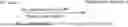
The filter medium for an air filter requires collection efficiency of particles that need collecting and a low pressure loss so as not to increase blowing energy. As an index value of the collection efficiency and the pressure loss, there is a PF value shown in Mathematical Formula 1; the higher this value is, the higher the collection efficiency is and the lower the pressure loss is, which indicates that the filter medium is more excellent.
PF value = log 10 ( Permeability [ % ] / 100 ) Pressure loss [ Pa ] / 9.81 × ( - 100 ) Mathematical Formula 1 Here , permeability [ % ] = 100 - collection efficiency [ % ]
Further, the filter medium for an air filter requires sufficient strength imparted thereto so as not to break or crack in processing or during ventilation use.
Further, as a physical property that the filter medium for an air filter requires, there is water repellency. Having sufficient water repellency can prevent problem occurring of pores of the filter medium blocked by water droplets under the condition of dew condensation due to a change in air temperature or of air with high humidity flowing therethrough. In addition, in a place close to the sea, it can prevent a deliquescence phenomenon, in which sea salt particles collected by the filter medium are liquefied by moisture in the air and then flow out. Meanwhile, when water repellency is low, there is a problem of permeation of a sealant, a hot melt, or the like, with which the filter medium is manufactured into an air filter unit.
In order to impart water repellency to a filter medium, a method of adhering a fluorine-based water repellent and/or a silicone-based water repellent (see, for example, PTL 1 or PTL 2.) is widely used.
Examples of the filter medium, using a water repellent other than fluorine-based and silicone-based water repellents, include a method using synthetic paraffin (see, for example, PTL 3) and a method using an alkyl ketene dimer (see, for example, PTL 4).
CITATION LIST—PATENT LITERATURE
-
- PTL 1: JP H2-175997 A
- PTL 2: JP H9-225226 A
- PTL 3: WO 97/04851 A1
- PTL 4: WO 02/016005 A1
SUMMARY OF THE DISCLOSURE
However, in the technique disclosed in PTL 1 or PTL 2, since a perfluoroalkyl compound (hereinafter abbreviated as PFAS), constituting the fluorine-based water repellent, is hardly decomposable and has high bioaccumulation, there is a movement to regulate the use thereof worldwide. In addition, a siloxane compound, constituting the silicone-based water repellent, and a cyclic siloxane which is a condensate thereof have a problem of adhering to the surface of a semiconductor substrate or a glass substrate to cause a decrease in product yield or occurrence of cissing. Further, there is a movement to regulate the use of a cyclic siloxane because it is hardly decomposable and has high bioaccumulation like a PFAS.
In addition, neither method in the technique disclosed in PTL 3 nor PTL 4 is easy to achieve a physical property balance among the PF value, the strength, and the water repellency of the filter medium.
As described above, a filter medium for an air filter which contains no PFASs or siloxane compounds is necessary, but the conventional technique is difficult to produce a filter medium having a good physical property balance among the PF value, the water repellency, and the strength. Therefore, an object of the present disclosure is to provide a filter medium, for an air filter, which contains no PFASs or siloxane compounds and has a good physical property balance among the PF value, the water repellency, and the strength.
The present inventors have intensively conducted studies for achieving the above-mentioned object, and resultantly found that the above-mentioned object can be achieved by using a binder resin and a water repellent containing, as a main component, an acrylic polymer free of fluorine and silicon in a molecule thereof, and have completed the present disclosure. That is, a filter medium for an air filter according to the present disclosure is a filter medium, for an air filter, composed of a wet-laid nonwoven fabric, the filter medium including a binder resin and a water repellent, wherein the water repellent contains, as a main component, an acrylic polymer free of fluorine and silicon in a molecule thereof.
In the filter medium for an air filter according to the present disclosure, a solid content mass ratio between the binder resin and the water repellent is preferably 5 to 90 parts by mass of the water repellent, more preferably 30 to 90 parts by mass of the water repellent, still more preferably 40 to 90 parts by mass of the water repellent, and even more preferably 40 to 70 parts by mass of the water repellent, per hundred parts by mass of the binder resin. This ratio can bring about a filter medium having a good physical property balance among the PF value, the water repellency, and the strength.
In the filter medium for an air filter according to the present disclosure, the wet-laid nonwoven fabric preferably contains a glass fiber. According to such a configuration, a filter medium, for an air filter, having a higher PF value can be obtained.
In the filter medium for an air filter according to the present disclosure, the binder resin is preferably an acrylic binder resin.
In the filter medium for an air filter according to the present disclosure, the water repellent is preferably a cationic water repellent.
In the filter medium for an air filter according to the present disclosure, a total solid mass content of the binder resin and the water repellent in the filter medium is preferably 3 to 12% by mass with respect to the entire filter medium. This ratio can bring about a filter medium having a particularly good physical property balance between the PF value and the strength.
It is preferable that the filter medium for an air filter according to the present disclosure contain no crosslinking agents, and have a structure in which the binder resin binds fibers of the wet-laid nonwoven fabric together.
It is preferable that the filter medium for an air filter according to the present disclosure have a structure in which the water repellent adheres to fibers of the wet-laid nonwoven fabric.
It is preferable that the filter medium for an air filter according to the present disclosure have a structure in which the binder resin and the water repellent be crosslinked without interposing a crosslinking agent therebetween.
A method for producing a filter medium for an air filter according to the present disclosure includes a step of forming a sheet in a wet state by forming a slurry of fibers into a sheet by a wet papermaking method, a step of impregnating the sheet in the wet state with an aqueous dispersion that contains a binder resin and a water repellent containing, as a main component, an acrylic polymer free of fluorine and silicon in a molecule thereof, and a step of obtaining a dry sheet by heating and drying the sheet, in a wet state, impregnated with the aqueous dispersion. This production method is capable of producing a filter medium for an air filter which contains no PFASs or siloxane compounds and has a good physical property balance among the PF value, the water repellency, and the strength.
In the method for producing a filter medium for an air filter according to the present disclosure, the slurry of the fibers preferably contains a glass fiber. Such a production method can produce a filter medium for an air filter having a higher PF value.
In the method for producing a filter medium for an air filter according to the present disclosure, it is preferable that the binder resin be an acrylic binder resin, the aqueous dispersion contains no crosslinking agents, and the binder resin bind the fibers of the dry sheet together, and the water repellent adhere to the fibers of the dry sheet.
According to the present disclosure, it is practical to obtain a filter medium, for an air filter, which contains no PFASs or siloxane compounds and has a good physical property balance among the PF value, the water repellency, and the strength.
DETAILED DESCRIPTION OF THE DISCLOSURE
Next, the present disclosure will be described in detail with reference to embodiments, but the present disclosure is not construed as being limited to these descriptions. The embodiments may be variously modified as long as the effect of the present disclosure is exhibited.
The binder resin according to the present embodiment is used for binding the fibers of the nonwoven fabric together and imparting strength that the filter medium for an air filter requires. That is, it is preferable that the filter medium for an air filter according to the present embodiment contain no crosslinking agents, such as a polyisocyanate compound, and has a structure in which the binder resin binds the fibers of the wet-laid nonwoven fabric together. The component of the binder resin is selected from, for example, a polyacrylic acid ester resin, a polymethacrylic acid ester resin, a polystyrene resin, a polyvinyl acetate resin, a polyurethane resin, polyvinyl alcohol, and the like. The component is preferably an acrylic binder resin such as a polyacrylic acid ester resin or a polymethacrylic acid ester resin.
The water repellent according to the present embodiment is used for adhering to the fibers of the nonwoven fabric and then imparting water repellency that the filter medium for an air filter requires. The main component of the water repellent is an acrylic polymer free of fluorine and silicon in a molecule thereof (hereinafter, it may be simply referred to as the acrylic polymer). A content ratio of the acrylic polymer to the water repellent is 50% by mass or more, preferably 80% by mass or more, and more preferably 90% by mass or more. The acrylic polymer is a polymer obtained by polymerizing an acrylic acid ester or a methacrylic acid ester as a main raw material monomer. The acrylic polymer is synthesized from law material monomers of which the main raw material monomer accounts for 50% by mass or more, preferably accounts for 80% by mass or more, and more preferably accounts for 90% by mass or more. Examples of such a water repellent include Unidyne XF series (manufactured by Daikin Industries, Ltd.) composed essentially of the acrylic polymer, and the water repellent may be selected from these commercially available products. The water repellent may contain a trace amount of silicone, the ratio of which is about 50 to 150 ppm, as an additive.
The water repellent is preferably a cationic water repellent. When the water repellent is cationic, water repellency is further improved. In particular, provided that the wet-laid nonwoven fabric contains a glass fiber, the fixity of the water repellent to the glass fiber is easily improved, so that the water repellent tends to remain in the filter medium. Therefore, the water repellency is easily improved.
Provided that the binder resin and the water repellent are both an acrylic resin compound, the binder resin of the present embodiment is preferably an acrylic resin compound containing a polyacrylic acid ester synthesized from raw material monomers being acrylic acid ester or methacrylic acid ester of which a monomer having 8 or less carbon atoms of an ester moiety of acrylic acid ester or methacrylic acid ester accounts for the main (preferably accounts for 80% by mass or more, more preferably accounts for 90% by mass or more). When the number of carbon atoms in the ester moiety is more than 8, adhesive strength may be difficult to be obtained.
Further, the water repellent of the present embodiment is preferably an acrylic resin compound containing a polyacrylic acid ester synthesized from raw material monomers being acrylic acid ester or methacrylic acid ester of which a monomer having more than 8 carbon atoms of an ester moiety of acrylic acid ester or methacrylic acid ester accounts for the main (preferably accounts for 80% by mass or more, more preferably accounts for 90% by mass or more in the acrylic acid ester or the methacrylic acid ester). Here, in the water repellent, the ester moiety is preferably a hydrocarbon group. This hydrocarbon group may be linear or branched, or may be a saturated hydrocarbon or an unsaturated hydrocarbon, and further may have an alicyclic or aromatic ring. Among them, a linear group is preferable, and a linear alkyl group is more preferable. The number of carbon atoms of the above-mentioned ester moiety is preferably 9 or more, and more preferably 12 or more. When the number of carbon atoms is 8 or less, sufficient water repellency as a water repellent treatment agent may not be able to be exhibited.
In the present embodiment, the solid content mass ratio between the binder resin and the water repellent (binder resin/water repellent) is preferably 5 to 90 parts by mass of the water repellent, more preferably 30 to 90 parts by mass of the water repellent, still more preferably 40 to 90 parts by mass of the water repellent, and even more preferably 40 to 70 parts by mass of the water repellent, per hundred parts by mass of the binder resin. This ratio can bring about a filter medium having a good physical property balance among the PF value, the water repellency, and the strength. When the mass ratio is less than 30 parts by mass of the water repellent, substantial water repellency may not be obtained. Meanwhile, when the mass ratio is more than 90 parts by mass of the water repellent, sufficient strength may not be obtained, and a sufficient PF value may not be obtained.
In the present embodiment, the total solid mass content of the binder resin and the water repellent in the filter medium is preferably 3 to 12% by mass with respect to the entire filter medium. The total content is more preferably 4 to 10% by mass. When the total content of these components is less than 3% by mass, sufficient water repellency and strength may not be obtained. Meanwhile, when the total content is more than 12% by mass, a sufficient PF value may not be obtained.
The filter medium for an air filter according to the present embodiment preferably has water repellency with a water column height of 300 mm or more, and more preferably has water repellency with a water column height of 508 mm or more.
In the filter medium for an air filter according to the present embodiment, the tensile strength of the filter medium alone is preferably 0.30 kN/m or more, and more preferably 0.40 kN/m or more.
In the present embodiment, the binder resin and the water repellent are provided by impregnating the wet-laid nonwoven fabric in a wet state with an aqueous dispersion in which each ingredient is mixed, and are then dried and crosslinked by heating the wet-laid nonwoven fabric. In this regard, a multi-cylinder dryer, a Yankee dryer, a hot air dryer, or the like is used in a paper machine, or a rotary dryer, a circulation dryer, or the like is used in a hand paper machine, as a heating method. The heating temperature is 80 to 180° C., and more preferably 100 to 160° C.
In the present embodiment, an additive such as an antifoaming agent can be appropriately added to the aqueous dispersion used for impregnation as long as the effect of the present disclosure is not impaired.
The wet-laid nonwoven fabric according to the present embodiment preferably contains a glass fiber. Since a glass fiber has high stiffness, voids in the filter medium which air to pass therethrough requires can be sufficiently retained, and a high PF value can be obtained. As the glass fiber, a glass wool fiber, a chopped glass fiber, or the like can be used.
In the present embodiment, the average fiber diameter of the glass fiber is not particularly limited, but is preferably 0.1 to 10 μm, and more preferably 0.2 to 7 μm. This range brings about a filter medium having a good balance between the pressure loss and the collection efficiency, that is, a high PF value. Further, two or more types of glass fibers having different average fiber diameters may be incorporated. In order to obtain higher collection efficiency, it is preferable that the glass fibers be at least partially composed of a glass fiber having a fiber diameter of less than 1 μm.
In the present embodiment, fibers other than the glass fiber may be used as fibers contained in the wet-laid nonwoven fabric. Examples of these fibers include natural fibers such as wood pulp; regenerated fibers such as a rayon fiber; and synthetic fibers such as a polyolefin fiber, a polyurethane fiber, and a vinylon fiber. The blending amount of these fibers is preferably set within a range that does not impair the effect of increasing the PF value of the glass fiber. For example, the blending amount accounts for 30% by mass or less, more preferably accounts for 20% by mass or less, and still more preferably accounts for 10% by mass or less of the entire fibers.
In a production process of producing the filter medium for an air filter according to the present embodiment, a raw material fiber is dispersed in water to obtain a raw material slurry, and the raw material slurry is formed into a sheet by a wet papermaking method to obtain the sheet in a wet state. Provided that a large amount of the glass fibers are used as the raw material fiber, water used for dispersion and papermaking is preferably acidic, and more preferably has a pH of 2 to 4. By performing dispersion and papermaking under acidic conditions, the glass fibers are easily bound together, and strength can be increased.
EXAMPLES
Hereinafter, the present disclosure will be described with reference to specific examples, but the present disclosure is not limited to these descriptions. Note that the unit “part(s)” in examples indicates a solid mass ratio of fibers in a raw material slurry or a solid content mass ratio of an ingredient in an impregnation liquid, and the total amount of all fibers in the raw material slurry is set to 100 parts and the amount of the binder resin in the impregnation liquid is set to 100 parts. Further, in the examples, “%” indicates the solid mass content of an ingredient in the filter medium.
Example 1
In a table disintegrator, 60 parts of glass wool having an average fiber diameter of 0.65 μm (B-06-F, manufactured by Unifrax Co.), 30 parts of glass wool having an average fiber diameter of 2.44 μm (B-26-R, manufactured by Unifrax Co.), and 10 parts of a chopped glass fiber having an average fiber diameter of 6 μm and a cut length of 6 mm (EC-6-6-SP, manufactured by Unifrax Co.) were disintegrated using acidic water having a pH of 3.0 to obtain a raw material slurry. Subsequently, the raw material slurry was subjected to papermaking to obtain a wet-laid nonwoven fabric. Further, the wet-laid nonwoven fabric was impregnated with an impregnation liquid, prepared by mixing 100 parts of an acrylic binder resin (VONCOAT AN-1190S, manufactured by DIC Corporation), 20 parts of a cationic acrylic water repellent containing, as a main component, an acrylic polymer free of fluorine and silicon in a molecule thereof (Unidyne XF-4001, manufactured by Daikin Industries, Ltd.) and water, was dried with a rotary dryer at 130° C. (drying time: 2 minutes), and was then further heated with a dryer at 160° C. for 2 minutes to obtain a filter medium for an air filter having a basis weight of 70 g/m2. The content of the impregnation ingredients in the filter medium was 5.1%.
Example 2
A filter medium for an air filter having a basis weight of 70 g/m2 was obtained in the same manner as the filter medium in Example 1, except that an impregnation liquid, prepared by mixing 100 parts of an acrylic binder resin (VONCOAT AN-1190S, manufactured by DIC Corporation), 30 parts of a cationic acrylic water repellent containing, as a main component, an acrylic polymer free of fluorine and silicon in a molecule thereof (Unidyne XF-4001, manufactured by Daikin Industries, Ltd.) and water, was used. The content of the impregnation ingredients in the filter medium was 5.2%.
Example 3
A filter medium for an air filter having a basis weight of 70 g/m2 was obtained in the same manner as the filter medium in Example 1, except that an impregnation liquid, prepared by mixing 100 parts of an acrylic binder resin (VONCOAT AN-1190S, manufactured by DIC Corporation), 40 parts of a cationic acrylic water repellent containing, as a main component, an acrylic polymer free of fluorine and silicon in a molecule thereof (Unidyne XF-4001, manufactured by Daikin Industries, Ltd.) and water, was used. The content of the impregnation ingredients in the filter medium was 5.1%.
Example 4
A filter medium for an air filter having a basis weight of 70 g/m2 was obtained in the same manner as the filter medium in Example 1, except that an impregnation liquid, prepared by mixing 100 parts of an acrylic binder resin (VONCOAT AN-1190S, manufactured by DIC Corporation), 50 parts of a cationic acrylic water repellent containing, as a main component, an acrylic polymer free of fluorine and silicon in a molecule thereof (Unidyne XF-4001, manufactured by Daikin Industries, Ltd.) and water, was used. The content of the impregnation ingredients in the filter medium was 5.4%.
Example 5
A filter medium for an air filter having a basis weight of 70 g/m2 was obtained in the same manner as the filter medium in Example 1, except that an impregnation liquid, prepared by mixing 100 parts of an acrylic binder resin (VONCOAT AN-1190S, manufactured by DIC Corporation), 70 parts of a cationic acrylic water repellent containing, as a main component, an acrylic polymer free of fluorine and silicon in a molecule thereof (Unidyne XF-4001, manufactured by Daikin Industries, Ltd.) and water, was used. The content of the impregnation ingredients in the filter medium was 5.3%.
Example 6
A filter medium for an air filter having a basis weight of 70 g/m2 was obtained in the same manner as the filter medium in Example 1, except that an impregnation liquid, prepared by mixing 100 parts of an acrylic binder resin (VONCOAT AN-1190S, manufactured by DIC Corporation), 90 parts of a cationic acrylic water repellent containing, as a main component, an acrylic polymer free of fluorine and silicon in a molecule thereof (Unidyne XF-4001, manufactured by Daikin Industries, Ltd.) and water, was used. The content of the impregnation ingredients in the filter medium was 5.2%.
Example 7
A filter medium for an air filter having a basis weight of 70 g/m2 was obtained in the same manner as the filter medium in Example 1, except that an impregnation liquid, prepared by mixing 100 parts of an acrylic binder resin (VONCOAT AN-1190S, manufactured by DIC Corporation), 100 parts of a cationic acrylic water repellent containing, as a main component, an acrylic polymer free of fluorine and silicon in a molecule thereof (Unidyne XF-4001, manufactured by Daikin Industries, Ltd.) and water, was used. The content of the impregnation ingredients in the filter medium was 5.2%.
Example 8
A filter medium for an air filter having a basis weight of 70 g/m2 was obtained in the same manner as the filter medium in Example 1, except that an impregnation liquid, prepared by mixing 100 parts of an acrylic binder resin (VONCOAT AN-1190S, manufactured by DIC Corporation), 40 parts of a cationic acrylic water repellent containing, as a main component, an acrylic polymer free of fluorine and silicon in a molecule thereof (Unidyne XF-4001, manufactured by Daikin Industries, Ltd.) and water, was used. Since the conditions for adding the impregnation liquid to the wet paper by impregnation were adjusted, the content of the impregnation ingredients in the filter medium was 3.0%.
Example 9
A filter medium for an air filter having a basis weight of 70 g/m2 was obtained in the same manner as the filter medium in Example 1, except that an impregnation liquid, prepared by mixing 100 parts of an acrylic binder resin (VONCOAT AN-1190S, manufactured by DIC Corporation), 40 parts of a cationic acrylic water repellent containing, as a main component, an acrylic polymer free of fluorine and silicon in a molecule thereof (Unidyne XF-4001, manufactured by Daikin Industries, Ltd.) and water, was used. Since the conditions for adding the impregnation liquid to the wet paper by impregnation were adjusted, the content of the impregnation ingredients in the filter medium was 12.1%.
Example 10
A filter medium for an air filter having a basis weight of 70 g/m2 was obtained in the same manner as the filter medium in Example 1, except that an impregnation liquid, prepared by mixing 100 parts of an acrylic binder resin (VONCOAT AN-1190S, manufactured by DIC Corporation), 5 parts of a cationic acrylic water repellent containing, as a main component, an acrylic polymer free of fluorine and silicon in a molecule thereof (Unidyne XF-4001, manufactured by Daikin Industries, Ltd.) and water, was used. The content of the impregnation ingredients in the filter medium was 5.2%.
Example 11
A filter medium for an air filter having a basis weight of 70 g/m2 was obtained in the same manner as the filter medium in Example 1, except that an impregnation liquid, prepared by mixing 100 parts of an acrylic binder resin (VONCOAT AN-1190S, manufactured by DIC Corporation), 10 parts of a cationic acrylic water repellent containing, as a main component, an acrylic polymer free of fluorine and silicon in a molecule thereof (Unidyne XF-4001, manufactured by Daikin Industries, Ltd.) and water, was used. The content of the impregnation ingredients in the filter medium was 5.2%.
Comparative Example 1
A filter medium for an air filter having a basis weight of 70 g/m2 was obtained in the same manner as the filter medium in Example 1, except that the impregnation process was omitted.
Comparative Example 2
A filter medium for an air filter having a basis weight of 70 g/m2 was obtained in the same manner as the filter medium in Example 1, except that an impregnation liquid, prepared by mixing 100 parts of an acrylic binder resin (VONCOAT AN-1190S, manufactured by DIC Corporation) and water, was used. The content of the impregnation ingredients in the filter medium was 5.4%.
Comparative Example 3
A filter medium for an air filter having a basis weight of 70 g/m2 was obtained in the same manner as the filter medium in Example 1, except that an impregnation liquid, prepared by mixing 100 parts of an acrylic binder resin (VONCOAT AN-1190S, manufactured by DIC Corporation), 20 parts of an alkyl ketene dimer (SE2380, manufactured by Seiko PMC Corporation) and water, was used. The content of the impregnation ingredients in the filter medium was 5.3%.
Comparative Example 4
A filter medium for an air filter having a basis weight of 70 g/m2 was obtained in the same manner as the filter medium in Example 1, except that an impregnation liquid, prepared by mixing 100 parts of an acrylic binder resin (VONCOAT AN-1190S, manufactured by DIC Corporation), 20 parts of a paraffin wax-based water repellent (Petrox P-200, manufactured by Meisei Chemical Works, Ltd.) and water, was used. The content of the impregnation ingredients in the filter medium was 5.4%.
Comparative Example 5
A filter medium for an air filter having a basis weight of 70 g/m2 was obtained in the same manner as the filter medium in Example 1, except that an impregnation liquid, prepared by mixing 100 parts of an acrylic binder resin (VONCOAT AN-1190S, manufactured by DIC Corporation), 20 parts of a fluorine-based water repellent (AsahiGuard AG-E300, manufactured by AGC Inc.) and water, was used. The content of the impregnation ingredients in the filter medium was 5.4%.
Comparative Example 6
A filter medium for an air filter having a basis weight of 70 g/m2 was obtained in the same manner as the filter medium in Example 1, except that an impregnation liquid, prepared by mixing 100 parts of a cationic acrylic water repellent containing, as a main component, an acrylic polymer free of fluorine and silicon in a molecule thereof (Unidyne XF-4001, manufactured by Daikin Industries, Ltd.) and water, was used. The content of the impregnation ingredients in the filter medium was 2.5%.
Evaluation of the filter media for an air filter obtained in examples and comparative examples was performed using the following methods.
Pressure Loss
The pressure loss was measured as a differential pressure produced by passage of air through the filter medium for an air filter having an effective area of 100 cm2 at a surface wind speed of 5.3 cm/sec, using a manometer (Manostar Gauge WO81, manufactured by Yamamoto Electric Works Co., Ltd.).
Permeability
The number of upstream and downstream polydispersed polyalphaolefin (PAO) particles, under the condition of passage of air with PAO particles generated with a Laskin nozzle through the filter medium for an air filter having an effective area of 100 cm2 at a surface wind speed of 5.3 cm/sec, was measured using a laser particle counter (KC-22B, manufactured by RION Co., Ltd.), and the permeability was determined from the ratio between the number of upstream particles and the number of downstream particles. The target particle size was set to 0.10 to 0.15 μm and 0.30 μm.
PF Value
The PF value was calculated from the values of the pressure loss and the particle permeability, using the formula shown in Mathematical Formula 1. The target particle size was set to 0.10 to 0.15 μm and 0.30 μm.
Tensile Strength
The tensile strength was measured using Autograph AGX-S (manufactured by SHIMADZU CORPORATION) under the conditions of a test width of 1 inch, a test length of 100 mm, and a tensile speed of 15 mm/min.
Water Repellency
The water repellency was measured in accordance with MIL-STD-282.
The results of evaluation of the filter media for an air filter performed by the above-mentioned methods are shown in Table 1 and Table 2.
| TABLE 1 | |||||||||
| Example 1 | Example 2 | Example 3 | Example 4 | Example 5 | Example 6 | Example 7 | Example 8 | Example 9 | |
| Binder resin | Acrylic | Acrylic | Acrylic | Acrylic | Acrylic | Acrylic | Acrylic | Acrylic | Acrylic | |
| Water repellent | Acrylic | Acrylic | Acrylic | Acrylic | Acrylic | Acrylic | Acrylic | Acrylic | Acrylic | |
| Content of impregnation | [%] | 5.1 | 5.2 | 5.1 | 5.4 | 5.3 | 5.2 | 5.2 | 3.0 | 12.1 |
| ingredients in filter medium | ||||||||||
| Binder resin/water repellent | [Part(s)] | 100/20 | 100/30 | 100/40 | 100/50 | 100/70 | 100/90 | 100/100 | 100/40 | 100/40 |
| Pressure loss | [Pa] | 262 | 272 | 276 | 280 | 282 | 282 | 284 | 264 | 330 |
| Permeability | [%] | 0.1452 | 0.1412 | 0.1497 | 0.1465 | 0.1639 | 0.1762 | 0.1719 | 0.1914 | 0.1096 |
| regarding 0.10 to 0.15 μm | ||||||||||
| PF value | [—] | 10.63 | 10.28 | 10.04 | 9.93 | 9.69 | 9.58 | 9.55 | 10.10 | 8.80 |
| regarding 0.10 to 0.15 μm | ||||||||||
| Permeability | [%] | 0.0112 | 0.0089 | 0.0094 | 0.0108 | 0.0146 | 0.0173 | 0.0174 | 0.0142 | 0.0064 |
| regarding 0.30 μm | ||||||||||
| PF value regarding 0.30 μm | [—] | 14.79 | 14.61 | 14.31 | 13.90 | 13.34 | 13.09 | 12.99 | 14.30 | 12.47 |
| Water repellency | [mm water | 290 | 370 | 510 | 700 | 980 | 1160 | 1280 | 320 | 600 |
| column | ||||||||||
| height] | ||||||||||
| Tensile strength | [kN/m] | 0.85 | 0.78 | 0.73 | 0.65 | 0.46 | 0.32 | 0.27 | 0.48 | 1.00 |
| TABLE 2 | ||||||||
| Example | Example | Comparative | Comparative | Comparative | Comparative | Comparative | Comparative | |
| 10 | 11 | Example 1 | Example 2 | Example 3 | Example 4 | Example 5 | Example 6 | |
| Binder resin | Acrylic | Acrylic | — | Acrylic | Acrylic | Acrylic | Acrylic | — | |
| Water repellent | Acrylic | Acrylic | — | — | Alkyl | Paraffin | Fluorine- | Acrylic | |
| ketene | wax | based | |||||||
| dimer | |||||||||
| Content of impregnation | [%] | 5.2 | 5.2 | 0 | 5.4 | 5.3 | 5.4 | 5.4 | 2.5 |
| ingredients in filter medium | |||||||||
| Binder resin/water repellent | [Part(s)] | 100/5 | 100/10 | 0/0 | 100/0 | 100/20 | 100/20 | 100/20 | 0/100 |
| Pressure loss | [Pa] | 265 | 264 | 244 | 267 | 283 | 280 | 272 | 226 |
| Permeability | [%] | 0.1303 | 0.1361 | 0.1912 | 0.1261 | 0.1916 | 0.1830 | 0.0944 | 0.1683 |
| regarding 0.10 to 0.15 μm | |||||||||
| PF value | [—] | 10.68 | 10.65 | 10.93 | 10.65 | 9.10 | 9.59 | 10.91 | 12.04 |
| regarding 0.10 to 0.15 μm | |||||||||
| Permeability | [%] | 0.0110 | 0.0107 | 0.0210 | 0.0107 | 0.0190 | 0.0142 | 0.0073 | 0.0160 |
| regarding 0.30 μm | |||||||||
| PF value regarding 0.30 μm | [—] | 14.65 | 14.75 | 14.79 | 14.59 | 12.80 | 13.48 | 14.92 | 16.48 |
| Water repellency | [mm water | 120 | 200 | 0 | 0 | 790 | 120 | 870 | 1300 |
| column | |||||||||
| height] | |||||||||
| Tensile strength | [kN/m] | 1.02 | 0.92 | 0.13 | 1.21 | 0.88 | 0.80 | 0.74 | 0.14 |
In Examples 1 to 11, the PF value regarding 0.10 to 0.15 μm was 8.80 or more, and the PF value regarding 0.30 μm was 12.47 or more satisfactorily. In Examples 1 to 9, the water repellency value satisfied a water column height of 290 mm or more. In Example 11, the water repellency value satisfied a water column height of 200 mm or more.
The comparison between Examples 1 to 11 and Comparative Example 2 verified that the use of a water repellent imparted water repellency: Example 10 exhibited a practical lower limit water repellency value of a water column height of 100 mm or more, Example 11 exhibited a water repellency value (a water column height of 200 mm) which is higher than that of Example 10 and better than the practical lower limit, Example 1 exhibited a water repellency value causing no problem in a practical use (a water column height of 290 mm or more), Examples 2 and 8 exhibited a practically preferable water repellency value (a water column height of 300 mm or more), and Examples 3 to 7 and 9 satisfied a practically more preferable water repellency value (a water column height of 508 mm or more).
The comparison between Examples 1 to 11 and Comparative Examples 1 and 6 verified that the use of a binder resin imparted tensile strength: Example 7 exhibited a tensile strength value causing no problem in a practical use (0.27 kN/m or more), Example 6 exhibited a practically preferable tensile strength value (0.30 KN/m or more), and Examples 1 to 5 and 8 to 11 satisfied a practically more preferable tensile strength value (0.40 KN/m or more).
The comparison between Examples 1 to 7 and Comparative Examples 3 and 4 verified that the present disclosure produced a filter medium having a good physical property balance between the PF value and the water repellency in comparison with a case where other non-fluorine-based water repellents are used. That is, in Examples 1 to 7, the PF value regarding 0.10 to 0.15 μm was 9.55 or more, the PF value regarding 0.30 μm was 12.99 or more satisfactorily, the water repellency value satisfied a water column height of 290 mm or more, and a filter medium having a good physical property balance was obtained.
Claims
1. A filter medium, for an air filter, composed of a wet-laid nonwoven fabric, the filter medium comprising
a binder resin; and
a water repellent,
wherein the water repellent contains, as a main component, an acrylic polymer that is free of fluorine and silicon in a molecule thereof.
2. The filter medium for an air filter according to claim 1, further comprising a solid mass ratio between the binder resin and the water repellent that is 5 to 90 parts by mass of the water repellent per hundred parts by mass of the binder resin.
3. The filter medium for an air filter according to claim 1, further comprising a solid mass ratio between the binder resin and the water repellent that is 30 to 90 parts by mass of the water repellent per hundred parts by mass of the binder resin.
4. The filter medium for an air filter according to claim 1, further comprising a solid mass ratio between the binder resin and the water repellent that is 40 to 90 parts by mass of the water repellent per hundred parts by mass of the binder resin.
5. The filter medium for an air filter according to claim 1, further comprising a solid mass ratio between the binder resin and the water repellent that is 40 to 70 parts by mass of the water repellent per hundred parts by mass of the binder resin.
6. The filter medium for an air filter according to claim 1, wherein the wet-laid nonwoven fabric contains a glass fiber.
7. The filter medium for an air filter according to claim 1, wherein the binder resin is an acrylic binder resin.
8. The filter medium for an air filter according to claim 1, wherein the water repellent is a cationic water repellent.
9. The filter medium for an air filter according to claim 1, further comprising a total solid mass content of the binder resin and the water repellent in the filter medium that is 3 to 12% by mass with respect to the entire filter medium.
10. The filter medium for an air filter according to claim 1, wherein the filter medium contains no crosslinking agents, and the binder resin binds fibers of the wet-laid nonwoven fabric together.
11. The filter medium for an air filter according to claim 1, wherein the water repellent adheres to fibers of the wet-laid nonwoven fabric.
12. The filter medium for an air filter according to claim 1, wherein the binder resin and the water repellent are crosslinked without interposing a crosslinking agent therebetween.
13. A method for producing a filter medium for an air filter, comprising:
forming a sheet in a wet state by forming a slurry of fibers into the sheet by a wet papermaking method;
impregnating the sheet in the wet state with an aqueous dispersion that contains a binder resin and a water repellent containing, as a main component, an acrylic polymer free of fluorine and silicon in a molecule thereof; and
obtaining a dry sheet by heating and drying the sheet impregnated with the aqueous dispersion.
14. The method for producing a filter medium for an air filter according to claim 13, wherein the slurry of the fibers contains a glass fiber.
15. The method for producing a filter medium for an air filter according to claim 13,
wherein the binder resin is an acrylic binder resin,
wherein the aqueous dispersion contains no crosslinking agents,
wherein the binder resin binds the fibers of the dry sheet together, and
wherein the water repellent adheres to the fibers of the dry sheet.
16. The method for producing a filter medium for an air filter according to claim 13, wherein the binder resin and the water repellent are crosslinked without interposing a crosslinking agent therebetween.
17. The filter medium for an air filter according to claim 1,
wherein the acrylic polymer is a polymer obtained by polymerizing an acrylic acid ester or a methacrylic acid ester as a main raw material monomer, and
wherein the acrylic polymer is a polymer of law material monomers of which the main raw material monomer accounts for 50% by mass or more.
18. The method for producing a filter medium for an air filter according to claim 13,
wherein the acrylic polymer is a polymer obtained by polymerizing an acrylic acid ester or a methacrylic acid ester as a main raw material monomer, and
wherein the acrylic polymer is synthesized from law material monomers of which the main raw material monomer accounts for 50% by mass or more.
Images & Drawings included:
Sources:
- United States Patent and Trademark Office - verify current appl. status at the USPTO↗
Similar patent applications:
- » 20210387121
Filtering material for air filters and method for manufacturing filtering material for air filters - » 20160051920
Filter material for air filter, method for manufacturing same, and air filter provided with same - » 20230390734
ADHESIVE AGENT, METHOD FOR MANUFACTURING SAME, FILTRATION MATERIAL, AND AIR FILTER - » 20230233967
AIR FILTRATION MATERIAL, FILTERS COMPRISING THE SAME AND METHOD FOR MANUFACTURING THE SAME - » 20150082757
Composition having PTFE as main component, mixed powder, material for molding, filtering medium for filter, air filter unit, and a method for manufacturing a porous membrane
Recent applications in this class:
- » 20260158427 2026-06-11
FILTER INSERT LATCHABLE TO HOUSING COVER WITH SUPPORT ELEMENT FOR FILTER MEDIUM BODY - » 20260131271 2026-05-14
FILTER SYSTEM WITH A SECONDARY FILTER ELEMENT AND A PRIMARY FILTER ELEMENT, AND USE OF A SECONDARY FILTER ELEMENT IN A FILTER SYSTEM - » 20260108835 2026-04-23
ASSEMBLED-TYPE FILTER STRUCTURE - » 20260108834 2026-04-23
HVAC FILTER APPARATUS - » 20260097343 2026-04-09
AIR FILTER BOX WITH TAPERED INTERFACE SURFACE - » 20260097342 2026-04-09
PANEL MOUNTED CLEAN AIR SYSTEM - » 20260091336 2026-04-02
FILTER SYSTEM HAVING KEY-FIT ATTACHMENT BETWEEN HOLDER AND FILTER CONNECTOR - » 20260084081 2026-03-26
METHOD AND APPARATUS FOR CHALLENGE DISTRIBUTION - » 20260077287 2026-03-19
FILTER SYSTEM HAVING AT LEAST TWO FILTER ELEMENTS - » 20260077286 2026-03-19
FILTER, USE OF FILTER ELEMENT IN FILTER, FILTER ELEMENT, AND MOTOR VEHICLE
Recent applications for this Assignee:
- » 20250249386 2025-08-07
FILTER MEDIUM FOR HIGH PERFORMANCE AIR FILTER, AND METHOD FOR MANUFACTURING SAME - » 20240408523 2024-12-12
FILTER MATERIAL FOR AIR FILTER AND METHOD FOR PRODUCING FILTER MATERIAL - » 20240107733 2024-03-28
ELECTROMAGNETIC WAVE NOISE SUPPRESSION SHEET AND METHOD FOR MANUFACTURING THE SAME - » 20230105161 2023-04-06
ELECTROMAGNETIC WAVE SHIELD SHEET MANUFACTURING METHOD AND ELECTROMAGNETIC WAVE SHIELD SHEET - » 20220363544 2022-11-17
METHOD FOR MANUFACTURING CARBON NANOTUBE AQUEOUS DISPERSION - » 20200370238 2020-11-26
Water repellent oil repellent agent and method for producing same, and water repellent oil repellent product and method for producing same