POLISHING PAD AND POLISHING METHOD
US20260175352A1
2026-06-25
19/424,148
2025-12-18
Smart Summary: A new polishing pad has a special layer designed for effective polishing. When tested at a frequency of 1.6 Hz, this layer maintains stable performance without any significant temperature peaks between 15° C. and 120° C. The change in its performance, measured by the loss coefficient, is minimal, staying at 20% or less in that temperature range. This means it works consistently well across a variety of temperatures. Overall, the polishing pad is engineered for reliable and efficient use in polishing applications. 🚀 TL;DR
Abstract:
A polishing pad including a polishing layer is provided. In a dynamic viscoelasticity measurement that is performed at a frequency of 1.6 Hz, the polishing layer does not have a loss coefficient (tan δ) peak temperature in a temperature range of 15° C. to 120° C. And, a tan δ change rate in the temperature range of 15° C. to 120° C. is equal to or less than 20% which is obtained from an equation of:
tan δ change rate=|(a maximum value of tan δ in the temperature range of 15° C. to 120° C.)−(a minimum value of tan δ in the temperature range of 15° C. to 120° C.)|/(the maximum value of tan δ in the temperature range of 15° C. to 120° C.)×100%.
Inventors:
- Chao-Hsing Lin 2 🇹🇼 Taichung City, Taiwan
- Liang-Chi Tu 2 🇹🇼 Taichung City, Taiwan
- Wei-Hsiang Huang 3 🇹🇼 Taichung City, Taiwan
- Heng Yi Wu 1 🇹🇼 Taichung City, Taiwan
Assignee:
- IV TECHNOLOGIES CO., LTD. 23 🇹🇼 Taichung City, Taiwan
Applicant:
Interested in similar patents?
Get notified when new applications in this technology area are published.
Classification:
B24B37/24 » CPC main
Lapping machines or devices; Accessories; Lapping tools; Lapping pads for working plane surfaces characterised by the composition or properties of the pad materials
Description
CROSS-REFERENCE TO RELATED APPLICATION
This application claims the priority benefit of Taiwan application serial no. 113150706, filed on Dec. 25, 2024. The entirety of each of the above-mentioned patent applications is hereby incorporated by reference herein and made a part of this specification.
BACKGROUND
Technical Field
The present invention relates to a polishing pad and a polishing method, and in particular to a polishing pad with excellent thermal stability and extended useful life and a polishing method using the polishing pad.
Description of Related Art
In the manufacturing process of industrial components, the polishing process is a technique commonly provided today to planarize the surface of an object being polished. During the polishing process, the object is planarized by relative motion between the object and the polishing pad, and optionally providing a polishing slurry between the surface of the object and the polishing pad. Therefore, the physical properties of the polishing pad are one of the factors that affect the polishing effect or performance.
The loss coefficient (tan δ) reflects the physical properties of the polishing pad. It is defined as the ratio of the loss modulus E″ (viscous component) to the storage modulus E′ (elastic component). It is an indicator of the balance between elasticity and viscosity exhibited by the substance being tested in measurement conditions. Currently, Taiwan Patent Publication No. 202228917 and Japanese Patent Application Publication No. 2021-053760 both disclose that the polishing effect or performance can be adjusted by making the polishing pad have a specific tan δ value within a specific temperature range. In detail, the polishing pad disclosed in Taiwan Patent Publication No. 202228917 can give the polished object good planarity, while the polishing pad disclosed in Japanese Patent Application Publication No. 2021-053760 can suppress the formation of polishing scratches.
However, these disclosed polishing pads cannot adapt to various specific requirements, such as high-temperature polishing processes (temperature greater than 60° C.) or processes requiring thermal stability. Generally speaking, during the polishing process, the temperature of the polishing pad increases due to the heat generated by friction, which can easily cause the physical properties of the polishing pad to change due to the temperature increase, thereby affecting the polishing effect or performance. Therefore, there is still a need to provide a polishing pad with excellent thermal stability for the industry to choose.
SUMMARY
The present invention provides a polishing pad having excellent thermal stability.
The present invention further provides a polishing pad having excellent thermal stability, wherein the physical properties of the polishing pad are not easily changed due to the rising temperature during the polishing process. That is, the physical properties of the polishing pad are not easily changed at different temperature.
The present invention further provides a polishing method, which enables the polishing pad to maintain a stable polishing rate and have an extended useful life during the polishing process.
The polishing pad of the present invention comprises a polishing layer, wherein in the dynamic viscoelasticity measurement performed at a frequency of 1.6 Hz, the polishing layer does not have a loss coefficient (tan δ) peak temperature in the temperature range of 15° C. to 120° C., and a tan δ change rate in the temperature range of 15° C. to 120° C. is equal to or less than 20% which is obtained from an equation of:
tan δ change rate=|(a maximum value of tan δ in the temperature range of 15° C. to 120° C.)−(a minimum value of tan δ in the temperature range of 15° C. to 120° C.)|/(the maximum value of tan δ in the temperature range of 15° C. to 120° C.)×100%.
Another polishing pad of the present invention comprises a polishing layer, wherein in the dynamic viscoelasticity measurement performed at a frequency of 1.6 Hz, the polishing layer does not have a tan δ peak temperature in the temperature range of 15° C. to 120° C., and in the dynamic viscoelasticity measurement performed at a frequency of 1.6 Hz, the ratio of the storage modulus of the polishing layer in the water-absorbed state to the storage modulus of the polishing layer in the dry state at any temperature in the temperature range of 30° C. to 65° C. is 0.9 to 1.0.
The polishing method of the present invention comprises the following steps. A polishing pad is provided, wherein the polishing pad is any of the polishing pads described above. A pressure is applied to an object to press the object onto the polishing pad. A relative motion is provided between the object and the polishing pad to perform a polishing process.
Based on the above, the polishing pad of the present invention has excellent thermal stability by including a polishing layer that does not have a tan δ peak temperature in a dynamic viscoelasticity measurement performed at a frequency of 1.6 Hz and a temperature range of 15° C. to 120° C., and the tan δ change rate calculated according to the above formula is less than 20%. As a result, when the polishing pad of the present invention is provided to polish an object, it can maintain a stable polishing rate and thus provide excellent polishing quality and an extended useful life.
Furthermore, the polishing pad of the present invention includes a polishing layer having no tan δ peak temperature in a dynamic viscoelasticity measurement performed at a frequency of 1.6 Hz and a temperature range of 15° C. to 120° C., and having a storage modulus ratio of 0.9 to 1.0 in different states (water-absorbed state and dry state) at any temperature in the temperature range of 30° C. to 65° C. in a dynamic viscoelasticity measurement performed at a frequency of 1.6 Hz. Thus, the polishing pad not only has excellent thermal stability but also is less likely to change in physical properties in different usage conditions. As such, the polishing pad of the present invention can meet the requirements of different polishing processes in the industry and maintain a stable polishing rate during polishing, thereby providing excellent polishing quality and extended useful life.
In order to make the above features and advantages of the present invention more clearly understood, embodiments are given below with reference to the accompanying drawings for detailed description.
BRIEF DESCRIPTION OF THE DRAWINGS
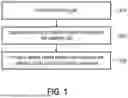
FIG. 1 is a flowchart of a polishing method according to an embodiment of the present invention.
FIG. 2 is a diagram showing the relationship between temperature and tan δ in the dynamic viscoelasticity measurement in the bending mode of the polishing pad of Sample 1 in a dry state.
FIG. 3 is a diagram showing the relationship between temperature and storage modulus in the dynamic viscoelasticity measurement in the bending mode of the polishing pad of Sample 1 in the dry state and the water-absorbed state.
FIG. 4 is a diagram showing the relationship between temperature and tan δ when the polishing pad of Sample 2 in a dry state is subjected to the dynamic viscoelasticity measurements in the bending mode and the tensile mode, respectively.
FIG. 5 is a diagram showing the relationship between temperature and tan δ when the polishing pad of Sample 2 in a water-absorbed state is subjected to the dynamic viscoelasticity measurements in the bending mode and the tensile mode, respectively.
DESCRIPTION OF THE EMBODIMENTS
In the specification, scopes represented by “a numerical value to another numerical value” are schematic representations in order to avoid listing all of the numerical values in the scopes in the specification. Therefore, the recitation of a specific numerical range covers any numerical value in the numerical range and a smaller numerical range defined by any numerical value in the numerical range, such as listing the any numerical value and the smaller numerical range thereof in the specification.
As used herein, “about” is inclusive of the stated value and means within an acceptable range of deviation for the particular value as determined by persons of ordinary skill in the art, considering the measurement in question and the error associated with measurement of the particular quantity (i.e., the limitations of the measurement system). For example, “about” may mean within one or more standard deviations, or within, for example, +30%, +20%, +15%, +10%, +5% of the stated value. Moreover, a relatively acceptable range of deviation or standard deviation may be chosen for the term “about” as used herein based on measurement properties or other properties, instead of applying one standard deviation across all the properties.
In the present embodiment, the polishing pad includes a polishing layer. That is, in the present embodiment, the polishing pad is a single-layer polishing pad. However, the present invention is not limited thereto. In other embodiments, the polishing pad may further include a base layer or an adhesive layer.
In the present embodiment, in the dynamic viscoelasticity measurement performed at a frequency of 1.6 Hz, the polishing layer does not have a loss coefficient (tan δ) peak temperature in the temperature range of 15° C. to 120° C. The so-called “tan δ peak temperature” refers to the temperature at which tan δ reaches its peak in the tan δ distribution curve. The tan δ peak refers to the fact that the value of tan δ increases below a certain temperature, and decreases when the temperature exceeds the certain temperature, and thus a tan δ peak exists. In the present embodiment, in the temperature range of 15° C. to 120° C., the tan δ distribution curve of the polishing layer is flat without a distinct peak (meaning that the tan δ value increases below a certain temperature and decreases when the temperature exceeds the certain temperature). In addition, in the present embodiment, in the dynamic viscoelasticity measurement performed at a frequency of 1.6 Hz, the tan δ change rate of the polishing layer in the temperature range of 15° C. to 120° C. is equal to or less than 20% which is calculated according to the following equation, tan δ change rate=(a maximum value of tan δ in the temperature range of 15° C. to 120° C.)−(a minimum value of tan δ in the temperature range of 15° C. to 120° C.)|/(the maximum value of tan δ in the temperature range of 15° C. to 120° C.)×100%. That is, in the present embodiment, within a specific temperature range, the polishing layer has a tan δ with a small value variation.
Since tan δ is an indicator of the balance between elasticity and viscosity exhibited by the substance being tested in measurement conditions, the fact that the polishing layer does not have a tan δ peak temperature and the tan δ change rate is equal to or less than 20% in a specific temperature range (i.e., the temperature range of 15° C. to 120° C.) indicates that the physical properties (such as thermal properties) of the polishing layer are not significantly affected by changing temperature. That is, in the present embodiment, the polishing pad can have excellent thermal stability. As a result, when the polishing pad of the present embodiment is provided to polish an object, it can maintain a stable polishing rate and thus provide excellent polishing quality and an extended useful life, and is particularly suitable for high-temperature polishing processes.
As measurement modes in dynamic viscoelasticity measurement, a tensile mode, a bending mode, a compression mode, and the like are known. In the present embodiment, the dynamic viscoelasticity measurement of the polishing layer at a frequency of 1.6 Hz and a temperature range of 15° C. to 120° C. may be performed in a tensile mode or a bending mode. That is, in the present embodiment, the physical properties of the polishing layer (i.e., the measurement results) do not change when measurements are performed in different measurement modes.
From another point of view, in the present embodiment, in the dynamic viscoelasticity measurement performed at a frequency of 1.6 Hz, the absolute value of the slope of the distribution curve of the temperature and tan δ value of the polishing layer in the temperature range of 15° C. to 120° C. is less than about 5. That is, in the present embodiment, in a specific temperature range, the polishing layer has a tan δ with a small value variation. From the perspective of improving the thermal stability of the polishing pad, the absolute value of the slope of the distribution curve of the temperature and tan δ value of the polishing layer in the temperature range of 45° C. to 100° C. is preferably close to 0. In other words, the physical properties of the polishing layer of the polishing pad are almost unaffected by changing temperature. In actual CMP applications, the temperature of the polishing layer varies between approximately 25° C. and 70° C. The physical properties of the polishing layer of the present invention are largely unaffected by temperature fluctuations within the said temperature range, ensuring that the physical properties of the polishing layer are unlikely to change during the CMP polishing process. This not only maintains a certain polishing rate but also extends the useful life of the polishing pad.
In the present embodiment, the polishing layer has a tan δ value of less than 0.1 in a temperature range of 15° C. to 120° C. Such a low tan δ value indicates that the material has a lower loss modulus and a higher storage modulus, which means that the material dissipates less energy during deformation and most of the energy is stored rather than converted into heat energy. Therefore, the material has a higher elastic recovery, and when the material is provided in a polishing process, the elasticity of the material can be recovered more quickly between consecutive polishing passes, thereby improving polishing efficiency.
In the present embodiment, in a dynamic viscoelasticity measurement performed at a frequency of 1.6 Hz, the ratio of the storage modulus of the polishing layer in the water-absorbed state to the storage modulus of the polishing layer in the dry state at any temperature in the temperature range of 30° C. to 65° C. is 0.9 to 1.0. In one embodiment, the “water-absorbed state” refers to a state in which the object to be tested (e.g., polishing layer) is immersed in deionized water at 15° C. to 40° C. for 18 to 36 hours, and the water on the surface is wiped off. In one embodiment, the “dry state” refers to a state where the object to be tested (e.g., polishing layer) is placed in a normal atmospheric environment. That is, in the present embodiment, when the state of the surface of the polishing layer contacting the object to be tested is different, the physical properties of the surface (i.e., measurement results) will not change or will change slightly.
In some embodiments, there is a need for chemical action brought about by polishing slurry supplied between the surface of the object to be polished and the polishing pad in order to do planarization in polishing process. During the aforementioned polishing process, the surface of the polishing layer that contacts the object may be considered to be in a “water-absorbed state.” In other embodiments, there isn't a need for supplying polishing slurry between the surface to be polished of the object and the polishing pad in order to do planarization in polishing process. During the aforementioned polishing process, the surface of the polishing layer contacting the object may be considered to be in a “dry state.” As such, since the physical properties of the polishing layer of the present embodiment are not easily significantly changed by changes in its surface state, it can meet the requirements of different polishing processes in the industry and provide excellent polishing quality.
In the present embodiment, from the perspective of improving the thermal stability of the polishing pad, the ratio (E′30/E′50) of the storage modulus (E′30) of the polishing layer in a dynamic viscoelasticity measurement performed at 30° C. to the storage modulus (E′50) of the polishing layer in a dynamic viscoelasticity measurement performed at 50° C. is preferably less than about 1.5, more preferably less than about 1.3.
In the present embodiment, from the perspective of improving the thermal stability of the polishing pad, the ratio (E′30/E′50) of the storage modulus (E′30) of the polishing layer in a dynamic viscoelasticity measurement performed at 30° C. to the storage modulus (E′90) of the polishing layer in a dynamic viscoelasticity measurement performed at 90° C. is preferably less than 2.5, more preferably less than about 2.0.
In addition, in the present embodiment, in the dynamic viscoelasticity measurement performed at a frequency of 1.6 Hz, the storage modulus (E′) value of the polishing layer in the temperature range of 15° C. to 120° C. is not limited, but is preferably about 100 MPa to about 720 MPa. In an embodiment of the present invention, the change rate of the ratio of the loss modulus E″ to the storage modulus E′ (i.e., the tan δ value) can be controlled to be equal to or less than 20% by adjusting the values of the loss modulus E″ and the storage modulus E′. That is, as long as the tan δ change rate is equal to or less than 20%, the values of the loss modulus E″ and the storage modulus E′ are not particularly limited.
In the present embodiment, the material of the polishing layer included in the polishing pad is not particularly limited as long as the measurement results of the dynamic viscoelasticity measurement of the polishing layer satisfy the above-mentioned conditions. In the present embodiment, the polishing layer is made of a polymer foam, wherein the polymer foam may be polyurea, polyurethane, urea/urethane copolymer or a combination thereof. However, the present invention is not limited thereto. In other embodiments, in addition to the polymer foam, the polishing layer may contain conductive materials, abrasive particles, micro-spheres, or soluble additives in the polymer foam.
In one embodiment, the polymer foam includes a reaction mixture formed by an isocyanate-terminated prepolymer and a curing agent, wherein the isocyanate-terminated prepolymer is formed by an isocyanate compound and a polyol. In one embodiment, the isocyanate compound includes an aliphatic isocyanate compound, an alicyclic isocyanate compound, or a combination thereof. For example, examples of the isocyanate compound include isophorone diisocyanate (IPDI), dicyclohexylmethane diisocyanate (H12MDI), or hexamethylene diisocyanate (HDI). It is worth mentioning that, in the present embodiment, the use of an aliphatic isocyanate compound to prepare the polishing layer helps to improve the yellowing resistance of the polishing pad, thereby making the polishing pad suitable for copper processing.
Examples of the polyol include diol compounds (such as ethylene glycol, diethylene glycol (DEG), or butanediol), triol compounds and the like; polyether polyol compounds (such as polypropylene glycol (PPG) or poly(oxytetramethylene) glycol (PTMG)); polyester polyol compounds (such as the reaction products of ethylene glycol and adipic acid or the reaction products of butanediol and adipic acid); polycarbonate polyol compounds, polycaprolactone polyol compounds, etc. In one embodiment, the curing agent may be a polyamine compound, for example, at least one selected from the group consisting of aliphatic amine compounds and aromatic amine compounds. For example, examples of the polyamine compound include polyetheramine, diethyltoluenediamine (DETDA), dimethylthiotoluenediamine (DMTDA), and the like.
In addition, in the present embodiment, the surface of the polishing layer contacting the object (i.e., the polishing surface) may include a groove pattern, and the groove pattern may have a variety of different pattern distributions, such as concentric rings, non-concentric rings, elliptical rings, wavy rings, irregular rings, multiple straight lines, parallel straight lines, radial straight lines, radial arcs, spirals, polygonal grids, or combinations thereof, but the present invention is not limited thereto.
The base layer is used to support the polishing layer in the polishing pad. The material of the base layer is, for example, polyurethane, polybutadiene, polyethylene, polypropylene, a copolymer of polyethylene and ethylene vinyl acetate, or a copolymer of polypropylene and ethylene vinyl acetate, but the present invention is not limited thereto.
The adhesive layer is disposed between the polishing layer and the base layer to bond the polishing layer and the base layer. The adhesive layer includes, but is not limited to, carrier-free adhesive, double-sided adhesive, hot melt adhesive, or moisture-hardening adhesive. The material of the adhesive layer is, for example, acrylic adhesive, silicone adhesive, rubber adhesive, epoxy resin adhesive, or polyurethane adhesive, but the present invention is not limited thereto.
FIG. 1 is a flowchart of a polishing method according to an embodiment of the present invention. This polishing method is suitable for polishing objects. In detail, this polishing method may be applied to a polishing process for manufacturing an industrial component, such as a component used in the electronics industries including semiconductor devices, integrated circuits, micro-electromechanical devices, energy conversion devices, communication devices, optical devices, disks for storage, and displays etc., and objects used for manufacturing the components may include semiconductor wafers, Group III-V wafers, carriers of storage devices, ceramic substrates, polymer substrates, and glass substrates, etc. However, the invention is not limited thereto.
Referring to FIG. 1, first, in step S10, a polishing pad is provided. Specifically, in the present embodiment, the polishing pad includes the polishing layer in any of the aforementioned embodiments. The relevant descriptions of the polishing pad have been explained in detail above, so they will not be repeated here.
Next, in step S20, a pressure is applied to an object, whereby the object is pressed onto the polishing pad and contacts the polishing pad. In detail, as mentioned above, the object is in contact with the polishing surface of the polishing layer. In addition, a method of applying pressure to the object is performed by, for example, using a carrier capable of holding the object.
Then, in step S30, relative motion is provided to the object and the polishing pad so as to use the polishing pad to perform a polishing procedure on to achieve the purpose of planarization. Specifically, a method for providing relative motion between the object and the polishing pad is performed by, for example, rotating the polishing platen to drive the polishing pad fixed on the polishing platform to rotate.
In order to verify that the polishing pad proposed in the present invention has excellent thermal stability, a dynamic viscoelasticity measurement experiment was actually conducted. In the experimental measurement, the measurement method and sample settings used are as follows.
Sample 1 and Sample 2: each of Sample 1 and Sample 2 is a single-layer polishing pad (i.e., a polishing pad that includes a polishing layer). The polishing layer is a polyurethane foam formed by the reaction of an isocyanate-terminated prepolymer formed by dicyclohexylmethane diisocyanate (H12MDI) and poly(tetramethylene glycol) (PTMG) with the curing agent diethyltoluenediamine (DETDA). Sample 1 and Sample 2 have the same material formulation but were made in different pouring batches.
[Dynamic Viscoelasticity Measurement in Bending Mode in Water-Absorbed State]
First, the polishing pads of Sample 1 and Sample 2 were kept in a constant temperature and humidity chamber at a temperature of 23° C. (±2° C.) and a relative humidity of 50% (±5%) for 40 hours. Next, the polishing pads of Sample 1 and Sample 2 were immersed in deionized water at 25° C. for 24 hours, and then the water on the surfaces of the polishing layers was wiped off. Thereafter, the dynamic viscoelasticity measurement of each of the polishing layers was performed in a bending mode in the following conditions. The dynamic viscoelasticity measuring apparatus used was a “Q800” manufactured by Waters TA.
-
- Sample size: 35 mm of length×12.5˜13.5 mm of width (width varies depending on the cutting mold)
- Test mode: 3-point bending
- Frequency: 1.6 Hz
- Temperature range: 25° C.˜150° C.
- Heating rate: 2° C./min
- Amplitude: 20±1 μm
- Initial load: 0 g
- Measurement Interval: 1 Point/° C.
[Dynamic Viscoelasticity Measurement in Bending Mode in Dry State]
First, the polishing pads of Sample 1 and Sample 2 were kept in a constant temperature and humidity chamber at a temperature of 23° C. (±2° C.) and a relative humidity of 50% (±5%) for 40 hours. Next, in normal atmospheric conditions, the dynamic viscoelasticity measurement of each of the polishing layers was performed in a bending mode in the following conditions. The dynamic viscoelasticity measuring apparatus used was a “Q800” manufactured by Waters TA.
-
- Sample size: 35 mm of length×12.5˜13.5 mm of width (width varies depending on the cutting mold)
- Test mode: 3-point bending
- Frequency: 1.6 Hz
- Temperature range: 25° C.˜150° C.
- Heating rate: 2° C./min
- Amplitude: 20±1 μm
- Initial load: 0 g
- Measurement interval: 1 point/° C.
[Dynamic Viscoelasticity Measurement in Tensile Mode in Water-Absorbed State]
First, the polishing pads of Sample 1 and Sample 2 were kept in a constant temperature and humidity chamber at a temperature of 23° C. (±2° C.) and a relative humidity of 50% (+5%) for 40 hours. Next, the polishing pads of Sample 1 and Sample 2 were immersed in deionized water at 25° C. for 24 hours, and then the water on the surfaces of the polishing layers was wiped off. Thereafter, each of the polishing layers was subjected to the dynamic viscoelasticity measurement in a tensile mode in the following conditions. The dynamic viscoelasticity measuring apparatus used was a “Q800” manufactured by Waters TA.
-
- Sample size: 8.0˜8.2 mm of length×5.45˜5.70 mm of width (varies depending on the cutting mold)
- Frequency: 1.6 Hz
- Temperature range: 25° C.˜150° C.
- Heating rate: 2° C./min
- Amplitude: 20±1 μm
- Tensile load: 0.01 N
- Dynamic strain: 125%
- Measurement interval: 1 point/° C.
[Dynamic Viscoelasticity Measurement in Tensile Mode in Dry State]
First, the polishing pads of Sample 1 and Sample 2 were kept in a constant temperature and humidity chamber at a temperature of 23° C. (±2° C.) and a relative humidity of 50% (±5%) for 40 hours. Next, in normal atmospheric conditions, the dynamic viscoelasticity measurement of each of the polishing layers was performed in a tensile mode in the following conditions. The dynamic viscoelasticity measuring apparatus used was a “Q800” manufactured by Waters TA.
-
- Sample size: 8.0˜8.2 mm of length×5.45˜5.70 mm of width (varies depending on the cutting mold)
- Frequency: 1.6 Hz
- Temperature range: 25° C.˜150° C.
- Heating rate: 2° C./min
- Amplitude: 20±1 μm
- Tensile load: 0.01 N
- Dynamic strain: 125%
- Measurement interval: 1 point/° C.
The results obtained from the above dynamic viscoelasticity measurement experiments are shown in FIG. 2 to FIG. 5, FIG. 2 is a diagram showing the relationship between temperature and tan δ in the dynamic viscoelasticity measurement of the polishing pad of Sample 1 in a bending mode in a dry state; FIG. 3 is a diagram showing the relationship between temperature and storage modulus in the dynamic viscoelasticity measurement of the polishing pad of Sample 1 in a bending mode in the dry state and the water-absorbed state; FIG. 4 is a diagram showing the relationship between temperature and tan δ when the polishing pad of Sample 2 in a dry state is subjected to the dynamic viscoelasticity measurements in the bending mode and the tensile mode, respectively;
FIG. 5 is a diagram showing the relationship between temperature and tan δ when the polishing pad of Sample 2 in a water-absorbed state is subjected to the dynamic viscoelasticity measurements in the bending mode and the tensile mode, respectively.
As shown in FIG. 2, it is clearly that the tan δ distribution curve of the polishing pad of Sample 1 is very flat in the temperature range of 15° C. to 120° C., with the absolute value of the slope less than approximately 5. Furthermore, the absolute value of the slope of the tan δ distribution curve of the polishing pad of Sample 1 approaches 0 in the temperature range of 45° C. to 100° C. Furthermore, the tan δ distribution curve shown in FIG. 2 does not exhibit a distinct peak (meaning that the tan δ value increases below a certain temperature but decreases over that temperature). This indicates that the polishing pad of Sample 1 does not exhibit a loss coefficient (tan δ) peak temperature in the temperature range of 15° C. to 120° C. In addition, as shown in FIG. 2, the tan δ value in the temperature range of 15° C. to 120° C. is less than 0.1, falling between 0.06 and 0.08. In addition, as shown in FIG. 2, the tan δ change rate in the temperature range of 15° C. to 120° C. is equal to or less than 20% which is obtained from the following equation of, tan δ change rate=(a maximum value of tan δ in the temperature range of 15° C. to 120° C.)−(a minimum value of tan δ in the temperature range of 15° C. to 120° C.)|/(the maximum value of tan δ in the temperature range of 15° C. to 120° C.)×100%.
The results in FIG. 2 demonstrate that the polishing pad of the present embodiment has excellent thermal stability in the temperature range of 15° C. to 120° C. By providing the polishing pad of the present embodiment to polish an object, it can maintain a stable polishing rate, thereby providing excellent polishing quality and an extended useful life, making it particularly suitable for high-temperature polishing processes.
As shown in FIG. 3, it is clearly that the ratio of the storage modulus of the polishing pad in the water-absorbed state to the storage modulus of the polishing layer in the dry state at any temperature in the temperature range of 30° C. to 65° C. is 0.9 to 1.0. This indicates that the storage modulus of the polishing pad exhibits minimal variability in different usage conditions (water-absorbed state and dry state), demonstrating excellent thermal stability. This characteristic is particularly important for the CMP polishing process, where the surface of the polishing pad is wetted by the polishing slurry. In view of this, since the storage modulus of the polishing pad of the present embodiment does not significantly change when the surface of the polishing pad is wetted, the polishing pad maintains stable physical properties during the polishing process, enabling it to meet the requirements of various polishing processes and maintain a stable polishing rate, thereby providing excellent polishing quality and an extended useful life.
As shown in FIG. 4 and FIG. 5, whether in a dry state or in a water-absorbed state, and measured in a bending mode or a tensile mode, the polishing pad of Sample 2 does not have a tan δ peak temperature in the measured temperature range. Moreover, the trends of the tan δ distribution curves in different states are very similar. This shows that even in different usage conditions, the physical properties of the polishing layer of the polishing pad of the present invention does not be greatly changed by changing temperature. That is to say, the polishing pad of the present invention can have excellent thermal stability in different usage conditions.
Furthermore, although Sample 1 and Sample 2 were produced in different casting batches, the results of FIG. 2 to FIG. 5 demonstrate that the polishing layer of the polishing pad of the present invention exhibits consistent physical properties even in different production batches, indicating that the physical properties are reproducible.
Although the present invention has been disclosed above in terms of embodiments, this is not intended to limit the present invention. Anyone with ordinary knowledge in the art may make slight changes and modifications without departing from the spirit and scope of the present invention. Therefore, the scope of protection of the present invention shall be determined by the scope of the appended patent applications.
Claims
What is claimed is:1. A polishing pad comprising a polishing layer, wherein:
in a dynamic viscoelasticity measurement performed at a frequency of 1.6 Hz, the polishing layer does not have a loss coefficient (tan δ) peak temperature in a temperature range of 15° C. to 120° C., and
a tan δ change rate in the temperature range of 15° C. to 120° C. is equal to or less than 20% which is obtained from an equation of:
tan δ change rate=|(a maximum value of tan δ in the temperature range of 15° C. to 120° C.)−(a minimum value of tan δ in the temperature range of 15° C. to 120° C.)|/(the maximum value of tan δ in the temperature range of 15° C. to 120° C.)×100%.
2. The polishing pad according to claim 1, wherein the dynamic viscoelasticity measurement performed at the frequency of 1.6 Hz is a dynamic viscoelasticity measurement in a bending mode.
3. The polishing pad according to claim 1, wherein the dynamic viscoelasticity measurement performed at the frequency of 1.6 Hz is a dynamic viscoelasticity measurement in a tensile mode.
4. The polishing pad according to claim 1, wherein the tan δ value of the polishing layer in the temperature range of 15° C. to 120° C. is less than 0.1.
5. The polishing pad according to claim 1, wherein a ratio (E′30/E′50) of a storage modulus (E′30) of the polishing layer in a dynamic viscoelasticity measurement performed at 30° C. to a storage modulus (E′50) of the polishing layer in a dynamic viscoelasticity measurement performed at 50° C. is less than 1.5.
6. The polishing pad according to claim 1, wherein a ratio (E′30/E′90) of a storage modulus (E′30) of the polishing layer in a dynamic viscoelasticity measurement performed at 30° C. to a storage modulus (E′90) of the polishing layer in a dynamic viscoelasticity measurement performed at 90° C. is less than 2.5.
7. The polishing pad according to claim 1, wherein in the dynamic viscoelasticity measurement performed at the frequency of 1.6 Hz, a storage modulus (E′) of the polishing layer in the temperature range of 15° C. to 120° C. is 100 MPa to 720 MPa.
8. The polishing pad according to claim 1, wherein in the dynamic viscoelasticity measurement performed at the frequency of 1.6 Hz, an absolute value of a slope of a distribution curve of a temperature and the tan δ value of the polishing layer in the temperature range of 15° C. to 120° C. is less than 5.
9. A polishing pad comprising a polishing layer, wherein:
in a dynamic viscoelasticity measurement performed at a frequency of 1.6 Hz, the polishing layer does not have a tan δ peak temperature in a temperature range of 15° C. to 120° C., and
in the dynamic viscoelasticity measurement performed at the frequency of 1.6 Hz, a ratio of a storage modulus of the polishing layer in a water-absorbed state to a storage modulus of the polishing layer in a dry state at any temperature in a temperature range of 30° C. to 65° C. is 0.9 to 1.0.
10. The polishing pad according to claim 9, wherein the polishing layer has a tan δ value of less than 0.1 in the temperature range of 15° C. to 120° C.
11. The polishing pad according to claim 9, wherein a ratio (E′30/E′50) of a storage modulus (E′30) of the polishing layer in a dynamic viscoelasticity measurement performed at 30° C. to a storage modulus (E′50) of the polishing layer in a dynamic viscoelasticity measurement performed at 50° C. is less than 1.5.
12. The polishing pad according to claim 9, wherein a ratio (E′30/E′90) of a storage modulus (E′30) of the polishing layer in a dynamic viscoelasticity measurement performed at 30° C. to a storage modulus (E′90) of the polishing layer in a dynamic viscoelasticity measurement performed at 90° C. is less than 2.5.
13. The polishing pad according to claim 9, wherein in the dynamic viscoelasticity measurement performed at the frequency of 1.6 Hz, a storage modulus (E′) of the polishing layer in the temperature range of 15° C. to 120° C. is 100 MPa to 720 MPa.
14. The polishing pad according to claim 9, wherein in the dynamic viscoelasticity measurement performed at the frequency of 1.6 Hz, an absolute value of a slope of a distribution curve of a temperature and a tan δ value of the polishing layer in the temperature range of 15° C. to 120° C. is less than 5.
15. A polishing method, comprising:
providing a polishing pad, wherein the polishing pad is the polishing pad of claim 1;
applying a pressure to an object to press the object onto the polishing pad; and
providing a relative motion between the object and the polishing pad to perform a polishing procedure.
16. A polishing method, comprising:
providing a polishing pad, wherein the polishing pad is the polishing pad of claim 9;
applying a pressure to an object to press the object onto the polishing pad; and
providing a relative motion between the object and the polishing pad to perform a polishing procedure.
Images & Drawings included:



Sources:
- United States Patent and Trademark Office - verify current appl. status at the USPTO↗
Similar patent applications:
- » 20080186511
Polishing pad surface shape measuring instrument, method of using polishing pad surface shape measuring instrument, method of measuring apex angle of cone of polishing pad, method of measuring depth of groove of polishing pad, CMP polisher, and method of manufacturing semiconductor device - » 20060260745
Polishing pad surface shape measuring instrument, method of using polishing pad surface shape measuring instrument, method of measuring apex angle of cone of polishing pad, method of measuring depth of groove of polishing pad, CMP polisher, and method of manufacturing semiconductor device - » 20210094144
Polishing pad, method for manufacturing polishing pad, and polishing method applying polishing pad - » 20210094143
POLISHING PAD, METHOD FOR MANUFACTURING POLISHING PAD, AND POLISHING METHOD APPLYING POLISHING PAD - » 20250144765
POLISHING PAD, METHOD FOR PRODUCING POLISHING PAD, AND METHOD FOR POLISHING SURFACE OF OPTICAL MATERIAL OR SEMICONDUCTOR MATERIAL - » 20250196285
Polishing Pad, Method for Producing Polishing Pad, and Method for Polishing Surface of Optical Material or Semiconductor Material - » 20070032175
Polishing pad, method for processing polishing pad, and method for producing substrate using it - » 20170151648
Polishing pad, method for manufacturing polishing pad, and polishing method - » 20190099856
Polishing pad, method for manufacturing polishing pad, and polishing method - » 20220226962
Polishing pad, method for manufacturing polishing pad, and polishing method
Recent applications in this class:
- » 20260175353 2026-06-25
POLISHING PAD, POLISHING METHOD, AND METHOD OF MANUFACTURING POLISHING PAD - » 20260175351 2026-06-25
IMPREGNATION LIQUID, METHOD OF TREATMENT WITH SUCH AN IMPREGNATION LIQUID, AND TREATED PART OBTAINED - » 20260158612 2026-06-11
CHEMICAL MECHANICAL POLISHING (CMP) SYSTEM WITH HIGH UNIFORMITY - » 20260138231 2026-05-21
CMP POLISHING PAD WITH PHASE CHANGING MATERIALS - » 20260124712 2026-05-07
CHEMICAL MECHANICAL POLISHING PADS, METHODS OF MANUFACTURING CHEMICAL MECHANICAL POLISHING PADS, AND METHODS OF MANUFACTURING A SEMICONDUCTOR DEVICE - » 20260091463 2026-04-02
PAD FOR CHEMICAL MECHANICAL POLISHING - » 20260091462 2026-04-02
PAD FOR CHEMICAL MECHANICAL POLISHING - » 20260070183 2026-03-12
THERMALLY CONDUCTIVE CHEMICAL MECHANICAL POLISHING (CMP) PAD - » 20260061548 2026-03-05
PAD SURFACE REGENERATION AND METAL RECOVERY - » 20260061547 2026-03-05
RECYCLED POLISHING PAD AND PREPARATION METHOD THEREOF
Recent applications for this Assignee:
- » 20240383094 2024-11-21
POLISHING PAD AND MANUFACTURING METHOD OF POLISHING PAD AND POLISHING METHOD - » 20230064962 2023-03-02
Polishing pad and polishing method - » 20220314391 2022-10-06
POLISHING PAD AND POLISHING METHOD - » 20220023998 2022-01-27
POLISHING PAD AND POLISHING METHOD - » 20200306923 2020-10-01
Polishing pad, manufacturing method of polishing pad and polishing method - » 20200047307 2020-02-13
Polishing layer and polishing method - » 20190321936 2019-10-24
Polishing pad, manufacturing method of polishing pad and polishing method - » 20190099860 2019-04-04
Polishing pad and polishing method - » 20190061096 2019-02-28
Polishing pad and manufacturing method of polishing pad and polishing method - » 20180281154 2018-10-04
POLISHING PAD AND POLISHING METHOD