GRINDING TOOL
US20260175366A1
2026-06-25
19/364,366
2025-10-21
Smart Summary: A grinding tool features a long body with a grinding head at one end that has a rough surface for grinding. Inside the tool, there is a channel that runs from the other end to the grinding head, allowing fluid to flow through. This fluid helps cool the grinding head while it works. The grinding head has grooves that connect to the channel, which are sealed with an abrasive coating. Additionally, there is a method for creating this type of grinding tool. 🚀 TL;DR
Abstract:
A grinding tool (1) including an elongated tool body (2) including a first end (20) including a grinding head (3) with an abrasive plating (4), and a second end (21), an axial channel (5) running through the tool body (2) from the second end (21), over a given length of the body, and at least one coolant feed tube arranged with the axial channel (5) to allow the grinding head (3) to eject a fluid introduced into the axial channel (5) at the second end (21), the grinding head (3) having a terminal outer surface (30) bounded by a peripheral outer surface (31), the terminal outer surface (30) having at least one groove (6a to 6f) running radially from the axial channel (5) to the peripheral outer surface (31), the groove being closed off along its length by the abrasive plating (4) to form the at least one coolant feed tube. The invention also relates to a method for making a galvanised grinding tool.
Assignee:
- COMADUR S.A. 86 🇨🇭 Le Locle, Switzerland
Applicant:
Interested in similar patents?
Get notified when new applications in this technology area are published.
Classification:
B24D7/10 » CPC main
Bonded abrasive wheels, or wheels with inserted abrasive blocks, designed for acting otherwise than only by their periphery, e.g. by the front face; Bushings or mountings therefor with cooling provisions
B24B57/02 » CPC further
Devices for feeding, applying, grading or recovering grinding, polishing or lapping agents for feeding of fluid, sprayed, pulverised, or liquefied grinding, polishing or lapping agents
B24D7/02 » CPC further
Bonded abrasive wheels, or wheels with inserted abrasive blocks, designed for acting otherwise than only by their periphery, e.g. by the front face; Bushings or mountings therefor Wheels in one piece
B24D18/00 » CPC further
Manufacture of grinding tools or other grinding devices , e.g. wheels, not otherwise provided for
Description
CROSS REFERENCE TO RELATED APPLICATION
This application claims priority to European Patent Application No. 24222394.9 filed December 20, 2024, the entire contents of which are incorporated herein by reference.
TECHNICAL FIELD OF THE INVENTION
The present invention relates to a grinding tool, and more specifically to a grinding tool comprising an elongated tool body comprising a first end, referred to as the grinding end, comprising a grinding head with a circular cross-section, comprising an outer surface covered with an abrasive plating, and a second end opposite the first end.
The grinding tool according to the invention is designed in particular, but not exclusively, for making grooves, recesses or slots in workpieces, for precision grinding and for grinding hard materials such as ceramics, hardened steels, etc., or zones that are difficult to access.
Technological background
Grinding tools used to make grooves, recesses or slots in workpieces made of hard materials, for precision grinding and for grinding particularly hard materials or zones that are difficult to access, are commonly T-shaped diamond-coated grinding tools.
Diamond-coated grinding tools comprise an abrasive part conventionally manufactured by mixing diamond particles with a binder and bonding this mixture of diamond particles and binder to the relevant surface of the grinding tool by gluing, brazing or soldering to form a diamond-coated ring. The problem with grinding tools manufactured in this way is the risk of the diamond-coated ring parting from the tool body if the grinding tool overheats when in use. Indeed, diamond-coated grinding tools are sometimes used in zones with limited access, such that adequate lubrication of the tool and of the zone being ground cannot be ensured.
There is also another commonly used technique for manufacturing diamond-coated grinding tools: electrolytic deposition of abrasive particles. This technique consists in depositing diamond particles on the surface of the tool, which is immersed in an electrolytic bath, generally of nickel. Following the application of an electric current, nickel is deposited around the diamond particles and on the surface of the tool, thereby securing the diamond particles encapsulated in a die to the surface of the tool. While this method improves the bonding of the diamond particles to the tool and minimises the problem of the diamond ring parting encountered with the aforementioned diamond-coated grinding tool, this does not help to solve the problem of the grinding tool overheating during use, which has an impact on the service life of the tool and on the condition of the surface of the machined workpiece.
The invention aims to remedy the aforementioned problems associated with grinding tools by providing a grinding tool that prevents, or at least limits, the risk of the tool overheating when in use, regardless of the accessibility of the zone in which the grinding tool is operating, while offering a longer service life for the grinding tool.
The invention also aims to provide a grinding tool that is capable of precise, high-quality grinding while preserving both the surface condition of the machined workpiece and the grinding tool itself.
SUMMARY OF THE INVENTION
To this end, and according to a first aspect, the invention relates to a grinding tool comprising an elongated tool body comprising a first end, referred to as the grinding end, and a second end opposite the first end, the grinding end comprising a grinding head, for example with a circular cross-section, comprising an outer surface covered with an abrasive plating.
A remarkable feature of the grinding tool is that it comprises an arrangement of channels comprising an axial channel running through the tool body from the second end, over a given length of said body, and at least one coolant feed tube arranged with the axial channel to allow the ejection by the grinding head of a cooling and/or lubricating fluid introduced into the axial channel at the second end, the grinding head having a terminal outer surface bounded by a peripheral outer surface, said terminal outer surface having at least one groove extending radially from the axial channel to the peripheral outer surface, said groove being closed off along its length by the abrasive plating to form said at least one coolant feed tube.
This configuration of the channels ensures lubrication of the interface between the tool and the machined workpiece, thereby reducing the risk of the grinding head overheating. This not only improves the service life of the grinding tool, but also improves the grinding conditions by limiting the risk of deteriorating the surface condition of the machined workpiece. The formation of radial channels in the vicinity of the terminal outer surface also makes it possible to equip any grinding head, irrespective of its dimensions, with coolant feed tubes, in particular grinding heads in the form of disc-shaped plates. Moreover, the radial direction of the channels allows for targeted irrigation of the grinding head, thereby providing greater control over the grinding operation.
Another advantage of the channel configuration is that it enables a robust and rigid tool design, providing significant resistance to mechanical stresses.
Advantageously, the grinding head comprises a plurality of radial grooves evenly distributed on the outer terminal surface. Such an arrangement of grooves has the advantage of providing coolant feed tubes that ensure uniform irrigation at the exit of the peripheral surface of the grinding wheel head.
Advantageously, the grinding head comprises a central orifice communicating with the axial channel, said central orifice being closed off by an element forming a bush.
Advantageously, the abrasive plating comprises diamond particles.
Advantageously, the grinding head is in the form of a disc-shaped plate.
Advantageously, the tool body and the grinding head are made in one piece.
Advantageously, the grinding tool is T-shaped. The advantage of such a profile is that it allows for precise grinding operations. Moreover, this type of profile enables work to be carried out on workpiece zones with limited access. Due to the presence of coolant feed tubes made possible by their arrangement at the level of the terminal end surface of the grinding head, grinding control is improved and the grinding tool is less prone to overheating.
Advantageously, the grinding tool is a galvanised tool. The creation of a grinding tool, and more specifically the application of the abrasive plating to the grinding head by galvanisation, makes it possible to rapidly produce a sharp, highly resistant grinding tool.
The invention also relates to a method for manufacturing a grinding tool as described above, the method comprising the following steps:
a step in which a rough metal blank is machined to form the tool body and the grinding head to the desired shape and dimensions,
machining at least one radial groove on the outer terminal surface of the grinding head by wire electrical discharge machining, the radial groove being made such that it runs from the axial channel made when machining the blank to the peripheral outer surface of the grinding head,
forming the abrasive plating on the grinding head by immersion in a galvanic bath,
forming said at least one coolant feed tube by sealing said at least one groove by covering the outer terminal surface with the abrasive plating formed during the galvanic bath immersion operation.
BRIEF DESCRIPTION OF THE FIGURES
Other features and advantages of the invention will be apparent from the following detailed description of the invention, provided by way of example and made with reference to the attached figures, in which:
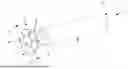
FIG. 1 shows a perspective view of a grinding tool according to an exemplary embodiment of the invention.
FIG. 2 shows a perspective view of the grinding tool in FIG. 1 before the galvanising operation.
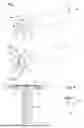
FIG. 3 shows a cross-sectional view of the galvanised grinding tool along axis III-III.
FIG. 4 shows a schematic partial lateral view of the grinding head on the grinding tool in FIG. 3.
DETAILED DESCRIPTION OF THE INVENTION
FIG. 1 shows a perspective view of a grinding tool 1 according to an exemplary embodiment of the invention.
In the illustrated exemplary embodiment, the grinding tool 1 has an overall "T" shape. The grinding tool 1 comprises an elongated, substantially cylindrical tool body 2. This tool body 2 comprises a first end 20, referred to as the grinding end 20, and a second end 21 opposite the first end 20. The grinding end 20 comprises a grinding head 3 with a circular cross-section, comprising an outer surface covered with an abrasive plating 4. More specifically, the grinding head 3 has an outer terminal surface 30 that is preferably flat, bounded by an outer peripheral surface 31, each of the outer surfaces being plated with abrasive particles. The abrasive plating 4 advantageously comprises abrasive diamond particles. According to a variant embodiment, an abrasive plating comprising cubic boron nitride particles or a mixture of diamond particles and cubic boron nitride particles can be foreseen. It goes without saying that the abrasive particles are harder than the workpiece to be machined.
In the illustrated example, the grinding head 3 is in the form of a disc-shaped plate. The illustrated grinding head 3 enables the machining of materials, particularly the creation of grooves, notches, recesses, or slots in workpieces. This is, of course, an exemplary embodiment; the grinding head 3 can have different dimensions and shapes adapted to the intended use of the grinding tool. Preferably, the grinding head 3 is made in one piece with the tool body 2. The grinding head 3 and the tool body 2 thus form a single part.
The grinding tool 1 comprises an arrangement of channels 5, 6 allowing for the ejection of a cooling and/or lubricating fluid at the exit of the grinding head 3. The primary purpose of fluid ejection is to limit the risk of the grinding head 3 overheating during the grinding operation on a workpiece. This channel arrangement is also used as a secondary method for clearing away chips or other material during the grinding operation on a workpiece.
More specifically, the channel arrangement 5, 6 comprises an axial channel 5 running through the tool body 2 from the second end 21 over a given length of said body.
In the example described, the axial channel 5 runs axially through the tool body 2 from the second end 21 to the grinding end 20, the axial channel 5 opening out at each end of the tool body 2, as shown in FIGS. 2 and 4. The axial channel opening 5 formed at the second end 21 of the tool body 2 consists of an entry opening 51 through which the cooling and/or lubricating fluid is injected.
The channel arrangement 5, 6 further comprises a plurality of coolant feed tubes 6 arranged at the level of the grinding head 3. These coolant feed tubes 6 are arranged with the axial channel 5 so as to allow the fluid, which is introduced into the axial channel 5, to be ejected onto the peripheral outer surface 31.
According to the invention, the coolant feed tubes 6 consist of grooves 6a to 6f formed in the outer terminal surface 30 of the grinding head 3, of which the respective longitudinal openings opening onto the outer terminal surface 30 are closed off by the abrasive plating 4.
More specifically, each groove 6a to 6f extends radially from the axial channel 5 to open onto the peripheral outer surface 31 of the grinding head 3. In the illustrated example, the six grooves 6a to 6f are advantageously evenly distributed on the outer terminal surface 30. This is, of course, one example of a configuration, as the external terminal surface 30 can be provided with a different number of evenly or unevenly spaced feed grooves. The grooves 6a to 6f are closed off along their entire length by the abrasive plating 4 covering the terminal surface 30. When closed off in this manner, the grooves 6a to 6f, together with the part of the abrasive plating closing off the longitudinal opening of the corresponding groove at the level of the outer terminal surface, form radial channels opening onto the outer peripheral surface, with the channels forming the coolant feed tubes 6.
As illustrated in FIG. 2, the grinding head 3 comprises a central orifice 32 communicating with the axial channel 5. In the illustrated example, the central orifice 32 is closed by an element forming a bush 7.
In the illustrated example, grinding tool 1 is T-shaped. This is, of course, an exemplary embodiment; any other shape can be used without departing from the scope of the invention.
The grinding tool 1 is made as follows. First, the grinding head 3 and the tool body 2 are produced by machining a blank, preferably made of metal. This can primarily be a workpiece made of heavy metal, hard metal or high-speed steel. Machining is carried out according to the desired open shape and dimensions of the grinding tool 1. In this case, in the example described, the workpiece is given a T-shaped outer shape, with one part forming the substantially cylindrical tool body 2 and the other part forming the grinding head 3. A coaxial conduit running through the workpiece is also made. This conduit constitutes the axial channel 5 of the grinding tool 1.
The outer terminal surface 30 of the grinding head 3 is then machined so as to form the radial grooves 6a to 6f. The grooves 6a to 6f run from the axial channel 5 made when machining the blank to the outer peripheral surface 31 of the grinding head 3. The radial grooves 6a to 6f are made by wire electrical discharge machining. Alternatively, the grooves 6a to 6f can be made by any suitable method, for example by laser.
The abrasive particles are then bonded to the grinding head 3 by dipping it in a galvanic bath. In this dipping process, the abrasive particles bond to the grinding head 3, covering at least the outer terminal and peripheral surfaces 30, 31, while at the same time closing off the "surface" grooves 6a to 6f . “Surface” refers to the fact that the material has not entered the grooves 6a to 6f themselves so as to fill them. FIG. 4 illustrates the “surface” close-off of a groove (groove 6d) by the abrasive plating 4. As illustrated, the groove was closed off by a deposit of abrasive particles, the spread of which was limited to the passage due to the narrow opening created when the wire was run through to make the groove. In other words, a bush made up of particles was formed where the wire ran during the galvanic growth. The invention advantageously makes use of the point effect phenomenon, which allows an accumulation of abrasive particles at the sharp angles of the grinding head 3 or at angles with a small radius of curvature.
The grinding tool 1 is then extracted from the galvanic bath. After rinsing and cooling, and if necessary, the outer peripheral surface 31 of the grinding head 3 is machined to remove any deposits of abrasive particles formed in the grooves 6a to 6f during the galvanic immersion process, and which could clog these grooves.
A temporary mask or bush could also be fitted in the end opening of each groove 6a to 6f to prevent the ends from becoming clogged with abrasive particles. Such bushes are then removed after the grinding tool 1 has been extracted from the galvanic bath.
The above description of the invention is provided by way of example. It is understood that the person skilled in the art is capable of arriving at different variants of the invention without departing from the scope of the invention.
Terminology
1 grinding tool
2 tool body
3 grinding head 3
4 abrasive plating
5 axial channel
6 water feed tube
7 bush-forming element
6a to 6f groove
20 first end / grinding end
21 second end
30 terminal outer surface
31 peripheral outer surface
32 central orifice
51 entry opening
Claims
1. A grinding tool (1) comprising an elongated tool body (2) comprising a first end (20), referred to as the grinding end (20), and a second end (21), opposite the first end (20), the grinding end (20) comprising a grinding head (3) with a circular cross-section, comprising an outer surface covered with an abrasive plating (4), characterised in that it comprises an arrangement of channels (5, 6) comprising an axial channel (5) running through the tool body (2) from the second end (21), over a given length of said body, and at least one coolant feed tube (6) arranged with the axial channel (5) to allow the ejection by the grinding head (3) of a cooling and/or lubricating fluid introduced into the axial channel (5) at the second end (21), the grinding head (3) having a terminal outer surface (30) bounded by a peripheral outer surface (31), said terminal outer surface (30) having at least one groove (6a to 6f) extending radially from the axial channel (5) to the peripheral outer surface (31), said groove being closed along its length by the abrasive plating (4) to form said at least one coolant feed tube (6).
2. The grinding tool (1) according to claim 1, wherein the grinding head (3) comprises a plurality of radial grooves (6a to 6f) evenly distributed on the terminal outer surface (30).
3. The grinding tool (1) according to claim 1, wherein the grinding head (3) comprises a central orifice (32) communicating with the axial channel (5), said central orifice being closed by an element forming a bush (7).
4. The grinding tool (1) according to claim 1, wherein the abrasive plating (4) comprises diamond particles.
5. The grinding tool (1) according to claim 1, wherein the grinding head (3) is in the form of a disc-shaped plate.
6. The grinding tool (1) according to claim 1, wherein the tool body (2) and the grinding head (3) are made in one piece.
7. The grinding tool (1) according to claim 1, wherein the grinding tool is T-shaped.
8. The grinding tool (1) according to claim 1, wherein the grinding tool (1) is a galvanised tool.
9. A method for manufacturing a grinding tool (1) according to claim 8, comprising the following steps:
machining a rough metal blank to form the tool body (2) and the grinding head (3) to the desired shape and dimensions,
machining at least one radial groove (6a to 6f) on the outer terminal surface (30) of the grinding head (3) by wire electrical discharge machining, the radial groove being made such that it runs from the axial channel (5) made when machining the blank to the peripheral outer surface (31) of the grinding head (3),
forming the abrasive plating (4) on the grinding head (3) by immersion in a galvanic bath,
forming said at least one coolant feed tube (6) by sealing said at least one groove (6a to 6f) by covering the outer terminal surface (30) with the abrasive plating formed during the galvanic bath immersion operation.
Images & Drawings included:
Sources:
- United States Patent and Trademark Office - verify current appl. status at the USPTO↗
Similar patent applications:
- » 20080248733
Holding Fixture For a Grinding Tool, Grinding Tool and Supporting Body For a Grinding Tool - » 20230211465
Abrasive for the production of a grinding tool, grinding tool and method for operating a grinding tool of this type - » 20080176498
GRINDING TOOLS AND APPARATUS FOR SECURING GRINDING TOOLS TO GRINDING MACHINES - » 20200061777
Method for producing a grinding tool and grinding tool - » 20150093975
FLOW-BYPASSING STRUCTURE OF GRINDING TOOL AND GRINDING TOOL HAVING THE SAME - » 20150093974
FLOW-BYPASSING STRUCTURE OF GRINDING TOOL AND GRINDING TOOL HAVING THE SAME - » 20220297265
Grinding Tool Device, Grinding Means, and Grinding Tool System - » 20240017379
Method for the production of a grinding tool, and grinding tool - » 20080152422
SHAFT-HUB CONNECTION AND USE OF A SHAFT-HUB CONNECTION FOR FASTENING A GRINDING TOOL ON A GRINDING TOOL DRIVESHAFT - » 20210370471
Grinding Tool and Method for Producing a Grinding Tool
Recent applications in this class:
- » 20230166383 2023-06-01
High-rotational speed cup-shaped grinding wheel - » 20230096964 2023-03-30
GRINDING APPARATUS - » 20150328746 2015-11-19
PROCESSING DISK FOR PROCESSING A SUBSTRATE - » 20120071072 2012-03-22
Device for abrasive machining - » 20110039485 2011-02-17
Apertured Abrasive Disk Assembly With Improved Flow Dynamics - » 20080051013 2008-02-28
METHODS AND APPARATUS FOR MACHINING A COUPLING - » 20070275636 2007-11-29
Coolant delivery system for grinding tools - » 20070259610 2007-11-08
Ring system for guiding a medium in an abrasive disk - » 20070184764 2007-08-09
Method of processing antifriction bearing unit for wheel - » 20070049182 2007-03-01
Methods and apparatus for machining a coupling
Recent applications for this Assignee:
- » 20260177981 2026-06-25
CERAMISED COMPONENT WITH DECORATION AND ITS MANUFACTURING METHOD - » 20260159450 2026-06-11
MULTICOLOURED CERAMIC COMPONENT AND ITS MANUFACTURING METHOD - » 20260110987 2026-04-23
EXTERNAL PART COMPONENT OF A WATCH OR OF A FASHION OR JEWELLERY ITEM AND METHOD FOR MANUFACTURING SUCH AN EXTERNAL PART COMPONENT - » 20250390064 2025-12-25
CERAMIC HOROLOGY OR JEWELLERY COMPONENT - » 20250377635 2025-12-11
PART WITH 3D DECORATION AND ITS MANUFACTURING METHOD - » 20250366575 2025-12-04
BRACELET FOR A WATCH OR FOR AN ITEM OF JEWELLERY, FORMED BY AN ASSEMBLY OF LINKS - » 20250328110 2025-10-23
ITEM WITH A PLIQUE-À-JOUR ENAMEL DECORATION AND METHOD FOR MANUFACTURING SAME - » 20250326248 2025-10-23
ITEM WITH A BACKLIT PLIQUE-À-JOUR ENAMEL DECORATION AND METHOD FOR MANUFACTURING SAME - » 20250326051 2025-10-23
ENAMEL ENGRAVING AND TEXTURING METHOD - » 20250155848 2025-05-15
WATERTIGHT WATCH CASE