SEALING DEVICE FOR A BEVERAGE CONTAINER
US20260176038A1
2026-06-25
19/322,834
2025-09-09
Smart Summary: A sealing device is designed to keep liquids inside a cup. It has a sealing part that covers the cup's opening and is made from a specific material. To make it stronger, a ring is attached around the edge of the sealing part, made from a different material. This ring fits snugly between the cup's rim and its lid. When pressed into place, the sealing device effectively prevents any spills or leaks. 🚀 TL;DR
Abstract:
A sealing device is provided for sealing a fluid in a cup. The sealing device can include a sealing element sized to substantially cover an opening of the cup. The sealing element can be formed from a first material and have an outer diameter. The sealing device can also include a ring element fixed to the sealing element to provide rigidity to an outer perimeter of the sealing element. The ring element can be formed from a second material, which may be different from the first material. The ring element can have an inner diameter that is less than or equal to the outer diameter of the sealing element. The sealing device can be press fitted between a rim of the cup and a lid of the cup to seal the fluid in the cup.
Inventors:
- Natarajan Venkatakrishnan 8 🇺🇸 Seattle, WA, United States
- Michelle Cozo Pollard 1 🇺🇸 Seattle, WA, United States
Assignee:
- STARBUCKS CORPORATION 126 🇺🇸 Seattle, WA, United States
Applicant:
Interested in similar patents?
Get notified when new applications in this technology area are published.
Classification:
B65D53/04 » CPC main
Sealing or packing elements ; Sealings formed by liquid or plastics material Discs
B65D2203/00 » CPC further
Decoration means, markings, information elements, contents indicators
B65D2205/02 » CPC further
Venting means Venting holes
Description
CROSS-REFERENCE TO RELATED APPLICATION
This claims priority under 35 U.S.C. § 119 (e) to U.S. Provisional Patent Application No. 63/736,680, filed Dec. 20, 2024 and titled “SEALING DEVICE FOR A BEVERAGE CONTAINER,” the entirety of which is hereby incorporated by reference herein.
TECHNICAL FIELD
The present disclosure relates generally to beverage containers. More specifically, but not by way of limitation, this disclosure relates to devices and methods for sealing beverages within cups or other containers.
BACKGROUND
In the beverage industry, particularly in the context of takeaway drinks such as coffee, tea, and other hot or cold beverages, maintaining the integrity of the cup's seal is crucial. Spillage and leaks from inadequately sealed cups can lead to safety hazards such as burns, damage to clothing and personal items, and customer dissatisfaction.
SUMMARY
One example of the present disclosure includes a sealing device for sealing a fluid in a cup. The sealing device comprises a sealing element sized to substantially cover an opening of the cup, the sealing element being formed from a first material and having a first thickness, and the sealing element having an outer diameter. The sealing device also comprises a ring element fixed to the sealing element to provide rigidity to an outer perimeter of the sealing element, the ring element being formed from a second material that is different from the first material, the ring element having a second thickness, and the ring element having an inner diameter that is less than or equal to the outer diameter of the sealing element. The sealing device is configured to be press fit between a rim of the cup and a lid of the cup to seal the fluid in the cup.
Another example of the present disclosure includes a method comprising obtaining a sealing device for sealing a fluid in a cup, and press fitting the sealing device between a rim of the cup and a lid of the cup to seal the fluid in the cup. The sealing device comprises a sealing element sized to substantially cover an opening of the cup, the sealing element being formed from a first material and having a first thickness, and the sealing element having an outer diameter. The sealing device also comprises a ring element fixed to the sealing element to provide rigidity to an outer perimeter of the sealing element, the ring element being formed from a second material that is different from the first material, the ring element having a second thickness, and the ring element having an inner diameter that is less than or equal to the outer diameter of the sealing element.
Still another example of the present disclosure includes a system. The system comprises a cup that includes a rim and a fluid, a lid for the cup, and a sealing device. The sealing device includes a sealing element sized to substantially cover an opening of the cup, the sealing element being formed from a first material and having a first thickness, and the sealing element having an outer diameter. The sealing device also includes a ring element fixed to the sealing element to provide rigidity to an outer perimeter of the sealing element, the ring element being formed from a second material that is different from the first material, the ring element having a second thickness. The sealing device is positioned on the cup between the rim and the lid.
BRIEF DESCRIPTION OF THE DRAWINGS
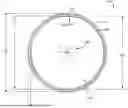
FIG. 1 is a top-down view of an example of a sealing device according to some aspects of the present disclosure.
FIGS. 2-4 are cross-sectional side views of examples of a sealing device according to some aspects of the present disclosure.
FIG. 5 is a side view of an example of a sealing device applied to a cup according to some aspects of the present disclosure.
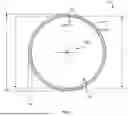
FIG. 6 is a top-down view of an example of a sealing device with a pull tab according to some aspects of the present disclosure
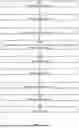
FIG. 7 is a flowchart of an example of a process for using a sealing device according to some aspects of the present disclosure.
DETAILED DESCRIPTION
In the beverage industry, ensuring a dependable cup seal is essential. Existing solutions for sealing a beverage in a cup include various types of rigid cup lids, including flat lids, domed lids, thermoform lids, and lids with perforations or vents. However, these solutions often present limitations in terms of sealing effectiveness, ease of use, and adaptability. One reason for this ineffectiveness is that traditional lids are rigid and monolithic, in that they are formed from a single rigid material. For example, many lids are formed by injection molding, in which a single type of rigid plastic is melted, injected into a mold having the desired lid shape, and then hardened. But this often does not provide the necessary balance between rigidity and flexibility, which can compromise the performance of the lid. Additionally, rigid lids can be difficult to fit securely on cups of slightly varying sizes or shapes, leading to potential leaks.
Another existing solution in the market is a circular piece of paper that is placed on the cup's rim to seal a beverage in the cup. The paper is coated with a waterproof or water-resistant layer, so that the beverage doesn't degrade the paper. Once placed on the cup's rim, the paper's edges are then attached to the rim. A key problem with this solution, though, is that the paper is so thin and flexible that it tends to warp (e.g., curl and deform) almost immediately when placed on the rim over a beverage. This warping phenomenon results from steam rising off the underlying beverage and/or static electricity. Even with cold drinks, the warping still sometimes occurs. This phenomenon makes the paper solution difficult to use, because its shape often warps so rapidly and to such an extent that it can fall off the cup or even into the beverage itself before the user has time to attach it to the rim.
Certain aspects and features of the present disclosure relate to a sealing device designed to overcome one or more of the abovementioned problems. The sealing device can securely seal a beverage inside a cup, such as a coffee cup. The sealing device is particularly useful for preventing spills and maintaining the temperature of the beverage inside the cup. Additionally, the sealing device can be designed to be reusable or disposable, offering flexibility for various consumer needs.
The sealing device disclosed herein includes a ring element coupled to a sealing element, both of which may be circular in shape. The ring element is an outer ring that provides structural rigidity to the periphery of the sealing element. This structural rigidity allows the sealing element to retain a substantially planar shape when placed over top of the beverage, rather than deforming in shape (e.g., bending or curling) due to steam, static, and/or other external factors. This can make the sealing device more user friendly.
The ring element may be made from a rigid material, such as plastic, metal, cardboard, or a composite material. The material choice for the ring element can be influenced by environmental considerations, such as using biodegradable or recyclable materials to reduce environmental impact. As noted above, this rigid material can help ensure that the sealing device maintains its shape and provides a stable structure for the sealing element. In some examples, the ring element can be sized to fit over the top rim of the cup.
The ring element is affixed to the sealing element. The sealing element is sized to substantially cover (cover more than 90% of, such as 95%, 98%, or 100% of) the cup's opening. The sealing element can be made from a flexible material, such as paper or thin plastic. This flexible material is distinct from the rigid material forming the ring element. The flexibility of the sealing element can make it easier to conform the sealing device to the shape of the cup rim, creating an effective seal to prevent beverage spillage. The sealing element may include a water-proof or water-resistant coating on at least the beverage-facing side, which helps the sealing element maintain its structural integrity if it is contacted by the beverage. In some examples, the sealing element may also include an antimicrobial coating to enhance the hygiene of the sealing device.
In some examples, the sealing element may include perforations to allow steam to escape, preferably without allowing liquid to pass through. Additionally, the sealing device may include a label or other indicator that notifies a user of the orientation of the sealing device, which helps ensure that the sealing device is used correctly—e.g., that the water-proof or water-resistant coating is facing the beverage. This can help make the sealing device more user friendly. In some examples, the indicator can be a simple printed arrow or a textured surface that can be felt by touch, facilitating quick and correct placement even in low-light conditions.
To use the sealing device, a user fills a cup with a beverage and then places the sealing device overtop of the cup's rim, so that it covers the cup's opening. The user then attaches a lid to the cup, overtop of the sealing device, so that the periphery of the sealing device is sandwiched between the cup's rim and the lid. This press-fits the periphery of the sealing device against the cup's rim, which fixes the sealing device in place against the rim and seals the beverage inside the cup. The beverage can then be safely transported in the cup with minimal spillage. Once a consumer is ready to consume the beverage, the consumer can remove the lid from the cup, which removes the force that was previously pressing the sealing device against the cup's rim. The sealing device can then be easily removed from the rim and the beverage can be consumed.
These illustrative examples are given to introduce the reader to the general subject matter discussed here and are not intended to limit the scope of the disclosed concepts. The following sections describe various additional features and examples with reference to the drawings in which like numerals indicate like elements but, like the illustrative examples, should not be used to limit the present disclosure.
FIG. 1 is a top-down view of an example of a sealing device 100 according to some aspects of the present disclosure. The dimensions of the sealing device 100 can be customized to fit different cup sizes, ensuring compatibility with a wide range of beverage containers. A shown, the sealing device 100 includes a ring element 102 coupled to a sealing element 106, each of which is described in turn below.
The ring element 102 has a ring shape defined by a first outer diameter 110 and a first inner diameter 112. The first inner diameter 112 defines the size of the aperture that is disposed in the center of the ring. In some examples, the first outer diameter 110 can be the same as, or greater than, the diameter of the cup's opening. For instance, the first outer diameter 110 can be selected to be about 5 millimeters (mm) larger than the cup's opening. As used herein, the term “about” can mean within 2% of the stated size. In some examples, the first outer diameter 110 can be 100-180 mm in size.
The first inner diameter 112 can be selected such that the ring element 102 is sufficiently wide 118 to provide structural integrity to the sealing element 106. The first inner diameter 112 can also be selected such that the ring element 102 is sufficiently wide 118 that it is easy to grasp and manipulate by a user. This can make the sealing device 100 more user friendly. In some examples, the inner diameter 112 can be 2-5 mm smaller than the first outer diameter 112, so that the width 118 of the ring is about 2-5 mm. As one specific example, the first outer diameter 110 can be about 127 mm and the first inner diameter 112 can be about 125 mm, which means the width 118 of the ring element 102 will be about 2 mm.
The ring element 102 is configured to be more rigid than the sealing element 106. In general, the ring element 102 can have a more crystalline structure, higher density, and/or less polarity than the sealing element 106. The ring element 102 can include a first material such as plastic, metal, or cardboard. The first material can be recyclable, compostable, and food safe. The first material can be coated with a waterproof or water-resistant layer, such as a layer of polyhydroxyalkanoate (PHA) or polylactic acid (PLA), which can help the first material maintain its structural integrity if it gets wet. Depending on the first material used, the ring element 102 may be 0.05-2.0 mm thick.
The ring element 102 can be fixed to the sealing element 106. For example, the ring element 102 can be permanently attached to the sealing element 106 during manufacturing of the sealing device 100, such that the ring element 102 and the sealing element 106 are provided together as a unit. In some examples, the ring element 102 can be fixed to the sealing element 106 with an adhesive that is food-safe and non-toxic.
The sealing element 106 can span substantially all of (more than 90% of, such as 95%, 98%, or 100% of) the aperture of the ring element 102. For example, the sealing element 106 can span the entire area enclosed by the inner diameter 112 of the ring element 102. In this example, the sealing element 106 can have an outer diameter 116 that is greater than or equal to the inner diameter 112 of the ring element 102. For instance, the outer diameter 116 of the sealing element 106 and the inner diameter 112 of the ring element 102 can both be about 124 mm.
The sealing element 106 is configured to be less rigid than the ring element 102. To that end, the sealing element 106 can include a second material, which may or may not be different from the first material. Examples of the second material can include paper or a thin plastic film. The second material can be recyclable, compostable, and food safe. The second material can be coated on at least one face 120 (e.g., flat surface) with a waterproof or water-resistant layer, such as a layer of PHA or PLA, which can help the second material maintain its structural integrity if it gets wet. In some examples, the sealing element 106 can be coated on both faces (e.g., both the top and bottom faces) with a waterproof or water-resistant layer. Depending on the second material used, the sealing element 106 may be 0.03-2 mm thick.
The sealing element 106 can include one or more perforations 108. The perforations 108 can be disposed in the sealing element 106 in an “asterisk” pattern or another pattern. The perforations 108 can allow hot steam to exit the cup safely. Without the perforations 108, buckling might otherwise occur due the difference in internal and external pressure as the beverage cools, which can create a failure point in cup's structure.
In some examples, the sealing device 100 may also include a label or other indicator 114 of how to orient the sealing device 100 on the cup. For example, the sealing element 106 can include an indicator 114 of its bottom face, so that the user knows which side of the sealing element 106 should be facing the beverage when the sealing device 100 is in use. This may be particularly helpful in a high-paced environment, such as a coffee shop where baristas are working very quickly to produce dozens or hundreds of beverages per hour. The indicator 114 can be color-coded or include simple instructions, such as “This Side Down,” to further assist in correct placement.
Through the above combination of features, the sealing element 106 can overcome the drawbacks of conventional cup lids and offer significant advantages in terms of performance, safety, and user experience. It provides a reliable and secure seal, is easy to use, and enhances the overall consumer experience by minimizing spills and maintaining beverage quality.
Turning now to FIGS. 2-4, shown are cross-sectional side views of various examples of how the ring element 102 and the sealing element 106 may be arranged in the sealing device 100. In the example shown in FIG. 2, the outer diameter of the sealing element 106 is the same size as the inner diameter of the ring element 102. In this example, the ring element 102 abuts and encircles the outer circumference of the sealing element 106. Additionally, the ring element 102 and the sealing element 106 have the same thickness in this example, which may still allow the sealing element 106 to be suitably flexible depending on the materials used, though in other examples the ring element 102 may be a different thickness than the sealing element 106. For instance, as shown in FIG. 3, the ring element 102 may be thicker than the sealing element 106. FIG. 4 shows an example of another arrangement in which the outer diameter of the sealing element 106 is greater than the inner diameter of the ring element 102. In particular, the outer diameter of the sealing element 106 is the same as the outer diameter of the ring element 102, though it need not be in other examples. In these examples, the ring element 102 can be coupled to a face (e.g., the top or bottom face) of the sealing element 106. These various configurations may allow for flexibility in manufacturing and use, accommodating different types of cups and lids.
Turning now to FIG. 5, shown is an example of the sealing device 100 in use on a cup 510 containing a beverage 504. The beverage 504 may be hot or cold. In particular, the sealing device 100 is first placed overtop of the opening of the cup 510. In this arrangement, the periphery of the sealing device 100 (e.g., the rigid element) contacts and rests on the rim of the cup 510. A lid 502 may then be attached to (e.g., press fitted onto) the cup 510, such that it sandwiches the sealing device 100 between the cup's rim and the lid 502. In this arrangement, the periphery of the sealing device 100 is positioned between and contacting the cup's rim and the lid's attachment mechanism 512, where the attachment mechanism 512 is configured to removably attach the lid 502 to the cup 510. This ensures that the sealing device is held securely in place, preventing accidental dislodgement during transport or use of the cup 510.
In this example, the lid 502 is a domed lid made of plastic or another material. But in other examples, other types of lids such as flat lids may be used. The versatility of the sealing device 100 allows it to be used with various lid designs, increasing its applicability. The lid 502 is separate from the sealing device 100 and, thus, it is attached to the cup 510 after the sealing device 100 has already been placed on the cup 510.
Because the lid 502 in this example is a domed lid, there is space between the top of the lid 502 and the sealing device 100. In some cases, that space can be filled with one or more additional ingredients 508 for the drink. Examples of the additional ingredients 508 can include drink toppers such as whipped cream, cold foam, sprinkles, or candy; liquid flavorings such as syrups; texture modifiers such as thickening agents; solid mixer ingredients such as boba; or any combination of these. The sealing device 100 can serve as a divider that separates the additional ingredients 508 from the beverage 504 until the drink is ready for consumption. This can prevent the additional ingredients 508 from mixing with the beverage 504 or degrading (e.g., getting soggy) before the drink is ready to be consumed. This feature is particularly useful for beverages that include toppings or mix-ins that should remain separate until consumption, enhancing the consumer's experience.
In some examples involving the additional ingredients 508, the sealing element may be coated on both faces (e.g., both the top and bottom faces) with a waterproof or water-resistant layer, so that the additional ingredients 508 do not negatively affect the structural integrity of the sealing device 100, especially if they are wet ingredients. The additional ingredients 508 may be added to the space in any suitable manner. For example, the additional ingredients 508 can be inserted into the space through a hole 506 in the lid 502. The hole 506 may be a straw hole. As another example, the additional ingredients 508 may be added to the space before attaching the lid 502 to the cup 510. In this example, the lid 502 may exclude the hole 506 to prevent the additional ingredients 508 from spilling (e.g., during transport).
When the consumer is ready to consume the drink, the consumer can remove the lid 502 from the cup 510, remove the sealing device 100 from the rim, pour any additional ingredients 508 onto or into the beverage 504, and then drink the beverage 504. This process ensures that the beverage remains fresh and the additional ingredients 508 retain their intended texture and flavor. In some cases, the consumer may reattach the lid 502 to the cup 510 before drinking the beverage 504.
In some examples, the sealing device 100 may further include a tab that can be pulled by the consumer to remove the sealing device 100 from the cup 510 without first removing the lid 502. For example, the sealing device 100 may have a tab coupled to its edge that extends radially outward from the central axis of the sealing device 100. While the lid 502 is still attached to the cup 510, the user can pull the tab away from the cup to slide the sealing device 100 out from between the cup's rim and the lid 502, thereby detaching the sealing device 100 from the cup without having to remove the lid 502. This may simplify the removal process. One example of such a tab 602 and pull direction is shown in FIG. 6.
FIG. 7 is a flowchart of an example of a process for using a sealing device according to some aspects of the present disclosure. Other examples may involve more operations, fewer operations, different operations, or a different order of operations than is shown in FIG. 7.
In block 702, a user pours a beverage into a cup. The beverage may include coffee, tea, soda, and/or another edible liquid. The beverage may be hot, warm, or cold. A beverage can be “hot” if it is greater than 100° F., “cold” if it is less than 45° F., and “warm” if it is 45-100° F.
In some examples, the user may make the beverage before pouring it into the cup. For example, the user may be a barista that prepares a coffee for a customer and pours it into the cup. Alternatively, the beverage may be prepared by another person who then gives it to the user to pour into the cup. The user can pour the beverage into the cup at a first location, such as in a café, restaurant, or other store.
In block 704, the user obtains a sealing device. The sealing device may have been manufactured elsewhere and delivered as a unit to the first location.
The sealing device can include a sealing element sized to substantially cover an opening of the cup. The sealing element can be formed from a first material and have a first thickness. The sealing element can also have an outer diameter. The sealing device can further include a ring element fixed to the sealing element to provide rigidity to an outer perimeter of the sealing element. The ring element can be formed from a second material that is different (e.g., in type) from the first material. The ring element can have a second thickness, which may be the same as or different than the first thickness. The ring element can also have an inner diameter that is less than or equal to the outer diameter of the sealing element.
In block 706, the user positions the sealing device on the rim of the cup. The user may lay the sealing device in a particular direction on the rim based on an orientation indicator of the sealing device.
In block 708, the user attaches a lid to the cup overtop of the sealing device. This press fits the edges of the sealing device (e.g., the ring element) between the lid and the rim, fixing the sealing device in position while simultaneously sealing the beverage in the cup. The user may then give the cup to a recipient, who may be the person who will ultimately consume the beverage.
In block 710, the recipient transports the sealed cup to a second location. The second location may be different from the first location. For instance, the second location may be the recipient's car, house, or job.
In other examples, the sealed cup may be transported to the second location by the user who sealed the cup with the sealing device.
In block 712, the recipient removes the lid from the cup. For example, the recipient can lift the lid off the top of the cup. This removes the friction force holding the sealing device in place, which then allows the sealing device to be easily detached from the rim without spilling the contents of the cup.
In block 714, the recipient removes the sealing device from the cup. For example, the recipient can lift the sealing device off the rim of the cup. If there were any additional ingredients stored on top of the sealing device, at this point the additional ingredients can be added to the beverage (e.g., by pouring them on top of the beverage or mixing them into the beverage). This can allow for the addition of fresh ingredients just before consumption.
In block 716, the recipient may attach the lid back onto the cup. For example, if lid is a dome lid with a straw hole, the recipient may attach the dome lid back onto the cup and insert a straw through the straw hole to drink the beverage. This may help maintain the beverage's temperature and/or prevent spills while drinking.
In block 718, the recipient drinks the beverage (e.g., through an opening in the attached lid).
In some examples, one or more of blocks 712-716 may be skipped. For example, if the lid has a straw hole or other opening, the user may insert a straw through the opening and puncture the sealing device with it, to thereby access the beverage underneath. The user can then drink the beverage through the straw, without removing the sealing device or lid. This alternative method provides additional convenience for the consumer, particularly in situations where removing the lid is not practical, such as in a moving vehicle.
It will be appreciated that although various examples are described herein with respect to a cup, the sealing device may also be used with other types of containers. Additionally, although various examples are described herein with respect to a beverage, the sealing device may also be used with other types of fluids (e.g., non-edible liquids). Thus, the present application is not intended to be limited to just cups and beverages.
The foregoing description of certain examples, including illustrated examples, has been presented only for the purpose of illustration and description and is not intended to be exhaustive or to limit the disclosure to the precise forms disclosed. Numerous modifications, adaptations, and uses thereof will be apparent to those skilled in the art without departing from the scope of the disclosure. For instance, any examples described herein can be combined with any other examples to yield further examples.
Claims
1. A sealing device for sealing a fluid in a cup, the sealing device comprising:
a sealing element sized to substantially cover an opening of the cup, the sealing element being formed from a first material and having a first thickness, and the sealing element having an outer diameter; and
a ring element fixed to the sealing element to provide rigidity to an outer perimeter of the sealing element, the ring element being formed from a second material that is different from the first material, the ring element having a second thickness, and the ring element having an inner diameter that is less than or equal to the outer diameter of the sealing element;
wherein the sealing device is configured to be press fit between a rim of the cup and a lid of the cup to seal the fluid in the cup.
2. The sealing device of claim 1, wherein the sealing element includes one or more perforations sized to allow steam to escape.
3. The sealing device of claim 1, further comprising an indicator of an orientation of the sealing device.
4. The sealing device of claim 3, wherein the indicator is positioned on a face of the sealing element to indicate which face of the sealing element should be oriented toward the fluid when the sealing device is in use.
5. The sealing device of claim 1, wherein the outer diameter of the sealing element is equal to the inner diameter of the ring element.
6. The sealing device of claim 1, wherein the outer diameter of the sealing element is equal to an outer diameter of the ring element.
7. The sealing device of claim 1, wherein the first material is paper.
8. The sealing device of claim 1, wherein the second material is metal, plastic, or cardboard.
9. The sealing device of claim 1, wherein the second thickness is equal to the first thickness.
10. The sealing device of claim 1, wherein the second thickness is greater than the first thickness.
11. A method comprising:
obtaining a sealing device for sealing a fluid in a cup, the sealing device comprising:
a sealing element sized to substantially cover an opening of the cup, the sealing element being formed from a first material and having a first thickness, and the sealing element having an outer diameter; and
a ring element fixed to the sealing element to provide rigidity to an outer perimeter of the sealing element, the ring element being formed from a second material that is different from the first material, the ring element having a second thickness, and the ring element having an inner diameter that is less than or equal to the outer diameter of the sealing element; and
press fitting the sealing device between a rim of the cup and a lid of the cup to seal the fluid in the cup.
12. The method of claim 11, wherein the sealing element includes one or more perforations sized to allow steam to escape.
13. The method of claim 11, wherein press fitting the sealing device between the rim and the lid of the cup involves press fitting the ring element between the rim and the lid, such that the ring element contacts both the rim and the lid concurrently.
14. The method of claim 13, wherein the indicator is positioned on a face of the sealing element to indicate which face of the sealing element should be oriented toward the fluid when the sealing device is in use.
15. The method of claim 11, wherein the outer diameter of the sealing element is equal to the inner diameter of the ring element.
16. The method of claim 11, wherein the outer diameter of the sealing element is equal to an outer diameter of the ring element.
17. The method of claim 11, wherein the first material is paper.
18. The method of claim 17, wherein the second material is metal, plastic, or cardboard.
19. The method of claim 11, wherein the second thickness is greater than the first thickness.
20. A system comprising:
a cup that includes a rim and a fluid;
a lid for the cup; and
a sealing device comprising:
a sealing element sized to substantially cover an opening of the cup, the sealing element being formed from a first material and having a first thickness, and the sealing element having an outer diameter; and
a ring element fixed to the sealing element to provide rigidity to an outer perimeter of the sealing element, the ring element being formed from a second material that is different from the first material, the ring element having a second thickness;
wherein the sealing device is positioned on the cup between the rim and the lid.
Images & Drawings included:


Sources:
- United States Patent and Trademark Office - verify current appl. status at the USPTO↗
Similar patent applications:
Recent applications in this class:
- » 20260116633 2026-04-30
APPARATUS FOR HOLDING ONE OR MORE OBJECTS - » 20260054898 2026-02-26
CONTAINER WITH A PEELABLE LID HAVING A FRANGIBLE SEAL AND METHOD OF MANUFACTURE - » 20250346415 2025-11-13
Sealed Can - » 20250289635 2025-09-18
METHOD OF MANUFACTURE FOR A HIGHLY PEELABLE LID WITH A FRANGIBLE SEAL - » 20250229962 2025-07-17
CONTAINER AND METALLIC CLOSURE WITH A FLOATING LINER - » 20250223089 2025-07-10
Foil Free Tabbed Seal - » 20250145351 2025-05-08
Induction Heat Sealable Closure Liner or Lidding Configured for Paper Recycling Stream - » 20240246734 2024-07-25
Vented Liner - » 20240239574 2024-07-18
Seal insert molecular bonded to bottle - » 20240174418 2024-05-30
Compostable Sealing Member
Recent applications for this Assignee:
- » 20260178254 2026-06-25
OPTIMIZING OBJECT MANUFACTURING VIA AUTOMATIC BUFFER SHUFFLING - » 20260069077 2026-03-12
Hybrid Coffee Machine with Automatic and Manual Modes - » 20260014532 2026-01-15
FOAM DISPENSER WITH REMOVABLE CUP - » 20250116989 2025-04-10
GENERATION OF COMPUTER-EXECUTABLE INSTRUCTIONS BASED ON MONITORING NETWORK COMMUNICATIONS OF REMOTE COMPUTING SYSTEMS - » 20250033946 2025-01-30
Automated dispensing system for customized beverages - » 20250021912 2025-01-16
System and graphical user interface for providing store-level diagnostics and remediation - » 20240393158 2024-11-28
Overflow detection system for a grease trap - » 20240375930 2024-11-14
Automated dispensing system for customized beverages - » 20240375929 2024-11-14
Automated dispensing system for customized beverages - » 20240375928 2024-11-14
Automated dispensing system for customized beverages