RECIPROCATING COMPRESSOR
US20260177045A1
2026-06-25
19/419,356
2025-12-15
Smart Summary: A reciprocating compressor is a machine that compresses gases. It has several parts, including a shell, a motor, a shaft, a piston, and a cylinder. The design includes a special area in the suction flow path that helps reduce noise and vibrations. By simplifying the structure of the suction muffler, it lowers manufacturing costs while still providing effective noise reduction. Overall, this design improves performance and makes the compressor quieter. 🚀 TL;DR
Abstract:
A reciprocating compressor is disclosed. The reciprocating compressor includes a shell, a driving motor, a driving shaft, a piston, a cylinder, and a suction muffler, and the suction flow path may include a valley portion formed as a cross-section area of the suction flow path becomes small. Accordingly, the structure of the suction muffler is simplified, thereby saving manufacturing cost of the suction muffler, a noise-reducing space is sufficiently secured while simplifying the structure of the suction muffler, thereby effectively reducing vibration and/or noise in the suction muffler, and the vibration and/or noise in the suction muffler can be more effectively reduced using the valley portion.
Applicant:
Interested in similar patents?
Get notified when new applications in this technology area are published.
Classification:
F04B39/0061 » CPC main
Component parts, details, or accessories, of pumps or pumping systems specially adapted for elastic fluids, not otherwise provided for in, or of interest apart from, groups -; Pulsation and noise damping means with a special shape of fluid passage, e.g. bends, throttles, diameter changes, pipes using muffler volumes
F04B39/0284 » CPC further
Component parts, details, or accessories, of pumps or pumping systems specially adapted for elastic fluids, not otherwise provided for in, or of interest apart from, groups -; Lubrication Constructional details, e.g. reservoirs in the casing
F04B39/16 » CPC further
Component parts, details, or accessories, of pumps or pumping systems specially adapted for elastic fluids, not otherwise provided for in, or of interest apart from, groups - Filtration; Moisture separation
F04B39/00 IPC
Component parts, details, or accessories, of pumps or pumping systems specially adapted for elastic fluids, not otherwise provided for in, or of interest apart from, groups -
F04B39/02 IPC
Component parts, details, or accessories, of pumps or pumping systems specially adapted for elastic fluids, not otherwise provided for in, or of interest apart from, groups - Lubrication
Description
CROSS-REFERENCE TO RELATED APPLICATION
Pursuant to 35 U.S.C. § 119(a), this application claims the benefit of the earlier filing date and the right of priority to Korean Patent Application No. 10-2024-0193248, filed on December 20, 2024, the contents of which are incorporated by reference herein in their entirety.
BACKGROUND
1. Field
This disclosure relates to a reciprocating compressor.
2. Description of the Related Art
Compressors may be divided into several types including a rotary compressor, a scroll compressor, a reciprocating compressor, and the like according to a compression method, a kind of refrigerant used, and the like. The reciprocating compressor is of a type in which a refrigerant is compressed while a piston reciprocates in a cylinder.
The reciprocating compressor may be divided into a vibration type reciprocating compressor and a connection type reciprocating compressor according to a driving method of the piston. The vibration type reciprocating compressor is of a type in which the piston is connected to a mover of a reciprocating motor to reciprocate in the cylinder while vibrating, thereby compressing the refrigerant. The connection type reciprocating compressor is of a type in which the piston is connected to a rotary shaft of a rotary motor to reciprocate in the cylinder, thereby compressing the refrigerant.
In the vibration type reciprocating compressor, a suction side and a discharge side may be arranged at one side with respect to the piston or may be respectively arranged at both sides with respect to the piston. However, in the case of the connection type reciprocating compressor, a suction side and a discharge side are mostly arranged together at one side of the piston. The present disclosure relates to a connection type reciprocating compressor, and hereinafter, a reciprocating compressor may be defined as the connection type reciprocating compressor.
In the reciprocating compressor, a suction muffler and a discharge muffler may be arranged separately from each other or may be arranged to be integrated into one assembly. An embodiment will be described based on an example in which the suction muffler and the discharge muffler are arranged separately from each other, but may be equally applied even to a case where the suction muffler and the discharge muffler are integrated into one assembly.
Patent Document 1 (Korean Laid-Open Patent No. 10-2016-0055499) discloses a reciprocating compressor having a muffler assembly in which a suction muffler and a discharge muffler are integrated into on assembly. In this case, the shape of the muffler assembly is complicated, and therefore, manufacturing cost may be increased. Also, in Patent Document 1, the volume of the suction muffler is small, and therefore, there is a limitation in sufficiently reducing suction noise. This suction noise may be generated more as the reciprocating compressor becomes smaller.
Patent Document 2 (Korean Laid-Open Patent Publication No. 10-2020-0132420) discloses a reciprocating compressor in which a suction muffler and a discharge muffler are arranged separately from each other. In this case, as an internal flow path of the suction muffler is formed linearly, there is a limitation in effectively reducing suction noise.
Also, in Patent Document 2, as a suction port is formed by simply passing through a muffler body, a suction volume is not sufficiently secured, and therefore, there is a limitation in improving performance of the compressor. This is the same as Patent Document 1.
In addition, in Patent Document 1 and Patent Document 2, a gap between an oil pipe which injects oil into an internal space of a shell and an outer circumferential surface of a muffler facing the oil pipe is narrowed, and therefore, a large amount of oil injected through the oil pipe may collide with a muffler and then flow backward to the oil pipe.
SUMMARY
Therefore, the present disclosure provides a reciprocating compressor capable of simplifying the structure of a suction muffler, thereby saving manufacturing cost.
The present disclosure also provides a reciprocating compressor capable of simplifying the structure of a suction muffler and sufficiently securing a noise-reducing space, thereby effectively reducing vibration and/or noise.
The present disclosure also provides a reciprocating compressor capable of variously forming an internal flow path of a suction muffler, thereby more effectively reducing vibration and/or noise.
The present disclosure also provides a reciprocating compressor capable of increasing the amount of a refrigerant sucked through a suction port of a suction muffler, thereby improving compressor performance.
The present disclosure also provides a reciprocating compressor capable of widening a gap between an oil pipe and a suction muffler facing the oil pipe, thereby suppressing oil injected into an internal space of a shell from flowing backward through the oil pipe.
In order to achieve these and other advantages and in accordance with the purpose of this specification, as embodied and broadly described herein, there is provided a reciprocating compressor including a shell, a driving motor, a driving shaft, a piston, a cylinder, and a suction muffler. The driving motor may be arranged in an internal space of the shell. The driving shaft may be coupled to a rotor of the driving motor. The piston may be coupled to the driving shaft to reciprocate. The cylinder may have the piston reciprocatably inserted thereinto to form a compression chamber together with the piston. The suction muffler may include a muffler entrance opening toward the internal space of the shell, a muffler exit opening toward a suction side of the compression chamber, a noise-reducing space located between the muffler entrance and the muffler exit, and a suction flow path connecting between the muffler entrance and the muffler exit with the noise-reducing space interposed therebetween. The suction flow path may include a valley portion formed as a cross-section area of the suction flow path becomes small. Accordingly, the structure of the suction muffler is simplified, thereby saving manufacturing cost of the suction muffler, the noise-reducing space is sufficiently secured while simplifying the structure of the suction muffler, thereby effectively reducing vibration and/or noise in the suction muffler, and the vibration and/or noise in the suction muffler can be more effectively reduced using the valley portion.
In an example, the suction flow path may be formed by a partition wall extending from an inner surface of the suction muffler. The e valley portion may be formed such that a portion of the partition wall protrudes in a direction intersecting a length direction of the suction flow path. Accordingly, the valley portion can effectively reduce vibration and/or noise, generated in suction of a refrigerant, while forming a kind of neck portion.
For example, the valley portion may be formed such that a portion of the partition wall protrudes as a curved surface. Accordingly, the valley portion can be easily formed, and flow resistance of the refrigerant can be reduced.
Specifically, the valley portion may be symmetrically formed with respect to a central line passing through a center of the valley portion. Accordingly, the flow resistance of the refrigerant passing through the valley portion is reduced as low as possible, thereby minimizing suction loss of the refrigerant due to the valley portion.
In another example, the suction flow path may be formed between a first partition wall and a second partition wall, which face each other. The valley portion may be formed such that a portion of the first partition wall protrudes toward the second partition wall. Accordingly, the valley portion can be easily formed, and the flow resistance of the refrigerant can be reduced.
For example, the first partition wall may be formed more adjacent to the muffler entrance than the second partition wall. The valley portion may be formed to protrude in an arc shape. Accordingly, the suction flow path in the valley portion is formed in a forward direction along a flow direction of the refrigerant, thereby further reducing the flow resistance of the refrigerant.
In addition, the second partition wall may be linearly formed in the valley portion. Accordingly, even while a suction refrigerant is smoothly moved along an inner surface of the first partition wall, vibration and/or noise in the valley portion can be more effectively reduced.
Also, the second partition wall may be formed as a curved surface protruding in a direction corresponding to the first partition wall in the valley portion. A curvature of the second partition wall may be formed smaller than a curvature of the first partition wall. Accordingly, even while the flow resistance of the refrigerant is reduced, and the valley portion is formed in the middle of the suction flow path, the suction loss of the refrigerant can be more reduced.
In still another example, the noise-reducing space may be provided in plurality. The valley portion may be formed between the plurality of noise-reducing spaces. Accordingly, the refrigerant of which vibration and/or noise is primarily reduced while passing through the first noise-reducing space passes through the valley portion, thereby increasing a reduction effect of vibration and/or noise and reducing the flow resistance of the refrigerant due to the valley portion as low as possible.
For example, the plurality of noise-reducing spaces may include a first noise-reducing space communicating with the muffler entrance and a second noise-reducing space separated from the first noise-reducing space with the suction flow path interposed therebetween to communicate with the muffler exit. The valley portion may be formed more adjacent to an input/output portion of the second noise-reducing space than an input/output portion of the first noise-reducing space. Accordingly, the valley portion is located downstream of the suction flow path with respect to a suction direction of the refrigerant, so that the flow resistance in the suction flow path can be further reduced.
In still another example, the suction flow path may include an entrance flow path portion connected to the muffler entrance; and an exit flow path portion connected to the muffler exit. A cross-sectional area of the entrance flow path portion may be formed such that at least a portion thereof becomes small as approaching the exit flow path portion. Accordingly, the suction refrigerant can be quickly moved toward the exit flow path portion from the entrance flow path portion.
For example, the entrance flow path portion may extend in a same direction as the muffler entrance. The exit flow path portion may extend in a same direction as the muffler exit. The entrance flow path portion and the exit flow path portion may be formed to be bent perpendicular to each other. Accordingly, as at least a portion of the exit flow path portion is formed between both partition walls, the flow path length of the exit flow path portion can be reduced as short as possible.
In still another example, a filter accommodation groove may be formed at a periphery of the muffler exit. A filter member may be inserted into the filter accommodation groove to filter foreign substances from a refrigerant passing through the suction flow path. Accordingly, foreign substances mixed in the suction refrigerant can be suppressed from being introduced into the compression chamber of the cylinder.
In still another example, the muffler entrance may include a suction port connected to the suction flow path; and a refrigerant collection portion located between the internal space of the shell and the suction port. A cross-sectional area of the refrigerant collection portion may be formed larger than a cross-sectional area of the suction port. Accordingly, the amount of the refrigerant sucked into the compression chamber is increased by increasing the amount of the refrigerant sucked through the suction port, thereby improving compressor performance.
For example, the refrigerant collection portion may be recessed by a predetermined depth toward an inner surface facing the driving motor from an outer surface facing an inner circumferential surface of the shell. The suction port may be formed to pass through an inner circumferential surface of the refrigerant collection portion in a circumferential direction. Accordingly, the suction flow path can be secured, the volume of the muffler entrance including the refrigerant collection portion can be formed as wide as possible, thereby increasing the suction amount of the refrigerant.
In addition, the cross-sectional area of the refrigerant collection portion may be symmetrically formed with respect to a central line passing through a center of the refrigerant collection portion in the axial direction. Accordingly, even while the volume of the refrigerant collection portion is increased, the flow resistance of the refrigerant in the refrigerant collection portion is reduced as low as possible, so that the refrigerant can be smoothly moved toward the suction port.
In still another example, an oil pipe passing through the shell may be connected to the shell. An oil damping portion recessed by a predetermined depth may be formed on an outer surface of the suction muffler, which faces the oil pipe. Accordingly, a gap between the oil pipe and the suction muffler facing the oil pipe is widened, thereby suppressing oil injected into the internal space of the shell from flowing backward through the oil pipe.
For example, both side surfaces and an upper surface of the oil damping portion may be closed, and a lower surface of the oil damping portion may be open. Accordingly, the oil smoothly flows down into an oil storage space of the shell along the oil damping portion, thereby effectively suppressing the injected oil from flowing backward toward oil pipe.
In addition, an inner surface of the oil damping portion, which faces the oil pipe, may be formed flat or may be formed to be curved. Accordingly, the oil in the oil damping portion can be widely diffused, and the oil damping portion can be formed deeper.
In order to achieve these and other advantages and in accordance with the purpose of this specification, as embodied and broadly described herein, there is provided a reciprocating compressor including a shell, a driving motor, a driving shaft, a piston, a cylinder, and a suction muffler. The driving motor may be arranged in an internal space of the shell. The driving shaft may be coupled to a rotor of the driving motor. The piston may be coupled to the driving shaft to reciprocate. The cylinder may have the piston reciprocatably inserted thereinto to form a compression chamber together with the piston. The suction muffler may include a muffler entrance opening toward the internal space of the shell, a muffler exit opening toward a suction side of the compression chamber, a noise-reducing space located between the muffler entrance and the muffler exit, and a suction flow path connecting between the muffler entrance and the muffler exit with the noise-reducing space interposed therebetween. The suction flow path may include an entrance flow path portion connected to the muffler entrance; and an exit flow path portion connected to the muffler exit. A cross-sectional area of the entrance flow path portion may be formed such that at least a portion thereof becomes small as approaching the exit flow path portion. Accordingly, a suction refrigerant can be quickly moved toward the exit flow path portion from the entrance flow path portion.
For example, the entrance flow path portion may extend in a same direction as the muffler entrance. The exit flow path portion may extend in a same direction as the muffler exit. The entrance flow path portion and the exit flow path portion may be formed to be bent perpendicular to each other. Accordingly, as at least a portion of the exit flow path portion is formed between both partition walls, the flow path length of the exit flow path portion can be reduced as short as possible.
BRIEF DESCRIPTION OF THE DRAWINGS
The above and other aspects, features and other advantages of the present disclosure will be more clearly understood from the following detailed description taken in conjunction with the accompanying drawings, in which:
FIG. 1 is a perspective view showing an interior of a shell of a reciprocating compressor according to an embodiment;
FIG. 2 is a cross-sectional view of an interior of the reciprocating compressor according to FIG. 1, which is viewed from the front;
FIG. 3 is a plan view of the interior of the reciprocating compressor according to FIG. 1, which is viewed from the top;
FIG. 4 is a perspective view of a suction muffler according to this embodiment, which is viewed from the front;
FIG. 5 is an exploded perspective view of the suction muffler of FIG. 4, which is viewed from the front;
FIG. 6 is an exploded perspective view of the suction muffler of FIG. 4, which is viewed from the rear;
FIG. 7 is an assembled front view of the suction muffler of FIG. 4;
FIG. 8 is a cross-sectional view taken along line "VIII-VIII" of FIG. 7;
FIG. 9 is a cross-sectional view taken along line "IX-IX" of FIG. 7;
FIG. 10 is a cross-sectional view showing an embodiment in which a suction pipe is inserted into a muffler entrance in the suction muffler of FIG. 4;
FIG. 11 is a broken front view of a portion of the suction muffler of FIG. 4;
FIG. 12 is a broken front view of another embodiment of the muffler entrance;
FIG. 13 is a front view showing a suction flow path according to this embodiment;
FIG. 14 is a graph illustrating a noise reduction effect of the suction muffler according to this embodiment;
FIG. 15 is a schematic view showing another embodiment of the suction flow path;
FIG. 16 is a perspective view showing an oil damping portion according to this embodiment;
FIG. 17 is a cross-sectional view taken along line "XVII-XVII" of FIG. 16; and
FIGS. 18 to 20 are schematic views showing other embodiments of the oil damping portion.
DETAILED DESCRIPTION OF THE EMBODIMENTS
Hereinafter, a reciprocating compressor according to the present disclosure will be described in detail, based on embodiments illustrated in the accompanying drawings. As described above, in the reciprocating compressor, a suction muffler and a discharge muffler may be connected to each other to be integrated into one muffler assembly or may be arranged independently from each other. An embodiment will be described based on a reciprocating compressor in which a suction muffler and a discharge muffler are arranged independently from each other. However, this embodiment is not limited thereto, and may be equally applied to a reciprocating compressor in which a suction muffler and a discharge muffler are connected to each other.
Also, hereinafter, it will be described that a compression chamber side with respect to a piston is defined as a front and the opposite side of the compression chamber side is defined as a rear. In connection with this, a side of a muffler assembly, which faces a shell, is defined as a front and a side of the muffler assembly, which faces back toward the shell, is defined as a rear.
Also, hereinafter, it will be described that a radial direction side of a rotary shaft in an inner circumferential surface of a lower shell is defined as a side surface, an eccentric portion side of the rotary shaft in an inner circumferential surface of an upper shell is defined as an upper surface, and a lower end side of the rotary shaft in the inner circumferential surface of the lower shell is defined as a lower surface.
FIG. 1 is a perspective view showing an interior of a shell of a reciprocating compressor according to an embodiment, FIG. 2 is a cross-sectional view of an interior of the reciprocating compressor according to FIG. 1, which is viewed from the front, and FIG. 3 is a plan view of the interior of the reciprocating compressor according to FIG. 1, which is viewed from the top.
Referring to FIGS. 1 to 3, the reciprocating compressor according to this embodiment may include a shell 110, an electric unit 120 located in an internal space 110a of the shell 110 to provide a driving force, a compression unit 130 which receives the driving force transferred from the electric unit 120 to compress a refrigerant, a suction/discharge unit 140 which guides the refrigerant to a compression chamber 130a and discharges the compressed refrigerant, and a damping unit 150 which buffers a shock occurring in collision between the shell 110 and a compressor body C. It may be understood that the shell 110 forms an appearance of the compressor, and the electric unit 120, the compression unit 130, the suction/discharge unit 140, and the damping unit 150 constitute the compressor body.
The shell 110 may include a lower shell 111 and an upper shell 112. The lower shell 111 and the upper shell 112 may be coupled to each other to form the airtight internal space 110a. The electric unit 120, the compression unit 130, the suction/discharge unit 140, and the damping unit 150 are accommodated in the internal space 110a of the shell 110. In the case of a small reciprocating compressor, the electric unit 120, the compression unit 130, the suction/discharge unit 140, and the damping unit 150 may be arranged adjacent to an inner circumferential surface of a shell. The shell 110 may be made of an aluminum alloy (hereinafter, abbreviated as aluminum) which is light and has a high thermal conductivity coefficient.
The lower shell 111 may be formed in a substantially hemispherical shape. Each of a suction pipe 115 for refrigerant suction, a discharge pipe 116 for refrigerant discharge, and an oil pipe 117 for oil injection may be coupled to the lower shell 111 to pass through the lower shell 111. Each of the suction pipe 115, the discharge pipe 116, and the oil pipe 117 may be coupled to the lower shell 111, using an insert die casting method.
Like the lower shell 111, the upper shell 112 may be formed in a substantially hemispherical shape. The upper shell 112 may be coupled to the lower shell 111 at an upper side of the lower shell 111 to form the internal space 110a of the shell 110 described above.
Referring to FIGS. 1 to 3, the electric unit (or driving motor) 120 according to this embodiment may include a stator 121 and a rotor 122. The stator 121 may be elastically supported with respect to the internal space 110a of the shell 110, i.e., a bottom surface of the lower shell 111, and the rotor 122 may be rotatably installed inside the stator 121.
The stator 121 may include a stator core 1211 and a stator coil 1212.
A lower end of the stator core 1211 may be elastically supported with respect to a bottom surface of the shell 110 by a support spring 123 in a state in which the stator core 1211 is spaced apart from an inner surface of the shell 110 in an axial direction and a radial direction. Accordingly, vibrations generated during an operation can be suppressed from being transferred directly to the shell 110.
The stator coil 1212 may be wound inside the stator core 1211. As described above, when a voltage is applied from the outside, the stator coil 1212 generates an electromagnetic force to perform an electromagnetic interaction together with the stator core 1211 and the rotor 122. Accordingly, the electric unit 120 generates a driving force for a reciprocating motion of the compression unit 130.
The rotor 122 may include a rotor core 1221 and magnets 1222.
The rotor core 1221 may be formed in a substantially cylindrical shape to be rotatably installed inside the stator core 1211. A driving shaft 125 may be press-fitted into a center of the rotor core 1221 to be coupled to the rotor core 1221.
The magnets 1222 are formed as permanent magnets, and may be inserted into the rotor core 1221 at equidistant intervals along a circumferential direction of the rotor core 1221 to be coupled to the rotor core 1221. Accordingly, the rotor 122 rotates through the electromagnetic interaction with the stator core 1211 and the stator coil 1212, and the driving shaft 125 transfers a rotational force of the electric unit 120 to the compression unit 130 through a connecting rod 126 while rotating together with the rotor 122.
Referring to FIGS. 1 to 3, the compression unit 130 according to this embodiment may include a cylinder block 131 and a piston 132. The cylinder block 131 is elastically supported to the shell 110, and the piston 132 is coupled to the driving shaft 125 by the connecting rod 126 to perform a relative motion with respect to the cylinder block 131.
The cylinder block 131 may be located at one side, e.g., an upper side of the electric unit 120 in the axial direction. The cylinder block 131 may be fastened to the stator 121 by a stator fastening bolt (not shown), to be elastically supported together with the stator 121 of the electric unit 120 with respect to the lower shell 111.
The cylinder block 131 according to this embodiment may include a frame portion 1311, a fixing protrusion portion 1312 coupled to the stator 121 of the electric unit 120, a bearing portion 1313 supporting the driving shaft 125, and a cylinder portion (cylinder) 1314 forming the compression chamber 130a.
The frame portion 1311 may be formed in a flat plate shape extending in a lateral direction or may be formed in a radial plate shape by processing a portion of an edge excluding corners to reduce weight or thickness.
The fixing protrusion portion 1312 may be formed at an edge of the frame portion 1311. For example, the fixing protrusion portion 1312 may be formed to protrude downward toward the electric unit 120 from the edge of the frame portion 1311. A fastening hole (not shown) may be formed in the fixing protrusion portion 1312 such that the stator fastening bolt (not shown) and a rear damper 152 to be described later are coupled to each other therethrough.
The bearing portion 1313 may be formed to extend to both sides in the axial direction from a central portion of the frame portion 1311. A bearing hole 1313a may be formed in the bearing portion 1313 to pass through the baring portion 1313 in the axial direction such that the driving shaft 125 passes through the bearing portion 1313 through the bearing hole 1313a. Accordingly, the driving shaft 125 is inserted into the bearing portion 1313, to be supported in the radial direction and be supported in the axial direction while being placed on an upper end of the bearing portion 1313.
The cylinder portion (hereinafter, abbreviated as the cylinder) 1314 may be formed eccentrically in the radial direction at an edge of one side of the frame portion 1311. The cylinder 1314 passes through the cylinder block 131 in the radial direction such that the piston 132 connected to the connecting rod 126 is inserted into an inner open end thereof, and a valve assembly 141 constituting the suction/discharge unit 140 to be described later is mounted in an outer open end thereof.
The piston 132 according to this embodiment may be formed flat in a shape in which, while a side (rear side) facing the connecting rod 126 is open, a side (front side) as the opposite side, which faces back toward the connecting rod 126, is closed. Accordingly, the connecting rod 126 is inserted into the rear side of the piston 132 to be rotatably coupled to the piston 132, and the front side of the piston 132 along with the valve assembly 141 to be described later forms the compression chamber 130a inside the cylinder 1314.
Referring to FIGS. 1 to 3, the suction/discharge unit 140 may include the valve assembly 141, a suction muffler 142, and a discharge muffler 143. The valve assembly 141 is a member which opens/closes the compression chamber 130a of the cylinder block 131, the suction muffler 142 is a member which reduces suction noise of the refrigerant sucked into the compression chamber 130a, and the discharge muffler 143 is a member which reduce discharge noise of the refrigerant discharged from the compression chamber 130a.
The valve assembly 141 includes a suction valve (not shown) and a discharge valve (not shown) and may be coupled to an end portion of the cylinder block 131. The suction valve and the discharge valve may be provided separately from each other, but may be generally formed together in a same valve plate. While the suction valve is open/closed in a direction facing the piston 132, the discharge valve may be formed to be open/closed in the opposite direction of the direction in which the suction valve is open/closed. Accordingly, while a separate retainer is not included in the suction valve, a retainer limiting an opening amount of the discharge valve may be included in the discharge valve.
A suction space portion having an entrance indirectly connected to the suction pipe 115 may be located inside the suction muffler 142, and an exit of the suction space portion may directly communicate with a suction side of the valve assembly 141. Accordingly, the refrigerant may be sucked into the compression chamber 130a of the cylinder 1314 while passing through the suction muffler 142. A pressure pulse and/or suction noise, generated in refrigerant suction, may be cancelled or reduced in the suction muffler 142. The suction muffler 142 along with the suction pipe 115 and the oil pipe 117 will be described later.
A discharge space portion having an entrance connected to a discharge side of the valve assembly 141 may be located inside the discharge muffler 143, and an exit of the discharge space portion may be directly connected to the discharge pipe 116 through a loop pipe 118. Accordingly, a low pressure type compressor may be formed, in which the refrigerant compressed in the compression chamber 130a does not pass through the internal space 110a of the shell 110 but is immediately discharged to the outside of the compressor through the loop pipe 118 and the discharge pipe 116.
Referring to FIGS. 1 to 3, the damping unit 150 according to this embodiment may include a front damper 151 and a rear damper 152, which are respectively arranged at both sides in a reciprocating direction of the piston 132. The front damper 151 and the rear damper 152 may be made of an elastic material such as rubber.
The front damper 151 may be arranged to surround an upper side of the cylinder block 131 and the valve assembly 141, i.e., a front upper corner of the cylinder block 131 and/or the valve assembly 141. Accordingly, the front damper 151 can effectively suppress or buffer shock due to collision between the compression unit 130 and the suction/discharge unit 140, and the shell 110 in driving of the compressor.
The rear damper 152 may be arranged at a rear upper side, i.e., between both rear corners and/or both corners of the cylinder block 131. Accordingly, the rear damper 152 can effectively suppress or buffer shock due to collision between the shell 110 and the compression unit 130 in driving of the compressor.
In the drawings, undescribed reference numeral 110b is an oil storage space, undescribed reference numeral 1421 is a muffler entrance, undescribed reference numeral 1422 is a muffler exit, undescribed reference numeral 1423 is a noise-reducing space, undescribed reference numeral 1425 is a front cover, undescribed reference numeral 1426 is a rear cover, and undescribed reference numeral 1429 is an oil damping portion.
The reciprocating compressor according to this embodiment described above operates as follows.
That is, when power is applied to the electric unit 120, the rotor 122 rotates. When the rotor 122 rotates, the driving shaft 125 coupled to the rotor 122 transfers a rotational force to the piston 132 through the connecting rod 126 while rotating. The piston 132 reciprocate in a front-rear direction with respect to the cylinder 1314 by the connecting rod 126.
For example, when the piston 132 moves backward in the cylinder 1314 (suction cycle), the volume of the compression chamber 130a is increased. Then, the refrigerant filled in the internal space 110a of the shell 110 through the suction pipe 115 is sucked into the compression chamber 130a while passing through the suction space portion of the suction muffler 142 and a suction valve portion of the valve assembly 141.
On the contrary, when the piston 132 moves forward in the cylinder 1314 (discharge cycle), the volume of the compression chamber 130a is decreased. Then, the refrigerant filled in the compression chamber 130a is compressed to be discharged to the discharge space portion while passing through a discharge valve portion of the valve assembly 141, and is discharged to a refrigeration cycle through the loop pipe 118 and the discharge pipe 116. Therefore, a series of the suction and discharge cycles is repeated.
In order to a suction amount of the refrigerant, it may be advantageous that a suction port of the suction muffler 142 is formed as large as possible. However, when the suction port is formed by directly passing through one side surface of the suction muffler 142, the size of the suction port may be limited by an internal flow path of the suction muffler 142. In the case of the suction muffler 142 applied to a small reciprocating compressor, it may be more difficult to enlarge the suction port.
In addition, in order to reduce vibration and/or noise, it is advantageous that the internal volume of the suction muffler 142 is formed as large as possible. However, in the case of a small reciprocating compressor having a narrow gap between an inner circumferential surface of the shell 110 and an outer circumferential surface of the compressor body C, it is not easy to secure a sufficient space for installing the suction muffler 142 between the inner circumferential surface of the shell 110 and the outer circumferential surface of the compressor body C. By considering this, the internal volume of the suction muffler 142 is not decreased, but the internal flow path of the suction muffler 142 may be formed complicated. However, when the internal flow path of the suction muffler 142 is formed complicated, it becomes difficult to manufacture the suction muffler 142, and therefore, manufacturing cost may increase. Besides, flow path resistance in the suction muffler may increase, and suction loss may occur while a suction refrigerant is overheated due to a delay in suction of the refrigerant.
In addition, the suction muffler 142 is located closer to the inner circumferential surface of the shell 110 as the internal volume thereof increases. In this case, the oil pipe 117 is not sufficiently spaced apart from the suction muffler 142. Therefore, as oil collides with the suction muffler and flows backward to the oil pipe 117 in oil injection, the oil injection may not be smoothly made.
Accordingly, in this embodiment, a refrigerant collection portion 1421a wider than a suction port 1421b is arranged at a front side of the suction portion of the suction muffler 142, so that the suction amount of the refrigerant can be increased without enlarging the size of the suction port 1421b. Thus, the suction volume of the reciprocating compressor can be increased, thereby improving compressor performance.
Also, in this embodiment, the internal flow path of the suction muffler 142 is appropriately formed, thereby simplifying the internal flow path of the suction muffler 142 and forming the internal volume of the suction muffler 142 as large as possible. Accordingly, the suction muffler 142 can be applied, which is easily manufactured not only in medium- and large-sized reciprocating compressors but also small reciprocating compressors, so that manufacturing cost can be reduced and the internal volume can be enlarged, thereby increasing a reduction effect of vibration and/or noise.
Also, in this embodiment, the suction muffler 142 and the oil pipe 117 are sufficiently spaced apart from each other, so that although the oil injection into the oil storage space 110b of the shell 110 through the oil pipe 117 collides with the suction muffler 142, the oil can be suppressed from flowing backward through the oil pipe 117.
FIG. 4 is a perspective view of the suction muffler according to this embodiment, which is viewed from the front, FIG. 5 is an exploded perspective view of the suction muffler of FIG. 4, which is viewed from the front, FIG. 6 is an exploded perspective view of the suction muffler of FIG. 4, which is viewed from the rear, FIG. 7 is an assembled front view of the suction muffler of FIG. 4, FIG. 8 is a cross-sectional view taken along line "VIII-VIII" of FIG. 7, FIG. 9 is a cross-sectional view taken along line "IX-IX" of FIG. 7, and FIG. 10 is a cross-sectional view showing an embodiment in which the suction pipe is inserted into the muffler entrance in the suction muffler of FIG. 4.
Referring to FIGS. 4 to 9, the suction muffler 142 may be divided into a muffler body portion 142a and a muffler fixing portion 142b with respect to an external shape thereof. The muffler body portion 142a is a portion which reduces vibration and/or noise of the suction refrigerant, and the muffler fixing portion 142b is a portion which couples the suction muffler 142 to the compression unit.
The muffler body portion 142a and the muffler fixing portion 142b may be formed into a single body. For example, the muffler fixing portion 142b may extend toward the suction valve portion of the valve assembly 141 from the middle of an upper end of the muffler body portion 142a. Therefore, the muffler body portion 142a may be fixed to the compressor body C by the muffler fixing portion 142b.
In this case, the muffler entrance 1421, the noise-reducing space 1423, and a suction flow path 1424, which will be described later, may be formed inside the muffler body portion 142a, and the muffler exit 1422 to be described later may be formed inside the muffler fixing portion 142b. Therefore, the refrigerant introduced into the internal space 110a of the shell 110 may be sucked into the compression chamber by sequentially passing through the muffler body portion 142a and the muffler fixing portion 142b.
In addition, the muffler body portion 142a is one in which the noise-reducing space 1423 to be described later is formed, and may be formed such that a plurality of covers 1425 and 1426 are coupled to each other. For example, the muffler body portion 142a may be formed such that a first cover (hereinafter, referred to as the front cover) 1425 facing the inner circumferential surface of the shell 110 and a second cover (hereinafter, referred to as the rear cover) 1426 facing the outer circumferential surface of the compressor body C are coupled to each other.
Referring to FIGS. 4 to 6, the front cover 1425 and the rear cover 1426 may be formed along the shape of the inner circumferential surface of the shell 110. For example, an outer surface (a front surface facing the inner circumferential surface of the shell) of the front cover 1425 may be formed in an arc shape along the inner circumferential surface of the shell 110 in projection in the axial direction, and an outer surface (a rear surface facing the compressor body) of the rear cover 1426 may be formed in a substantially wedge sectional shape along the outer circumferential surface of the compressor body (e.g., the stator core) C in projection in the axial direction. Therefore, the muffler body portion 142a may extend long to both sides in the circumferential direction with respect to a front end surface of the cylinder 1314 such that the noise-reducing space 1423 is formed at both end portions of the muffler body portion 142a in the circumferential direction to be relatively wider than a middle portion of the muffler body portion 142a. Accordingly, the noise-reducing space 1423 of the suction muffler 142 can be entirely expanded.
In addition, sealing protrusion portions 1425a and 1426a may be formed on at least one of an inner surface (a rear surface facing the rear cover) of the front cover 1425 and an inner surface (a front surface facing the front cover) of the rear cover 1426 along an edge thereof. For example, the sealing protrusion portions 1425a and 1426a may be respectively formed on the inner surface of the front cover 1425 and the inner surface of the rear cover 1426 to correspond to each other, or may be formed only on the inner surface of the front cover 1425 or be formed only on the inner surface of the rear cover 1426. In these cases, a projection and a groove may be respectively formed on front end surfaces of the sealing protrusion portions 1425a and 1426a and the inner surfaces of the opposite covers 1426 and 1425 facing the sealing protrusion portions 1425a and 1426a to be engaged and coupled to each other, or a projection and a groove may be respectively formed on the front end surfaces of the sealing protrusion portions 1425a and 1426a facing each other to be engaged and coupled to each other. In this embodiment, an example is illustrated in which the sealing protrusion portions 1425a and 1426a are respectively formed on the inner surface of the front cover 1425 and the inner surface of the rear cover 1426 to correspond to each other. Hereinafter, a front sealing protrusion portion 1425a of the front cover 1425 and a rear sealing protrusion portion 1426a of the rear cover 1426 are commonly described as sealing protrusion portions.
In addition, partition walls 1425b and 1426b extending from the sealing protrusion portions 1425a and 1426a may be formed on at least one of the inner surface of the front cover 1425 and the inner surface of the rear cover 1426, and at least one noise-reducing space 1423 may be formed by the partition walls 1425b and 1426b in an internal space of the muffler body portion 142a. For example, the partition walls 1425b and 1426b may be respectively formed on the inner surface of the front cover 1425 and the inner surface of the rear cover 1426 to correspond to each other, or may be formed only on the inner surface of the front cover 1425 or be formed only on the inner surface of the rear cover 1426. In these cases, a projection and a groove may be respectively formed on front end surfaces of the partition walls 1425b and 1426b and the inner surfaces facing the front end surfaces, or front end surfaces of the partition walls 1425b and 1426b facing each other to be engaged and coupled to each other. In this embodiment, an example is illustrated in which the partition walls 1425b and 1426b are respectively formed on the inner surface of the front cover 1425 and the inner surface of the front cover 1426 to correspond to each other. Accordingly, the noise-reducing space 1423 and the suction flow path 1424, which will be described later, can be easily formed inside the muffler body portion 142a.
Referring to FIGS. 5 to 8, the suction muffler 142 according to this embodiment may be divided into the muffler entrance 1421, the muffler exit 1422, the noise-reducing space 1423, and the suction flow path 1424, based on an internal shape thereof. The muffler entrance 1421 is a portion which guides the suction refrigerant to the noise-reducing space 1423, the muffler exit 1422 which guides the refrigerant passing through the noise-reducing space 1423 to the cylinder 1314 of the compression unit 130, the noise-reducing space 1423 is a portion which reduces vibration and/or noise of the suction refrigerant, and the suction flow path 1424 is a portion which guides the suction refrigerant passing through the muffler entrance 1421 to the noise-reducing space 1423 and guides the refrigerant passing through the noise-reducing space 1423 to the muffler exit 1422. Therefore, the suction refrigerant may be moved to the noise-reducing space 1423 from the muffler entrance 1421 through the suction flow path 1424 such that the vibration and/or noise thereof is reduced, and then sucked into the compression chamber 130a of the cylinder 1314 through the muffler exit 1422. On the other hand, noise generated in the suction valve portion of the valve assembly 141, and the like in refrigerant suction may be reduced while passing through the above-described portions of the muffler body portion 142a in reverse order. Hereinafter, this will be described base on a flow path through which the refrigerant is sucked.
Referring to FIGS. 7 to 9, the muffler entrance 1421 according to this embodiment may be formed while passing through at least one of the front cover 1425 and the rear cover 1426, which constitute the muffler body portion 142a. For example, the muffler entrance 1421 may formed while passing through the front cover 1425, may be formed while passing through the rear cover 1426, or may be formed while passing through both the front cover 1425 and the rear cover 1426. In this embodiment, the muffler entrance 1421 may be formed in a tunnel shape recessed deeply to the inner surface of the rear cover 1426 while passing through a lower half portion of the front cover 1425. Accordingly, the volume of the muffler entrance 1421 is increased, so that the suction amount of the refrigerant sucked into the internal space 110a of the shell 110 can be increased while the refrigerant quickly moves to the suction muffler 142.
Specifically, the muffler entrance 1421 may include the refrigerant collection portion 1421a and the suction port 1421b. The refrigerant collection portion 1421a is a portion which collects the refrigerant sucked into the internal space 110a of the shell 110 and guides the collected refrigerant toward the suction port 1421b, and the suction port 1421b is a portion which guides the refrigerant collected by the refrigerant collection portion 1421a to the suction flow path 1424.
For example, the refrigerant collection portion 1421a may be formed to be recessed by a predetermined depth toward a rear surface of the muffler body portion 142a, which faces the compressor body C, from a front surface of the muffler body portion 142a, which faces an inner surface of the lower shell 111. In this case, the front cover 1425 forming a front surface of the refrigerant collection portion 1421a is open such that the refrigerant collection portion 1421a passes therethrough, the rear cover 1426 forming a rear surface of the refrigerant collection portion 1421a is closed, and the front cover 1425 and the rear cover 1426, which form an inner circumferential surface between the front surface and the rear surface, has an entirely closed shape but may be partially open to form the suction port 1421b to be described later. Therefore, the refrigerant sucked into the internal space 110a of the shell 110 is collected in the refrigerant collection portion 1421a through an open front surface of the muffler entrance 1421, i.e., the front surface of the refrigerant collection portion 1421a and then moved into the muffler body portion 142a through the suction port 1421b.
In this case, a cross-sectional area of the refrigerant collection portion 1421a may be formed larger than or equal to a cross-sectional area of the suction port 1421b, preferably larger than the cross-sectional area of the suction port 1421b (or the suction flow path). Accordingly, the refrigerant sucked into the internal space 110a of the shell 110 is smoothly moved toward the wide muffler entrance 1421 and then moved toward the suction flow path 1424, so that the suction volume can be increased to that extent.
Although not shown in the drawings, the muffler entrance 1421 may be formed to be recessed in a side surface of the muffler body portion 142a by a predetermined depth as described above. In this case, the refrigerant collection portion 1421a may be recessed in the sealing protrusion portions 1425a and 1426a forming the side surface of the muffler body portion 142a by a predetermined depth, and the suction port 1421b may communicate with the suction flow path 1424 while passing through the rear surface of the refrigerant collection portion 1421a. In this case, the cross-sectional area of the refrigerant collection portion 1421a may be formed larger than the cross-sectional area of the suction port 1421b (or the suction flow path).
The cross-sectional area of the refrigerant collection portion 1421a may be formed larger than a cross-sectional area of the suction pipe 115. Therefore, as the refrigerant collection portion 1421a is formed as wide as possible, the refrigerant sucked into the internal space 110a of the shell 110 is quickly introduced into the suction muffler 142 through the refrigerant collection portion 1421a, so that the suction amount of the refrigerant can be increased.
In this case, the refrigerant collection portion 1421a may be spaced apart from an end of the suction pipe 115. For example, as shown in FIG. 8, the end of the suction pipe 115 may communicate with the internal space 110a of the shell 110 outside the refrigerant collection portion 1421a. Therefore, a portion of the refrigerant sucked into the internal space 110a of the shell 110 is diffused into the internal space 110a of the shell 110, to quickly dissipate heat generated in the internal space 110a of the shell 110.
In this case, the refrigerant collection portion 1421a may be formed wider than the suction pipe 115 at a position facing the end of the suction pipe 115. In other words, the refrigerant collection portion 1421a may be formed wider than the suction pipe 115 at a position where at least a portion thereof overlaps the suction pipe 115 in the radial direction. Therefore, the refrigerant sucked into the internal space 110a of the shell 110 through the suction pipe 115 is collected by the refrigerant collection portion 1421a and is quickly sucked into the compression chamber 130a, so that the suction amount of the refrigerant can be increased.
Meanwhile, the refrigerant collection portion 1421a may overlap the end of the suction pipe 115. For example, as shown in FIG. 10, the end of the suction pipe 115 may communicate with the internal space 110a of the shell 110 to be inserted into the refrigerant collection portion 1421a by a predetermined depth. In other words, the cross-sectional area (e.g., an inner diameter) of the refrigerant collection portion 1421a is formed larger than the cross-sectional area (e.g., an outer diameter) of the suction pipe 115 as described above, and therefore, a gap through which the refrigerant moves may be formed between an inner circumferential surface of the refrigerant collection portion 1421a and an outer circumferential surface of the suction pipe 115. Accordingly, most of the refrigerant sucked into the internal space 110a of the shell 110 does not pass through the internal space 110a of the shell 110 but is immediately introduced into the refrigerant collection portion 1421a, so that the amount of the refrigerant sucked into the compression chamber 130a can be further increased. In this case, a portion of the refrigerant introduced into the refrigerant collection portion 1421a is taken out into the internal space 110a of the shell 110 to dissipate heat generated in the internal space 110a of the shell 110.
Referring to FIGS. 4 to 7, a first oil blocking portion 1421d surrounding a periphery of the muffler entrance 1421 may be formed at a periphery of the refrigerant collection portion 1421a. For example, the first oil blocking portion 1421d may be formed to surround an upper periphery of the muffler entrance 1421. Accordingly, the oil scattered in the internal space 110a of the shell 110 can be effectively blocked from being introduced into the suction muffler 142 through the muffler entrance 1421.
In this case, the first oil blocking portion 1421d is formed in a dome shape in which a lower side of the muffler entrance 1421 is open, and a height of the first oil blocking portion 1421d may be formed lower than or equal to a height of a first volume portion 1423c to be described later. Accordingly, a portion of the muffler body portion 142a can be suppressed from colliding with the inner circumferential surface of the shell 110 even when the compressor is miniaturized.
In addition, the refrigerant collection portion 1421a may be formed in a circular cross-sectional shape in front projection, or may be formed in an angular shape having curved corners, such as a quadrangle or a triangle. FIG. 11 is a broken front view of a portion of the suction muffler, and FIG. 12 is a broken front view of another embodiment of the muffler entrance.
As shown in FIG. 11, the refrigerant collection portion 1421a may be symmetrically formed with respect to a central line (first central line) CL1 passing through a center of the refrigerant collection portion 1421a in the axial direction. For example, the inner circumferential surface of the refrigerant collection portion 1421a may be formed in a quadrangular cross-sectional shape having curved corners in front projection. In other words, the cross-sectional area of the refrigerant collection portion 1421a may be symmetrically formed with respect to the first central line CL1. Thus, even while the volume of the refrigerant collection portion 1421a is increased, the flow resistance of the refrigerant in the refrigerant collection portion 1421a is decreased as low as possible, so that the refrigerant can smoothly flow toward the suction flow path 1424.
As shown in FIG. 12, the refrigerant collection portion 1421a may be asymmetrically formed with respect to the first central line CL1. For example, a portion of the inner circumferential surface of the refrigerant collection portion 1421a may be formed in an inclined shape in front projection. In other words, the cross-sectional area of the refrigerant collection portion 1421a may be asymmetrically formed with respect to the first central line CL1. Thus, a suction guide surface 1421c having a cross-sectional area expanded as approaching the suction port 1421b is formed, so that the refrigerant can more smoothly flow toward the suction flow path 1424.
Although not shown in the drawings, the refrigerant collection portion 1421a may be formed as a suction guide hole. For example, the suction guide hole may be formed while passing through a space between the front and the rear of the suction muffler 142. In this case, the suction guide hole may be formed in the same shape and/or standard as the refrigerant collection portion 1421a described above.
Referring back to FIGS. 4 to 9, the suction port 1421b may be formed to pass through the refrigerant collection portion 1421a toward an entrance flow path portion 1424a from the inner circumferential surface of the refrigerant collection portion 1421a as described above. Therefore, the refrigerant introduced into the refrigerant collection portion 1421a may be refracted and introduced into the suction flow path 1424 to be described later through the suction port 1421b while flowing along the inner circumferential surface of the refrigerant collection portion 1421a. Accordingly, the suction flow path 1424 can be secured, and the volume of the muffler entrance 1421 including the refrigerant collection portion 1421a can be formed as wide as possible, thereby increasing the suction amount of the refrigerant.
For example, the suction port 1421b may be formed to pass through the refrigerant collection portion 1421a in a lower half portion of the refrigerant collection portion 1421a in the circumferential direction. Accordingly, as the muffler entrance 1421 is formed as close to an edge of the suction muffler 142 as possible, the structure of the noise-reducing space 1423 can be simplified and the volume of the noise-reducing space 1423 can be secured as wide as possible, thereby increasing the reduction effect of vibration and/or noise.
The suction port 1421b may be formed narrower than the refrigerant collection portion 1421a and the entrance flow path portion 1424a as described above. For example, the cross-sectional area of the suction port 1421b may be formed to a substantially half or less of the cross-sectional area of the refrigerant collection portion 1421a and/or a maximum cross-sectional area of the entrance flow path portion 1424a. Accordingly, the flow speed of the refrigerant in the suction port 1421b is increased, so that the refrigerant collected by the refrigerant collection portion 1421a can quickly flow toward the entrance flow path portion 1424a through the narrow suction portion 1421b.
Also, the suction port 1421b may be located upwardly of a lowermost end of the suction flow path 1424 connected to the suction port 1421b, i.e., one end of the entrance flow path portion 1424a. Accordingly, the oil of the entrance flow path portion 1424a is suppressed from flowing backward toward the suction portion 1421b, thereby reducing suction loss.
Referring to FIG. 13, the muffler exit 1422 according to this embodiment may be formed while passing through the inside of the muffler fixing portion 142b extending from the muffler body portion 142a as described above.
In this case, a filter member 1422b may be included in the muffler exit 1422. For example, a filter accommodation groove 1422a may be formed in the muffler exit 1422 connected to an exit flow path portion 1424b of the suction flow path 1424, and the filter member 1422b such as a mesh may be inserted into the filter accommodation groove 1422a. Accordingly, as foreign substances mixed in the suction refrigerant are filtered by the filter member 1422b, the foreign substances can be suppressed from being introduced into the compression chamber 130a of the cylinder 1314.
Although not shown in the drawing, the filter member 1422b may be located inside of the muffler exit 1422 or may be located at an exit side of the muffler exit 1422, which faces the valve assembly 141.
Referring to FIGS. 4 to 13, the noise-reducing space 1423 is a space formed between the muffler entrance 1421 and the muffler exit 1422, and may include one noise-reducing space 1423 or may include a plurality of noise-reducing spaces 1423. For example, when the noise-reducing space 1423 includes one noise-reducing space, the one noise-reducing space 1423 may communicate with the suction flow path 1424 to be described later in the middle of the suction flow path 1424. On the other hand, when the noise-reducing space 1423 includes a plurality of noise-reducing spaces, the plurality of noise-reducing spaces 1423 may be connected in series to each other or may be connected in parallel by the suction flow path 1424 to be described later. In this embodiment, an example is illustrated in which the plurality of noise-reducing spaces 1423 are connected in parallel by the suction flow path 1424 to be described later.
Specifically, the noise-reducing space 1423 is formed inside the muffler body portion 142a, and may be formed between the inner surfaces of the front cover 1425 and/or the rear cover 1426, which face each other, as described above. For example, the noise-reducing space 1423 may be formed as a plurality of noise-reducing spaces 1423 by the partition walls 1425b and 1426b protruding respectively from the front cover 1425 and the rear cover 1426. Each of the plurality of noise-reducing spaces 1423 may communicate with the suction flow path 1424 to be described later and/or another noise-reducing space 1423 while passing through a space between both side surfaces of the partition walls 1425b and 1426b in the middle of the partition walls 1425b and 1426b, may communicate with the suction flow path 1424 to be described later and/or another noise-reducing space 1423 as one ends of the partition walls 1425b and 1426b are spaced apart from inner circumferential surfaces of the respective sealing protrusion portions 1425a and 1426a extending an edge of the front cover 1425 and/or the rear cover 1426, or may communicate with the suction flow path 1424 to be described later and/or another noise-reducing space 1423 by combining the former and the latter. In this embodiment, an example is illustrated in which each of the plurality of noise-reducing spaces 1423 may communicate with the suction flow path 1424 to be described later and/or another noise-reducing space 1423 while passing through the middle of some partition walls 1425b and 1426b and as ends of some partition walls 1425b and 1426b are spaced apart from the sealing protrusion portions 1425a and 1426a of the covers 1425 and 1426, which face each other.
For example, the plurality of noise-reducing spaces 1423 may include two noise-reducing spaces 1423, and the two noise-reducing spaces 1423 may be connected in parallel through the suction flow path 1424 to be described later. In other words, in this embodiment, a first noise-reducing space 1423a may communicate with the entrance flow path portion 1424a of the suction flow path 1424 to be described later through a first input/output portion 1424c to be described later, and a second noise-reducing space 1423b may communicate with the exit flow path portion 1424b of the suction flow path 1424 to be described later through a second input/output portion 1424d to be described later. Accordingly, the vibration and/or noise of the suction refrigerant introduced into the suction muffler 142 through the muffler entrance 1421 can be reduced while passing through each of the noise-reducing spaces 1423a and 1423b and the suction flow path 1424.
Referring back to FIG. 13, the first noise-reducing space 1423a may be separated from the suction flow path 1424 by a first partition wall 1427a to be described later. For example, the first noise-reducing space 1423a may be formed as a space between inner circumferential surfaces of the sealing protrusion portions 1425a and 1426a and an inner surface of the first partition wall 1427a to be described later. Therefore, the first noise-reducing space 1423a may be at one side of the suction flow path 1424 in the circumferential direction.
In addition, the first volume portion 1423c forming a portion of the first noise-reducing space 1423a may be formed at a front side of the first noise-reducing space 1423a. For example, the first volume portion 1423c may be formed to protrude toward the inner circumferential surface of the shell 110 from one side of the front surface of the front cover 1425. Accordingly, an internal volume of the first noise-reducing space 1423a increases corresponding to an internal volume of the first volume portion 1423c, thereby more effectively reducing the vibration and/or noise of the suction refrigerant.
In this case, a first oil discharge hole 1428a communicating with the first noise-reducing space 1423a may be formed at a lower side of the first volume portion 1423c as shown in FIGS. 4 to 7. For example, the first oil discharge hole 1428a may be formed downwardly of the first volume portion 1423c to communicate with the entrance flow path portion 1424a of the suction flow path 1424 to be described later. Therefore, the oil flowing down along a front surface of the front cover 1425 in an operation of the compressor may drops on a lower edge of the first volume portion 1423c and be collected into the oil storage space 110b of the shell 110 before being introduced into the first oil discharge hole 1428a. Accordingly, the oil can be suppressed from being introduced from the outside to the inside of the suction muffler 142, i.e., into the first noise-reducing space 1423a via the suction flow path 1424 through the first oil discharge hole 1428a.
The first oil discharge hole 1428a may be formed while passing through an end portion of the entrance flow path portion 1424a of the suction flow path 1424, which is adjacent to the muffler entrance 1421. For example, the lower side sealing protrusion portions 1425a and 1426a forming the entrance flow path portion 1424a at a lower side of the first noise-reducing space 1423a, may be formed to be downwardly inclined as approaching the muffler entrance 1421, and the first oil discharge hole 1428a may be formed to communicate with a part of the entrance flow path portion 1424a of the suction flow path 1424, which has a relatively low height, i.e., the entrance flow path portion 1424a adjacent to the muffler entrance 1421. Accordingly, the oil filtered in the first noise-reducing space 1423a and/or the suction flow path 1424 does not remain in the entrance flow path portion 1424a of the suction flow path 1424 but can be smoothly collected into the oil storage space 110b of the shell 110 through the first oil discharge hole 1428a.
In this case, a second oil blocking portion 1428b surrounding the first oil discharge hole 1428a may be formed at a periphery of the first oil discharge hole 1428a. For example, the second oil blocking portion 1428b may be formed between a lower end of the first volume portion 1423c and the first oil discharge hole 1428a to surround an upper half portion of the first oil discharge hole 1428a. Accordingly, the oil can be more effectively blocked from being introduced into the first noise-reducing space 1423a through the first oil discharge hole 1428a.
The second oil blocking portion 1428b is formed in a dome shape in which a lower surface thereof, facing the shell 110, is open, and a height of the second oil blocking portion 1428b may be formed lower than or equal to the height of the first volume portion 1423c. Accordingly, a portion of the muffler body portion 142a can be suppressed from colliding with the inner circumferential surface of the shell 110 even when the compressor is miniaturized.
Referring back to FIGS. 11 to 13, the second noise-reducing space 1423b may be separated from the suction flow path 1424 by a second partition wall 1427b to be described later. For example, the second noise-reducing space 1423ba may be formed as a space between the inner circumferential surfaces of the sealing protrusion portions 1425a and 1426a and an inner surface of the second partition wall 1427b to be described later. Therefore, the second noise-reducing space 1423b may be at the other side of the suction flow path 1424 in the circumferential direction.
In addition, a second volume portion 1423d forming a portion of the second noise-reducing space 1423b may be formed at a front side of the second noise-reducing space 1423b. For example, the second volume portion 1423d may be formed to protrude toward the inner circumferential surface of the shell 110 from the other side of the front surface of the front cover 1425. Accordingly, an internal volume of the second noise-reducing space 1423b increases corresponding to an internal volume of the second volume portion 1423d, thereby more effectively reducing the vibration and/or noise of the suction refrigerant.
In this case, a second oil discharge hole 1428c may be formed in a lower half portion of the second volume portion 1423d as shown in FIGS. 4 to 7. For example, the second oil discharge hole 1428c may be formed in a lower surface of the front cover 1425, which faces a lower surface of the shell 110, i.e., a lower surface of the second volume portion 1423d to communicate with the second volume portion 1423d while passing through the lower surface of the second volume portion 1423d. Therefore, the oil flowing down along the front surface of the front cover 1425 in an operation of the compressor may drops on a lower edge of the second volume portion 1423d and be collected into the oil storage space 110b of the shell 110 before being introduced into the second oil discharge hole 1428c. Accordingly, the oil can be suppressed from being introduced from the outside to the inside of the suction muffler 142, i.e., into the second noise-reducing space 1423b through the second oil discharge hole 1428c.
The second oil discharge hole 1428c may be formed in an end portion of the second noise-reducing space 1423b, which is adjacent to the exist flow path portion 1424b of the suction flow path 1424 to be described later. For example, a lower end (a lower surface at a side of the second noise-reducing space) of the muffler body portion 142a may be formed inclined to become distant from the lower surface of the shell 110 as approaching an opposite end portion of the muffler entrance 1421 in the circumferential direction from the muffler exit 1422. Therefore, the second oil discharge hole 1428c may be formed to communicate with a part of the second volume portion (i.e., the second noise-reducing space) 1423d, which has a relatively low height, i.e., the second volume portion 1423d adjacent to the muffler exit 1422. Accordingly, the oil filtered in the second noise-reducing space 1423b does not remain in the second noise-reducing space 1423b but can be smoothly collected into the oil storage space 110b of the shell 110 through the second oil discharge hole 1428c.
In this case, a third oil blocking portion 1428d surrounding a periphery of the second oil discharge hole 1428c may be formed at the periphery of the second oil discharge hole 1428c, i.e., the lower surface of the front cover 1425. Accordingly, the oil can be more effectively blocked from being introduced into the second noise-reducing space 1423b through the second oil discharge hole 1428c.
The third oil blocking portion 1428d is formed in a dome shape in which a lower surface thereof, facing the lower surface of the shell 110, is open, and a height of the third oil blocking portion 1428d may be formed lower than or equal to a height of a lowermost end the front cover 1425 with respect to the lower surface of the shell 110. Accordingly, interference with peripheral members including the loop pipe 118 can be suppressed.
Referring back to FIG. 13, the suction flow path 1424 may be formed by the partition walls 1427a and 1427b inside the suction muffler 142, i.e., between the front cover 1425 and the rear cover 1426, which form the muffler body portion 142a, or may be formed while passing through the inside of the front cover 1425 and/or the inside of the rear cover 1426. In this embodiment, the former, i.e., an example is illustrated in which the suction flow path 1424 is formed by the partition walls 1427a and 1427b between the front cover 1425 and the rear cover 1426.
For example, a front partition wall 1425b protruding toward an inner circumferential surface of the rear cover 1426 by a predetermined height may be formed on an inner circumferential surface of the front cover 1425, and a rear partition wall 1426b protruding toward the inner circumferential surface of the front cover 1425 by a predetermined height to be engaged with the front partition wall 1425b may be formed on the inner circumferential surface of the rear cover 1426. Therefore, an internal space of the suction muffler 142 may be divided into a plurality of spaces by the front partition wall 1425b and the rear partition wall 1426b.
In this case, the front partition wall 1425b may include a first front partition wall 1425b1 and a second front partition wall 1425b2, which are spaced apart from each other in the circumferential direction, and the rear partition wall 1426b may include a first rear partitional wall 1426b1 and a second rear partition wall 1426b2, which are spaced apart from each other in the circumferential direction to respectively correspond to the first front partition wall 1425b1 and the second front partition wall 1425b2. Hereinafter, both the first front partition wall 1425b1 and the first rear partition wall 1426b1 are defined as the first partition wall 1427a, and the second front partition wall 1425b2 and the second rear partition wall 1426b2 are defined as the second partition wall 1427b.
The first partition wall 1427a and the second partition wall 1427b may be spaced apart from each other in the circumferential direction by a predetermined gap. In other words, the first partition wall 1427a may be formed at one side in the circumferential direction, which is adjacent to a side of the muffler entrance 142, and the second partition wall 1427b may be formed at the other side in the circumferential direction, which is relatively distant from the muffler entrance 1421. Therefore, the suction flow path 1424 connecting between the muffler entrance 1421 and the muffler exit 1422 may be formed by the first partition wall 1427a and the second partition wall 1427b between the front cover 1425 and the rear cover 1426.
Specifically, at least a portion of the suction flow path 1424 is formed between the first partition wall 1427a and the second partition wall 1427b as described above, and may include the entrance flow path portion 1424a, the exit flow path portion 1424b, the first input/output portion 1424c, the second input/output portion 1424d, and a valley portion 1424e. The entrance flow path portion 1424a is a portion connected to the muffler entrance 1421 while being adjacent to the muffler entrance 1421, the exit flow path portion 1424b is a portion connected to the muffler exit 1422 while being adjacent to the muffler exit 1422, the first input/output portion 1424c is a portion communicating with the first noise-reducing space 1423a in the middle of the entrance flow path portion 1424a, the second input/output portion 1424d is a portion communicating with the second noise-reducing space 1423b in the middle of the exit flow path portion 1424b, and the valley portion 1424e located between the first input/output portion 1424c and the second input/output portion 1424d, thereby increasing the reduction effect of vibration and/or noise.
The entrance flow path portion1424a according to this embodiment may be formed such that the first partition wall 1427a surrounding the muffler entrance 1421 extends along the circumferential direction in the vicinity of a lower end of the muffler body portion 142a. For example, the entrance flow path portion 1424a may be formed between the first partition wall 1427a and the lower side sealing protrusion portions 1425a and 1426a of the muffler body portion 142a, facing the first partition wall 1427a in the axial direction. Accordingly, the entrance flow path portion 1424a is formed by one partition wall 1427a, so that the manufacturing process of the entrance flow path portion 1424a can be simplified.
The one end of the entrance flow path portion 1424a may communicate with the inner circumferential surface of the refrigerant collection portion 1421a by the suction port 1421b passing through the refrigerant collection portion 1421a in the circumferential direction in a lower half portion of the muffler entrance 1421 as described above. Therefore, the refrigerant introduced into the muffler entrance 1421 may be refracted and moved toward the entrance flow path portion 1424a from the muffler entrance 1421.
In this case, the entrance flow path portion 1424a may be formed smaller than the refrigerant collection portion 1421a and larger than the suction port 1421b as described above. For example, an entrance side cross-sectional area of the entrance flow path portion 1424a may be formed smaller than the cross-sectional area of the refrigerant collection portion 1421a and larger than the cross-sectional area of the suction port 1421b. Accordingly, the internal volume of the first noise-reducing space 1423a connected to the entrance flow path portion 1424a while being adjacent to the entrance flow path portion 1424a is formed as wide as possible, and the volume of the muffler entrance 1421 is formed as large as possible, thereby increasing the amount of the refrigerant sucked into the muffler body portion 142a.
In addition, the entrance flow path portion 1424a may be formed to become narrow as approaching the other end adjacent to the exist flow path portion 1424b from one end adjacent to the muffler entrance 1421. For example, as the lower side sealing protrusion portions 1425a and 1426a of the muffler body portion 142a, which form the entrance flow path portion 1424a together with the first partition wall 1427a are formed to be upwardly inclined toward the muffler exit 1422 as described above, the cross-sectional area of the entrance flow path portion 1424a may be formed to become narrow as approaching the exit flow path portion 1424b. Accordingly, the suction refrigerant can be quickly moved toward the exit flow path portion 1424b from the entrance flow path portion 1424a.
The exit flow path portion 1424b according to this embodiment may be formed to extend substantially in the axial direction toward the muffler exit 1422 from an end of the entrance flow path portion 1424a. For example, the first partition wall 1427a forming one side surface of the exit flow path portion 1424b may be bent substantially perpendicularly at the end of the entrance flow path portion 1424a to extend in the axial direction toward a periphery of the muffler exit 1422, and the second partition wall 1427b forming the other side surface of the exit flow path portion 1424b may extend in the axial direction toward the muffler exit 1422 from the lower side sealing protrusion portions 1425a and 1426a. Accordingly, at least a portion of the exit flow path portion 1424b is formed between the first partition wall 1427a and the second partition wall 1427b, thereby reducing the flow path length of the exit flow path portion 1424b as short as possible.
In this case, one end of the first partition wall 1427a forming the one side surface of the exit flow path portion 1424b may extend from inner circumferential surfaces of the upper side sealing protrusion portions 1425a and 1426a forming an upper surface of the muffler body portion 142a at the periphery of the muffler exit 1422, and one end of the second partition wall 1427b forming the other side surface of the exit flow path portion 1424b may be spaced apart from the inner circumferential surfaces of the upper side sealing protrusion portions 1425a and 1426a described above to form the second input/output portion 1424d to be described later. Therefore, the first noise-reducing space 1423a and the second noise-reducing space 1423b may be separated from each other by the first partition wall 1427a forming the exit flow path portion 1424b.
The first input/output portion 1424c according to this embodiment may be formed in the middle of the entrance flow path portion 1424a or may be formed at the end of the entrance flow path portion 1424a connected to the exit flow path portion 1424b. For example, the first input/output portion 1424c may be formed by cutting a middle portion of the first partition wall 1427a or may be formed by severing between the entrance flow path portion 1424a and the exit flow path portion 1424b. In the case of the former, the suction refrigerant can be quickly moved to the first noise-reducing space 1423a. In the case of the latter, most of the suction refrigerant can pass through the first noise-reducing space 1423a as quickly as possible while the flow path length of the entrance flow path portion 1424a is formed short. In this embodiment, the latter, i.e., an example is illustrated in which the first input/output portion 1424c is formed at the end of the entrance flow path portion 1424a.
The second input/output portion 1424d according to this embodiment may be formed in the middle of the exit flow path portion 1424b or may be formed at an end of the exit flow path portion of the exit flow path portion 1424b connected to the muffler exit 1422. For example, the second input/output portion 1424d may be formed by cutting a middle portion of the second partition wall 1427b or be formed by severing between the second partition wall 1427b and the muffler exit 1422. In the case of the former, the suction refrigerant can be quickly moved to the second noise-reducing space 1423b. In the case of the latter, the flow path resistance between the second noise-reducing space 1423b and the muffler exit 1422 is reduced, thereby increasing the suction amount of the refrigerant.
Referring to FIGS. 5, 6, and 13, the valley portion 1424e according to this embodiment, may protrude in a direction intersecting a length direction (or advancing direction) of the suction flow path from the middle of the suction flow path 1424 described above. Accordingly, the valley portion 1424e can effectively reduce the vibration and/or noise, generated in suction of the refrigerant, while forming a kind of neck portion.
For example, the valley portion 1424e may be formed in the middle of the entrance flow path portion 1424a, may be formed in the middle of the exit flow path portion 1424b, or may be formed between the entrance flow path portion 1424a and the exit flow path portion 1424b. In other words, with respect to a suction flow path of the refrigerant (or an advancing direction of the suction flow path), the valley portion 1424e may be formed upstream of the first input/output portion 1424c, may be formed downstream of the second input/output portion 1424d, or may be formed between the first input/output portion 1424c and the second input/output portion 1424d. In this embodiment, an example is illustrated in which the valley portion 1424e is formed between the first input/output portion 1424c and the second input/output portion 1424d. Accordingly, the refrigerant of which vibration and/or noise is primarily reduced while passing through the first noise-reducing space 1423a passes through the valley portion 1424e, thereby increasing the reduction effect of vibration and/or noise and reducing the flow resistance of the refrigerant due to the valley portion 1424e as low as possible.
In this case, the valley portion 1424e is formed between the first input/output portion 1424c and the second input/output portion 1424d, and may be formed more adjacent to the second input/output portion 1424d than the first input/output portion 1424c. For example, a portion of the valley portion 1424e may be formed to overlap the second input/output portion 1424d. Accordingly, the valley portion 1424e is located downstream of the suction flow path 1424 with respect to a suction direction of the refrigerant, so that the flow resistance in the suction flow path 1424 can be further reduced.
Specifically, the valley portion 1424e may be formed such that at least one of the first partition wall 1427a and the second partition wall 1427b protrudes toward the opposite partition wall. For example, the valley portion 1424e may be formed such that the first partition wall 1427a protrudes toward the second partition wall 1427b, may be formed such that the second partition wall 1427b protrudes toward the first partition wall 1427a, or may be formed such that the first partition wall 1427a and the second partition wall 1427b protrude toward each other.
When the first partition wall 1427a protrudes toward the second partition wall 1427b, the valley portion 1424e protrudes in a forward direction with respect to a flow direction of the suction refrigerant, thereby reducing the flow resistance due to the valley portion 1424e as low as possible. When the second partition wall 1427b protrudes toward the first partition wall 1427a, the valley portion 1424e protrudes in a reverse direction with respect to the flow direction of the suction refrigerant, thereby varying flow characteristics in the valley portion 1424e as large as possible. When both the partition walls 1427a and 1427b protrude toward each other, the two cases described above may be appropriately combined. In this embodiment, an example is illustrated in which the first partition wall 1427a protrudes toward the second partition wall 1427b.
In addition, the valley portion 1424e may be formed linearly or may be formed as a curved surface. In the case of the former, the valley portion 1424e may be formed in plurality to form a noise-reducing space in the suction flow path 1424. In the case of the latter, the flow resistance of the suction refrigerant due to the valley portion 1424e may be reduced as low as possible. In this embodiment, the latter, i.e., an example is illustrated in which the valley portion 1424e is formed as a curved surface.
For example, the valley portion 1424e may be formed such that the first partition wall 1427a protrudes as a curved surface toward the second partition wall 1427b. In other words, the first partition wall 1427a forming one side surface of the valley portion 1424e may be formed to protrude in a semicircular or almost semicircular shape toward the second partition wall 1427b, and the second partition wall 1427b forming the other side surface of the valley portion 1424e may be formed in a linear shape. Therefore, a cross-sectional area of the valley portion 1424e may be formed to be sharply narrowed as approaching the middle from one end of the valley portion 1424e and then sharply widened as approaching the other end from the middle of the valley portion 1424e along a flow path of the refrigerant. Accordingly, although the suction refrigerant is moved gently along the inner surface of the first partition wall 1427a, the vibration and/or noise in the valley portion 1424e can be more effectively reduced.
In this case, the valley portion 1424e may be symmetrically formed with respect to a second central line CL2 passing through a center of the valley portion 1424e. In other words, cross-sectional areas of the suction flow path 1424 at both ends of the valley portion 1424e may be formed equal to each other. Accordingly, the flow resistance of the refrigerant passing through the valley portion 1424e is reduced as low as possible, thereby minimizing suction loss due to valley portion 1424e.
FIG. 14 is a graph illustrating a noise reduction effect of the suction muffler according to this embodiment. Referring to FIG. 14, it can be seen that the noise reduction effect of the suction muffler 142 according to this embodiment is improved as compared with the suction muffler of the conventional art (e.g., Patent Document 1). In particular, it can be seen that the noise reduction effect in a low frequency band (800 Hz to 1.6 kHz) is further improved. According to this, it can be seen that the noise reduction effect is improved as the valley portion 1424e is formed as a curved surface in the middle of the suction flow path 1424.
FIG. 15 is a schematic view showing another embodiment of the suction flow path. Referring to FIG. 15, both side surfaces of the valley portion 1424e may be formed as curved surfaces. For example, the second partition wall 1427b may be formed as a curved surface like the first partition wall 1427a. In this case, a curvature R2 of the second partition wall 1427b may be formed equal to or smaller than a curvature R1 of the first partition wall 1427a. Accordingly, the flow resistance of the refrigerant can be reduced, and the suction loss of the refrigerant can be further reduced even when the valley portion 1424e is formed in the middle of the suction flow path 1424.
FIG. 16 is a perspective view showing the oil damping portion according to this embodiment. FIG. 17 is a cross-sectional view taken along line "XVII-XVII" of FIG. 16. FIGS. 18 to 20 are schematic views showing other embodiments of the oil damping portion.
Referring back to FIGS. 4 to 8, the oil damping portion 1429 may be formed on the outer surface of the front cover 1425. For example, the oil damping portion 1429 may be formed at the opposite end portion of an end portion at which the muffler entrance 142 is formed between both ends of the front cover 1425 in the circumferential direction, i.e., a position at which at least a portion thereof overlaps the oil pipe 117 in the radial direction at a side of the second noise-reducing space 1423b. Accordingly, the oil damping portion 1429 can be formed to face the oil pipe 117 in the radial direction, and the oil damping portion 1429 in addition to the muffler entrance 1421 can be formed as large and deep as possible.
In this case, a cross-sectional area of the oil damping portion 1429 may be formed larger than or equal to a cross-sectional area of the oil pipe 117. For example, the cross-sectional area of the oil damping portion 1429 may be formed larger than the cross-sectional area of the oil pipe 117. Accordingly, almost most of the oil injected through the oil pipe 117 collides with the oil damping portion 1429 as the oil pipe 117 is accommodated within a range of the oil damping portion 1429 in the circumferential direction and the axial direction, so that backflow of the oil to the oil pipe 117 closed after oil injection in installation of the compressor can be effectively suppressed.
Specifically, like the muffler entrance 1421, the oil damping portion 1429 may be formed to be recessed toward the rear cover 1426 by a predetermined depth. For example, the oil damping portion 1429 may further protrude toward the inner surface of the rear cover 1426 than the inner surface of the front cover 1426 at the other portion except a portion at which the oil damping portion 1429 is formed in the inner surface of the front cover 1425, which forms the second noise-reducing space 1423b. Therefore, an inner surface (bottom surface) 1429a of the oil damping portion 1429, which faces the inner circumferential surface of the shell 110 with respect to an outer circumferential surface of the front cover 1425, may be formed to be recessed by a depth in which the inner surface (bottom surface) 1429a of the oil damping portion 1429 overlaps at least a portion of the second noise-reducing space 1423b in the circumferential direction.
An inner circumferential surface of the oil damping portion 1429 may be formed in a closed shape or may be formed in an open shape. In other words, the inner circumferential surface of the oil damping portion 1429 may be formed in a circular shape or may be formed in an arc shape having an open lower end. In the case of the former, the cross-sectional area of the oil damping portion 1429 is formed as small as possible, thereby securing the volume of the noise-reducing space 1423 as wide as possible. In the case of the latter, as a lower half portion of the inner circumferential surface of the oil damping portion 1429, which faces the bottom surface of the shell 110, is open, the oil smoothly flows down into the oil storage space 110b of the shell 110 along the oil damping portion 1429. Accordingly, the oil injected into the internal space 110a of the shell 110 can be effectively suppressed from flowing back toward the oil pipe 117. In this embodiment, the latter, i.e., an example is illustrated in which an upper surface 1429b and both side surfaces 1429c of the oil damping portion 1429 are closed and a lower surface 1429d of the oil damping portion 1429 is open.
Referring to FIG. 16, the oil damping portion 1429 according to this embodiment is formed in an arc shape, and both the side surfaces 1429c of the oil damping portion 1429 in the circumferential direction may be formed parallel to each other. Accordingly, the cross-sectional area of the oil damping portion 1429 is minimized while allowing the oil colliding with the oil damping portion 1429 to smoothly flow down into the oil storage space 110b of the shell 110, so that the volume of the noise-reducing space 1423 can be secured as wide as possible.
A depth D of the oil damping portion 1429 may be formed smaller than or equal to a radial direction width L1 of the second noise-reducing space 1423b, which is defined as a gap between the inner surface of the front cover 1425 and the inner surface of the rear cover 1426 at the portion where the oil damping portion 1429 is formed. For example, the depth D of the oil damping portion 1429 may be formed smaller than the radial direction width L1 of the second noise-reducing space 1423b. Accordingly, a gap between the inner circumferential surface of the shell 110 and an outer surface of the suction muffler 142, which faces the inner circumferential surface of the shell 110, becomes distant by the depth D of the oil damping portion 1429, so that the oil can be effective suppressed from flowing back through the oil pipe 117. At the same time, reduction in the internal volume of the second noise-reducing space 1423b is minimized, thereby increasing the reduction effect of vibration and/or noise.
In this case, an end of the oil pipe 117 is not inserted into an inside of the oil damping portion 1429 but may be located to face the oil damping portion 1429 in the radial direction outside the oil damping portion 1429, or may be inserted into the inside of the oil damping portion 1429. In the case of the former, collision between the suction muffler 142 and the oil pipe 117 in vibration of the compressor body C can be prevented, and a gap G between the oil damping portion 1429 and the oil pipe 117 can be secured as large as possible. In the case of the latter, the oil pipe 117 is inserted into the internal space 110a of the shell 110 as deep as possible, so that the assembly reliability of the oil pipe 117 can be improved. In this embodiment, the former, i.e., an example is illustrated in which the end of the oil pipe 117 is located outside the oil damping portion 1429.
Referring to FIG. 17, the inner surface 1429a of the oil damping portion 1429, which faces the oil pipe 117, may be formed flat. For example, the inner surface 1429a of the oil damping portion 1429 may be formed in a flat plate shape. Accordingly, the gap G between the oil damping portion 1429 and the oil pipe 117 is properly maintained while the oil damping portion 1429 is easily formed, thereby suppressing the backflow of the oil.
Referring to FIGS. 18 and 19, the inner surface 1429a of the oil damping portion 1429, which faces the oil pipe 117, may be formed to be curved. In this case, according to a curved shape of the inner surface 1429a of the oil damping portion 1429, the oil in the oil damping portion 1429 may be diffused widely, or the depth D of the oil damping portion 1429 may be formed deeper.
In other words, when the inner surface 1429a of the oil damping portion 1429 is curved to protrude toward the inner circumferential surface of the shell 110 as shown in FIG. 18, an edge portion of the oil damping portion 1429 is formed deeper than a central portion of the oil damping portion 1429, so that the oil can more smoothly flows down and be injected into the oil storage space 110b of the shell 110 while being quickly diffused toward an edge pf the oil damping portion 1429.
On the other hand, when the oil damping portion 1429 is recessed and curved to become distant from the inner circumferential surface of the shell 110 as shown in FIG. 19, the gap G between the oil damping portion 1429 and the oil pipe 117 is secured wider while the inner surface (bottom surface) 1429a of the oil damping portion 1429, which faces the oil pipe 117, is formed deeper, thereby more effectively suppressing the oil from flowing back toward the oil pipe 117.
Referring to FIG. 20, the oil damping portion 1429 may be formed such that a width of an upper end portion thereof and a width of a lower end thereof are different from each other. For example, the oil damping portion 1429 is formed in an arc shape, and both the side surfaces 1429c of the oil damping portion 1429 in the circumferential direction may be formed to be widen as approaching the lower end. Accordingly, the oil colliding with the inner surface (bottom surface) 1429a of the oil damping portion 1429 can more smoothly flow down and be more quickly injected into the oil storage space 110b of the shell 110 while the lower surface 1429d which is an open end of the oil damping portion 1429 is formed wide.
As described above, the partition walls engaged with each other are respectively formed on the front cover and the rear cover, which constitute the suction muffler, thereby forming the noise-reducing space and the suction flow path, so that the structure of the suction muffler can be simplified. Accordingly, manufacturing cost of the suction muffler can be saved.
Further, the partition walls engaged with each other are respectively formed on the front cover and the rear cover, which constitute the suction muffler, thereby forming the noise-reducing space, so that the structure of the suction muffler can be simplified and the noise-reducing space can be sufficiently secured. Accordingly, vibration and/or noise in the suction muffler can be effectively reduced.
Furthermore, the partition walls engaged with each other are respectively formed on the front cover and the rear cover, which constitute the suction muffler, thereby forming the suction flow path, and the valley portion is formed in the middle of the suction flow path, thereby variously forming the shape of the suction flow path, so that the vibration and/or noise in the suction muffler can be more effectively reduced.
Additionally, the refrigerant collection portion having a cross-sectional area wider than a cross-sectional area of the suction port forming an entrance of the suction muffler is formed upstream of the suction port, so that the amount of the refrigerant sucked through the suction port can be increased. Accordingly, the amount of the refrigerant sucked into the compression chamber is increased, so that the performance of the compressor can be improved.
Moreover, the oil damping portion is formed on the outer surface of the suction muffler, which faces the oil pipe, thereby widening the gap between the oil pipe and the suction muffler facing the oil pipe. Accordingly, the oil injected into the internal space of the shell is suppressed from flowing back through the oil pipe, thereby quickly and easily injecting the oil.
Claims
What is claimed is:1. A reciprocating compressor comprising:
a shell;
a driving motor arranged in an internal space of the shell;
a driving shaft coupled to a rotor of the driving motor;
a piston coupled to the driving shaft to reciprocate;
a cylinder having the piston reciprocatably inserted thereinto to form a compression chamber together with the piston; and
a suction muffler comprising a muffler entrance opening toward the internal space of the shell, a muffler exit opening toward a suction side of the compression chamber, a noise-reducing space located between the muffler entrance and the muffler exit, and a suction flow path connecting between the muffler entrance and the muffler exit with the noise-reducing space interposed therebetween,
wherein the suction flow path comprises a valley portion formed as a cross-section area of the suction flow path becomes small.
2. The reciprocating compressor of claim 1, wherein the suction flow path is formed by a partition wall extending from an inner surface of the suction muffler, and
wherein the valley portion is formed such that a portion of the partition wall protrudes in a direction intersecting a length direction of the suction flow path.
3. The reciprocating compressor of claim 2, wherein the valley portion is formed such that a portion of the partition wall protrudes as a curved surface.
4. The reciprocating compressor of claim 3, wherein the valley portion is symmetrically formed with respect to a central line passing through a center of the valley portion.
5. The reciprocating compressor of claim 1, wherein the suction flow path is formed between a first partition wall and a second partition wall, which face each other, and
wherein the valley portion is formed such that a portion of the first partition wall protrudes toward the second partition wall.
6. The reciprocating compressor of claim 5, wherein the first partition wall is formed more adjacent to the muffler entrance than the second partition wall, and
wherein the valley portion is formed to protrude in an arc shape.
7. The reciprocating compressor of claim 5, wherein the second partition wall is linearly formed in the valley portion.
8. The reciprocating compressor of claim 5, wherein the second partition wall is formed as a curved surface protruding in a direction corresponding to the first partition wall in the valley portion, and
wherein a curvature of the second partition wall is formed smaller than a curvature of the first partition wall.
9. The reciprocating compressor of claim 1, wherein the noise-reducing space is provided in plurality, and
wherein the valley portion is formed between the plurality of noise-reducing spaces.
10. The reciprocating compressor of claim 9, wherein the plurality of noise-reducing spaces comprises:
a first noise-reducing space communicating with the muffler entrance; and
a second noise-reducing space separated from the first noise-reducing space with the suction flow path interposed therebetween to communicate with the muffler exit, and
wherein the valley portion is formed more adjacent to an input/output portion of the second noise-reducing space than an input/output portion of the first noise-reducing space.
11. The reciprocating compressor of claim 1, wherein the suction flow path comprises:
an entrance flow path portion connected to the muffler entrance; and
an exit flow path portion connected to the muffler exit, and
wherein a cross-sectional area of the entrance flow path portion is formed such that at least a portion thereof becomes small as approaching the exit flow path portion.
12. The reciprocating compressor of claim 11, wherein the entrance flow path portion extends in a same direction as the muffler entrance,
wherein the exit flow path portion extends in a same direction as the muffler exit, and
wherein the entrance flow path portion and the exit flow path portion are formed to be bent perpendicular to each other.
13. The reciprocating compressor of claim 1, wherein a filter accommodation groove is formed at a periphery of the muffler exit, and
wherein a filter member is inserted into the filter accommodation groove to filter foreign substances from a refrigerant passing through the suction flow path.
14. The reciprocating compressor of claim 1, wherein the muffler entrance comprises:
a suction port connected to the suction flow path; and
a refrigerant collection portion located between the internal space of the shell and the suction port, and
wherein a cross-sectional area of the refrigerant collection portion is formed larger than a cross-sectional area of the suction port.
15. The reciprocating compressor of claim 14, wherein the refrigerant collection portion is recessed by a predetermined depth toward an inner surface facing the driving motor from an outer surface facing an inner circumferential surface of the shell, and
wherein the suction port is formed to pass through an inner circumferential surface of the refrigerant collection portion in a circumferential direction.
16. The reciprocating compressor of claim 1, wherein an oil pipe passing through the shell is connected to the shell, and
wherein an oil damping portion recessed by a predetermined depth is formed on an outer surface of the suction muffler, which faces the oil pipe.
17. The reciprocating compressor of claim 16, wherein both side surfaces and an upper surface of the oil damping portion are closed, and a lower surface of the oil damping portion is open.
18. The reciprocating compressor of claim 17, wherein an inner surface of the oil damping portion, which faces the oil pipe, is formed flat or is formed to be curved.
19. A reciprocating compressor comprising:
a shell;
a driving motor arranged in an internal space of the shell;
a driving shaft coupled to a rotor of the driving motor;
a piston coupled to the driving shaft to reciprocate;
a cylinder having the piston reciprocatably inserted thereinto to form a compression chamber together with the piston; and
a suction muffler comprising a muffler entrance opening toward the internal space of the shell, a muffler exit opening toward a suction side of the compression chamber, a noise-reducing space located between the muffler entrance and the muffler exit, and a suction flow path connecting between the muffler entrance and the muffler exit with the noise-reducing space interposed therebetween,
wherein the suction flow path comprises:
an entrance flow path portion connected to the muffler entrance; and
an exit flow path portion connected to the muffler exit, and
wherein a cross-sectional area of the entrance flow path portion is formed such that at least a portion thereof becomes small as approaching the exit flow path portion.
20. The reciprocating compressor of claim 19, wherein the entrance flow path portion extends in a same direction as the muffler entrance,
wherein the exit flow path portion extends in a same direction as the muffler exit, and
wherein the entrance flow path portion and the exit flow path portion are formed to be bent perpendicular to each other.
Images & Drawings included:

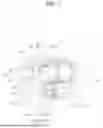


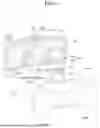
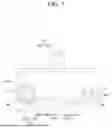



Sources:
- United States Patent and Trademark Office - verify current appl. status at the USPTO↗
Similar patent applications:
- » 20110300009
Method of Processing Contact Portions between Valve Plate and Suction Valve and/or Discharge Valve of Reciprocating Compressor, and Reciprocating Compressor - » 20120267075
COOLING SYSTEM FOR RECIPROCATING COMPRESSORS AND A RECIPROCATING COMPRESSOR - » 20190120221
Reciprocating compressor and method for manufacturing a reciprocating compressor - » 20180223825
RECIPROCATING COMPRESSOR AND METHOD OF MANUFACTURING A RECIPROCATING COMPRESSOR - » 20160245274
Reciprocating compressor, compression section unit, and maintenance method of reciprocating compressor - » 20170356442
Reciprocating Compressor and Process for Mounting Hermetically Sealed Housing of Reciprocating Compressor - » 20140341758
Reciprocating compressor or pump and a portable tool powering system including a reciprocating compressor - » 20130177454
Reciprocating compressor or pump and a portable tool powering system including a reciprocating compressor - » 20070292282
RECIPROCATING COMPRESSOR OR PUMP AND A PORTABLE TOOL POWERING SYSTEM INCLUDING A RECIPROCATING COMPRESSOR - » 20160186738
Reciprocating Compressor or Pump and a Portable Tool Powering System Including a Reciprocating Compressor
Recent applications in this class:
- » 20250369431 2025-12-04
INLET SILENCER FOR A VOLUMETRIC COMPRESSOR AND VOLUMETRIC COMPRESSOR EQUIPPED WITH IT - » 20250270986 2025-08-28
PISTON COMPRESSOR AND MOBILE REFRIGERATOR COMPRISING SAME - » 20240159230 2024-05-16
Compressor intake muffler and filter - » 20240151218 2024-05-09
MUFFLER FOR COMPRESSOR - » 20240110557 2024-04-04
Linear compressor - » 20240110556 2024-04-04
Linear compressor intake muffler arrangement with communication hole - » 20230407859 2023-12-21
RECIPROCATING COMPRESSOR - » 20230026533 2023-01-26
RECIPROCATING COMPRESSOR CYLINDER COVER - » 20220341411 2022-10-27
Device for damping pressure pulsations for a compressor of a caseous fluid - » 20220290662 2022-09-15
System for thermal insulation of suction muffler in compressors