ARTIFICIAL INTELLIGENCE-BASED SYSTEM FOR HIGH-AVAILABILITY ENTERPRISE OPERATIONS IN MULTI-CLOUD ENVIRONMENTS
US20260178377A1
2026-06-25
19/542,585
2026-02-17
Smart Summary: An AI-based system helps businesses run their SAP S/4HANA applications smoothly across different cloud platforms. It uses a computer and memory to communicate securely with various cloud services. The system constantly gathers data about how well everything is working and how much it costs. It can predict future needs and automatically make adjustments to improve performance and save money. By reallocating resources and managing workloads, it ensures that operations remain efficient and reliable. 🚀 TL;DR
Abstract:
The present invention relates to an artificial intelligence-driven autonomous system and method for maintaining high-availability and cost-optimized operation of SAP S/4HANA workloads deployed across multiple cloud computing environments. The system comprises at least one processing unit operatively coupled with a non-transitory memory unit, a communication unit for establishing secure interaction with a plurality of cloud environments, a telemetry acquisition unit for continuously collecting infrastructure-level, application-level, workload-related, and cost-related parameters, an analytical processing unit for determining operational states, a prediction processing unit for forecasting future performance and resource requirements, and a control execution unit for initiating autonomous corrective and optimization actions. The system is configured to dynamically adjust computing resource allocation, redistribute workloads, activate failover sequences, and select economically efficient cloud resources based on continuous analysis and predictive evaluation of real-time operational data.
Applicant:
Interested in similar patents?
Get notified when new applications in this technology area are published.
Classification:
G06F9/48 IPC
Arrangements for program control, e.g. control units using stored programs, i.e. using an internal store of processing equipment to receive or retain programs; Multiprogramming arrangements Program initiating; Program switching, e.g. by interrupt
Description
TECHNICAL FIELD OF THE INVENTION
The present invention relates generally to enterprise computing systems and cloud-based digital infrastructure management. More particularly, the invention pertains to an artificial intelligence-driven autonomous computing system and associated machine architecture configured for managing, optimizing, and sustaining high-availability operations of SAP S/4HANA workloads deployed across heterogeneous multi-cloud environments. The invention further relates to intelligent resource orchestration, predictive workload control, fault resilience, and cost-optimization mechanisms implemented through a dedicated computing device operatively integrated with distributed cloud infrastructure.
BACKGROUND OF THE INVENTION
Enterprise resource planning systems based on SAP S/4HANA are mission-critical digital assets that demand stringent availability, deterministic performance, and predictable operational expenditure. Conventional cloud-based deployments of such systems rely heavily on static configuration policies, rule-based scaling mechanisms, and manual intervention for performance tuning, failure recovery, and cost control. In multi-cloud environments, where SAP S/4HANA instances may be distributed across multiple cloud service providers and geographically dispersed data centers, the complexity of maintaining consistent service levels increases significantly. Existing approaches fail to dynamically correlate infrastructure telemetry, application-layer behavior, transactional workload patterns, and economic parameters in real time. As a result, enterprises experience unplanned downtime, suboptimal resource utilization, excessive cloud expenditure, and delayed response to anomalies. There exists a need for a technically advanced autonomous system capable of continuously learning, predicting, and executing operational decisions without human intervention, while guaranteeing high availability and cost efficiency for SAP S/4HANA workloads.
Enterprise resource planning environments based on SAP S/4HANA have become the operational backbone of large and medium-scale organizations across manufacturing, finance, healthcare, logistics, and public sector domains. These systems support real-time transactional processing, analytics, financial consolidation, supply chain planning, and decision support, making them highly critical for business continuity. With the shift from traditional on-premise deployments toward cloud-based infrastructure, enterprises are increasingly adopting multi-cloud strategies to improve scalability, availability, and geographical redundancy. However, operating SAP S/4HANA across distributed cloud environments introduces significant technical complexity. The management of performance, availability, resource allocation, and operational costs across multiple cloud providers requires sophisticated coordination among infrastructure, database layers, and application workloads. Existing solutions attempt to address these challenges through conventional monitoring tools, rule-based orchestration systems, and manual operational processes, but these approaches exhibit several limitations that hinder their effectiveness in dynamic, large-scale enterprise environments.
Traditional SAP S/4HANA deployments were originally designed for tightly controlled data center environments where compute, memory, and storage resources were provisioned in a predictable and static manner. High availability in such settings was typically achieved through hardware redundancy, clustered database nodes, and scheduled backup mechanisms. With the introduction of cloud computing, enterprises began migrating SAP workloads to virtualized environments where infrastructure resources could be provisioned on demand. Initial cloud-based solutions relied on standard virtualization orchestration tools that provided basic capabilities such as auto-scaling, instance monitoring, and failover management. While these solutions improved flexibility, they were not designed to account for the unique performance characteristics and memory-intensive nature of SAP S/4HANA workloads, particularly those involving in-memory databases and high-throughput transactional systems.
Existing cloud management systems commonly rely on static thresholds to determine when to scale resources or initiate failover. For example, resource scaling decisions are often triggered when CPU utilization exceeds a predefined percentage or when memory usage crosses a configured limit. Although such threshold-based mechanisms are simple to implement, they fail to capture complex workload patterns associated with SAP operations, such as end-of-month financial processing, seasonal demand fluctuations, and sudden transactional spikes due to business events. As a result, resource provisioning frequently occurs either too late, causing performance degradation and potential downtime, or too early, leading to unnecessary operational expenses. These reactive approaches are insufficient for maintaining the strict performance requirements of enterprise-grade SAP environments.
Another category of existing solutions includes centralized monitoring platforms that collect system metrics from cloud infrastructure and SAP application layers. These platforms provide dashboards and alerts to system administrators, enabling manual intervention when anomalies or performance issues are detected. While monitoring tools provide visibility into system health, they do not possess autonomous decision-making capabilities. The reliance on human operators to interpret alerts and execute corrective actions introduces delays in response time. In mission-critical environments, even short delays can result in service disruptions, transaction failures, or data inconsistencies. Furthermore, the increasing scale and complexity of multi-cloud deployments make it impractical for human operators to manually analyze large volumes of telemetry data in real time.
In multi-cloud environments, the problem of maintaining high availability becomes even more challenging. Organizations often deploy SAP S/4HANA components across multiple cloud providers to achieve geographic redundancy and disaster recovery capabilities. Existing high-availability solutions typically depend on predefined failover strategies that replicate data between primary and secondary instances. However, these mechanisms are often static and do not dynamically adapt to changing network conditions, infrastructure performance variations, or workload distribution patterns. Failover decisions are typically triggered only after a failure has already occurred, resulting in temporary service disruption. Moreover, synchronization delays between replicated environments may lead to data latency issues, increasing the risk of transactional inconsistency.
Cost optimization is another critical challenge in multi-cloud SAP operations. Cloud service providers offer a variety of pricing models, instance types, and storage configurations, each with different performance characteristics and cost implications. Existing cost management tools primarily focus on tracking resource consumption and generating billing reports. Some solutions provide recommendations for cost reduction based on historical usage patterns, but these recommendations are often static and lack real-time adaptability. Enterprises frequently overprovision resources to avoid performance risks, which leads to significantly higher operational costs. Conversely, aggressive cost-cutting measures may compromise system stability and application responsiveness. The absence of intelligent, real-time balancing between performance requirements and cost constraints remains a major limitation in existing approaches.
Another drawback of current solutions is their limited ability to correlate infrastructure-level metrics with application-level behavior. SAP S/4HANA performance depends on multiple interacting factors, including database memory allocation, transaction throughput, network latency, and input-output performance. Existing monitoring and orchestration systems often analyze these parameters independently rather than in an integrated manner. As a result, they fail to identify underlying root causes of performance issues that arise from complex interactions among system components. For instance, a spike in transaction latency may be caused by a combination of network congestion, database lock contention, and inefficient resource scheduling. Conventional tools are not capable of understanding such multidimensional relationships, leading to incomplete or ineffective optimization decisions.
Security and compliance considerations further complicate SAP operations in multi-cloud environments. Organizations must ensure that data replication, workload migration, and failover operations comply with enterprise governance policies and regulatory requirements. Existing automation tools lack built-in mechanisms to evaluate security constraints dynamically during operational decision-making. As a result, many organizations continue to rely on manual approval processes before executing critical changes, which slows down response times and reduces the overall efficiency of automated infrastructure management.
Another limitation of current systems lies in their inability to learn from historical operational patterns. Most conventional solutions operate based on predefined rules and configurations that remain static over time. These systems do not improve their decision-making capabilities through experience or adapt to evolving workload characteristics. In modern enterprise environments, workload patterns are influenced by multiple unpredictable factors, including business growth, seasonal trends, and changing user behavior. The absence of adaptive learning mechanisms prevents existing systems from achieving optimal performance and cost efficiency over extended periods.
The distributed nature of multi-cloud deployments also introduces challenges in maintaining consistent service performance across geographically separated data centers. Network latency variations, bandwidth limitations, and regional infrastructure differences can significantly impact application response times. Existing solutions often lack predictive capabilities to anticipate such variations and adjust workload distribution proactively. As a result, enterprises experience uneven performance levels across different regions, affecting user experience and operational reliability.
Furthermore, the complexity of managing heterogeneous cloud environments, each with its own orchestration interfaces, resource provisioning mechanisms, and performance characteristics, adds an additional layer of operational burden. Current management tools are typically designed for specific cloud providers and may not seamlessly integrate across multiple platforms. This lack of interoperability creates silos in operational management, making it difficult to achieve unified control and optimization across the entire infrastructure landscape.
In addition, existing failover mechanisms often operate on a reactive basis, activating secondary systems only after detecting a primary system failure. This reactive model does not account for early warning indicators such as gradual performance degradation, hardware instability, or increasing error rates. Consequently, system transitions during failover events can be abrupt and may result in temporary service unavailability. Proactive failure prevention remains a largely unaddressed area in conventional solutions.
The growing volume of telemetry data generated by SAP systems and cloud infrastructure presents both an opportunity and a challenge. While this data contains valuable insights into system behavior, existing tools are not capable of processing and interpreting such large datasets in real time. Manual analysis is time-consuming and prone to error, while rule-based analytics cannot capture complex nonlinear patterns. This gap limits the ability of enterprises to make informed operational decisions based on predictive insights.
Overall, while existing solutions provide foundational capabilities for monitoring, scaling, and managing SAP S/4HANA workloads in cloud environments, they suffer from several critical drawbacks, including reactive operation, lack of predictive intelligence, limited integration across multiple cloud platforms, dependence on manual intervention, and insufficient correlation between performance and cost parameters. These limitations highlight the need for a more advanced, autonomous, and intelligent system capable of continuously learning from operational data, proactively managing infrastructure resources, ensuring high availability, and optimizing operational costs in real time across multi-cloud environments.
SUMMARY OF THE INVENTION
The present invention discloses an artificial intelligence-driven autonomous system and method, implemented through a dedicated computing device and associated machine structure, configured to manage SAP S/4HANA operations across multi-cloud environments with high availability and optimized cost performance. The system continuously ingests infrastructure-level, application-level, and financial telemetry data, processes such data using adaptive machine learning models, and autonomously executes corrective and optimization actions including workload migration, resource reallocation, fault isolation, and predictive scaling. The invention further provides a physical device comprising interconnected processing, memory, sensing, and control components that collectively function as an autonomous operational controller for SAP S/4HANA environments.
An object of the present invention is to provide an artificial intelligence-driven autonomous system and associated device structure capable of maintaining continuous high-availability operation of SAP S/4HANA workloads deployed across distributed multi-cloud environments. The invention seeks to ensure uninterrupted service continuity by intelligently monitoring infrastructure conditions, application behavior, and transactional performance in real time, and by initiating proactive operational adjustments that prevent system downtime, performance degradation, and service interruptions.
Another object of the invention is to provide a technically advanced mechanism for optimizing cloud resource utilization while reducing overall operational expenditure associated with running SAP S/4HANA environments. The invention aims to dynamically evaluate computing resource consumption, storage utilization, network usage, and billing parameters across multiple cloud providers, and to automatically reconfigure resource allocation in a manner that maintains performance requirements while minimizing unnecessary expenditure.
A further object of the invention is to provide an intelligent control device capable of autonomously predicting workload variations and demand fluctuations associated with enterprise operations. The invention is intended to detect recurring workload patterns, sudden transactional surges, and long-term usage trends, and to adjust system configurations accordingly so that adequate computing resources are provisioned in advance of performance bottlenecks or system overload conditions.
Another object of the invention is to provide a resilient infrastructure management mechanism capable of detecting early indicators of system instability, infrastructure degradation, or potential component failure within a multi-cloud deployment. The invention seeks to initiate preventive actions such as workload redistribution, replication synchronization, and system reconfiguration prior to the occurrence of failure events, thereby ensuring stable and uninterrupted operation of SAP S/4HANA services.
An additional object of the invention is to provide a unified operational control device that integrates infrastructure telemetry, application-level performance metrics, and financial data into a single analytical environment. By correlating these diverse data sources, the invention enables intelligent decision-making that considers both technical performance and economic efficiency simultaneously, thereby improving overall system management effectiveness.
Another object of the invention is to provide a physical machine structure configured to interface with heterogeneous cloud platforms and orchestrate workload operations across geographically distributed environments. The device is intended to function as a centralized yet autonomous controller capable of managing interactions among compute instances, storage subsystems, and network resources without requiring continuous human intervention.
A further object of the invention is to enhance system adaptability by incorporating learning capabilities that continuously improve operational decision-making based on historical performance data and prior system responses. The invention aims to refine its predictive accuracy over time so that resource provisioning, failover decisions, and cost optimization strategies become increasingly precise and effective.
Another object of the invention is to provide a mechanism for maintaining consistent performance levels across multiple cloud regions by dynamically balancing workloads and managing resource distribution based on real-time conditions. This ensures that SAP S/4HANA users experience stable application responsiveness regardless of geographical deployment variations or infrastructure limitations.
An additional object of the invention is to provide a secure operational environment by incorporating protected storage and access control mechanisms within the device structure. The invention seeks to safeguard sensitive enterprise credentials, configuration parameters, and operational policies while enabling automated execution of system-level decisions in compliance with organizational governance requirements.
Another object of the invention is to reduce the reliance on manual monitoring, administrative intervention, and static configuration rules traditionally used in managing SAP S/4HANA environments. By introducing autonomous control and adaptive intelligence into infrastructure operations, the invention aims to improve operational efficiency, reduce human error, and ensure faster response to changing system conditions.
A further object of the invention is to provide a scalable and flexible operational framework capable of supporting growing enterprise workloads and evolving cloud infrastructure technologies. The invention is intended to operate effectively across varying deployment scales, from single-region cloud installations to globally distributed multi-cloud architectures, without requiring extensive reconfiguration.
Another object of the invention is to provide a predictive and proactive approach to system management rather than a reactive one, thereby enabling early identification and mitigation of potential performance issues, cost inefficiencies, and system risks. This forward-looking capability is designed to enhance long-term reliability and sustainability of SAP S/4HANA operations in complex enterprise environments.
A further object of the invention is to ensure efficient synchronization and coordination among multiple cloud environments by intelligently managing data replication, workload migration, and resource distribution. This helps maintain operational consistency and minimizes the risk of data inconsistencies or service disruptions during infrastructure transitions.
Another object of the invention is to provide a technologically integrated solution that improves the overall operational lifecycle of SAP S/4HANA deployments by combining performance optimization, availability assurance, cost management, and predictive intelligence into a single autonomous system and device architecture. Through this integrated approach, the invention seeks to address the technical limitations of existing solutions and provide a more reliable and efficient infrastructure management mechanism for enterprise-scale applications.
BRIEF DESCRIPTION OF FIGURES
These and other features, aspects, and advantages of the present invention will become better understood when the following detailed description is read concerning the accompanying drawings in which like characters represent like parts throughout the drawings, wherein:
FIG. 1 displays a block diagram of a system for artificial intelligence-driven autonomous operation of SAP S/4HANA in multi-cloud environments;
FIG. 2 displays flow chart of a method for artificial intelligence-driven autonomous operation of SAP S/4HANA in multi-cloud environments.
Further, skilled artisans will appreciate that elements in the drawings are illustrated for simplicity and may not have been necessarily been drawn to scale. For example, the flow charts illustrate the method in terms of the most prominent steps involved to help to improve understanding of aspects of the present disclosure. Furthermore, in terms of the construction of the device, one or more components of the device may have been represented in the drawings by conventional symbols, and the drawings may show only those specific details that are pertinent to understanding the embodiments of the present disclosure so as not to obscure the drawings with details that will be readily apparent to those of ordinary skill in the art having benefit of the description herein.
DETAILED DESCRIPTION OF THE INVENTION
For the purpose of promoting an understanding of the principles of the invention, reference will now be made to the embodiment illustrated in the drawings and specific language will be used to describe the same. It will nevertheless be understood that no limitation of the scope of the invention is thereby intended, such alterations and further modifications in the illustrated system, and such further applications of the principles of the invention as illustrated therein being contemplated as would normally occur to one skilled in the art to which the invention relates.
It will be understood by those skilled in the art that the foregoing general description and the following detailed description are exemplary and explanatory of the invention and are not intended to be restrictive thereof.
Reference throughout this specification to “an aspect”, “another aspect” or similar language means that a particular feature, structure, or characteristic described in connection with the embodiment is included in at least one embodiment of the present disclosure. Thus, appearances of the phrase “in an embodiment”, “in another embodiment” and similar language throughout this specification may, but do not necessarily, all refer to the same embodiment.
The terms “comprises”, “comprising”, or any other variations thereof, are intended to cover a non-exclusive inclusion, such that a process or method that comprises a list of steps does not include only those steps but may include other steps not expressly listed or inherent to such process or method. Similarly, one or more devices or sub-systems or elements or structures or components proceeded by “comprises . . . a” does not, without more constraints, preclude the existence of other devices or other sub-systems or other elements or other structures or other components or additional devices or additional sub-systems or additional elements or additional structures or additional components.
Unless otherwise defined, all technical and scientific terms used herein have the same meaning as commonly understood by one of ordinary skill in the art to which this invention belongs. The system, methods, and examples provided herein are illustrative only and not intended to be limiting.
Embodiments of the present disclosure will be described below in detail with reference to the accompanying drawings.
Referring to FIG. 1, a block diagram of a system for artificial intelligence-driven autonomous operation of SAP S/4HANA in multi-cloud environments, the system comprising: at least one processing unit (102) operatively coupled to a non-transitory memory unit; a communication unit (104) configured to establish secure data exchange with a plurality of cloud computing environments hosting SAP S/4HANA application instances and associated database components; a telemetry acquisition unit (106) configured to continuously receive infrastructure-level parameters, application-level performance parameters, transactional workload parameters, and cloud billing parameters from the plurality of cloud computing environments; an analytical processing unit (108) executed by the at least one processing unit and configured to analyze the received parameters to determine operational states associated with availability, performance stability, and resource utilization; a prediction processing unit (110) configured to generate future operational conditions by evaluating temporal workload behavior, infrastructure stress indicators, and cost trends derived from the received parameters; and a control execution unit (112) configured to autonomously initiate operational actions including resource reallocation, workload redistribution, failover activation, and cloud environment selection for maintaining high availability and cost optimization of the SAP S/4HANA application instances.
In an embodiment, the telemetry acquisition unit (106) is configured to receive processor utilization levels, memory access latency, storage input-output response characteristics, network transmission delay metrics, database transaction commit times, and cloud resource consumption values, and wherein the telemetry acquisition unit time-aligns the received parameters using synchronized hardware clocks.
In an embodiment, the analytical processing unit (108) is configured to correlate infrastructure-level parameters with application-level transaction throughput to identify operational states indicative of impending performance degradation prior to violation of service continuity thresholds.
In an embodiment, the prediction processing unit (110) is configured to determine workload growth trajectories and resource exhaustion timelines based on historical transactional activity, seasonal operational patterns, and detected anomaly trends.
In an embodiment, the control execution unit (112) is configured to initiate proactive workload migration from a first cloud computing environment to a second cloud computing environment prior to occurrence of infrastructure failure, based on predicted instability indicators.
In an embodiment, the control execution unit (112) is further configured to dynamically adjust computing resource allocation by increasing or decreasing processing capacity, memory allocation, and storage throughput while maintaining predefined operational constraints associated with SAP S/4HANA transactional consistency.
In an embodiment, the control execution unit (112) is configured to execute cost-optimization actions by selecting cloud computing environments based on real-time pricing characteristics, historical cost efficiency, and performance compliance outcomes.
In an embodiment, the non-transitory memory unit stores learned operational behavior representations that are continuously updated based on system response outcomes following execution of operational actions.
In an embodiment, the analytical processing unit (108) is configured to detect multi-dimensional anomaly conditions by jointly evaluating infrastructure stress indicators, application response variability, and transaction failure frequency.
In an embodiment, the communication unit (104) is configured to interface with heterogeneous cloud control interfaces while maintaining consistent command semantics for workload orchestration and resource management.
In an embodiment, the telemetry acquisition unit is configured to continuously capture infrastructure-level parameters and application-level performance parameters in successive time-indexed acquisition intervals, and wherein the analytical processing unit is configured to construct temporally ordered operational state representations by aligning the captured parameters according to synchronized hardware clock references and computing comparative differences between parameter values across successive acquisition intervals to identify progressive deviations in system behavior indicative of emerging performance instability.
In an embodiment, the telemetry acquisition unit operates in a continuous sampling mode in which infrastructure-level parameters and application-level performance parameters are captured at defined and repeating acquisition intervals generated using an internal timing mechanism that is synchronized across the computing device and associated cloud environments. The captured parameters include values representing processing activity, memory access behavior, storage response characteristics, network transmission behavior, and application transaction performance. Each captured data point is associated with a precise time reference derived from synchronized hardware clocks so that parameters originating from different cloud computing environments are aligned to the same temporal frame of reference. This alignment enables the analytical processing unit to construct temporally ordered operational state representations that reflect the condition of the distributed system at each acquisition interval. The analytical processing unit stores these representations sequentially in the non-transitory memory unit and compares parameter values from one acquisition interval with those from preceding intervals to determine the rate and direction of change in system behavior.
During operation, the analytical processing unit evaluates comparative differences across successive intervals by calculating how specific parameters evolve over time rather than relying on isolated instantaneous values. For instance, if processor utilization values show a gradual but continuous increase over several acquisition intervals, and this increase is accompanied by a simultaneous rise in memory access latency and storage input-output response times, the analytical processing unit interprets this progressive pattern as a potential indicator of resource contention that may lead to performance instability. Similarly, if application-level parameters such as transaction response times and completion delays begin to increase in small increments across consecutive intervals, the system identifies the emergence of workload pressure even before predefined operational thresholds are reached. By maintaining a chronological representation of system conditions and continuously computing comparative differences, the analytical processing unit is able to detect subtle deviations that represent the early stages of instability.
As a practical illustration, consider a scenario in which a SAP S/4HANA application instance experiences an increase in transaction volume due to periodic business activity. At an initial acquisition interval, processor utilization may increase slightly while memory access latency remains within normal limits. In the following intervals, the telemetry acquisition unit captures incremental increases in both processor utilization and memory latency, followed by minor increases in database transaction completion times. Because the analytical processing unit has access to temporally aligned representations of each parameter across successive intervals, it identifies that the growth pattern is consistent and progressive rather than random. This allows the system to interpret the changes as an emerging performance constraint that may eventually affect application responsiveness if left unaddressed.
The use of synchronized hardware clock references ensures that parameters collected from geographically separated cloud environments can be compared accurately without temporal distortion. This is particularly important in multi-cloud deployments where network transmission delays can cause asynchronous data arrival. By aligning the data according to precise time references, the analytical processing unit can compare system behavior across environments at the same moment, allowing it to identify coordinated deviations such as simultaneous increases in transaction delays across multiple environments. This coordinated analysis improves the reliability of operational state determination.
Through the construction of temporally ordered operational state representations and the computation of comparative differences across successive intervals, the system achieves early identification of emerging performance instability without relying on static threshold violations. This enables proactive intervention before instability propagates into service disruption. The continuous tracking of parameter evolution also allows the system to distinguish between temporary fluctuations and persistent performance shifts. As a result, the system maintains stable operation of SAP S/4HANA workloads by recognizing patterns of gradual degradation and enabling timely corrective actions that preserve transaction continuity and application responsiveness across distributed cloud environments.
In an embodiment, the analytical processing unit is further configured to generate interdependent parameter relationship profiles by comparing processor utilization levels with memory access latency values, storage input-output response characteristics with database transaction commit times, and network transmission delay metrics with application transaction throughput values, and wherein the analytical processing unit determines a multi-factor operational state by identifying coordinated variation patterns across the interdependent parameter relationship profiles.
In an embodiment, the analytical processing unit operates by forming structured relationship profiles that reflect how individual infrastructure-level parameters and application-level performance parameters influence one another during ongoing system activity. Rather than interpreting processor utilization, memory access latency, storage input-output response characteristics, network transmission delay metrics, and application transaction throughput values as independent indicators, the analytical processing unit continuously compares these parameters in paired and grouped combinations to determine how variations in one parameter correspond to variations in another. The captured parameters are first arranged into synchronized temporal sets using aligned time references so that each parameter value corresponds to the same operational moment. The analytical processing unit then evaluates relationships such as whether an increase in processor utilization is accompanied by a proportional increase in memory access latency, whether slower storage input-output response characteristics coincide with increased database transaction commit times, and whether increased network transmission delay correlates with a decline in application transaction throughput.
The generation of interdependent parameter relationship profiles is achieved by computing comparative variations between paired parameters across multiple successive acquisition intervals and storing these relationships as structured representations in the non-transitory memory unit. For example, when processor utilization begins to rise steadily while memory access latency also increases in a corresponding pattern, the analytical processing unit identifies that the processing demand is placing pressure on memory access pathways. Similarly, when storage input-output response times lengthen and database transaction commit times begin to increase shortly thereafter, the analytical processing unit determines that the storage subsystem is influencing the pace of transaction completion. In another scenario, when network transmission delays increase and application transaction throughput decreases in the same interval, the analytical processing unit identifies that network performance is directly impacting the application's ability to process transactions efficiently. These observations are not based on single measurements but on coordinated variations detected across multiple aligned intervals.
The analytical processing unit then aggregates these interdependent observations into a composite relationship profile that represents the combined operational condition of the system. The unit identifies coordinated variation patterns by determining whether multiple parameter relationships change simultaneously in a consistent direction. For instance, a situation in which processor utilization, memory latency, and storage response delays all increase together while transaction throughput begins to decline indicates that system stress is occurring across multiple resource layers. The analytical processing unit interprets such coordinated changes as a multi-factor operational state that reflects the actual system condition more accurately than any single parameter measurement. This composite interpretation enables the system to distinguish between isolated performance fluctuations and broader operational shifts affecting multiple components.
As a practical example, during a period of increased business activity, the SAP S/4HANA application may begin processing a higher volume of transactions. The telemetry acquisition unit captures rising processor utilization values along with a gradual increase in memory access latency. Shortly thereafter, storage input-output response times increase and database transaction commit times become longer. At the same time, network transmission delay values may increase slightly due to higher data exchange between distributed components. By comparing these changes across parameters and identifying that they are occurring together, the analytical processing unit determines that the system is entering a multi-factor stressed operational state rather than experiencing an isolated performance fluctuation. This recognition allows the system to understand the underlying cause of the change as an increase in workload intensity affecting multiple resources simultaneously.
The use of interdependent parameter relationship profiles allows the analytical processing unit to interpret the behavior of complex, distributed SAP S/4HANA deployments with greater clarity. Since the application depends on coordinated functioning of processing resources, memory systems, storage subsystems, and network pathways, any imbalance among these components can lead to performance degradation. By analyzing how these components influence each other through coordinated variations, the system can identify the origin of performance pressure and the degree to which it is spreading across the infrastructure. This process improves the reliability of operational state determination and supports timely intervention decisions that maintain stable performance and prevent cascading resource bottlenecks across the multi-cloud environment.
In an embodiment, the prediction processing unit is configured to derive workload growth trajectories by evaluating historical transactional activity stored in the non-transitory memory unit across multiple temporal segments and identifying recurring workload increase sequences, and wherein the prediction processing unit determines a projected resource exhaustion timeline by estimating the rate of increase in resource consumption relative to available infrastructure capacity within each cloud computing environment.
In an embodiment, the prediction processing unit operates by continuously examining stored historical transactional activity associated with the SAP S/4HANA application instances across multiple temporal segments that represent different operational periods such as hourly intervals, daily cycles, weekly patterns, and longer duration business cycles. The historical transactional activity includes records of transaction initiation rates, transaction completion frequencies, database interaction density, processor utilization linked to transactional execution, and memory consumption behavior observed during prior operating conditions. These historical records are maintained within the non-transitory memory unit in an indexed format that allows the prediction processing unit to retrieve and analyze patterns across corresponding time periods. By examining these temporal segments, the prediction processing unit identifies recurring workload increase sequences that occur in predictable intervals, such as increased transaction volumes at the end of accounting periods, payroll processing intervals, inventory reconciliation operations, or periodic reporting activities.
The prediction processing unit evaluates the progression of workload intensity by measuring how transactional activity has historically grown within each identified sequence. For example, the processing unit determines how transaction volumes increased from the beginning of a business cycle to peak operational periods, and correlates this increase with corresponding growth in processor utilization, memory consumption, storage access demand, and network activity. By analyzing multiple historical instances of similar workload sequences, the prediction processing unit derives workload growth trajectories that represent the typical rate at which system demand increases over time. These trajectories are not limited to simple comparisons but instead involve examining the sequence of changes across successive time intervals to determine whether the rate of growth accelerates, stabilizes, or declines as the workload progresses.
Once the workload growth trajectories are established, the prediction processing unit determines a projected resource exhaustion timeline by estimating how the current rate of increase in resource consumption compares with the total available infrastructure capacity within each cloud computing environment. This estimation is performed by continuously monitoring current resource consumption levels and comparing them with the historical rate at which resource utilization increased during similar operational conditions. For instance, if the system observes that processor utilization has increased steadily over several consecutive intervals and historical data shows that similar patterns previously resulted in near-capacity conditions within a known duration, the prediction processing unit calculates an approximate future time at which the available processing capacity may become insufficient to support ongoing operations. The same evaluation is performed for memory allocation levels, storage throughput demand, and network bandwidth usage, enabling the prediction processing unit to form a comprehensive projection of when one or more infrastructure resources may reach their operational limits.
As an illustrative example, during a recurring financial closing period, the historical records may indicate that transaction volumes increase steadily over a span of several hours, leading to a proportional rise in processor utilization and memory consumption. By comparing the current rate of increase in transactional activity with historical growth patterns from previous financial closing cycles, the prediction processing unit can estimate the point in time at which processor utilization may approach maximum available capacity if no corrective action is taken. This projected resource exhaustion timeline allows the system to anticipate potential resource limitations before they occur. The prediction processing unit performs this evaluation independently for each cloud computing environment, taking into account the available infrastructure capacity and the current resource consumption trends specific to each environment.
The process of deriving workload growth trajectories and projecting resource exhaustion timelines enables the system to maintain operational continuity by identifying capacity limitations in advance rather than reacting to them after they occur. By continuously updating projections based on real-time telemetry and historical behavior, the prediction processing unit ensures that anticipated demand increases are addressed proactively. This approach allows the control execution unit to initiate resource reallocation or workload redistribution before resource saturation begins to affect transaction processing performance. As a result, the SAP S/4HANA application instances continue to operate under stable conditions even during periods of rapid workload expansion, and the system is able to utilize infrastructure resources efficiently while preventing sudden performance degradation associated with capacity exhaustion.
In an embodiment, the control execution unit is configured to initiate proactive workload migration by first identifying a target cloud computing environment with available processing capacity and memory availability based on real-time telemetry received by the telemetry acquisition unit, thereafter preparing a migration sequence by synchronizing database components associated with the SAP S/4HANA application instances between a source cloud computing environment and the target cloud computing environment, and subsequently transferring transactional workload execution in a staged progression to maintain continuity of operation.
In an embodiment, the control execution unit performs proactive workload migration through a structured sequence of preparatory and execution stages that are initiated before any degradation in system performance becomes critical. The process begins with the evaluation of real-time telemetry data received from the telemetry acquisition unit, which continuously provides information regarding current processor utilization levels, memory consumption patterns, storage access demand, and application transaction activity across multiple cloud computing environments. Using this information, the control execution unit compares the available processing capacity and memory availability of each cloud computing environment to determine which environment is capable of accepting additional workload without affecting operational stability. This evaluation is not limited to identifying a single underutilized environment but involves assessing multiple candidate environments to determine the most suitable target location for migration based on current resource availability and predicted workload conditions.
Once a suitable target cloud computing environment is identified, the control execution unit prepares a migration sequence by initiating synchronization of database components associated with the SAP S/4HANA application instances between the source cloud computing environment and the target cloud computing environment. This synchronization process involves ensuring that data records, transactional logs, and in-memory data structures in the target environment reflect the most recent operational state of the source environment. The synchronization is performed in controlled cycles where the control execution unit coordinates data consistency checks, validates replication integrity, and confirms that the target environment can support the same transactional operations as the source. This preparatory phase ensures that the target environment is fully aligned with the operational context of the source environment before any workload is transferred.
Following successful synchronization, the control execution unit begins transferring transactional workload execution in a staged progression. Instead of shifting all operations simultaneously, the unit initiates migration with low-dependency workload segments that have minimal interaction with active transactions. These segments may include background processing tasks, scheduled data aggregation functions, or non-critical reporting operations. After confirming that the target environment processes these initial workload segments successfully and maintains consistent performance, the control execution unit gradually transfers additional workload components that have moderate dependency on shared resources. Throughout this staged progression, the telemetry acquisition unit continues to capture real-time performance indicators from both the source and target environments, allowing the analytical processing unit to monitor system stability and confirm that transaction processing remains uninterrupted.
As the migration progresses, the control execution unit manages transaction routing by directing newly initiated transactions to the target cloud computing environment while allowing existing transactions in the source environment to complete their execution cycles. This controlled routing prevents transaction conflicts and ensures that no in-progress operations are interrupted during the transition. Once the majority of transactional workload execution has shifted to the target environment and the source environment shows reduced processing demand, the control execution unit completes the migration by transferring any remaining dependent workload components in a final synchronization phase.
For example, if the telemetry data indicates that the processor utilization in a primary cloud environment is steadily increasing and predicted to approach capacity limits due to a rise in transaction volume, the control execution unit may identify a secondary cloud environment with sufficient available capacity. The database synchronization process begins by replicating the latest transaction records and memory-resident data structures to the secondary environment. The system then initiates migration of background data processing tasks, followed by progressively shifting core transactional operations once stability is confirmed. During this period, the control execution unit continuously verifies that transaction completion times remain consistent and that no data discrepancies occur between environments.
By executing migration in a staged and synchronized manner, the system preserves continuity of operation for SAP S/4HANA application instances even during significant workload redistribution. The proactive nature of the migration prevents system overload conditions and allows workloads to be balanced across environments before performance is impacted. The structured preparation, synchronization, and controlled transfer of workload execution ensures that data consistency is maintained and that users experience uninterrupted access to application services throughout the transition.
In an embodiment, the control execution unit is configured to dynamically adjust computing resource allocation by incrementally modifying processing capacity allocation and memory allocation in successive adjustment intervals, and wherein the analytical processing unit continuously evaluates the effect of each adjustment interval on transaction commit times and application response characteristics before applying a subsequent adjustment interval.
In an embodiment, the control execution unit performs dynamic adjustment of computing resource allocation through a gradual and controlled process in which processing capacity and memory allocation are modified in successive adjustment intervals rather than through abrupt large-scale changes. The process begins when the analytical processing unit, based on continuous telemetry inputs, identifies a rising workload demand reflected in increased transaction execution density, higher processor utilization, and growing memory access activity. Instead of immediately allocating a large volume of additional resources, the control execution unit initiates a first adjustment interval in which a measured increment of processing capacity and memory allocation is provisioned to the SAP S/4HANA application instances. This incremental approach ensures that the system response to resource changes can be observed and evaluated in real time without introducing instability caused by sudden configuration shifts.
After the initial allocation change is applied, the analytical processing unit begins a continuous evaluation phase during which transaction commit times, application response characteristics, and transaction completion stability are monitored across subsequent telemetry acquisition intervals. The analytical processing unit compares the newly observed performance parameters with those recorded prior to the adjustment. If the adjustment results in reduced transaction commit delays, stabilized response times, and improved processing efficiency, the system interprets the change as beneficial. Conversely, if no significant improvement is detected or if resource usage increases without corresponding performance gains, the system recognizes that the initial adjustment may not be sufficient or optimally targeted.
Based on the observed response, the control execution unit initiates a subsequent adjustment interval in which an additional incremental change is applied. This may involve allocating additional processing capacity to handle increased computational demand or increasing memory allocation to support higher in-memory transaction processing. Each adjustment interval is followed by a validation phase where the analytical processing unit evaluates whether transaction commit times are stabilizing, whether application response delays are reducing, and whether overall system throughput is improving. This repeated cycle of incremental modification followed by continuous evaluation allows the system to converge toward an optimal resource configuration tailored to the current workload conditions.
For example, during a period of growing transaction volume such as a financial reconciliation cycle, the telemetry acquisition unit may detect that transaction commit times are gradually increasing due to rising processor load and memory usage. In response, the control execution unit may first increase processing capacity by a small increment. The analytical processing unit then observes whether transaction commit times begin to decrease and whether application response times become more consistent. If the improvement is partial, the control execution unit may apply another incremental increase in memory allocation to support the growing number of active transactions. After each adjustment, the analytical processing unit monitors the system response and determines whether further adjustments are required or whether a stable operational state has been reached.
This interval-based adjustment mechanism prevents excessive resource allocation that could occur if large changes were applied without observing system behavior. It also prevents under-allocation by ensuring that additional adjustments can be applied as long as performance indicators continue to suggest resource constraints. The continuous monitoring of transaction commit times and application response characteristics ensures that each allocation change is guided by observed operational outcomes rather than predetermined assumptions. As a result, the system maintains balanced resource utilization while supporting the real-time processing requirements of SAP S/4HANA workloads, ensuring that processing capacity and memory resources are scaled in alignment with actual operational demand.
In an embodiment, the control execution unit is further configured to determine a preferred cloud computing environment for execution of workload redistribution by evaluating real-time pricing characteristics together with predicted performance stability indicators and historical cost efficiency records stored in the non-transitory memory unit, and wherein the control execution unit selects the preferred cloud computing environment based on a combined assessment of resource availability, predicted performance stability, and comparative operational expenditure.
In an embodiment, the control execution unit performs a selection process to determine a preferred cloud computing environment for execution of workload redistribution by continuously evaluating multiple operational factors that influence both system performance and operational expenditure. The telemetry acquisition unit provides real-time information relating to processing capacity utilization, memory availability, storage throughput conditions, and network performance across each cloud computing environment, while also capturing pricing-related data reflecting the current operational cost associated with processing resources, storage usage, and data transfer. These real-time pricing characteristics are stored in the non-transitory memory unit and updated at successive intervals so that the system maintains an accurate representation of the current cost landscape associated with each available cloud computing environment.
In parallel, the prediction processing unit generates predicted performance stability indicators for each cloud computing environment by examining historical operational behavior and current infrastructure stress conditions. These indicators reflect the likelihood that a given environment will maintain stable transaction processing performance under increased workload. The prediction processing unit derives these indicators by evaluating past performance outcomes recorded in the non-transitory memory unit, including how each environment responded to similar workload conditions in earlier operational cycles. For example, the system may identify that a particular environment historically maintains stable transaction response characteristics under moderate processing loads but experiences performance variability when memory utilization approaches higher levels. Such information forms part of the predictive stability assessment used by the control execution unit.
The control execution unit combines this information with historical cost efficiency records stored in the non-transitory memory unit. These records contain previously observed relationships between resource usage levels and actual operational expenditure across different cloud computing environments. By examining these records, the control execution unit determines how efficiently each environment has historically supported transaction workloads relative to the cost incurred. For instance, if an environment has consistently delivered stable application performance while maintaining lower resource consumption for comparable workloads, the system recognizes that environment as having higher cost efficiency under certain conditions.
To determine the preferred environment for workload redistribution, the control execution unit performs a comparative assessment across all candidate environments by simultaneously evaluating current resource availability, predicted performance stability indicators, and the most recent pricing characteristics. The unit assesses whether sufficient processing capacity and memory resources are available to accommodate the incoming workload without creating additional stress conditions. It then considers the predicted ability of the environment to maintain stable performance based on its past response patterns. Finally, the unit evaluates the expected operational expenditure by examining the cost associated with allocating the required resources in that environment under current pricing conditions.
As an illustrative example, when the system detects that an existing workload needs to be redistributed due to rising processing demand in a primary environment, the control execution unit may evaluate two alternative environments. One environment may offer lower real-time processing costs but show a history of performance variability when transaction volumes increase. Another environment may offer slightly higher resource pricing but demonstrate consistently stable performance and efficient memory utilization under similar workloads. By considering both performance stability indicators and cost efficiency records, the control execution unit determines which environment is more suitable for sustaining transaction processing without introducing instability while still maintaining reasonable operational expenditure.
Once the combined assessment is completed, the control execution unit selects the preferred cloud computing environment and initiates workload redistribution accordingly. This decision-making approach ensures that the selection is not based solely on cost considerations or solely on performance indicators, but instead on a balanced evaluation of multiple operational factors. By integrating real-time pricing characteristics with predictive performance behavior and historical efficiency observations, the system supports informed redistribution decisions that maintain stable operation of SAP S/4HANA workloads while avoiding unnecessary resource expenditure across distributed multi-cloud environments.
In an embodiment, the non-transitory memory unit is configured to maintain continuously updated operational behavior representations comprising previously observed infrastructure parameter relationships, workload intensity progression patterns, and performance response outcomes following execution of control actions, and wherein the prediction processing unit references the operational behavior representations when generating future operational conditions to improve predictive accuracy over time.
In an embodiment, the non-transitory memory unit functions as a continuously evolving knowledge repository in which the system stores structured representations of observed operational behavior derived from prior system activity across multiple cloud computing environments. These operational behavior representations are generated by recording relationships among infrastructure parameters such as processor utilization, memory access behavior, storage response characteristics, and network transmission patterns, along with associated workload intensity progression patterns and the resulting performance response outcomes observed after execution of control actions. Each time the control execution unit performs an operational adjustment, such as modifying resource allocation, redistributing workload, or initiating migration, the system captures the state of infrastructure conditions before the action, the nature of the action applied, and the performance outcomes observed over subsequent acquisition intervals. These observations are organized and retained in the non-transitory memory unit in a manner that preserves the sequence and context of the system's prior behavior.
The stored representations include detailed associations between parameter relationships and resulting system performance. For instance, if the system previously encountered a scenario in which increasing processor utilization was followed by a measurable rise in memory access latency and transaction commit times, and a specific resource allocation adjustment subsequently restored stable performance, this sequence is recorded as an operational behavior pattern. Similarly, if a particular workload intensity progression pattern historically led to performance fluctuations in a certain cloud computing environment but remained stable in another, that comparative outcome is preserved in memory. Over time, the memory unit accumulates a broad set of behavioral examples reflecting how the SAP S/4HANA application instances responded under various workload conditions and infrastructure configurations.
The prediction processing unit accesses these continuously updated operational behavior representations when generating future operational conditions. Instead of relying solely on current telemetry inputs, the prediction processing unit compares present infrastructure parameter relationships and workload intensity patterns with previously recorded behavior patterns stored in memory. By identifying similarities between current conditions and past operational scenarios, the prediction processing unit can determine how the system is likely to behave if existing trends continue. For example, if current telemetry indicates a gradual rise in transaction density and processor utilization similar to a previously recorded sequence that led to increased transaction delays, the prediction processing unit references the stored behavior pattern to anticipate the progression of performance changes and the likely impact on resource utilization.
The prediction processing unit also considers performance response outcomes associated with past control actions when forming projections. If historical records show that certain resource allocation adjustments resulted in rapid stabilization of transaction commit times during similar workload conditions, the prediction processing unit incorporates that knowledge into its evaluation of future operational conditions. Conversely, if past records indicate that specific adjustments did not produce measurable improvement under comparable circumstances, the prediction processing unit factors that information into its projections to avoid relying on ineffective responses. This continuous referencing of prior behavior allows the system to refine its projections over time as more operational scenarios are observed and recorded.
As a practical illustration, during a recurring high-demand period, the system may detect a pattern of steadily increasing transaction throughput combined with rising memory consumption. By referencing stored operational behavior representations, the prediction processing unit may identify that a similar pattern previously resulted in increased transaction completion delays after a certain duration. The stored representation may also indicate that a particular adjustment to memory allocation during that earlier instance resulted in stabilization of application response characteristics. Using this information, the prediction processing unit can anticipate how the current workload is likely to evolve and support timely preparation for resource adjustments. Because the system continuously updates the stored representations with new observations following each operational cycle, the predictive process becomes progressively more aligned with the actual behavior of the SAP S/4HANA environment.
This ongoing refinement process enables the system to respond more accurately to changing workload conditions and infrastructure dynamics. By maintaining a continuously updated memory of operational relationships, workload progressions, and observed outcomes, the system develops a deeper contextual understanding of how the distributed computing environment behaves over time. This results in increasingly precise projections of future operational conditions, improved anticipation of resource demands, and more effective preparation for workload changes across multiple cloud computing environments.
In an embodiment, the analytical processing unit is configured to detect multi-dimensional anomaly conditions by identifying simultaneous deviations in infrastructure stress indicators, application response variability, and transaction failure frequency within a defined operational interval, and wherein the analytical processing unit determines an anomaly state when the deviations exceed historical variation patterns stored in the non-transitory memory unit.
In an embodiment, the analytical processing unit performs anomaly detection by examining multiple dimensions of system behavior within a defined operational interval, rather than relying on a single parameter variation. The telemetry acquisition unit continuously provides synchronized values representing infrastructure stress indicators such as processor utilization intensity, memory access delay characteristics, storage response irregularities, and network transmission delay variations, along with application response variability reflected in transaction processing times and user session response patterns. In addition, the telemetry acquisition unit captures information relating to transaction failure frequency, including incomplete transaction attempts, delayed commit operations, and repeated transaction retries. The analytical processing unit groups these parameters within each operational interval to form a composite representation of system behavior at that moment.
The analytical processing unit then compares the current composite representation with previously stored historical variation patterns maintained in the non-transitory memory unit. These historical variation patterns reflect the normal operational range within which the system has previously functioned without performance instability or failure conditions. For each operational interval, the analytical processing unit evaluates whether infrastructure stress indicators are rising beyond their typical variation limits, whether application response variability is increasing at a rate that deviates from historical behavior, and whether transaction failure frequency is showing a noticeable increase compared to previously observed operational states. This evaluation is not based on isolated readings but on the simultaneous presence of deviations across multiple parameters.
When the analytical processing unit detects that multiple dimensions of system behavior are deviating together within the same operational interval, it interprets the condition as a potential anomaly. For example, if processor utilization and memory access latency increase in parallel, while transaction completion times begin to vary unpredictably and the frequency of transaction failures begins to rise slightly above normal levels, the analytical processing unit compares the magnitude and pattern of these deviations with stored historical variation patterns. If the observed combination of deviations exceeds the ranges previously recorded during stable operation, the analytical processing unit determines that the system has entered an anomaly state. This determination is based on the coordinated deviation across infrastructure stress indicators, application response behavior, and transactional outcomes rather than on any single parameter exceeding a predefined limit.
As an illustrative scenario, consider a situation in which the system begins to experience a subtle increase in processor utilization accompanied by irregular fluctuations in memory access timing. At the same time, application response times may start to show inconsistent delays, and a small number of transaction failures may occur sporadically. Individually, these changes might fall within acceptable limits, but when analyzed together within the same operational interval, the analytical processing unit identifies that the combined pattern of variation differs significantly from previously recorded stable behavior. The system then references stored historical variation patterns to determine whether similar combined deviations were previously associated with performance degradation or instability. If such combined patterns are found to be outside the normal range of system operation, the analytical processing unit identifies the condition as an anomaly state.
This multi-dimensional approach allows the system to recognize complex irregularities that develop gradually and may not be immediately visible when monitoring individual parameters independently. By focusing on the simultaneous deviation of multiple related indicators, the system is able to identify abnormal operational conditions at an early stage. The use of stored historical variation patterns ensures that the determination of anomaly states is based on actual operational history rather than static limits, enabling the system to distinguish between acceptable workload fluctuations and unusual behavior that may indicate underlying issues. This process allows the system to recognize emerging irregularities in infrastructure performance and application processing before they escalate into more severe disruptions, enabling timely response and stabilization of the SAP S/4HANA operational environment.
In an embodiment, the communication unit is configured to translate control instructions generated by the control execution unit into environment-specific command sequences compatible with different cloud control interfaces, and wherein the communication unit maintains consistent command semantics by mapping operational instructions to standardized control representations prior to transmission to the plurality of cloud computing environments.
In an embodiment, the communication unit operates as an intermediary execution layer that converts internally generated operational instructions into command sequences that can be interpreted by different cloud control interfaces without altering the intended operational outcome. The control execution unit generates operational instructions in a standardized internal representation that defines the required action, such as reallocating processing capacity, increasing memory allocation, initiating workload redistribution, or synchronizing database components. These instructions are expressed in a consistent logical structure that describes the action parameters, target resources, and execution conditions. The communication unit receives these standardized instructions and performs a translation process in which the instructions are mapped into environment-specific command sequences that are compatible with the operational syntax and control protocols used by each cloud computing environment.
This translation process begins by identifying the target cloud computing environment and retrieving stored interface characteristics associated with that environment from the non-transitory memory unit. These characteristics include the command structure required to adjust computing resources, the sequence required to initiate workload movement, and the specific interaction format needed to modify infrastructure configurations. The communication unit then interprets the standardized control representation generated by the control execution unit and decomposes the operational instruction into a set of actionable steps that can be implemented using the command conventions supported by the target environment. For example, an instruction to increase processing capacity for a particular SAP S/4HANA instance may require a specific command format in one environment and a different format in another. The communication unit generates the corresponding command sequence in the appropriate format while preserving the original intent and operational parameters of the instruction.
To maintain consistent command semantics across multiple cloud computing environments, the communication unit first maps operational instructions into standardized control representations before translation. This standardized representation acts as a common internal language that defines the action type, execution priority, resource identifiers, and expected operational outcome. Once the instruction is represented in this common format, the communication unit performs a mapping process that converts each element of the standardized representation into environment-specific parameters required by the destination interface. This ensures that the same operational instruction produces a consistent effect regardless of which cloud environment receives it. For instance, an instruction to reassign workload segments from one environment to another may be translated into a sequence of commands that configure routing behavior in one environment and a different sequence that activates workload acceptance capabilities in another, yet both sequences correspond to the same standardized representation.
As an example, when the control execution unit determines that additional memory allocation is required for an application instance, it generates an internal instruction describing the resource adjustment requirement. The communication unit maps this instruction into a standardized representation that specifies the resource type, target instance, and magnitude of change. The unit then generates the appropriate command sequence for each relevant cloud environment. In one environment, the command sequence may involve invoking an interface procedure that modifies memory allocation settings for the specified instance, while in another environment, the command sequence may involve initiating a resource reconfiguration request followed by a validation procedure. Despite these differences in execution format, the outcome remains consistent because the translation process preserves the operational meaning defined in the standardized representation.
The communication unit further ensures that the translated command sequences are transmitted in a controlled manner by validating that all necessary parameters are included and that the command structure conforms to the expected interface requirements. This validation reduces the possibility of execution inconsistencies caused by format variations across different cloud environments. By maintaining a standardized internal representation and performing precise mapping to environment-specific commands, the system achieves coordinated execution of operational actions across heterogeneous cloud infrastructures. This approach enables the system to manage distributed SAP S/4HANA workloads effectively even when the underlying environments differ in their control interfaces, thereby allowing uniform operational control across multiple platforms without requiring manual adaptation for each environment.
In an embodiment, the telemetry acquisition unit is configured to segment received parameters into logically associated parameter groups corresponding to processing capacity utilization, memory access behavior, storage access characteristics, network transmission performance, and application transaction behavior, and wherein the analytical processing unit is configured to evaluate each parameter group independently and thereafter perform cross-group correlation to determine composite operational states associated with system stability.
In an embodiment, the telemetry acquisition unit organizes the continuous stream of received parameters into structured and logically associated parameter groups so that the system can evaluate different aspects of infrastructure behavior and application activity in a disciplined and context-aware manner. The parameters captured from the cloud computing environments are first categorized based on their functional relevance to specific operational domains. Values related to processing capacity utilization, such as processor load intensity and execution queue occupancy, are grouped together as one category. Parameters reflecting memory access behavior, including access latency and memory usage distribution patterns, are placed in a separate group. Storage access characteristics such as input-output response delays and access frequency patterns are collected into another group. Network transmission performance indicators, including data transfer delays and transmission stability, form an additional category. Application transaction behavior parameters, such as transaction initiation rates, completion timing variations, and execution density, are maintained in a separate group associated with application-level activity.
The segmentation process is performed by the telemetry acquisition unit as data is received in successive time-indexed acquisition intervals. Each parameter is assigned to its corresponding logical group based on predefined classification rules stored in the non-transitory memory unit. The grouped parameters are then stored in structured representations that maintain temporal alignment across all groups so that the analytical processing unit can evaluate them in a synchronized manner. This structured grouping allows the analytical processing unit to analyze patterns within each domain independently before combining insights across domains. For example, the analytical processing unit may evaluate processing capacity utilization trends independently to determine whether processor demand is increasing steadily over time. Separately, the unit may analyze memory access behavior to identify whether memory latency is rising or if memory consumption patterns are becoming uneven. Similar independent evaluations are conducted for storage performance, network transmission stability, and application transaction behavior.
After independently evaluating each parameter group, the analytical processing unit performs cross-group correlation by examining how variations within one group influence or coincide with variations in other groups. For instance, if the processing capacity utilization group shows increasing load intensity while the memory access behavior group simultaneously exhibits rising latency, the analytical processing unit identifies a relationship indicating that higher processing demand may be placing pressure on memory access. Similarly, if storage access characteristics begin to show delayed response patterns while application transaction behavior indicates slower transaction completion, the system interprets the relationship as an interaction between storage performance and application execution efficiency. The cross-group correlation process is conducted by aligning the temporal data from all groups and identifying coordinated variation patterns that extend across multiple domains.
As a practical illustration, during a period of increased application activity, the application transaction behavior group may show a rise in transaction initiation rates. At the same time, the processing capacity utilization group may indicate higher processor load, the memory access behavior group may reflect increased memory usage, and the storage access characteristics group may begin to show slightly increased response times. The analytical processing unit evaluates each group independently to confirm that these changes are occurring within each domain. It then performs cross-group correlation to determine that the variations are interconnected and represent a composite operational condition rather than isolated fluctuations. By identifying how changes in transaction behavior are affecting infrastructure resource consumption across multiple domains, the system is able to determine a comprehensive operational state that reflects the overall stability of the SAP S/4HANA environment.
This layered evaluation process improves the accuracy of system condition assessment by ensuring that conclusions are not drawn from a single parameter group alone. Independent analysis of each group allows the system to understand domain-specific behavior, while cross-group correlation reveals how domain-level changes interact to influence overall performance. The resulting composite operational state provides a complete representation of system stability by capturing the combined effect of processing demand, memory access conditions, storage response behavior, network performance, and application activity. This structured and synchronized approach enables early recognition of stability shifts that may arise from complex interactions among infrastructure components and application workloads, allowing the system to interpret operational conditions in a more comprehensive and context-aware manner.
In an embodiment, the prediction processing unit is configured to distinguish sustained workload growth from transient workload fluctuations by evaluating persistence duration of increased transaction throughput values across consecutive acquisition intervals and comparing the persistence duration with historical workload persistence characteristics stored in the non-transitory memory unit before generating a projected operational condition.
In an embodiment, the prediction processing unit performs a detailed temporal analysis of transaction throughput behavior to distinguish between sustained workload growth and short-lived workload fluctuations before generating any projected operational condition. The telemetry acquisition unit continuously provides transaction throughput values captured across successive time-indexed acquisition intervals, where each interval represents a synchronized snapshot of application activity levels. The prediction processing unit monitors these values over multiple consecutive intervals and calculates the persistence duration during which transaction throughput remains elevated beyond its typical operating range. Rather than reacting to a sudden increase detected in a single interval, the prediction processing unit observes whether the increase continues across multiple intervals and whether the magnitude of increase follows a consistent progression pattern.
The persistence duration is determined by tracking the number of consecutive acquisition intervals during which transaction throughput remains above previously observed baseline levels. This measured duration is then compared with historical workload persistence characteristics stored in the non-transitory memory unit. These stored characteristics represent prior observations of how long transaction throughput remained elevated during different types of workload events, such as periodic processing cycles, reporting activities, or sudden but temporary transaction bursts. By referencing these historical records, the prediction processing unit determines whether the current increase in transaction throughput resembles a transient spike that typically subsides within a short duration or whether it matches patterns that historically correspond to sustained workload growth.
For example, during routine system usage, transaction throughput may briefly increase due to short-lived activities such as data queries or batch operations initiated by a limited number of users. In such a case, the telemetry acquisition unit may capture a noticeable increase in transaction throughput during one or two acquisition intervals. The prediction processing unit monitors this increase but observes that the elevated values do not persist across additional intervals. When compared with historical persistence characteristics, the system recognizes that similar short-duration increases have previously subsided quickly without requiring resource adjustments. As a result, the prediction processing unit classifies the condition as a transient workload fluctuation and refrains from generating projections that would lead to immediate resource changes.
In contrast, if the telemetry acquisition unit records a steady increase in transaction throughput across a longer sequence of acquisition intervals, the prediction processing unit evaluates the persistence duration and compares it with stored historical patterns that indicate sustained workload growth. For instance, during a recurring financial processing period, transaction throughput may gradually increase and remain elevated over an extended series of intervals. The prediction processing unit identifies that the persistence duration matches or exceeds the durations associated with past sustained workload events recorded in memory. Based on this comparison, the unit interprets the current condition as an ongoing workload expansion rather than a temporary fluctuation.
Once the persistence duration is classified as indicative of sustained workload growth, the prediction processing unit proceeds to generate a projected operational condition that anticipates increased demand on processing capacity, memory usage, storage access, and network resources. This projection is formed by combining the observed rate of increase in transaction throughput with historical progression patterns associated with similar persistence durations. The projected operational condition therefore reflects not only the current workload intensity but also its expected progression over time.
By evaluating persistence duration across consecutive acquisition intervals and comparing the results with stored historical workload persistence characteristics, the system is able to differentiate between conditions that require immediate attention and those that are likely to normalize without intervention. This prevents unnecessary adjustments in response to short-lived workload spikes while ensuring that sustained growth patterns are recognized early. The ability to accurately classify the nature of workload changes allows the system to anticipate infrastructure demand more reliably and prepare for operational changes that maintain consistent performance of SAP S/4HANA application instances across the multi-cloud environment.
In an embodiment, the control execution unit is configured to execute workload redistribution by first identifying independent workload segments based on database access frequency patterns and transaction execution dependencies, thereafter assigning the independent workload segments to selected cloud computing environments based on available resource capacity derived from telemetry acquisition, and subsequently initiating transfer of workload execution responsibilities in a controlled sequence to prevent disruption of transaction continuity.
In an embodiment, the control execution unit performs workload redistribution through a structured process that begins with identification of independent workload segments derived from observed database access frequency patterns and transaction execution dependencies associated with the SAP S/4HANA application instances. The telemetry acquisition unit continuously collects data reflecting how frequently particular database tables, data structures, and transactional processes are accessed, along with the order and dependency relationships between transaction execution steps. Using this information, the analytical processing unit generates a representation of workload behavior that highlights which transactions are tightly interdependent and which can operate independently without requiring continuous synchronization with other transactional processes. Based on this representation, the control execution unit isolates portions of the workload that can be executed separately, such as background data processing operations, reporting tasks, or transactions that primarily access localized data sets with minimal interaction with other processes.
Once the independent workload segments are identified, the control execution unit evaluates resource capacity conditions across the available cloud computing environments using real-time telemetry received from the telemetry acquisition unit. This evaluation includes examining processor utilization levels, available memory allocation margins, storage input-output responsiveness, and network transmission conditions within each candidate environment. The control execution unit compares the resource requirements of each independent workload segment with the available resource capacity in the candidate environments to determine suitable destinations for redistribution. For example, a workload segment that involves high processing demand but relatively low memory usage may be assigned to an environment where processing capacity is underutilized, while another segment that relies heavily on memory-intensive operations may be directed to an environment with available memory capacity and stable access behavior.
After assigning the independent workload segments to selected cloud computing environments, the control execution unit initiates transfer of workload execution responsibilities in a controlled sequence designed to preserve transaction continuity. The transfer process begins with preparation of execution readiness in the target environment, which includes verifying that required data structures are accessible, that database synchronization has been established for the relevant data segments, and that the target environment can accept incoming execution requests. The control execution unit then transitions execution responsibilities for the selected workload segments in stages. Initially, new transaction requests associated with the independent segments are routed to the target environment while ongoing transactions in the source environment are allowed to complete without interruption. This ensures that partially executed transactions are not disrupted during the transfer process.
As the system confirms stable execution of the newly routed transactions in the target environment through continued telemetry monitoring, the control execution unit gradually increases the proportion of workload directed to the new location. The sequence continues until the selected independent workload segments are fully transferred. Throughout the process, the telemetry acquisition unit continues to monitor transaction execution patterns, response times, and data access behavior in both the source and target environments. The analytical processing unit evaluates these observations to confirm that the redistribution is not introducing delays, execution conflicts, or resource contention. If any instability is detected, the control execution unit can temporarily slow the transfer sequence or adjust assignment patterns to maintain consistent execution flow.
For example, during a period of increased transaction load, the system may identify that certain reporting transactions repeatedly access a specific subset of database records with minimal interaction with core transactional processes. The control execution unit isolates these reporting operations as independent workload segments and assigns them to a cloud computing environment with available processing and memory resources. The transfer is initiated by directing new reporting requests to the target environment while existing reporting tasks complete in the original environment. Once stable performance is observed in the target environment, the transfer continues until the reporting workload is fully redistributed. Because the redistribution is performed in a controlled and staged manner, active business transactions remain uninterrupted, and database consistency is maintained across environments.
By identifying workload segments based on actual database access behavior and transaction dependency relationships, and by assigning these segments according to real-time resource availability, the system ensures that redistribution decisions are aligned with operational requirements. The controlled sequence of transfer maintains continuity of transaction execution and prevents disruptions that could arise from abrupt workload movement. This approach enables the system to rebalance distributed processing demand across multiple cloud computing environments while maintaining stable application performance and consistent transactional operation.
In an embodiment, the analytical processing unit is configured to update the learned operational behavior representations by recording post-action infrastructure-level parameters, application response characteristics, and transaction success rates following execution of each operational action, and wherein the prediction processing unit incorporates the updated representations when generating subsequent future operational conditions.
In an embodiment, the analytical processing unit continuously refines the learned operational behavior representations by capturing and recording detailed post-action system conditions immediately after execution of each operational action initiated by the control execution unit.
Once an action such as resource reallocation, workload redistribution, database synchronization, or migration is completed, the telemetry acquisition unit begins collecting updated infrastructure-level parameters, including processor utilization patterns, memory access behavior, storage response characteristics, and network transmission stability across the affected cloud computing environments. At the same time, application response characteristics such as transaction response time consistency, execution delay patterns, and throughput stability are captured, along with transaction success rates that reflect whether transactions are being completed correctly, retried, or delayed following the applied action.
The analytical processing unit receives this post-action data and compares it with the system conditions that existed prior to the execution of the action. By analyzing the difference between pre-action and post-action states, the unit determines how the operational environment responded to the specific change that was applied. This evaluation includes identifying whether processor utilization levels became more balanced, whether memory access latency decreased, whether storage access behavior improved, and whether transaction success rates increased. These observations are not stored as isolated measurements but are structured into comprehensive operational behavior representations that describe the context in which the action was taken, the nature of the action applied, and the resulting system response. The structured representation therefore captures a cause-and-response relationship between system conditions and the corrective measure executed.
For instance, if the system increases processing capacity in response to rising transaction load, the analytical processing unit records the initial infrastructure conditions, the magnitude of the adjustment, and the resulting changes observed over subsequent acquisition intervals. If the post-action telemetry shows improved transaction response consistency and higher transaction success rates, this pattern is recorded as a positive response scenario. Alternatively, if the adjustment leads to minimal improvement or produces unexpected shifts in memory usage or storage access behavior, that outcome is also recorded. Over time, these recorded scenarios form a continuously expanding set of learned operational behavior representations that reflect how the distributed system has reacted to different types of operational interventions.
The prediction processing unit accesses these updated representations when generating subsequent future operational conditions. Instead of relying only on historical workload activity or current telemetry data, the prediction processing unit references the stored cause-and-response patterns to anticipate how the system is likely to behave if similar conditions arise again. For example, if the system detects a gradual increase in transaction execution density similar to a previously recorded condition, the prediction processing unit reviews stored representations to determine how the system responded to earlier actions taken under comparable circumstances. If a particular action previously led to improved transaction success rates and stabilized performance, the prediction processing unit considers this historical response when estimating future operational conditions and preparing projections of system behavior.
As a practical illustration, during a previous operational cycle, the system may have redistributed certain workload segments to a different cloud computing environment in response to rising processor utilization. After the redistribution, the analytical processing unit may have recorded that transaction success rates improved and that application response characteristics became more consistent over the following intervals. When a similar workload pattern appears in the future, the prediction processing unit references this stored representation to understand how the system previously responded to comparable adjustments. This reference allows the prediction process to form a more accurate expectation of how current conditions may evolve if similar interventions are applied again.
Through continuous recording of post-action infrastructure conditions, application response characteristics, and transaction success outcomes, the analytical processing unit ensures that the learned operational behavior representations remain current and reflective of the most recent system experiences. The prediction processing unit then incorporates these updated representations when forming projections about future operational conditions, enabling it to account for both historical patterns and recent operational responses. This ongoing refinement process allows the system to progressively improve its ability to anticipate system behavior, adapt to evolving workload characteristics, and respond to changing infrastructure conditions across the multi-cloud environment.
In an embodiment, the communication unit is further configured to monitor acknowledgement responses from the plurality of cloud computing environments following transmission of control instructions, and wherein the analytical processing unit is configured to verify successful execution of operational actions by comparing acknowledgement responses with expected action outcomes derived from stored operational behavior representations.
In an embodiment, the communication unit is configured to operate in a bidirectional interaction mode in which, after transmitting control instructions generated by the control execution unit to the plurality of cloud computing environments, it continuously monitors acknowledgement responses returned from those environments. Each transmitted instruction is associated with a defined operational intent, such as adjustment of processing capacity, modification of memory allocation, initiation of workload redistribution, or activation of synchronization procedures. The communication unit maintains a record of the transmitted instruction parameters, including the targeted resource, the expected execution sequence, and the anticipated system state change. Once the instruction is delivered to a cloud computing environment, the communication unit listens for confirmation signals, execution status messages, and response data packets that indicate whether the instruction has been received, processed, and applied at the infrastructure level.
The acknowledgement responses may include execution confirmation indicators, updated resource state information, and operational status details that reflect the immediate result of the action performed in the target environment. These responses are captured by the communication unit and forwarded to the analytical processing unit in a structured format that preserves the association between each instruction and its corresponding acknowledgement. The analytical processing unit then evaluates the acknowledgement responses by comparing them with expected action outcomes that are derived from previously stored operational behavior representations maintained in the non-transitory memory unit. These stored representations contain historical records of how similar operational actions affected system parameters, including expected changes in processor utilization levels, memory allocation states, application response characteristics, and transaction execution patterns following prior control actions.
The verification process involves matching the content of the acknowledgement responses with the anticipated post-action conditions. For instance, if an instruction was issued to increase processing capacity for a specific SAP S/4HANA application instance, the expected outcome stored in the operational behavior representations may indicate that processor utilization distribution should change in a particular manner and that transaction response characteristics should stabilize within a defined number of acquisition intervals. The analytical processing unit compares the acknowledgement response indicating the applied resource change with the expected system state recorded from prior similar actions. If the acknowledgement response confirms that the instruction was executed and the subsequent telemetry data reflects system conditions consistent with expected outcomes, the analytical processing unit verifies that the operational action has been successfully implemented.
In situations where the acknowledgement response indicates successful receipt of the instruction but the observed system state does not align with expected outcomes, the analytical processing unit identifies a discrepancy between the intended action and the actual result. For example, if the system receives confirmation that memory allocation has been increased but subsequent telemetry data shows no corresponding improvement in memory access behavior or transaction processing stability, the analytical processing unit determines that the operational action may not have produced the intended effect. In such cases, the system can flag the condition for further evaluation and allow the control execution unit to initiate additional adjustments or corrective actions.
As a practical example, when the control execution unit initiates workload redistribution to a selected cloud computing environment, the communication unit transmits the required command sequence and then monitors for acknowledgement responses confirming that the target environment has accepted and begun executing the workload. The analytical processing unit compares these responses with historical outcomes stored in memory that describe the expected sequence of system changes, such as the gradual reduction of workload intensity in the source environment and a corresponding increase in transaction activity in the target environment. If the observed behavior matches the expected progression, the system verifies that the redistribution has been successfully executed. If the observed behavior deviates, such as when the workload is not fully accepted or transaction activity does not shift as anticipated, the system recognizes that further action may be required.
By continuously monitoring acknowledgement responses and comparing them with expected outcomes derived from stored operational behavior patterns, the system ensures that transmitted control instructions are not only received but are also executed in a manner consistent with intended operational objectives. This confirmation mechanism provides an additional layer of operational assurance by validating the actual effect of each control action against known system response patterns, thereby enabling accurate tracking of execution success and allowing timely corrective measures when discrepancies are detected.
In an embodiment, each of the functional components described is implemented using physical computing hardware arranged within a dedicated computing device so that the operations are performed by tangible circuitry rather than abstract logical constructs. The at least one processing unit is realized as a physical microprocessor circuit comprising instruction decoding logic, arithmetic circuitry, control registers, and execution pipelines configured to execute stored program instructions. The non-transitory memory unit is implemented using persistent semiconductor memory circuitry capable of retaining executable instructions, operational behavior representations, and telemetry data, and is electrically coupled to the processing unit through a data bus to allow continuous reading and writing of data. The communication unit is implemented using network interface circuitry comprising physical transmission ports, signal encoding and decoding circuits, and data packet handling hardware configured to establish secure bidirectional connectivity with remote cloud computing environments. The telemetry acquisition unit is implemented using input interface circuitry and timing circuitry configured to receive incoming performance parameters, resource utilization measurements, and operational state information from connected computing environments, and to buffer and time-align such data using hardware clock synchronization components. The analytical processing unit is realized through the execution of analytical instruction sets by the processing unit using dedicated memory regions and data registers for performing temporal alignment, correlation, and state determination operations, thereby forming a hardware-executed processing arrangement. The prediction processing unit is similarly implemented through stored predictive computation instructions executed by the processing unit using dedicated memory storage areas that hold historical operational records and intermediate computational values required for forecasting workload conditions. The control execution unit is implemented using control circuitry driven by the processing unit to generate structured command signals, instruction sequences, and operational directives that are transmitted through the communication unit to external computing environments. Each of these components operates as a physically realized arrangement of electronic circuits, data pathways, and memory storage elements interconnected within the computing device, such that acquisition of telemetry data, analysis of system conditions, prediction of future workload behavior, and execution of operational actions are performed by coordinated hardware activity supported by stored machine-executable instructions. This arrangement ensures that all described functions are performed through concrete computing structures capable of real-time operation and integration with external infrastructure.
Referring to FIG. 2, a flow chart for a method for artificial intelligence-driven autonomous operation of SAP S/4HANA in multi-cloud environments, the method comprising the steps of is illustrated. The method 200 comprises:
At step 202, the method 200 includes establishing, by a communication unit associated with at least one processing unit, secure data exchange with a plurality of cloud computing environments hosting SAP S/4HANA application instances and corresponding database resources;
At step 204, the method 200 includes continuously receiving, by a telemetry acquisition unit, infrastructure-level parameters, application-level performance parameters, transactional workload parameters, and cloud billing parameters from the plurality of cloud computing environments;
At step 206, the method 200 includes storing, by a non-transitory memory unit, the received parameters in structured data segments for time-aligned processing;
At step 208, the method 200 includes analyzing, by an analytical processing unit executed by the at least one processing unit, the received parameters to determine operational states corresponding to availability conditions, resource utilization conditions, performance stability conditions, and cost efficiency conditions associated with the SAP S/4HANA application instances;
At step 210, the method 200 includes generating, by a prediction processing unit executed by the at least one processing unit, anticipated operational conditions based on temporal workload behavior, historical infrastructure utilization patterns, and observed cost trends;
At step 212, the method 200 includes determining, by the at least one processing unit, corrective and optimization actions based on the anticipated operational conditions, the determined operational states, and stored operational behavior representations;
At step 214, the method 200 includes initiating, by a control execution unit, autonomous operational actions including dynamic resource reallocation, workload redistribution across the plurality of cloud computing environments, activation of failover instances, and selection of cost-efficient cloud resources;
At step 216, the method 200 includes validating, by the at least one processing unit, post-action performance conditions by comparing updated telemetry data with expected operational outcomes; and
At step 218, the method 200 includes repeating the steps of receiving, analyzing, generating, determining, initiating, and validating in a continuous closed-loop manner to maintain high availability and cost-optimized operation of the SAP S/4HANA application instances without human intervention.
In an embodiment, continuously receiving infrastructure-level parameters comprises collecting processor utilization levels, memory access latency values, storage input-output response characteristics, network transmission delay measurements, and database transaction completion times from each cloud computing environment and aligning the collected parameters using synchronized time references prior to analysis.
In an embodiment, analyzing the received parameters comprises correlating infrastructure-level parameters with application transaction throughput values to identify performance instability indicators associated with resource saturation, increased response delay, and transaction backlog formation.
In an embodiment, generating anticipated operational conditions comprises evaluating historical workload activity patterns and identifying recurring demand cycles to predict future resource consumption requirements before occurrence of performance degradation.
In an embodiment, determining corrective and optimization actions comprises selecting a target cloud computing environment for workload redistribution based on comparative evaluation of predicted infrastructure stability, resource availability, and cost efficiency across the plurality of cloud computing environments.
In an embodiment, initiating autonomous operational actions comprises increasing or decreasing computing resource allocation by adjusting processing capacity, memory allocation, and storage throughput while maintaining operational continuity of the SAP S/4HANA application instances.
In an embodiment, initiating autonomous operational actions further comprises triggering failover activation by synchronizing database content between a primary cloud computing environment and a secondary cloud computing environment prior to redirecting transactional workload.
In an embodiment, validating post-action performance conditions comprises comparing updated application response characteristics, transaction completion times, and resource utilization values against expected performance values to determine effectiveness of the initiated actions.
In an embodiment, repeating the steps in the continuous closed-loop manner comprises updating stored operational behavior representations based on observed performance outcomes following each initiated action.
In an embodiment, continuously receiving cloud billing parameters comprises obtaining resource usage cost values, storage consumption charges, and data transfer cost values from each cloud computing environment and storing the values in the non-transitory memory unit for cost optimization analysis.
The present invention provides an artificial intelligence-driven autonomous system and corresponding method for maintaining high-availability and cost-optimized operation of SAP S/4HANA workloads deployed across multiple cloud computing environments. The operation of the system is governed by a continuously executing computational procedure implemented within at least one processing unit operatively coupled with a non-transitory memory unit and a plurality of functional units responsible for communication, telemetry acquisition, analytical evaluation, predictive determination, and control execution. The algorithm executed by the processing unit operates in a cyclic, closed-loop manner in which real-time operational data is captured, processed, interpreted, and used to initiate corrective or optimization actions without requiring manual intervention.
At an initial stage of operation, the communication unit establishes secure and persistent data exchange channels with a plurality of cloud computing environments hosting SAP S/4HANA application instances and associated database resources. This secure data exchange includes authenticated connections to infrastructure management interfaces, database management interfaces, and application-level monitoring interfaces. Once connectivity is established, the telemetry acquisition unit continuously receives infrastructure-level parameters including processor utilization levels, memory consumption rates, storage access latency values, network transmission delay measurements, and system health indicators. Simultaneously, the telemetry acquisition unit receives application-level performance parameters such as transaction completion times, database query response characteristics, user session activity rates, and workload distribution statistics. In addition, cloud billing parameters including resource usage costs, storage consumption charges, and data transfer cost values are also captured in real time.
The received telemetry data is stored within structured segments of the non-transitory memory unit in a time-aligned format. The processing unit ensures temporal alignment of the incoming data streams by associating each received parameter with synchronized time references derived from internal timing circuitry. This alignment enables accurate correlation of parameters originating from different cloud computing environments and allows the analytical processing unit to evaluate system behavior in a coherent and unified manner.
The analytical processing unit processes the collected telemetry by examining relationships among infrastructure-level conditions, application-level behavior, and transactional workload intensity. During this stage, the algorithm identifies operational states indicative of system stability, resource saturation, or performance degradation. The processing unit correlates processor utilization with memory access latency, storage response times with transaction throughput, and network transmission delays with application response characteristics. By analyzing these relationships, the system detects early signs of operational stress that may not be evident when evaluating individual parameters independently. The analytical processing unit further identifies anomalies by detecting deviations from historical performance patterns stored in the non-transitory memory unit.
Following analytical evaluation, the prediction processing unit generates anticipated operational conditions by examining temporal workload behavior and historical operational patterns. The algorithm evaluates recurring demand cycles associated with business operations, identifies gradual increases in resource consumption, and detects unusual variations in workload intensity. By comparing current telemetry values with stored historical behavior representations, the prediction processing unit determines whether the system is likely to experience resource exhaustion, performance instability, or cost inefficiencies in the near future. The prediction processing unit distinguishes between short-duration workload spikes and sustained workload increases by analyzing the persistence and rate of change of workload indicators over time. This differentiation prevents unnecessary resource expansion for temporary fluctuations while ensuring timely provisioning for sustained demand growth.
Based on the predicted operational conditions and the determined current operational states, the processing unit calculates corrective and optimization actions. The algorithm evaluates alternative operational configurations across the plurality of cloud computing environments, considering factors such as available processing capacity, memory availability, storage performance characteristics, network latency conditions, and associated operational costs. The system selects a target configuration that satisfies performance requirements while minimizing operational expenditure. The calculated actions may include dynamic adjustment of computing resource allocation, redistribution of workload tasks, initiation of failover procedures, or migration of application components to a different cloud computing environment.
Once the appropriate actions are determined, the control execution unit initiates the selected operational changes. In a resource reallocation scenario, the control execution unit adjusts processing capacity, memory allocation, and storage throughput parameters associated with the SAP S/4HANA instances. In a workload redistribution scenario, the system transfers selected workload segments from one cloud computing environment to another to balance system load and maintain consistent application responsiveness. When the prediction processing unit detects potential infrastructure instability, the control execution unit initiates failover activation by synchronizing database content between primary and secondary environments and redirecting transactional workload to a stable environment before failure occurs. This proactive action ensures continuity of service and prevents data inconsistency.
After execution of the operational actions, the telemetry acquisition unit continues to receive updated performance and infrastructure parameters reflecting the new system state. The analytical processing unit compares the updated telemetry values with expected operational outcomes stored in the non-transitory memory unit. This validation step allows the system to determine whether the executed actions achieved the desired effect in terms of improved performance stability, maintained availability, and reduced operational cost. If deviations between expected and observed results are detected, the processing unit recalculates additional corrective actions and initiates further adjustments through the control execution unit.
The system maintains a continuous learning process by updating stored operational behavior representations based on the outcomes of executed actions. Each cycle of data acquisition, analysis, prediction, action determination, and validation contributes to refining the accuracy of future predictions and decision-making processes. Over time, the algorithm adapts to the unique workload characteristics and operational patterns associated with the specific SAP S/4HANA environment in which it operates. This adaptive capability enables increasingly precise anticipation of performance demands and more effective cost optimization strategies.
The algorithm further incorporates cost-awareness by continuously evaluating cloud billing parameters alongside performance requirements. The processing unit identifies underutilized resources and determines whether relocating workloads to alternative cloud computing environments can achieve cost savings without compromising performance stability. The system also evaluates long-term cost trends associated with resource consumption patterns and adjusts resource allocation policies accordingly. This integrated analysis ensures that cost optimization is achieved in conjunction with performance maintenance rather than at the expense of system reliability.
The entire computational procedure operates as a closed-loop autonomous control mechanism in which telemetry acquisition, analytical evaluation, predictive determination, and control execution are repeatedly performed in a continuous cycle. The absence of dependency on manual configuration or intervention enables rapid response to changing operational conditions. The method ensures that SAP S/4HANA workloads remain highly available, performance-stable, and economically optimized across distributed multi-cloud environments. Through continuous monitoring, predictive intelligence, and autonomous execution of corrective actions, the system provides a technically advanced solution for managing complex enterprise computing operations in a dynamic and heterogeneous cloud infrastructure landscape.
In an embodiment, the invention comprises an autonomous operational control device physically realized as a rack-mountable or edge-deployable computing machine, configured to interface with one or more cloud environments hosting SAP S/4HANA workloads. The device includes at least one high-performance processing unit coupled to a non-transitory memory unit storing executable instructions and learned model parameters. The processing unit is further connected to a multi-channel communication interface capable of securely interfacing with cloud control planes, virtualized compute instances, storage subsystems, and network fabrics distributed across multiple cloud providers.
The device incorporates a telemetry acquisition circuit configured to continuously collect real-time data streams including CPU utilization, memory consumption, input-output latency, transaction throughput, database lock contention, application response times, failover events, and cloud billing metrics associated with SAP S/4HANA workloads. The telemetry acquisition circuit is implemented using dedicated network interfaces, hardware timers, and data buffering registers to ensure lossless and time-synchronized data capture. The collected telemetry is normalized and stored in a structured memory region accessible to the processing unit for analytical computation.
The processing unit executes an artificial intelligence control logic that includes predictive models trained to identify workload patterns, seasonal demand fluctuations, anomaly signatures, and impending failure conditions. These models operate continuously and adaptively update their parameters based on feedback derived from system performance outcomes. The processing unit correlates infrastructure health indicators with SAP S/4HANA transactional behavior to forecast resource saturation, detect performance degradation, and estimate cost inefficiencies across cloud environments.
The autonomous device further includes a decision execution controller coupled to the processing unit, wherein the controller is configured to generate deterministic control signals for executing operational actions. Such actions include initiating horizontal or vertical scaling of compute instances, reallocating memory and storage volumes, orchestrating live workload migration between cloud environments, triggering automated failover sequences, and adjusting network routing paths. The decision execution controller interacts directly with cloud orchestration interfaces and virtualization layers, thereby eliminating the need for manual intervention.
In a high-availability scenario, the processing unit detects early indicators of system instability or component degradation within a cloud environment hosting SAP S/4HANA. Upon detection, the device autonomously computes a recovery strategy that minimizes transaction disruption and data inconsistency. The execution controller then initiates pre-emptive replication synchronization, redirects transactional traffic, and activates redundant instances in an alternate cloud environment, thereby maintaining uninterrupted service availability.
In a cost-optimization scenario, the device continuously evaluates cloud billing data in conjunction with workload intensity and performance requirements. The processing unit identifies underutilized resources, inefficient instance types, and unfavorable pricing models. Based on learned cost-performance tradeoffs, the device autonomously restructures resource allocations, schedules non-critical workloads during lower-cost periods, and migrates SAP S/4HANA components to economically optimal cloud environments while preserving service-level constraints.
The machine structure further includes a secure hardware enclave configured to store cryptographic credentials, access tokens, and policy enforcement rules. This secure enclave ensures that all autonomous actions executed by the device comply with predefined enterprise governance, compliance requirements, and security constraints. The device also includes a feedback interface that logs executed decisions, system outcomes, and performance metrics, enabling continuous reinforcement learning and long-term operational optimization.
In operation, the autonomous system initiates by establishing secure communication channels with multiple cloud environments hosting SAP S/4HANA instances. The telemetry acquisition circuit continuously streams operational and economic data to the processing unit. The processing unit analyzes the data in real time, applies predictive and adaptive learning models, and determines optimal operational states for maintaining availability and minimizing cost. Based on these determinations, the decision execution controller autonomously enforces resource adjustments, failover actions, and workload redistributions. The system operates continuously in a closed-loop manner, wherein each executed action feeds back into the learning process to refine future decisions.
The disclosed invention provides a technically robust autonomous control mechanism that significantly reduces downtime, manual operational effort, and cloud expenditure associated with SAP S/4HANA deployments. By integrating artificial intelligence directly into a dedicated machine structure, the invention enables real-time, self-learning, and self-executing operational control across complex multi-cloud environments. The system ensures deterministic availability, optimized cost efficiency, and scalable enterprise-grade performance, thereby addressing critical limitations of existing cloud management solutions.
The present invention generally relates to the field of enterprise computing systems and intelligent infrastructure management. More particularly, the invention pertains to an artificial intelligence-driven autonomous system and associated device structure for managing operational performance, availability, and resource utilization of SAP S/4HANA deployments across multiple cloud computing environments. The invention further relates to real-time telemetry acquisition, predictive workload analysis, automated resource orchestration, proactive failover management, and cost optimization using adaptive computational techniques implemented through dedicated processing units and control circuitry.
The drawings and the forgoing description give examples of embodiments. Those skilled in the art will appreciate that one or more of the described elements may well be combined into a single functional element. Alternatively, certain elements may be split into multiple functional elements. Elements from one embodiment may be added to another embodiment. For example, orders of processes described herein may be changed and are not limited to the manner described herein. Moreover, the actions of any flow diagram need not be implemented in the order shown; nor do all of the acts necessarily need to be performed. Also, those acts that are not dependent on other acts may be performed in parallel with the other acts. The scope of embodiments is by no means limited by these specific examples. Numerous variations, whether explicitly given in the specification or not, such as differences in structure, dimension, and use of material, are possible. The scope of embodiments is at least as broad as given by the following claims.
Benefits, other advantages, and solutions to problems have been described above with regard to specific embodiments. However, the benefits, advantages, solutions to problems, and any component(s) that may cause any benefit, advantage, or solution to occur or become more pronounced are not to be construed as a critical, required, or essential feature or component of any or all the claims.
Claims
1. A system for artificial intelligence-driven autonomous operation of SAP S/4HANA in multi-cloud environments, the system comprising:
at least one processing unit operatively coupled to a non-transitory memory unit;
a communication unit configured to establish secure data exchange with a plurality of cloud computing environments hosting SAP S/4HANA application instances and associated database components;
a telemetry acquisition unit configured to continuously receive infrastructure-level parameters, application-level performance parameters, transactional workload parameters, and cloud billing parameters from the plurality of cloud computing environments;
an analytical processing unit executed by the at least one processing unit and configured to analyze the received parameters to determine operational states associated with availability, performance stability, and resource utilization;
a prediction processing unit configured to generate future operational conditions by evaluating temporal workload behavior, infrastructure stress indicators, and cost trends derived from the received parameters; and
a control execution unit configured to autonomously initiate operational actions including resource reallocation, workload redistribution, failover activation, and cloud environment selection for maintaining high availability and cost optimization of the SAP S/4HANA application instances, wherein the telemetry acquisition unit is configured to segment received parameters into logically associated parameter groups corresponding to processing capacity utilization, memory access behavior, storage access characteristics, network transmission performance, and application transaction behavior, and wherein the analytical processing unit is configured to evaluate each parameter group independently and thereafter perform cross-group correlation to determine composite operational states associated with system stability, and wherein the telemetry acquisition unit is configured to continuously capture infrastructure-level parameters and application-level performance parameters in successive time-indexed acquisition intervals, and wherein the analytical processing unit is configured to construct temporally ordered operational state representations by aligning the captured parameters according to synchronized hardware clock references and computing comparative differences between parameter values across successive acquisition intervals to identify progressive deviations in system behavior indicative of emerging performance instability.
2. The system of claim 1, wherein the telemetry acquisition unit is configured to receive processor utilization levels, memory access latency, storage input-output response characteristics, network transmission delay metrics, database transaction commit times, and cloud resource consumption values, and wherein the telemetry acquisition unit time-aligns the received parameters using synchronized hardware clocks, and wherein the analytical processing unit is configured to correlate infrastructure-level parameters with application-level transaction throughput to identify operational states indicative of impending performance degradation prior to violation of service continuity thresholds.
3. The system of claim 1, wherein the prediction processing unit is configured to determine workload growth trajectories and resource exhaustion timelines based on historical transactional activity, seasonal operational patterns, and detected anomaly trends, and wherein the control execution unit is configured to initiate proactive workload migration from a first cloud computing environment to a second cloud computing environment prior to occurrence of infrastructure failure, based on predicted instability indicators.
4. The system of claim 1, wherein the control execution unit is further configured to dynamically adjust computing resource allocation by increasing or decreasing processing capacity, memory allocation, and storage throughput while maintaining predefined operational constraints associated with SAP S/4HANA transactional consistency, and wherein the control execution unit is configured to execute cost-optimization actions by selecting cloud computing environments based on real-time pricing characteristics, historical cost efficiency, and performance compliance outcomes.
5. The system of claim 1, wherein the non-transitory memory unit stores learned operational behavior representations that are continuously updated based on system response outcomes following execution of operational actions, and wherein the analytical processing unit is configured to detect multi-dimensional anomaly conditions by jointly evaluating infrastructure stress indicators, application response variability, and transaction failure frequency.
6. The system of claim 1, wherein the communication unit is configured to interface with heterogeneous cloud control interfaces while maintaining consistent command semantics for workload orchestration and resource management.
7. The system of claim 2, wherein the analytical processing unit is further configured to generate interdependent parameter relationship profiles by comparing processor utilization levels with memory access latency values, storage input-output response characteristics with database transaction commit times, and network transmission delay metrics with application transaction throughput values, and wherein the analytical processing unit determines a multi-factor operational state by identifying coordinated variation patterns across the interdependent parameter relationship profiles.
8. The system of claim 3, wherein the prediction processing unit is configured to derive workload growth trajectories by evaluating historical transactional activity stored in the non-transitory memory unit across multiple temporal segments and identifying recurring workload increase sequences, and wherein the prediction processing unit determines a projected resource exhaustion timeline by estimating the rate of increase in resource consumption relative to available infrastructure capacity within each cloud computing environment.
9. The system of claim 3, wherein the control execution unit is configured to initiate proactive workload migration by first identifying a target cloud computing environment with available processing capacity and memory availability based on real-time telemetry received by the telemetry acquisition unit, thereafter preparing a migration sequence by synchronizing database components associated with the SAP S/4HANA application instances between a source cloud computing environment and the target cloud computing environment, and subsequently transferring transactional workload execution in a staged progression to maintain continuity of operation.
10. The system of claim 4, wherein the control execution unit is configured to dynamically adjust computing resource allocation by incrementally modifying processing capacity allocation and memory allocation in successive adjustment intervals, and wherein the analytical processing unit continuously evaluates the effect of each adjustment interval on transaction commit times and application response characteristics before applying a subsequent adjustment interval.
11. The system of claim 4, wherein the control execution unit is further configured to determine a preferred cloud computing environment for execution of workload redistribution by evaluating real-time pricing characteristics together with predicted performance stability indicators and historical cost efficiency records stored in the non-transitory memory unit, and wherein the control execution unit selects the preferred cloud computing environment based on a combined assessment of resource availability, predicted performance stability, and comparative operational expenditure.
12. The system of claim 5, wherein the non-transitory memory unit is configured to maintain continuously updated operational behavior representations comprising previously observed infrastructure parameter relationships, workload intensity progression patterns, and performance response outcomes following execution of control actions, and wherein the prediction processing unit references the operational behavior representations when generating future operational conditions to improve predictive accuracy over time.
13. The system of claim 5, wherein the analytical processing unit is configured to detect multi-dimensional anomaly conditions by identifying simultaneous deviations in infrastructure stress indicators, application response variability, and transaction failure frequency within a defined operational interval, and wherein the analytical processing unit determines an anomaly state when the deviations exceed historical variation patterns stored in the non-transitory memory unit.
14. The system of claim 6, wherein the communication unit is configured to translate control instructions generated by the control execution unit into environment-specific command sequences compatible with different cloud control interfaces, and wherein the communication unit maintains consistent command semantics by mapping operational instructions to standardized control representations prior to transmission to the plurality of cloud computing environments.
15. The system of claim 3, wherein the prediction processing unit is configured to distinguish sustained workload growth from transient workload fluctuations by evaluating persistence duration of increased transaction throughput values across consecutive acquisition intervals and comparing the persistence duration with historical workload persistence characteristics stored in the non-transitory memory unit before generating a projected operational condition.
16. The system of claim 4, wherein the control execution unit is configured to execute workload redistribution by first identifying independent workload segments based on database access frequency patterns and transaction execution dependencies, thereafter assigning the independent workload segments to selected cloud computing environments based on available resource capacity derived from telemetry acquisition, and subsequently initiating transfer of workload execution responsibilities in a controlled sequence to prevent disruption of transaction continuity.
17. The system of claim 5, wherein the analytical processing unit is configured to update the learned operational behavior representations by recording post-action infrastructure-level parameters, application response characteristics, and transaction success rates following execution of each operational action, and wherein the prediction processing unit incorporates the updated representations when generating subsequent future operational conditions.
18. The system of claim 6, wherein the communication unit is further configured to monitor acknowledgement responses from the plurality of cloud computing environments following transmission of control instructions, and wherein the analytical processing unit is configured to verify successful execution of operational actions by comparing acknowledgement responses with expected action outcomes derived from stored operational behavior representations.
Images & Drawings included:
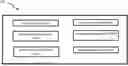

Sources:
- United States Patent and Trademark Office - verify current appl. status at the USPTO↗
Recent applications in this class:
- » 20260178376 2026-06-25
CONTROL METHOD AND APPARATUS FOR AUTOMATION PROCESS, ELECTRONIC DEVICE, AND STORAGE MEDIUM - » 20260178375 2026-06-25
APPLICATION PROGRAMMING INTERFACE TO INDICATE BACKUP THREADS - » 20260127024 2026-05-07
DATA HANDLING - » 20260119232 2026-04-30
REVERSE-OFFLOAD OF TASKS BETWEEN DATA PROCESSORS - » 20260119231 2026-04-30
Controlled Transfer of Operation Between Devices Based on Thermal State - » 20260119230 2026-04-30
ANSIBLE PEER-TO-PEER WORK DISTRIBUTION - » 20260086848 2026-03-26
Real-Time Monitoring For Ransomware Attacks Using Exception-Level Transition Metrics - » 20260086847 2026-03-26
CONTAINER MIGRATION FOR UPDATES IN DISTRIBUTED COMPUTING ENVIRONMENTS - » 20260064458 2026-03-05
SYSTEMS AND METHODS FOR UPGRADING CONTROLLERS OF A BUILDING MANAGEMENT SYSTEM - » 20260064457 2026-03-05
TASK CREATION METHOD AND APPARATUS, AND ELECTRONIC DEVICE