DYNAMIC CLOUD RESOURCE ORCHESTRATION SYSTEM FOR ENTERPRISE WORKLOADS ACROSS MULTI-CLOUD ENVIRONMENTS
US20260178419A1
2026-06-25
19/542,499
2026-02-17
Smart Summary: A system helps manage cloud resources for SAP S/4 HANA applications across different cloud platforms. It collects and analyzes data from various cloud sources to understand how resources are being used. By predicting future needs based on past usage, the system can allocate computing power, memory, and storage efficiently. It also ensures that applications can move smoothly between cloud environments without losing data or interrupting services. Additionally, the system optimizes communication between clouds to keep interactions fast and efficient. 🚀 TL;DR
Abstract:
A system and method for dynamic cloud resource orchestration for SAP S four HANA workloads across multi cloud environments is disclosed. The system comprises interconnected processing units configured to continuously acquire operational telemetry from distributed cloud infrastructures, normalize heterogeneous data into synchronized datasets, classify workload characteristics, and predict future resource demand using historical utilization patterns. Based on real time and forecasted performance indicators, an orchestration decision processor generates resource allocation instructions to dynamically distribute computing capacity, memory, storage throughput, and network bandwidth across multiple cloud environments. A workload migration controller performs controlled relocation of application components while preserving transactional continuity and data consistency, and a dynamic scaling controller adjusts resource allocation in response to workload intensity variations. A network optimization processor further manages inter cloud communication by adapting routing parameters to maintain low latency interactions among distributed SAP S four HANA components.
Applicant:
Interested in similar patents?
Get notified when new applications in this technology area are published.
Classification:
G06F9/5088 » CPC main
Arrangements for program control, e.g. control units using stored programs, i.e. using an internal store of processing equipment to receive or retain programs; Multiprogramming arrangements; Allocation of resources, e.g. of the central processing unit [CPU]; Techniques for rebalancing the load in a distributed system involving task migration
G06F9/505 » CPC further
Arrangements for program control, e.g. control units using stored programs, i.e. using an internal store of processing equipment to receive or retain programs; Multiprogramming arrangements; Allocation of resources, e.g. of the central processing unit [CPU] to service a request the resource being a machine, e.g. CPUs, Servers, Terminals considering the load
G06F11/3442 » CPC further
Error detection; Error correction; Monitoring; Monitoring; Recording or statistical evaluation of computer activity, e.g. of down time, of input/output operation ; Recording or statistical evaluation of user activity, e.g. usability assessment for planning or managing the needed capacity
G06F9/50 IPC
Arrangements for program control, e.g. control units using stored programs, i.e. using an internal store of processing equipment to receive or retain programs; Multiprogramming arrangements Allocation of resources, e.g. of the central processing unit [CPU]
G06F11/34 IPC
Error detection; Error correction; Monitoring; Monitoring Recording or statistical evaluation of computer activity, e.g. of down time, of input/output operation ; Recording or statistical evaluation of user activity, e.g. usability assessment
Description
TECHNICAL FIELD
The present disclosure relates generally to distributed cloud computing infrastructure management and, more particularly, to a system and method for dynamically orchestrating computing resources for SAP S/4HANA workloads across heterogeneous multi-cloud environments. The disclosure further relates to a specialized machine and structural device configured to execute coordinated resource allocation, workload migration, performance monitoring, and autonomous optimization for enterprise-grade transactional systems operating in geographically distributed cloud infrastructures.
BACKGROUND
SAP S/4HANA workloads demand high computational throughput, predictable latency, strict memory consistency, and real-time data processing capabilities. When deployed across multiple cloud providers, these workloads face challenges associated with resource fragmentation, latency variability, inconsistent performance, and inefficient allocation of compute, storage, and network capacity. Traditional orchestration approaches rely on static provisioning, manual scaling policies, or provider-specific automation tools, which often fail to respond dynamically to changing workload demands, cross-cloud performance fluctuations, or transactional intensity variations. Furthermore, multi-cloud environments introduce complexities related to workload portability, data synchronization, service continuity, and cost optimization. There is therefore a need for an intelligent and structured orchestration system capable of dynamically allocating and rebalancing cloud resources in real time to maintain performance stability, minimize operational overhead, and ensure continuity of SAP S/4HANA operations across distributed infrastructure.
Enterprise resource planning environments based on SAP S/4HANA have evolved into highly complex, data-intensive systems that require significant computational stability, low latency, high memory availability, and consistent throughput to support mission-critical business processes. As organizations transition from traditional on-premise deployments to cloud-based infrastructures, SAP S/4HANA workloads are increasingly being distributed across multiple cloud environments to achieve scalability, redundancy, and geographic reach. Multi-cloud strategies are often adopted to prevent vendor lock-in, improve cost flexibility, and enhance system resilience. However, operating SAP S/4HANA across heterogeneous cloud infrastructures introduces substantial orchestration challenges related to resource allocation, workload balancing, service continuity, and performance optimization. The technical background of this domain reflects the evolution from static provisioning models toward dynamic resource orchestration frameworks, but existing approaches remain limited in their ability to adapt in real time to fluctuating workload demands and infrastructure variability.
Initially, SAP workloads were deployed within tightly controlled on-premise data centers where hardware resources were pre-allocated based on anticipated peak capacity requirements. These systems relied on vertical scaling methods, where performance improvements were achieved by increasing the computational power, memory capacity, or storage capability of a single machine. While this approach offered predictable performance and centralized management, it resulted in underutilized resources during non-peak periods and limited flexibility in responding to sudden workload spikes. Furthermore, vertical scaling introduced significant capital expenditure and required planned downtime for hardware upgrades, which was not suitable for continuously running enterprise operations. As organizations began migrating to cloud environments, horizontal scaling techniques were introduced, allowing workloads to be distributed across multiple virtualized resources. Although this improved scalability, it also created complexity in coordinating resource distribution across different service providers.
Existing cloud orchestration solutions were designed to automate provisioning, monitoring, and scaling operations within single cloud environments. These systems typically rely on predefined rules, threshold-based triggers, and static scaling policies to manage compute, memory, and storage resources. While effective in homogeneous environments, these solutions struggle to address the complexity of SAP S/4HANA workloads that require tightly synchronized memory operations and real-time database processing. Threshold-based scaling mechanisms often react after performance degradation has already occurred, resulting in temporary service disruptions. Additionally, many orchestration tools lack awareness of application-specific characteristics, treating all workloads as generic compute processes rather than highly memory-intensive, latency-sensitive enterprise transactions.
In response to the limitations of single-cloud orchestration, organizations have increasingly adopted multi-cloud deployment strategies. In a multi-cloud architecture, SAP S/4HANA instances may operate across different public cloud providers, private cloud infrastructures, and hybrid environments. This distribution enhances availability and reduces reliance on a single vendor but introduces new challenges related to workload placement, cross-cloud data synchronization, and performance consistency. Each cloud provider offers distinct resource management interfaces, performance characteristics, and pricing models. Existing orchestration systems often lack the capability to coordinate resource allocation across these diverse platforms in a unified and intelligent manner. As a result, administrators frequently rely on manual configuration and periodic performance adjustments, which increases operational overhead and introduces risks associated with human error.
Another category of existing solutions includes container orchestration frameworks designed to manage application deployment across distributed environments. These frameworks provide automated scheduling, scaling, and failover capabilities for containerized workloads. However, SAP S/4HANA systems are not always fully compatible with container-centric deployment models due to their reliance on high-memory database structures and tightly coupled processing requirements. Even when containerization is used, existing orchestration mechanisms primarily focus on infrastructure-level metrics rather than application-level performance parameters. This limitation reduces their effectiveness in maintaining transactional stability for enterprise workloads that require real-time consistency and minimal latency variation.
Performance monitoring tools have also been developed to collect telemetry data from cloud environments and provide insights into system utilization. These tools track metrics such as processor load, memory consumption, network latency, and storage throughput. While useful for visibility and reporting, they generally function as passive systems that require manual interpretation and intervention. They do not provide automated orchestration capabilities capable of proactively redistributing workloads based on predictive demand analysis. Consequently, resource allocation decisions are often reactive rather than anticipatory, leading to periods of resource contention or underutilization.
Load balancing solutions represent another class of existing technologies used to distribute traffic across multiple compute instances. These systems are effective in handling web traffic and stateless applications but are less suitable for stateful enterprise platforms such as SAP S/4HANA. Database transactions require persistent memory states and consistent data access patterns, making dynamic redistribution more complex. Traditional load balancing approaches focus on routing incoming requests rather than dynamically reallocating compute and memory resources at the infrastructure level. As a result, they cannot fully address performance bottlenecks caused by uneven resource distribution across cloud environments.
Disaster recovery and failover solutions provide redundancy by maintaining backup instances of SAP workloads in separate geographic locations. These systems ensure continuity in the event of infrastructure failures, but they are typically designed for rare emergency scenarios rather than continuous workload optimization. Failover mechanisms often involve switching operations to standby environments, which may not be fully synchronized in real time. This approach can lead to temporary performance degradation and potential data synchronization delays. Moreover, disaster recovery frameworks do not dynamically optimize resource allocation under normal operating conditions.
Cost optimization tools have also been introduced to analyze cloud usage patterns and recommend resource adjustments to reduce operational expenses. While these systems can identify underutilized resources and suggest resizing strategies, they typically operate on historical usage data and periodic analysis cycles. They lack the capability to perform real-time orchestration actions that balance performance requirements with cost constraints. Additionally, cost optimization recommendations may conflict with performance priorities, particularly in mission-critical environments where maintaining system responsiveness is more important than minimizing resource consumption.
Existing migration tools enable the transfer of workloads between cloud environments to support scalability and redundancy. However, these tools are generally designed for planned migrations rather than continuous dynamic workload redistribution. Migration processes often require careful scheduling, downtime windows, and manual configuration to ensure data integrity. Frequent migrations can introduce latency overhead, synchronization complexity, and increased network traffic. Current solutions do not provide seamless, automated migration capabilities that operate continuously in response to changing workload conditions.
Security and compliance management systems also form part of the existing ecosystem. These solutions monitor access control, encryption status, and regulatory compliance across cloud deployments. While essential for protecting enterprise data, they function independently of resource orchestration systems. The lack of integration between security monitoring and workload orchestration limits the ability to make informed decisions that consider both performance and compliance requirements simultaneously.
One of the most significant drawbacks of current approaches is the fragmentation of management tools. Organizations often rely on multiple independent systems for monitoring, scaling, migration, and cost analysis. This fragmentation leads to inconsistent decision-making, delayed response times, and increased administrative complexity. Without a unified orchestration framework capable of integrating telemetry data, predictive analytics, and automated execution, it becomes difficult to maintain optimal performance across distributed cloud environments.
Another limitation of existing solutions is their reliance on static policies and predefined thresholds. Enterprise workloads such as SAP S/4HANA exhibit dynamic behavior influenced by business cycles, transaction volumes, and operational events. Static rules cannot effectively accommodate unpredictable workload spikes or sudden changes in system demand. As a result, resources may be over-provisioned to avoid performance degradation, leading to inefficiencies, or under-provisioned during peak demand periods, resulting in latency and service disruptions.
Furthermore, cross-cloud interoperability remains a significant technical challenge. Each cloud provider implements different resource provisioning models, networking architectures, and management interfaces. Existing orchestration tools often provide limited compatibility across platforms, requiring custom integration efforts to coordinate operations. This lack of standardization increases deployment complexity and restricts the ability to perform seamless workload mobility across environments.
In addition, real-time decision-making capabilities in existing systems are limited by the speed at which telemetry data can be processed and analyzed. Many monitoring platforms aggregate data at fixed intervals, which may not capture transient performance anomalies or short-duration workload spikes. This delay reduces the effectiveness of reactive scaling mechanisms and prevents timely resource adjustments. For high-performance enterprise systems that process large volumes of transactions, even short periods of latency can have significant operational impact.
Overall, while current cloud management and orchestration solutions provide partial capabilities for resource allocation, monitoring, and scaling, they lack a unified, intelligent, and adaptive framework capable of continuously managing SAP S/4HANA workloads across multiple cloud environments. The existing technologies operate in isolated layers, rely heavily on manual intervention, and are constrained by reactive decision-making models. These limitations highlight the need for a comprehensive orchestration system capable of integrating telemetry analysis, predictive demand modeling, dynamic workload placement, and automated cross-cloud resource coordination to ensure sustained performance, resilience, and operational efficiency.
SUMMARY OF THE DISCLOSURE
The present disclosure provides a dynamic cloud resource orchestration system and method that continuously monitors operational parameters associated with SAP S/4HANA workloads deployed across multiple cloud platforms and autonomously performs allocation, migration, scaling, and performance balancing actions. The system includes an integrated orchestration device comprising a specialized computing structure designed to function as a centralized yet distributed control unit that manages workload placement, resource allocation, inter-cloud communication, and runtime optimization. The method includes continuous telemetry acquisition, workload classification, predictive demand modeling, orchestration decision generation, and automated execution of resource reconfiguration across compute clusters located in separate cloud domains.
The disclosed system enables dynamic adjustment of processing resources, memory distribution, storage throughput allocation, and network routing configurations based on real-time workload intensity, transactional volume, and application performance metrics. It ensures uninterrupted SAP S/4HANA operation by implementing adaptive orchestration logic capable of migrating workloads across clouds without service disruption while maintaining data integrity and transactional consistency.
The primary object of the present invention is to provide a system and method for dynamic cloud resource orchestration capable of intelligently managing SAP S/4HANA workloads across multiple cloud environments in a manner that ensures continuous performance stability, efficient utilization of computational resources, and seamless workload distribution. The invention aims to establish a unified orchestration framework that continuously monitors operational parameters and autonomously adjusts compute, memory, storage, and network resources in real time to accommodate fluctuating transactional demands and changing infrastructure conditions.
Another object of the invention is to provide a specialized orchestration device structured as a dedicated machine capable of functioning as a centralized control apparatus for coordinating distributed SAP S/4HANA deployments across heterogeneous cloud infrastructures. The invention seeks to create a robust and scalable control mechanism that can integrate telemetry data from multiple cloud environments, process the data in a synchronized manner, and generate actionable orchestration decisions without requiring continuous human intervention.
A further object of the invention is to enable predictive resource planning by analyzing historical workload behavior, transactional patterns, and performance metrics to forecast future demand and proactively allocate resources before performance degradation occurs. The invention aims to reduce reliance on reactive scaling approaches by implementing anticipatory orchestration strategies that prevent latency spikes, memory shortages, and processing bottlenecks in mission-critical enterprise operations.
Another object of the invention is to provide seamless workload mobility across cloud environments by enabling automated migration of SAP S/4HANA components while maintaining transactional consistency, session continuity, and data integrity. The invention seeks to ensure uninterrupted service availability during resource redistribution and infrastructure optimization processes, thereby minimizing operational risks associated with workload transfers.
A further object of the invention is to improve resource efficiency by dynamically balancing workload placement based on real-time performance metrics, infrastructure availability, and system demand characteristics. The invention aims to reduce resource underutilization and prevent over-provisioning by continuously redistributing computational loads across available cloud platforms in response to changing operational conditions.
Another object of the invention is to provide integrated monitoring and orchestration capabilities that unify telemetry acquisition, workload classification, performance evaluation, and resource allocation within a single coordinated system. The invention seeks to eliminate the fragmentation associated with existing management tools by creating a cohesive operational environment capable of making informed and synchronized decisions across multiple infrastructure layers.
An additional object of the invention is to enhance system resilience by enabling rapid reallocation of resources and automated failover actions in response to infrastructure anomalies, performance degradation, or connectivity disruptions. The invention aims to maintain consistent operational continuity for SAP S/4HANA workloads even in the presence of fluctuating network conditions, hardware limitations, or cloud service interruptions.
A further object of the invention is to optimize inter-cloud communication efficiency by dynamically adjusting network routing parameters and data transfer pathways based on latency conditions and workload dependencies. The invention seeks to maintain low-latency interactions between distributed application components and ensure smooth coordination between database and application layers deployed across different geographic regions.
Another object of the invention is to provide a scalable orchestration architecture that can accommodate growing enterprise requirements, expanding workloads, and increasing transaction volumes without requiring extensive infrastructure redesign. The invention aims to support gradual expansion of cloud deployments while maintaining centralized coordination and operational consistency.
An additional object of the invention is to enhance operational transparency by providing a structured mechanism for continuously evaluating system health, workload performance, and resource distribution patterns. The invention seeks to enable administrators to maintain visibility into orchestration actions while relying on automated decision-making processes to manage routine optimization tasks.
A further object of the invention is to support cost-performance balance by dynamically adjusting resource allocation based on workload priority levels and system utilization characteristics. The invention aims to prevent unnecessary expenditure on idle resources while ensuring that critical enterprise operations receive sufficient computational support.
Another object of the invention is to provide a hardware-integrated orchestration structure capable of executing real-time computational analysis, workload coordination, and migration control within a unified physical apparatus. The invention seeks to create a dedicated machine structure that enhances processing efficiency and supports continuous orchestration operations without dependence on distributed management tools.
An additional object of the invention is to improve decision accuracy by incorporating synchronized data processing and continuous feedback evaluation mechanisms that assess the impact of orchestration actions and adjust strategies accordingly. The invention aims to establish a self-adaptive system capable of refining resource allocation policies over time based on observed performance outcomes.
A further object of the invention is to ensure compatibility with diverse cloud infrastructures by enabling coordinated communication with multiple cloud service environments through standardized interaction mechanisms. The invention seeks to provide a flexible orchestration system capable of operating across public, private, and hybrid cloud deployments while maintaining consistent operational control.
Another object of the invention is to enable continuous performance optimization for memory-intensive and latency-sensitive SAP S/4HANA workloads by dynamically reallocating resources in response to transaction surges, database processing loads, and application usage patterns. The invention aims to maintain stable system responsiveness and minimize processing delays during peak operational periods.
An additional object of the invention is to provide a structured method for integrating predictive analytics, real-time telemetry evaluation, and automated orchestration execution into a cohesive operational workflow that enhances enterprise system reliability and efficiency. The invention seeks to establish a next-generation orchestration framework capable of supporting large-scale, distributed SAP S/4HANA deployments with minimal manual intervention while maintaining high levels of performance and operational stability.
BRIEF DESCRIPTION OF FIGURES
These and other features, aspects, and advantages of the present invention will become better understood when the following detailed description is read concerning the accompanying drawings in which like characters represent like parts throughout the drawings, wherein:
FIG. 1 displays a block diagram of a system for dynamic cloud resource orchestration for SAP S four HANA workloads across multi cloud environments; and
FIG. 2 displays flow chart of a method for dynamic cloud resource orchestration for SAP S four HANA workloads across multi cloud environments.
Further, skilled artisans will appreciate that elements in the drawings are illustrated for simplicity and may not have been necessarily been drawn to scale. For example, the flow charts illustrate the method in terms of the most prominent steps involved to help to improve understanding of aspects of the present disclosure. Furthermore, in terms of the construction of the device, one or more components of the device may have been represented in the drawings by conventional symbols, and the drawings may show only those specific details that are pertinent to understanding the embodiments of the present disclosure so as not to obscure the drawings with details that will be readily apparent to those of ordinary skill in the art having benefit of the description herein.
DETAILED DESCRIPTION OF THE INVENTION
For the purpose of promoting an understanding of the principles of the invention, reference will now be made to the embodiment illustrated in the drawings and specific language will be used to describe the same. It will nevertheless be understood that no limitation of the scope of the invention is thereby intended, such alterations and further modifications in the illustrated system, and such further applications of the principles of the invention as illustrated therein being contemplated as would normally occur to one skilled in the art to which the invention relates.
It will be understood by those skilled in the art that the foregoing general description and the following detailed description are exemplary and explanatory of the invention and are not intended to be restrictive thereof.
Reference throughout this specification to “an aspect”, “another aspect” or similar language means that a particular feature, structure, or characteristic described in connection with the embodiment is included in at least one embodiment of the present disclosure. Thus, appearances of the phrase “in an embodiment”, “in another embodiment” and similar language throughout this specification may, but do not necessarily, all refer to the same embodiment.
The terms “comprises”, “comprising”, or any other variations thereof, are intended to cover a non-exclusive inclusion, such that a process or method that comprises a list of steps does not include only those steps but may include other steps not expressly listed or inherent to such process or method. Similarly, one or more devices or sub-systems or elements or structures or components proceeded by “comprises . . . a” does not, without more constraints, preclude the existence of other devices or other sub-systems or other elements or other structures or other components or additional devices or additional sub-systems or additional elements or additional structures or additional components.
Unless otherwise defined, all technical and scientific terms used herein have the same meaning as commonly understood by one of ordinary skill in the art to which this invention belongs. The system, methods, and examples provided herein are illustrative only and not intended to be limiting.
Embodiments of the present disclosure will be described below in detail with reference to the accompanying drawings.
Referring to FIG. 1, a block diagram of a system for dynamic cloud resource orchestration for SAP S four HANA workloads across multi cloud environments, the system comprising: at least one processing unit (102) operatively coupled with a non-transitory memory unit;
-
- a telemetry acquisition unit (104) configured to continuously collect operational parameters associated with processor utilization, memory consumption, storage throughput, network latency, transaction execution characteristics, and system state information from distributed SAP S four HANA instances deployed across a plurality of cloud environments;
- a communication interface unit (106) configured to establish persistent bidirectional data exchange with virtual compute resources, database instances, and application servers hosted across the plurality of cloud environments;
- a data normalization processor (108) configured to transform heterogeneous telemetry data received from different cloud infrastructures into synchronized operational datasets by aligning time series measurements and standardizing performance indicators;
- a workload classification processor (110) configured to analyze the synchronized operational datasets and identify workload segments based on transaction intensity, memory dependency, processing demand, and latency sensitivity associated with SAP S four HANA application components;
- a predictive resource demand processor (112) configured to determine anticipated future resource requirements by evaluating historical workload patterns, temporal variations in transaction volumes, and current utilization trends stored in the non transitory memory unit;
- an orchestration decision processor (114) configured to generate resource allocation instructions specifying redistribution of compute capacity, memory allocation, storage throughput, and network bandwidth across the plurality of cloud environments based on real time telemetry data and predicted resource requirements;
- a workload migration controller (116) configured to execute controlled relocation of selected SAP S four HANA application components between cloud environments while maintaining transactional continuity, data consistency, and session persistence;
- a dynamic scaling controller (118) configured to increase or decrease resource allocation in selected cloud environments in response to variations in workload intensity and performance deviations; and
- a network optimization processor (120) configured to dynamically adjust routing paths and data transfer parameters between distributed cloud environments to maintain stable communication latency for interdependent SAP S four HANA components.
In an embodiment, the telemetry acquisition unit (104) comprises a plurality of hardware interface circuits configured to capture processor state information, memory allocation metrics, input output activity, and database transaction timing records from each SAP S four HANA instance, and wherein the captured data is transmitted to the data normalization processor at predefined sampling intervals to enable continuous monitoring of workload behavior across the plurality of cloud environments.
In an embodiment, the data normalization processor (108) is configured to perform temporal synchronization by aligning telemetry data received from geographically distributed cloud environments using coordinated time references, and further configured to convert infrastructure specific performance parameters into standardized operational indicators stored in the non-transitory memory unit for unified analysis.
In an embodiment, the workload classification processor (110) is configured to segment SAP S four HANA workloads into database intensive operations, application processing operations, and analytical computation operations based on measured processor utilization patterns, memory access frequency, and transaction response time characteristics, and to store classification results for subsequent orchestration decision making.
In an embodiment, the predictive resource demand processor (112) is configured to generate forecasted resource utilization values by correlating historical telemetry records with current workload behavior, and wherein the processor further determines anticipated processor demand, memory requirements, and storage input output activity for future operational intervals.
In an embodiment, the orchestration decision processor (114) is configured to determine optimal workload placement by evaluating performance indicators associated with each cloud environment including available processing capacity, memory availability, network latency conditions, and storage throughput capability, and to generate structured instructions for redistributing SAP S four HANA application components accordingly.
In an embodiment, the workload migration controller (116) is configured to perform staged migration by replicating memory states and database transaction data from a source cloud environment to a destination cloud environment, synchronizing active sessions, and redirecting incoming transaction requests to the destination environment without interrupting ongoing processing activities.
In an embodiment, the dynamic scaling controller (118) is configured to allocate additional virtual processing resources and memory capacity to cloud environments experiencing increased transaction load and to deallocate unused resources from environments exhibiting reduced workload intensity, thereby maintaining balanced utilization across the plurality of cloud environments.
In an embodiment, the network optimization processor (120) is configured to monitor communication latency between distributed SAP S four HANA components and to modify routing configurations by selecting alternative network paths to reduce data transfer delays between cloud environments.
In an embodiment, further comprising a performance evaluation processor configured to continuously compare actual system performance indicators with predicted resource demand values, and to provide corrective inputs to the orchestration decision processor when deviations exceeding predefined tolerance levels are detected.
In an embodiment, the plurality of hardware interface circuits comprised within the telemetry acquisition unit are configured to perform low level interception of processor state registers, memory page allocation tables, storage controller activity signals, and network packet timing information at the host level of each SAP S four HANA instance, and wherein the telemetry acquisition unit is further configured to embed a synchronized timestamp within each captured telemetry record prior to transmission, and wherein the data normalization processor is configured to reconstruct an ordered operational timeline by arranging the timestamped telemetry records in a unified temporal sequence, compensating for inter environment clock drift by calculating relative time offsets using periodic time reference exchange, and further configured to interpolate missing telemetry samples by deriving intermediate values from adjacent temporal data points to produce continuous synchronized operational datasets stored in the non transitory memory unit.
In an embodiment, the hardware interface circuits operate in close proximity to the host execution layer of each SAP S four HANA instance so that operational states can be captured directly from the underlying system without relying on application level reporting. The circuits are arranged to access processor state registers by monitoring execution transitions that indicate variations in computational demand, while memory page allocation tables are observed to identify allocation expansion, release events, and access frequency patterns that indicate workload pressure. Storage controller activity signals are captured by detecting read and write command sequences and queue depths, and network packet timing information is obtained by tracking transmission initiation and acknowledgement events at the interface level. Each captured parameter is immediately associated with a synchronized timestamp generated from a shared reference time maintained across the distributed environments, allowing each telemetry record to represent an exact operational moment. Because the distributed cloud environments may operate under slightly different local clock conditions, the collected telemetry records are periodically aligned by calculating relative time differences using exchanged reference time signals and applying corrective offsets to ensure that operational events occurring at the same real world instant are represented in the same temporal position within the dataset. When intermittent sampling gaps occur due to transmission delays or temporary signal unavailability, the data normalization processor reconstructs the missing values by examining the nearest preceding and succeeding telemetry records and estimating intermediate operational states that maintain continuity of the performance profile. For example, if processor utilization spikes are captured at two surrounding intervals but the intermediate reading is missing, the system derives an estimated transition curve to represent the continuous change in utilization. By reconstructing a complete operational timeline in this manner, the synchronized dataset presents an uninterrupted view of system behavior across multiple cloud environments, enabling precise correlation between processor demand, memory allocation activity, storage access events, and network communication timing. This continuous and aligned representation allows downstream processing units to observe true workload progression and react to resource demand variations with improved accuracy and stability in orchestration decisions.
In an embodiment, the data normalization processor is further configured to transform infrastructure specific telemetry parameters by identifying corresponding performance metrics originating from different cloud environments, mapping the metrics into standardized operational indicators using parameter conversion logic that equates processor cycles, memory allocation units, storage transfer operations, and network transmission events into normalized measurement scales, and wherein the processor is further configured to generate aligned multi dimensional operational data structures by correlating processor utilization, memory consumption, storage throughput, and transaction execution timing for identical operational intervals to enable consistent comparative analysis across the plurality of cloud environments.
In an embodiment, the data normalization processor operates by first examining the structure and format of incoming telemetry parameters received from different cloud environments and determining how each infrastructure represents performance activity at the hardware and system level. Since processor usage, memory allocation, storage activity, and network communication may be expressed using different measurement conventions across environments, the processor applies parameter conversion logic that interprets the underlying meaning of each metric and translates it into a common operational representation. For example, processor activity reported as raw cycle counts in one environment is translated into a normalized utilization measure that corresponds to execution intensity over a defined interval, while memory allocation expressed as page table updates in another environment is converted into a standardized allocation magnitude reflecting actual consumption pressure. Storage transfer operations captured as queue depth and command completion sequences are interpreted as throughput intensity, and network transmission events measured through packet dispatch timing are converted into a unified communication load indicator. After conversion, the processor arranges the standardized indicators into a structured operational dataset aligned along identical time intervals so that processor utilization, memory consumption, storage throughput, and transaction execution timing from different environments can be evaluated within the same temporal context. By correlating these parameters into a multi-dimensional representation, the processor creates a coherent operational profile that reflects how different resource components interact during workload execution. For instance, when a transaction-intensive workload produces simultaneous increases in processor demand, memory access frequency, and storage input output activity across separate environments, the aligned dataset captures this coordinated behavior as a unified pattern rather than as isolated measurements. This structured alignment allows the system to detect relative efficiency differences between environments, identify performance bottlenecks linked to specific resource components, and provide a consistent analytical basis for subsequent workload classification and orchestration decisions, thereby enabling more accurate resource distribution and improved stability in workload execution across the distributed infrastructure.
In an embodiment, the workload classification processor is configured to derive workload segmentation by computing processor access density from captured processor state transitions, determining memory dependency by measuring page access frequency and allocation turnover rate, and identifying transaction intensity by correlating transaction initiation timestamps with execution completion durations, and wherein the processor is further configured to assign each observed workload segment to one of the database intensive operations, application processing operations, or analytical computation operations by comparing measured operational characteristics against stored reference behavior patterns maintained in the non transitory memory unit.
In an embodiment, the workload classification processor performs detailed behavioral interpretation of synchronized operational data by analyzing how processing resources are consumed over successive execution intervals. The processor determines processor access density by examining the frequency and duration of processor state transitions, which indicates how intensively computational instructions are being executed for a particular workload segment. Memory dependency is derived by tracking how frequently memory pages are accessed, modified, or replaced, and by observing allocation turnover patterns that reveal whether the workload repeatedly loads and unloads data segments. Transaction intensity is determined by correlating the recorded initiation time of each transaction with its corresponding completion time to calculate execution duration, concurrency levels, and repetition rates. By combining these measured characteristics, the processor forms a detailed operational profile that reflects the actual behavior of the running workload rather than relying on predefined labels. The processor then compares the observed profile with stored reference behavior patterns that represent typical operational signatures of database intensive operations, application processing operations, and analytical computation operations. For example, a workload that shows frequent memory page access, high transaction concurrency, and moderate processor usage is interpreted as database intensive because it continuously interacts with stored data structures. A workload that exhibits sustained processor activity with moderate memory access and consistent transaction execution cycles is interpreted as application processing, indicating logic driven execution. A workload characterized by prolonged processor utilization and growing memory usage over extended intervals is interpreted as analytical computation, often associated with reporting or complex data evaluation. By continuously performing this comparative analysis, the classification processor dynamically segments workloads into meaningful operational categories that accurately represent how system resources are being utilized. This structured segmentation allows subsequent resource management components to apply environment specific allocation strategies tailored to the actual operational demands of each workload type, leading to improved distribution of processing effort, reduced contention for shared resources, and more stable execution performance across distributed cloud environments.
In an embodiment, the workload classification processor is further configured to construct a temporal workload activity sequence by tracking the progression of transaction execution characteristics over successive operational intervals, determining transitions between workload types based on variations in processor utilization gradients, memory access frequency fluctuations, and latency response changes, and wherein the processor stores the temporal workload activity sequence as structured classification records that are retrievable by the predictive resource demand processor for determining future resource demand conditions.
In an embodiment, the workload classification processor continuously observes the execution behavior of running SAP S four HANA workloads over a series of consecutive operational intervals and organizes the observed characteristics into a time linked activity sequence that reflects how workload behavior evolves. Instead of identifying a workload type at a single instant, the processor monitors how processor utilization changes from one interval to the next, how frequently memory pages are accessed and reallocated over time, and how transaction response latency increases or decreases as processing conditions vary. By calculating the rate of change in processor demand, detecting sudden increases or reductions in memory access frequency, and measuring shifts in transaction completion time patterns, the processor identifies when a workload begins to transition from one operational behavior to another. For instance, a workload initially dominated by application processing may show a gradual increase in memory access activity and longer transaction durations as data retrieval operations intensify, indicating a transition toward database intensive behavior. Similarly, a reporting phase may exhibit a progressive rise in processor usage accompanied by sustained memory allocation and increasing execution latency, indicating a shift toward analytical computation. The processor records these transitions in the form of structured classification records that represent a chronological progression of workload states, including the time of transition, duration of each state, and the resource utilization characteristics associated with each phase. These records are stored in an organized format within the non transitory memory unit, allowing the predictive resource demand processor to retrieve and analyze the historical evolution of workload behavior. By providing a sequential representation of how workloads expand, stabilize, and decline in terms of resource consumption, the stored activity sequences allow the system to anticipate recurring patterns such as predictable surges during reporting periods or transaction peaks during business hours. This continuous temporal mapping of workload progression enables future resource requirements to be estimated with higher precision because the prediction process is informed not only by static workload classification but also by how workload behavior has historically changed over time under similar operational conditions.
In an embodiment, the predictive resource demand processor is configured to generate anticipated resource requirement values by forming a historical utilization matrix from synchronized operational datasets stored in the non-transitory memory unit, determining recurring workload patterns by correlating transaction intensity variations across corresponding time intervals of prior operational cycles, computing trend progression by measuring rate of change in processor utilization, memory allocation growth, and storage input output frequency, and combining the derived trend progression with current utilization conditions to estimate future processor demand, memory requirements, storage throughput demand, and network bandwidth consumption for subsequent operational intervals.
In an embodiment, the predictive resource demand processor operates by constructing a structured historical utilization matrix that organizes previously captured synchronized operational datasets into time indexed sequences representing processor usage, memory allocation behavior, storage transfer activity, and transaction execution intensity across multiple prior operational cycles. The processor examines these historical records to identify recurring workload patterns by comparing transaction intensity levels observed at similar time intervals, such as peak transaction periods during business hours or periodic analytical processing phases. By aligning historical observations with corresponding temporal positions, the processor determines how resource consumption has repeatedly evolved under comparable workload conditions. In addition to identifying repeating patterns, the processor calculates trend progression by measuring how rapidly processor utilization increases or decreases over time, how memory allocation expands or contracts across successive intervals, and how storage input output frequency changes in response to workload demands. These measured rates of change provide an indication of whether a workload is stabilizing, intensifying, or gradually declining. The processor then combines the derived trend progression with the present utilization conditions captured from current telemetry to project forward resource consumption for upcoming operational intervals. For example, if historical data indicates that processor demand typically rises sharply shortly after a sustained increase in transaction intensity, and the current system state shows a similar rise in transaction activity, the processor anticipates an impending increase in computational demand and prepares an estimated processor requirement accordingly. Similarly, if memory allocation growth has historically preceded storage throughput increases during reporting operations, the processor anticipates corresponding future storage activity and network bandwidth usage. By continuously correlating historical behavior with present conditions, the processor generates forward looking estimates for processor demand, memory requirements, storage throughput demand, and network bandwidth consumption that reflect both past operational tendencies and real time workload direction. This predictive approach allows resource orchestration components to prepare infrastructure capacity in advance of demand escalation, thereby reducing resource contention, maintaining consistent transaction execution performance, and minimizing the likelihood of latency spikes caused by delayed resource provisioning.
In an embodiment, the orchestration decision processor is further configured to determine redistribution of SAP S four HANA application components by constructing a comparative performance matrix representing available processing capacity, memory availability, storage throughput capability, and communication latency across each cloud environment, calculating resource sufficiency indices for each environment by comparing predicted resource demand values with current available resource conditions, and selecting a target cloud environment for workload placement by identifying the environment exhibiting the highest resource sufficiency index while maintaining latency conditions compatible with interdependent SAP S four HANA component communication requirements.
In an embodiment, the orchestration decision processor forms a structured comparative performance matrix by continuously collecting the most recent values representing available processing capacity, free memory regions, storage transfer capability, and communication latency measurements from each participating cloud environment and arranging these parameters into a unified evaluation structure. The processor then integrates the predicted resource demand values obtained for each SAP S four HANA application component and compares those demand values with the real time availability of resources in each environment to determine how well each environment can support the anticipated workload. This comparison is carried out by computing a resource sufficiency index for every environment, in which the processor evaluates the extent to which available processor cycles can accommodate predicted computational demand, whether available memory can sustain expected allocation growth, whether storage throughput can support projected input output activity, and whether communication latency falls within acceptable limits for maintaining interaction between interdependent application components. The processor further refines the selection process by considering communication proximity between components that exchange transactional data frequently, ensuring that relocation of one component does not introduce delays that could disrupt synchronized processing. For example, if an application component with high transaction frequency is predicted to require increased processor capacity and memory, the processor identifies the cloud environment where spare computational capacity and memory availability most closely match the projected requirement while also ensuring that network latency to associated database components remains within a range that supports continuous data exchange. The environment exhibiting the highest overall compatibility between predicted demand and current resource availability is selected as the target for workload placement. By basing redistribution decisions on a dynamic comparative evaluation of both predicted requirements and current infrastructure conditions, the processor enables balanced workload distribution across multiple environments, reduces the likelihood of overloading individual infrastructure nodes, and maintains stable execution performance for interconnected SAP S four HANA components that rely on consistent communication and coordinated processing.
In an embodiment, the workload migration controller is further configured to initiate controlled relocation by establishing a temporary synchronization channel between a source cloud environment and a destination cloud environment, capturing memory state information including active session variables, buffer contents, and in process transaction data from the source environment, transferring the captured memory state information in incremental segments to the destination environment, and maintaining a dual execution state in which incoming transactions are processed concurrently until memory state parity is achieved, after which incoming transaction routing is redirected exclusively to the destination environment.
In an embodiment, the workload migration controller initiates relocation by first creating a temporary synchronization pathway between the source cloud environment and the destination cloud environment through which operational state information can be exchanged in a controlled and continuous manner. Rather than shifting execution abruptly, the controller begins by capturing the active memory state associated with the SAP S four HANA application component, including session context variables that maintain user interaction continuity, intermediate buffer contents that hold partially processed data, and in process transaction records that have not yet reached completion. This memory state information is not transferred as a single block but is divided into incremental segments and transmitted sequentially to the destination environment so that the destination system can progressively reconstruct the operational state while the source environment continues to handle ongoing execution. During this interval, the controller maintains a dual execution condition in which both environments are kept in operational readiness, and incoming transactions continue to be processed without interruption at the source while the destination gradually synchronizes its memory image to match the source. As each incremental segment is applied at the destination, the controller verifies consistency by ensuring that session variables, buffered data, and partial transaction contexts are aligned between both environments. Once the destination environment reaches a state where its reconstructed memory image reflects the same operational context as the source, incoming transaction routing is gradually redirected toward the destination while monitoring for any mismatch in execution behavior. For example, if a transaction initiated before relocation continues to execute while new transactions are directed to the destination environment, the controller ensures that the original transaction completes using the preserved session context while subsequent transactions are processed using the synchronized memory state in the destination. This gradual transfer and concurrent execution approach allows the relocation process to occur without disrupting active user sessions or causing loss of intermediate transaction data, and it maintains continuity of processing even during periods of high workload intensity by avoiding sudden cutover conditions that could lead to incomplete operations or processing delays.
In an embodiment, the workload migration controller is further configured to preserve data consistency by monitoring database transaction logs associated with the SAP S four HANA instances in the source cloud environment, continuously replicating newly generated transaction records to the destination cloud environment during the migration interval, verifying consistency by comparing transaction identifiers and commit sequence information between the source and destination environments, and finalizing relocation by terminating execution at the source environment only after confirmation that the destination environment has replicated all active and completed transaction states.
In an embodiment, the workload migration controller maintains consistency of database operations during relocation by continuously observing the transaction log stream generated within the source cloud environment and identifying every new transaction record created as part of ongoing SAP S four HANA activity. As transactions are initiated, modified, and committed, corresponding log entries are captured in sequence and transmitted to the destination cloud environment in near real time so that the destination environment can reconstruct the same database state progression. This replication is carried out in a continuous flow during the entire migration interval, ensuring that both environments maintain an equivalent history of transaction execution. The controller evaluates consistency by comparing transaction identifiers, execution ordering information, and commit sequence markers between the source and destination environments to confirm that every transaction processed at the source has been reproduced in the same logical order at the destination. If a transaction is still in progress, its intermediate log records are also transmitted so that the destination can maintain a matching execution context. For example, when a series of database updates are being performed by multiple concurrent users, the controller ensures that the same sequence of updates appears at the destination in the same order in which they were committed at the source, preventing conflicts or incomplete data states. Only after verifying that all transaction identifiers, commit confirmations, and intermediate states present in the source environment have been fully replicated and aligned at the destination does the controller proceed to terminate execution at the source. This controlled validation prevents premature cutover and ensures that no committed transaction is lost and no in process operation is left incomplete. By maintaining continuous replication and performing sequence level verification prior to finalizing relocation, the system preserves the integrity of database operations and enables uninterrupted continuation of transactional processing from the destination environment with a consistent and complete operational history.
In an embodiment, the dynamic scaling controller is further configured to detect workload intensity variation by measuring deviation of processor utilization, memory allocation, and transaction execution time from historical utilization baselines stored in the non transitory memory unit, determining scaling magnitude by calculating a proportional resource adjustment value derived from the extent of deviation, and transmitting resource provisioning instructions through the communication interface unit to activate additional virtual processing resources, expand memory allocation regions, or increase storage throughput capacity within the selected cloud environment while maintaining continuity of running SAP S four HANA application components.
In an embodiment, the dynamic scaling controller continuously evaluates the operational state of each cloud environment by comparing current processor utilization levels, active memory allocation, and observed transaction execution durations with previously established historical baselines that represent normal workload behavior under stable operating conditions. These baselines are derived from accumulated historical records stored in the non transitory memory unit and reflect expected resource consumption patterns during typical operational cycles. When the controller detects that current processor demand is rising above the baseline range, that memory allocation is expanding at an accelerated rate, or that transaction execution times are increasing beyond expected limits, it interprets these deviations as indicators of rising workload intensity. The controller then determines the magnitude of scaling required by calculating a proportional adjustment value based on how far the current measurements deviate from the historical norms and how rapidly the deviation is progressing. For example, if processor utilization begins to increase steadily while transaction completion times simultaneously extend, the controller computes the additional processing capacity needed to restore execution conditions to a balanced state. Once the scaling magnitude is determined, the controller transmits resource provisioning instructions through the communication interface unit to the selected cloud environment to activate additional virtual processing resources, expand available memory allocation regions, and, when necessary, increase storage throughput capacity to accommodate increased input output activity. These adjustments are applied in a coordinated manner so that running SAP S four HANA application components continue operating without interruption. The controller ensures that resource expansion occurs while execution remains active by gradually integrating the additional resources into the existing runtime environment, allowing transactions already in progress to complete normally while new resources begin supporting subsequent operations. This responsive and proportional adjustment approach maintains stable processing conditions during periods of increasing demand, reduces the likelihood of execution slowdowns caused by sudden workload surges, and sustains consistent transaction processing performance by ensuring that resource availability grows in alignment with actual workload intensity.
In an embodiment, the dynamic scaling controller is further configured to identify underutilized resource conditions by detecting sustained reduction in processor utilization and memory consumption over consecutive operational intervals, computing a deallocation threshold based on minimum resource requirements for maintaining current workload execution, and transmitting deprovisioning instructions to reduce allocated processing capacity, memory allocation, and storage resources in a staged sequence that prevents abrupt resource withdrawal during active transaction execution.
In an embodiment, the dynamic scaling controller continuously monitors resource usage patterns over multiple successive operational intervals and evaluates whether processor utilization and memory consumption remain consistently below established baseline levels that indicate normal workload demand. When the controller observes a sustained reduction in processing activity and memory allocation over a defined duration, it interprets this as an indication that the currently provisioned resources exceed the requirements of the active SAP S four HANA workloads. Rather than initiating immediate reduction, the controller determines a deallocation threshold by analyzing the minimum level of processor capacity, memory space, and storage activity that is necessary to support the currently executing transactions and maintain operational stability. This threshold is derived by examining the lowest resource consumption levels recorded during stable execution phases and incorporating a safety margin that accounts for short term fluctuations in transaction activity. Once the threshold is established, the controller generates deprovisioning instructions that gradually reduce allocated resources in a controlled and sequential manner. Processing capacity is decreased in incremental steps so that ongoing computations are allowed to complete using available resources, while memory allocation regions that are no longer actively referenced are released progressively. Storage throughput capacity is also scaled down in coordination with reduced input output activity to prevent congestion or delayed access to required data segments. For example, if transaction activity declines after the completion of a reporting cycle, the controller slowly retracts surplus processor and memory allocations while continuously verifying that execution times and response latency remain stable. This staged reduction prevents abrupt withdrawal of resources that could otherwise interrupt active transactions or cause temporary performance instability. By aligning resource reduction with sustained decreases in workload demand, the system maintains operational continuity while efficiently redistributing unused capacity for use in other environments where higher workload intensity may exist.
In an embodiment, the network optimization processor is further configured to determine communication path efficiency by continuously measuring packet transmission delay, data transfer duration, and connection stability across network routes connecting the plurality of cloud environments, constructing a latency distribution profile for each route based on measured communication parameters, identifying performance degradation when observed latency exceeds stored latency thresholds, and modifying routing configurations by selecting an alternative communication path exhibiting lower transmission delay while maintaining persistent connectivity between interdependent SAP S four HANA components.
In an embodiment, the network optimization processor continuously evaluates the quality of communication links between the distributed cloud environments by monitoring packet transmission delay for individual data exchanges, measuring the total time required to transfer structured data blocks between interconnected SAP S four HANA components, and observing connection stability indicators such as retransmission frequency and variation in response intervals. These measured parameters are collected over repeated communication cycles and organized into a latency distribution profile for each available network route, where the processor analyzes not only average delay but also fluctuations and irregularities that may indicate emerging congestion or instability. By maintaining these profiles over time, the processor establishes a reference understanding of normal communication behavior for each route under stable operating conditions. When the processor detects that the measured packet transmission delay or data transfer duration for a particular route begins to consistently exceed the stored latency thresholds, it interprets this as a degradation in communication efficiency that may affect coordination between interdependent SAP S four HANA components, particularly in scenarios where application servers, database instances, and processing nodes exchange frequent transactional data. The processor then evaluates alternative available routes by comparing their current latency profiles and stability indicators, identifying a path that offers lower transmission delay and more consistent data transfer characteristics. The routing configuration is then modified in a controlled manner so that ongoing data exchanges are gradually redirected to the selected alternative path without interrupting active communication sessions. For example, if one route begins to experience increased transmission delay during a period of high network traffic, the processor may shift communication traffic to a secondary path that demonstrates lower delay and stable packet delivery patterns. This dynamic path selection allows the system to maintain consistent interaction timing between distributed components, prevents buildup of communication bottlenecks that could slow transaction processing, and sustains stable synchronization between environments even as network conditions fluctuate.
In an embodiment, the performance evaluation processor is further configured to determine performance deviation by comparing actual processor utilization, memory consumption, storage throughput, and transaction execution timing obtained from the telemetry acquisition unit with predicted resource demand values generated by the predictive resource demand processor, calculating deviation magnitude by determining the difference between predicted and actual performance indicators over corresponding operational intervals, and transmitting corrective input signals to the orchestration decision processor to trigger recalculation of resource redistribution instructions when the calculated deviation magnitude exceeds the predefined tolerance levels.
In an embodiment, the performance evaluation processor operates as a continuous validation mechanism that examines how closely the actual operational behavior of the distributed SAP S four HANA workloads aligns with the previously determined resource demand estimates. The processor retrieves real time measurements of processor utilization, memory consumption, storage throughput activity, and transaction execution timing from the telemetry acquisition unit and aligns these observations with the corresponding predicted values generated for the same operational intervals. By calculating the numerical difference between the expected and observed values for each resource parameter, the processor determines the magnitude and direction of deviation, identifying whether the system is consuming more or fewer resources than anticipated. The evaluation is performed across successive intervals so that short term fluctuations can be distinguished from sustained mismatches that indicate an inaccurate allocation condition. For example, if predicted processor demand was estimated to rise moderately but actual utilization increases at a significantly higher rate, or if memory consumption grows faster than expected due to an unexpected surge in transaction concurrency, the processor recognizes the growing difference as a deviation that may lead to resource strain or imbalance. The processor then aggregates the observed differences across processor, memory, storage, and transaction timing parameters to form a consolidated deviation assessment for each cloud environment. When this deviation exceeds predefined tolerance limits, indicating that the existing resource distribution may no longer match current workload conditions, the processor generates corrective input signals and forwards them to the orchestration decision processor. These signals carry information about the nature of the mismatch, including whether additional processing capacity is required, whether memory allocation has been underestimated, or whether storage throughput needs to be redistributed. Upon receiving the corrective inputs, the orchestration decision processor recalculates resource redistribution instructions to better align infrastructure allocation with actual system behavior. This continuous comparison and adjustment process enables the system to maintain stable workload execution by quickly responding to emerging discrepancies between projected and real resource usage, reducing the likelihood of performance degradation caused by delayed reaction to changing workload conditions.
In an embodiment, the performance evaluation processor is further configured to generate a continuous performance deviation profile by sequentially recording differences between predicted resource demand values and actual utilization indicators across successive operational intervals, determining deviation persistence by measuring duration over which the deviation profile exceeds the predefined tolerance levels, and providing prioritized corrective input signals to the orchestration decision processor in accordance with the severity and persistence of the deviation profile to enable recalibration of resource allocation instructions for the plurality of cloud environments.
In an embodiment, the performance evaluation processor maintains a continuously updated deviation record by tracking, at each operational interval, the difference between predicted resource demand values and the corresponding actual utilization indicators received from the telemetry acquisition unit. These differences are not treated as isolated measurements but are sequentially recorded to form a progressive deviation profile that reflects how resource consumption behavior evolves over time. By organizing the differences across processor utilization, memory consumption, storage throughput, and transaction execution timing into a time linked sequence, the processor determines whether the deviation is momentary or sustained. The processor measures persistence by calculating how long the deviation values remain outside the predefined tolerance levels across consecutive operational intervals, thereby distinguishing between short lived fluctuations and consistent misalignment between predicted and actual system performance. For example, if processor demand briefly exceeds predicted levels during a transient surge in transactions but returns to normal within a short interval, the deviation is recognized as temporary. However, if the difference continues across multiple intervals and progressively increases, the processor identifies it as a persistent condition indicating that the current allocation strategy is no longer suitable. The processor then evaluates the severity of the deviation by examining the magnitude of the difference across multiple resource parameters and ranks the corrective response priority based on both the extent and duration of the mismatch. Higher priority corrective inputs are generated when large deviations persist over extended intervals, while lower priority adjustments are issued when the deviation is moderate but consistent. These prioritized corrective input signals are transmitted to the orchestration decision processor so that recalibration of resource allocation instructions can be performed in a manner that reflects the urgency and impact of the observed condition. By maintaining a continuous deviation profile and incorporating both duration and magnitude into the evaluation process, the system enables more informed and timely adjustments to resource distribution, allowing workload execution conditions to remain stable even when operational behavior shifts gradually over time.
In an embodiment, the performance evaluation processor is further configured to construct a feedback adjustment sequence by correlating previously issued orchestration decision instructions with subsequent observed performance indicators obtained from the telemetry acquisition unit, determining effectiveness of prior resource redistribution by analyzing reduction or escalation in processor utilization imbalance, memory allocation stress, storage throughput constraints, and network latency variations, and generating refined corrective input parameters that are transmitted to the orchestration decision processor to influence subsequent workload placement, scaling adjustments, and migration timing for SAP S four HANA application components.
In an embodiment, the performance evaluation processor continuously analyzes the outcome of earlier resource management actions by correlating the orchestration decision instructions that were previously issued with the subsequent operational behavior observed through telemetry measurements. Each time a redistribution of compute capacity, memory allocation, storage throughput, or network routing is performed, the processor monitors the resulting processor utilization levels, memory allocation patterns, storage access activity, and communication latency to determine how the system responded to the adjustment. By comparing the system state before and after a redistribution action, the processor determines whether the intervention reduced processor load imbalance, stabilized memory usage, alleviated storage access constraints, or improved data transfer timing between interconnected SAP S four HANA components. For instance, if additional processing resources were allocated to a specific environment and the processor utilization subsequently becomes more balanced with reduced transaction execution delays, the processor interprets this as a positive outcome associated with that particular orchestration decision. Conversely, if memory allocation stress continues to increase or network latency remains elevated even after redistribution, the processor identifies that the earlier action did not sufficiently address the underlying demand condition. These observations are recorded in a structured sequence that links each orchestration instruction to the resulting performance behavior over time, allowing the processor to determine patterns that indicate which types of adjustments produce effective results under specific workload conditions. Using this correlation, the processor generates refined corrective input parameters that reflect both the predicted demand and the observed effectiveness of prior actions. These refined parameters are transmitted to the orchestration decision processor to guide subsequent decisions regarding where workloads should be placed, when additional scaling should occur, and at what point migration should be initiated or delayed. By incorporating the measured response of the system into future decision making, the overall process becomes progressively more adaptive, allowing resource distribution strategies to be continuously refined in alignment with actual operational behavior and enabling sustained stability of workload execution across the distributed cloud environments.
In an implementation, the system is realized through a coordinated arrangement of tangible electronic hardware elements that operate together to perform the described functions within a multi cloud computing environment supporting SAP S four HANA workloads. The at least one processing unit is a physical computational circuit including arithmetic logic circuitry, instruction control circuitry, and embedded registers configured to execute programmed control sequences stored in the non transitory memory unit, which itself is a persistent electronic storage structure formed of semiconductor memory cells capable of retaining operational instructions, synchronized datasets, historical utilization matrices, and classification records. The telemetry acquisition unit is implemented using dedicated interface circuitry coupled to host level monitoring ports and signal capture lines, enabling direct collection of processor state signals, memory allocation activity, storage controller transactions, and network packet timing information from distributed instances. The communication interface unit is a hardware transceiver arrangement including network interface circuitry, signal encoding and decoding logic, and data transfer controllers that establish and maintain bidirectional data exchange across interconnected cloud environments. The data normalization processor, workload classification processor, predictive resource demand processor, orchestration decision processor, performance evaluation processor, and network optimization processor are each realized as specialized computational hardware blocks executed by the processing unit through dedicated instruction pathways, wherein each block performs structured signal processing operations on the collected telemetry data and stored datasets to produce aligned operational structures, workload segmentation outputs, demand projections, comparative performance matrices, deviation analyses, and communication path assessments. The workload migration controller is implemented using a hardware controlled synchronization and transfer subsystem that manages memory state capture, incremental state replication, and transaction continuity by controlling data transfer channels and memory mapping circuits between environments. The dynamic scaling controller is realized through hardware controlled resource provisioning logic that interfaces with virtualized infrastructure control signals to increase or decrease allocated processing capacity, memory regions, and storage throughput availability in response to detected workload changes. Each of these components is physically embodied in electronic circuitry interconnected through system buses and communication pathways, allowing the system to perform real time acquisition, transformation, analysis, and control operations on operational data while maintaining persistent execution continuity across distributed infrastructure.
Referring to FIG. 2, a flow chart for a method for dynamic cloud resource orchestration for SAP S four HANA workloads across multi cloud environments, the method comprising the steps of is illustrated. The method 200 comprises:
-
- At step 202, the method 200 includes continuously acquiring, by a telemetry acquisition unit, operational parameters including processor utilization, memory consumption, storage throughput, network latency, transaction execution characteristics, and system state information from distributed SAP S four HANA instances deployed across a plurality of cloud environments;
- At step 204, the method 200 includes establishing, by a communication interface unit, persistent bidirectional communication with virtual compute resources, database instances, and application servers located in the plurality of cloud environments for transmitting telemetry data and receiving orchestration instructions;
- At step 206, the method 200 includes transforming, by a data normalization processor, heterogeneous telemetry data collected from different cloud environments into synchronized operational datasets by aligning time series measurements and standardizing performance indicators;
- At step 208, the method 200 includes analyzing, by a workload classification processor, the synchronized operational datasets to identify workload segments based on transaction intensity, memory dependency, processing demand, and latency sensitivity associated with SAP S four HANA application components;
- At step 210, the method 200 includes determining, by a predictive resource demand processor, anticipated future resource requirements by evaluating historical workload patterns, temporal variations in transaction volumes, and current utilization trends;
- At step 212, the method 200 includes generating, by an orchestration decision processor, resource allocation instructions specifying redistribution of compute capacity, memory allocation, storage throughput, and network bandwidth across the plurality of cloud environments based on real time telemetry data and predicted resource requirements;
- At step 214, the method 200 includes executing, by a workload migration controller, controlled relocation of selected SAP S four HANA application components between cloud environments while maintaining transactional continuity, data consistency, and session persistence;
- At step 216, the method 200 includes adjusting, by a dynamic scaling controller, resource allocation by increasing or decreasing processing capacity, memory distribution, and storage throughput in selected cloud environments in response to variations in workload intensity and performance deviations; and
- At step 218, the method 200 includes optimizing, by a network optimization processor, inter cloud data transfer by dynamically adjusting routing paths and communication parameters between distributed cloud environments to maintain stable communication latency for interdependent SAP S four HANA components.
In an embodiment, further comprising capturing, by the telemetry acquisition unit, processor state data, memory allocation metrics, database transaction timing information, and input output activity from each SAP S four HANA instance at predefined sampling intervals, and transmitting the captured data to the data normalization processor for continuous monitoring of workload behavior across the plurality of cloud environments.
In an embodiment, transforming the heterogeneous telemetry data comprises temporally aligning operational parameters received from geographically distributed cloud environments using coordinated time references and converting infrastructure specific performance measurements into standardized operational indicators for unified analysis.
In an embodiment, further comprising segmenting, by the workload classification processor, SAP S four HANA workloads into database intensive operations, application processing operations, and analytical computation operations based on processor utilization patterns, memory access frequency, and transaction response time characteristics derived from the synchronized operational datasets.
In an embodiment, wherein determining anticipated future resource requirements comprises correlating historical telemetry records stored in the non transitory memory unit with current workload utilization patterns to generate forecasted processor demand, memory requirements, and storage input output activity values for subsequent operational intervals.
In an embodiment, generating the resource allocation instructions comprises evaluating performance indicators associated with each cloud environment including available processing capacity, memory availability, network latency conditions, and storage throughput capability, and determining an optimal placement of SAP S four HANA workloads across the plurality of cloud environments.
In an embodiment, further comprising executing staged workload relocation by replicating memory states and database transaction data from a source cloud environment to a destination cloud environment, synchronizing active application sessions, and redirecting incoming transaction requests to the destination cloud environment without interrupting ongoing processing activities.
In an embodiment, further comprising dynamically allocating additional processing resources and memory capacity to a cloud environment experiencing increased transaction load and deallocating unused resources from a cloud environment exhibiting reduced workload intensity, thereby maintaining balanced resource utilization across the plurality of cloud environments.
In an embodiment, optimizing inter cloud data transfer comprises monitoring communication latency between distributed SAP S four HANA components and selecting alternative network routing paths to reduce data transfer delays between cloud environments.
In an embodiment, further comprising continuously comparing, by a performance evaluation processor, actual system performance indicators with predicted resource demand values and generating corrective inputs to refine subsequent resource allocation instructions when deviations exceeding predefined tolerance levels are detected.
The present disclosure describes a system and method for dynamic orchestration of computing resources for SAP S four HANA workloads operating across multiple cloud environments, wherein the operational behavior is governed by a sequence of technique processes executed by interconnected processing units. The orchestration process begins with continuous acquisition of telemetry data from distributed SAP S four HANA instances. The telemetry acquisition unit collects real time operational parameters including processor utilization levels, memory allocation states, storage input output throughput, network latency measurements, and transaction execution timings. These data streams are received from multiple cloud environments through the communication interface unit, which maintains persistent data exchange with compute resources, database instances, and application servers. The acquired data is transmitted to the data normalization processor where an initial technique alignment operation is performed.
The data normalization processor executes a synchronization technique that aligns heterogeneous telemetry data originating from geographically distributed environments using coordinated time references. The processor identifies differences in measurement units, sampling intervals, and data formats and converts them into standardized operational indicators. Temporal alignment is achieved by mapping incoming telemetry records to synchronized time windows so that performance data from multiple sources can be analyzed concurrently. This process generates a unified dataset that represents the operational condition of all SAP S four HANA workloads across the multi cloud infrastructure.
Once the synchronized dataset is established, the workload classification processor performs an analytical segmentation operation. The processor executes a classification technique that examines processor utilization trends, memory access frequency patterns, and transaction response time characteristics to categorize workloads into distinct functional groups. The technique identifies database intensive operations by detecting sustained high memory consumption and consistent storage access patterns. Application processing operations are identified by analyzing processor usage variability and execution timing characteristics. Analytical computation operations are recognized through detection of prolonged data processing intervals and high input output activity. The classification results are stored in the non-transitory memory unit and continuously updated to reflect evolving workload behavior.
Following classification, the predictive resource demand processor executes a forecasting technique that evaluates historical telemetry records together with current operational parameters to determine anticipated future resource requirements. The technique performs temporal correlation by comparing current utilization patterns with historical workload cycles and identifying recurring demand trends. By analyzing transaction volume fluctuations over time, the processor determines projected increases or decreases in processor demand, memory consumption, and storage activity. The forecasting technique continuously refines its output using updated telemetry data, thereby enabling proactive preparation for expected workload changes.
The orchestration decision processor receives both real time operational data and predicted resource demand values and executes a decision generation technique that determines optimal allocation of computing resources across the plurality of cloud environments. The technique evaluates multiple performance indicators associated with each cloud environment, including available processing capacity, memory availability, network latency conditions, and storage throughput capability. A comparative assessment is performed to identify environments capable of supporting increased workload demand without introducing performance degradation. Based on this assessment, the processor generates structured orchestration instructions that specify redistribution of workloads, adjustment of memory allocation, and modification of processing resource distribution.
When redistribution is required, the workload migration controller executes a controlled relocation technique that ensures continuity of SAP S four HANA operations during transfer. The migration process begins with replication of memory states from a source cloud environment to a destination cloud environment. The technique coordinates synchronization of database transaction data to ensure that no transactional information is lost during relocation. Active user sessions are preserved by maintaining session identifiers and redirecting transaction requests to the destination environment once synchronization is completed. The relocation process is performed in a staged sequence so that application services continue to operate without interruption.
In parallel with migration operations, the dynamic scaling controller executes a scaling adjustment technique that responds to workload intensity variations. The technique continuously monitors processor utilization and memory consumption levels within each cloud environment. When an increase in transaction load is detected, additional processing capacity and memory allocation are provisioned to the affected environment. Conversely, when utilization levels decline, unused resources are released to maintain balanced distribution across the infrastructure. The scaling adjustments are coordinated with orchestration decisions to prevent resource contention and ensure stable system performance.
The network optimization processor performs a routing adjustment technique to maintain efficient communication between distributed SAP S four HANA components. The processor monitors data transfer latency between cloud environments and identifies variations that may affect performance. When increased latency is detected, the technique evaluates alternative routing paths and modifies communication parameters to reduce data transfer delays. This ensures that interdependent database and application components continue to interact with minimal latency even when deployed across geographically separated cloud environments.
A performance evaluation processor operates as part of a continuous feedback mechanism that compares actual system performance indicators with forecasted demand values generated by the predictive resource demand processor. The evaluation technique identifies deviations between expected and observed performance conditions. When performance variations exceed predefined tolerance limits, corrective inputs are generated and transmitted to the orchestration decision processor. These corrective inputs refine subsequent resource allocation instructions, thereby enabling adaptive optimization over successive operational intervals.
The system also incorporates a failover coordination technique that detects performance degradation or infrastructure unavailability within any cloud environment. The detection process involves monitoring telemetry indicators for abnormal conditions such as sudden drops in processing capacity, increased latency, or disruption of communication links. Upon detection of such conditions, the orchestration decision processor generates immediate redistribution instructions. The workload migration controller then relocates affected SAP S four HANA components to alternative cloud environments with available resource capacity. This ensures continuity of operations and prevents service disruption.
Throughout operation, the predictive resource demand processor continuously updates its forecasting output using newly acquired telemetry data. The forecasting technique adjusts its predictions based on recent workload behavior and performance outcomes. This continuous learning cycle improves accuracy of resource planning over time and enables the system to adapt to evolving enterprise usage patterns. The coordinated interaction among telemetry acquisition, data normalization, workload classification, demand forecasting, orchestration decision generation, migration execution, scaling adjustment, network optimization, and performance evaluation forms a comprehensive orchestration technique that maintains efficient and stable operation of SAP S four HANA workloads across multiple cloud environments.
The system comprises at least one orchestration computing device configured as a dedicated machine structure operatively coupled to distributed cloud environments hosting SAP S/4HANA workloads. The orchestration device includes a high-throughput processing assembly, non-transitory memory architecture, communication interface circuitry, and a structured data processing framework configured to coordinate resource allocation across multiple cloud infrastructures. The processing assembly consists of multiple computation cores configured to execute workload assessment techniques, predictive resource planning operations, and orchestration command generation. The memory architecture stores workload telemetry data, performance baselines, migration policies, and orchestration state information required for real-time decision making.
The system further includes a telemetry acquisition subsystem configured to continuously collect operational data associated with processor utilization, memory consumption, input/output throughput, database transaction rates, and network latency from distributed SAP S/4HANA instances deployed across different cloud providers. The telemetry acquisition subsystem is structurally integrated with communication interface circuitry that establishes persistent bidirectional communication channels with cloud-hosted virtual machines, database nodes, and application servers.
A data normalization and synchronization processor is provided within the orchestration device to transform heterogeneous telemetry streams into standardized operational parameters. This processor aligns time-series data across multiple cloud environments, resolves differences in measurement units, and produces synchronized performance datasets for unified analysis. The normalized data is stored in the memory architecture and continuously updated to maintain an accurate representation of system-wide workload behavior.
The system includes a workload classification processor configured to analyze the operational parameters and classify SAP S/4HANA workloads based on transaction intensity, memory sensitivity, computational demand, and latency tolerance. The classification process involves identifying critical application components such as finance modules, logistics processing units, and real-time analytics functions and determining their resource requirements under varying load conditions.
A predictive demand modeling processor is integrated into the orchestration device and is configured to forecast future resource requirements by analyzing historical telemetry patterns, transaction peaks, and workload growth trends. The predictive modeling process determines anticipated processor load, memory allocation needs, storage throughput requirements, and network bandwidth consumption over future time intervals. The predicted values are used to prepare proactive resource allocation strategies.
An orchestration decision processor is configured to generate resource allocation instructions based on real-time telemetry data and predicted workload demand. This processor determines optimal placement of SAP S/4HANA workloads across available cloud environments by evaluating performance metrics, cost constraints, latency considerations, and data locality factors. The processor generates structured orchestration commands that specify scaling actions, migration sequences, load balancing adjustments, and network reconfiguration parameters.
The system includes a workload migration controller configured to execute controlled transfer of SAP S/4HANA application components between cloud environments while maintaining transactional integrity. The migration controller coordinates memory state replication, database synchronization, session continuity preservation, and traffic redirection processes. The controller ensures that active transactions are preserved during migration and that service availability is not interrupted.
A dynamic scaling controller is provided to adjust computing resources in response to workload fluctuations. The controller increases or decreases virtual processor allocation, memory distribution, and storage throughput capacity in individual cloud environments based on real-time utilization metrics. The scaling operations are executed in coordination with the orchestration decision processor to prevent resource contention and ensure optimal performance distribution.
The orchestration device further includes a network optimization processor configured to manage inter-cloud data routing and communication efficiency. This processor monitors latency conditions between cloud environments and dynamically adjusts routing paths to maintain low-latency communication between SAP S/4HANA components distributed across different regions.
In one embodiment, the device is implemented as a dedicated physical machine structure housed within an enterprise data center and configured to function as a centralized orchestration controller. In another embodiment, the device is implemented as a distributed control structure where multiple orchestration nodes operate collaboratively across different cloud environments, each node managing a subset of workload domains while synchronizing orchestration states through secure communication links.
The method begins with continuous acquisition of telemetry data from SAP S/4HANA workloads deployed across multiple cloud environments. The acquired data is normalized and synchronized to produce a unified operational dataset. The unified dataset is analyzed to classify workloads according to computational intensity, memory dependency, and transactional urgency. Predictive modeling is performed to forecast future resource demand patterns.
Based on real-time and predicted workload parameters, orchestration decisions are generated to allocate computing resources, adjust memory distribution, and optimize storage throughput. When demand increases, additional resources are provisioned in selected cloud environments. When performance bottlenecks are detected, workload components are migrated to alternative cloud locations with better available capacity. Network routing paths are adjusted to maintain efficient communication between distributed application components.
The method includes continuous feedback monitoring to evaluate the effectiveness of orchestration actions. If performance deviations are detected, corrective reallocation and migration actions are triggered automatically. This process ensures sustained performance stability and efficient utilization of cloud resources.
The disclosed system further includes a specialized orchestration machine comprising a structural chassis housing processing units, memory modules, and communication circuitry configured to perform dynamic cloud resource coordination. The machine structure is designed to function as a centralized orchestration appliance capable of interfacing simultaneously with multiple cloud platforms. The chassis includes high-speed data buses connecting the processing assembly and memory architecture to enable real-time analysis and decision execution. The communication circuitry includes multi-channel network interface components configured to maintain persistent connections with distributed cloud environments. The structural configuration of the device enables continuous high-volume telemetry processing, orchestration computation, and execution of workload migration instructions, thereby forming a dedicated control apparatus for SAP S/4HANA multi-cloud resource orchestration.
The disclosed system and method provide autonomous real-time management of SAP S/4HANA workloads across multiple cloud infrastructures, enabling optimized resource utilization, reduced operational latency, improved workload stability, and enhanced scalability. The specialized orchestration device ensures centralized control combined with distributed execution capability, allowing seamless workload mobility and dynamic resource balancing without interrupting enterprise operations.
The present invention relates generally to the field of distributed cloud computing and enterprise resource planning infrastructure management. More particularly, the invention pertains to a system and method for dynamic orchestration of computing resources supporting SAP S four HANA workloads deployed across multiple cloud environments. The disclosure is directed to a specialized orchestration arrangement comprising processing units, memory architecture, communication interface circuitry, and coordinated control logic configured to monitor operational parameters, predict resource requirements, and execute workload redistribution across heterogeneous cloud infrastructures. The invention further relates to mechanisms for maintaining transactional continuity, optimizing inter cloud communication, and ensuring efficient utilization of computational resources for memory intensive and latency sensitive enterprise applications operating in multi cloud deployment scenarios.
The drawings and the forgoing description give examples of embodiments. Those skilled in the art will appreciate that one or more of the described elements may well be combined into a single functional element. Alternatively, certain elements may be split into multiple functional elements. Elements from one embodiment may be added to another embodiment. For example, orders of processes described herein may be changed and are not limited to the manner described herein. Moreover, the actions of any flow diagram need not be implemented in the order shown; nor do all of the acts necessarily need to be performed. Also, those acts that are not dependent on other acts may be performed in parallel with the other acts. The scope of embodiments is by no means limited by these specific examples. Numerous variations, whether explicitly given in the specification or not, such as differences in structure, dimension, and use of material, are possible. The scope of embodiments is at least as broad as given by the following claims.
Benefits, other advantages, and solutions to problems have been described above with regard to specific embodiments. However, the benefits, advantages, solutions to problems, and any component(s) that may cause any benefit, advantage, or solution to occur or become more pronounced are not to be construed as a critical, required, or essential feature or component of any or all the claims.
Claims
1. A system for dynamic cloud resource orchestration for SAP S four HANA workloads across multi cloud environments, the system comprising:
at least one processing unit operatively coupled with a non-transitory memory unit;
a telemetry acquisition unit configured to continuously collect operational parameters associated with processor utilization, memory consumption, storage throughput, network latency, transaction execution characteristics, and system state information from distributed SAP S four HANA instances deployed across a plurality of cloud environments;
a communication interface unit configured to establish persistent bidirectional data exchange with virtual compute resources, database instances, and application servers hosted across the plurality of cloud environments;
a data normalization processor configured to transform heterogeneous telemetry data received from different cloud infrastructures into synchronized operational datasets by aligning time series measurements and standardizing performance indicators;
a workload classification processor configured to analyze the synchronized operational datasets and identify workload segments based on transaction intensity, memory dependency, processing demand, and latency sensitivity associated with SAP S four HANA application components;
a predictive resource demand processor configured to determine anticipated future resource requirements by evaluating historical workload patterns, temporal variations in transaction volumes, and current utilization trends stored in the non transitory memory unit;
an orchestration decision processor configured to generate resource allocation instructions specifying redistribution of compute capacity, memory allocation, storage throughput, and network bandwidth across the plurality of cloud environments based on real time telemetry data and predicted resource requirements;
a workload migration controller configured to execute controlled relocation of selected SAP S four HANA application components between cloud environments while maintaining transactional continuity, data consistency, and session persistence;
a dynamic scaling controller configured to increase or decrease resource allocation in selected cloud environments in response to variations in workload intensity and performance deviations; and
a network optimization processor configured to dynamically adjust routing paths and data transfer parameters between distributed cloud environments to maintain stable communication latency for interdependent SAP S four HANA components.
2. The system of claim 1, wherein the telemetry acquisition unit comprises a plurality of hardware interface circuits configured to capture processor state information, memory allocation metrics, input output activity, and database transaction timing records from each SAP S four HANA instance, and wherein the captured data is transmitted to the data normalization processor at predefined sampling intervals to enable continuous monitoring of workload behavior across the plurality of cloud environments, and the data normalization processor is configured to perform temporal synchronization by aligning telemetry data received from geographically distributed cloud environments using coordinated time references, and further configured to convert infrastructure specific performance parameters into standardized operational indicators stored in the non-transitory memory unit for unified analysis.
3. The system of claim 1, wherein the workload classification processor is configured to segment SAP S four HANA workloads into database intensive operations, application processing operations, and analytical computation operations based on measured processor utilization patterns, memory access frequency, and transaction response time characteristics, and to store classification results for subsequent orchestration decision making, and wherein the predictive resource demand processor is configured to generate forecasted resource utilization values by correlating historical telemetry records with current workload behavior, and wherein the processor further determines anticipated processor demand, memory requirements, and storage input output activity for future operational intervals.
4. The system of claim 1, wherein the orchestration decision processor is configured to determine optimal workload placement by evaluating performance indicators associated with each cloud environment including available processing capacity, memory availability, network latency conditions, and storage throughput capability, and to generate structured instructions for redistributing SAP S four HANA application components accordingly, and wherein the workload migration controller is configured to perform staged migration by replicating memory states and database transaction data from a source cloud environment to a destination cloud environment, synchronizing active sessions, and redirecting incoming transaction requests to the destination environment without interrupting ongoing processing activities.
5. The system of claim 1, wherein the dynamic scaling controller is configured to allocate additional virtual processing resources and memory capacity to cloud environments experiencing increased transaction load and to deallocate unused resources from environments exhibiting reduced workload intensity, thereby maintaining balanced utilization across the plurality of cloud environments, and wherein the network optimization processor is configured to monitor communication latency between distributed SAP S four HANA components and to modify routing configurations by selecting alternative network paths to reduce data transfer delays between cloud environments.
6. The system of claim 1, further comprising a performance evaluation processor configured to continuously compare actual system performance indicators with predicted resource demand values, and to provide corrective inputs to the orchestration decision processor when deviations exceeding predefined tolerance levels are detected.
7. The system of claim 2, wherein the plurality of hardware interface circuits comprised within the telemetry acquisition unit are configured to perform low level interception of processor state registers, memory page allocation tables, storage controller activity signals, and network packet timing information at the host level of each SAP S four HANA instance, and wherein the telemetry acquisition unit is further configured to embed a synchronized timestamp within each captured telemetry record prior to transmission, and wherein the data normalization processor is configured to reconstruct an ordered operational timeline by arranging the timestamped telemetry records in a unified temporal sequence, compensating for inter environment clock drift by calculating relative time offsets using periodic time reference exchange, and further configured to interpolate missing telemetry samples by deriving intermediate values from adjacent temporal data points to produce continuous synchronized operational datasets stored in the non-transitory memory unit.
8. The system of claim 2, wherein the data normalization processor is further configured to transform infrastructure specific telemetry parameters by identifying corresponding performance metrics originating from different cloud environments, mapping the metrics into standardized operational indicators using parameter conversion logic that equates processor cycles, memory allocation units, storage transfer operations, and network transmission events into normalized measurement scales, and wherein the processor is further configured to generate aligned multi dimensional operational data structures by correlating processor utilization, memory consumption, storage throughput, and transaction execution timing for identical operational intervals to enable consistent comparative analysis across the plurality of cloud environments.
9. The system of claim 3, wherein the workload classification processor is configured to derive workload segmentation by computing processor access density from captured processor state transitions, determining memory dependency by measuring page access frequency and allocation turnover rate, and identifying transaction intensity by correlating transaction initiation timestamps with execution completion durations, and wherein the processor is further configured to assign each observed workload segment to one of the database intensive operations, application processing operations, or analytical computation operations by comparing measured operational characteristics against stored reference behavior patterns maintained in the non transitory memory unit.
10. The system of claim 3, wherein the workload classification processor is further configured to construct a temporal workload activity sequence by tracking the progression of transaction execution characteristics over successive operational intervals, determining transitions between workload types based on variations in processor utilization gradients, memory access frequency fluctuations, and latency response changes, and wherein the processor stores the temporal workload activity sequence as structured classification records that are retrievable by the predictive resource demand processor for determining future resource demand conditions, and wherein the predictive resource demand processor is configured to generate anticipated resource requirement values by forming a historical utilization matrix from synchronized operational datasets stored in the non transitory memory unit, determining recurring workload patterns by correlating transaction intensity variations across corresponding time intervals of prior operational cycles, computing trend progression by measuring rate of change in processor utilization, memory allocation growth, and storage input output frequency, and combining the derived trend progression with current utilization conditions to estimate future processor demand, memory requirements, storage throughput demand, and network bandwidth consumption for subsequent operational intervals.
11. The system of claim 4, wherein the orchestration decision processor is further configured to determine redistribution of SAP S four HANA application components by constructing a comparative performance matrix representing available processing capacity, memory availability, storage throughput capability, and communication latency across each cloud environment, calculating resource sufficiency indices for each environment by comparing predicted resource demand values with current available resource conditions, and selecting a target cloud environment for workload placement by identifying the environment exhibiting the highest resource sufficiency index while maintaining latency conditions compatible with interdependent SAP S four HANA component communication requirements, and wherein the workload migration controller is further configured to initiate controlled relocation by establishing a temporary synchronization channel between a source cloud environment and a destination cloud environment, capturing memory state information including active session variables, buffer contents, and in process transaction data from the source environment, transferring the captured memory state information in incremental segments to the destination environment, and maintaining a dual execution state in which incoming transactions are processed concurrently until memory state parity is achieved, after which incoming transaction routing is redirected exclusively to the destination environment.
12. The system of claim 4, wherein the workload migration controller is further configured to preserve data consistency by monitoring database transaction logs associated with the SAP S four HANA instances in the source cloud environment, continuously replicating newly generated transaction records to the destination cloud environment during the migration interval, verifying consistency by comparing transaction identifiers and commit sequence information between the source and destination environments, and finalizing relocation by terminating execution at the source environment only after confirmation that the destination environment has replicated all active and completed transaction states.
13. The system of claim 5, wherein the dynamic scaling controller is further configured to detect workload intensity variation by measuring deviation of processor utilization, memory allocation, and transaction execution time from historical utilization baselines stored in the non transitory memory unit, determining scaling magnitude by calculating a proportional resource adjustment value derived from the extent of deviation, and transmitting resource provisioning instructions through the communication interface unit to activate additional virtual processing resources, expand memory allocation regions, or increase storage throughput capacity within the selected cloud environment while maintaining continuity of running SAP S four HANA application components, and wherein the dynamic scaling controller is further configured to identify underutilized resource conditions by detecting sustained reduction in processor utilization and memory consumption over consecutive operational intervals, computing a deallocation threshold based on minimum resource requirements for maintaining current workload execution, and transmitting deprovisioning instructions to reduce allocated processing capacity, memory allocation, and storage resources in a staged sequence that prevents abrupt resource withdrawal during active transaction execution.
14. The system of claim 5, wherein the network optimization processor is further configured to determine communication path efficiency by continuously measuring packet transmission delay, data transfer duration, and connection stability across network routes connecting the plurality of cloud environments, constructing a latency distribution profile for each route based on measured communication parameters, identifying performance degradation when observed latency exceeds stored latency thresholds, and modifying routing configurations by selecting an alternative communication path exhibiting lower transmission delay while maintaining persistent connectivity between interdependent SAP S four HANA components.
15. The system of claim 6, wherein the performance evaluation processor is further configured to determine performance deviation by comparing actual processor utilization, memory consumption, storage throughput, and transaction execution timing obtained from the telemetry acquisition unit with predicted resource demand values generated by the predictive resource demand processor, calculating deviation magnitude by determining the difference between predicted and actual performance indicators over corresponding operational intervals, and transmitting corrective input signals to the orchestration decision processor to trigger recalculation of resource redistribution instructions when the calculated deviation magnitude exceeds the predefined tolerance levels.
16. The system of claim 6, wherein the performance evaluation processor is further configured to generate a continuous performance deviation profile by sequentially recording differences between predicted resource demand values and actual utilization indicators across successive operational intervals, determining deviation persistence by measuring duration over which the deviation profile exceeds the predefined tolerance levels, and providing prioritized corrective input signals to the orchestration decision processor in accordance with the severity and persistence of the deviation profile to enable recalibration of resource allocation instructions for the plurality of cloud environments.
17. The system of claim 6, wherein the performance evaluation processor is further configured to construct a feedback adjustment sequence by correlating previously issued orchestration decision instructions with subsequent observed performance indicators obtained from the telemetry acquisition unit, determining effectiveness of prior resource redistribution by analyzing reduction or escalation in processor utilization imbalance, memory allocation stress, storage throughput constraints, and network latency variations, and generating refined corrective input parameters that are transmitted to the orchestration decision processor to influence subsequent workload placement, scaling adjustments, and migration timing for SAP S four HANA application components.
Images & Drawings included:

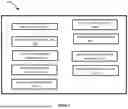

Sources:
- United States Patent and Trademark Office - verify current appl. status at the USPTO↗
Recent applications in this class:
- » 20260140787 2026-05-21
Reversible Logic Gate-Based Thermal Management with Dedicated Entropy Offloading Unit for High-Performance Processor - » 20260133853 2026-05-14
CONTAINER IMAGE TOOLING STORAGE MIGRATION - » 20260133852 2026-05-14
ADAPTIVE INLINE CODEBOOK COMPRESSION - » 20260119275 2026-04-30
SECURE DOCK-BASED NEURAL PROCESSING UNIT HANDOFF TO A CLOUD RESOURCE ON CLIENT DISCONNECT - » 20260119274 2026-04-30
CLIENT WORKLOAD SHARING WITH NEURAL PROCESSING UNIT ENABLED DOCK - » 20260086884 2026-03-26
METHOD, DEVICE, AND COMPUTER PROGRAM PRODUCT FOR OFFLOADING COMPRESSION LOAD - » 20260072762 2026-03-12
System And Method To Offload Compute-Intensive Workloads Using Pipelines Comprised Of Pipeline Templates And Binding Values - » 20260056806 2026-02-26
DYNAMICALLY MIGRATING SERVICES BASED ON SIMILARITY - » 20260050492 2026-02-19
DYNAMIC SERVICE MIGRATIONS FOR COMPOSABLE SYSTEMS - » 20260044390 2026-02-12
UNDERPROVISIONING IN CONTAINERIZED ENVIRONMENTS