Repair Sharing In Serial Repair Interfaces
US20260179710A1
2026-06-25
19/124,573
2022-10-26
Smart Summary: A new system helps repair memory in devices by sharing information between different parts. It uses special shadow memories that can be checked for errors. A logical comparator helps to compare these memories to find problems. There is also a fault detection system that identifies issues and a way to reintroduce faults for testing. Overall, this technology aims to make memory repairs more efficient and effective. 🚀 TL;DR
Abstract:
Methods, systems, and apparatus for a system-level repair sharing serial interface to function with external programs and software for the repairing of memory. One of the methods includes assigning shadow memories that are read through the use of a logical comparator, a fault detection system of sticky flops, and a fault reinjection system that accepts input from both the main memory scan out and the output of the logical comparator.
Inventors:
- Wilson Pradeep 22 🇮🇳 Bangalore, India
- Rajesh Gottumukkala 2 🇮🇳 Bengaluru, India
- Mayank Parasrampuria 2 🇮🇳 Bangalore, India
Applicant:
Interested in similar patents?
Get notified when new applications in this technology area are published.
Classification:
G11C29/44 » CPC main
Checking stores for correct operation ; Subsequent repair ; Testing stores during standby or offline operation; Detection or location of defective memory elements, e.g. cell constructio details, timing of test signals; Functional testing, e.g. testing during refresh, power-on self testing [POST] or distributed testing; Built-in arrangements for testing, e.g. built-in self testing [BIST] or interconnection details Indication or identification of errors, e.g. for repair
G11C29/14 » CPC further
Checking stores for correct operation ; Subsequent repair ; Testing stores during standby or offline operation; Detection or location of defective memory elements, e.g. cell constructio details, timing of test signals; Functional testing, e.g. testing during refresh, power-on self testing [POST] or distributed testing; Built-in arrangements for testing, e.g. built-in self testing [BIST] or interconnection details Implementation of control logic, e.g. test mode decoders
G11C29/4401 » CPC further
Checking stores for correct operation ; Subsequent repair ; Testing stores during standby or offline operation; Detection or location of defective memory elements, e.g. cell constructio details, timing of test signals; Functional testing, e.g. testing during refresh, power-on self testing [POST] or distributed testing; Built-in arrangements for testing, e.g. built-in self testing [BIST] or interconnection details; Indication or identification of errors, e.g. for repair for self repair
G11C29/808 » CPC further
Checking stores for correct operation ; Subsequent repair ; Testing stores during standby or offline operation; Masking faults in memories by using spares or by reconfiguring using programmable devices with improved layout using a flexible replacement scheme
G11C2029/4402 » CPC further
Checking stores for correct operation ; Subsequent repair ; Testing stores during standby or offline operation; Detection or location of defective memory elements, e.g. cell constructio details, timing of test signals; Functional testing, e.g. testing during refresh, power-on self testing [POST] or distributed testing; Built-in arrangements for testing, e.g. built-in self testing [BIST] or interconnection details Internal storage of test result, quality data, chip identification, repair information
G11C29/00 IPC
Checking stores for correct operation ; Subsequent repair ; Testing stores during standby or offline operation
Description
BACKGROUND
This specification relates to devices having the capability to perform memory repair sharing, specifically in components that operate by a serial repair interface.
Memory repair is necessary to correct faults contained within memory structures, which can be present from manufacturing defects or can develop over time in operation. In some applications, a repair control system (RCS) is used to swap a determined faulty memory element with a suitable spare memory element. An example of a RCS could be a Built-in Signature Register (BISR). RCSs operate with a specific repair interface that controls chronologically how memory repairs are implemented across the serviced components. The repair interface used by any given device is dependent on many factors, and can differ between manufacturers and designers.
Repair interfaces are available in both parallel and serial formats. In a parallel interface, multiple spare memory elements can be exchanged directly for faulty elements by the RCS. This can be performed in various ways, to include a column based exchange, a row based exchange, or a combination of both. In a serial interface, there are multiple unique components to each memory that must be sequenced correctly by the RCS to effect a repair. This means that in a serial repair interface the RCS must usually effect a repair one memory structure at a time.
Repair sharing is a method in which similar memory structures are assigned the same RCS to effect repairs. This method assumes that if any one memory of a given set is determined to be faulty, that all memories of the group must be repaired regardless of their individual fault status. Repair sharing reduces the overall physical footprint of a RCS as the number of bits required to construct a system capable of scanning each individual memory may be prohibitively high from a functional or business perspective.
SUMMARY
This specification describes systems and techniques for implementing repair sharing in a serial self-repair interface. In a serial self-repair interface, there are sequential elements that need to be programmed via a serial interface (e.g. CLK, SI, EN, RST, or SO) which controls the selection of redundant elements. Repairing in this type of interface usually occurs one memory structure at a time, with the serial self-repair interface repairing each component of the memory structure in succession. Repair sharing in serial self-repair interfaces cannot follow the same process as parallel interfaces due to the need to sequence the repair of the individual components of each memory. However, there would still be benefits to introducing repair sharing to a serial self-repair interface. For example, these techniques can effectuate an overall footprint reduction and have additional benefits to the system. One example solution is a memory BISR sharing structure (MBSS). The MBSS can have multiple different functional areas, and, in one example, these areas include a shadow BISR chain, fault identification, fault diagnostic, and fault reinjection areas. Other implementations of a similar system may choose to have more, or less, functional areas.
The shadow BISR chain in this example identifies multiple memories for which repair sharing is to be performed. The process of selecting compatible memories can depend on multiple factors, to include processing type or capability, fault density, failure rate, or guidance from the manufacturer. Once suitable memories have been identified, one of the memories in the group is designated the ‘main’ memory, while all other memories are designated the ‘shadow’ memories. There is no limit to how many shadow memories can be designated in this manner.
Once suitable memories are grouped and designated, a scan-in signal is sent to the main memory. The MBSS in this example also sends the same scan-in signal to all of the shadow memories in parallel. In this example, a singular logical result, for example ‘high’ or ‘low’, is obtained for all of the shadow memories. This is obtained through the logic structure of the fault identification functional area, which in some examples includes a comparator. Additionally, this singular shadow memory scan-out is combined with the main memory scan-out through the fault reinjection functional area, in some examples through the use of a multiplexer, such that either a fault in serial repair RCS infrastructure, from the main memory or the overall shadow memory fault logic will trigger a failure for all memories, main and shadow. This signal is transmitted as one final ‘scan-out’ signal sent to the external repair infrastructure.
In this example, the MBSS is designed such that the external repair infrastructure needs to send only one input, and in return, receives only one output. One of the advantages of this process in this format is that it does not require any changes to the external serial repair infrastructure, as the external devices continue to ‘see’ their expected inputs and outputs for a single memory, in essence, one repair signal. The end result is that the MBSS can be utilized with a variety of serial repair infrastructures without changes to those devices.
Particular embodiments of the subject matter described in this specification can be implemented so as to realize one or more of the following advantages. Implementing the example system or a similar design allows an overall reduction in One-Time Programmable (OTP) memory. This results in a lower physical system footprint for repairing infrastructure. Additionally, the reduced repair chain length of this system can result in improved system boot up times or BISR reloading times. Also achieved is a reduction in the max chain length and the total BISR bits required. Finally, because the MBSS in this example is configured to work with existing serial repair interfaces, it does not require any changes to external hardware or software to implement.
The details of one or more embodiments of the subject matter of this specification are set forth in the accompanying drawings and the description below. Other features, aspects, and advantages of the subject matter will become apparent from the description, the drawings, and the claims.
BRIEF DESCRIPTION OF THE DRAWINGS
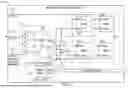
FIG. 1 is a diagram of an example system.
FIG. 2A illustrates a memory structure that has one word and three addresses.
FIG. 2B illustrates a memory structure that has three words and one address.
FIG. 2C illustrates a memory that has two words and two addresses.
FIG. 3 is a detailed view of an example comparator and fault detection system.
FIG. 4 is an example method of how faults can be identified by the system.
DETAILED DESCRIPTION
FIG. 1 is a diagram of an example device 100 communicatively coupled to two, or more, memory devices 110 and 120a-c. The device 100 has a comparator 130, a fault reinjection system 140, and a fault detection system 150. The device 100 can be installed on or integrated into any appropriate computing device, which may be referred to as a host device.
The device 100 services multiple similar memory structures, for example 110 and 120a-c. Each of the memory structures can have serial self-repair interfaces. One of these memory structures 110 can act as a main memory while all other memories act as the shadow memories 120a-c. The device 100 is not limited to a certain number of memories, and can be configured to function with any given number of memory words or addresses. The device 100 can be designed such that it communicates with external memory test controllers which are allowed to view the contained virtual memories.
To repair the memories associated with the device 100, a scan-in (RSCIN) 105 is broadcast by using serial self-repair interfaces of the memories beginning with the main memory 110. The same RSCIN 105 from the serial self-repair interface is also applied to each of the shadow memories 120a-c in parallel. The result of the scan for the main memory 110 is then scanned out to the fault reinjection system 140. The results of the scan for all memories, main 110 and shadow 120a-c, are scanned out to the comparator 130.
The comparator 130 can include a certain number (N) of exclusive OR (XOR) gates 132a-b that receive the scan out from the memories 110 and 120a-c. Upon receiving a mismatched scan out from the memories 110 or 120a-c, the comparator passes this high scan out to the fault reinjection system 140. The logic in the comparator is such that one XOR gate 132a-b is assigned to two memory structures, or two downstream XOR gates. There is no limit to how many XOR gates 132a-b are used in this fashion, provided that each XOR gate has two inputs and only one output. A mistmached scan out triggered by a faulty RCS path of memory will result in a high signal to its associated XOR gates. When a XOR gate receives differing input, one high and one low, from both of its associated memories, or downstream XOR gates, that XOR gate then passes a high signal to the next component, whether that is another XOR gate or the fault reinjection system 140. If the XOR gate receives a high or low signal from both of its associated memories or downstream XOR gates, the resulting output is low.
The comparator also sends any high scan-out received to the sticky flops 152a-b in the fault detection system 150. The fault detection system 150 can include multiple sticky flops 152a-b that activate a high signal upon sensing a mismatch indicated by the output of the comparator 130. This is then stored in the sticky flops 152a-b. The sticky flops 152a-b are then unloaded at the end of the test vector via a test data register (TDR) 135. The TDR 135 can then be used to indicate which memory triggered the failure and contains the faulty RCS infrastructure.
The fault reinjection system 140 can include a certain number (2N) of OR gates 142, an AND gate 144 that combines output from the OR gates 142 and shadow fault detection 145, and a multiplexer (MUX) 146. There is no limit to how many OR gates 142 are used in this fashion, provided that the ratio of OR gates 142 in the fault reinjection system 140 to the number of XOR gates 132a-b in the comparator 130 is two-to-one (2N/N), and each OR gate 142 has two inputs and only one output. Upon receiving a high signal from either of the downstream XOR gates 132a-b, or downstream OR gates, the OR gate 142 passes a high signal to the AND gate 144. The OR gate 142 will also pass a high signal to the next component in the event that both downstream XOR gates 132a-b, or OR gates, send high signals. The AND gate 144 receives input from the OR gate 142 and shadow fault detection 145. If shadow fault detection 145 is enabled, this input will be high. With shadow fault detection 145 disabled, this input is low. If both the OR gate 142 and shadow fault detection 145 send high signals, the AND gate 144 passes a high signal to the multiplexer 146. If the AND gate receives mixed signals, one high and one low, or two low signals, a low signal is passed to the multiplexer 146.
The fault reinjection feature is disabled in order to determine the fault status of only the main memory 110 RCS. Relatedly, the fault reinjection feature is enabled to check shadow memories 120a-c. Upon receiving a high signal from the AND gate 144 the multiplexer 146 selects the path with the inverter 147 and flips the scan out from the main chain and sends as (RSCOUT) 155 back to the serial self-repair interface. This inversion of main memory RSCOUT creates a bit flip in the data stream which gets identified as a fault in the shadow memory.
FIGS. 2A-2C illustrate several examples of memory structures of different word and address lengths that could be serviced by the device 100. These examples are not meant to be an exhaustive list. FIG. 2A illustrates a memory structure that has one word and three addresses. FIG. 2B illustrates a memory structure that has three words and one address. FIG. 2C illustrates a memory that has two words and two addresses. Referring to the example of FIG. 2C, in some implementations memories 210a and 210b together share the same word, as do memories 210c and 210d. Additionally, memories 210a and 210c together share the same address, as do memories 210b and 210d. The device 100 does not have a limit to how many different memory words or addresses can be serviced.
FIG. 3 illustrates a detailed view of another example fault re-injection system 310, comparator 322, and fault detection system 330. The function of the major components of this system 300 is similar to the functions of system 100 as described for FIG. 1. This system 300 has been illustrated to show additional XOR gates 322 in the comparator 322, as well as additional sticky flops 332 in the fault detection system 330, for added clarity on the logical structure of the comparator and the integration of the fault detection system within the output of the comparator, respectively. In the fault re-injection system 310, the 2N OR gate 312 is a simplification of the logic needed for this representative example, including four XOR gates 322 servicing four memories. The 2N OR gate 312 could be constructed of any logic gates such that the final logical truth table would be such that the output is high for any high input received.
FIG. 4 illustrates an example process for checking faults on a component serviced by the system. Other examples of this process could use a different order for checking faults, or have more, or less, steps.
The first step in this example process disables fault reinjection (410). This is done such that the RCS fault status of the main memory can be determined, separate of the fault status of any of the shadow memories. In some embodiments, the fault reinjection must be disabled in order for the output of the multiplexer to be independent of the logical output of the shadow memories' comparator. By disabling fault reinjection in this example embodiment, the shadow memories' AND gate in the fault reinjection system will always receive one low input, and as such its output to the multiplexer will always be the data stream from main memory. In this way, only a fault with the main memory can cause a failure.
After disabling fault reinjection, a main self-repair chain test is then performed (420). This chain test outputs any faults associated with the main memory RCS only. These output faults are indicated as Main memory faults 400. In some embodiments, the fault status of the shadow memories RCS is ignored by the fault reinjection system in this case.
Following a main self-repair test, fault reinjection is enabled (430). This sends one high signal to the shadow memories' AND gate in the fault reinjection system. In some embodiments this is done such that when combined with a high signal from the shadow memories' comparator, the output of the AND gate to the multiplexer is a high signal. This ultimately triggers a bit flip via inverter 147 into the data stream in case of a mismatch flagged by the comparator resulting in fault indication.
One or more shadow self-repair chain tests are then performed (440). These chain tests output any faults that are associated with the one or more shadow memories. These output faults are indicated as Shadow memory faults 405. By performing this test after a successful main self-repair chain test (step 420), any faults can then be isolated to the shadow memories RCS.
Embodiments of the subject matter and the functional operations described in this specification can be implemented in digital electronic circuitry, in tangibly-embodied computer software or firmware, in computer hardware, including the structures disclosed in this specification and their structural equivalents, or in combinations of one or more of them. Embodiments of the subject matter described in this specification can be implemented as one or more computer programs, i.e., one or more modules of computer program instructions encoded on a tangible non-transitory storage medium for execution by, or to control the operation of, data processing apparatus. The computer storage medium can be a machine-readable storage device, a machine-readable storage substrate, a random or serial access memory device, or a combination of one or more of them. Alternatively or in addition, the program instructions can be encoded on an artificially-generated propagated signal, e.g., a machine-generated electrical, optical, or electromagnetic signal, that is generated to encode information for transmission to suitable receiver apparatus for execution by a data processing apparatus.
The term “data processing apparatus” refers to data processing hardware and encompasses all kinds of apparatus, devices, and machines for processing data, including by way of example a programmable processor, a computer, or multiple processors or computers. The apparatus can also be, or further include, special purpose logic circuitry, e.g., an FPGA (field programmable gate array) or an ASIC (application-specific integrated circuit). The apparatus can optionally include, in addition to hardware, code that creates an execution environment for computer programs, e.g., code that constitutes processor firmware, a protocol stack, a database management system, an operating system, or a combination of one or more of them.
A computer program which may also be referred to or described as a program, software, a software application, an app, a module, a software module, a script, or code) can be written in any form of programming language, including compiled or interpreted languages, or declarative or procedural languages, and it can be deployed in any form, including as a stand-alone program or as a module, component, subroutine, or other unit suitable for use in a computing environment. A program may, but need not, correspond to a file in a file system. A program can be stored in a portion of a file that holds other programs or data, e.g., one or more scripts stored in a markup language document, in a single file dedicated to the program in question, or in multiple coordinated files, e.g., files that store one or more modules, sub-programs, or portions of code. A computer program can be deployed to be executed on one computer or on multiple computers that are located at one site or distributed across multiple sites and interconnected by a data communication network.
For a system of one or more computers to be configured to perform particular operations or actions means that the system has installed on it software, firmware, hardware, or a combination of them that in operation cause the system to perform the operations or actions. For one or more computer programs to be configured to perform particular operations or actions means that the one or more programs include instructions that, when executed by data processing apparatus, cause the apparatus to perform the operations or actions.
The processes and logic flows described in this specification can be performed by one or more programmable computers executing one or more computer programs to perform functions by operating on input data and generating output. The processes and logic flows can also be performed by special purpose logic circuitry, e.g., an FPGA or an ASIC, or by a combination of special purpose logic circuitry and one or more programmed computers.
Computers suitable for the execution of a computer program can be based on general or special purpose microprocessors or both, or any other kind of central processing unit. Generally, a central processing unit will receive instructions and data from a read-only memory or a random access memory or both. The essential elements of a computer are a central processing unit for performing or executing instructions and one or more memory devices for storing instructions and data. The central processing unit and the memory can be supplemented by, or incorporated in, special purpose logic circuitry. Generally, a computer will also include, or be operatively coupled to receive data from or transfer data to, or both, one or more mass storage devices for storing data, e.g., magnetic, magneto-optical disks, or optical disks. However, a computer need not have such devices. Moreover, a computer can be embedded in another device, e.g., a mobile telephone, a personal digital assistant (PDA), a mobile audio or video player, a game console, a Global Positioning System (GPS) receiver, or a portable storage device, e.g., a universal serial bus (USB) flash drive, to name just a few.
Computer-readable media suitable for storing computer program instructions and data include all forms of non-volatile memory, media and memory devices, including by way of example semiconductor memory devices, e.g., EPROM, EEPROM, and flash memory devices; magnetic disks, e.g., internal hard disks or removable disks; magneto-optical disks; and CD-ROM and DVD-ROM disks.
In addition to the embodiments described above, the following embodiments are also innovative:
Embodiment 1 is a device comprising:
-
- a plurality of memory devices each having a serial self-repair interface; and
- a sharing structure comprising logic circuitry for inputting a same set of self-repair data to each of the plurality of memory devices and receiving self-repair outputs from the plurality of memory devices,
- wherein the sharing structure comprises fault identification logic configured to detect mismatches between the self-repair outputs of the plurality of memory devices.
Embodiment 2 is the device of embodiment 1, wherein sharing structure comprises a main self-repair chain and a plurality of shadow self-repair chains.
Embodiment 3 is the device of any one of embodiments 1-2, wherein the sharing structure comprises fault diagnostic circuitry comprising a plurality of flops corresponding respectively to the plurality of memory devices.
Embodiment 4 is device of embodiment 3, wherein the plurality of flops are sticky flops configured to track which memory device failed.
Embodiment 5 is the device of any one of embodiments 1-4, wherein the sharing structure comprises fault reinjection logic configured to flip the values of the self-repair outputs of the plurality of memory devices.
Embodiment 6 is the device of any one of embodiments 1-5, wherein the device is configured to perform a self-repair chain test having a main phase and a shadow phase, wherein during the main phase, fault reinjection is disabled, and wherein during the shadow phase, fault reinjection is enabled.
Embodiment 7 is the device of any one of embodiments 1-6, wherein the device is configured to apply the same self-repair data to each of the plurality of memory devices having serial self-repair interfaces.
Embodiment 8 is the device of any one of embodiments 1-7, wherein the fault identification logic comprises a plurality of XOR gates configured to compare self-repair outputs from respective pairs of the plurality of memory devices.
Embodiment 9 is the device of embodiment 8, wherein the fault identification logic comprises an N-input OR gate having a number of inputs equal to the number of XOR gates.
Embodiment 10 is a method performed by a device comprising a plurality of memory devices each having a serial self-repair interface, the method comprising:
-
- inputting, by a sharing structure, a same set of self-repair data to each of the plurality of memory devices;
- receiving, at the sharing structure, self-repair outputs from the plurality of memory devices; and
- detecting, by fault identification logic of the sharing structure, mismatches between the self-repair outputs of the plurality of memory devices.
Embodiment 11 is the method of embodiment 10, wherein the sharing structure comprises using a main self-repair chain and using a plurality of shadow self-repair chains.
Embodiment 12 is the method of any one of embodiments 10-11, wherein detecting mismatches between the self-repair outputs of the plurality of memory devices further comprises determining the fault status of individual memory devices.
Embodiment 13 is the method of embodiment 12, wherein determining the fault status of individual memory devices comprises using a plurality sticky flops configured to track which memory device failed.
Embodiment 14 is the method of any one of embodiments 10-13, wherein detecting mismatches between the self-repair outputs of the plurality of memory devices comprises fault reinjection logic configured to flip the values of the self-repair outputs of the plurality of memory devices.
Embodiment 15 is the method of any one of embodiments 10-14, wherein detecting mismatches between the self-repair outputs of the plurality of memory devices further comprises performing a self-repair chain test having a main phase and a shadow phase, wherein during the main phase, fault reinjection is disabled, and wherein during the shadow phase, fault reinjection is enabled.
Embodiment 16 is the method of any one of embodiments 10-15, wherein the fault identification logic comprises using a plurality of XOR gates configured to compare self-repair outputs from respective pairs of the plurality of memory devices.
Embodiment 17 is the method of any one of embodiments 10-16, wherein the fault identification logic comprises using an N-input OR gate having a number of inputs equal to the number of XOR gates.
Embodiment 18 is one or more non-transitory computer storage media encoded with computer program instructions that when executed by one or more computers cause the one or more computers to perform operations comprising:
-
- inputting, by a sharing structure, a same set of self-repair data to each of the plurality of memory devices;
- receiving, at the sharing structure, self-repair outputs from the plurality of memory devices; and
- detecting, by fault identification logic of the sharing structure, mismatches between the self-repair outputs of the plurality of memory devices.
While this specification contains many specific implementation details, these should not be construed as limitations on the scope of any invention or of what may be claimed, but rather as descriptions of features that may be specific to particular embodiments of particular inventions. Certain features that are described in this specification in the context of separate embodiments can also be implemented in combination in a single embodiment. Conversely, various features that are described in the context of a single embodiment can also be implemented in multiple embodiments separately or in any suitable subcombination. Moreover, although features may be described above as acting in certain combinations and even initially claimed as such, one or more features from a claimed combination can in some cases be excised from the combination, and the claimed combination may be directed to a subcombination or variation of a subcombination.
Similarly, while operations are depicted in the drawings in a particular order, this should not be understood as requiring that such operations be performed in the particular order shown or in sequential order, or that all illustrated operations be performed, to achieve desirable results. In certain circumstances, multitasking and parallel processing may be advantageous. Moreover, the separation of various system modules and components in the embodiments described above should not be understood as requiring such separation in all embodiments, and it should be understood that the described program components and systems can generally be integrated together in a single software product or packaged into multiple software products.
Particular embodiments of the subject matter have been described. Other embodiments are within the scope of the following claims. For example, the actions recited in the claims can be performed in a different order and still achieve desirable results. As one example, the processes depicted in the accompanying figures do not necessarily require the particular order shown, or sequential order, to achieve desirable results. In certain cases, multitasking and parallel processing may be advantageous.
Claims
What is claimed is:1-18. (canceled)
19. A device comprising:
a plurality of memory devices each having a serial self-repair interface, one of the memory devices acting as a main memory and all other memory devices acting as shadow memories; and
a sharing structure comprising logic circuitry for inputting a same set of self-repair data to each of the plurality of memory devices and receiving self-repair outputs from the plurality of memory devices,
wherein the sharing structure comprises fault identification logic configured to detect mismatches between the self-repair outputs of the plurality of memory devices,
the fault identification logic comprises a plurality of XOR gates configured to compare self-repair outputs from respective pairs of the plurality of memory devices, and
the fault identification logic comprises an N-input OR gate having a number of inputs equal to the number of XOR gates.
20. The device of claim 19, wherein sharing structure comprises a main self-repair chain test and a plurality of shadow self-repair chain tests.
21. The device of claim 19, wherein the sharing structure comprises fault reinjection logic configured to flip the values of the self-repair outputs of the plurality of memory devices.
22. The device of claim 19, wherein the device is configured to apply the same self-repair data to each of the plurality of memory devices having serial self-repair interfaces.
23. A method performed by a device comprising a plurality of memory devices each having a serial self-repair interface, one of the memory devices acting as a main memory and all other memory devices acting as shadow memories, the method comprising:
inputting, by a sharing structure, a same set of self-repair data to each of the plurality of memory devices;
receiving, at the sharing structure, self-repair outputs from the plurality of memory devices; and
detecting, by fault identification logic of the sharing structure, mismatches between the self-repair outputs of the plurality of memory devices,
the fault identification logic comprises using a plurality of XOR gates configured to compare self-repair outputs from respective pairs of the plurality of memory devices, and
the fault identification logic comprises using an N-input OR gate having a number of inputs equal to the number of XOR gates.
24. The method of claim 23, wherein the sharing structure comprises using a main self-repair chain test and using a plurality of shadow self-repair chain tests.
25. The method of claim 23, wherein detecting mismatches between the self-repair outputs of the plurality of memory devices further comprises determining the fault status of individual memory devices.
26. The method of claim 23, wherein detecting mismatches between the self-repair outputs of the plurality of memory devices comprises fault reinjection logic configured to flip the values of the self-repair outputs of the plurality of memory devices.
27. One or more non-transitory computer storage media encoded with computer program instructions that when executed by one or more computers cause the one or more computers to:
input, by a sharing structure, a same set of self-repair data to each of the plurality of memory devices;
receive, at the sharing structure, self-repair outputs from the plurality of memory devices; and
detect, by fault identification logic of the sharing structure, mismatches between the self-repair outputs of the plurality of memory devices,
the fault identification logic comprises using a plurality of XOR gates configured to compare self-repair outputs from respective pairs of the plurality of memory devices, and
the fault identification logic comprises using an N-input OR gate having a number of inputs equal to the number of XOR gates.
28. The one or more non-transitory computer storage media of claim 27, wherein the sharing structure comprises using a main self-repair chain test and using a plurality of shadow self-repair chain tests.
29. The one or more non-transitory computer storage media of claim 27, wherein detecting mismatches between the self-repair outputs of the plurality of memory devices further comprises determining the fault status of individual memory devices.
30. The one or more non-transitory computer storage media of claim 27, wherein detecting mismatches between the self-repair outputs of the plurality of memory devices comprises fault reinjection logic configured to flip the values of the self-repair outputs of the plurality of memory devices.
Images & Drawings included:



Sources:
- United States Patent and Trademark Office - verify current appl. status at the USPTO↗
Recent applications in this class:
- » 20260179711 2026-06-25
SEMICONDUCTOR MEMORY DEVICE INCLUDING ONE-TIME PROGRAMMABLE MEMORY DEVICE AND METHOD OF CONTROLLING THE SAME - » 20260171181 2026-06-18
MEMORY DEVICE AND OPERATION METHOD THEREOF - » 20260162749 2026-06-11
MEMORY DRIVE DEVICE, INFORMATION PROCESSING APPARATUS, AND CONTROL METHOD - » 20260162748 2026-06-11
MEMORY GENERATING PASS/FAIL INFORMATION AND OPERATING METHOD OF MEMORY - » 20260141972 2026-05-21
FUNNEL-LIKE SHAPE INPUT/OUTPUT REPAIR MECHANISM CAPABLE OF SIMPLIFYING TRACE ROUTING DESIGN - » 20260141971 2026-05-21
TEST MODE MONITORING AND FEEDBACK - » 20260141970 2026-05-21
Apparatus for High Bandwidth Memory - » 20260128114 2026-05-07
MEMORY DEVICE WITH BUILT-IN SELF-TEST - » 20260120787 2026-04-30
MEMORY FAULT PROCESSING METHOD AND APPARATUS, ELECTRONIC DEVICE, AND READABLE STORAGE MEDIUM - » 20260112439 2026-04-23
STORAGE CONTROLLER FOR DETECTING FAILURE OF NONVOLATILE MEMORY DEVICE, STORAGE DEVICE INCLUDING THE STORAGE CONTROLLER, AND ELECTRONIC SYSTEM INCLUDING THE STORAGE DEVICE