ELECTRICAL CONNECTOR WITH TERMINAL MODULES AND FRAME HAVING MODULE BAYS FOR CUSTOMIZABLE INPUT/OUTPUT CONFIGURATION
US20260180237A1
2026-06-25
19/533,452
2026-02-09
Smart Summary: An electrical connector assembly features a frame with several spaces for different modules. Each module contains a housing with an electrical terminal inside. A cover is used to secure the modules in place, ensuring they fit snugly in the frame. This cover can only be fully attached when the modules are correctly positioned, which helps prevent mistakes. The design allows for customizable input and output configurations based on the user's needs. 🚀 TL;DR
Abstract:
An electrical connector assembly includes a frame with multiple module bays, and terminal modules removably received in these bays. Each terminal module has a housing with an electrical terminal inside. A wire dress cover attaches to the frame and has posts that engage the terminal modules, forcing them into a fully seated position within the bays when attached. The cover can only be fully attached to the frame when the terminal modules are fully seated, thereby ensuring proper placement and connection.
Inventors:
- Abhaya Kishore 9 🇮🇳 Nagercoil, India
- Justin Kopelos 6 🇺🇸 Niles, OH, United States
- Daniel Vernon 6 🇺🇸 Youngstown, OH, United States
- SIVAKUMAR JOGULA 3 🇮🇳 Achampet, India
Applicant:
Interested in similar patents?
Get notified when new applications in this technology area are published.
Classification:
H01R13/518 » CPC main
Details of coupling devices of the kinds covered by groups or -; Bases; Cases; Means for holding or embracing insulating body, e.g. casing, hoods for holding or embracing several coupling parts, e.g. frames
H01R13/506 » CPC further
Details of coupling devices of the kinds covered by groups or -; Bases; Cases composed of different pieces assembled by snap action of the parts
H01R43/20 » CPC further
Apparatus or processes specially adapted for manufacturing, assembling, maintaining, or repairing of line connectors or current collectors or for joining electric conductors for assembling or disassembling contact members with insulating base, case or sleeve
Description
CROSS REFERENCE TO RELATED APPLICATION
This application is a continuation application of U.S. application Ser. No. 18/597,151, titled “Electrical Connector with Terminal Modules and Frame Having Module Bays for Customizable Input/Output Configuration”, filed on Mar. 6, 2024, which is a continuation-in-part application of U.S. application Ser. No. 18/103,521, titled “Electrical Connector with Terminal Modules and Frame Having Module Bays for Customizable Input/Output Configuration”, filed on Jan. 31, 2023 which claims benefit of claims priority to U.S. Provisional Application No. 63/335,911, titled “Electrical Connector with Terminal Modules and Frame Having Module Bays for Customizable Input/Output Configuration”, filed on Apr. 28, 2022, and U.S. Provisional Application No. 63/305,839, titled “Electrical Connector with Terminal Modules and Frame Having Module Bays for Customizable Input/Output Configuration”, filed on Feb. 2, 2022, the entire disclosure of each of which is hereby incorporated by reference.
TECHNICAL FIELD
This disclosure is directed to an electrical connector with terminal modules and a frame having module bays for customizable input/output configuration.
BACKGROUND
Traditional electrical connection system designs include a molded connector body containing one to more than one hundred terminal cavities. The terminal cavities within such a traditional molded connector body are not relocatable and are fixed in position and the type of terminal they may accept. A hard change to the tools used to fabricate the connector body, e.g., molds, is required in order to modify the input/output terminal configuration for different applications.
SUMMARY
In some aspects, the techniques described herein relate to an electrical connector assembly, including a frame defining a plurality of module bays; a plurality of terminal modules removably received in the plurality of module bays, each terminal module having a housing and an electrical terminal disposed within a cavity of the housing; and a wire dress cover attachable to the frame and defining a plurality of posts, attachment of the wire dress cover to the frame causes the plurality of posts to engage the plurality of terminal modules and force the plurality of terminal modules into a fully seated position within the plurality of module bays, the wire dress cover is capable of being fully attached to the frame only when the plurality of terminal modules are fully seated within the plurality of module bays.
In some aspects, the techniques described herein relate to an electrical connector assembly, including a frame defining a plurality of module bays, each module bay in the plurality of module bays including at least one resilient locking arm; a plurality of terminal modules received in the plurality of module bays; and a wire dress cover having posts that inhibit deflection of the at least one resilient locking arm to prevent disengagement of the plurality of terminal modules from the plurality of module bays when the wire dress cover is attached to the frame.
In some aspects, the techniques described herein relate to a method of assembling an electrical connector, including inserting a plurality of terminal modules into a frame having module bays; attempting to attach a wire dress cover to the frame; driving the plurality of terminal modules into fully seated positions within the module bays using posts of the wire dress cover; and preventing attachment of the wire dress cover to the frame if any terminal module of the plurality of terminal modules is not fully seated.
BRIEF DESCRIPTION OF THE DRAWINGS
The present invention will now be described by way of example with reference to the accompanying drawings, in which:
FIG. 1 illustrates an exploded view of an electrical connector assembly with terminal modules and a frame having module bays for customizable input/output configuration according to some embodiments.
FIG. 2 illustrates a partially assembled view of the electrical connector assembly of FIG. 1 according to some embodiments.
FIG. 3 illustrates a fully assembled view of the electrical connector assembly of FIG. 1 according to some embodiments.
FIGS. 4A and 4B illustrate front and rear views of a frame for the electrical connector assembly of FIG. 1 according to some embodiments.
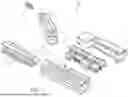
FIG. 5 illustrates a perspective view of four different terminal modules that may be used with the frame of the electrical connector assembly of FIG. 1 according to some embodiments.
FIG. 6 illustrates a cross-section view of locks and stops of the electrical connector assembly of FIG. 1 according to some embodiments.
FIGS. 7 to 9 illustrates an assembly sequence of inserting cable and terminal assemblies into the terminal modules (FIG. 7), inserting the terminal modules into the frame (FIG. 8), and assembling a lever and dress cover to the frame (FIG. 9) according to some embodiments.
FIG. 10 illustrates a perspective view of the electrical connector assembly of FIG. 1 and a corresponding mating electrical connector assembly according to some embodiments.
FIG. 11 illustrates a front view of the corresponding mating electrical connector assembly of FIG. 10 according to some embodiments.
FIG. 12 illustrates an exploded view of corresponding mating electrical connector assembly of FIG. 10 according to some embodiments.
FIG. 13 illustrates a perspective view of four different terminal modules that may be used with the frame of the corresponding mating electrical connector assembly of FIG. 10 according to some embodiments.
FIG. 14 illustrates a side view of one of the terminal modules of the corresponding mating electrical connector assembly of FIG. 10 according to some embodiments.
FIG. 15 illustrates a rear perspective view of the corresponding mating electrical connector assembly of FIG. 10 according to some embodiments.
FIG. 16 illustrates a cross-section view of locks and stops of the corresponding mating electrical connector assembly of FIG. 10 according to some embodiments.
FIG. 17 illustrates a perspective view of a terminal module configured to contain twin axial cables and terminals assemblies according to some embodiments.
FIG. 18A illustrates a perspective view of a twin axial cable and terminal assembly according to some embodiments.
FIG. 18B illustrates a lateral cross section view of the terminal module of FIG. 20 according to some embodiments.
FIG. 18C illustrates a front view of the terminal module of FIG. 17 according to some embodiments.
FIG. 19 illustrates a front view of the secondary terminal lock of the terminal module of FIG. 17 according to some embodiments.
FIG. 20 illustrates a longitudinal cross section view of the terminal module of FIG. 17 according to some embodiments.
FIG. 21 illustrates a perspective view of a terminal module configured to contain coaxial cables and terminals assemblies according to some embodiments.
FIG. 22A illustrates a perspective view of a coaxial cable and terminal assembly according to some embodiments.
FIG. 22B illustrates a lateral cross section view of the terminal module of FIG. 21 according to some embodiments.
FIG. 22C illustrates a front view of the terminal module of FIG. 21 according to some embodiments.
FIG. 23 illustrates a front view of the secondary terminal lock of the terminal module of FIG. 23 according to some embodiments.
FIG. 24A illustrates a perspective view of a dress cover of the electrical connector assembly of FIG. 1 according to some embodiments.
FIG. 24B illustrates a close-up view of posts extending from the dress cover of FIG. 24A according to some embodiments.
FIG. 25 illustrates a diagram of a method of assembling an electrical connector according to some embodiments.
FIG. 26 illustrates a perspective view of an alternate dress cover of the electrical connector assembly of FIG. 1 according to some embodiments.
FIG. 27 illustrates a cross section view of the alternate dress cover of FIG. 26 according to some embodiments.
FIG. 28 illustrates a diagram of a method of assembling an electrical connector according to some embodiments.
DETAILED DESCRIPTION
Non-limiting examples of electrical connector assemblies with terminal modules and a frame having module bays for customizable input/output configuration is described herein and is illustrated in FIGS. 1 through 9 and FIGS. 11 through 16.
This electrical connector assembly addresses the problem of reconfiguring the input and output terminals of the electrical connector assembly by proving multiple terminal modules having different terminal types. The terminal modules have a mounting interface that is accepted by any one of the module bays in the frame. This allows mixing and matching of the terminal modules to provide the desired input/output electrical and mechanical interface of the electrical connector assembly. The terminal type can vary between each module.
Many vehicle electrical interfaces require packaging terminals that are configured for transmitting digital data. There are multiple data terminal technologies that may be used, and vehicle applications often require packaging more than one type of data terminal. It may be desirable during a design cycle of the vehicle life to change the data terminal type to take advantage of different vendors or new terminal technologies. This electrical connector assembly allows the terminal types to be changed by switching one terminal module for another rather than retooling the connector body as was previously required. These terminal modules may alternatively or additionally include terminals for power and/or signal circuitry and may be used to change to different power and/or signal terminal types. This electrical connector assembly eliminates the need to fix the terminal types used during the design phase of a vehicle and maintain that same terminal configuration throughout the life cycle of the vehicle. Instead, the terminal modules and frame of this electrical connector assembly allow the terminal types to be easily changed without changing connector tooling and/or repackaging a different connector in the vehicle. This also allows easier customization of the electrical connector assembly to accommodate varying electrical device content in the vehicle due to different vehicle trim levels. It also allows design changes to more easily be made during the vehicle development phase.
FIGS. 1 through 3 illustrates an electrical connector assembly 100 with a plurality of terminal modules 102 and a frame 104 having a plurality of module bays 106 for customizable input/output configuration. The electrical connector assembly 100 also includes a mating assist lever 108 and mating assist sliders 110 that may be used to meet ergonomic requirements for mating force to mate the electrical connector assembly 100 with a corresponding electrical connector assembly 200 (see FIG. 10). The electrical connector assembly 100 further includes a connector position assistance device 112 to keep the mating assist lever 108 in a locked position and inhibit inadvertent decoupling of the electrical connector assembly 100 and the corresponding electrical connector assembly 200.
As shown in FIGS. 4A and 4B, the frame 104 defines several module bays 106 that are configured to receive terminal modules 102. Each module bay 106 has a common mechanical interface with the terminal modules 102 that includes a mechanism to secure each terminal module 102 within a module bay 106.
FIG. 5 shows a number of examples of terminal modules 102A, 102B, 102C, 102D each containing a different terminal type, e.g., pin socket, blade socket, coaxial, or twin axial. In alternative embodiments, terminal modules may be envisioned that include a mix of two or more different terminal types.
FIG. 6 shows the locking mechanism configured to secure the terminal modules 102 within the module bays 106 of the frame 104. Each module bay 106 has a plurality of cantilevered locking arms 114 that have hooks 116 defined near the free ends of the locking arms 114. The hooks 116 are received in indentations 118 in the side walls of the terminal modules 102. The terminal modules 102 also define a plurality of stop pads 120 that are configured to contact the fixed end of the locking arms 114. The locking arms 114, indentations 118, and stop pads 120 cooperate to secure the terminal modules 102 within the module bays 106 and maintain the desired location of the terminal modules 102 in the module bays 106.
FIGS. 7-9 illustrates a non-limiting example of a sequence of assembling the electrical connector assembly 100. As shown in FIG. 7 cable and terminal assemblies are inserted into the terminal modules 102. As shown in FIG. 8, the terminal modules 102 are then inserted into the module bays 106 in the frame 104. After the terminal modules 102 are inserted within the frame 104, the mating assist lever 108, mating assist sliders 110, and wire dress cover 134 are attached to the frame 104 as shown in FIGS. 9, 24A, and 24B.
A non-limiting example of the corresponding electrical connector assembly 200 for the electrical connector assembly 100 is illustrated in FIGS. 10 through 16.
FIGS. 11 and 12 illustrate the corresponding electrical connector assembly 200 which similarly has a plurality of terminal modules 202 and a frame 204 having a plurality of module bays 206 for customizable input/output configuration. The corresponding electrical connector assembly 200 also includes studs which mate with the mating assist sliders 110.
As shown in FIG. 12, the frame 204 defines several module bays 206 that are configured to receive terminal modules 202. Each module bay 206 has a common mechanical interface with terminal module 202 that includes a locking mechanism to secure each terminal module 202 within a module bay 206.
FIG. 13 shows a number of examples of terminal modules 202A, 202B, 202C, 202D each containing a different terminal type, e.g., pin, blade, coaxial, or twin axial. In alternative embodiments, terminal modules may be envisioned that include a mix of two or more different terminal types.
FIG. 16 shows the locking mechanism configured to secure the terminal modules 202 within the module bays 206 of the frame 204. Each terminal module 202 has a plurality of cantilevered locking arms 214 that have latches 216 defined near the free ends of the locking arms 214. The latches 216 are received in indentations 218 in the side walls of the module bays 206. The module bays 206 also define a plurality of stop pads 220 that are configured to contact the fixed end of the locking arms 214. The latches 216, indentations 218, and stop pads 220 cooperate to secure the terminal modules 202 within the module bays 206 and maintain the desired location of the terminal modules 202 in the terminal bays 206.
A first example of a secondary terminal locking mechanism 300 for the terminal modules 102C is shown in FIGS. 17 through 20. This second example is configured for use with an oval cylinder shaped twin axial terminal 122C. As the twin axial terminal 122C is inserted within the terminal cavity 124C in the terminal module 102C, it engages a flexible primary terminal locking mechanism 126C that extends from one of the side walls of the terminal cavity 124C. Once the twin axial terminals 122C are inserted into the terminal cavities 124C, the secondary terminal locking mechanism 300 is attached to the terminal module 102C by flexible arms 128C defined by the terminal module 102C that engage latching tabs 302 on sides of the secondary terminal locking mechanism 300.
The secondary terminal locking mechanism 300 defines a first tab 304 that extends from the secondary terminal locking mechanism 300 and engages the primary terminal locking mechanism 126C to inhibit flexing of the primary terminal locking mechanism 126C that may release the terminal 122C from the terminal cavity 124C. The secondary terminal locking mechanism 300 also defines curved second and third tabs 306, 308 that extend from the secondary terminal locking mechanism 300 and directly engage the rear end of the terminal 122C to inhibit removal of the terminal 122C from the terminal cavity 124C.
A second example of a secondary terminal locking mechanism 400A, 400B for the terminal module 102D is shown in FIGS. 21 through 23. This second example is configured for use with a generally cylindrical coaxial terminal, for example coaxial terminal 122D shown in FIGS. 18A-18C. As the coaxial terminal 122D is inserted within the terminal cavity 124D in the terminal module 102D, it engages a flexible primary terminal locking mechanism 126D of the terminal module 102D that extends from the top or bottom wall of the terminal cavity 124D. Once the coaxial terminals 122D are inserted into the terminal cavities 124D, the secondary terminal locking mechanism 400A, 400B is moved from a pre-staged position in which the secondary terminal locking mechanism 400A, 400B allows flexing of the primary terminal locking mechanism 126D to a staged position in which the secondary terminal locking mechanism 400A, 400B inhibits flexing of the primary terminal locking mechanism 126D. The secondary terminal locking mechanism 400A is attached to the terminal module 102D by flexible arms 402A that engage one of two sets of grooves 130, 132 extending along the outer walls of the terminal module 102D. When the ends of the flexible arms 402A are engaged with the first grooves 130, the secondary terminal locking mechanism 400A is in the pre-staged position. When the ends of the flexible arms 402A are engaged with the second grooves 132, the secondary terminal locking mechanism 400A is in the staged position. The secondary terminal locking mechanism 400B is attached to the terminal module 102D by flexible arms 402B that engage the grooves 130, 132. When the ends of the flexible arms 402B are engaged with the second grooves 132, the secondary terminal locking mechanism 400B is in the pre-staged position. When the ends of the flexible arms 402B are engaged with the first grooves 130, the secondary terminal locking mechanism 400B is in the staged position. As shown in FIGS. 22A-22C, both secondary terminal locking mechanism 400A and 400B are in the staged positions.
The secondary terminal locking mechanisms 400A, 400B define tabs 404 that extend from the secondary terminal locking mechanisms 400A, 400B and engages the primary terminal locking mechanism 126D when in the staged position to inhibit flexing of the primary terminal locking mechanism 126D that may release the coaxial terminal 122D from the terminal cavity 124D. The secondary terminal locking mechanisms 400A, 400B defines a pair of arms 406 that extend from the secondary terminal locking mechanisms 400A, 400B and directly engage the rear end of the coaxial terminal 122D to inhibit removal of the coaxial terminal 122D from the terminal cavity 124D.
FIGS. 24A and 24B illustrate a wire dress cover 134 that attaches to the frame 104. The wire dress cover 134 is configured to arrange wires attached to the electrical terminals 122. The wire dress cover 134 defines a plurality of posts 136 that contact the plurality of terminal modules 102, thereby pushing the plurality of terminal modules 102 into engagement with the pair of cantilevered locking arms 114 in each module bay 106.
While the examples of the secondary terminal locking mechanisms described above are configured for use with coaxial or twin axial terminals, other embodiments may be envisioned that are configured to be used with other terminal types.
FIG. 25 illustrates a method 500 of assembling an electrical connector, such as the electrical connector assemblies 100, 200 described above. The steps of the method are as follows:
-
- STEP 502, INSERT A PLURALITY OF TERMINAL MODULES INTO A FRAME HAVING A PLURALITY OF MODULE BAYS, includes inserting a plurality of terminal modules 102 into a frame 104 having a plurality of module bays 106. Each of the terminal modules 102 has a housing and an electrical terminal 122 disposed within a cavity 124 in the housing. Each of the terminal modules 102 is configured to be received within any one of the plurality of module bays 106. Each module bay 106 may include a pair of cantilevered locking arms 114 arranged opposite one another. Each locking arm 114 may have a latch or hook 116 on a free end of each locking arm 114. A side of each terminal module 102 may define an indentation 118. Each terminal module 102 may define a pair of stop pads 120 projecting from the housing. Each module bay 106 may include four locking arms 114 and each housing may define four indentations 118 and four stop pads 120.
- STEP 504, SELECT AND INSERT ONE TERMINAL MODULE FROM THE PLURALITY OF TERMINAL MODULES THAT HAS A DIFFERENT ELECTRICAL TERMINAL CONFIGURATION THAN ANOTHER TERMINAL MODULE IN THE PLURALITY OF TERMINAL MODULES INSERTED INTO THE FRAME, is an optional step that includes selecting and inserting one terminal module from the plurality of terminal modules that has a different electrical terminal configuration than another terminal module in the plurality of terminal modules inserted into the frame.
- STEP 506 SELECT AND INSERT ONE TERMINAL MODULE FROM THE PLURALITY OF TERMINAL MODULES HAVING AN IDENTICAL ELECTRICAL TERMINAL CONFIGURATION AS EVERY OTHER TERMINAL MODULE IN THE PLURALITY OF TERMINAL MODULES INSERTED INTO THE FRAME, is an optional step that includes selecting and inserting one terminal module from the plurality of terminal modules having an identical electrical terminal configuration as every other terminal module in the plurality of terminal modules inserted into the frame.
- STEP 508, RECEIVE THE HOOK OF EACH LOCKING ARM WITHIN THE INDENTATION, includes receiving the hook 116 of each locking arm 114 within the indentation 118, thereby securing each terminal module 102 in each module bay 106 of the frame 104.
- STEP 510, PLACE THE PAIR OF STOP PADS IN CONTACT WITH THE FRAME, includes placing the pair of stop pads 120 in contact with the locking arm 114 of the frame 104, thereby aligning the hook 116 of each locking arm 114 with the indentation 118 in the side of the terminal module 102.
- STEP 512, ENGAGE THE PAIR OF STOP PADS WITH FIXED ENDS OF THE PAIR OF CANTILEVERED LOCKING ARMS, includes engaging the pair of stop pads 120 with fixed ends of the pair of cantilevered locking arms 114.
- STEP 514, ATTACHING A WIRE DRESS COVER DEFINING A PLURALITY OF POSTS TO THE FRAME, includes attaching a wire dress cover 134 defining a plurality of posts 136 to the frame 104.
- STEP 516, PLACE THE PLURALITY OF POSTS IN CONTACT WITH THE PLURALITY OF TERMINAL MODULES, includes placing the plurality of posts 136 in contact with the plurality of terminal modules 102.
- STEP 518, PUSH THE PLURALITY OF TERMINAL MODULES INTO ENGAGEMENT WITH THE PAIR OF CANTILEVERED LOCKING ARMS IN EACH MODULE BAY USING THE PLURALITY OF POSTS, includes pushing the plurality of terminal modules 102 into engagement with the pair of cantilevered locking arms 114 in each module bay 106 using the plurality of posts 136.
- STEP 520, REMOVE ONE TERMINAL MODULE FROM ONE MODULE BAY IN THE PLURALITY OF MODULE BAYS, includes removing one terminal module 102 from one module bay 106.
An alternative embodiment of the wire dress cover 134 is shown in FIG. 26. In this embodiment, different posts 136 may have different lengths to accommodate multiple terminal modules 102 having different lengths. In this embodiment, the posts 136 act as a module position assurance feature and backup the cantilevered locking arms 114 to secure the terminal modules 102 in the module bays 106 as shown in FIG. 27. In other words, the posts 136 act as a module position assurance feature to ensure the terminal modules 102 are fully seated in the module bays 106 because the wire dress cover 134 cannot be attached to the frame 104 unless the terminal modules 102 are fully seated in the module bays 106. The posts 136 also backup the locking arms 114 to secure the terminal modules 102 in the module bays 106.
FIG. 28 illustrates a method 600 of assembling an electrical connector, such as the electrical connector assemblies 100, 200 described above. The steps of the method are as follows:
-
- STEP 602, INSERT A PLURALITY OF TERMINAL MODULES INTO A FRAME HAVING A PLURALITY OF MODULE BAYS, includes inserting a plurality of terminal modules 102 into a frame 104 having a plurality of module bays 106. Each of the terminal modules 102 has a housing and an electrical terminal 122 disposed within a cavity 124 in the housing. Each of the terminal modules 102 is configured to be received within any one of the plurality of module bays 106. Each module bay 106 may include a pair of cantilevered locking arms 114 arranged opposite one another. Each locking arm 114 may have a latch or hook 116 on a free end of each locking arm 114. A side of each terminal module 102 may define an indentation 118. Each terminal module 102 may define a pair of stop pads 120 projecting from the housing. Each module bay 106 may include four locking arms 114 and each housing may define four indentations 118 and four stop pads 120.
- STEP 604, ATTACHING A WIRE DRESS COVER DEFINING A PLURALITY OF POSTS TO THE FRAME, includes attaching a wire dress cover 134 defining a plurality of posts 136 to the frame 104.
- STEP 606, PLACE THE PLURALITY OF POSTS IN CONTACT WITH THE PLURALITY OF TERMINAL MODULES, includes placing the plurality of posts 136 in contact with the plurality of terminal modules 102.
- STEP 608, PUSH THE PLURALITY OF TERMINAL MODULES INTO ENGAGEMENT WITH THE PAIR OF CANTILEVERED LOCKING ARMS IN EACH MODULE BAY USING THE PLURALITY OF POSTS, includes pushing the plurality of terminal modules 102 into engagement with the pair of cantilevered locking arms 114 in each module bay 106 using the plurality of posts 136.
- STEP 610, RECEIVE THE HOOK OF EACH LOCKING ARM WITHIN THE INDENTATION, includes receiving the hook 116 of each locking arm 114 within the indentation 118, thereby securing each terminal module 102 in each module bay 106 of the frame 104.
- STEP 612, PLACE THE PAIR OF STOP PADS IN CONTACT WITH THE FRAME, includes placing the pair of stop pads 120 in contact with the locking arm 114 of the frame 104, thereby aligning the hook 116 of each locking arm 114 with the indentation 118 in the side of the terminal module 102.
- STEP 614, ENGAGE THE PAIR OF STOP PADS WITH FIXED ENDS OF THE PAIR OF CANTILEVERED LOCKING ARMS, includes engaging the pair of stop pads 120 with fixed ends of the pair of cantilevered locking arms 114.
- STEP 616, REMOVE ONE TERMINAL MODULE FROM ONE MODULE BAY IN THE PLURALITY OF MODULE BAYS, includes removing one terminal module 102 from one module bay 106.
Discussion of Possible Embodiments
The following are non-exclusive descriptions of possible embodiments of the present invention.
In some aspects, the techniques described herein relate to an electrical connector assembly, including a frame defining a plurality of module bays; a plurality of terminal modules removably received in the plurality of module bays, each terminal module having a housing and an electrical terminal disposed within a cavity of the housing; and a wire dress cover attachable to the frame and defining a plurality of posts, attachment of the wire dress cover to the frame causes the plurality of posts to engage the plurality of terminal modules and force the plurality of terminal modules into a fully seated position within the plurality of module bays, the wire dress cover is capable of being fully attached to the frame only when the plurality of terminal modules are fully seated within the plurality of module bays.
In some aspects, the techniques described herein relate to an electrical connector assembly, wherein at least one post in the plurality of posts has a different axial length than another post in the plurality of posts to accommodate terminal modules of different depths in the plurality of terminal modules.
In some aspects, the techniques described herein relate to an electrical connector assembly, wherein the plurality of posts is configured to act as a module position assurance feature by preventing attachment of the wire dress cover to the frame when any one terminal module of the plurality of terminal modules is not fully seated.
In some aspects, the techniques described herein relate to an electrical connector assembly, wherein the plurality of posts back up cantilevered locking arms of the plurality of module bays after attachment of the wire dress cover to the frame.
In some aspects, the techniques described herein relate to an electrical connector assembly, including a frame defining a plurality of module bays, each module bay in the plurality of module bays including at least one resilient locking arm; a plurality of terminal modules received in the plurality of module bays; and a wire dress cover having posts that inhibit deflection of the at least one resilient locking arm to prevent disengagement of the plurality of terminal modules from the plurality of module bays when the wire dress cover is attached to the frame.
In some aspects, the techniques described herein relate to an electrical connector assembly, wherein the posts are positioned between the plurality of terminal modules and the at least one resilient locking arm.
In some aspects, the techniques described herein relate to an electrical connector assembly, wherein removal of the wire dress cover permits removal of at least one terminal module of the plurality of terminal modules from the frame.
In some aspects, the techniques described herein relate to a method of assembling an electrical connector, including inserting a plurality of terminal modules into a frame having module bays; attempting to attach a wire dress cover to the frame; driving the plurality of terminal modules into fully seated positions within the module bays using posts of the wire dress cover; and preventing attachment of the wire dress cover to the frame if any terminal module of the plurality of terminal modules is not fully seated.
In some aspects, the techniques described herein relate to a method, wherein the posts have different lengths corresponding to different terminal module lengths.
In some aspects, the techniques described herein relate to a method, wherein successful attachment of the wire dress cover provides visual confirmation that all terminal modules are fully seated.
In some aspects, the techniques described herein relate to a method, wherein successful attachment of the wire dress cover provides tactile confirmation that all terminal modules are fully seated.
In some aspects, the techniques described herein relate to a method, further including removing a selected terminal module of the plurality of terminal modules only after removing the wire dress cover from the frame.
While the invention has been described with reference to an exemplary embodiment(s), it will be understood by those skilled in the art that various changes may be made, and equivalents may be substituted for elements thereof without departing from the scope of the invention. In addition, many modifications may be made to adapt a particular situation or material to the teachings of the invention without departing from the essential scope thereof. Therefore, it is intended that the invention is not limited to the disclosed embodiment(s), but that the invention will include all embodiments falling within the scope of the appended claims.
As used herein, ‘one or more’ includes a function being performed by one element, a function being performed by more than one element, e.g., in a distributed fashion, several functions being performed by one element, several functions being performed by several elements, or any combination of the above.
It will also be understood that, although the terms first, second, etc. are, in some instances, used herein to describe various elements, these elements should not be limited by these terms. These terms are only used to distinguish one element from another. For example, a first contact could be termed a second contact, and, similarly, a second contact could be termed a first contact, without departing from the scope of the various described embodiments. The first contact and the second contact are both contacts, but they are not the same contact.
The terminology used in the description of the various described embodiments herein is for the purpose of describing particular embodiments only and is not intended to be limiting. As used in the description of the various described embodiments and the appended claims, the singular forms “a”, “an” and “the” are intended to include the plural forms as well, unless the context clearly indicates otherwise. It will also be understood that the term “and/or” as used herein refers to and encompasses any and all possible combinations of one or more of the associated listed items. It will be further understood that the terms “includes,” “including,” “comprises,” and/or “comprising,” when used in this specification, specify the presence of stated features, integers, steps, operations, elements, and/or components, but do not preclude the presence or addition of one or more other features, integers, steps, operations, elements, components, and/or groups thereof.
As used herein, the term “if” is, optionally, construed to mean “when” or “upon” or “in response to determining” or “in response to detecting,” depending on the context. Similarly, the phrase “if it is determined” or “if [a stated condition or event] is detected” is, optionally, construed to mean “upon determining” or “in response to determining” or “upon detecting [the stated condition or event]” or “in response to detecting [the stated condition or event],” depending on the context.
Additionally, while terms of ordinance or orientation may be used herein these elements should not be limited by these terms. All terms of ordinance or orientation, unless stated otherwise, are used for purposes distinguishing one element from another, and do not denote any particular order, order of operations, direction or orientation unless stated otherwise.
Claims
1. An electrical connector assembly, comprising:
a frame defining a plurality of module bays;
a plurality of terminal modules removably received in the plurality of module bays, each terminal module having a housing and an electrical terminal disposed within a cavity of the housing; and
a wire dress cover attachable to the frame and defining a plurality of posts, attachment of the wire dress cover to the frame causes the plurality of posts to engage the plurality of terminal modules and force the plurality of terminal modules into a fully seated position within the plurality of module bays, the wire dress cover is capable of being fully attached to the frame only when the plurality of terminal modules are fully seated within the plurality of module bays.
2. The electrical connector assembly of claim 1, wherein at least one post in the plurality of posts has a different axial length than another post in the plurality of posts to accommodate terminal modules of different depths in the plurality of terminal modules.
3. The electrical connector assembly of claim 1, wherein the plurality of posts is configured to act as a module position assurance feature by preventing attachment of the wire dress cover to the frame when any one terminal module of the plurality of terminal modules is not fully seated.
4. The electrical connector assembly of claim 1, wherein the plurality of posts back up cantilevered locking arms of the plurality of module bays after attachment of the wire dress cover to the frame.
5. An electrical connector assembly, comprising:
a frame defining a plurality of module bays, each module bay in the plurality of module bays including at least one resilient locking arm;
a plurality of terminal modules received in the plurality of module bays; and
a wire dress cover having posts that inhibit deflection of the at least one resilient locking arm to prevent disengagement of the plurality of terminal modules from the plurality of module bays when the wire dress cover is attached to the frame.
6. The electrical connector assembly of claim 5, wherein the posts are positioned between the plurality of terminal modules and the at least one resilient locking arm.
7. The electrical connector assembly of claim 5, wherein removal of the wire dress cover permits removal of at least one terminal module of the plurality of terminal modules from the frame.
8. A method of assembling an electrical connector, comprising:
inserting a plurality of terminal modules into a frame having module bays;
attempting to attach a wire dress cover to the frame;
driving the plurality of terminal modules into fully seated positions within the module bays using posts of the wire dress cover; and
preventing attachment of the wire dress cover to the frame if any terminal module of the plurality of terminal modules is not fully seated.
9. The method of claim 8, wherein the posts have different lengths corresponding to different terminal module lengths.
10. The method of claim 8, wherein successful attachment of the wire dress cover provides visual confirmation that all terminal modules are fully seated.
11. The method of claim 8, wherein successful attachment of the wire dress cover provides tactile confirmation that all terminal modules are fully seated.
12. The method of claim 8, further comprising removing a selected terminal module of the plurality of terminal modules only after removing the wire dress cover from the frame.
Images & Drawings included:



Sources:
- United States Patent and Trademark Office - verify current appl. status at the USPTO↗
Similar patent applications:
Recent applications in this class:
- » 20260149219 2026-05-28
MID-RETENTION CABLE ORGANIZERS AND OVERMOLDS - » 20260128548 2026-05-07
LOOP BACK CONNECTORS AND BACKPLANE SYSTEMS - » 20260121338 2026-04-30
CABLE CONNECTION RETAINER APPARATUS - » 20260088557 2026-03-26
RF MODULE HOUSING - » 20260018826 2026-01-15
CONNECTOR ASSEMBLY - » 20250392073 2025-12-25
ELECTRICAL CONNECTOR WITH REDUCED SIGNAL LOSS - » 20250385462 2025-12-18
ELECTRICAL CONNECTOR ASSEMBLY WITH AN IMPROVED MATING INTERFACE - » 20250379392 2025-12-11
Vehicle Slide Mount For Multiple Components - » 20250357697 2025-11-20
ELECTRICAL CONNECTOR CAGE AND ELECTRICAL CONNECTOR - » 20250329958 2025-10-23
HIGH DENSITY COUPLING PANEL