FACE FEATURE TRANSLATOR FOR GENERATIVE FACE VIDEO COMPRESSION AND METHOD FOR GENERATIVE FACE VIDEO COMPRESSION USING THE SAME
US20260181153A1
2026-06-25
19/379,516
2025-11-04
Smart Summary: A new method helps compress videos that show faces. It starts by receiving a stream of data that contains video information. The method decodes the video to identify specific features of a face in one style. Then, it changes those features into a different style. Finally, it rebuilds the facial image using the new features. 🚀 TL;DR
Abstract:
A video decoding method includes receiving a bitstream; and decoding, using coded information of the bitstream, one or more pictures. The decoding includes decoding a first face feature of a facial image in a first type from the bitstream; translating the first face feature to a second face feature in a second type; and reconstructing the facial image based on the second face feature.
Inventors:
- Yan Ye 472 🇺🇸 San Diego, CA, United States
- Shiqi WANG 11 🇭🇰 Kowloon Tong, Hong Kong
- Bolin CHEN 10 🇭🇰 Kowloon Tong, Hong Kong
- Shanzhi YIN 6 🇭🇰 Kowloon Tong, Hong Kong
Applicant:
Interested in similar patents?
Get notified when new applications in this technology area are published.
Classification:
H04N19/137 » CPC main
Methods or arrangements for coding, decoding, compressing or decompressing digital video signals using adaptive coding characterised by the element, parameter or criterion affecting or controlling the adaptive coding; Incoming video signal characteristics or properties Motion inside a coding unit, e.g. average field, frame or block difference
G06T13/40 » CPC further
Animation 3D [Three Dimensional] animation of characters, e.g. humans, animals or virtual beings
Description
CROSS-REFERENCE TO RELATED APPLICATIONS
The disclosure claims the benefits of priority to U.S. Provisional Application No. 63/737,795, filed Dec. 22, 2024, which is incorporated herein by reference in its entirety.
TECHNICAL FIELD
The present disclosure generally relates to video processing, and more particularly, to a face feature translator for generative face video compression and methods for generative face video compression using the face feature translator.
BACKGROUND
A video is a set of static pictures (or “frames”) capturing the visual information. To reduce the storage memory and the transmission bandwidth, a video can be compressed before storage or transmission and decompressed before display. The compression process is usually referred to as encoding and the decompression process is usually referred to as decoding. There are various video coding formats which use standardized video coding technologies, most commonly based on prediction, transformation, quantization, entropy coding and in-loop filtering. The video coding standards, such as the High Efficiency Video Coding (HEVC/H.265) standard, the Versatile Video Coding (VVC/H.266) standard, and AVS standards, specifying the specific video coding formats, are developed by standardization organizations. With more and more advanced video coding technologies being adopted in the video standards, the coding efficiency of the new video coding standards get higher and higher.
SUMMARY OF THE DISCLOSURE
Embodiments of the present disclosure provide a video decoding method. The method includes receiving a bitstream; and decoding, using coded information of the bitstream, one or more pictures. The decoding includes decoding a first face feature of a facial image in a first type from the bitstream; translating the first face feature to a second face feature in a second type; and reconstructing the facial image based on the second face feature.
Embodiments of the present disclosure provide a face feature translator. The face feature translator includes a plurality of encoders, each encoder configured to encode a first face feature in a first type to a unified embedding feature; and a plurality of decoders coupled to the one or more encoders, each decoder configured to decoder the unified embedding feature to a second face feature in a second type, wherein the first type is different from the second type.
Embodiments of the present disclosure provide aa non-transitory computer readable medium that stores a set of instructions that is executable by one or more processors of an apparatus to cause the apparatus to perform operations. The operations include decoding a first face feature of a facial image in a first type from a bitstream; translating the first face feature to a second face feature in a second type; and reconstructing the facial image based on the second face feature.
BRIEF DESCRIPTION OF THE DRAWINGS
Embodiments and various aspects of the present disclosure are illustrated in the following detailed description and the accompanying figures. Various features shown in the figures are not drawn to scale.
FIG. 1 is a schematic diagram illustrating an exemplary system for coding image data, according to some embodiments of the present disclosure.
FIG. 2 is a schematic diagram illustrating an architecture of a block-based video compression framework, according to some embodiments of the present disclosure.
FIG. 3 is a schematic diagram illustrating structures of an example video sequence, according to some embodiments of the present disclosure.
FIG. 4A is a schematic diagram illustrating an exemplary block-based encoding process, according to some embodiments of the present disclosure.
FIG. 4B is a schematic diagram illustrating another exemplary block-based encoding process, according to some embodiments of the present disclosure.
FIG. 5A is a schematic diagram illustrating an exemplary block-based decoding process, according to some embodiments of the present disclosure.
FIG. 5B is a schematic diagram illustrating another exemplary block-based decoding process, according to some embodiments of the present disclosure.
FIG. 6 is a schematic diagram illustrating an exemplary architecture of an end-to-end deep learning based video compression framework, according to some embodiments of the present disclosure.
FIG. 7 is a schematic diagram illustrating an exemplary architecture of a deep learning based video generative compression framework, according to some embodiments of the present disclosure.
FIG. 8 is a schematic diagram illustrating an exemplary encoder-decoder coding framework with the 1×4×4 compact feature size for a talking face video, according to some embodiments of the present disclosure.
FIG. 9A is a schematic diagram illustrating a general flowchart for the generative face video compression (GFVC) system, according to some embodiments of the present disclosure.
FIG. 9B is a schematic diagram illustrating facial representations for the generative face video compression system, according to some embodiments of the present disclosure.
FIG. 10 illustrates an exemplary framework for generative face video compression using dense motion flow translator, according to some embodiments of the present disclosure.
FIG. 11 is a schematic diagram illustrating an exemplary method for generative face video compression using the face feature translator, according to some embodiments of the present disclosure.
FIG. 12 is a schematic diagram illustrating an exemplary face feature translator 1200, according to some embodiments of the present disclosure.
FIG. 13 is a schematic diagram illustrating an exemplary method for translating face features using the face feature translator, according to some embodiments of the present disclosure.
FIG. 14 is a schematic diagram illustrating an exemplary method for training the face feature translator, according to some embodiments of the present disclosure.
FIG. 15A is a schematic diagram illustrating an exemplary direct translation scheme, according to some embodiments of the present disclosure.
FIG. 15B is a schematic diagram illustrating an exemplary differential translation scheme, according to some embodiments of the present disclosure.
FIG. 16 is a schematic diagram illustrating another exemplary method of transforming face features using a face feature translator, according to some embodiments of the present disclosure.
FIG. 17 is a block diagram of an exemplary apparatus for coding image data, according to some embodiments of the present disclosure.
DETAILED DESCRIPTION
Reference will now be made in detail to exemplary embodiments, examples of which are illustrated in the accompanying drawings. The following description refers to the accompanying drawings in which the same numbers in different drawings represent the same or similar elements unless otherwise represented. The implementations set forth in the following description of exemplary embodiments do not represent all implementations consistent with the invention. Instead, they are merely examples of apparatuses and methods consistent with aspects related to the invention as recited in the appended claims. Particular aspects of the present disclosure are described in greater detail below. The terms and definitions provided herein control, if in conflict with terms and/or definitions incorporated by reference.
The Joint Video Experts Team (JVET) of the ITU-T Video Coding Expert Group (ITU-T VCEG) and the ISO/IEC Moving Picture Expert Group (ISO/IEC MPEG) is currently developing the Versatile Video Coding (VVC/H.266) standard. The VVC standard is aimed at doubling the compression efficiency of its predecessor, the High Efficiency Video Coding (HEVC/H.265) standard. In other words, VVC's goal is to achieve the same subjective quality as HEVC/H.265 using half the bandwidth.
To achieve the same subjective quality as HEVC/H.265 using half the bandwidth, the JVET has been developing technologies beyond HEVC using the joint exploration model (JEM) reference software. As coding technologies were incorporated into the JEM, the JEM achieved substantially higher coding performance than HEVC.
The VVC standard has been developed recently and continues to include more coding technologies that provide better compression performance. VVC is based on the same hybrid video coding system that has been used in modern video compression standards such as HEVC, H.264/AVC, MPEG2, H.263, etc.
A video is a set of static pictures (or “frames”) arranged in a temporal sequence to store visual information. A video capture device (e.g., a camera) can be used to capture and store those pictures in a temporal sequence, and a video playback device (e.g., a television, a computer, a smartphone, a tablet computer, a video player, or any end-user terminal with a function of display) can be used to display such pictures in the temporal sequence. Also, in some applications, a video capturing device can transmit the captured video to the video playback device (e.g., a computer with a monitor) in real-time, such as for surveillance, conferencing, or live broadcasting.
For reducing the storage space and the transmission bandwidth needed by such applications, the video can be compressed before storage and transmission and decompressed before the display. The compression and decompression can be implemented by software executed by a processor (e.g., a processor of a generic computer) or specialized hardware. The module for compression is generally referred to as an “encoder,” and the module for decompression is generally referred to as a “decoder.” The encoder and decoder can be collectively referred to as a “codec.” The encoder and decoder can be implemented as any of a variety of suitable hardware, software, or a combination thereof. For example, the hardware implementation of the encoder and decoder can include circuitry, such as one or more microprocessors, digital signal processors (DSPs), application-specific integrated circuits (ASICs), field-programmable gate arrays (FPGAs), discrete logic, or any combinations thereof. The software implementation of the encoder and decoder can include program codes, computer-executable instructions, firmware, or any suitable computer-implemented algorithm or process fixed in a computer-readable medium. Video compression and decompression can be implemented by various algorithms or standards, such as MPEG-1, MPEG-2, MPEG-4, H.26x series, or the like. In some applications, the codec can decompress the video from a first coding standard and re-compress the decompressed video using a second coding standard, in which case the codec can be referred to as a “transcoder.”
The video encoding process can identify and keep useful information that can be used to reconstruct a picture and disregard unimportant information for the reconstruction. If the disregarded, unimportant information cannot be fully reconstructed, such an encoding process can be referred to as “lossy.” Otherwise, it can be referred to as “lossless.” Most encoding processes are lossy, which is a tradeoff to reduce the needed storage space and the transmission bandwidth.
The useful information of a picture being encoded (referred to as a “current picture”) include changes with respect to a reference picture (e.g., a picture previously encoded and reconstructed). Such changes can include position changes, luminosity changes, or color changes of the pixels, among which the position changes are mostly concerned. Position changes of a group of pixels that represent an object can reflect the motion of the object between the reference picture and the current picture.
A picture coded without referencing another picture (i.e., it is its own reference picture) is referred to as an “I-picture.” A picture is referred to as a “P-picture” if some or all blocks (e.g., blocks that generally refer to portions of the video picture) in the picture are predicted using intra prediction or inter prediction with one reference picture (e.g., uni-prediction). A picture is referred to as a “B-picture” if at least one block in it is predicted with two reference pictures (e.g., bi-prediction).
FIG. 1 is a block diagram illustrating a system 100 for coding image data, according to some disclosed embodiments. The image data may include an image (also called a “picture” or “frame”), multiple images, or a video. An image is a static picture. Multiple images may be related or unrelated, either spatially or temporary. A video is a set of images arranged in a temporal sequence.
As shown in FIG. 1, system 100 includes a source device 120 that provides encoded video data to be decoded at a later time by a destination device 140. Consistent with the disclosed embodiments, each of source device 120 and destination device 140 may include any of a wide range of devices, including a desktop computer, a notebook (e.g., laptop) computer, a server, a tablet computer, a set-top box, a mobile phone, a vehicle, a camera, an image sensor, a robot, a television, a camera, a wearable device (e.g., a smart watch or a wearable camera), a display device, a digital media player, a video gaming console, a video streaming device, or the like. Source device 120 and destination device 140 may be equipped for wireless or wired communication.
Referring to FIG. 1, source device 120 may include an image/video preprocessor 122, an image/video encoder 124, and an output interface 126. Destination device 140 may include an input interface 142, an image/video decoder 144, and machine vision applications 146. Image/video encoder 124 encodes the input bitstream and outputs an encoded bitstream 162 via output interface 126. Encoded bitstream 162 is transmitted through a communication medium 160 and received by input interface 142. Image/video decoder 144 then decodes encoded bitstream 162 to generate decoded data.
More specifically, source device 120 may further include various devices (not shown) for providing source image data to be processed by Image/video encoder 124. The devices for providing the source image data may include an image/video capture device, such as a camera, an image/video archive or storage device containing previously captured images/videos, or an image/video feed interface to receive images/videos from an image/video content provider.
Image/video encoder 124 and image/video decoder 144 each may be implemented as any of a variety of suitable encoder or decoder circuitry, such as one or more microprocessors, digital signal processors (DSPs), application specific integrated circuits (ASICs), field programmable gate arrays (FPGAs), discrete logic, software, hardware, firmware, or any combinations thereof. When the encoding or decoding is implemented partially in software, image/video encoder 124 or image/video decoder 144 may store instructions for the software in a suitable, non-transitory computer-readable medium and execute the instructions in hardware using one or more processors to perform the techniques consistent this disclosure. Each of image/video encoder 124 or image/video decoder 144 may be included in one or more encoders or decoders, either of which may be integrated as part of a combined encoder/decoder (CODEC) in a respective device.
Image/video encoder 124 and image/video decoder 144 may operate according to any video coding standard, such as Advanced Video Coding (AVC), High Efficiency Video Coding (HEVC), Versatile Video Coding (VVC), AOMedia Video 1 (AV1), Joint Photographic Experts Group (JPEG), Moving Picture Experts Group (MPEG), etc. Alternatively, image/video encoder 124 and image/video decoder 144 may be customized devices that do not comply with the existing standards. Although not shown in FIG. 1, in some embodiments, image/video encoder 124 and image/video decoder 144 may each be integrated with an audio encoder and decoder, and may include appropriate MUX-DEMUX units, or other hardware and software, to handle encoding of both audio and video in a common data stream or separate data streams.
Output interface 126 may include any type of medium or device capable of transmitting encoded bitstream 162 from source device 120 to destination device 140. For example, output interface 126 may include a transmitter or a transceiver configured to transmit encoded bitstream 162 from source device 120 directly to destination device 140 in real-time. Encoded bitstream 162 may be modulated according to a communication standard, such as a wireless communication protocol, and transmitted to destination device 140.
Communication medium 160 may include transient media, such as a wireless broadcast or wired network transmission. For example, communication medium 160 may include a radio frequency (RF) spectrum or one or more physical transmission lines (e.g., a cable). Communication medium 160 may form part of a packet-based network, such as a local area network, a wide-area network, or a global network such as the Internet. In some embodiments, communication medium 160 may include routers, switches, base stations, or any other equipment that may be useful to facilitate communication from source device 120 to destination device 140. For example, a network server (not shown) may receive encoded bitstream 162 from source device 120 and provide encoded bitstream 162 to destination device 140, e.g., via network transmission.
Communication medium 160 may also be in the form of a storage media (e.g., non-transitory storage media), such as a hard disk, flash drive, compact disc, digital video disc,
Blu-ray disc, volatile or non-volatile memory, or any other suitable digital storage media for storing encoded image data. In some embodiments, a computing device of a medium production facility, such as a disc stamping facility, may receive encoded image data from source device 120 and produce a disc containing the encoded video data.
Input interface 142 may include any type of medium or device capable of receiving information from communication medium 160. The received information includes encoded bitstream 162. For example, input interface 142 may include a receiver or a transceiver configured to receive encoded bitstream 162 in real-time.
System 100 can be configured to performing video encoding and decoding based on block-based video compression techniques, deep learning based video compression techniques, talking face video compression techniques, etc.
The block-based video compression techniques use a block-based hybrid video coding framework to exploit the spatial redundancy, temporal redundancy, and information entropy redundancy in videos. This hybrid video coding framework includes motion compensation (e.g., intra/inter prediction), transform (e.g., discrete cosine transform), quantization and entropy coding. The block-based video compression techniques can be made compliant with various image/video coding standards, such as JPEG, JPEG2000, the H.264/MPEG4 part 10, Audio Video coding Standard (AVS), the H.265/HEVC standard, the Versatile Video Coding (VVC) standard, etc.
FIG. 2 is a schematic diagram illustrating a block-based video compression framework 200, according to some embodiments of the present disclosure. Block-based video compression framework 200 can include an encoder configured to generate bitstreams based on input video frames, and a decoder configured to reconstruct video frames based on the bitstreams. For simplicity, FIG. 2 only shows the encoder side of block-based video compression framework 200. It is contemplated that the decoder side of block-based video compression framework 200 reverses the operations at the encoder side.
Specifically, as shown in FIG. 2, the input frame xt of the encoder side is split into a set of blocks, e.g., square regions, of the same size (e.g., 8×8). The block-based video compression framework 200 includes the following steps.
Block-based video compression framework 200 performs motion estimation by using a block-based motion estimation module 201. The motion estimation module 201 can estimate the motion between the current frame xt and the previous reconstructed frame {circumflex over (x)}t-1. The corresponding motion vector vt for each block is obtained.
Block-based video compression framework 200 performs motion compensation by using a motion compensation module 202. The predicted frame xt is obtained by copying the corresponding pixels in the previous reconstructed frame to the current frame based on the motion vector vt determined by motion estimation module 201. Then, the residual rt between the original frame xt and the predicted frame xt is obtained as rt=xt−xt.
Block-based video compression framework 200 performs transform and quantization by using a transform module 203 and a Q module 204, respectively. The residual rt is quantized to ŷt by Q module 204. A linear transform (e.g., DCT) is used before quantization by transform module 203 for better compression performance.
Block-based video compression framework 200 performs inverse transform by using an inverse transform module 205. The quantized result ŷt is used by inverse transform for obtaining the reconstructed residual {circumflex over (r)}t.
Block-based video compression framework 200 performs entropy coding by using an entropy coding module 206. Both the motion vector vt and the quantized result {circumflex over (r)}t are encoded into one or more bitstreams by the entropy coding method and sent to the decoder.
Block-based video compression framework 200 performs frame reconstruction by using a reconstruction module 207. The reconstructed frame At is obtained by adding xt and {circumflex over (r)}t, i.e., {circumflex over (x)}t={circumflex over (r)}t+xt. The reconstructed frame will be used by the (t+1)th frame for motion estimation.
The bitstreams generated by entropy coding module 206 can be decoded at the decoder side (not shown in FIG. 2). Motion compensation, inverse quantization, and frame reconstruction can be performed to obtain the reconstructed frame {circumflex over (x)}t.
The details of block-based video compression framework 200 are further described in connection with FIGS. 3, 4A, 4B, 5A, and 5B. Specifically, FIG. 3 illustrates structures of an example video sequence 300, according to some embodiments of the present disclosure. Video sequence 300 can be a live video or a video having been captured and archived. Video 300 can be a real-life video, a computer-generated video (e.g., computer game video), or a combination thereof (e.g., a real-life video with augmented-reality effects). Video sequence 300 can be inputted from a video capture device (e.g., a camera), a video archive (e.g., a video file stored in a storage device) containing previously captured video, or a video feed interface (e.g., a video broadcast transceiver) to receive video from a video content provider.
As shown in FIG. 3, video sequence 300 can include a series of pictures arranged temporally along a timeline, including pictures 302, 304, 306, and 308. Pictures 302-306 are continuous, and there are more pictures between pictures 306 and 308. In FIG. 3, picture 302 is an I-picture, the reference picture of which is picture 302 itself. Picture 304 is a P-picture, the reference picture of which is picture 302, as indicated by the arrow. Picture 306 is a B-picture, the reference pictures of which are pictures 304 and 308, as indicated by the arrows. In some embodiments, the reference picture of a picture (e.g., picture 304) can be not immediately preceding or following the picture. For example, the reference picture of picture 304 can be a picture preceding picture 302. It should be noted that the reference pictures of pictures 302-306 are only examples, and the present disclosure does not limit embodiments of the reference pictures as the examples shown in FIG. 3.
Typically, video codecs do not encode or decode an entire picture at one time due to the computing complexity of such tasks. Rather, they can split the picture into basic segments and encode or decode the picture segment by segment. Such basic segments are referred to as basic processing units (“BPUs”) in the present disclosure. For example, structure 310 in FIG. 3 shows an example structure of a picture of video sequence 300 (e.g., any of pictures 302-308). In structure 310, a picture is divided into 4×4 basic processing units, the boundaries of which are shown as dash lines. In some embodiments, the basic processing units can be referred to as “macroblocks” in some video coding standards (e.g., MPEG family, H.261, H.263, or H.264/AVC), or as “coding tree units” (“CTUs”) in some other video coding standards (e.g., H.265/HEVC, H.266/VVC, or AVS). The basic processing units can have variable sizes in a picture, such as 128×128, 64×64, 32×32, 16×16, 4×8, 16×32, or any arbitrary shape and size of pixels. The sizes and shapes of the basic processing units can be selected for a picture based on the balance of coding efficiency and levels of details to be kept in the basic processing unit.
The basic processing units can be logical units, which can include a group of different types of video data stored in a computer memory (e.g., in a video frame buffer). For example, a basic processing unit of a color picture can include a luma component (Y) representing achromatic brightness information, one or more chroma components (e.g., Cb and Cr) representing color information, and associated syntax elements, in which the luma and chroma components can have the same size of the basic processing unit. The luma and chroma components can be referred to as “coding tree blocks” (“CTBs”) in some video coding standards (e.g., H.265/HEVC, H.266/VVC or AVS). Any operation performed to a basic processing unit can be repeatedly performed to each of its luma and chroma components.
Video coding has multiple stages of operations, examples of which are shown in FIGS. 4A-4B and FIGS. 5A-5B. For each stage, the size of the basic processing units can still be too large for processing, and thus can be further divided into segments referred to as “basic processing sub-units” in the present disclosure. In some embodiments, the basic processing sub-units can be referred to as “blocks” in some video coding standards (e.g., MPEG family, H.261, H.263, H.264/AVC, or AVS), or as “coding units” (“CUs”) in some other video coding standards (e.g., H.265/HEVC, H.266/VVC, or AVS). A basic processing sub-unit can have the same or smaller size than the basic processing unit. Similar to the basic processing units, basic processing sub-units are also logical units, which can include a group of different types of video data (e.g., Y, Cb, Cr, and associated syntax elements) stored in a computer memory (e.g., in a video frame buffer). Any operation performed to a basic processing sub-unit can be repeatedly performed to each of its luma and chroma components. It should be noted that such division can be performed to further levels depending on processing needs. It should also be noted that different stages can divide the basic processing units using different schemes.
For example, at a mode decision stage (an example of which is shown in FIG. 4B), the encoder can decide what prediction mode (e.g., intra-picture prediction or inter-picture prediction) to use for a basic processing unit, which can be too large to make such a decision. The encoder can split the basic processing unit into multiple basic processing sub-units (e.g., CUs as in H.265/HEVC, H.266/VVC, or AVS) and decide a prediction type for each individual basic processing sub-unit.
For another example, at a prediction stage (an example of which is shown in FIGS. 4A-4B), the encoder can perform prediction operation at the level of basic processing sub-units (e.g., CUs). However, in some cases, a basic processing sub-unit can still be too large to process. The encoder can further split the basic processing sub-unit into smaller segments (e.g., referred to as “prediction blocks” or “PBs” in H.265/HEVC, H.266/VVC, or AVS), at the level of which the prediction operation can be performed.
For another example, at a transform stage (an example of which is shown in FIGS. 4A-4B), the encoder can perform a transform operation for residual basic processing sub-units (e.g., CUs). However, in some cases, a basic processing sub-unit can still be too large to process. The encoder can further split the basic processing sub-unit into smaller segments (e.g., referred to as “transform blocks” or “TBs” in H.265/HEVC, H.266/VVC, or AVS), at the level of which the transform operation can be performed. It should be noted that the division schemes of the same basic processing sub-unit can be different at the prediction stage and the transform stage. For example, in H.265/HEVC, H.266/VVC, or AVS, the prediction blocks and transform blocks of the same CU can have different sizes and numbers.
In structure 310 of FIG. 3, basic processing unit 312 is further divided into 3×3 basic processing sub-units, the boundaries of which are shown as dotted lines. Different basic processing units of the same picture can be divided into basic processing sub-units in different schemes.
In some implementations, to provide the capability of parallel processing and error resilience to video encoding and decoding, a picture can be divided into regions for processing, such that, for a region of the picture, the encoding or decoding process can depend on no information from any other region of the picture. In other words, each region of the picture can be processed independently. By doing so, the codec can process different regions of a picture in parallel, thus increasing the coding efficiency. Also, when data of a region is corrupted in the processing or lost in network transmission, the codec can correctly encode or decode other regions of the same picture without reliance on the corrupted or lost data, thus providing the capability of error resilience. In some video coding standards, a picture can be divided into different types of regions. For example, H.265/HEVC, H.266/VVC and AVS provide two types of regions: “slices” and “tiles.” It should also be noted that different pictures of video sequence 300 can have different partition schemes for dividing a picture into regions.
For example, in FIG. 3, structure 310 is divided into three regions 314, 316, and 318, the boundaries of which are shown as solid lines inside structure 310. Region 314 includes four basic processing units. Each of regions 316 and 318 includes six basic processing units. It should be noted that the basic processing units, basic processing sub-units, and regions of structure 310 in FIG. 3 are only examples, and the present disclosure does not limit embodiments thereof.
FIG. 4A illustrates a schematic diagram of an example encoding process 400A, consistent with embodiments of the disclosure. For example, the encoding process 400A can be performed by an encoder. As shown in FIG. 4A, the encoder can encode video sequence 402 into video bitstream 428 according to process 400A. Similar to video sequence 300 in FIG. 3, video sequence 402 can include a set of pictures (referred to as “original pictures”) arranged in a temporal order. Similar to structure 310 in FIG. 3, each original picture of video sequence 402 can be divided by the encoder into basic processing units, basic processing sub-units, or regions for processing. In some embodiments, the encoder can perform process 400A at the level of basic processing units for each original picture of video sequence 402. For example, the encoder can perform process 400A in an iterative manner, in which the encoder can encode a basic processing unit in one iteration of process 400A. In some embodiments, the encoder can perform process 400A in parallel for regions (e.g., regions 314-318) of each original picture of video sequence 402.
In FIG. 4A, the encoder can feed a basic processing unit (referred to as an “original BPU”) of an original picture of video sequence 402 to prediction stage 404 to generate prediction data 406 and predicted BPU 408. The encoder can subtract predicted BPU 408 from the original BPU to generate residual BPU 410. The encoder can feed residual BPU 410 to transform stage 412 and quantization stage 414 to generate quantized transform coefficients 416. The encoder can feed prediction data 406 and quantized transform coefficients 416 to binary coding stage 426 to generate video bitstream 428. Components 402, 404, 406, 408, 410, 412, 414, 416, 426, and 428 can be referred to as a “forward path.” During process 400A, after quantization stage 414, the encoder can feed quantized transform coefficients 416 to inverse quantization stage 418 and inverse transform stage 420 to generate reconstructed residual BPU 422. The encoder can add reconstructed residual BPU 422 to predicted BPU 408 to generate prediction reference 424, which is used in prediction stage 404 for the next iteration of process 400A. Components 418, 420, 422, and 424 of process 400A can be referred to as a “reconstruction path.” The reconstruction path can be used to ensure that both the encoder and the decoder use the same reference data for prediction.
The encoder can perform process 400A iteratively to encode each original BPU of the original picture (in the forward path) and generate predicted reference 424 for encoding the next original BPU of the original picture (in the reconstruction path). After encoding all original BPUs of the original picture, the encoder can proceed to encode the next picture in video sequence 402.
Referring to process 400A, the encoder can receive video sequence 402 generated by a video capturing device (e.g., a camera). The term “receive” used herein can refer to receiving, inputting, acquiring, retrieving, obtaining, reading, accessing, or any action in any manner for inputting data.
At prediction stage 404, at a current iteration, the encoder can receive an original BPU and prediction reference 424 and perform a prediction operation to generate prediction data 406 and predicted BPU 408. Prediction reference 424 can be generated from the reconstruction path of the previous iteration of process 400A. The purpose of prediction stage 404 is to reduce information redundancy by extracting prediction data 406 that can be used to reconstruct the original BPU as predicted BPU 408 from prediction data 406 and prediction reference 424.
Ideally, predicted BPU 408 can be identical to the original BPU. However, due to non-ideal prediction and reconstruction operations, predicted BPU 408 is generally slightly different from the original BPU. For recording such differences, after generating predicted BPU 408, the encoder can subtract it from the original BPU to generate residual BPU 410. For example, the encoder can subtract values (e.g., greyscale values or RGB values) of pixels of predicted BPU 408 from values of corresponding pixels of the original BPU. Each pixel of residual BPU 410 can have a residual value as a result of such subtraction between the corresponding pixels of the original BPU and predicted BPU 408. Compared with the original BPU, prediction data 406 and residual BPU 410 can have fewer bits, but they can be used to reconstruct the original BPU without significant quality deterioration. Thus, the original BPU is compressed.
To further compress residual BPU 410, at transform stage 412, the encoder can reduce spatial redundancy of residual BPU 410 by decomposing it into a set of two-dimensional “base patterns,” each base pattern being associated with a “transform coefficient.” The base patterns can have the same size (e.g., the size of residual BPU 410). Each base pattern can represent a variation frequency (e.g., frequency of brightness variation) component of residual BPU 410. None of the base patterns can be reproduced from any combinations (e.g., linear combinations) of any other base patterns. In other words, the decomposition can decompose variations of residual BPU 410 into a frequency domain. Such a decomposition is analogous to a discrete Fourier transform of a function, in which the base patterns are analogous to the base functions (e.g., trigonometry functions) of the discrete Fourier transform, and the transform coefficients are analogous to the coefficients associated with the base functions.
Different transform algorithms can use different base patterns. Various transform algorithms can be used at transform stage 412, such as, for example, a discrete cosine transform, a discrete sine transform, or the like. The transform at transform stage 412 is invertible. That is, the encoder can restore residual BPU 410 by an inverse operation of the transform (referred to as an “inverse transform”). For example, to restore a pixel of residual BPU 410, the inverse transform can be multiplying values of corresponding pixels of the base patterns by respective associated coefficients and adding the products to produce a weighted sum. For a video coding standard, both the encoder and decoder can use the same transform algorithm (thus the same base patterns). Thus, the encoder can record only the transform coefficients, from which the decoder can reconstruct residual BPU 410 without receiving the base patterns from the encoder. Compared with residual BPU 410, the transform coefficients can have fewer bits, but they can be used to reconstruct residual BPU 410 without significant quality deterioration. Thus, residual BPU 410 is further compressed.
The encoder can further compress the transform coefficients at quantization stage 414. In the transform process, different base patterns can represent different variation frequencies (e.g., brightness variation frequencies). Because human eyes are generally better at recognizing low-frequency variation, the encoder can disregard information of high-frequency variation without causing significant quality deterioration in decoding. For example, at quantization stage 414, the encoder can generate quantized transform coefficients 416 by dividing each transform coefficient by an integer value (referred to as a “quantization scale factor”) and rounding the quotient to its nearest integer. After such an operation, some transform coefficients of the high-frequency base patterns can be converted to zero, and the transform coefficients of the low-frequency base patterns can be converted to smaller integers. The encoder can disregard the zero-value quantized transform coefficients 416, by which the transform coefficients are further compressed. The quantization process is also invertible, in which quantized transform coefficients 416 can be reconstructed to the transform coefficients in an inverse operation of the quantization (referred to as “inverse quantization”).
Because the encoder disregards the remainders of such divisions in the rounding operation, quantization stage 414 can be lossy. Typically, quantization stage 414 can contribute the most information loss in process 400A. The larger the information loss is, the fewer bits the quantized transform coefficients 416 can need. For obtaining different levels of information loss, the encoder can use different values of the quantization parameter or any other parameter of the quantization process.
At binary coding stage 426, the encoder can encode prediction data 406 and quantized transform coefficients 416 using a binary coding technique, such as, for example, entropy coding, variable length coding, arithmetic coding, Huffman coding, context-adaptive binary arithmetic coding, or any other lossless or lossy compression algorithm. In some embodiments, besides prediction data 406 and quantized transform coefficients 416, the encoder can encode other information at binary coding stage 426, such as, for example, a prediction mode used at prediction stage 404, parameters of the prediction operation, a transform type at transform stage 412, parameters of the quantization process (e.g., quantization parameters), an encoder control parameter (e.g., a bitrate control parameter), or the like. The encoder can use the output data of binary coding stage 426 to generate video bitstream 428. In some embodiments, video bitstream 428 can be further packetized for network transmission.
Referring to the reconstruction path of process 400A, at inverse quantization stage 418, the encoder can perform inverse quantization on quantized transform coefficients 416 to generate reconstructed transform coefficients. At inverse transform stage 420, the encoder can generate reconstructed residual BPU 422 based on the reconstructed transform coefficients. The encoder can add reconstructed residual BPU 422 to predicted BPU 408 to generate prediction reference 424 that is to be used in the next iteration of process 400A.
It should be noted that other variations of the process 400A can be used to encode video sequence 402. In some embodiments, stages of process 400A can be performed by the encoder in different orders. In some embodiments, one or more stages of process 400A can be combined into a single stage. In some embodiments, a single stage of process 400A can be divided into multiple stages. For example, transform stage 412 and quantization stage 414 can be combined into a single stage. In some embodiments, process 400A can include additional stages. In some embodiments, process 400A can omit one or more stages in FIG. 4A.
FIG. 4B illustrates a schematic diagram of another example encoding process 400B, consistent with embodiments of the disclosure. Process 400B can be modified from process 400A. For example, process 400B can be used by an encoder conforming to a hybrid video coding standard (e.g., H.26x series). Compared with process 400A, the forward path of process 400B additionally includes mode decision stage 430 and divides prediction stage 404 into spatial prediction stage 4042 and temporal prediction stage 4044. The reconstruction path of process 400B additionally includes loop filter stage 432 and buffer 434.
Generally, prediction techniques can be categorized into two types: spatial prediction and temporal prediction. Spatial prediction (e.g., an intra-picture prediction or “intra prediction”) can use pixels from one or more already coded neighboring BPUs in the same picture to predict the current BPU. That is, prediction reference 424 in the spatial prediction can include the neighboring BPUs. The spatial prediction can reduce the inherent spatial redundancy of the picture. Temporal prediction (e.g., an inter-picture prediction or “inter prediction”) can use regions from one or more already coded pictures to predict the current BPU. That is, prediction reference 424 in the temporal prediction can include the coded pictures. The temporal prediction can reduce the inherent temporal redundancy of the pictures.
Referring to process 400B, in the forward path, the encoder performs the prediction operation at spatial prediction stage 4042 and temporal prediction stage 4044. For example, at spatial prediction stage 4042, the encoder can perform the intra prediction. For an original BPU of a picture being encoded, prediction reference 424 can include one or more neighboring BPUs that have been encoded (in the forward path) and reconstructed (in the reconstructed path) in the same picture. The encoder can generate predicted BPU 408 by extrapolating the neighboring BPUs. The extrapolation technique can include, for example, a linear extrapolation or interpolation, a polynomial extrapolation or interpolation, or the like. In some embodiments, the encoder can perform the extrapolation at the pixel level, such as by extrapolating values of corresponding pixels for each pixel of predicted BPU 408. The neighboring BPUs used for extrapolation can be located with respect to the original BPU from various directions, such as in a vertical direction (e.g., on top of the original BPU), a horizontal direction (e.g., to the left of the original BPU), a diagonal direction (e.g., to the down-left, down-right, up-left, or up-right of the original BPU), or any direction defined in the used video coding standard. For the intra prediction, prediction data 406 can include, for example, locations (e.g., coordinates) of the used neighboring BPUs, sizes of the used neighboring BPUs, parameters of the extrapolation, a direction of the used neighboring BPUs with respect to the original BPU, or the like.
For another example, at temporal prediction stage 4044, the encoder can perform the inter prediction. For an original BPU of a current picture, prediction reference 424 can include one or more pictures (referred to as “reference pictures”) that have been encoded (in the forward path) and reconstructed (in the reconstructed path). In some embodiments, a reference picture can be encoded and reconstructed BPU by BPU. For example, the encoder can add reconstructed residual BPU 422 to predicted BPU 408 to generate a reconstructed BPU. When all reconstructed BPUs of the same picture are generated, the encoder can generate a reconstructed picture as a reference picture. The encoder can perform an operation of “motion estimation” to search for a matching region in a scope (referred to as a “search window”) of the reference picture. The location of the search window in the reference picture can be determined based on the location of the original BPU in the current picture. For example, the search window can be centered at a location having the same coordinates in the reference picture as the original BPU in the current picture and can be extended out for a predetermined distance. When the encoder identifies (e.g., by using a pel-recursive algorithm, a block-matching algorithm, or the like) a region similar to the original BPU in the search window, the encoder can determine such a region as the matching region. The matching region can have different dimensions (e.g., being smaller than, equal to, larger than, or in a different shape) from the original BPU. Because the reference picture and the current picture are temporally separated in the timeline (e.g., as shown in FIG. 3), it can be deemed that the matching region “moves” to the location of the original BPU as time goes by. The encoder can record the direction and distance of such a motion as a “motion vector.” When multiple reference pictures are used (e.g., as picture 306 in FIG. 3), the encoder can search for a matching region and determine its associated motion vector for each reference picture. In some embodiments, the encoder can assign weights to pixel values of the matching regions of respective matching reference pictures.
The motion estimation can be used to identify various types of motions, such as, for example, translations, rotations, zooming, or the like. For inter prediction, prediction data 406 can include, for example, locations (e.g., coordinates) of the matching region, the motion vectors associated with the matching region, the number of reference pictures, weights associated with the reference pictures, or the like.
For generating predicted BPU 408, the encoder can perform an operation of “motion compensation.” The motion compensation can be used to reconstruct predicted BPU 408 based on prediction data 406 (e.g., the motion vector) and prediction reference 424. For example, the encoder can move the matching region of the reference picture according to the motion vector, in which the encoder can predict the original BPU of the current picture. When multiple reference pictures are used (e.g., as picture 306 in FIG. 3), the encoder can move the matching regions of the reference pictures according to the respective motion vectors and average pixel values of the matching regions. In some embodiments, if the encoder has assigned weights to pixel values of the matching regions of respective matching reference pictures, the encoder can add a weighted sum of the pixel values of the moved matching regions.
In some embodiments, the inter prediction can be unidirectional or bidirectional. Unidirectional inter predictions can use one or more reference pictures in the same temporal direction with respect to the current picture. For example, picture 304 in FIG. 3 is a unidirectional inter-predicted picture, in which the reference picture (e.g., picture 302) precedes picture 304. Bidirectional inter predictions can use one or more reference pictures at both temporal directions with respect to the current picture. For example, picture 306 in FIG. 3 is a bidirectional inter-predicted picture, in which the reference pictures (e.g., pictures 304 and 308) are at both temporal directions with respect to picture 304.
Still referring to the forward path of process 400B, after spatial prediction 4042 and temporal prediction stage 4044, at mode decision stage 430, the encoder can select a prediction mode (e.g., one of the intra prediction or the inter prediction) for the current iteration of process 400B. For example, the encoder can perform a rate-distortion optimization technique, in which the encoder can select a prediction mode to minimize a value of a cost function depending on a bit rate of a candidate prediction mode and distortion of the reconstructed reference picture under the candidate prediction mode. Depending on the selected prediction mode, the encoder can generate the corresponding predicted BPU 408 and predicted data 406.
In the reconstruction path of process 400B, if intra prediction mode has been selected in the forward path, after generating prediction reference 424 (e.g., the current BPU that has been encoded and reconstructed in the current picture), the encoder can directly feed prediction reference 424 to spatial prediction stage 4042 for later usage (e.g., for extrapolation of a next BPU of the current picture). The encoder can feed prediction reference 424 to loop filter stage 432, at which the encoder can apply a loop filter to prediction reference 424 to reduce or eliminate distortion (e.g., blocking artifacts) introduced during coding of the prediction reference 424. The encoder can apply various loop filter techniques at loop filter stage 432, such as, for example, deblocking, sample adaptive offsets, adaptive loop filters, or the like. The loop-filtered reference picture can be stored in buffer 434 (or “decoded picture buffer”) for later use (e.g., to be used as an inter-prediction reference picture for a future picture of video sequence 402). The encoder can store one or more reference pictures in buffer 434 to be used at temporal prediction stage 4044. In some embodiments, the encoder can encode parameters of the loop filter (e.g., a loop filter strength) at binary coding stage 426, along with quantized transform coefficients 416, prediction data 406, and other information.
FIG. 5A illustrates a schematic diagram of an example decoding process 500A, consistent with embodiments of the disclosure. Process 500A can be a decompression process corresponding to the compression process 400A in FIG. 4A. In some embodiments, process 500A can be similar to the reconstruction path of process 400A. A decoder can decode video bitstream 428 into video stream 504 according to process 500A. Video stream 504 can be very similar to video sequence 402. However, due to the information loss in the compression and decompression process (e.g., quantization stage 414 in FIGS. 4A-4B), generally, video stream 504 is not identical to video sequence 402. Similar to processes 400A and 400B in FIGS. 4A-4B, the decoder can perform process 500A at the level of basic processing units (BPUs) for each picture encoded in video bitstream 428. For example, the decoder can perform process 500A in an iterative manner, in which the decoder can decode a basic processing unit in one iteration of process 500A. In some embodiments, the decoder can perform process 500A in parallel for regions (e.g., regions 314-318) of each picture encoded in video bitstream 428.
In FIG. 5A, the decoder can feed a portion of video bitstream 428 associated with a basic processing unit (referred to as an “encoded BPU”) of an encoded picture to binary decoding stage 502. At binary decoding stage 502, the decoder can decode the portion into prediction data 406 and quantized transform coefficients 416. The decoder can feed quantized transform coefficients 416 to inverse quantization stage 418 and inverse transform stage 420 to generate reconstructed residual BPU 422. The decoder can feed prediction data 406 to prediction stage 404 to generate predicted BPU 408. The decoder can add reconstructed residual BPU 422 to predicted BPU 408 to generate predicted reference 424. In some embodiments, predicted reference 424 can be stored in a buffer (e.g., a decoded picture buffer in a computer memory). The decoder can feed predicted reference 424 to prediction stage 404 for performing a prediction operation in the next iteration of process 500A.
The decoder can perform process 500A iteratively to decode each encoded BPU of the encoded picture and generate predicted reference 424 for encoding the next encoded BPU of the encoded picture. After decoding all encoded BPUs of the encoded picture, the decoder can output the picture to video stream 504 for display and proceed to decode the next encoded picture in video bitstream 428.
At binary decoding stage 502, the decoder can perform an inverse operation of the binary coding technique used by the encoder (e.g., entropy coding, variable length coding, arithmetic coding, Huffman coding, context-adaptive binary arithmetic coding, or any other lossless compression algorithm). In some embodiments, besides prediction data 406 and quantized transform coefficients 416, the decoder can decode other information at binary decoding stage 502, such as, for example, a prediction mode, parameters of the prediction operation, a transform type, parameters of the quantization process (e.g., quantization parameters), an encoder control parameter (e.g., a bitrate control parameter), or the like. In some embodiments, if video bitstream 428 is transmitted over a network in packets, the decoder can depacketize video bitstream 428 before feeding it to binary decoding stage 502.
FIG. 5B illustrates a schematic diagram of another example decoding process 500B, consistent with embodiments of the disclosure. Process 500B can be modified from process 500A. For example, process 500B can be used by a decoder conforming to a hybrid video coding standard (e.g., H.26x series). Compared with process 500A, process 500B additionally divides prediction stage 404 into spatial prediction stage 4042 and temporal prediction stage 4044, and additionally includes loop filter stage 432 and buffer 434.
In process 500B, for an encoded basic processing unit (referred to as a “current BPU”) of an encoded picture (referred to as a “current picture”) that is being decoded, prediction data 406 decoded from binary decoding stage 502 by the decoder can include various types of data, depending on what prediction mode was used to encode the current BPU by the encoder. For example, if intra prediction was used by the encoder to encode the current BPU, prediction data 406 can include a prediction mode indicator (e.g., a flag value) indicative of the intra prediction, parameters of the intra prediction operation, or the like. The parameters of the intra prediction operation can include, for example, locations (e.g., coordinates) of one or more neighboring BPUs used as a reference, sizes of the neighboring BPUs, parameters of extrapolation, a direction of the neighboring BPUs with respect to the original BPU, or the like. For another example, if inter prediction was used by the encoder to encode the current BPU, prediction data 406 can include a prediction mode indicator (e.g., a flag value) indicative of the inter prediction, parameters of the inter prediction operation, or the like. The parameters of the inter prediction operation can include, for example, the number of reference pictures associated with the current BPU, weights respectively associated with the reference pictures, locations (e.g., coordinates) of one or more matching regions in the respective reference pictures, one or more motion vectors respectively associated with the matching regions, or the like.
Based on the prediction mode indicator, the decoder can decide whether to perform a spatial prediction (e.g., the intra prediction) at spatial prediction stage 4042 or a temporal prediction (e.g., the inter prediction) at temporal prediction stage 4044. The details of performing such spatial prediction or temporal prediction are described in FIG. 4B and will not be repeated hereinafter. After performing such spatial prediction or temporal prediction, the decoder can generate predicted BPU 408. The decoder can add predicted BPU 408 and reconstructed residual BPU 422 to generate prediction reference 424, as described in FIG. 5A.
In process 500B, the decoder can feed predicted reference 424 to spatial prediction stage 4042 or temporal prediction stage 4044 for performing a prediction operation in the next iteration of process 500B. For example, if the current BPU is decoded using the intra prediction at spatial prediction stage 4042, after generating prediction reference 424 (e.g., the decoded current BPU), the decoder can directly feed prediction reference 424 to spatial prediction stage 4042 for later usage (e.g., for extrapolation of a next BPU of the current picture). If the current BPU is decoded using the inter prediction at temporal prediction stage 4044, after generating prediction reference 424 (e.g., a reference picture in which all BPUs have been decoded), the decoder can feed prediction reference 424 to loop filter stage 432 to reduce or eliminate distortion (e.g., blocking artifacts). The decoder can apply a loop filter to prediction reference 424, in a way as described in FIG. 4B. The loop-filtered reference picture can be stored in buffer 434 (e.g., a decoded picture buffer in a computer memory) for later use (e.g., to be used as an inter-prediction reference picture for a future encoded picture of video bitstream 428). The decoder can store one or more reference pictures in buffer 434 to be used at temporal prediction stage 4044. In some embodiments, prediction data can further include parameters of the loop filter (e.g., a loop filter strength). In some embodiments, prediction data includes parameters of the loop filter when the prediction mode indicator of prediction data 406 indicates that inter prediction was used to encode the current BPU.
In addition to the block-based video compression techniques, deep learning can be used in video compression, to achieve competitive performance compared with traditional compression schemes. For example, end-to-end image compression algorithms show better rate-distortion (RD) performance than JPEG, JPEG2000 and even HEVC due to end-to-end training and non-linear transform. Moreover, the video compression algorithms based on Deep Neural Networks (DNNs), such as deep video compression model (DVC), can achieve promising RD performance. These schemes can work without the prior knowledge of the video content. Regarding the applications of video conferencing/telephone, deep generative models, such as First Order Motion Model (FOMM) and Face Video-to-Video Synthesis (Face_vid2vid), can achieve promising performance at ultra-low bit rate. In particular, these models leverage the fact that the variations of these videos typically lie in the human motion information, providing the strong priors that can be used in frame synthesis. These features are described by the variations of human structures, such as landmarks or key points, and are further conveyed to animate the reference frame and generate the human motion video.
Deep learning-based algorithms can be used to replace or enhance some operations or functions of the block-based video coding tools, including intra/inter prediction, entropy coding, in-loop filtering, etc. Regarding the joint optimization of the entire image/video compression framework rather than designing one particular module, end-to-end image/video compression algorithms can be used. For example, an end-to-end video coding scheme DVC scheme that jointly optimizes all the components for video compression can be used.
Furthermore, to address the content adaptive and error propagation aware problems, an online encoder updating scheme can be used to improve the video compression performance. In addition, a FVC by developing all major modules of the end-to-end compression framework in the feature space can be used. Based on recurrent probability model and weighted recurrent quality enhancement network, a Recurrent Learning for Video Compression (RLVC) and HLVC can be used to exploit the temporal correlation among video frames. Four effective modules in Multiple Frames Prediction for Learned Video Compression (M-LVC) can be used. However, like the traditional video coding tools, these learning-based video compression methods aim at the universal natural scenes without the specific consideration of the human content, such as face, body or other parts.
FIG. 6 is a schematic diagram illustrating an exemplary architecture of an end-to-end deep learning based video compression framework 600, according to some embodiments of the present disclosure. Framework 600 uses various deep learning models that jointly optimize the components of video compression, such as motion estimation, motion compression, and residual compression. Specifically, learning based optical flow (also refer to as dense motion flow) estimation is utilized to obtain the motion information and reconstruct the current frames. Then two auto-encoder style neural networks are employed to compress the corresponding motion and residual information. The modules in framework 600 are jointly learned through a single loss function, in which they collaborate with each other by considering the trade-off between reducing the number of compression bits and improving quality of the decoded video. There is one-to-one correspondence between block-based video compression framework 200 shown in FIG. 2 and end-to-end deep learning based video compression framework 600 shown in FIG. 6. The relationship and brief summarization on the differences are introduced as follows. End-to-end deep learning based video compression framework 600 can include an encoder configured to generate bitstreams based on input video frames, and a decoder configured to reconstruct video frames based on the bitstreams. For simplicity, FIG. 6 only shows the encoder side of end-to-end deep learning based video compression framework 600.
As shown in FIG. 6, framework 600 can perform motion estimation and compression. In optical flow net module 601, a CNN (Convolutional Neural Network) model can be used to estimate the optical flow, which is considered as motion information vt. Instead of directly encoding the raw optical flow values, an MV encoder-decoder network to compress and decode the optical flow values. First, MV encoder net module 602 can be used to encode the motion information vt. The encoded motion representation of motion information vt is mt, which can be further quantized, by Q module 603, as {circumflex over (m)}t. Then the corresponding reconstructed motion information {circumflex over (v)}t can be decoded by using MV decoder net module 604.
Framework 600 can also perform motion compensation. A motion compensation network donated as motion compensation net module 605 is designed to obtain the predicted frame xt based on the optical flow obtained. Then, the residual rt between the original frame xt and the predicted frame xt is obtained as rt=xt−xt.
Framework 600 can also perform transform, quantization, and inverse transform. The linear transform is replaced by using a highly non-linear residual encoder-decoder network, such as the residual encoder net module 606 shown in FIG. 6, and the residual rt is non-linearly mapped to the representation yt. Then yt is quantized to ŷt by Q module 607. In order to build an end-to-end training scheme, the quantization method is used. The quantized representation ŷt is fed into the residual decoder network donated as residual decoder net module 608 to obtain the reconstructed residual {circumflex over (r)}t.
Framework 600 can also perform entropy coding. At the testing stage, the quantized motion representation {circumflex over (m)}t and the residual representation ŷt are coded into bits by bit rate estimation net module 609 and sent to the decoder. At the training stage, to estimate the number of bits cost, the CNNs are used to obtain the probability distribution of each symbol in {circumflex over (m)}t and ŷt.
Moreover, the loss of the framework 600 can be determined according to the original frame, the reconstructed frame, and the encoded frame. The loss determined here can also be used to refine the networking within the framework 600 for achieving a better performance.
Framework 600 can also perform frame reconstruction (not shown in FIG. 6), in the same way as the frame reconstruction described in connection with framework 200.
End-to-end deep learning based video compression framework 600 can be used in facial video compression, e.g., talking face generative video coding. For example, the end-to-end deep learning based talking face generative video coding can use generative models such as Variational Auto-Encoding (VAE) and Generative Adversarial Networks (GAN). The facial video compression can achieve promising performance improvement. For example, X2Face can be used to control face generation via images, audio, and pose codes. Besides, realistic neural talking head models can be used via few-shot adversarial learning. For video-to-video synthesis tasks, Face-vid2vid can be used. Moreover, schemes that leverage compact 3D keypoint representation to drive a generative model for rendering the target frame can also be used. Moreover, mobile-compatible video chat systems based on FOMM can be used. VSBNet that utilizes the adversarial learning to reconstruct origin frames from the landmarks can also be used. In addition, an end-to-end talking-head video compression framework based upon compact feature learning (CFTE), designed for high efficiency talking face video compression towards ultra low bandwidth scenarios can be used. The CFTE scheme leverages the compact feature representation to compensate for the temporal evolution and reconstruct the target face video frame in an end-to-end manner. Moreover, the CFTE scheme can be incorporated into the video coding framework with the supervision of rate-distortion objective. Although these algorithms realize frame reconstruction with a few facial parameters through the powerful rendering ability of deep generative models, some head posture movements and facial expression movements still fail to be accurately rendered compared with the original moving video.
FIG. 7 is a schematic diagram illustrating an exemplary deep learning based video generative compression framework 700, according to some embodiments of the present disclosure. Framework 700 is suitable for compressing and generating talking face videos. For example, framework 700 can be based on the First Order Motion Model (FOMM). The FOMM deforms a reference source frame to follow the motion of a driving video. While this method works on various types of videos (for example, motion pictures, cartoons), this method can also be used for face animation applications. FOMM follows an encoder-decoder architecture with a motion transfer component including the following steps.
First, a keypoint extractor (also referred to as a motion module) is learned using an equivariant loss, without explicit labels. By this keypoint extractor, two sets of ten learned keypoints are computed for the source and driving frames. The learned keypoints are transformed from the feature map with the size of channel×64×64 via the Gaussian map function, thus every corresponding keypoint can represent different channels feature information. It should be mentioned that every keypoint is point of (x, y) that can represent the most important information of feature map.
Second, a dense motion network uses the landmarks and the source frame to produce a dense motion field and an occlusion map.
Then, the encoder 710 encodes the source frame via the traditional image/video compression method, such as HEVC/VVC or JPEG/BPG. Here, the VVC is used to compress the source frame.
In the later stage, the resulting feature map is warped using the dense motion field (using a differentiable grid-sample operation), then multiplied with the occlusion map.
Last, the decoder 720 generates an image from the warped map.
FIG. 8 is a schematic diagram illustrating an exemplary encoder-decoder coding framework 800 with the 1×4×4 compact feature size for a talking face video, according to some embodiments of the present disclosure. FIG. 8 provides another basic framework of the deep-based video generative compression scheme based on compact feature representation, namely CFTE. It follows an encoder-decoder architecture that applies a context-based coding scheme.
At the encoder 810 side, the compression framework includes three modules: an encoder (also referred to as VVC encoding module) for compressing the key frame, a feature extractor for extracting the compact human features of the other inter frames, and a feature coding module for compressing the inter-predicted residuals of compact human features. First, the key frame that represents the human textures is compressed with the VVC encoder. Through the compact feature extractor, each of the subsequent inter frames is represented with a compact feature matrix with the size of 1×4×4. It should be mentioned that the size of compact feature matrix is not fixed, and the number of feature parameters can also be increased or decreased according to the specific requirement of bit consumption. Then, these extracted features are inter-predicted and quantized, and the residuals are finally entropy-coded as the final bitstream.
At the decoder 820 side, this compression framework also contains three main modules, including decoding for reconstructing the key frame, the reconstruction of the compact features by entropy decoding and compensation, and the generation of the final video by leveraging the reconstructed features and decoded key frame. More specifically, during the generation of the final video, the decoded key frame from the VVC bitstream can be further represented in the form of features through compact feature extraction. Subsequently, given the features from the key and inter frames, relevant sparse motion field is calculated, facilitating the generation of the pixel-wise dense motion map (also referred to as dense motion flow) and occlusion map. Finally, based on deep generative model, the decoded key frame, pixel-wise dense motion map and occlusion map with implicit motion field characterization are used to produce the final video with accurate appearance, pose, and expression.
Although these video codecs have enabled the applications of video conferencing, chat and live broadcasting, the efficient visual face communication cannot be fully achieved since they lack the consideration regarding the statistical characteristics of face visual signal. Beyond these hybrid video coding frameworks, model-based coding (MBC) was dedicated to boosting the face video compression efficiency via strong face priors.
Inspired by the recent progress of deep generative models especially for generative adversarial networks (GAN), the poor-quality face reconstruction of early MBC technologies can be well remedied and improved. In particular, learning-based face reenactment or animation models have fulfilled great promises for generative face video compression (GFVC). FIG. 9A is a schematic diagram illustrating a general flowchart for the generative face video compression (GFVC) system, according to some embodiments of the present disclosure. As shown in FIG. 9A, the key-reference frame 901 is encoded and decoded by the conventional image/video codec 910 to obtain a decoded key-reference frame 903. The subsequent inter frames 902 are processed by a model-based codec 920. Specifically, at the encoder side, the subsequence inter frames 902 are characterized with the compact transmitted symbols through analysis model 921 and coded by parameter encoding 922 into the coded bitstream. At the decoder side, the decoded key-reference frame 903 and facial representation parameters decoded by parameter decoding 923 are jointly fed into a synthesis model 924 to output reconstructed inter frames 904.
FIG. 9B is a schematic diagram illustrating facial representations for the generative face video compression system, according to some embodiments of the present disclosure. As shown in FIG. 9B, the animation models are capable of economically characterizing the input face frames 930 with different types of compact facial representation parameters (e.g., 2-dimensional (2D) landmarks, 2-dimensional (2D) keypoints, 3-dimensional (3D) keypoints, compact feature, segmentation map, and facial semantics) and depend on the powerful learning capabilities of deep generative models to reconstruct these face frames, which have greatly advanced the progress of generative face video compression. In this manner, face video communication can be actualized towards ultra-low bitrate and high-quality reconstruction.
Although the promising rate-distortion (RD) performance can be achieved by the generative face video compression scheme, there are still some drawbacks and challenges, limiting further performance improvements and practical applications. In particular, each of these GFVC approaches with different facial representations requires a pair of specifically-trained encoder and decoder. Once the encoder and decoder do not match, the reconstruction of face video cannot be successfully achieved. Such incompatibility reduces the practicability of these approaches and therefore cannot be supported by the commonly used image viewers in computers and mobiles. Therefore, a translator is required to be compatible with different facial representations from different GFVC encoders for a fixed decoder.
Embodiments of the present disclosure provide a face feature translator that can convert different types of face feature between each other and a method for generative face video compression using the face feature translator.
FIG. 10 illustrates an exemplary framework for generative face video compression using a face feature translator system, according to some embodiments of the present disclosure.
As shown in FIG. 10, at the encoder side, face features are first extracted from a facial image by face encoder 1010 with the corresponding type, for example type A, such as 2D key point, 3D key point, compact feature, denoted as face feature A. Then the face feature A is entropy coded by an entropy encoder 1020 into bitstream and transmitted to a decoder. At the decoder side, face feature A is entropy decoded by an entropy decoder 1030. For fixed decoder scenario, the decoder is designated to reconstruct facial image from face feature of type B, denoted as face feature B. The type A and the type B can be different. Then, the received arbitrary type of face feature A can be translated to face feature B using a feature translator 1040 while maintaining reconstruction quality of ultimate face generation. Then, face feature B can be decoded by a face decoder 1050 to generate a facial image. The detailed description is given as follows.
FIG. 11 is a schematic diagram illustrating an exemplary method 1100 for generative face video compression using the face feature translator, according to some embodiments of the present disclosure. For example, method 1100 may be performed by deep learning based video generative compression framework 700 in FIG. 7, encoder-decoder coding framework 800 in FIG. 8, or image/video codec 910 and model-based codec 920 in FIG. 9A. Referring to FIG. 10 and FIG. 11, method 1100 includes steps 1102 to 1108.
At step 1102, a first face feature is extracted from an input facial image, and the first face feature is in a first type. For example, input facial image of GFVC system is denoted as x, and the input facial image x is encoded to face feature A by face encoder 1010, fA=εA(x), where εA and fA denotes face encoder and its extracted feature respectively.
At step 1104, the first face feature is entropy encoded and transmitted to a decoder to be entropy decoded to obtain a decoded first face feature. For example, the face feature A is entropy encoded by entropy encoder 1020, and then decoded by entropy decoder 1030 to obtain the decoded face feature {circumflex over (f)}A=DC(EC(fA)), where EC, DC denote entropy encoding and decoding respectively, and {circumflex over (f)}A denotes the decoded face feature. In some embodiments, entropy encoder 1020 can perform binary coding process 426 shown in FIG. 4A and FIG. 4B, and entropy decoder 1030 can perform binary decoding 502 shown in FIG. 5A and FIG. 5B.
At step 1106, the decoded first face feature is translated to a second face feature in a second type by a face feature translator. The second face feature is in a type designated by proposed face feature translator, for example, in a type B. For example, the decoded face feature A is translated by face feature translator 1040 to obtain face feature B, {tilde over (f)}B=T({circumflex over (f)}A), where T denotes face feature translator, and denotes the translated face feature obtained by the translator. In some embodiments, coded information (e.g., an index, a parameter, or a flag) indicating the designated type (i.e., the second type) is encoded, transmitted, and decoded from the bitstream.
At step 1108, a facial image is generatively reconstructed by a face decoder based on the second face feature. For example, a facial image is generatively reconstructed by face decoder 1050 based on face feature B, {circumflex over (x)}=δB({tilde over (f)}B), where {circumflex over (x)} denotes the generated facial image, and δB denotes the face decoder.
To better support fixed decoder scenario and keep the generality of GFVC approach, in some embodiments, a common face feature translator can be used to achieve feature translation between arbitrary two types. FIG. 12 is a schematic diagram illustrating an exemplary face feature translator 1200, according to some embodiments of the present disclosure. For a generative face video compression system that supports various types of face features, multi-input multi-output network can be used and a unified embedding framework can be applied. As shown in FIG. 12, face feature translator 1200 includes a plurality of encoders 1210 (including encoders 1210a, 1210b, . . . 1210n) and a plurality of decoders 1220 (including encoders 1220a, 1220b, . . . 1220n) corresponding to different feature types, respectively. Each encoder 1210 is configured to translate a face feature into a unified embedding, that is, for different types of features, corresponding encoder 1210 can encode the face feature in a first type into a face feature having a common plane with the same dimension. Each decoder 1220 is configured to decode a unified embedding into a face feature in a second type. Therefore, a face feature in a first type is translated into a face feature in a second type by face feature translator 1200. For example, encoder 1210a is configured to encode face feature A into a unified embedding face feature, encoder 1210b is configured to encode face feature B into a unified embedding face feature, and encoder 1210n is configured to encode face feature N into a unified embedding face feature. Decoder 1220a is configured to translate a unified embedding face feature into face feature A, decoder 1220b is configured to translate a unified embedding face feature into face feature B, and decoder 1220n is configured to translate a unified embedding face feature into face feature N.
In some embodiments, the plurality of encoders (e.g., encoders 1210a, 1210b, . . . 1210n) and the plurality of decoders (e.g., decoders 1220a, 1220b, . . . 1220n) can include any combination of any number of a central processing unit (or “CPU”), a graphics processing unit (or “GPU”), a neural processing unit (“NPU”), a microcontroller unit (“MCU”), an optical processor, a programmable logic controller, a microcontroller, a microprocessor, a digital signal processor, an intellectual property (IP) core, a Programmable Logic Array (PLA), a Programmable Array Logic (PAL), a Generic Array Logic (GAL), a Complex Programmable Logic Device (CPLD), a Field-Programmable Gate Array (FPGA), a System On Chip (SoC), an Application-Specific Integrated Circuit (ASIC), or the like.
FIG. 13 is a schematic diagram illustrating an exemplary method 1300 for translating face features using the face feature translator, according to some embodiments of the present disclosure. For example, method 1300 may be performed by face feature translator 1200. Referring to FIG. 12 and FIG. 13, method 1300 includes steps 1302 and 1304.
At step 1302, a first face feature in a first type is encoded by a feature encoder to obtain a unified embedding face feature. In some embodiments, a plurality of feature encoders 1210 are used to encode different types of face features, respectively. The unified embedding face feature is a face feature having a common plane with a same dimension. For example, different encoded face features have a common plane with the same dimension. All face features output from feature encoders 1210 are mapped or projected into the same coordinate space. For example, face features are aligned spatially or semantically, and share a consistent basis for comparison, transformation, or reconstruction. Meanwhile, all face features output from feature encoders 1210 have the same number of elements (i.e., the same dimensionality).
At step 1304, the unified embedding face feature is decoded by a feature decoder to obtain a second face feature in a second type. For example, for every desired face feature type, for example, indicating based on coded information (e.g., an index, a parameter, or a flag) decoded from a bitstream, a corresponding decoder of the plurality of feature decoders 1220 can be selected and recover the encoded face feature to obtain the second face feature in the second type for generating a facial image. Therefore, a face feature in a first type can be translated to a face feature in a second type by method 1300 using face feature translator 1200.
In some embodiments, a face feature in a first type is denoted as feature i, and a face feature in a second type is denoted as feature j. The translation of face feature i can be described as: embeddsi=Tenc,i({circumflex over (f)}l), where embeddsi denote the unified embedding from feature i and Tenc,i denotes the encoder for encoding feature i.
The translation from the unified embedding to feature j can be described as: {tilde over (f)}j=Tdec,j(embeddsi), where Tdec,j denotes the decoder for obtaining feature j. Thus, the translation between face feature i and face feature j can be described as: Ti→j/{i}=Tenc,i·Tdec,j/{i}, where · denotes the translation operation from face feature i to face feature j.
As illustrated by the above-described embodiments, the present disclosure provides a scheme of using a face feature translator for generative face video compression, which can convert the different decoding facial representations for supporting the fixed decoder and generating the face video. The proposed scheme can achieve the practicability of these existing GFVC approaches and support the commonly used image decoder in computers and mobiles.
In some embodiments, model supervision and loss function can be used for the disclosed face feature translator. To optimize the disclosed face feature translator, training data is prepared by extracting face features with different GFVC models to obtain different types of face features, including 2D keypoints from First Order Motion Model (FOMM), 3D keypoints from Face_vid2vid, compact feature from Compact Feature for Temporal Evolution (CFTE), facial semantics from Interactive Face Video Coding (IFVC), and so on.
FIG. 14 is a schematic diagram illustrating an exemplary method 1400 for training the face feature translator, according to some embodiments of the present disclosure. For example, method 1400 may be performed by face feature translator 1200. Referring to FIG. 14, method 1400 includes steps 1402 to 1408.
At step 1402, a feasible translation set is constructed. For example, to ensure that the translation between original feature and designated feature is injective and surjective, feasible translation is grouped in an “after n” manner. Specifically, for a system with face features in N available types, the “after n” interval can be chosen from 1 to N−1. For a chosen interval t, the feasible translation pairs can be described as: ={Ti-→(i+t) % N, i∈[1, N]}, represents a translation pair with interval t. The whole feasible translation sets can be described as: ={, t∈[1, N−1]}.
At step 1404, a subset is randomly sampled from a feasible translation set. For example, K subset can be random sampled from set .
At step 1406, a loss is calculated between transformed features and a corresponding ground truth label. In some embodiments, a mean absolute error (also referred as L1 loss) between the transformed features and corresponding ground truth label are calculated. For example, the loss function can be described as:
Loss = ∑ k = 1 K ∑ n = 1 N T n → ( n + t k ) % N ( f n ) - f ( n + t k ) % N 1 .
The corresponding ground truth label is the face feature obtained by conventional GFVC without using the proposed translator.
At step 1408, the face feature translator is trained based on the loss. For example, the encoders and decoders are optimized based on the loss to obtain a target loss.
During implementation, for translation between feature fi and feature {tilde over (f)}J, a decoded face feature J can be obtained by: {tilde over (f)}J=Tdec,j(Tenc,i(fi)), where Tenc,i denotes an encoder for encoding the feature fi and Tdec,j denotes a decoder for obtaining the feature {tilde over (f)}J, so that the proposed face feature translator can support GFVC system with arbitrary encoding face feature type and arbitrary fixed designated feature type for decoding.
The present disclosure proposes to optimize the face feature translator with injective and surjective “after n” translation pairs grouping, so that every single face encoder and decoder can be equally optimized, and every possible translation pair can be equally executed to ensure the overall precision of face feature translation and to benefit its general usage for GFVC system.
Although the above-described embodiments use the disclosed face feature translator for generative face video compression, it is contemplated that the disclosed face feature translator can also be used in other learning-based compression schemes. For example, the existing end-to-end compression algorithms also requires a pair of specifically-trained encoder and decoder, which is not suitable for practical applications. Therefore, the disclosed face feature translator can be effectively extended to end-to-end (E2E) coding, where the features from different E2E encoders can be effectively transcoded to support the image or video reconstruction of fixed decoder.
Embodiments of the present disclosure provide another face feature translator, in which the feature differential translation can be used.
As described before in the previous embodiments, the face feature translator directly translates different types of face features. To further improve an interoperability issue of generative face video coding, an optional translation technique that translates feature differences between two frames (instead of their original values) can be used. FIG. 15A is a schematic diagram illustrating an exemplary direct translation scheme 1500A, according to some embodiments of the present disclosure. FIG. 15B is a schematic diagram illustrating an exemplary differential translation scheme 1500B, according to some embodiments of the present disclosure.
Taking translating the face feature A to B for a jth frame as an example, in a direct translation schema 1500A, as shown in FIG. 15A. face feature A fAi is translated to feature {tilde over (f)}BJ by a face feature translator (for example, face feature translator 1200 show in FIG. 12). Further details of direct translation schema can be found by referring to the description above with reference to FIGS. 12 to 14, which will not be repeated herein.
Referring to FIG. 15B, in a differential translation schema 1500B, for a face feature translator, a face feature from a key frame and the feature difference between the key frame and an inter frame can be used.
FIG. 16 is a schematic diagram illustrating another exemplary method 1600 of transforming face features using a face feature translator, according to some embodiments of the present disclosure. For example, method 1600 may be performed by face feature translator 1200. Referring to FIG. 15B and FIG. 16, method 1600 includes steps 1602 to 1616.
At step 1602, a key face feature of a key frame of a video sequence is extracted by a face encoder. For example, the key frame of input face video of GFVC system is denoted as xi. The key frame xi is encoded to obtain face feature A by a face encoder A, described as: fAi=εA(xi), where εA and fAi denotes face encoder and its extracted feature respectively. The face feature fAi is in a first type, for example, type A.
At step 1604, a first face feature of an inter frame is extracted. Similarly to step 1602, the face feature fAj of a jth input frame fAj can be obtained. The face feature fAj is in the first type, for example, type A.
At step 1606, a difference between the key face feature and the first face feature is calculated. For example, the difference between face feature fAj and face feature fAi can be calculated as: ΔAij=fAj−fAi.
At step 1608, the key face feature and the difference are entropy encoded, transmitted, and entropy decoded to obtain a decoded key face feature and a decoded difference. For example, =DC(EC(ΔAij)), where EC, DC denote entropy encoding and decoding respectively. In some embodiments, the difference is represented by coded information in the bitstream.
At step 1610, the decoded difference of the face features is translated to a corresponding feature difference in a second type, by a face feature translator (for example, translator 1200 shown in FIG. 12), to obtain a translated difference in a second type, for example, in type B: =T().
At step 1612, the decoded key face feature is recovered by a face decoder to obtain a recovered key face feature in the second type. For example, the recovered key face feature in the second type is denoted as fBi.
At step 1614, a second face feature is recovered, by the face decoder, based on the translated difference and the recovered key face feature. For example, with the feature B of key frame fBi, the feature B of jth frame can be recovered by: =fBi+.
At step 1616, a facial image is generatively reconstructed. For example, the facial image can be generatively reconstructed and obtained by: {circumflex over (x)}=δB({tilde over (f)}B), where {circumflex over (x)} denotes the generated facial image, and δB denotes the face decoder.
The embodiments described in the present disclosure can be freely combined.
FIG. 17 is a block diagram of an exemplary apparatus 1700 for coding image data, according to some embodiments of the present disclosure. Apparatus 1700 can be used to perform the above-described methods (for example, method 1100 in FIG. 11, method 1300 in FIG. 13, method 1400 in FIG. 14, and method 1600 in FIG. 16). As shown in FIG. 17, apparatus 1700 can include processor 1702. When processor 1702 executes instructions described herein, apparatus 1700 can become a specialized machine for video encoding or decoding. Processor 1702 can be any type of circuitry capable of manipulating or processing information. For example, processor 1702 can include any combination of any number of a central processing unit (or “CPU”), a graphics processing unit (or “GPU”), a neural processing unit (“NPU”), a microcontroller unit (“MCU”), an optical processor, a programmable logic controller, a microcontroller, a microprocessor, a digital signal processor, an intellectual property (IP) core, a Programmable Logic Array (PLA), a Programmable Array Logic (PAL), a Generic Array Logic (GAL), a Complex Programmable Logic Device (CPLD), a Field-Programmable Gate Array (FPGA), a System On Chip (SoC), an Application-Specific Integrated Circuit (ASIC), or the like. In some embodiments, processor 1702 can also be a set of processors grouped as a single logical component. For example, as shown in FIG. 17, processor 1702 can include multiple processors, including processor 1702a, processor 1702b, and processor 1702n.
Apparatus 1700 can also include memory 1704 configured to store data (e.g., a set of instructions, computer codes, intermediate data, or the like). For example, as shown in FIG. 17, the stored data can include program instructions (e.g., program instructions for implementing the methods described in the present disclosure. Processor 1702 can access the program instructions and data for processing (e.g., via bus 1710) and execute the program instructions to perform an operation or manipulation on the data for processing. Memory 1704 can include a high-speed random-access storage device or a non-volatile storage device. In some embodiments, memory 1704 can include any combination of any number of a random-access memory (RAM), a read-only memory (ROM), an optical disc, a magnetic disk, a hard drive, a solid-state drive, a flash drive, a security digital (SD) card, a memory stick, a compact flash (CF) card, or the like. Memory 1704 can also be a group of memories (not shown in FIG. 17) grouped as a single logical component.
Bus 1710 can be a communication device that transfers data between components inside apparatus 1700, such as an internal bus (e.g., a CPU-memory bus), an external bus (e.g., a universal serial bus port, a peripheral component interconnect express port), or the like.
For ease of explanation without causing ambiguity, processor 1702 and other data processing circuits are collectively referred to as a “data processing circuit” in this disclosure. The data processing circuit can be implemented entirely as hardware, or as a combination of software, hardware, or firmware. In addition, the data processing circuit can be a single independent module or can be combined entirely or partially into any other component of apparatus 1700.
Apparatus 1700 can further include network interface 1706 to provide wired or wireless communication with a network (e.g., the Internet, an intranet, a local area network, a mobile communications network, or the like). In some embodiments, network interface 1706 can include any combination of any number of a network interface controller (NIC), a radio frequency (RF) module, a transponder, a transceiver, a modem, a router, a gateway, a wired network adapter, a wireless network adapter, a Bluetooth adapter, an infrared adapter, a near-field communication (“NFC”) adapter, a cellular network chip, or the like.
In some embodiments, apparatus 1700 can further include peripheral interface 1708 to provide a connection to one or more peripheral devices. As shown in FIG. 17, the peripheral device can include, but is not limited to, a cursor control device (e.g., a mouse, a touchpad, or a touchscreen), a keyboard, a display (e.g., a cathode-ray tube display, a liquid crystal display, or a light-emitting diode display), a video input device (e.g., a camera or an input interface coupled to a video archive), or the like.
It should be noted that video codecs consistent with the present disclosure can be implemented as any combination of any software or hardware modules in apparatus 1700. For example, some or all stages of the disclosed methods can be implemented as one or more software modules of apparatus 1700, such as program instructions that can be loaded into memory 1704. For another example, some or all stages of the disclosed methods can be implemented as one or more hardware modules of apparatus 1700, such as a specialized data processing circuit (e.g., an FPGA, an ASIC, an NPU, or the like).
In some embodiments, a non-transitory computer-readable storage medium storing a bitstream is also provided. The bitstream can be encoded and decoded according to the above-described method for generative face video compression using a face feature translator. For example, the bitstream can include an encoded reference frame, encoded face features, or encoded difference between face features. The encoded face features and differences in a first type can be decoded and translated into a face feature and differences in a second type using the disclosed face feature translator, and output video can be obtained based on the above-described methods, e.g., methods 1100 and 1600 (FIG. 11 and FIG. 16).
In some embodiments, a non-transitory computer-readable storage medium including instructions is also provided, and the instructions may be executed by a device (such as the disclosed encoder and decoder), for performing the above-described methods. Common forms of non-transitory media include, for example, a floppy disk, a flexible disk, hard disk, solid state drive, magnetic tape, or any other magnetic data storage medium, a CD-ROM, any other optical data storage medium, any physical medium with patterns of holes, a RAM, a PROM, and EPROM, a FLASH-EPROM or any other flash memory, NVRAM, a cache, a register, any other memory chip or cartridge, and networked versions of the same. The device may include one or more processors (CPUs), an input/output interface, a network interface, and/or a memory.
It is noted that the embodiments described in the present disclosure can be freely combined or used separately.
The embodiments may further be described using the following clauses:
-
- 1. A video decoding method, comprising
- receiving a bitstream; and
- decoding, using coded information of the bitstream, one or more pictures, wherein the decoding comprises:
- decoding a first face feature of a facial image in a first type from the bitstream;
- translating the first face feature to a second face feature in a second type; and
- reconstructing the facial image based on the second face feature.
- 2. The method according to clause 1, wherein translating the first face feature to the second face feature in the second type further comprises:
- encoding the first face feature to obtain a unified embedding face feature; and
- decoding the unified embedding face feature to obtain the second face feature in the second type.
- 3. The method according to clause 1, wherein the first face feature is a face feature of an inter frame, and translating the first face feature to the second face feature in the second type further comprises:
- obtaining a recovered face feature of a key frame, the recovered face feature being in the second type;
- decoding coded information representing a first face feature difference in the first type between a face feature of the key frame and the first feature of the inter frame;
- translating the first face feature difference into a second face feature difference in the second type; and
- generating the second face feature of the inter frame in the second type based on the recovered face feature of the key frame and the second face feature difference.
- 4. The method according to clause 3, wherein translating the first face feature difference into a second face feature difference in the second type further comprises:
- encoding the first face feature difference in the first type to obtain a unified embedding face feature difference; and
- decoding the unified embedding face feature difference to obtain the second face feature difference in the second type.
- 5. The method according to clause 1, further comprising:
- decoding coded information indicating the second type; and
- translating the first face feature to the second face feature in the second type based on the coded information.
- 6. The method according to clause 5, wherein the first type is different from the second type.
- 7. The method according to clause 6, wherein the first type and the second type is selected from: 2D keypoints from First Order Motion Model (FOMM), 3D keypoints from Face_vid2vid, compact feature from Compact Feature for Temporal Evolution (CFTE), and facial semantics from Interactive Face Video Coding (IFVC).
- 8. A face feature translator, comprises:
- a plurality of encoders, each encoder configured to encode a first face feature in a first type to a unified embedding feature; and
- a plurality of decoders coupled to the one or more encoders, each decoder configured to decoder the unified embedding feature to a second face feature in a second type, wherein the first type is different from the second type.
- 9. The face feature translator according to clause 8, wherein the plurality of encoders and the plurality of decoders are model-based codecs.
- 10. The face feature translator according to clause 9, wherein a model for the model-based codecs comprises: First Order Motion Model (FOMM), Face_vid2vid, Compact Feature for Temporal Evolution (CFTE), and Interactive Face Video Coding (IFVC).
- 11. The face feature translator according to clause 10, wherein the first type and the second type is selected from: 2D keypoints from the FOMM, 3D keypoints from the Face_vid2vid, compact feature from the CFTE, and facial semantics from the IFVC.
- 12. The face feature translator according to clause 9, wherein a loss is calculated for the face feature translator, and the face feature translator is trained based on the loss.
- 13. A non-transitory computer readable medium that stores a set of instructions that is executable by one or more processors of an apparatus to cause the apparatus to perform operations comprising:
- decoding a first face feature of a facial image in a first type from a bitstream;
- translating the first face feature to a second face feature in a second type; and
- reconstructing the facial image based on the second face feature.
- 14. The non-transitory computer readable medium according to clause 13, wherein translating the first face feature to the second face feature in the second type further comprises: encoding the first face feature to obtain a unified embedding face feature; and
- decoding the unified embedding face feature to obtain the second face feature in the second type.
- 15. The non-transitory computer readable medium according to clause 13, wherein the first face feature is a face feature of an inter frame, and translating the first face feature to the second face feature in the second type further comprises:
- obtaining a recovered face feature of a key frame, the recovered face feature being in the second type;
- decoding coded information representing a first face feature difference in the first type between a face feature of the key frame and the first feature of the inter frame;
- translating the first face feature difference into a second face feature difference in the second type; and
- generating the second face feature of the inter frame in the second type based on the recovered face feature of the key frame and the second face feature difference.
- 16. The non-transitory computer readable medium according to clause 15, wherein translating the first face feature difference into a second face feature difference in the second type further comprises:
- encoding the first face feature difference in the first type to obtain a unified embedding face feature difference; and
- decoding the unified embedding face feature difference to obtain the second face feature difference in the second type.
- 17. The non-transitory computer readable medium according to clause 13, wherein the operation further comprises:
- decoding coded information indicating the second type; and
- translating the first face feature to the second face feature in the second type based on the coded information.
- 18. The non-transitory computer readable medium according to clause 17, wherein the first type is different from the second type.
- 19. The non-transitory computer readable medium according to clause 18, wherein the first type and the second type is selected from: 2D keypoints from First Order Motion Model (FOMM), 3D keypoints from Face_vid2vid, compact feature from Compact Feature for Temporal Evolution (CFTE), and facial semantics from Interactive Face Video Coding (IFVC).
- 1. A video decoding method, comprising
It should be noted that, the relational terms herein such as “first” and “second” are used only to differentiate an entity or operation from another entity or operation, and do not require or imply any actual relationship or sequence between these entities or operations. Moreover, the words “comprising,” “having,” “containing,” and “including,” and other similar forms are intended to be equivalent in meaning and be open ended in that an item or items following any one of these words is not meant to be an exhaustive listing of such item or items, or meant to be limited to only the listed item or items.
As used herein, unless specifically stated otherwise, the term “or” encompasses all possible combinations, except where infeasible. For example, if it is stated that a database may include A or B, then, unless specifically stated otherwise or infeasible, the database may include A, or B, or A and B. As a second example, if it is stated that a database may include A, B, or C, then, unless specifically stated otherwise or infeasible, the database may include A, or B, or C, or A and B, or A and C, or B and C, or A and B and C.
It is appreciated that the above-described embodiments can be implemented by hardware, or software (program codes), or a combination of hardware and software. If implemented by software, it may be stored in the above-described computer-readable media. The software, when executed by the processor can perform the disclosed methods. The computing units and other functional units described in this disclosure can be implemented by hardware, or software, or a combination of hardware and software. One of ordinary skill in the art will also understand that multiple ones of the above-described modules/units may be combined as one module/unit, and each of the above-described modules/units may be further divided into a plurality of sub-modules/sub-units.
In the foregoing specification, embodiments have been described with reference to numerous specific details that can vary from implementation to implementation. Certain adaptations and modifications of the described embodiments can be made. Other embodiments can be apparent to those skilled in the art from consideration of the specification and practice of the technology disclosed herein. It is intended that the specification and examples be considered as exemplary only, with a true scope and spirit of the invention being indicated by the following claims. It is also intended that the sequence of steps shown in figures are only for illustrative purposes and are not intended to be limited to any particular sequence of steps. As such, those skilled in the art can appreciate that these steps can be performed in a different order while implementing the same method.
In the drawings and specification, there have been disclosed exemplary embodiments. However, many variations and modifications can be made to these embodiments. Accordingly, although specific terms are employed, they are used in a generic and descriptive sense only and not for purposes of limitation.
Claims
What is claimed is:1. A video decoding method, comprising
receiving a bitstream; and
decoding, using coded information of the bitstream, one or more pictures, wherein the decoding comprises:
decoding a first face feature of a facial image in a first type from the bitstream;
translating the first face feature to a second face feature in a second type; and
reconstructing the facial image based on the second face feature.
2. The method according to claim 1, wherein translating the first face feature to the second face feature in the second type further comprises:
encoding the first face feature to obtain a unified embedding face feature; and
decoding the unified embedding face feature to obtain the second face feature in the second type.
3. The method according to claim 1, wherein the first face feature is a face feature of an inter frame, and translating the first face feature to the second face feature in the second type further comprises:
obtaining a recovered face feature of a key frame, the recovered face feature being in the second type;
decoding coded information representing a first face feature difference in the first type between a face feature of the key frame and the first feature of the inter frame;
translating the first face feature difference into a second face feature difference in the second type; and
generating the second face feature of the inter frame in the second type based on the recovered face feature of the key frame and the second face feature difference.
4. The method according to claim 3, wherein translating the first face feature difference into a second face feature difference in the second type further comprises:
encoding the first face feature difference in the first type to obtain a unified embedding face feature difference; and
decoding the unified embedding face feature difference to obtain the second face feature difference in the second type.
5. The method according to claim 1, further comprising:
decoding coded information indicating the second type; and
translating the first face feature to the second face feature in the second type based on the coded information.
6. The method according to claim 5, wherein the first type is different from the second type.
7. The method according to claim 6, wherein the first type and the second type is selected from: 2D keypoints from First Order Motion Model (FOMM), 3D keypoints from Face_vid2vid, compact feature from Compact Feature for Temporal Evolution (CFTE), and facial semantics from Interactive Face Video Coding (IFVC).
8. A face feature translator, comprises:
a plurality of encoders, each encoder configured to encode a first face feature in a first type to a unified embedding feature; and
a plurality of decoders coupled to the one or more encoders, each decoder configured to decoder the unified embedding feature to a second face feature in a second type, wherein the first type is different from the second type.
9. The face feature translator according to claim 8, wherein the plurality of encoders and the plurality of decoders are model-based codecs.
10. The face feature translator according to claim 9, wherein a model for the model-based codecs comprises: First Order Motion Model (FOMM), Face_vid2vid, Compact Feature for Temporal Evolution (CFTE), and Interactive Face Video Coding (IFVC).
11. The face feature translator according to claim 10, wherein the first type and the second type is selected from: 2D keypoints from the FOMM, 3D keypoints from the Face_vid2vid, compact feature from the CFTE, and facial semantics from the IFVC.
12. The face feature translator according to claim 9, wherein a loss is calculated for the face feature translator, and the face feature translator is trained based on the loss.
13. A non-transitory computer readable medium that stores a set of instructions that is executable by one or more processors of an apparatus to cause the apparatus to perform operations comprising:
decoding a first face feature of a facial image in a first type from a bitstream;
translating the first face feature to a second face feature in a second type; and
reconstructing the facial image based on the second face feature.
14. The non-transitory computer readable medium according to claim 13, wherein translating the first face feature to the second face feature in the second type further comprises:
encoding the first face feature to obtain a unified embedding face feature; and
decoding the unified embedding face feature to obtain the second face feature in the second type.
15. The non-transitory computer readable medium according to claim 13, wherein the first face feature is a face feature of an inter frame, and translating the first face feature to the second face feature in the second type further comprises:
obtaining a recovered face feature of a key frame, the recovered face feature being in the second type;
decoding coded information representing a first face feature difference in the first type between a face feature of the key frame and the first feature of the inter frame;
translating the first face feature difference into a second face feature difference in the second type; and
generating the second face feature of the inter frame in the second type based on the recovered face feature of the key frame and the second face feature difference.
16. The non-transitory computer readable medium according to claim 15, wherein translating the first face feature difference into a second face feature difference in the second type further comprises:
encoding the first face feature difference in the first type to obtain a unified embedding face feature difference; and
decoding the unified embedding face feature difference to obtain the second face feature difference in the second type.
17. The non-transitory computer readable medium according to claim 13, wherein the operation further comprises:
decoding coded information indicating the second type; and
translating the first face feature to the second face feature in the second type based on the coded information.
18. The non-transitory computer readable medium according to claim 17, wherein the first type is different from the second type.
19. The non-transitory computer readable medium according to claim 18, wherein the first type and the second type is selected from: 2D keypoints from First Order Motion Model (FOMM), 3D keypoints from Face_vid2vid, compact feature from Compact Feature for Temporal Evolution (CFTE), and facial semantics from Interactive Face Video Coding (IFVC).
Images & Drawings included:

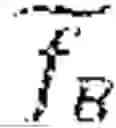
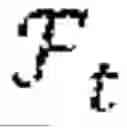
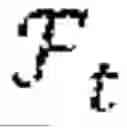

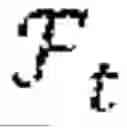













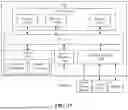
Sources:
- United States Patent and Trademark Office - verify current appl. status at the USPTO↗
Recent applications in this class:
- » 20260181156 2026-06-25
IMAGE ENCODING AND DECODING OF CHROMA BLOCK USING LUMA BLOCK - » 20260181155 2026-06-25
ENCODING METHOD, NON-TRANSITORY COMPUTER-READABLE STORAGE MEDIUM AND DECODING METHOD - » 20260181154 2026-06-25
METHOD AND DEVICE FOR IMAGE CODING BASED ON DECODER-SIDE MOTION VECTOR REFINEMENT - » 20260172571 2026-06-18
VIDEO CODING METHOD AND DEVICE USING AFFINE MODEL-BASED PREDICTION - » 20260149811 2026-05-28
Encoding Method, Decoding Method, Bitstream, Encoder, Decoder, and Storage Medium - » 20260136015 2026-05-14
IMAGE ENCODING/DECODING METHOD AND APPARATUS - » 20260129207 2026-05-07
ADAPTIVE MOTION VECTOR PRECISION FOR AFFINE MOTION MODEL BASED VIDEO CODING - » 20260113458 2026-04-23
MOTION TEMPLATE-MATCHING-BASED MOTION REFINEMENT - » 20260106992 2026-04-16
INTER PREDICTION METHOD AND APPARATUS - » 20260106991 2026-04-16
VIDEO DATA INTER PREDICTION METHOD AND APPARATUS