Child Enclosure Device
US20260182753A1
2026-07-02
19/095,342
2025-03-31
Smart Summary: A child enclosure device is designed like a box without a lid, providing a safe space for children to play. Inside, there are two benches with storage underneath and a table in the middle, along with two doors for easy access. Straps are included to securely hold younger or special needs children in place. The enclosure is made of plastic, making it easy to clean up spills or messes. It comes in two sizes: a small one for two children and a larger one for four children, both featuring a lip to keep everything contained. 🚀 TL;DR
Abstract:
A child enclosure device is disclosed which comprises a body component that is configured in a box shape with no lid. Within the body component are two benches with storage underneath, a table between the benches, and two doors on one side to allow access to the body component. Further, straps are included as well, which can be used to safely secure special needs or younger children within the body component. Thus, all splashes or spills are contained within the body component and not the area surrounding. The body component is comprised of a plastic material which can be easily wiped or hosed down to clean up any mess. Further, the body component comprises a small version that accommodates two children or a large version which accommodates four children. The body component also comprises a lip around the table and floor to prevent spills or other items from leaving.
Inventors:
- Theresa Petteway 1 🇺🇸 Gwynn Oak, MD, United States
- James Shackleford, JR. 1 🇺🇸 Locust Grove, GA, United States
Applicant:
Interested in similar patents?
Get notified when new applications in this technology area are published.
Classification:
A47D13/06 » CPC main
Other nursery furniture Children's play- pens
A47D1/00 » CPC further
Children's chairs
A47D3/00 » CPC further
Children's tables
A47D15/006 » CPC further
Accessories for children's furniture, e.g. safety belts; Restraining devices, e.g. safety belts, contoured cushions or side bumpers in chairs
A47D15/00 IPC
Accessories for children's furniture, e.g. safety belts
Description
CROSS-REFERENCE TO RELATED APPLICATION
The present application claims priority to, and the benefit of, U.S. Provisional Application No. 63/739,936, which was filed on Dec. 30, 2024, and is incorporated herein by reference in its entirety.
FIELD OF THE INVENTION
The present invention relates generally to the field of child enclosure devices. More specifically, the present invention relates to an enclosure that functions as a play or meal area for children. Accordingly, the present disclosure makes specific reference thereto. Nonetheless, it is to be appreciated that aspects of the present invention are also equally applicable to other like applications, devices and methods of manufacture.
BACKGROUND
By way of background, this invention relates to improvements in child enclosure devices. Generally, many parents and caregivers know the mess that can be made while feeding children. Spills, stains, splashes, etc. are all too common when feeding young children. Accordingly, the mess can ruin furniture or carpeting. Further, specialized furniture may be available for children, but these tables and chairs are often flimsy and ineffective.
Accordingly, an enclosure constructed in accordance with the invention can be easily cleaned up whenever a child is eating or playing inside of it. Further, it is often necessary for the messes that children tend to make to be contained within an easily accessible space. These spaces would allow for cleanup to be easier on the adult and eliminate any frustration. Accordingly, a high chair or bib of sorts is typically used and users must move and manually clean each little part of those items as well as the area around the child after mealtimes, expending energy and developing discomfort at times.
Accordingly, there is a demand for an improved child enclosure device that allows users to easily clean up a mess a child makes after eating or playing. More particularly, there is a demand for a child enclosure device that users can adjust to support different sizes of children.
Therefore, there exists a long felt need in the art for a child enclosure device that provides users with a booth and table system for children to play and eat in. There is also a long felt need in the art for a child enclosure device that allows all spills and splashes from food and drink to be contained within the system rather than spilling onto carpets, hardwood, and other surrounding surfaces. Further, there is a long felt need in the art for a child enclosure device that features safety straps on one or more benches to keep babies and younger children safe and secure while they are eating or playing. Moreover, there is a long felt need in the art for a device that reduces cleanup for caregivers after mealtime or playtime. Further, there is a long felt need in the art for a child enclosure device that includes a small version and a large version that can accommodate two or four children, respectively. Finally, there is a long felt need in the art for a child enclosure device that includes storage for toys or mealtime dishes/utensils.
The subject matter disclosed and claimed herein, in one embodiment thereof, comprises a child enclosure device. The device is a modified booth and table system which contains children's messes into one specific area. The child enclosure device comprises a body component that is configured in a box shape with no lid. Within the body component are two benches with storage underneath, a table between the benches, and two doors on one side to allow access to the body component. Further, straps are included as well, which can be used to safely secure special needs or younger children within the body component. Thus, all splashes or spills are contained within the body component and not the area surrounding. The body component is comprised of a plastic material which can be easily wiped down or simply taken outside and hosed down to clean up any mess. Further, the body component comprises a small version that accommodates two children or a large version which accommodates four children. The body component also comprises a lip around the table and floor to prevent spills or other items from leaving.
In this manner, the child enclosure device of the present invention accomplishes all of the forgoing objectives and provides users with a device that provides an enclosure to contain children's messes to one specific area. The device is a booth and table system enclosed within an open box. The device can comprise storage space.
SUMMARY OF THE INVENTION
The following presents a simplified summary in order to provide a basic understanding of some aspects of the disclosed innovation. This summary is not an extensive overview, and it is not intended to identify key/critical elements or to delineate the scope thereof. Its sole purpose is to present some general concepts in a simplified form as a prelude to the more detailed description that is presented later.
The subject matter disclosed and claimed herein, in one embodiment thereof, comprises a child enclosure device. The device is a modified booth and table system to allow children to keep their mess in one specific area. The child enclosure device comprises a body component that can be adjusted for the size of the child. Further, the body component can be easily wiped down or hosed off to easily clean up after a child. Thus, the body component is relatively small, adjustable, and washable. Further, the body component comprises straps to safely secure the child as needed.
In one embodiment, the child enclosure device allows users to easily clean up after their children by containing the mess a child may make while playing or eating into one smaller specific area. Further, the body component is completely enclosed on all sides to allow for the least amount of overflow onto any of the surrounding area. Accordingly, users can secure their children into the device with safety straps, saving users significant time and energy from cleaning up after their children and preventing pain and discomfort.
In one embodiment, the child enclosure device comprises a body component that is configured in the shape of a box with no lid, comprising four walls surrounding a floor. The body component comprises an exterior surface, an interior surface, and a side edge along the circumference of the box area. However, the body component can be any suitable size as is known in the art, as long as the body component is sized to enclose one child or multiple children during use.
In one embodiment, the body component comprises a box with four walls surrounding an enclosed floor space. Within the body component there is a booth and table system which can be utilized by children. This booth and table system comprises two booths with a table between them where the booths are sized so that a child can sit on them and still reach the table.
In one embodiment, the body component comprises a set of doors instead of one of the four walls of the box shape. This set of doors is secured to the rest of the body component via hinges or any other suitable securing means. The set of doors can be swung outward to open up the body component and allow a child or children to enter the body component completely.
In one embodiment, the child enclosure device also comprises at least one storage space which is placed underneath the booth on the exterior surface of the body component. The storage space can be a drawer which pulls out from the exterior surface of the body component and which can be used to store anything necessary for a child during playtime or mealtime.
In one embodiment, the table within the body component comprises a lip around the edge of the table. This lip is slightly raised to allow for any item on the table to remain on the table and not roll or spill off the side.
In one embodiment, the floor within the body component also comprises a raised edge surrounding the outer edge. This raised edge functions much like the edge around the table and prevents and spills or other messes from leaving the enclosed area.
In one embodiment, the benches of the body component comprise safety straps which are embedded into the interior surface of the body component at the back of the booth itself. These safety straps are adjustable and can be used for special needs or younger children to secure them within the body component. These safety straps comprise two over-the-shoulder straps which are adjustable and which connect to three straps which are embedded into the base of the booth. These three straps are placed around the child's legs with one in between the legs to ensure the child is secure within the body component. The safety straps are connected to one another through any suitable securing means, such as a buckle, snap, hook and loop fastener, etc.
In one embodiment, the body component can come in many different sizes. Specifically, the body component can comprise a smaller version which can fit up to two children within it as well as a larger version which can fit up to four children within it. Further, the table can be adjusted to the height or size of the child within the body component with a slip-lock mechanism which allows it to move up and down and lock into place where desired.
In one embodiment, the child enclosure device is manufactured from a plastic material, or other suitable materials as is known in the art, or a combination of such materials. Further, the material should be easily wiped down to clean up any messes and should also be waterproof as the device can be hosed down to accommodate any big messes which are made.
In yet another embodiment, the child enclosure device comprises a plurality of indicia.
In yet another embodiment, a method of cleaning up after a child's mealtime is disclosed. The method includes the steps of providing a child enclosure device comprising a body component with a booth and table system. The method also comprises opening the doors to allow the child to enter the body component. Further, the method comprises securing the safety straps around the child who is seated on the booth. The method also comprises allowing the child to eat their meal. Finally, the method comprises wiping down the mess the child made within the enclosed area.
Numerous benefits and advantages of this invention will become apparent to those skilled in the art to which it pertains, upon reading and understanding the following detailed specification.
To the accomplishment of the foregoing and related ends, certain illustrative aspects of the disclosed innovation are described herein in connection with the following description and the annexed drawings. These aspects are indicative, however, of but a few of the various ways in which the principles disclosed herein can be employed and are intended to include all such aspects and their equivalents. Other advantages and novel features will become apparent from the following detailed description when considered in conjunction with the drawings.
BRIEF DESCRIPTION OF THE DRAWINGS
The description refers to provided drawings in which similar reference characters refer to similar parts throughout the different views, and in which:
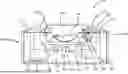
FIG. 1 illustrates a perspective view of one embodiment of the child enclosure device of the present invention showing the inside of the body component in accordance with the disclosed architecture;
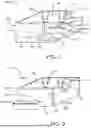
FIG. 2 illustrates a perspective view of one embodiment of the child enclosure device of the present invention showing the doors and storage space in accordance with the disclosed architecture;
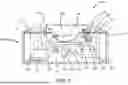
FIG. 3 illustrates a perspective view of one embodiment of the child enclosure device of the present invention showing the device in use in accordance with the disclosed architecture; and
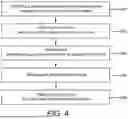
FIG. 4 illustrates a flowchart showing the method of cleaning up after a child's mealtime in accordance with the disclosed architecture.
DETAILED DESCRIPTION OF THE PRESENT INVENTION
The innovation is now described with reference to the drawings, wherein like reference numerals are used to refer to like elements throughout. In the following description, for purposes of explanation, numerous specific details are set forth in order to provide a thorough understanding thereof. It may be evident, however, that the innovation can be practiced without these specific details. In other instances, well-known structures and devices are shown in block diagram form in order to facilitate a description thereof. Various embodiments are discussed hereinafter. It should be noted that the figures are described only to facilitate the description of the embodiments. They are not intended as an exhaustive description of the invention and do not limit the scope of the invention. Additionally, an illustrated embodiment need not have all the aspects or advantages shown. Thus, in other embodiments, any of the features described herein from different embodiments may be combined.
As noted above, there is a long felt need in the art for a child enclosure device that provides users with a booth and table system for children to play and eat in. There is also a long felt need in the art for a child enclosure device that allows all spills and splashes from food and drink to be contained within the system rather than spilling onto carpets, hardwood, and other surrounding surfaces. Further, there is a long felt need in the art for a child enclosure device that features safety straps on one or more benches to keep babies and younger children safe and secure while they are eating or playing. Moreover, there is a long felt need in the art for a device that reduces cleanup for caregivers after mealtime or playtime. Further, there is a long felt need in the art for a child enclosure device that includes a small version and a large version that can accommodate two or four children, respectively. Finally, there is a long felt need in the art for a child enclosure device that includes storage for toys or mealtime dishes/utensils.
The present invention, in one exemplary embodiment, is a novel child enclosure device. The child enclosure device comprises a body component that is configured in a box shape with no lid. Within the body component are two benches with storage underneath, a table between the benches, and two doors on one side to allow access to the body component. Further, straps are included as well, which can be used to safely secure special needs or younger children within the body component. Thus, all splashes or spills are contained within the body component and not the area surrounding. The body component is comprised of a plastic material which can be easily wiped down or simply taken outside and hosed down to clean up any mess. Further, the body component comprises a small version that accommodates two children or a large version which accommodates four children. The body component also comprises a lip around the table and floor to prevent spills or other items from leaving. The present invention also includes a novel method of cleaning up after a child's mealtime. The method includes the steps of providing a child enclosure device comprising a body component with a booth and table system. The method also comprises opening the doors to allow the child to enter the body component. Further, the method comprises securing the safety straps around the child who is seated on the booth. The method also comprises allowing the child to eat their meal. Finally, the method comprises wiping down the mess the child made within the enclosed area.
Referring initially to the drawings, FIG. 1 illustrates a perspective view of one embodiment of the child enclosure device 100 of the present invention. In the present embodiment, the child enclosure device 100 is an improved child enclosure device 100 that provides a user 106 with a booth and table system 104 which is completely enclosed. Specifically, the child enclosure device 100 comprises a body component 102 and a booth and table system 104. Thus, the body component 102 is relatively small, adjustable, and washable. Further, the body component 102 is safe for the child 108 because of a set of safety straps 110 securing the child 108 within the body component 102.
Generally, the child enclosure device 100 allows users 106 to easily clean up after their children 108 by containing the mess a child 108 may make while playing or eating into one smaller specific area. Further, the body component 102 is completely enclosed to allow for the least amount of overflow onto any of the surrounding area. Accordingly, users 106 can secure their children 108 into the device 100 with safety straps 110, saving users 106 significant time and energy from cleaning up after their children 108 and preventing pain and discomfort.
Further, the body component 102 comprises a box shape with four walls 112 surrounding an enclosed floor space 114. Within the body component 102 there is a booth and table system 104 which can be utilized by children 108. This booth and table system 104 comprises two booths 116 with a table 118 between them where the booths 116 are sized so that a child 108 can sit on them and still reach the table 118.
Additionally, the table 118 within the body component 102 comprises a lip 120 around the edge of the table 118. This lip 120 is slightly raised to allow for any item on the table 118 to remain on the table 118 and not roll or spill off the side. Further, the floor space 114 within the body component 102 also comprises a raised outer edge 122. This raised outer edge 122 functions much like the lip 120 around the table 118 and prevents spills or other messes from leaving the body component 102.
Further, the booths 116 of the body component 102 comprise safety straps 110 which are embedded into the interior surface 124 of the body component 102 at the back of the booth 116 itself. These safety straps 110 are adjustable and can be used for special needs or younger children 108 to secure them within the body component 102. These safety straps 110 comprise two over-the-shoulder straps 126 which are adjustable and which connect to three lower straps 128 which are embedded into the base of the booth 116. These three lower straps 128 are placed around the child's legs 130 with one in between the legs 130 to ensure the child 108 is secure within the body component 102. The safety straps 110 are connected to one another through any suitable securing means 132, such as a buckle, snap, hook and loop fastener, etc.
As seen in FIG. 2, the body component 102 comprises a set of doors 200 instead of one of the four walls 112 of the box shape. This set of doors 200 is secured to the rest of the body component 102 via hinges 202 or any other suitable securing means. The set of doors 200 can be swung outward to open up the body component 102 and allow a child or children 108 to enter the body component 102 completely.
Additionally, the child enclosure device 100 also comprises at least one storage space 204 which is placed underneath the booth 116 on the exterior surface 206 of the body component 102. The at least one storage space 204 can be a drawer which pulls out from the exterior surface 206 of the body component 102 and which can be used to store anything necessary for a child 108 during playtime or mealtime.
As seen in FIG. 3, the body component 102 can come in many different sizes. Specifically, the body component 102 can comprise a smaller version 300 which can fit up to two children 108 within it as well as a larger version 302 which can fit up to four children 108 within it. Further, the table 118 can be adjusted to the height or size of the child 108 within the body component 102. This adjustment occurs by a user 106 simply sliding the leg 306 of the table 118 up or down depending on the desired height until a lock 304 is reached. Once this lock 304 is reached, the table 118 will click into place and remain at that height. If necessary to move the table once more, a user 106 must simply press the lock 304 inwards to allow the table to freely move again until it reaches a new lock 304 located on the leg 306 of the table 118.
Generally, the child enclosure device 100 is manufactured from a plastic material 308, or other suitable materials 308 as is known in the art. Further, the material 308 should be easily wiped down to clean up any messes and should also be waterproof as the device 100 can be hosed down to accommodate any big messes which are made. The device 100 may also be any color 310 as is desired by the user 106.
In yet another embodiment, the child enclosure device 100 comprises a plurality of indicia 312. The body component 102 of the device 100 may include advertising, a trademark, or other letters, designs, or characters, printed, painted, stamped, or integrated into the body component 102, or any other indicia 312 as is known in the art. Specifically, any suitable indicia 312 as is known in the art can be included, such as but not limited to, patterns, logos, emblems, images, symbols, designs, letters, words, characters, animals, advertisements, brands, etc., that may or may not be child, eating, or brand related.
FIG. 4 illustrates a flowchart of the method of cleaning up after a child's mealtime. The method includes the steps of at 400, providing a child enclosure device comprising a body component with a booth and table system. The method also comprises at 402, opening the doors to allow the child to enter the body component. Further, the method comprises at 404, securing the safety straps around the child who is seated on the booth. The method also comprises at 406, allowing the child to eat their meal. Finally, the method comprises at 408, wiping down the mess the child made within the enclosed area.
Certain terms are used throughout the following description and claims to refer to particular features or components. As one skilled in the art will appreciate, different users may refer to the same feature or component by different names. This document does not intend to distinguish between components or features that differ in name but not structure or function. As used herein “child enclosure device”, “booth and table system device”, “messy child device”, and “device” are interchangeable and refer to the child enclosure device 100 of the present invention.
Notwithstanding the forgoing, the child enclosure device 100 of the present invention can be of any suitable size and configuration as is known in the art without affecting the overall concept of the invention, provided that it accomplishes the above stated objectives. One of ordinary skill in the art will appreciate that the child enclosure device 100 as shown in FIGS. 1-4 is for illustrative purposes only, and that many other sizes and shapes of the child enclosure device 100 are well within the scope of the present disclosure. Although the dimensions of the child enclosure device 100 are important design parameters for user convenience, the child enclosure device 100 may be of any size that ensures optimal performance during use and/or that suits the user's needs and/or preferences.
Various modifications and additions can be made to the exemplary embodiments discussed without departing from the scope of the present invention. While the embodiments described above refer to particular features, the scope of this invention also includes embodiments having different combinations of features and embodiments that do not include all of the described features. Accordingly, the scope of the present invention is intended to embrace all such alternatives, modifications, and variations as fall within the scope of the claims, together with all equivalents thereof.
What has been described above includes examples of the claimed subject matter. It is, of course, not possible to describe every conceivable combination of components or methodologies for purposes of describing the claimed subject matter, but one of ordinary skill in the art may recognize that many further combinations and permutations of the claimed subject matter are possible. Accordingly, the claimed subject matter is intended to embrace all such alterations, modifications and variations that fall within the spirit and scope of the appended claims. Furthermore, to the extent that the term “includes” is used in either the detailed description or the claims, such term is intended to be inclusive in a manner similar to the term “comprising” as “comprising” is interpreted when employed as a transitional word in a claim.
Claims
What is claimed is:1. A child enclosure device that provides a user with an enclosed booth and table system for children, the child enclosure device comprising:
a body component; and
a booth and table system;
wherein the booth and table system is within the body component and large enough for a child to sit within; and
further wherein the booth and table system is completely enclosed within four walls by the body component.
2. The child enclosure device of claim 1, wherein the body component is configured in a box shape with four walls and an enclosed floor space.
3. The child enclosure device of claim 2, wherein the body component comprises a booth and table system within it which consists of two booths and a table between them.
4. The child enclosure device of claim 3, wherein the body component also comprises a set of doors instead of one of the four walls which swing outward and are connected to the rest of the body component with hinges.
5. The child enclosure device of claim 4, wherein the table comprises a lip around the edge which is slightly raised.
6. The child enclosure device of claim 5, wherein the enclosed floor space of the body component also contains a raised edge to collect spills.
7. The child enclosure device of claim 6, wherein the benches comprise safety straps which are embedded within the back and base of the bench.
8. The child enclosure device of claim 7, wherein the safety straps comprise two over-the-shoulder straps and three lower straps.
9. The child enclosure device of claim 8, wherein the safety straps are connected to each other through a securing means such as a buckle, snap, hook and loop fastener, etc.
10. The child enclosure device of claim 9, wherein the body component also comprises at least one storage space which is a drawer placed on the exterior surface of the body component and which sits underneath the benches.
11. The child enclosure device of claim 10, wherein the device is comprised of a waterproof, plastic material and can come in a smaller and larger version to accommodate two and four children, respectively.
12. The child enclosure device of claim 11 further comprising an adjustable table where the leg of the table can slide up or down depending on the desired height.
13. A child enclosure device that provides a user with an enclosed eating area for children, the child enclosure device comprising:
a body component configured in a box shape with four walls and an enclosed floor space; and
a booth and table system;
wherein the booth and table system are within the four walls of the body component and comprise two booths with a table between them;
wherein a set of doors is placed in the body component instead of one of the four walls and which are connected to the rest of the body component by a hinge which swings outward;
wherein the benches comprise safety straps which are embedded into the back and base of the bench to secure special needs or younger children; and
further wherein at least one storage space is included as a drawer on an exterior surface of the body component, specifically so that it sits underneath the benches.
14. The child enclosure device of claim 13 further comprising a plurality of indicia.
15. The child enclosure device of claim 13, wherein the table comprises a lip which is a raised portion along the edge.
16. The child enclosure device of claim 15, wherein the enclosed floor space also comprises a raised edge to prevent spillage.
17. The child enclosure device of claim 16, wherein the safety straps are comprised of two over-the-shoulder straps which are embedded to the back of the booth and three lower straps which are embedded into the base of the booth and wherein the straps are secured together through any suitable securing means such as a buckle, snap, or hook and loop fasteners.
18. The child enclosure device of claim 17, wherein the body component can include a smaller version to accommodate for two children or a larger version to accommodate for four children and wherein the table can be raised or lowered for further adjustability.
19. The child enclosure device of claim 18, wherein the body component and booth and table system are comprised of a waterproof, plastic material.
20. A method of cleaning up after a child's mealtime, the method comprising the following steps:
providing a child enclosure device comprising a body component with a booth and table system;
opening the doors to allow the child to enter the body component;
securing the safety straps around the child who is seated on the booth;
allowing the child to eat their meal; and
wiping down the mess the child made within the enclosed area.
Images & Drawings included:
Sources:
- United States Patent and Trademark Office - verify current appl. status at the USPTO↗
Similar patent applications:
Recent applications in this class:
- » 20250031872 2025-01-30
PLAYPEN WITH AUTOMATIC LOCKING FUNCTION - » 20240164550 2024-05-23
Multifunctional Enclosure Cushion - » 20240138591 2024-05-02
Infant Play Gym - » 20240057786 2024-02-22
PLAY YARD WITH REMOVABLE PADDED FLOOR - » 20190208922 2019-07-11
MARTIAL ART THEMED BABY PLAYPEN ARRANGEMENT - » 20190116991 2019-04-25
Play mat assembly - » 20160270556 2016-09-22
Play yard assembly - » 20160120335 2016-05-05
Child support unit for a play yard - » 20160106229 2016-04-21
Bodily support assembly - » 20150282640 2015-10-08
Child support unit for a play yard