Puncture Device
US20260183017A1
2026-07-02
19/547,425
2026-02-23
Smart Summary: A puncture device is designed to access blood vessels safely. It has a needle that can puncture the vessel and an expansion element around the needle that helps it open up. This expansion element is made from a special material that remembers its shape. There is also a heating element connected to the expansion part, which helps it work properly. To use the device, it is inserted into the blood vessel, moved to the right spot, and then the needle is pushed out to make the puncture. 🚀 TL;DR
Abstract:
A puncture device that is configured for advancement to a puncture site in a blood vessel. The puncture device includes a needle configured to puncture a blood vessel and an expansion element surrounding the needle in an insertion configuration. The expansion element can be formed of a shape memory alloy. The puncture device can further include a heating element coupled to the expansion element via one or more wires and a sheath surrounding the needle and the expansion element in the insertion configuration. The needle and the expansion element are configured to slide distal of the sheath in a deployment configuration. A method for puncturing a blood vessel includes inserting the puncture device into the blood vessel, advancing the puncture device to a puncture location, sliding the needle distal of the sheath, and puncturing the blood vessel at the puncture location.
Applicant:
Interested in similar patents?
Get notified when new applications in this technology area are published.
Classification:
A61B17/3417 » CPC main
Surgical instruments, devices or methods, e.g. tourniquets; Trocars; Puncturing needles Details of tips or shafts, e.g. grooves, expandable, bendable; Multiple coaxial sliding cannulas, e.g. for dilating
A61B90/39 » CPC further
Instruments, implements or accessories specially adapted for surgery or diagnosis and not covered by any of the groups - , e.g. for luxation treatment or for protecting wound edges Markers, e.g. radio-opaque or breast lesions markers
A61B2017/00867 » CPC further
Surgical instruments, devices or methods, e.g. tourniquets; Material properties shape memory effect
A61B2017/3454 » CPC further
Surgical instruments, devices or methods, e.g. tourniquets; Trocars; Puncturing needles; Details of tips or shafts, e.g. grooves, expandable, bendable; Multiple coaxial sliding cannulas, e.g. for dilating Details of tips
A61B2090/3966 » CPC further
Instruments, implements or accessories specially adapted for surgery or diagnosis and not covered by any of the groups - , e.g. for luxation treatment or for protecting wound edges; Markers, e.g. radio-opaque or breast lesions markers Radiopaque markers visible in an X-ray image
A61B17/34 IPC
Surgical instruments, devices or methods, e.g. tourniquets Trocars; Puncturing needles
A61B17/00 IPC
Surgery
A61B17/00 IPC
Surgical instruments, devices or methods, e.g. tourniquets
A61B90/00 IPC
Instruments, implements or accessories specially adapted for surgery or diagnosis and not covered by any of the groups - , e.g. for luxation treatment or for protecting wound edges
Description
PRIORITY
This application is a continuation of U.S. patent application Ser. No. 18/579,828, now U.S. Pat. No. 12,558,119, which is a U.S. national stage application of International Application No. PCT/EP 2021/069969, filed Jul. 16, 2021, each of which is incorporated by reference in its entirety into this application.
TECHNICAL FIELD
The present invention relates to a puncture device.
TECHNICAL BACKGROUND
In patients suffering from late stage liver cirrhosis, a treatment that is commonly used is the creation of a TIPS (Transjugular Intrahepatic Portosystemic Shunt) shunt. Such a TIPS shunt is an artificial channel that is created between the hepatic and the portal vein and that allows for blood to bypass the liver. It has been shown that such shunts improve the life expectancy of patients diagnosed with liver cirrhosis since it is a treatment for portal hypertension (which is often due to liver cirrhosis) which frequently leads to intestinal bleeding, life-threatening esophageal bleeding (esophageal varices) and the buildup of fluid within the abdomen (ascites).
Such shunts are typically created by advancing a puncture needle through the patient's vasculature to the puncture site. A surgeon will then puncture the diseased liver tissue with the aim of the puncture reaching the portal vein. If the puncture attempt is unsuccessful, the needle is withdrawn from the patient's vasculature and will be reshaped, for example by manual bending.
Once the TIPS shunt has been created, a specialised TIPS stent graft is placed within the puncture so as to keep it open. Through that shunt, blood can bypass the liver, which ameliorates portal hypertension.
However, it is also to be noted that there are numerous other fields of surgery where puncture devices are needed.
SUMMARY OF THE INVENTION
The present inventor has realised that the creation of a TIPS shunt is often rather complicated. It is frequently the case that the surgeon does not manage to puncture the portal vein on the first attempt. Accordingly, the puncture needle needs to be withdrawn somewhat and rotated (or, in some cases, completely withdrawn and bent). Afterwards, another puncture attempt can be made. It is clear that the time consumption is significant. Furthermore, withdrawing the needle and manually bending it also comes with a risk of injuring the surgeon. Given that a patient's blood can contain pathogens such as viruses, it is thus highly desirable to reduce the number of times a TIPS puncture needle needs to be withdrawn.
It is also often difficult to rotate the puncture needle when inside the patient's vasculature. Diseased liver tissue is generally very congested, so that rotating a bent puncture needle inside the patient is difficult, if not impossible, due to a lack of space. Accordingly, the needle needs to be withdrawn to a less congested space, with a corresponding time consumption. Furthermore, the limited visualization of the space makes the procedure even more complicated.
The present invention aims at alleviating or even solving at least some of those problems.
One embodiment of the invention is defined by claim 1. Additional embodiments are described in the dependent claims.
Embodiments described herein relate to a puncture device that is arranged for being advanced to a puncture site through the human vasculature. Accordingly, it needs to be sufficiently low profile and sufficiently flexible for such an advancement. In optional embodiments, the puncture device is sufficiently stiff for penetrating diseased liver tissue.
The puncture device comprises a puncture means which is that component of the puncture device that is meant for creating a puncture through tissue. Such a puncture means can take the form of a hollow needle. The puncture means has a pointed distal end that is arranged for creating a puncture in a patient's tissue.
Furthermore, a sheath is provided. This sheath surrounds the puncture means and has the puncture means slidably arranged inside the sheath. Accordingly, when the puncture device is used for puncturing tissue, and when it is thus inside the human body, the sheath can be slidably moved relative to the puncture means.
The puncture device furthermore comprises a tissue expansion means that is arranged so that it can be selectively activated, wherein when in the activated state, the tissue expansion means pushes away the patient's tissue to thereby allow a reorientation of the puncture means.
Accordingly, with the inventive puncture device, the tissue expansion means can push tissue away so as to create a space within which the puncture means can be reoriented. Thus, the orientation of the puncture means can be changed without having to completely withdraw the puncture means by activating the tissue expansion means and by then rearranging the puncture means, for example by rotating it. Such a puncture device allows for some degree of reorientation of the puncture means and hence minimizes the number of times the puncture device has to be withdrawn during use. This reduces the time required for the puncture procedure.
In embodiments, the tissue expansion means is slidably arranged inside the sheath and is arranged so that it can be slid out of the sheath so as to extend distally relative to the distal end of the puncture means. In that way, the tissue expansion means can be shielded from the outside of the puncture device by means of being inserted into the sheath, which therefore allows for a certain protection of the expansion means. Furthermore, the sheath can serve as a way of avoiding premature expansion of the expansion means by restraining it. The sheath can in particular be made of polyethylene terephthalate (PET) or polyether ether ketone (PEEK).
According to one embodiment, the tissue expansion means is arranged so as to expand when heated above a threshold temperature to thereby push away tissue. Such a heating up of the tissue expansion means can be achieved, for example by having a heating coil installed as part of the puncture device. Accordingly, this is an easy to implement way of actuating the tissue expansion means of the puncture device.
In some embodiments, the tissue expansion means comprises a shape memory alloy, e.g. nitinol. Such materials are well characterised and find wide application in the technical field of puncture devices and stent/stent grafts. Furthermore, they have good capabilities of creating implants that will expand when heated above a certain threshold temperature.
In that context, in embodiments, there is a means for selectively heating up the tissue expansion means. Such a means, which could take the form of or include a coil, is an easy to implement way of heating up tissue expansion means and can thus be used as a simple actuation mechanism.
In embodiments, the threshold temperature above which the expansion of a tissue expansion means occurs is higher than 37° C., in embodiments higher than 39° C., e.g. of about 40° C. Transition temperatures of 45° C. or even 50° C. can also be used in the case of severely diseased liver. Each ° C. change from the transition temperature could change the radial forces by approximately 4N/mm2. By having such a temperature threshold, premature expansion of the tissue expansion means due to heating to body temperature is avoided. Furthermore, choosing a transition temperature that is higher than body temperature ensures that an active heating of the tissue expansion means is needed to keep it in the activated state. Accordingly, if it is no longer desired to use the tissue expansion means, it suffices to no longer actively heat it. In that situation, it will cool down to body temperature and thus no longer be activated. Furthermore, in the context of shape memory alloys, it is known that the higher the transition temperature, the higher the resulting stiffness of the tissue expansion means and hence the higher the force it applies to surrounding tissue (cf. Dieter Stoeckel et al., Eur. Radiol. 2004 February, “Self-Expanding Nitinol Stents—Material and Design Considerations”). Accordingly, having a higher transition temperature leads to a higher force that is applied to the tissue to be pushed away, which increases the space available for reorienting the puncture means. Furthermore, the higher the difference between the transition temperature and body temperature, the easier it is to control the system. In embodiments, a temperature difference of more than 10° C. is envisaged.
In embodiments, the tissue expansion means has, in the activated configuration, a shape where the cross-sectional area of the tissue expansion means increases when moving from a proximal end to a distal end of the tissue expansion means. As used herein, the proximal end is closer to the handle of the puncture device which will be held by the surgeon, whereas the distal end is closest to the tip of the puncture device. By having such a shape where the cross-sectional diameter increases, the area over which a rearrangement of the puncture device can be achieved increases, which gives greater manoeuvrability for the puncture device.
In embodiments, the tissue expansion means can be brought back to its non-activated state (which a correspondingly reduced cross-sectional diameter) by means of advancing the sheath relative to the puncture device and thus relative to the tissue expansion means. This makes it easier to reduce the cross-sectional diameter of the tissue expansion means when needed.
In embodiments, the tissue expansion means comprises an expandable lattice structure similar to that of a stent. Since such stents have been well-characterised and are used widely in medicine, the generally well-known manufacturing techniques for such devices can also be supplied to such tissue expansion means.
According to an alternative embodiment, a puncture device comprises:
-
- a needle including a sharp distal end configured for puncturing tissue;
- a sheath surrounding the needle, the sheath slidable relative to the needle; and
- an expansion component slidable relative to the needle and the sheath, the expansion component configured to be selectively activated from a dormant state to an activated state, the expansion component providing space for re-orientation of the needle in the activated state.
BRIEF DESCRIPTION OF THE DRAWINGS
FIG. 1 shows a puncture device according to a first embodiment of the invention.
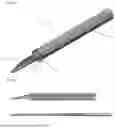
FIG. 2a shows a longitudinal sectional view of the puncture device of FIG. 1.
FIG. 2b shows components of the puncture device of FIG. 2a.
FIG. 3 shows the puncture device according to the first embodiment in a deployed configuration.
FIG. 4 shows the puncture device according to a second embodiment.
FIG. 5 shows steps in the use of the puncture device of the first embodiment.
DETAILED DESCRIPTION OF THE DRAWINGS
FIG. 1 shows a puncture device according to a first embodiment of the present invention. The puncture device 100 comprises a puncture means 18 that has the form of a hollow needle having a lumen 19 extending longitudinally therethrough. This lumen 19 can be used for aspirating blood to check whether a puncture attempt has been successful.
Provided so as to surround the puncture means 18 is a tube 16. This tube 16 serves to prevent the puncture means 18 from coming into contact with those components of the puncture device 100 that are further towards the outside.
The tube 16 is surrounded by a tissue expansion means 14 that has the shape of a tubular mesh work made of nitinol. The whole assembly of the puncture means 18, tube 16 and tissue expansion means 14 is surrounded by a sheath 10. The sheath 10 has, at its distal end, a flared-out distalmost end 12 that corresponds to a widening opening. The sheath 10 is slidable relative to the puncture means 18 as well as relative to the tube 16 and the tissue expansion means 14.
FIG. 2a) shows a longitudinal cross-section of what is shown in FIG. 1. As can be seen, the puncture means 18 extends distally from the distal most ends of the sheath 10, the tube 16, and the tissue expansion means 14. As can be furthermore seen, wires 20 are connected to a proximal end of the puncture device. Using electricity conducted through those wires 20, a heating means (not shown) can be heated up which will cause the tissue expansion means 14 to heat up and to thus expand to thereby push away patient tissue surrounding it.
In FIG. 2b), some of the components described previously with respect to FIG. 2a) have been shown. As can be seen, a sheath 10, a tissue expansion means 14, a tube 16 and a puncture means 18 are arranged inside the puncture device 100 which can, as shown in FIG. 2a), be arranged concentrically.
FIG. 3 shows a configuration in which the tissue expansion means 14 has been positioned distally relative to the sheath 10. In that configuration, in which the tissue expansion means 14 has also expanded outwardly, the tissue expansion means 14 assumes a flared-out shape that is similar to a trumpet. The widest diameter portion is at that position of the tissue expansion means 14 that is furthest away from the sheath 10. Any tissue that would surround the tissue expansion means 14 will be pushed away in the circumferential and/or radial direction, resulting in free space for reorienting the puncture means 18. Accordingly, in that configuration, if a puncture attempt of the portal vein has been unsuccessful, the puncture means 18 can be reoriented, and another puncture attempt can be made.
What can also be seen from FIG. 3 are radiopaque markers 22 that are provided at the distalmost end of the tissue expansion means 14. They serve to localise the tissue expansion means 14 inside a body and aid a surgeon in knowing where in the body the puncture device is arranged. They can be visualized using, for example, radiography. Such markers can use tantalum or gold as the radiopaque material. The radiopaque markers 22 aid in indirectly localizing the puncture means 18 since they surround the puncture means 18.
The tissue expansion means 14 can be brought into this expanded state by means of proximally withdrawing the sheath 10 whilst activating the non-illustrated heating means by means of conducting electricity through the wires 20. When the tissue expansion means 14 is heated above the transition temperature of nitinol, it will expand to its expanded state, which is illustrated in FIG. 3a), b). Any bodily tissue that surrounds the tissue expansion means 14 will thus be pushed away in the radial and/or circumferential direction. Accordingly, the puncture means 18 can be reoriented comparatively freely. It is to be noted that a portion of the tissue expansion means 14 stays underneath the sheath 10 even when the tissue expansion means 14 is expanded so as to aid in compressing and, finally, retracting it.
If the tissue expansion means 14 is to be reduced in its diameter, for example if it is to be withdrawn, it will be sufficient to advance the sheath 10 relative to the tissue expansion means 14 whilst also ensuring that heating means provided as part of the puncture device 100 is deactivated. The tissue expansion means 14 will quickly cool down so that it be comparatively easy retracted into the sheath 10. The flared-out distalmost end 12 will act so as to aid in compressing the expansion means 14 so that it can be retracted and retained inside the sheath 10. If need be, the tissue expansion means 14 can be redeployed as described in the previous paragraph.
FIG. 4 shows a puncture device 100′ according to a second embodiment of the invention. It is to be noted that the same reference numerals will be used that were also used when describing the first embodiment, and a detailed description of the corresponding components will be omitted.
As can be seen from FIG. 4, the puncture means 18 does not have a uniform cross-section but becomes thinner at a thinning portion 19 when moving from the distal end of the puncture means 18 to the proximal end. Furthermore, the tube 16 has a flared-out portion 17 at its distal end. By the puncture means 18 becoming thinner at the thinning portion 19, the distal end of the puncture means 18 can have a greater degree of bent, which gives a greater degree of freedom for a surgeon when reorienting it by rotating the puncture means 18 as indicated by the arrow. The flared-out portion 17 makes it easier to retract the puncture means 18 into the tube 16. The maximum degree of freedom is defined by the angle between the expanded tissue expansion means 14 and the center line (which is indicated by a dashed line).
FIG. 5 shows steps in the use of the puncture device according to the present invention.
As a first step (step S110), the puncture device is advanced, typically through a patient's vasculature, to an intended puncture location.
Subsequently (step S112), the surgeon attempts a puncture. If desired, it can be checked whether the puncture was successful by means of aspirating blood through a lumen of the puncture means of the puncture device. If successful, further procedures such as the placement of a device such as the TIPS stent graft take place.
If, however, the puncture attempt is unsuccessful, in step S114, the tissue expansion means is expanded so as to push away tissue to thereby create a space for reorienting the puncture means.
Subsequently (step S116), the puncture means is reoriented and brought into a position that is, in the surgeon's assessment, more likely to result in a successful puncture.
Subsequently (step S118), another puncture attempt is made. If this step is unsuccessful, steps S116 and S118 can be performed repeatedly, until the surgeon succeeds in puncturing the blood vessel to be punctured. Subsequently (not shown in the flow chart), once the shunt has been created, the tissue expansion means 14 is retrieved, as is the rest of the puncture device, whilst typically leaving a guidewire in place to aid in placing an implant.
It is to be noted that whilst in the previous description, an emphasis was placed on tissue expansion means 14 that use shape memory alloys, it would also be an option to use other means. In particular, balloons that can be expanded by means of being inflated are also being considered as tissue expansion means.
Claims
What is claimed is:1. A puncture device, comprising:
a needle configured to puncture a blood vessel;
an expansion element surrounding the needle, the expansion element formed of a shape memory alloy;
a heating element coupled to the expansion element via one or more wires, wherein the expansion element is configured to expand to an activated state when heated above a threshold temperature by the heating element; and
a sheath surrounding the needle and the expansion element in an insertion configuration, the needle and the expansion element configured to slide distal of the sheath in a deployment configuration.
2. The puncture device according to claim 1, further comprising a tube arranged between the needle and the expansion element.
3. The puncture device according to claim 2, wherein the tube includes a flared-out portion at a distal end.
4. The puncture device according to claim 1, wherein the threshold temperature is higher than 37° C.
5. The puncture device according to claim 1, wherein the expansion element assumes a shape having a cross-sectional area that increases when moving from a proximal end to a distal end.
6. The puncture device according to claim 1, wherein the expansion element is configured to be reduced to a non-activated state by advancing the sheath over the expansion element following deactivation of the heating element.
7. The puncture device according to claim 1, wherein the expansion element comprises an expandable lattice structure.
8. The puncture device according to claim 1, wherein the needle includes a first cross-sectional diameter at a distal end and a second cross-sectional diameter proximal of the distal end, and wherein the first cross-sectional diameter is greater than the second cross-sectional diameter.
9. The puncture device according to claim 1, wherein the sheath includes a flared distal end.
10. A method for puncturing a blood vessel, comprising:
inserting a puncture device into the blood vessel, the puncture device comprising:
a needle configured to puncture the blood vessel;
an expansion element surrounding the needle, the expansion element configured to expand from a non-activated state to an activated state;
a sheath surrounding the needle and the expansion element in an insertion configuration;
advancing the puncture device to a puncture location;
sliding the needle distal of the sheath;
puncturing the blood vessel at the puncture location, the puncturing comprising:
initially attempting to puncture the blood vessel with the needle;
failing to puncture the blood vessel, distally sliding the expansion element relative to the sheath to surround the needle;
expanding the expansion element from the non-activated state to the activated state; and
reorienting the needle to puncture the blood vessel.
11. The method according to claim 10, wherein the puncture device further comprises a tube including a flared distal end arranged between the needle and the expansion element, the method further comprising sliding the needle distal of the tube.
12. The method according to claim 10, wherein the puncture device further comprises a heating element coupled to the expansion element via one or more wires, wherein the expanding further comprises heating the expansion element above a threshold temperature.
13. The method according to claim 10, wherein the expansion element is formed of a shape memory alloy, and wherein the expanding comprises transitioning the shape memory alloy to the activated state.
14. The method according to claim 10, wherein the expanding comprises forming the expansion element to a shape having a cross-sectional area that increases when moving from a proximal end to a distal end.
15. The method according to claim 10, further comprising deactivating the expansion element to the non-activated state and advancing the sheath over the expansion element.
Images & Drawings included:


Sources:
- United States Patent and Trademark Office - verify current appl. status at the USPTO↗
Similar patent applications:
- » 20240148985
Puncturing Devices, Puncturing Systems Including the Puncturing Devices, and Methods Thereof - » 20230310030
PUNCTURE DEVICE, PUNCTURE SYSTEM, OPERATION METHOD OF PUNCTURE DEVICE, AND USAGE METHOD OF GUIDEWIRE - » 20200345950
Puncturing devices, puncturing systems including the puncturing devices, and methods thereof - » 20250090768
PUNCTURE DEVICE AND MEDICINAL SOLUTION ADMINISTERING DEVICE EQUIPPED WITH PUNCTURE DEVICE - » 20100160941
Disposable puncturing device and reusable handling device for a puncturing device - » 20250177646
PUNCTURE DEVICE AND DRUG SOLUTION ADMINISTRATING DEVICE PROVIDED WITH PUNCTURE DEVICE - » 20140121085
RECEIVER-PUNCTURING DEVICE WITH TRANSLATING PUNCTURING DEVICES - » 20190365461
PUNCTURE DEVICE AND CARTRIDGE FOR PUNCTURE DEVICE - » 20130289404
Cover unit for use when inserting a puncture device in an anatomical structure such as a vein or an artery and for maintaining said puncture device in the anatomical structure - » 20160331910
Puncture assisting device and puncture device set
Recent applications in this class:
- » 20260157772 2026-06-11
MEDICAL INTRODUCER SHEATH COMPRISING AN ULTRASONIC IMAGING PROBE - » 20260144570 2026-05-28
ANGLED SHEATH TIP - » 20260114897 2026-04-30
ADAPTABLE DILATOR AND METHODS OF USING THE SAME - » 20260096834 2026-04-09
DEVICES AND METHODS FOR COSMETIC SKIN RESURFACING - » 20260090825 2026-04-02
DEVICES, SYSTEMS, AND METHODS FOR INTRALUMINAL PUNCTURING - » 20260076712 2026-03-19
Medical Procedure Kit and Methods for Draining Fluid from an Organ - » 20260013901 2026-01-15
TROCAR INSTRUMENT AND AUXILIARY DEVICE THEREFOR - » 20260013900 2026-01-15
DEVICES AND METHODS FOR ABLATION OF THE SKIN - » 20250281201 2025-09-11
DEVICES, SYSTEMS, AND METHODS FOR INTRALUMINAL PUNCTURING - » 20250221737 2025-07-10
BENDABLE OPTICAL TROCAR ASSEMBLY