CORE STRENGTHENING EXERCISE MAT
US20260183607A1
2026-07-02
19/004,271
2024-12-28
Smart Summary: An exercise mat is designed specifically for strengthening the core muscles. It has a flat bottom to stay stable on the floor while you work out. There are special pads for lumbar support in the lower back and for leg support in the thighs, both angled to help align the body properly. These pads help shift the body's center of gravity, making it easier to engage core muscles while reducing strain on the lower back and hips. Overall, this mat improves workout efficiency and lowers the risk of injuries during core exercises. 🚀 TL;DR
Abstract:
An exercise mat for core strengthening is disclosed, comprising a mat body with a lower flat surface designed to maintain stability on a floor during exercise. The mat includes a lumbar support pad positioned in lower back region and angled at approximately 30 degrees relative to lower flat surface, configured to elevate and align the lumbar spine of a user. Additionally, a leg support pad is positioned in lower thigh region, angled at approximately 45 degrees relative to lower flat surface, configured to elevate user's thighs and form a fulcrum for the legs during exercises. The integration of lumbar and leg support pads shifts the user's center of gravity from lumbar to the abdominal region, thereby enhancing core stabilization by engaging rectus abdominis, transverse abdominis, and oblique muscles while reducing strain on lower spine and hip flexors. The present invention improves biomechanical efficiency and minimizes injury risks during core-strengthening exercises.
Applicant:
Interested in similar patents?
Get notified when new applications in this technology area are published.
Classification:
A63B21/4037 » CPC main
Exercising apparatus for developing or strengthening the muscles or joints of the body by working against a counterforce, with or without measuring devices; Interfaces with the user related to strength training; Details thereof; Specific exercise interfaces Exercise mats for personal use, with or without hand-grips or foot-grips, e.g. for Yoga or supine floor exercises
A63B21/4039 » CPC further
Exercising apparatus for developing or strengthening the muscles or joints of the body by working against a counterforce, with or without measuring devices; Interfaces with the user related to strength training; Details thereof; Specific exercise interfaces contoured to fit to specific body parts, e.g. back, knee or neck support
A63B23/0205 » CPC further
Exercising apparatus specially adapted for particular parts of the body for the abdomen, the spinal column or the torso muscles related to shoulders (e.g. chest muscles) Abdomen
A63B21/00 IPC
Exercising apparatus for developing or strengthening the muscles or joints of the body by working against a counterforce, with or without measuring devices
A63B23/02 IPC
Exercising apparatus specially adapted for particular parts of the body for the abdomen, the spinal column or the torso muscles related to shoulders (e.g. chest muscles)
Description
FIELD OF THE INVENTION
The present invention relates to exercise mat and more particularly relates to a exercise mat for abdominal core strengthening and lower back protection.
BACKGROUND OF THE INVENTION
Traditional exercise mats are designed with a primary focus on providing cushioning and preventing discomfort from hard floor surfaces during workouts. However, the flat and uniform design overlooks the biomechanical demands of exercises, particularly those that target the core muscles. One significant drawback is the lack of targeted support for key areas of the body, such as the lumbar spine and thighs. During core-focused movements like sit-ups, leg lifts, and crunches, the absence of structured support can result in poor body alignment, thus forcing the lower back to bear undue pressure. The misalignment not only reduces the efficiency of the exercise but also increases the risk of strain and long-term injury to the lumbar region.
The uniformity of traditional mats also fails to promote optimal core engagement. Since these mats do not shift the user's center of gravity or leverage principles like fulcrum mechanics, users must rely on their lower back and hip flexors to stabilize their movements. This results in inefficient activation of the abdominal muscles, requiring greater effort to achieve the same results. For individuals recovering from injuries, or those with postpartum conditions such as Diastasis Recti, this inefficiency can exacerbate muscle strain and compromise safety during exercise.
Another critical issue with traditional exercise mats is their inability to accommodate the diverse needs of users. The one-size-fits-all approach does not account for variations in body size, fitness level, or specific conditions that may require specialized support. For example, individuals with lower back problems need targeted elevation and pressure relief to perform exercises safely, which traditional mats fail to provide. Similarly, postpartum users often need a mat that can ensure proper body alignment and minimize stress on weakened abdominal muscles.
Additionally, the flat surface of traditional mats often leads to improper form during exercises. Without any guidance or structured regions to support the body, users may adopt postures that compromise their spine or reduce the effectiveness of their workout. The lack of attention to biomechanical principles such as load distribution and cantilever mechanics limits the mat's utility for core strengthening exercises.
Although traditional exercise mats serve a basic purpose, fails to address the biomechanical needs of users, particularly during core-focused workouts. The absence of targeted support and adaptability for specific conditions highlights the need for an exercise mat that functions beyond simple cushioning to provide extensive support and improve workout outcomes.
BRIEF SUMMARY OF THE INVENTION
It is an objective of the present invention to provide an exercise mat with angled lumbar and thigh supports to optimize core muscle engagement through biomechanical alignment.
It is another objective of the present invention to provide an exercise mat that help shift the user's center of gravity from the lumbar region to the abdominal region using angled supports for efficient core activation.
It is yet another objective of the present invention to provide an exercise mat that minimizes lumbar spine strain during core exercises by redistributing gravitational forces through a support structure.
It is further objective of the present invention to provide an exercise mat that incorporate fulcrum mechanics and cantilever principles into the design for targeted abdominal muscle engagement.
It is another objective of the present invention to provide an exercise mat that isolates core muscles while ensuring even load distribution to prevent stress on secondary muscle groups.
It is yet another objective of the present invention to provide an exercise mat that utilizes intersecting hypotenuses and coplanar triangular support bases for biomechanical stability and optimized force dynamics.
It is another objective of the present invention to provide an exercise mat to facilitate safe and effective core exercises for users with varying physical conditions.
According to an embodiment of the present invention, an exercise mat for core strengthening is disclosed. The mat comprising a mat body with a lower flat surface designed to maintain stability on a floor during exercise. The mat includes a lumbar support pad positioned in lower back region and angled at approximately 30 degrees relative to lower flat surface, configured to elevate and align the lumbar spine of a user. A leg support pad is positioned in lower thigh region, angled at approximately 45 degrees relative to lower flat surface, configured to elevate user's thighs and form a fulcrum for the legs during exercises. The integration of lumbar and leg support pads shifts the user's center of gravity from lumbar to the abdominal region, thereby enhancing core stabilization by engaging rectus abdominis, transverse abdominis, and oblique muscles while reducing strain on lower spine and hip flexors.
BRIEF DESCRIPTION OF DRAWINGS
The present invention will become clearly understood to those of ordinary skill in the art when descriptions of exemplary embodiments thereof are read with reference to the accompanying drawings.
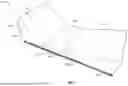
FIG. 1 is a perspective view of an exercise mat according to an embodiment of the present invention.
FIG. 2 is a front elevation view of the exercise mat of FIG. 1.
FIG. 3 illustrates a user lying on the mat of FIG. 1.
DETAILED DESCRIPTION OF THE INVENTION
The novel features which are believed to be characteristic of the invention, both as to its organization and method of operation, together with further objects and advantages will be better understood from the following description when considered in connection with the accompanying figures. It is to be expressly understood, however, that each of the figures is provided for the purpose of illustration and description only and is not intended as a definition of the limits of the present invention. For a more complete understanding of the present invention, reference is now made to the following descriptions taken in conjunction with the accompanying drawings.
The present invention disclosed herein is an exercise mat configured to assist a user in core strengthening exercises. Unlike conventional exercise mats that merely provide cushioning and friction resistance, the disclosed mat is configured with accurately positioned and angled support structures to enhance biomechanical efficiency during abdominal workouts. By incorporating supports angled to specific degrees and employing principles such as cantilever mechanics and dynamic load distribution, the mat optimizes engagement of the user's core muscles—including the rectus abdominis, transverse abdominis, and obliques—while reducing strain on the lumbar spine and hip flexors. The mat improves the effectiveness of core exercises while also minimizing the risk of injury, making it a valuable tool for fitness enthusiasts and individuals seeking rehabilitation solutions. In addition to detailing the structure and functional aspects of the invention, the description also discusses various examples exercises that the user can perform using the exercise mat.
According to an embodiment, an exercise mat 100 is disclosed as shown in FIG. 1. The exercise mat 100 comprises a mat body 101 with a lower flat surface 102. The lower flat surface 102 is made of a material configured to prevent slippage during use. In one aspect, the mat utilizes materials with anti-slip properties. These materials include thermoplastic elastomers (TPE), natural rubber, silicone, polyurethane (PU), polyvinyl chloride (PVC), microfiber coated with latex, and lightweight materials like EVA foam and hybrid materials such as cork bases with rubber coatings. In some aspects, the mat may incorporate a vacuum-based grip system to provide enhanced stability, particularly on smooth or inclined surfaces. This system could involve suction cups or pads embedded on the lower flat surface, which create a vacuum seal when pressed against the floor. Alternatively, micro-vacuum channels can be employed, to expel air upon compression and form a suction effect, which ensures adhesion to most slippery surfaces. In some aspects, the mat may include a pressure-activated sealing membrane that conforms to the underlying surface, creating a vacuum effect as pressure is applied.
According to some embodiments, positioned on the mat body are two distinct supports: a lumbar support pad 103 and a leg support pad 104. The lumbar support pad 103 is situated in the lower back region and is angled to elevate the user's lumbar spine while maintaining proper spinal alignment. The leg support pad 104, positioned in the lower thigh region, is angled to elevate the thighs, enabling the thighs to act as a fulcrum for the legs during exercise. FIG. 3 illustrates a user lying on the mat 100, with their spine and thighs elevated by the lumbar and leg support pads 103, 104, respectively.
In an aspect of the invention, the lumbar support pad 103 and leg support pad 104 are configured as right triangles 103A, 104A, also referred to as triangular supports 103A, 104A with their hypotenuses 103B, 104B coincident in space and intersecting through a common plane 105 parallel to the lower flat surface 102. The hypotenuses 103B, 104B of the triangular supports 103A, 104A provide a smooth surface that aligns with the user's body contours, optimizing biomechanical efficiency. The supports 103A, 104A are configured such that the thigh support 104A does not extend past the knees, ensuring the legs and feet can act as cantilevered masses. Similarly, the lumbar support pad 103 terminates before the neck and head, allowing the upper body to cantilever beyond the mat's edge. The configuration of mat allows shifting gravitational forces and concentrates stress on the abdominal muscles. For example, while performing a crunch workout, the user's head and neck extend beyond the edge of the mat, creating a lever arm that amplifies torque. The abdominal muscles counterbalance this force while enhancing muscle engagement.
In another embodiment, the mat 100 leverages cantilever principles to enhance core engagement. The head and neck, when extended beyond the mat's edge, create a cantilevered mass that increases torque around the abdominal region. Concurrently, the thighs serve as a fulcrum, with the legs acting as levers. This configuration requires the abdominal muscles, including the rectus abdominis and transverse abdominis, to counteract the rotational forces and maintain stability. For example, a user straightening their legs while maintaining thigh contact with the support pad activates their core to counteract the downward pull of gravity on the legs.
In an exemplary embodiment, the exercise mat 100, including the mat body 101, lumbar support pad 103, and leg support pad 104, is constructed from a single piece of foam material. The mat, including the lower flat surface 102 and the support elements, is either cut from a single piece of foam material or formed using a molding process. The single-piece construction minimizes the risk of detachment or misalignment between components, ensuring consistent performance and longevity. The lower flat surface 102 of the mat body 101 may be coated with a non-slip material to ensure stability on smooth or inclined surfaces. The single-piece construction not only simplifies manufacturing but also ensures that the exercise mat retains its form and function over time. By utilizing a single piece of foam, the mat maintains uniform density and integrity throughout its structure, while also enhancing the user's experience and safety during core-strengthening exercises.
In an optional embodiment, the supports 103A, 104A and support pads 103, 104 are detachable and repositionable. For instance, users can reposition the support pads 103, 104 to accommodate different body sizes or exercise requirements, such as closer placement for beginners or wider spacing for advanced users.
In some embodiments, the lumbar support pad 103, leg support pad 104, and the lower flat surface 102 of the exercise mat 100 are attached using bonding and assembly techniques to ensure durability and seamless integration. One method involves heat welding, where thermoplastic materials are fused together by applying heat and pressure using machines such as hot-plate welders or ultrasonic welding equipment. Thus, a strong, uniform bond is created without the need for adhesives, and the pads are securely attached under repeated stress. In some embodiments, industrial-grade adhesives, such as polyurethane-based or silicone-based adhesives, may be applied using precision dispensing machines to create a robust and flexible bond. These adhesives are chosen for their ability to maintain integrity under dynamic loads and environmental conditions, such as moisture and temperature variations. In some other embodiments, for mats 100 with detachable components, hook-and-loop fasteners or snap-fit mechanisms can be incorporated, by using high-speed sewing machines or injection molding machines, respectively. Such that the users are to adjust or reposition the support pads as needed while ensuring a stable fit during use.
In one embodiment, the lumbar support pad 103 and leg support pad 104 are configured to create two fixed points of contact between the user's body and the mat 100. These fixed points anchor the user's position during exercise movements, reducing the likelihood of unintentional displacement or sliding. The stability is further enhanced by the use of a non-slip base material on the underside of the mat body, thereby providing increased friction between the mat and the floor surface, and thus ensuring that the mat remains stationary even during high-intensity core exercises. The combination of fixed support points and a non-slip base minimizes disruptions during workouts.
In another embodiment, the exercise mat 100 includes lumbar and leg support pads 103, 104 are adjustable, using an angle adjustment mechanism, to modify the angles relative to the lower flat surface 102. The angle adjusting capability of the mat 100 allows for configurable elevation and alignment, while accommodating distinct exercise needs and user preferences. The angle adjustment mechanism includes but not limited to a ratchet system, a pivot-and-lock mechanism, or a detachable wedge system. In some aspects, the corners or edges of the mat 100 are configured to be either rounded or straight.
In another embodiment of the exercise mat 100 is integrated with a sliding track (not shown) into the mat body, which enables the positions of the lumbar support pad 103 and the leg support pad 104 to be adjusted. The sliding track is designed to accommodate users of varying body sizes and proportions, and thus providing a personalized fit that enhances ergonomic support and comfort. Users can move the pads 103, 104 along the track to align with their specific lumbar and leg positions, thereby optimizing the effectiveness of the core-strengthening exercises.
In a related embodiment, the sliding track is integrated with a locking mechanism to securely fix the positions of the lumbar support pad 103 and leg support pad 104 once adjusted. The locking mechanism is selected from a group consisting of a push-lock system, a twist-lock system, or a latch-lock system. The locking mechanism ensures that the pads do not shift or slide along the track during use, while maintaining the integrity of the fixed-point support system.
In an embodiment, the exercise mat 100 includes additional functional elements to enhance usability. For instance, the upper surface of the mat body 101 may have a textured surface to prevent user slippage during intense exercises. The mat 100 may also incorporate an integrated resistance band attachment system near the leg support pad 104 that helps user to perform a wider range of exercises. For example, resistance bands can be attached to the designated points near the leg support pad 104 for added resistance during workouts like leg presses or glute bridges.
In one embodiment, a method of using an exercise mat 100 that has been discussed in earlier embodiments is disclosed. The method involves a step of user positioning their lower back against the lumbar support pad and their thighs on the leg support pad. The method further includes a step of straightening the legs and lifting them off the mat, the thighs act as a fulcrum, and the legs create a downward torque that the abdominal muscles must counteract. Further step includes extending the head and neck simultaneously beyond the mat's edge, achieving the cantilever effect, while further activating the core. Thus, targeted engagement of the abdominal muscles is achieved while minimizing compensatory movements and reducing strain on the lumbar spine and hip flexors. For example, performing a hollow-body-hold exercise on the mat 100 positions the user's body such that the core muscles stabilize both the upper and lower body.
A study was conducted to evaluate the effectiveness of the exercise mat in improving core stabilization and reducing lumbar spine strain during common core exercises such as leg lifts, sit-ups, and crunches. The primary objective was to determine whether the mat's angled support design enhances abdominal muscle engagement while minimizing strain on the lower back. Secondary objectives included assessing user comfort, exercise efficiency, and overall usability, particularly for individuals with lower back pain or limited core strength.
The randomized controlled trial (RCT) involved 30 participants aged 18-75, representing diverse fitness levels and core strength. Participants were randomly assigned to either a control group, performing exercises on a standard flat mat, or an experimental group, using the exercise mat. Both groups followed identical exercise routines targeting the core muscles, guided by a certified fitness trainer. Biomechanical analysis using motion capture technology and electromyography (EMG) measured muscle activation and spinal alignment, while participants rated comfort and pain levels on a standardized scale.
Results focused on key performance metrics, including repetitions, range of motion, and endurance, as well as perceived discomfort or strain. The exercise mat demonstrated significant advantages, with participants in the experimental group reporting greater comfort, reduced lumbar strain, and higher activation of core muscles, including the rectus abdominis and transverse abdominis. Additionally, the mat design proved particularly beneficial for individuals with lower back pain and women recovering from C-section surgeries, underscoring its potential for broad applicability across fitness levels and special populations.
The table 1 below summarizes key observations and additional insights from the study, providing a structured overview of participant feedback and benefits across various parameters.
| TABLE 1 |
| Study Observations |
| Parameter | Observation/Feedback | Additional Details |
| Ease of | Participants found exercises such | The mat's angled support pads |
| Exercise | as crunches, leg lifts, and hollow | guided proper posture, reducing |
| body holds easier to perform. | effort needed to stabilize the body. | |
| Pelvic and | Reduced discomfort or strain on | Key benefit for users with lower |
| Back | the pelvis and lower back during | back pain, hip instability, or pelvic |
| Comfort | all exercises. | floor concerns. |
| Breathing | Enhanced ability to focus on | The ergonomic elevation provided |
| Regulation | breathing without feeling | by the lumbar pad allowed natural |
| restricted. | chest expansion, promoting better | |
| oxygen flow. | ||
| Stress on | No stress or strain reported on | The 30-degree lumbar support |
| Lower | the lumbar spine, even during | ensured spinal alignment, |
| Spine | prolonged exercises. | distributing pressure away from |
| sensitive areas. | ||
| Women Post-C- | Beneficial for rebuilding core | Allowed gradual engagement of the |
| Section | strength without discomfort in | core, particularly the transverse |
| the abdominal area. | abdominis, crucial for postpartum | |
| recovery. | ||
| Stability and | Participants appreciated the | The lower flat surface's non-slip |
| Non-Slip | mat's stability, with no sliding or | material provided grip on smooth |
| Design | shifting during intense workouts. | surfaces, ensuring safety. |
| Fatigue and | Reduced fatigue and soreness | Ergonomic design facilitated even |
| Recovery | post-workout, especially in the | distribution of gravitational forces, |
| lumbar and hip areas. | lowering overexertion of specific | |
| muscle groups. | ||
| Suitability | Beginners and advanced users | Detachable and adjustable supports |
| for All | alike found the mat supportive | accommodated varying body types |
| Fitness Levels | for a range of exercises. | and fitness needs. |
| Overall | Over 95% of participants | Highlighted as a preferred |
| Satisfaction | expressed high satisfaction with | alternative to conventional exercise |
| the mat's comfort and utility. | mats for targeted core workouts. | |
In some aspects, the mat's design applies principles of physics and biomechanics, including cantilever effect, shift in center of gravity and dynamic load distribution, wherein the head, neck, legs, and feet act as cantilevered masses, thereby increasing the lever arm distance from the center of gravity and amplifying torque; the intersection of the hypotenuses at the plane of the triangular bases shifts the user's center of gravity to the abdominal region, which helps promoting core stabilization; and the angled supports distribute gravitational forces across key body points, thereby isolating the core muscles while minimizing stress on other areas. The advantages of the present invention includes ensuring proper body alignment while performing core exercises, minimizing strain on the lower back, and improving exercise efficiency. Additional benefits include integration of detachable supports, textured surfaces, and resistance band attachments, which make the invention versatile and suitable for users with varying fitness levels and requirements.
It will finally be understood that the disclosed embodiments are presently preferred examples of how to make and use the claimed invention, and are intended to be explanatory rather than limiting the scope of the invention as defined by the claims below. Reasonable variations and modifications of the illustrated examples in the foregoing written specification and drawings are possible without departing from the scope of the invention as defined in the claim below. It should further be understood that to the extent the term “invention” is used in the written specification, it is not to be construed as a limited term as to number of claimed or disclosed inventions or the scope of any such invention, but as a term which has long been conveniently and widely used to describe new and useful improvements in technology. The scope of the invention supported by the above disclosure should accordingly be construed within the scope of what it teaches and suggests to those skilled in the art, and within the scope of any claims that the above disclosure supports. The scope of the invention is accordingly defined by the following claims.
This application is intended to cover any adaptations or variations of the present invention. Therefore, it is manifestly intended that this invention be limited only by the claims and the equivalents thereof.
Claims
1. An exercise mat for core strengthening, comprising:
a mat body having a lower flat surface configured to maintain stability on a floor surface during exercise movements;
a lumbar support pad positioned in a lower back region of the mat, the lumbar support pad angled at approximately 30 degrees relative to the lower flat surface, configured to elevate and align the lumbar spine of a user;
a leg support pad positioned in a lower thigh region of the mat, the leg support pad angled at approximately 45 degrees relative to the lower flat surface, configured to elevate the thighs of the user, forming a fulcrum for the legs during exercises; and
wherein the combination of the lumbar support pad and the leg support pad shifts the user's center of gravity from the lumbar region to the abdominal region, thereby promoting core stabilization through activation of the rectus abdominis, transverse abdominis, and oblique muscles while minimizing stress on the lower spine and hip flexors.
2. The exercise mat of claim 1, wherein the lumbar support pad and leg support pad are made of foam or other resilient material to provide both comfort and structural support during exercise.
3. The exercise mat of claim 1, wherein the lumbar support pad and leg support pad are configured to form the hypotenuse of right triangles.
4. The exercise mat of claim 1 is configured to cantilever the head and neck of the user beyond the edge of the mat to increase the torque on the abdominal muscles.
5. The exercise mat of claim 1, wherein the lumbar support pad and the leg support pad are configured to stabilize the user's body movements by creating two fixed points of contact, thereby preventing the mat from sliding or shifting during exercise.
6. The exercise mat of claim 1, wherein the lumbar support pad and the leg support pad are mounted on a sliding track integrated into the mat body, the sliding track configured to allow the positions of the pads to be adjusted and locked in place to accommodate users of varying body sizes and proportions.
7. The exercise mat of claim 6, wherein the sliding track include a locking mechanism, selected from the group consisting of a push-lock system, a twist-lock system, or a latch-lock system, to securely hold the pads in a fixed position during use.
8. The exercise mat of claim 1, wherein the angles of the lumbar support pad and the leg support pad relative to the lower flat surface are adjustable using an angle adjustment mechanism, thereby allowing users to modify the elevation and alignment of the supports to suit individual exercise requirements and preferences.
9. The exercise mat of claim 1, wherein the corners or edges of the mat are configured to be either rounded or straight.
Images & Drawings included:



Sources:
- United States Patent and Trademark Office - verify current appl. status at the USPTO↗
Recent applications in this class:
- » 20260175070 2026-06-25
ENERGY-GENERATING WORKOUT MAT - » 20260137976 2026-05-21
Exercise Mat - » 20260014414 2026-01-15
EXERCISE MAT - » 20250381436 2025-12-18
SELF-SECURING YOGA MAT - » 20250312644 2025-10-09
MAT ASSEMBLY - » 20250295948 2025-09-25
EXERCISE APPARATUS - » 20250288857 2025-09-18
Kinetic Discipline and Body Positioning Apparatus - » 20250256150 2025-08-14
CRYSTAL YOGA MAT - » 20250235739 2025-07-24
YOGA MAT - » 20250229121 2025-07-17
TOWEL FOR EXERCISE MAT