Marble
US20260183646A1
2026-07-02
19/003,185
2024-12-27
Smart Summary: An improved marble has been created with tunnels running through it. These tunnels connect at the center, which helps prevent choking if a child accidentally swallows it. The new design takes advantage of modern manufacturing techniques, making it easier to produce. It can be made quickly without a lot of manual work. The marble is also strong enough to withstand rough play. 🚀 TL;DR
Abstract:
A design for an improved marble is disclosed. The marble is pierced by tunnels that communicate at the center of the marble to reduce the chance that a child might suffocate after swallowing it. The innovations of additive manufacturing enable this design to be advantageously produced without requiring excessive handwork while still being robust against rough play.
Assignee:
- PLACO, LLC 1 🇺🇸 Buford, GA, United States
Applicant:
Interested in similar patents?
Get notified when new applications in this technology area are published.
Classification:
A63F7/40 » CPC main
Indoor games using small moving playing bodies, e.g. balls, discs or blocks; Accessories; Details; Constructional details not covered by groups - , i.e. constructional details of rolling boards, rims or play tables , e.g. frame, game boards, guide tracks Balls or other moving playing bodies, e.g. pinballs or discs used instead of balls
Description
BACKGROUND
Marbles are common playthings but can pose a hazard if swallowed. The hard round surface of a spherical marble can block or clog a child's airway. This improved marble can allow air to pass through the marble even while it is held in place in a tube, such as a child's trachea, while preserving function and being easy to manufacture.
Surprisingly few patents have attempted to improve on the traditional design of marbles. The U.S. 5,800,244 is a prior art attempt to improve the safety of a marble while not interfering with its intended purpose. That patent discloses an attempt to improve the safety of marbles by adding ribs to the design of the marble.
But fundamental problems remain with the state of the art in marbles as that earlier patent was not widely put into practice and marbles continue to pose hazards to young children. A need exists for a marble that can provide relief from choking hazards while being robust in use and easy to manufacture.
BRIEF SUMMARY OF INVENTION
Marbles with improved safety against accidental choking are described. In one embodiment, a marble is disclosed comprising a sphere pierced with at least 2 tunnels configured such that each tunnel pierces the sphere through its center. Related instantiations of this invention may include tunnels with diameters of at least 25% of the diameter of the sphere. In other instantiations, the characteristics of the tunnels may differ; notably, the cross-section of the tunnels may be circular or non-circular. The tunnels may have a constant cross-section, or the cross-section may change across the diameter of the sphere. The number of tunnels may vary in instantiations.
The marble includes in some instantiations a chamber or void centered on the center of the sphere. In some instantiations, the diameter of the central chamber may be at least 30% of the overall diameter of the sphere. The central chamber in some instantiations may be substantially spherical.
In some instantiations, the sphere of the marble may be pierced with 4 tunnels, all through the center of the sphere. One pair of tunnels may be positioned to be mutually perpendicular in one plane; the other pair of tunnels may be positioned to be mutually perpendicular in another plane; with the two planes positioned to be mutually perpendicular.
In some instantiations, the marble may be manufactured using additive manufacturing techniques.
An instantiation of the marble may be described as having 4 tunnels with each pair of tunnels being at 90o with respect to each other, and the two pairs of tunnels being similarly at 90o with respect to each other.
Another instantiation of the marble may have an open central chamber at the center of the marble that is at least 30% of the sphere's overall diameter with at least 4 tunnels allowing the communication of air between the surface of the marble and the central chamber.
It will be appreciated that this brief summary describes only some of the concepts of the invention disclosed in more detail in the following detailed description of the invention. The claimed metes and bounds of the invention are not limited to the contents of this summary.
BRIEF DESCRIPTION OF DRAWINGS
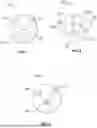
FIG. 1 illustrates an external view of one instantiation of the improved marble.
FIG. 2 illustrates an example configuration of tunnels shown without the surrounding marble material.
FIG. 3 illustrates an external view of an instantiation of the improved marble with non-circular tunnels.
FIG. 4A illustrates an instantiation of an improved marble with a central chamber.
FIG. 4B illustrates a cutaway view of an instantiation of the improved marble with a central chamber.
FIG. 5 illustrates an example configuration of tunnels shown without the surrounding marble material with tunnels of non-constant diameter.
Like numbers in drawings indicate discussion of the same object.
DETAILED DESCRIPTION OF INVENTION
Embodiments and examples of the present invention are described in detail with reference to the accompanying drawings. These descriptions include many salient details enabling one skilled in the art to clearly understand the inventive concepts of this invention. Not all details are included in all drawings, only those needed to illustrate specific aspects of the present invention. Note that like numbers are associated with like parts throughout the drawings for ease of comprehension. While embodiments of the invention are discussed in the following paragraphs, the inventive concepts of the present invention may comprehend more than these limited examples.
Illustrated in FIG. 1 is an example embodiment of a marble in accordance with this invention. The example marble 100 is shown from an external view. The marble 100 comprises a solid spherical body 110, pierced by tunnels 120.
The tunnels 120 are configured to pass directly through the center of the marble 100. In other words, the tunnels pass entirely through the solid body 110 of the marble 100. Because all tunnels 120 pass through the same point at the center of marble 100, any two tunnel entrances communicate, either directly or indirectly through the center of the spherical body 110. This configuration advantageously provides for the passage of air from one side of marble 100 to the other if marble 100 should be swallowed and parts of it are held in place by the sides of a person's throat. Because the tunnels 120 are holes in the marble 100, they do not interfere with the normal use of marbles as in rolling the marbles in games or activities such as marble runs. In instantiations of the solid body 110, the material may be chosen to provide sufficient weight even allowing for the loss of the material that would normally fill the paths of the tunnels 120.
As additive manufacturing has become prevalent, the capability of constructing complex structures like the marble 100 has become practical even for children's toys. Whether one considers VAT polymerization, material jetting, material extrusion, powder bed fusion, sheet lamination or directed energy deposition, the capability of additive manufacturing to create complex shapes consistently and cost-effectively is significant for instantiations of marble 100. Common materials used in additive manufacturing include polymers, metals, alloys, and ceramics. The marble 100 could be manufactured using any of these materials. The choice of materials for an instantiation of marble 100 would be related to the common tradeoffs of cost and anticipated selling price. Generally, a heavier material may be more costly to produce but may also perform better as a marble. Another factor that might influence the choice of material in an instantiation of marble 100 would be durability. Many games and activities using marbles require the marble to roll and fall onto other marbles or constructs such as marble runs which may be made of durable hard materials.
FIG. 2 illustrates an instantiation of the tunnels within a marble as a single manifold 200 without the solid spherical body. Individual tunnels are marked with like numbering. For example, tunnel 222 goes from side to side substantially horizontally in manifold 200. Tunnel 220 extends front to back from the view of the drawing, substantially perpendicular to tunnel 221. Tunnels 222 and 223 are also mutually perpendicular in a plane. The plane of tunnels 222 and 223 is also perpendicular to the plane of tunnels 220 and 221. This view demonstrates that the tunnels 220 through 223 provide a single manifold 200 within a marble allowing air to advantageously pass through the marble as long as the entrance of at least one tunnel is unobstructed on either side of the marble. While this instantiation illustrates tunnels that are configured to be perpendicular with respect to each other, other tunnel configurations are still within the conception of this invention. For example, a set of 3 tunnels might be configured at 60o (degrees) from each other instead of 2 tunnels at 90o (degrees). More complex manifolds are possible as long as all holes or tunnels are connected together. The instantiation of FIG. 2 has the virtue of simplicity for visualization and construction. This description is not intended to exhaust the possibilities for other manifold designs that also link all tunnel openings across a marble in accordance with this invention.
FIG. 3 illustrates example alternative instantiations for the tunnel shape in a decorative marble 300. While a circular cross-section such as tunnel 120 is possible, shown in FIG. 1, other cross-sections as are also possible, such as a heart-shaped cross-section 310, a triangular cross-section 320 or a star-shaped cross-section 330. A business might choose a tunnel cross-section that was a company logo for advertising purposes. An educational company might choose the outline of numbers or letters. An instantiation might include varied tunnel cross-sections as shown in marble 300 or all of the tunnel cross-sections might be the same shape. These cross-sections are presented as illustrations of possible instantiations but are not intended to exhaust the possible universe of custom shapes that could be used for a tunnel cross-section.
FIG. 4A and FIG. 4B illustrate a marble 400 and a cross-section of marble 400 showing a central chamber 410, respectively. To improve airflow further in instantiations of a marble in accordance with this invention, a central chamber 410 may also be introduced to a marble 400. FIG. 4A illustrates a marble 400 that is outwardly unchanged from marble 100 though an internal chamber has been added at the center of marble 400. FIG. 4B illustrates a central chamber 410 that decreases the resistance to airflow through the marble 400 by reducing the distance that air must travel within the tunnels 420. A well-known characteristic of fluid flow is that resistance to fluid flow through a pipe or manifold decreases as the diameter of that pipe carrying that fluid, or air, increases. By introducing a central chamber 410 connected to all tunnels 420 and substantially centered on the center of marble 400, resistance to the passage of air through the marble is further reduced. The presence of the central chamber 410 also reduces the chance that saliva or other bodily fluids might clog a tunnel 420 and cause air flow to stop through marble 400.
The thickness of marble 400's wall may differ in instantiations. The chamber 410 is roughly 50% of the diameter of marble 400. An instantiation may elect to increase the size of chamber 410 by reducing the thickness 430 of the outer wall, trading the increased airflow against a lighter weight marble. An instantiation using a lighter material or more brittle material may choose to increase the thickness 430 of the outer wall, or even do without a central chamber of increased size, to increase the weight of the marble or to increase its robustness to rough play.
FIG. 5 illustrates a possible instantiation of this invention with tunnels having non-constant diameter shown by illustrating the manifold 500 formed by the tunnels. Either as an alternative to the addition of a central chamber as shown in FIG. 4B, or in addition to such a chamber, the cross-section of a tunnel may vary along its length. In one instantiation, manifold 500 shows tunnels that increase their diameter as they go toward the center of manifold 500. Other instantiations of the tunnel shape could include tunnels that decrease the diameter of their cross-section or tunnels that shift from a decorative shape at the surface of the marble to a circular cross-section within the marble. This description of possible tunnel cross-sections is not meant to exhaust the possibilities but only illustrate some possible instantiations of this invention.
Descriptions and particular examples are provided in this specification to enable one skilled in the art to understand the invention and are not meant to limit or circumscribe in any way the possible embodiments or implementations of this invention. The disclosure of aspects or elements of a particular embodiment are understood to not limit their use to only that embodiment; such disclosures may be applicable to some or all of the disclosed embodiments.
Claims
I claim:1. A marble comprising a sphere pierced with at least 2 tunnels wherein each tunnel pierces the center of the sphere.
2. The marble of claim 1 wherein each said tunnel has a diameter of at least 25% of the diameter of the sphere.
3. The marble of claim 1 wherein the cross-section of tunnels is circular.
4. The marble of claim 1 wherein the cross-sections of the tunnels are not all circular.
5. The marble of claim 1 wherein the tunnels are of constant diameter.
6. The marble of claim 1 wherein the diameters of the tunnels are not all constant.
7. The marble of claim 1 further comprising: a chamber centered on the center of the sphere.
8. The marble of claim 7 wherein the diameter of the central chamber is at least 30% of the diameter of the sphere.
9. The marble of claim 7 wherein the central chamber is substantially spherical.
10. The marble of claim 1 wherein the sphere is pierced with 4 tunnels all through the center of the sphere; the first 2 tunnels are positioned to be mutually perpendicular in one plane; the remaining 2 tunnels are positioned to be mutually perpendicular in another plane; and the two tunnel planes are positioned to be mutually perpendicular.
11. The marble of claim 1 wherein additive manufacturing is used to manufacture the marble.
12. A marble comprising a sphere pierced by 4 tunnels, wherein the first 2 tunnels are positioned to meet at the center of the sphere with a 90° angle between the said tunnels; the second pair of tunnels are positioned to meet at the center of the sphere with a 90° angle between the second pair of tunnels; and the two pairs of tunnels are further positioned to be at 90° with respect to each other.
13. A marble comprising a sphere with an open central chamber having a diameter of at least 30% of the diameter of the sphere, and further comprising at least 4 tunnels from the surface of the sphere to the central chamber such that air can pass from any tunnel entrance to any other tunnel entrance through the central chamber.
Images & Drawings included:


Sources:
- United States Patent and Trademark Office - verify current appl. status at the USPTO↗
Similar patent applications:
- » 20100311867
Resin composition for manufacturing marble chips, method for manufacturing marble chips, and artificial marble made from marble chips - » 20110263783
Marble chips for an artificial marble, method of making the same, and artificial marble including the same - » 20140350160
Artificial marble chips, artificial marble containing same, and production method therefor - » 20110034586
Artificial marble, and system and method of producing artificial marble - » 20130168891
PASTE COMPOSITION FOR ARTIFICIAL MARBLE AND METHOD OF MANUFACTURING ARTIFICIAL MARBLE USING THE SAME - » 20130245156
Artificial marble, and system and method of producing artificial marble - » 20100154676
Inorganic artificial marble and composition for inorganic artificial marble - » 20060036010
Resin composition comprising styrene-methylmethacrylate copolymer, artificial marble produced using the same, and the process for producing the artificial marble using the same - » 20120122089
Gene Marker For Evaluating Genetic Potential For Marbling In Bovine Individual And Method For Evaluating Genetic Potential For Marbling Using The Same - » 20150335990
Board game- 2 players. 7 Movable Squares, w/4 holes each, on a 3 x 3 grid. To win, make a square, taking turns dropping one marble at a time onto the Movable Squares. Squares can be made on 1, 2 or 4 of the Movable Squares. Players are allowed 2 Movable Square moves in addition to placing one of 14 (each) marbles into the holes
Recent applications in this class:
- » 20260158368 2026-06-11
INTERNALLY LIT, TRANSPARENT, LIGHTWEIGHT, AND HIGH-SPEED PINBALL - » 20240325871 2024-10-03
GAME METHOD FOR GAME MACHINE FOR TICKET OUTPUT - » 20200324192 2020-10-15
Table game with spinning pieces - » 20120295513 2012-11-22
Tethered ball toy - » 20070004313 2007-01-04
Marble incorporating iron core - » 20050130775 2005-06-16
Hockey game table puck with weighted perimeter - » 16947518 2021-11-09
Lighted shuffleboard weight