PREPARATION METHOD OF HIGH-EFFICIENCY PHOTOCATALYST FOR PHOTOCATALYTIC DEGRADATION OF TETRACYCLINE FROM ELECTRIC ARC FURNACE DUST (EAFD)
US20260183754A1
2026-07-02
19/433,299
2025-12-26
Smart Summary: A new method has been developed to create a highly effective photocatalyst that can break down tetracycline, a type of antibiotic, using waste from steel production. First, dust from electric arc furnaces is collected and cleaned with deionized water to remove impurities. After filtering, the cleaned material is dried in an oven at a specific temperature for several hours. This process not only helps recycle waste from the steel industry but also addresses environmental pollution. The final product has strong photocatalytic properties, making it useful for cleaning up contaminated water. 🚀 TL;DR
Abstract:
A preparation method of a high-efficiency photocatalyst for photocatalytic degradation of tetracycline from electric arc furnace dust (EAFD) is provided, belonging to the technical field of solid waste resource utilization and water pollution control. The method includes: step 1: collecting EAFD from a steel plant or other industrial processes; mixing the EAFD with deionized water for ultrasonic washing to remove surface impurities and soluble salts; conducting filtration; and pouring an obtained filtered product into an oven, and drying at 80° C. to 100° C. for 3 h to 10 h to obtain solid EAFD. This method enables the high-value utilization of solid waste generated by the steel industry, reducing issues such as resource waste and environmental pollution. A material obtained after calcination exhibits superior separation capability of photogenerated electrons and holes, thereby possessing excellent photocatalytic activity and showing promising application prospects in the field of environmental purification.
Inventors:
- Ping Ning 19 🇨🇳 Kunming, China
- Lijuan JIA 2 🇨🇳 Kunming, China
- Rui CAO 2 🇨🇳 Kunming, China
- Fang Wang 2 🇨🇳 Kunming, China
- Shuo CUI 1 🇨🇳 Kunming, China
- Guoxin MU 1 🇨🇳 Kunming, China
- Jiayu FENG 1 🇨🇳 Kunming, China
- Zibin PAN 1 🇨🇳 Kunming, China
- Yonghui LI 1 🇨🇳 Kunming, China
- Yanzhang LIU 1 🇨🇳 Kunming, China
Assignee:
- Yunnan Minzu University 2 🇨🇳 Kunming, China
Applicant:
Interested in similar patents?
Get notified when new applications in this technology area are published.
Classification:
B01J23/80 » CPC main
Catalysts comprising metals or metal oxides or hydroxides, not provided for in group of the iron group metals or copper combined with metals, oxides or hydroxides provided for in groups - with zinc, cadmium or mercury
B01J37/009 » CPC further
Processes, in general, for preparing catalysts; Processes, in general, for activation of catalysts Preparation by separation, e.g. by filtration, decantation, screening
B01J37/04 » CPC further
Processes, in general, for preparing catalysts; Processes, in general, for activation of catalysts Mixing
B01J37/06 » CPC further
Processes, in general, for preparing catalysts; Processes, in general, for activation of catalysts Washing
B01J37/08 » CPC further
Processes, in general, for preparing catalysts; Processes, in general, for activation of catalysts Heat treatment
B01J37/343 » CPC further
Processes, in general, for preparing catalysts; Processes, in general, for activation of catalysts; Irradiation by, or application of, electric, magnetic or wave energy, e.g. ultrasonic waves ; Ionic sputtering; Flame or plasma spraying; Particle radiation making use of electric or magnetic fields, wave energy or particle radiation of ultrasonic wave energy
C02F1/30 » CPC further
Treatment of water, waste water, or sewage by irradiation
C02F1/444 » CPC further
Treatment of water, waste water, or sewage by dialysis, osmosis or reverse osmosis by ultrafiltration or microfiltration
C02F1/725 » CPC further
Treatment of water, waste water, or sewage by oxidation by catalytic oxidation
C02F2101/345 » CPC further
Nature of the contaminant; Organic compounds containing oxygen Phenols
C02F2101/38 » CPC further
Nature of the contaminant; Organic compounds containing nitrogen
C02F2305/10 » CPC further
Use of specific compounds during water treatment Photocatalysts
B01J37/00 IPC
Processes, in general, for preparing catalysts; Processes, in general, for activation of catalysts
B01J37/34 IPC
Processes, in general, for preparing catalysts; Processes, in general, for activation of catalysts Irradiation by, or application of, electric, magnetic or wave energy, e.g. ultrasonic waves ; Ionic sputtering; Flame or plasma spraying; Particle radiation
C02F1/44 IPC
Treatment of water, waste water, or sewage by dialysis, osmosis or reverse osmosis
C02F1/72 IPC
Treatment of water, waste water, or sewage by oxidation
Description
CROSS REFERENCE TO RELATED APPLICATION
This patent application claims the benefit and priority of Chinese Patent Application No. 2024119385940, filed with the China National Intellectual Property Administration on Dec. 26, 2024, the disclosure of which is incorporated by reference herein in its entirety as part of the present application.
TECHNICAL FIELD
The present disclosure relates to the technical field of solid waste resource utilization and water pollution control, specifically to a preparation method of a high-efficiency photocatalyst for photocatalytic degradation of tetracycline from electric arc furnace dust (EAFD).
BACKGROUND
With the acceleration of industrialization and the continuous development of human activities, a large amount of organic pollutants are discharged into water bodies, seriously threatening ecological balance and human health. The discharge of emerging pollutants has become a significant challenge for global environmental protection. Pharmaceuticals and personal care products (PPCPs) have emerged as a new class of contaminants, posing serious threats to human health. Antibiotics are one of the main components of PPCPs. Industrial processes involved in antibiotic production may lead to the release of these compounds into water bodies via wastewater discharge. The concentration of antibiotics in surface water, wastewater, and even drinking water has far exceeded regulatory standards.
Tetracycline (TC), a well-known broad-spectrum antibacterial agent among antibiotics, is widely used to treat bacterial infections in humans and livestock. However, due to the misuse of antibiotics and the high chemical stability of the drugs themselves, tetracycline is difficult to be metabolized biologically by humans and animals. When discharged into water bodies, TC molecules accumulate extensively in aquatic environments, thereby causing serious impacts on ecosystems and public health. To address this issue, various technologies have been developed to remove and degrade TC in water, such as biodegradation, physical adsorption, and advanced oxidation processes (AOPs). As a type of AOPs, photocatalytic treatment is a novel green process route. Due to the advantages of high efficiency, sustainability, stability, and low cost, photocatalytic treatment is considered a promising strategy for treating TC-containing wastewater.
Electric arc furnace dust (EAFD), a by-product of the steel industry, is a solid waste that can impose a burden on the environment if not handled properly. Currently, most EAFD is disposed of in landfills, which may have significant environmental impacts. Therefore, converting EAFD into useful materials is considered a crucial approach to addressing these issues. Recent research has found that EAFD possesses unique physical and chemical properties, making it a potential high-efficiency photocatalyst for the photocatalytic degradation of organic pollutants in water. EAFD primarily contains iron and zinc. Iron mainly exists in the forms of magnetite (Fe3O4) and zinc ferrite (ZnFe2O4), while zinc exists as zincite (ZnO) and zinc ferrite (ZnFe2O4). Among these, ZnFe2O4 and ZnO are common photocatalytic materials for wastewater purification. Heterojunction photocatalytic materials have been demonstrated to exhibit excellent photocatalytic activity under visible light irradiation. Currently, extensive research focuses on synthesizing such photocatalytic materials using chemical synthesis methods. However, the photocatalytic activity of these materials is generally limited by their bandgap energy, such that they are rarely used as photocatalysts in single-phase forms. Furthermore, photocatalysts synthesized by various methods suffer from issues such as high preparation costs and complicated processes. Utilizing the low-cost solid waste material EAFD to prepare heterojunction photocatalytic materials for wastewater treatment, achieving the goal of treating waste with waste, holds great application prospects.
Therefore, the present disclosure is proposed to solve the aforementioned problems by providing a preparation method of a high-efficiency photocatalyst for photocatalytic degradation of tetracycline from EAFD.
SUMMARY
An objective of the present disclosure is to provide a preparation method of a high-efficiency photocatalyst for photocatalytic degradation of tetracycline from electric arc furnace dust (EAFD), so as to solve the problems mentioned in the background.
To achieve the above objective, the present disclosure provides the following technical solutions. The present disclosure provides a preparation method of a high-efficiency photocatalyst for photocatalytic degradation of tetracycline from EAFD, including the following steps:
-
- step 1: collecting EAFD from a steel plant or other industrial processes; mixing the EAFD with deionized water for ultrasonic washing to remove surface impurities and soluble salts; conducting filtration; and pouring an obtained filtered product into an oven, and drying at 80° C. to 100° C. for 3 h to 10 h to obtain solid EAFD;
- step 2: mixing the solid EAFD obtained in the step 1 with an acid solution, stirring for 1 h to 2 h to remove a part of surface metal oxides and other impurities; and washing with deionized water until neutral, and drying to obtain treated solid EAFD;
- step 3: mixing the treated solid EAFD obtained in the step 2 with an alkali solution, stirring for 1.5 h to 2 h to further modify a surface structure; and washing with deionized water until neutral, and drying to obtain modified solid EAFD;
- step 4: subjecting the modified solid EAFD to a heat treatment at a high temperature, namely placing the modified solid EAFD into a tubular furnace, introducing O2 as a carrier gas, and heating to a temperature of 400° C. to 900° C. at a heating rate of 10° C./min and holding the temperature for 2 h; and cooling to room temperature at a cooling rate of 10° C./min to obtain a photocatalyst ZnFe2O4@ZnO; and
- step 5: adding the photocatalyst ZnFe2O4@ZnO to a tetracycline solution with a concentration of 30 mg/L, where a dosage of the ZnFe2O4@ZnO is 0.1 g/L; after stirring in the dark for 30 min to achieve an adsorption equilibrium, initiating degradation using a 300 W rare-element lamp as a simulated light source; withdrawing an equal volume of an obtained reaction solution at a time interval of 1 h to 2 h, filtering the reaction solution through a 0.22 μm microporous membrane, transferring an obtained filtrate into a 2 mL high-performance liquid chromatography (HPLC) vial, and observing color and concentration changes of the filtrate.
Preferably, the EAFD and the deionized water are mixed at a solid-to-liquid ratio of 1 g:
-
- 80 mL in the step 1.
Preferably, when detecting a degradation effect of the tetracycline, HPLC is conducted to determine a concentration (Ct) of the tetracycline; and an initial concentration of the tetracycline is recorded as C0, and Ct/C0 represents a ratio of a remaining amount of the tetracycline after the degradation.
Preferably, the rare-element lamp in the step 5 includes a xenon lamp and a mercury lamp.
Preferably, the acid solution in the step 2 is selected from the group consisting of dilute sulfuric acid and nitric acid.
Preferably, the alkali solution in the step 3 is a sodium hydroxide solution.
Compared with the prior art, beneficial effects of the present disclosure are as follows:
-
- 1) In the present disclosure, the method enables the high-value utilization of solid waste generated from the steel industry, reducing problems such as resource waste and environmental pollution.
- 2) A material obtained after calcination exhibits superior separation capability of photogenerated electrons and holes, thereby possessing excellent photocatalytic activity and demonstrating promising application prospects in the field of environmental purification. When used as a photocatalytic material for treating antibiotic-containing wastewater, the photocatalyst can efficiently remove tetracycline from the wastewater. This offers advantages such as simple operation, low cost, and high removal efficiency, meeting the requirements for practical applications.
- 3) The prepared material exhibits magnetic recoverability, which addresses the challenge in recovery and reuse of photocatalysts, showing excellent application potential.
BRIEF DESCRIPTION OF THE DRAWINGS
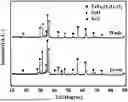
FIG. 1 shows the X-ray diffraction (XRD) patterns of the phase composition of EAFD before and after water washing;
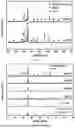
FIG. 2 shows the XRD patterns of EAFD calcined at different temperatures;
FIG. 3 shows the tetracycline degradation performance diagram of EAFD; and
FIG. 4 shows a comparative diagram of the tetracycline degradation performance of EAFD calcined at different temperatures.
DETAILED DESCRIPTION OF THE EMBODIMENTS
The technical solutions of the examples of the present disclosure are clearly and completely described below with reference to the drawings. Apparently, the described examples are merely a part rather than all of the examples of the present disclosure. All other examples obtained by those skilled in the art based on the examples of the present disclosure without creative efforts shall fall within the protection scope of the present disclosure.
In the description of the present disclosure, it should be understood that orientation or position relationships indicated by terms such as “upper,” “lower,” “front,” “rear,” “left,” “right,” “top,” “bottom,” “inside,” and “outside” are based on what are illustrated in the drawings. These terms are merely intended to facilitate and simplify the description of the present disclosure, rather than to indicate or imply that the mentioned device or components must have a specific orientation or must be constructed and operated in a specific orientation. Therefore, these terms should not be understood as a limitation to the present disclosure.
As shown in FIG. 1 to FIG. 4, the present disclosure provides the following technical solutions.
The present disclosure provides a preparation method of a high-efficiency photocatalyst for photocatalytic degradation of tetracycline from EAFD, including the following steps: step 1: collecting EAFD from a steel plant or other industrial processes; mixing the EAFD with deionized water for ultrasonic washing to remove surface impurities and soluble salts; conducting filtration; and pouring an obtained filtered product into an oven, and drying at 80° C. to 100° C. for 3 h to 10 h to obtain solid EAFD; step 2: mixing the solid EAFD obtained in the step 1 with an acid solution (where the acid solution is selected from the group consisting of dilute sulfuric acid and nitric acid), stirring for 1 h to 2 h to remove a part of surface metal oxides and other impurities; and washing with deionized water until neutral, and drying to obtain treated solid EAFD; step 3: mixing the treated solid EAFD obtained in the step 2 with an alkali solution (where the alkali solution is a sodium hydroxide solution), stirring for 1.5 h to 2 h to further modify a surface structure; and washing with deionized water until neutral, and drying to obtain modified solid EAFD; step 4: subjecting the modified solid EAFD to a heat treatment at a high temperature, namely placing the modified solid EAFD into a tubular furnace, introducing O2 as a carrier gas, and heating to a temperature of 400° C. to 900° C. at a heating rate of 10° C./min and holding the temperature for 2 h; and cooling to room temperature at a cooling rate of 10° C./min to obtain a photocatalyst ZnFe2O4@ZnO; and step 5: adding the photocatalyst ZnFe2O4@ZnO to a tetracycline solution with a concentration of 30 mg/L, where a dosage of the ZnFe2O4@ZnO is 0.1 g/L; after stirring in the dark for 30 min to achieve an adsorption equilibrium, initiating degradation using a 300 W rare-element lamp (where the rare-element lamp includes a xenon lamp and a mercury lamp) as a simulated light source; withdrawing an equal volume of an obtained reaction solution at a time interval of 1 h to 2 h, filtering the reaction solution through a 0.22 μm microporous membrane, transferring an obtained filtrate into a 2 mL high-performance liquid chromatography (HPLC) vial, and observing color and concentration changes of the filtrate.
In the present disclosure, the EAFD and the deionized water are mixed at a solid-to-liquid ratio of 1 g: 80 mL in the step 1.
In the present disclosure, when detecting a degradation effect of the tetracycline, HPLC is conducted to determine a concentration (Ct) of the tetracycline; and an initial concentration of the tetracycline is recorded as C0, and Ct/C0 represents a ratio of a remaining amount of the tetracycline after the degradation.
Example 1
The specific steps of the method were as follows:
-
- Step 1: EAFD was collected from a steel plant. The EAFD was mixed with deionized water and subjected to ultrasonic washing to remove surface impurities and soluble salts. The mixture was then filtered. The resulting filtered product was poured into an oven and dried at 80° C. for 3 h, yielding solid EAFD.
- Step 2: The EAFD obtained from the step 1 was mixed with an acid solution and stirred for 1 h to remove part of the surface metal oxides and other impurities, and then washed with deionized water until neutral and dried.
- Step 3: The EAFD treated in the step 2 was mixed with an alkali solution and stirred for 1.5 h to 2 h to further modify a surface structure. The material was then washed with deionized water until neutral and dried.
- Step 4: The modified EAFD underwent a heat treatment at a high temperature, namely the EAFD was placed into a tubular furnace, and O2 was introduced as a carrier gas. The EAFD was heated to 400° C. at a heating rate of 10° C./min and maintained for 2 h. Subsequently, the EAFD was cooled to room temperature at a cooling rate of 10° C./min, resulting in a photocatalyst ZnFe2O4@ZnO.
- Step 5: The photocatalyst ZnFe2O4@ZnO was added to a tetracycline solution with a concentration of 30 mg/L, using ZnFe2O4@ZnO at a dosage of 0.1 g/L. After stirring in the dark for 30 min to achieve an adsorption equilibrium, degradation was initiated under irradiation from a 300 W rare-element lamp serving as a simulated light source. At 1-h time intervals, an equal volume of the reaction solution was withdrawn, filtered through a 0.22 μm microporous membrane, transferred into a 2 mL HPLC vial, and observed for changes in color and concentration.
Example 2
The specific steps of the method were as follows:
-
- Step 1: EAFD was collected from a steel plant. The EAFD was mixed with deionized water and subjected to ultrasonic washing to remove surface impurities and soluble salts. The mixture was then filtered. The resulting filtered product was poured into an oven and dried at 90° C. for 6.5 h, yielding solid EAFD.
- Step 2: The EAFD obtained from the step 1 was mixed with an acid solution and stirred for 1.5 h to remove part of the surface metal oxides and other impurities, and then washed with deionized water until neutral and dried.
- Step 3: The EAFD treated in the step 2 was mixed with an alkali solution and stirred for 1.75 h to further modify a surface structure. The material was then washed with deionized water until neutral and dried.
- Step 4: The modified EAFD underwent a heat treatment at a high temperature, namely the EAFD was placed into a tubular furnace, and O2 was introduced as a carrier gas. The EAFD was heated to 800° C. at a heating rate of 10° C./min and maintained for 2 h. Subsequently, the EAFD was cooled to room temperature at a cooling rate of 10° C./min, resulting in a photocatalyst ZnFe2O4@ZnO.
- Step 5: The photocatalyst ZnFe2O4@ZnO was added to a tetracycline solution with a concentration of 30 mg/L, using ZnFe2O4@ZnO at a dosage of 0.1 g/L. After stirring in the dark for 30 min to achieve an adsorption equilibrium, degradation was initiated under irradiation from a 300 W rare-element lamp serving as a simulated light source. At 1.5-h time intervals, an equal volume of the reaction solution was withdrawn, filtered through a 0.22 μm microporous membrane, transferred into a 2 mL HPLC vial, and observed for changes in color and concentration.
Example 3
The specific steps of the method were as follows:
-
- Step 1: EAFD was collected from a steel plant. The EAFD was mixed with deionized water and subjected to ultrasonic washing to remove surface impurities and soluble salts. The mixture was then filtered. The resulting filtered product was poured into an oven and dried at 100° C. for 10 h, yielding solid EAFD.
- Step 2: The EAFD obtained from the step 1 was mixed with an acid solution and stirred for 2 h to remove part of the surface metal oxides and other impurities, and then washed with deionized water until neutral and dried.
- Step 3: The EAFD treated in the step 2 was mixed with an alkali solution and stirred for 2 h to further modify a surface structure. The material was then washed with deionized water until neutral and dried.
- Step 4: The modified EAFD underwent a heat treatment at a high temperature, namely the EAFD was placed into a tubular furnace, and O2 was introduced as a carrier gas. The EAFD was heated to 900° C. at a heating rate of 10° C./min and maintained for 2 h. Subsequently, the EAFD was cooled to room temperature at a cooling rate of 10° C./min, resulting in a photocatalyst ZnFe2O4@ZnO.
- Step 5: The photocatalyst ZnFe2O4@ZnO was added to a tetracycline solution with a concentration of 30 mg/L, using ZnFe2O4@ZnO at a dosage of 0.1 g/L. After stirring in the dark for 30 min to achieve an adsorption equilibrium, degradation was initiated under irradiation from a 300 W rare-element lamp serving as a simulated light source. At 2-h time intervals, an equal volume of the reaction solution was withdrawn, filtered through a 0.22 μm microporous membrane, transferred into a 2 mL HPLC vial, and observed for changes in color and concentration.
The foregoing displays and describes basic principles, main features, and advantages of the present disclosure. Apparently, for a person skilled in the art, the present disclosure is not limited to details of the above examples, and that the present disclosure may be implemented in other specific forms without departing from the spirit or basic features of the present disclosure. Therefore, the examples should be regarded as exemplary and non-limiting in every respect, and the scope of the present disclosure is defined by the appended claims rather than the above description. All changes falling within the meaning and scope of equivalent elements of the claims should be included in the present disclosure, and any reference numbers in the claims should not be construed as a limitation to the involved claims.
Although the examples of the present disclosure have been illustrated and described, it should be understood that those of ordinary skill in the art may make various changes, modifications, replacements and variations to the above examples without departing from the principle and spirit of the present disclosure, and the scope of the present disclosure is limited by the appended claims and their legal equivalents.
Claims
What is claimed is:1. A preparation method of a high-efficiency photocatalyst for photocatalytic degradation of tetracycline from electric arc furnace dust (EAFD), comprising following steps:
step 1: collecting EAFD from a steel plant or other industrial processes; mixing the EAFD with deionized water for ultrasonic washing to remove surface impurities and soluble salts; conducting filtration; and pouring an obtained filtered product into an oven, and drying at 80° C. to 100° C. for 3 h to 10 h to obtain solid EAFD;
step 2: mixing the solid EAFD obtained in the step 1 with an acid solution, stirring for 1 h to 2 h to remove a part of surface metal oxides and other impurities; and washing with deionized water until neutral, and drying to obtain treated solid EAFD;
step 3: mixing the treated solid EAFD obtained in the step 2 with an alkali solution, stirring for 1.5 h to 2 h to further modify a surface structure; and washing with deionized water until neutral, and drying to obtain modified solid EAFD;
step 4: subjecting the modified solid EAFD to a heat treatment at a high temperature, namely placing the modified solid EAFD into a tubular furnace, introducing O2 as a carrier gas, and heating to a temperature of 400°C to 900°C at a heating rate of 10° C./min and holding the temperature for 2 h; and cooling to room temperature at a cooling rate of 10° C./min to obtain a photocatalyst ZnFe2O4@ZnO; and
step 5: adding the photocatalyst ZnFe2O4@ZnO to a tetracycline solution with a concentration of 30 mg/L, wherein a dosage of the ZnFe2O4@ZnO is 0.1 g/L; after stirring in the dark for 30 min to achieve an adsorption equilibrium, initiating degradation using a 300 W rare-element lamp as a simulated light source; withdrawing an equal volume of an obtained reaction solution at a time interval of 1 h to 2 h, filtering the reaction solution through a 0.22 μm microporous membrane, transferring an obtained filtrate into a 2 mL high-performance liquid chromatography (HPLC) vial, and observing color and concentration changes of the filtrate.
2. The preparation method of a high-efficiency photocatalyst for photocatalytic degradation of tetracycline from EAFD according to claim 1, wherein the EAFD and the deionized water are mixed at a solid-to-liquid ratio of 1 g: 80 mL in the step 1.
3. The preparation method of a high-efficiency photocatalyst for photocatalytic degradation of tetracycline from EAFD according to claim 1, wherein when detecting a degradation effect of the tetracycline, HPLC is conducted to determine a concentration (Ct) of the tetracycline; and an initial concentration of the tetracycline is recorded as C0, and Ct/C0 represents a ratio of a remaining amount of the tetracycline after the degradation.
4. The preparation method of a high-efficiency photocatalyst for photocatalytic degradation of tetracycline from EAFD according to claim 1, wherein the rare-element lamp in the step 5 comprises a xenon lamp and a mercury lamp.
5. The preparation method of a high-efficiency photocatalyst for photocatalytic degradation of tetracycline from EAFD according to claim 1, wherein the acid solution in the step 2 is selected from the group consisting of dilute sulfuric acid and nitric acid.
6. The preparation method of a high-efficiency photocatalyst for photocatalytic degradation of tetracycline from EAFD according to claim 1, wherein the alkali solution in the step 3 is a sodium hydroxide solution.
Images & Drawings included:


Sources:
- United States Patent and Trademark Office - verify current appl. status at the USPTO↗
Recent applications in this class:
- » 20260108867 2026-04-23
CATALYST FOR REMOVING NITROUS OXIDE AND METHOD OF REMOVING NITROUS OXIDE - » 20250367643 2025-12-04
CATALYSTS CONTAINING COPPER, ZINC OXIDE, ALUMINA AND SILICA - » 20250367642 2025-12-04
CATALYSTS CONTAINING COPPER, ZINC OXIDE, ALUMINA AND SILICA - » 20250303397 2025-10-02
PLASMONIC NANO-ALLOY PHOTOTHERMAL-COUPLED METHANE DRY REFORMING CATALYST, PREPARATION METHOD THEREFOR, AND APPLICATION THEREOF - » 20250288977 2025-09-18
PREPARATION METHOD OF NI-BASED HIGH-ENTROPY OXIDE CATALYST AND ITS APPLICATION IN CARBON DIOXIDE REFORMING OF METHANE TO PREPARE SYNGAS - » 20250073684 2025-03-06
COPPER-ZINC ALLOY CATALYST, AND PREPARATION METHOD AND USE THEREOF - » 20250041835 2025-02-06
A CATALYST FOR THE CONVERSION OF CO2-RICH SYNGAS TO METHANOL AND CONVENTIONAL SYNGAS TO DIMETHYL ETHER - » 20240342690 2024-10-17
NEW GEOMETRY FOR DEN2O CATALYST - » 20240226857 2024-07-11
LAYER STRUCTURED MULTIFUNCTIONAL MONOLITH CATALYST FOR ENERGY-EFFICIENT CONVERSION OF CO2 TO DIMETHYL ETHER - » 20240216895 2024-07-04
METHODS AND CATALYSTS FOR CARBON DIOXIDE CONVERSION TO LONG-CHAIN HYDROCARBONS
Recent applications for this Assignee:
- » 20170204022 2017-07-20
Method for the preparation of iodoalkanes