WASHING DEVICE AND CONTROL METHOD THEREOF
US20260185283A1
2026-07-02
19/448,757
2026-01-14
Smart Summary: A new washing device can operate in two different modes: normal and energy-saving. In normal mode, it runs a set number of agitation cycles to clean clothes and includes a fabric loosening cycle in the second part of the wash. In energy-saving mode, it uses a different number of agitation cycles and adds a soaking cycle to help clean clothes while using less energy. The device is controlled by a processor that manages these cycles based on the selected mode. This allows for effective washing while also providing an option to save energy. 🚀 TL;DR
Abstract:
Disclosed is a washing device. When instructions are individually and/or collectively executed, at least one processor may cause a washing device to perform a first number of agitation cycles during a first washing section and a fabric loosening cycle during a second washing section in a normal mode to perform washing, perform a second number of agitation cycles different from the first number during the first washing section and perform a soaking cycle during at least a portion of the second washing section in an energy-saving mode to perform the washing.
Inventors:
- Jinhyun PARK 84 🇰🇷 Suwon-si, South Korea
- Seunghun CHOI 4 🇰🇷 Suwon-si, South Korea
- Sangyeol LEE 6 🇰🇷 Suwon-si, South Korea
- Jungyoon KIM 6 🇰🇷 Suwon-si, South Korea
- Byeongwon BAE 3 🇰🇷 Suwon-si, South Korea
Applicant:
Interested in similar patents?
Get notified when new applications in this technology area are published.
Classification:
D06F2103/44 » CPC further
Parameters monitored or detected for the control of domestic laundry washing machines, washer-dryers or laundry dryers Current or voltage
D06F2103/68 » CPC further
Parameters monitored or detected for the control of domestic laundry washing machines, washer-dryers or laundry dryers Operation mode; Program phase
D06F2105/52 » CPC further
Systems or parameters controlled or affected by the control systems of washing machines, washer-dryers or laundry dryers Changing sequence of operational steps; Carrying out additional operational steps; Modifying operational steps, e.g. by extending duration of steps
D06F2105/58 » CPC further
Systems or parameters controlled or affected by the control systems of washing machines, washer-dryers or laundry dryers Indications or alarms to the control system or to the user
D06F33/72 » CPC main
Control of operations performed in washing machines or washer-dryers ; Control of washer-dryers characterised by the purpose or target of the control Control of the energy or water consumption
D06F33/36 » CPC further
Control of operations performed in washing machines or washer-dryers ; Control of washing machines characterised by the purpose or target of the control ; Control of operational steps, e.g. optimisation or improvement of operational steps depending on the condition of the laundry of washing
Description
CROSS-REFERENCE TO RELATED APPLICATIONS
This application is a continuation of International Application No. PCT/KR2025/023056 designating the United States, filed on Dec. 29, 2025, in the Korean Intellectual Property Receiving Office and claiming priority to Korean Patent Application Nos. 10-2024-0200974, filed on Dec. 30, 2024, and 10-2025-0010472, filed on Jan. 23, 2025, in the Korean Intellectual Property Office, the disclosures of each of which are incorporated by reference herein in their entireties.
BACKGROUND
Field
The disclosure relates to a washing device and a control method thereof.
Description of Related Art
Recently, technologies have been developed for washing devices that provide various washing modes to save energy. In particular, technologies have been developed for washing modes that save energy by changing a washing cycle or a washing time.
Generally, when a washing device performs washing in an energy-saving mode, total power consumption in the energy-saving mode may be identified. However, when calculating total power consumption in a normal mode, rather than energy-saving mode, using the existing calculation method, there has been a problem of a large error compared to an actual measured value.
SUMMARY
According to an example embodiment of the present disclosure, a washing device includes: a memory configured to store instructions, and at least one processor, comprising processing circuitry.
According to an example, at least one processor, individually and/or collectively, may be configured to execute the instructions and to cause the washing device to: perform a first number of agitation cycles during a first washing section and a fabric loosening cycle during a second washing section in a normal mode to perform washing, perform a second number of agitation cycles different from the first number of agitation cycles during the first washing section and perform a soaking cycle during at least a portion of the second washing section in an energy-saving mode to perform the washing.
According to an example embodiment, at least one processor, individually and/or collectively, may be configured to cause the washing device to: identify power consumption per unit time of each washing section and total power consumption in the energy-saving mode based on washing time information for each washing section corresponding to the energy-saving mode and power consumption for each washing section, and identify the total power consumption in the normal mode based on washing time information for each washing section in the normal mode and the power consumption per unit time of each washing section in the energy-saving mode.
According to an example embodiment, the washing device may further include: communication circuitry, wherein at least one processor, individually and/or collectively, may be configured to cause the washing device to: identify an energy saving rate in the energy-saving mode based on the total power consumption in the energy-saving mode and the total power consumption in the normal mode, and transmit information corresponding to the identified energy saving rate to a user terminal via the communication circuitry.
According to an example embodiment, at least one processor, individually and/or collectively, may be configured to cause the washing device to: identify the energy saving rate in the energy-saving mode based on a comparison between the total power consumption in the normal mode and a value obtained by subtracting the total power consumption in the energy-saving mode from the total power consumption in the normal mode.
According to an example embodiment, the energy-saving mode may further include: a third washing section in which the fabric loosening cycle is performed, and wherein at least one processor, individually and/or collectively, may be configured to cause the washing device to: identify power consumption corresponding to the second washing section in the normal mode based on the power consumption per unit time corresponding to the third washing section in the energy-saving mode.
According to an example embodiment, at least one processor, individually and/or collectively, may be configured to cause the washing device to: identify first power consumption corresponding to the first washing section in the normal mode, second power consumption corresponding to the second washing section in the normal mode, and third power consumption corresponding to at least a portion of the second washing section in the energy-saving mode, and identify the total power consumption in the normal mode based on the total power consumption in the energy-saving mode, the first power consumption, the second power consumption, and the third power consumption.
According to an example embodiment, at least one processor, individually and/or collectively, may be configured to cause the washing device to: subtract the third power consumption from the total power consumption in the energy-saving mode and to add the first power consumption and the second power consumption to identify the total power consumption in the normal mode.
According to an example embodiment, at least one processor, individually and/or collectively, may be configured to cause the washing device to: identify the first power consumption based on the power consumption per unit time corresponding to the first washing section identified in the energy-saving mode and a washing time corresponding to the first washing section in the normal mode, and identify the second power consumption based on the power consumption per unit time corresponding to the third washing section identified in the energy-saving mode and the washing time corresponding to the second washing section in the normal mode.
According to an example embodiment, at least one processor, individually and/or collectively, may be configured to cause the washing device to: alternately perform the agitation cycle and the soaking cycle in the energy-saving mode, and then perform the fabric loosening cycle.
According to an example embodiment, in the energy-saving mode, at least one of a washing time corresponding to the agitation cycle, a washing time corresponding to the soaking cycle, and an order of the agitation cycle and the soaking cycle may be determined based on attribute information of the washing device.
According to example embodiments of the present disclosure, a method of operating a washing device includes: performing a first number of agitation cycles during a first washing section and a fabric loosening cycle during a second washing section in a normal mode to perform washing; performing a second number of agitation cycles different from the first number during the first washing section and performing a soaking cycle during at least a portion of the second washing section in an energy-saving mode to perform the washing.
According to example embodiments of the present disclosure, there is provided a non-transitory computer-readable storage medium storing computer instructions that, when executed by at least one processor, comprising processing circuitry, of a washing device, individually and/or collectively, cause the washing device to perform operations including: performing a first number of agitation cycles during a first washing section and a fabric loosening cycle during a second washing section to perform washing, based on a normal mode being selected according to a first user command; performing a second number of agitation cycles different from the first number during the first washing section, and performing a soaking cycle during at least a portion of the second washing section to perform the washing, based on an energy-saving mode being selected according to a second user command.
BRIEF DESCRIPTION OF THE DRAWINGS
The above and other aspects, features and advantages of certain embodiments of the present disclosure will be more apparent from the following detailed description, taken in conjunction with the accompanying drawings, in which:
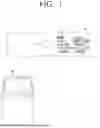
FIG. 1 is a diagram illustrating an example operation of a washing device according to various embodiments.
FIG. 2 is a block diagram illustrating an example configuration of the washing device according to various embodiments.
FIG. 3 is a block diagram illustrating an example configuration of the washing device according to various embodiments.
FIG. 4 is a diagram illustrating an example normal mode and an example energy-saving mode of the washing device according to various embodiments.
FIGS. 5A and 5B are diagrams illustrating an example power consumption identification process in an energy-saving mode of the washing device according to various embodiments.
FIGS. 6A and 6B are diagrams illustrating an example power consumption identification process per unit time of the washing device according to various embodiments.
FIG. 7 is a diagram illustrating an example total power consumption identification process in a normal mode of the washing device according to various embodiments.
FIG. 8 is a diagram illustrating an example total power consumption inference process in the normal mode of the washing device according to various embodiments.
FIG. 9 is a diagram illustrating an example method of identifying an energy saving rate of the washing device according to various embodiments.
FIG. 10 is a diagram illustrating an example process for providing information corresponding to the energy saving rate of the washing device according to various embodiments.
FIG. 11 is a flowchart illustrating an example method of operating a washing device according to various embodiments.
FIG. 12 is a flowchart illustrating an example method of operating a washing device according to various embodiments.
DETAILED DESCRIPTION
General terms that are currently widely used were selected as terms used in various example embodiments of the present disclosure in consideration of functions in the present disclosure, but may be changed depending on the intention of those skilled in the art or a judicial precedent, the emergence of a new technique, and the like. In addition, in a specific case, terms arbitrarily chosen may exist. In this case, the meaning of such terms will be mentioned in a corresponding description portion of the present disclosure. Therefore, the terms used in the present disclosure should be defined on the basis of the meaning of the terms and the contents throughout the present disclosure rather than simple names of the terms.
In the present disclosure, an expression “have,” “may have,” “include,” “may include,” or the like, indicates existence of a corresponding feature (for example, a numerical value, a function, an operation, a component such as a part, or the like), and does not exclude existence of an additional feature.
An expression “at least one of A and/or B” is to be understood to represent “A” or “B” or “any one of A and B.”
Expressions “first,” “second,” “1st” or “2nd” or the like, used in the present disclosure may indicate various components regardless of a sequence and/or importance of the components, will be used only in order to distinguish one component from the other components, and do not limit the corresponding components.
When it is mentioned that any component (for example: a first component) is (operatively or communicatively) coupled with/to or is connected to another component (for example: a second component), it is to be understood that any component is directly coupled to another component or may be coupled to another component through the other component (for example: a third component).
Singular expressions are intended to include plural expressions unless the context clearly indicates otherwise. It should be further understood that terms “include” or “configure” used in the disclosure specify the presence of features, numerals, steps, operations, components, parts mentioned in the disclosure, or combinations thereof, but do not preclude the presence or addition of one or more other features, numerals, steps, operations, components, parts, or combinations thereof.
In the disclosure, a “module” or a “˜er/or” may perform at least one function or operation, and be implemented by hardware or software or be implemented by a combination of hardware and software. In addition, a plurality of “modules” or a plurality of “˜ers/˜ors” may be integrated in at least one module and be implemented by at least one processor (not illustrated) except for a “module” or a “˜er/or” that needs to be implemented by specific hardware.
In the present disclosure, the term user may refer to a person using a washing device or a device used by the person.
Hereinafter, various example embodiments of the disclosure will be described in greater detail with reference to the accompanying drawings.
FIG. 1 is a diagram illustrating an example operation of a washing device according to various embodiments.
According to an embodiment, when an energy-saving mode is selected based on a user command, the washing device 100 may perform washing using a washing course corresponding to the energy-saving mode. The washing device 100 may refer to a device for washing clothing and fabrics in a home or commercial space and may be implemented as various devices, such as, for example, and without limitation, a washing machine, a dryer, a drum washing machine, a fully automatic washing machine, a dry cleaning machine, a sneaker washing machine, an ultrasonic washing machine, etc.
According to an embodiment, the washing device 100 may perform washing using a washing course corresponding to the energy-saving mode through washing cycles including an agitation cycle, a soaking cycle, and a fabric loosening cycle.
According to an example, the energy-saving mode may be a washing mode designed to reduce total power consumption compared to a normal mode. The energy-saving mode may reduce water and power consumption, thereby reducing total power consumption. The energy-saving mode is not limited to these modes and may also be referred to as an ECO mode, an economical mode, a low-energy mode, or an energy-saving mode. However, in the present disclosure, it will be collectively referred to as the energy-saving mode.
The agitation cycle may be a cycle in which a washing tub or a pulsator located inside the washing tub, is driven to mix the laundry, water, and detergent. The agitation cycle may be a cycle in which a drive motor connected to the pulsator rotates or the washing tub rotates to wash laundry inside the washing tub.
The soaking cycle may be a cycle in which laundry is soaked in water for a certain period of time. The soaking cycle may perform only a soaking operation without operating the washing tub or pulsator. The soaking cycle may be a cycle in which the washing tub finely rotates left and right and laundry is soaked in water. The soaking cycle does not involve rotating the washing tub or pulsator, and therefore, may have the lowest power consumption compared to other cycles.
The fabric loosening cycle may be a cycle in which the washing tub or pulsator slowly rotates to prevent/reduce laundry from tangling with each other. The fabric loosening cycle does not involve strong or rapid rotation of the washing tub or pulsator compared to the agitation cycle, and therefore, may consume less power than the agitation cycle.
The agitation cycle, the soaking cycle, and the fabric loosening cycle may be variously referred without limitation. However, in the present disclosure, they are collectively referred to as the agitation cycle, soaking cycle, and fabric loosening cycle.
According to an embodiment, the electronic device 100 may identify the total power consumption consumed during the washing process when performing washing in the energy-saving mode. The electronic device 100 may identify the total power consumption corresponding to the normal mode based on the total power consumption corresponding to the energy-saving mode.
The normal mode may be a washing mode that includes a preset washing course. The normal mode may include only the agitation cycle and the fabric loosening cycle. When the washing device 100 operates in a washing course corresponding to the normal mode, the total power consumption may be greater than in the energy-saving mode. The normal mode is not limited thereto and may also be referred to as the normal mode.
Referring to FIG. 1, when the normal mode 10 is selected in response to a first user command, the washing device 100 may perform washing in a washing course corresponding to the normal mode 10. When the energy-saving mode 20 is selected in response to a second user command, the washing device 100 may perform washing in a washing course corresponding to the energy-saving mode 20.
In an example, the first user command and the second user command may be user commands input via an input interface 160 (see, e.g., FIG. 3) or a user terminal. For example, the washing device 100 may receive user input corresponding to the first user command or the second user command from a user via the input interface 160. For example, the washing device 100 may receive the first user command or the second user command corresponding to the user input via the user terminal.
Hereinafter, various example embodiments of identifying the total power consumption corresponding to the normal mode and calculating the energy saving rate when the washing device 100 performs washing in the energy-saving mode will be described with reference to the drawings.
FIG. 2 is a block diagram illustrating an example configuration of the washing device according to various embodiments.
Referring to FIG. 2, the washing device 100 includes a memory 110 and one or more processors (e.g., including processing circuitry) 120. However, the present disclosure is not limited thereto, and the washing device 100 may be implemented in a form in which some components are excluded, or may be implemented in a form in which other components are further included.
The memory 110 may store at least one instruction, data, program, etc., necessary for the operation of the washing device 100. For example, the memory 110 may store outline highlight processing information and location information corresponding to the selected image.
The memory 110 may be implemented in the form of a memory embedded in the washing device 100 or a memory detachable from the washing device 100 depending on the purpose of data storage. For example, data for driving the washing device 100 may be stored in the memory embedded in the washing device 100, and data for an extension function of the washing device 100 may be stored in the memory attachable to and detachable from the washing device 100.
The memory embedded in the washing device 100 may be implemented in at least one of, for example, a volatile memory (for example, a dynamic random access memory (DRAM), a static RAM (SRAM), a synchronous dynamic RAM (SDRAM), or the like), a non-volatile memory (for example, a one time programmable read only memory (OTPROM), a programmable ROM (PROM), an erasable and programmable ROM (EPROM), an electrically erasable and programmable ROM (EEPROM), a mask ROM, a flash ROM, a flash memory (for example, a NAND flash, a NOR flash, or the like), a hard drive, and a solid state drive (SSD)).
The memory 110 may be implemented as a single memory that stores data generated in various operations according to the present disclosure, but is not limited thereto, and the memory 110 may be implemented to include a plurality of memories that each store different types of data or each store data generated in different stages.
One or more processors 120 may include various processing circuitry and be implemented to generally control the operation of the washing device 100. For example, one or more processors 120 may be connected to each component of the washing device 100 and may control the overall operation of the washing device 100. For example, one or more processors 120 are electrically connected to the memory and may control the overall operation of the washing device 100. One or more processors 120 may include various processing circuitry and include one or more processors.
One or more processors 120 may perform the operation of the washing device 100 according to various embodiments by executing one or more instructions stored in the memory 110.
One or more processors 120 may include one or more of a central processing unit (CPU), a graphics processing unit (GPU), an accelerated processing unit (APU), a many integrated core (MIC), a digital signal processor (DSP), a neural processing unit (NPU), a hardware accelerator, or a machine learning accelerator. One or more processors 120 may control one or any combination of other components of the washing device and may perform operations related to communication or data processing. One or more processors 120 may execute one or more programs or instructions stored in a memory. For example, one or more processors may perform a method according to one or more embodiments of the present disclosure by executing one or more instructions stored in the memory. Thus, the one or more processors (e.g., at least one processor) 120 may include various processing circuitry and/or multiple processors. For example, as used herein, including the claims, the term “processor” may include various processing circuitry, including at least one processor, wherein one or more of at least one processor, individually and/or collectively in a distributed manner, may be configured to perform various functions described herein. As used herein, when “a processor”, “at least one processor”, and “one or more processors” are described as being configured to perform numerous functions, these terms cover situations, for example and without limitation, in which one processor performs some of recited functions and another processor(s) performs other of recited functions, and also situations in which a single processor may perform all recited functions. Additionally, the at least one processor may include a combination of processors performing various of the recited/disclosed functions, e.g., in a distributed manner. At least one processor may execute program instructions to achieve or perform various functions.
When the method according to various embodiments of the present disclosure includes multiple operations, the multiple operations may be performed by one processor or by multiple processors. For example, when a first operation, a second operation, and a third operation are performed by the method according to one or more embodiments, the first operation, the second operation, and the third operation may all be performed by the first processor, or the first operation and the second operation may be performed by the first processor (e.g., a general-purpose processor) and the third operation may be performed by the second processor (e.g., an AI-dedicated processor).
The one or more processors 120 may be implemented as a single core processor including one core, or may be implemented as one or more multicore processors including multiple cores (e.g., a homogeneous multicore or a heterogeneous multicore). When one or more processors 120 are implemented as a multi-core processor, each of the plurality of cores included in the multi-core processor may include an internal processor memory such as cache memory and on-chip memory, and a common cache shared by the plurality of cores may be included in the multi-core processor. Each of the plurality of cores (or some of the plurality of cores) included in the multi-core processor may independently read and execute a program command for implementing the method according to one or more embodiments of the present disclosure, or all (or some) of the plurality of cores may be linked to read and execute the program command for implementing the method according to one or more embodiments of the present disclosure.
When the method according to various embodiments of the present disclosure includes a plurality of operations, the plurality of operations may be performed by one of the plurality of cores included in the multi-core processor, or may be performed by the plurality of cores. For example, when the first operation, the second operation, and the third operation are performed by the method according to one or more embodiments, the first operation, the second operation, and the third operation may all be performed by a first core included in the multi-core processor, or the first operation and the second operation may be performed by the first core included in the multi-core processor, and the third operation may be performed by a second core included in the multi-core processor.
In various embodiments of the present disclosure, a processor may refer, for example, to a system on chip (SoC) in which one or more processors and other electronic components are integrated, a single core processor, a multi-core processor, or a core included in the single core processor or the multi-core processor. Here, the core may be implemented as the CPU, the GPU, the APU, the MIC, the DSP, the NPU, the hardware accelerator, the machine learning accelerator, etc., but embodiments of the present disclosure are not limited thereto. Hereinafter, for convenience of description, one or more processors 120 will be referred to as the processor 120.
According to an embodiment, when the normal mode is selected in response to the first user command, the processor 120 may perform a first number of agitation cycles during a first washing section and a fabric loosening cycle during a second washing section to perform washing.
The first washing section may be a washing section in which the agitation cycle is performed. The second washing section may be a washing section in which the fabric loosening cycle is performed. The first and second washing sections may be configured to be arranged alternately. For example, the processor 120 may perform the agitation cycle corresponding to the first washing section and then the fabric loosening cycle corresponding to the second washing section, and perform the agitation cycle corresponding to the first washing section again.
According to an embodiment, when the energy-saving mode is selected based on the second user command, the processor 120 may perform a second number of agitation cycles different from the first number during the first washing section, and perform the soaking cycle during at least some sections of the second washing section to perform washing.
For example, when the number of fabric loosening cycles included in the second washing section is four, the processor 120 may perform the soaking cycle during two sections of the second washing section and not perform any cycles during the remaining two sections.
FIG. 3 is a block diagram illustrating an example configuration of the washing device according to various embodiments.
Referring to FIG. 3, the washing device 100 includes the memory 110, the one or more processors (e.g., including processing circuitry) 120, communication circuitry 130, a display 140, a sensor 150, the input interface (e.g., including various circuitry) 160, a drive motor 170, a drainage device (e.g., including a drainage pipe) 180, and a water supply device (e.g., including a water supply pipe) 190. A detailed description for components overlapped with components illustrated in FIG. 2 among components illustrated in FIG. 3 may not be repeated here.
The communication circuitry 130 may include wired or wireless input/output interfaces (or input/output terminals) according to various standards. The communication circuitry 110 may be a component performing communication with various types of external apparatuses depending on various types of communication manners. The communication circuitry 130 may include a wireless communication module or a wired communication module. Here, each communication module may be implemented in the form of at least one hardware chip.
The communication circuitry 130 may include various interfaces such as a high definition multimedia interface (HDMI), a mobile high-definition link (MHL), universal serial bus (USB), a display port (DP), thunderbolt, a video graphics array (VGA) port, an RGB port, a D-subminiature (D-SUB), a digital visual interface (DVI), Bluetooth, Zigbee, wired/wireless local area network (LAN), a wide area network (WAN), Ethernet, IEEE 1394, Audio Engineering Society/European Broadcasting Union (AES/EBU), optical, and coaxial.
The display 140 is configured to display information corresponding to the normal mode and the energy-saving mode. The display 140 may be implemented as a display including a self-light emitting element or a display including a non-light emitting element and a backlight. For example, the display 120 may be implemented as various types of displays such as, for example, and without limitation, a liquid crystal display (LCD), an organic light emitting diodes (OLED) display, light emitting diodes (LED), a micro LED, a Mini LED, a plasma display panel (PD), a quantum dot (QD) display, quantum dot light-emitting diodes (QLED), etc. A driving circuit, a backlight unit, and the like, that may be implemented in a form such as a-Si TFT, low temperature poly silicon (LTPS) TFT, an organic TFT (OTFT), and the like, may be included in the display 110.
The sensor 150 may be a component for detecting a weight of laundry contained in the washing tub. For example, the sensor 150 may be a weight sensor. The sensor 150 may be attached to the washing tub and measure the weight of laundry present in the washing tub. However, the method of measuring a weight of laundry is not limited to using the weight sensor, and a Hall sensor may also be used.
The input/output interface 160 may include various circuitry and operate as an interface of any one of a high definition multimedia interface (HDMI), a mobile high-definition link (MHL), a universal serial bus (USB), a display port (DP), Thunderbolt, a video graphics array (VGA) port, an RGB port, a D-subminiature (D-SUB), and a digital visual interface (DVI).
The input/output interface 160 may input/output at least one of audio and video signals. According to the implementation example, the input/output interface 160 may include a port for inputting/outputting only an audio signal and a port for inputting/outputting only a video signal as separate ports, or may be implemented as a single port for inputting/outputting both an audio signal and a video signal.
The input/output interface 160 may be connected to the communication circuitry 130. The input/output interface 160 may transmit information received from an external device to the communication circuitry, or transmit information received through the communication circuitry to an external device.
The drive motor 170 may receive power to generate driving force, and transmit the generated driving force to the washing tub and the pulsator.
The washing device 100 may include the drainage device 180 configured to discharge water contained in the tub to the outside. The drainage device 180 may include a drainage pipe extending from the bottom of the tub to the outside of the housing, a drainage valve provided in the drainage pipe to open and close the drainage pipe, and a pump provided on the drainage pipe. The pump may pump water in the drainage pipe to the outside of the housing.
The washing device 100 may include a water supply device 190 configured to supply water to the tub. The water supply device 190 may include a water supply pipe and a water supply valve provided on the water supply pipe. The water supply pipe may be connected to an external water source. The water supply pipe may extend from the external water source to a detergent supply device and/or a tub. Water may be supplied to the tub via the detergent supply device. Water may be supplied to the tub without passing through the detergent supply device.
The water supply valve may open or close the water supply pipe in response to an electrical signal from a control unit. The water supply valve may allow or block the supply of water from the external water source to the tub. The water supply valve may include, for example, a solenoid valve that opens and closes in response to an electrical signal.
FIG. 4 is a diagram illustrating an example normal mode and an energy-saving mode of the washing device according to various embodiments.
According to an embodiment, when the normal mode is selected in response to the first user command, the washing device 100 may perform a first number of agitation cycles during a first washing section and a fabric loosening cycle during a second washing section to perform washing. The washing device 100 may perform the agitation cycle during the first washing section and the fabric loosening cycle during the second washing section based on a preset time.
According to an embodiment, when the energy-saving mode is selected based on the second user command, the washing device 100 may perform a second number of agitation cycles different from the first number during the first washing section, and perform the soaking cycle during at least some sections of the second washing section to perform washing.
According to an embodiment, the energy-saving mode may further include a third washing section in which the fabric loosening cycle is performed.
According to an example, the washing device 100 may perform the agitation cycle during the first washing section, a soaking cycle during the second washing section, and the fabric loosening cycle during the third washing section based on preset times, similar to when operating in the normal mode.
According to an embodiment, the washing device 100 may alternately perform the agitation cycle and the soaking cycle in the energy-saving mode, and then perform the fabric loosening cycle.
Referring to FIG. 4, the washing device 100 may perform a preset washing cycle in steps 1 to 8 of a normal mode 440. For example, the washing device 100 may perform the agitation cycle in a step 1 washing step, and then perform the fabric loosening cycle in a final step 9 washing section. The washing device 100 may perform the agitation cycle in even-numbered step sections, e.g., step 2, step 4, step 6, and step 8, and the fabric loosening cycle in odd-numbered step sections, e.g., step 3 420-1, step 5 430-1, and step 7.
The washing device 100 may perform a preset washing process in steps 1 to 8 of an energy-saving mode 410. For example, the washing device 100 may perform the agitation cycle in a step 1 washing step, and then perform the fabric loosening cycle in a final step 9 washing section. Like the normal mode, the washing device 100 may perform the agitation cycle in even-numbered step sections, e.g., step 2, step 4, step 6, and step 8. However, the washing device 100 may set an agitation cycle washing time in step 2, step 6, and step 8 to ‘0’.
The washing device 100 may perform the soaking cycle in odd-numbered steps 3 420-2 and 5 430-2, unlike steps 3 420-1 and 5 430-1 of the normal mode. The washing device 100 may set the fabric loosening cycle time in step 7 to ‘0’.
The washing cycle and washing time for each washing section in the normal mode 440 and the energy-saving mode 410 illustrated in FIG. 4 may be set during the manufacturing process of the washing device 100 or may be set differently according to the user input. However, the washing cycle and washing time for each washing section are not limited thereto, and may of course be set to different washing cycles and times.
According to an example, the washing device 100 may perform washing corresponding to the normal mode 440 and the energy-saving mode 410 based on the washing course illustrated in FIG. 4.
According to an embodiment, the washing device 100 may determine at least one of a washing time corresponding to the agitation cycle, a washing time corresponding to the soaking cycle, and the order of the agitation cycle and the soaking cycle in the energy-saving mode based on attribute information of the washing device 100. The attribute information may include information on at least one of a size of the washing device 100, a laundry load capacity, and water level information.
For example, as the size of the washing device 100 increases, the washing time corresponding to the first washing section in the energy-saving mode may increase compared to a washing device having a smaller size.
According to an embodiment, even in the normal mode, the washing device 100 may determine at least one of the washing time corresponding to the agitation cycle, the washing time corresponding to the fabric loosening cycle, and the order of the agitation cycle and the fabric loosening cycle based on the attribute information of the washing device 100.
FIGS. 5A and 5B are diagrams illustrating an example power consumption identification process in an energy-saving mode of the washing device according to various embodiments.
According to an embodiment, the washing device 100 may identify the power consumption of each washing section and the total power consumption in the energy-saving mode based on washing time information for each washing section and power consumption for each washing section corresponding to the energy-saving mode.
Referring to FIG. 5A, the washing device 100 may identify washing time information 510 for each washing section corresponding to the energy-saving mode 410. For example, the washing device 100 may acquire the washing time information for each washing section from a server. For example, the washing device 100 may acquire the washing time information for each washing section based on the washing time information 510 for each washing section corresponding to the energy-saving mode 410 stored in the memory 110.
For example, the washing device 100 may identify the washing time corresponding to the agitation cycle of step 1 as 3 minutes, the washing time corresponding to the soaking cycle of step 3 as 10 minutes, and the washing time corresponding to the fabric loosening cycle of step 9 as 1 minute.
According to an example, the washing device 100 may identify power consumption 520 for each washing section through the sensor 150. For example, the washing device 100 may identify the power consumption corresponding to the agitation cycle of step 1 as 9 Wh, the power consumption corresponding to the soaking cycle of step 3 as 0.3 Wh, and the power consumption corresponding to the fabric loosening cycle of step 9 as 0.5 Wh.
According to an example, the washing device 100 may identify total power consumption 530 corresponding to the energy-saving mode 410 by adding up all the power consumption 520 for each washing section. For example, the washing device 100 may identify the total power consumption 530 corresponding to the energy-saving mode 410 as 22.1 Wh.
Referring to FIG. 5B, an energy-saving mode washing course 540 is illustrated, which includes different washing cycles and times for each washing section from those illustrated in FIG. 5A.
According to an example, the washing device 100 may operate the soaking cycle with a washing time corresponding to a step 3 soaking cycle that is longer than the washing time illustrated in FIG. 5A. For example, the washing device 100 may perform a soaking cycle 550 by increasing the washing time corresponding to the step 3 soaking cycle from 10 minutes to 20 minutes.
In this case, the washing device 100 may identify the power consumption corresponding to the step 3 soaking cycle through the sensor 150. The washing device 100 may identify a power consumption of 0.6 Wh for the step 3 soaking cycle having a washing time of 20 minutes.
The washing device 100 may operate by increasing the washing time corresponding to the step 3 soaking cycle from 10 minutes to 20 minutes. Although the washing time corresponding to the step 3 soaking cycle in FIG. 5B is illustrated as being increased compared to the washing time illustrated in FIG. 5A, the present disclosure is not limited thereto, and the washing time (e.g., 20 minutes) is also not limited thereto.
According to an example, the washing device 100 may perform the fabric loosening cycle 560 instead of the soaking cycle in the step 5 section. As illustrated in FIG. 5A, the washing device 100 performs the soaking cycle in steps 3 and 5. However, as illustrated in FIG. 5B, the washing device 100 may perform the soaking cycle in step 3 and the fabric loosening cycle in step 5.
In this case, the washing device 100 may identify the washing time as 0 minutes and the power consumption as 0 Wh for the fabric loosening cycle in step 5.
According to an example, the washing device 100 may identify the total power consumption 570 corresponding to the energy-saving mode by adding up all the power consumption for each washing section. For example, the washing device 100 may identify the total power consumption 570 corresponding to the energy-saving mode as 22.1 Wh.
According to an example, the washing device 100 may perform washing by setting different washing cycle types (e.g., agitation cycle, fabric loosening cycle, soaking cycle) and washing times in steps 3 to 9.
FIGS. 6A and 6B are diagrams illustrating an example power consumption identification process per unit time of the washing device according to various embodiments.
According to an embodiment, the washing device 100 may identify the power consumption per unit time of each washing section in the energy-saving mode. The washing device 100 may identify the power consumption per unit time based on the washing time and power consumption for each washing section in the energy-saving mode.
Referring to FIG. 6A, the washing device 100 may identify power consumption 611 of 3 Wh per unit time (e.g., 1 minute) based on a washing time (3 minutes) and power consumption (9 Wh) corresponding to an agitation cycle 610 of step 1.
The washing device 100 may identify a power consumption 621 per unit time of 0.03 Wh based on the washing time (10 minutes) and power consumption (0.3 Wh) corresponding to a soaking cycle 620 of step 3.
The washing device 100 may identify power consumption 631 per unit time of 0.5 Wh based on the washing time (1 minute) and power consumption (0.5 Wh) corresponding to a fabric loosening cycle 630 of step 9.
According to an embodiment, the washing device 100 may infer the total power consumption corresponding to the normal mode based on the power consumption 611, 621, and 631 per unit time for each washing section corresponding to the energy-saving mode.
Referring to FIG. 6B, this diagram illustrates the process of identifying the power consumption per unit time of an energy-saving mode 640 corresponding to the washing course 540 of FIG. 5B. The washing device 100 may identify the power consumption corresponding to a step 3 soaking cycle 650 as 0.6 Wh by increasing the washing time of the step 3 soaking cycle 650 to 20 minutes.
The washing device 100 may identify power consumption 651 per unit time as 0.03 Wh based on the washing time and power consumption corresponding to the step 3 soaking cycle 650.
The washing device 100 may identify a washing time of a step 5 fabric loosening cycle 660 as 0 minutes and the power consumption as 0 Wh.
According to an example, when the washing time for each washing section changes, the washing device 100 may identify the power consumption based on the changed washing time. The washing device may identify the power consumption per unit time based on the changed washing time and the identified power consumption.
FIG. 7 is a diagram illustrating an example total power consumption identification process in a normal mode of the washing device according to various embodiments.
According to an embodiment, the washing device 100 may identify the total power consumption in the normal mode based on the washing time information for each washing section in the normal mode and the power consumption per unit time for each washing section in the energy-saving mode.
According to an example, the washing device 100 may identify the power consumption corresponding to the first washing section in the normal mode based on the power consumption per unit time corresponding to the first washing section in the energy-saving mode.
According to an example, the washing device 100 may identify the power consumption corresponding to the second washing section in the normal mode based on the power consumption per unit time corresponding to the third washing section in the energy-saving mode.
According to an example, the washing device 100 may identify first power consumption based on the power consumption per unit time corresponding to the first washing section identified in the energy-saving mode and the washing time corresponding to the first washing section in the normal mode.
According to an example, the washing device 100 may identify second power consumption based on the power consumption per unit time corresponding to the third washing section identified in the energy-saving mode and the washing time corresponding to the second washing section in the normal mode.
Referring to FIG. 7, the washing device 100 may identify washing time information 710 for each washing section in the normal mode. The washing device 100 may identify power consumption 720 for each washing section in the normal mode.
The washing device 100 may identify the power consumption (9 Wh) for step 1 in the normal mode based on the power consumption 611 per unit time corresponding to the agitation cycle in the energy-saving mode and the washing time (3 minutes) corresponding to the agitation cycle in the normal mode.
The washing device 100 may identify the power consumption (0.5 Wh) for step 3 in the normal mode based on the power consumption 631 per unit time corresponding to the fabric loosening cycle in the energy-saving mode and the washing time (1 minute) corresponding to the fabric loosening cycle in the normal mode.
The washing device 100 may identify total power consumption 730 of 45.25 Wh in the normal mode by identifying the power consumption for the first washing section corresponding to the agitation cycle and the power consumption for the second washing section corresponding to the fabric loosening cycle.
FIG. 8 is a diagram illustrating an example total power consumption inference process in the normal mode of the washing device according to various embodiments.
According to an embodiment, the washing device 100 may identify the first power consumption corresponding to the first washing section in the normal mode, the second power consumption corresponding to the second washing section, and third power consumption corresponding to at least a portion of the second washing section in the energy-saving mode.
According to an embodiment, the washing device 100 may identify the total power consumption in the normal mode based on the total power consumption in the energy-saving mode, the first power consumption corresponding to the first washing section in the normal mode, the second power consumption corresponding to the second washing section in the normal mode, and the third power consumption corresponding to at least a portion of the second washing section in the energy-saving mode.
According to an embodiment, the washing device 100 may identify the total power consumption in the normal mode by subtracting the third power consumption from the total power consumption in the energy-saving mode and adding up the first power consumption and the second power consumption.
Referring to FIG. 8, the washing device 100 may identify total power consumption 810 of 22.1 Wh in the energy-saving mode. The washing device 100 may identify third power consumption 820 of 0.6 Wh (power consumption of 0.3 Wh*2 in steps 3 and 5) of the soaking cycle corresponding to at least a portion of the second washing section in the energy-saving mode.
The washing device 100 may identify first power consumption 830 corresponding to the first washing section of the agitation cycle in the normal mode. The washing device 100 may identify 22.5 Wh, which is the product of the washing time (7.5 minutes) corresponding to steps 2, 6, and 8 of the first washing section in the normal mode and the power consumption 611 (3 Wh) per unit time of the first washing section, as the power consumption 830 corresponding to the first washing section.
The washing device 100 may identify second power consumption 840 corresponding to the second washing section of the fabric loosening cycle in the normal mode. The washing device 100 may identify 1.25 Wh, which is the product of the washing time (2.5 minutes) corresponding to steps 3, 5, and 7 of the second washing section in the normal mode and the power consumption 631 (0.5 Wh) per unit time of the third washing section, as the power consumption 840 corresponding to the second washing section.
The washing device 100 may infer total power consumption 850 (45.25 Wh) in the normal mode by subtracting the third power consumption 820 (0.6 Wh) from the total power consumption 810 (22.1 Wh) in the energy-saving mode and adding up the first power consumption 830 (22.5 Wh) and the second power consumption 840 (1.25 Wh).
The washing device 100 may also infer the total power consumption 850 by identifying the power consumption of each washing section in the normal mode.
FIG. 9 is a diagram illustrating an example method of identifying an energy saving rate of the washing device according to various embodiments.
According to an embodiment, the washing device 100 may identify the energy saving rate in the energy-saving mode based on the total power consumption in the energy-saving mode and the total power consumption in the normal mode.
According to an embodiment, the washing device 100 may identify the energy saving rate in the energy-saving mode based on the total power consumption in the normal mode compared to the value obtained by subtracting the total power consumption in the energy-saving mode from the total power consumption in the normal mode.
Referring to FIG. 9, the washing device 100 may identify a value obtained by subtracting the total power consumption 930 in an energy-saving mode from the total power consumption 920 in a normal mode. For example, the washing device 100 may identify 23.15 Wh, which is 22.1 Wh subtracted from 45.25 Wh.
The washing device 100 may identify 0.512 which is a value obtained by dividing the value obtained by subtracting the total power consumption 950 in the energy-saving mode from the total power consumption 920 in the normal by the total power consumption 940 in the normal mode.
The washing device 100 may identify 51.2%, which is obtained by multiplying 100 by 0.512, as the energy saving rate 910.
FIG. 10 is a diagram illustrating an example process for providing information corresponding to the energy saving rate of the washing device according to various embodiments.
According to an embodiment, the washing device 100 may transmit the information corresponding to the energy saving rate to the user terminal via the communication circuitry 130.
Referring to FIG. 10, when the energy-saving mode is selected according to the second user command (1010), the washing device 100 may transmit information 1020 corresponding to the energy saving rate to the user terminal.
For example, the washing device 100 may provide the information 1020 corresponding to the energy saving rate, including text such as “Washing is complete. Energy saved by 5 Wh (14%) in the energy-saving mode,” to a user via the user terminal. The information 1020 corresponding to the energy saving rate is not limited thereto and may, of course, be provided including different text and images.
FIG. 11 is a flowchart illustrating an example method operating of a washing device according to various embodiments.
Referring to FIG. 11, in operation 1110, when a washing mode for at least one of the normal mode and the energy-saving mode is selected according to the user command, the washing device 100 may perform washing using a washing course corresponding to the selected mode.
In operation 1120, the washing device 100 may receive the second user command corresponding to the energy-saving mode.
In operation 1130, when the energy-saving mode is selected according to the second user command, the washing device 100 may perform washing using the washing course corresponding to the energy-saving mode.
In operation 1140, the washing device 100 may identify the power consumption for each washing section and the total power consumption in the energy-saving mode.
In operation 1150, the washing device 100 may perform washing using the washing course corresponding to the energy-saving mode and end the washing.
In operation 1160, the washing device 100 may infer the total power consumption in the normal mode based on the power consumption of each washing section corresponding to the energy-saving mode and the total power consumption.
In operation 1170, the washing device 100 may transmit the information corresponding to the energy saving rate to the user terminal.
FIG. 12 is a flowchart illustrating an example method of operating a washing device according to various embodiments.
Referring to FIG. 12, in operation 1210, when the normal mode is selected in response to the first user command, the washing device 100 may perform washing using the washing course corresponding to the normal mode.
In operation 1220, when the normal mode is selected in response to the first user command, the washing device 100 may perform the first number of agitation cycles during the first washing section and the fabric loosening cycle during the second washing section to perform washing.
In operation 1230, when the energy-saving mode is selected according to the second user command, the washing device 100 may perform washing using the washing course corresponding to the energy-saving mode.
In operation 1240, when the energy-saving mode is selected based on the second user command, the washing device 100 may perform the second number of agitation cycles different from the first number during the first washing section, and perform the soaking cycle during at least some sections of the second washing section to perform washing.
The method described in FIG. 12 may be performed by the washing device 100 having the configuration of FIG. 2 described above, but is not necessarily limited thereto, and may be performed by the electronic device having various configurations.
Various example embodiments described above may be implemented alone, or various embodiments may be combined with each other in whole or in part and implemented together in one device.
According to the various embodiments described above, the washing device 100 performs washing in the energy-saving mode and may identify the information corresponding to the energy saving rate when washing in the energy-saving mode compared to when washing in the normal mode.
Various embodiments described above may be applied to a product alone, or at least some of the contents may be combined with various embodiments of the present disclosure and implemented together.
Various embodiments described above may be implemented by software including instructions stored in a machine-readable storage medium (for example, a computer-readable storage medium). A machine may be an apparatus that invokes the stored instruction from the storage medium and may be operated depending on the invoked instruction, and may include the electronic device (for example, the washing device 100) according to the disclosed embodiments. In the case in which a command is executed by the processor, the processor may directly perform a function corresponding to the command or other components may perform the function corresponding to the command under a control of the processor. The command may include codes created or executed by a compiler or an interpreter. The machine-readable storage medium may be provided in a form of a non-transitory computer-readable storage medium. Here, the “non-transitory” storage medium is tangible without including a signal, and does not distinguish whether data are semi-permanently or temporarily stored in the storage medium.
In addition, according to an embodiment of the disclosure, the above-described methods according to the various example embodiments may be included and provided in a computer program product.
For example, there may be provided a non-transitory computer-readable storage medium or computer program product that stores computer instructions to perform a washing operation by performing a first number of agitation cycles during a first washing section and a fabric loosening cycle during a second washing section when a normal mode is selected according to a first user command; and perform a washing operation by performing a second number of agitation cycles different from the first number during the first washing section and a soaking cycle during at least a portion of the second washing section when an energy-saving mode is selected according to a second user command.
The computer program product may be distributed in a form of a storage medium (for example, a compact disc read only memory (CD-ROM)) that may be read by the machine or online through an application store (for example, PlayStore™). In case of the online distribution, at least a portion of the computer program product may be at least temporarily stored in a storage medium such as a memory of a server of a manufacturer, a server of an application store, or a relay server or be temporarily generated.
Computer instructions for performing the control method of a washing device, etc., according to various embodiments of the disclosure described above or programs may be stored in the non-transitory computer-readable medium. The computer instructions stored in the non-transitory computer-readable medium allow a specific machine to perform the processing operations in the machine according to the diverse embodiments described above when they are executed by a processor of the specific machine. A specific example of the non-transitory computer-readable medium may include a compact disk (CD), a digital versatile disk (DVD), a hard disk, a Blu-ray disk, a universal serial bus (USB), a memory card, a read only memory (ROM), or the like.
While the disclosure has been illustrated and described with reference to various example embodiments, it will be understood that the various example embodiments are intended to be illustrative, not limiting. It will be further understood by those skilled in the art that various modifications, alternatives and/or variations of the various example embodiments may be made without departing from the true technical spirit and full technical scope of the disclosure, including the appended claims and their equivalents. It will also be understood that any of the embodiment(s) described herein may be used in conjunction with any other embodiment(s) described herein.
Claims
What is claimed is:1. A washing device, comprising:
a memory configured to store instructions; and
at least one processor, comprising processing circuitry,
wherein, at least one processor, individually and/or collectively, is configured to execute the instructions and to cause the washing device to:
perform a first number of agitation cycles during a first washing section and a fabric loosening cycle during a second washing section in a normal mode to perform washing,
perform a second number of agitation cycles different from the first number of agitation cycles during the first washing section and perform a soaking cycle during at least a portion of the second washing section in an energy-saving mode to perform the washing.
2. The washing device as claimed in claim 1, wherein at least one processor, individually and/or collectively, is configured to cause the washing device to:
identify power consumption per unit time of each washing section and total power consumption in the energy-saving mode based on washing time information for each washing section corresponding to the energy-saving mode and power consumption for each washing section, and
identify the total power consumption in the normal mode based on washing time information for each washing section in the normal mode and the power consumption per unit time of each washing section in the energy-saving mode.
3. The washing device as claimed in claim 2, further comprising:
communication circuitry,
wherein, at least one processor, individually and/or collectively, is configured to cause the washing device to:
identify an energy saving rate in the energy-saving mode based on the total power consumption in the energy-saving mode and the total power consumption in the normal mode, and
transmit information corresponding to the identified energy saving rate to a user terminal via the communication circuitry.
4. The washing device as claimed in claim 3, wherein, at least one processor, individually and/or collectively, is configured to cause the washing device to:
identify the energy saving rate in the energy-saving mode based on a comparison between the total power consumption in the normal mode and a value obtained by subtracting the total power consumption in the energy-saving mode from the total power consumption in the normal mode.
5. The washing device as claimed in claim 1, wherein the energy-saving mode further includes a third washing section in which the fabric loosening cycle is performed, and
wherein, at least one processor, individually and/or collectively, is configured to cause the washing device to:
identify power consumption corresponding to the second washing section in the normal mode based on the power consumption per unit time corresponding to the third washing section in the energy-saving mode.
6. The washing device as claimed in claim 5, wherein, at least one processor, individually and/or collectively, is configured to cause the washing device to:
identify first power consumption corresponding to the first washing section in the normal mode, second power consumption corresponding to the second washing section in the normal mode, and third power consumption corresponding to at least a portion of the second washing section in the energy-saving mode, and
identify the total power consumption in the normal mode based on the total power consumption in the energy-saving mode, the first power consumption, the second power consumption, and the third power consumption.
7. The washing device as claimed in claim 6, wherein, at least one processor, individually and/or collectively, is configured to cause the washing device to:
subtract the third power consumption from the total power consumption in the energy-saving mode and add the first power consumption and the second power consumption to identify the total power consumption in the normal mode.
8. The washing device as claimed in claim 7, wherein, at least one processor, individually and/or collectively, is configured to cause the washing device to:
identify the first power consumption based on the power consumption per unit time corresponding to the first washing section identified in the energy-saving mode and a washing time corresponding to the first washing section in the normal mode, and
identify the second power consumption based on the power consumption per unit time corresponding to the third washing section identified in the energy-saving mode and the washing time corresponding to the second washing section in the normal mode.
9. The washing device as claimed in claim 1, wherein, at least one processor, individually and/or collectively, is configured to cause the washing device to:
alternately perform the agitation cycle and the soaking cycle in the energy-saving mode, and then perform the fabric loosening cycle.
10. The washing device as claimed in claim 1, wherein, in the energy-saving mode, at least one of a washing time corresponding to the agitation cycle, a washing time corresponding to the soaking cycle, and an order of the agitation cycle and the soaking cycle is determined based on attribute information of the washing device.
11. A method of operating a washing device, comprising:
performing a first number of agitation cycles during a first washing section and a fabric loosening cycle during a second washing section in a normal mode to perform washing; and
performing a second number of agitation cycles different from the first number during the first washing section and performing a soaking cycle during at least a portion of the second washing section in an energy-saving mode to perform the washing.
12. The method as claimed in claim 11, further comprising:
identifying power consumption per unit time of each washing section and total power consumption in the energy-saving mode based on washing time information for each washing section corresponding to the energy-saving mode and power consumption for each washing section, and
identifying the total power consumption in the normal mode based on washing time information for each washing section in the normal mode and the power consumption per unit time of each washing section in the energy-saving mode.
13. The method as claimed in claim 12, further comprising:
identifying an energy saving rate in the energy-saving mode based on the total power consumption in the energy-saving mode and the total power consumption in the normal mode; and
transmitting information corresponding to the identified energy saving rate to a user terminal.
14. The method as claimed in claim 13, further comprising:
identifying an energy saving rate in the energy-saving mode based on a comparison between the total power consumption for the normal mode and a value obtained by subtracting the total power consumption in the energy-saving mode from the total power consumption in the normal mode.
15. The method as claimed in claim 11, wherein the energy-saving mode further includes a third washing section in which the fabric loosening cycle is performed, and
the method further comprising:
identifying power consumption corresponding to the second washing section in the normal mode based on the power consumption per unit time corresponding to the third washing section in the energy-saving mode.
16. The method as claimed in claim 15, further comprising:
identifying first power consumption corresponding to the first washing section in the normal mode, second power consumption corresponding to the second washing section in the normal mode, and third power consumption corresponding to at least a portion of the second washing section in the energy-saving mode, and
identifying the total power consumption in the normal mode based on the total power consumption in the energy-saving mode, the first power consumption, the second power consumption, and the third power consumption.
17. The method as claimed in claim 16, further comprising:
subtracting the third power consumption from the total power consumption in the energy-saving mode and add the first power consumption and the second power consumption to identify the total power consumption in the normal mode.
18. The method as claimed in claim 17, further comprising:
identifying the first power consumption based on the power consumption per unit time corresponding to the first washing section identified in the energy-saving mode and a washing time corresponding to the first washing section in the normal mode, and
identifying the second power consumption based on the power consumption per unit time corresponding to the third washing section identified in the energy-saving mode and the washing time corresponding to the second washing section in the normal mode.
19. The method as claimed in claim 11, further comprising:
alternately performing the agitation cycle and the soaking cycle in the energy-saving mode, and then perform the fabric loosening cycle.
20. A non-transitory computer-readable storage medium storing computer instructions that, when executed by at least one processor, comprising processing circuitry, of a washing device, individually and/or collectively, cause the washing device to perform operations comprising:
performing a first number of agitation cycles during a first washing section and a fabric loosening cycle during a second washing section in a normal mode to perform washing; and
performing a second number of agitation cycles different from the first number during the first washing section and performing a soaking cycle during at least a portion of the second washing section in an energy-saving mode to perform the washing.
Images & Drawings included:



Sources:
- United States Patent and Trademark Office - verify current appl. status at the USPTO↗
Similar patent applications:
- » 20230130076
Washing device, control method thereof and smart home apparatus - » 20120330442
DEVICE FOR CONTROLLING WASHING MACHINE AND CONTROL METHOD THEREOF - » 20210115613
Automatic feeding device, control method thereof and multi drum washing machine - » 20130160499
Motor drive device for washing machine and motor control method thereof - » 20190136443
Leveling device, washing machine with the leveling device, and controlling method thereof
Recent applications in this class:
- » 20250257511 2025-08-14
ENERGY CONSUMPTION LEVELING FOR CONNECTED APPLIANCES - » 20250223743 2025-07-10
COMBINATION WASHER/DRYER CYCLE FOR A RECREATIONAL VEHICLE - » 20230145979 2023-05-11
CLOTHING TREATMENT APPARATUS - » 20120047661 2012-03-01
Laundry Treating Apparatus and Control Method Thereof