TRAJECTORY CONTROL IN DIRECTIONAL DRILLING
US20260185437A1
2026-07-02
19/003,463
2024-12-27
Smart Summary: A new system helps steer a drill string while it is digging underground. It uses a special part called a bottom hole assembly (BHA) that has sensors to measure the drill's angle and direction. The drilling controller takes these measurements and creates a 3D model of the borehole. Based on this model, it figures out how the drill should curve and generates commands to guide the drilling. This method makes it easier to control the drill's path accurately. 🚀 TL;DR
Abstract:
A system and method of steering a drill string within a borehole, the drill string including a bottom hole assembly (BHA), the BHA including a rotary steerable system (RSS) and a plurality of BHA sensors. A drilling controller includes a framework including a trajectory controller and a steering command optimizer. The drilling controller receives measurements of inclination and azimuth for each of the BHA sensors and calibrates a 3D borehole propagation (BHP) model based on the received BHA sensor measurements. The drilling controller then applies the trajectory controller to generate curvature demand based on the BHA sensor measurements and applies the steering command optimizer to generate recommended steering commands based on the curvature demand generated by the trajectory controller and on the calibrated 3D BHP model.
Inventors:
- Ketan C. Bhaidasna 26 🇺🇸 Houston, TX, United States
- He ZHANG 8 🇸🇬 Singapore, Singapore
- Nazli DEMIRER 12 🇺🇸 Houston, TX, United States
- Vy Pho 15 🇺🇸 Houston, TX, United States
- Shichao XU 3 🇸🇬 Singapore, Singapore
Applicant:
Interested in similar patents?
Get notified when new applications in this technology area are published.
Classification:
E21B44/00 » CPC main
Automatic control, surveying or testing
E21B44/00 » CPC main
Automatic control systems specially adapted for drilling operations, i.e. self-operating systems which function to carry out or modify a drilling operation without intervention of a human operator, e.g. computer-controlled drilling systems ; Systems specially adapted for monitoring a plurality of drilling variables or conditions
E21B47/024 » CPC further
Survey of boreholes or wells; Determining slope or direction of devices in the borehole
E21B2200/20 » CPC further
Special features related to earth drilling for obtaining oil, gas or water Computer models or simulations, e.g. for reservoirs under production, drill bits
Description
BACKGROUND
As part of hydrocarbon recovery operations, a wellbore can be formed in a subterranean formation for extracting produced hydrocarbon material or other suitable material. The wellbore may experience or otherwise encounter one or more wellbore operations such as drilling the wellbore. Drilling, or otherwise forming, the wellbore can involve using a drilling system that can include a drill bit and other suitable tools or components for forming the wellbore. During drilling, the drilling system may change the course (e.g., speed, direction, etc.) of the drill bit to form a wellbore that may not be purely vertical.
BRIEF DESCRIPTION OF THE DRAWINGS
Embodiments of the disclosure may be better understood by referencing the accompanying drawings.
FIG. 1 is an elevation view in partial cross section of an example well system that supports directional drilling, according to aspects of the present disclosure.
FIG. 2 is a block diagram illustrating an example drilling controller that may be used in the example well system of FIG. 1, according to aspects of the present disclosure.
FIG. 3 is a block diagram illustrating an example borehole propagation (BHP) model usable in the drilling controllers of FIGS. 1 and 2, according to aspects of the present disclosure.
FIG. 4 is a flow chart illustrating an iterative method of determining where the BHA is in contact with the borehole, according to aspects of the present disclosure.
FIG. 5 is a workflow diagram illustrating workflow in an example drilling controller used in the example well system of FIG. 1, according to aspects of the present disclosure.
FIG. 6 illustrates sensor measurement windows for sensor tracking during model calibration, according to aspects of the present disclosure.
FIG. 7 illustrates an example method for calibrating the BHP model of FIGS. 3 and 5, according to aspects of the present disclosure.
FIG. 8 is a block diagram illustrating a computer system that may be used as part of the drilling controller in the example well system of FIGS. 1, 2 and 5, according to aspects of the present disclosure.
FIG. 9 is a flow chart illustrating a method of generating recommended steering commands based on a calibrated BHP model, according to aspects of the present disclosure.
Like reference numbers and designations in the various drawings indicate like elements.
DETAILED DESCRIPTION
The description that follows includes example systems, methods, techniques, and program flows that embody embodiments of the disclosure. Unless otherwise specified, use of the terms “connect,” “engage,” “couple,” “attach,” or any other like term describing an interaction between elements is not meant to limit the interaction to a direct interaction between the elements and may also include an indirect interaction between the elements described. Unless otherwise specified, use of the terms “up,” “upper,” “upward,” “uphole,” “upstream,” or other like terms shall be construed as generally away from the bottom, terminal end of a well; likewise, use of the terms “down,” “lower,” “downward,” “downhole,” or other like terms shall be construed as generally toward the bottom, terminal end of the well, regardless of the wellbore orientation. Use of any one or more of the foregoing terms shall not be construed as denoting positions along a perfectly vertical axis. In some instances, a part near the end of the well can be horizontal or even slightly directed upwards. Unless otherwise specified, use of the term “subterranean formation” shall be construed as encompassing both areas below exposed earth and areas below earth covered by water such as ocean or fresh water.
The continuous decline in conventional natural oil and gas resources has driven the expansion of directional drilling, which involves the creation of complex, curved boreholes to access previously unreachable reservoirs. Advances in downhole drilling tools allow directional drillers to actively steer the borehole trajectory using point- or push-the-bit rotary steerable systems (RSS). However, field observations have revealed that these directional drilling technologies can lead to borehole oscillations at high curvatures, resulting in borehole rippling in two-dimensional (2D) and spiraling in three-dimensional (3D) spaces. These oscillations significantly reduce drilling efficiency and complicate subsequent casing insertion. Field tests and simulations have demonstrated that optimizing bit design and increasing weight-on-bit (WOB) can mitigate borehole oscillations.
A more pressing issue in directional drilling is the deviation of the drilled trajectory from the well plan due to uncertainties in rock formation and downhole drilling conditions. This deviation results in low borehole quality due to undesirable borehole (micro-) tortuosity and imprecise borehole placement, leading to reduced reservoir drainage. Model predictive control (MPC) methods have been applied in directional drilling to track the well plan by providing steering commands while satisfying constraints on states and control inputs. Several field case studies have demonstrated the potential of MPC to achieve autonomous drilling with high borehole quality and accurate borehole placement. However, previous MPC approaches primarily relied on data-driven models governing borehole propagation (BHP), overlooking the underlying physics of BHP. This oversight means that these models lack insights into the effects of bottom-hole assembly (BHA) design, rock formation, bit design, and drilling parameters (i.e., WOB and RSS actuating force) on BHP.
Downhole directional controls may be used in combination with a well trajectory controller to ensure the drilled well trajectory smoothly tracks a pre-defined optimum well plan. Downhole directional controls may include, for instance, downhole push-the-bit rotary steerable systems (RSS). In one such directional drilling approach, a well trajectory controller may be used to control the RSS. In one example approach, for instance, the well trajectory controller controls pressure placed by the RSS on the wellbore walls via pressurized drilling mud.
What is described is a system and method of steering a drill string within a borehole. The drill string includes a bottom hole assembly (BHA), the BHA including a rotary steerable system (RSS) and a plurality of BHA sensors. A drilling controller includes a framework including a trajectory controller and a steering command optimizer. The drilling controller receives measurements of inclination and azimuth for each of the BHA sensors and calibrates a 3D borehole propagation (BHP) model based on the received BHA sensor measurements. The drilling controller then applies the trajectory controller to generate curvature demand based on the BHA sensor measurements and applies the steering command optimizer to generate recommended steering commands based on the curvature demand generated by the trajectory controller and on the calibrated 3D BHP model.
In one example approach, the well trajectory controller may be used with a steering command optimizer to achieve autonomous control of the well trajectory with high borehole quality and precise borehole placement in the directional drilling process. In one such example approach, the steering command optimizer includes a first principle-based borehole propagation (BHP) model. In some such approaches, the BHP model is calibrated with continuous downhole measurements before being used for steering command optimization.
Calibration may be useful in removing uncertainty in the well trajectory controller/steering command optimizer framework. For instance, calibration may be useful in reducing the effects of nonlinearities in 3D contacts with the borehole wall. In addition, calibration may be useful in reducing the effects of downhole uncertainty and disturbance. Therefore, in some example approaches, the BHP model is calibrated before it is used for borehole trajectory control. In some such example approaches, calibration is applied repeatedly to the steering command optimizer to calibrate the BHP model continuously in or near real time. Repeated application of the proposed framework in or near real time, when integrated with driller's control console, enables autonomous control of the well trajectory with the objective of tracking the predefined well plan and drilling boreholes with high quality and precise placement.
Current approaches to calibration of a BHP model use real-time downhole data measured by sensors installed on the BHA to calibrate the well trajectory controller. Such approaches fail to consider the influence of, for instance, BHA sag on the sensor measurement, which affects the accuracy of the calibration results. More accurate calibration techniques are described in further detail below.
In one example approach, the direct use of the calibrated BHP model for well trajectory control may be computationally intensive for real-time application. In such example approaches, the calibrated BHP model is used to create a lookup table, which relates the dogleg severity (DLS) to calibration model parameters and controlled operating variables, including, for instance, the weight-on-bit (WOB), RSS pad force magnitude and tool face.
In one such example approach, the lookup table may be formulated as an inverse problem, which connects the optimum well trajectory obtained from the well trajectory controller with the controlled operating variables. The inverse problem may take the calibrated model parameters and the DLS calculated from the optimum well trajectory as inputs and output the controlled operating variables. Application of these controlled operating variables may ensure that the drilled trajectory follows an optimum well trajectory in a short interval between 10 ft and 30 ft. Such an approach also allows for repeated application of the proposed framework in real time, which, when integrated with driller's control console, may accomplish autonomous control of the well trajectory with the objective of tracking the predefined well plan and drilling boreholes with high quality and precise placement.
Certain aspects and features of the present disclosure relate to a bottom hole assembly (BHA) having an RSS connected to a drill bit through a tool string, the drill bit for drilling into a subterranean formation to form a wellbore for extracting produced hydrocarbons. The RSS includes a steering collar and one or more pad actuators. In some examples, the steering collar may be a frame of the tool string, stiffening the tool string. In some examples, the pad actuators may be mounted on the steering collar to exert force on the side of a wellbore to change the direction of drilling while forming the wellbore.
In some approaches, the RSS includes a sliding slot connection that actuates to contact the wellbore. In other approaches, the RSS includes a pad actuator that includes a piston that is connected to pad through a hinge, such that the piston may pivot around the hinge axis when the pad opens and closes. Example implementations may include a barrel shaped piston connected to a flapper pad through a hinge (cylinder may be a straight bore). Accordingly, example implementations are different from conventional approaches because the piston may be directly connected to the pad through the hinge (there is no linkage arm pivotably connected to both the piston and the pad). Thus, example implementations may include a piston/cylinder/pad arrangement that reduces slot wear and likelihood of the piston jamming in a rotary steerable system (thereby improving the steering performance as a result).
In one example approach, an actuation cylinder may actuate or otherwise open in response to receiving pressurized drilling mud. By actuating, the actuation cylinder may use pistons to actuate or otherwise engage a steering pad that, when engaged, exerts force on the wellbore to change the direction of drilling of the drilling string. Rotary steerable systems may also include seals positioned between the steering collar and the actuation cylinder. In some example approaches, face seals and/or radial seals may be positioned between the steering collar and the actuation cylinder.
In one example approach, at least one orifice is added to the piston, to the actuation cylinder, to the steering collar, or a combination thereof to indicate an actuation state of each steering pad. A jet of mud ejected from the orifice can indicate that the associated pad is energized. A port to accommodate the orifice on the steering collar may in addition or alternatively be used to evaluate performance, such as pad pressure and pad force, of a radial seal without disassembling the rotary steerable system.
To summarize, an integrated framework may be used to achieve autonomous directional drilling. This framework includes two parts: the first, a well trajectory controller, which designs an optimum well trajectory from the current bit projection to the pre-defined well path; the second, a calibrated first-principle BHP model, which, in some approaches, may be used to modify one or more outputs of the well trajectory controller in order to correct for aspects of the borehole drilling process. The well trajectory controller may be an existing well trajectory controller. In one approach, the BHP model is repeatedly calibrated during use.
In one example approach, the location of the BHA within the borehole wall is solved using an iterative method as described in further detail below. The method proved to be robust and accurate when simulation results were tested against the results of 2D-based BHP models. In one such example approach, the method considers the influence of BHA sag on the sensor measurements.
The described framework fits well with a receding horizonal strategy. Repeatable application of the proposed framework in real time every 10 to 30 ft achieves the objectives of accurately tracking the pre-defined well plan with high borehole quality and precise borehole placement. The proposed framework may, in some approaches, be integrated with driller's console to advance towards autonomous directional drilling process.
Finally, as noted above, the BHP model may be formulated as an inverse problem used to convert the control parameters received from the trajectory controller into steering commands, such as the WOB, pad force, and tool face, at the steering command optimizer. In one example approach, the control parameters received from the trajectory controller include the bit rate and turn rate needed to correct the current trajectory.
Illustrative examples are given to introduce the reader to the general subject matter discussed herein and are not intended to limit the scope of the disclosed concepts. The following sections describe various additional features and examples with reference to the drawings in which like numerals indicate like elements, and directional descriptions are used to describe the illustrative aspects, but, like the illustrative aspects, should not be used to limit the present disclosure.
Example Well System
FIG. 1 is an elevation view in partial cross section of an example well system that supports directional drilling, according to aspects of the present disclosure. In the example shown in FIG. 1, the well system 100 includes a drilling controller drilling controller 1 used to direct a drill bit 114 in drilling a wellbore 118 through a subterranean formation 102, such as a subsea well or a land well. Example embodiments are not limited to only drilling an oil well. Some implementations may also encompass natural gas wellbores, other hydrocarbon wellbores, or wellbores in general. Further, some implementations may be used for the exploration and formation of geothermal wellbores intended to provide a source of heat energy instead of hydrocarbons.
In the example shown in FIG. 1, well system 100 includes a drill string 106 attached to a derrick 108 and a bottom hole assembly (BHA) 104; the BHA 104 may be positioned or otherwise arranged at the bottom of the drill string 106. The derrick 108 may be located at the surface 110 and may, in some example approaches, include a kelly 112 connected to drill string 106; the kelly 112 may be used, for instance, to lower and raise the drill string 106.
The BHA 104 may include a drill bit 114, a rotary steerable system 109, other suitable components, or a combination thereof. The drill bit 114 may, in some examples, be operatively coupled to a tool string 116, with the tool string 116 attached to the drill string 106 such that the drill bit 114 may be moved axially within drilled wellbore 118. During operation, the drill bit 114 can penetrate the subterranean formation 102 to extend the wellbore 118.
The BHA 104 may control the drill bit 114 as the drill bit 114 advances into the subterranean formation 102. For example, the BHA 104 may use the rotary steerable system 109 to change a direction of drilling by applying a steering pressure or other suitable force to a wall of the wellbore 118.
In the example shown in FIG. 1, fluid such as a drilling mud may be pumped downhole from a mud tank 120 using a mud pump 122 that may be powered by an adjacent power source, such as a prime mover (or motor) 124. The mud may be pumped from the mud tank 120, through a standpipe 126, which feeds the mud through the drill string 106 to the rotary steerable system 109, or other suitable components of the well system 100, and on to the drill bit 114. The mud may, in some examples, exit one or more nozzles (not shown) arranged in the drill bit 114 and may thereby cool the drill bit 114. Additionally or alternatively, the mud may be directed (e.g., as pressurized mud) into the rotary steerable system 109 for adjusting a direction of the drill bit 114, as discussed in further detail below.
After exiting the drill bit 114 or other suitable component, the mud may circulate back to the surface 110 via an annulus defined between the wellbore 118 and the drill string 106. The returning mud transports cuttings from the wellbore 118 into the mud tank 120 and aids in maintaining the integrity of the wellbore 118. For example, cuttings and mud mixture passed from the annulus through the flow line 128 may be processed such that a cleaned mud is returned down hole through the standpipe 126.
In some examples, the rotary steerable system 109 may include a steering collar, one or more actuation cylinders, and a radial seal for each cylinder. The steering collar may be designed to provide a rigid frame for the rotary steerable system 109. In one example approach, each actuation cylinder is mounted in a pocket of the steering collar, with a radial seal installed between each actuation cylinder and the steering collar; the radial seal forms a pressure seal or other suitable type of seal for each actuation cylinder in the rotary steerable system 109. In one such example approach, the radial seal allows the rotary steerable system 109 to receive pressure (e.g., via pressurized mud) used to apply the steering force without incurring damage, obstruction, excessive wear, or other related undesirable effects from the pressure. In one example approach, a piston positioned in each actuation cylinder may be used to apply the steering pressure or other suitable forces to the wall of the wellbore.
The tool string 116 may include one or more logging while drilling (LWD) or measurement-while-drilling (MWD) tools that collect data and measurements relating to various borehole and formation properties as well as the position of the drill bit 114 and various other drilling conditions as the drill bit 114 extends the wellbore 118 through the formations 102. The Logging While Drilling (LWD)/MWD tools may include a device for measuring formation resistivity, a gamma ray device for measuring formation gamma ray intensity, devices for measuring the inclination and azimuth of the BHA 104, pressure sensors for measuring drilling fluid pressure, temperature sensors for measuring borehole temperature, etc.
In the example shown in FIG. 1, RSS 109 is configured to change the direction of the tool string 116 and/or the drill bit 114, such as based on information indicative of tool orientation and a desired drilling direction received from a drilling application. In one or more embodiments, the RSS 109 is coupled to the drill bit 114 and may drive rotation of the drill bit 114. Specifically, the RSS 109 may rotate in tandem with the drill bit 114 or may rotate at a fraction of the rate of drill bit 114. In some implementations, the rotary steerable system 109 may be a point-the-bit system or a push-the-bit system.
FIG. 2 is a block diagram illustrating an example drilling controller that may be used in the example well system of FIG. 1, according to aspects of the present disclosure. In the example shown in FIG. 2, drilling controller 111 includes a trajectory control framework 204 that includes a trajectory controller 200 and a steering command optimizer 202. In one example approach, as illustrated in FIG. 2, drilling controller 111 receives input such as, for example, a well plane, control objectives, current drill bit position and variable and variable and system constraints. Trajectory controller 200 receives the input and generates a curvature demand. Steering command optimizer 202 receives the curvature demand and generates signals to the drilling controller 111 to modify steering of the BHA. In the example approach shown in FIG. 2, the drilling controller 111 generates weight-on-bit (WOB), pad force and tool face controls as output. In one example approach, a BHP model is used by steering command optimizer 202 to adjust curvature demand in view of the current BHP model.
FIG. 3 is a block diagram illustrating an example borehole propagation (BHP) model usable in the drilling controllers of FIG. 1-3, according to aspects of the present disclosure. In the example shown in FIG. 3, the BHP model 300 receives BHA configuration, BHA sensor locations, wellbore geometry, operating parameters and bit design information. The BHP model 300 of FIG. 3 outputs borehole inclination and azimuth, build and turn rates and BHA inclination and azimuth at BHA sensor locations.
In one example approach, the BHP model 300 is a first-principle 3D borehole propagation model (BHP) that, in some approaches, includes three components: i) BHA analysis for bit side forces and bending moments, ii) bit-rock interaction relating bit generalized forces to generalized bit penetration rates, and iii) bit kinematics that describe the evolution of bit inclination and pseudo-azimuth with respect to the borehole length and the relationships between the bit and the wellbore inclinations and pseudo-azimuths.
Aspects of BHA analysis for bit side forces and bending moments will be discussed next. In one example approach, the BHP model 300 solves the BHA deformation and reactive forces at the bit, given that the information of BHA geometry (length, outer diameter, and inner diameter), BHA material properties (Young's modulus and density), and wellbore geometry is provided. Since the BHA deforms within the confinement of the borehole, contacts between the stabilizers and the borehole wall are inevitably created at high inclination due to gravity. The unilateral nature of contact forces introduce nonlinearity into the BHA model. Solving the contact forces poses a significant challenge in the BHA analysis, especially in a three-dimensional (3D) space.
By assuming that the borehole curvature is uniform at the scale of BHA length, we have the following geometric relationships,
〈 θ 〉 ( k ) - θ 0 = - ψ 2 + f i κ Θ , 〈 Φ ~ 〉 ( k ) - ϕ ˜ 0 = - ψ 3 + f i κ Φ ¯ Eq 1
where Θ(k) and {tilde over (Φ)}(k) signify the average inclination and pseudo-azimuth of the borehole between (k−1)-th and k-th stabilizers; Θ0 and {tilde over (φ)}0 denote bit inclination and pseudo-azimuth, respectively; n is the number of stabilizers; ψ2 and ψ3 are bit tilts in the inclination and pseudo-azimuth planes, respectively; fi is the coefficient depending on the BHA configuration; KΘ and K{tilde over (φ)} are curvatures in the inclination and pseudo-azimuth planes, respectively. The bit tilts, measuring the relative orientation of the bit axis with respect to the borehole axis, are defined as
ψ 2 = θ 0 - Θ 0 , ψ 3 = ϕ ˜ 0 - Φ ~ 0 Eq 2
where Θ0 and {tilde over (Φ)}0 are borehole inclination and pseudo-azimuth at the bit, respectively. By recognizing the geometric constraints in (Eq 1), the BHA analysis dictates that the BHA deflection at the i-th stabilizer in the inclination δi,2 and pseudo-azimuth δi,3 planes are given by
[ δ i , 2 δ i , 3 ] = [ ∑ k = 1 n ‐ 1 a i , k F k , 2 + b i F rss , 2 + c i w + d i κ Θ + e i ψ 2 ∑ k = 1 n ‐ 1 a i , k F k , 3 + b i F rss , 3 + d i κ Φ ~ + e i ψ 3 ] , Eq 3 i = 1 , 2 , … , n - 1
where coefficients ai,k, bi, ci, di, et depend on BHA geometries; Fk,2 and Fk,3 are the contact forces at the stabilizers in the inclination and pseudo-azimuth plane, respectively; w is the BHA weight per unit length; Frss,2 and Frss,3 are the pad force components in the inclination and pseudo-azimuth plane, respectively. The pad force components are related to the pad force magnitude Frss and tool face orientation Γ in terms of Frss,2=Frss cos T and Frss,3=Frss sin Γ.
The BHA analysis also yields the bit side forces and bending moments, given by
[ F 0 , 2 F 0 , 3 ] = [ ∑ k = 1 n ‐ 1 a _ k F k , 2 + b _ F rss , 2 + c _ w + d _ κ Θ + e _ ψ 2 ∑ k = 1 n ‐ 1 a _ k F k , 3 + b _ F rss , 3 + d _ κ Φ ~ + e _ ψ 3 ] Eq 4 [ M 0 , 2 M 0 , 3 ] = [ ∑ k = 1 n ‐ 1 a ~ k F k , 2 + b ~ F rss , 2 + c ~ w + d ~ κ Θ + e ~ ψ 2 ∑ k = 1 n ‐ 1 a ~ k F k , 3 + b ~ F rss , 3 + d ~ κ Φ ~ + e ~ ψ 3 ] Eq 5
where F0,2 (F0,3), M0,3 (M0,2) are the bit side forces and bending moments in the inclination (pseudo-azimuth) planes, respectively; āk, b, c, d, ē, ãk, {tilde over (b)}, {tilde over (c)}, {tilde over (d)}, {tilde over (e)} are coefficients depending on the BHA configuration.
Aspects of bit-rock interaction relating bit generalized forces to generalized bit penetration rates will be discussed next. Bit-rock interface law assumes linear relationships between the generalized bit force and generalized bit penetration, which are given by
( W a F 0 , 2 F 0 , 3 M 0 , 2 M 0 , 3 ) = - ( H 1 0 0 0 0 0 H 2 H 3 0 0 0 - H 3 H 2 0 0 0 0 0 H 0 0 0 0 0 0 H 0 ) ( d 1 d 2 d 3 φ 2 φ 3 ) Eq . 6
where Wa is the WOB, Hi,i=0,1,2,3 are coefficients, depending on rock properties and bit design, di,i=1,2,3 are the translational penetration along the bit axial direction, high side of the borehole, and right hand side of the borehole when viewing in the drilling direction, respectively; φ2 and φ3 are the angular penetrations that determine the tilts of bit axis.
Aspects of bit kinematics will be discussed next. Bit kinematics describes the evolution of bit inclination and pseudo-azimuth with respect to the borehole length and the relationships between the bit and the wellbore inclinations and pseudo-azimuths. The penetration depth di, i=1,2,3 are related to the bit tilt angles according to
ψ = - d 2 d 1 , φ 3 = - d 3 d 1 Eq 7
The angular penetration measures the rate of change of bit inclination and pseudo-azimuth with respect to the borehole length in the form of
d θ 0 d L = φ 3 d 1 , d ϕ ˜ 0 d L sin θ 0 = - ϕ 2 d 1 Eq 8
The assumption of uniform borehole curvature indicates that bit tilts remain constant over the BHA length, which further implies (see (Eq 2))
d θ 0 d L = d Θ 0 d L = κ Θ d ϕ ˜ 0 d L = d Φ ~ 0 d L = κ Φ ~ Eq 9
A combination of (Eq 6)-(Eq 9) leads to the bit-rock interface law that associates the bit forces and moments with the bit tilts and borehole curvature as
( F 0 , 2 F 0 , 3 M 0 , 2 M 0 , 3 ) = η W a ( cos ϖ sin ϖ 0 0 - sin ϖ cos ϖ 0 0 0 0 ϵ 0 0 0 0 - ϵ ) ( ψ 2 ψ 3 κ Φ ~ κ Θ ) - ( cos ϖ sin ϖ 0 0 - sin ϖ cos ϖ 0 0 0 0 0 0 0 0 0 0 ) ( F s , 2 F s , 3 0 0 ) Eq 10 where η = H 2 2 + H 3 2 H 1
represents the lateral steering resistance,
ϵ = H 0 H 2 2 + H 3 2
denotes the ratio of the angular resistance to the lateral resistance of the bit,
ϖ = arctan H 3 H 2
measures the walking tendency of the bit, Fs,2 and Fs,3 signifies the forces corresponding to bit tilt saturation. Equations (Eq 3), (Eq 4), (Eq 5) and (Eq 10) constitute a system of 2n+2 algebraic equations for 4n+2 unknown variables, including two curvatures, KΘ and K{tilde over (φ)}, two bit tilts, ψ2 and ψ3, two saturation forces, Fs,2, Fs,3, 2n−2 displacements at n−1 stabilizers, δi,2 and δi,3, i=1, 2, . . . , n−1, and 2n−2 contact forces at n−1 stabilizers, Fi,2 and Fi,3, i=1, 2, . . . , n−1. To solve the system of 2n+2 algebraic equations for 4n+2 unknown variables, we need to consider the 2n constraints arising from unilateral nature of the contacts and bit tilt saturation. For the unilateral contacts at stabilizers, the contact forces and displacements need to satisfy the following 2n−2 constraints
F i , 2 = { = 0 , if ❘ "\[LeftBracketingBar]" δ i , 2 ❘ "\[RightBracketingBar]" < δ i , 2 * < 0 , if δ i , 2 = δ i , 2 * , i = 1 , 2 , … , n - 1 > 0 , if δ i , 2 = - δ i , 2 * Eq 11 F i , 3 = { = 0 , if ❘ "\[LeftBracketingBar]" δ i , 3 ❘ "\[RightBracketingBar]" < δ i , 3 * < 0 , if δ i , 3 = δ i , 3 * , i = 1 , 2 , … , n - 1 > 0 , if δ i , 3 = - δ i , 3 * Eq 12 δ i , 2 * 2 + δ i , 2 * 3 = δ i * , i = 1 , 2 , … , n - 1 Eq 13 where δ i * , i = 1 , 2 , … , n - 1
is the clearance between the i-th stabilizer and the borehole wall,
δ i , 2 * and δ i , 3 *
are the components of clearance in the inclination and pseudo-azimuth planes, respectively.
For the bit tilt saturation, the saturation forces and bit tilts need to satisfy the following two constraints
F s , 2 = { = 0 , if ❘ "\[LeftBracketingBar]" ψ 2 ❘ "\[RightBracketingBar]" < ψ * < 0 , if ψ 2 = ψ * > 0 , if ψ 2 = - ψ * Eq 14 F s , 3 = { = 0 , if ❘ "\[LeftBracketingBar]" ψ 3 ❘ "\[RightBracketingBar]" < ψ * < 0 , if ψ 2 = ψ * > 0 , if ψ 2 = - ψ * Eq 15
FIG. 4 is a flow chart illustrating an iterative method of determining where the BHA is in contact with the borehole, according to aspects of the present disclosure. FIG. 4 shows one example approach of an iterative contact algorithm (ICA) used to solve for the 3D contacts between the BHA and the borehole wall. The contact and saturation forces are initialized with zero values, leading to a system of 2n+2 algebraic equations for 2n+2 unknown variables. A location for the BHA 104 within the borehole is determined and constrained if needed to limit the location of BHA 104 to within the borehole. In one example approach, if the BHA 104 is within the borehole and the bit tilts do not saturate, output the solutions; otherwise apply displacement constraints at stabilizers that are outside of the wellbore such that the BHA stabilizers that are found to be outside the borehole are instead interpreted as in contact with the borehole wall. When stabilizers are in contact with the borehole, the displacements are known, while the corresponding forces are unknown variables. For stabilizers within the wellbore, the contact forces are known to be zero, while the corresponding displacements are unknown variables.
In the example approach shown in FIG. 4, the algorithm is initialized with zero forces (400). Equations 11-15 are applied to determine the contact forces and displacements needed to satisfy the 2n+2 constraints of Eqs. 11-15 (402). The displacements in the above solution are used to check if any part of the BHA 104 shows up as outside of the wellbore (404). If the check at 404 finds that the BHA 104 is not outside of the wellbore 118, output the results (416). Otherwise, apply a displacement constraint (406) and solve equations for displacement and force for the BHA 104 (408).
This logic also establishes for the bit tilt saturation. If bit tilt saturates, the bit tilt value is known, while the corresponding saturation force is unknown; otherwise, the bit tilt is unknown, and the bit saturation force is zero. In a nutshell, at each iteration, there are 2n+2 algebraic equations for 2n+2 unknown variables, where the unknown variables include the unknown contacts forces at contact stabilizers, displacements at non-contact stabilizers, bit tilt at non-saturation tilts, bit saturation forces as bit-tilt saturates, and curvatures. The resultant non-smooth forces and displacements/bit tilts are then used to check if the unilateral constraint conditions in (Eq 11)-(Eq 15) are satisfied.
If unilateral constraints are violated (410), the corresponding displacement constraints may be relaxed (412). Otherwise, a check is made for a displacement violation (414). If there is no displacement violation, the system of 2n+2 algebraic equations are re-solved and output (416). If there is a displacement violation, apply a displacement constraint (406) and proceed. The algorithm proceeds to the next iteration. The iteration repeats until all the stabilizers are within the borehole and the unilateral constraints are satisfied. Once the system 2n+2 algebraic equations is solved, the curvatures KΘ and K{tilde over (φ)} are obtained. The borehole thus propagates according to (Eq 9).
The results of the ICA application are normalized displacements and contact forces for stabilizer contacts within a 3D circular borehole. The displacements are normalized with the =borehole clearance
δ i * ,
and the contact forces are normalized to the corresponding resultant contact forces. The ICA approach is more effective than previous approaches. For instance, the linear complementarity problem (LCP) was formulated to address the contacts in the inclination plane. The LCP approach is, however, unable to be extended to the 3D space due to the nonlinear relationships in (Eq 13). On the other hand, the ICA may be extended to tackling the 3D BHA inclination and azimuth determination problem.
FIG. 5 is a workflow diagram illustrating workflow in an example drilling controller used in the example well system of FIG. 1, according to aspects of the present disclosure. As noted above, calibration may be useful in removing uncertainty in the well trajectory controller/steering command optimizer framework. In the workflow diagram shown in FIG. 5, the trajectory controller 200 receives the well plan, control objectives and system and variable constraints as shown in FIG. 2 but receives current drill bit position from calibration 206. At the same time, steering command optimizer 202 receives a calibrated BHP model from calibration 206 and uses the calibrated BHP model 300 to modify the curvature demand from trajectory controller 200 into recommended steering commands for BHA 104.
In one example approach, calibration 206 receives configuration information such as the BHA configuration, bit design and wellbore geometry and combines that information with the BHP model, the sensor location information and the updated wellbore conditions to determine an updated drill bit location and a calibrated BHP model. The current bit location may be used by trajectory controller 200 to determine a desired curvature demand while the calibrated BHP model is used by the steering command optimizer 202 to convert the desired curvature demand to recommended steering commands. In one example approach, sensors on the BHA measure inclination and azimuth at locations where the sensors are installed. The measurements are then used to calibrate the BHP model 300. In another example approach, sensors on the BHA measure inclination and azimuth and the sensor measurements are used to determine BHA inclination and azimuth. The BHA inclination and azimuth are then used to calibrate the BHP model 300.
In one example approach, drilling controller 111 detects deflection at BHA stabilizers and determines generalized bit forces. In addition, drilling controller 111 determines the inclination and pseudo-azimuth at the downhole sensor locations via the following BHA analysis:
θ s = ∑ k = 1 n - 1 α k ( s ) F k , 2 + β ( s ) F rss , 2 + γ ( s ) w + ζ ( s ) κ Θ + λ ( s ) ψ 2 Eq 16 ϕ ˜ s = ∑ k = 1 n - 1 α k ( s ) F k , 2 + β ( s ) F rss , 2 + ζ ( s ) κ Φ ~ + λ ( s ) ψ 3 Eq 17
where αk(s), β(s), γ(s), ζ(s), λ(s) are coefficients depending on the BHA configuration, and s is the distance between the downhole sensor and the bit. For the BHP, the inputs are the BHA configurations, operating parameters, such as the WOB Wa, pad force magnitude Fp, and tool face T, bit designs, wellbore geometries, and sensor locations, while the output are the curvatures, borehole inclination and pseudo-azimuth at the bit, and BHA inclination and pseudo-azimuth at sensor locations at each depth step (as shown in FIG. 3). The described BHP model 300 calculates the inclination and pseudo-azimuth of the BHA at sensor locations by considering the BHA deformation. That is, the influence of BHA sag on the sensor measurement is considered as part of the BHP model.
Due to the variation and uncertainties of downhole formation and drilling conditions, in one example approach, the BHP model 300 is calibrated before it is used for determining changes to the borehole trajectory. The calibration process may be formulated as an optimization problem, where the cost function is given by
𝒞 = ∑ i = 1 p [ w 1 , i ∑ k = 1 N ( θ i , k s - θ i , k m ) 2 + w 2 , i ∑ k = 1 N ( ϕ ˜ i , k s - ϕ ˜ i , k m ) 2 ] Eq 18
where p is the number of downhole sensors, N is the number of steps for the BHP model,
θ i , k s and ϕ ˜ i , k s
represent respectively the simulation results of the inclination and pseudo-azimuth, and
θ i , k m and ϕ ˜ i , k m
denote respectively the sensor measurements of the inclination and pseudo-azimuth. Model parameters including but not limited to η,
ϖ and δ i *
may be optimized by minimizing the cost functions using an optimization algorithm.
FIG. 6 illustrates sensor measurement windows for sensor tracking during calibration, according to aspects of the present disclosure. As noted above, the present BHP model 300 considers the influence of BHA sag on sensor measurements. FIG. 6 presents two more benefits associated with the described BHP model and calibration process in comparison with previous approaches. The calibration process starts with a selection of calibration windows (484, 486, 488) that is of (10) ft. In previous approaches, the sensor measurement was used as proxy of the borehole attitude. Therefore, the approximated borehole attitudes were only available to the sensor depths instead of the bit depth, leading to the drilled borehole section between the lowest sensor and the bit not being considered in the calibration process. This may cause calibration errors within the interbedded formation.
Moreover, in previous approaches, the length of calibration window varied with the sensor position (since the calibration process required the same initial conditions (480) for their BHP model). That is, all sensor calibration windows started at (480), the point at which the bit projection process began. The calibration window for each sensor therefore became shorter as the sensors are installed further away from the bit. Sensors far from the bit are subject to less vibration level and thus have less noise level. Therefore, previous calibration approaches led to imposing shorter calibration windows on high-fidelity sensors, which would significantly impact the calibration results.
In contrast, as shown in FIG. 6, when applying the BHP model described herein, both the borehole attitudes at the bit and BHA attitudes may be output at each depth step. In other words, every borehole propagation attitudes corresponds to a set of BHA attitudes at different sensor locations. Therefore, the calibration windows for different sensors are identical, and may be the same as the propagation depth for the BHP model 300. In the example shown in FIG. 6, the bit projection 482 begins at 480 but the lowest sensor has calibration window 484. The intermediate sensor has calibration window 486 and the highest sensor has calibration window 488.
In addition, the real-time sensor measurements correspond to the current bit position, meaning that the drilled borehole section between the closest BHA sensor and the drill bit is considered in the calibration process. In summary, the BHP model 300 and the BHP model calibration approach outperforms previous studies in three aspects: 1) the influence of BHA sag on sensor measurements is considered; 2) the calibration window for different sensors are the same, independent of sensor locations, allowing for putting more weight in Eq 18 on sensors with low noise level due to BHA vibrations; and 3) the drilled borehole section between the lowest sensor and the bit are considered in the calibration process.
Well Trajectory Control Using the BHP Model
Returning to FIG. 5, the calibrated BHP model may be used as part of the trajectory control framework 204 shown in FIGS. 2 and 5 for steering the wellbore close to the desired well plan. One such framework 204 is the use of the combination of a trajectory controller 200 with a steering command optimizer 202 to steer the BHA 104, as shown in FIGS. 2 and 5, which will be discussed in greater detail below.
In this framework 204, a trajectory controller 200 may be first used to calculate an optimal wellbore trajectory based on the control objectives selected, e.g., tracking the well plan's attitudes or position. Such a controller is generally optimization-based and operates in a receding horizon fashion e.g., model predictive control framework. Based on the optimal trajectory, the required curvature demand (in, for example, the form of the build and turn rates of the desired trajectory) may be determined and passed on to the steering command optimizer 202.
In one example approach, the steering command optimizer 202 receives the curvature demand from trajectory controller 200 and generates the recommended steering command based on the curvature demand and the calibrated BHP model 300. In one example approach, steering command optimizer executes on a processor to periodically determine recommended steering command as shown in FIG. 5. In some example approaches, where the drilled trajectory may not be able to catch up with the designed well plan, the trajectory controller, in the proposed two-steps controller approach may instead be formulated using simpler optimization techniques, such as a simple linear approach where the optimal well path is derived by propagating linearly (subjected to the build and turn rates constraint) from the current bit position towards the well plan. In another example approach, an optimization framework may be used in the steering command optimizer 202 where the error between the curvature demands and build and turns rates from the BHP model are being minimized. For example,
min steering commands f ( κ θ R , κ ϕ ~ R , κ θ BHP , κ ϕ ~ BHP ) where κ θ BHP , κ ϕ ~ BHP = g
(BHP,Steering Commands) and
κ θ R , κ ϕ ~ R
are derived from the desired curvature demands.
In other example approaches, where the drilled trajectory may not be able to catch up with the designed well plan, a lookup table (LU) is precalculated using the calibration BHP model. In one such example approach, a kernel of steering command optimizer 202 is a lookup table, which relates the build and turn rates to the steering command (including WOB Wa, pad force magnitude Frss, and tool face orientation Γ) and to the model calibration parameters (lateral steering resistance η, walk angle ω, and stabilizer clearance
δ i * ) .
Referring to FIG. 3, given a BHA configuration, bit design, and wellbore geometry, the BHP model 300 in the forward simulation takes as input arrays of operating parameters (Wa, Frss, and Γ) as well as arrays of calibration parameters
( η , ϖ , and δ i * ) ,
and yields the corresponding build and turn rates. The arrays of operating parameters and calibration parameters are generated within the physical and admissible ranges. The forward simulations thus create two lookup tables, relating the build and turn rates, respectively, to the operating parameters and calibration parameters. Apparently, the lookup table can be created offline.
After model calibration, the calibrated values of the calibration parameters may be substitute into the lookup table, reducing the lookup table as a function of the operating parameters. Subsequently, the lookup table may be used in an inversion procedure, which takes the required curvature demand as input and outputs the steering commands such as Wa, Frss, and T. The procedures are described in the following:
First, using the lookup table, two 3D surfaces for build and turn rates corresponding to arrays of WOB and tool face orientation (generally between each of its lower and upper bounds) are generated. Two planes corresponding to given curvature demand may then be drawn in the same figure as the aforementioned 3D surface. Pad force magnitude Erss is adjusted within its lower and upper bounds to ensure the planes intersect with the 3D surfaces. The contours corresponding to the surface intersection may then be extracted.
In one example approach, the two contours may then be superimposed onto each other and their intersection points to determine the corresponding WOB and tool face orientation; the steps may then be repeated for all sets of curvature demand obtained from the trajectory controller.
Returning to FIG. 5, an example workflow will be described next. Given the information on the BHA configurations, sensor locations, wellbore geometry, bit design and continuous measurements of the downhole BHA attitudes, the BHP model is calibrated by optimizing the parameters η,
ϖ and δ i * .
Utilizing the calibrated BHP model, the borehole may propagate from the starting point of the calibration window to the current bit projection. The updated drill bit position and, if necessary, lookup table(s) may then be used in the proposed trajectory control framework 204 by considering the well plan, control objectives and system constraints.
Within the trajectory control framework 204, the trajectory controller 200 is first used to optimally determine the desired curvature demand that would allow the well path tracking closely with the well plan. Next, the steering command optimizer solves for a set of steering commands based on the desired curvature demand received from trajectory controller 200. In some example approaches, the translation from desired curvature demand to steering commands is performed by the lookup table described above.
The recommended steering commands are output to the driller controller 111 and the entire workflow repeats in a receding horizon fashion (e.g., model predictive control framework in real time or near real time). In some such example approaches, the workflow may also include generating the two lookup tables described above using the described BHP model 300.
The effectiveness of the framework described above is demonstrated by applying it to a real-world scenario. In one example approach, two downhole sensors, one close to the bit (lower sensor) and the other further away from the bit (upper sensor), are used to continuously measure the BHA attitudes. The WOB, pad force magnitude, and tool face orientation may be obtained from the drilling logs. In one model calibration process, the model parameters (η, ω, and δ*) are optimized to minimize the discrepancy of the BHA attitudes between the simulation results from the BHP model and the downhole measurement (see the discussion of FIG. 7 below).
In one such approach, the sensors are installed at the BHA above the bit. As a consequence, the sensors measure the BHA attitudes at their installed locations. The downhole data from the upper and lower sensors reflected the distance between the two sensors as an offset of the sensor data in the abscissa axis. Both the BHA attitudes and bit position are the output results from the BHP model. The simulation showed close agreement between the simulation results and downhole sensor measurements. In addition, measurement of the corresponding field operating parameters, including the pad force magnitude, tool face orientation, and WOB, corresponds to the bit position. Therefore, their depths align with the bit positions, which are below the sensor positions.
Another result of the calibration is the estimation of the current bit position, which could deviate from the well plan. In one example approach, the BHP model framework steers the future trajectory back to the well plan using an existing trajectory controller to generate an optimum reference trajectory considering geological and operational constraints. The curvature demand may thus be calculated from the optimum trajectory.
As noted above, the values of the calibration parameters may be incorporated into the lookup table, which then relates the build and turn rates to merely the steering command. The steering command optimizers formulate the reduced lookup table as an inversion problem, which takes the build and turn rates as input and yields the steering commands as output by following the procedure described aforementioned.
In one example approach, the steering commands, including WOB Wa, pad force magnitude Frss, and tool face Γ, guide the BHA as needed to accurately track the optimum reference trajectory and to steer deviations by the borehole from the current bit location back into the well plan. This framework may be incorporated into a receding horizonal strategy to achieve smooth and precise borehole trajectory with high borehole quality.
In the examples described above, the trajectory controller 200 generates curvature demand from standard parameters and the steering command optimizer 202 translates the curvature demand into optimal steering commands based on the BHP model 300. In other example approaches, the trajectory controller 200 uses a published empirical BHP model to generate an optimized curvature demand based on the empirical BHP model. In one such example approach, the steering command optimizer 202 translate the optimized curvature demand into steering commands. In another such example approach, the steering command optimizer 202 applies the calibrated first-principle BHP model 300 to translate the curvature demand into optimal steering commands based on first-principle BHP model 300. In both approaches, the framework 204 acts to bring the deviated borehole trajectory back to the well plan.
FIG. 7 illustrates an example method for calibrating the BHP model of FIGS. 3 and 5, according to aspects of the present disclosure. In the example approach shown in FIG. 7, a processor receives current steering commands 490 and uses the current steering commands 490 to generate simulated sensor results 492 for sensor inclination and azimuth for one or more of the BHA sensors. The processor also receives measured sensor results 494 for one or more of the BHA sensors and compares the measured sensor results 494 to the simulated sensor results 492. If the difference is greater than an error tolerance value €TOL, modify parameters of the BHP model 300 and repeat the comparison of the measured sensor results 494 to the simulated sensor results 492. Continue until €≤€TOL.
FIG. 8 is a block diagram illustrating a computer system that may be used as part of the drilling controller in the example well system of FIGS. 1, 2 and 5, according to aspects of the present disclosure. Computer system 500 may be employed to practice the concepts, methods, and techniques disclosed herein, and variations thereof. In one example approach, computer system 500 includes a plurality of components in electrical communication with each other, in some examples using a bus 503. The computing system 500 may include any suitable computer, controller, or data processing apparatus capable of being programmed to carry out the method and apparatus as further described herein.
In one example approach, computing system 500 may be a general-purpose computer, and may include a processor 501 (possibly including multiple processors, multiple cores, multiple nodes, and/or implementing multi-threading, etc.). In one such example approach, computer system 500 includes a memory 507. The memory 507 may be system memory (e.g., one or more of cache, static random-access memory (SRAM), or dynamic random-access memory (DRAM) or any one or more of the possible realizations of machine-readable media. Computer system 500 also includes bus 503 (e.g., PCI, ISA, PCI-Express, etc.) and a network interface 505 (e.g., ethernet or Fiber Channel).
The computer may also include an image processor 511 and a controller 515. The controller 515 may control the different operations that can occur in response to data received at sensor inputs 519 and/or calculations based on data received from BHA sensor inputs 519 (such as data from sensors used to sense, for instance, the position and attitude of BHA 104) using any of the techniques described herein, and any equivalents thereof, to provide outputs to control the orientation of the BHA 104 and the direction of drilling in the wellbore 118. In some example approaches, controller 515 may communicate instructions to the appropriate equipment, devices, etc. used to alter WOB, pad force or tool face through recommended steering commands interface 521. Any one of the previously described functions may be partially (or entirely) implemented in hardware and/or on the processor 501. For example, the functions may be implemented with an application specific integrated circuit, in logic implemented in the processor 501, in a co-processor on a peripheral device or card, etc. Further, realizations may include fewer or additional components not illustrated in FIG. 8 (e.g., video cards, audio cards, additional network interfaces, peripheral devices, etc.). As illustrated in FIG. 8, the processor 501 and the network interface 505 are coupled to the bus 503. Although illustrated as also being coupled to the bus 503, the memory 507 may be coupled to the processor 501 only, to both processor 501 and bus 503 or to processor 501, image processor 511 and bus 503. Controller 515 may be coupled to sensor inputs 519 and to BHA 104 framework using any type of wired or wireless connection(s), and may receive data, such as measurement data, obtained by sensors inputs 519 and compute one or more recommended steering commands used to direct the drill bit in wellbore 118. Sensor inputs 519 may include any of the sensors associated with the BHA 104 in a wellbore environment, including but not limited to the location sensors configured to output signals indicative of location of parts of the BHA 104. Controller 515 may include circuitry, such as analog-to-digital (A/D) converters and buffers that allow controller 515 to receive electrical signals directly from one or more of sensor inputs 519.
In one example approach, processor 501 may be configured to execute instructions that provide control over the drilling and calibration procedures described in this disclosure, and over any equivalents thereof. For example, processor 501 may control operations of the drilling controller 111 and the BHA 104 during drilling operations.
With respect to computing system 500, basic features here may easily be substituted for improved hardware or firmware arrangements as they are developed. In some examples, memory 507 includes non-volatile memory and can be a hard disk or other types of computer readable media which can store data that are accessible by a computer, such as magnetic cassettes, flash memory cards, solid state memory devices, digital versatile disks (DVDs), cartridges, RAM, ROM, a cable containing a bit stream, and hybrids thereof.
It will be understood that one or more blocks of the flowchart illustrations and/or block diagrams, and combinations of blocks in the flowchart illustrations and/or block diagrams, may be implemented by program code. The program code may be provided to a processor of a general-purpose computer, special purpose computer, or other programmable machine or apparatus. As will be appreciated, aspects of the disclosure may be embodied as a system, method or program code/instructions stored in one or more machine-readable media. Accordingly, aspects may take the form of hardware, software (including firmware, resident software, micro-code, etc.), or a combination of software and hardware aspects that may all generally be referred to herein as a “circuit,” “module” or “system.” The functionality presented as individual modules/units in the example illustrations can be organized differently in accordance with any one of platform (operating system and/or hardware), application ecosystem, interfaces, programmer preferences, programming language, administrator preferences, etc.
Computer program code for carrying out operations for aspects of the disclosure may be written in any combination of one or more programming languages, including an object oriented programming language such as the Java® programming language, C++ or the like; a dynamic programming language such as Python; a scripting language such as Perl programming language or PowerShell script language; and conventional procedural programming languages, such as the “C” programming language or similar programming languages. The program code may execute entirely on a stand-alone machine, may execute in a distributed manner across multiple machines, and may execute on one machine while providing results and or accepting input on another machine. While depicted as a computing system 500 or as a general-purpose computer, some embodiments can be any type of device or apparatus to perform operations described herein.
Example Operations
FIG. 9 is a flow chart illustrating a method of generating recommended steering commands based on a calibrated BHP model, according to aspects of the present disclosure. In one example approach, a drilling controller 111 receives BHA sensor information at the drilling controller (900). In some such example approaches, the BHA sensor information receives measurements of inclination and azimuth for each BHA sensor (900). In one example approach, an inclination and azimuth for the BHA 104 is simulated using a first-principle BHP model (902) and calibration is based on comparing the simulated BHA inclination and azimuth to the simulated BHA inclination and azimuth from the BHA model (904) and correcting the parameters of the BHP model as needed.
In one example approach, a curvature demand is generated based on the optimized borehole trajectory generated by the trajectory controller 200. The calibrated BHP model may then be used to convert the curvature demand to recommended steering commands. In one example approach, as shown in FIG. 10, the steering command optimizer 202 generates recommended steering commands based on the curvature demand and the calibrated BHP model 300 (908). In one example approach, curvature demand is generated based on the deviation of the current borehole trajectory at the bit from the well path. If there is no deviation, i.e., the current borehole trajectory at the bit follows the desired well path, the curvature demands may be calculated from the well path. Otherwise, if there is deviation, an optimized borehole trajectory is designed using trajectory controller 200. This optimized borehole trajectory brings the deviated borehole trajectory back to the well plan. In this case, the curvature demands are calculated from the optimized borehole trajectory.
Various modifications to the implementations described in this disclosure may be readily apparent to people who have ordinary skill in the art, and the generic principles defined herein may be applied to other implementations without departing from the spirit or scope of this disclosure. Thus, the claims are not intended to be limited to the implementations shown herein but are to be accorded the widest scope consistent with this disclosure, the principles and the novel features disclosed herein.
The iterative method described in this disclosure may be extended beyond drilling and applied to other contact problems such as those between a flexible beam/column/pipe/string and rigid constraints (such as drillstring-wellbore wall contacts, drillstring-riser string contacts, casing-wellbore wall contacts, sucker rod-casing contacts).
Additionally, various features that are described in this specification in the context of separate implementations also can be implemented in a single implementation. Conversely, various features that are described in the context of a single implementation also can be implemented in multiple implementations separately or in any suitable subcombination. As such, although features may be described above as acting in particular combinations, and even initially claimed as such, one or more features from a claimed combination can in some cases be excised from the combination, and the claimed combination may be directed to a subcombination or variation of a subcombination.
Similarly, while operations are depicted in the drawings in a particular order, this should not be understood as requiring that such operations be performed in the particular order shown or in sequential order, or that all illustrated operations be performed, to achieve desirable results. Further, the drawings may schematically depict one or more example processes in the form of a flowchart or flow diagram. However, other operations that are not depicted can be incorporated in the example processes that are schematically illustrated. For example, one or more additional operations can be performed before, after, simultaneously, or between any of the illustrated operations. In some circumstances, multitasking and parallel processing may be advantageous. Moreover, the separation of various system components in the implementations described above should not be understood as requiring such separation in all implementations, and it should be understood that the described program components and systems can generally be integrated together into a single software product or packaged into multiple software products. Additionally, other implementations are within the scope of the following claims. In some cases, the actions recited in the claims can be performed in a different order and still achieve desirable results.
Example Embodiments
Embodiment #1: A method of steering a drill string within a borehole, the drill string including a bottom hole assembly (BHA), the BHA including a rotary steerable system (RSS) and a plurality of BHA sensors, the method including receiving, at a drilling controller, measurements of inclination and azimuth for each of the BHA sensors, wherein each BHA sensor has a sensor calibration window of approximately the same length but staggered in depth; determining contacts between the BHA and a wall of the borehole; calibrating, at the drilling controller, a 3D borehole propagation (BHP) model based on the measurements, wherein calibrating includes: determining a measured inclination and a measured azimuth for each BHA sensor based on the BHA sensor measurements of inclination and azimuth; calibrating, at the drilling controller, a 3D borehole propagation (BHP) model based on the received BHA sensor measurements, wherein calibrating includes: determining a measured inclination and a measured azimuth based on the BHA sensor measurements of inclination and azimuth; calculating a difference between the measured inclination and a simulated value of the measured inclination; calculating a difference between the measured azimuth and a simulated value of the measured azimuth; and optimizing the BHP model to reduce the differences; applying an integrated framework of a trajectory controller and a steering command optimizer in a receding horizon fashion to control evolution of the borehole trajectory, wherein applying an integrated framework includes: applying the trajectory controller to generate curvature demand based on the BHA sensor measurements; and applying the steering command optimizer in approximately real time to generate recommended steering commands based on the curvature demand generated by the trajectory controller and on the calibrated 3D BHP model; receiving, at the BHA, the recommended steering commands; and applying the recommended steering commands to the BHA.
Embodiment #2: The method of claim 1, wherein determining contacts between the BHA and the borehole wall includes applying an iterative contact algorithm to solve for 3D contacts between the BHA and the borehole wall.
Embodiment #3: The method of claim 1, wherein the measured inclination and the measured azimuth are the measured inclination and the measured azimuth for the BHA at at locations of the BHA sensors and wherein calibration includes comparing simulations of the BHA inclination and azimuth at the BHA sensor with respective measured inclinations and azimuths for the BHA.
Embodiment #4: The method of claim 1, wherein the recommended steering commands include steering force magnitude, tool face orientation, and WOB.
Embodiment #5: The method of claim 1, wherein calibrating includes adjusting BHP model parameters to account for uncertainties arising from geological formations and BHP model limitations.
Embodiment #6: The method of claim 1, wherein calibrating includes calibrating the BHP model for BHA sag.
Embodiment #7: The method of claim 1, wherein the BHA further includes a drill bit and wherein calibrating includes calibrating the BHP model to reflect changes in a drilled borehole section between the drill bit and the closest BHA sensor.
Embodiment #8: The method of claim 1, wherein modifying the BHP model includes using the same length calibration windows of the BHA sensors to reduce impact of vibration-induced noise on the BHP model.
Embodiment #9: The method of claim 1, wherein the method further comprises receiving, at the drilling controller, BHA configuration, wellbore geometry, bit design information and operating parameters; determining borehole inclination and azimuth; determining, via the trajectory controller, an optimal curvature demand including build and turn rates; and generating recommended steering commands at the steering command optimizer based on the optimal curvature demand and the calibrated BHP model.
Embodiment #10: A drilling controller having a processor; and a memory connected to the processor, the memory including instructions that, when executed by the processor, cause the drilling controller to receive measurements of inclination and azimuth for each of the BHA sensors, wherein each BHA sensor has a sensor calibration window of approximately the same length but staggered in depth; determine contacts between the BHA and a wall of the borehole; calibrate a 3D borehole propagation (BHP) model based on the measurements, wherein the memory further includes instructions that, when executed by the processor, cause the drilling controller to: determine a measured inclination and a measured azimuth based on the measurements of inclination and azimuth; calculate a difference between the measured inclination and a simulated value of the measured inclination; calculate a difference between the measured azimuth and a simulated value of the measured azimuth; and optimize the BHP model to reduce the differences; apply an integrated framework of a trajectory controller and a steering command optimizer in a receding horizon fashion to control evolution of the borehole trajectory, wherein applying an integrated framework includes: apply the trajectory controller to generate curvature demand based on the BHA sensor measurements; and apply the steering command optimizer in approximately real time to generate recommended steering commands based on the curvature demand generated by the trajectory controller and the 3D BHP model.
Embodiment #11: The drilling controller of claim 10, wherein the instructions for determining contacts between the BHA and the borehole wall includes instructions for applying an iterative contact algorithm to solve for 3D contacts between the BHA and the borehole wall.
Embodiment #12: The drilling controller of claim 10, wherein the measured inclination and the measured azimuth are the measured inclination and the measured azimuth for the BHA at locations of the BHA sensors and wherein the instructions for calibration include instructions for comparing simulations of the BHA inclination and azimuth with respective measured inclinations and azimuths for the BHA.
Embodiment #13: wherein the recommended steering commands include steering force magnitude, tool face orientation, and WOB.
Embodiment #14: The drilling controller of claim 10, wherein the instructions for calibrating include instructions for calibrating the BHP model for BHA sag.
Embodiment #15: The drilling controller of claim 10, wherein modifying the BHP model includes using the same length calibration windows of the BHA sensors to reduce the impact of vibration-induced noise on the BHP model, wherein the BHA further includes a drill bit and wherein the instructions for calibrating include instructions for calibrating the BHP model to reflect changes in a drilled borehole section between the drill bit and the closest BHA sensor.
Embodiment #16: A method, comprising receiving, at a drilling controller and from a bottom hole assembly (BHA) having a plurality of BHA sensors, measurements of inclination and azimuth for each of the BHA sensors, wherein each BHA sensor has a sensor calibration window of approximately the same length but staggered in depth; calibrating, at the drilling controller, a 3D borehole propagation (BHP) model based on the received measurements, wherein calibrating includes: determining a measured inclination and a measured azimuth based on the BHA sensor measurements of inclination and azimuth; calculating a difference between the measured inclination and a simulated value of the measured inclination; calculating a difference between the measured azimuth and a simulated value of the measured azimuth; and optimizing the BHP model to reduce the differences; applying an integrated framework of a trajectory controller and a steering command optimizer in a receding horizon fashion to control evolution of the borehole trajectory, wherein applying an integrated framework includes: applying the trajectory controller to generate curvature demand based on the BHA sensor measurements; and applying the steering command optimizer in receding horizon fashion in approximately real time to generate recommended steering commands based on the curvature demand generated by the trajectory controller and the 3D BHP model.
Embodiment #17: The method of claim 16, wherein the method further includes applying an iterative contact algorithm to solve for 3D contacts between the BHA and a borehole wall.
Embodiment #18: The method of claim 16, wherein the measured inclination and the measured azimuth are the measured inclination and the measured azimuth for the BHA and wherein calibration includes comparing simulations of the BHA inclination and azimuth with respective measured inclination and azimuth for the BHA.
Embodiment #19: The method of claim 16, wherein the BHA further includes a drill bit and wherein calibrating includes calibrating the BHP model to reflect changes in a drilled borehole section between the drill bit and the closest BHA sensor.
Embodiment #20: The method of claim 16, wherein the method further comprises receiving, at the drilling controller, BHA configuration, wellbore geometry, bit design information and operating parameters; determining borehole inclination and azimuth; determining, via the trajectory controller, an optimal curvature demand including build and turn rates; and generating recommended steering commands at the steering command optimizer based on the optimal curvature demand and the calibrated BHP model.
Claims
What is claimed is:1. A method of steering a drill string within a borehole, the drill string including a bottom hole assembly (BHA), the BHA including a rotary steerable system (RSS) and a plurality of BHA sensors, the method comprising:
receiving, at a drilling controller, measurements of inclination and azimuth for each of the BHA sensors, wherein each BHA sensor has a sensor calibration window of approximately the same length but staggered in depth;
determining contacts between the BHA and a wall of the borehole;
calibrating, at the drilling controller, a 3D borehole propagation (BHP) model based on the measurements, wherein calibrating includes:
determining a measured inclination and a measured azimuth for each BHA sensor based on the BHA sensor measurements of inclination and azimuth;
calculating a difference between the measured inclination and a simulated value of the measured inclination;
calculating a difference between the measured azimuth and a simulated value of the measured azimuth; and
optimizing the BHP model to reduce the differences;
applying an integrated framework of a trajectory controller and a steering command optimizer in a receding horizon fashion to control evolution of a borehole trajectory, wherein applying an integrated framework includes:
applying the trajectory controller to generate curvature demand based on the BHA sensor measurements; and
applying the steering command optimizer in approximately real time to generate recommended steering commands based on the curvature demand generated by the trajectory controller and on the calibrated 3D BHP model;
receiving, at the BHA, the recommended steering commands; and
applying the recommended steering commands to the BHA.
2. The method of claim 1, wherein determining contacts between the BHA and the borehole wall includes applying an iterative contact algorithm to solve for 3D contacts between the BHA and the borehole wall.
3. The method of claim 1, wherein the measured inclination and the measured azimuth are the measured inclination and the measured azimuth for the BHA at locations of the BHA sensors and wherein calibration includes comparing simulations of the BHA inclination and azimuth at the BHA sensor with respective measured inclinations and azimuths for the BHA.
4. The method of claim 1, wherein the recommended steering commands include steering force magnitude, tool face orientation, and WOB.
5. The method of claim 1, wherein calibrating includes adjusting BHP model parameters to account for uncertainties arising from geological formations and BHP model limitations.
6. The method of claim 1, wherein calibrating includes calibrating the BHP model for BHA sag.
7. The method of claim 1, wherein the BHA further includes a drill bit and wherein calibrating includes calibrating the BHP model to reflect changes in a drilled borehole section between the drill bit and the closest BHA sensor.
8. The method of claim 1, wherein modifying the BHP model includes using the same length calibration windows of the BHA sensors to reduce impact of vibration-induced noise on the BHP model.
9. The method of claim 1, wherein the method further comprises:
receiving, at the drilling controller, BHA configuration, wellbore geometry, bit design information and operating parameters;
determining borehole inclination and azimuth;
determining, via the trajectory controller, an optimal curvature demand including build and turn rates; and
generating recommended steering commands at the steering command optimizer based on the optimal curvature demand and the calibrated BHP model.
10. A drilling controller, comprising:
a processor; and
a memory connected to the processor, the memory including instructions that, when executed by the processor, cause the drilling controller to:
receive measurements of inclination and azimuth for each of a plurality of sensors of a BHA, wherein each BHA sensor has a sensor calibration window of approximately the same length but staggered in depth;
determine contacts between the BHA and a wall of a borehole;
calibrate a 3D borehole propagation (BHP) model based on the measurements, wherein the memory further includes instructions that, when executed by the processor, cause the drilling controller to:
determine a measured inclination and a measured azimuth based on the measurements of inclination and azimuth;
calculate a difference between the measured inclination and a simulated value of the measured inclination;
calculate a difference between the measured azimuth and a simulated value of the measured azimuth; and
optimize the BHP model to reduce the differences;
apply an integrated framework of a trajectory controller and a steering command optimizer in a receding horizon fashion to control evolution of a borehole trajectory, wherein applying an integrated framework includes:
apply the trajectory controller to generate curvature demand based on the measurements; and
apply the steering command optimizer in approximately real time to generate recommended steering commands based on the curvature demand generated by the trajectory controller and the 3D BHP model.
11. The drilling controller of claim 10, wherein the instructions for determining contacts between the BHA and the borehole wall includes instructions for applying an iterative contact algorithm to solve for 3D contacts between the BHA and the borehole wall.
12. The drilling controller of claim 10, wherein the measured inclination and the measured azimuth are the measured inclination and the measured azimuth for the BHA at locations of BHA sensors and wherein the instructions for calibration include instructions for comparing simulations of the BHA inclination and azimuth with respective measured inclinations and azimuths for the BHA.
13. The drilling controller of claim 10, wherein the recommended steering commands include steering force magnitude, tool face orientation, and WOB.
14. The drilling controller of claim 10, wherein the instructions for calibrating include instructions for calibrating the BHP model for BHA sag.
15. The drilling controller of claim 10, wherein the BHA further includes a drill bit and wherein the instructions for calibrating include instructions for calibrating the BHP model to reflect changes in a drilled borehole section between the drill bit and the closest BHA sensor.
16. A method, comprising:
receiving, at a drilling controller and from a bottom hole assembly (BHA) having a plurality of BHA sensors, measurements of inclination and azimuth for each of the BHA sensors, wherein each BHA sensor has a sensor calibration window of approximately the same length but staggered in depth;
calibrating, at the drilling controller, a 3D borehole propagation (BHP) model based on the measurements, wherein calibrating includes:
determining a measured inclination and a measured azimuth based on the BHA sensor measurements of inclination and azimuth;
calculating a difference between the measured inclination and a simulated value of the measured inclination;
calculating a difference between the measured azimuth and a simulated value of the measured azimuth; and
optimizing the BHP model to reduce the differences;
applying an integrated framework of a trajectory controller and a steering command optimizer in a receding horizon fashion to control evolution of a borehole trajectory, wherein applying an integrated framework includes:
applying the trajectory controller to generate curvature demand based on the BHA sensor measurements; and
applying the steering command optimizer in receding horizon fashion in approximately real time to generate recommended steering commands based on the curvature demand generated by the trajectory controller and the 3D BHP model.
17. The method of claim 16, wherein the method further includes applying an iterative contact algorithm to solve for 3D contacts between the BHA and a borehole wall.
18. The method of claim 16, wherein the measured inclination and the measured azimuth are the measured inclination and the measured azimuth for the BHA and wherein calibration includes comparing simulations of the BHA inclination and azimuth with respective measured inclination and azimuth for the BHA.
19. The method of claim 16, wherein the BHA further includes a drill bit and wherein calibrating includes calibrating the BHP model to reflect changes in a drilled borehole section between the drill bit and the closest BHA sensor.
20. The method of claim 16, wherein the method further comprises:
receiving, at the drilling controller, BHA configuration, wellbore geometry, bit design information and operating parameters;
determining borehole inclination and azimuth;
determining, via the trajectory controller, an optimal curvature demand including build and turn rates; and
generating recommended steering commands at the steering command optimizer based on the optimal curvature demand and the calibrated BHP model.
Images & Drawings included:
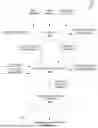
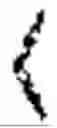
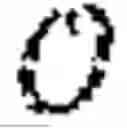



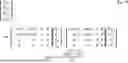
















Sources:
- United States Patent and Trademark Office - verify current appl. status at the USPTO↗
Similar patent applications:
- » 20150330209
OPTIMAL TRAJECTORY CONTROL FOR DIRECTIONAL DRILLING - » 20210230993
Trajectory control for directional drilling using formation evaluation measurement feedback - » 20210231829
Trajectory control for directional drilling using azimuthal gamma ray measurements - » 20210238926
Trajectory control for directional drilling - » 20230046043
Adaptive trajectory control for automated directional drilling - » 20220112769
Directional well trajectory control method based on drill pipe drive
Recent applications in this class:
- » 20260185440 2026-07-02
SYSTEMS AND METHODS FOR DETERMINING DOWNHOLE TOOL STATUS - » 20260185439 2026-07-02
Textural Analysis of Rock Samples for Input into Well Drilling Management and Reservoir Property Assessment - » 20260185438 2026-07-02
OFFSET WELL ANALYSIS FOR DERIVING NEXT WELL DRILLING PARAMETERS - » 20260176954 2026-06-25
INTEGRATED WELL CONSTRUCTION SYSTEM OPERATIONS - » 20260176953 2026-06-25
CONTROLLING DRILLING OF A WELLBORE BASED ON UPDATED BIT DEPTH - » 20260176952 2026-06-25
METHOD FOR THE ESTIMATION OF ROCK MECHANICAL PROPERTIES USING DOWNHOLE MEASUREMENTS OF BOREHOLE OVALITY - » 20260168372 2026-06-18
GEOSTEERING CONTROL FRAMEWORK - » 20260168371 2026-06-18
DRILLING SYSTEMS AND METHODS WITH ITERATIVE DRILLING PARAMETER TESTING - » 20260153022 2026-06-04
LOGGING TOOL INVERSION INTEGRATION - » 20260153021 2026-06-04
GEOSTEERING CONTROL FRAMEWORK