HYDRAULIC VALVE APPARATUS
US20260185545A1
2026-07-02
18/863,236
2023-05-16
Smart Summary: A hydraulic valve apparatus helps control the flow of oil from a hydraulic pump to a hydraulic device. It has a valve body with two oil passages that connect to different hydraulic pumps. There are also several spools that manage the flow to various hydraulic devices. These spools are positioned next to the pump ports in the valve body. Additionally, the oil passages can connect to each other through a special valve that allows for merging and separating the oil flow. 🚀 TL;DR
Abstract:
A hydraulic valve apparatus interposed between a hydraulic device and a hydraulic pump and controls supply of oil from the hydraulic pump to the hydraulic device by operating a spool provided in a valve body, in which the valve body includes two pump oil passages connected to separate hydraulic pumps via pump ports, and a plurality of linear motion spools separately provided corresponding to a plurality of linear motion hydraulic devices, the two pump oil passages are provided in the valve body to be arranged side by side along a same direction, the plurality of linear motion spools are connected to a portion located on one side of the pump port in the pump oil passages, and the two pump oil passages are connected to each other via a merging-separating oil passage including a merging-separating switching valve at an end portion located on one side of the pump port.
Assignee:
- KOMATSU LTD. 2,201 🇯🇵 Tokyo, Japan
Applicant:
Interested in similar patents?
Get notified when new applications in this technology area are published.
Classification:
F15B13/0402 » CPC main
Details of servomotor systems ; Valves for servomotor systems; Fluid distribution or supply devices characterised by their adaptation to the control of servomotors for use with a single servomotor; Valve members; Fluid interconnections therefor for linearly sliding valves, e.g. spool valves
F15B15/18 » CPC further
Fluid-actuated devices for displacing a member from one position to another; Gearing associated therewith Combined units comprising both motor and pump
F15B13/04 IPC
Details of servomotor systems ; Valves for servomotor systems; Fluid distribution or supply devices characterised by their adaptation to the control of servomotors for use with a single servomotor
Description
FIELD
The present invention relates to a hydraulic valve apparatus, and particularly to a hydraulic valve apparatus in which a plurality of linear motion spools corresponding to a linear motion hydraulic device such as a hydraulic cylinder is provided in a valve body.
BACKGROUND
In a hydraulic valve apparatus that controls supply of oil to a plurality of hydraulic cylinders, two pump oil passages are provided in a valve body, and each of the pump oil passages is connected to a hydraulic pump via a pump port. A linear motion spool for controlling supply of oil to the hydraulic cylinder is connected to each pump oil passage. A merging-separating switching valve is provided between the two pump oil passages. Such type of hydraulic valve apparatus has an advantage that oil supplied to one pump port and oil supplied to the other pump port can be merged and supplied to the hydraulic cylinder by connecting the two pump oil passages by the merging-separating switching valve (for example, refer to Patent Literature 1).
CITATION LIST
Patent Literature
-
- Patent Literature 1: Japanese Laid-open Patent Publication No. H03-140678 (Second drawing)
SUMMARY
Technical Problem
However, in the above-described hydraulic valve apparatus, oil having a large flow rate from the two hydraulic pumps that passed through the merging-separating switching valve passes through a portion of the pump oil passage to which the other linear motion spool is connected. Therefore, there is still room for improvement considering the pressure loss until oil is supplied to the target linear motion spool.
In view of the above circumstances, an object of the present invention is to provide a hydraulic valve apparatus capable of efficiently supplying a large amount of oil to a linear motion spool.
Solution to Problem
To attain the above object, according to the present invention, a hydraulic valve apparatus is interposed between a hydraulic device and a hydraulic pump and controls supply of oil from the hydraulic pump to the hydraulic device by operating a spool provided in a valve body. Further, the valve body includes two pump oil passages connected to separate hydraulic pumps via pump ports, and a plurality of linear motion spools separately provided corresponding to a plurality of linear motion hydraulic devices, the two pump oil passages are provided in the valve body to be arranged side by side along a same direction, the plurality of linear motion spools are connected to a portion located on one side of the pump port in the pump oil passages, and the two pump oil passages are connected to each other via a merging-separating oil passage including a merging-separating switching valve at an end portion located on one side of the pump port.
Advantageous Effects of Invention
According to the present invention, since oil that passed through the merging-separating switching valve does not merge with oil supplied from another hydraulic pump before reaching the target linear motion spool and the flow rate of oil passing through the pump oil passage is reduced, it is possible to efficiently supply a large amount of oil to the target linear motion spool while minimizing pressure loss.
BRIEF DESCRIPTION OF DRAWINGS
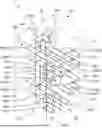
FIG. 1 is a perspective view conceptually illustrating the inside of a hydraulic valve apparatus according to an embodiment of the present invention.
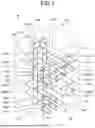
FIG. 2 is a perspective view conceptually illustrating the inside of the hydraulic valve apparatus illustrated in FIG. 1 from another angle.
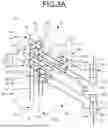
FIG. 3A is a perspective view corresponding to FIG. 1, illustrating only a configuration of a working equipment spool in the hydraulic valve apparatus illustrated in FIG. 1.
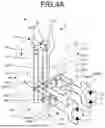
FIG. 3B is a perspective view corresponding to FIG. 2, illustrating only the configuration of the working equipment spool in the hydraulic valve apparatus illustrated in FIG. 1.
FIG. 4A is a perspective view corresponding to FIG. 1, illustrating only a configuration of a traveling spool in the hydraulic valve apparatus illustrated in FIG. 1.
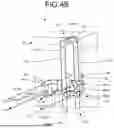
FIG. 4B is a perspective view corresponding to FIG. 2, illustrating only the configuration of the traveling spool in the hydraulic valve apparatus illustrated in FIG. 1.
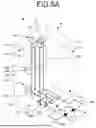
FIG. 5A is a perspective view corresponding to FIG. 1, illustrating only a configuration of a swing spool in the hydraulic valve apparatus illustrating in FIG. 1.
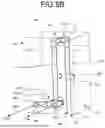
FIG. 5B is a perspective view corresponding to FIG. 2, illustrating only the configuration of the swing spool in the hydraulic valve apparatus illustrating in FIG. 1.
FIG. 6A is a side view illustrating a work machine to which the hydraulic valve apparatus illustrated in FIG. 1 is applied.
FIG. 6B is a rear view illustrating the work machine to which the hydraulic valve apparatus illustrated in FIG. 1 is applied.
FIG. 6C is a plan view illustrating the work machine to which the hydraulic valve apparatus illustrated in FIG. 1 is applied.
FIG. 7 is a plan view schematically illustrating a hydraulic circuit of the work machine to which the hydraulic valve apparatus illustrated in FIG. 1 is applied.
FIG. 8 is a front view of the hydraulic valve apparatus illustrated in FIG. 1 as viewed from the front.
FIG. 9 is a left side view of FIG. 8.
FIG. 10 is a right-side view of FIG. 8.
FIG. 11 is a rear view of FIG. 8.
FIG. 12 is a plan view of FIG. 8.
FIG. 13 is a bottom view of FIG. 8.
FIG. 14 is a cross-sectional view taken along a line X1-X1 in FIG. 8.
FIG. 15 is a cross-sectional view taken along a line X2-X2 in FIG. 8.
FIG. 16 is a cross-sectional view taken along a line X3-X3 in FIG. 8.
FIG. 17 is a cross-sectional view taken along a line X4-X4 in FIG. 8.
DESCRIPTION OF EMBODIMENTS
Hereinafter, a preferred embodiment of a hydraulic valve apparatus according to the present invention will be described in detail with reference to the accompanying drawings.
FIGS. 1 to 5B conceptually illustrate a hydraulic valve apparatus according to the embodiment of the present invention. As illustrated in FIGS. 6A, 6B, 6C, and 7, a hydraulic valve apparatus 1 exemplified herein is applied to a work machine including an upper swing body 3, a boom 4, and an arm 5 in an upper portion of a lower traveling body 2. The lower traveling body 2 includes crawler belts 6 on both sides and traveling hydraulic motors (rotary hydraulic device) 7 separately corresponding to respective crawler belt 6, and can travel by driving the crawler belts 6 via the traveling hydraulic motors 7. The upper swing body 3 is rotatably supported around a swing axis along a vertical direction with respect to the lower traveling body 2. A swing hydraulic motor (rotary hydraulic device) 8 is provided between the lower traveling body 2 and the upper swing body 3 so that the upper swing body 3 can be swung with respect to the lower traveling body 2. The traveling hydraulic motor 7 and the swing hydraulic motor 8 each include two supply ports 7a and 8a, and can rotate in both forward and reverse directions by changing an oil supply direction. A hydraulic pump 9 is mounted on the upper swing body 3. The hydraulic pump 9 is driven by an engine 10, and two hydraulic pumps 9 having the same maximum discharge flow rate are prepared in the upper swing body 3. In the illustrated example, the engine 10 is mounted on the left side in the rear portion of the upper swing body 3, and the two hydraulic pumps 9 are mounted on the right side in the rear portion of the upper swing body 3 while being adjacent to the engine 10. The boom 4 is rotatably supported by the upper swing body 3 via a base end portion by a support shaft along a horizontal direction. The arm 5 is rotatably supported at a distal end portion of the boom 4 via a base end portion thereof by a horizontal support shaft. A boom hydraulic cylinder (linear motion hydraulic device) 11 is provided between the upper swing body 3 and the boom 4, and an arm hydraulic cylinder (linear motion hydraulic device) 12 is provided between the boom 4 and the arm 5. Each of the boom hydraulic cylinder 11 and the arm hydraulic cylinder 12 is a single-rod double-acting type including a single piston rod. The boom hydraulic cylinder 11 is supported by the upper swing body 3 via a cylinder body 11a, and is supported by the boom 4 via a piston rod 11b. The arm hydraulic cylinder 12 is supported by the boom 4 via a cylinder body 12a, and is supported by the arm 5 via a piston rod 12b.
The hydraulic valve apparatus 1 is interposed between the traveling hydraulic motor 7, the swing hydraulic motor 8, the boom hydraulic cylinder 11, and the arm hydraulic cylinder 12 described above (hereinafter, the devices may be collectively referred to as hydraulic devices) and the hydraulic pump 9, controls the supply of oil from the hydraulic pump 9 to the hydraulic devices 7, 8, 11, and 12, and includes a valve body 20 as illustrated in FIG. 1. The valve body 20 is formed in a rectangular parallelepiped shape that is vertically long along the vertical direction in FIG. 1. In the following description, for convenience, in FIG. 1, a surface located obliquely on the right front of the valve body 20 is referred to as a front surface 20a, a surface parallel to the front surface 20a is referred to as a rear surface 20b, and two surfaces located on both sides are referred to as side surfaces 20c and 20d. In addition, in FIG. 1, a surface located upward is referred to as an upper surface 20e, and a surface located downward is referred to as a lower surface 20f.
As illustrated in FIGS. 1 to 5B and FIGS. 8 to 17, two pump oil passages 21A and 21B are provided in the valve body 20. The pump oil passages 21A and 21B extend linearly along the vertical direction of the valve body 20, respectively, and are formed to have the same inner diameter with each other. In the illustrated example, the two pump oil passages 21A and 21B are arranged side by side at symmetrical positions while being parallel to each other in a portion biased toward the rear surface 20b side. Although not clearly illustrated in the drawing, lower ends of the two pump oil passages 21A and 21B are both closed. When closing the lower ends of the pump oil passages 21A and 21B, a plug may be attached after the oil passage is once formed. Upper ends of the two pump oil passages 21A and 21B are opened to the upper surface 20e of the valve body 20. In the present embodiment, the pump oil passages 21A and 21B are connected to the individual hydraulic pumps 9 via pump ports 22A and 22B, respectively. The pump ports 22A and 22B linearly extend rearward from the pump oil passages 21A and 21B, and open on the rear surface 20b of the valve body 20. Although not clearly illustrated in the drawing, distances from the pump ports 22A and 22B to the hydraulic pump 9 are equal to each other.
In each of the pump oil passages 21A and 21B, two cylinder spool holes 23 are provided in each of the upper and lower sides at a portion located above a connection portion with the pump ports 22A and 22B. Further, each of the pump oil passages 21A and 21B is provided with a traveling spool hole 24 at a portion located below the connection portion with the pump ports 22A and 22B. Furthermore, in the pump oil passage 21A disposed on the left side when viewed from the front surface 20a of the valve body 20, one swing spool hole 25 is provided in a portion located below the traveling spool hole 24. The cylinder spool hole 23, the traveling spool hole 24, and the swing spool hole 25 linearly extend along the front-rear direction of the valve body 20, and communicate with the pump oil passages 21A and 21B by penetrating the corresponding pump oil passages 21A and 21B. Both ends of each of the spool holes 23, 24, and 25 are closed.
The cylinder spool hole 23 is provided with a cylinder port 23a at a portion close to the front surface 20a side of the valve body 20. The cylinder port 23a extends from a side portion facing the side surfaces 20c and 20d of the valve body 20 in each cylinder spool hole 23 toward the side surfaces 20c and 20d, respectively, bends toward the front surface 20a side, and is opened to the front surface 20a of the valve body 20. A boom rod oil passage 11Ha communicating with a rod chamber 11H of the boom hydraulic cylinder 11 is connected to the cylinder port 23a that opens to the upper right when viewed from the front surface 20a of the valve body 20. A boom bottom oil passage 11Ba that communicates with a bottom chamber 11B of the boom hydraulic cylinder 11 is connected to the cylinder port 23a that opens to the lower right when viewed from the front surface 20a of the valve body 20. Similarly, an arm bottom oil passage 12Ba that communicates with a bottom chamber 12B of the arm hydraulic cylinder 12 is connected to the cylinder port 23a that opens to the upper left when viewed from the front surface 20a of the valve body 20. An arm rod oil passage 12Ha that communicates with a rod chamber 12H of the arm hydraulic cylinder 12 is connected to the cylinder port 23a that opens to the lower left when viewed from the front surface 20a of the valve body 20.
The traveling spool hole 24 is provided with traveling motor ports 24a1 and 24a2 midway and at a portion adjacent to the front surface 20a side of the valve body 20, respectively. The traveling motor port 24a1 provided midway of the traveling spool hole 24 extends from an upper part facing the upper surface 20e of the valve body 20 toward the upper surface 20e, bends toward the front surface 20a side, and opens to the front surface 20a of the valve body 20. The traveling motor port 24a2 provided in a portion adjacent to the front surface 20a of the valve body 20 extends from lateral portions facing the side surfaces 20c and 20d of the valve body 20 toward the side surfaces 20c and 20d, bends toward the front surface 20a side, and opens to the front surface 20a of the valve body 20. The two traveling motor ports 24a1 and 24a2 that open to the left when viewed from the front surface 20a of the valve body 20 are connected to traveling hydraulic motor oil passages 24MA1 and 2 4MA2 that communicate with the supply port 7a of the traveling hydraulic motor 7 disposed on the right side of the lower traveling body 2, respectively.
The two traveling motor ports 24a1 and 24a2 that open to the right when viewed from the front surface 20a of the valve body 20 are connected to traveling hydraulic motor oil passages 24MB1 and 24MB2 that communicate with the supply port 7a of the traveling hydraulic motor 7 disposed on the left side of the lower traveling body 2, respectively. The left and right sides of each of the traveling hydraulic motors 7 have the same oil supply condition. That is, a passage length of the traveling hydraulic motor oil passages 24MA1+24MA2 connected to one traveling hydraulic motor 7 is equal to a passage length of the traveling hydraulic motor oil passages 24MB1+24MB2 connected to the other traveling hydraulic motor 7, and the inner diameters of the traveling hydraulic motor oil passages 24MA1, 24MA2, 24MB1, and 24MB2 are also equal to each other.
The swing spool hole 25 is provided with swing motor ports 25a1 and 25a2 midway and at a portion adjacent to the front surface 20a side of the valve body 20, respectively. The swing motor port 25a1 provided midway of the swing spool hole 25 extends from a lateral portion facing the right-side surface 20d when viewed from the front surface 20a of the valve body 20 toward the side surface 20d, bends toward the front surface 20a side, and opens to the front surface 20a of the valve body 20. The swing motor port 25a2 provided in a portion adjacent to the front surface 20a of the valve body 20 extends from a lateral portion facing the left side surface 20c when viewed from the front surface 20a of the valve body 20 toward the side surface 20c, bends toward the front surface 20a side of the valve body 20, and opens to the front surface 20a of the valve body 20. The two swing motor ports 25a1 and 25a2 are respectively connected to a swing hydraulic motor oil passage 25M communicating with the supply port 8a of the swing hydraulic motor 8.
Spools are separately disposed in the cylinder spool hole 23, the traveling spool hole 24, and the swing spool hole 25 described above. Although not illustrated in the drawings, the spool moves along an axial direction when a pilot pressure is applied from an individual EPC valve (electromagnetic proportional control valve). More specifically, a cylinder spool (linear motion spool) 33 disposed in the cylinder spool hole 23 moves along the axial direction to switch an intermittent state between the pump oil passages 21A and 21B and the cylinder port 23a, and configures a cylinder direction switching valve 33V with cylinder spool hole 23. Similarly, a traveling spool (rotation spool) 34 disposed in the traveling spool hole 24 moves along the axial direction to switch an intermittent state between the pump oil passages 21A and 21B and the traveling motor ports 24a1 and 24a2, and configures a traveling direction switching valve 34V with the traveling spool hole 24. A swing spool (rotation spool) 35 disposed in the swing spool hole 25 moves along the axial direction to switch an intermittent state between the pump oil passage 21A and the swing motor ports 25a1 and 25a2, and configures a swing direction switching valve 35V with the swing spool hole 25. Although not clearly illustrated in the drawing, the plurality of EPC valves corresponding to the spools 33, 34, and 35, respectively, are housed in a housing box EPCB provided on the rear surface 20b of the valve body 20.
A unit block 41 of a merging-separating switching unit 40 is disposed on the upper surface 20e of the valve body 20. The unit block 41 has a size capable of simultaneously covering the openings of the two pump oil passages 21A and 21B opened in the upper surface 20e of the valve body 20, and includes a merging-separating oil passage 42 and a valve spool hole 43 therein. The merging-separating oil passage 42 extends in the left-right direction inside the unit block 41, and then each end portion thereof is bent downward and opened to a lower surface of the unit block 41. The merging-separating oil passage 42 is connected to upper ends of the pump oil passages 21A and 21B via lower end openings. The valve spool hole 43 linearly extends along the front-rear direction, and communicates with the merging-separating oil passage 42 by penetrating midway of a portion extending in the left-right direction in the merging-separating oil passage 42. Both end portions of the valve spool hole 43 are closed. A merging-separating spool 44 is disposed in the valve spool hole 43. When the pilot pressure is applied from the EPC valve, the merging-separating spool 44 moves along the axial direction to switch an intermittent state of the merging-separating oil passage 42, and configures a merging-separating switching valve 44V with the valve spool hole 43.
The hydraulic valve apparatus 1 described above is mounted at a position in front of the engine 10 and substantially at the center in the left-right direction in the upper swing body 3 while the front surface 20a of the valve body 20 faces the front of the work machine and the upper surface 20e is upward. In the work machine including the hydraulic valve apparatus 1, when an operation lever (not illustrated) is operated, the corresponding spools 33, 34, 35, and 44 appropriately operate via the EPC valve, and the supply state of oil from the hydraulic pump 9 to the hydraulic devices 7, 8, 11, and 12 is changed. For example, when the pump oil passage 21B and the cylinder port 23a communicate with each other by the operation of the cylinder spool 33 disposed in the upper right portion as viewed from the front surface 20a of the valve body 20, oil from the hydraulic pump 9 is supplied to the rod chamber 11H of the boom hydraulic cylinder 11 via the pump oil passage 21B, the cylinder port 23a, and the boom rod oil passage 11Ha. As a result, the boom hydraulic cylinder 11 is retracted, and it is possible to cause the work machine to perform an operation of moving a distal end of the boom 4 downward. Similarly, when the pump oil passage 21A and the cylinder port 23a communicate with each other by the operation of the cylinder spool 33 disposed in the upper left portion as viewed from the front surface 20a of the valve body 20, oil from the hydraulic pump 9 is supplied to the bottom chamber 12B of the arm hydraulic cylinder 12 via the pump oil passage 21A, the cylinder port 23a, and the arm bottom oil passage 12Ba. As a result, the arm hydraulic cylinder 12 is extended, making it possible to perform an operation for pulling a distal end of the arm 5 toward the upper swing body 3 with respect to the working equipment.
Here, while the merging-separating oil passage 42 is blocked by the merging-separating spool 44, oil is supplied to the hydraulic cylinders 11 and 12 through one of the pump oil passages 21A and 21B. On the other hand, when the merging-separating oil passage 42 is brought into a communicating state by the merging-separating spool 44, oil supplied from one hydraulic pump 9 to one pump oil passage 21A and oil supplied from the other hydraulic pump 9 to the other pump oil passage 21B in the valve body 20 can be merged. As a result, oil can also be supplied from the other pump oil passage 21B to the cylinder port 23a connected to the one pump oil passage 21A, and the operations of the hydraulic cylinders 11 and 12 can be sped up. Moreover, according to the hydraulic valve apparatus 1 described above, the merging-separating switching valve 44V configured by the merging-separating spool 44 is provided in the merging-separating oil passage 42 connecting the upper end portion of each of the pump oil passages 21A and 21B, and the cylinder spool 33 is connected to a portion of each of the pump oil passages 21A and 21B located above connection portions with the pump ports 22A and 22B.
Therefore, oil that passed through the merging-separating switching valve 44V does not pass through the traveling spool 34 or the swing spool 35 disposed below the connection portion with the pump ports 22A and 22B before reaching the target cylinder spool 33. Furthermore, since oil that passed through the merging-separating switching valve 44V does not merge with oil supplied from the other hydraulic pump 9 before reaching the target cylinder spool 33, it is possible to prevent pressure loss in the oil passage. As a result, more oil can be efficiently supplied to the target cylinder spool 33 while pressure loss is minimized.
On the other hand, when the operation lever is operated to supply oil to the traveling hydraulic motor 7, the work machine can travel via the crawler belt 6, and when oil is supplied to the swing hydraulic motor 8, the upper swing body 3 can be swung with respect to the lower traveling body 2. According to the above-mentioned hydraulic valve apparatus 1, each of the pump oil passages 21A and 21B is provided with the traveling spool 34 at a portion located below the connection portion with the pump ports 22A and 22B. The passages of oil from the pump ports 22A and 22B to each traveling spool 34 are the same. In addition, the traveling spool 34 is first connected to any portion located below the pump ports 22A and 22B, and the other spools 33 and 35 are not interposed. That is, according to the hydraulic valve apparatus 1 described above, no problem is caused by the difference in the passage length of oil with respect to the two traveling spools 34, and no problem is caused by a difference in pressure loss. As a result, by operating the operation lever for straight travel, supply pressure and supply flow rate of oil to the two traveling spools 34 can be made equal, making it possible to improve the straightness of the work machine to which the invention is applied.
In the embodiment described above, four cylinder spools 33 provided corresponding to the boom 4 and the arm 5 of the work machine are exemplified as linear motion spools, a linear motion spool provided corresponding to other linear motion hydraulic devices (hydraulic cylinders) may be provided to configure the hydraulic valve apparatus. For example, in the work machine described above, a hydraulic valve apparatus provided with a bucket spool corresponding to a bucket hydraulic cylinder for operating a bucket 13 provided at a distal end portion of the arm 5 may be configured.
Further, in the above-described embodiment, the rotation spools 34 and 35 are provided corresponding to the hydraulic motors 7 and 8 which are rotary hydraulic devices, but the rotation spools 34 and 35 are not necessarily provided.
REFERENCE SIGNS LIST
-
- 1 HYDRAULIC VALVE APPARATUS
- 7 TRAVELING HYDRAULIC MOTOR
- 8 SWING HYDRAULIC MOTOR
- 9 HYDRAULIC PUMP
- 11 BOOM HYDRAULIC CYLINDER
- 12 ARM HYDRAULIC CYLINDER
- 20 VALVE BODY
- 21A, 21B PUMP OIL PASSAGE
- 22A, 22B PUMP PORT
- 16
- 33 CYLINDER SPOOL
- 34 TRAVELING SPOOL
- 35 SWING SPOOL
- 42 MERGING-SEPARATING OIL PASSAGE
- 44V MERGING-SEPARATING SWITCHING VALVE
Claims
1. A hydraulic valve apparatus that is interposed between a hydraulic device and a hydraulic pump and controls supply of oil from the hydraulic pump to the hydraulic device by operating a spool provided in a valve body, wherein
the valve body includes,
two pump oil passages connected to separate hydraulic pumps via pump ports, and
a plurality of linear motion spools separately provided corresponding to a plurality of linear motion hydraulic devices,
the two pump oil passages are provided in the valve body to be arranged side by side along a same direction,
the plurality of linear motion spools are connected to a portion located on one side of the pump ports in the pump oil passages, and
the two pump oil passages are connected to each other via a merging-separating oil passage including a merging-separating switching valve at an end portion located on one side of the pump ports.
2. The hydraulic valve apparatus according to claim 1, wherein
the valve body includes rotation spools corresponding to rotary hydraulic devices,
the pump ports are provided midway of the respective pump oil passages, and
the rotation spools are connected to a portion located on another side of the pump ports in the pump oil passages.
3. The hydraulic valve apparatus according to claim 2, wherein the rotation spools control supply of oil to a traveling hydraulic motor, two of the rotation spools are provided in the valve body, and the rotation spools are connected to separate pump oil passages without passing through other spools at positions at which distances from the pump ports are equal to each other.
4. A hydraulic valve apparatus that is interposed between a hydraulic device and a hydraulic pump and controls supply of oil from the hydraulic pump to the hydraulic device by operating a spool provided in a valve body, wherein
the valve body includes,
two pump oil passages connected to separate hydraulic pumps via pump ports,
a plurality of linear motion spools separately provided corresponding to a plurality of linear motion hydraulic devices, and
rotation spools corresponding to rotary hydraulic devices,
the two pump oil passages are provided in the valve body to be arranged side by side along a same direction,
the pump ports are provided midway of each of the pump oil passages,
the plurality of linear motion spools are connected to a portion located on one side of the pump ports in the pump oil passages,
the rotation spools are connected to a portion located on another side of the pump ports in the pump oil passages, and
the two pump oil passages are connected to each other via a merging-separating oil passage including a merging-separating switching valve at one end portion to which the plurality of linear motion spools are connected.
Images & Drawings included:




Sources:
- United States Patent and Trademark Office - verify current appl. status at the USPTO↗
Similar patent applications:
- » 20250327276
HYDRAULIC VALVE APPARATUS - » 20050284526
Electro-hydraulic valve apparatuses - » 20120247864
Solenoid valve device, hydraulic apparatus equipped with the solenoid valve device, and hydraulic power steering system equipped with the hydraulic apparatus - » 20200141425
HYDRAULIC PUMP VALVE APPARATUS FOR A PRESSING TOOL - » 10716035
Control apparatus of hydraulic valve for holding load - » 10636119
Bottom valve apparatus of hydraulic shock absorber - » 20120280162
Hydraulic pressure valve apparatus - » 10636080
Bottom valve apparatus of hydraulic shock absorber - » 20090242056
Hydraulic control valve apparatus for automatic transmission - » 20220299046
Spool valve and hydraulic apparatus including the same
Recent applications in this class:
- » 20260002550 2026-01-01
VALVE SECTION AND HYDRAULIC VALVE ASSEMBLY - » 20250361886 2025-11-27
TECHNOLOGIES FOR VARIABLE RETARDER CONTROL - » 20250137471 2025-05-01
MODULAR HYDRAULIC MANIFOLD - » 20250129803 2025-04-24
VACUUM PRODUCTION DEVICE WITH DUAL-FUNCTION CONTROL SPOOL AND HANDLING DEVICE COMPRISING SUCH A VACUUM PRODUCTION DEVICE - » 20250084874 2025-03-13
FIXED DISPLACEMENT HYDRAULIC PUMP MATCH FLOW DEMAND CONTROL SYSTEM - » 20240376912 2024-11-14
SHUTTLE VALVE, DIRECTIONAL CONTROL VALVE MODULE, AND PNEUMATIC OR HYDRAULIC ASSEMBLY - » 20240255008 2024-08-01
HYDRAULIC CONTROL SYSTEM AND METHOD WITH ELECTRO-PROPORTIONAL PRESSURE VALVE AND INTEGRAL CHECK - » 20240117824 2024-04-11
ADJUSTABLE LOAD PRESSURE COMPENSATION BALANCING SYSTEM, END COVER AND COUNTERBALANCE VALVE - » 20240035493 2024-02-01
VALVE AND AIRCRAFT - » 20240035492 2024-02-01
VALVE AND AIRCRAFT
Recent applications for this Assignee:
- » 20260185830 2026-07-02
CURRENT TOPOGRAPHY DATA CREATION SYSTEM FOR WORK SITE AND CURRENT TOPOGRAPHY DATA CREATION METHOD FOR WORK SITE - » 20260185329 2026-07-02
WORK MACHINE - » 20260177081 2026-06-25
HYDRAULIC VALVE AND HYDRAULIC CIRCUIT - » 20260176844 2026-06-25
DISPLAY SYSTEM OF WORK SITE AND DISPLAY METHOD OF WORK SITE - » 20260168199 2026-06-18
DETERMINATION SYSTEM OF WORK SITE AND DETERMINATION METHOD OF WORK SITE - » 20260161181 2026-06-11
MANAGEMENT SYSTEM OF UNMANNED DUMP TRUCK AND MANAGEMENT METHOD OF UNMANNED DUMP TRUCK - » 20260126812 2026-05-07
MANAGEMENT SYSTEM FOR UNMANNED VEHICLE AND MANAGEMENT METHOD FOR UNMANNED VEHICLE - » 20260106533 2026-04-16
VOLTAGE CONVERSION SYSTEM, CIVIL ENGINEERING MACHINE SYSTEM, CONTROL METHOD, AND NON-TRANSITORY COMPUTER STORAGE MEDIUM - » 20260098393 2026-04-09
CONTROL DEVICE, CONTROL METHOD, AND WORK MACHINE - » 20260080728 2026-03-19
DATA COLLECTION DEVICE AND DATA COLLECTION METHOD