VARIABLE-SPEED BUFFER OIL CYLINDER
US20260185585A1
2026-07-02
19/131,743
2022-12-13
Smart Summary: A variable-speed buffer oil cylinder has a special design that includes a housing and a moving part called a piston. Inside the housing, there is an opening at the top and a needle that can change size at the bottom. The piston has a part that moves up and down, separating the inside into two chambers filled with oil. There is a channel in the piston that connects these two chambers, and the needle works with this channel to control the flow of oil. Additionally, a check valve is included to ensure the oil moves in the right direction. 🚀 TL;DR
Abstract:
A variable-speed buffer oil cylinder includes a housing and a piston. The housing is configured to have an inner cavity and provided with an opening at a top of the housing, where a variable-diameter oil needle vertically arranged towards the opening is disposed on a bottom surface of the inner cavity. The piston includes a plunger movably fitted with the inner cavity and a piston rod connected to the plunger and extending out of the opening. The plunger divides the inner cavity into an upper oil chamber and a lower oil chamber. The piston is provided with a first oil channel in communication with the upper oil chamber and the lower oil chamber, the variable-diameter oil needle cooperates with the first oil channel, and a check valve is arranged on the plunger.
Applicant:
Interested in similar patents?
Get notified when new applications in this technology area are published.
Classification:
F16F9/486 » CPC main
Springs, vibration-dampers, shock-absorbers, or similarly-constructed movement-dampers using a fluid or the equivalent as damping medium; Details; Arrangements for providing different damping effects at different parts of the stroke comprising a pin or stem co-operating with an aperture, e.g. a cylinder-mounted stem co-operating with a hollow piston rod
E05F3/12 » CPC further
Closers or openers with braking devices, e.g. checks; Construction of pneumatic or liquid braking devices with liquid piston brakes Special devices controlling the circulation of the liquid, e.g. valve arrangement
E05F3/20 » CPC further
Closers or openers with braking devices, e.g. checks; Construction of pneumatic or liquid braking devices in hinges
F16F9/182 » CPC further
Springs, vibration-dampers, shock-absorbers, or similarly-constructed movement-dampers using a fluid or the equivalent as damping medium using liquid only; using a fluid of which the nature is immaterial; Devices with one or more members, e.g. pistons, vanes, moving to and fro in chambers and using throttling effect involving only straight-line movement of the effective parts with a closed cylinder and a piston separating two or more working spaces therein comprising a hollow piston rod
F16F9/19 » CPC further
Springs, vibration-dampers, shock-absorbers, or similarly-constructed movement-dampers using a fluid or the equivalent as damping medium using liquid only; using a fluid of which the nature is immaterial; Devices with one or more members, e.g. pistons, vanes, moving to and fro in chambers and using throttling effect involving only straight-line movement of the effective parts with a closed cylinder and a piston separating two or more working spaces therein with a single cylinder and of single-tube type
F16F9/3214 » CPC further
Springs, vibration-dampers, shock-absorbers, or similarly-constructed movement-dampers using a fluid or the equivalent as damping medium; Details; Constructional features of pistons
F16F9/34 » CPC further
Springs, vibration-dampers, shock-absorbers, or similarly-constructed movement-dampers using a fluid or the equivalent as damping medium; Details Special valve constructions ; Shape or construction of throttling passages
F16F9/368 » CPC further
Springs, vibration-dampers, shock-absorbers, or similarly-constructed movement-dampers using a fluid or the equivalent as damping medium; Details; Special sealings, including sealings or guides for piston-rods Sealings in pistons
F16F13/007 » CPC further
Units comprising springs of the non-fluid type as well as vibration-dampers, shock-absorbers, or fluid springs comprising both a wound spring and a damper, e.g. a friction damper the damper being a fluid damper
E05Y2201/212 » CPC further
Constructional elements; Accessories therefore; Brakes; Disengaging means, e.g. clutches; Holders, e.g. locks; Stops; Accessories therefore; Brakes Buffers
E05Y2900/132 » CPC further
Application of doors, windows, wings or fittings thereof for buildings or parts thereof characterised by the type of wing Doors
F16F2222/12 » CPC further
Special physical effects, e.g. nature of damping effects Fluid damping
F16F2228/066 » CPC further
Functional characteristics, e.g. variability, frequency-dependence; Stiffness Variable stiffness
F16F2230/02 » CPC further
Purpose; Design features Surface features, e.g. notches or protuberances
F16F2230/30 » CPC further
Purpose; Design features Sealing arrangements
F16F2230/36 » CPC further
Purpose; Design features Holes, slots or the like
F16F2232/08 » CPC further
Nature of movement Linear
F16F2234/02 » CPC further
Shape cylindrical
F16F9/48 IPC
Springs, vibration-dampers, shock-absorbers, or similarly-constructed movement-dampers using a fluid or the equivalent as damping medium; Details Arrangements for providing different damping effects at different parts of the stroke
F16F9/18 IPC
Springs, vibration-dampers, shock-absorbers, or similarly-constructed movement-dampers using a fluid or the equivalent as damping medium using liquid only; using a fluid of which the nature is immaterial; Devices with one or more members, e.g. pistons, vanes, moving to and fro in chambers and using throttling effect involving only straight-line movement of the effective parts with a closed cylinder and a piston separating two or more working spaces therein
F16F9/32 IPC
Springs, vibration-dampers, shock-absorbers, or similarly-constructed movement-dampers using a fluid or the equivalent as damping medium Details
F16F9/36 IPC
Springs, vibration-dampers, shock-absorbers, or similarly-constructed movement-dampers using a fluid or the equivalent as damping medium; Details Special sealings, including sealings or guides for piston-rods
F16F13/00 IPC
Units comprising springs of the non-fluid type as well as vibration-dampers, shock-absorbers, or fluid springs
Description
CROSS-REFERENCE TO RELATED APPLICATIONS
This is a U.S. National Stage of International Patent Application No. PCT/CN 2022/138675 filed on Dec. 13, 2022, which claims priority to Chinese Patent Application No. 202211519861.1 filed on Nov. 30, 2022. All of the aforementioned applications are hereby incorporated by reference in their entireties.
TECHNICAL FIELD
The present disclosure relates to the field of hydraulic oil cylinders, and in particular, to a variable-speed buffer oil cylinder.
BACKGROUND
Currently, self-closing hinges and pivots on the market are often used cooperatively on hydraulic buffer oil cylinders. For example, the self-resetting oil cylinder used in Chinese Patent CN210888511U exhibits a uniform axial motion of a piston rod portion under the same external force applied to a reset part, which makes a matching product in a uniform speed closing state during automatic closing. Due to closing at a uniform and slow speed, a locking force is insufficient when a door leaf is closed, and the door leaf cannot be locked smoothly. In addition, the door leaf is closed slowly throughout the entire process, leading to too long closing time.
SUMMARY
The present disclosure aims to solve at least one of the technical problems in the existing technology. To this end, a variable-speed buffer oil cylinder capable of achieving a non-uniform motion is proposed, such that a matching door leaf achieves the non-uniform motion when closed, providing convenience to users.
The technical solution used by the present disclosure to solve the technical problem is as follows.
A variable-speed buffer oil cylinder includes a housing and a piston. The housing is configured to have an inner cavity and provided with an opening at a top of the housing, where a variable-diameter oil needle vertically arranged towards the opening is disposed on a bottom surface of the inner cavity. The piston includes a plunger movably fitted with the inner cavity and a piston rod connected to the plunger and extending out of the opening. The plunger divides the inner cavity into an upper oil chamber and a lower oil chamber. The piston is provided with a first oil channel in communication with the upper oil chamber and the lower oil chamber, the variable-diameter oil needle cooperates with the first oil channel, and a check valve is arranged on the plunger.
According to an embodiment of the present disclosure, the variable-speed buffer oil cylinder has at least the following beneficial effects. According to different door leaf structures, when the door leaf is opened, the piston can be driven to move upward or downward by the piston rod. The following assumes that the piston is driven to move upward by the piston rod when the door leaf is opened. In this case, the check valve should be oriented to allow flow from the upper oil chamber to the lower oil chamber, such that the hydraulic oil in the upper oil chamber mainly flows to the lower oil chamber through the check valve. At this stage, the piston is positioned at an upper part of the inner cavity of the housing. When the door is closed, the reset part on the door leaf provides an external force to push the piston rod to move downward, thereby driving the plunger to move downward. The hydraulic oil in the lower oil chamber flows to the upper oil chamber from a gap between the variable-diameter oil needle and a port of the first oil channel. Since the diameter of the variable-diameter oil needle is variable, the gap between the variable-diameter oil needle and the port of the first oil channel also varies. This configuration enables a non-uniform motion, such that the matching door leaf achieves the non-uniform motion when closed, providing convenience to users. For example, it can achieve a faster closing speed at the beginning stage, a slower closing speed at the middle stage, thereby realizing a buffering effect. When approaching complete closure, the door leaf can be closed slightly faster, giving the door leaf an impact force to close and lock smoothly. Alternatively, the door leaf may be closed faster at the beginning closing stage, slightly slower at the middle stage, and then much slower at the final stage, to achieve silent closing of the door leaf, and reduce the closing time, making it less likely for the indoor temperature to be lost, thus achieving an energy-saving effect. For these two cases, specific embodiments are provided below for illustration.
If the door leaf drives the piston to move downward through the piston rod when opening the door, the direction of the check valve is opposite. The hydraulic oil in the lower oil chamber mainly flows from the check valve to the upper oil chamber. In this case, the piston is positioned at a lower part of the inner cavity of the housing. When closing the door, the reset part on the door leaf provides an external force to push the piston rod to move upward, thereby driving the plunger to move upward. The hydraulic oil in the upper oil chamber flows to the lower oil chamber from the gap between the variable-diameter oil needle and the port of the first oil channel. Since the diameter of the variable-diameter oil needle is variable, the gap between the variable-diameter oil needle and the port of the first oil channel also varies, which can also achieve the non-uniform motion.
According to some embodiments of the present disclosure, the first oil channel includes a blind hole oil channel extending from a bottom surface of the plunger to an interior of the piston rod and a side hole channel provided on a side of the piston rod and in communication with the blind hole oil channel; and the variable-diameter oil needle cooperates with the blind hole oil channel.
Beneficially, the first oil channel is designed with a reasonable structure, which facilitates cooperation with the variable-diameter oil needle. When the piston moves downward, the hydraulic oil in the lower oil chamber flows to the blind hole oil channel from the gap between the variable-diameter oil needle and a port of the blind hole oil channel, and then flows to the upper oil chamber through the side hole channel.
According to some embodiments of the present disclosure, the plunger is provided with a convex ring step that narrows the port of the blind hole oil channel, and the convex ring step is provided with a through hole that allows the variable-diameter oil needle to enter the blind hole oil channel.
Beneficially, the convex ring step enables the port of the blind hole oil channel to reduce, which can improve the oil pressure of the pressurized oil chamber and thus improve the buffering effect. In addition, due to the small size of the through hole in the convex ring step, the flow of the hydraulic oil can be controlled more accurately according to the diameter change of the variable-diameter oil needle when the piston is moving, to achieve the speed control based on the change of the variable-diameter oil needle.
According to some embodiments of the present disclosure, the check valve is oriented to allow flow from the upper oil chamber to the lower oil chamber, and a diameter of the variable-diameter oil needle increases from top to bottom.
Beneficially, when closing the door, the reset part on the door leaf provides an external force to push the piston rod to move downward, thereby driving the plunger to move downward. The gap between the variable-diameter oil needle and the port of the blind hole oil channel also decreases. As a result, the door leaf may be closed faster at the beginning closing stage, slightly slower at the middle stage, and then much slower at the final stage, to achieve silent closing of the door leaf, and reduce the closing time, making it less likely for the indoor temperature to be lost, thus achieving an energy-saving effect.
According to some embodiments of the present disclosure, the variable-diameter oil needle is divided into an upper section and a lower section, and an oil channel ring groove is provided on a periphery of the lower section.
Beneficially, the gap between the variable-diameter oil needle and the port of the blind hole oil channel decreases and then increases. As a result, it can achieve a faster closing speed at the beginning stage, a slower closing speed at the middle stage, thereby realizing a buffering effect. When approaching complete closure, the door leaf can be closed slightly faster, giving the door leaf an impact force to close and lock smoothly.
According to some embodiments of the present disclosure, the opening is provided with a first sealing ring, and the first sealing ring is in sliding fit with the piston rod.
Beneficially, the arrangement of the first sealing ring achieves a sealing effect, preventing the hydraulic oil from leaking from the gap between the opening and the piston rod.
According to some embodiments of the present disclosure, a sealing ring groove is provided on a periphery of the plunger, and a second sealing ring is provided on the sealing ring groove.
Beneficially, the arrangement of the second sealing ring provides a sealing effect, preventing the hydraulic oil from passing through the gap between the plunger and the inner cavity.
According to some embodiments of the present disclosure, an oil passing hole in communication with a bottom surface and a side surface of the sealing ring groove is provided on one of a top surface and a bottom surface of the plunger, an oil return channel in communication with the side surface of the sealing ring groove is provided on another one of the top surface and the bottom surface of the plunger, and the sealing ring groove, the second sealing ring, the oil passing hole, and the oil return channel form the check valve.
Beneficially, due to this arrangement of the check valve, no additional parts are required. Assuming that the oil passing hole is provided at the bottom surface of the plunger and the oil return channel is provided at the top surface of the plunger, when the piston moves upward, the hydraulic oil in the upper oil chamber enters from the oil return channel, to push the second sealing ring to slide downward, and the hydraulic oil can enter the oil passing hole through the bottom surface of the sealing ring groove and then flow into the lower oil chamber. When the piston moves downward, the hydraulic oil in the lower oil chamber enters from the oil passing hole, to push the second sealing ring to slide upward, thereby blocking the oil return channel on the side surface of the sealing ring groove. As a result, the hydraulic oil cannot pass through.
According to some embodiments of the present disclosure, the check valve includes a valve cavity disposed in the plunger and a valve core disposed in the valve cavity.
Beneficially, through this arrangement, the check valve is simple in structure and operates stably.
According to some embodiments of the present disclosure, the lower oil chamber is provided with a return spring that is sleeved over the variable-diameter oil needle.
Beneficially, when the external force is removed, the return spring pushes the piston to move upward for resetting. It is to be noted that the driving force of the reset part matched with the hydraulic oil cylinder on the door leaf is much greater, and a spring force of the return spring will hardly affect the power output during door closing.
BRIEF DESCRIPTION OF DRAWINGS
The above and/or additional aspects and advantages of the present disclosure will become apparent and readily understood from the description of the embodiments in conjunction with the accompanying drawings, in which:
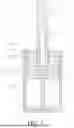
FIG. 1 is a schematic structural diagram according to a first embodiment of the present disclosure;
FIG. 2 is a schematic structural diagram of a piston shown in FIG. 1;
FIG. 3 is a schematic structural diagram according to a second embodiment of the present disclosure;
FIG. 4 is a schematic structural diagram of a plunger shown in FIG. 3; and
FIG. 5 is a schematic structural diagram according to a third embodiment of the present disclosure.
Reference numerals: housing 100; inner cavity 110; Opening 120; variable-diameter oil needle 130; piston 140; plunger 150; piston rod 160; upper oil chamber 170; lower oil chamber 180; blind hole oil channel 190; side hole channel 200; convex ring step 210; through hole 220; oil channel ring groove 230; first sealing ring 240; sealing ring groove 250; second sealing ring 260; oil passing hole 270; oil return channel 280; valve cavity 290; valve core 300; return spring 310.
DETAILED DESCRIPTION
Embodiments of the present disclosure are described in detail below, the examples of which embodiment are shown in the accompanying drawings. The same or similar numerals throughout indicate the same or similar elements or elements with same or similar function. The embodiments described with reference to the accompanying drawings are exemplary, which are merely used to explain the present disclosure, instead of being understood as a limitation to the present disclosure.
In the description of the present disclosure, it is to be understood that if involving in orientation descriptions, orientation or position relationships indicated by terms such as “upper”, “lower”, “front”, “rear”, “left”, and “right”, and the like are based on the orientation or position relationships as shown in the accompanying drawings, for ease of describing the present disclosure and simplifying the description only, rather than indicating or implying that the mentioned apparatus or element necessarily has a particular orientation and must be constructed and operated in the particular orientation. Therefore, these terms should not be understood as limitations to the present disclosure.
In the description of the present disclosure, the meaning of “several” is one or more, the meaning of “a plurality” is two or more, “greater than”, “less than”, “exceeding” and the like are understood as excluding the specified number, and “above”, “below”, “within” and the like are understood as including the specified number. The described “first” and “second” are merely used for distinguishing technical features, instead of being understood as indicating or implying relative importance or impliedly indicating the quantity of the showed technical features or impliedly indicating the precedence relationship of the showed technical features.
In the description of the present disclosure, it is also noted that, unless specific regulation and limitation otherwise, terms “mount”, “join” and “connect” should be generally understood, for example, may a fixed connection, or a detachable connection, or an integrated connection, may a mechanical connection or an electric connection, may be a direct connection or an indirect connection through an intermediation, and may be an internal connection of two elements. Those of ordinary skill in the art may understand the specific meaning of the terms in the present disclosure according to specific conditions.
A variable-speed buffer oil cylinder according to an embodiment of the present disclosure is described below with reference to the accompanying drawings.
Referring to FIGS. 1-2, a variable-speed buffer oil cylinder includes a housing 100 and a piston 140.
The housing 100 is configured to have an inner cavity 110 and provided with an opening 120 at a top of the housing, and a variable-diameter oil needle 130 vertically arranged towards the opening 120 is disposed on a bottom surface of the inner cavity 110. The piston 140 includes a plunger 150 movably fitted with the inner cavity 110 and a piston rod 160 connected to the plunger 150 and extending out of the opening 120. The plunger 150 divides the inner cavity 110 into an upper oil chamber 170 and a lower oil chamber 180. The piston 140 is provided with a first oil channel in communication with the upper oil chamber 170 and the lower oil chamber 180, the variable-diameter oil needle 130 cooperates with the first oil channel, and a check valve is arranged on the plunger 150. According to different door leaf structures, when the door leaf is opened, the piston 140
can be driven to move upward or downward by the piston rod 160. The following assumes that the piston 140 is driven to move upward by the piston rod 160 when the door leaf is opened. In this case, the check valve should be oriented to allow flow from the upper oil chamber 170 to the lower oil chamber, such that the hydraulic oil in the upper oil chamber 170 mainly flows to the lower oil chamber 180 through the check valve. At this stage, the piston 140 is positioned at an upper part of the inner cavity 110 of the housing 100. When the door is closed, the reset part on the door leaf provides an external force to push the piston rod 160 to move downward, thereby driving the plunger 150 to move downward. The hydraulic oil in the lower oil chamber 180 flows to the upper oil chamber 170 from a gap between the variable-diameter oil needle 130 and a port of the first oil channel. Since the diameter of the variable-diameter oil needle 130 is variable, the gap between the variable-diameter oil needle 130 and the port of the first oil channel also varies. This configuration enables a non-uniform motion, such that the matching door leaf achieves the non-uniform motion when closed, providing convenience to users. For example, it can achieve a faster closing speed at the beginning stage, a slower closing speed at the middle stage, thereby realizing a buffering effect. When approaching complete closure, the door leaf can be closed slightly faster, giving the door leaf an impact force to close and lock smoothly. Alternatively, the door leaf may be closed faster at the beginning closing stage, slightly slower at the middle stage, and then much slower at the final stage, to achieve silent closing of the door leaf, and reduce the closing time, making it less likely for the indoor temperature to be lost, thus achieving an energy-saving effect. For these two cases, specific embodiments are provided below for illustration.
If the door leaf drives the piston 140 to move downward through the piston rod 160 when opening the door, the direction of the check valve is opposite. The hydraulic oil in the lower oil chamber 180 mainly flows from the check valve to the upper oil chamber 170. In this case, the piston 140 is positioned at a lower part of the inner cavity 110 of the housing 100. When closing the door, the reset part on the door leaf provides an external force to push the piston rod 160 to move upward, thereby driving the plunger 150 to move upward. The hydraulic oil in the upper oil chamber 170 flows to the lower oil chamber 180 from the gap between the variable-diameter oil needle 130 and the port of the first oil channel. Since the diameter of the variable-diameter oil needle 130 is variable, the gap between the variable-diameter oil needle 130 and the port of the first oil channel also varies, which can also achieve the non-uniform motion.
Specifically, as shown in FIG. 2, the first oil channel includes a blind hole oil channel 190 extending from the bottom surface of the plunger 150 to an interior of the piston rod 160, and a side hole channel 200 provided on a side of the piston rod 160 and in communication with the blind hole oil channel 190. The variable-diameter oil needle 130 cooperates with the blind hole oil channel 190. The first oil channel is designed with a reasonable structure, which facilitates cooperation with the variable-diameter oil needle 130. When the piston 140 moves downward, the hydraulic oil in the lower oil chamber 180 flows to the blind hole oil channel 190 from the gap between the variable-diameter oil needle 130 and a port of the blind hole oil channel 190, and then flows to the upper oil chamber 170 through the side hole channel 200.
In addition, the plunger 150 is provided with a convex ring step 210 that narrows the port of the blind hole oil channel 190, and the convex ring step 210 is provided with a through hole 220 that allows the variable-diameter oil needle 130 to enter the blind hole oil channel 190. The convex ring step 210 enables the port of the blind hole oil channel 190 to reduce, which can improve the oil pressure of the pressurized oil chamber and thus improve the buffering effect. In addition, due to the small size of the through hole 220 in the convex ring step 210, the flow of the hydraulic oil can be controlled more accurately according to the diameter change of the variable-diameter oil needle 130 when the piston 140 is moving, to achieve the speed control based on the change of the variable-diameter oil needle 130.
As shown in FIG. 1, in the first embodiment of the present disclosure, the check valve is oriented to allow flow from the upper oil chamber 170 to the lower oil chamber 180, and the diameter of the variable-diameter oil needle 130 increases from top to bottom. Thus, when closing the door, the reset part on the door leaf provides an external force to push the piston rod 160 to move downward, thereby driving the plunger 150 to move downward. The gap between the variable-diameter oil needle 130 and the port of the blind hole oil channel 190 also decreases. As a result, the door leaf may be closed faster at the beginning closing stage, slightly slower at the middle stage, and then much slower at the final stage, to achieve silent closing of the door leaf, and reduce the closing time, making it less likely for the indoor temperature to be lost, thus achieving an energy-saving effect.
As shown in FIG. 3, in the second embodiment of the present disclosure, the variable-diameter oil needle 130 is divided into an upper section and a lower section, and an oil channel ring groove 230 is provided on a periphery of the lower section. Thus, the gap between the variable-diameter oil needle 130 and the port of the blind hole oil channel 190 decreases and then increases. As a result, it can achieve a faster closing speed, a slower closing speed at the middle stage, thereby realizing a buffering effect. When approaching complete closure, the door leaf can be closed slightly faster, giving the door leaf an impact force to close and lock smoothly.
It can be understood that, as shown in FIG. 2 and FIG. 4, the opening 120 is provided with a first sealing ring 240, and the first sealing ring 240 is in sliding fit with the piston rod 160. The arrangement of the first sealing ring 240 achieves a sealing effect, preventing the hydraulic oil from leaking from the gap between the opening 120 and the piston rod 160.
In addition, a sealing ring groove 250 is provided on a periphery of the plunger 150, and a second sealing ring 260 is provided on the sealing ring groove 250. The arrangement of the second sealing ring 260 provides a sealing effect, preventing the hydraulic oil from passing through the gap between the plunger 150 and the inner cavity 110.
Further, an oil passing hole 270 in communication with a bottom surface and a side surface of the sealing ring groove 250 is provided on one of a top surface and a bottom surface of the plunger 150, an oil return channel 280 in communication with the side surface of the sealing ring groove 250 is provided on another one of the top surface and the bottom surface of the plunger 150, and the sealing ring groove 250, the second sealing ring 260, the oil passing hole 270, and the oil return channel 280 form the check valve. Due to this arrangement of the check valve, no additional parts are required. As shown in FIG. 3, assuming that the oil passing hole 270 is provided at the bottom surface of the plunger 150 and the oil return channel 280 is provided at the top surface of the plunger 150, when the piston 140 moves upward, the hydraulic oil in the upper oil chamber 170 enters from the oil return channel 280, to push the second sealing ring 260 to slide downward, and the hydraulic oil can enter the oil passing hole 270 through the bottom surface of the sealing ring groove 250 and then flow into the lower oil chamber 180. When the piston 140 moves downward, the hydraulic oil in the lower oil chamber 180 enters from the oil passing hole 270, to push the second sealing ring 260 to slide upward, thereby blocking the oil return channel 280 on the side surface of the sealing ring groove 250. As a result, the hydraulic oil cannot pass through, as shown in FIG. 1. It is worth mentioning that at least one oil passing hole 270 and at least one oil return channel 280 are provided, to ensure the function of the check valve and prevent the failure of the check valve due to that one of the oil passing holes 270 or oil return channels 280 gets blocked.
As shown in FIG. 5, in the third embodiment of the present disclosure, the check valve includes a valve cavity 290 disposed in the plunger 150 and a valve core 300 disposed in the valve cavity 290. Through this arrangement, the check valve is simple in structure and operates stably.
Preferably, the lower oil chamber 180 is provided with a return spring 310 that is sleeved over the variable-diameter oil needle 130. Thus, when the external force is removed, the return spring 310 pushes the piston 140 to move upward for resetting. It is to be noted that the driving force of the reset part matched with the hydraulic oil cylinder on the door leaf is much greater, and a spring force of the return spring 310 will hardly affect the power output during door closing.
In the description of the specification, the descriptions with reference to the terms such as “an embodiment”, “some embodiments”, “schematic embodiment”, “example”, “specific example”, or “some examples” means that the specific characteristics, structures, materials or features described in combination with the embodiment(s) or example(s) are included in at least one embodiment or example of the present application. In this specification, the schematic expression of the above terms does not necessarily refer to the same embodiment or example. Moreover, the described specific characteristics, structures, materials or features may be combined in one or more embodiments or examples in a suitable manner.
The embodiments of the present disclosure are described in detail above in combination with the accompanying drawings. However, the present disclosure is not limited the above embodiments. Various changes may also be made within the knowledge scope of those having ordinary skills in the art without departing from the gist of the present disclosure.
Claims
1. A variable-speed buffer oil cylinder, comprising:
a housing configured to have an inner cavity and provided with an opening at a top of the housing, wherein a variable-diameter oil needle vertically arranged towards the opening is disposed on a bottom surface of the inner cavity; and
a piston comprising a plunger movably fitted with the inner cavity and a piston rod connected to the plunger and extending out of the opening, wherein the plunger divides the inner cavity into an upper oil chamber and a lower oil chamber, wherein the piston is provided with a first oil channel in communication with the upper oil chamber and the lower oil chamber, wherein the variable-diameter oil needle cooperates with the first oil channel, and wherein a check valve is arranged on the plunger.
2. The variable-speed buffer oil cylinder according to claim 1, wherein the first oil channel comprises a blind hole oil channel extending from a bottom surface of the plunger to an interior of the piston rod and a side hole channel provided on a side of the piston rod and in communication with the blind hole oil channel, and wherein the variable-diameter oil needle cooperates with the blind hole oil channel.
3. The variable-speed buffer oil cylinder according to claim 2, wherein the plunger is provided with a convex ring step that narrows a port of the blind hole oil channel, and wherein the convex ring step is provided with a through hole that allows the variable-diameter oil needle to enter the blind hole oil channel.
4. The variable-speed buffer oil cylinder according to claim 1, wherein the check valve is oriented to allow flow from the upper oil chamber to the lower oil chamber, and wherein a diameter of the variable-diameter oil needle increases from top to bottom.
5. The variable-speed buffer oil cylinder according to claim 4, wherein the variable-diameter oil needle is divided into an upper section and a lower section, and wherein an oil channel ring groove is provided on a periphery of the lower section.
6. The variable-speed buffer oil cylinder according to claim 1, wherein the opening is provided with a first sealing ring, and wherein the first sealing ring is in sliding fit with the piston rod.
7. The variable-speed buffer oil cylinder according to claim 1, wherein a sealing ring groove is provided on a periphery of the plunger, and wherein a second sealing ring is provided on the sealing ring groove.
8. The variable-speed buffer oil cylinder according to claim 7, wherein an oil passing hole in communication with a bottom surface and a side surface of the sealing ring groove is provided on one of a top surface or a bottom surface of the plunger, wherein an oil return channel in communication with the side surface of the sealing ring groove is provided on another one of the top surface or the bottom surface of the plunger, and wherein the sealing ring groove, the second sealing ring, the oil passing hole, and the oil return channel form the check valve.
9. The variable-speed buffer oil cylinder according to claim 7, wherein the check valve comprises a valve cavity disposed in the plunger and a valve core disposed in the valve cavity.
10. The variable-speed buffer oil cylinder according to claim 4, wherein the lower oil chamber is provided with a return spring that is sleeved over the variable-diameter oil needle.
11. The variable-speed buffer oil cylinder according to claim 5, wherein the lower oil chamber is provided with a return spring that is sleeved over the variable-diameter oil needle.
12. An apparatus, comprising:
a housing comprising:
an inner cavity comprising a bottom surface;
a top comprising an opening; and
a variable-diameter oil needle vertically arranged towards the opening and disposed on the bottom surface;
a piston comprising:
a plunger movably fitted with the inner cavity;
a piston rod connected to the plunger and extending out of the opening, wherein the plunger divides the inner cavity into an upper oil chamber and a lower oil chamber; and
a first oil channel in communication with the upper oil chamber and the lower oil chamber, wherein the variable-diameter oil needle cooperates with the first oil channel; and
a check valve arranged on the plunger.
13. The apparatus of claim 12, wherein the first oil channel comprises:
a blind hole oil channel extending from a bottom surface of the plunger to an interior of the piston rod; and
a side hole channel provided on a side of the piston rod and in communication with the blind hole oil channel, and
wherein the variable-diameter oil needle cooperates with the blind hole oil channel.
14. The apparatus of claim 13, wherein the plunger comprises a convex ring step that narrows a port of the blind hole oil channel, and wherein the convex ring step comprises a through hole that allows the variable-diameter oil needle to enter the blind hole oil channel.
15. The apparatus of claim 12, wherein the check valve is oriented to allow flow from the upper oil chamber to the lower oil chamber, and wherein a diameter of the variable-diameter oil needle increases from top to bottom.
16. The apparatus of claim 15, wherein the variable-diameter oil needle is divided into an upper section and a lower section, and wherein an oil channel ring groove is provided on a periphery of the lower section.
17. The apparatus of claim 12, wherein the opening is provided with a first sealing ring, and wherein the first sealing ring is in sliding fit with the piston rod.
18. The apparatus of claim 12, further comprising:
a sealing ring groove provided on a periphery of the plunger; and
a second sealing ring provided on the sealing ring groove.
19. The apparatus of claim 18, further comprising:
an oil passing hole in communication with a bottom surface and a side surface of the sealing ring groove and provided on one of a top surface or a bottom surface of the plunger; and
an oil return channel in communication with the side surface of the sealing ring groove and provided on another one of the top surface or the bottom surface of the plunger, and
wherein the sealing ring groove, the second sealing ring, the oil passing hole, and the oil return channel form the check valve.
20. A self-closing hinge, comprising:
a door leaf; and
variable-speed buffer oil cylinder coupled to the door leaf and comprising:
a housing comprising:
an inner cavity comprising a bottom surface;
a top comprising an opening; and
a variable-diameter oil needle vertically arranged towards the opening and disposed on the bottom surface;
a piston comprising:
a plunger movably fitted with the inner cavity;
a piston rod connected to the plunger and extending out of the opening, wherein the plunger divides the inner cavity into an upper oil chamber and a lower oil chamber; and
a first oil channel in communication with the upper oil chamber and the lower oil chamber, wherein the variable-diameter oil needle cooperates with the first oil channel; and
a check valve arranged on the plunger.
Images & Drawings included:



Sources:
- United States Patent and Trademark Office - verify current appl. status at the USPTO↗
Recent applications in this class:
- » 20250305553 2025-10-02
HYDRAULIC BUMP STOP - » 20250075769 2025-03-06
METHODS AND APPARATUS FOR POSITION SENSITIVE SUSPENSION DAMPING - » 20200300330 2020-09-24
Methods and apparatus for position sensitive suspension damping - » 20170016505 2017-01-19
Cylinder device - » 20150083535 2015-03-26
Methods and apparatus for position sensitive suspension damping - » 20120305350 2012-12-06
METHODS AND APPARATUS FOR POSITION SENSITIVE SUSPENSION DAMPING - » 20110095460 2011-04-28
HYDRAULIC DECELERATIOR - » 20070089950 2007-04-26
Shock absorber for vehicle