MACROBOT DETECTION SERVICE PROVIDING METHOD AND SYSTEM
US20260187243A1
2026-07-02
19/114,926
2023-09-22
Smart Summary: A new system helps identify macro bots, which are programs that automate tasks. It starts by receiving code from a client’s application. Then, it adds special detection code to this application code to spot any input from macro programs. Finally, the modified application code is sent back to the client. This way, the client can better protect their system from unwanted automation. 🚀 TL;DR
Abstract:
The present disclosure provides a method for providing a macro bot detection service, performed by at least one processor. The method may include the steps of acquiring an application code provided from a client system, embedding detection code into the application code to detect input from a macro program, and providing the application code into which the detection code is embedded to the client system.
Applicant:
Interested in similar patents?
Get notified when new applications in this technology area are published.
Classification:
G06F21/563 » CPC main
Security arrangements for protecting computers, components thereof, programs or data against unauthorised activity; Monitoring users, programs or devices to maintain the integrity of platforms, e.g. of processors, firmware or operating systems; Detecting local intrusion or implementing counter-measures; Computer malware detection or handling, e.g. anti-virus arrangements; Static detection by source code analysis
G06F2221/033 » CPC further
Indexing scheme relating to security arrangements for protecting computers, components thereof, programs or data against unauthorised activity; Indexing scheme relating to , monitoring users, programs or devices to maintain the integrity of platforms Test or assess software
G06F21/56 IPC
Security arrangements for protecting computers, components thereof, programs or data against unauthorised activity; Monitoring users, programs or devices to maintain the integrity of platforms, e.g. of processors, firmware or operating systems; Detecting local intrusion or implementing counter-measures Computer malware detection or handling, e.g. anti-virus arrangements
Description
TECHNICAL FIELD
The present disclosure relates to a method for providing a macro bot detection service and, more particularly, to a method and system for providing a macro bot detection service by embedding a detection module for detecting macro bots into an application.
BACKGROUND OF THE INVENTION
Macro generation programs, which automatically generate input data, are widely distributed and used in online environments. Such macro generation programs are extensively utilized in various applications, including game applications, online ticket purchasing websites and online voting platforms.
A macro bot containing a specific algorithm may be executed by a macro generation program, and the macro bot may automatically generate input data based on the algorithm. The use of macro bots can lead to an unfair environment. For example, if macro bots are applied in game applications, macro bots can lead to an unbalanced gaming environment. Specifically, in a game application that does not support automatic hunting, a user may utilize a macro bot to automatically perform gameplay, such as acquiring in-game items and leveling up. Additionally, a user may use a macro bot to easily execute skills that typically require a high level of proficiency.
Accordingly, game developers either develop a macro bot blocking program themselves or request a solution from a third-party security provider to block macro bots. For example, in case of utilizing the solutions provided by a third-party security provider, the security provider may provide macro bot detection functionality in the form of a software development kit (SDK).
However, there is a problem in that creating an SDK-based macro bot blocking program requires a significant amount of labor and time. Furthermore, the SDK-based macro bot blocking program is implemented for a specific application and cannot be universally applied to other applications.
Accordingly, there is a need for a technology that enables the application of a macro bot blocking program to be adapted to an application with minimal labor and time.
DESCRIPTION OF THE INVENTION
Objective of the Invention
The present disclosure provides a method, a computer-readable recording medium storing a computer program and a system, for providing a macro bot detection service to address the aforementioned problems.
SUMMARY OF THE INVENTION
The present disclosure may be implemented in various forms, including methods, systems and/or computer programs stored on a computer-readable storage medium.
According to an embodiment of the present disclosure, a method for providing a macro bot detection service performed by at least one processor, the method may comprise steps of: acquiring an application code provided from a client system; embedding a detection code into the application code, the detection code being configured to detect an input from a macro program; and providing the application code into which the detection code is embedded to the client system.
In another aspect, the application code may be compiled code. Additionally, the step of acquiring the application code may comprise decompiling the application code to obtain first source code associated with the application. Wherein the step of embedding the detection code into the application code may comprise: inserting second source code associated with the detection code into the obtained first source code; and compiling the first source code into which the second source code is inserted.
In yet another aspect, the application code may be script code. Additionally, the step of embedding the detection code into the application code may comprise determining a target location into which the detection code is to be inserted, within the entire area of the application code; and inserting the script-based detection code at the determined target location.
In other aspect, the application code may be a code associated with a machine language. Additionally, the step of embedding the detection code into the application code may comprise: determining a target location into which the detection code is to be inserted, within the entire area of the application code; and inserting the detection code at the determined target location.
In other aspect, the step of determining the target location into which the detection code is to be inserted may comprise: identifying a location which contains a code associated with the input, within the entire area of the application code; and determining the target location based on the identified location.
In other aspect, the method for providing a macro bot detection service may further comprise steps of, prior to the step of acquiring the application code: training a machine learning model to detect input from a macro program by applying a training set including a plurality of training input data to the machine learning model; and generating the detection code based on the trained machine learning model.
In other aspect, the method for providing a macro bot detection service may further comprise steps of, after the step of providing the application code into which the detection code is embedded to the client system: receiving a plurality of log data associated with inputs from a plurality of user terminals where the application code is executed; generating a training set based on the received plurality of log data; training a machine learning model configured to detect an input from the macro program by applying the training set to the machine learning model; and updating at least one of data associated with the machine learning model and the detection code, based on the trained machine learning model.
In other aspect, the method for providing a macro bot detection service may further comprise the step of, after the step of updating at least one of data associated with the machine learning model and the detection code: transmitting data for updating the detection code to the client system.
In other aspect, the step of embedding the detection code into the application code may comprise embedding a security code into the application code, where the security code is for executing at least one of a first function for blocking hacking, a second function for performing anti-debugging, a third function for checking data integrity, a fourth function for blocking an emulator and a fifth function for blocking a virtual operating system environment. Additionally, the step of providing the application code to the client system may comprise providing the application code into which the security code and detection code are embedded to the client system.
In other aspect, in response to execution of the application code into which the detection code is inserted at the client system or a user terminal associated with the client system, a detection module associated with the detection code may be embedded into the user terminal. Additionally, the detection module may be configured to monitor whether the input from a macro program is detected at the client system or the user terminal associated with the client system.
In other aspect, the detection module may be further configured to block the execution of the application in response to detecting the input from the macro program on the user terminal.
A computer program stored on a computer-readable recording medium for executing the method for providing a macro bot detection service on a computer may be provided.
According to another embodiment of the present disclosure, an information processing system may comprise a memory; and at least one processor connected to the memory and configured to execute at least one computer-readable program stored in the memory. Additionally, the at least one program may comprise instructions to: acquire an application code provided from a client system; embed a detection code into the application code, where the detection code is configured to detect an input from a macro program; and provide the application code into which the detection code to the client system is embedded.
Advantageous Effect of the Invention
According to some embodiments of the present disclosure, a detection module for detecting macro bots is embedded into an application file received from a client system, and the application file into which the detection module is embedded may be returned to the client system. Accordingly, the client may quickly obtain an application file into which the detection module is embedded by simply providing the application file to an information processing system, without the need to develop a separate detection program.
According to some embodiments of the present disclosure, a detection module capable of blocking macro bots may be embedded into various applications.
According to some embodiments of the present disclosure, a code constituting the detection module may be generated based on a machine learning model trained to detect inputs from macro programs. As a result, inputs from macro bots may be detected with great accurately.
According to some embodiments of the present disclosure, log data may be collected based on input data from a user terminal, and the machine learning model may be further trained based on the log data. Additionally, the detection module may be updated based on the further trained machine learning model. Accordingly, even if a new macro bot is developed, the updated detection module may detect an input from the new macro bot.
According to some embodiments of the present disclosure, while a security module is embedded into the application file and the application is being executed, at least one function among hacking prevention, anti-debugging, data integrity verification, emulator blocking or virtual operating system environment blocking may be performed on the user terminal. As a result, the security of the user terminal may be enhanced.
The effects of the present disclosure are not limited to those mentioned above, and other effects not explicitly described herein will be apparent to those skilled in the art based on the claims.
BRIEF DESCRIPTION OF THE DRAWINGS
The following embodiments of the present disclosure will be described with reference to the accompanying drawings. Similar reference numerals denote similar elements, but the scope of the invention is not limited thereto.
FIG. 1 is a diagram illustrating a method of embedding a detection module for macro bot detection into an application file, according to an embodiment of the present disclosure.
FIG. 2 is a schematic diagram illustrating a configuration in which an information processing system is connected to enable communication with a plurality of user terminals, according to an embodiment of the present disclosure.
FIG. 3 is a block diagram illustrating the internal configurations of a user terminal and an information processing system, according to an embodiment of the present disclosure.
FIG. 4 is a diagram illustrating an example of a training method for a machine learning model configured for macro bot detection, according to an embodiment of the present disclosure.
FIG. 5 is an exemplary diagram illustrating an artificial neural network model, according to an embodiment of the present disclosure.
FIG. 6 is a flowchart illustrating a method for installing an application into which a detection module is embedded on a user terminal according to an embodiment of the present disclosure.
FIG. 7 is a flowchart illustrating a method in which a machine learning model is trained based on log data collected in a user terminal, according to an embodiment of the present disclosure.
FIG. 8 is a flowchart illustrating a method in which an application is controlled after a macro bot is detected, according to an embodiment of the present disclosure.
FIG. 9 is a flowchart illustrating a method for providing a macro bot detection service, according to an embodiment of the present disclosure.
DETAILED DESCRIPTION OF THE INVENTION
Hereinafter, specific details for implementing embodiments of the present disclosure will be described in detail with reference to the accompanying drawings. However, in the following description, specific explanations regarding well-known functions and configurations that may unnecessarily obscure the gist of the present disclosure will be omitted.
In the accompanying drawings, the same reference numerals are assigned to identical or corresponding components. Additionally, in the descriptions of the following embodiments, redundant descriptions to identical or corresponding components may be omitted. However, the omission of a description regarding a certain component does not necessarily imply that such a component is excluded from embodiments.
The advantages and features of the disclosed embodiments, as well as the methods for achieving them, will become more apparent from the embodiments described below with reference to the accompanying drawings. However, the present disclosure is not limited to the embodiments described herein and may be implemented in various other forms. Rather, these embodiments are provided to ensure the completeness of the disclosure and to fully convey the scope of the invention to those skilled in the art.
Hereinafter, brief explanations of the terms used in this disclosure will be provided, and a detailed description of the disclosed embodiments will be given. The terms used in this disclosure have been selected from widely used general terms, considering the functionality in the present disclosure, but such selection may vary depending on the intentions of a skilled person in the relevant field, case law, the emergence of new technologies and other factors. Additionally, in certain cases, terms selected by the applicant may be used, and in such cases, the meaning of those terms will be clearly described in the relevant portion of the disclosure. Accordingly, the terms used in the present disclosure should be interpreted based on their meanings and the overall context of the present disclosure, rather than merely based on their literal definitions.
In this disclosure, singular expressions should be understood to include plural meanings unless explicitly specified as singular in the context, and plural expressions should be understood to include singular meanings unless explicitly specified as plural in the context. Throughout the disclosure, when a certain part is described as ‘including’ a certain component, it should be understood that, unless there is a specific contrary disclosure, the part may further include other components, unless explicitly stated otherwise.
Furthermore, the terms “module” or “unit” used in this disclosure refer to software or hardware components that perform specific functions. However, “module” or “unit” is not limited to merely software or hardware. A “module” or “unit” may be configured to be located in an addressable storage medium or configured to operate one or more processors. Accordingly, for example, a “module” or “unit” may include at least one of software components, object-oriented software components, class components and task components, processes, functions, attributes, procedures, subroutines, program code segments, drivers, firmware, microcode, circuits, data, databases, data structures, tables, arrays and variables. The functions provided by components, modules or units may be divided into a smaller number of components, modules or units, or combined with additional components, modules or units.
According to an embodiment of the present disclosure, a “module” or “unit” may be implemented using a processor and memory. The term “processor” should be broadly interpreted to include general-purpose processors, central processing units (CPUs), microprocessors, digital signal processors (DSPs), controllers, microcontrollers, state machines and the like. In some environments, the “processor” may refer to an application-specific integrated circuit (ASIC), a programmable logic device (PLD), a field-programmable gate array (FPGA) or the like. The “processor” may also refer to a combination of processing devices, such as a combination of a DSP and a microprocessor, a combination of the plurality of microprocessors, a combination of one or more microprocessors combined with a DSP core or any other similar configurations.
Additionally, the term “memory” should be broadly interpreted to include any electronic component capable of storing electronic information. The term “memory” may refer to various types of processor-readable media, such as random-access memory (RAM), read-only memory (ROM), non-volatile random-access memory (NVRAM), programmable read-only memory (PROM), erasable programmable read-only memory (EPROM), electrically erasable PROM (EEPROM), flash memory, magnetic or marking data storage devices, registers and the like. If a processor may read information from and/or write information to the memory, the memory is considered to be in an electronic communication state with the processor. The memory integrated into a processor is also considered to be in an electronically communicable state with the processor.
In the present disclosure, a “system” may include at least one device among a server device and a cloud device, but is not limited thereto. For example, the system may be composed of one or more server devices. In another example, the system may be composed of one or more cloud devices. In yet another example, the system may be composed of a combination of a server device and a cloud device operating together in an integrated manner.
Additionally, in the following embodiments, the terms “first,” “second,” “A,” “B,” “(a)” and “(b)” are used merely to distinguish one component from another and do not imply any particular nature, order, or sequence of the components.
Furthermore, in the following embodiments, when a certain component is described as being “connected,” “coupled” or “linked” to another component, it should be understood that the component may be directly connected or linked to the other component, but another component may also be “connected,” “coupled,” or “linked” between the components.
In addition, the terms ‘comprises’ and/or ‘comprising’ used in the following embodiments indicate that the mentioned components, steps, actions and/or elements do not exclude the presence or addition of one or more other components, steps, actions and/or elements.
Before describing the various embodiments of the present disclosure, the terms used in the embodiments will be explained.
In the embodiments of the present disclosure, “application code” refers to a program code for implementing an application and may include a source code and/or a binary code. Here, the source code may be a programming code before it is compiled.
In the embodiments of the present disclosure, a “macro bot” refers to a macro program that generates input data automatically based on an algorithm. In other words, a macro bot may be a macro program created by a macro generation program to automatically perform specific tasks.
In the embodiments of the present disclosure, “detection code” refers to a program code for implementing a detection module by software and may include a source code and/or a binary code.
In the embodiments of the present disclosure, “security code” refers to a program code for implementing a security module by software and may include a source code and/or binary code.
Hereinafter, various embodiments of the present disclosure will be described in detail with reference to the accompanying drawings.
FIG. 1 is a diagram illustrating a method into which a detection module (20) for macro bot detection is embedded into an application file (10) according to an embodiment of the present disclosure. As illustrated in FIG. 1, an information processing system (100) may receive an application file (10) from a client system and embed a detection module (20) into the received application file (10). Additionally, the application file (10) into which the detection module (20) is embedded may be provided to the client system. In other words, an information processing system (100) that provides a network-based macro bot detection service may embed a detection module (20) into an application file (10) and deliver it to the client system. Here, the client system may be a system associated with a developer responsible for developing the application.
According to an embodiment, the information processing system (100) may insert a detection code associated with the detection module into the application code, so that the detection module may be embedded into the application. At this time, the information processing system (100) may analyze the code included in the application file (10), determine a location into which the detection code is to be inserted within the entire area of the code, and insert the detection code at the determined location. Here, inserting the detection code may refer to either the whole or a part of the detection code being inserted into the application code, or the insertion of a command code for a function call that performs a procedure associated with the detection code. Additionally, if the detection code is implemented as a separate library, inserting the detection code may involve an inserting code associated with the library into the application code.
Additionally, or alternatively, the information processing system (100) may insert a security code associated with a security module into the application code, so that the security module may be embedded into the application. The information processing system (100) may analyze the code included in the application file (10), determine a location into which the security code is to be inserted within the entire area of the code, and insert the security code at the determined location. Here, inserting the security code may refer to either the whole or a part of the security code being inserted into the application code, or the insertion of a command code for a function call that performs a procedure associated with the security code.
According to an embodiment, the detection code constituting the detection module may be generated based on a trained machine learning model. In the embodiment, the machine learning model may be trained to detect an input from a macro program (macro bot) based on a training set including a plurality of training input data. A macro bot detection algorithm associated with the machine learning model may be applied to the detection module, and the detection module may detect the input from a macro bot based on the macro bot detection algorithm. A detailed description of the training method performed in the machine learning model will be provided with reference to FIGS. 3 to 5.
The information processing system (100) may transmit an application file (10) into which at least one of the detection module (20) and the security module is embedded into the client system. The client system may upload to an app store the application file (10) into which at least one of the detection module (20) and the security module is embedded. Accordingly, a user may download the application file (10) into which at least one of the detection module and the security module is embedded.
In response to executing the application on a user terminal, the detection module (20) may be activated. The activated detection module (20) may monitor input data. If an input from a macro bot is detected, the detection module (20) may initiate a subsequent process based on a predetermined policy. For example, if the number of macro bot input detections reaches a first threshold, the detection module (20) may temporarily pause the execution of the application, display a CAPTCHA screen on the user terminal, and resume the execution of the paused application only if the CAPTCHA verification is successfully completed. In another example, if the number of macro bot input detections reaches a second threshold, the detection module (20) may terminate the running of the application. Here, the second threshold may be greater than the first threshold.
FIG. 2 is a schematic diagram illustrating a configuration in which an information processing system (230) is connected to communicate with a plurality of user terminals (210_1, 210_2, 210_3) according to an embodiment of the present disclosure. As illustrated, the plurality of user terminals (210_1, 210_2, 210_3) may be connected via a network (220) to an information processing system (230) that provides a macro bot detection service. Additionally, the plurality of user terminals (210_1, 210_2, 210_3) may be connected via the network (220) to a client system (240) that provides services such as game services, portal services, banking services and ticket reservation services. The information processing system (100) in FIG. 1 may correspond to the information processing system (230).
In an embodiment, the information processing system (230) may include one or more server devices and/or databases or one or more distributed computing devices and/or distributed databases based on cloud computing services, configured to store, provide and execute a computer-executable program (e.g., a downloadable application) and data related to services such as macro bot detection. For example, the information processing system (230) may include a cloud computing device for embedding at least one of a security module and a detection module into an application file and a server for training a machine learning model. A virtual machine for embedding at least one of a security module and a detection module into an application file may be installed in the cloud computing device. In another example, the cloud computing device included in the information processing system (230) may install a first virtual machine for embedding at least one of a security module and a detection module into an application file and a second virtual machine for training a machine learning model.
The macro bot detection service provided by the information processing system (230) may be provided to the client system (240). For example, the information processing system (230) may receive an application file containing an application code from the client system (240), embed a detection module and/or a security module into the received application file, and transmit the application file into which the detection module and/or security module are embedded back to the client system (240).
The client system (240) may include at least one server and/or terminal providing web services such as game services, portal services, banking services and ticket reservation services. The client system (240) may transmit an application file for providing web services to the information processing system (230) and receive an application file into which a detection module and/or a security module are embedded from the information processing system (230). The client system (240) may upload the application file into which the detection module and/or security module are embedded into a repository where downloads are available, such as an app store.
The plurality of user terminals (210_1, 210_2, 210_3) may communicate with both the information processing system (230) and the client system (240) via the network (220). The network (220) may be configured to enable communication among the plurality of user terminals (210_1, 210_2, 210_3), the information processing system (230) and the client system (240). Depending on the installation environment, the network (220) may include wired networks such as Ethernet, power line communication, telephone line communication and RS-serial communication, as well as wireless networks such as mobile communication networks, wireless LAN (WLAN), Wi-Fi, Bluetooth and ZigBee or a combination thereof. The communication method is not limited, and it may include communication methods utilizing communication networks (such as mobile networks, wired internet, wireless internet, broadcast networks, satellite networks, etc.) that the network (220) may include, as well as short-range wireless communication between user terminals (210_1, 210_2, 210_3).
According to an embodiment, the user terminals (210_1, 210_2, 210_3) may download the application file uploaded from the client system (240) and install the application by executing the installation file included in the downloaded application file. When the application is executed on the user terminals (210_1, 210_2, 210_3), the detection module and/or security module associated with the application may be executed. The detection module may collect log data associated with input data and transmit the collected log data to the information processing system (230).
In FIG. 2, the mobile phone terminal (210_1), tablet terminal (210_2) and PC terminal (210_3) are illustrated as examples of user terminals, but examples of user terminals are not limited to these. The user terminals (210_1, 210_2, 210_3) may be any computing device capable of wired and/or wireless communication, on which applications or web browsers may be installed and executed. For example, the user terminals may include smartphones, mobile phones, navigation devices, computers, laptops, digital broadcast terminals, PDAs (Personal Digital Assistants), PMPs (Portable Multimedia Players), tablet PCs, game consoles, wearable devices, IoT (Internet of Things) devices, VR (Virtual Reality) devices, AR (Augmented Reality) devices, set-top boxes and so on. Additionally, although FIG. 2 shows that three user terminals (210_1, 210_2, 210_3) are communicating with the information processing system (230) via the network (220), this is not limited. Rather, a different number of user terminals may be configured to communicate with the information processing system (230) via the network (220).
FIG. 3 is a block diagram illustrating the internal configurations of a user terminal (210) and an information processing system (230) according to an embodiment of the present disclosure. The user terminal (210) may refer to any computing device capable of executing an application associated with a client system and supporting wired/wireless communication. For example, the user terminal (210) may include a mobile phone terminal (210_1), a tablet terminal (210_2) and a PC terminal (210_3) as shown in FIG. 2. As illustrated, the user terminal (210) may include a memory (312), a processor (314), a communication module (316) and an input/output (I/O) interface (318). Similarly, the information processing system (230) may include a memory (332), a processor (334), a communication module (336) and an I/O interface (338). As shown in FIG. 3, the user terminal (210) and the information processing system (230) may be configured to communicate information and/or data via a network (220) using their respective communication modules (316, 336). Additionally, an I/O device (320) may be configured to input information and/or data into the user terminal (210) via the I/O interface (318) or output information and/or data generated from the user terminal (210).
The memory (312, 332) may include a non-transitory computer-readable recording medium. According to an embodiment, the memory (312, 332) may include permanent mass storage devices such as read-only memory (ROM), disk drives, solid-state drives (SSDs) and flash memory. In another example, ROM, SSDs, flash memory and disk drives may be implemented as separate permanent storage devices distinct from the memory and included in the user terminal (210) or the information processing system (230). Additionally, the memory (312, 332) may store an operating system and at least one program code (e.g., a detection code for macro bot detection executed on the user terminal (210)).
These software components may be loaded from any computer-readable recording medium different from the memory (312, 332). Such separate computer-readable recording medium may include recording media that may be directly connected to the user terminal (210) and the information processing system (230), such as floppy drives, disks, tapes, DVD/CD-ROM drives, memory cards and other computer-readable recording media. As another example, the software components may be loaded into the memory (312, 332) by a communication module rather than a computer-readable recording medium. For example, at least one program may be loaded into memory (312, 332) based on a computer program installed by files (provided through the network (220) by developers or by a file distribution system configured to distribute installation files for the application).
The processor (314, 334) may be configured to process instructions of a computer program by performing basic arithmetic, logic and I/O operations. The instructions may be provided to the processor (314, 334) by the memory (312, 332) or the communication module (316, 336). For example, the processor (314, 334) may execute received instructions according to a program code stored in a storage device such as the memory (312, 332).
The communication module (316, 336) may provide a configuration or functionality that enables communication between the user terminal (210) and the information processing system (230) through the network (220). Additionally, the communication module (316, 336) may also provide a configuration or functionality that allows the user terminal (210) and/or the information processing system (230) to communicate with other user terminals or other systems (e.g., a separate cloud system, etc.). For example, a request or data generated by the processor (314) of the user terminal (210) according to a program code stored in the memory (312) may be transmitted to the information processing system (230) via the network (220) under the control of the communication module (316). Conversely, at least one of control signals, commands and data provided by the processor (334) of the information processing system (230) may be transmitted via the communication module (336) and the network (220), and received by the user terminal (210) through the communication module (316) of the user terminal (210).
The I/O interface (318) may serve as an interface for an I/O device (320). For example, an input device may include a camera having an audio and/or image sensor, a keyboard, a microphone and a mouse, while output devices may include a display, a speaker and a haptic feedback device. As another example, the input/output interface (318) may be a means for interfacing with a device where input and output functions are integrated into a single configuration or functionality, such as a touchscreen. For example, during the process in which the processor (314) of the user terminal (210) processes the instructions of the computer program loaded in the memory (312), a service screen configured using information and/or data provided from the information processing system (230) or another user terminal may be displayed on the display through the input/output interface (318). Although FIG. 3 illustrates the I/O device (320) as being separate from the user terminal (210), it is not limited thereto, but the I/O device (320) and the user terminal (210) may be configured as a single device. Additionally, the input/output interface (338) of the information processing system (230) may be a means for connecting to the information processing system (230) or a means for interfacing with an input or output device (not shown) that may be included in the information processing system (230). Although FIG. 3 illustrates the I/O interfaces (318, 338) as separate elements from the processors (314, 334), they are not limited thereto, thus the I/O interfaces (318, 338) may be integrated into the processors (314, 334).
The user terminal (210) and the information processing system (230) may include additional components beyond those shown in FIG. 3. However, most of these components correspond to conventional technologies and need not be explicitly illustrated. According to an embodiment, the user terminal (210) may include at least some of the aforementioned I/O devices (320). Additionally, the user terminal (210) may further include components such as a transceiver, a Global Positioning System (GPS) module, a camera, various sensors and a database.
While the program for the detection module or the security module, etc., is operating, the processor (314) may receive text, images, videos, audios and/or actions inputted or selected by input devices which are connected to the I/O interface (318), such as a touch screen, keyboard, a camera including audio sensors and/or image sensors and microphone. The received text, images, videos, audios and/or actions may be stored in the memory (312) or provided to the information processing system (230) via the communication module (316) and the network (220).
The processor (314) of the user terminal (210) may be configured to manage, process and/or store information and/or data received from the I/O device (thereby), other user terminals, the information processing system (230) and/or the plurality of external systems. Information and/or data processed by the processor (314) may be provided to the information processing system (230) via the communication module (316) and the network (220). The processor (314) of the user terminal (210) may also transmit information and/or data to the I/O device (320) via the I/O interface (318). For example, the processor (314) may transmit received information and/or data, thereby controlling a display device included in or connected to the user terminal (210) to display the received information and/or data.
The processor (334) of the information processing system (230) may be configured to manage, process and/or store information and/or data received from the plurality of user terminals (210) and/or the plurality of external systems. Information and/or data processed by the processor (334) may be provided to the user terminal (210) via the communication module (336) and the network (220).
FIG. 4 is a diagram illustrating an example of a training method for a machine learning model (460) configured for macro bot detection according to an embodiment of the present disclosure. As illustrated in FIG. 4, a plurality of log data (410_1 to 410_n) may be collected or arbitrarily generated. For example, each log data (410_1 to 410_n) may include the plurality of data inputs that were actually inputted by a user terminal. In another example, each log data (410_1 to 410_n) may include input data that was arbitrarily generated by an information processing system or another system. Here, a single log data (410_1 to 410_n) may include the plurality of input data inputted by a user terminal during a unit time period. The unit time period may be a predetermined time period, and the input data may include a collection timestamp, touch coordinate values and touch pressure values.
The plurality of log data (410_1 to 410_n) may be preprocessed to form a first training set (420) that includes the plurality of training input data. The training input data may be generated in a quantity corresponding to the number of log data and included in the first training set (420). According to an embodiment, the information processing system may preprocess the plurality of input data included in the log data (410_1 to 410_n) and extract input pattern features of each log data (410_1 to 410_n) from the preprocessing results. Additionally, the information processing system may generate the plurality of training data that include input pattern features of each log data (410_1 to 410_n) and include the generated training data in the first training set (420).
According to an embodiment, input pattern features may include at least one of: a first feature value related to the touch position, a second feature value related to the touch pressure, or a third feature value related to the touch area. The touch area may be the size of a portion of the screen that is touched within the entire screen during a predetermined time period. In an embodiment, the information processing system may calculate the first feature value associated with the touch position over time based on the touch coordinate value included in each of the plurality of input data. Additionally, the system may calculate the second feature value associated with values of the touch pressures over time based on the touch pressure values included in each of the plurality of input data. Furthermore, the information processing system may cluster the input data into groups at predetermined time periods based on collection timestamps. For example, if the collection period of log data is n seconds (where n is a natural number), the information processing system may cluster the plurality of input data into m groups at n/m second periods (where m is a natural number). Furthermore, the information processing system may calculate the touch area for each group based on the touch coordinates included in each of the clustered input data, and calculate the third feature value including the touch area for each group. Here, the touch area for each group may be related to the touch area over time.
In an embodiment, the first feature value, the second feature value and the third feature value are multidimensionally transformed, and a multidimensional feature vector based on the first feature value, the second feature value and the third feature value may be generated.
When the plurality of training data included in the first training set (420) is inputted into a first machine learning model (430), the first machine learning model (430) may cluster the training data into a first group and a second group (440). For example, the first machine learning model (430) may classify the training data based on at least one of the first feature value, second feature value and third feature value, clustering the training data with a first type of input pattern into the first group and the training data with a second type of input pattern into the second group. At least one of the following clustering algorithms may be applied to the first machine learning model (430) to perform clustering on the training data: K-Means Clustering, Mean-Shift Clustering, Gaussian Mixture Model (GMM) or Density-Based Spatial Clustering of Applications with Noise (DBSCAN).
After clustering is completed, one of the first group or the second group may be determined to be associated with input data generated by a macro bot. At least one sample data generated by a macro bot is pre-stored, and a group containing a greater amount of data that matches or is similar to the sample data may be determined as data inputted by the macro bot. For example, if the first group is determined to contain data inputted by the macro bot, the second group may be determined to contain data inputted by the user. Hereinafter, it is assumed that the first group contains the data inputted by the macro bot.
A second training set (450) including both the training data corresponding to the first group and the training data corresponding to the second group, may be generated. Subsequently, the training data included in the second training set (450) may be sequentially inputted into a second machine learning model (460) for training the second machine learning model (460). The second machine learning model (460) may analyze the training data and generate output data (470) that includes a macro bot detection result. Here, the detection result may include “Macro Bot Detected”, “No Macro Bot Detected” or a numerical value related to “Possibility of detecting a macro bot”. At least one of the first feature value, second feature value and third feature value included in the training data may act as a key factor that influences the output result and may affect the detection result included in the output data (470).
The loss value between the output data (470) and the ground truth value (480) may be calculated. The calculated result may be fed back into the second machine learning model (460), to adjust the weights of at least one node in the second machine learning model (460). Here, the ground truth value (480) may include a value indicating whether the input was generated by a macro bot or not. For example, if the training data inputted into the second machine learning model (460) is included in the first group, the ground truth value may include a value related to “the input is from a macro bot.” Conversely, if the training data inputted into the second machine learning model (460) is included in the second group, the ground truth value may include a value associated with “the input is not from a macro bot.”
A loss value between the detection result included in the output data (470) outputted from the second machine learning model (460) and the value indicating whether or not the input is generated by a macro bot included in the ground truth value (480) may be calculated. Various loss functions may be used to compute the loss value, including Mean Squared Error (MSE), Root Mean Squared Error (RMSE), Cross Entropy Error (CEE) or Binary Cross Entropy Error (BCEE). The calculated loss value may be fed back into the second machine learning model (460) to adjust the weights of at least one node in the second machine learning model (460).
When training is repeatedly performed using a plurality of training data, the weights of at least one node in the second machine learning model (460) may converge to an optimal value. According to some embodiments, the weights of at least one node in the second machine learning model (460) may be associated with at least one of the first feature value, second feature value and third feature value. In such cases, the detection algorithm associated with the second machine learning model (460) may include a mathematical formula for producing macro bot detection results. The following [Equation 1] is an example of a mathematical formula used in the detection algorithm associated with the second machine learning model (460). A detailed explanation of the mathematical formula associated with the detection algorithm will be provided with reference to FIG. 7.
FIG. 5 is a diagram illustrating an example of an artificial neural network model (500) according to an embodiment of the present disclosure. The artificial neural network model (500) is an example of a machine learning model and may refer to a statistical learning algorithm or a structure for executing such an algorithm, implemented based on the structure of biological neural networks as known in the fields of machine learning and cognitive science.
According to an embodiment, the artificial neural network model (500) may represent a machine learning model. This model improves problem-solving capability by learning to reduce the error between the correct output and the inferred output for a given input. To achieve this, the synaptic weights in the model are repeatedly adjusted by nodes, wherein the nodes are artificial neurons that form a network through synaptic connections similar to those in biological neural networks. For example, the artificial neural network model (500) may include any probabilistic model or neural network model, etc., used in artificial intelligence learning methods such as machine learning and deep learning.
According to an embodiment, the artificial neural network model (500) may be associated with the first machine learning model and/or the second machine learning model illustrated in FIG. 4. The artificial neural network model (500) may include an artificial neural network configured to determine whether input data generated at a user terminal was inputted by a macro bot.
The artificial neural network model (500) may be implemented as a multilayer perceptron (MLP), which consists of a plurality of layers of nodes and connections between them. The artificial neural network model (500) according to the embodiment may be implemented using one of various neural network structures that include an MLP. As illustrated in FIG. 5, the artificial neural network model (500) may include: an input layer (520) that receives input signals or data (510) from external sources, an output layer (540) that outputs signals or data (550) corresponding to the input data, and n hidden layers (530_1 to 530_n) that are located between the input layer (520) and the output layer (540)), where n is a positive integer, and are configured to receive signals from the input layer (520), extract features, and transmit them to the output layer (540). Here, the output layer (540) may receive signals from the hidden layers (530_1 to 530_n) and output data externally.
The learning methods of the artificial neural network model (500) include supervised learning, which optimizes problem-solving by learning based on the input of teacher signals (the ground truth), and unsupervised learning, which does not require teacher signals. According to an embodiment, the artificial neural network model (500) may use unsupervised learning to cluster data into a first group and a second group based on input pattern features. Additionally, or alternatively, the artificial neural network model (500) may use supervised learning to infer whether input data was generated by a macro bot. The code associated with the operation of the trained artificial neural network model (500) may be included in the detection code.
Accordingly, in the artificial neural network model (500), multiple input data and their corresponding output data are respectively matched in the input layer (520) and the output layer (540). The synaptic values between the nodes included in the input layer (520), the hidden layers (530_1 to 530_n) and the output layer (540) are adjusted. Thus, the model may learn to extract the correct output corresponding to the given input. Through this learning process, the hidden features within the input data of the artificial neural network model (500) may be identified, and the synaptic values (or weights) between the nodes of the artificial neural network model (500) may be adjusted to reduce the error between the calculated output data based on the input data and the target output. The trained artificial neural network model (500) may then output a macro bot detection result in response to the input data.
FIG. 6 is a flowchart illustrating a method for installing an application into which a detection module is embedded on a user terminal (620) according to an embodiment of the present disclosure. An information processing system (680) may receive an application file (662) containing an application code from a client system (660). The application file (662) may be associated with online gaming, internet banking, ticket reservations, online shopping or other applications. The information processing system (680) may correspond to the information processing system (230) in FIGS. 2 and 3, and the client system (660) may correspond to the client system (240) in FIG. 2.
Subsequently, the information processing system (680) may embed at least one of a detection code and a security code into the application code (682). When the detection code is embedded into the application code, a detection module may be embedded into the application file. The detection module may include a macro bot detection algorithm associated with a pre-trained machine learning model. When the security code is embedded into the application code, a security module may be embedded into the application file.
According to an embodiment, the information processing system (680) may embed a detection code for executing a detection module at the application code, so that the detection module capable of detecting an input from a macro bot is embedded into the application file. For example, if the application code is compiled code, the information processing system (680) may decompile the application code to obtain a first source code associated with the application, and insert a second source code associated with the detection code into the first source code. The information processing system (680) may identify a location that contains functions or code statements associated with the input, within the entire area of the first source code, and determine a target location for inserting the second code based on the identified location. For example, the information processing system (680) may insert part or all of the second source code into the determined target location. As another example, the information processing system (680) may insert a call instruction at the identified location to call a function associated with the second source code. Once the insertion of the second source code is complete, the information processing system (680) may compile the first source code into which the second source code is inserted, thereby embedding the detection code in the application code.
As another example, in case the application code is related to assembly language (or, machine language), the information processing system (680) may analyze the application code through assembly language and determine the target location into which the detection code to be inserted within the entire area of the application code. Then, the information processing system (680) may embed the detection code for executing the detection module in the application code by inserting the detection code at the determined target location. Here, the detection code may be a machine language code or a binary code. The information processing system (680) may identify the location containing the code associated with the input within the entire area of the application code, and determine a target location based on the identified location. For example, the information processing system (680) may insert a part or all of the detection code at the identified location. As another example, the information processing system (680) may insert a call instruction that may call a function associated with the detection code at the identified location. The information processing system (680) may insert the binary-based detection code into machine language-based application code. As another example, the information processing system (680) may decompile the application code associated with machine language, insert the detection code into the decompiled source code, and then compile the application code into which the detection code is inserted.
In another example, the application code may be a script-based code. Here, the script-based code may be JavaScript or Python, etc. In this case, the information processing system (680) may analyze the application code using a script language and determine the target location into which the detection code is to be inserted within the entire area of the application code. Thereafter, the information processing system (680) may insert the detection code into the determined target location, thereby embedding the detection code for executing the detection module into the application code. Here, the detection code may be script-based code.
Additionally, or alternatively, the information processing system (680) may embed a security code for executing a security module into the application code, so that the security module for executing at least one of the following security functions may be embedded into the application file: a first function of blocking hacking attempts, a second function of performing anti-debugging operations, a third function of verifying data integrity, a fourth function of blocking an emulator, and a fifth function of blocking virtual operating system environments. For example, in case the application code is binary code, the information processing system (680) may obtain a first source code associated with the application by decompiling the application code, and insert a third source code associated with the security code into the first source code. Once the insertion of the third source code is complete, the information processing system (680) may compile the first source code into which the third source code is inserted, thereby embedding the security code into the application code. Alternatively, in case the application code is binary code, the information processing system (680) may analyze the application code through an assembly language and determine a target location into which the security code is to be inserted within the entire area of the application code. Thereafter, the information processing system (680) may insert the security code into the determined target location, thereby embedding the security code for executing the security module into the application code.
According to an embodiment, the detection code may include a code associated with the operation of a machine learning model. Here, the machine learning model may be configured to detect an input generated by a macro bot.
The information processing system (680) may then transmit the application file (684) into which the detection module and/or the security module are embedded to the client system (660). Subsequently, the client system (660) may upload the application file (664) into which the detection module and/or the security module are embedded to an app store (640).
A user terminal (620) may then send an application download request (622) to the app store (640), and download the application file (642) into which the detection module and/or the security module are embedded. Then, the user terminal (620) may install the application file into which the detection module and/or the security module are embedded (624). Once the application into which the detection module is embedded is installed on the user terminal (620), the detection module may be activated whenever the application is executed. The activated detection module may monitor whether an input generated from a macro bot is detected. For example, the detection module may monitor an input generated from a macro bot based on a macro bot detection algorithm associated with a pre-trained machine learning model. Similarly, after an application into which the security module is embedded is installed on the user terminal (620), the security module may be activated whenever the application is executed. The activated security module may execute at least one of the following functions: a first function of blocking hacking attempts, a second function of performing anti-debugging, a third function of verifying data integrity, a fourth function of preventing an emulator, and a fifth function of blocking virtual operating system environments.
FIG. 7 is a flowchart illustrating a method for training a machine learning model based on log data collected from a user terminal (720) according to an embodiment of the present disclosure. In FIG. 7, it may be assumed that the machine learning model has been additionally trained based on log data.
When an application is executed on the user terminal (720), the detection module may be activated. The activated detection module may then collect log data that includes the plurality of input data inputted on the user terminal (720) (722). At this time, the detection module may accumulate the plurality of input data collected over a predetermined time period in the log data.
According to an embodiment, the input data may include touch coordinates, touch pressure values and collection timestamps. Based on the touch coordinates included in the plurality of the input data, a touch trajectory (touched gesture pattern) may be identified. Additionally, the log data may include macro bot detection results. The macro bot detection results may be determined by the detection module. That is, the detection module may determine whether a macro bot is detected or not, based on the plurality of the input data included in the log data. For example, the detection module may calculate a first feature value associated with the touch position over time based on the plurality of the touch coordinate values included in each of the plurality of input data. Moreover, the detection module may calculate a second feature value associated with the touch pressure values over time based on the plurality of the touch pressure values included in each of the plurality of input data. Additionally, the detection module may cluster the input data at predetermined time periods based on the collection timestamps included in each of the plurality of the input data. Furthermore, the detection module may calculate a group-specific touch area based on the touch coordinates included in each of the clustered input data and derive a third feature value that includes the group-specific touch area. Additionally, the detection module may determine whether the input data included in the log data has been generated by a macro bot, based on at least one of the first feature value, second feature value and third feature value, and include the determination result in the log data.
In some embodiments, weights may be applied to each of the first feature value, the second feature value and the third feature value. The result value for the log data may be derived by summing the weighted values of each of the first, second and third feature values. The result value for the log data may be calculated using [Equation 1].
Vout = ( a × C 1 ) + ( b × C 2 ) + ( c × C 3 ) [ Equation 1 ]
Here, Vout represents the result value for the log data (i.e., the plurality of the monitored input data), C1 represents the first feature value, C2 represents the second feature value, and C3 represents the third feature value. For example, the first feature value may correspond to the value of touch position, the second feature value may correspond to the value of touch pressure, and the third feature value may correspond to the value of touch area. C1, C2 or C3 may be expressed as vector values. Additionally, ‘a’ represents a first weight applied to the first feature value, ‘b’ represents a second weight applied to the second feature value, and ‘c’ represents a third weight applied to the third feature value. At least one of these weights—the first weight (a), the second weight (b) and the third weight (c)—may be determined through the training of the machine learning model. Furthermore, at least one of the first weight (a), the second weight (b) and the third weight (c) may be updated through additional training of the machine learning model.
The detection module may determine whether the input has been generated by a macro bot by comparing the result value of the log data with a predefined reference value. For example, the detection module may determine that an input has been generated by a macro bot if the result value for the log data matches a predetermined reference value within a predefined threshold range.
The user terminal (720) may then transmit the collected log data (724) to the information processing system (740). For instance, the user terminal (720) may immediately transmit the log data to the information processing system (740) upon completion of log data generation. Alternatively, the user terminal (720) may collect the plurality of log data, store the collected log data in a local storage, and transmit the stored log data to the information processing system (740) at a predefined reporting time. Here, the information processing system (740) may correspond to the information processing system (230) in FIGS. 2 and 3.
The information processing system (740) may store at least one of the received log data in a log database (742). Here, the log database may be a database in which log data is stored.
Once a predetermined data preprocessing time is reached, the information processing system (740) may preprocess at least one of the log data stored in the log database to generate training data (744). Similar to the pre-training process in FIG. 4, the information processing system (740) may calculate the first feature value associated with the touch position over time, based on the plurality of the touch coordinate values included in each of the plurality of the input data contained in the log data. Additionally, the information processing system (740) may calculate the second feature value associated with touch pressure value over time, based on each of the touch pressure values included in the plurality of the input data. Furthermore, the information processing system (740) may cluster the input data at intervals of predetermined time periods, based on the collection timestamps included in each of the plurality of the input data. Moreover, the information processing system (740) may calculate a group-specific touch area based on the touch coordinates included in each of the clustered input data, and calculate the third feature value including the group-specific touch area.
The information processing system (740) may then apply the training data, including at least one of the first feature value, second feature value and third feature value, to the second machine learning model (746), to further train the second machine learning model (746). At this time, the macro bot detection result included in the log data may be used as a ground truth value, allowing the second machine learning model to be trained using a supervised learning method. Upon completion of additional training using the log data, the information processing system (740) may update the second machine learning model (748), based on the further trained second machine learning model. Additionally, or alternatively, the information processing system (740) may update the detection code to reflect the algorithm of the second machine learning model which has been updated through additional training. In an embodiment, the information processing system (740) may determine whether the weights of nodes in the second machine learning model have changed or not. If it is determined that the weights of the nodes have changed, the detection code may be updated to reflect the changed weights of the nodes. For example, the information processing system (740) may determine whether at least one of the weights applied in [Equation 1] has changed, and if it is determined that changes have occurred, the detection code may be updated to reflect the changed weights.
The information processing system (740) may then generate update data (750) for updating at least one of the deployed machine learning model and detection code, and transmit the update data (750) to the user terminal (720). Thereafter, the user terminal (720) may update at least one of the stored data and the stored detection code associated with the machine learning model based on the update data (750). As a result, the machine learning model may be updated to the latest version based on the data associated with the machine learning model, and the detection module or application file may also be updated based on updating of the detection code. Meanwhile, if [Equation 1] is used in the detection module, the weights applied in [Equation 1] may be updated.
Additionally, or alternatively, the update data (752) may be transmitted to the client system (760). Thereafter, the client system (760) may upload the application containing the applied update data (752) into the app store. In this case, the user terminal (720) may download the application file having the applied update data (752) from the app store and proceed with updating at least one of the machine learning models and a detection code based on the downloaded application file. Here, the client system (760) may correspond to the client system (240) in FIG. 2.
FIG. 8 is a flowchart illustrating a method in which an application is controlled after a macro bot is detected, according to an embodiment of the present disclosure. A detection module embedded into the user terminal (820) may detect an input generated by a macro bot (822). Since the method for detecting the input generated by a macro bot has been described in detail with reference to FIG. 7, a redundant explanation is omitted. According to an embodiment, the detection module may be configured to block the execution of the application in response to detecting the input from a macro program (macro bot) on the user terminal (820).
Subsequently, the detection module in the user terminal (820) may transmit macro bot detection results (824) to the client system (840). Here, the macro bot detection result (824) may include notification information indicating that the input from a macro bot has been detected, and user account information. Here, the client system (840) may correspond to the client system (240) in FIG. 2.
The information processing system (860) may then identify the user account or device (842) associated with the macro bot detection result. Here, the information processing system (860) may correspond to the information processing system (230) in FIGS. 2 and 3. The information processing system (860) may then perform a predefined macro bot response policy (844). For example, the information processing system (860) may restrict access to a user account or device for a certain period of time. As another example, the information processing system (860) may send a warning message to the user's terminal. In yet another example, the information processing system (860) may perform CAPTCHA verification and, if the verification fails, terminate the execution of the application accessed by the user account or device, allowing continued execution only if the CAPTCHA verification is successful.
Additionally, the detection module in the user terminal (820) may transmit the macro bot detection result (826) to the information processing system (860).
Thereafter, the information processing system (860) may store the macro bot detection result (862). Subsequently, the information processing system (860) may generate a report based on at least one stored macro bot detection result (864). The report may include the macro bot detection rate per application type, the macro bot detection rate per time period or day of the week and other relevant data.
FIG. 9 is a flowchart illustrating a method (900) for providing a macro bot detection service according to an embodiment of the present disclosure. The method shown in FIG. 9 is merely an example for achieving the objectives of the present disclosure, and certain steps may be added, removed or modified as necessary. Additionally, the method illustrated in FIG. 9 may be executed by at least one processor included in an information processing system. For ease of explanation, the steps shown in FIG. 9 will be described as being performed by the processor included in the information processing system illustrated in FIG. 3.
The processor may acquire an application code from a client system via a communication module (S910). According to an embodiment, the processor may receive an application file containing the application code from the client system via the communication module.
The processor may embed a detection code for detecting the input generated by a macro bot (S920) into the application code. The application code may be compiled code. For example, the compiled code may be intermediate code (e.g., a Dex file, etc.) compiled from a programming language such as Java. In this case, the processor may decompile the application code to obtain a first source code associated with the application, and insert a second source code related to the detection code into the first source code. Then, the processor may compile the modified first source code containing the second code to embed the detection code in the application code. As another example, the application code may be script-based code. In this case, the processor may determine a target location within the entire area of the application code where the detection code is to be inserted, and insert the script-based detection code at the determined target location. As another example, the application code may be associated with machine language. In this case, the processor may determine a target location within the entire area of the application code where the detection code is to be inserted, and embed the detection code into the application code by inserting it at the determined target location. Here, the detection code may be a machine language code or a binary code. The processor may identify a location including code related to a touch input within the entire area of the application code, and determine the target location based on the identified location.
The processor may provide the application code into which the detection code is embedded to the client system via the communication module (S930).
Thereafter, the processor may receive a plurality of log data associated with inputs from a plurality of user terminals where the application code is executed, via the communication module. Subsequently, the processor may generate a training set based on the received log data and apply the training set to a machine learning model configured to detect an input from a macro program, thereby training the machine learning model. Then, based on the trained machine learning model, the processor may update at least one of the data and the detection code associated with the machine learning model, and transmit the data to update at least one of the data and the detection code associated with the machine learning model to the client system.
Additionally, the processor may further embed a security code into the application code to execute at least one of the following security functions: a first function for blocking hacking attempts, a second function for performing anti-debugging operations, a third function for verifying data integrity, a fourth function for blocking an emulator, and a fifth function for blocking a virtual operating system environment. In this case, the processor may provide the application code into which both the security code and the detection code are embedded, to the client system via the communication module.
According to an embodiment, in response to the execution of the application code into which the detection code has been embedded, on the client system or a user terminal associated with the client system, a detection module related to the detection code is deployed on the user terminal. The deployed detection module may be configured to monitor whether an input from a macro program is detected or not on the client system or the user terminal associated with the client system. The detection module may control the application to block its execution in response to detecting the input from a macro program on the user terminal.
The above-described flowchart and explanation are merely examples, and in some embodiments, they may be implemented differently. For example, in certain embodiments, the order of the steps may be changed, some steps may be performed repeatedly, some steps may be omitted, or additional steps may be added.
The described method may be provided as a computer program stored on a computer-readable storage medium for execution on a computer system. A medium may continuously store a computer-executable program, or temporarily store it for execution or download. Additionally, the medium may be a single hardware component or a combination of a plurality of hardware components serving as various recording or storage means, and the medium is not limited to media directly connected to a computer system but may also be distributed across a network. Examples of media include magnetic storage media such as hard disks, floppy disks and magnetic tapes; optical storage media such as CD-ROMs and DVDs; magneto-optical media such as floptical disks; and storage devices configured to store program instructions, such as ROM, RAM and flash memory. Furthermore, other examples of media include recording or storage media managed by app stores that distribute applications or by various software distribution sites and servers.
The methods, operations and techniques disclosed herein may be implemented using various means. For example, these techniques may be implemented in hardware, firmware, software or a combination thereof. A person having ordinary skill in the art will understand that the various exemplary logical blocks, modules, circuits and algorithmic steps described in connection with this disclosure may be implemented in electronic hardware, computer software or a combination of both. To clarify this interchangeability between hardware and software, the various exemplary components, blocks, modules, circuits and steps have been generally described in terms of their functionality above. Whether these functionalities are implemented as hardware or software depends on the design requirements imposed on the specific application and overall system. A person having ordinary skill in the art may implement the described functionalities using various ways for each specific application. However, such implementations should not be interpreted as departing from the scope of the present disclosure.
In a hardware implementation, the processing units used to perform the disclosed techniques may be implemented within one or more of the following: one or more Application-Specific Integrated Circuits (ASICs), digital Signal Processors (DSPs), digital Signal Processing Devices (DSPDs), programmable Logic Devices (PLDs), field Programmable Gate Arrays (FPGAs), processors, controllers, microcontrollers or microprocessors, electronic devices designed to perform the functionalities described in this disclosure, computers or any combination of the above components.
Accordingly, the various exemplary logical blocks, modules and circuits described in connection with the present disclosure may be implemented or performed using: a general-purpose processor, a DSP, an ASIC, an FPGA, or another programmable logic device, discrete gate or transistor logic, discrete hardware components, or any combination thereof designed to perform the functions described herein. A general-purpose processor may be a microprocessor, but in some implementations, the processor may be any conventional processor, controller, microcontroller or state machine. The processor may also be implemented as a combination of computing devices, such as: a DSP and a microprocessor, multiple microprocessors, one or more microprocessors coupled with a DSP core or any other such configuration.
In firmware and/or software implementations, the techniques may be implemented as computer-executable instructions stored on a computer-readable medium, such as: Random Access Memory (RAM), Read-Only Memory (ROM), Non-Volatile RAM (NVRAM), Programmable Read-Only Memory (PROM), Erasable Programmable Read-Only Memory (EPROM), Electrically Erasable PROM (EEPROM), flash memory, Compact Discs (CDs), magnetic or marking data storage devices, or any other type of computer-readable medium. The instructions stored on the medium may be executed by one or more processors and may cause the processors to perform specific aspects of the functions described in the present disclosure.
When implemented in software, the above-described techniques may be stored as one or more instructions or code on a computer-readable medium, or transmitted using a computer-readable medium. Computer-readable media include both computer storage media and communication media, encompassing any media that facilitate the transfer of computer programs from one location to another. Storage media may include any available media that may be accessed by a computer. As a non-limiting example, such computer-readable medium may include RAM, ROM, EEPROM, CD-ROM or other optical disk storage, magnetic disk storage or other magnetic storage devices, or any other media that may be used to transfer or store a desired program code in the form of instructions or data structures and may be accessed by a computer. Additionally, any connection may be appropriately referred to as a computer-readable medium.
For example, if software is transmitted from a website, server or other remote source, using coaxial cable, fiber optic cable, twisted pair, digital subscriber line (DSL) or wireless technologies such as infrared, radio and microwave, then these transmission means such as coaxial cable, fiber optic cable, twisted pair, digital subscriber line (DSL) or wireless technologies such as infrared, radio and microwave fall within the definition of media. The term “disk” or “disc,” as used herein, includes CDs, laser discs, optical discs, DVDs (digital versatile discs), floppy disks and Blu-ray discs, where “disks” typically reproduce data magnetically, whereas “discs” reproduce data optically using lasers. The combinations from above should also be included within the scope of computer-readable media.
A software module may reside in RAM memory, flash memory, ROM memory, EPROM memory, EEPROM memory, registers, a hard disk, a removable disk, a CD-ROM or any other known type of storage medium. An exemplary storage medium may be connected to a processor, allowing the processor to read information from or write information to the storage medium. Alternatively, the storage medium may be integrated into the processor. The processor and storage medium may be included in an ASIC. The ASIC may be incorporated into a user terminal. Alternatively, the processor and storage medium may be separate components within the user terminal.
The above-described embodiments have been described as utilizing aspects of the present disclosure in one or more standalone computer systems. However, the present disclosure is not limited thereto and may also be implemented in conjunction with any computing environment, such as a network or distributed computing environment. Furthermore, in the present disclosure, aspects of the subject matter may be implemented across multiple processing chips or devices and storage may likewise be affected across multiple devices. Such devices may include PCs, network servers and portable devices.
While the present disclosure has been described in connection with certain embodiments, various modifications and changes may be made without departing from the scope of the present disclosure as understood by those skilled in the art to which the present invention pertains. Furthermore, such modifications and changes should be considered as falling within the scope of the claims appended to this disclosure.
Claims
1. A method for providing a macro bot detection service performed by at least one processor, the method comprising steps of:
acquiring an application code provided from a client system;
embedding a detection code into the application code, the detection code being configured to detect an input from a macro program; and
providing the application code into which the detection code is embedded to the client system.
2. The method according to claim 1,
wherein the application code is compiled code, and
wherein the step of acquiring the application code comprises:
decompiling the application code to obtain a first source code associated with the application, and
wherein the step of embedding the detection code into the application code comprises:
inserting a second source code associated with the detection code into the obtained first source code; and
compiling the first source code into which the second source code is inserted.
3. The method according to claim 1,
wherein the application code is script code, and
wherein the step of embedding the detection code into the application code comprises:
determining a target location into which the detection code is to be inserted, within the entire area of the application code; and
inserting the script-based detection code at the determined target location.
4. The method according to claim 1,
wherein the application code is a code associated with a machine language, and
wherein the step of embedding the detection code into the application code comprises:
determining a target location into which the detection code is to be inserted, within the entire area of the application code; and
inserting the detection code at the determined target location.
5. The method according to claim 4,
wherein the step of determining the target location into which the detection code is to be inserted comprises:
identifying a location which contains a code associated with inputs, within the entire area of the application code; and
determining the target location based on the identified location.
6. The method according to claim 1, the method further comprising steps of, prior to the step of acquiring the application code:
training a machine learning model to detect an input from a macro program by applying a training set including a plurality of training input data to the machine learning model; and
generating the detection code based on the trained machine learning model.
7. The method according to claim 1, further comprising steps of, after the step of providing the application code into which the detection code is embedded to the client system:
receiving a plurality of log data associated with the input from a plurality of user terminals where the application code is executed;
generating a training set based on the received plurality of the log data;
training a machine learning model by applying the training set to the machine learning model configured to detect the input from the macro program; and
updating at least one of data associated with the machine learning model and the detection code, based on the trained machine learning model.
8. The method according to claim 7, further comprising the step of, after the step of updating at least one of the data associated with the machine learning model and the detection code:
transmitting the data for updating at least one of the data associated with the machine learning model and the detection code to the client system.
9. The method according to claim 1,
wherein the step of embedding the detection code into the application code comprises:
embedding a security code into the application code, where the security code is for executing at least one of a first function for blocking hacking, a second function for performing anti-debugging, a third function for checking data integrity, a fourth function for blocking an emulator, and a fifth function for blocking a virtual operating system environment; and
wherein the step of providing the application code into which the detection code is embedded to the client system comprises:
providing the application code into which the security code and the detection code are embedded to the client system.
10. The method according to claim 1,
wherein in response to execution of the application code into which the detection code is inserted at the client system or a user terminal associated with the client system, a detection module associated with the detection code is embedded into the user terminal,
wherein the detection module is configured to monitor whether the input from the macro program is detected at the client system or the user terminal associated with the client system.
11. The method according to claim 10,
wherein the detection module is further configured to block the execution of the application in response to detecting the input from the macro program on the user terminal.
12. A computer program stored on a computer-readable recording medium for executing the method according to claim 1 on a computer.
13. An information processing system comprising:
a memory; and
at least one processor connected to the memory and configured to execute at least one computer-readable program stored in the memory,
wherein the at least one program comprises instructions to:
acquire application code provided from a client system;
embed detection code into the application code, where the detection code is configured to detect an input from a macro program; and
provide the application code into which the detection code is embedded to the client system.
Images & Drawings included:
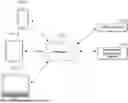



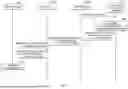
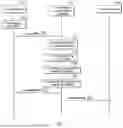
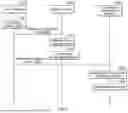
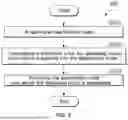
Sources:
- United States Patent and Trademark Office - verify current appl. status at the USPTO↗
Recent applications in this class:
- » 20260187244 2026-07-02
MALWARE DETECTION APPARATUS, METHOD AND ELECTRONIC APPARATUS USING THE SAME - » 20260147889 2026-05-28
EXECUTABLE PARSER AND FEATURE EXTRACTOR - » 20260141066 2026-05-21
PERMISSION CHECKER FOR STATIC CODE ANALYSIS TOOL - » 20260119659 2026-04-30
LLM-POWERED THREAT MODELING - » 20260119658 2026-04-30
DETECTION AND FILTRATION OF PHANTOM PACKAGES IN LARGE LANGUAGE MODEL GENERATED CODE - » 20260111546 2026-04-23
AUTOMATED FUNCTION-LEVEL CODE SIGNATURE GENERATION FOR WINDOWS-PE AND ELF MALWARE DETECTION - » 20260093809 2026-04-02
APPARATUS FOR TRANSPORTING LIQUID MATERIALS - » 20260064840 2026-03-05
REPOSITORY SCANNING COORDINATOR - » 20260030355 2026-01-29
CYBER THREAT INFORMATION PROCESSING APPARATUS, CYBER THREAT INFORMATION PROCESSING METHOD, AND STORAGE MEDIUM STORING CYBER THREAT INFORMATION PROCESSING PROGRAM - » 20260023849 2026-01-22
Identifying Libraries Included in Applications Based on Analysis of the Application Code